Janmashtami brings with it a special joy, the joy of welcoming Shree Krishna. Every year, as temples fill with kirtans, flowers, lamps, and loving anticipation, devotees wait for that sacred midnight moment when the heart remembers: Krishna has come.
And quietly He came.
In the stillness of midnight, within the darkness of a prison cell, Shree Krishna appeared before Devaki and Vasudev. Outside, the night was deep; within, there was the radiance of His divine presence. The chains that bound Vasudev fell away, the prison doors opened, and Vasudev carrying little Krishna close to his heart, stepped into the night. Across the swelling Yamuna lay Gokul, a world waiting to receive Krishna with the simple, spontaneous love of Yashoda, Nanda Baba, His little cowherd friends, and the loving hearts of Braj.
Perhaps this is why the story of Janmashtami touches us so deeply. Somewhere within us too is a heart longing to come closer to Krishna. It may be surrounded by worries, attachments, expectations, and the countless thoughts of everyday life, yet Krishna does not wait for everything to become perfect before showering His grace. When we begin turning toward Him, with remembrance, with trust, with even the smallest offering of love, Bhakti quietly begins its work within us.
We hear His name and leelas, and He enters our thoughts. We remember Him, and remembrance slowly grows into affection. We love Him, and that love naturally wishes to serve Him. Little by little, Krishna becomes more than the Lord we worship; He becomes the One we remember, speak to, depend upon, and carry within the heart.
This Janmashtami, as we celebrate the divine appearance of Shree Krishna, may we also open a little more space for Him within us, to hear Him, remember Him, love Him, serve Him, and allow that love to gently transform our hearts.

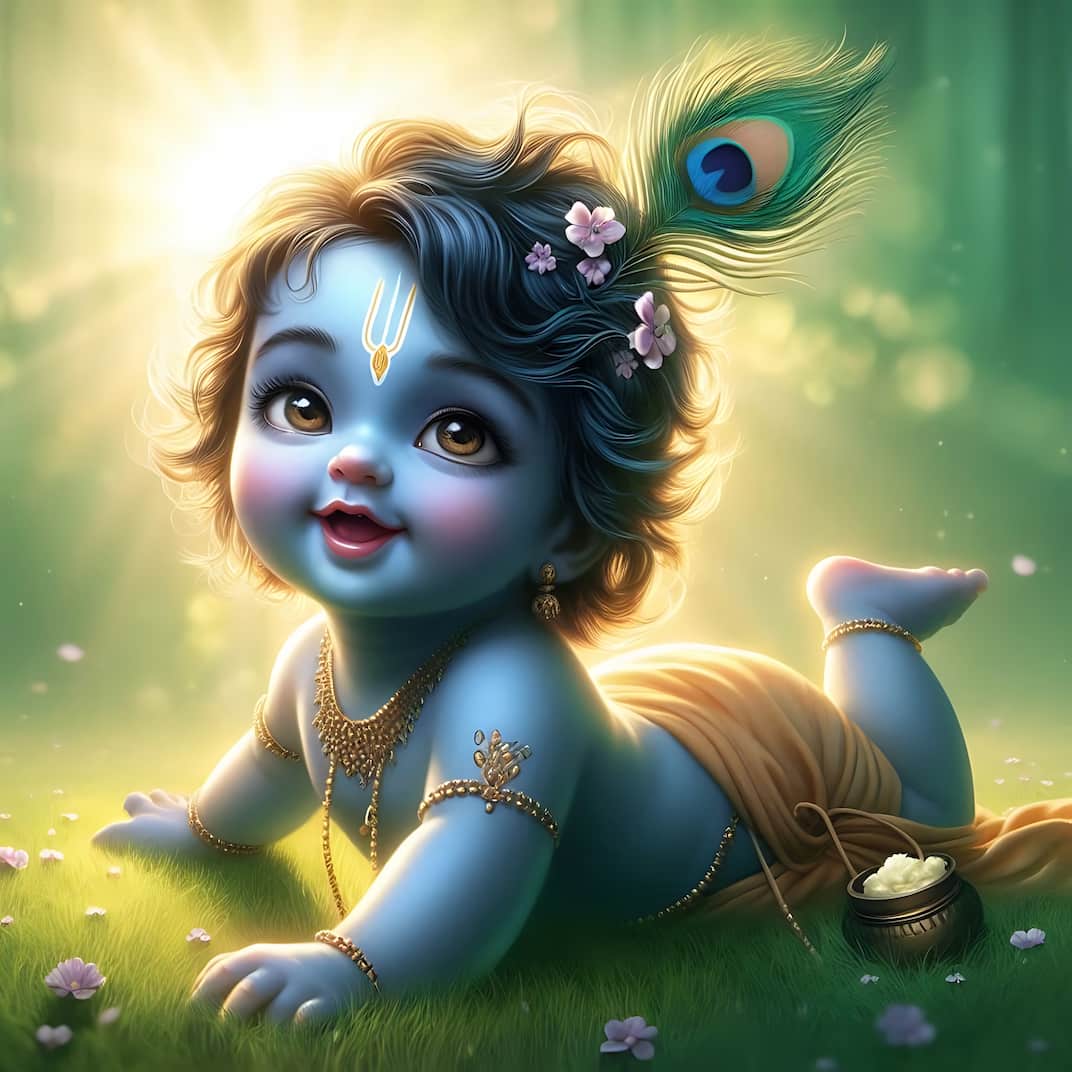
The Prison: Recognizing the Bondage Within
Before the joyous sounds of Gokul, there was the silence of a prison cell. Devaki and Vasudev waited behind closed doors, bound by chains and surrounded by circumstances they could not change. Yet it was in this very place that Shree Krishna chose to appear.
At times, our own heart too can feel confined, not by visible walls or chains, but by attachments, expectations, fears, and the desire for life to unfold according to our wishes. The mind becomes so occupied with what we want, what we have lost, or what tomorrow may bring that there is little room left for the quiet remembrance of Krishna.
Bhakti begins with a gentle turning of the heart. Through Krishna’s name, His leelas, kirtan, and the wisdom of the scriptures and Guru, the mind slowly begins to turn toward Him. The worries and attachments may still remain, but amidst them, something precious has awakened, the remembrance of Krishna.
Perhaps the prison of Mathura offers us this tender reflection: Krishna does not wait for us to become free before coming close to us. He comes to us where we are. Even when the mind is restless and the heart burdened, we can begin by simply turning toward Him. And sometimes, that first loving remembrance is where the journey from bondage to bhakti begins.
Midnight Darkness: From Forgetfulness to Remembrance
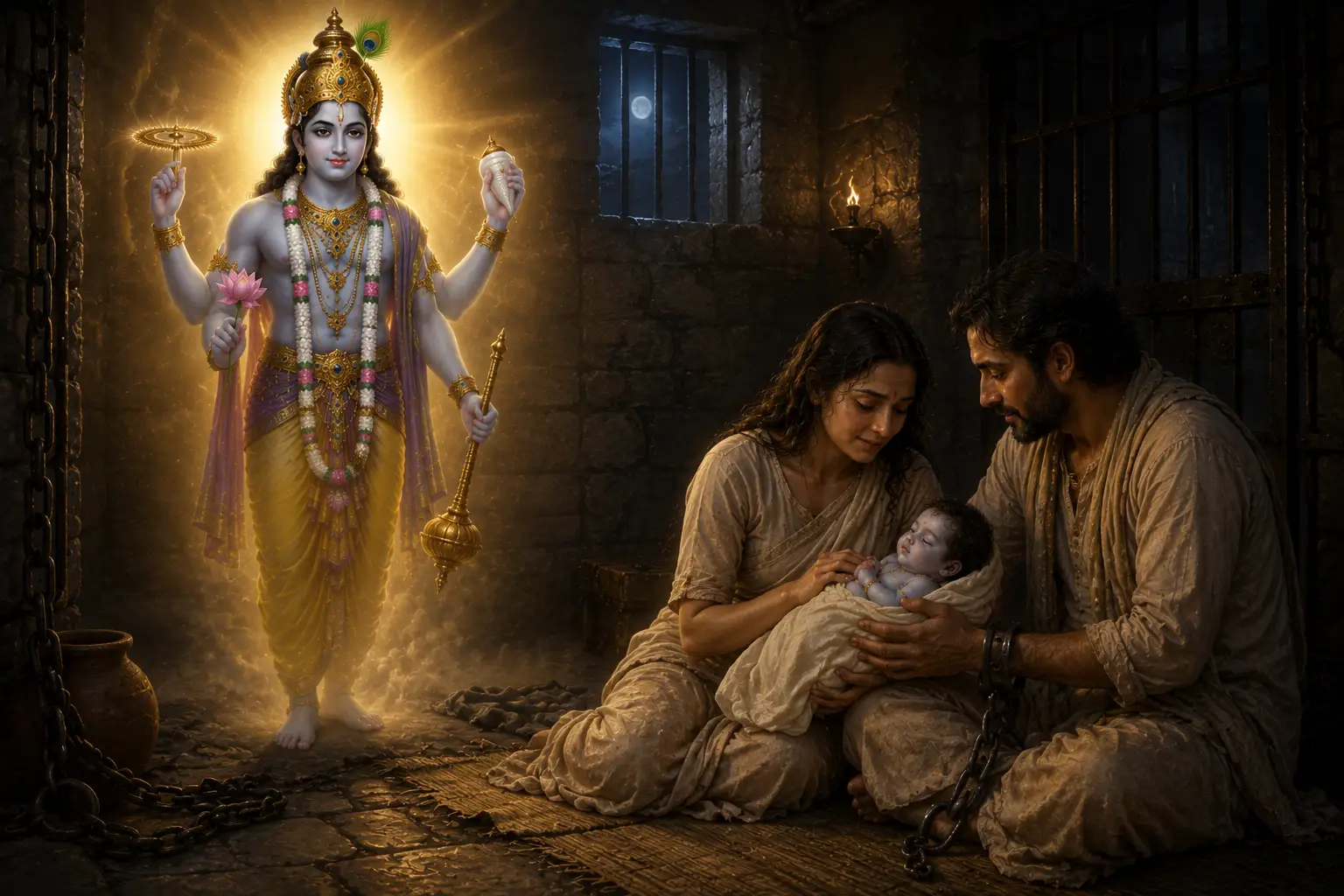
It was midnight when Shree Krishna appeared. The world outside lay in darkness, yet within the prison, His divine presence brought a light no lamp could create.
Sometimes, a similar darkness settles within us. Surrounded by blessings and absorbed in the many demands of everyday life, we can simply forget to keep Krishna close. It is not that we do not love Him; for a while, the noise of the world becomes louder than His remembrance.
Bhakti gently brings Krishna back into our thoughts. His name in a kirtan, a beloved leela, His divine form, or a teaching of the Guru turns the mind toward Him again. Each remembrance may seem small, but offered with love, it slowly deepens our attachment to Krishna.
Perhaps that is the tenderness of His midnight appearance: darkness need not disappear before divine light can enter. We hear of Krishna, we remember Him, and the heart quietly begins to open to His grace.
Krishna Appears: Grace Enters the Heart
In the darkness of the prison, Shree Krishna appeared before Devaki and Vasudev, filling that place of fear with His divine presence. The prison had not yet disappeared, but everything within it had changed, Krishna was there.
So too, we need not become perfect before approaching Krishna. We turn towards Him as we are, and through His grace and loving remembrance, the heart slowly begins to change. Fear gives way to trust, complaint to gratitude, and our need to control begins to soften into surrender.
Krishna’s appearance reminds us that grace can enter even the most confined spaces of the heart. When we make room for His remembrance, purification begins: not all at once, but gently, one loving thought of Krishna at a time.
The Chains Fall: Bhakti Begins to Free the Heart
As Shree Krishna appeared, the chains binding Vasudev fell away. What seemed impossible moments before became possible in His divine presence.
Our inner chains may be less visible, but their hold can be just as strong. Bhakti does not break them overnight; yet as the mind becomes increasingly absorbed in Krishna, they gradually begin to loosen. The heart, once crowded with attachments, desires, expectations, and worldly concerns, begins to make more room for Him.
This is the quiet purification that bhakti brings. The more the heart turns toward Krishna, the less tightly the world binds it. And as the chains loosen, the heart becomes freer to love.
The Doors Open: The Heart Learns to Surrender
As Shree Krishna appeared, the prison doors quietly opened. A path emerged where none had seemed possible before.
Perhaps surrender begins in the heart in much the same way. We may not always understand Krishna’s plan or why life unfolds as it does, but bhakti teaches us to loosen our hold on “my way” and place a little more trust in Him: I may not understand Your way, but I know You are with me.
Surrender does not mean that every uncertainty disappears. It means we no longer feel that we must carry everything alone. As trust in Krishna deepens, the heart becomes lighter, more accepting, and more willing to follow where He leads.
The door that once seemed closed begins to open, not because we know the whole path ahead, but because we are learning to walk it with Krishna.
Crossing the Yamuna: Walking with Faith
Holding little Krishna close to his heart, Vasudev stepped into the dark night and approached the swelling Yamuna. The prison was behind him, yet the path ahead was not without difficulty. Still, he walked on, with Krishna in his arms and faith in his heart.
Our journey of bhakti too has its waves. The mind wanders, old attachments return, and at times the path may seem difficult. Yet we do not have to wait for every obstacle to disappear before moving toward Krishna.
Perhaps the beauty of the Yamuna crossing lies here: when Krishna becomes the center of our journey, difficulties need not become distances from Him. We keep walking, remembering, trusting, and holding Him close.
And beyond the river waits Gokul, a world where Krishna is not only worshipped, but simply and completely loved.
Gokul: Where Krishna Becomes Our Own
Across the Yamuna awaited Gokul; a world filled with a different kind of joy. Here, Krishna would not be known through His divine majesty. He would be held in Yashoda Maiya’s arms, play with His little cowherd friends, steal butter from the homes of Braj, and fill the hearts of the gopis with loving remembrance.
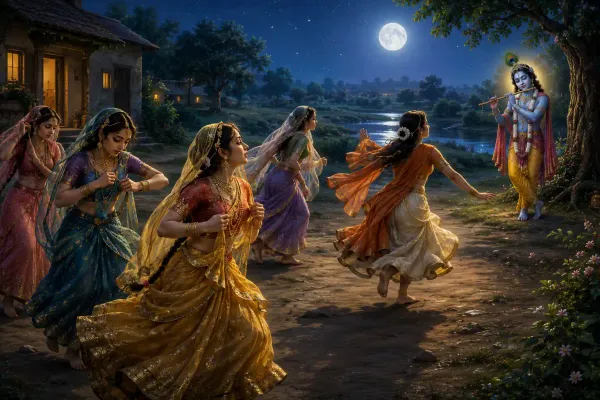
What makes these leelas so precious is the naturalness of their love. There is no distance, no formality, no pretense. Yashoda loves Him as her child, the sakhas as their dearest friend, and the gopis with a love that seeks only His happiness. Krishna is simply theirs, and they are His.
Perhaps this is where bhakti wishes to lead the heart, not merely to know that Krishna is God, but to love Him, remember Him, and make Him our own.
The heart that was slowly being freed from its chains is now ready to be filled, with Krishna.
Yashoda Maiya: When Love Forgets His Divinity
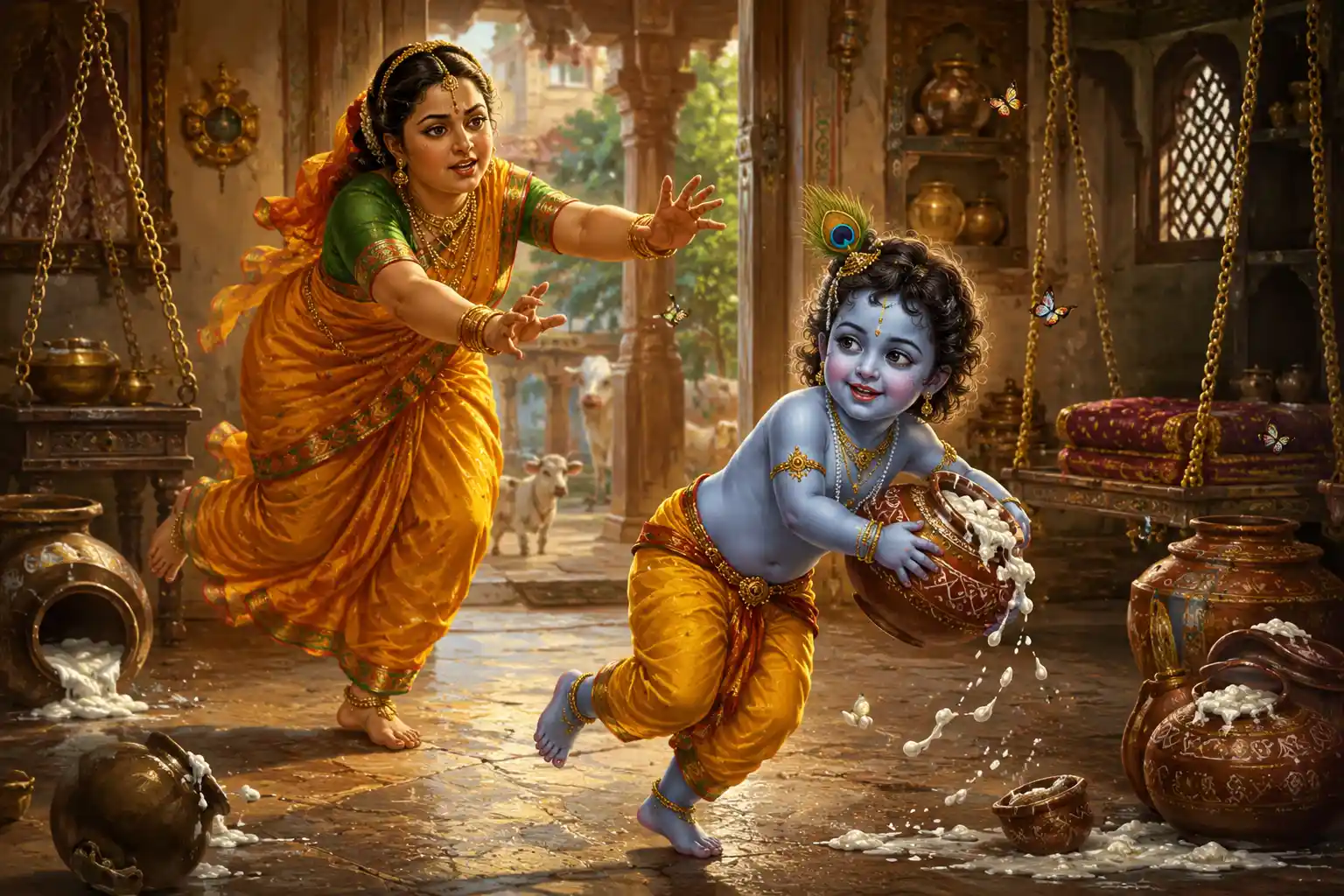
For Yashoda Maiya, Krishna was not the Supreme Lord to be approached with awe. He was simply her beloved little Kanha. She fed Him, dressed Him, worried about Him, laughed at His mischief, and listened to the gopis who came complaining about His playful butter-stealing.
And like any loving mother, Yashoda Maiya did not simply overlook His mischief. Out of concern that her little Kanha should learn what was right, she ran after Him, caught Him, and tried to tie Him to the mortar. Her love could cuddle Him, scold Him, and even correct Him: Her heart knew only one thing: He is mine to love and care for.
There was no awareness of His divine majesty at that moment. The Lord whom the universe cannot contain allowed Himself to be bound by the loving hands of His mother. Yashoda saw only her child; Krishna saw only her love.
There was no formality in her devotion, no thought of receiving anything from Him. Her love was spontaneous, pure, and completely natural. The Lord of the universe allowed Himself to be held, fed, chased, and even bound by the love of His mother.
Yashoda Maiya’s bhava gently reminds us that bhakti is not only knowing Krishna’s greatness. It is allowing Him to become so dear that remembrance of Him fills the heart with tenderness, intimacy, and love
The Bal Sakhas: Loving Krishna as a Friend
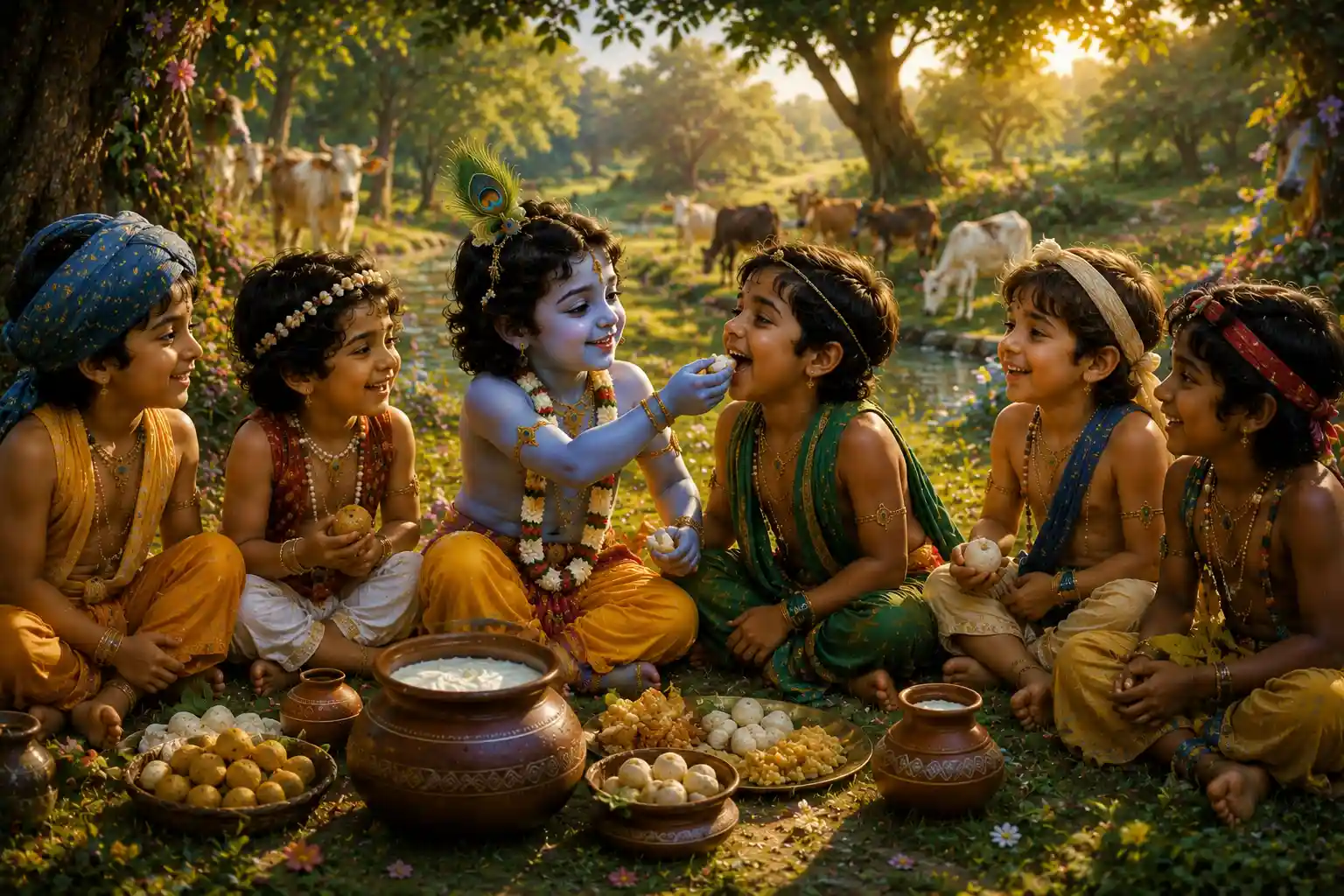
To the little cowherd boys of Gokul, Krishna was simply their Kanha, their dearest friend. Together they grazed at the cows, shared their food, ran through the fields, laughed, teased, argued, and played with the carefree innocence of childhood. With Krishna beside them, an ordinary day in Gokul became a day filled with laughter and joy.
In their playful games, the sakhas would sometimes ride on one another’s backs. When it was Krishna’s turn to carry a friend, they would laugh, cheer, and urge Him to run faster, caring only about the fun of the ride. There was no thought, “The Lord of the universe is carrying me!” No hesitation about reverence or status. In that moment, He was simply their Kanha, and Krishna too was joyfully lost in the laughter and camaraderie of His friends.
There was no pretence in their love. The sakhas loved Krishna simply because He was their Krishna, and He delighted in being one of them. Their friendship reveals the sweetness of Bhakti where love removes all distance, the Supreme Lord becomes a beloved companion with whom the heart can laugh, speak freely, share its joys and worries, and simply be itself.
Their friendship reveals the beautiful sweetness of Bhakti: love can bring the Divine so close that awe gives way to intimacy. Krishna becomes not only the Lord we worship, but the beloved companion with whom the heart can share its joys, worries, laughter, and everyday moments.
The Gopis: Love That Seeks Only Krishna’s Happiness
The gopis of Braj loved Krishna with a simplicity that asked for nothing in return. Their minds naturally flowed toward Him. His smile, His flute, His leelas, and above all, His happiness. Their love was not, “What will Krishna do for me?” but “What can I do that will please Krishna?”
They did not love Him because He was the Supreme Lord who could grant their wishes. In the sweetness of Braj, Krishna was simply their beloved. His joy became their joy; His remembrance filled their hearts. Their love was free from bargaining, expectation, or self-interest. They were oblivious of the fact that Krishna was the Lord of the universe.
Their love carried no bargaining, no expectation, no thought of reward. They did not turn to Krishna asking, “What will You do for me?” Their hearts asked only, “What can I do that will bring You happiness?” This is the sweetness of nishkam bhakti, when our own happiness slowly becomes secondary, and pleasing Krishna becomes the joy of the heart.
For the gopis, remembering Krishna was not a practice to be completed; it was where their hearts naturally wished to remain. Their thoughts returned to Him, their hearts longed for Him, and their joy lay simply in loving Him. Perhaps this is where bhakti reaches its sweetest expression, when we no longer seek Krishna for what He may give us, because loving Krishna itself has become the reward.
And perhaps this is where bhakti becomes most beautiful, when loving Krishna itself becomes the reward.
Makhan Chor: The One Who Steals the Heart
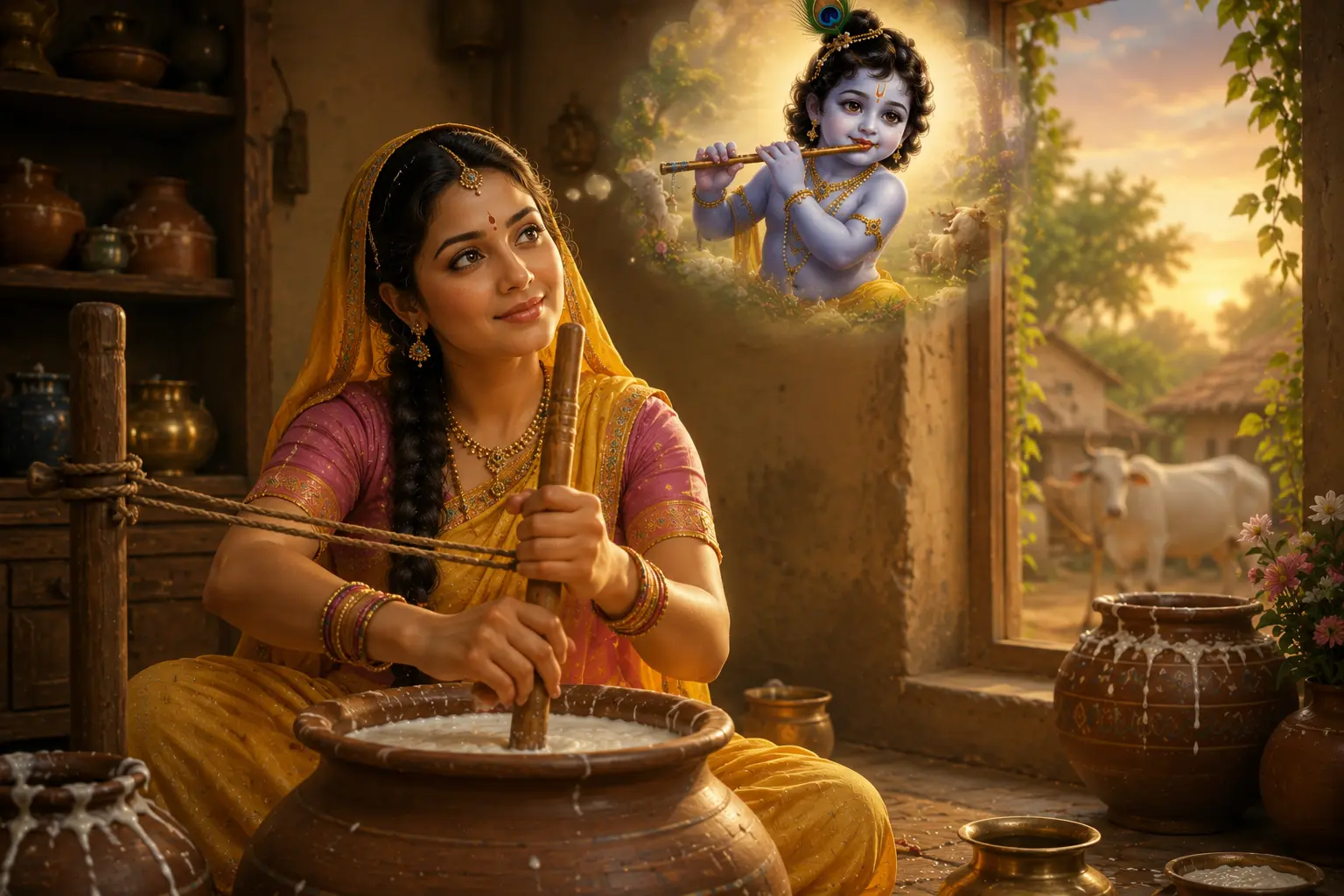
In the homes of Braj, precious butter emerged only after patient churning, and little Krishna loved to steal it! The gopis would complain to Yashoda Maiya, while Kanha, butter still smeared across His innocent face, would sweetly deny having taken any at all.
But why does this simple leela hold such sweetness for the devotee? Butter emerges only after milk is patiently churned. In the same way, the heart is softened and purified through loving remembrance; chanting Krishna’s name, contemplating His form and leelas, and yearning to come closer to Him. With every loving remembrance, the heart becomes a little more absorbed in Krishna.
And perhaps this is the butter our Makhan Chor truly loves to steal, the heart softened by devotion and filled with His remembrance. The gopis guarded their butter, yet Krishna always found His way to it; the devotee, instead, longs to offer that heart willingly: “Kanha, make it Yours.” What a delightful Lord, caught with butter upon His face, sweetly denying the theft, while all along He has stolen something far more precious: the devotee’s heart.
Krishna Accepts Nothing but Love:
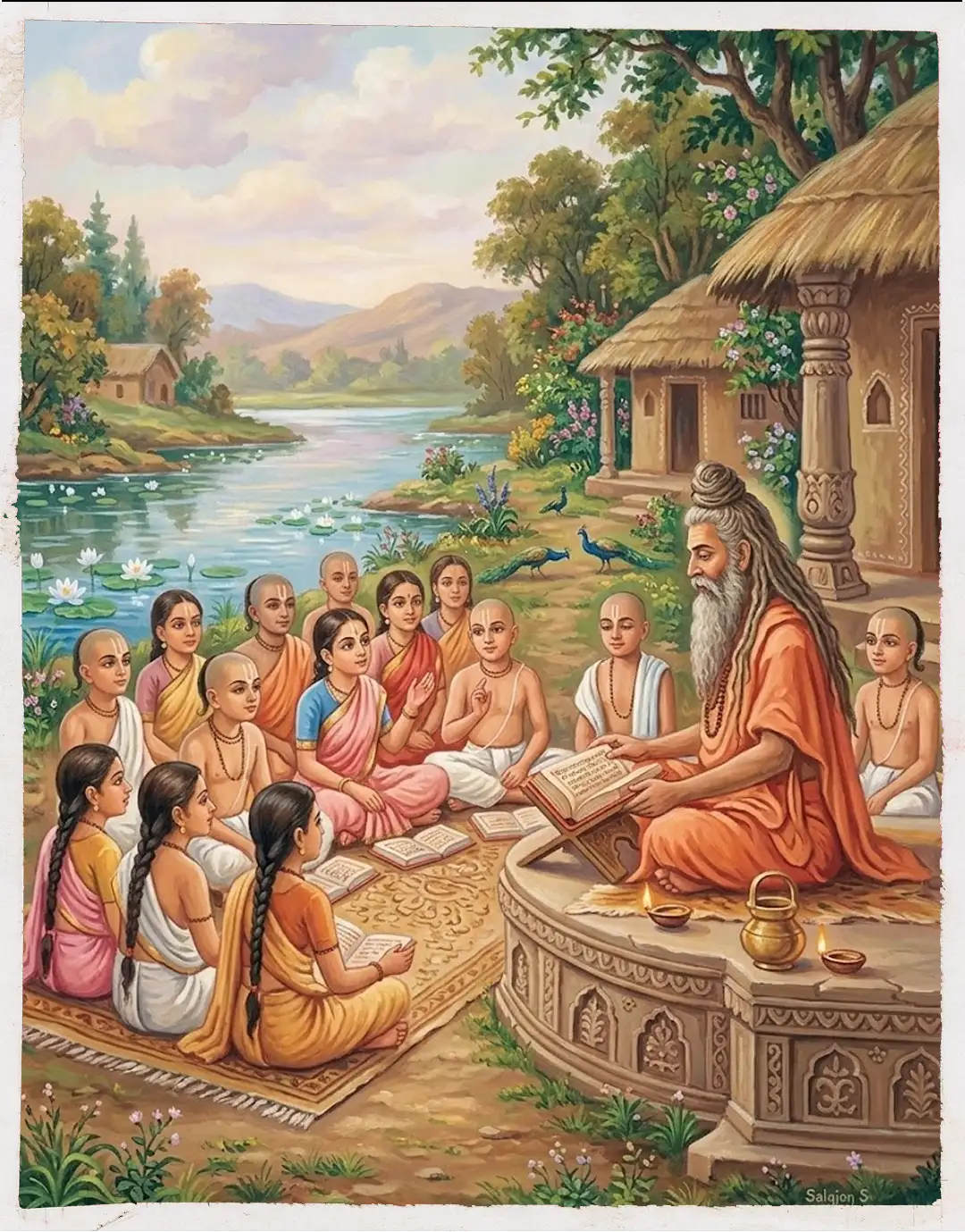
Shree Krishna reveals the simplicity of bhakti in the Bhagavad Gita:
पत्रं पुष्पं फलं तोयं यो मे भक्त्या प्रयच्छति ।
तदहं भक्त्युपहृतमश्नामि प्रयतात्मन: ॥ 26॥
patraṁ puṣhpaṁ phalaṁ toyaṁ yo me bhaktyā prayachchhati
tadahaṁ bhaktyupahṛitam aśhnāmi prayatātmanaḥ
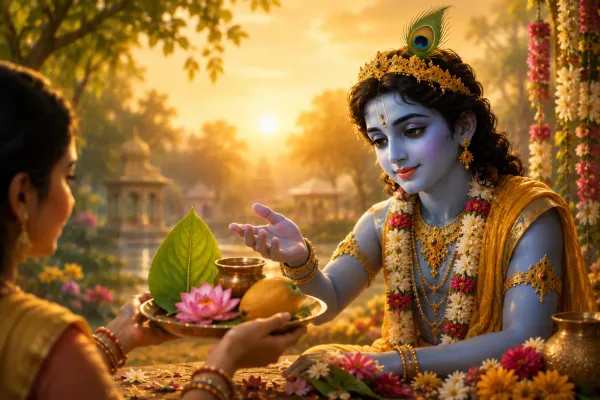
BG 9.26: If one offers to Me with devotion a leaf, a flower, a fruit, or even water, I delightfully partake of that item offered with love by My devotee in pure consciousness.
Krishna needs nothing from us, yet He accepts even the simplest offering when it carries love. Yashoda Maiya’s care, the sakhas’ carefree friendship, the gopis’ selfless devotion, and the lovingly churned butter of Braj all bring this truth alive: it is not the greatness of the offering, but the bhava of the heart that reaches Krishna.
Bhakti transforms the smallest offering into an expression of love, and when the heart itself becomes the offering, what more remains to give?
Swami Mukundananda's Lens: Cultivating Love for Krishna
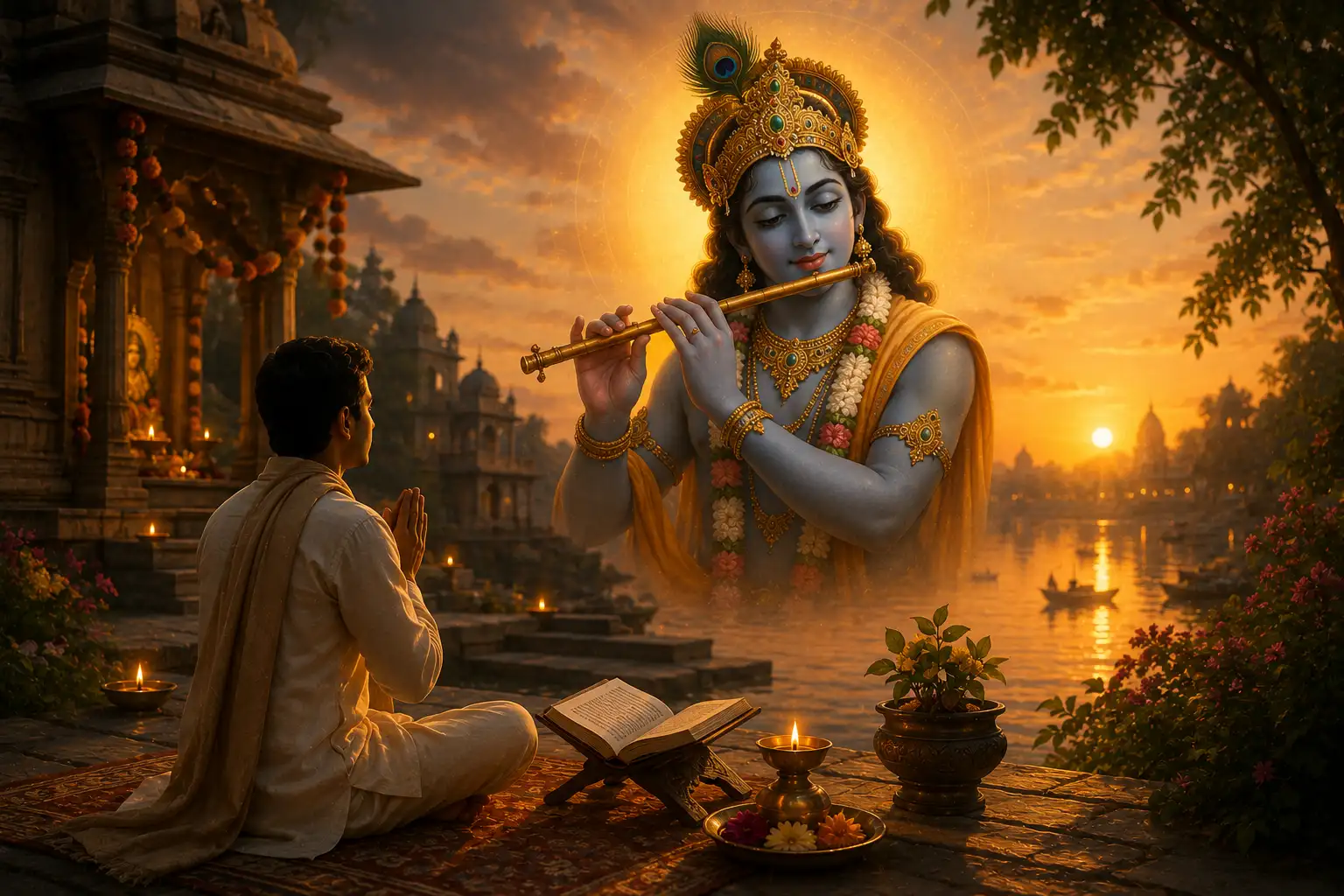
Love for Krishna is a priceless treasure, but as Swami Mukundananda reminds us, it does not arise by itself; it must be cultivated. At its foundation is shraddha, a faith strengthened by knowledge and understanding. As that faith deepens, samarpan begins to blossom—we trust Krishna a little more, loosen our hold on our own will, and learn to place ourselves lovingly in His hands. Bhakti then becomes not merely believing in Krishna, but gradually learning to belong to Him.
And Krishna makes this journey of love so sweet. His beautiful form draws the mind toward Him, while His loving leelas melt the heart. The Supreme Lord becomes little Kanha in Yashoda Maiya’s arms, a carefree companion of the sakhas, and the beloved of the gopis. Through these leelas, His divinity does not become distant; it comes wonderfully close. The more we hear, remember, and contemplate them, the more naturally the mind begins to turn toward Krishna with love.
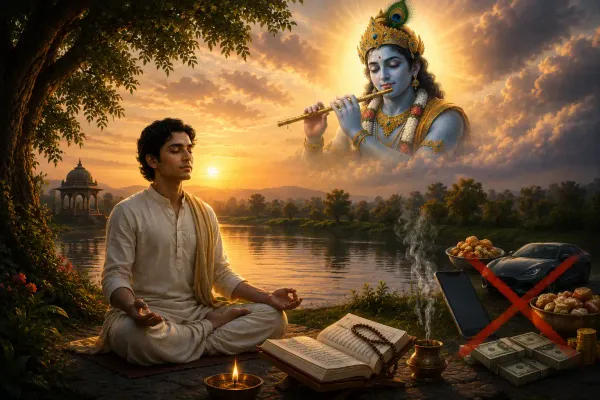
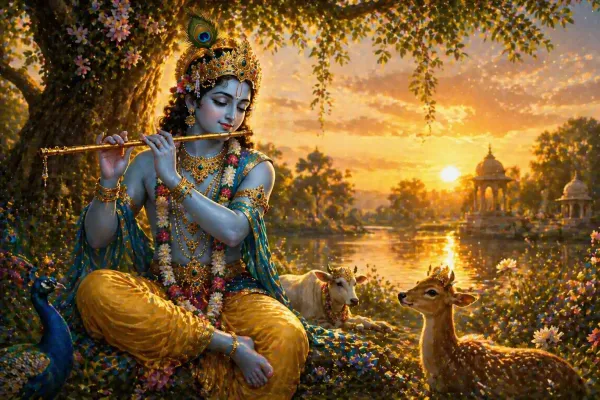
Swami ji placed great emphasis on Roop Dhyan, lovingly bringing Krishna’s divine form into the mind while remembering His name and leelas. We may picture little Kanha with butter on His face, Krishna laughing with His sakhas, resting in Yashoda Maiya’s arms, or standing with His flute beneath the trees of Braj. The mind that so easily wanders toward the world is gently given Krishna to think about, again and again. With every loving remembrance, His form becomes dearer, His leelas sweeter, and the heart grows a little more attached to Him.
As the mind returns to Krishna again and again, remembrance slowly becomes attachment, and attachment deepens into love. In Roop Dhyan, that love can also become manasi seva, serving Krishna lovingly in the mind. We may offer Him flowers, prepare His favorite food, adorn Him, sit beside Him, or simply imagine ourselves participating in His beautiful leelas. The offering is within the mind, but the love we cultivate through it is deeply personal.
Gradually, we hear Krishna, remember Him, love Him, and seek to serve Him—first within the heart and then through the way we live. Krishna’s leelas are no longer stories we have merely heard; they become places where the mind lovingly returns to meet Him, and where bhakti quietly begins to transform the heart.
When Love Becomes Seva
Love naturally wishes to give. As our attachment to Krishna deepens, bhakti flows into seva, the desire to offer our time, abilities, and actions for His happiness.
Seva may be offered at the temple, within our family, by helping another, or through everyday duties. What transforms the action is the bhava: “Krishna, let this be for You.” Then the hands begin to express what the heart has learned to love, and everyday life becomes an offering.
Janmashtami Celebrations at Radha Krishna Temple
As Janmashtami night deepens at Radha Krishna Temple, the temple comes alive with one shared feeling, Krishna is coming. Devotees gather in festive attire, many having fasted through the day, their hearts filled with anticipation. Krishna Jhoolan, devotional Abhishek, joyous kirtans, Dahi Handi, and vibrant cultural performances fill the temple with the colors and sweetness of bhakti.
And then the hours grow late.
The crowds remain. Eyes may be heavy with sleep, yet they glisten with devotion. Voices continue to sing His name, hearts wait, and every passing moment brings midnight closer. Tiredness seems to fade before one beautiful thought: My Lord is coming. How can I sleep?
At midnight, the waiting blossoms into joy. Shree Krishna’s divine appearance is welcomed with Aarti and Archana, joyous kirtan, cake cutting, and the loving celebration of devotees who have waited together to receive their beloved Lord.
For a few precious moments, it feels as though Gokul has come alive again, Krishna has arrived, and His devotees are there to welcome Him.
When the Celebration Becomes a Way of Life
The midnight Aarti ends, the kirtans grow quiet, and slowly the devotees begin to return home. But Krishna’s arrival need not end with Janmashtami night.
We welcomed Him with flowers, kirtans, Aarti, and joyful hearts. Now comes the quieter offering, to carry that love into the days ahead, remembering Him amidst ordinary moments and allowing His presence to gently shape the way we live.
Janmashtami then becomes more than a celebration of Krishna’s appearance. We welcomed Him at midnight; now we make a little more room for Him in our everyday lives.
Conclusion: Let Krishna Be Born in the Heart
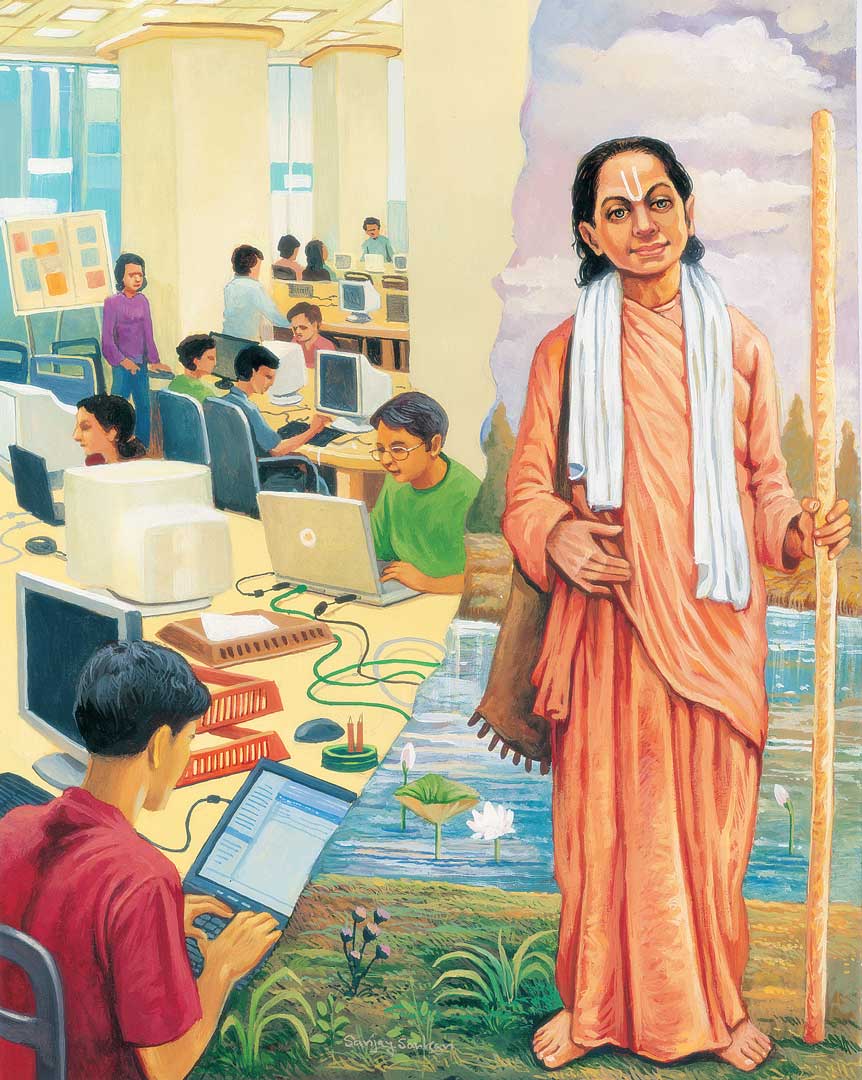
Shree Krishna tells Arjun why He descends into this world:
परित्राणाय साधूनां विनाशाय च दुष्कृताम् ।
धर्मसंस्थापनार्थाय सम्भवामि युगे युगे ॥ 8॥
paritrāṇāya sādhūnāṁ vināśhāya cha duṣhkṛitām
dharma-sansthāpanārthāya sambhavāmi yuge yuge
BG 4.8: To protect the righteous, to annihilate the wicked, and to reestablish the principles of dharma I appear on this earth, age after age.
On Janmashtami, we rejoice in that divine appearance. Yet Krishna’s journey from the darkness of Mathura to the loving lanes of Gokul can also become an invitation for our own hearts. As bhakti grows, the inner chains of ego, attachment, and expectation begin to loosen; surrender opens the heart, and remembrance gradually fills the space within with Krishna.
Then Gokul teaches us how to love Him, through Yashoda Maiya’s tender affection, the sakhas’ innocent friendship, the gopis’ selfless devotion, and the simple sweetness of a heart that longs only for Krishna.
Perhaps this is the transformation Janmashtami invites us toward: hear Krishna, remember Krishna, love Krishna, serve Krishna, and slowly allow Him to become the center of our lives.
This Janmashtami, as we wait joyfully for Shree Krishna’s appearance at midnight, may our prayer be simple: May the doors of my heart remain open. May my love become pure. And may You, my Krishna, always find a home within me.
Key Takeaways
- Janmashtami is an invitation to inner transformation. Krishna’s journey from the prison of Mathura to the joy of Gokul reminds us that bhakti can lead the heart from bondage and forgetfulness toward freedom, remembrance, and love.
- Bhakti gently purifies the heart. As we turn toward Krishna, the hold of ego, attachment, expectations, and the need for control gradually begins to loosen.
- Faith and surrender deepen our relationship with Krishna. We may not always understand His ways, but samarpan teaches the heart to trust His presence and guidance.
- Krishna’s leelas teach us how to love Him. Yashoda Maiya’s maternal affection, the sakhas’ innocent friendship, the gopis’ selfless devotion, and the sweetness of Makhan Chor reveal love without pretence or expectation.
- Krishna values the bhava behind our offering. A leaf, flower, fruit, water—or the smallest act offered with devotion—becomes precious when it carries genuine love.
- Loving remembrance nourishes bhakti. Hearing Krishna’s name and leelas, contemplating His form, kirtan, Roop Dhyan, and seva help turn the mind toward Him again and again.
- Let Janmashtami continue beyond midnight. Hear Krishna, remember Krishna, love Krishna, serve Krishna—and allow that loving relationship to gradually transform everyday life.
Frequently Asked Questions
1. What is the spiritual significance of Janmashtami?
Janmashtami celebrates the divine appearance of Shree Krishna. For the devotee, it is also an opportunity to turn inward, loosen the attachments that bind the heart, and renew loving remembrance of Krishna.
2. Why did Shree Krishna appear in this world?
In Bhagavad Gita 4.8, Krishna explains that He appears age after age to protect the righteous, overcome evil, and re-establish dharma. His divine leelas also give devotees a beautiful basis for remembering and loving Him.
3. How can Krishna’s birth in prison inspire our spiritual journey?
The prison can remind us of our own inner bondage to ego, desires, fears, and attachments. Krishna’s appearance amidst that darkness offers hope that we can begin turning toward Him even before we have overcome all our imperfections.
4. What do Krishna’s childhood leelas teach us about bhakti?
The relationships of Braj reveal different expressions of loving devotion: Yashoda Maiya’s maternal love, the sakhas’ innocent friendship, and the gopis’ selfless love. In each, Krishna is loved naturally, intimately, and without pretence.
5. What does Bhagavad Gita 9.26 teach about devotion?
Krishna says He accepts even a leaf, flower, fruit, or water when it is offered with devotion. The verse reminds us that the value of an offering lies not in its grandeur, but in the loving bhava with which it is given.
6. How can we cultivate Krishna bhakti in daily life?
Begin simply: hear Krishna’s teachings and leelas, chant His names, remember His form through Roop Dhyan, offer everyday actions to Him, and find opportunities for seva. Repeated loving remembrance gradually draws the mind closer to Krishna.
7. How can I celebrate Janmashtami at Radha Krishna Temple?
Devotees can come together for Krishna Jhoolan, kirtans, Krishna Abhishek, Dahi Handi, cultural programs, and the much-awaited midnight celebration with Aarti, Archana, and the joyous welcome of Shree Krishna.
Come, Let Us Welcome Krishna Together
The flowers are being prepared, the kirtans are waiting to begin, and countless hearts are looking toward that sacred midnight hour.
This Janmashtami, come to Radha Krishna Temple of Dallas with your family and join the devotees in Krishna Jhoolan, Abhishek, Dahi Handi, cultural celebrations, soulful kirtans, and the joyous midnight Aarti and Archana.
Come not only to celebrate Krishna’s birth, but to hear Him, remember Him, love Him, and offer Him something from your own heart.
And when midnight finally arrives, let us welcome our beloved Kanha together with one joyous feeling:
Krishna has come. May He find a home in our hearts.
Janmashtami 2026 program details and timings will be added when the official RKT schedule is announced.