
How do we move from hearing about Shree Krishna to actually experiencing Him?
Introduction: Entering Shree Krishna's World Through Bhagavad Katha
Every year, Janmashtami fills homes and temples with joy. The sound of devotional kirtans fills the air, beautifully adorned altars celebrate the appearance of Shree Krishna, and devotees gather at midnight to welcome the Supreme Divine Personality into their hearts. These sacred traditions have been cherished for centuries, reminding us of the day the Lord descended to restore dharma and shower His grace upon humanity.
Yet Janmashtami is far more than the remembrance of a historical event. It is an invitation to enter the eternal world of Shree Krishna. While fasting, worship, and celebration deepen our devotion, there is one practice that allows us to move beyond ritual into personal spiritual experience: the sacred listening of Bhagavad Katha.
Bhagavad Katha is not merely the narration of ancient stories. It is the living current of divine wisdom flowing from the scriptures into the hearts of sincere seekers. Every pastime of Shree Krishna carries layers of spiritual meaning that awaken love, strengthen faith, and gradually transform our consciousness. The saints explain that although Shree Krishna completed His earthly pastimes thousands of years ago, His leelas remain eternally present for those who approach them with devotion. Through Bhagavad Katha, the distance of time disappears, allowing the Lord's compassion, beauty, and divine personality to become vividly real.
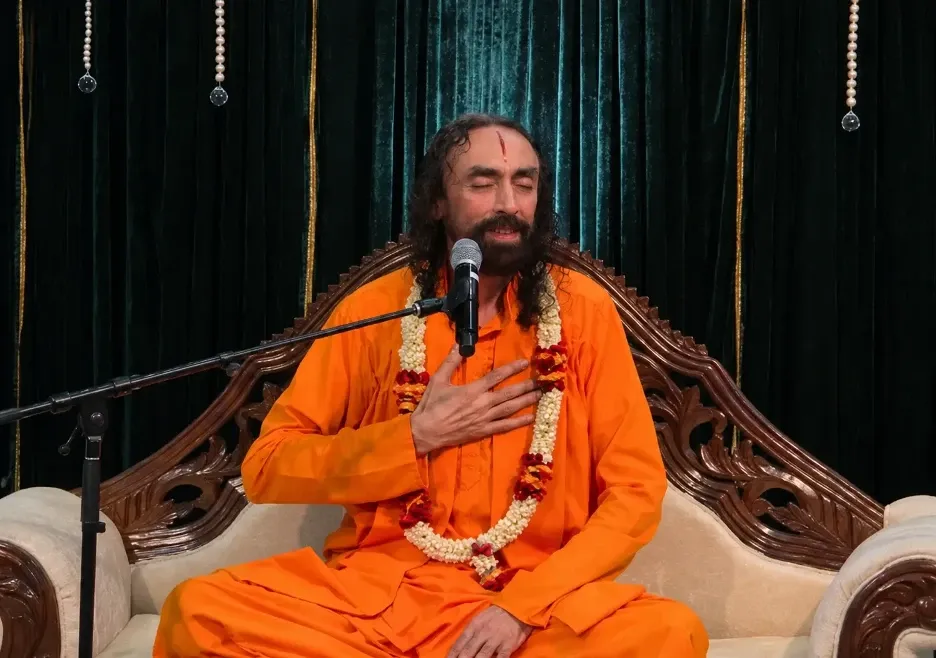
Swami Mukundananda beautifully explains that the human mind naturally becomes absorbed in whatever it repeatedly hears and contemplates.
When we constantly fill our minds with worldly news, entertainment, and distractions, our thoughts become restless and scattered. But when we regularly hear the divine pastimes of Shree Krishna, those sacred impressions gradually purify the heart and awaken devotion. Slowly, the Lord ceases to be merely a revered figure from scripture and becomes our guide, protector, friend, and beloved.
As we celebrate Janmashtami 2026, let us discover why Bhagavad Katha has been treasured by saints throughout the ages, and how listening to the divine leelas of Shree Krishna can become the doorway to experiencing His presence in our own lives.
Bhagavad Katha: More Than Sacred Storytelling
From childhood, many of us grow up listening to stories of Shree Krishna stealing butter, lifting Govardhan Hill, dancing with the gopis, subduing the serpent Kaliya, or delivering the Bhagavad Gita to Arjuna. These narratives are often among the first spiritual memories we carry into adulthood. Yet as our lives become increasingly busy, it is easy to regard them simply as inspiring stories from another age rather than profound revelations of the Supreme Divine Personality.
The saints caution us against this misunderstanding. Bhagavad Katha is fundamentally different from ordinary storytelling because its subject is God Himself. Every pastime described in the Srimad Bhagavatam is imbued with divine potency.
Just as the holy name of Shree Krishna is non-different from Him, His divine pastimes are also spiritual in nature. When heard with faith and reverence, they carry the power to purify the mind and awaken dormant love for God.
This is why Bhagavad Katha occupies such a central place in the path of Bhakti. It is not simply an intellectual study of philosophy, nor merely an emotional retelling of sacred history. It is an act of Shravan Bhakti; devotional listening, which is counted among the nine principal forms of devotion described in the scriptures. Before we learn to meditate deeply upon God, before our minds naturally become absorbed in His divine form, we first learn to listen with humility and love.
Swami Mukundananda explains that the company we keep shapes the direction of our lives. Association with worldly influences naturally strengthens worldly desires, while association with enlightened saints gradually elevates our consciousness. Bhagavad Katha is a unique form of such spiritual association. Although we may not physically live beside great saints or witness Shree Krishna's earthly pastimes, we can still sit in their company through the sacred narrations they lovingly preserve. Their words become a bridge connecting our present lives with the eternal realm of divine love.
This explains why devotees often experience tears, joy, or deep peace while listening to Bhagavad Katha. The transformation does not arise merely from the beauty of the stories themselves, but from the spiritual presence that accompanies them. As the heart becomes purified, the listener begins to perceive Shree Krishna not as a distant deity but as a loving companion who has always been present, patiently waiting for the soul to turn towards Him once again.
Bhagavad Katha and Trida Bhakti: From Hearing to Constant Remembrance
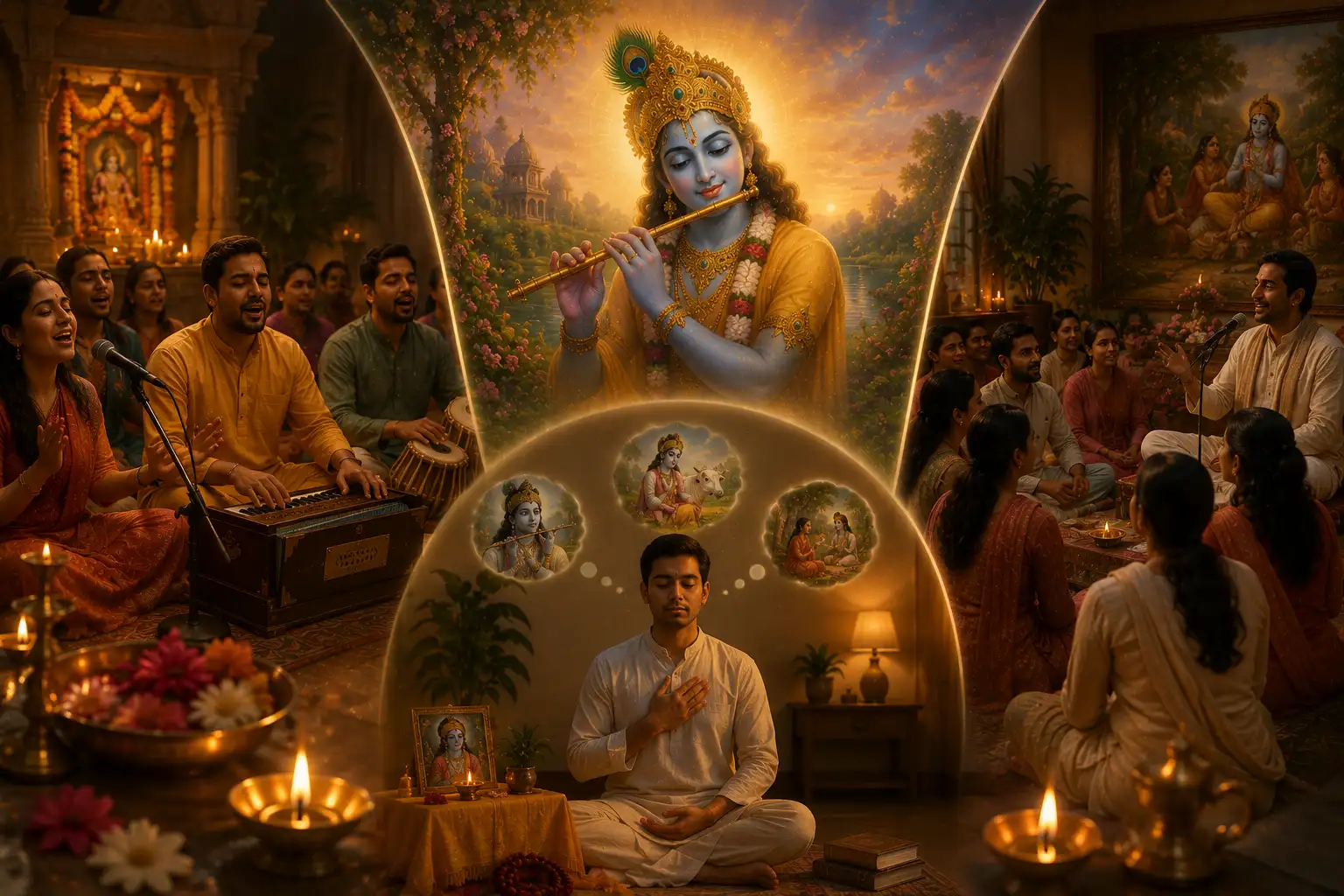
Bhagavad Katha does more than deepen our understanding of the scriptures: it naturally introduces us to the practice of Trida Bhakti, a threefold path of devotion taught by Jagadguru Shri Kripalu Ji Maharaj and lovingly propagated by Swami Mukundananda. Trida Bhakti consists of Kirtanam (chanting the Lord's names and glories), Shravanam (hearing those divine sounds), and Smaranam (remembering God). While all three are essential, the ultimate goal is Smaranam, which is to keep the mind lovingly absorbed in Shree Krishna throughout the day. Kirtanam and Shravanam become the sacred means by which this remembrance is awakened and sustained.
The mind is naturally restless, constantly drawn towards the countless distractions of the world. Left unchecked, the senses pull our thoughts outward, making it difficult to meditate on God. Trida Bhakti gently reverses this tendency by engaging those very senses in devotion. Through Kirtanam, we use our voice to glorify the divine names and virtues of Shree Krishna. Through Shravanam, we attentively hear those names, the wisdom of the scriptures, and the nectar of Bhagavad Katha. As the tongue chants and the ears listen, the mind gradually becomes absorbed in the Lord, blossoming into Smaranam: continuous remembrance of His beautiful form, divine qualities, timeless teachings, and eternal leelas.
This is why Bhagavad Katha holds such a central place in spiritual life. Every narration of Shree Krishna's childhood in Gokul, His playful butter-stealing pastimes, His protection of Govardhan Hill, His loving friendship with Sudama, and His divine guidance in the Bhagavad Gita leaves sacred impressions upon the heart. These impressions accompany the devotee long after the discourse has ended. While walking, working, cooking, or sitting quietly, the mind naturally returns to His smiling face, His flute, His compassionate words, and His boundless love. In this way, hearing matures into remembrance, and remembrance becomes a constant source of inner joy.
Swami Mukundananda explains that when the senses are employed in devotion, they no longer distract the mind. Instead, they help anchor it in God. Rather than suppressing the senses, Trida Bhakti sanctifies them. The voice sings His glories, the ears delight in hearing His names, and the mind rests in His remembrance. This harmonious engagement of speech, hearing, and thought transforms spiritual practice from an occasional activity into a continuous current of divine consciousness. It is for this reason that Trida Bhakti is regarded as the very life-breath of sadhana, helping seekers move from distraction to absorption and from merely knowing about Shree Krishna to experiencing His loving presence in every moment of life.
Why the Supreme Divine Personality Descended
Every Janmashtami, devotees joyfully celebrate the appearance of Shree Krishna in the prison of Mathura. We remember the midnight hour, the divine light that filled the prison cell, and the miraculous journey across the Yamuna to Gokul. These events are among the most beloved in all of Hindu tradition, yet they also invite a deeper question: Why did the Supreme Divine Personality choose to descend into this world at all?
Shree Krishna Himself answers this question in the Bhagavad Gita:
परित्राणाय साधूनां विनाशाय च दुष्कृताम् ।
धर्मसंस्थापनार्थाय सम्भवामि युगे युगे ॥ 8॥
paritrāṇāya sādhūnāṁ vināśhāya cha duṣhkṛitām
dharma-sansthāpanārthāya sambhavāmi yuge yuge
BG 4.8: To protect the righteous, to annihilate the wicked, and to reestablish the principles of dharma I appear on this earth, age after age.
These verses are often understood as describing the Lord's mission to destroy evil and restore righteousness. While this is certainly true, Swami Mukundananda explains that these are not the deepest reasons for His descent.
The Supreme Divine Personality is fully capable of restoring cosmic order without personally appearing upon the earth. His divine incarnation is, above all, an act of boundless compassion.
Shree Krishna descends because every soul longs for a personal relationship with God. While the Absolute Truth is ultimately infinite and beyond material comprehension, the Lord lovingly makes Himself accessible through His divine name, enchanting form, sublime qualities, and eternal pastimes. By appearing as the charming child of Gokul, the beloved son of Mother Yashoda, the faithful friend of Sudama, the protector of Govardhan, and the divine charioteer of Arjuna, He allows every devotee to approach Him through love rather than fear.
Had Shree Krishna remained only the all-pervading, formless Absolute, how could Mother Yashoda have embraced Him? How could the gopis have sung His name in loving separation? How could Arjuna have sought His guidance in the midst of despair? His earthly appearance made the Infinite approachable, transforming abstract philosophy into a living relationship.
This is the greatest gift of Janmashtami. Shree Krishna did not descend because He needed the world. He descended because the world needed Him. And through Bhagavad Katha, that same divine compassion continues to reach countless hearts, inviting every soul to experience the sweetness of His eternal leelas.
How Bhagavad Katha Transforms the Heart
The human heart is never empty. Every day it absorbs impressions from conversations, social media, news, entertainment, and countless worldly experiences. These impressions quietly shape our thoughts, desires, fears, and priorities. Whether we realise it or not, we gradually become like that upon which we constantly dwell.
This is why the scriptures place such extraordinary importance on hearing about God. Bhagavad Katha is not simply a pleasant religious activity reserved for festivals or special occasions. It is a process of inner purification. Every divine pastime of Shree Krishna gently replaces worldly impressions with spiritual ones, allowing the heart to rediscover its original attraction towards the Supreme Divine Personality.
This purification rarely happens overnight. Just as a river patiently smooths even the roughest stone through constant flow, Bhagavad Katha gradually softens the hardened heart. Anger begins to give way to forgiveness. Anxiety slowly yields to faith. Pride becomes humility, and worldly attachments loosen as the sweetness of devotion begins to awaken.
Swami Mukundananda often explains that spiritual growth is not measured merely by how much scripture we have studied, but by how much our nature has changed.
If our patience increases, our compassion deepens, and our remembrance of God becomes more natural, then Bhagavad Katha has begun accomplishing its true purpose. The stories are not simply entering our ears, they are entering our hearts.
Perhaps this is why devotees never tire of hearing the same leelas again and again. The pastime remains unchanged, but the listener changes. With every hearing, new insights emerge, deeper emotions awaken, and the relationship with Shree Krishna becomes increasingly intimate.
The Same Shree Krishna, Yet Everyone Saw Someone Different
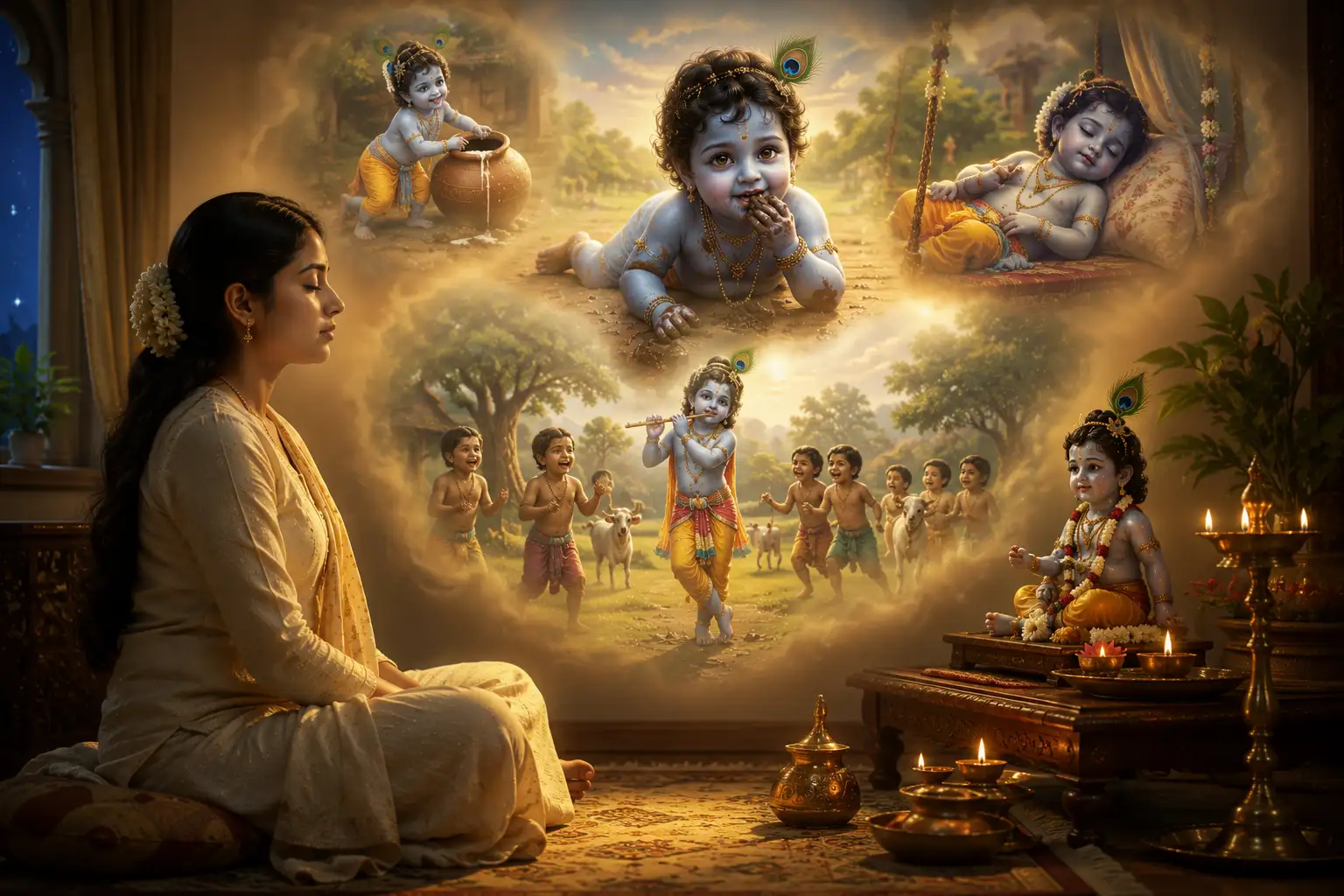
One of the most fascinating truths revealed through Bhagavad Katha is that although Shree Krishna was one person, not everyone experienced Him in the same way.
To Mother Yashoda, He was the mischievous little boy whose tiny footprints led straight to the butter pots. Her heart overflowed with motherly affection as she lovingly chased the child who delighted in stealing butter from every home in Gokul. She never paused to consider whether her son was the Supreme Divine Personality. Her love was so pure that it eclipsed awareness of His majesty.
To the cowherd boys, Shree Krishna was their closest companion. They wrestled with Him, laughed with Him, shared meals beneath the trees of Vrindavan, and wandered together through forests filled with calves and flowering groves. They knew no distinction between themselves and their beloved friend, and in that innocent simplicity lay the perfection of their devotion.
The gopis experienced something even deeper. Every melody from His flute drew their minds irresistibly towards Him. Every moment of separation felt longer than a lifetime, while every glimpse of His smiling face filled their hearts with indescribable bliss. Their love became the highest expression of complete selfless devotion, celebrated by saints throughout the ages as the pinnacle of bhakti.
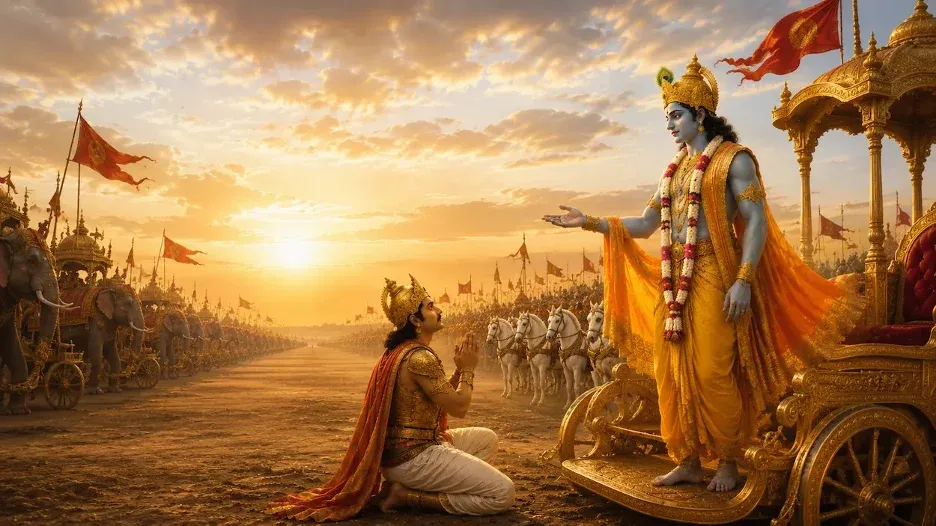
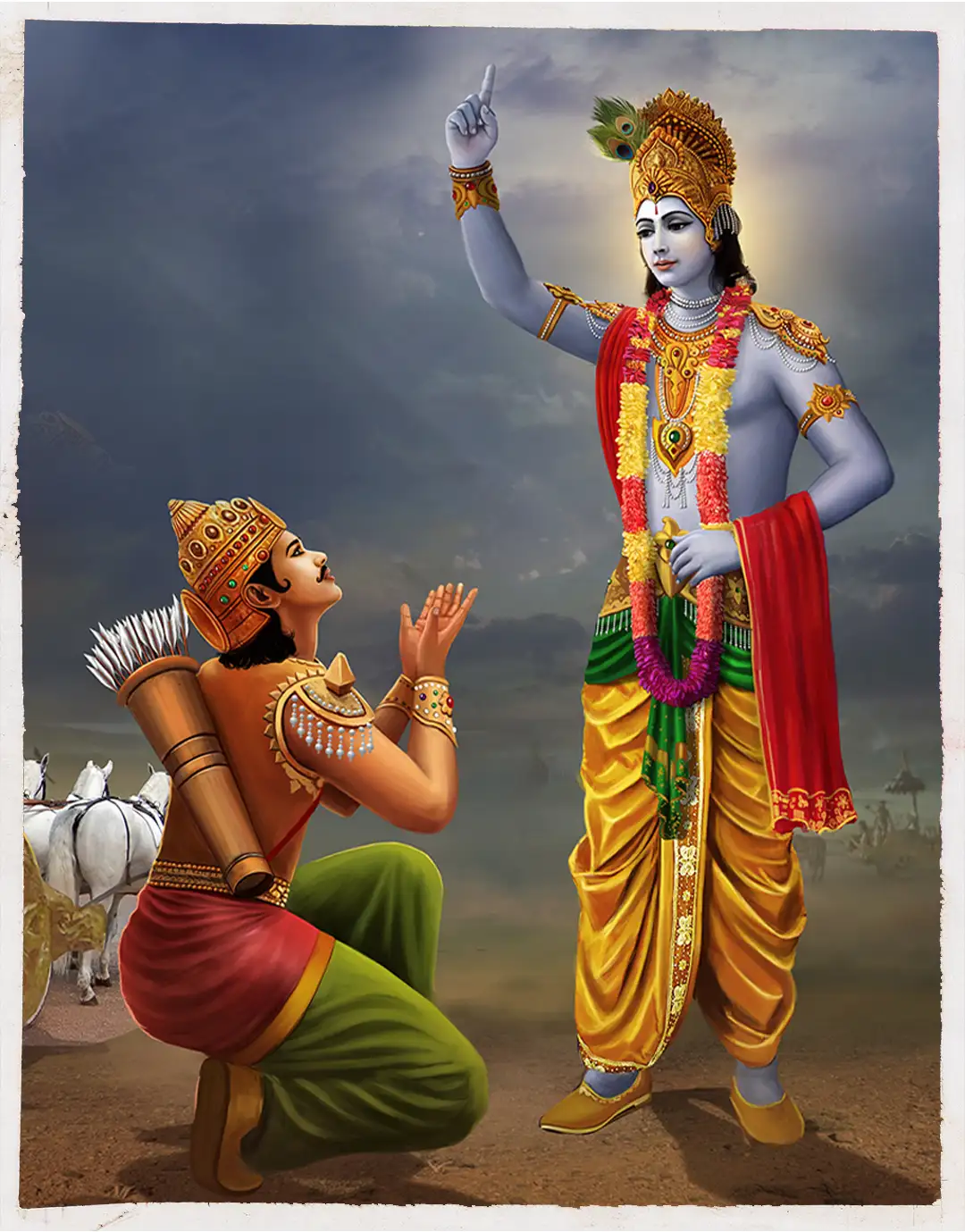
Arjuna encountered Shree Krishna as his dearest friend, trusted guide, and divine Guru. Standing on the battlefield of Kurukshetra, overwhelmed by confusion and despair, he discovered in his charioteer the eternal teacher who illuminated the path of dharma through the timeless wisdom of the Bhagavad Gita.
Yet not everyone beheld Shree Krishna with love.
King Kansa thought of Him constantly, but his thoughts were filled with terror rather than devotion. Every rumour from Vrindavan disturbed his sleep. Every report of miraculous events increased his fear. Although his mind remained absorbed in Shree Krishna day and night, his consciousness was clouded by hatred, and therefore he saw only the one whom he believed would bring about his destruction.
How extraordinary that the same Lord inspired motherly affection, friendship, reverence, romantic devotion, fear, jealousy, and hatred; all according to the condition of the observer's heart.
Swami Mukundananda beautifully explains that God is like the sun. The sun shines equally upon everyone, yet each person experiences its light differently depending upon the condition of their eyes.
In the same way, Shree Krishna's love is unconditional, but our experience of Him depends upon the purity of our own consciousness.
Bhagavad Katha therefore performs a remarkable miracle. It does not change Shree Krishna; He is eternally perfect. Instead, it changes the listener. As devotion deepens, the heart becomes purified, and our vision gradually transforms. We begin to see His hand where previously we saw only coincidence. We recognise His guidance where once we saw only chance. Most importantly, we begin to love the Lord not merely for what He gives us, but for who He is.
From Listening to Meditation: Entering the Divine Leelas

Have you ever wondered why the saints encourage us to hear the same pastimes repeatedly? Why do devotees joyfully listen to the Damodara Leela every Kartik, the Govardhan Leela every Annakut, or the divine birth of Shree Krishna every Janmashtami, even though they know every detail by heart?
The answer is that Bhagavad Katha is preparing the mind for something even deeper.
Our minds naturally meditate upon whatever leaves the strongest impressions. A favourite song replays itself long after it has ended. A memorable conversation lingers in our thoughts throughout the day. In the same way, every time we hear Bhagavad Katha with devotion, the beautiful form of Shree Krishna leaves a sacred impression upon the heart. His playful smile, His gentle flute, the loving glance He casts upon His devotees, the tender exchanges with Mother Yashoda, and the divine wisdom He shares with Arjuna all become living memories within our consciousness.
Over time, these impressions blossom into meditation.
Swami Mukundananda explains that Roop Dhyan, meditation upon the divine form of God, becomes natural when the mind has been nourished by repeated hearing of Bhagavad Katha. Without first hearing about Shree Krishna's qualities and pastimes, the mind struggles to remain absorbed in Him. But when the heart has been enriched through loving remembrance, meditation ceases to feel forced. The Lord's form arises spontaneously within the mind because it has become the heart's most cherished treasure.
This is why the saints describe Bhagavad Katha as the doorway to experiencing Shree Krishna's leelas. Listening leads to remembrance. Remembrance deepens into meditation. Meditation blossoms into loving devotion. And loving devotion gradually transforms every aspect of our lives.
As the Bhagavad Gita declares:
भक्त्या मामभिजानाति यावान्यश्चास्मि तत्त्वत: ।
ततो मां तत्त्वतो ज्ञात्वा विशते तदनन्तरम् ॥ 55॥
bhaktyā mām abhijānāti yāvān yaśh chāsmi tattvataḥ
tato māṁ tattvato jñātvā viśhate tad-anantaram
BG 18.55: Only by loving devotion to Me does one come to know who I am in Truth. Then, having come to know Me, My devotee enters into full consciousness of Me.
The journey begins with something beautifully simple: sitting with humility, opening the heart, and listening. What starts as hearing a sacred story slowly becomes a lifelong relationship with the Supreme Divine Personality. One day, we realise that we are no longer merely listening to Bhagavad Katha, we are living it, carrying Shree Krishna's presence into our thoughts, our actions, and our daily lives.
Why Bhagavad Katha Matters More Than Ever Today
Never before has humanity been surrounded by so much information, yet felt such a profound hunger for inner peace. Every day, our attention is pulled in countless directions by endless notifications, breaking news, social media, and the constant demands of modern life. While technology has made the world more connected than ever, many people feel increasingly disconnected from themselves, from one another, and from God.
In such an environment, Bhagavad Katha becomes more than a spiritual discourse; indeed, it becomes a refuge for the soul.
Every narration of Shree Krishna's divine pastimes gently invites the mind to slow down and return to what truly matters. Instead of dwelling on fear and uncertainty, the heart begins to dwell on the Lord's compassion. Instead of comparing ourselves with others, we begin to measure our lives by the growth of our devotion. The stories that once seemed distant become deeply personal, offering comfort during adversity, guidance in moments of confusion, and hope when life's challenges appear overwhelming.
Swami Mukundananda often reminds seekers that the mind always seeks an object of attachment. If it is not lovingly attached to God, it inevitably becomes attached to the ever-changing objects of the material world. Bhagavad Katha gently redirects that attachment towards the one relationship that never disappoints: the soul's eternal relationship with Shree Krishna.
This transformation does not happen because we force ourselves to become spiritual. It happens because repeated exposure to the Lord's beauty, compassion, and divine qualities naturally awakens love within the heart. Just as a piece of iron gradually becomes magnetised by remaining close to a magnet, the soul gradually becomes attracted to God by remaining in the company of His divine name, His devotees, and His sacred pastimes.
That is why saints throughout history have never considered Bhagavad Katha an occasional activity. It is nourishment for the soul, as essential to our spiritual life as food is to the body. Every time we listen with humility and faith, another layer of worldly distraction is gently removed, allowing the light of divine remembrance to shine more brightly within.
Conclusion: From Hearing to Experiencing
The scriptures repeatedly remind us that Shree Krishna's divine birth and pastimes are unlike any ordinary historical events. They are eternal expressions of God's infinite love, carefully preserved so that every generation may experience His grace.
The Bhagavad Gita declares:
जन्म कर्म च मे दिव्यमेवं यो वेत्ति तत्त्वत: ।
त्यक्त्वा देहं पुनर्जन्म नैति मामेति सोऽर्जुन ॥ 9॥
janma karma cha me divyam evaṁ yo vetti tattvataḥ
tyaktvā dehaṁ punar janma naiti mām eti so ’rjuna
BG 4.9: Those who understand the divine nature of My birth and activities, O Arjun, upon leaving the body, do not have to take birth again, but come to My eternal abode.
Understanding these divine activities does not arise merely through intellectual study. It blossoms through loving, attentive hearing. Every Bhagavad Katha becomes an opportunity to move beyond curiosity into conviction, beyond admiration into devotion, and beyond simply knowing about Shree Krishna to genuinely knowing Him.
Govardhan Leela teaches us to seek His shelter. Damodara Leela reveals the power of selfless love. The friendship of Sudama reminds us that devotion is the greatest wealth. The Bhagavad Gita illuminates the path of righteous living. Individually, these pastimes are beautiful. Together, they become a map leading the soul back to its eternal relationship with the Lord.
Swami Mukundananda beautifully explains that the purpose of Bhagavad Katha is not merely to fill the mind with scriptural knowledge but to awaken love for God. When love awakens, spiritual practice ceases to feel like an obligation and becomes a joy. Prayer becomes a conversation. Meditation becomes remembrance. Service becomes an offering of gratitude. Gradually, every aspect of life becomes infused with devotion.
As you celebrate Janmashtami 2026, may you not only remember the divine appearance of Shree Krishna but also allow His timeless words, enchanting form, and eternal leelas to become a living presence within your heart. For the greatest miracle of Bhagavad Katha is not that it tells us about God—it helps us discover that the Supreme Divine Personality has been lovingly waiting for us all along.
Call to Action
This Janmashtami 2026, go beyond simply celebrating the birth of Shree Krishna; begin living His teachings.
- Visit the Radha Krishna Temple of Dallas for one of their many offerings, or to offer some seva


- Study the Bhagavad Gita with Swami Mukundananda's authentic commentary.

- Download the JKYog Bhagavad Gita & Krishna Bhakti App for daily inspiration, guided meditations, bhajans, lectures, and spiritual resources.
 JKYog
JKYog

Frequently Asked Questions
What is Bhagavad Katha?
Bhagavad Katha is the devotional narration of the divine names, qualities, teachings, and pastimes of Shree Krishna as described in sacred scriptures such as the Srimad Bhagavatam, the Bhagavad Gita, and the Mahabharata. Listening with faith is considered one of the highest forms of Shravan Bhakti.
Why is Bhagavad Katha especially important during Janmashtami?
Janmashtami celebrates the divine appearance of Shree Krishna. Listening to Bhagavad Katha during this sacred festival helps devotees move beyond external celebrations and develop a deeper understanding of His divine birth, eternal leelas, and boundless compassion.
Can listening to Bhagavad Katha transform the mind?
Yes. The scriptures explain that regularly hearing Shree Krishna's glories purifies the heart, reduces worldly attachments, strengthens faith, and gradually awakens loving devotion. Over time, Bhagavad Katha transforms not only our understanding but also our character and outlook on life.
Which scriptures describe Shree Krishna's divine leelas?
Shree Krishna's childhood and youthful pastimes are beautifully narrated in the Srimad Bhagavatam, while His teachings to Arjuna are preserved in the Bhagavad Gita, which forms part of the Mahabharata. Together, these scriptures provide a complete picture of His divine personality and mission.
How can I begin experiencing Shree Krishna's leelas in my own life?
Begin by regularly listening to Bhagavad Katha, studying the Bhagavad Gita and Srimad Bhagavatam, chanting the holy names of Shree Krishna, practising Roop Dhyan meditation, and applying His teachings in daily life. As devotion deepens, His presence becomes increasingly real, transforming ordinary life into a spiritual journey.