Every year, Janmashtami invites millions of devotees to celebrate the divine appearance of Shree Krishna, the Supreme Divine Personality. Temples resound with devotional songs, homes are adorned with flowers and lamps, and the enchanting pastimes of the Lord are lovingly remembered. Yet Janmashtami is far more than a commemoration of a sacred event that took place over five thousand years ago. It is an invitation to rediscover the eternal wisdom that Shree Krishna brought for every soul.
The Srimad Bhagavatam reveals that every aspect of Shree Krishna's divine life carries profound spiritual meaning. His birth in Mathura, His playful childhood in Gokul, His loving relationships in Vrindavan, His guidance to devotees, and His teachings in the Bhagavad Gita all point toward one supreme truth: the highest purpose of human life is to awaken selfless love for God.
Swami Mukundananda explains that Shree Krishna did not descend merely to perform extraordinary miracles or defeat powerful tyrants. His greatest gift to humanity was to demonstrate the path of divine love. Through His own life, He showed that every soul can establish a deeply personal relationship with the Supreme Divine Personality through devotion, surrender, and loving remembrance.
As we celebrate Janmashtami 2026, let us look beyond the outward festivities and discover what Shree Krishna's divine life continues to teach every sincere seeker.

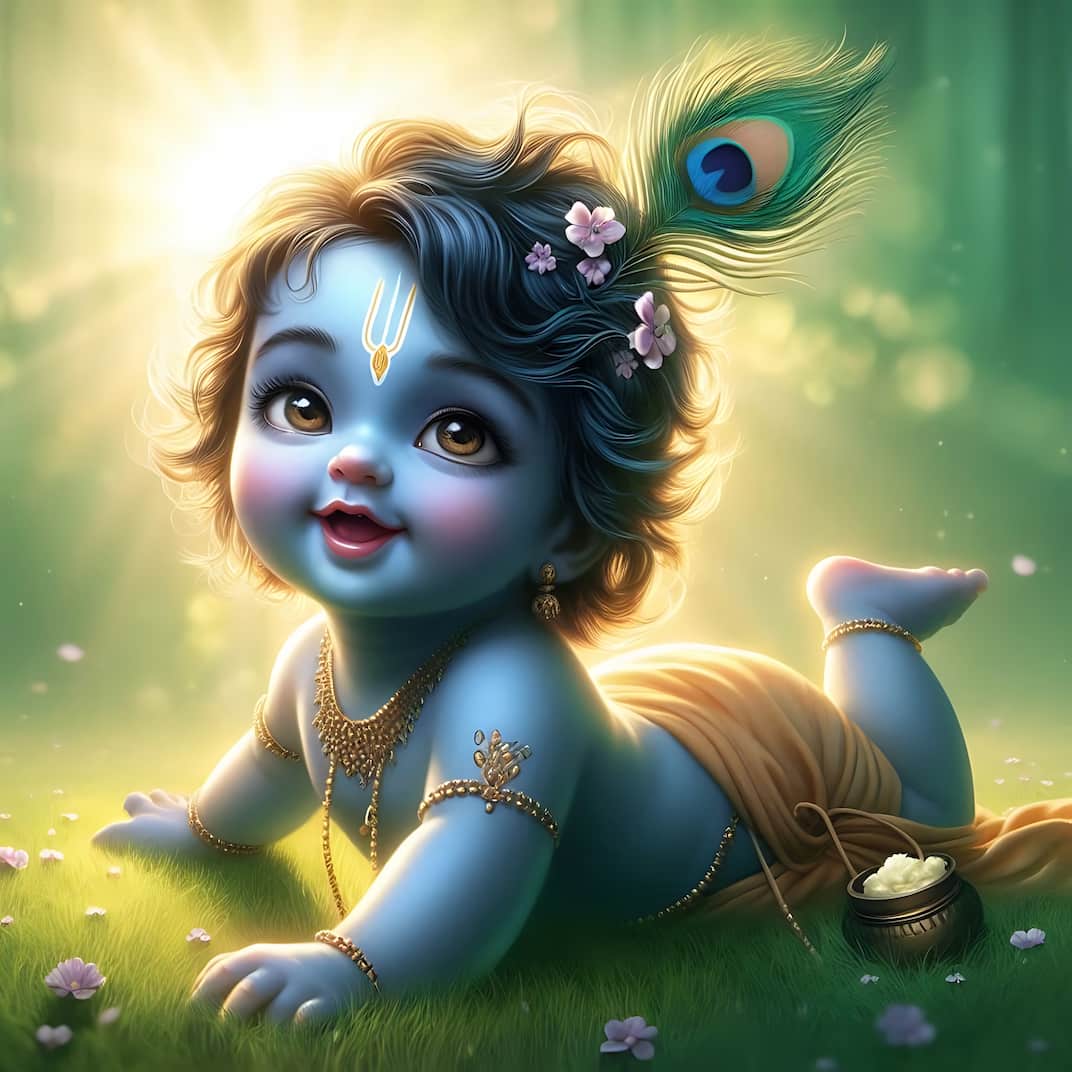
The Divine Appearance of the Supreme Divine Personality
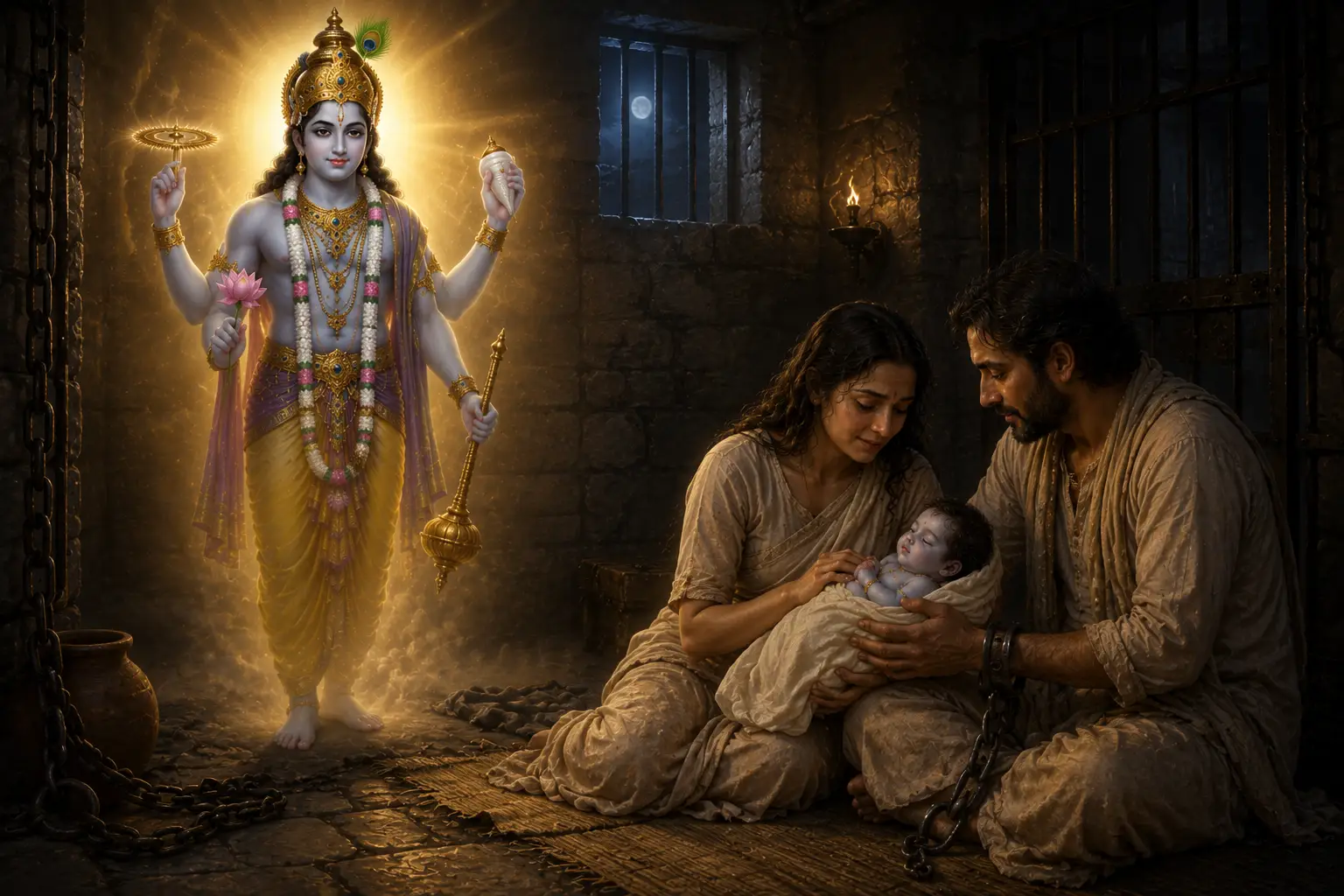
Unlike ordinary beings who take birth according to the laws of karma, Shree Krishna's appearance is entirely transcendental. The Srimad Bhagavatam describes how He manifested by His own divine will, revealing His supreme nature from the very beginning. Although He accepted the role of a human child, He was never limited by material nature.
His appearance fulfilled the promise He later declared in the Bhagavad Gita:
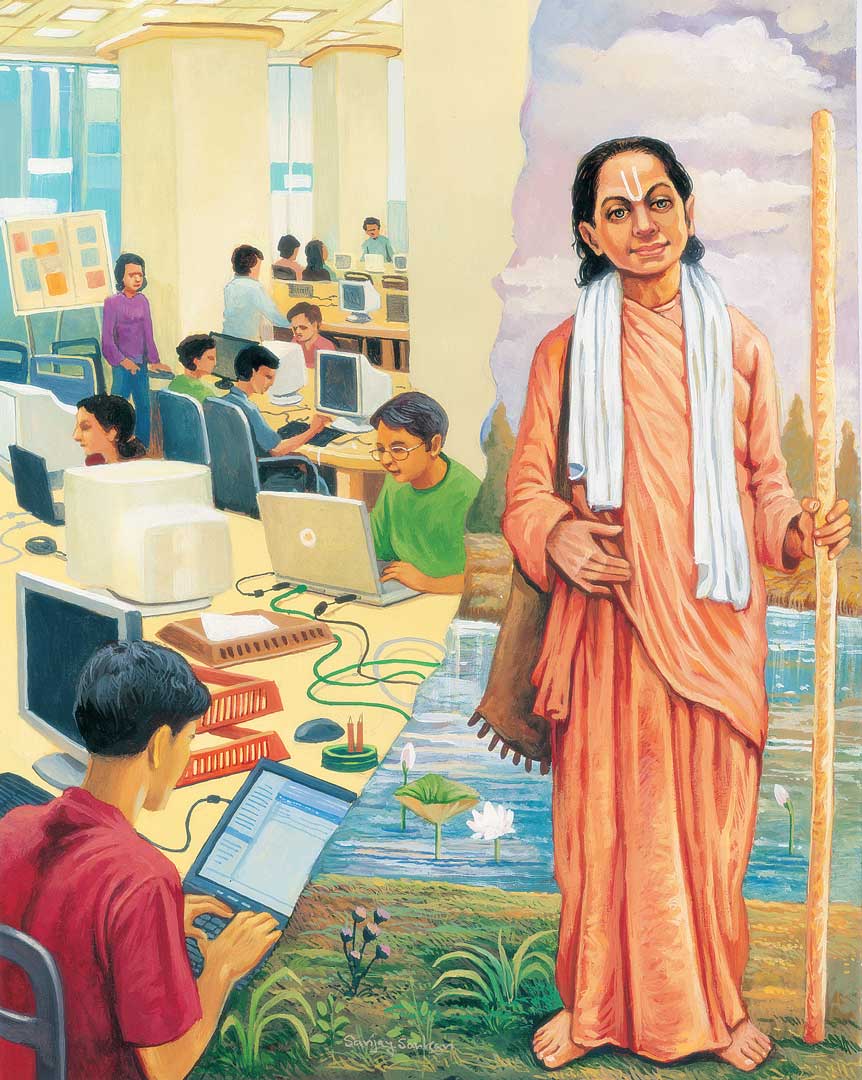
परित्राणाय साधूनां विनाशाय च दुष्कृताम् ।
धर्मसंस्थापनार्थाय सम्भवामि युगे युगे ॥ 8॥
paritrāṇāya sādhūnāṁ vināśhāya cha duṣhkṛitām
dharma-sansthāpanārthāya sambhavāmi yuge yuge
BG 4.8: To protect the righteous, to annihilate the wicked, and to reestablish the principles of dharma I appear on this earth, age after age.
Yet, restoring dharma was only part of His divine mission. The Bhagavatam lovingly reveals an even deeper purpose. The Supreme Divine Personality desired to shower His grace upon the world by inviting every soul into an eternal relationship of loving devotion. Through His enchanting pastimes, He made the infinite God approachable: not through fear or ritual, but through love.
The extraordinary events surrounding His birth therefore remind us that Janmashtami is not simply about celebrating the arrival of a great teacher. It is about welcoming the Supreme Lord into our own hearts.
Love Is Greater Than Power
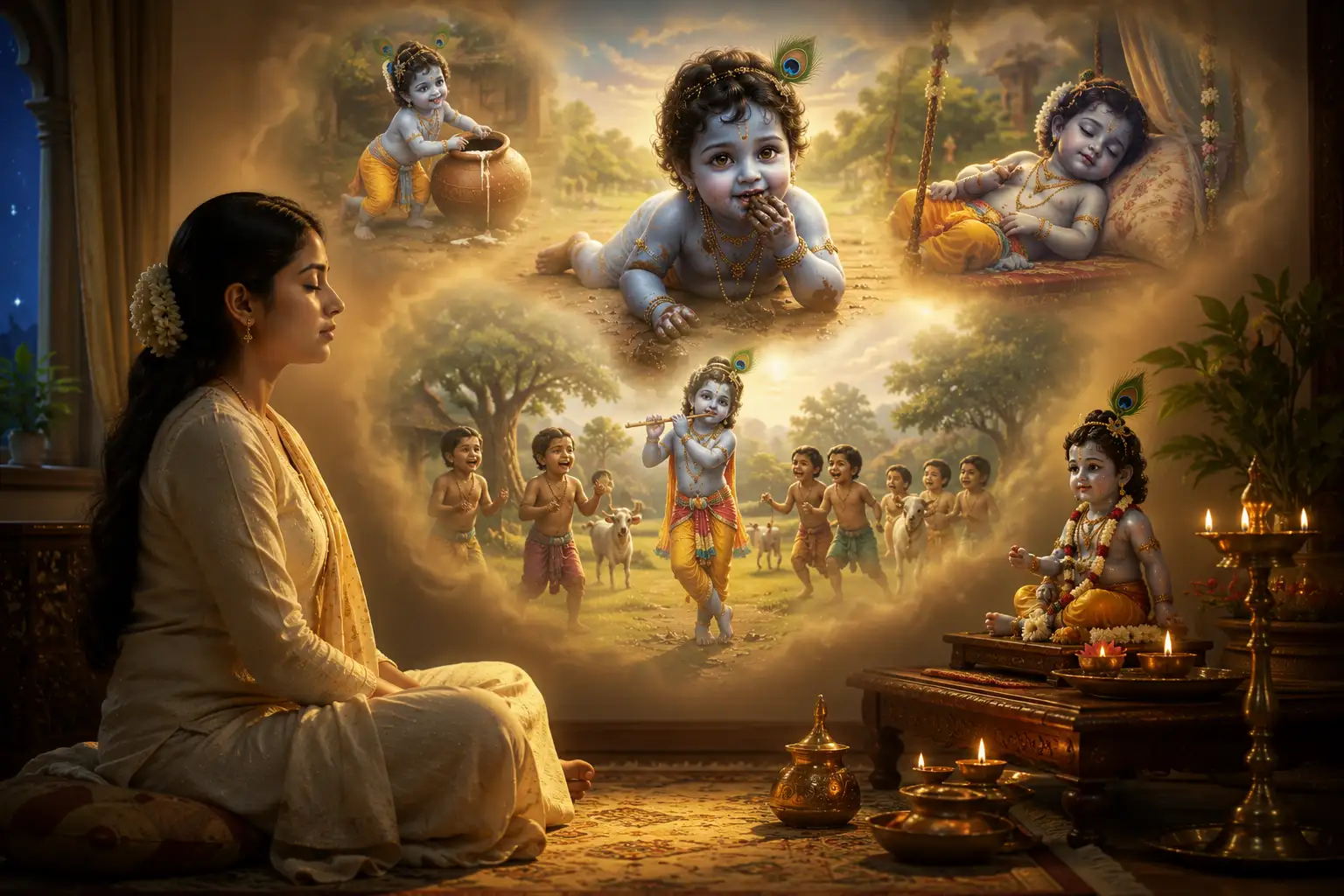
Throughout His childhood, Shree Krishna performed countless astonishing pastimes. He subdued fearsome demons, protected the residents of Braj, and effortlessly displayed powers beyond human comprehension. Yet what makes these pastimes extraordinary is not the miracles themselves, but the love they inspired.
Mother Yashoda did not see Him as the Supreme Lord. She saw only her beloved child. The cowherd boys treated Him as their closest friend, laughing, playing, and sharing meals together. The residents of Vrindavan loved Him without calculation or expectation.
The Supreme Divine Personality, who governs countless universes, allowed Himself to be bound by the affection of His devotees. This reveals one of the greatest truths in the Bhagavatam: God is conquered not by wealth, scholarship, or austerity, but by pure, selfless love.
Swami Mukundananda often explains that divine love is unique because it seeks only the happiness of the Beloved. When devotion becomes free from selfish desires, it attracts the limitless grace of God.
Faith Transforms Every Challenge into Divine Grace
Shree Krishna's life also reminds us that devotion does not remove every challenge from life. Even His closest devotees experienced hardship. Yet those difficulties became opportunities for their faith to deepen.
When torrential rains threatened to destroy Braj, Shree Krishna effortlessly lifted Govardhan Hill, providing shelter for every resident beneath its vast canopy. The miracle demonstrated far more than divine power. It revealed that complete surrender to God brings perfect protection, even when circumstances appear overwhelming.
Life inevitably presents uncertainty, disappointment, and suffering. The Bhagavatam teaches that instead of allowing adversity to weaken our faith, we can use every trial to strengthen our dependence upon the Supreme Divine Personality. When we place our trust in His infinite wisdom, even life's greatest challenges become stepping stones toward spiritual growth.
Rather than asking, "Why is this happening to me?" a devotee gradually learns to ask, "How is Shree Krishna guiding me closer to Him through this experience?"
Humility Opens the Door to Divine Grace
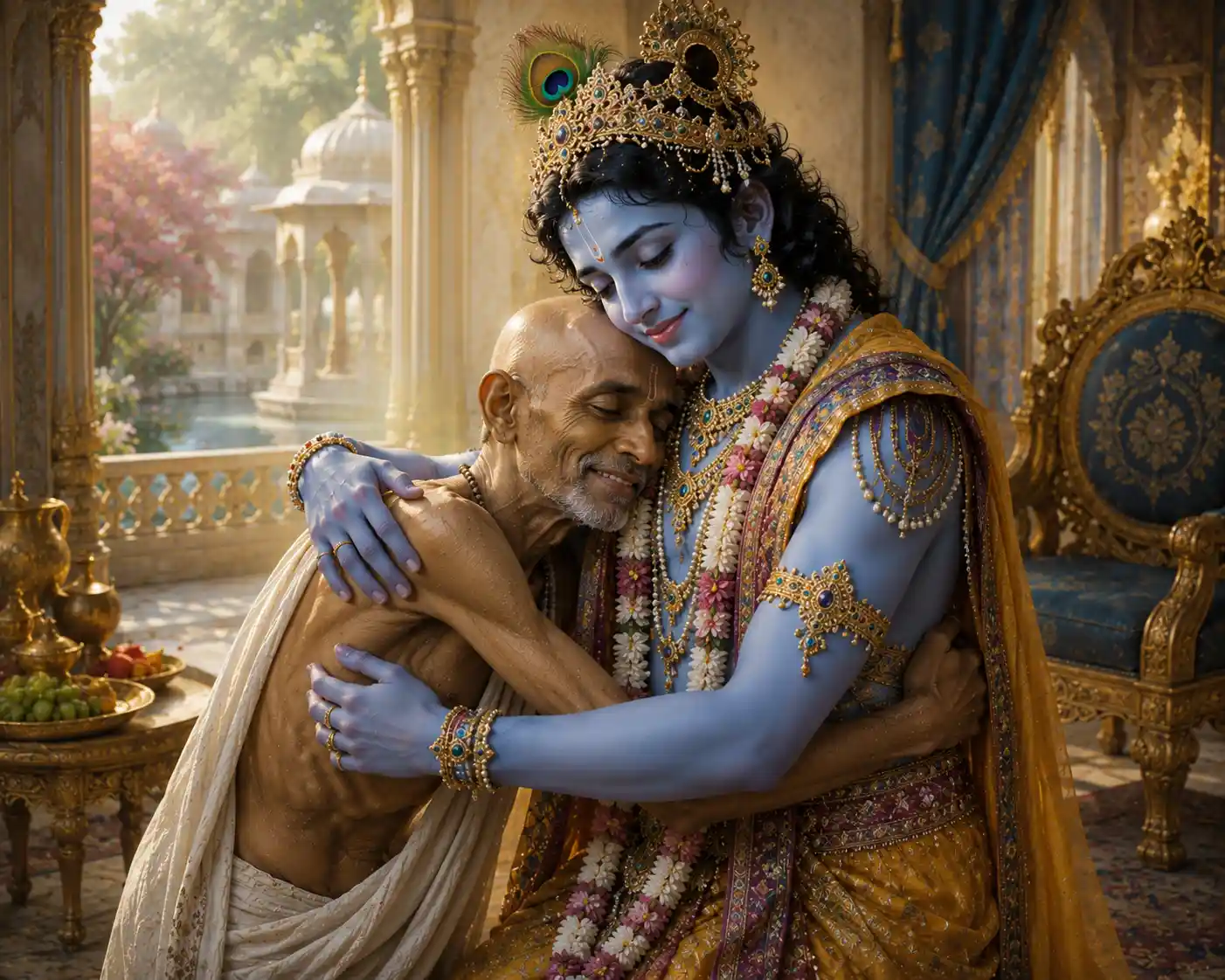
One of the recurring themes throughout Shree Krishna's pastimes is the contrast between pride and humility.
Kings intoxicated by power, scholars proud of their knowledge, and celestial beings attached to their prestige all discovered that ego separates the soul from God. By contrast, devotees who approached Him with simplicity and humility received His boundless affection:

अमानित्वमदम्भित्वमहिंसा क्षान्तिरार्जवम् ।
आचार्योपासनं शौचं स्थैर्यमात्मविनिग्रह: ॥ 8॥
इन्द्रियार्थेषु वैराग्यमनहङ्कार एव च ।
जन्ममृत्युजराव्याधिदु:खदोषानुदर्शनम् ॥ 9॥
असक्तिरनभिष्वङ्ग: पुत्रदारगृहादिषु ।
नित्यं च समचित्तत्वमिष्टानिष्टोपपत्तिषु ॥ 10॥
मयि चानन्ययोगेन भक्तिरव्यभिचारिणी ।
विविक्तदेशसेवित्वमरतिर्जनसंसदि ॥ 11॥
अध्यात्मज्ञाननित्यत्वं तत्वज्ञानार्थदर्शनम् ।
एतज्ज्ञानमिति प्रोक्तमज्ञानं यदतोऽन्यथा ॥ 12॥
amānitvam adambhitvam ahinsā kṣhāntir ārjavam
āchāryopāsanaṁ śhauchaṁ sthairyam ātma-vinigrahaḥ
indriyārtheṣhu vairāgyam anahankāra eva cha
janma-mṛityu-jarā-vyādhi-duḥkha-doṣhānudarśhanam
asaktir anabhiṣhvaṅgaḥ putra-dāra-gṛihādiṣhu
nityaṁ cha sama-chittatvam iṣhṭāniṣhṭopapattiṣhu
mayi chānanya-yogena bhaktir avyabhichāriṇī
vivikta-deśha-sevitvam aratir jana-sansadi
adhyātma-jñāna-nityatvaṁ tattva-jñānārtha-darśhanam
etaj jñānam iti proktam ajñānaṁ yad ato ’nyathā
BG 13.8-12: Humbleness; freedom from hypocrisy; non-violence; forgiveness; simplicity; service of the Guru; cleanliness of body and mind; steadfastness; and self-control; dispassion toward the objects of the senses; absence of egotism; keeping in mind the evils of birth, disease, old age, and death; non-attachment; absence of clinging to spouse, children, home, and so on; even-mindedness amidst desired and undesired events in life; constant and exclusive devotion toward Me; an inclination for solitary places and an aversion for mundane society; constancy in spiritual knowledge; and philosophical pursuit of the Absolute Truth—all these I declare to be knowledge, and what is contrary to it, I call ignorance.
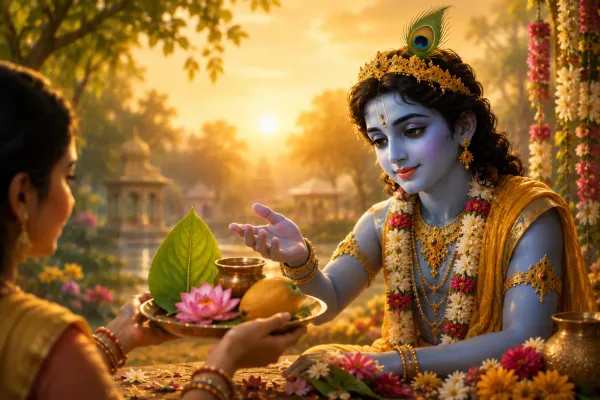
Sudama, Shree Krishna's childhood friend, arrived in Dwarka with nothing but a humble offering of flattened rice. Materially, it seemed insignificant. Spiritually, it was priceless because it was offered with genuine love. The Supreme Divine Personality welcomed His impoverished friend with tears of joy, demonstrating that He values the devotion behind an offering far more than its material worth.
This timeless lesson remains deeply relevant today. In a world that often celebrates status, possessions, and achievement, Shree Krishna reminds us that the purest offering is a humble heart filled with loving devotion.
Selfless Love Is the Soul's Greatest Treasure
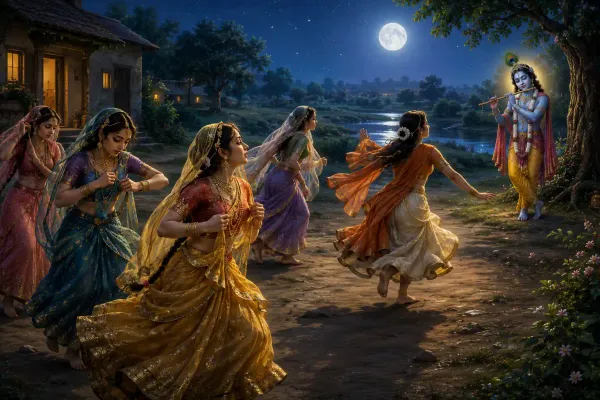
Among all the divine relationships described in the Srimad Bhagavatam, none illustrate pure devotion more beautifully than the love of the residents of Vrindavan.
Their love was entirely centred on Shree Krishna's happiness. They never approached Him seeking wealth, liberation, recognition, or personal gain. Their only desire was to serve and please Him.
This selfless love is the very essence of Bhakti.
Swami Mukundananda teaches that true devotion is measured not by external rituals but by the transformation of the heart. As selfish desires gradually diminish, divine love naturally blossoms. This journey requires sincere effort, patience, and constant remembrance of the Lord, but every step brings the soul closer to its eternal fulfilment.
For this reason, Janmashtami is not merely a celebration of Shree Krishna's birth. It is an opportunity to renew our own aspiration to love the Supreme Divine Personality more deeply than before.
Love and Serve Through Every Action
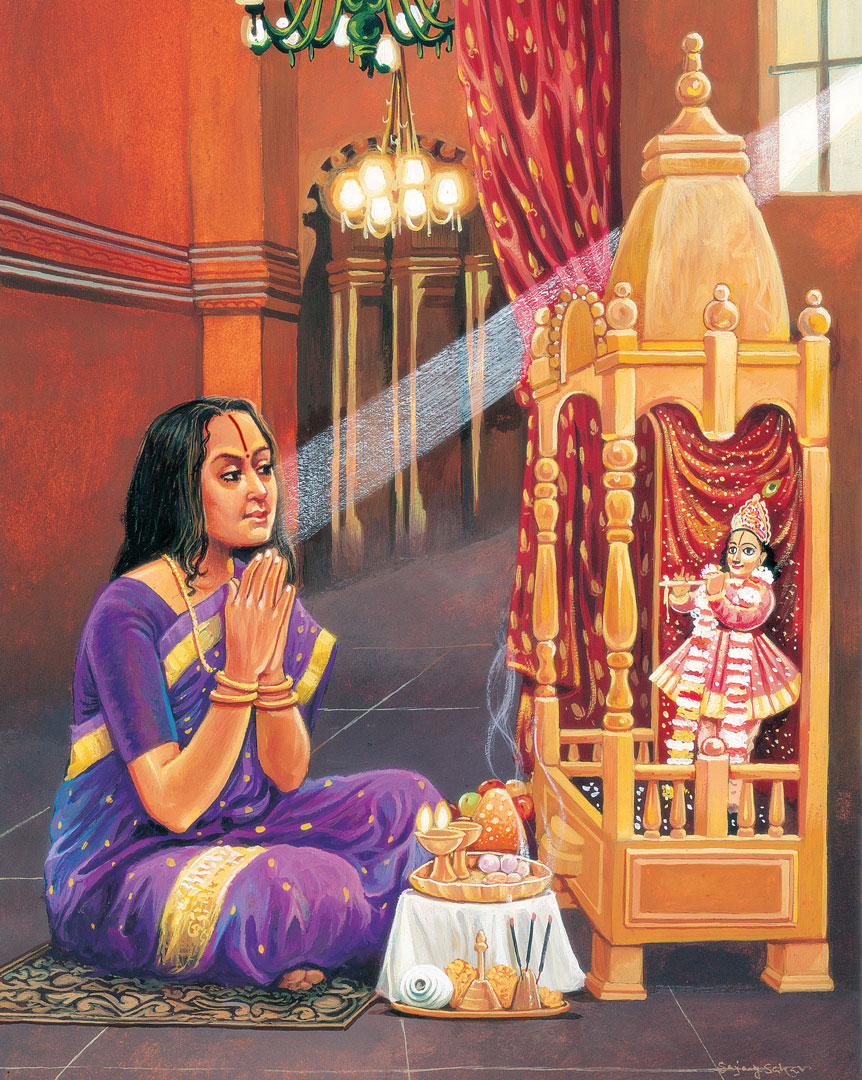
Many people imagine that devotion belongs only within temples or during times of worship. Yet Shree Krishna's life teaches something far more beautiful. Every action can become an offering when performed with the desire to please the Supreme Divine Personality.
Whether caring for our family, fulfilling our responsibilities at work, helping someone in need, or serving within our community, ordinary actions become extraordinary when offered with love. This transforms daily life from routine activity into a continuous expression of devotion.
The Bhagavad Gita teaches that God does not ask us to abandon our responsibilities. Rather, He invites us to spiritualise them by changing our consciousness. When our intention shifts from personal gratification to pleasing Shree Krishna, work becomes worship and service becomes a joyful privilege:
ये तु सर्वाणि कर्माणि मयि संन्न्यस्य मत्परा: ।
अनन्येनैव योगेन मां ध्यायन्त उपासते ॥ 6॥
तेषामहं समुद्धर्ता मृत्युसंसारसागरात् ।
भवामि नचिरात्पार्थ मय्यावेशितचेतसाम् ॥ 7॥
ye tu sarvāṇi karmāṇi mayi sannyasya mat-parāḥ
ananyenaiva yogena māṁ dhyāyanta upāsate
teṣhām ahaṁ samuddhartā mṛityu-saṁsāra-sāgarāt
bhavāmi na chirāt pārtha mayy āveśhita-chetasām
BG 12.6-7: But those who dedicate all their actions to Me, regarding Me as the Supreme goal, worshiping Me and meditating on Me with exclusive devotion, O Parth, I swiftly deliver them from the ocean of birth and death, for their consciousness is united with Me.
This is one of the most practical lessons of Janmashtami. The celebration does not end when the festival concludes. It continues every day through a life dedicated to loving service.
The Greatest Joy Is Found in Remembering God
Every soul longs for lasting happiness. Yet despite countless achievements and possessions, material satisfaction always proves temporary. The Srimad Bhagavatam repeatedly reminds us that the soul can never be fully satisfied by temporary pleasures because its true nature is spiritual.
Shree Krishna therefore directs our attention toward the only source of unlimited happiness: the loving relationship between the individual soul and the Supreme Divine Personality.
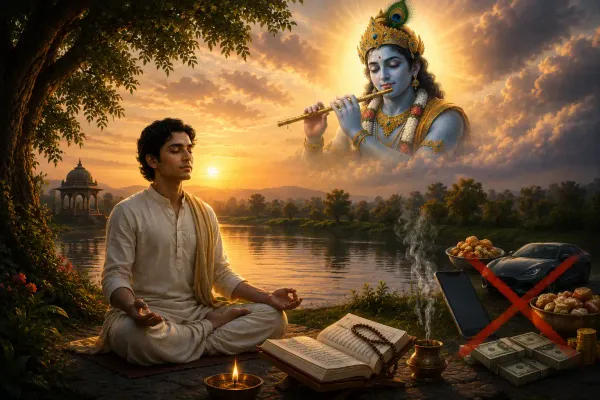
This does not require withdrawing from the world. Rather, it means gradually bringing our mind back to God amidst the activities of daily life. The more often we remember His divine qualities, His compassion, and His loving pastimes, the more naturally our hearts become filled with peace and contentment:

मच्चित्ता मद्गतप्राणा बोधयन्त: परस्परम् ।
कथयन्तश्च मां नित्यं तुष्यन्ति च रमन्ति च ॥ 9॥
mach-chittā mad-gata-prāṇā bodhayantaḥ parasparam
kathayantaśh cha māṁ nityaṁ tuṣhyanti cha ramanti cha
BG 10.9: With their minds fixed on Me and their lives surrendered to Me, My devotees remain ever content in Me. They derive great satisfaction and bliss in enlightening one another about Me and in conversing about My glories.
The saints explain that the mind always becomes coloured by whatever it frequently contemplates. If we constantly dwell upon worldly anxieties, we become anxious. If we lovingly remember Shree Krishna, the heart gradually becomes filled with divine joy.
Every Soul Is Invited Into a Personal Relationship with God
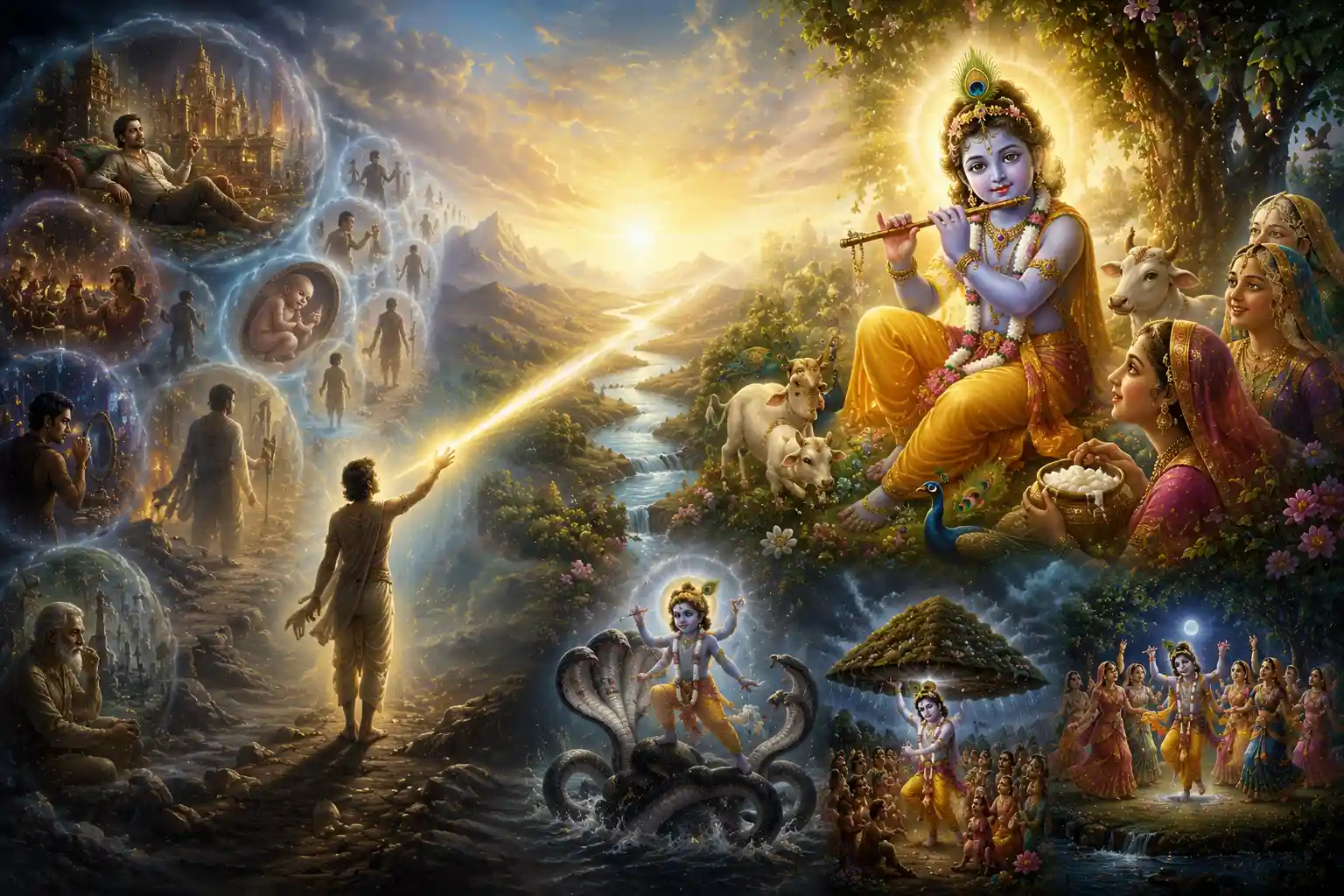
Perhaps the most extraordinary message of Shree Krishna's divine life is that the Supreme Lord is not distant or inaccessible. Throughout the Srimad Bhagavatam, He accepts many loving relationships with His devotees: as a child, friend, protector, beloved, guide, and compassionate Lord.
These relationships reveal that spirituality is not merely the pursuit of knowledge or liberation. Its ultimate goal is to awaken loving communion with God.
Swami Mukundananda beautifully explains that the soul's eternal nature is to love the Supreme Divine Personality. Every worldly relationship offers only a glimpse of the limitless love that already exists between God and the soul. As this dormant love awakens, fear diminishes, attachments loosen, and life becomes infused with meaning.
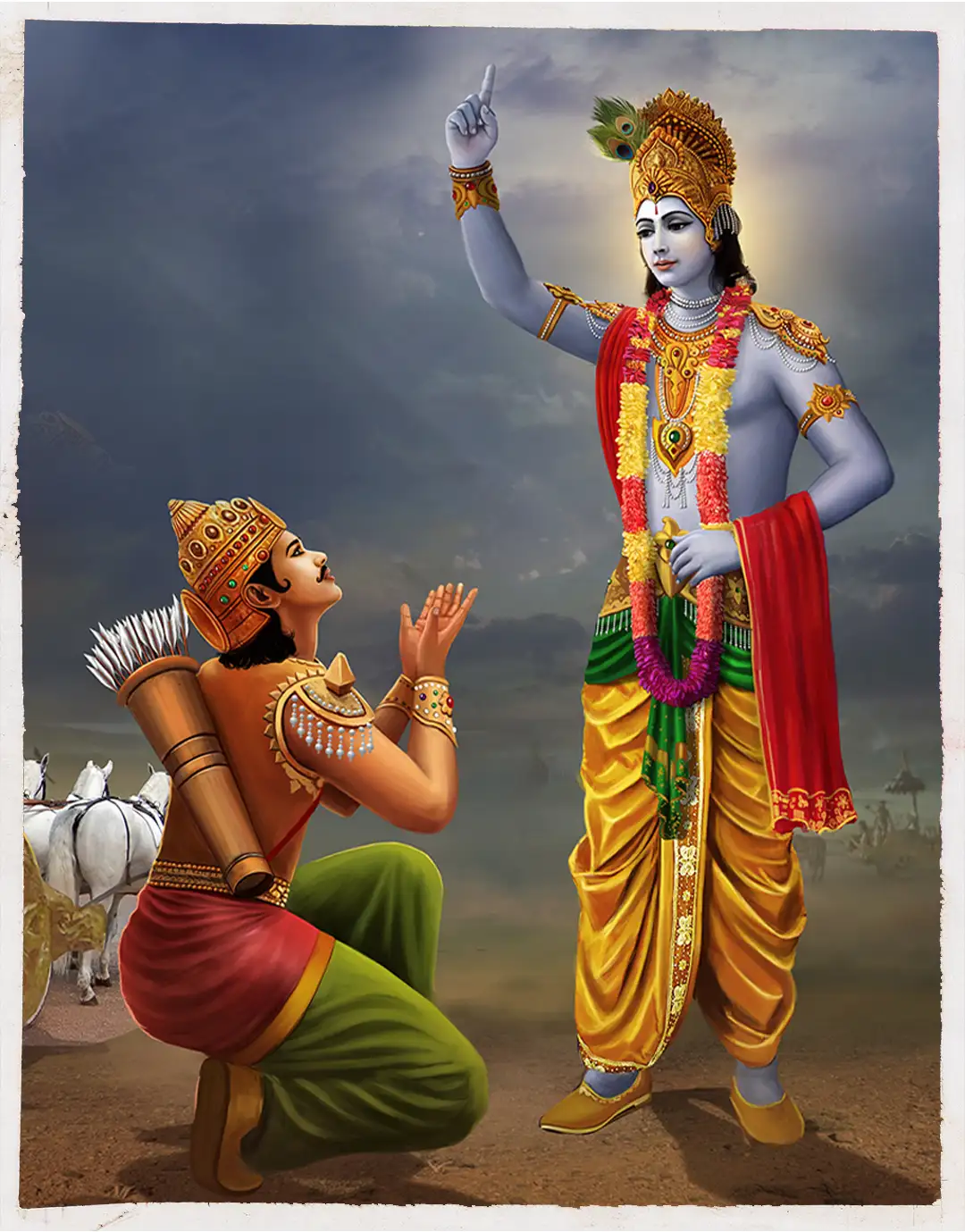
Janmashtami therefore celebrates far more than Shree Krishna's appearance in Mathura. It celebrates God's loving invitation to every soul: "Come back to Me."
सर्वधर्मान्परित्यज्य मामेकं शरणं व्रज ।
अहं त्वां सर्वपापेभ्यो मोक्षयिष्यामि मा शुच: ॥ 66॥
sarva-dharmān parityajya mām ekaṁ śharaṇaṁ vraja
ahaṁ tvāṁ sarva-pāpebhyo mokṣhayiṣhyāmi mā śhuchaḥ
BG 18.66: Abandon all varieties of dharmas and simply surrender unto Me alone. I shall liberate you from all sinful reactions; do not fear.
Living the Message of Janmashtami Through Trida Bhakti
The inspiration of Janmashtami becomes lasting when it is carried into everyday life. Swami Mukundananda teaches that one of the most practical ways to deepen devotion is through Trida Bhakti, three simple yet profound expressions of divine love.
The first is Shravan: listening to the glories of Shree Krishna through scriptures such as the Srimad Bhagavatam, the Bhagavad Gita, and the teachings of enlightened saints. Hearing divine wisdom repeatedly purifies the intellect and strengthens faith.
The second is Kirtan: joyfully glorifying the Supreme Divine Personality through devotional singing, prayer, discussion of His divine qualities, and sharing His teachings with others. Speaking about God nourishes devotion both within ourselves and within those who listen.
The third is Smaran: loving remembrance of Shree Krishna throughout the day. Whether during work, family life, or moments of quiet reflection, bringing the mind back to His divine form, His boundless compassion, and His enchanting pastimes gradually transforms ordinary life into a continuous spiritual practice.
These three practices beautifully complement one another. What we hear inspires what we speak, and what we speak naturally becomes the focus of our remembrance. Over time, this cycle deepens our love for the Supreme Divine Personality and allows devotion to flourish naturally within the heart.
Celebrating Janmashtami 2026 with Purpose
Janmashtami is much more than observing a sacred festival. It is an opportunity to pause, reflect, and renew our spiritual journey.
As you celebrate this Janmashtami, take a few moments to ask yourself:
- How can I cultivate a deeper, more selfless love for Shree Krishna?
- Which attachment or habit is preventing me from drawing closer to God?
- How can I make remembrance of the Supreme Divine Personality a natural part of my daily life?
- In what ways can I serve others as an expression of my love for God?
Every sincere effort, however small, becomes spiritually significant when offered with love. The Lord does not measure the size of our offering but the sincerity of our heart.
Conclusion: Let Shree Krishna Take Birth Within Your Heart
Janmashtami 2026 is not simply the remembrance of a divine event that took place thousands of years ago. It is an invitation to experience a new beginning within ourselves.
The divine life of Shree Krishna teaches us that love is greater than power, humility is stronger than pride, and selfless devotion is the soul's greatest treasure. Through His enchanting pastimes and eternal teachings, the Supreme Divine Personality continues to guide every sincere seeker toward lasting peace, fulfilment, and divine love.
As lamps are lit and devotional songs fill our homes and temples this Janmashtami, may we remember that the greatest celebration is not merely external. The true celebration begins when Shree Krishna becomes the centre of our thoughts, our actions, and our aspirations.
May this Janmashtami inspire us to hear His glories with eagerness, speak about Him with joy, remember Him with affection, and offer every aspect of our lives in loving service. When the heart becomes a temple of selfless devotion, the appearance of Shree Krishna is no longer just a historical event, it becomes a living reality within us.
Call to Action
This Janmashtami 2026, go beyond simply celebrating the birth of Shree Krishna; begin living His teachings.
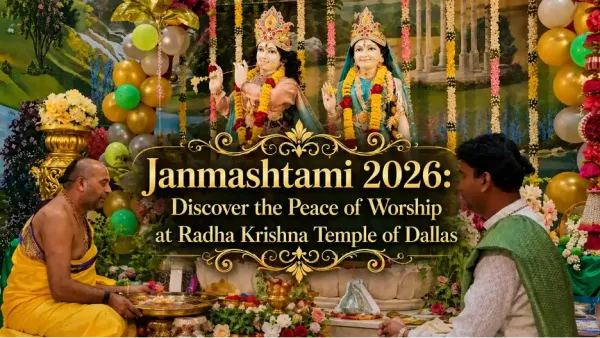
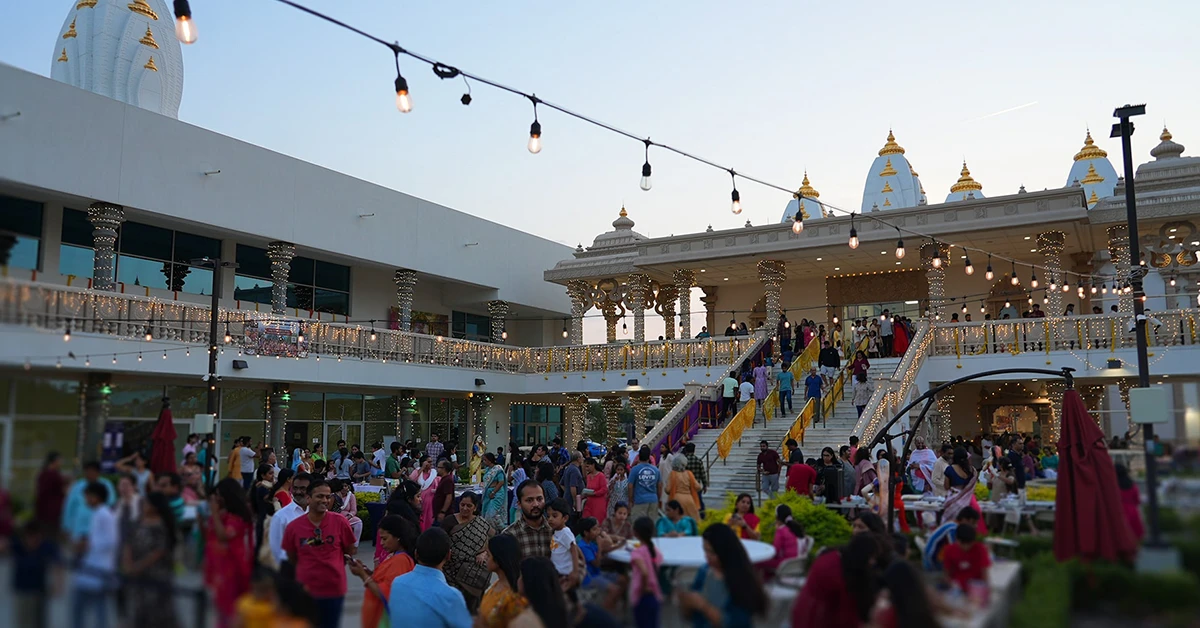
- Visit the Radha Krishna Temple of Dallas for one of their many offerings, or to offer some seva

- Study the Bhagavad Gita with Swami Mukundananda's authentic commentary.

- Download the JKYog Bhagavad Gita & Krishna Bhakti App for daily inspiration, guided meditations, bhajans, lectures, and spiritual resources.
 JKYog
JKYog

Frequently Asked Questions
1. Why is Janmashtami celebrated?
Janmashtami commemorates the divine appearance of Shree Krishna, the Supreme Divine Personality, who descended to re-establish dharma and guide souls towards the path of loving devotion. It is a celebration of His compassion, wisdom, and eternal relationship with every living being.
2. What is the deeper message of Shree Krishna's life?
Beyond His miraculous pastimes, Shree Krishna's life teaches that the highest purpose of human existence is to develop selfless love for God. His every action demonstrates compassion, humility, surrender, and the transformative power of divine love.
3. What is Trida Bhakti?
Trida Bhakti is a practical devotional path emphasised by Swami Mukundananda that consists of three complementary practices: Shravan (hearing the Lord's glories), Kirtan (glorifying Him through devotional expression), and Smaran (loving remembrance of the Supreme Divine Personality). Together, these practices gradually awaken pure devotion.
4. How can I celebrate Janmashtami meaningfully?
Along with participating in temple celebrations and devotional festivities, spend time reading the Srimad Bhagavatam, reflecting on Shree Krishna's teachings, engaging in devotional singing, serving others with love, and practising regular remembrance of the Lord throughout the day.
5. What is the greatest lesson Shree Krishna teaches?
The greatest lesson is that lasting fulfilment is found not in worldly achievements but in developing a loving relationship with the Supreme Divine Personality. Through selfless devotion, every soul can experience lasting peace, purpose, and divine joy.