The Reunion That Revealed the Highest Love
Every Janmashtami, devotees celebrate the divine appearance of Shree Krishna, the Supreme Divine Personality, whose life is filled with countless pastimes that continue to inspire humanity. We marvel at His miraculous childhood, His profound teachings in the Bhagavad Gita, and His glorious reign as the King of Dwarka. Yet among all these magnificent episodes, one quiet reunion reveals perhaps the deepest truth about devotion.

It was not fought on a battlefield or witnessed by vast assemblies. It was a meeting between Shree Krishna and the gopis at Kurukshetra after nearly a century of separation.
This encounter teaches a timeless lesson: God is not conquered by grandeur, power, or opulence. He is conquered only by pure love.
A Meeting After One Hundred Years
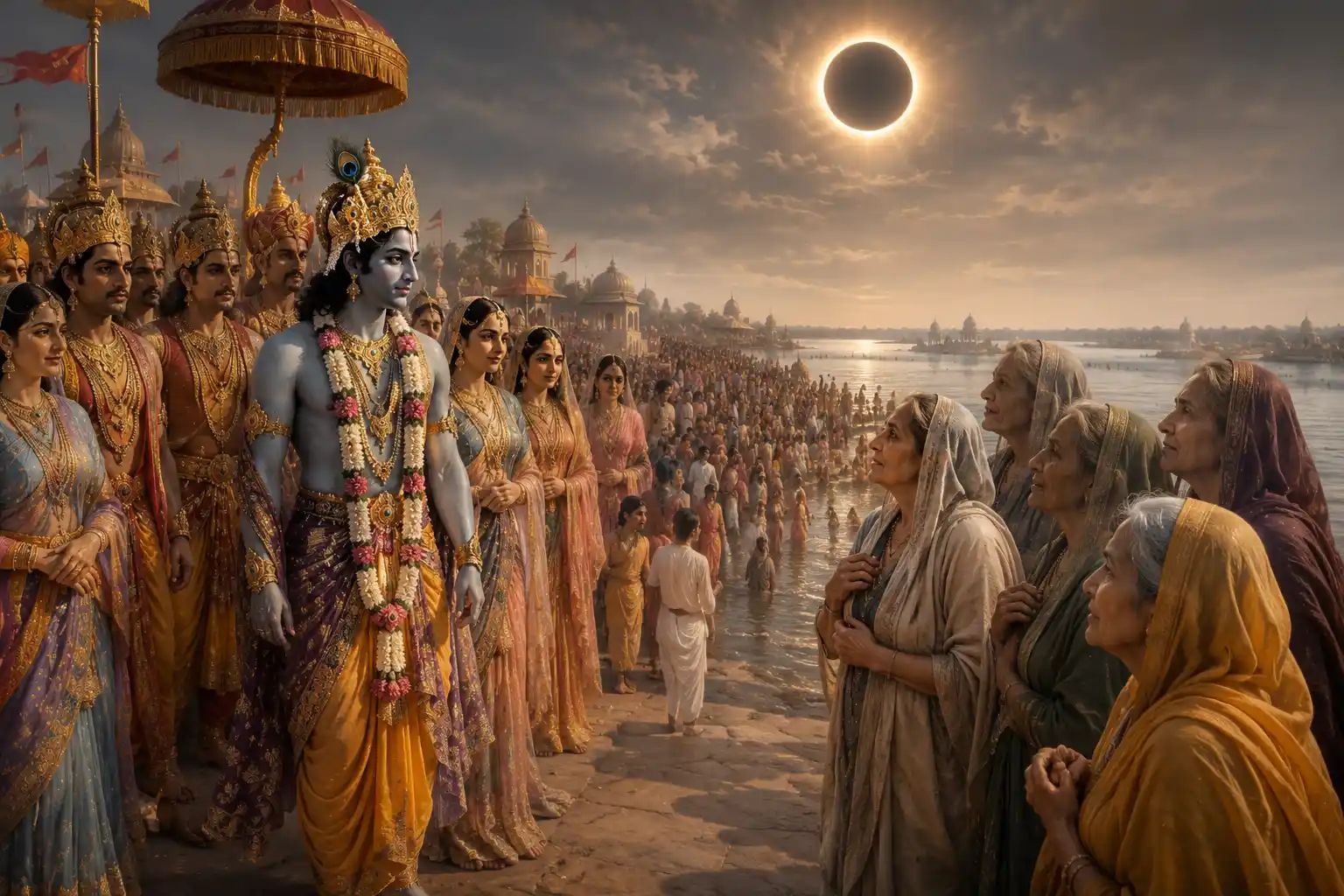
Many years had passed since Shree Krishna left Vrindavan for Mathura and later established His kingdom in Dwarka. The mischievous cowherd boy who played His flute beneath the kadamba trees had become a mighty ruler, revered by kings and honoured by sages throughout Bharat.
Then came the occasion of a rare solar eclipse. Pilgrims from every part of the country gathered at Kurukshetra to perform sacred rites, and among them arrived Shree Krishna with the Yadava dynasty. From the forests of Braj also came Nanda Baba, Yashoda Maiya, Srimati Radharani, and the gopis, whose hearts had never ceased longing for Him.
Their separation had lasted almost one hundred years.
For most relationships, such a passage of time would dim affection. Memories would fade, emotions would soften, and life would gradually move on. However, the love of the gopis followed a very different path.
Every passing day had deepened their remembrance of Shree Krishna. Every breeze reminded them of His flute, every forest path recalled His footsteps, and every moment of separation intensified their longing to serve Him. Time had changed their appearance, but it had never altered the direction of their hearts.
Swami Mukundananda explains that this is one of the defining characteristics of genuine bhakti. Love for God does not diminish with time or distance. When it is pure, every apparent separation draws the devotee closer to Him.
Why the Reunion Was Not Enough
When the gopis finally stood before Shree Krishna, they beheld the same Supreme Divine Personality they had loved throughout their lives. Yet something was profoundly different.
Gone was the simple cowherd boy dressed in yellow garments, adorned with a peacock feather and carrying His flute. Before them stood the majestic King of Dwarka, surrounded by royal chariots, soldiers, elephants, ministers, and queens.
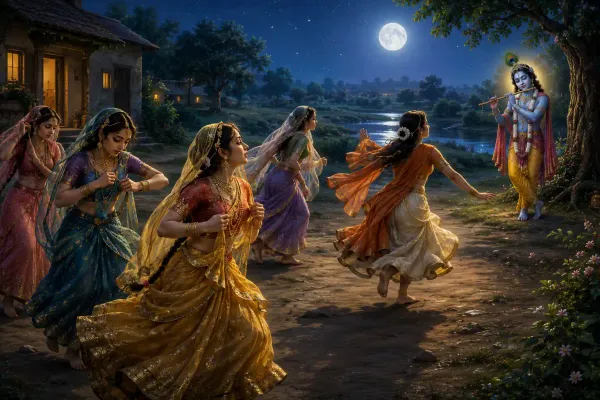
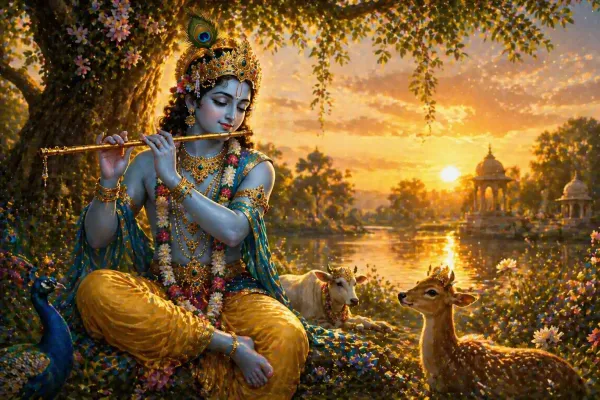
Everything reflected splendour and majesty, but the gopis were not captivated by any of it. Their hearts yearned for the Shyam Sundar who wandered barefoot through the forests of Vrindavan, who playfully stole butter from their homes, who tended cows with His friends, and whose enchanting flute filled every corner of Braj with divine bliss.
To an ordinary observer, this longing may seem surprising. Was not the King of Dwarka greater than the village boy of Vrindavan?
Spiritually, however, the gopis understood something far deeper. They had never loved Shree Krishna because of His position, they loved Him simply because He was Shree Krishna.
Sweetness Above Majesty
Jagadguru Shri Kripaluji Maharaj beautifully explains that there are two ways in which devotees experience God.
One is through His aishwarya, His divine majesty, omnipotence, and supreme glory. The other is through His madhurya, His sweetness, intimacy, and loving accessibility. Both are true manifestations of the Supreme Divine Personality.
In Dwarka, Shree Krishna revealed His royal majesty. Kings bowed before Him, armies obeyed Him, and the world honoured Him as its protector.
In Vrindavan, however, His sweetness shone without restraint. Mother Yashoda lovingly chastised Him. His friends climbed upon His shoulders during their games. The gopis laughed with Him, sang with Him, and served Him with spontaneous affection, never thinking of His supreme position. This sweetness was what their hearts longed for.
The gopis desired neither royal privilege nor divine visions. They wished only to once again serve Shree Krishna in the simple, intimate atmosphere of Vrindavan, where love flowed naturally without awareness of His greatness.
This is why Jagadguru Shri Kripaluji Maharaj teaches that the highest devotees are attracted more by God's sweetness than by His majesty. Pure love seeks intimacy with the Beloved, not admiration from a distance.
"Please Return to Vrindavan"
When the opportunity arose to speak with Shree Krishna privately, the gopis made no request for wealth, power, or liberation.
Instead, they offered a simple prayer: "Please return to Vrindavan." Those words reveal the extraordinary purity of their devotion.
They were not asking Him to make their lives easier. They were not requesting miracles or blessings. They longed only to see Him once again walking through the forests of Braj, where every tree, every flower, every bird, and every breeze existed solely to increase His joy.
The gopis did not wish to bring Vrindavan into a palace, they wished to bring Shree Krishna back to Vrindavan.
This distinction reveals the heart of bhakti. True devotion is not concerned with external surroundings. Whether one lives in a palace or a humble village matters little. What matters is whether one's heart is filled with loving remembrance of God.
The Secret of Constant Devotion
The reunion at Kurukshetra teaches another profound lesson.
The greatness of the gopis did not lie merely in the intensity of their love but in its constancy. For one hundred years, they had remained externally separated from Shree Krishna, yet inwardly they had never left His presence.
Most people remember God when life is peaceful, when they visit a temple, or when circumstances are favourable. When challenges arise or prayers seem unanswered, that remembrance often weakens.
The gopis showed another way, for their remembrance became stronger through separation.
Shree Krishna gives His divine assurance in the Bhagavad Gita:
अनन्याश्चिन्तयन्तो मां ये जना: पर्युपासते ।
तेषां नित्याभियुक्तानां योगक्षेमं वहाम्यहम् ॥ 22॥
ananyāśh chintayanto māṁ ye janāḥ paryupāsate
teṣhāṁ nityābhiyuktānāṁ yoga-kṣhemaṁ vahāmyaham
BG 9.22: There are those who always think of Me and engage in exclusive devotion to Me. To them, whose minds are always absorbed in Me, I provide what they lack and preserve what they already possess.
This promise was fully realised in the lives of the gopis. Although they were separated from Shree Krishna physically, they remained united with Him through uninterrupted remembrance. Their love no longer depended upon His visible presence because He had become the very centre of their hearts.
Swami Mukundananda explains that this is the purpose of all genuine spiritual practice. Through loving meditation, Roop Dhyan, satsang, scriptural study, and selfless seva, we gradually train the mind to remain connected with the Supreme Divine Personality throughout every circumstance of life.
The Foot Dust Leela
One day, Shree Krishna enacted a divine pastime to reveal the greatness of His devotees.
He complained of a severe headache that none of the physicians in Dwarka could cure. His queens became deeply concerned and searched for every possible remedy, but nothing brought Him relief. At that moment, Narad Muni arrived and asked if there was any medicine that could ease His suffering.
Shree Krishna gave a surprising answer: "My headache will disappear only if I drink water mixed with the dust from the feet of one of My devotees."
Narad Muni was astonished. Surely countless devotees would eagerly offer anything to relieve the Lord's pain. Yet when he approached the queens, they were horrified: "How can we place the dust of our feet upon the head of the Supreme Lord?" they thought. "Such an offence would surely condemn us."
Even Narad hesitated. Finally, he travelled to Vrindavan and shared Shree Krishna's request with the gopis. Their response was immediate. Without debating, analysing, or worrying about the consequences, they gladly offered the dust from their feet.
Narad warned them, "Do you realise that such an act could send you to hell?"
The gopis replied with complete simplicity: "If our Krishna's pain can be relieved, we gladly accept any suffering."
Their answer contained no trace of hesitation. They did not ask whether they would earn spiritual merit, nor did they wonder whether they would attain liberation. They cared only that Shree Krishna should no longer suffer, and this is the essence of selfless love.
Jagadguru Shri Kripaluji Maharaj explains that ordinary devotion often contains subtle expectations. We pray for protection, happiness, success, or liberation. The gopis had gone beyond all such desires. Their only prayer was that Shree Krishna should be pleased.
When Shree Krishna Felt Srimati Radharani's Pain
Another beautiful pastime reveals just how inseparable Shree Krishna and His highest devotees truly are.
The queens of Dwarka loved Shree Krishna deeply, yet they often wondered why He spoke so affectionately of the simple cowherd maidens of Vrindavan. What was so extraordinary about their devotion?
Desiring to answer their unspoken question, Shree Krishna arranged a divine lesson.
On one occasion, Srimati Radharani and the gopis were invited to the royal camp. Wishing to honour their guests, the queens served them with great affection. During the visit, they offered Srimati Radharani a cup of milk that was still extremely hot.
Absorbed completely in thoughts of Shree Krishna and unwilling to inconvenience anyone, Srimati Radharani quietly drank it despite the burning sensation.
Later that evening, the queens noticed painful blisters covering the lotus feet of Shree Krishna. Alarmed, they asked how this had happened. Shree Krishna smiled gently and replied that His lotus feet always rested within Srimati Radharani's heart. When the hot milk burned Her heart, He experienced that pain Himself.
Whether one understands this pastime literally or contemplates its deeper spiritual meaning, the lesson is the same: When love becomes completely pure, there is no separation between God and the devotee.
Shree Krishna describes this intimate relationship in the Bhagavad Gita:
समोऽहं सर्वभूतेषु न मे द्वेष्योऽस्ति न प्रिय: ।
ये भजन्ति तु मां भक्त्या मयि ते तेषु चाप्यहम् ॥ 29॥
samo ’haṁ sarva-bhūteṣhu na me dveṣhyo ’sti na priyaḥ
ye bhajanti tu māṁ bhaktyā mayi te teṣhu chāpyaham
BG 9.29: I am equally disposed to all living beings; I am neither inimical nor partial to anyone. But the devotees who worship Me with love reside in Me and I reside in them.
The gopis did not simply worship Shree Krishna, they lived for Him. Shree Krishna, in turn, carried them constantly within His own heart.
Jagadguru Shri Kripaluji Maharaj beautifully explains that divine love eventually reaches a stage where the happiness of God and the happiness of the devotee become inseparable. The devotee no longer lives for personal fulfilment, and the Lord willingly becomes bound by such love.
It is a remarkable paradox: The Supreme Lord, whom no one can control through power, knowledge, or austerity, allows Himself to be conquered by pure devotion.
What These Pastimes Teach Us
The gopis show us that bhakti matures when our focus shifts from ourselves to God. As love deepens, our prayers become less about our desires and more about His pleasure. This transformation does not happen overnight, but it is the destination of every sincere spiritual seeker.
Swami Mukundananda teaches that through daily remembrance, Roop Dhyan meditation, satsang, scriptural study, and selfless seva, the heart is gradually purified. Little by little, selfishness gives way to surrender, and devotion becomes less transactional and more unconditional.
This is the journey from ordinary faith to Prem Bhakti.
The Journey from Dwarka to Vrindavan
According to the Vaiṣṇava tradition, Shree Krishna lovingly agreed to accompany the gopis. A chariot was prepared, and Shree Krishna, along with Balram and Subhadra, ascended it as the devotees joyfully began pulling it towards Vrindavan.
This beautiful pastime is remembered as the inspiration behind the annual Ratha Yatra celebrated in Jagannath Puri.
For millions of devotees, pulling the Lord's chariot is far more than participating in a colourful festival. It symbolises an earnest prayer: "O Lord, please come into my heart. Let my life become Your Vrindavan."
The real journey of Ratha Yatra is therefore not measured in miles but in the transformation of the heart. Every act of devotion draws us away from the distractions of the world and closer to the loving remembrance of Shree Krishna.
What Does This Mean for Us Today?
The lives of the gopis may seem impossibly exalted, yet their example offers practical guidance for every spiritual seeker.
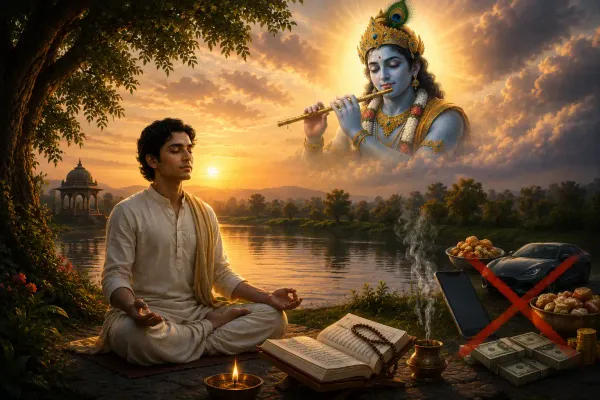
Most of us cannot renounce the world or spend every moment in sacred places, but we can gradually transform our daily lives into acts of devotion. Every responsibility can become an offering, every challenge an opportunity to remember God, and every interaction a chance to cultivate humility, compassion, and selfless service.
Swami Mukundananda teaches that bhakti is not measured by external appearances but by the direction of the heart. A person may live amid the responsibilities of family and work while remaining deeply connected to God through loving remembrance.
This is precisely what Shree Krishna teaches in the Bhagavad Gita:
मन्मना भव मद्भक्तो मद्याजी मां नमस्कुरु ।
मामेवैष्यसि युक्त्वैवमात्मानं मत्परायण: ॥ 34॥
man-manā bhava mad-bhakto mad-yājī māṁ namaskuru
mām evaiṣhyasi yuktvaivam ātmānaṁ mat-parāyaṇaḥ
BG 9.34: Always think of Me, be devoted to Me, worship Me, and offer obeisance to Me. Having dedicated your mind and body to Me, you will certainly come to Me.
The gopis fulfilled this instruction perfectly. Their remembrance of Shree Krishna did not depend upon His physical presence. Their hearts had become His eternal home.
Through daily Roop Dhyan meditation, sincere prayer, scriptural study, satsang, and selfless seva, our minds gradually become absorbed in the Supreme Divine Personality. As selfish desires diminish, love naturally expands.
We begin to discover that the greatest joy does not come from asking God to fulfil our wishes, but from asking how we may fulfil His.
The Greatest Treasure of Janmashtami
Janmashtami is much more than a celebration of Shree Krishna's birth. It is an invitation to reflect upon the kind of love that attracts even the Supreme Lord.
The gopis did not possess worldly influence or extraordinary scholarship. They became the greatest devotees because they loved without expectation. They valued the sweetness of Shree Krishna above royal splendour, His happiness above their own comfort, and His service above every personal desire.
As we celebrate Janmashtami 2026, may we strive to cultivate even a fraction of the devotion shown by Srimati Radharani and the gopis. If our remembrance becomes a little more constant, our service a little more selfless, and our love a little more exclusive, then the true spirit of Vrindavan will begin to awaken within our own hearts.
Call to Action
This Janmashtami 2026, go beyond simply celebrating the birth of Shree Krishna; begin living His teachings.
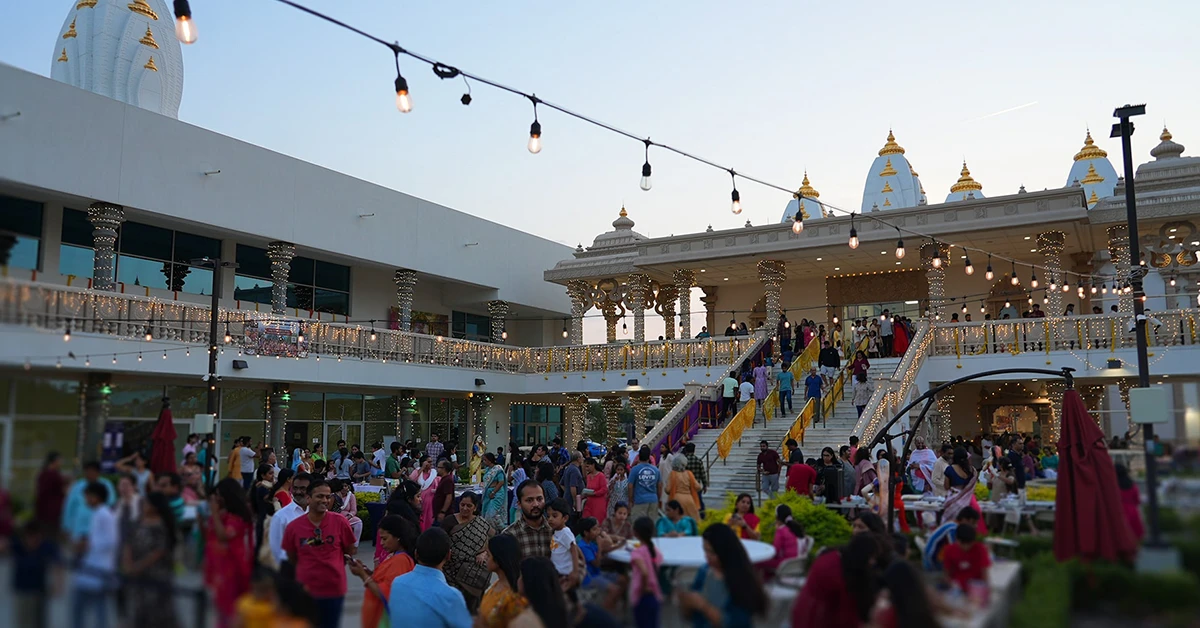
- Visit the Radha Krishna Temple of Dallas for one of their many offerings, or to offer some seva

- Study the Bhagavad Gita with Swami Mukundananda's authentic commentary.

- Download the JKYog Bhagavad Gita & Krishna Bhakti App for daily inspiration, guided meditations, bhajans, lectures, and spiritual resources.
 JKYog
JKYog

Frequently Asked Questions
1. Why did the gopis long for Vrindavan instead of remaining with Shree Krishna in Dwarka?
The gopis cherished the intimate, loving relationship they shared with Shree Krishna in Vrindavan. Their desire was not for a place but for the sweetness (madhurya) of serving Him with pure, spontaneous love.
2. What is the difference between madhurya and aishwarya?
Aishwarya refers to God's majesty, power, and divine opulence, while madhurya refers to His sweetness, intimacy, and loving accessibility. According to Jagadguru Shri Kripaluji Maharaj, the highest devotees are especially attracted to Shree Krishna's sweetness.
3. What is the spiritual lesson of the Foot Dust Leela?
The Foot Dust Leela demonstrates that true devotion is completely selfless. The gopis were willing to sacrifice even their own liberation if it meant relieving Shree Krishna's suffering, illustrating the highest ideal of Prem Bhakti.
4. Why did Shree Krishna experience Srimati Radharani's pain?
This beautiful pastime illustrates the inseparable bond between God and His highest devotees. It teaches that when devotion becomes completely pure, the Lord and His devotee become united in love.
5. What does Bhagavad Gita 9.22 teach about devotion?
Shree Krishna assures that those who think of Him constantly with exclusive devotion are personally cared for by Him. The lives of the gopis perfectly demonstrate this unwavering remembrance.
6. How can we cultivate this kind of devotion today?
Swami Mukundananda teaches that through Roop Dhyan meditation, satsang, scriptural study, selfless seva, and constant remembrance of Shree Krishna, we gradually purify the heart and develop deeper, more selfless love for God.