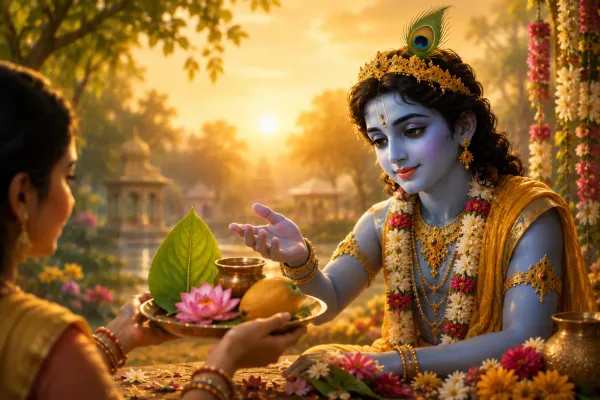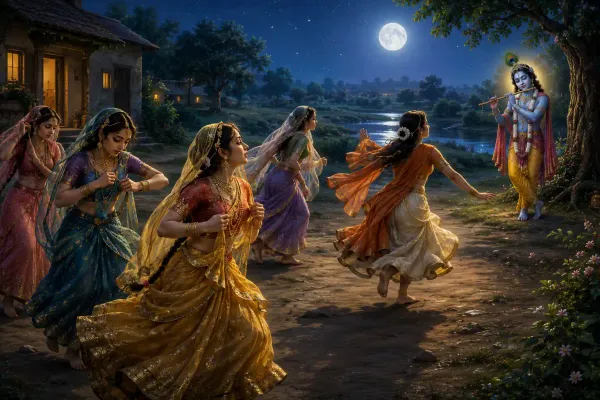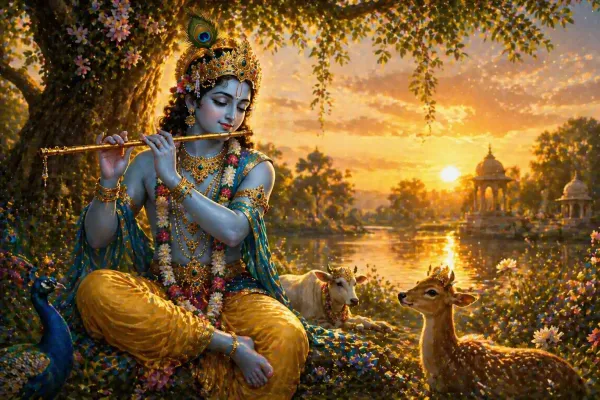
The arrival of Janmashtami 2026 is far more than a celebration of Shree Krishna's divine appearance on Earth. It is an invitation to lovingly remember the Supreme Lord, whose childhood pastimes continue to captivate the hearts of devotees across generations. Every smile, every playful prank, and every moment spent in Mother Yashoda's loving embrace reveals a profound spiritual truth: the Infinite Lord willingly allows Himself to be conquered by pure, selfless love.
The Srimad Bhagavatam describes these childhood leelas not merely as historical events, but as eternal pastimes that nourish devotion. Saints explain that by repeatedly hearing, remembering, and singing these divine pastimes, the heart gradually becomes purified and filled with love for God. This is why Janmashtami remains one of the most cherished festivals in Sanatan Dharma—not simply because Krishna appeared on this day, but because His appearance gave every soul the opportunity to develop a personal relationship with Him.
In the teachings of Swami Mukundananda and JKYog, Krishna's childhood pastimes become a practical means of cultivating Trida Bhakti: engaging the mind in smaranam (loving remembrance), the tongue in kirtanam (chanting His names and glories), and the ears in shravanam (listening to His divine leelas and wisdom). These three simple yet profound practices help anchor the restless mind in the Lord's remembrance, making them especially valuable in the distractions of Kali Yuga.
In this blog, we will journey through Shree Krishna's divine birth, His early childhood in Gokul, and some of His most beloved leelas with Mother Yashoda. More importantly, we will discover how these sacred pastimes can deepen our own devotion and transform Janmashtami into an occasion of genuine spiritual growth.
The Divine Appearance of Shree Krishna
Unlike ordinary beings who take birth according to the law of karma, Shree Krishna descends into this world through His own divine will. His appearance is an act of infinite compassion, intended to uplift humanity, re-establish dharma, and attract souls back to Him through divine love.
In the Bhagavad Gita, Shree Krishna reveals:
अजोऽपि सन्नव्ययात्मा भूतानामीश्वरोऽपि सन् ।
प्रकृतिं स्वामधिष्ठाय सम्भवाम्यात्ममायया ॥ 6॥
ajo ’pi sannavyayātmā bhūtānām īśhvaro ’pi san
prakṛitiṁ svām adhiṣhṭhāya sambhavāmyātma-māyayā
BG 4.6: Although I am unborn, the Lord of all living entities, and have an imperishable nature, yet I appear in this world by virtue of Yogmaya, My divine power.
Swami Mukundananda explains that God is never compelled to appear. Unlike ordinary souls, He is untouched by karma or material nature. Every incarnation is motivated solely by His boundless mercy. He descends to protect righteousness, guide sincere seekers, and most importantly, shower His devotees with opportunities to develop loving devotion.
For this reason, devotees lovingly say that Krishna was not "born" in the ordinary sense. He manifested, bringing with Him His eternal associates, divine abode, and transcendental pastimes.
Janmashtami 2026 Date and Significance

Janmashtami 2026 will be celebrated by millions of devotees around the world with fasting, kirtan, scriptural recitation, midnight worship, and joyful celebrations of Shree Krishna's appearance.
Krishna Janmashtami in the Dallas-Fort Worth area is celebrated on Friday, September 4, 2026. You are advised to confirm auspicious timings with a local temple.
The greatest offering we can make on Janmashtami is not an elaborate decoration or a grand feast. It is a heart absorbed in remembrance of the Lord.
Krishna Himself gives this simple instruction in the Bhagavad Gita:
मन्मना भव मद्भक्तो मद्याजी मां नमस्कुरु ।
मामेवैष्यसि युक्त्वैवमात्मानं मत्परायण: ॥ 34॥
man-manā bhava mad-bhakto mad-yājī māṁ namaskuru
mām evaiṣhyasi yuktvaivam ātmānaṁ mat-parāyaṇaḥ
BG 9.34: Always think of Me, be devoted to Me, worship Me, and offer obeisance to Me. Having dedicated your mind and body to Me, you will certainly come to Me.
This verse beautifully summarises the purpose of Janmashtami. Every celebration, bhajan, offering, and reading of scripture is meant to help the mind remain lovingly connected with Shree Krishna.
From Mathura to Gokul: The Beginning of Divine Childhood
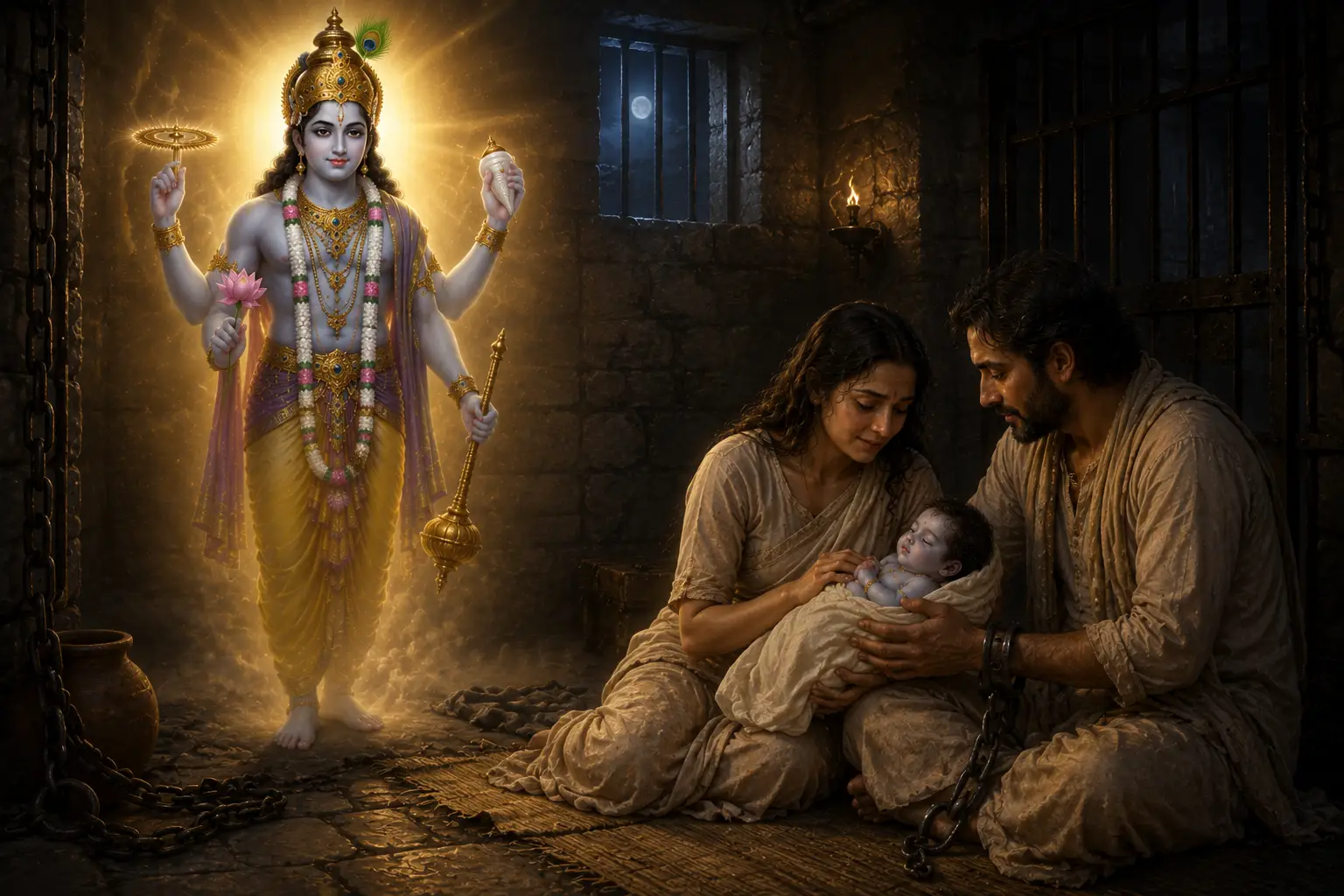
On the dark night of Krishna's appearance, the prison cell of Devaki and Vasudev became radiant with divine light. The Supreme Lord manifested before His parents in His majestic four-armed form, assuring them of His protection before assuming the enchanting form of an ordinary infant.
By Krishna's divine arrangement, the prison doors opened, the guards fell into deep sleep, and the shackles binding Vasudev were miraculously released. Carrying the newborn Lord in a basket upon his head, Vasudev crossed the overflowing Yamuna River, protected by the serpent Ananta Shesh, who spread His hoods to shield the Divine Child from the rain.
When Vasudev reached Gokul, he lovingly exchanged Krishna with the newborn daughter of Nanda Baba and Mother Yashoda before returning unnoticed to the prison.
Thus began one of the sweetest chapters in the Srimad Bhagavatam. The Supreme Lord, who sustains countless universes, chose to spend His childhood as the beloved son of simple cowherds. The Lord who is worshipped by celestial beings eagerly awaited the affectionate embrace of Mother Yashoda.
This extraordinary choice reveals a timeless truth. God is drawn not by wealth, scholarship, or social status, but by sincere love. Mother Yashoda did not know intricate philosophy, nor did she seek mystical powers. She simply loved Krishna with complete selflessness, and that pure affection became the highest expression of devotion.
The Sweetness of Vatsalya Bhakti
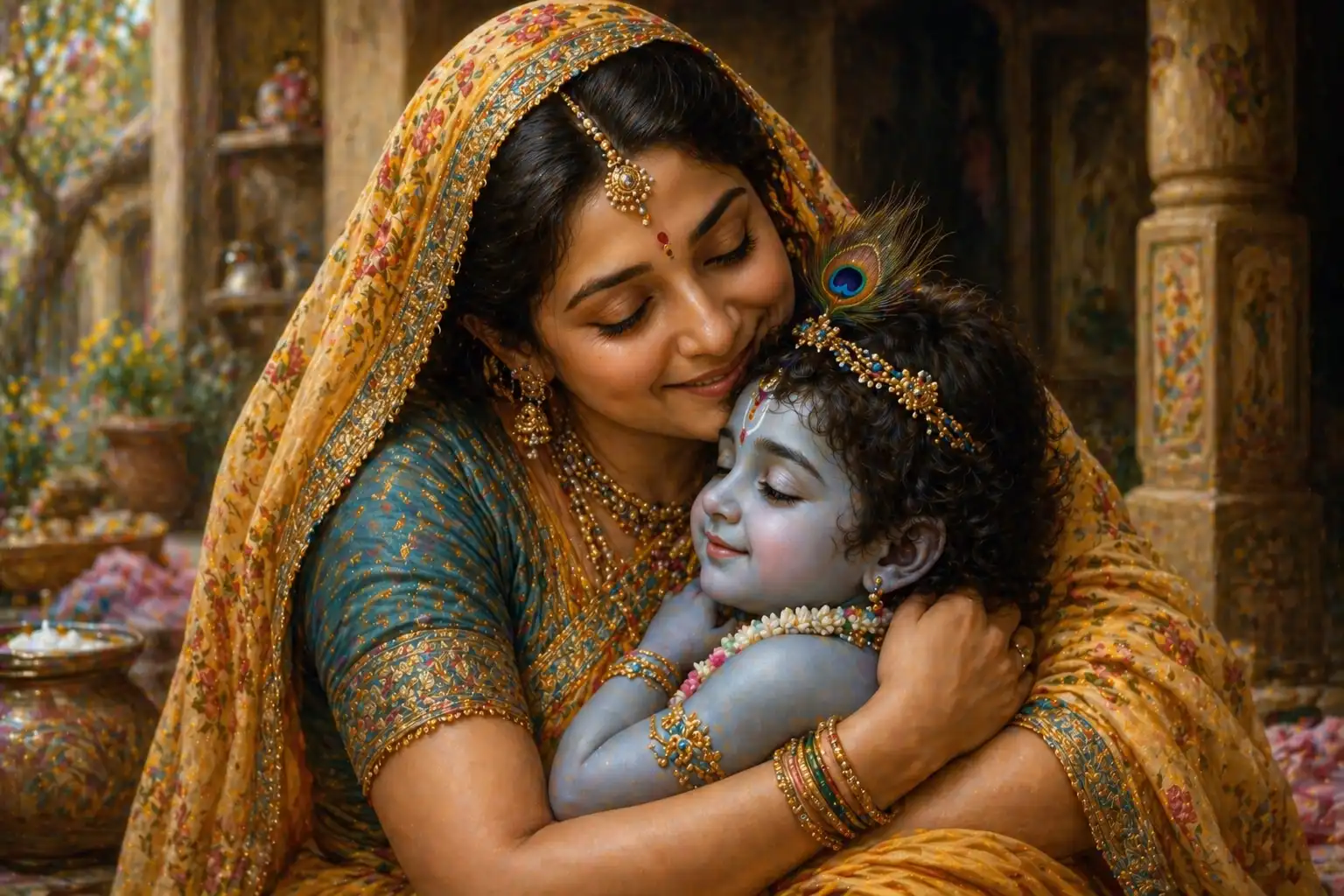
Among the many devotional relationships described in the scriptures, the love of a parent for the Lord is known as vatsalya bhava. In this mood, the devotee forgets God's majesty and simply longs to care for Him.
Mother Yashoda never thought, "I am serving the Supreme Lord." She worried whether Krishna had eaten enough, whether He had slept well, and whether He was safe while playing in the forests of Gokul. Her concern flowed naturally from unconditional love.
Swami Mukundananda often explains that such devotion is completely free from selfish desire. Yashoda never loved Krishna because He was God; she loved Him because He was her beloved child. Ironically, it was this very selflessness that attracted the Supreme Lord most deeply.
Her example reminds us that devotion is not measured by external rituals alone. The Lord values the love behind every offering.
As Shree Krishna says in the Bhagavd Gita:
पत्रं पुष्पं फलं तोयं यो मे भक्त्या प्रयच्छति ।
तदहं भक्त्युपहृतमश्नामि प्रयतात्मन: ॥ 26॥
patraṁ puṣhpaṁ phalaṁ toyaṁ yo me bhaktyā prayachchhati
tadahaṁ bhaktyupahṛitam aśhnāmi prayatātmanaḥ
BG 9.26: If one offers to Me with devotion a leaf, a flower, a fruit, or even water, I delightfully partake of that item offered with love by My devotee in pure consciousness.
The offering itself is secondary. What delights the Lord is the devotion with which it is given.
Krishna Resting in Mother Yashoda's Lap
One of the most endearing images in Krishna Bhakti is that of little Krishna peacefully resting in Mother Yashoda's lap after a day filled with playful adventures. She gently rocks Him to sleep, sings lullabies, and gazes upon His beautiful face with immeasurable affection.
To the ordinary eye, this appears to be the tender love between a mother and her child. Yet devotees know that this child is the Supreme Personality of Godhead, whom even the greatest yogis struggle to realise through years of austerity.
The contrast is astonishing. The Lord who sustains the entire universe willingly closes His eyes in the comforting embrace of His devotee.
Swami Mukundananda explains that this reveals the extraordinary power of selfless devotion. Divine love does not diminish God's greatness; rather, it reveals the sweetness of His personality. Krishna delights in reciprocal relationships with His devotees and allows them to experience Him in intimate ways that transcend awe and reverence.
When devotees lovingly meditate on this scene, their own hearts begin to soften. The purpose is not simply to admire a beautiful story but to awaken loving remembrance of Shree Krishna. As the mind repeatedly reflects on His enchanting childhood form, attachment to worldly distractions gradually weakens, and remembrance of God becomes increasingly natural.
This is one of the practical applications of smaranam, the first limb of Trida Bhakti. By frequently remembering Krishna's form and His childhood pastimes, the mind finds a higher, purer object of meditation.
Makhan Chor: The Butter Thief Who Stole Hearts
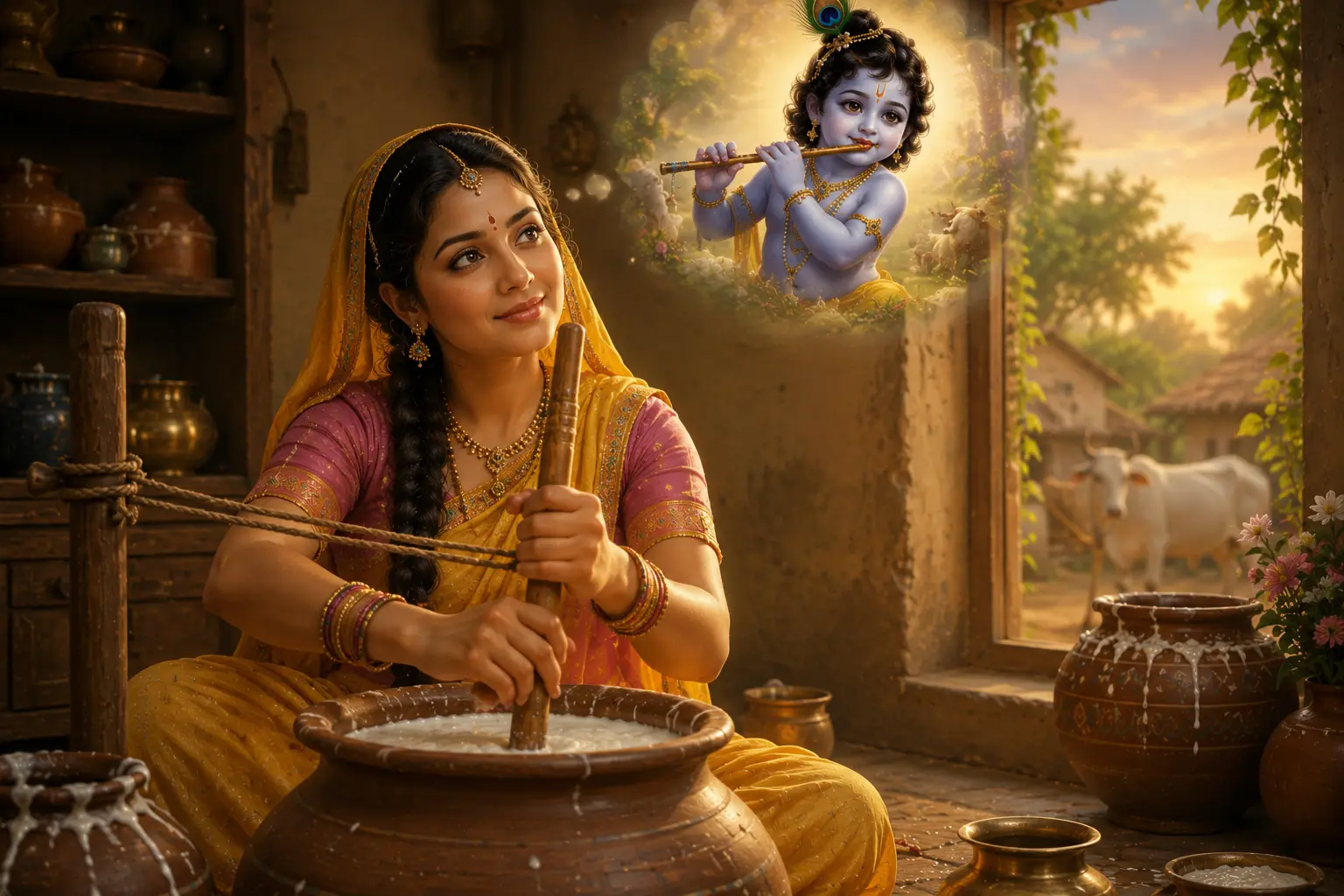
Among Krishna's childhood leelas, none is more beloved than His playful butter-stealing adventures.
The women of Gokul carefully hid freshly churned butter in suspended pots, hoping to keep it beyond the reach of the mischievous young Krishna. Yet every day He devised ingenious ways to reach the butter. Sometimes He climbed upon overturned mortars with His friends. At other times He formed human pyramids, broke the hanging pots, and happily shared the butter with monkeys before innocently denying everything when confronted.
The gopis often arrived at Mother Yashoda's home with playful complaints. Yet even as they narrated Krishna's mischievous exploits, their hearts overflowed with affection. They secretly longed for Him to visit their homes again.
Why did the all-powerful Lord steal butter when He lacked nothing?
Saints explain that Krishna was never attracted by the butter itself. Rather, He was attracted by the love with which it had been prepared. The butter represented the devotees' labour, affection, and heartfelt offerings. More than anything else, Krishna wished to steal their hearts.
This beautiful pastime reminds us that God does not seek expensive offerings. He longs for sincere devotion.
Whether we offer a simple flower, sing His holy names, listen to His divine pastimes, or remember Him with genuine affection, the Lord joyfully accepts every expression of love.
For devotees celebrating Janmashtami today, the Makhan Chor Leela offers a gentle invitation. Instead of merely decorating our homes, we can offer Krishna something far more precious: a heart purified through shravanam, kirtanam, and smaranam. As we hear His childhood pastimes, sing His glories, and lovingly remember His enchanting form, we discover that the Divine Butter Thief continues His sweetest pastime: stealing the hearts of those who lovingly remember Him.
The Damodar Leela: When Love Bound the Infinite
Among all of Shree Krishna's childhood pastimes, the Damodar Leela beautifully illustrates that pure devotion has the power to attract the Supreme Lord.
One day, Mother Yashoda was churning fresh butter while singing about Krishna's childhood exploits. Hearing her loving voice, little Krishna approached and asked to be fed. As she lovingly nursed Him, milk boiling on the stove began to overflow. Yashoda gently placed Krishna down to save the milk that she intended to offer Him later.
Feeling neglected, Krishna displayed His adorable childhood mischief. He broke a pot of freshly churned butter and began sharing it with the monkeys. When Mother Yashoda returned and saw the scene, she chased the mischievous child through the courtyard.
The Srimad Bhagavatam describes a remarkable moment. The Supreme Lord, who is feared by fear itself, ran from His loving mother. Eventually, Yashoda caught Him and attempted to tie Him to a wooden mortar. Yet every rope she used proved to be two fingers too short. Only when Krishna saw her exhausted, perspiring, and completely absorbed in love did He allow Himself to be bound.
The Damodar Leela also reveals a profound truth about devotion. God cannot be bound by physical ropes, rituals, scholarship, or material wealth. He willingly becomes bound only by the selfless love of His devotees.
This is the love that Janmashtami inspires us to cultivate; not a love that seeks blessings in return, but one that delights simply in serving and remembering the Lord.
The Universe Within Krishna's Mouth
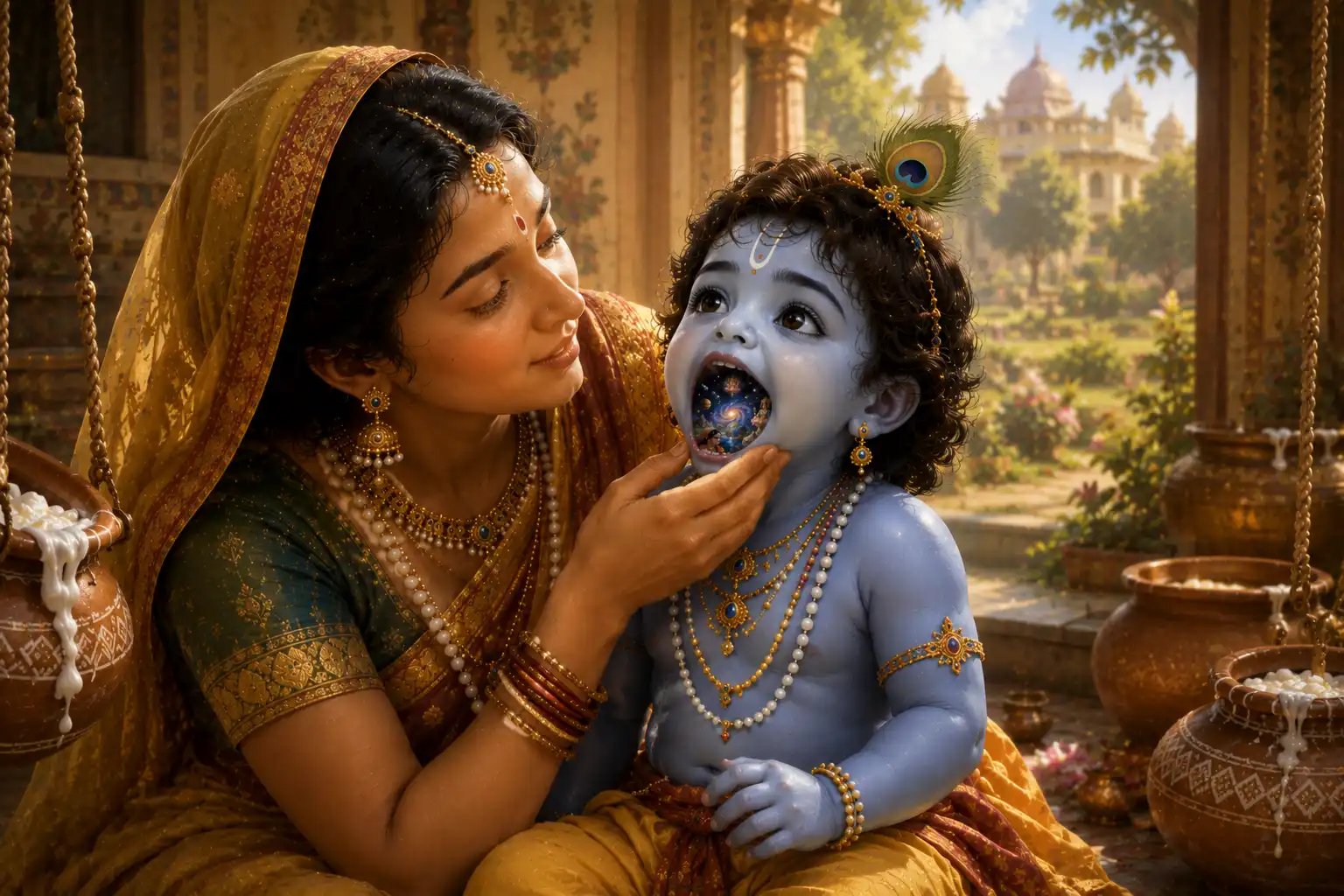
Among Krishna's childhood pastimes, few are as astonishing as the moment when Mother Yashoda looked into His mouth.
One day, Krishna's friends complained that He had eaten mud while playing. Concerned for her son's health, Mother Yashoda asked Him to open His mouth.
Instead of mud, she beheld the entire cosmic manifestation.
She saw the sun, moon, stars, mountains, rivers, oceans, planets, every living being, and even herself gazing into Krishna's mouth.
For a brief moment, Yashoda realised that the child standing before her was none other than the Supreme Lord, the source of all creation.
Yet by Krishna's Yogmaya potency, this awareness quickly disappeared, allowing her motherly affection to continue uninterrupted. Had she constantly remembered His supreme majesty, the sweetness of her intimate relationship with Him would have been replaced by awe and reverence.
This teaches an important lesson for devotees. God's greatness inspires reverence, but His sweetness awakens love. The Bhagavatam repeatedly reveals that Krishna delights in loving relationships with His devotees, inviting every soul to approach Him with affection and sincerity.
What Mother Yashoda Teaches Every Devotee
Mother Yashoda's devotion remains one of the highest examples of selfless love found anywhere in the scriptures.
She never performed acts of devotion to gain liberation, prosperity, or recognition. Her greatest joy was simply caring for Krishna. Every aspect of her daily life revolved around Him—feeding Him, protecting Him, comforting Him, and delighting in His mischievous childhood.
Her example reminds us that genuine bhakti is not limited to temple rituals or festival celebrations. Love for God can transform every ordinary action into an offering.
The Bhagavad Gita teaches:
यत्करोषि यदश्नासि यज्जुहोषि ददासि यत् ।
यत्तपस्यसि कौन्तेय तत्कुरुष्व मदर्पणम् ॥ 27॥
yat karoṣhi yad aśhnāsi yaj juhoṣhi dadāsi yat
yat tapasyasi kaunteya tat kuruṣhva mad-arpaṇam
BG 9.27: Whatever you do, whatever you eat, whatever you offer as oblation to the sacred fire, whatever you bestow as a gift, and whatever austerities you perform, O son of Kunti, do them as an offering to Me.
When our daily activities are performed with remembrance of Krishna, life itself gradually becomes an expression of devotion.
Celebrating Janmashtami 2026 with Loving Devotion
Janmashtami is not only a festival to observe; it is an opportunity to deepen our relationship with Shree Krishna.
Decorating a cradle, offering flowers, preparing delicious bhog, singing bhajans, and attending midnight celebrations are all beautiful expressions of devotion. Yet the greatest celebration takes place within the heart.
Jagadguru Shri Kripaluji Maharaj and Swami Mukundananda lovingly emphasise the practice of Trida Bhakti, especially for seekers living in the distractions of Kali Yuga.
Trida Bhakti engages three faculties simultaneously:
- Smaranam: lovingly remembering Shree Krishna's divine name, beautiful form, qualities, and enchanting childhood leelas.
- Kirtanam: chanting His holy names and singing His glories with heartfelt devotion.
- Shravanam: listening attentively to His pastimes through the Srimad Bhagavatam, satsangs, bhajans, and the guidance of enlightened saints.
When the mind remembers Krishna, the tongue glorifies Him, and the ears absorb His divine wisdom, worldly distractions gradually lose their influence. The heart becomes naturally attracted to the Lord.
This is why listening to Krishna's childhood pastimes year after year never becomes repetitive. Each hearing awakens fresh affection and strengthens our connection with Him.
A Janmashtami Practice for Every Home
Whether you celebrate at home or in a temple, Janmashtami can become a deeply personal spiritual experience.
Prepare a beautiful swing for Laddu Gopal, lovingly offer fruits, sweets, butter, and Tulsi leaves, and sing bhajans with your family. Read a chapter from the Srimad Bhagavatam describing Krishna's appearance or childhood leelas, and spend a few quiet moments visualising Mother Yashoda lovingly holding little Krishna in her lap.
Most importantly, carry that remembrance beyond the festival.
Even a few minutes each day spent listening to Krishna's pastimes, chanting His names, and meditating on His divine form gradually transforms the heart. These simple practices cultivate a loving relationship with God that continues to deepen throughout life.
Conclusion: Bringing Krishna into Our Hearts
The sweetness of Shree Krishna's childhood lies not merely in His playful adventures but in the love they awaken within us. Every smile, every mischievous act, and every embrace shared with Mother Yashoda reveals a God who longs for a loving relationship with every soul.
Janmashtami reminds us that the Supreme Lord is not distant or inaccessible. He willingly enters the homes and hearts of those who remember Him with sincerity.
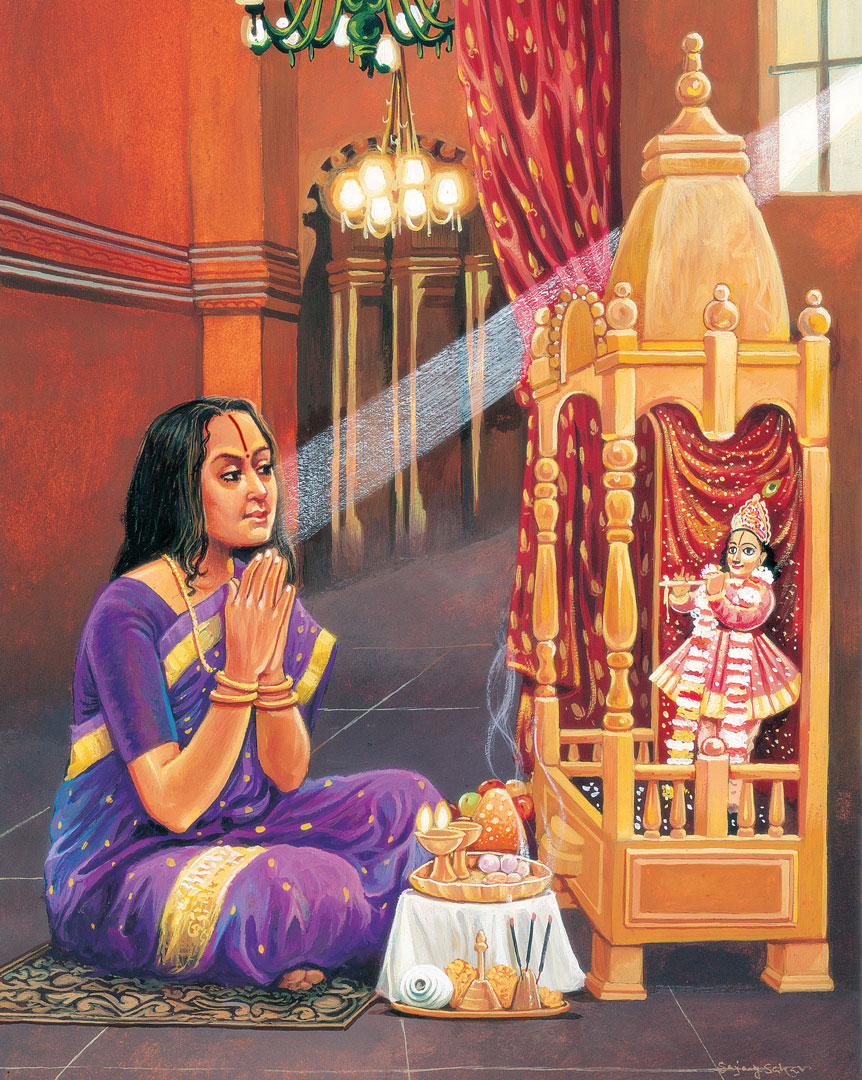
As Krishna lovingly assures us:
ये तु सर्वाणि कर्माणि मयि संन्न्यस्य मत्परा: ।
अनन्येनैव योगेन मां ध्यायन्त उपासते ॥ 6॥
तेषामहं समुद्धर्ता मृत्युसंसारसागरात् ।
भवामि नचिरात्पार्थ मय्यावेशितचेतसाम् ॥ 7॥
ye tu sarvāṇi karmāṇi mayi sannyasya mat-parāḥ
ananyenaiva yogena māṁ dhyāyanta upāsate
teṣhām ahaṁ samuddhartā mṛityu-saṁsāra-sāgarāt
bhavāmi na chirāt pārtha mayy āveśhita-chetasām
BG 12.6-7: But those who dedicate all their actions to Me, regarding Me as the Supreme goal, worshiping Me and meditating on Me with exclusive devotion, O Parth, I swiftly deliver them from the ocean of birth and death, for their consciousness is united with Me.
This Janmashtami 2026, let us do more than commemorate Krishna's appearance. Let us welcome Him into our daily lives through Trida Bhakti: by listening to His divine glories (shravanam), chanting His holy names (kirtanam), and lovingly remembering His enchanting childhood leelas (smaranam).
When these three practices become part of our lives, the festival does not end at midnight. Krishna's presence remains with us every day, filling the heart with peace, devotion, and the joy of His eternal companionship.
Call to Action
This Janmashtami 2026, go beyond simply celebrating the birth of Shree Krishna; begin living His teachings.
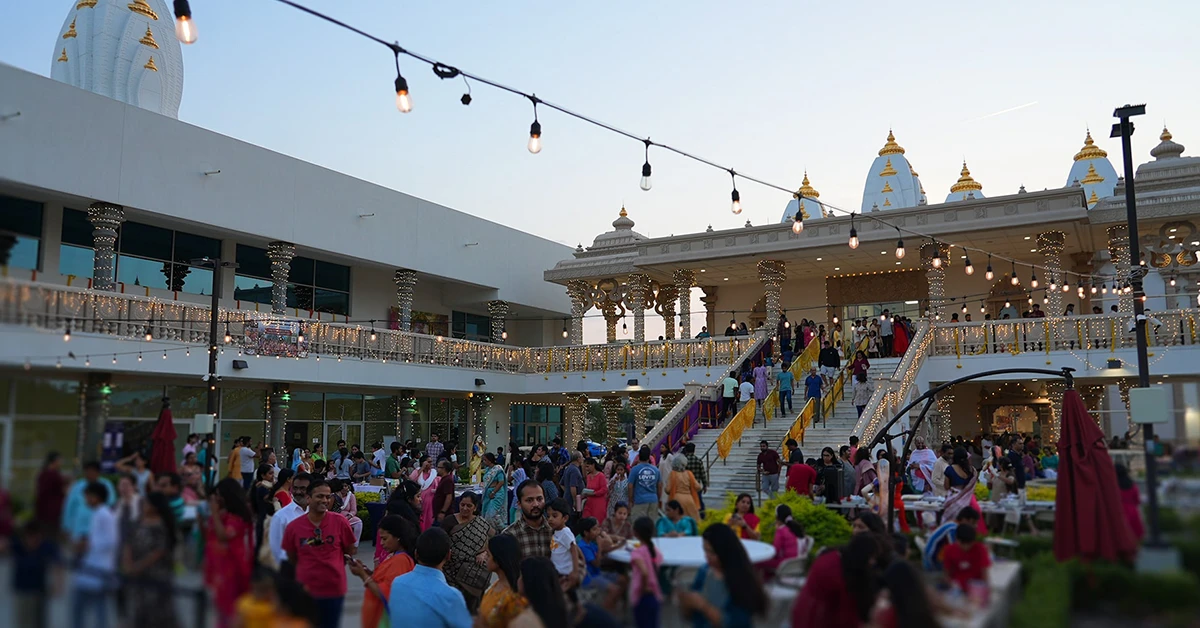
- Visit the Radha Krishna Temple of Dallas for one of their many offerings, or to offer some seva

- Study the Bhagavad Gita with Swami Mukundananda's authentic commentary.

- Download the JKYog Bhagavad Gita & Krishna Bhakti App for daily inspiration, guided meditations, bhajans, lectures, and spiritual resources.
 JKYog
JKYog

Frequently Asked Questions
1. Why are Shree Krishna's childhood leelas so important during Janmashtami?
The childhood leelas reveal Krishna's loving and approachable nature. They inspire devotees to develop a personal relationship with Him through remembrance, devotion, and loving service.
2. What can we learn from Mother Yashoda's devotion?
Mother Yashoda exemplifies selfless, unconditional love. She served Krishna without expecting anything in return, demonstrating that pure love is the highest form of bhakti.
3. What is Trida Bhakti according to JKYog?
Trida Bhakti is the integrated practice of Shravanam (listening to Krishna's glories), Kirtanam (chanting His names and praises), and Smaranam (loving remembrance of His form and pastimes). Together, these engage the ears, speech, and mind, helping devotees remain absorbed in God.
4. How can I celebrate Janmashtami beyond one day?
Continue listening to Krishna's pastimes, chanting His names, reading the Bhagavad Gita and Srimad Bhagavatam, attending satsang, and remembering His childhood leelas throughout the year.
5. Why does Krishna perform playful childhood pastimes?
His childhood leelas express His limitless love and compassion. They attract the hearts of devotees and provide a beautiful means to cultivate loving remembrance and deepen one's devotion.