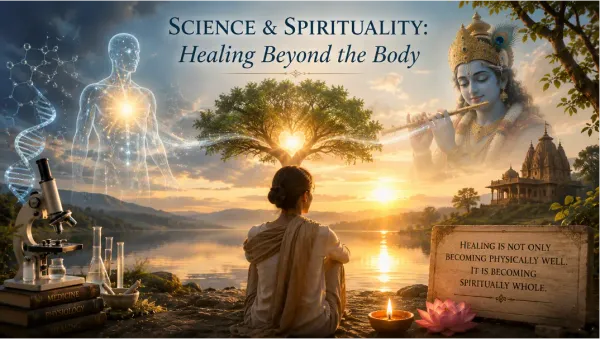
Introduction: "Maybe."

A farmer's horse ran away.
His neighbors came running and said, "What terrible luck!"
The farmer simply smiled and replied,
"Maybe."
A few days later, the horse returned, bringing several wild horses with it.
"What wonderful luck!" they exclaimed.
Again, the farmer answered,
"Maybe."
Soon afterward, the farmer's son tried to ride one of the wild horses. He was thrown to the ground and broke his leg.
"What terrible misfortune!"
The farmer smiled.
"Maybe."
A week later, the army arrived in the village, drafting every healthy young man into war. Because of his broken leg, the farmer's son was left behind.
The neighbors returned one last time.
"How fortunate!"
The farmer simply smiled once more.
"Maybe."
This ancient story, often shared by Swami Mukundananda, reminds us how quickly we judge life's events as either blessings or burdens. Yet, in truth, we rarely see the whole picture. What appears to be devastating today may one day reveal itself as an unexpected gift. Likewise, what seems like good fortune may carry unseen challenges.
Perhaps nowhere is this lesson more relevant than when illness enters our lives.
A diagnosis can shake our world. Pain can test our patience. Recovery can feel painfully slow. We naturally ask, "Why is this happening?"
Modern science has begun exploring how our mindset influences the healing process. Spiritual wisdom has been answering a different question for thousands of years: How can illness become an opportunity for inner growth?
Together, they offer a remarkably hopeful message.
The Science of Healing teaches that caring for the body and nurturing the mind can improve our well-being. Bhakti teaches that while the body may become sick, the soul remains forever untouched.
When these two perspectives are brought together, healing becomes larger than physical recovery alone.
It becomes the restoration of hope, peace, faith, and purpose.
The Science of Healing: More Than Medicine Alone
Modern medicine has transformed human history.
Vaccines have eradicated diseases that once devastated populations. Surgical techniques restore mobility and save lives. Advanced imaging allows physicians to diagnose illness with remarkable precision. Every year, new discoveries continue to improve patient care.
Yet alongside these extraordinary advances, researchers have uncovered another fascinating truth.
Healing is not determined only by medications, surgeries, or medical procedures.
Our emotional and psychological state also influences how we experience illness.
This does not mean positive thinking cures disease.
Nor does it suggest that those who remain ill simply "didn't think positively enough."
That would be both scientifically inaccurate and deeply unkind.
Instead, the Science of Healing reveals something much more balanced: while our mindset does not replace medical treatment, it can support the body's natural healing processes and improve our overall quality of life.
Research has consistently associated hope, optimism, gratitude, and emotional resilience with meaningful health benefits, including:
- Reduced levels of chronic stress hormones
- Improved immune system function
- Lower inflammation
- Greater adherence to medical treatment plans
- Increased emotional resilience
- Better quality of life during illness and recovery
Scientists often describe this as the mind-body connection.
Our thoughts influence our emotions.
Our emotions influence our physiology.
Our physiology influences how we cope, heal, and recover.
As Hippocrates wisely observed:
"The natural healing force within each of us is the greatest force in getting well."
The Science of Healing reminds us that caring for our emotional well-being is not separate from caring for our physical well-being.
It is part of it.
Hope Is Biologically Powerful
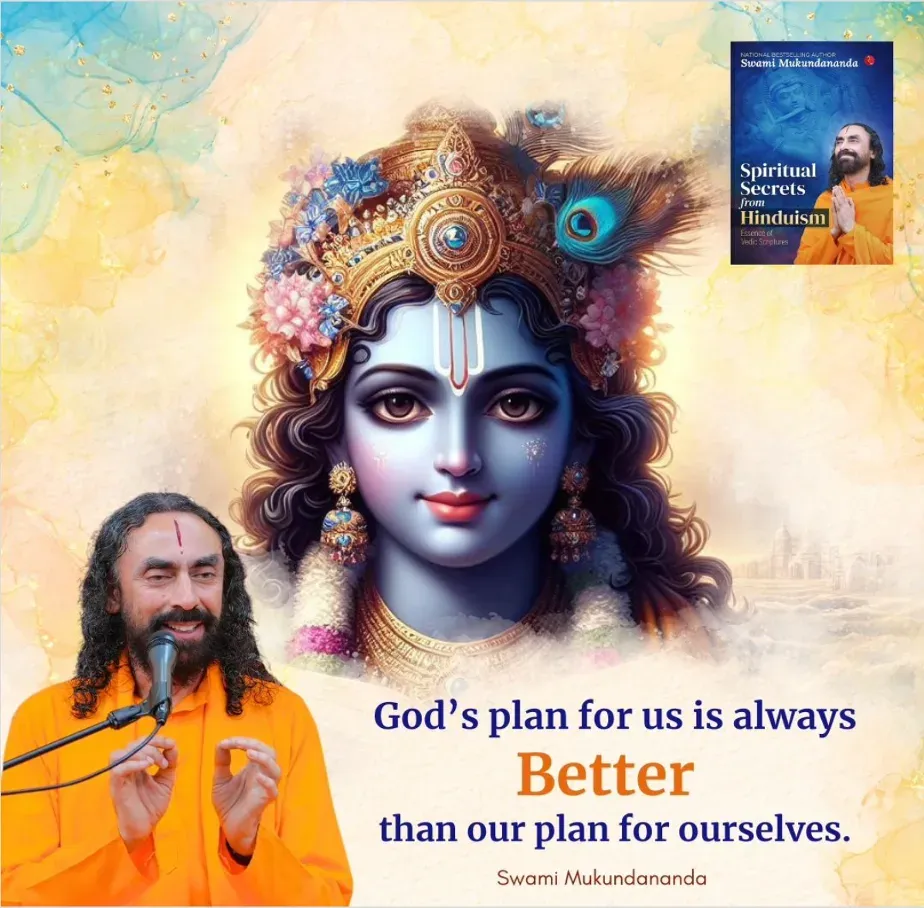
One of the most encouraging discoveries in modern psychology is that hope is not merely an emotion.
It is a biological resource.
Hope helps calm the body's stress response.
Gratitude can interrupt cycles of anxiety.
Optimism often encourages healthier behaviors, better sleep, stronger relationships, and greater perseverance during difficult treatments.
None of these guarantee physical recovery.
But together they create conditions that support healing.
In many ways, the body responds to the emotional environment we create within ourselves.
This is why physicians increasingly recognize the importance of whole-person care.
Healing involves more than organs and symptoms.
It includes the heart.
The mind.
Our relationships.
Our sense of purpose.
Our capacity to hope.
Swami Mukundananda's Wisdom: The Soul Never Becomes Sick
While science helps us understand the connection between mind and body, Swami Mukundananda invites us to look even deeper.
He reminds us that our identity extends far beyond the physical body.
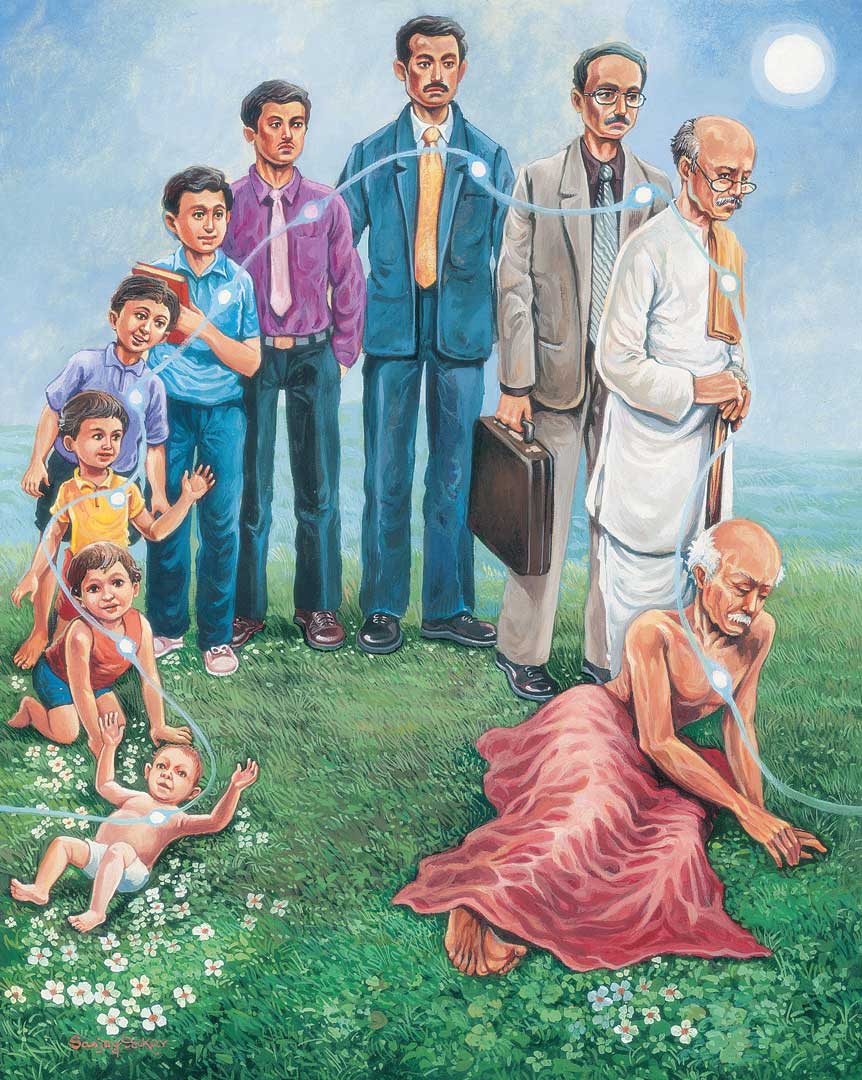
The body changes continuously.
It grows.
It ages.
It becomes ill.
Eventually, it dies.
The soul does not.
The soul remains eternally pure, conscious, and joyful.
From the perspective of Bhakti, illness is not merely an interruption of life.
It can become an invitation.
An invitation to deepen our dependence upon God.
To cultivate humility.
To develop compassion for others who suffer.
To remember what truly lasts.
This does not mean we stop seeking treatment.
Bhakti never asks us to neglect the body.
Rather, it encourages us to lovingly care for the body while remembering that it is the vehicle—not the destination—of our spiritual journey.
Swamiji frequently teaches that whatever comes into our lives can become an opportunity to move closer to God.
As reflected throughout his discourses:
"Whatever comes into your life, accept it as God's grace, and use it as an opportunity to grow closer to Him."
This perspective transforms illness from something that merely happens to us into something that can also work within us.
The Bhagavad Gita: The Eternal Self
One of the Bhagavad Gita's most comforting teachings reminds us that our deepest identity can never be harmed by physical illness.
Bhagavad Gita 2.23
नैनं छिन्दन्ति शस्त्राणि नैनं दहति पावक: ।
न चैनं क्लेदयन्त्यापो न शोषयति मारुत: ॥ 23॥
nainaṁ chhindanti śhastrāṇi nainaṁ dahati pāvakaḥ
na chainaṁ kledayantyāpo na śhoṣhayati mārutaḥ
BG 2.23: Weapons cannot shred the soul, nor can fire burn it. Water cannot wet it, nor can the wind dry it.
What extraordinary reassurance.
The body may suffer.
But the soul remains forever untouched.
This truth does not minimize pain.
It places pain within a larger spiritual context.
The Science of Healing reminds us to care for the body wisely.
The Bhagavad Gita reminds us never to mistake the body for our true self.
Together, they offer both comfort and courage.
When Illness Becomes a Spiritual Teacher
No one asks to become ill.
Yet many people look back on seasons of sickness and describe unexpected gifts they never anticipated.
Illness often slows us down enough to notice what truly matters.
It teaches dependence instead of self-sufficiency.
Compassion instead of judgment.
Presence instead of busyness.
Gratitude instead of entitlement.
These lessons cannot erase suffering.
But they can redeem it.
Perhaps this is why the farmer continued saying,
"Maybe."
He understood something profound.
We do not yet know the full story.
Science and Spirituality Meet
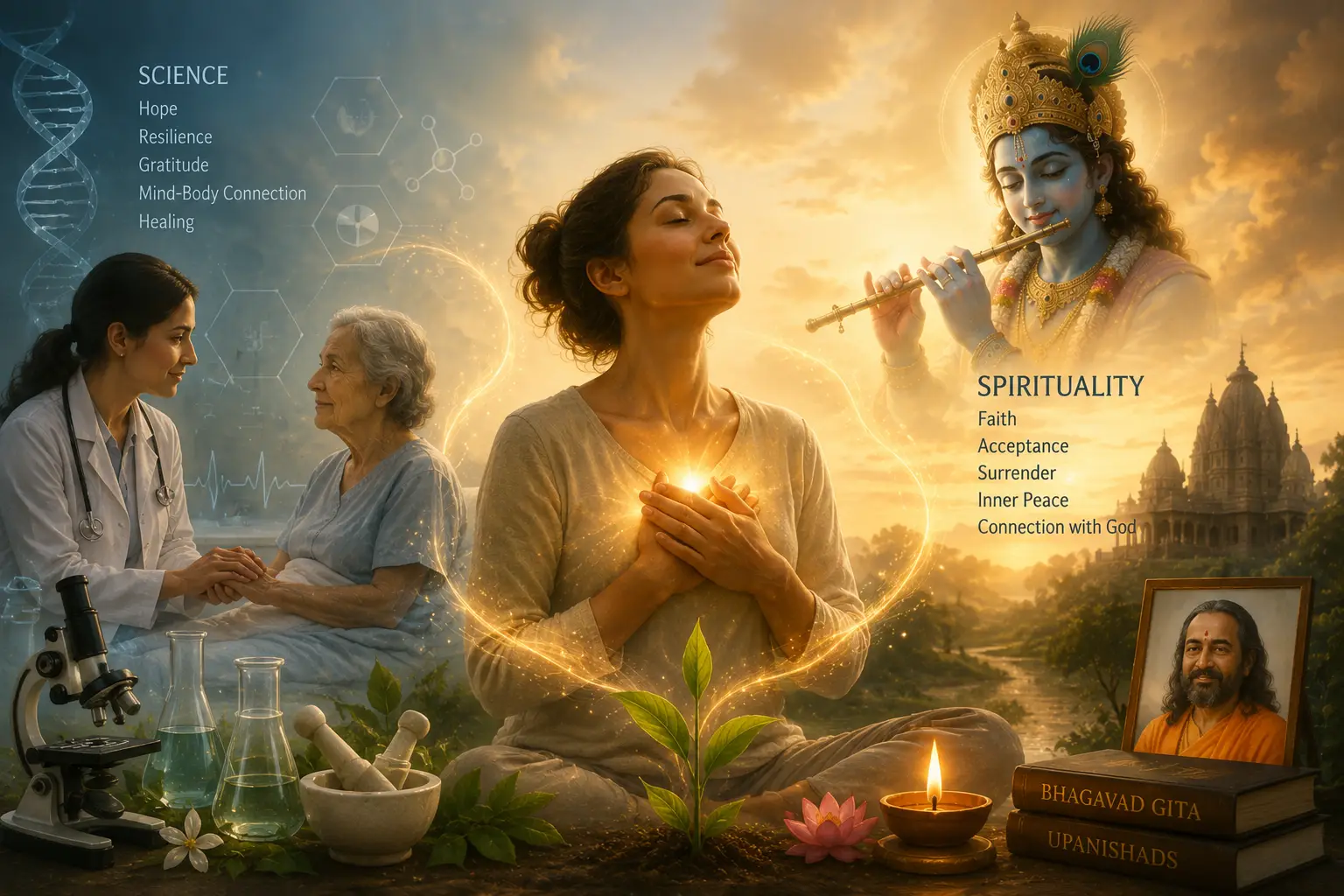
One of the most beautiful aspects of the Science of Healing is how closely science and spirituality complement one another.
Science says:
Hope supports healing.
Spirituality says:
Faith gives suffering meaning.
Science encourages us to strengthen the body.
Bhakti encourages us to strengthen the soul.
Science seeks recovery.
Spirituality seeks transformation.
Neither contradicts the other.
Together they provide a fuller picture of what it means to heal.
Practical Ways to Practice the Science of Healing
Whether you are facing illness yourself or supporting someone you love, these simple practices can nurture both body and soul.
- Follow the guidance of qualified healthcare professionals.
- Give yourself permission to rest without guilt.
- Practice gratitude for even the smallest improvements.
- Spend time in prayer or meditation each day.
- Chant God's names and hear spiritual wisdom.
- Accept help from others with humility.
- Ask not only, "How can I get well?" but also, "How can I grow?"
As Swami Mukundananda reminds us, illness may weaken the body...
but it can strengthen the soul.
Key Takeaways
The Science of Healing teaches us that:
- Healing involves both body and mind.
- Hope, gratitude, and resilience positively influence well-being.
- Medical treatment and emotional care work together.
- The soul remains untouched by physical illness.
- Faith can transform suffering into spiritual growth.
- True healing is measured not only by physical recovery, but by the growth of the heart.
Final Reflection: Healing Beyond the Body
Eventually, every one of us will encounter illness.
Perhaps in ourselves.
Perhaps in someone we dearly love.
When that day comes, may we embrace the wisdom of both science and spirituality.
May we seek the very best medical care available.
May we care for the body with diligence and gratitude.
And may we remember that while illness may touch the body, it never has the power to diminish the soul.
Sometimes the body recovers.
Sometimes it does not.
But the soul can always grow.
Perhaps that is the deepest message hidden within the farmer's simple reply.
"Maybe."
Because we cannot always see what God is doing today.
But we can trust that He is still working.
And sometimes, the greatest healing He offers is not the restoration of the body...
but the transformation of the heart.
Frequently Asked Questions
What is the Science of Healing?
The Science of Healing explores how physical health is influenced not only by medical treatment but also by psychological factors such as hope, optimism, gratitude, resilience, and emotional well-being.
Can a positive attitude cure illness?
No. Positive thinking is not a substitute for medical care. However, research suggests that a hopeful outlook can improve quality of life, reduce stress, and support healthy behaviors during recovery.
What does Bhakti teach about illness?
Bhakti teaches that although the body may become sick, the soul remains eternally pure. Illness can become an opportunity to deepen faith, remember God, cultivate gratitude, and grow spiritually.
Why is the mind-body connection important?
The mind and body continually influence one another. Managing stress, nurturing hope, and caring for emotional health can complement appropriate medical treatment and support overall well-being.
Which Bhagavad Gita verse offers comfort during illness?
Bhagavad Gita 2.23 reminds us that the soul can never be harmed by physical forces. This timeless teaching offers profound reassurance during seasons of physical suffering.
Call to Action
If this exploration of the Science of Healing encouraged you, consider deepening your understanding through the inspiring teachings of Swami Mukundananda.
His practical wisdom beautifully integrates psychology, the Bhagavad Gita, devotion, and everyday life, helping us cultivate resilience, inner peace, and spiritual growth regardless of our circumstances.
Subscribe to Swami Mukundananda's YouTube channel for hundreds of uplifting talks on healing, faith, happiness, emotional mastery, and Bhakti:

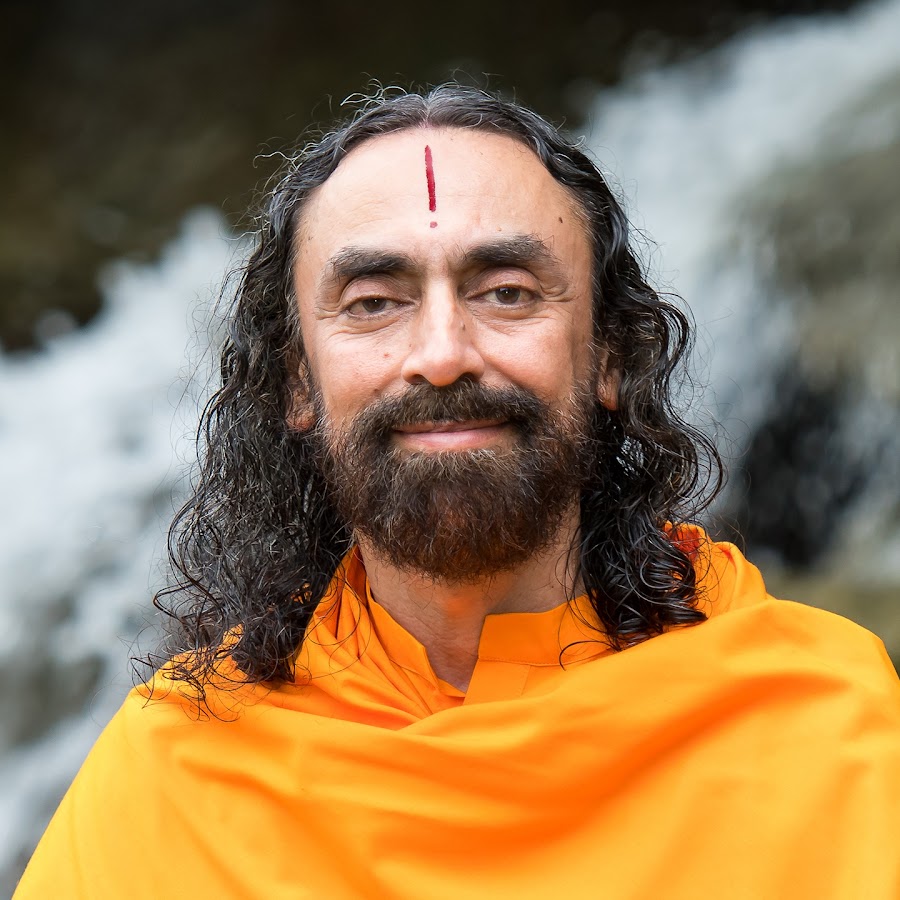
Every challenge carries the possibility of transformation when we learn to care for both the body and the soul.