Introduction
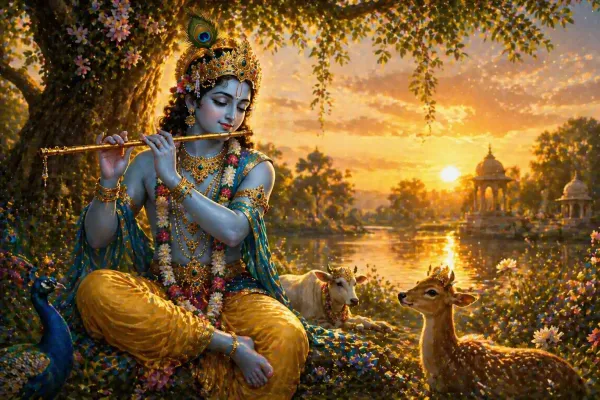
There is a special sweetness in the very thought of Janmashtami. As the sacred day draws near, the heart waits with quiet anticipation, Our Kanha is coming. We remember the little Krishna of Braj: His enchanting smile, His playful leelas, the melody of His flute, and the boundless love with which He draws every devotee toward Him. Janmashtami is not merely the celebration of His divine birth; it is an invitation to turn our hearts toward Shri Krishna and rediscover the joy of loving Him.
At the Radha Krishna Temple of Dallas, this longing blossoms into a vibrant celebration of bhakti. The temple glows with flowers and lamps, Krishna’s names resound through kirtans, little Radhas and Krishnas bring Braj alive, and devotees gather to offer their love. For a few precious days, the distance between Dallas and Vrindavan seems to fade, and the temple becomes a little Braj, filled with remembrance, seva, celebration, and Krishna bhakti.
We come to celebrate Krishna’s birth.
We participate in His leelas.
We experience Him through bhakti.
And when the festivities end, we carry Krishna home within us.
Janmashtami 2026 at RKT Dallas: Dates at a Glance
This Janmashtami, the Radha Krishna Temple of Dallas invites devotees, families, and seekers to come together for a joyous celebration of Shri Krishna's divine appearance. The Janmashtami Mahotsav will be celebrated from September 3–6, 2026, in the divine presence of Swami Mukundananda, with special children's activities beginning the preceding weekend.
|
Date (Pre festival celebrations) |
Janmashtami Celebration |
| August 28, 2026 | Kids Fancy Dress Contest |
| August 29, 2026 | Open Stage |
| August 30, 2026 | Kids Workshops |
|
(Janmashtami Celebration) September 3, 2026 |
Krishna Movie Night and Birthday Party with Bal Gopals |
| September 4, 2026 | Krishna Abhishek, Braj Mela and Midnight Janmotsav Celebrations |
| September 5, 2026 | Suprabhatam, 108 Kalash Mandala Abhishek, Braj Mela, Krishna Leela, Bhajan Jamming and Janmashtami Concert |
| September 6, 2026 | Sunday Satsang with Swami Mukundananda, Dahi Handi and Braj Mela |
Planning to Attend?
Admission is free, and all are welcome. Come with family and friends to experience four beautiful days of darshan, kirtan, satsang, seva, Krishna leelas, children's activities, and joyful celebration.
For the latest program timings, registration details, and participation information, visit the official Janmashtami Mahotsav page of the Radha Krishna Temple of Dallas.

Why We Celebrate the Divine Birth of Shri Krishna
It was midnight. Mathura lay wrapped in darkness, and Devaki and Vasudev remained confined within Kansa’s prison. Yet in that seemingly hopeless hour, the Supreme Lord appeared before them as Shri Krishna. His divine birth reminds us of a timeless truth: even when darkness seems overwhelming, divine grace is never far away.
Shri Krishna Himself reveals the purpose of His divine descent in the Bhagavad Gita:
परित्राणाय साधूनां विनाशाय च दुष्कृताम् ।धर्मसंस्थापनार्थाय सम्भवामि युगे युगे ॥
paritrāṇāya sādhūnāṁ vināśhāya cha duṣhkṛitām
dharma-sansthāpanārthāya sambhavāmi yuge yuge
“To protect the righteous, to annihilate the wicked, and to reestablish the principles of dharma, I appear on this earth, age after age.”
— Bhagavad Gita 4.8
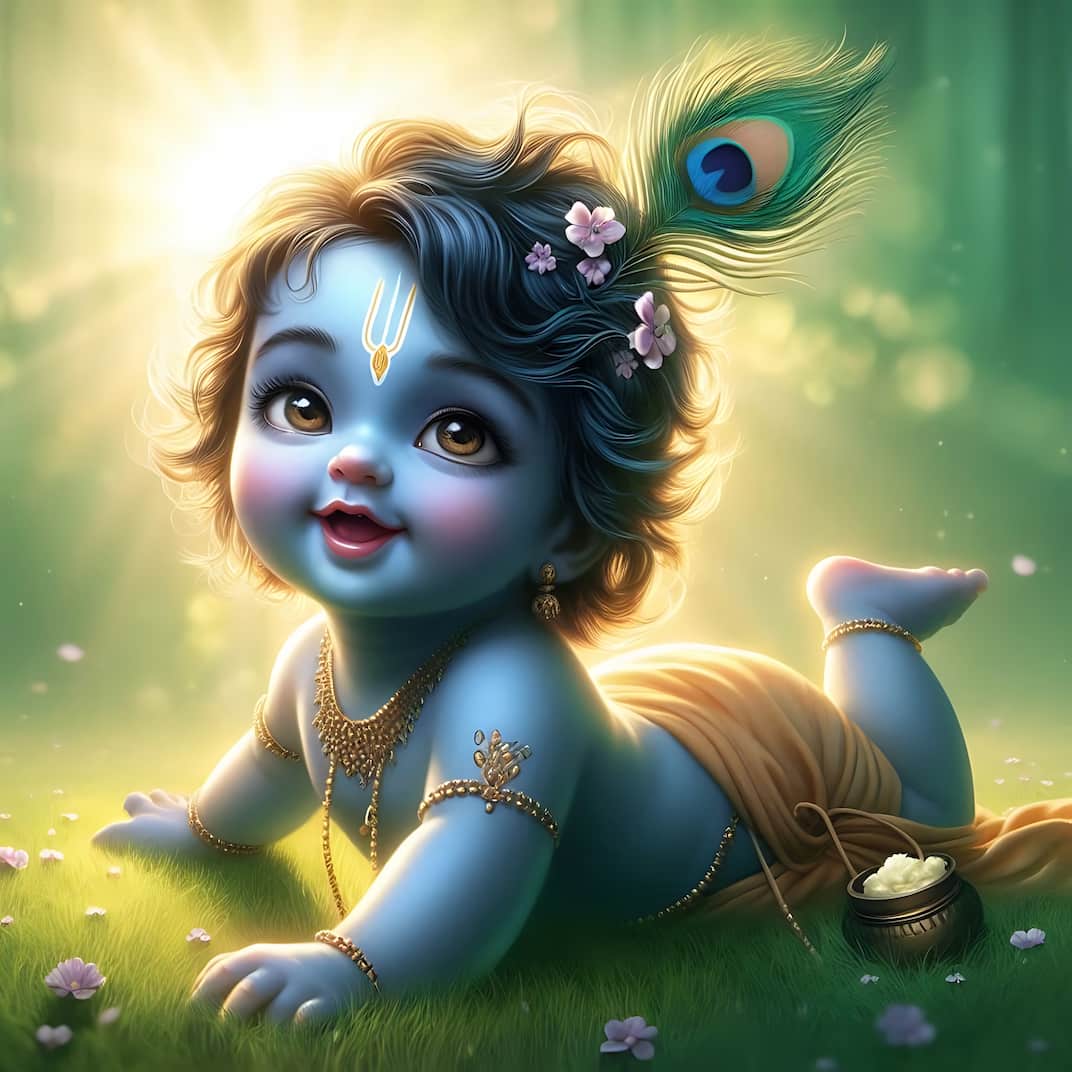
Yet for the devotee, Krishna’s appearance holds an even more intimate meaning. The Lord who sustains countless universes chooses to become little Kanha, allowing Yashoda Maiya to cradle Him, the cowherd boys to play with Him, and the devotees of Braj to love Him as their very own. The Infinite makes Himself lovingly accessible so that we may come close to Him.
Before we ask how deeply we love Krishna, Janmashtami invites us to pause in wonder at how deeply Krishna loves us. He comes among His devotees, gives us His name, form, virtues, and enchanting leelas, and through them gently draws our wandering hearts toward Himself.
Janmashtami therefore celebrates not only the divine appearance of Shri Krishna, but also His extraordinary invitation to every soul: Come closer. Know Me, remember Me, and learn to love Me.
Come for Darshan: See Krishna
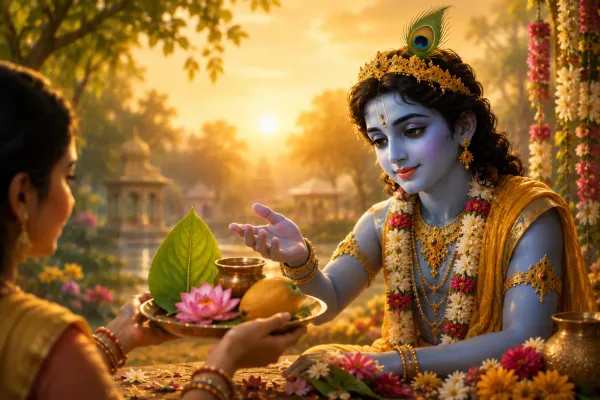
There is a moment during Janmashtami when the celebration around us seems to fade. We stand before Shri Krishna, beautifully adorned with flowers and jewels, surrounded by glowing lamps, and for a few moments, there is only the devotee and the Lord. We may have come carrying many thoughts, worries, and prayers, yet in His darshan, the heart finds a place to rest.
The Janmashtami celebrations at RKT Dallas offer many such moments of loving connection through Krishna Abhishek, the 108 Kalash Mandala Abhishek, Jhoolan, Aarti, and darshan. As each offering is made with love and reverence, we too can place something personal at Krishna’s lotus feet, our gratitude, our longing, our struggles, and ultimately, our heart itself.
Our eyes spend much of each day drawn toward the world. Darshan turns them toward the Divine. We behold Krishna’s beautiful form and try to hold that image within, so that even after we leave the temple, His smile remains with us.
We can simply prayer:
“Krishna, let me not merely see You today. Let me remember You when You are no longer before my eyes.”
Come to Remember: Hear About Krishna
If darshan fills the eyes with Krishna’s beautiful form, kirtan and His divine leelas fill the mind with His name and remembrance. During Janmashtami, the temple resounds with Krishna’s names, bhajans, kirtans, and stories of His enchanting pastimes. For a while, the mind that is so easily occupied by the world finds something far more beautiful to dwell upon.
There is a special grace in repeatedly hearing and chanting the Lord’s name. A kirtan heard at the temple may return to us while driving home. A Krishna leela may arise in the mind while we are working. His name may come naturally to our lips. What begins as hearing slowly becomes remembrance, gently turning the mind back toward Him.
This is the beautiful movement of bhakti: we hear of Krishna, we sing His name, and gradually we begin to remember Him. Janmashtami fills the mind with these divine impressions and gives us a glimpse of how life begins to change when Krishna occupies a little more of our thoughts and the world a little less.
But how can these beautiful moments of remembrance deepen into an enduring, selfless love for Krishna? Here, the guidance of the Guru becomes especially precious.
In the Divine Presence of Swami Mukundananda: Learning to Love Krishna
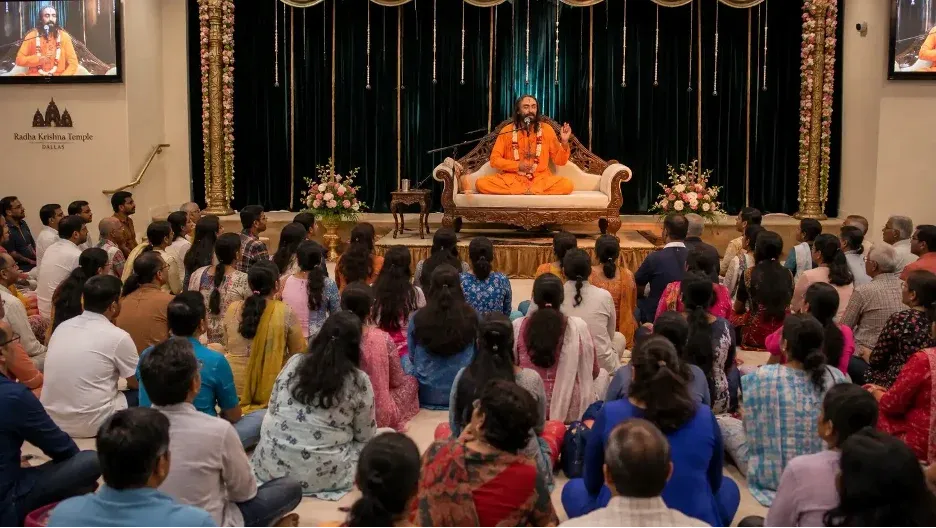
The Janmashtami Mahotsav at RKT Dallas becomes especially meaningful in the divine presence of Swami Mukundananda. Amid the joy of darshan, kirtan, leelas, and celebration, Swamiji’s wisdom takes us one step deeper, from rejoicing in Krishna to understanding how to truly love Him. The festival awakens devotion; the Guru shows us how to nurture it long after the celebration is over.
Swamiji inspires seekers to rise toward selfless love for God, to love Krishna for His sake, rather than for what we hope to receive from Him. Our prayers may naturally begin with our needs: Lord, help me. Protect me. Remove this difficulty. Krishna lovingly accepts us wherever we are, but bhakti invites us to keep growing until the direction of our love begins to change. Instead of asking, “What will Krishna do for me?” the heart begins to ask, “How may I please Krishna?”
Swamiji beautifully explains the essence of this selfless devotion:
“True devotees desire God’s happiness. They love Shree Krishna for His happiness alone.”
— Swami Mukundananda
One of the sweetest ways to nurture this love is to immerse the mind in Krishna’s divine leelas, little Kanha stealing butter, playing with His cowherd friends, lifting Govardhan, or enchanting Braj with His flute. We return to these leelas not merely for their sweetness, but because their sweetness draws the wandering mind again and again toward Krishna. What the mind repeatedly contemplates, the heart gradually becomes attached to.
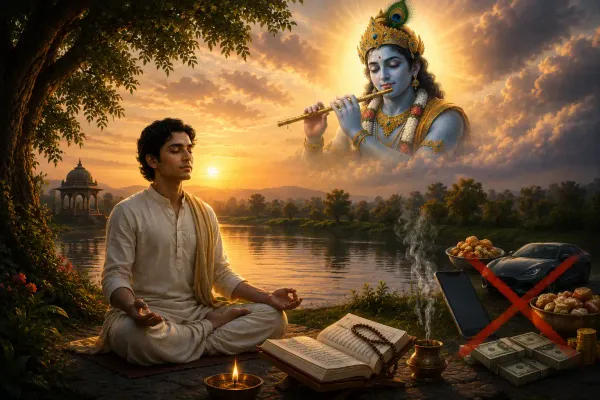
This is where Swamiji’s emphasis on Roopdhyan becomes especially meaningful. The Krishna we behold in darshan, whose name we sing in kirtan, and whose leelas we hear need not remain outside us. In meditation, we lovingly bring His form and pastimes into the mind—His smile, His flute, His loving presence. Krishna gradually moves from being the Lord we worship to the Beloved we remember.
Perhaps this is the deeper blessing of celebrating Janmashtami in the presence of the Guru. We come enchanted by Krishna’s birth and leelas, but we are shown how to take that sweetness inward—from hearing to remembrance, from remembrance to attachment, and ultimately toward selfless love.
Janmashtami then becomes a prayer of the heart:
“Krishna, I have come not merely to seek Your blessings. Teach me to love You for Your happiness alone.”
Come to Participate: Serve Krishna
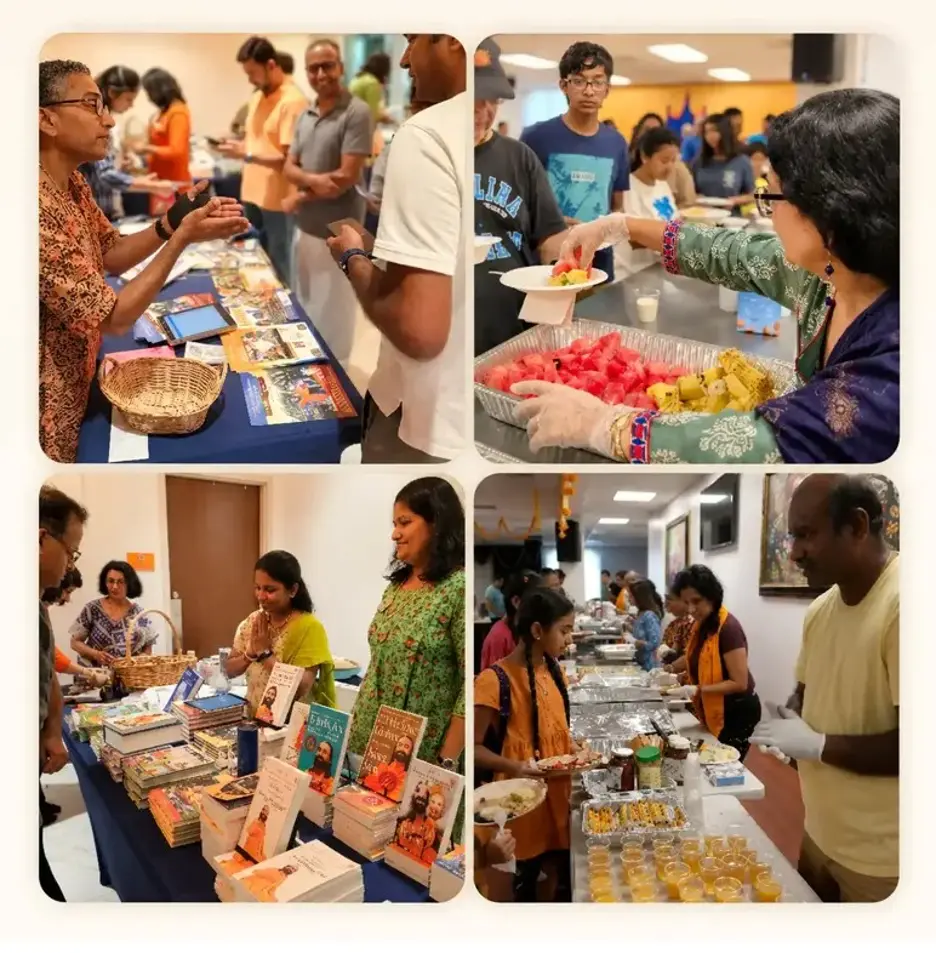
Bhakti naturally seeks expression. When the heart begins to feel love for Krishna, it longs to do something for Him. Janmashtami therefore invites us not only to come for darshan, kirtan, and celebration, but also to ask: “Krishna, how may I serve You today?”
At a celebration as vibrant as Janmashtami, seva takes many forms. Someone arranges flowers; another welcomes devotees. Some help with parking and event coordination, while others serve prasadam or quietly restore order after the crowds have left. The tasks may differ, but when the thought behind them becomes “May this please Krishna,” even an ordinary act becomes an offering.
The beauty of seva lies not in how important or visible our role may seem, but in the bhava with which it is performed. We come longing to receive Krishna’s darshan and grace, and somewhere along the way discover another joy, the joy of giving something back through loving service.
🌸 Offer Your Seva This Janmashtami
Would you like to be part of the celebration through seva?
Offer your time and skills in welcoming devotees, prasadam service, decorations and setup, event coordination, parking support, and other areas of service.
Every helping hand becomes an offering when placed at Krishna’s lotus feet with love.
Come to Rejoice: Celebrate Krishna
To remember Krishna is also to remember joy. The little Kanha of Braj filled Gokul with laughter, mischief, music, and love. Perhaps this is part of Janmashtami’s irresistible joy, the One we worship as the Supreme Lord also allows us to love Him as our own little Kanha.
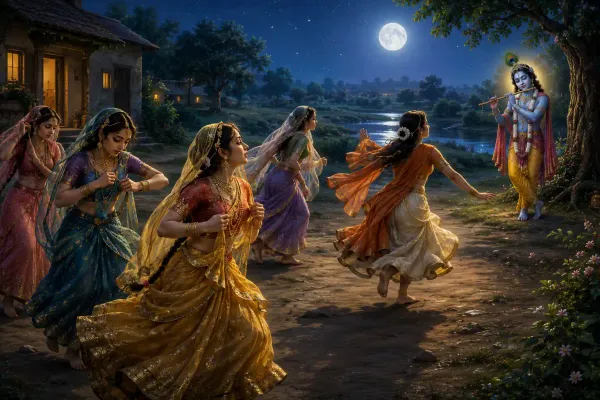
That spirit of Braj comes alive at RKT Dallas through the Braj Mela, Dahi Handi, Krishna Leela, bhajans, cultural programs, and Janmashtami Concert. Families celebrate together, children join in the festivities, devotees sing, and the temple fills with the joy of Krishna’s appearance.
There is something beautiful in this expression of bhakti. Devotion can sing. Devotion can dance. Devotion can celebrate. When Krishna is at the center of our happiness, even rejoicing becomes an offering of love.
We do not simply stand at a distance and honor the birth of the Lord. We welcome Him, celebrate Him, and rejoice because our beloved Kanha has come.
Janmashtami Through a Child’s Eyes
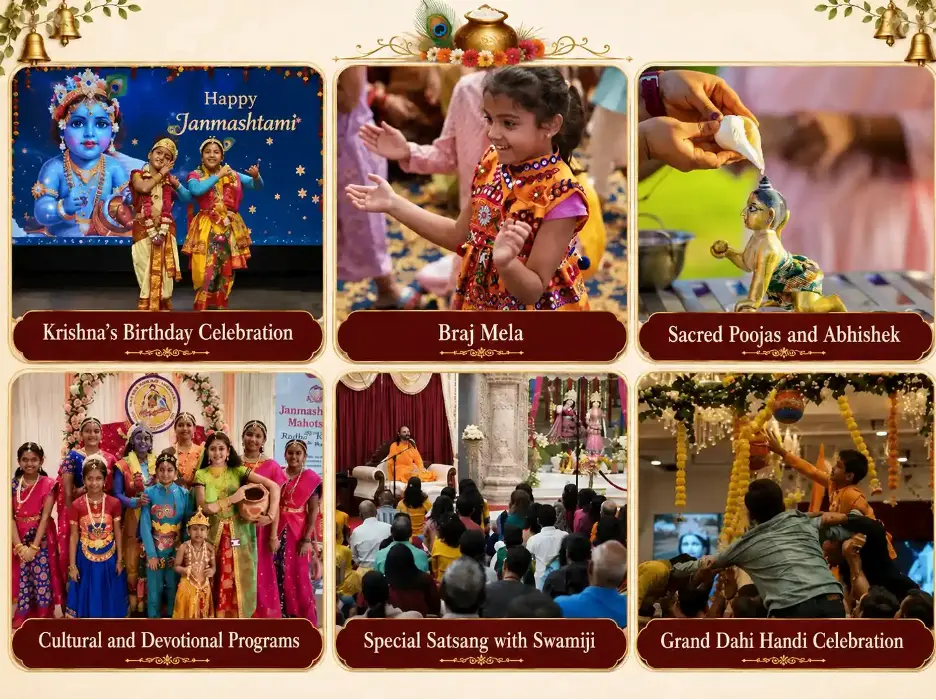
For a child, Janmashtami is filled with wonder, a peacock feather tucked into a tiny crown, a flute held carefully in the hand, Krishna stories, music, Dahi Handi, and children dressed as little Krishnas and Radhas. The celebration brings Krishna’s world alive in a way a young heart can understand and enjoy.
A child may not yet understand the deeper philosophy of bhakti, but something precious is taking root. Krishna becomes associated with joy, love, family, and belonging. Through His stories and leelas, children begin to know Him not as a distant God, but as little Kanha, the mischievous butter thief, the loving friend of the cowherd boys, and Yashoda Maiya’s beloved child.
The children’s activities at RKT Dallas, including the Fancy Dress Contest, creative workshops, and Krishna-themed activities, allow young hearts not merely to watch Janmashtami but to participate in Krishna’s world. A crown, a flute, a kirtan, or a favorite Krishna leela may become a cherished childhood memory.
Years later, perhaps the familiar melody of a kirtan or the sight of a peacock feather will awaken something within: Krishna was part of the happiest moments of my childhood.
What begins as wonder today may become remembrance tomorrow—and, by Krishna’s grace, a seed of bhakti planted deep within the heart.
The Midnight Moment: Krishna Has Come
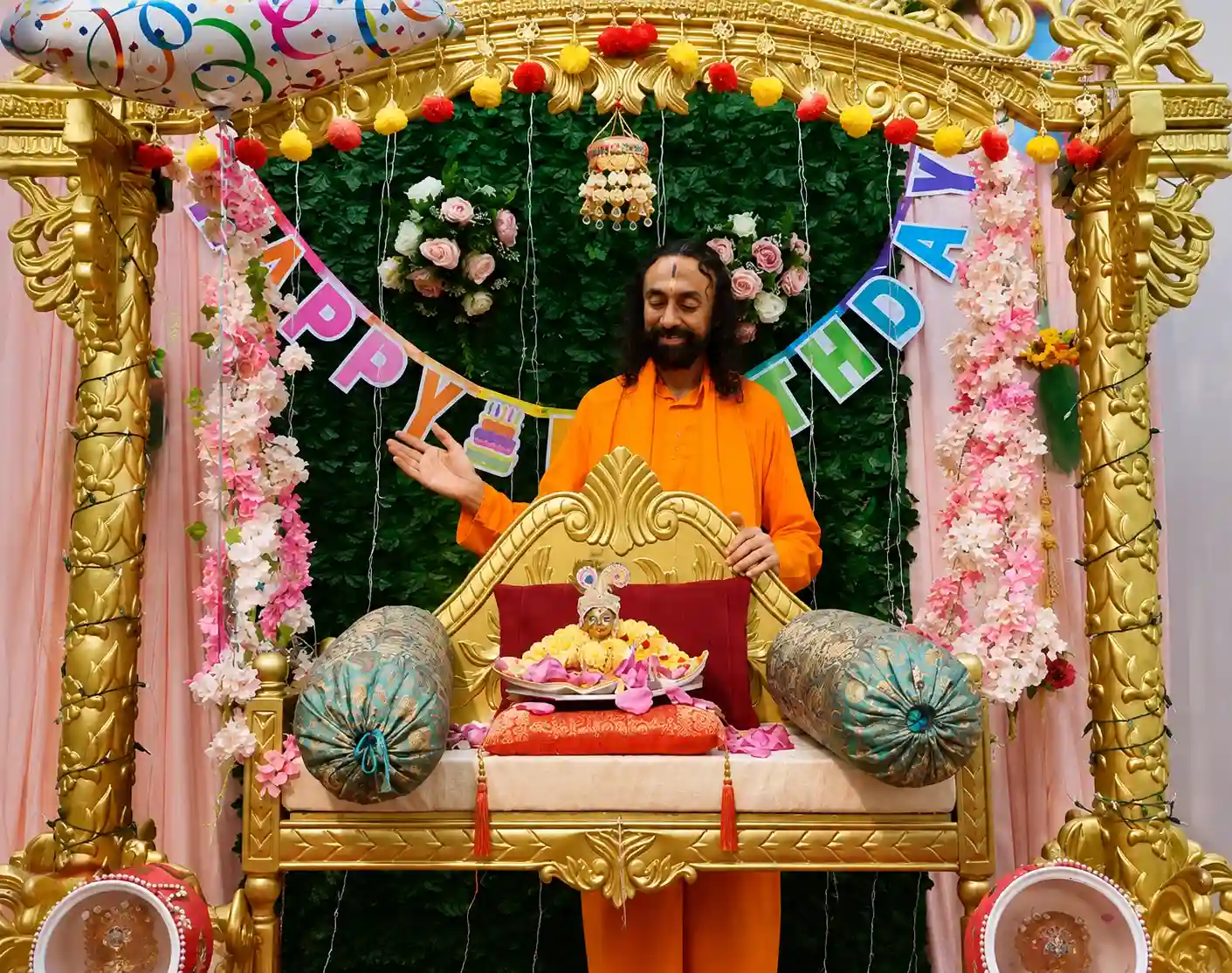
As midnight draws near, something changes in the atmosphere. The hour is late, yet no one seems tired. The temple is alive with anticipation. Kirtan grows more joyous, voices rise together in Krishna’s name, and children and elders alike wait for the sacred moment for which every heart has been preparing, the arrival of Kanha.
And then, midnight arrives.
The bells ring. The kirtan swells. Lamps glow before the Lord as devotees rejoice together:
Nand Ke Anand Bhayo, Jai Kanhaiya Lal Ki!
For a few precious moments, there is simply joy. The Lord of countless universes has come as little Krishna. The One whom the Vedas seek to know has allowed Himself to be loved as Devaki’s child, Yashoda’s Kanha, the darling of Braj, and our beloved Kanha.
Yet within all this celebration lies a quieter invitation. More than five thousand years ago, Krishna appeared in the darkness of midnight, and the prison doors opened. On this Janmashtami night, perhaps another door waits to open, the door of our own heart.
Behind that door may lie our worries and attachments, our fears and imperfections, even the parts of ourselves we hesitate to place before Him. But Krishna does not wait for a perfect heart before we turn toward Him. He asks only that we open it.
And so, amid the bells, flowers, kirtan, and celebration, one deeply personal prayer remains:
“Come, Krishna. Make Your home within my heart.”
When Janmashtami Ends: Carry Krishna Home
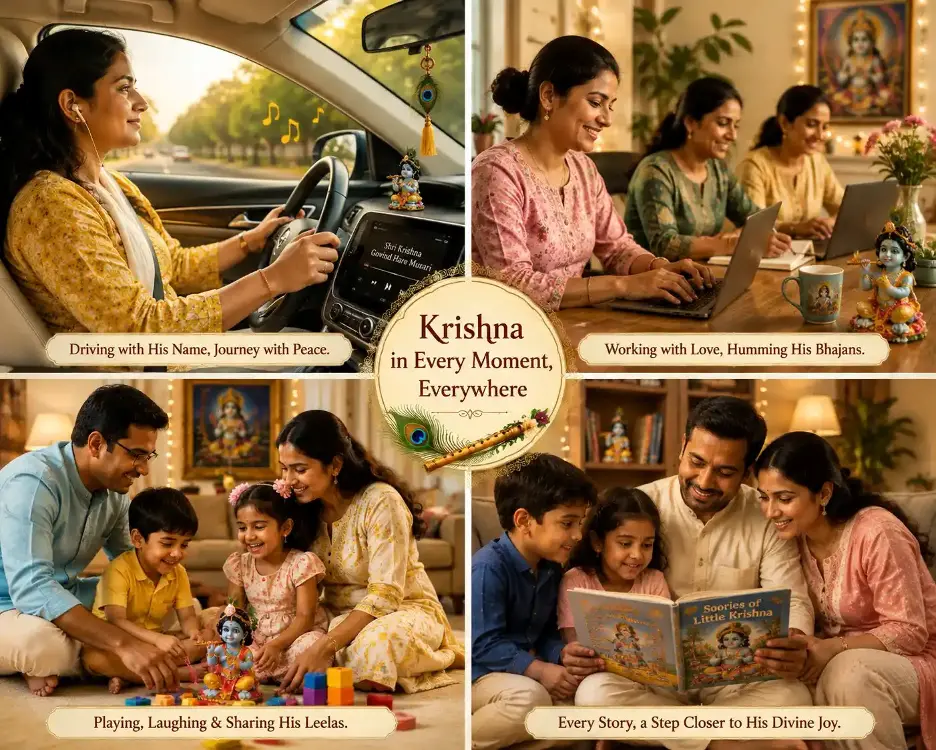
The midnight celebration will end. The crowds will slowly disperse, the flowers will fade, and the joyous sounds of kirtan will grow quiet. We will return to our homes, our responsibilities, and the familiar rhythm of everyday life.
But Krishna need not leave with the festival.
The beautiful form we beheld in darshan can remain within our meditation. The name we sang in kirtan can accompany us while driving, cooking, walking, or beginning another busy day. His leelas can become a refuge when the mind feels burdened, and the joy of seva can continue through the small acts we lovingly offer Him each day.
This is perhaps the deeper invitation of Janmashtami, not merely to welcome Krishna for one sacred night, but to let Him become part of our everyday lives. We may not remember Him every moment. The mind will wander, and the world will pull at our attention. But each time we turn back to Him, through His name, His form, His leelas, or a simple prayer—we are telling Krishna in our own way: “I have not forgotten You.”
And so, when the lamps grow dim and another Janmashtami becomes a cherished memory, may one light continue to glow within:
We came to celebrate Krishna’s birth.
We participated in His leelas.
We experienced Him through bhakti.
And now, we carry Krishna home within us.
May the Kanha we welcomed with such joy never become merely a beautiful memory. May He become the Beloved we remember, the presence we seek, and the love toward which our heart continues to grow.
Key Takeaways
- Janmashtami celebrates Krishna’s divine appearance and His loving invitation to draw closer to Him.
- Darshan, kirtan, and Krishna leelas turn the senses and mind toward His name, form, and remembrance.
- Swami Mukundananda’s teachings inspire us to move toward selfless devotion—loving Krishna for His happiness rather than for what we hope to receive from Him.
- Remembering and contemplating Krishna’s divine leelas helps the wandering mind become increasingly attached to Him.
- Seva becomes bhakti when the inner intention is, “May this please Krishna.”
- Janmashtami gives children joyful experiences of Krishna that can become seeds of lifelong remembrance and devotion.
- The deeper celebration begins when Janmashtami ends—when we carry Krishna from the festival into our everyday lives.
Frequently Asked Questions
1. When is Janmashtami 2026 celebrated at RKT Dallas?
The main Janmashtami Mahotsav at Radha Krishna Temple of Dallas will be held September 3–6, 2026, with special children’s activities beginning August 28.
2. Will Swami Mukundananda be present for Janmashtami 2026?
Yes. The Janmashtami Mahotsav will be celebrated in the divine presence of Swami Mukundananda, including Sunday Satsang with Swamiji on September 6.
3. Is admission to the Janmashtami celebration free?
Yes. Admission is free, and all are welcome to join the celebration with family and friends.
4. What are the main Janmashtami events at RKT Dallas?
The celebrations include Krishna Abhishek, 108 Kalash Mandala Abhishek, Braj Mela, Midnight Janmotsav, Krishna Leela, Dahi Handi, bhajans, children’s programs, Sunday Satsang with Swami Mukundananda, and the Janmashtami Concert.
5. Are there Janmashtami activities for children?
Yes. Children can participate in activities including the Kids Fancy Dress Contest, Open Stage, Kids Workshops, and other family celebrations during the Mahotsav.
6. Can I volunteer for Janmashtami at RKT Dallas?
Yes. Devotees can offer seva through areas such as guest assistance, prasadam service, decorations and setup, event coordination, and parking support.
7. How can I register or check the latest Janmashtami schedule?
For current program timings, registration details, and participation information, visit the official RKT Dallas Janmashtami page.
Call To Action: Celebrate Janmashtami 2026 at RKT Dallas
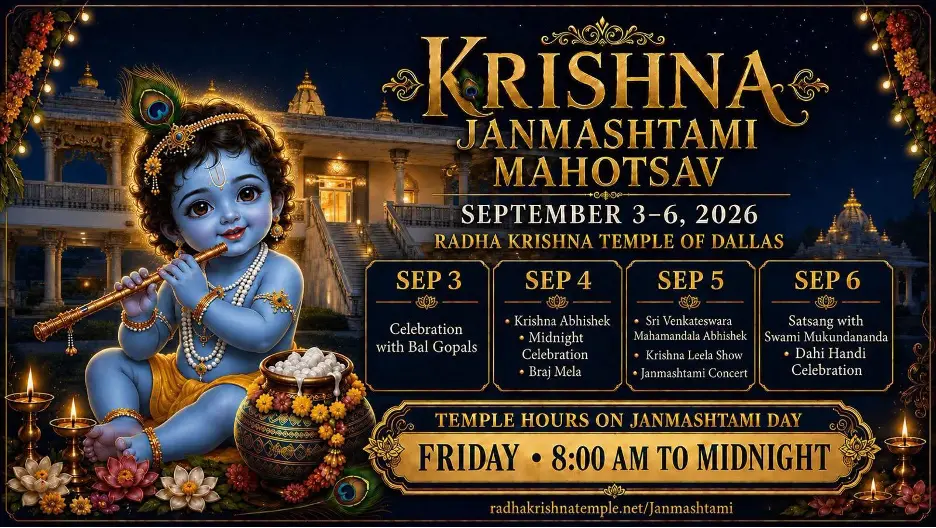
This Janmashtami, come not merely to attend a festival, but to experience Krishna. Come for His darshan, sing His name, rejoice in His leelas, offer your seva, and receive the wisdom of Swami Mukundananda in the company of devotees.
September 3–6, 2026
Radha Krishna Temple of Dallas
In the Divine Presence of Swami Mukundananda
Admission is free. All are welcome.