Every year, Janmashtami fills temples and homes with the joyful remembrance of Shree Krishna's divine appearance. Devotees celebrate His birth with kirtans, fasting, midnight worship, and the narration of His enchanting childhood pastimes. Yet among the countless leelas described in the Srimad Bhagavatam, none has inspired more wonder, or more misunderstanding, than the Raas Leela.
To someone approaching it superficially, the Raas Leela may appear to be an ordinary dance. Others dismiss it as mythology or attempt to interpret it as a symbolic story. However, the saints explain that it is neither.
The Raas Leela is the highest revelation of divine love found anywhere in the scriptures. It portrays the soul's complete absorption in God and the culmination of devotion that has matured over countless lifetimes.
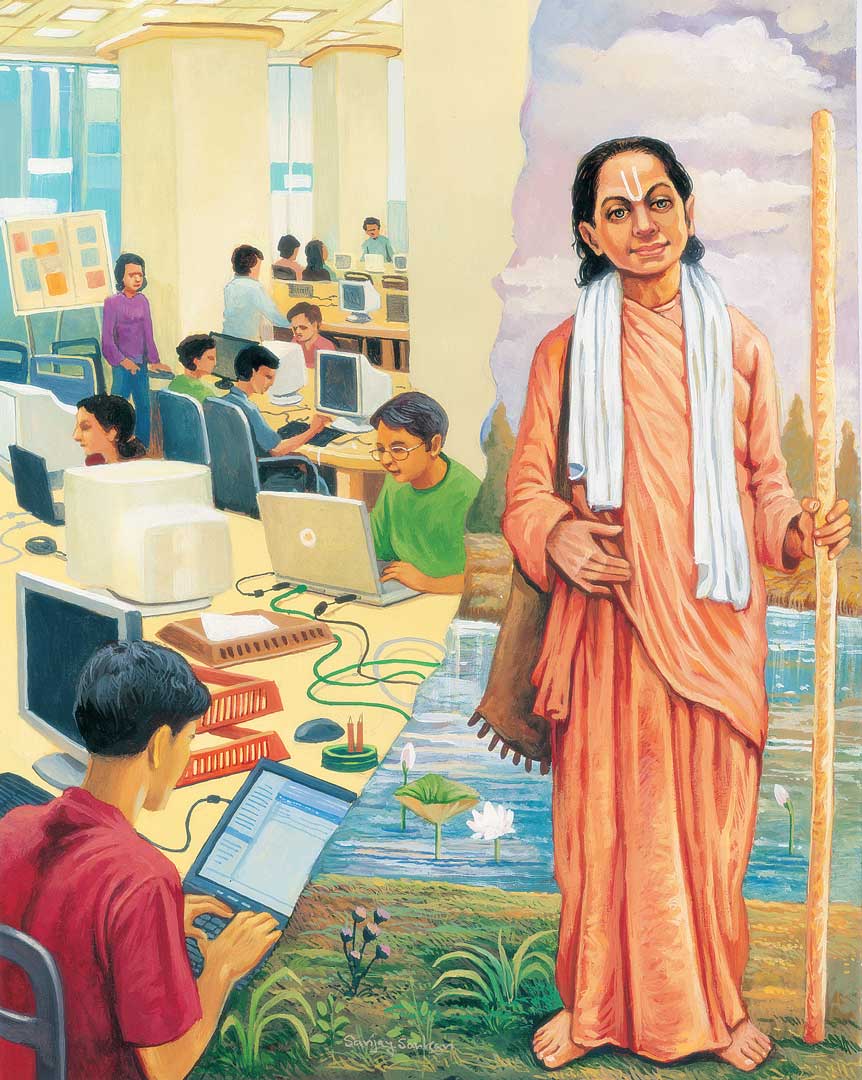
Swami Mukundananda explains that the Bhagavatam is not a scripture to be understood through worldly logic alone. Before one can appreciate the Raas Leela, one must first understand the teachings of the Bhagavad Gita. The Gita repeatedly reminds us that we are not the physical body but the eternal soul. Only after this understanding becomes firm can one begin to appreciate the extraordinary relationship between Shree Krishna and the Gopis. As Swamiji beautifully explains, where the Bhagavad Gita concludes its journey of spiritual knowledge, the Bhagavatam begins its journey into divine love.
For this reason, Janmashtami is the perfect occasion not only to celebrate Krishna's appearance but also to deepen our understanding of the love He came to awaken within every soul.

Why Did Shree Krishna Descend?
Whenever righteousness declines and humanity loses sight of its spiritual purpose, the Supreme Lord descends out of infinite compassion.
Shree Krishna declares in the Bhagavad Gita:
दा यदा हि धर्मस्य ग्लानिर्भवति भारत ।
अभ्युत्थानमधर्मस्य तदात्मानं सृजाम्यहम् ॥ 7॥
yadā yadā hi dharmasya glānir bhavati bhārata
abhyutthānam adharmasya tadātmānaṁ sṛijāmyaham
BG 4.7: Whenever there is a decline in righteousness and an increase in unrighteousness, O Arjun, at that time I manifest Myself on earth.
His divine appearance serves many purposes. He protects the righteous, restores dharma, imparts timeless spiritual wisdom through the Bhagavad Gita, and performs countless enchanting leelas that attract souls toward Him through love rather than fear.
The Raas Leela is one such divine pastime. It is not performed because God requires companionship or fulfilment. The scriptures describe Him as Atmaram—completely satisfied within Himself. Yet out of compassion, He chooses to conceal His infinite majesty so that devotees may experience the joy of serving Him with love.
Swami Mukundananda explains this profound truth with remarkable clarity. Because God is complete, He has no needs. Through His divine Yogamaya potency, however, He voluntarily accepts apparent needs so that devotees may lovingly serve Him. The all-powerful Lord hides His omnipotence and says, in effect, "I want" and "I need," allowing His devotees to express their affection through loving service. This willingness to receive devotion is itself an expression of His infinite grace.
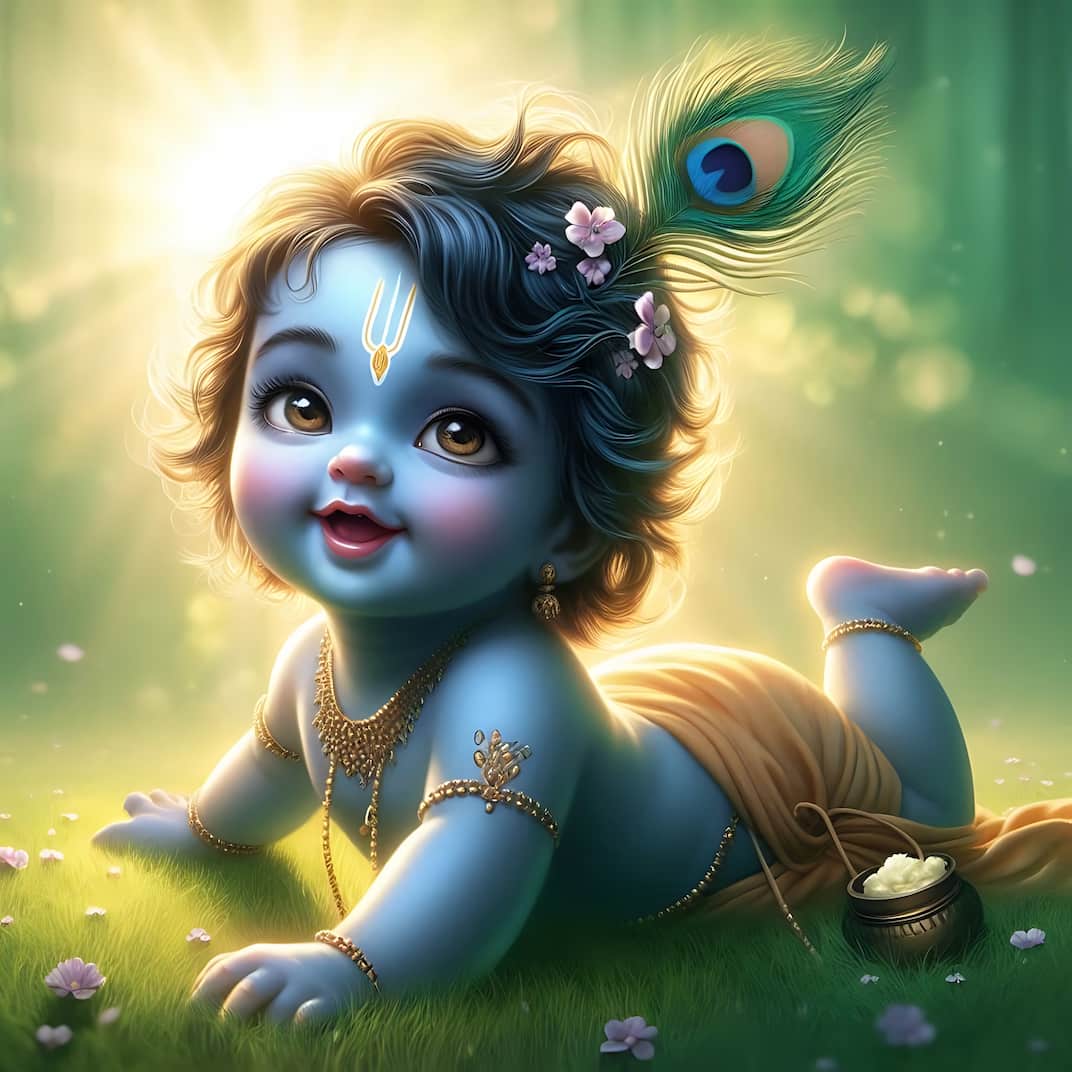
This principle runs through Krishna's entire life. As a child, He accepted butter lovingly churned by the gopis. As the son of Mother Yashoda, He allowed Himself to be fed, cared for, and even lovingly chastised. During the Raas Leela, that same Supreme Lord accepted the pure devotion of souls whose only desire was His happiness.
The Night Chosen for Divine Love
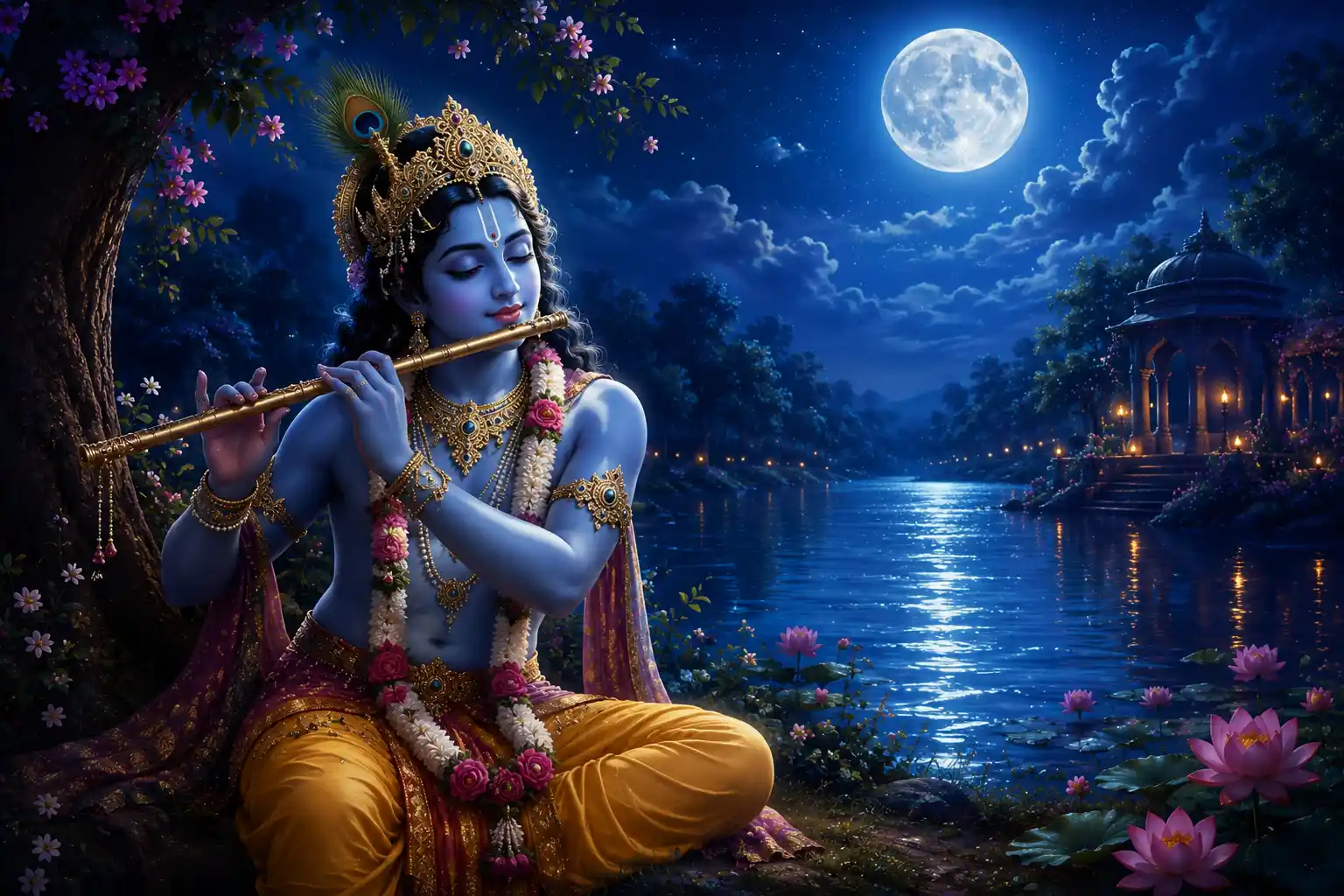
The Raas Leela did not occur on an ordinary evening. The Srimad Bhagavatam describes how Shree Krishna chose the sacred night of Sharad Purnima, when nature itself seemed prepared for a divine revelation.
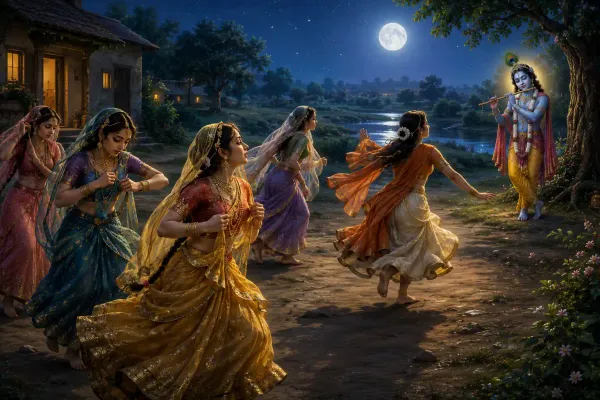
The rainy season had ended. The sky was perfectly clear. The air was gentle, neither hot nor cold. Moonlight bathed the forests of Vrindavan in a silvery glow, while the waters of the Yamuna reflected the beauty of the autumn night.
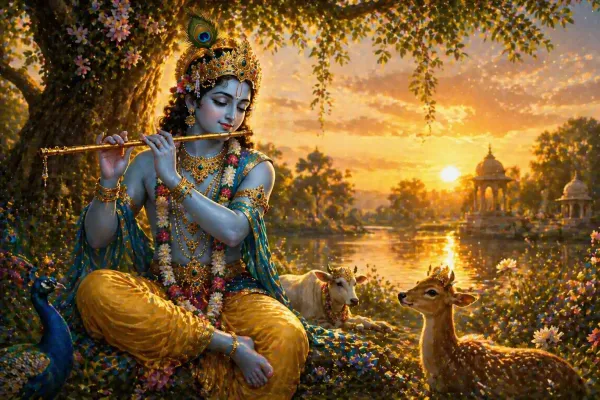
Swami Mukundananda lovingly describes this setting. Beneath His beloved Kadamba tree on the banks of the Yamuna, Shree Krishna stood in His graceful threefold-bending form. Lifting His flute to His lips, He began to play in the Pancham Swar, filling its melody with His divine love.
This was no ordinary music, for the flute became the medium through which the Lord called His eternal devotees.
The Divine Call of the Flute
The melody of Krishna's flute spread throughout Vrindavan.
Yet remarkably, not everyone heard it. Many people continued sleeping peacefully through the night, unaware that anything extraordinary had occurred.
Swami Mukundananda explains that Krishna's flute carried the power of Yogamaya. Only those who were adhikaris, spiritually qualified through devotion cultivated over many lifetimes, could hear its divine call. The Gopis immediately recognised that Krishna had filled the flute with His love and was calling them to Him.
This beautiful detail carries an important lesson for every spiritual seeker.
God's invitation is always present, but our ability to perceive it depends upon the purity of our own hearts. As devotion deepens through sincere spiritual practice, the soul becomes increasingly receptive to His grace.
Jagadguru Shri Kripaluji Maharaj and Swami Mukundananda repeatedly encourage seekers to cultivate Trida Bhakti: engaging the ears in shravanam, the tongue in kirtanam, and the mind in smaranam. As we regularly listen to Krishna's glories, chant His holy names, and lovingly remember His form and pastimes, the heart gradually becomes purified and receptive to His divine presence.
The Gopis did not suddenly become qualified on the night of the Raas Leela. Their readiness was the fruit of lifetimes of loving devotion.
The Gopis' Complete Absorption in Krishna
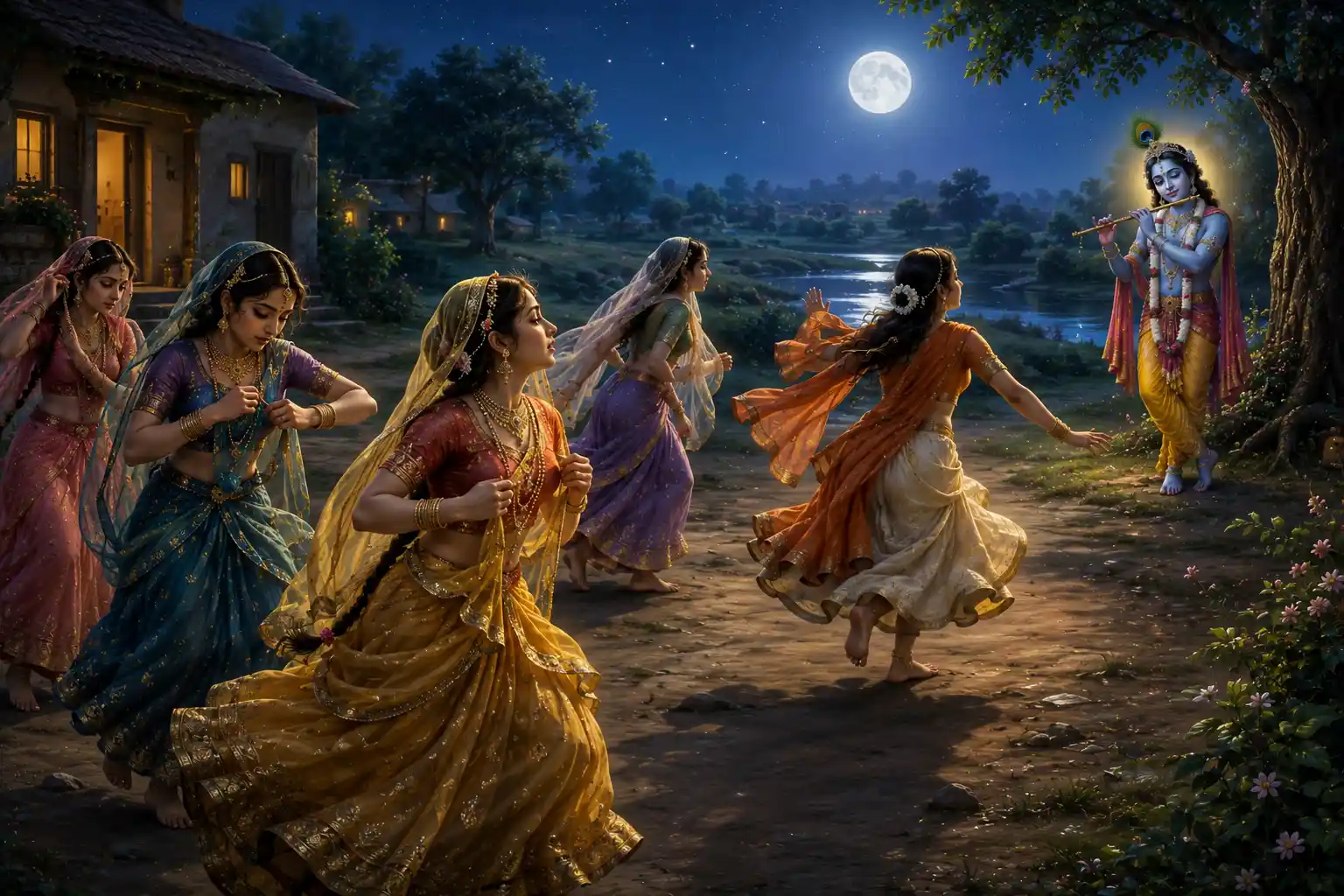
The moment the Gopis heard Krishna's flute, something extraordinary happened.
Their minds immediately rushed toward Him.
Swami Mukundananda explains that because their consciousness became completely absorbed in Krishna, they entered different states of samadhi. Some remained outwardly aware while preparing themselves to leave. Others dressed hurriedly, scarcely noticing that their clothes had been put on incorrectly. Still others lost all awareness of external appearances and simply ran toward Krishna without hesitation. Their physical actions differed, but their inner absorption was the same.
This was not emotional excitement or worldly attachment. It was the natural response of souls whose every thought revolved around the Lord.
Krishna was not merely someone they admired, He was the very treasure of their lives.
The Bhagavad Gita describes the state of such devotees:

मच्चित्ता मद्गतप्राणा बोधयन्त: परस्परम् ।
कथयन्तश्च मां नित्यं तुष्यन्ति च रमन्ति च ॥ 9॥
mach-chittā mad-gata-prāṇā bodhayantaḥ parasparam
kathayantaśh cha māṁ nityaṁ tuṣhyanti cha ramanti cha
BG 10.9: With their minds fixed on Me and their lives surrendered to Me, My devotees remain ever content in Me. They derive great satisfaction and bliss in enlightening one another about Me and in conversing about My glories.
This verse beautifully describes the consciousness of the Gopis. Every aspect of their being had become centred upon Krishna.
Their example reminds us that genuine devotion is not confined to ritual observances. It gradually transforms the heart until remembrance of God becomes natural and joyful.
Running Toward the Supreme Beloved
Leaving behind every distraction, the Gopis hurried into the moonlit forests of Vrindavan. They did not stop to calculate the consequences or weigh personal gain against loss. Their only thought was to answer the call of their Beloved.
It is important, however, to understand this correctly.
The Bhagavatam is not encouraging irresponsibility or neglect of worldly duties. Rather, it reveals the spiritual state of souls whose love for God has become completely pure.
Swami Mukundananda explains that these were not ordinary village women overwhelmed by emotion. They were exalted devotees whose consciousness had become wholly absorbed in Krishna after innumerable lifetimes of spiritual practice.
The journey into the forests of Vrindavan therefore represents not an escape from responsibility but the culmination of unwavering devotion.
Every seeker begins spiritual life with many competing attachments. Over time, through sincere practice, those attachments gradually become harmonised as love for God deepens.
The Gopis demonstrate the destination of that journey: a heart in which Krishna alone occupies the highest place.
Krishna Tests the Gopis: The Highest Examination of Love
As the Gopis reached the banks of the Yamuna, their hearts overflowed with joy. The Beloved for whom they had longed was standing before them beneath the moonlit Kadamba tree. Surely this was the moment they had waited for through countless lifetimes.
Yet instead of immediately embracing them, Shree Krishna greeted them with surprising words.
He welcomed them warmly and then asked why they had come. Looking around at the beauty of the autumn night, He suggested that perhaps they had come simply to enjoy the full moon, the cool breeze, and the blossoming flowers. He then gently advised them to return home, reminding them that it was dangerous to remain in the forest at night. Wild animals roamed the woods, and their families would surely be worried. He even reminded them of their worldly responsibilities: to care for their husbands, children, parents-in-law, and households.
To an ordinary listener, Krishna's words might appear contradictory. After all, He Himself had called them with the irresistible melody of His flute. Why invite them only to ask them to leave?
Swami Mukundananda explains that Krishna was not rejecting the Gopis. He was testing them. Every true teacher examines the student to see whether the lesson has been understood before allowing the student to advance. In the same way, Krishna wished to reveal the depth of the Gopis' devotion before bestowing the highest spiritual bliss.
This episode reminds every spiritual seeker that divine tests are never meant to discourage us. They strengthen our faith, deepen our surrender, and prepare us for greater spiritual growth.
The Gopis Reveal the Highest Dharma
The Gopis listened respectfully to Krishna's words, but their love had already carried them beyond ordinary worldly consciousness. Their response, though offered by simple village women with no formal education, revealed profound spiritual wisdom.
Swami Mukundananda explains that they asked Krishna a simple but penetrating question: "Are You not the soul of all souls?" When Krishna acknowledged that He was, they replied that by serving Him they were fulfilling every other duty. They illustrated this truth with a beautiful analogy that is deeply rooted in the scriptures.
Just as watering the root of a tree nourishes every branch, leaf, flower, and fruit, serving the Supreme Lord automatically fulfils all other obligations.
The Gopis were not rejecting dharma; rather, they had reached Para Dharma, the highest expression of dharma. Their love for Krishna was completely free from selfish motivation. They sought neither liberation, heavenly pleasures, nor recognition. Their only desire was to please Him.
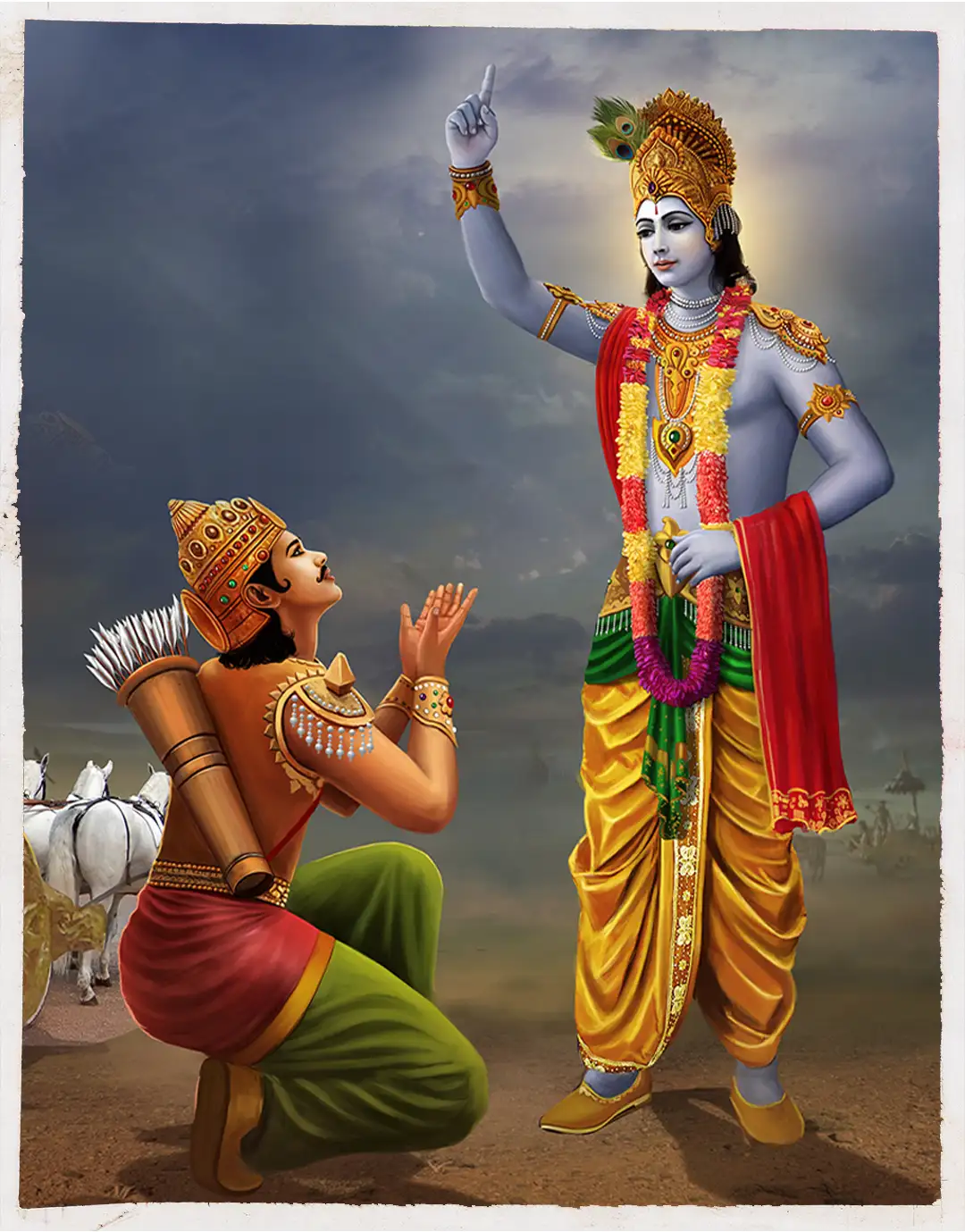
This teaching echoes one of the most celebrated verses of the Bhagavad Gita:
सर्वधर्मान्परित्यज्य मामेकं शरणं व्रज ।
अहं त्वां सर्वपापेभ्यो मोक्षयिष्यामि मा शुच: ॥ 66॥
sarva-dharmān parityajya mām ekaṁ śharaṇaṁ vraja
ahaṁ tvāṁ sarva-pāpebhyo mokṣhayiṣhyāmi mā śhuchaḥ
BG 18.66: Abandon all varieties of dharmas and simply surrender unto Me alone. I shall liberate you from all sinful reactions; do not fear.
Swami Mukundananda points out that the Gopis' reply reflects precisely this highest principle of surrender. Having reached complete devotion to God, they were no longer motivated merely by social obligation but by unconditional divine love. Krishna smiled, accepted their reasoning, and revealed that His questions had simply been a test. As Swamiji beautifully remarks, tests are always beneficial because they promote us to the next stage of spiritual progress.
The Beginning of the Maha Raas
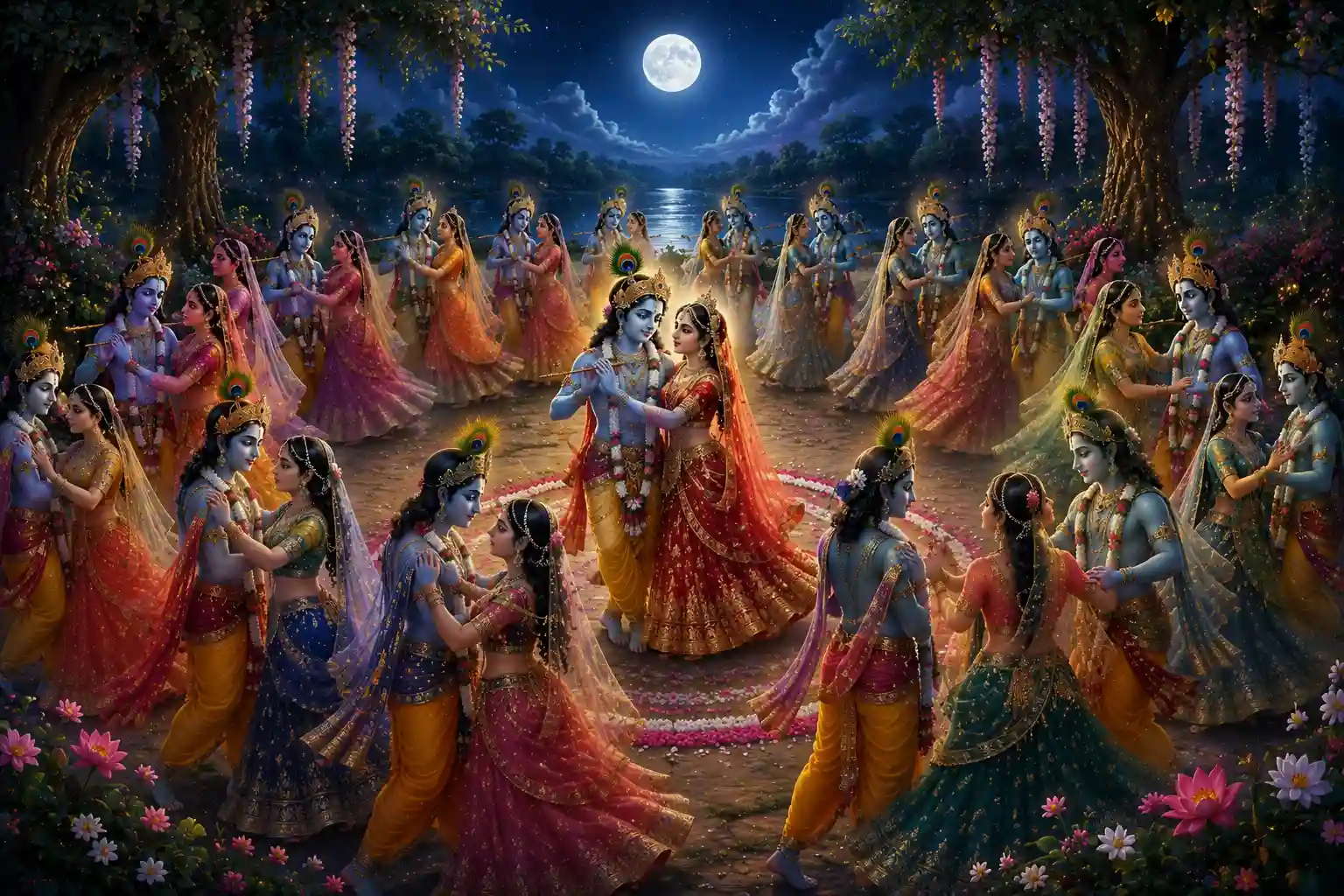
Having accepted the purity of the Gopis' devotion, Krishna fulfilled the promise He had made to them during the earlier Chir Haran Leela. The long-awaited Maha Raas now began.
The Srimad Bhagavatam describes a scene beyond the imagination of the material mind. Krishna manifested Himself beside every Gopi simultaneously, allowing each devotee to experience His complete and personal attention while remaining the one indivisible Supreme Lord. Swami Mukundananda compares this to a child joyfully playing with countless reflections of himself. In the same way, Krishna lovingly reciprocated with every soul according to the uniqueness of their devotion.
At the centre of this divine circle stood Radha and Krishna, the eternal embodiment of perfect divine love. Celestial beings watched in amazement as the highest bliss described in the scriptures unfolded before them.
This was not a worldly dance, nor an expression of physical attraction. It was the joyful meeting of the Supreme Lord with souls whose hearts had become entirely absorbed in Him.
Every movement expressed divine love, every note glorified God, and every moment reflected the perfect harmony between the Lord and His devotees.
Radha: The Highest Ideal of Devotion
No discussion of the Raas Leela is complete without understanding the unique position of Shree Radha.
Swami Mukundananda explains that Krishna is Atmaram, completely fulfilled within Himself. Yet through the agency of Yogamaya, He voluntarily accepts loving exchanges with His devotees so that they may experience the joy of serving Him. Among all devotees, Radha's devotion shines with unparalleled purity.
Her love contains no trace of selfish desire. She never approaches Krishna seeking personal happiness or recognition. Her only concern is His pleasure. Because her devotion is completely free from possessiveness and ego, she represents the highest ideal of Prem Bhakti: selfless divine love.
The saints therefore do not worship Radha merely as a historical personality but as the supreme example of the devotion every soul should aspire to cultivate.
The Exalted Nature of the Gopis
Swami Mukundananda also clarifies an important point that is often overlooked. The Gopis who participated in the Raas were not ordinary human beings suddenly overwhelmed by emotion. They belonged to different exalted categories of perfected souls.
Some were Sadhana Siddha Gopis, who had attained perfection through spiritual practice over innumerable lifetimes. Others were Nitya Siddha Gopis, the eternal associates of Krishna who descended from Golok to participate in His earthly pastimes. Still others were Rishi Rupa Gopis, sages from the time of Lord Ram who had prayed for the opportunity to experience this intimate relationship with the Lord and were granted that blessing in Krishna's incarnation.
Swamiji even narrates the beautiful tradition that Lord Shiva himself became Gopeshwar Mahadev, assuming the form of a Gopi through Yogamaya in order to witness and participate in this unparalleled expression of divine love. This is why Gopeshwar Mahadev continues to be worshipped with such reverence in Vrindavan.
Understanding this spiritual background helps remove material misconceptions. The Raas Leela belongs entirely to the transcendental realm and cannot be judged according to ordinary worldly relationships.
When Ego Entered, Krishna Disappeared
As the Maha Raas continued, the Gopis experienced unimaginable bliss. Each felt the immeasurable grace of dancing with the Supreme Lord Himself.
Yet Swami Mukundananda explains that a subtle obstacle quietly entered their hearts. Some began to think, "How fortunate I am. Krishna is dancing with me." The attention that had previously rested entirely upon Krishna shifted ever so slightly toward themselves. The seed of pride had appeared.
Swamiji draws out a timeless lesson from this moment:
The instant ego arises, our awareness moves away from God and toward ourselves. Divine grace withdraws not because God has ceased to love us, but because the heart has become occupied by the sense of "I" and "mine."
Kabir expressed this beautifully when he said that the narrow lane of divine love cannot accommodate both ego and God. Only one may remain.
Accordingly, Krishna disappeared from the Raas. This was not punishment. It was compassion. By withdrawing His visible presence, Krishna purified the last traces of subtle pride, preparing the Gopis for an even deeper experience of divine love.
Viraha: The Love That Deepens Through Separation
Krishna's disappearance plunged the Gopis into intense separation. They wandered through the forests of Vrindavan calling His name, asking the trees, creepers, birds, and the sacred Yamuna if they had seen their beloved Shyamsundar.
Their longing was not born of personal loss but of love. Every moment without Krishna intensified their remembrance of Him until no trace of ego remained. The pain of separation became the means by which their devotion was refined into absolute purity.
The saints explain that viraha is one of the deepest expressions of bhakti because separation intensifies remembrance. When every thought turns naturally toward God, the heart becomes fully prepared to receive His grace.
The Message of Raas Leela for Janmashtami 2026
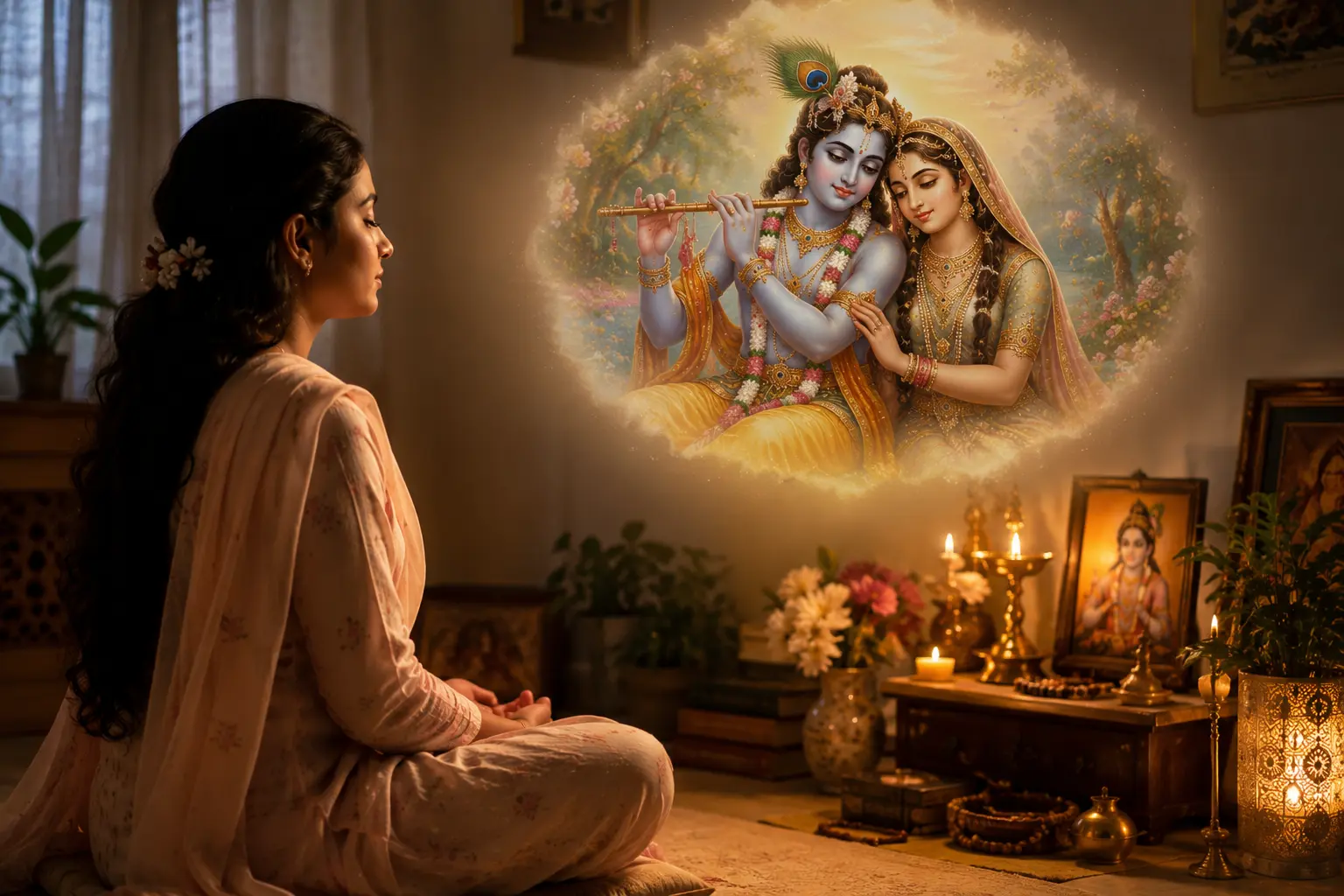
For devotees celebrating Janmashtami today, the Raas Leela is not an invitation to imitate Krishna's external actions but to cultivate the inner qualities displayed by the Gopis and Shree Radha.
The journey begins with the wisdom of the Bhagavad Gita, which teaches us that we are eternal souls and not merely physical bodies. As this knowledge matures, the Srimad Bhagavatam invites us to transform that understanding into loving devotion. Through shravanam, we repeatedly hear Krishna's divine pastimes. Through kirtanam, we chant His names and glories with affection. Through smaranam, we lovingly remember His beautiful form, qualities, and leelas. These three practices, known in JKYog as Trida Bhakti, gradually purify the heart and awaken selfless love for God.
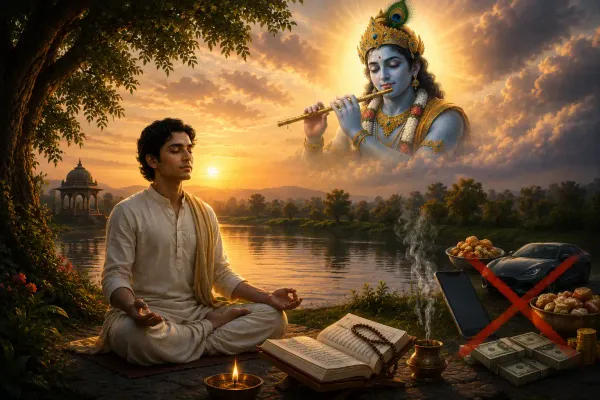
Janmashtami therefore becomes much more than a festival. It becomes an opportunity to ask ourselves whether our devotion is centred on fulfilling our own desires or on bringing joy to the Lord. The Gopis and Shree Radha show us that the highest bhakti seeks nothing in return. It simply longs to love, serve, and remember Shree Krishna.
When that selfless love begins to blossom, the message of the Raas Leela ceases to be merely a sacred narrative from the Bhagavatam.
It becomes the living aspiration of every sincere devotee: a heart so absorbed in Krishna that every thought, every word, and every action naturally flows toward Him in loving remembrance.
Call to Action
This Janmashtami 2026, go beyond simply celebrating the birth of Shree Krishna; begin living His teachings.
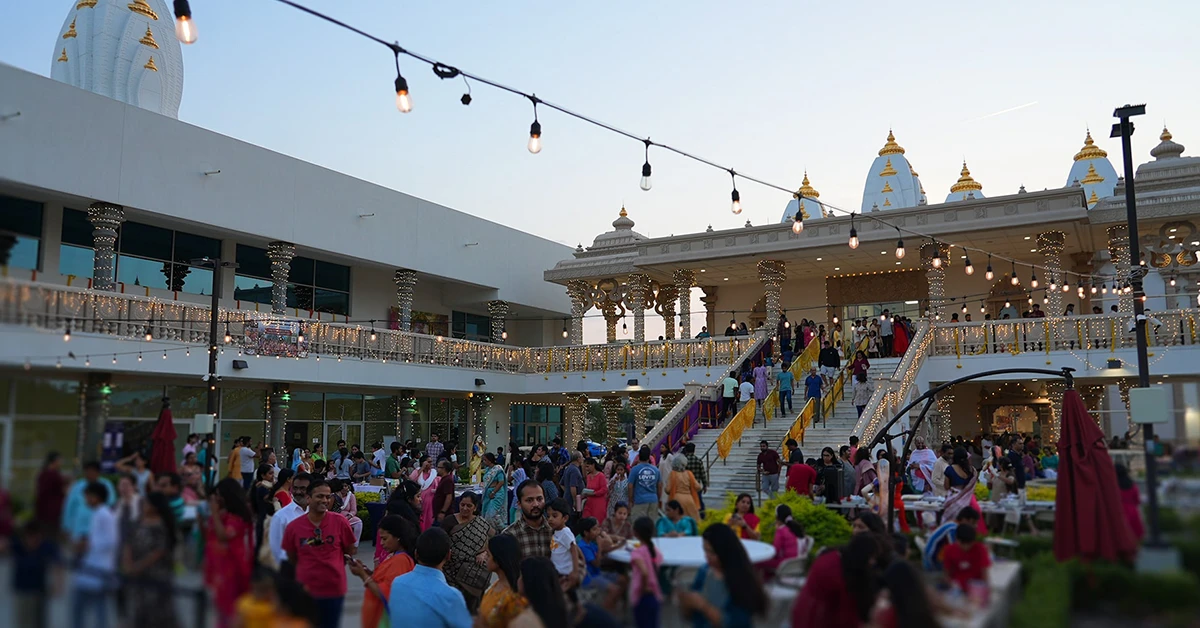
- Visit the Radha Krishna Temple of Dallas for one of their many offerings, or to offer some seva

- Study the Bhagavad Gita with Swami Mukundananda's authentic commentary.

- Download the JKYog Bhagavad Gita & Krishna Bhakti App for daily inspiration, guided meditations, bhajans, lectures, and spiritual resources.
 JKYog
JKYog

Frequently Asked Questions
1. What is the spiritual meaning of Shree Krishna's Raas Leela?
The Raas Leela is the highest revelation of divine love in the Srimad Bhagavatam. It is not a worldly romance but the meeting of the Supreme Lord with souls whose hearts have become completely absorbed in Him through selfless devotion. As Swami Mukundananda explains, it can only be properly understood after first understanding the Bhagavad Gita's teaching that we are eternal souls, not merely physical bodies.
2. Why did Shree Krishna ask the Gopis to return home after calling them?
Krishna was testing the depth of their devotion. Although He had called them with His flute, He first reminded them of their worldly duties to reveal whether their love was based on emotion or genuine spiritual realization. The Gopis demonstrated that serving the Supreme Lord is the highest duty because all other duties are fulfilled through Him.
3. Why could only the Gopis hear Krishna's flute?
Swami Mukundananda explains that Krishna's flute carried the power of Yogamaya. Only those who were spiritually qualified (adhikaris) through devotion cultivated over many lifetimes could hear its divine call. Their purified hearts immediately recognised Krishna's loving invitation.
4. Why did Krishna disappear during the Maha Raas?
Krishna disappeared when a subtle feeling of pride arose among the Gopis. This was not a punishment but an act of divine compassion. By removing His visible presence, He purified even the slightest trace of ego, allowing their devotion to become completely selfless and centred solely on Him.
5. What does Shree Radha represent in the Raas Leela?
Shree Radha is the highest embodiment of Prem Bhakti. Her love for Krishna is entirely free from selfish desire, possessiveness, or ego. She seeks only Krishna's happiness, making her the perfect example of selfless devotion for every spiritual seeker.
6. What is Viraha Bhakti?
Viraha Bhakti is devotion expressed through loving separation from God. When Krishna disappeared, the Gopis' longing for Him intensified their remembrance and purified their hearts completely. The saints explain that such longing deepens devotion because every thought naturally turns toward the Beloved.
7. How can we apply the lessons of Raas Leela during Janmashtami 2026?
Janmashtami is an opportunity to move beyond external celebrations and deepen our relationship with Krishna through Trida Bhakti—Shravanam (listening to His glories), Kirtanam (chanting His names), and Smaranam (lovingly remembering His divine form and pastimes). These practices gradually awaken pure, selfless love for God.