"In the realm of love, there is no greater devotion than that which Radha feels for Krishna. Hers is the love that transcends all barriers, for in her heart, the soul and the Divine become one. It is not a love that asks, but a love that surrenders, a love that binds the eternal with the infinite."
A Divine Love Story
Imagine a beautiful night in Vrindavan, the air filled with the sweet sound of flute music, carrying with it a sense of divine enchantment. In the center of this sacred land, two divine beings, Radha and Krishna, are lost in a dance of eternal love. Their love is not of this world, transcending time, space, and materiality. It is pure, selfless, and divine. The story of Radha and Krishna's love is one that has captivated the hearts of millions across centuries, symbolizing the highest form of devotion.
This divine love is celebrated as the ultimate symbol of devotion because it illustrates a profound connection between the soul and the Divine. Through their stories, known as leelas in the Bhagavatam, we find deep spiritual teachings that guide us toward a path of devotion, love, and surrender to God.
In this blog, we will explore why Radha and Krishna's love stands as the highest symbol of devotion, delving into the rich stories from the Bhagavatam, . Through these teachings, we understand that their love is not just a relationship between two beings, but a manifestation of the love between the devotee (the soul) and God.
In the Bhagavatam, Lord Krishna's own words shed light on the nature of this divine connection:
"मन्मनाभव मद्भक्तो मद्याजी मां नमस्कुरु |
मामेवैष्यसि युक्त्वैवमात्मानं मत्परायणः ॥"
Translation: "Engage your mind in Me, become My devotee, worship Me, and bow down to Me. With your heart and soul united, you will come to Me."
Radha Krishna: The Divine Couple
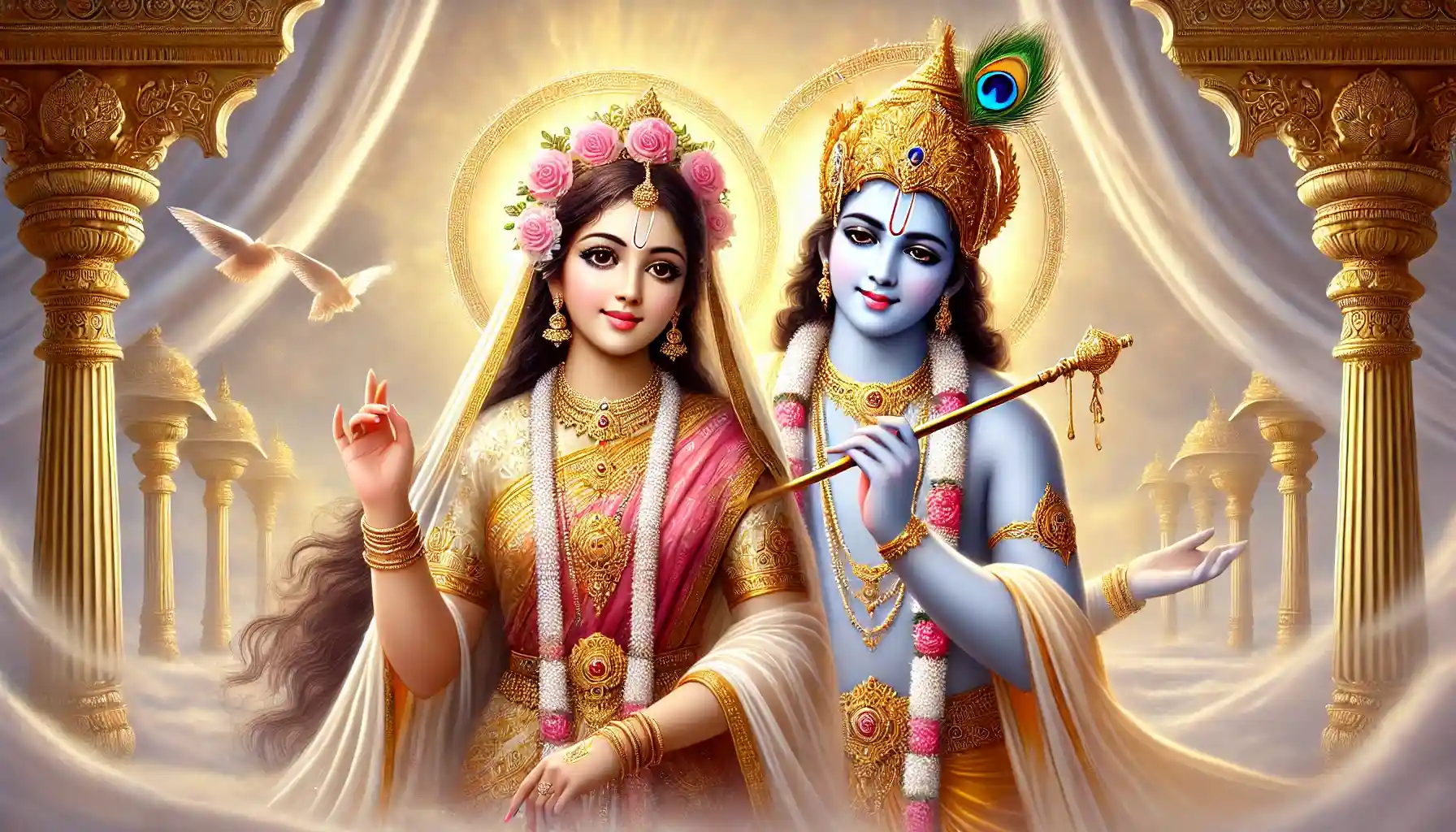
Radha and Krishna's love is an allegory for the soul's relationship with the Supreme. Radha, who is the Supreme Goddess, represents the soul in its purest and most devoted form. Krishna, as the Supreme God, embodies the infinite love and mercy of the divine. Their relationship transcends physical boundaries and exemplifies the spiritual connection that we should seek with God.
Radha's love for Krishna is not motivated by any selfish desire. She represents the ideal devotee who seeks nothing but Krishna's love in return. Her love is pure, selfless, and unconditional, signifying that the highest form of devotion lies in surrendering oneself completely to the Divine, without expecting anything in return.
Krishna's love for Radha, on the other hand, signifies God's deep affection for His devotee. He reciprocates Radha's love by guiding and protecting her, making her the most cherished being in His divine presence.
The Bhagavatam: A Treasure of Divine Leelas
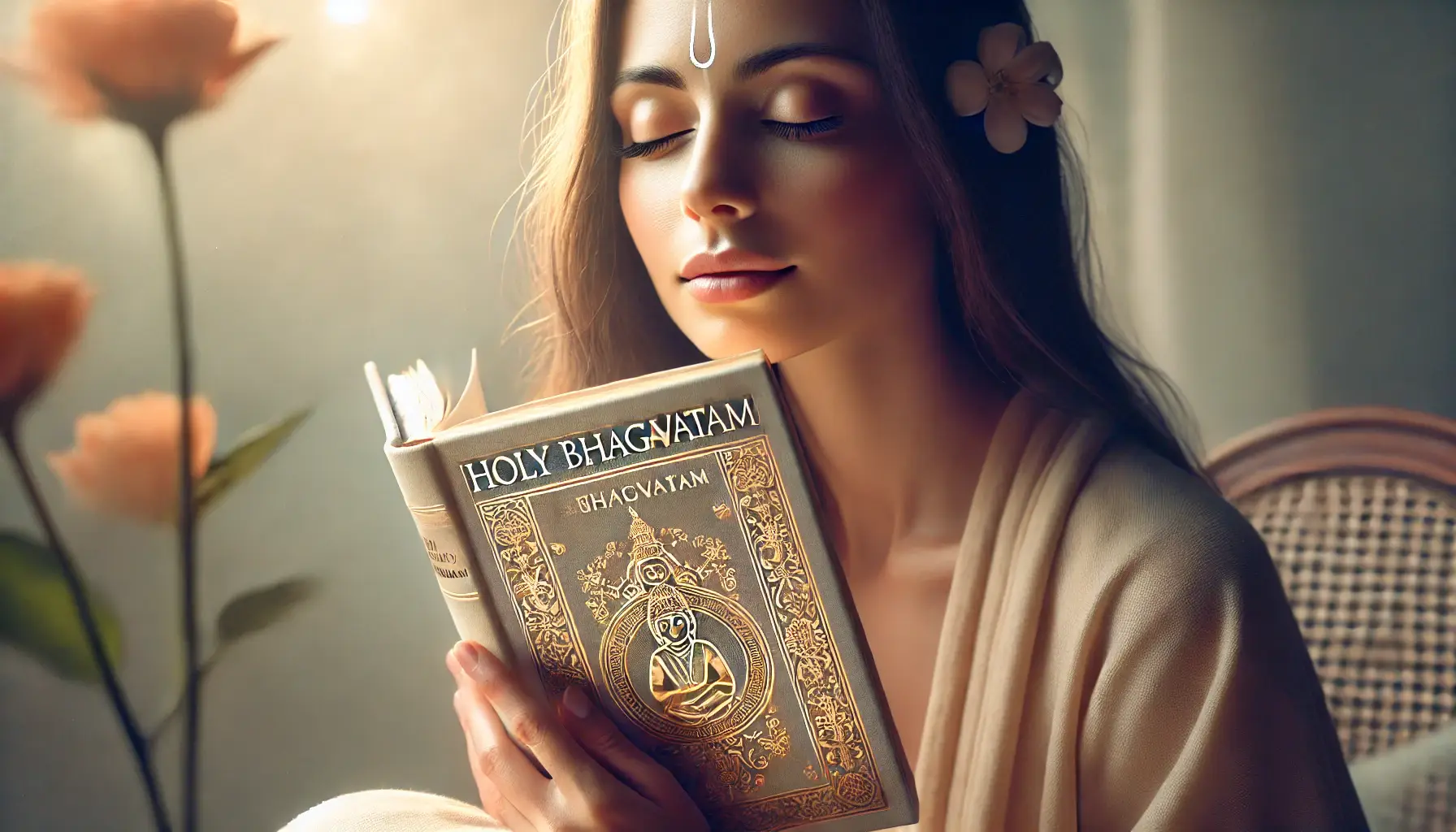
The Bhagavatam, a key text in Hinduism, is filled with beautiful stories of Lord Krishna’s childhood, his miracles, and his deep love for his devotees. Among these stories, the leelas (divine pastimes) of Radha and Krishna stand out as the epitome of devotion.
The Bhagavatam reveals that Radha and Krishna’s love is not just a romantic tale but a symbol of the soul’s ultimate surrender and communion with the Divine. Their love embodies a spiritual journey, where Radha represents the devotee’s heart, and Krishna represents God’s grace.
Here are a few important leelas that shed light on the divine nature of Radha Krishna's love:
Tabular Representation of Key Leelas
|
Leela |
Meaning |
Spiritual Lesson |
|
Raas Leela |
Divine dance between Krishna and the gopis |
Symbolizes the soul’s yearning for union with the Divine. |
|
Radha's Separation |
Radha pretends to be angry with Krishna |
Devotion is not just ritual; it involves emotional depth. |
|
Krishna's Flute |
Krishna’s flute calling the gopis to Him |
The call of the Divine brings the soul closer to God. |
|
Radha's Surrender |
Radha’s unconditional love for Krishna |
True devotion is based on surrender and trust. |
1. The Raas Leela: The Dance of Divine Love
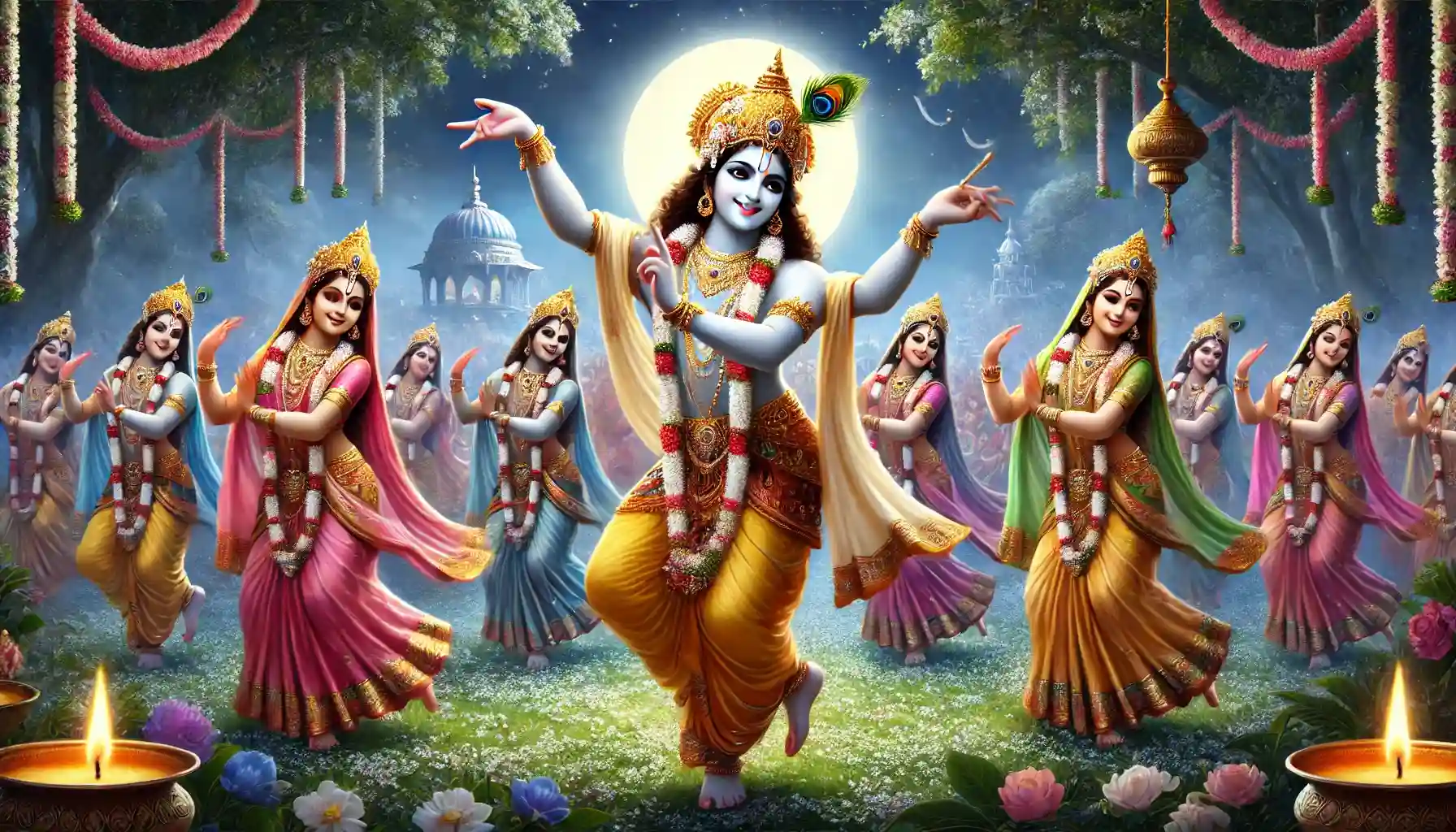
One of the most famous stories in the Bhagavatam is the Raas Leela, a divine dance that symbolizes the union between the devotee and the Divine. According to the Bhagavatam, during a full moon night in Vrindavan, Krishna began to play his flute. The enchanting melody called forth the gopis (milkmaids), who were deeply in love with Krishna. As they gathered around him, Krishna invited them to dance with him in a divine circle, known as the Raas.
This dance is not a mere physical gathering but represents the eternal dance of the soul with the Divine. In this dance, Krishna is the central figure, and the gopis (especially Radha) are the devotees who surrender to Him in absolute devotion. Their devotion is complete and unselfish, as they seek only Krishna's presence. This dance is symbolic of the soul's longing for God, and Krishna's reciprocation of that longing.
2. Radha's Unwavering Devotion
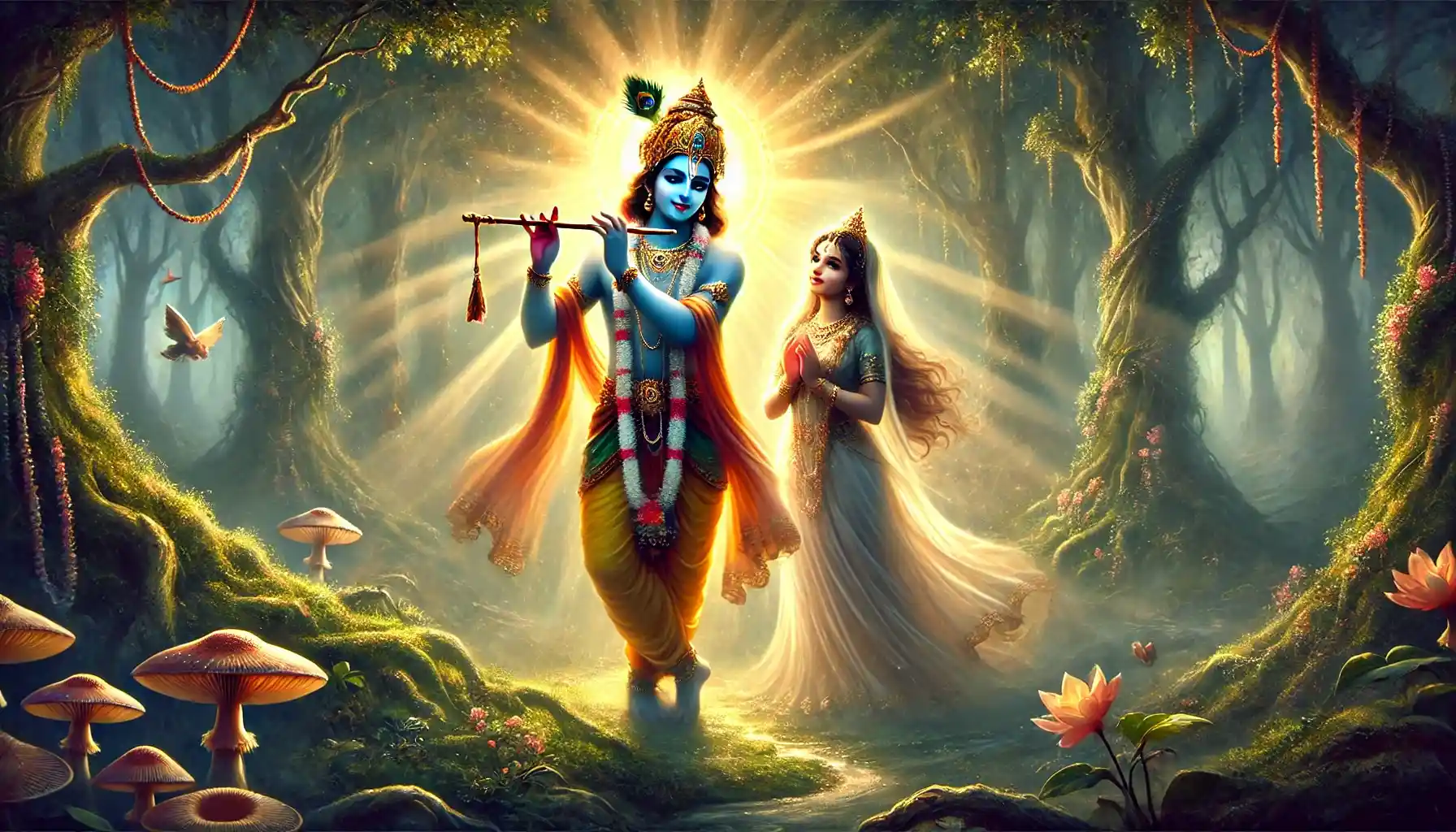
Radha's devotion to Krishna is one of the purest expressions of Bhakti (devotion). There are many instances in the Bhagavatam where Radha shows her unconditional love and surrender to Krishna. She symbolizes the soul’s yearning for union with the divine, despite the hardships and trials it may face. Her love is so pure that she becomes an embodiment of the highest form of devotion, seeking nothing in return but Krishna's love.
In one such story, Radha and Krishna engage in a playful argument, with Radha pretending to be angry with Krishna. She takes her love away and leaves Krishna yearning for her. This story signifies that true devotion is not about mere ritual but about a deep emotional connection with God, where the devotee may sometimes feel the separation to intensify the longing for the divine.
In Radha's devotion, we see the epitome of selfless love, where her entire being is absorbed in Krishna. Her love does not seek anything from him. It is pure, spontaneous, and unrestricted, a true reflection of the heart’s infinite capacity for love.
The Significance of Radha Krishna's Love
Radha Krishna’s love is not limited to the ancient time. It holds immense spiritual significance that continues to inspire devotees and philosophers to this today. Their relationship illustrates the path of devotion, which is the easiest and most effective means of attaining spiritual enlightenment. Through Radha Krishna's divine love, one learns:
|
Aspect |
Explanation |
|
Surrender and Trust |
Radha's love for Krishna represents the soul’s complete surrender to God. She trusts Krishna completely, knowing that He will always guide her. Similarly, a devotee must place full trust in God. |
|
Selflessness |
Radha’s love is selfless. She expects nothing in return and loves Krishna purely for the joy of loving Him. Devotees should similarly love God without selfish desires. |
|
Unwavering Devotion |
Despite challenges and separation, Radha’s devotion to Krishna never weakens. Likewise, a devotee must remain steadfast even during difficulties. |
|
Divine Union |
The Raas Leela represents the soul’s union with the Divine. Through devotion and pure love, one can attain spiritual enlightenment and unity with God. |
Radha Krishna:s Love in Contemporary Devotion: The Legacy of Kripalu ji Maharaj
Radha and Krishna's love is not just a story from ancient times; it continues to inspire millions of devotees around the world today. The devotion to Radha and Krishna is central to many Bhakti traditions, and one of the most influential figures in spreading this devotion in modern times is Kripalu ji Maharaj.
Kripalu ji Maharaj dedicated his life to teaching the profound love between Radha and Krishna, emphasizing that their divine relationship symbolizes the highest form of devotion. Through his teachings, he guided devotees to immerse themselves in the love of Radha and Krishna, practicing selfless devotion and complete surrender. Maharaj ji's approach focused on living a life full of Radha Krishna's love, bringing the divine couple’s teachings into modern practice.
Radha Krishna – The Cosmic Dance of Love
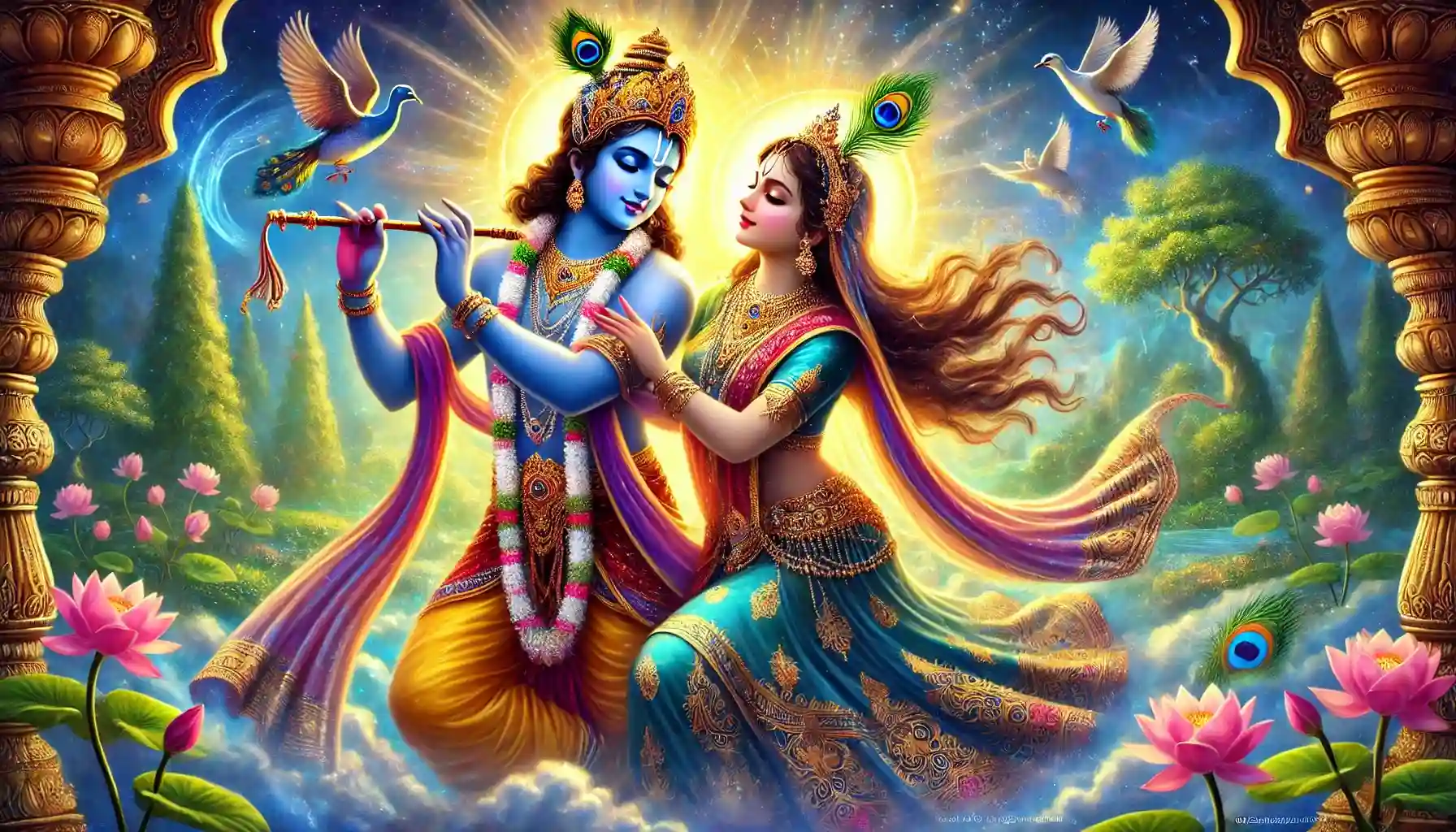
In the beautiful land of Vrindavan, a mystical place where time seemed to stand still, Krishna, the incarnation of the Supreme Being, played his flute. The sound of his music was not just a mere melody, but a call to the soul. Radha, the embodiment of love and devotion, was so drawn to this call that she became one with Krishna in spirit, surpassing all worldly emotions. Their love was not limited to physical attraction; it was an expression of the highest spiritual union.
The symbolism behind their love can be seen in the way Radha’s love for Krishna surpasses all other forms of love. It represents the soul's intense yearning for the divine. Radha is often depicted as the soul, while Krishna is the Supreme Soul or God. Her love for him is the ultimate form of devotion because it is pure, without desire for anything material. She represents the ideal devotee who is completely surrendered to the divine will.
Krishna's Response: The Divine Love He Bestows
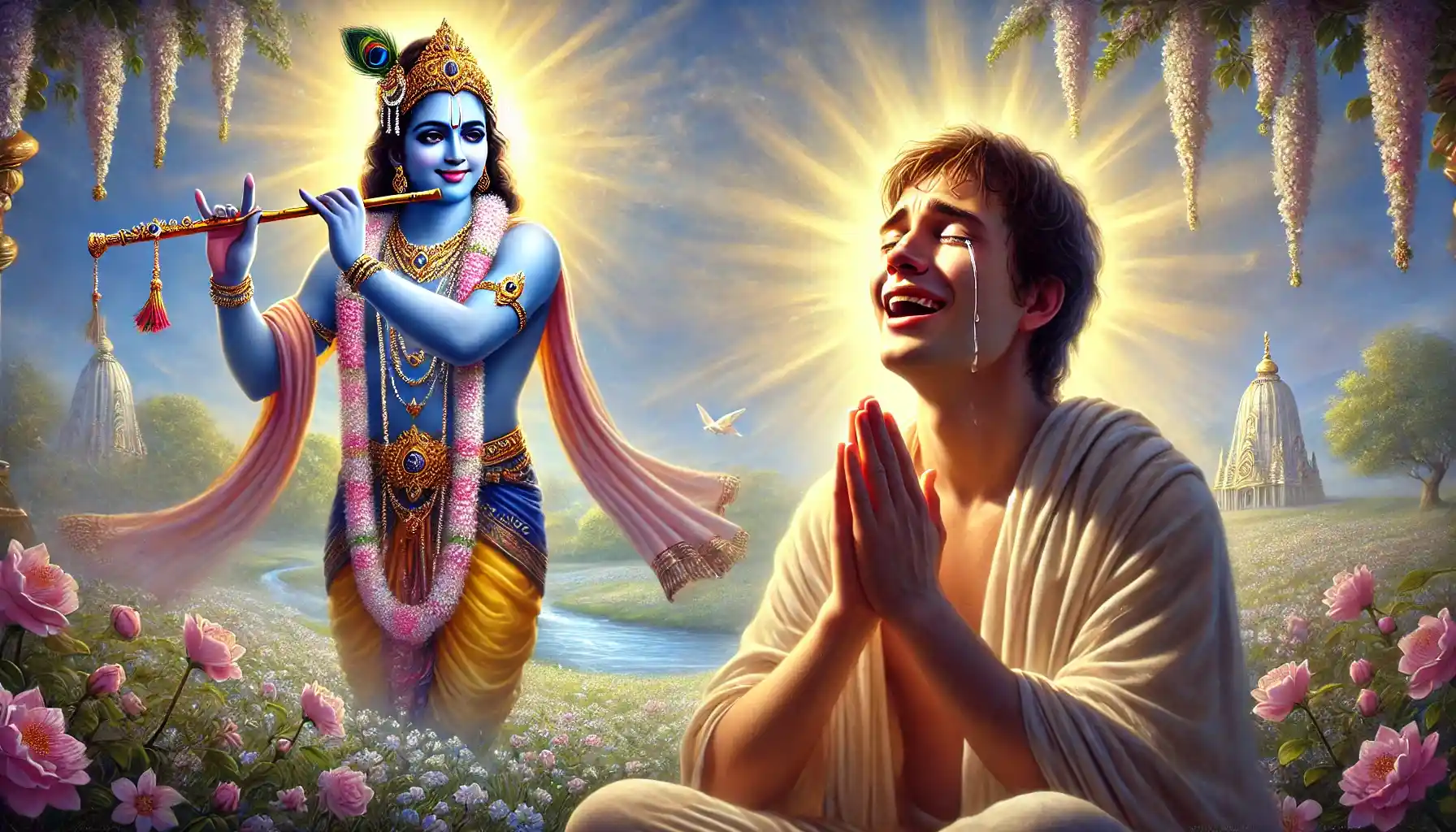
On the other hand, Krishna's love for Radha is not just reciprocation; it is an overflowing of divine grace. Krishna represents the eternal, unchanging reality, and Radha, the devotee, represents the soul that yearns for union with this reality. Krishna's love is not confined by human limitations. It is infinite, boundless, and unconditional.
Krishna, in his divine play (Leela), reciprocates Radha's love in ways that transcend human understanding. Their relationship teaches us that God’s love is not bound by time, place, or form. It is a love that exists for the sake of the devotee, nurturing and guiding them towards enlightenment.
The Bhagavatam beautifully captures this relationship, explaining how Krishna’s love for Radha is the ultimate form of spiritual grace. The sacred text describes their interaction as a dance of divine love, where Krishna, through his flute and his presence, guides Radha into the highest state of devotion:
The Spiritual Meaning of Their Love
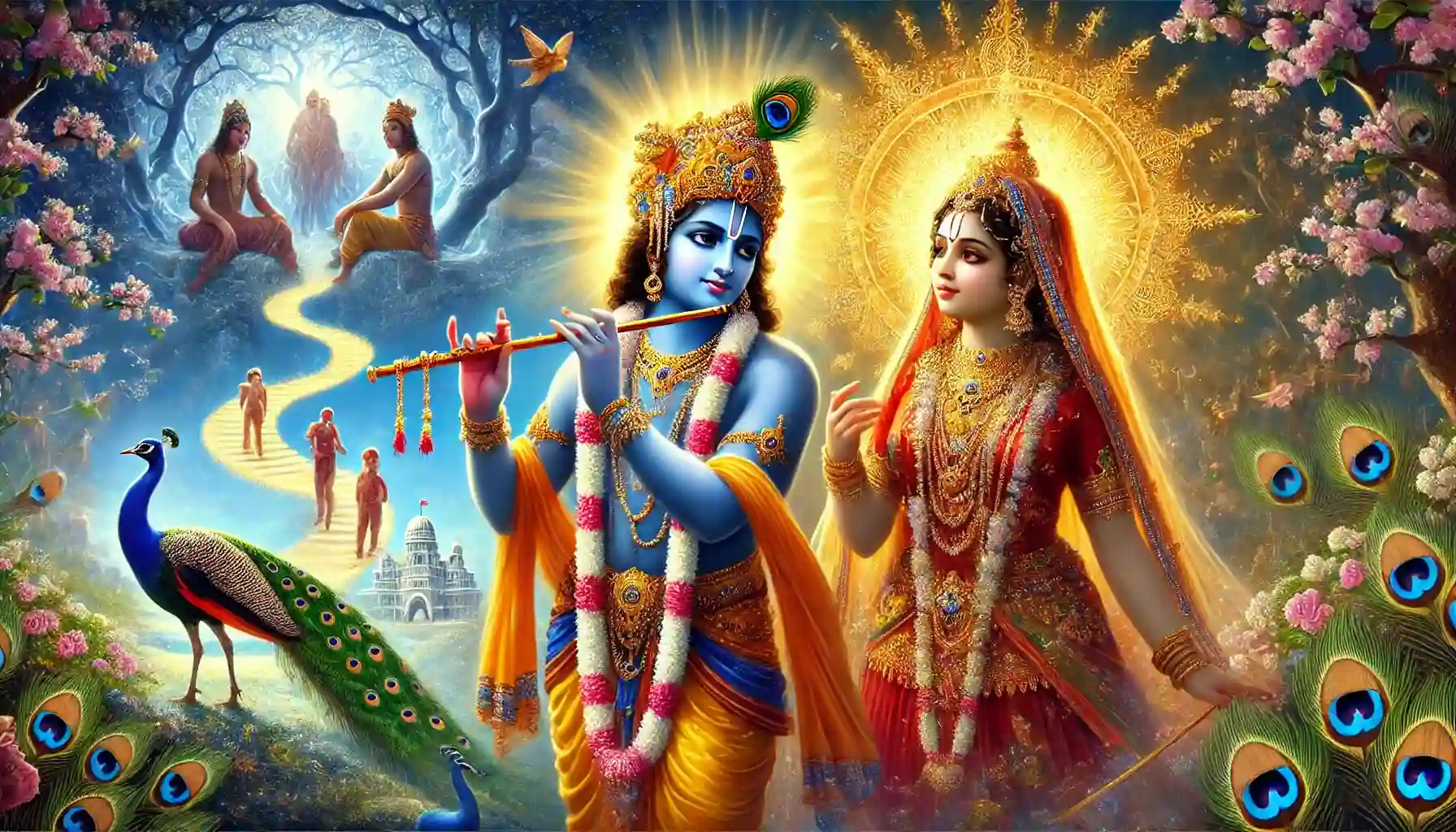
The love of Radha and Krishna goes beyond the romantic or physical realm and enters the domain of the soul. Their love is the ultimate symbol of Bhakti (devotion). It is not bound by the limitations of the material world but speaks to the soul’s deepest yearning for reunion with the divine.
In many ways, Radha Krishna's love represents the journey of the soul. Krishna, the Supreme Being, is always present, calling the soul to return to its divine nature. Radha, as the devotee, responds to this call with complete surrender, signifying the soul’s longing for God. The ultimate message is that true devotion is not about seeking material rewards but about experiencing union with the Divine.
Radha and Krishna’s love is a spiritual journey that teaches us to seek the divine in all aspects of life. Their love demonstrates that true devotion arises from a place of inner purity, surrender, and an unwavering connection to the Supreme.
Swami Mukundananda’s Insights on Radha-Krishna Devotion
|
Topic |
Explanation |
|
1. Personal form and God's grace manifesting through devotion |
Swami Mukundananda explains that God's personal form, such as Krishna, allows us to connect with the divine through love and devotion. His teachings emphasize the importance of engaging with Krishna’s pastimes, which lead to spiritual realization. |
|
2. The heart as the temple, Radha-Krishna as the innermost residents |
Swami Mukundananda encourages devotees to view their heart as the seat of God’s presence. He highlights the importance of purifying the heart and surrendering ego, allowing the soul to unite with Krishna in the heart-temple. The divine union of Radha and Krishna represents the union of the soul with the divine. |
|
3. Why the Radha-Krishna paradigm is ultimate |
Swami Mukundananda summarizes why Radha and Krishna's love is the ultimate symbol of devotion: Radha’s love is selfless, Krishna responds with divine grace, their relationship models the union of soul and God, and the devotee who emulates this love enters a realm of transcendental experience. |
|
4. Practical consequences: self-surrender, service, constant remembrance |
Devotion is expressed through continual remembrance and self-surrender. A true devotee seeks to serve Krishna and is happy in His happiness. This is living bhakti. |
|
5. Radha as the supreme devotee and source of divine love (Prem-Shakti) |
Swami Mukundananda describes Radha as the embodiment of the highest devotion to Krishna, emphasizing her unique love, which is singular and centered, rather than distracted or transactional. |
|
6. Devotion that is wholehearted and exclusive |
Genuine bhakti arises when a devotee fully immerses the mind, life, and heart in the personal form of God. Devotion becomes natural when reflecting on Krishna's divine qualities and pastimes. |
Final Reflections: Key Takeaways
| Key Takeaway | Explanation |
| Divine Love | Radha and Krishna’s love shows that true devotion is selfless, freely given without expectation, seeking only divine connection. |
| Selfless Devotion | Radha’s love teaches that devotion is not about receiving but about surrendering to God with pure, unshakable love. |
| Radha as the Ideal Devotee | Radha represents the soul completely surrendered to God, reminding us that true devotion requires letting go of the ego. |
| Krishna’s Grace | Krishna’s love for Radha shows that divine grace is granted to those who seek it sincerely, not perfectly. |
| Personal Spiritual Journey | Their relationship reveals that spirituality is deeply personal, with each soul experiencing the Divine uniquely. |
| Union with the Divine | Their love represents the soul’s journey toward merging with the Divine, achieving eternal bliss and peace. |
Conclusion: The Timeless Message of Radha Krishna's Love
Love between Radha and Krishna is more than just a historical story. It is a profound spiritual lesson on the nature of devotion, love, and the soul’s journey toward God. Their love is an ideal example of what it means to love selflessly, without attachment, and with complete surrender to the divine will. Through Radha's unwavering devotion and Krishna's boundless love, we learn that true devotion transcends all worldly concerns and connects the devotee directly with the Divine.
Call to Action
- Immerse yourself in the divine pastimes of Shree Krishna and transform your spiritual journey by listening to Swami Mukundananda's Srimad Bhagavatam sessions
- Experience divine blessings and spiritual protection by participating in the sacred Sudarshan Narasimha Homam on 18th Nov 2025 at the Radha Krishna Temple of Dallas. Join this powerful fire ceremony to remove obstacles, purify the mind, and invite peace, health, and prosperity into your life—register now at www.radhakrishnatemple.net/sudarshan-narsimha-homam.
- To learn more about spiritual growth and self-transformation, visit www.jkyog.org, where you can explore a variety of upcoming events, participate in guided meditations, and experience Swami Mukundananda's enlightening wisdom series designed to help you live each day with greater light, clarity, purpose, and inner peace.
FAQs
1. What makes Radha and Krishna’s love the ultimate symbol of devotion?
Radha and Krishna’s love is the ultimate symbol of devotion because it exemplifies selfless love, where Radha’s devotion is not for personal gain, but a pure, unconditional surrender to the Divine. Their love transcends worldly limitations and symbolizes the soul’s deepest yearning for union with the Supreme.
2. How does Radha represent the ideal devotee?
Radha represents the ideal devotee by embodying complete surrender to Krishna. Her love is selfless and unwavering, focused solely on Krishna without expectation. She teaches us that true devotion involves letting go of the ego and immersing the heart fully in the Divine.
3. What role does Krishna play in Radha’s devotion?
Krishna plays the role of the divine lover and the source of infinite grace. His reciprocal love for Radha shows that God’s grace is freely given to all who seek it with pure devotion. Krishna’s love is boundless, and his presence elevates Radha’s devotion, making it a model for all seekers.
4. How does the relationship between Radha and Krishna teach us about spiritual devotion?
The relationship between Radha and Krishna teaches that devotion is about spiritual union rather than seeking material rewards. It is about cultivating love, surrender, and longing for the Divine. Their love emphasizes that true devotion is a journey to merge with the Supreme, where the devotee’s heart becomes one with the Divine.
5. What lessons can we learn from the Raas Leela about devotion?
The Raas Leela symbolizes the soul’s intimate connection with the Divine. Krishna dances with each gopi, showing that God is always present, welcoming each devotee personally. It teaches us that devotion is a dance of love and longing, where the devotee surrenders to God, experiencing a deep, spiritual union.
References
- Bhagavad Gita (Various Verses)
The Bhagavad Gita, particularly the chapters dealing with Bhakti Yoga (Chapter 9, 10, and 12), elaborates on devotion, selfless love, and the relationship between the devotee and the Divine. Key verses include Bhagavad Gita 9.22, 9.26, and 12.8. - Srimad Bhagavatam
This sacred text contains numerous references to the love story of Radha and Krishna, especially in the tenth book (Canto 10), which highlights their divine leelas (pastimes) and deep connection. Key references include the Raas Leela and Radha’s unparalleled devotion to Krishna. - Teachings of Swami Mukundananda
Swami Mukundananda’s teachings on Bhakti, devotion, and Radha Krishna’s love provide a modern perspective on ancient wisdom. His insights on selfless love, surrender, and the path to God can be found in his lectures and articles on Jkyog and other platforms where he shares his spiritual wisdom. - "Radha Tattva: The Divine Essence of Devotion and Love" by Swami Mukundananda
Swami Mukundananda elaborates on the concept of Radha as the embodiment of the highest form of devotion. His teachings underscore the significance of Radha’s pure love for Krishna as the model for all devotees.