
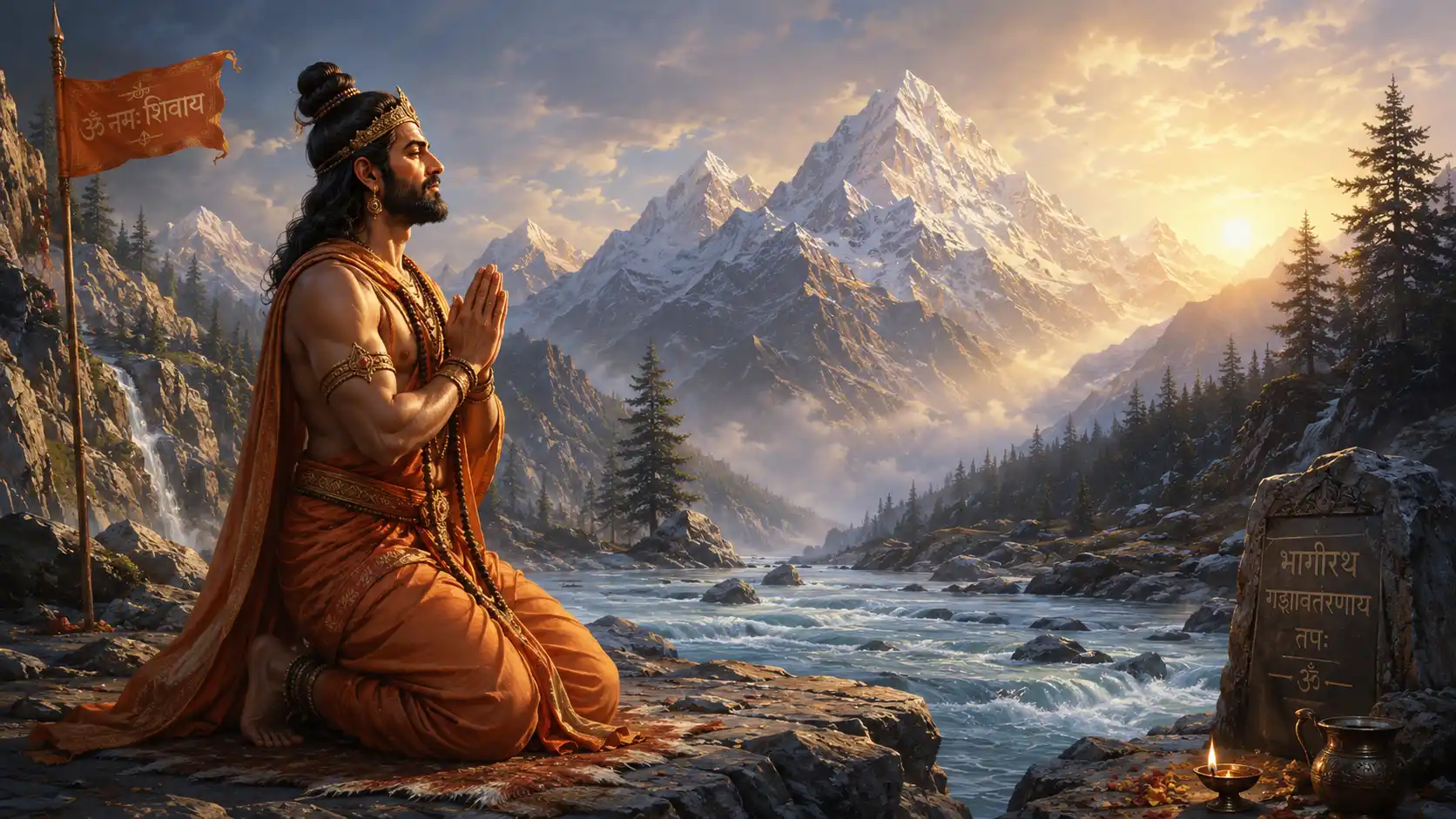
What if one sacred day could become a turning point in your spiritual life?
Ganga Dusshera 2026 is not merely a date on the Hindu calendar. It is a divine invitation to pause, purify, and begin again. In the scorching month of Jyeshtha, when the earth longs for cooling waters, devotees remember the sacred descent of Mother Ganga from the celestial realms to the earth. Her arrival was not just the appearance of a river. It was the descent of compassion itself.
Mother Ganga does not flow only through the plains of India. She flows through the spiritual memory of Bharat as the purifier of sins, the giver of peace, and the compassionate mother who carries souls toward God. Her waters remind us that no heart is too impure to be cleansed, no past is too heavy to be released, and no soul is too fallen to receive divine grace.
The scriptures glorify her as the special shelter for the souls of Kali Yuga:
Krta tu Pushkaram tretayan naimishan tatha
Dvapare tu kurukshetram kalau gangan-samasrayeth
(Padma Purana)
“During the Satya Yuga, one should seek refuge in Pushkara Tirtha, in Treta Yuga, in Naimisharanya, in Dvapara Yuga, in Kurukshetra, and in the Kali Yuga, one should solely take shelter of Sri Ganga.”
Yat punyan jayte pun san darshane parama-atmanan
Tadbhodev gangaya darshane bhakti bhavatah
(Bhavishya Purana)
“The devout love and pious blessings one receives by beholding the Supreme Lord are equally attained by those who behold the river Ganges with a devoted heart.”
These verses reveal why Ganga Dusshera 2026 is spiritually powerful. In this restless age of distraction, anxiety, and spiritual forgetfulness, Mother Ganga stands as a flowing form of divine mercy. To approach her with devotion is to approach the possibility of inner purification.
Swami Mukundananda teaches that the true purpose of spiritual life is to purify the mind and awaken divine love for God. Ganga Dusshera expresses this teaching beautifully. The outer bath in Ganga is sacred, but its deepest meaning is the inner bath of the heart. The real question is not only, “Will I bathe in Ganga?” The real question is, “What impurity am I ready to let go of?”
That question makes Ganga Dusshera more than a festival. It makes it a spiritual turning point.
Why This Day Is More Than a Ritual
Many people think of Ganga Dusshera as a day for bathing in the holy river, offering prayers, giving charity, and performing puja. All these practices are sacred, but the festival is much deeper than ritual.
Ganga Dusshera is about descent. It is about grace coming down. It is about the Divine entering the world to uplift struggling souls.
In Hinduism, Ganga is not ordinary water. She is worshiped as Goddess Ganga, the purest of all waters and the purifier of sins. She is a living goddess, a divine mother, and a sacred current of mercy. Her waters are used in worship, purification, temple rituals, home ceremonies, and final rites because they carry the memory of the divine.
But the true power of Ganga is not limited to external purification. She represents the cleansing of the inner being. The body may be washed with water, but the mind needs devotion. The heart may be heavy with guilt, regret, anger, jealousy, fear, or attachment. Ganga Dusshera gives the devotee an opportunity to offer all these impurities to Mother Ganga and pray for renewal.
This is why the festival is spiritually powerful. It reminds us that divine grace is not only for saints. It is for every sincere soul.
Why Ganga Is Called the Shelter of Kali Yuga

The verse from Padma Purana is especially meaningful because it speaks directly to our age. It says that in Satya Yuga, Pushkara was the great shelter. In Treta Yuga, Naimisharanya was praised. In Dvapara Yuga, Kurukshetra was the sacred refuge. But in Kali Yuga, the scripture says that one should take shelter of Sri Ganga.
Why is this important?
Kali Yuga is the age of restlessness. The mind is easily disturbed. People are surrounded by distractions. Relationships become strained. Desires multiply. Faith weakens. Spiritual discipline feels difficult. Even when people know what is right, they often struggle to follow it.
For such an age, the scriptures give merciful paths. Mother Ganga is one such path. She does not demand scholarship, status, wealth, or perfection. She welcomes all who approach her with faith. The saint and the sinner, the learned and the simple, the strong and the broken, all can stand before her and pray.
This is the heart of divine motherhood. A mother does not reject her child because the child is dirty. She cleans the child. In the same way, Mother Ganga does not reject the soul burdened by mistakes. She invites the soul to return, repent, and begin again.
Swami Mukundananda often explains that God’s grace is available to everyone, but the soul must become receptive. Ganga Dusshera teaches this same principle. Her mercy flows constantly, but we must approach with humility. Her water is sacred, but the heart must become sincere. Her touch purifies, but we must be willing to change.
The Celestial River: Ganga Before Her Earthly Descent
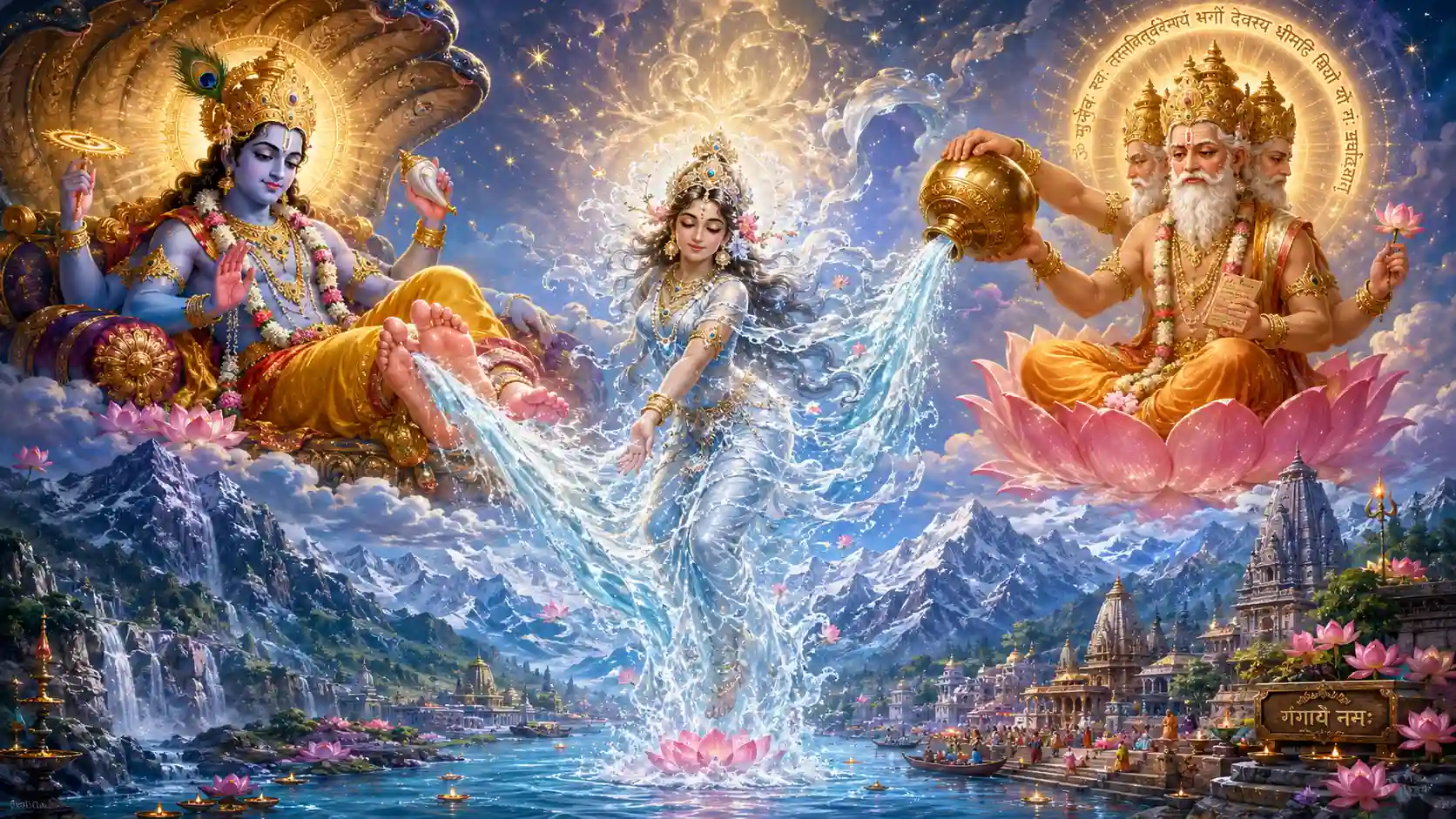
Before Mother Ganga descended to earth, she flowed in the heavenly realms. The scriptures describe her origin in different sacred ways. Some traditions connect her with the lotus feet of Lord Vishnu. Others describe her connection with Lord Brahma’s kamandala, the divine water vessel.
These descriptions are not merely mythological details. They reveal a spiritual truth: Ganga is sacred because she is connected with the Divine.
Water is naturally purifying. It cleanses, nourishes, cools, and sustains life. But Ganga is more than water. She carries divine association. She has touched the Supreme. Therefore, her presence awakens reverence in the heart of the devotee.
This is why Ganga jal is preserved in homes. This is why it is used in puja. This is why it is offered in samskaras. This is why devotees take even a few drops with deep faith. It is not the quantity that matters. It is the sacred connection.
Swami ji teaches that spiritual power enters our life through divine association. When the mind associates with worldly objects, it becomes restless. When it associates with God, saints, scripture, and sacred symbols, it becomes purified. Ganga is one of the most powerful forms of sacred association. Her darshan, her remembrance, her name, and her water all help turn the mind toward God.
The Story of Bhagiratha: When One Person’s Devotion Blesses the World
Imagine standing before an impossible task:
Your ancestors are waiting for liberation. The sacred river that can free them flows not on earth, but in the heavens. No ordinary power can bring her down. No ordinary effort can change their fate.
Yet, King Bhagiratha does not turn away.
He accepts the impossible as his duty.
The story begins with King Sagara, whose sixty thousand sons were reduced to ashes after offending Sage Kapila. Their souls could not attain peace until the sacred waters of Ganga touched them. Generations passed, but the mission remained incomplete. Finally, King Bhagiratha took responsibility.
He did not perform tapasya for wealth. He did not seek victory, fame, comfort, or personal pleasure. His prayer was selfless. He wanted Mother Ganga to descend so that his ancestors could attain liberation.
Bhagiratha performed intense penance with one pointed determination. His austerity was not dry or selfish. It was filled with compassion. At last, Mother Ganga agreed to descend.
This is one of the most inspiring parts of the story. One person’s sincere effort opened the path of grace for countless souls. Bhagiratha wanted to liberate his ancestors, but Mother Ganga’s descent blessed the whole world.
This is why Ganga Dusshera 2026 is spiritually powerful. It reminds us that sincere effort is never wasted. A single devotee’s prayer can change the destiny of many. A single act of surrender can invite divine grace. A single purified heart can become a blessing for the family, society, and future generations.
Swami Mukundananda ji teaches that spiritual life requires both self effort and divine grace. Bhagiratha shows the power of self effort. Ganga’s descent shows the power of grace.
Lord Shiva’s Locks: When Grace Needs Humility
When Mother Ganga agreed to descend, another challenge appeared. Her force was too powerful. If she fell directly from the heavens onto the earth, the earth would be shattered.
So Bhagiratha prayed to Lord Shiva.
Lord Shiva compassionately received Ganga in his matted locks, known as jata. He held her mighty force and released her gently, allowing her to flow through the Himalayas and across the plains of Bharat.
This moment is full of spiritual meaning.
Ganga represents divine grace. Bhagiratha represents sincere effort. Lord Shiva represents humility, strength, and the ability to receive divine power properly. The earth represents the suffering world.
Grace is powerful. But to receive grace, the heart must be prepared. If the ego is strong, even blessings can become a cause of pride. If the mind is restless, even sacred experiences can be misunderstood. If the heart is humble, grace becomes transforming.
Lord Shiva’s locks teach us that divine energy must be received with steadiness. In the same way, Swami ji teaches that knowledge, devotion, and grace must be absorbed through humility and surrender. Spiritual growth is not about becoming proud of our rituals. It is about becoming softer, purer, and more surrendered.
Ganga Dusshera asks us: Do I have the humility to receive grace? Am I ready to let God reshape my heart?
The Meaning of Dusshera: Destroying Ten Inner Impurities
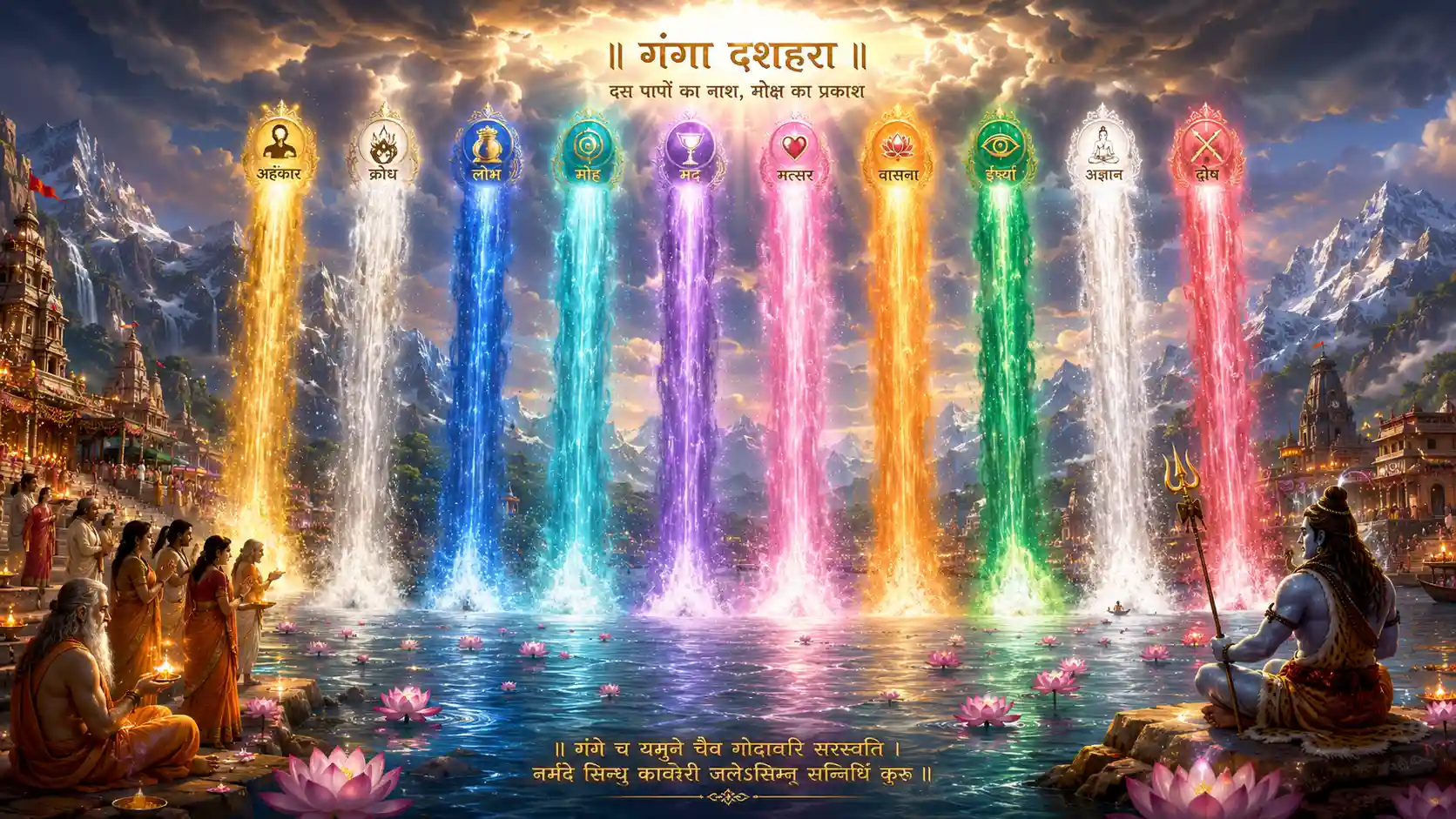
The word “Dusshera” is often understood through two Sanskrit roots: dasha, meaning ten, and hara, meaning destroyer. Ganga Dusshera is therefore known as the day when Mother Ganga destroys ten kinds of sins.
These sins are connected with body, speech, and mind.
The body commits sins through harmful actions, selfish indulgence, violence, stealing, and misuse of the senses. Speech commits sins through lying, harsh words, gossip, criticism, and words that wound others. The mind commits sins through anger, greed, pride, jealousy, hatred, and impure intentions.
This teaching makes Ganga Dusshera deeply practical. It is not enough to take a holy dip and return to the same habits. It is not enough to offer flowers while continuing to hurt others with speech. It is not enough to perform puja while the mind remains filled with ego.
The real Ganga snan must happen in our actions, words, and thoughts.
Let the body become an instrument of seva. Let the speech become truthful and kind. Let the mind become absorbed in God.
Swami Mukundananda ji teaches that the mind is the cause of bondage and liberation. If the mind is attached to the world, it binds us. If the mind becomes attached to God, it liberates us. This teaching gives Ganga Dusshera its deepest meaning. Mother Ganga’s waters remind us that the mind must be washed again and again through remembrance, devotion, and surrender.
The Real Bath Is Within
A holy bath in Ganga on Ganga Dusshera is considered extremely auspicious. Devotees wake early, offer prayers, take a sacred dip, chant mantras, and seek Mother Ganga’s blessings. But the outer bath should awaken an inner prayer.
“O Mother Ganga, wash away my pride. Wash away my anger. Wash away my jealousy. Wash away my selfishness. Wash away my forgetfulness of God.”
This is the real bath.
A person may bathe the body every day, yet remain internally disturbed. We may clean our homes, clothes, and surroundings, but the mind may still be filled with comparison, resentment, and anxiety. Ganga Dusshera reminds us that the heart also needs cleansing.
Swami ji’s teachings make this very clear. Spiritual practice is not meant for show. It is meant for transformation. If our puja does not make us more humble, something is missing. If our chanting does not make us more compassionate, we need to go deeper. If our rituals do not bring us closer to God, they must be filled with more devotion.
Mother Ganga does not ask for outer perfection. She asks for sincerity.
Why Ganga Dusshera 2026 Can Be Your Spiritual Reset
Every year, Ganga Dusshera comes as a sacred reminder. But Ganga Dusshera 2026 can become especially powerful if we approach it consciously.
A spiritual reset means stopping for a moment and asking: Where is my life flowing?
Ganga flows toward the ocean. The soul must flow toward God. But many times, our life flows toward stress, ego, competition, distraction, and endless desires. We keep moving, but not always in the right direction.
Ganga Dusshera 2026 gives us a chance to redirect the current of life.
Ask yourself:
What thought pattern do I need to release?
What habit is pulling me away from God?
What relationship needs forgiveness?
What inner impurity am I ready to surrender?
What seva can I perform?
What prayer do I want to offer for my ancestors and family?
This kind of reflection makes the festival alive. It turns Ganga Dusshera from a cultural observance into a personal transformation.
Swami ji often emphasizes that devotion must become practical. It must enter our mind, habits, relationships, choices, and daily actions. Ganga Dusshera becomes spiritually powerful when it inspires us to live differently after the festival is over.
Ganga and Moksha: The River That Carries the Soul Forward
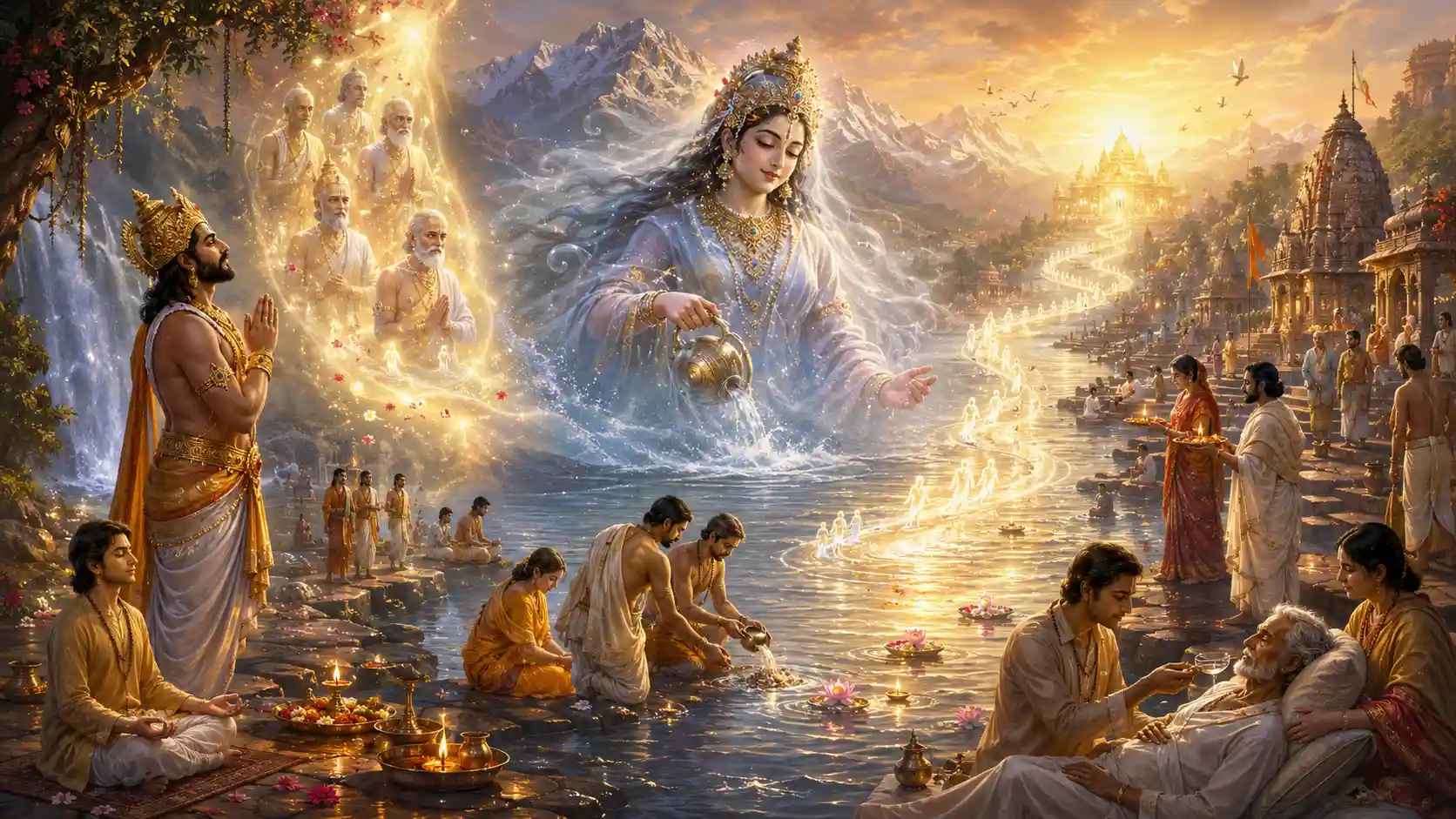
The descent of Ganga is closely connected with moksha. Bhagiratha brought her to earth so that his ancestors could be liberated. Since then, Ganga has been worshiped as the river that helps souls move toward freedom.
This is why Hindus offer prayers for departed souls near Ganga. This is why ashes are immersed in her waters. This is why Ganga jal is used at the time of death. Devotees believe that Mother Ganga helps the soul on its onward journey.
But moksha is not only a subject for the end of life. It should shape the way we live.
If the final goal is God, then every day should move us toward God. If liberation is the goal, then attachment must gradually reduce. If divine love is the goal, then selfishness must gradually dissolve.
Ganga teaches this through her flow. She does not remain stagnant. She keeps moving toward the ocean. In the same way, the devotee must keep moving toward the Supreme Lord.
Ganga and the Holy Name
In Kali Yuga, the chanting of the holy names of God is the most powerful spiritual practice. Ganga purifies through sacred water. The holy name purifies through sacred sound.
When a devotee bathes in Ganga while chanting the names of Krishna, Rama, Narayana, Shiva, Radha, or the Divine Mother, the whole being becomes engaged in purification. The body touches sacred water. The tongue vibrates sacred sound. The mind remembers God. The heart opens to grace.
Even those who cannot visit Ganga physically can remember her and chant from wherever they are. Distance does not limit devotion. A sincere prayer offered from the heart reaches the Divine.
Swami ji teaches that the mind must be repeatedly brought back to God. Chanting does exactly this. It gives the restless mind a divine focus. On Ganga Dusshera 2026, chanting can transform the day into a living current of bhakti.
Charity and Seva: Learning from Mother Ganga
Mother Ganga gives constantly. She nourishes fields, sustains life, blesses pilgrims, receives prayers, and flows without selfishness. She does not ask who deserves her water. She gives because giving is her nature.
That is why charity is an important part of Ganga Dusshera. Devotees give water, food, fruits, clothes, and other items according to their capacity. Since the festival comes in the hot month of Jyeshtha, giving water is especially meaningful.
But charity should not be done for name, fame, or recognition. It should be offered as seva.
Swami Mukundananda ji teaches that selfless service purifies the heart because it reduces ego and expands love. When we serve others as children of God, our consciousness becomes elevated.
On Ganga Dusshera 2026, we can ask: How can I become more like Ganga? How can I give more? How can I nourish others? How can I serve without expectation?
Protecting Ganga Is Also Worship
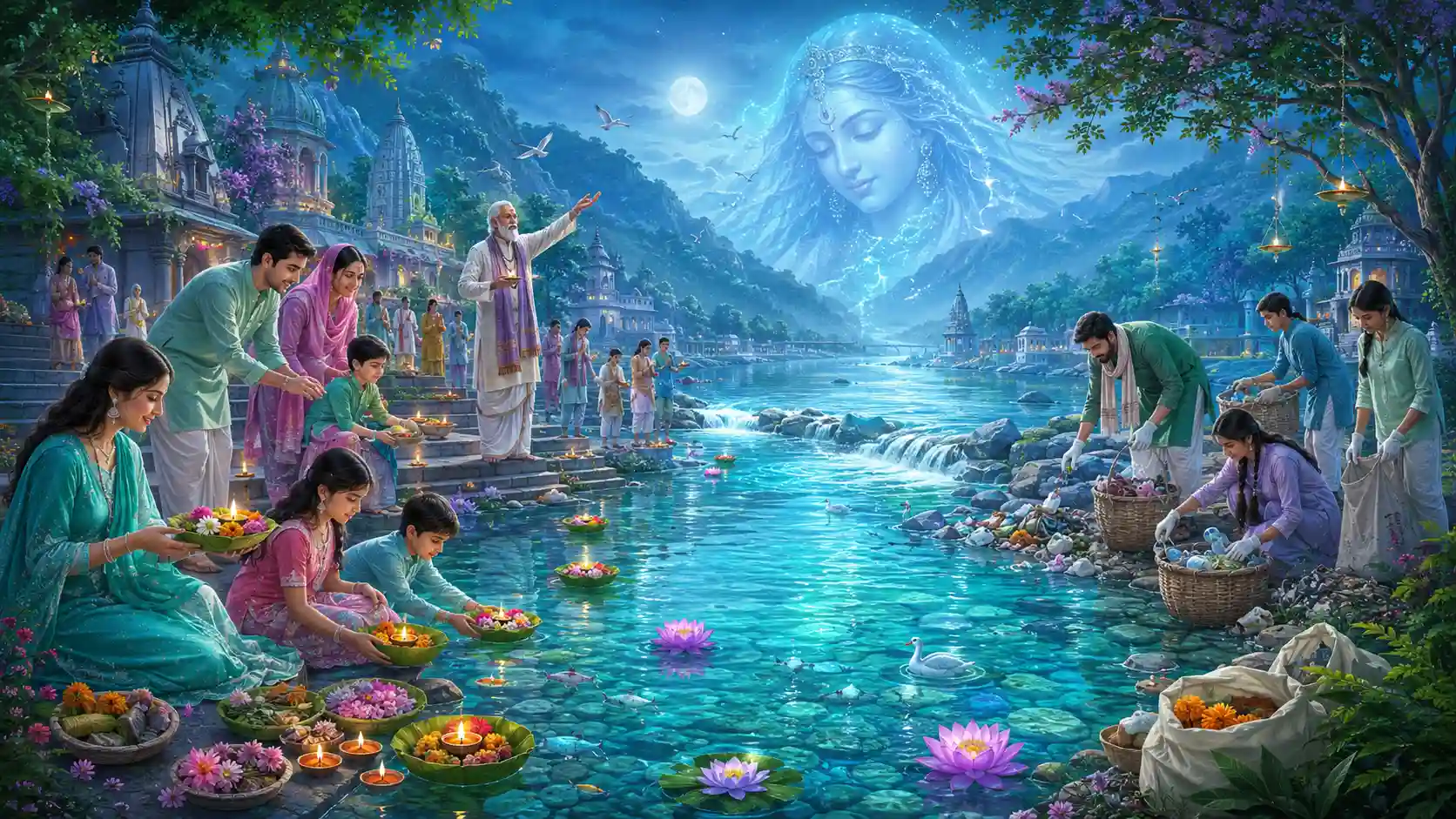
If Ganga is Mother, then protecting her is also worship.
It is not enough to offer flowers and lamps while ignoring pollution. It is not enough to praise her purity while allowing her waters to be harmed. True devotion must include responsibility.
Ganga Dusshera should awaken ecological dharma. Avoiding plastic, reducing waste, supporting river cleaning, choosing eco friendly offerings, and educating others are all forms of seva.
In the Hindu worldview, nature is sacred. Rivers are not resources alone. They are life giving expressions of divine grace. When we pollute rivers, we damage not only the environment, but also our own spiritual consciousness.
The Bhagavad Gita reminds us of this sacred vision when Shree Krishna says,
BG 7.8: I am the taste in water, O son of Kunti, and the radiance of the sun and the moon. I am the sacred syllable Om in the Vedic mantras; I am the sound in ether, and the ability in humans.
When we see divine presence in water, protecting Mother Ganga becomes not only environmental responsibility, but also an act of devotion.
To honor Mother Ganga means to pray to her, bathe in her, remember her, and protect her.
How to Observe Ganga Dusshera 2026 Spiritually
Here are simple and meaningful ways to observe Ganga Dusshera 2026:
Wake early and begin the day with remembrance of Mother Ganga.
Take a bath with the prayer that your inner impurities may also be washed away.
If possible, visit Ganga or another sacred river with humility and devotion.
If you cannot visit Ganga, mentally meditate on her sacred flow.
Offer water, flowers, lamps, incense, fruits, and prayers.
Chant the holy names of God.
Read or listen to the story of Bhagiratha.
Offer charity, especially water, food, or support to those in need.
Pray for your ancestors and family.
Resolve to give up one impurity, such as anger, criticism, jealousy, or pride.
Perform one act of seva without expecting anything in return.
Avoid polluting rivers or water bodies.
The most important offering is sincerity. A simple prayer with devotion is more powerful than an elaborate ritual performed without feeling.
A Ganga Dusshera Reflection for 2026
Before the day ends, sit quietly and ask yourself:
What is my inner burden?
What am I still holding onto that I need to release?
Where has my mind become polluted by resentment, comparison, or ego?
How can I bring more devotion into my daily life?
What would it mean for me to truly take shelter of Mother Ganga?
These questions can make Ganga Dusshera 2026 deeply personal.
The festival is not only asking us to remember what happened in the past. It is asking us to allow grace to happen now.
Key Takeaways from Ganga Dusshera 2026
Ganga Dusshera 2026 is spiritually powerful because it celebrates the descent of Mother Ganga, the purifier of sins and giver of divine grace.
The festival reminds devotees that true purification is not only external bathing, but inner cleansing of the mind, speech, and actions.
The story of King Bhagiratha teaches that sincere effort, selflessness, and perseverance attract divine grace.
Lord Shiva receiving Ganga in his matted locks shows that divine power must be received with humility and steadiness.
Swami Mukundananda ji’s teachings help us understand that the real purpose of spiritual life is purification of the mind and awakening love for God.
Ganga Dusshera is a sacred opportunity to let go of anger, pride, jealousy, guilt, and attachment.
Charity, seva, chanting, prayer, and remembrance of God make the festival spiritually meaningful.
Protecting Mother Ganga and keeping rivers clean is also a form of worship.
A Prayer to Mother Ganga
O Mother Ganga, purifier of the worlds, please purify my heart.
Wash away my sins of body, speech, and mind. Remove my pride, anger, greed, jealousy, and attachment. Help me release the burdens of the past. Help me forgive, serve, and remember God.
May my thoughts become pure. May my words become kind. May my actions become selfless. May my mind flow toward the lotus feet of the Supreme Lord, just as your sacred waters flow toward the ocean.
Bless my family. Bless my ancestors. Bless all beings. Let your current of compassion flow through my life and guide me toward divine love.
Conclusion: Let Grace Flow Within
Ganga Dusshera is spiritually powerful because it is not only a celebration of the past. It is a living invitation to transformation.
Mother Ganga descended from heaven to earth for the liberation of souls. Bhagiratha’s tapasya teaches us the power of sincere effort. Lord Shiva’s compassion teaches us how to receive grace with humility. The meaning of Dusshera teaches us to destroy impurities of body, speech, and mind. Swami Mukundananda ji’s teachings remind us that the real purpose of spiritual life is the purification of the mind and the awakening of divine love.
The outer river is sacred. But the inner river must also begin to flow.
Let Ganga Dusshera be the day we stop carrying what needs to be surrendered. Let it be the day we ask Mother Ganga to cleanse our heart. Let it be the day we choose devotion over ego, seva over selfishness, remembrance over distraction, and surrender over pride.
Mother Ganga does not ask whether we are perfect. She asks whether we are sincere.
May her sacred current wash away our impurities and carry us from restlessness to peace, from sin to purity, from forgetfulness to remembrance, and from worldly bondage to divine love.
Call To Action
Your Ganga Dusshera 2026 Sankalp
🌊 Let Mother Ganga Purify One Thing in Your Life
This Ganga Dusshera, do not let the day pass as just another festival. Make it personal. Choose one impurity to surrender, one prayer to offer, and one act of seva to perform.
Ask yourself:
What anger, guilt, pride, fear, or attachment am I ready to offer into the sacred current of Mother Ganga?
Take a moment today to chant, pray, give charity, remember your ancestors, and let grace flow within.
Make Your Spiritual SankalpFAQs
1. When is Ganga Dusshera 2026?
Ganga Dusshera 2026 will be observed on Monday, May 25, 2026. It falls on the Dashami tithi of Shukla Paksha in the month of Jyeshtha.
2. Why is Ganga Dusshera spiritually powerful?
Ganga Dusshera is spiritually powerful because it celebrates the divine descent of Mother Ganga from heaven to earth. It is believed to be a sacred day for purification, forgiveness, inner healing, and receiving divine grace.
3. What does “Dusshera” mean in Ganga Dusshera?
The word “Dusshera” is understood through two Sanskrit words: dasha, meaning ten, and hara, meaning destroyer. Ganga Dusshera is therefore associated with the destruction of ten kinds of sins committed through body, speech, and mind.
4. How can I observe Ganga Dusshera 2026 at home?
You can observe Ganga Dusshera at home by waking early, taking a bath with prayerful intention, offering water, flowers, and lamps to Mother Ganga, chanting the holy names of God, reading the story of Bhagiratha, giving charity, and making a sankalp to give up one inner impurity.
5. What is the inner meaning of taking a bath in Ganga?
The outer bath in Ganga represents inner purification. Swami Mukundananda ji teaches that the real purpose of spiritual life is purification of the mind and awakening love for God. Therefore, Ganga snan reminds us to cleanse anger, pride, jealousy, attachment, and forgetfulness of God from the heart.
Resources that you might be interested in:
 RKT Blog Team
 RKT Blog Team