
A Sacred Journey into Purification, Devotion, and Divine Grace
Introduction: When the Divine Flows as Compassion
In the spiritual heritage of India, there are certain symbols that transcend their physical form and become living expressions of divine reality. Among these, Ganga holds a place of unparalleled reverence. She is not merely a river that nourishes land and sustains life. She is worshipped as a mother, a purifier, and a compassionate presence that flows ceaselessly for the upliftment of all beings.
To understand Ganga is to understand something essential about the nature of divine grace. Unlike many aspects of spirituality that require effort, discipline, and inner refinement, the Ganga represents a form of grace that is freely available. She does not discriminate between the worthy and the unworthy. She flows equally for all, offering purification and peace to anyone who approaches her with even a small degree of faith.
Ganga Dussehra commemorates the sacred descent of this divine river from the celestial realms to Earth. Yet, this festival is not only about a historical or mythological event. It is an invitation to reflect upon the deeper meaning of purification in our lives. It encourages us to ask whether we are merely seeking external cleansing, or whether we are willing to purify our thoughts, intentions, and actions.
According to the teachings of Swami Mukundananda, true spirituality is not confined to ritual. It is an inner transformation that aligns the mind with higher truth. Ganga Dussehra becomes meaningful when we allow the symbolism of the Ganga to awaken that transformation within us.
Ganga Dussehra 2026: Date and Observance
Ganga Dussehra is observed on the tenth day of the bright fortnight in the month of Jyeshtha, a time of year associated with heat, intensity, and the longing for cooling relief. It is in this context that the descent of the Ganga takes on additional symbolic meaning, representing not only spiritual purification but also soothing grace.
In 2026 in Dallas, Ganga Dussehra falls on May 25, although slight variations may occur depending on regional calendar calculations.
The observance traditionally spans ten days, beginning from the first day of the waxing moon and culminating on the tenth day. Each of these days is considered spiritually significant, reflecting the gradual descent of divine grace into the world.
For devotees, the day itself is marked by acts of reverence and remembrance. Many wake early, offer prayers, and, where possible, take a dip in the waters of the Ganga or other sacred rivers. However, the deeper observance lies in cultivating an attitude of humility and openness, recognizing that grace is not something we can demand but something we must learn to receive
The Divine Descent of Mother Ganga
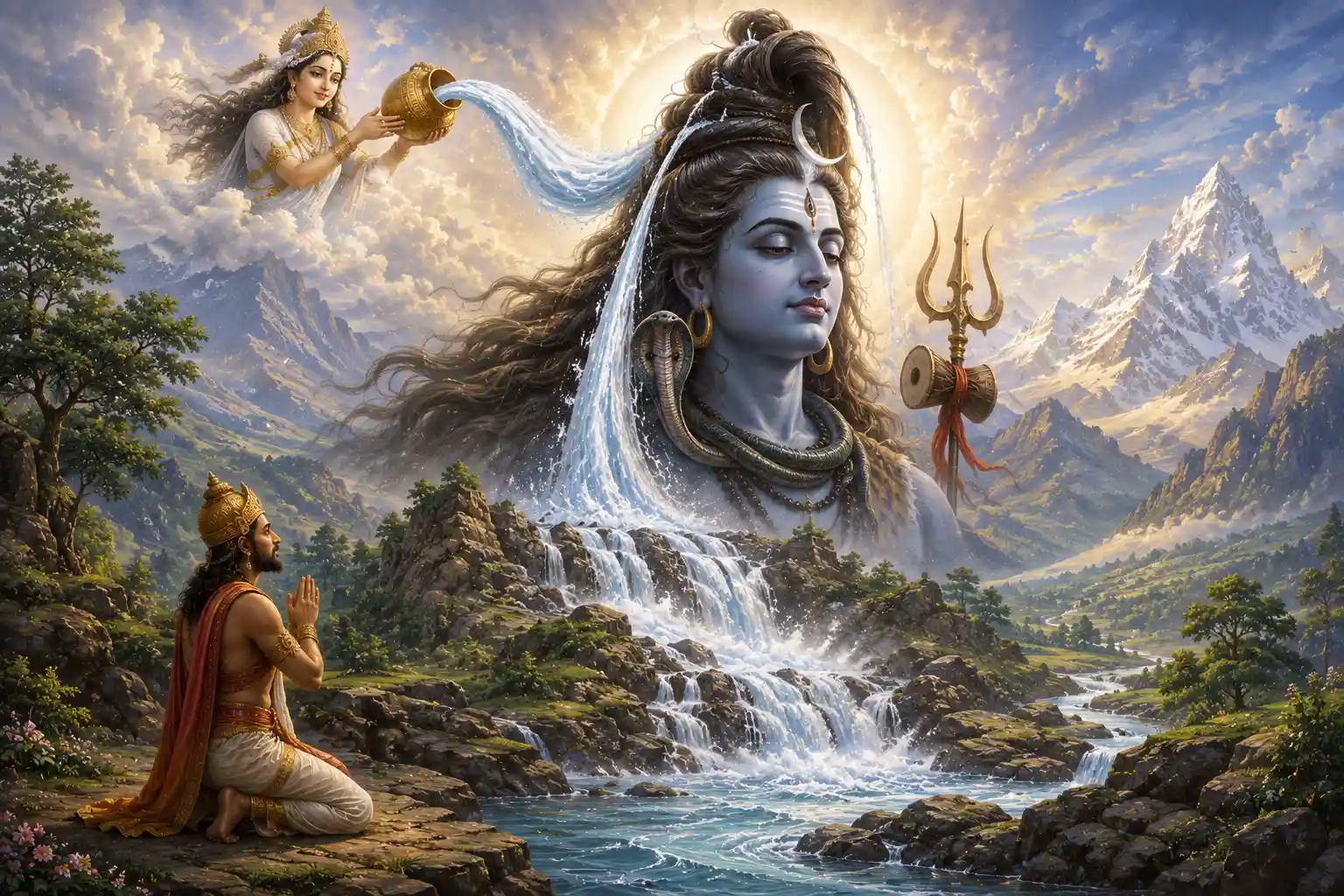
The story of the descent of Mother Ganga is one of the most powerful narratives in Hindu tradition, filled with layers of meaning that extend far beyond its literal form. It begins with King Bhagirath, whose intense devotion and determination led him to perform severe austerities for the sake of his ancestors. His goal was not personal gain but the liberation of others, a quality that itself reflects the essence of true spirituality.
Moved by his devotion, the celestial Ganga agreed to descend to Earth. However, her force was so immense that it threatened to overwhelm the planet. At this point, Lord Shiva intervened, receiving her into his matted locks and gently releasing her flow in a controlled manner.
This story carries profound symbolism. Bhagirath represents the effort of the seeker, the willingness to strive for something higher. Shiva represents divine support, the stabilizing force that allows grace to be received without destruction. Ganga represents the grace itself, powerful, purifying, and transformative.
In our own lives, this narrative reminds us that spiritual growth requires both effort and surrender. We must strive with sincerity, but we must also recognize that the ultimate transformation comes through grace.
The Meaning of Ganga Dussehra
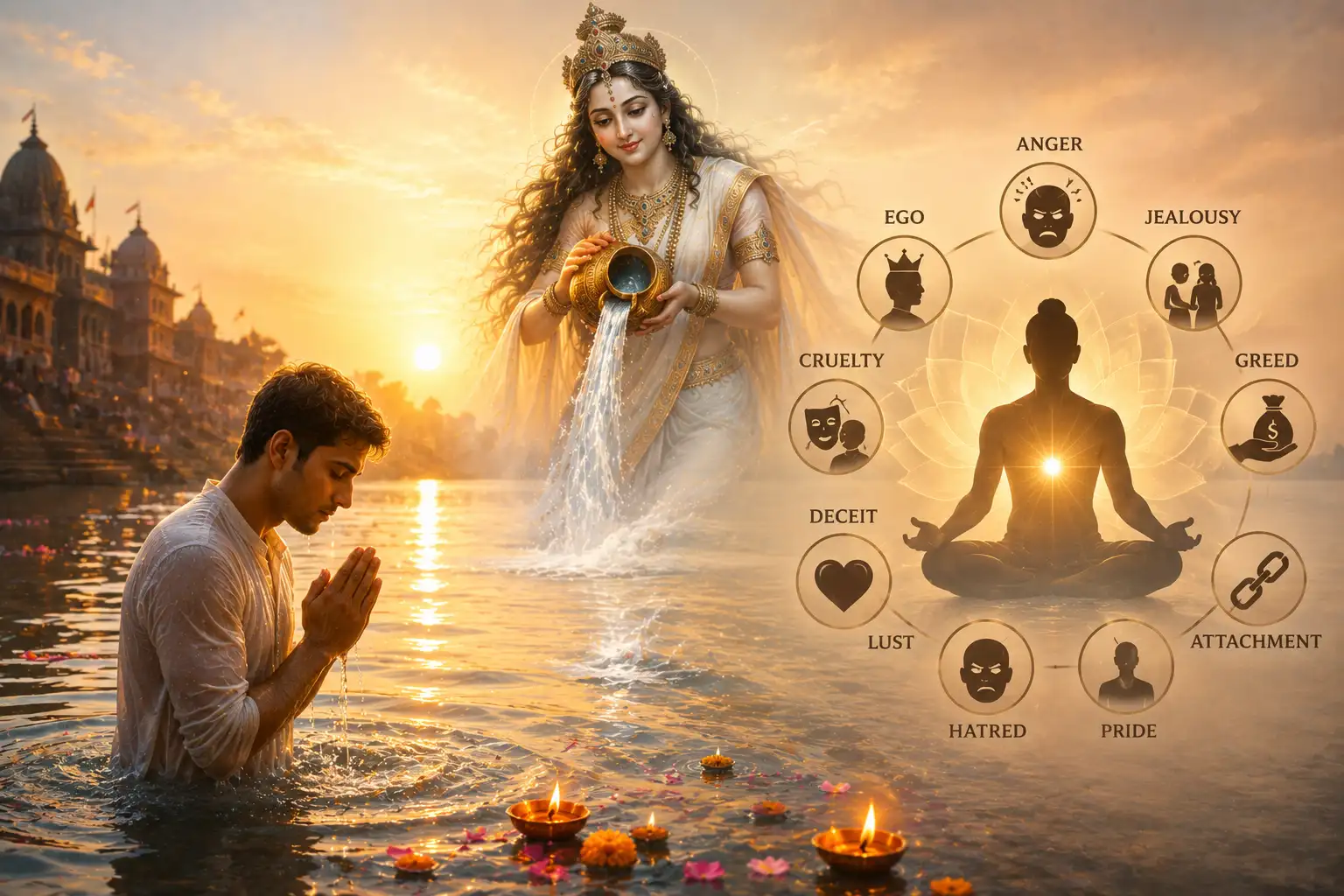
The term Dussehra signifies the removal of ten forms of negativity or sin. Traditionally, it is believed that bathing in the Ganga on this day can cleanse ten types of sins committed through thought, word, and action. However, to interpret this purely in a literal sense would be to miss its deeper significance.
Swami Mukundananda teaches that real purification is not achieved through external acts alone. It requires inner transformation. The impurities that bind us are not merely physical actions, but patterns of thinking such as anger, jealousy, ego, and attachment. These cannot be washed away by water alone. They require awareness, effort, and devotion.
Ganga Dussehra therefore becomes a symbolic reminder of the need to cleanse the mind. Just as we seek to wash the body, we must also seek to purify our inner world. This purification is a gradual process, one that requires patience and sincerity.
The Spiritual Importance of Mother Ganga
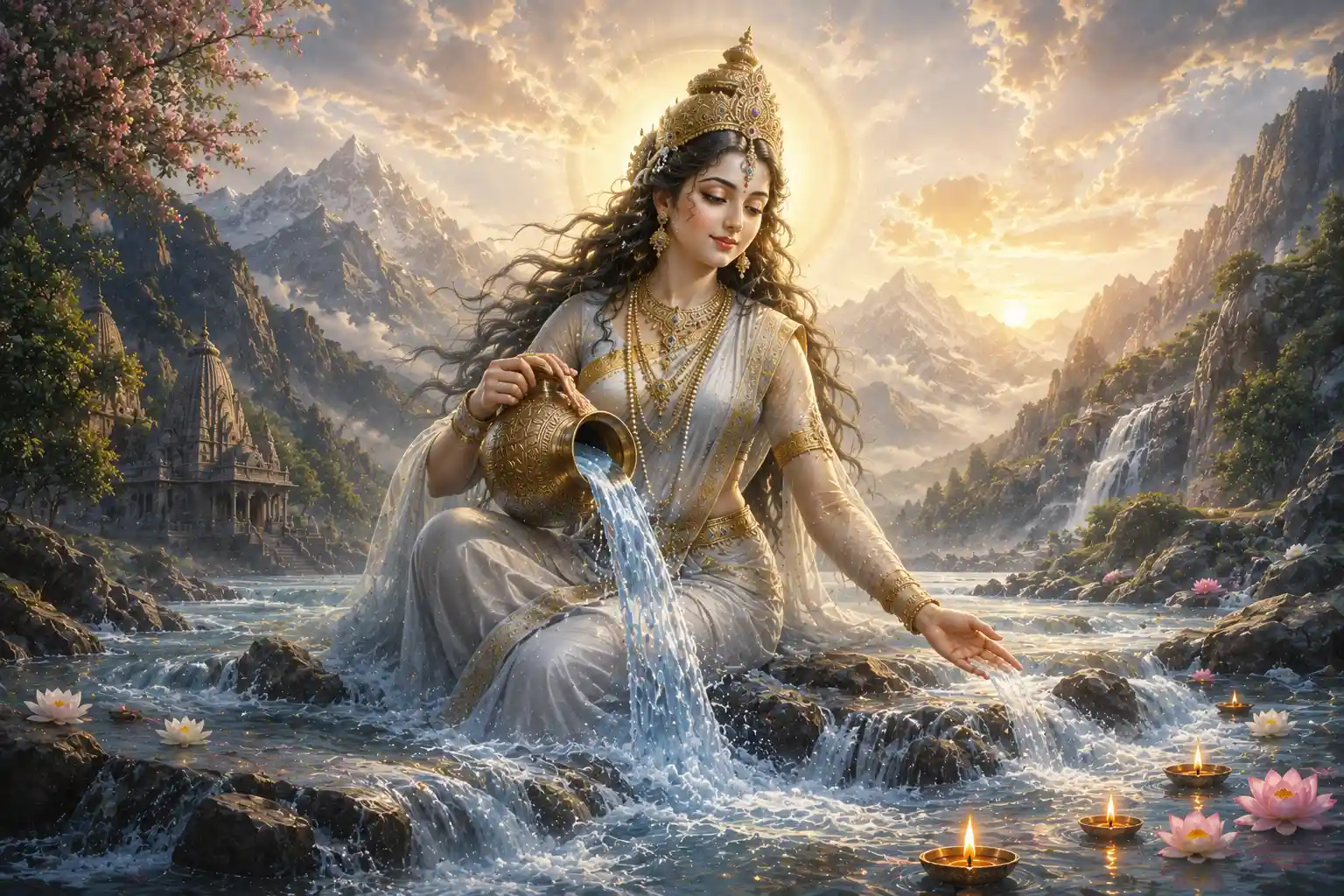
Mother Ganga is revered not only for her physical presence but for the spiritual principles she embodies. Her flow represents purity, her generosity represents compassion, and her accessibility represents grace.
In the path of devotion, these qualities are essential. Purity of heart allows us to connect with the divine without distortion. Compassion allows us to extend that connection to others. Grace reminds us that spiritual progress is not solely the result of our efforts, but also the result of divine support.
Swami Mukundananda often emphasizes that the divine is always present, but the mind must be prepared to experience it. Just as the Ganga flows continuously, divine grace is always available. The challenge lies in developing the receptivity to recognize and accept it.
Ganga as a Metaphor for Spiritual Life

The journey of the Ganga from the Himalayas to the ocean offers a powerful metaphor for the journey of the soul. She begins in purity, untouched and clear, and travels through varied landscapes, encountering obstacles, diversions, and impurities along the way.
Similarly, the soul originates in a state of purity but becomes entangled in the complexities of life. Through spiritual practice, it seeks to return to its original state.
Ganga teaches us the importance of perseverance. She continues to flow regardless of obstacles, adapting to circumstances while maintaining her essence. She also teaches the value of selfless giving. She nourishes everything in her path without expectation.
These lessons are directly applicable to spiritual life. They remind us to remain steady, to act with compassion, and to stay connected to our higher purpose.
Practices on Ganga Dussehra
Observing Ganga Dussehra involves both external and internal practices. Externally, devotees may engage in rituals such as bathing, offering prayers, and performing acts of charity. These actions create a framework for devotion and provide an opportunity to express reverence.
Internally, the focus shifts to cultivating awareness. Meditation, chanting, and scriptural study become tools for purification. Reading from texts such as the Bhagavad Gita allows the mind to absorb wisdom and reflect on its application in daily life.
For those who cannot physically access the Ganga, these internal practices become even more important. They ensure that the essence of the festival is preserved regardless of external circumstances.
Sant Ravidas and the Ganga in the Pot
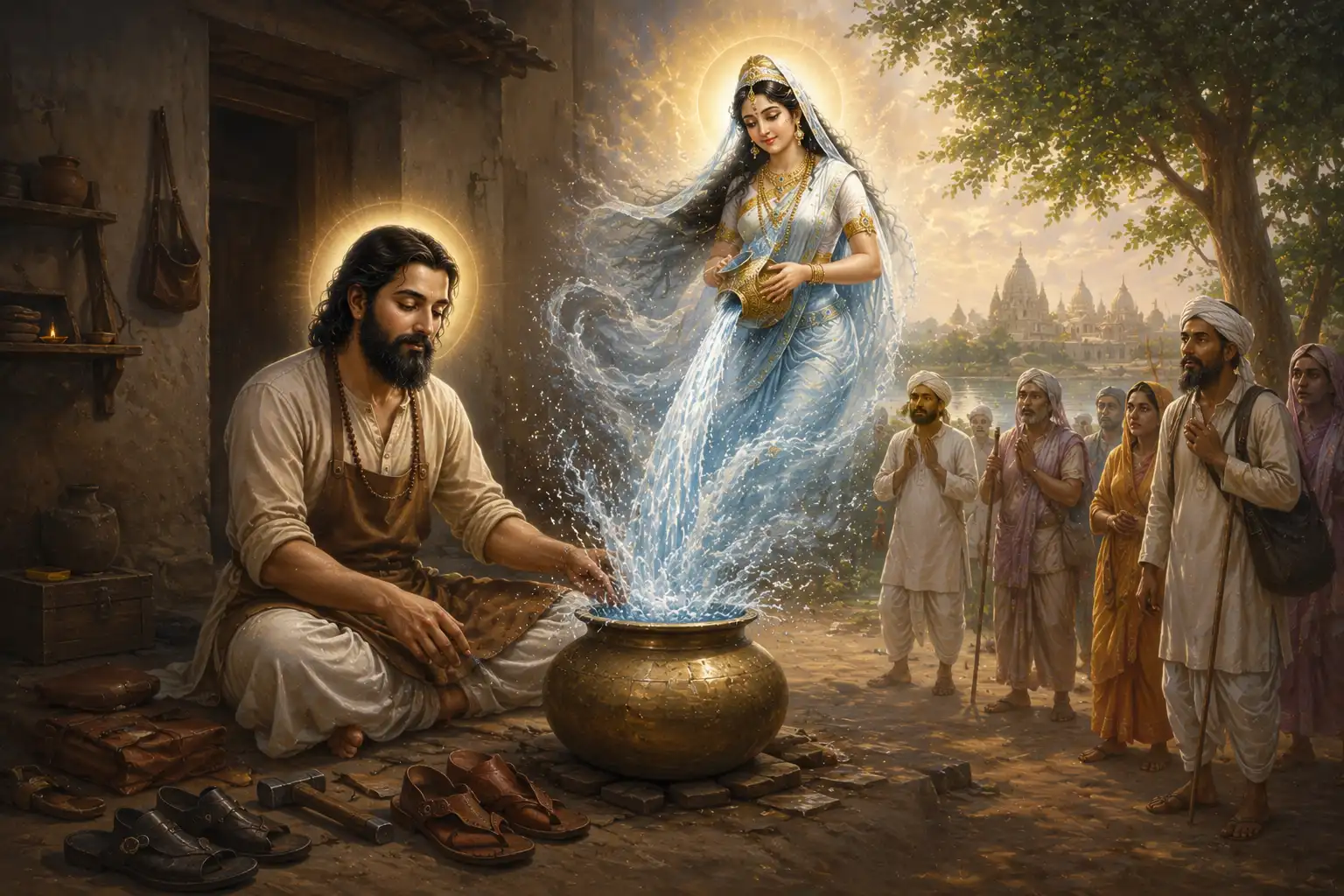
The life of Ravidas offers one of the most beautiful and profound illustrations of inner purity and divine presence. Among the many stories associated with him, the account of the Ganga appearing in his humble vessel stands out as a powerful teaching, especially in the context of Ganga Dussehra.
Saint Ravidas lived a simple life as a cobbler, engaged in his work while remaining deeply absorbed in devotion to God. Unlike many who sought spiritual merit through external rituals or pilgrimages, Ravidas emphasized sincerity of heart above all else. His life itself became a living example of devotion integrated into daily duty.
According to the traditional narrative, there came a time when devotees were preparing to undertake a pilgrimage to the sacred river Ganga. Ravidas, however, chose not to go. When asked why he would miss such an auspicious opportunity, he explained that his duties required him to remain where he was. Instead of abandoning his responsibilities in the name of spirituality, he continued his work with devotion, seeing it as an offering to the Divine.
It is said that through the depth of his sincerity and purity of heart, the grace of the Ganga manifested directly in his own vessel of water. What others sought through travel and ritual appeared before him through devotion and surrender.
This miraculous event is often remembered through the phrase “Man changa to kathauti mein Ganga,” meaning that if the mind is pure, the Ganga can be found even in a small pot.
This story carries profound spiritual insight. It challenges the idea that holiness is confined to specific places or external actions. While sacred spaces and rituals have their importance, their true purpose is to awaken inner transformation. Without that transformation, external acts remain incomplete. Ravidas teaches that when the mind is purified through devotion, humility, and sincerity, the presence of the Divine is experienced everywhere.
In the context of Ganga Dussehra, this teaching becomes especially relevant. The festival traditionally emphasizes bathing in the sacred river as a means of purification. However, the story of Ravidas reminds us that true purification lies within. The outer act of bathing becomes meaningful only when accompanied by inner cleansing of thoughts, intentions, and emotions.
Ravidas’s life also reflects a deeper aspect of surrender. He did not feel compelled to seek divine grace through external effort alone. Instead, he trusted that sincere devotion in the present moment was sufficient. This trust allowed grace to flow toward him naturally, without force or striving.
For modern seekers, this story offers both comfort and guidance. It reassures us that spiritual progress is not dependent on circumstance. One need not wait for the perfect setting or opportunity. Even within the ordinary rhythm of daily life, devotion can be cultivated. When actions are performed with sincerity and the mind is directed toward God, even the simplest moments become sacred.
Ultimately, the story of Saint Ravidas and the Ganga in his pot invites us to shift our focus from outer form to inner essence. It reminds us that the true river of purification flows not only through the world, but through the heart. When that inner flow is awakened, every place becomes holy, every action becomes worship, and every moment becomes an opportunity to experience the presence of the Divine.
The Teachings of JKYog: Inner Transformation
The philosophy of JKYog, guided by the teachings of Swami Mukundananda, places a profound emphasis on inner transformation as the true goal of spiritual life. Rather than viewing spirituality as something confined to rituals, festivals, or occasional moments of devotion, JKYog presents it as a continuous process that must be woven into the fabric of daily living. This perspective is especially relevant in today’s world, where spirituality can often become compartmentalized, separated from work, family, and personal responsibilities.
According to this approach, real progress begins within the mind. The external world may present countless situations, but it is our internal response that determines our experience. If the mind is restless, even favorable circumstances cannot bring peace. If the mind is refined, even challenges can become opportunities for growth. This is why JKYog emphasizes consistent practices that gradually purify and uplift consciousness.
Among these practices, Roopdhyan meditation holds a special place. This form of meditation involves lovingly focusing the mind on the divine form, allowing the natural tendency of the mind to think in images to be directed toward something pure, beautiful, and spiritually elevating. Instead of allowing the imagination to wander toward worry or distraction, it becomes anchored in divine remembrance. Over time, this creates a sense of emotional stability and inner joy that does not depend on external conditions.
Kirtan is another powerful tool within this path. Repetition of divine names engages both the mind and the heart, gradually dissolving negativity and creating a rhythm of remembrance. Even a restless mind often finds peace through sound before it can settle into silence. Alongside this, mindful living encourages awareness in everyday actions, transforming routine activities into opportunities for connection with the Divine. Whether working, speaking, or interacting with others, one begins to carry a subtle awareness of higher purpose.
Ganga Dussehra aligns naturally with this philosophy of continuous purification. While the festival is traditionally associated with bathing in the sacred river, its deeper meaning points toward the need for ongoing inner cleansing. Just as the river flows continuously, so too must spiritual effort be sustained. One day of observance can inspire transformation, but it is daily practice that sustains it. In this way, the festival becomes not an isolated event, but a reminder of a lifelong journey toward clarity, purity, and divine connection.
Surrender and Divine Grace
One of the most profound teachings emphasized by Swami Mukundananda is the balance between personal effort and divine grace. Spiritual practice requires sincere effort, discipline, and intention, yet there comes a point where effort alone is not sufficient. The deepest transformation of the heart occurs through grace, and this grace becomes accessible through surrender.
Surrender is often misunderstood as passivity or inaction, but in the bhakti tradition, it is quite the opposite. It is an active and conscious alignment of one’s will with the divine will. It means performing one’s duties with full sincerity while releasing the burden of control over outcomes. This shift in perspective is subtle yet powerful. It transforms anxiety into trust, and struggle into acceptance.
When a person clings tightly to results, the mind becomes tense and restless. Success brings temporary satisfaction, while failure brings disappointment. However, when actions are offered as a form of devotion, the focus shifts from outcome to intention. One begins to act with greater clarity, steadiness, and peace. This is the essence of surrender.
Ganga Dussehra provides a beautiful opportunity to reflect on this principle. Just as the river flows effortlessly toward the ocean, guided by a natural force beyond itself, the seeker is invited to flow with divine guidance. On this day, surrender can be practiced consciously by offering one’s thoughts, actions, and emotions to God. This may take the form of prayer, reflection, or simply a quiet acknowledgment that one is not alone in their journey.
This inner offering becomes a powerful means of purification. When the ego softens and the sense of control loosens, the mind becomes more receptive to grace. Peace arises not because life becomes perfect, but because one’s relationship with life changes. In this state, even challenges are seen as opportunities for growth, and even uncertainty carries a sense of quiet trust.
Relevance in Modern Life
In the complexity of modern life, where attention is constantly divided and priorities are often driven by external achievements, the deeper significance of festivals like Ganga Dussehra becomes even more meaningful. The modern world offers comfort, convenience, and opportunity, yet it also brings restlessness, comparison, and a persistent sense of dissatisfaction. In such an environment, spiritual observances serve as moments of pause, inviting us to reconnect with what truly matters.
Ganga Dussehra is not merely a traditional celebration. It is a reminder to turn inward. It encourages individuals to step back from the constant flow of activity and examine the state of their own mind. Are our thoughts aligned with clarity and compassion, or are they driven by stress and distraction. Are our actions guided by purpose, or by habit. These questions arise naturally when one engages with the deeper meaning of the festival.
The relevance of this observance lies in its ability to bridge ancient wisdom with contemporary life. It does not require withdrawal from responsibilities. Instead, it encourages a shift in awareness within those responsibilities. A person can continue their daily duties while cultivating a more mindful and spiritually aligned approach to them. This integration is what makes the teachings of JKYog particularly applicable in today’s context.
The festival also highlights the importance of intentional living. In a world where time often feels fragmented, setting aside even a small period for reflection, prayer, or meditation can create a sense of continuity and grounding. These moments gradually reshape priorities, helping individuals move from a life driven by external demands to one guided by inner clarity.
Ultimately, Ganga Dussehra reminds us that true fulfillment is not found in accumulation, but in alignment. It is not about having more, but about being more aware, more compassionate, and more connected to the Divine. By embracing this perspective, the festival becomes not just a date on the calendar, but a living opportunity to refine the mind, uplift the heart, and walk the path of spiritual growth with greater sincerity.
Final Reflection
Ganga Dussehra is more than a celebration of a sacred river. It is a reminder of the potential for transformation that exists within each of us. Just as the Ganga flows to purify the world, we are called to cultivate purity within ourselves.
Through devotion, awareness, and surrender, we can allow the inner Ganga to flow, bringing peace, clarity, and purpose into our lives.
Call to Action
This Ganga Dussehra, take a conscious step toward inner purification. Set aside time for reflection, prayer, or meditation, and allow the teachings of this sacred day to guide your thoughts and actions.
FAQs
What is the deeper meaning of Ganga Dussehra beyond ritual observance?
The deeper meaning of Ganga Dussehra lies in the idea of inner purification rather than external ritual alone. While traditional practices such as bathing in sacred waters hold symbolic value, the true purpose of the festival is to cleanse the mind of negative tendencies. It invites individuals to reflect on their thoughts, refine their behavior, and cultivate qualities such as humility, compassion, and devotion.
Can Ganga Dussehra be observed without visiting the Ganga river?
Yes, the essence of Ganga Dussehra can be experienced anywhere. Physical proximity to the river is not a prerequisite for spiritual connection. Through sincere prayer, meditation, and remembrance of the divine, one can internalize the spirit of the festival. The focus should remain on inner transformation rather than external circumstances.
What role does Mother Ganga play in spiritual life?
Mother Ganga represents purity, grace, and compassion. She serves as a reminder that divine support is always available to those who seek it. Her presence encourages individuals to adopt a mindset of selflessness and openness, allowing them to grow spiritually.
How do the teachings of Swami Mukundananda relate to Ganga Dussehra?
Swami Mukundananda emphasizes that true spirituality involves inner transformation. His teachings align with the essence of Ganga Dussehra by highlighting the importance of purifying the mind, practicing devotion, and surrendering to divine will. These principles help individuals move beyond ritual and experience genuine spiritual growth.
What practical steps can one take to observe Ganga Dussehra meaningfully?
A meaningful observance of Ganga Dussehra involves setting aside time for reflection, engaging in prayer or meditation, and practicing gratitude. Reading sacred texts, chanting, and performing acts of kindness can further enhance the experience. The emphasis should remain on sincerity and awareness.
Further Resources


 JKYog Team