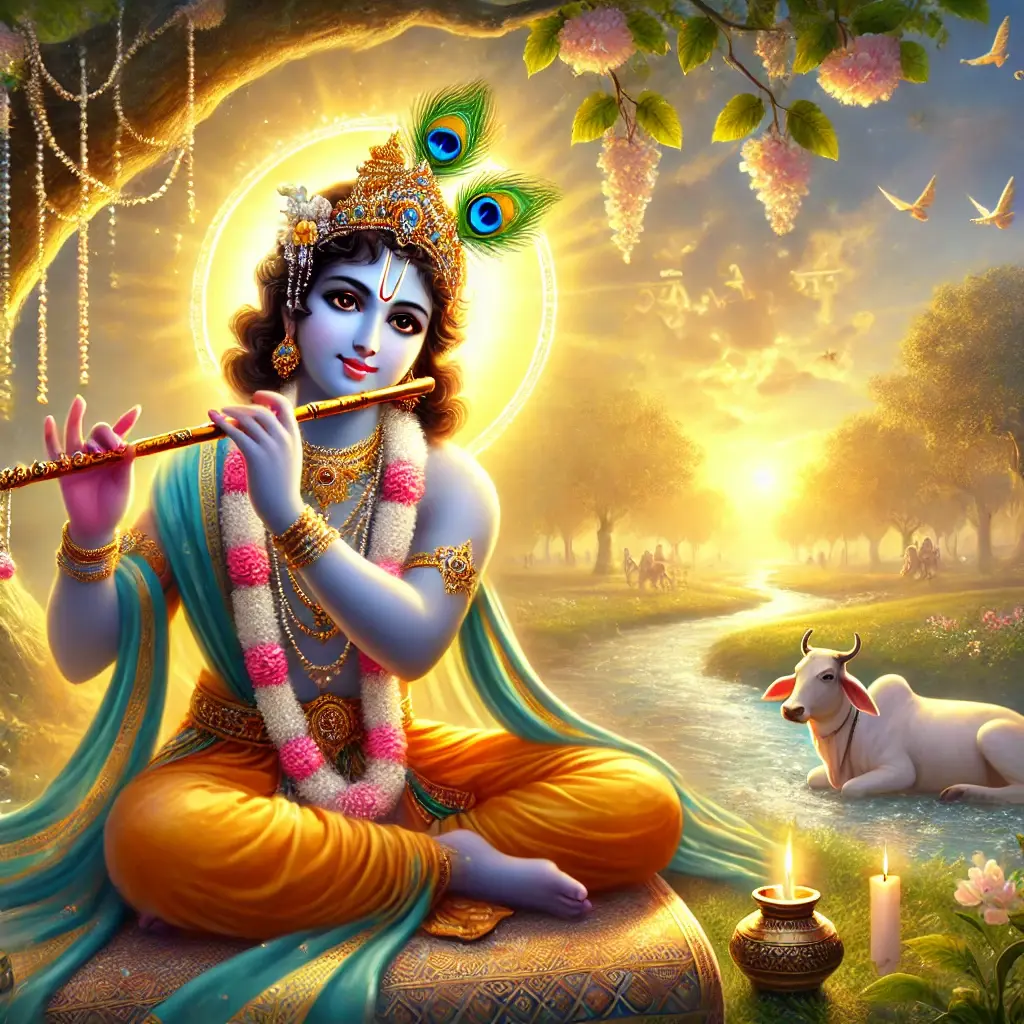
Adhik Maas 2026 · Purushottam Maas 2026
The Month Nobody Wanted And Why It Might Be the One You Need
A deep look at the meaning, practices, and quiet power of Adhik Maas 2026, through the lens of Swami Mukundananda Ji’s teachings on bhakti.
May 17 – June 15, 2026
Purushottam Purnima: Sunday, May 31

There is a story in the Padma Puran that most people have never heard. And like the best stories, it begins not with a hero but with someone who had been left out.
Rejection.
In the Sanatana Dharma lunar calendar, there are twelve months. Each one has a presiding deity; a god who claims it, protects it, gives it purpose. Chaitra belongs to Vishnu. Vaishakha to Madhusudana. Every month has a name, a home, a place in the cosmic order.
Then there is the thirteenth month.
It appears every thirty-two to thirty-three months, an extra month that the calendar needs to stay in alignment with the sun. Nobody chose it. Nobody wanted it. Priests would not schedule prayers inside it. Families would not plan weddings during it. It was given a name, but not lovingly.
Mal Maas. The dirty month. The unwanted one.
|
THE STORY FROM THE PADMA PURANA So this rejected, unclaimed month did something
brave. It went to Lord Vishnu. And it said, simply — without argument,
without negotiation: “I have nothing. No one wants me. I have come to You
because I have nowhere else to go.” And Vishnu, who has always had a particular softness
for what the world has pushed aside, did not think twice. “Then you belong to Me.” He gave it His own name — Purushottam, meaning the
highest form of God. He declared that whatever takes a whole year of sincere
effort in other months can happen in a single moment of genuine turning in
this month. The month that had been called impure became, in that instant,
the most spiritually potent month in the entire calendar. |
Do you know what that feels like? To stop being evaluated and simply be welcomed?
He gave the month his own name. Purushottam. The Supreme Person. He declared that in this month, what takes a lifetime of scattered effort becomes possible through a single moment of sincere, unguarded turning toward the divine.
The month that had been called dirty, unwanted, inauspicious, without a name worth keeping became, in one breath of divine grace, the most spiritually charged month in the entire Hindu calendar.
That month begins on May 17, 2026.
And before we go any further, I want to ask you something.
Is there a part of your inner life that has started to feel like Mal Maas?
The prayer you keep meaning to return to. The stillness you want but can never quite justify. The part of you that is quietly hungry for something real, not another productivity system, not another wellness trend, but something that actually reaches the place in your chest that has been waiting.
That part.
The one the world calls impractical. The one you keep setting aside because there are more urgent things.
What if the part of you you think does not belong… belongs the most?
The Year the Calendar Gets an Extra Chapter
Here is the science behind the scripture, because the two have never truly been separate.
The Hindu calendar follows the moon. One lunar year is approximately 354 days. The solar year, the one the whole world moves by, is 365. That eleven-day gap doesn’t seem like much.
But leave it alone for three years, and something subtle begins to shift.
Diwali starts slipping out of autumn.
Holi drifts away from spring.
The festivals begin to lose their quiet alignment with the seasons they were born to illuminate. Like a song slowly falling out of tune, not dramatically, not all at once, but enough that something feels off, even if you cannot name it.
So every thirty-two to thirty-three months, an extra lunar month is inserted. Not as an interruption. As a correction.
A rebalancing. This is Adhik Maas.
In 2026, this adjustment falls in the Jyeshtha month, creating what tradition calls Double Jyeshtha. Two Jyeshtha months in a single year. The extra one is Adhik Jyeshtha. The natural one is Nija Jyeshtha, thereby creating a rare thirteen-month year.
The extra month runs from May 17 to June 15, 2026. Thirty days that sit, by design, outside the usual rhythm of the calendar.
Outside the usual rhythm.
Let that land for a moment.
In a world that measures and organizes nearly every hour, the Hindu calendar quietly does something radical.
It inserts thirty days and says:
These do not belong to the usual flow.
Not to achievement.
Not to celebration.
Not to the forward movement of what comes next.
But to something inward.
To a kind of time that does not demand anything from you.
Except your presence.
And perhaps, your return to the part of yourself that has been waiting the longest.

The Sealed Pot
The question is simple:
Why do people practice devotion for years and still feel unchanged?
Why can the ritual be perfect and the heart still feel far away?
The answer, drawn from the teaching by Swami Mukundananda, is this:
Performing devotion without inner feeling is like watering a plastic plant.
The form is correct. The action is being performed. But nothing is alive inside it, so nothing can grow.
Swami Mukundananda returns to this again and again in his discourses on bhakti. The mind alone is the cause of both bondage and liberation. Not the body. Not the number of completed rituals. Not the hours logged in prayer.
The Mind.
And then there is the image that refuses to leave once you have heard it.
Take a pot of water. Carry it to the Ganga. Submerge it completely.
But the lid is sealed.
The water inside the pot does not become Gangajal. It can't.
The river is right there surrounding it. Touching it. Holding it. Offering everything it has.
And still, nothing enters.
Because something small remains closed.
Open the pot.
Now something real happens.
The body sitting before God is the pot. The mind is the lid.
So as Adhik Maas 2026 arrives, before we talk about what to do, what to set aside, which practices to carry, the most important question to sit with is simply this:
Am I ready to open my heart and mind?
What Bhakti Actually Feels Like
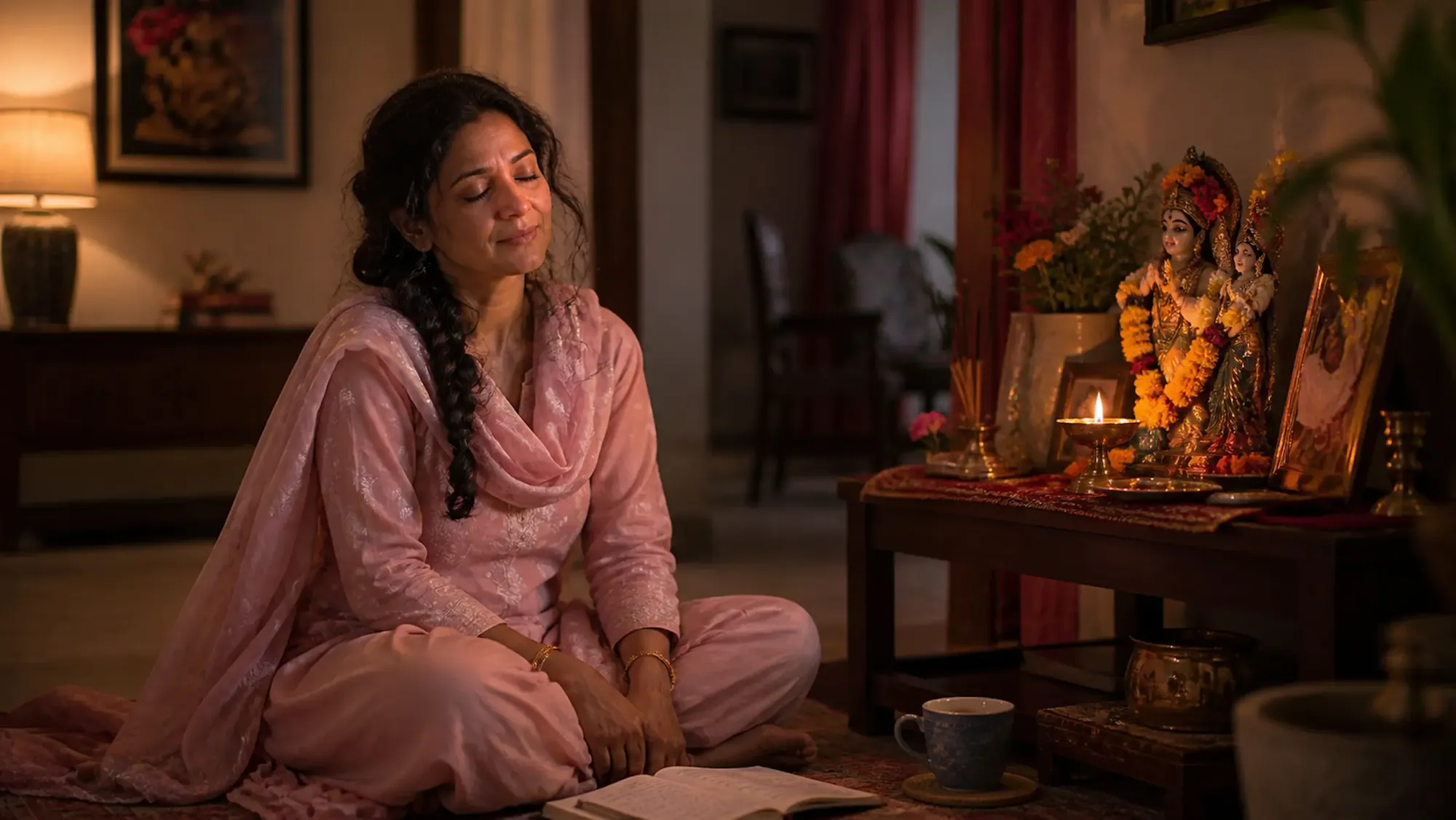
The path Swami Mukundananda Ji teaches emphasizes Bhav, the way of sacred love. And it is so different from the performance-based devotion most of us absorbed growing up that it can feel, at first, almost too simple to be real.
There are no prerequisites.
No spiritual résumé required.
Jagadguru Shree Kripalu Ji Maharaj said something that should stop you mid-breath: a mother’s heart is moved fully, immediately, without conditions, by the child who simply cries for her.
And God responds with that same immediacy. God is that mother.
The devotee who arrives with years of spiritual accomplishment, look at my discipline, look at my consistency, look at how far I have come, arrives, in this tradition, as a sealed cup.
And nothing enters.
All that sincere effort, however real, can quietly become the thing that keeps the grace at a distance.
But the devotee who comes saying: I have nothing. I have failed at this again and again. I am not qualified and I know it. But I cannot stay away. That devotee is an open cup held up to an infinite rain.
This is what Swami Mukundananda Ji calls Dainya-bhav. Genuine humility. Not a performance of unworthiness. Not self-punishment. Just the quiet, honest recognition that we need the divine not as supplement to our inner life, but as something essential as its oxygen.
2026 Is Rarer Than You Think
Not every Adhik Maas carries the same weight.
In 2026, this extra month falls within Jyeshtha, one of the more intense months of the Hindu calendar, a time often associated with the deep karma and patterns we have carried the longest. Having a doubled Jyestha means the themes this months surfaced - unresolved things, old loops, the weight of what has never been properly set down are given extra time.
The full moon of this Adhik Maas, Purushottam Purnima on Sunday, May 31, 2026, is often regarded as the most spiritually potent day of the month.
This is not a day for elaborate ceremony. It is a day for complete inner attention. For sitting, even briefly, with the divine. For allowing yourself, even for a few minutes, to feel something honest.
A single moment of offering.
A small flame lit with love.
A prayer that asks for nothing.
That is enough.
The Practical Map: Without the Plastic Plant Problem
This is usually where Adhik Maas gets reduced to a checklist. Do this. Avoid that. Chant this many times.
But when the bhav is missing, even the most sincere well-followed practice can remain untouched within, the same plastic plant problem in another form.
Try these bhav-filled practices, as taught by Swami Mukundananda Ji. Not as tasks to complete, but as doorways to move through, gently. The teachings of Swami Mukundananda Ji, focus on this principle:
The mind is the main factor in every practice.
Chanting God's Name: Feel the Name, Engage the Mind in the Name, Don’t Just Repeat it
The mantra of this month is Om Namo Bhagavate Vasudevaya.
But don't chant mechanically. Keep the mind connected.
Ask:
Who am I remembering right now?
Stay there for a moment before moving to the next. Even one repetition with full attention is meaningful.
The mind is the main factor in spiritual progress.
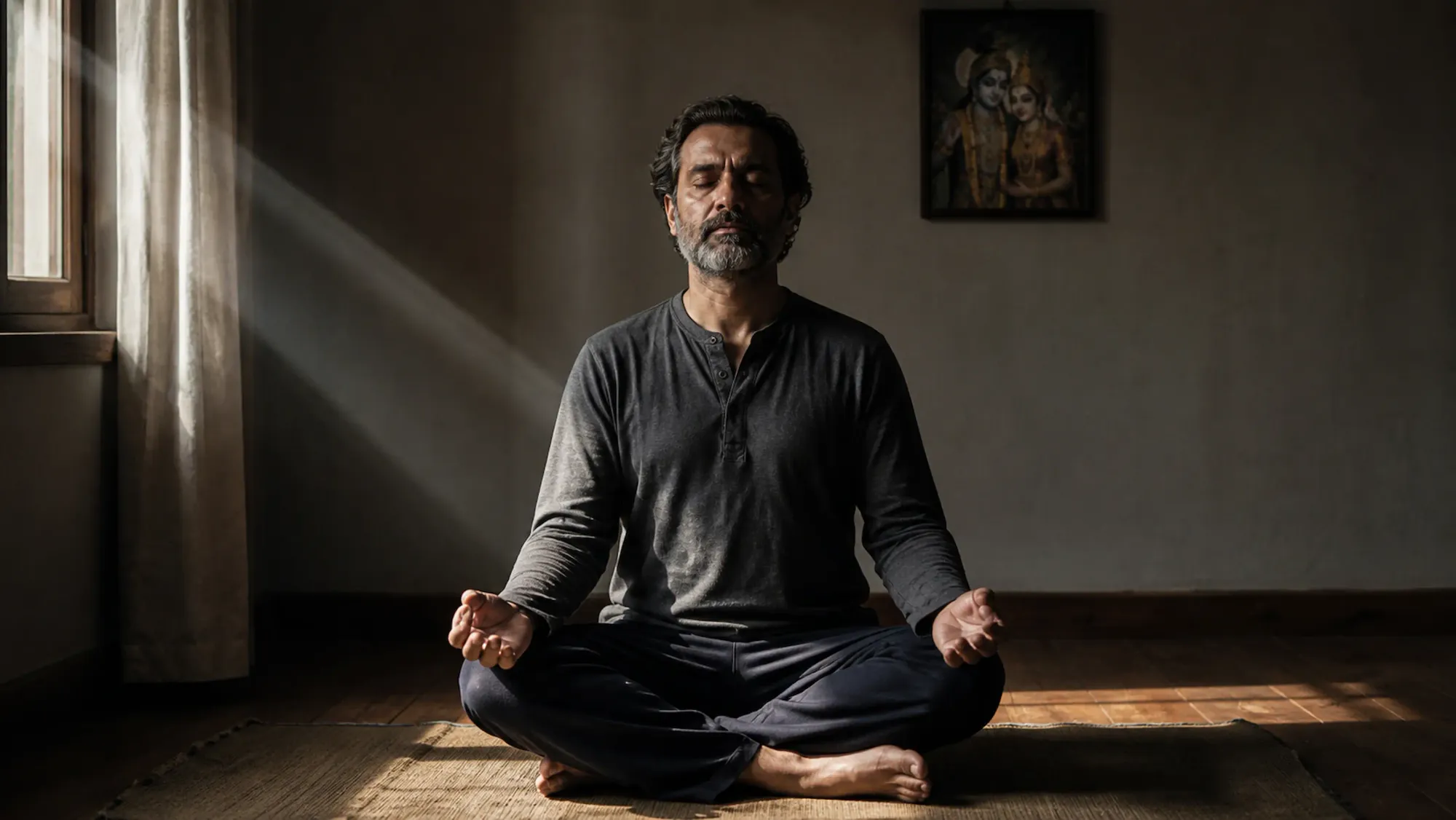
Roopdhyan (Meditation): Bring the mind back to God
Sit quietly. Close your eyes.
Bring the form of Radha-Krishna, or whichever form of the divine feels real to you, into the mind.
The thoughts will come.
Let them.
Each time the mind wanders, bring it back.
Do not get discouraged.
The returning is not failure.
The returning is the practice.
That soft movement of bringing the mind back, again and again, is love learning how to stay.
Meditation is the core of sadhana. Without it, other practices remain incomplete.
Practice the Presence of God: Remember throughout the day
Do not limit devotion to one time of day.
Remember God throughout the day.
- While working
- While speaking
- While making decisions
Offer your actions, thoughts, and results to Him.
Train the mind to return again and again.
Charity: give in a way that reduces ego
Giving is emphasized during this month. Food, clothes, support, money or time.
But focus on this:
Does this reduce my ego?
- Help without expecting appreciation
- Give time without distraction
- Do something you normally avoid
The inner shift matters more than the outer act.
Give something that touches you.
The act that asks for nothing in return loosens something within.
And a loosened heart begins to open.
Trida Bhakti: engage body, mind, and speech
Involve all three:
- Body → seva, actions
- Mind → remembrance, meditation
- Speech → kirtan, chanting
Sing or chant with attention and feeling, not just habit.
Scriptural Reflection: guide the mind daily
Read a few verses daily from texts like the Bhagavad Gita.
Reflect on what they mean.
Apply at least one idea during the day.
This keeps the mind aligned.
Sattvic Living: support the mind through lifestyle
Eat simple, fresh, sattvic food in moderation.
Offer your food before eating.
Take care of the body with light activity:
- Walking
- Yoga
- Stretching
A balanced body supports a steady mind.
Satsang: shape the mind through association
The mind is influenced by its environment.
Make a conscious effort to stay connected to uplifting company:
- Listen to discourses
- Spend time with seekers
- Have meaningful conversations
Satsang strengthens faith and keeps the mind on track.
Gratitude: train the mind to see grace
Notice what is already given.
Silently thank God throughout the day.
This shifts the mind from lack to appreciation.
Humility and Grace: the foundation
Recognize:
- Your abilities are given
- Opportunities are given
- Even your effort is supported
Let go of pride.
Even the pride of “I am doing sadhana.”
Effort is yours.
The result belongs to God.
What to set aside
Traditionally, major external activities are paused during Adhik Maas.
Not because the month is inauspicious.
But because the focus shifts inward.
When outer activity reduces, the mind gets space.
Use that space to observe:
Where is my mind going throughout the day?
The Notes Don’t Change, The Space Between Them Does
There is a version of this conversation that makes Adhik Maas sound like it belongs only to people with long, unscheduled mornings. Sadhus. Retirees. People who have already handled the logistics of their lives.
However, the path of Bhakti lives inside the household. Inside the kitchen, the commute, the complicated relationship, the exhausting workday, and the parenting that leaves nothing over by 9 p.m.
Swami Mukundananda's teachings are consistent with this: the divine does not live apart from your life. It lives inside it, waiting to be found in the exact places you already are.
Think of a musician asked to play the same piece, not louder, not with more notes, but with more feeling. The notes do not change, but the space between them deepens.
You still cook; but can you do it with a moment of gratitude for the hands that grew the food?
You still parent; can you bring one moment of genuine presence into your child’s day, not a perfect moment, just a real one?
You still work; can you pause once in the middle of the day and ask whether what you are doing serves something beyond yourself?
And if you already have a practice, if you sit, chant, study, and have done so for years, Adhik Maas has a different question for you.
Not: Am I doing enough?
But: Is it alive?
There is a particular trap long-term practitioners can fall into. Practice becomes routine before it becomes transformative. The form is correct. The schedule is kept. But the inner fire has quietly dimmed.
The Kripalu lineage is compassionate but direct on this point: spiritual pride can seal the cup. Grace is not withheld, but the heart may no longer be open enough to receive it.
Swami Mukundananda speaks of divine love, prem, with an image worth carrying: Prem mein purnima nahin (There is no full moon in love).
A full moon reaches fullness and then begins to wane. But divine love has no final peak, no graduation, no point where it is complete and must begin to diminish. It keeps increasing.
A Shape for the Thirty Days
No grand overhaul. No impossible vow. Just a gentle arc.
Week One - May 17 to 24: The Honest Seeing
Begin by removing, not adding.
Name one pattern. One mental loop, one reactive habit, one thing you have been carrying too long. See it clearly.
Do not try to fix it yet. Do not judge it. Just observe it honestly.
If it helps, write it down somewhere private.
That clear seeing is already a spiritual step.
Week Two - May 25 to 31: The Offering
The moon is waxing. Energy moves outward.
Reach toward something that strengthens your direction.
Listen to a discourse. Return to a text that once moved you. Spend time with someone who is also seeking.
On May 31, Purushottam Purnima, do one act as a pure offering.
Give something without telling anyone.
Light a lamp and sit quietly.
Pray without asking for anything.
Let that one act remain between you and the divine.
Week Three -June 1 to 8: The Commitment
The moon begins to wane. Energy turns inward.
Choose one practice such as Roopdhyan,kirtan chanting or reading a few minutes of scripture.
Do it every day.
Not perfectly. Consistently.
Week Four - June 9 to 15: The Carrying
As the month closes, identify one thing you will take forward.Something that shifted, even slightly, that you choose to continue.
The tradition is clear. Even one sincere step toward the divine is never lost. That step becomes the ground for the next one.

The Deeper Thing
Adhik Maas is not only about spiritual practices. It is, more quietly and more profoundly, about your relationship with time itself. Most of us live within what could be called instrumental time, time treated as a resource to be used, measured, optimized, and filled. Every hour must justify itself. Every pause must have a purpose. Productivity becomes the lens through which we evaluate our days, and stillness begins to feel like waste.
The restlessness this creates is not accidental. It is not simply the result of a busy schedule or modern life. It arises because something deeper within us remains unattended. When time is used only for doing, and not for being, an inner imbalance quietly grows. Adhik Maas interrupts this pattern. It offers a different relationship with time, not as something to control, but as something to enter, to inhabit and to sanctify.
Key Takeaways
- Adhik Maas 2026 runs from May 17 to June 15, a 30 day window that arrives only once every 32 to 33 months. Not a festival month. A turning inward month. Use it differently than you use ordinary time.
- The story behind the month is the teaching itself. Mal Maas arrived before Lord Vishnu with empty hands and was given His name. The part of you that has been sidelined the longest may be exactly what this month is for.
- Purushottam Purnima on May 31st is the most potent single day of the month. One sincere act of offering - charity, a lamp lit in love, a prayer that asks for nothing carries weight the tradition describes as extraordinary. Mark it. Show up for it with an open heart.
- In Bhakti linerage, bhav matters infinitely more than ritual form. Devotion without inner feeling is watering a plastic plant. One act genuinely charged with love reaches the divine. The whole teaching lives in that distinction.
- You do not need to earn your way to openness. The devotee who arrives saying "I cannot stay away" that devotee is an open cup in the rain. Come as you are, with whatever you have, from wherever you've been.
- Weddings, new ventures, and major worldly launches are traditionally paused and that pause is the gift. When the social engine slows, the question underneath all the noise finally gets some air.
- This is not a month for withdrawal. It is a month for reorientation within the life you already have.
Call to Action
Make Adhik Maas 2026 more than just a date on the calendar and instead make it a turning point. Begin a simple daily sadhana, join satsang, read sacred scriptures, and dedicate this sacred month to inner growth. Start today and experience the difference.
5 Frequently Asked Questions
Q1. I'm not traditionally religious. Can Adhik Maas genuinely mean something for me?
The story at the heart of this month is not about religion, it is about the part of you the world keeps calling impractical. The longing for something real. The quiet need for stillness. The sense that productivity is not the same as meaning.
Slow down.
Give something away.
Sit quietly once a day.
That is enough to begin.
Q2. What if I genuinely don’t feel anything when I pray or chant?
This is one of the most honest questions you can ask. The path of Kripalu Bhakti addresses this directly: Bhav is not created artificially. It is uncovered over time.
The instruction is simple: show up consistently, without demanding immediate results. Sincerity comes first and feeling follows.
Q3. Is it actually problematic to start new things during Adhik Maas?
Adhik Maas is considered highly favorable for inner beginnings and quieter about outer ones. Starting a meditation practice, beginning scripture study, or setting a spiritual intention is encouraged.
Major external actions such as business launches, weddings, or large commitments are traditionally postponed until after June 15. The month is not inauspicious, it simply supports a different focus.
Q4. What is Roopdhyan and how do I actually start?
Roopdhyan means focusing the mind on the form of God. Sit comfortably, close your eyes and ring a form of Radha-Krishna into your mind.
The mind will wander; bring it back. Do this again and again.
Guided sessions are available through JKYog resources and Swami Mukundananda’s teachings, which can help if you are new.
Q5. If I can only do one thing during Adhik Maas, what should it be?
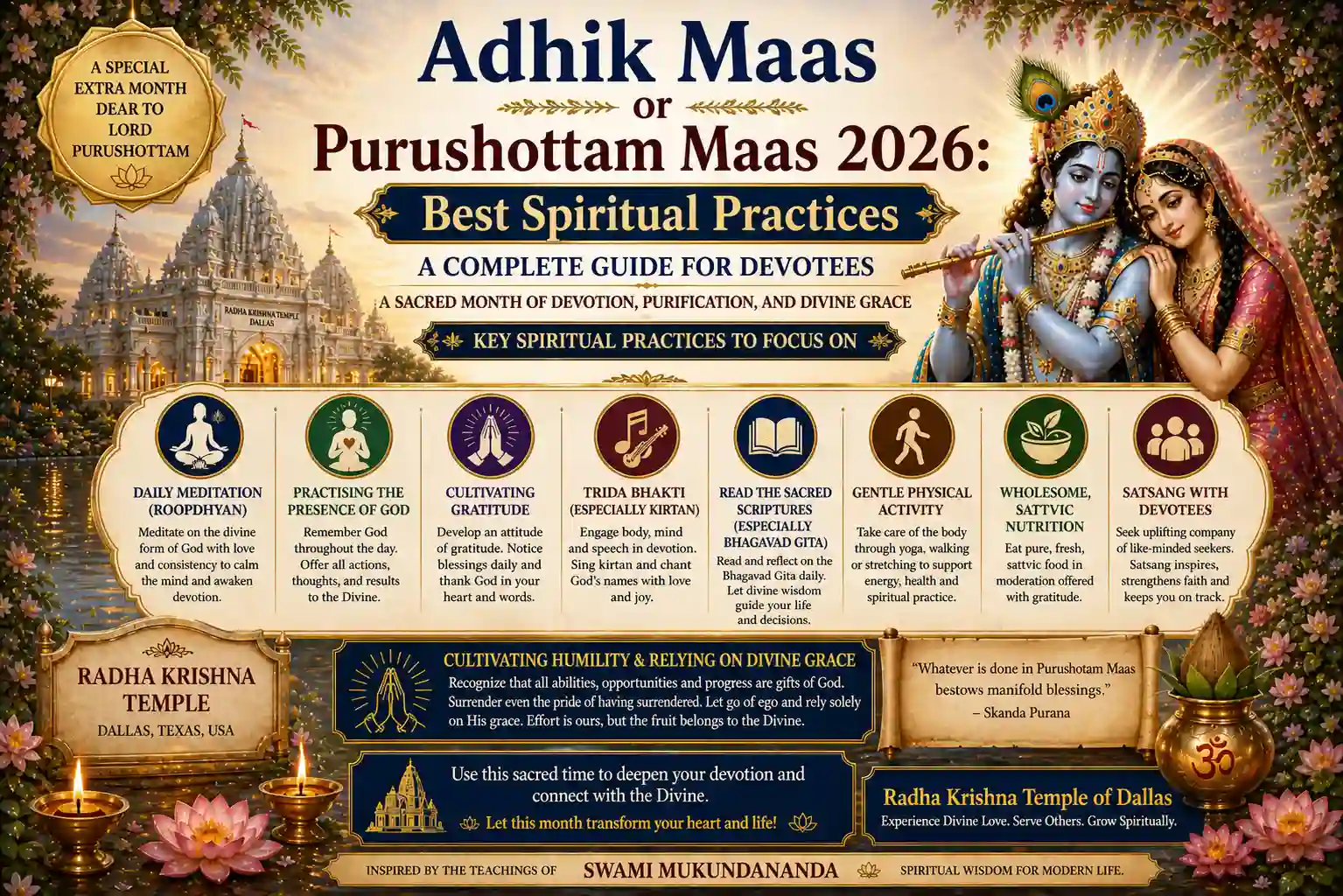
This depends on what appeals to you most. The infographic below provides a summary of those practices recommended by Swami Mukundananda. Please select one and consistently apply it.
Further Resources:
 JKYog Team