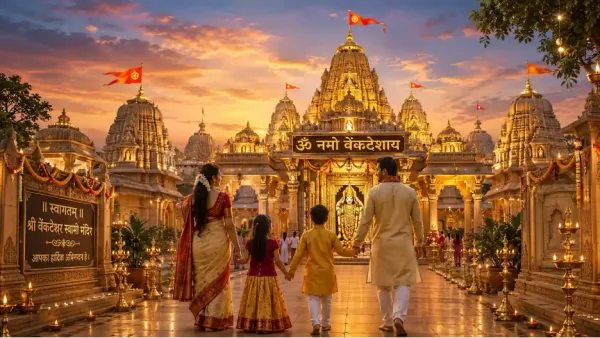
Introduction: When Sacred Geography Comes Closer to Home
For generations of devotees across the world, the name Tirumala has evoked deep reverence, longing, surrender, and devotion. Millions travel to the sacred hills of Lord Venkateswara seeking darshan of the Lord affectionately worshipped as Balaji, Srinivasa, and Govinda. The spiritual atmosphere of Tirumala has long been regarded as a living expression of Vaikuntha itself: the divine abode of Lord Vishnu manifested upon Earth.
Now, for devotees across North Texas, something profoundly historic is unfolding.
At Radha Krishna Temple of Dallas, preparations are underway for the Sri Venkateswara Swamy Prana Pratistha Mahotsavam taking place from July 2–5, 2026.
This sacred consecration ceremony will establish Lord Venkateswara’s divine presence within the temple through traditional Vedic rituals, prayers, homas, mantra chanting, and devotional worship.

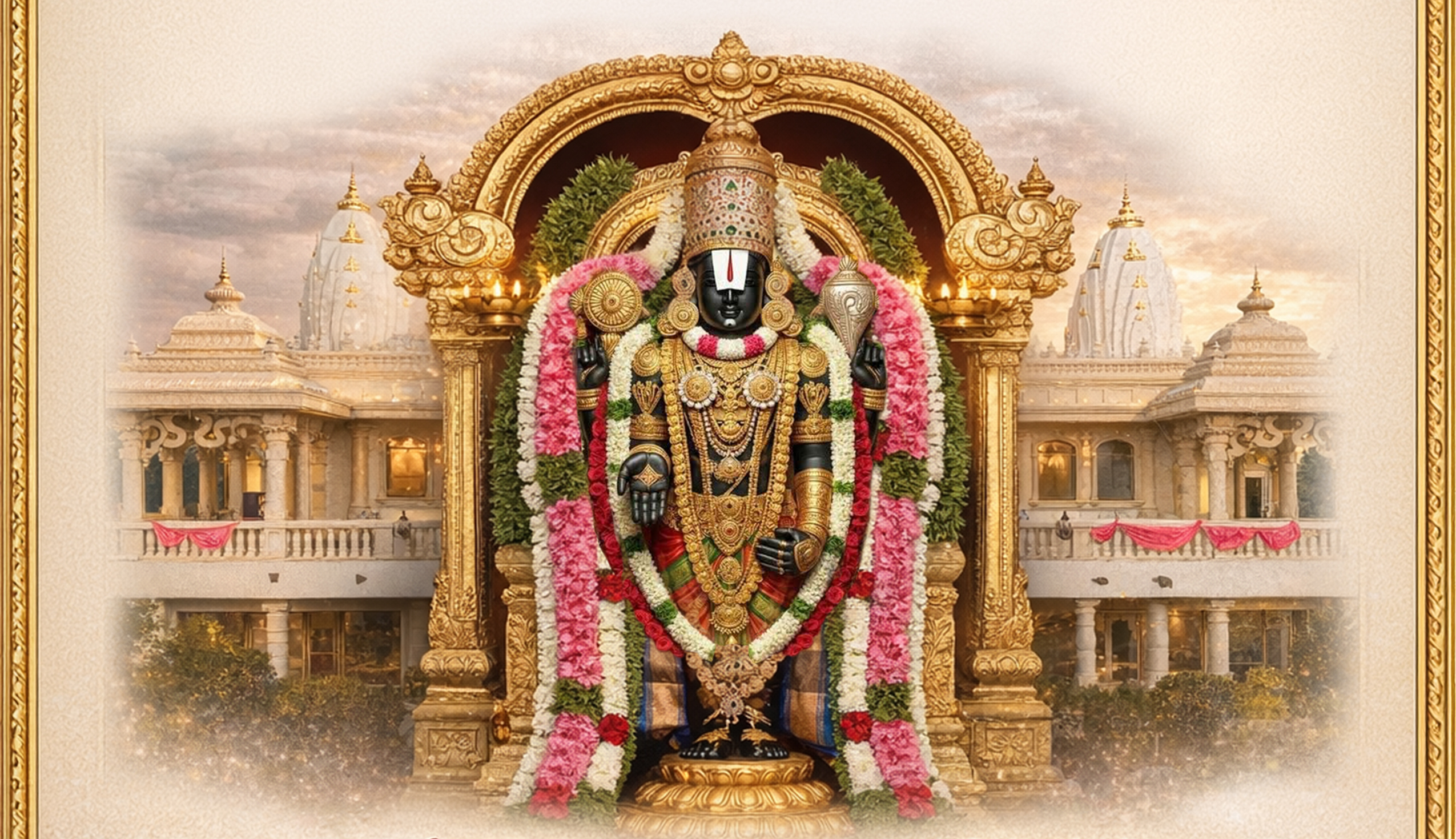
For many devotees, this is far more than the installation of a deity. It represents the arrival of a sacred spiritual presence that will transform devotional life for generations to come.
Within the teachings of Swami Mukundananda and the philosophy of JKYog, temples are not viewed merely as architectural structures or cultural gathering spaces. They are sacred centers of divine energy where devotees can gradually purify the mind, awaken devotion, deepen surrender, and experience living connection with God.
The arrival of Lord Venkateswara in North Texas therefore carries spiritual significance not only for individuals, but for the entire devotional landscape of the DFW community.
What Is Prana Pratistha?
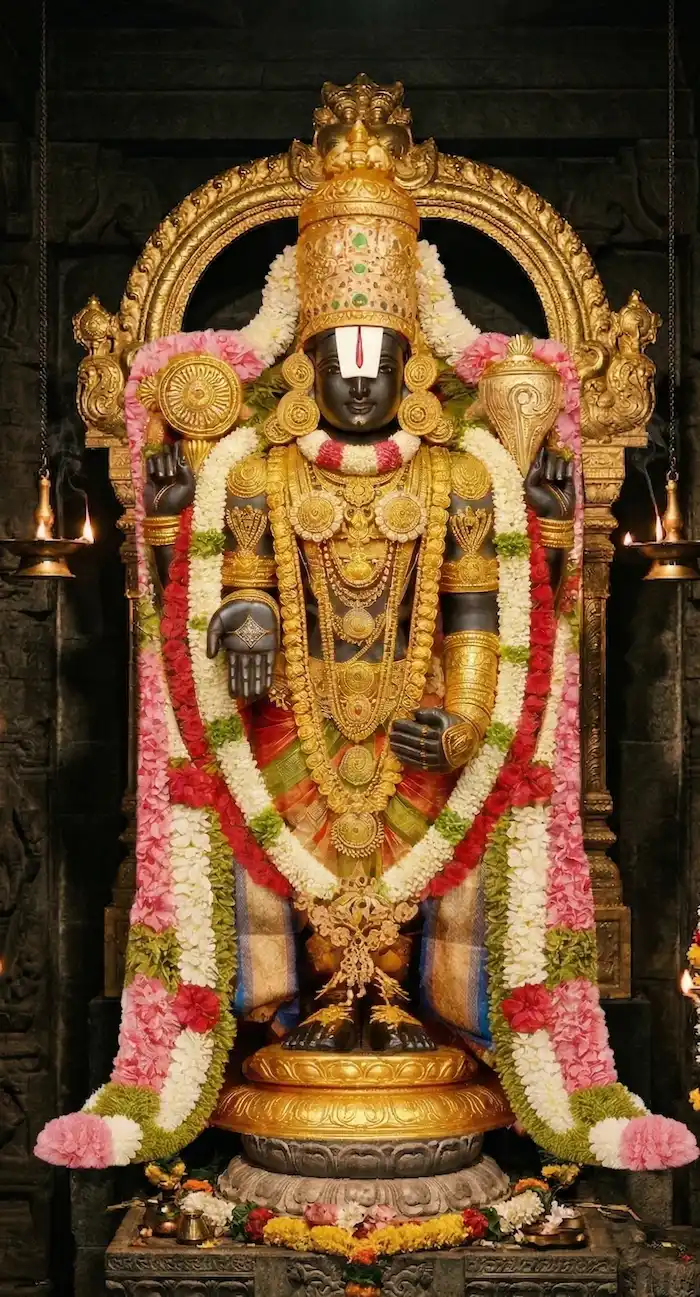
The Sanskrit words “Prana Pratistha” carry profound meaning.
“Prana” means life force or divine energy.
“Pratistha” means establishment or consecration.
Together, Prana Pratistha refers to the sacred Vedic process through which divine presence is ceremonially invoked into the deity through mantra, ritual, homa, prayer, and devotional worship.
Within Sanatan Dharma, the deity in the temple is not viewed symbolically or artistically alone. Through proper consecration and continuous worship, the deity becomes a living center of divine presence and grace.
This understanding is deeply important within the JKYog philosophy. Swami Mukundananda often teaches that the human mind requires sacred environments and divine forms to help focus consciousness toward God. Temples therefore become powerful spiritual tools that assist devotees in developing remembrance, devotion, and surrender amidst the distractions of daily life.
When Lord Venkateswara’s Prana Pratistha takes place in Allen, Texas, devotees will not merely be visiting a new shrine: they will be entering a sacred spiritual space designed to facilitate divine connection itself.
Why This Moment Is So Significant for North Texas

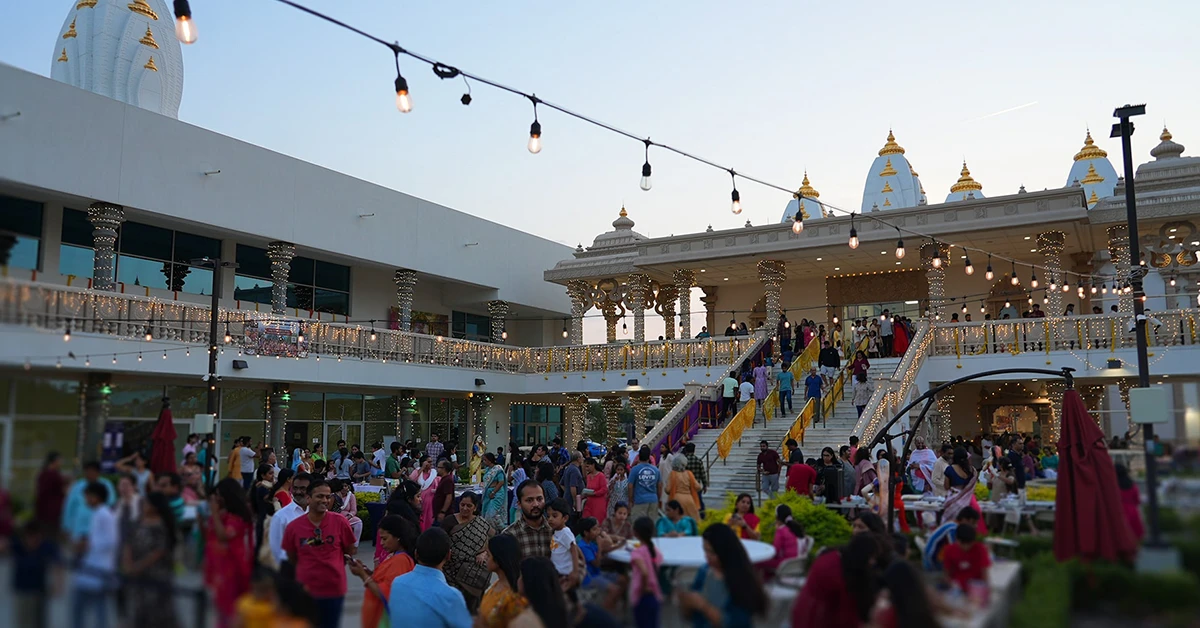
The DFW area has become home to one of the fastest-growing Hindu communities in the United States. Thousands of families across North Texas seek opportunities to preserve spiritual traditions, participate in devotional worship, and help younger generations remain connected with Sanatan Dharma.
For many devotees, regular pilgrimage to Tirumala is not always possible due to distance, schedules, finances, health limitations, or family responsibilities. Yet the longing for Lord Venkateswara’s darshan remains deeply present within the heart.
This is why the upcoming Prana Pratistha carries such emotional and spiritual significance: The sacred devotional experience associated with Balaji worship is coming closer to home.
The Radha Krishna Temple itself describes the upcoming Mahotsavam as an opportunity to “experience the divine grandeur of the Tirupati Balaji Temple right here in Allen, Texas.”
For countless families, this means that future generations will grow up with direct access to regular darshan, seva opportunities, festivals, Vedic rituals, kirtan, and devotional culture centered around Lord Venkateswara.
Children who may never have experienced Tirumala firsthand will now encounter the beauty of Balaji devotion within their own community.
Vaikuntha in DFW: A New Spiritual Center for Devotees

The phrase “Vaikuntha in DFW” is not merely poetic.
Within devotional tradition, wherever sincere worship of Lord Vishnu flourishes, Vaikuntha manifests spiritually through divine remembrance, bhakti, satsang, and sacred presence.
Temples dedicated to Lord Venkateswara often become powerful spiritual centers because Balaji worship naturally draws devotees into surrender, humility, discipline, and devotion. The chanting of “Govinda,” the offering of seva, the darshan of the Lord adorned magnificently, and participation in sacred rituals create deeply transformative devotional experiences.
The arrival of Lord Venkateswara at the Radha Krishna Temple will therefore create a new devotional focal point for North Texas Hindus, with the following benefits:
- Daily worship.
- Special sevas.
- Brahmotsavams.
- Srinivasa Kalyanams.
- Vedic chanting.
- Festival celebrations.
- Collective kirtan.
- Community satsang.
All these experiences will now become increasingly integrated into temple life. For devotees, spiritual life gradually becomes more accessible, immersive, and community-centered.
The JKYog Philosophy: Temples as Centers of Inner Transformation
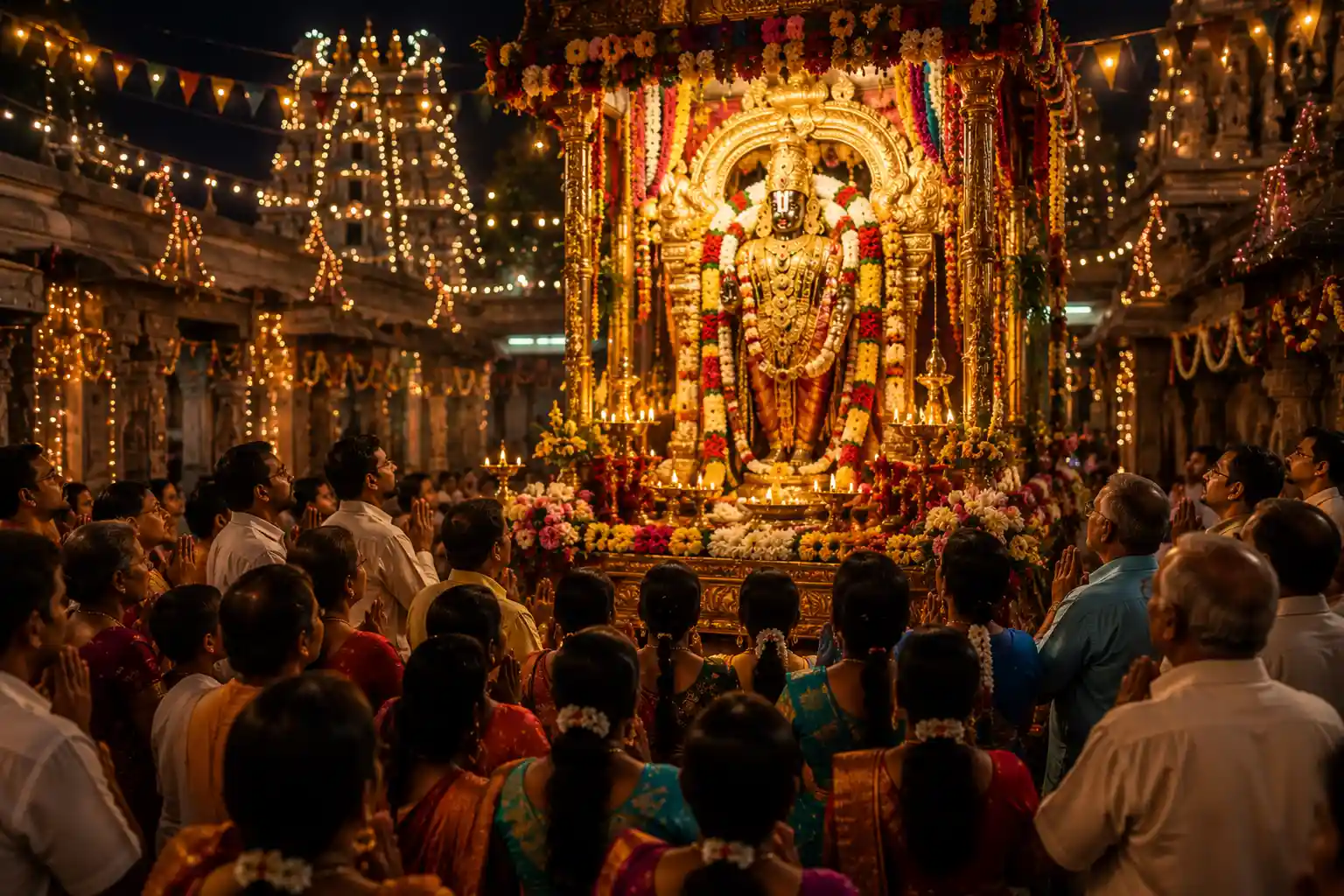
One of the most beautiful and defining aspects of the JKYog philosophy is the understanding that spirituality cannot remain limited to occasional rituals or external observances alone. True spiritual growth involves gradual transformation of consciousness itself. Within the teachings of Swami Mukundananda, devotees are repeatedly reminded that human beings cannot experience lasting fulfillment through material achievement alone because the soul itself is spiritual by nature. The mind continuously searches for peace, security, happiness, and stability in the external world, yet external circumstances are constantly changing. Success fluctuates, relationships evolve, emotions rise and fall, and worldly situations remain uncertain. As a result, the mind often remains restless despite outward accomplishments. Swamiji explains that genuine peace ultimately arises not through external control, but through inner connection with God.
Within this understanding, temples play an extraordinarily important role in spiritual life because they provide sacred environments that help redirect human consciousness toward the Divine amidst the noise and distractions of modern existence. Sacred spaces calm the mind naturally and create an atmosphere where worldly anxieties begin softening. Darshan redirects awareness toward God and reminds devotees of their deeper spiritual identity. Kirtan gradually purifies emotions and fills the heart with devotional remembrance. Satsang elevates understanding by helping seekers reflect upon eternal spiritual truths rather than becoming completely absorbed in temporary worldly concerns. Seva weakens ego by shifting attention away from self-centered thinking toward selfless offering, while prayer softens the heart and creates emotional intimacy with the Divine.
Within this philosophy, the arrival of Lord Venkateswara in North Texas is not simply about expanding temple infrastructure or adding another place of worship within the community. It represents the expansion of opportunities for inner transformation itself. The temple gradually becomes a sanctuary where devotees can repeatedly return for strength, clarity, surrender, devotion, and spiritual refuge amidst the emotional pressures and constant distractions of modern life. Over time, these repeated experiences of darshan, kirtan, seva, and satsang begin subtly transforming the inner life of the devotee, helping spirituality move from occasional observance into lived daily experience.
What Changes Spiritually for Families?
For many North Texas families, the local presence of Lord Venkateswara will reshape devotional life in ways that are both deeply practical and profoundly emotional. Instead of depending solely upon occasional pilgrimages or infrequent opportunities for Balaji darshan, devotees will now have ongoing access to regular temple worship and sacred devotional experiences within their own community. This changes not only convenience, but the rhythm of spiritual life itself.
Children will grow up hearing Vedic chants, devotional songs, and the sacred names of Govinda and Srinivasa within their everyday environment rather than encountering them only occasionally. Families will begin participating together in temple festivals, sacred observances, seva opportunities, kirtans, and devotional gatherings that strengthen both spiritual and emotional connection within the household. Young people growing up in America will have greater opportunities to remain connected with Hindu identity and spiritual culture through direct lived experience rather than distant cultural memory alone.
For grandparents and older devotees who carry deep emotional devotion toward Lord Venkateswara, the establishment of Balaji worship locally brings immense fulfillment because the sacred connection they have cherished for decades becomes accessible within their own spiritual community. Temple visits may gradually become integrated into weekly family life rather than remaining limited to special occasions or rare pilgrimages. Over time, these regular devotional experiences begin shaping the emotional atmosphere of family life itself, creating greater spiritual continuity across generations.
Perhaps most importantly, the sense of spiritual belonging deepens profoundly. In a fast-moving and often fragmented world, sacred spaces provide emotional grounding and inner refuge. They remind devotees that beneath all worldly responsibilities and pressures lies a deeper spiritual identity eternally connected with God. The arrival of Lord Venkateswara therefore becomes not merely the addition of a deity within a temple, but the creation of a spiritual home where countless families will continue finding peace, devotion, strength, and divine connection for generations to come.
Collective Devotion and the Power of Community
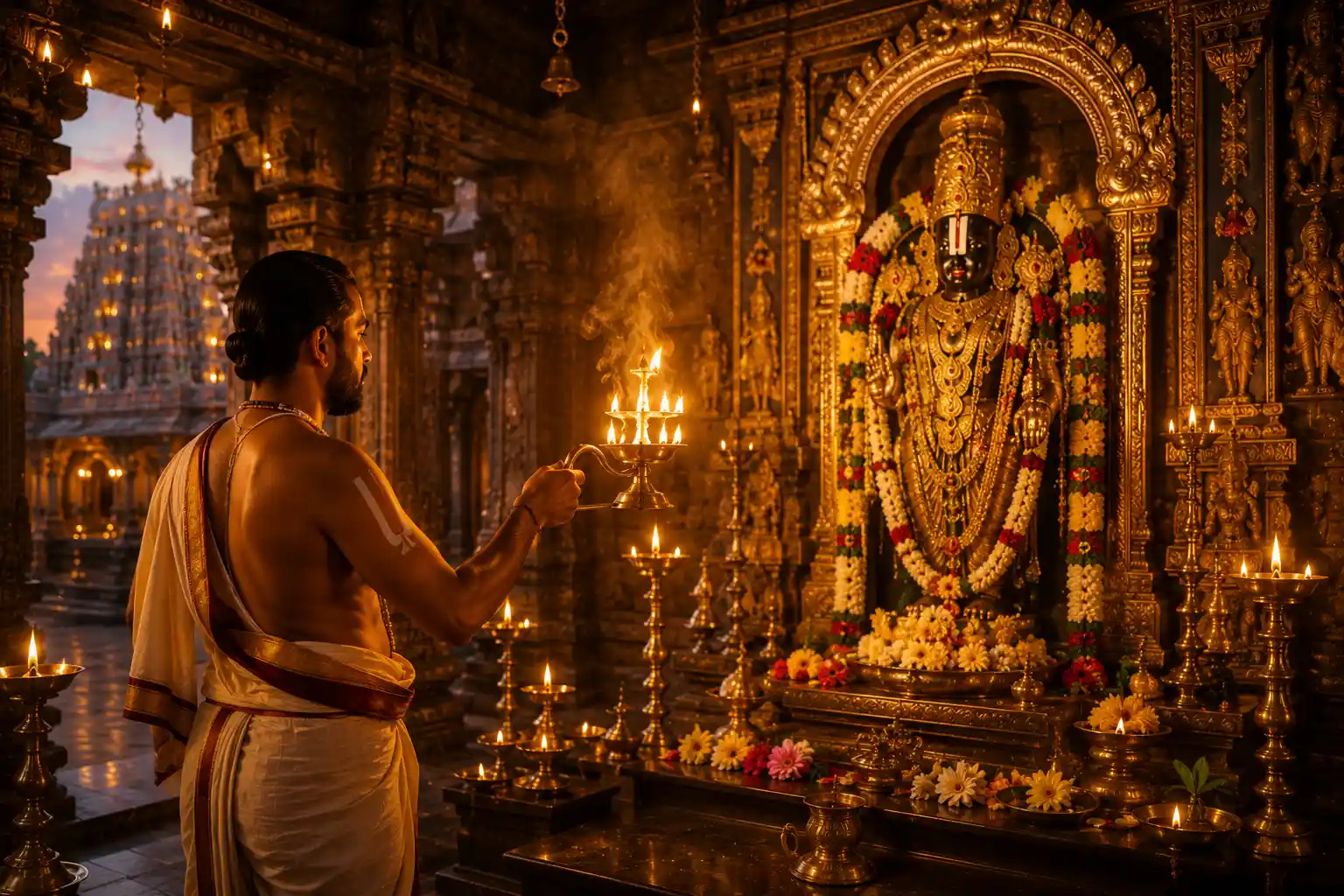
One of the most beautiful aspects of this Prana Pratistha preparation is the collective devotional spirit already emerging within the community.
The temple has initiated ongoing devotional programs including daily Akhand Hare Ram Mahamantra chanting leading up to the consecration ceremony. Devotees gather regularly for collective prayer and sankirtan in preparation for welcoming Lord Venkateswara.
This reflects an important principle within bhakti traditions: divine grace flourishes where collective devotion grows sincerely.
The Prana Pratistha is therefore not only a ceremonial event conducted by priests, but is a community spiritual awakening.
Thousands of devotees contributing through prayer, seva, sponsorship, volunteering, chanting, and devotion collectively help create the spiritual atmosphere into which the Lord is welcomed.
This shared participation transforms the event into something deeply personal for the entire community.
A Sacred Legacy for Future Generations
Perhaps one of the most deeply meaningful dimensions of this historic moment lies not only in what devotees will experience today, but in the sacred legacy that will continue unfolding for generations to come. In Hindu tradition, temple consecration has always carried extraordinary spiritual significance because its impact extends far beyond a single ceremony, community gathering, or moment in time. A consecrated temple becomes a living spiritual center that continues nourishing hearts, preserving devotion, and guiding souls long after the individuals who helped build and support it are no longer physically present.
Long after current generations pass, the temple will continue standing as a sacred refuge for seekers and devotees. The lamps before Lord Venkateswara will continue glowing softly during daily worship. The sound of temple bells will continue echoing through the halls during aarti and sacred rituals. Kirtans and Vedic chants will continue resounding through the atmosphere, carrying divine remembrance into the hearts of future generations. Children not yet born will one day walk through the temple doors, fold their hands before the deity, hear stories of Balaji, and gradually develop their own relationship with devotion and spiritual culture. Families will continue gathering for darshan during moments of joy, difficulty, gratitude, celebration, and prayer, finding peace and strength through the Lord’s presence.
This is the deeper beauty of temple creation within Sanatan Dharma. A temple does not belong only to one generation. It becomes a sacred inheritance passed forward through time, preserving continuity between the spiritual traditions of the past and the devotional lives of the future. Future generations of North Texas Hindus will inherit not merely a physical structure, but a living center of bhakti, satsang, seva, culture, and divine connection because today’s devotees chose to participate in and support this sacred vision.
Within the teachings of Swami Mukundananda, spiritual efforts that help others move closer to God carry lasting value because they continue generating upliftment far beyond one’s own lifetime. This is why temple consecration and support are considered so spiritually meaningful. They create sacred spaces where countless souls will continue finding refuge, clarity, surrender, devotion, and inner transformation for decades and generations to come.
Call to Action
A historic spiritual moment is unfolding in North Texas.
The arrival of Lord Venkateswara at the Radha Krishna Temple of Dallas is more than a temple event, it is the creation of a sacred spiritual home where generations of devotees will gather for darshan, devotion, seva, satsang, and divine connection.
Participate in this once-in-a-lifetime Prana Pratistha Mahotsavam and become part of a spiritual legacy that will continue blessing the community for generations to come.
FAQs
What is the Sri Venkateswara Swamy Prana Pratistha Mahotsavam?
It is the sacred Vedic consecration ceremony through which Lord Venkateswara’s divine presence will be ceremonially established at the Radha Krishna Temple of Dallas.
When is the Prana Pratistha taking place?
The Sri Venkateswara Swamy Prana Pratistha Mahotsavam is scheduled from July 2–5, 2026.
Why is this event spiritually important?
The event establishes a sacred center of Balaji worship in North Texas, allowing devotees ongoing access to darshan, seva, festivals, and devotional practices centered around Lord Venkateswara.
What does “Vaikuntha in DFW” mean?
The phrase symbolizes the arrival of Lord Venkateswara’s sacred presence in North Texas, bringing the devotional atmosphere associated with Tirumala closer to local devotees.
What is Prana Pratistha?
Prana Pratistha is the sacred ritual through which divine energy and presence are invoked into a consecrated deity through Vedic mantras and rituals.
How does JKYog view temple worship?
JKYog teaches that temples are sacred spiritual centers that help devotees deepen devotion, calm the mind, purify consciousness, and strengthen connection with God.
Will there be opportunities for seva and participation?
Yes. Devotees can participate through chanting, volunteering, sponsorships, seva opportunities, and attendance during the Prana Pratistha celebrations.
Why is Lord Venkateswara especially beloved?
Lord Venkateswara is worshipped as a compassionate form of Lord Vishnu who guides and blesses devotees during the age of Kali Yuga.