The arrival of a new year has always carried a sense of renewal, hope, and quiet reflection. In the Hindu tradition, time is not merely a sequence of days but a sacred cycle; each beginning an opportunity to realign with purpose, values, and divine consciousness. Among the many New Year celebrations across India, Tamil New Year (Puthandu) and Vishu stand out for their deep spiritual symbolism and their connection to the sustaining energy of the universe, embodied by Lord Vishnu.
In 2026, both Tamil New Year and Vishu fall on 14 April, marking the Sun’s transition into Aries (Mesha Sankranti). While the date itself is significant astronomically, the deeper meaning of these festivals lies in what they invite us to do inwardly: to pause, reflect, and begin again with awareness.
This is not merely the start of a calendar year. It is an invitation to renew the mind, purify intentions, and reconnect with the divine.
Tamil New Year & Vishu 2026 Date
In 2026, Tamil New Year (Puthandu) and Vishu are both observed on Tuesday, 14 April 2026.
This alignment is not coincidental. It is rooted in the solar calendar, specifically the moment when the Sun enters Aries, considered the first sign of the zodiac. This transition represents the beginning of a new cycle of energy: dynamic, forward-moving, and filled with potential.
For centuries, this moment has been recognized as a time to reset one’s direction, both externally and internally.
The Essence of Tamil New Year (Puthandu)

Tamil New Year is celebrated predominantly in Tamil Nadu, but its spirit extends far beyond geography. It is a celebration of beginnings, but also of continuity; honoring the past while stepping consciously into the future.
The word Puthandu itself means “new year,” but the celebration is less about marking time and more about shaping it.
The day begins quietly, often before sunrise. There is a sense of stillness, as if the world itself pauses for a moment before beginning again. Homes are cleaned and decorated, not merely for aesthetics, but as a symbolic act of removing inner clutter, such as negative thoughts, past regrets, and emotional burdens.
One of the most meaningful traditions is the viewing of auspicious items, known as Kanni. Fruits, flowers, gold, mirrors, and sacred objects are arranged carefully, and the first sight upon waking is meant to be one of beauty and abundance.
This ritual carries a profound psychological truth: what we see first shapes our mindset. It is a reminder that the way we begin influences the direction of the journey.
The Essence of Vishu
While Tamil New Year is rooted in Tamil culture, Vishu is celebrated in Kerala, yet the underlying philosophy remains strikingly similar.
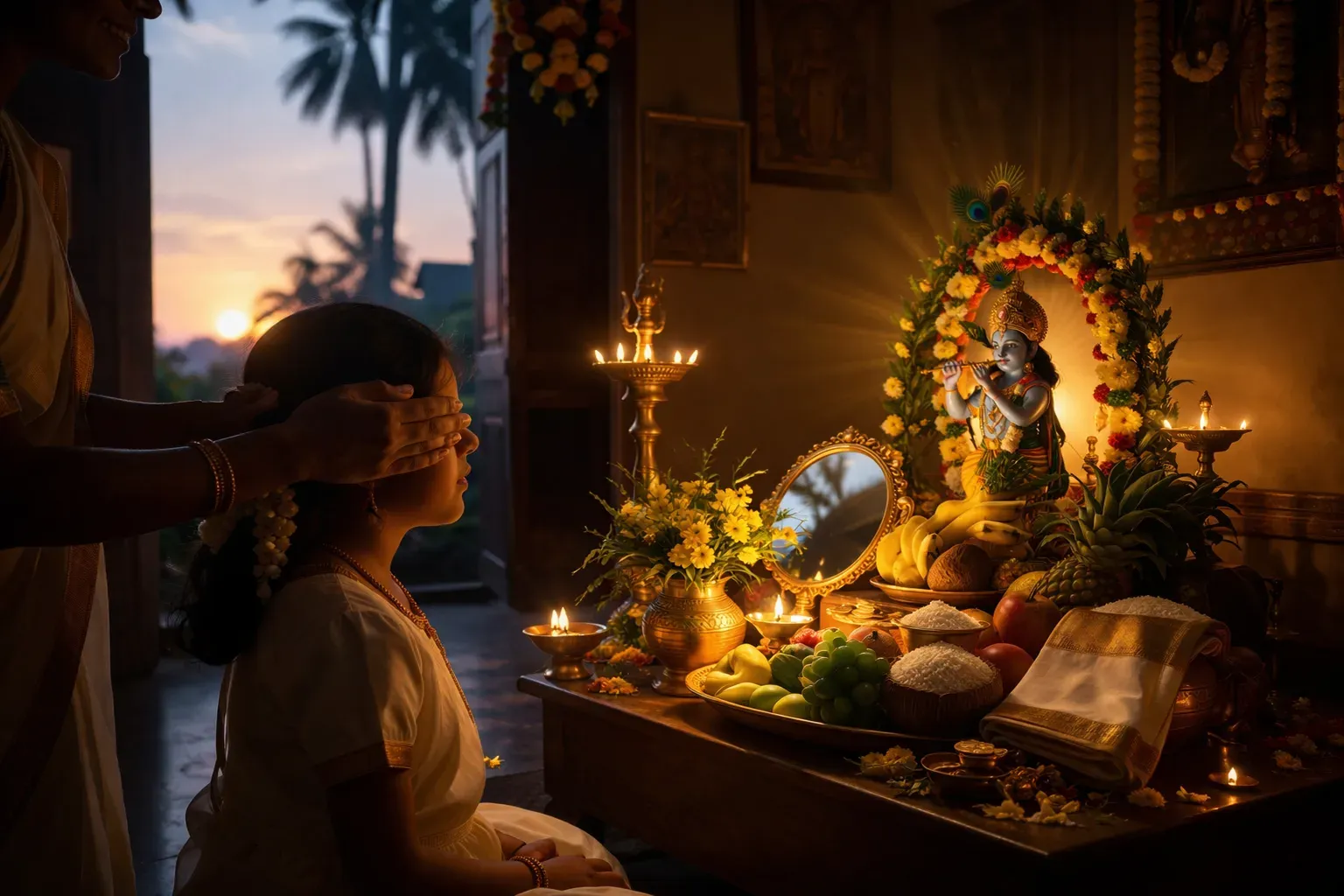
Vishu is deeply connected with devotion to Lord Vishnu, particularly in the form of Krishna. The central ritual of Vishu is the preparation of the Vishu Kani, an arrangement of sacred and auspicious items viewed at dawn.
The experience of Vishu begins in darkness. The devotee wakes up before sunrise and, often with eyes closed, is led to the arrangement. When the eyes open, the first sight is one of abundance, light, and divine presence.
This moment is deeply symbolic. It represents awakening, not just from sleep, but from ignorance. It signifies the transition from darkness to clarity, from confusion to awareness.
The Spiritual Role of Lord Vishnu
At the heart of both these festivals lies the presence of Lord Vishnu. In Hindu philosophy, Vishnu is the sustainer, the one who maintains balance and harmony in the universe.
While creation is attributed to Brahma and transformation to Shiva, it is Vishnu who ensures continuity. He represents stability in the midst of change.
Beginning the year with Vishnu’s remembrance is therefore deeply meaningful. It is a way of aligning oneself with:
- balance in thought
- steadiness in action
- compassion in relationships
In a world that often feels chaotic and unpredictable, Vishnu symbolizes the quiet assurance that order exists, even when it is not immediately visible.
Rituals as Reflections of Inner Truth
The rituals associated with Tamil New Year and Vishu may appear simple, but they carry layers of meaning.
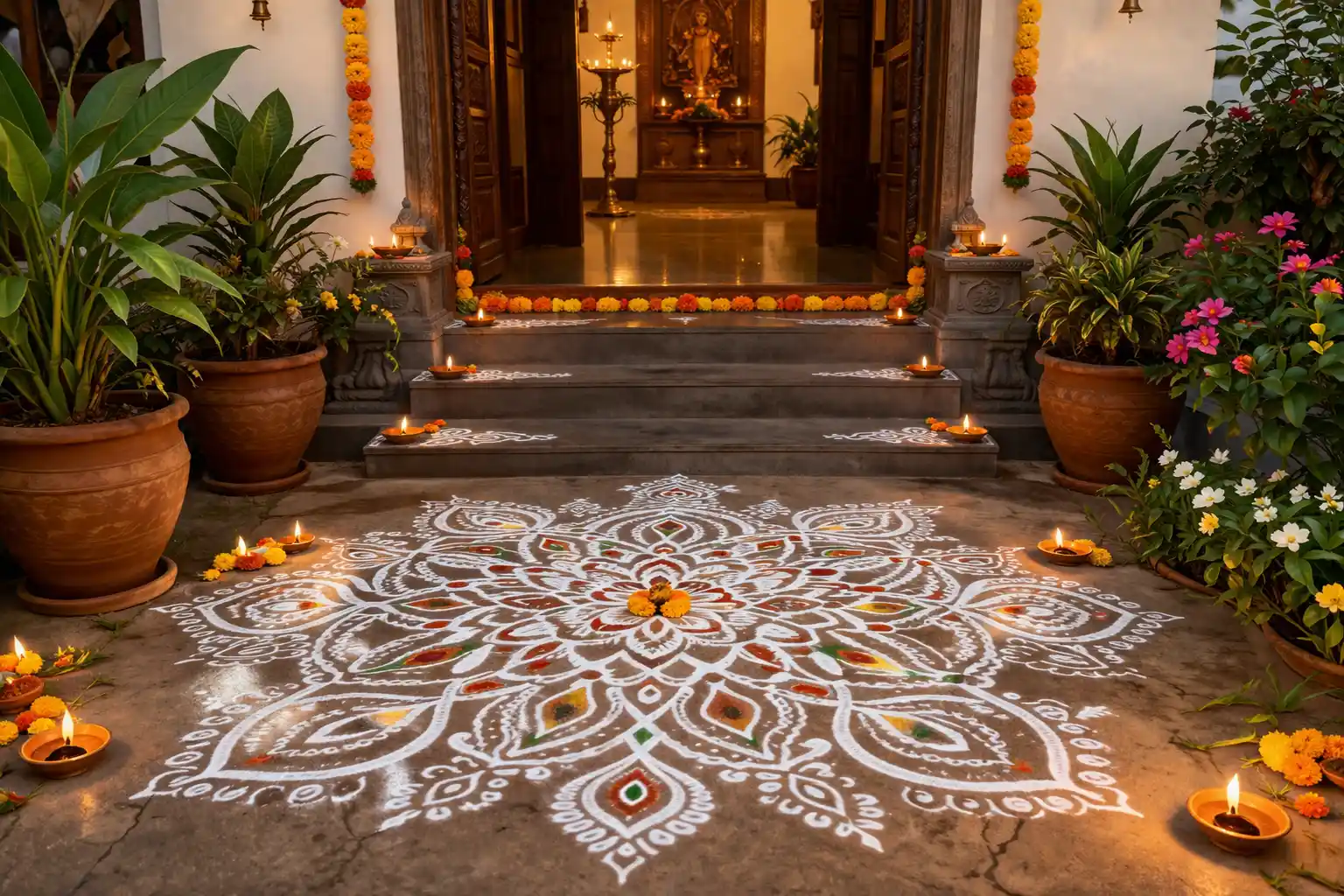
The kolam designs drawn at the entrance of homes are not just decorative patterns. They represent harmony, precision, and the welcoming of positive energy. The act of drawing them requires patience and focus, qualities that are essential for a balanced life.
The preparation of festive meals, especially dishes that combine multiple tastes, reflects an important truth: life is not one-dimensional. It includes sweetness and bitterness, joy and sorrow, ease and challenge. Accepting this diversity of experience is a form of wisdom.
Similarly, the Vishu Kani teaches that perspective matters. What we choose to focus on shapes our experience of reality. A mind trained to see abundance will find gratitude even in difficulty.
A Deeper Bhakti Perspective
From the perspective of bhakti, as taught by Swami Mukundananda, festivals are not meant to remain external. They are designed to awaken internal transformation.
He often emphasizes that devotion is not limited to rituals or temple visits. It is a state of mind, a continuous awareness of the divine presence in all aspects of life.
In this light, Tamil New Year and Vishu become opportunities to:
- deepen one’s connection with God
- align actions with higher values
- cultivate gratitude and humility
The external rituals serve as reminders, but the real practice lies in how one lives afterward.
Renewal as an Inner Process
A new year naturally inspires resolutions. People set goals, make plans, and aspire for improvement. But often, these changes remain superficial because they are not rooted in deeper awareness.
The true essence of these festivals lies in inner renewal.
This involves asking meaningful questions:
- What patterns in my life are no longer serving me?
- Where do I react instead of respond?
- How can I bring more awareness into my daily actions?
Such reflection transforms the idea of a new year from a symbolic event into a genuine turning point.
Living the Teachings Beyond the Day
It is easy to feel inspired on the day of the festival. The challenge lies in carrying that awareness forward.
Imagine beginning each day as one begins Vishu—with a conscious choice of what to focus on. Imagine approaching each situation with the balance symbolized by Vishnu. Imagine responding to life’s ups and downs with the acceptance represented by the Tamil New Year meal.
Over time, these small shifts create profound change.
Life becomes less reactive and more intentional. Decisions become clearer. Relationships become more harmonious.
The Mind as the True Starting Point
Both Tamil New Year and Vishu emphasize the importance of beginnings. But the most important beginning is not external. It is, in fact, internal.
The mind is where every action originates. If the mind is cluttered, actions become confused. If the mind is clear, actions become purposeful.
Practices such as gratitude, reflection, and remembrance of the divine help create this clarity. They allow the mind to reset, much like the new year resets the calendar.
The Role of Service and Giving
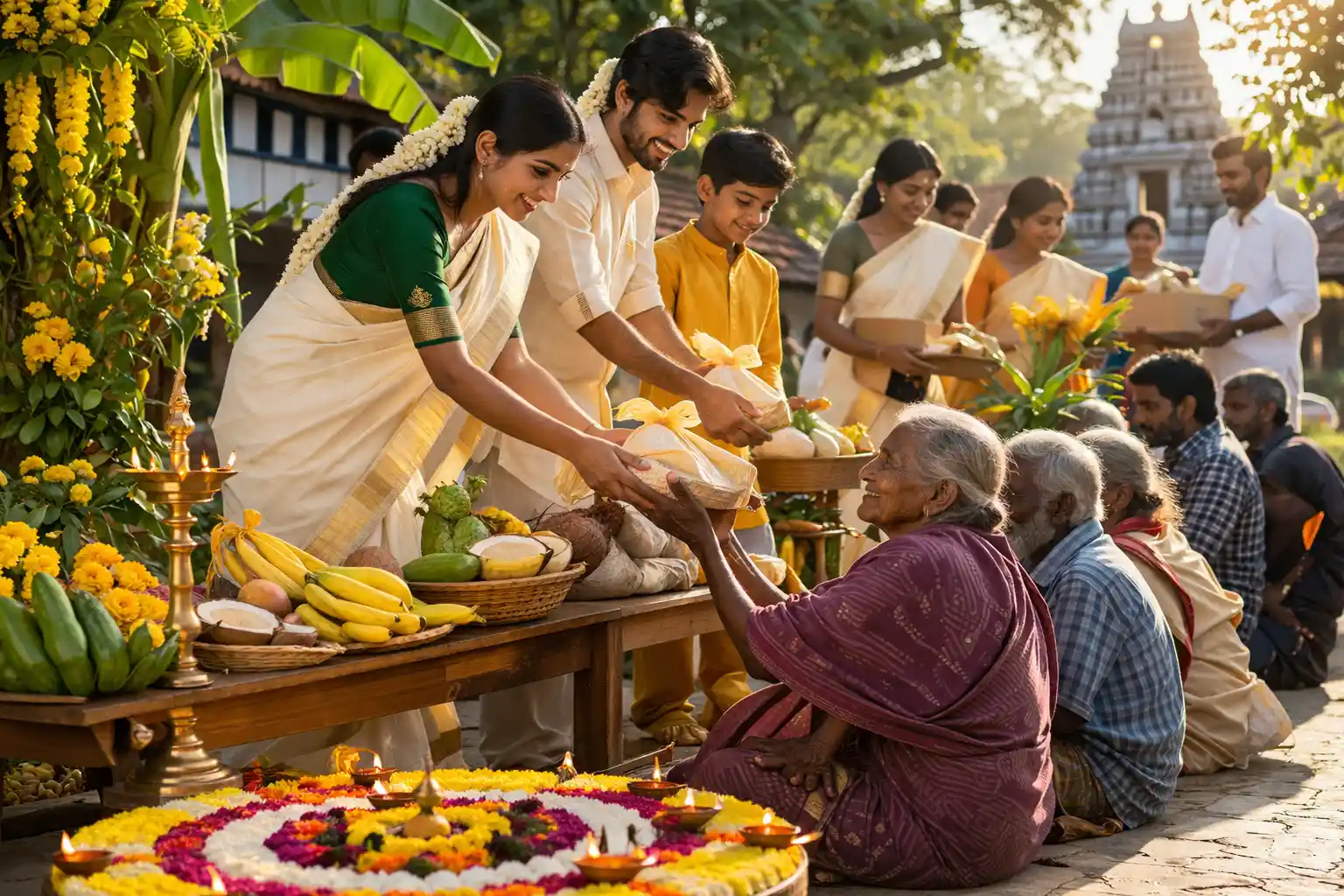
Another important aspect of these festivals is the emphasis on giving. Whether it is sharing food, offering gifts, or giving Vishu Kaineetam, the act of giving reflects abundance.
In spiritual philosophy, giving is not about losing something, but is about expanding oneself. When one gives with sincerity, the sense of separation between self and others begins to dissolve.
This aligns with the teachings of bhakti, where love for the divine naturally expresses itself as kindness toward others.
Final Reflections
Tamil New Year and Vishu are not just cultural celebrations. They are deeply philosophical reminders of how to live.
They teach us to begin with awareness, to act with balance, to accept life fully, and to stay connected to the divine.
In a world that often moves too quickly, these festivals invite us to slow down—to pause, reflect, and realign.
And perhaps that is their greatest gift: the reminder that every moment, not just every year, is an opportunity to begin again.
Call to Action
As Tamil New Year and Vishu 2026 approach, take a moment to go beyond celebration.
Reflect on your intentions for the year ahead. Choose one quality you wish to strengthen, whether it is patience, discipline, or compassion, and begin there.
Let this new year not just change your calendar, but transform your perspective.
If this guide resonated with you, share it with others and begin your journey with clarity, purpose, and devotion.

FAQs
1. When is Tamil New Year and Vishu in 2026?
Both Tamil New Year (Puthandu) and Vishu fall on 14 April 2026.
2. Why are Tamil New Year and Vishu celebrated on the same day?
They both follow the solar calendar and mark the Sun’s entry into Aries (Mesha Sankranti).
3. What is the spiritual significance of Vishu Kani?
It represents starting the year with a positive and abundant mindset, influencing the rest of the year.
4. How is Lord Vishnu connected to these festivals?
Vishnu represents preservation, balance, and cosmic order, making him central to new beginnings.
5. How can these festivals be applied in modern life?
By practicing mindfulness, gratitude, balance, and devotion in daily life.