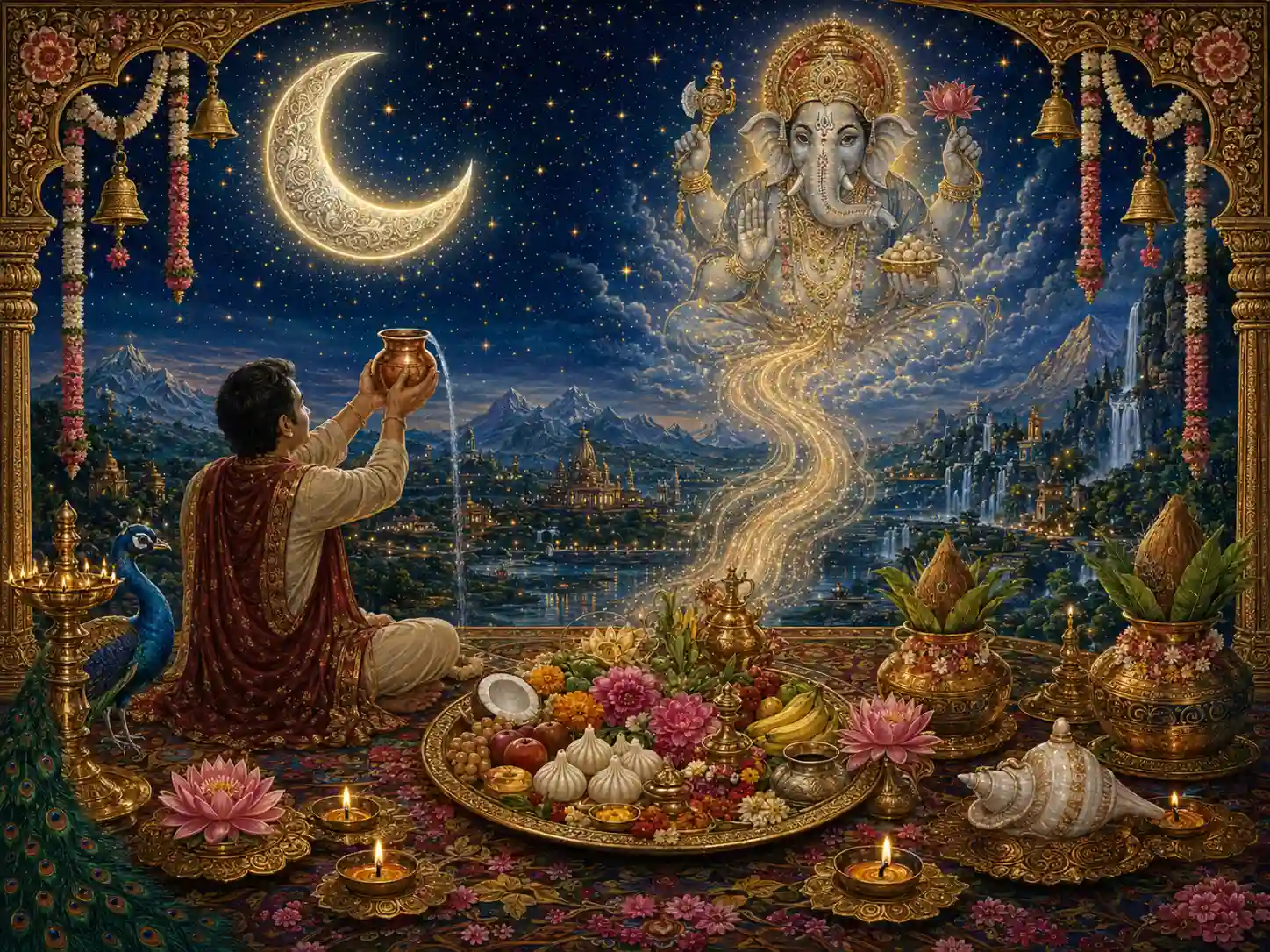
“Every month, Sankashti Chaturthi arrives like a gentle reminder: pause, pray, steady the mind, and let Lord Ganesha clear the way.”
“त्वमेव प्रत्यक्षं तत्त्वमसि”
Tvam eva pratyaksham tattvam asi
“You alone are the visible Divine Reality.”
With this sacred vision, Hindu tradition worships Lord Ganesha not only as the remover of obstacles, but as the divine wisdom that guides every new beginning. Sankashti Chaturthi is one of the most beloved monthly vrats dedicated to Lord Ganesha, observed with fasting, prayer, mantra, and moonrise worship.
In June 2026, this vrat becomes especially rare and spiritually significant because it falls during Adhik Jyeshtha, the sacred extra lunar month. This special observance is known as Vibhuvana Sankashti Chaturthi, when Lord Ganesha is worshipped in His expansive, all-pervading form as Vibhuvana Ganapati. For devotees, it is a powerful opportunity to seek relief from obstacles, calm the mind, and invite divine grace into every part of life.
On this day, devotees fast from sunrise until moonrise, worship Lord Ganesha with devotion, offer Arghya to Chandra Deva, and break the fast only after Chandra Darshan. The vrat is observed for relief from difficulties, emotional balance, prosperity, family harmony, and spiritual growth.
Because Sankashti Chaturthi depends on both Chaturthi Tithi and local moonrise, devotees should always follow their local Panchang.
For devotees in India and the global diaspora, especially families in New Delhi and Dallas, the most important thing to remember is that Sankashti Chaturthi timings are location based. The vrat is tied to Chaturthi Tithi and local moonrise. This is why the observance may fall on a different date in different cities.
| Location | Vrat Date | Moonrise | Chaturthi Tithi Begins | Chaturthi Tithi Ends | Observance Note |
|---|---|---|---|---|---|
| New Delhi, India | Wednesday, June 3, 2026 | 10:04 PM | 9:21 PM, June 3, 2026 | 11:30 PM, June 4, 2026 | Vibhuvana Sankashti Chaturthi, Adhik Jyeshtha Krishna Chaturthi |
| Dallas, Texas, USA | Wednesday, June 3, 2026 | 11:41 PM | 10:51 AM, June 3, 2026 | 1:00 PM, June 4, 2026 | Vibhuvana Sankashti Chaturthi, local time with DST adjustment |
Some India based calendars may show Thursday, June 4, 2026, especially when using Mumbai based timings. The Shree Siddhivinayak Ganapati Mandir Trust lists Sankashti Chaturthi on Thursday, June 4, 2026, with moonrise at 10:36 PM for Mumbai. This is not a contradiction. It is a reminder that devotees should follow their local Panchang.
What Is Sankashti Chaturthi?
Sankashti Chaturthi, also called Sankatahara Chaturthi in some traditions, is observed every month on the fourth lunar day of Krishna Paksha, the waning phase after Purnima. The word Sankashti means deliverance from troubles or destruction of difficulties. Lord Ganesha is worshipped as Vighnaharta, the remover of obstacles, and as the supreme lord of intelligence. Drik Panchang describes Sankashti as a vrat in which devotees fast from sunrise to moonrise and break the fast after sighting the Moon.
This makes the vrat both devotional and deeply psychological. Outwardly, devotees pray for success, prosperity, health, career growth, children’s welfare, and family harmony. Inwardly, the practice trains the mind to wait, restrain the senses, chant divine names, and offer one’s worries to God.
Why June 2026 Sankashti Is Called Vibhuvana Sankashti
The June 2026 Sankashti Chaturthi is connected with Adhik Maas, the extra lunar month that appears roughly every two and a half years. Drik Panchang states that the Sankashti of Krishna Paksha in Adhik Maas is celebrated as Vibhuvana Sankashti, and that the name Vibhuvana means “present in all three Lokas” or “illuminating all three Lokas.”
The name Vibhuvana Palaka Maha Ganapati, explaining that Lord Ganesha is worshipped under a different name for each Sankashti, and that the thirteenth observance appears because of Adhik Maas. The notes refer to Puranic traditions such as the Bhavishya Purana and Narasimha Purana, which describe the importance of the 13 Sankashti observances in a year that includes the intercalary month.
The spiritual idea is beautiful. Lord Ganesha is not only the remover of one problem or one obstacle. As Vibhuvana Ganapati, He is the divine presence that illumines all three worlds, the physical, mental, and spiritual realms. That is why this vrat is a sacred opportunity to pray for outer success and inner transformation.
To understand the deeper beauty of Vibhuvana Sankashti, here is a devotional story that explains why Lord Ganesha’s cosmic form is associated with Adhik Maas
Devotional Katha: Why Lord Ganesha Chose Adhik Maas for His Cosmic Form
According to devotional tradition, Vibhuvana Sankashti Chaturthi is associated with Lord Ganesha’s all-pervading cosmic form during Adhik Maas. To understand this deeper idea, here is a devotional katha
As preserved in traditional belief, each of the twelve monthly Sankashti Chaturthis is connected with a special name and form of Lord Ganesha. In one month, He is worshipped as Lambodara. In another, He is remembered as Vakratunda. In another, He appears as Vikata, blessing devotees in a different mood of compassion and power.
But there was one form of Lord Ganesha that seemed too vast to belong to any ordinary month: Vibhuvana Ganapati, His all-pervading form, the divine presence that shines through all three worlds.
At the same time, the gods noticed something special about Adhik Maas, the extra month that appears in the Hindu calendar every few years. The twelve regular months had their place, rhythm, and presiding energies. But Adhik Maas stood apart. It did not fit into the usual pattern of time. It was rare, sacred, and filled with spiritual power, yet it seemed to wait quietly for its own divine purpose.
The gods approached Lord Vishnu and asked about this unusual month. Lord Vishnu declared that Adhik Maas would be supremely sacred and that devotional practices performed during it would bring multiplied spiritual merit. Still, the gods wondered, “Which form of the Divine will preside over this extra month?”
Lord Ganesha, whose great ears hear the prayers of all beings in all worlds, came forward with a gentle smile.
He said, “Adhik Maas does not fit into the regular calendar, and My Vibhuvana form does not belong to only one place, one temple, or one world. I am present everywhere, across all realms. Let the Krishna Paksha Chaturthi of Adhik Maas be Mine. Let it be known as Vibhuvana Sankashti Chaturthi. Whoever observes this vrat with devotion shall receive My grace not only as Ganesha of one form, but as Vibhuvana Ganapati, who fills all existence.”
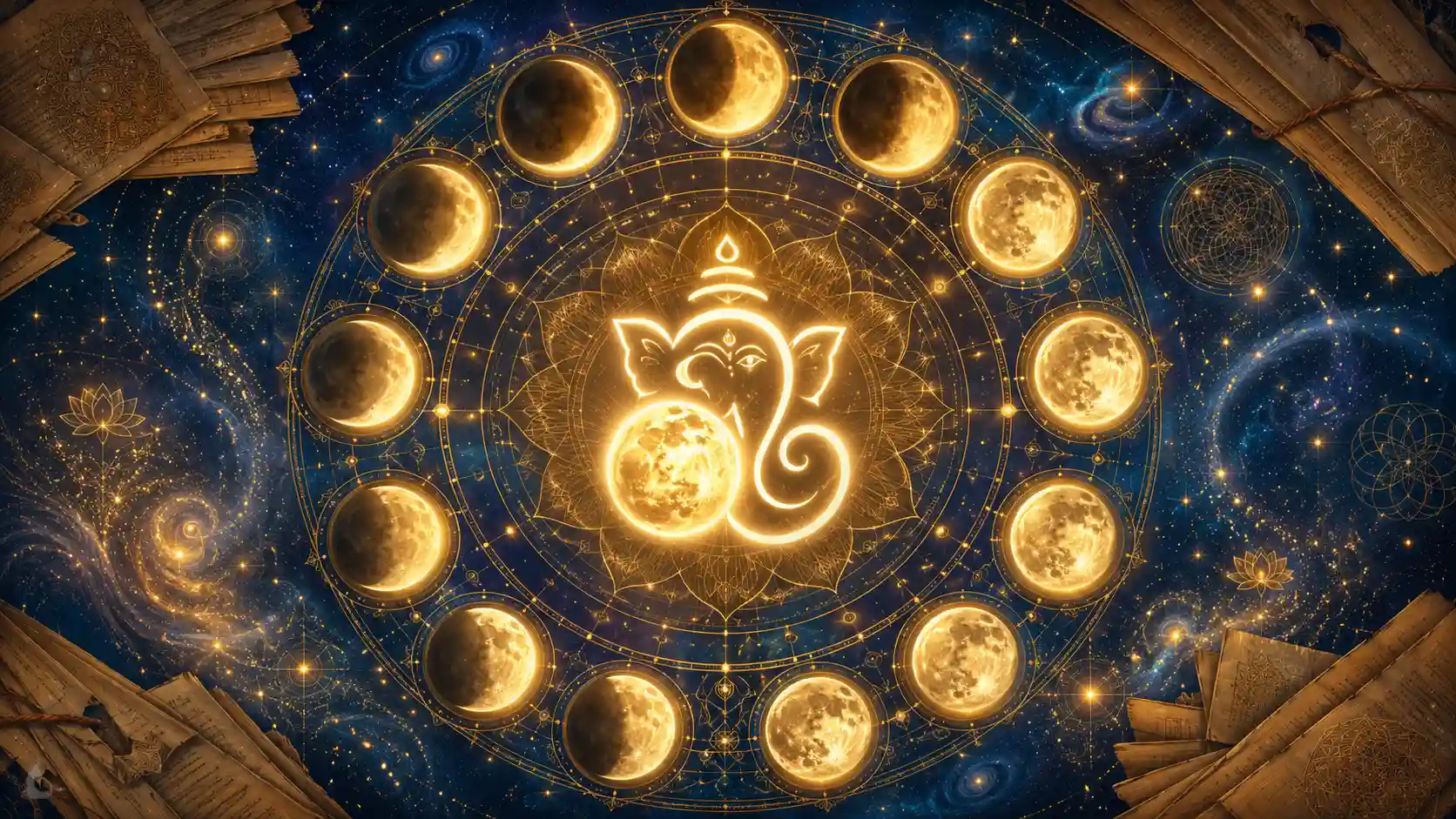
From that sacred moment, Vibhuvana Sankashti Chaturthi became associated with Adhik Maas, the rare month that rises beyond the ordinary cycle of time. Just as Adhik Maas is not limited by the usual calendar, Vibhuvana Ganapati is not limited by one form or one world. He is the cosmic remover of obstacles, guiding devotees through the physical, mental, and spiritual realms.
Moral: Lord Ganesha chose Adhik Maas for His Vibhuvana form because both represent something beyond ordinary limits. Adhik Maas transcends the regular calendar, and Vibhuvana Ganapati transcends all boundaries, forms, and worlds.
Spiritual Meaning of the Vrat
Sankashti Chaturthi is not only about fasting and waiting for moonrise. It is a monthly practice of self mastery. By worshipping Lord Ganesha, offering Arghya to the Moon, and breaking the fast with patience, devotees learn restraint, steadiness, and surrender.
Swami Mukundananda’s teaching that “the mind is the cause of both bondage and liberation” beautifully applies here. When the mind is restless, every difficulty feels heavy. When the mind is trained with devotion, discipline, and positive spiritual thoughts, obstacles become opportunities for growth.
The Moon Connection: Why the Fast Ends at Moonrise
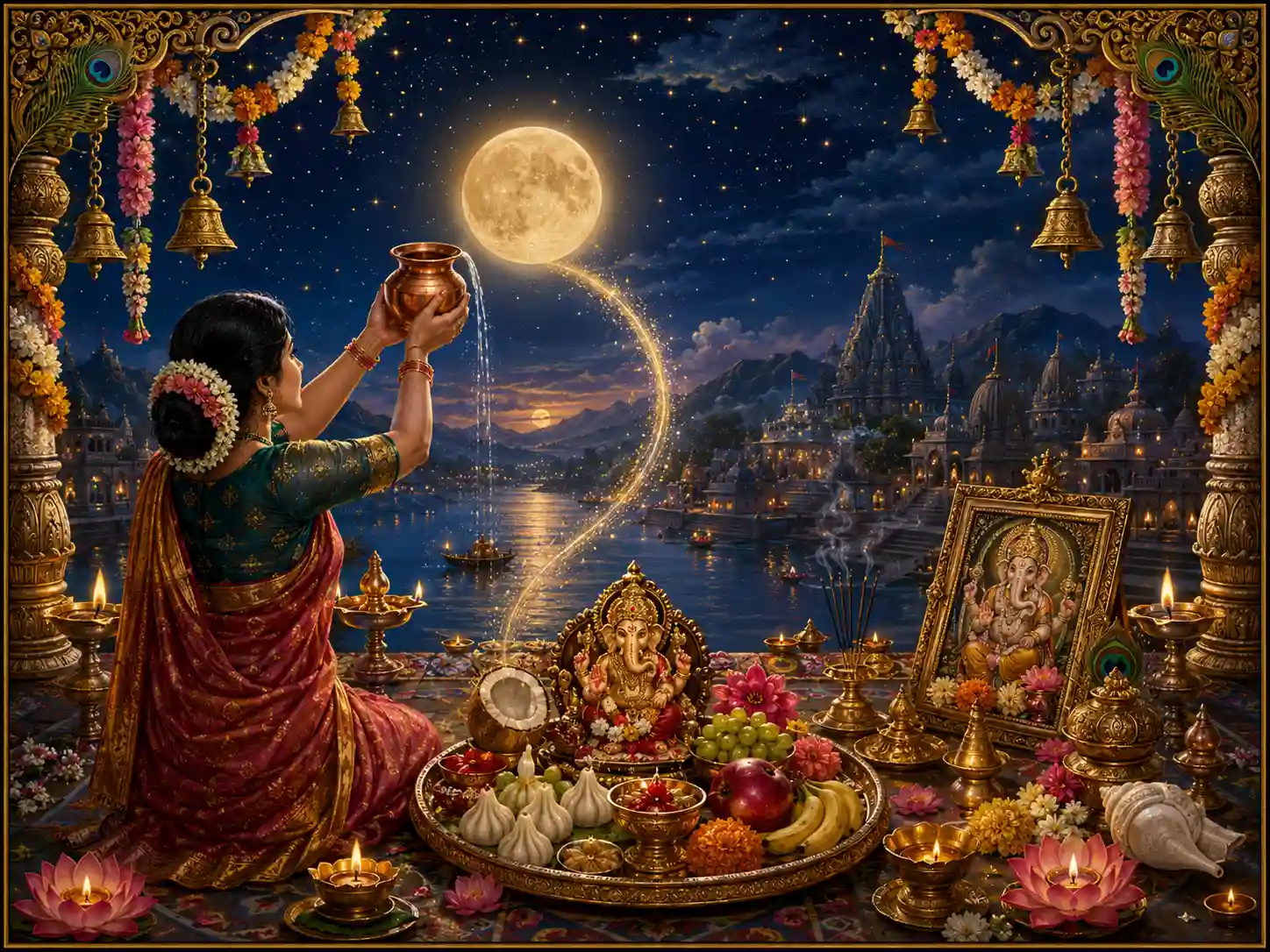
The outer form of Sankashti Chaturthi is simple: fast, worship Lord Ganesha, wait for moonrise, offer Arghya, and then break the fast. But the inner meaning is much deeper.
In Vedic thought, the Moon, or Chandra, is connected with the mind, emotions, memory, and inner stability. The famous Vedic line says:
चन्द्रमा मनसो जातः
Chandrama manaso jatah
“The Moon was born from the cosmic mind.”
This phrase is often used to explain the link between lunar rhythms and mental states. The Sankashti vrat becomes a monthly discipline for calming emotional restlessness. The fast as a kind of reset for emotional discipline, especially for those who feel anxiety, impulsive reactions, or mental heaviness.
Waiting for moonrise trains patience. Offering Arghya trains humility. Breaking the fast only after Chandra Darshan teaches that fulfillment comes after discipline, not before it.
This is why the fast is not completed at any convenient evening time, but only after moonrise. By waiting for Chandra Darshan, devotees practice patience, restraint, and emotional discipline. The body learns self control, the mind becomes steadier, and the heart learns surrender.
Sankashti Chaturthi is therefore not only a vrat for removing material obstacles. It is also a monthly reset for calming emotional restlessness, reducing impulsiveness, and inviting mental clarity through devotion to Lord Ganesha.
Astrological and Psychological Meaning
In Vedic astrology, the Moon, or Chandra, is associated with the mind, emotions, memory, and inner stability. This is why Sankashti Chaturthi is not only a fast for removing outer obstacles, but also a monthly practice for calming the mind.
By fasting through the day and waiting for moonrise, devotees train themselves in patience, restraint, and emotional steadiness. Traditionally, this vrat is also considered helpful for those who experience mental restlessness, overthinking, anxiety, or emotional ups and downs.
Modern devotees can observe this meaning in simple ways: wear clean white or light-colored clothes, practice silence for part of the day, avoid gossip and anger, eat light vrat-friendly food if needed, and offer Chandra Arghya with a prayer for peace of mind.
The Story Behind the Moon Ritual: Why Ganesha Cursed the Moon
The Moon ritual on Sankashti Chaturthi reminds us that devotion is also about humility. According to tradition, Lord Ganesha was once returning after enjoying His favorite modaks. His vahana, the mouse, became frightened by a snake and stumbled, causing Ganesha to fall.
Seeing this, Chandra Deva, the Moon God, laughed with pride at Ganesha’s form. Lord Ganesha cursed the Moon, saying that those who looked at it on Ganesh Chaturthi would face false blame. Realizing his mistake, the Moon begged for forgiveness. Out of compassion, Ganesha softened the curse and allowed the Moon to be worshipped in sacred Chaturthi observances.
That is why devotees look at the Moon with reverence on Sankashti Chaturthi and offer Arghya with water, milk, flowers, and prayer. The Moon represents the mind, which rises and falls just like our emotions. Through this ritual, we ask Lord Ganesha to remove not only outer obstacles, but also inner ones like pride, restlessness, and worry.
By the time the Moon rises, the devotee is ready not just to break the fast, but to begin again with a calmer and humbler heart.
Scriptural Significance of Sankashti Chaturthi
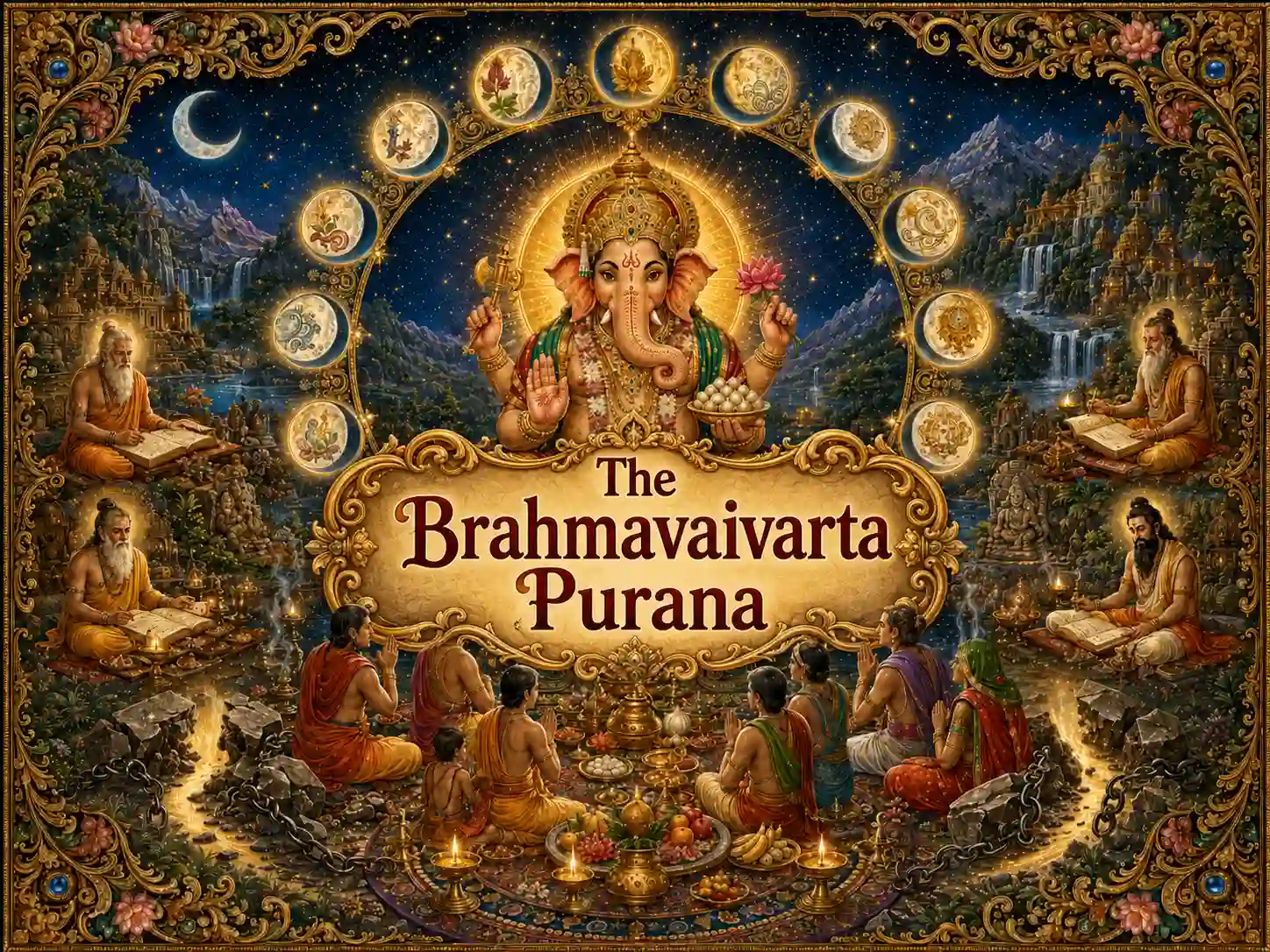
Sankashti Chaturthi is praised in sacred Hindu texts as a vrat for overcoming difficulties and receiving Lord Ganesha’s blessings. The Bhavishya Purana and Narasimha Purana describe the 13 Sankashti observances in a year with Adhik Maas, each connected with a unique name of Lord Ganesha.
The Brahmavaivarta Purana glorifies Lord Ganesha as a manifestation of supreme consciousness and the giver of wisdom and intellect. The Shiva Purana also emphasizes that fasting with faith and devotion helps remove obstacles.
The Vedic phrase “चन्द्रमा मनसो जातः”, meaning “the Moon is born from the mind,” explains why this vrat is linked with moonrise. It is not only a ritual for outer success, but also a practice for calming the mind and gaining emotional balance.
Swami Mukundananda’s Insight: Remove the Inner Obstacles
Swami Mukundananda often explains spirituality through practical mind management. His teaching that the mind can become the cause of bondage or liberation beautifully applies to Sankashti Chaturthi.
We often pray, “O Lord Ganesha, remove my obstacles.” But the biggest obstacles are not always outside us. They may be anger, anxiety, laziness, fear, ego, jealousy, attachment, negative thinking, or lack of focus.
Sankashti Chaturthi gives us a sacred opportunity to place these inner difficulties at the feet of Lord Ganesha.
Fasting reduces bodily heaviness. Mantra reduces mental noise. Puja creates sacred focus. Moonrise teaches patience. Arghya creates surrender.
A JKYog reflection on Lord Ganesha highlights that Ganesha is invoked before new beginnings and teaches faith, balance, uniqueness, and detachment. For modern devotees, this means Sankashti Chaturthi is not only a traditional ritual. It is also a practical tool for resilience, emotional balance, and spiritual maturity.
Benefits of Observing Sankashti Chaturthi
Devotees observe Sankashti Chaturthi for many reasons. Some seek relief from obstacles, some pray for success in work or studies, some ask for family harmony, and some use the vrat as a monthly reset for spiritual discipline. Traditionally, Lord Ganesha is worshipped as Vighnaharta, the remover of obstacles, and Buddhi Pradata, the giver of wisdom.
The benefits include:
| Benefit | Spiritual Meaning |
|---|---|
| Removal of obstacles | Lord Ganesha clears outer and inner blockages |
| Mental clarity | Fasting and mantra reduce mental clutter |
| Emotional balance | Moon related worship calms the mind |
| Prosperity | Ganesha is invoked for auspiciousness and success |
| Family harmony | Shared puja brings devotion into the home |
| Health and well being | Satvik food and restraint support lightness |
| Spiritual growth | Discipline strengthens devotion and surrender |
| Fulfillment of wishes | Sincere prayer aligns desire with divine grace |
The Ganapati Atharvashirsha offers a powerful Vedic vision of Lord Ganesha:
त्वमेव प्रत्यक्षं तत्त्वमसि
Tvam eva pratyaksham tattvam asi
“You alone are the visible Divine Reality.”
It also says:
त्वं ज्ञानमयो विज्ञानमयोऽसि
Tvam jnanamayo vijnanamayo asi
“You are the embodiment of wisdom and realized knowledge.”
These verses remind us that Ganesha worship is not superstition. It is a sacred way to connect the mind with divine wisdom.
Fasting Rules for Sankashti Chaturthi
The vrat is traditionally observed from sunrise until moonrise. Drik Panchang notes that devotees keep the fast from sunrise to moonrise and break it at night after sighting the Moon. Some devotees observe a strict Nirjala fast, avoiding both food and water. Others observe a Phalahar fast, taking fruits, milk, water, and vrat friendly foods.
Foods Usually Allowed
You may take fruits such as banana, apple, papaya, or berries. Dairy foods like milk, curd, buttermilk, and paneer are also common. Many devotees prepare sabudana khichdi, boiled potatoes, roasted makhana, peanuts, sweet potatoes, coconut, or vrat friendly laddus.
Foods Usually Avoided
Avoid grains such as wheat and rice, lentils, onion, garlic, non vegetarian foods, regular salt, alcohol, and overly processed items. If salt is needed, many families use sendha namak, or rock salt.
A Modern Note for Working Devotees
Not everyone can do a strict fast. A student, parent, medical patient, elderly devotee, or working professional may observe a simple partial fast. The spirit of Sankashti is restraint, purity, prayer, and devotion. Avoiding negative speech, gossip, anger, and unnecessary indulgence can be as spiritually meaningful as avoiding food.
How to Prepare for the Puja
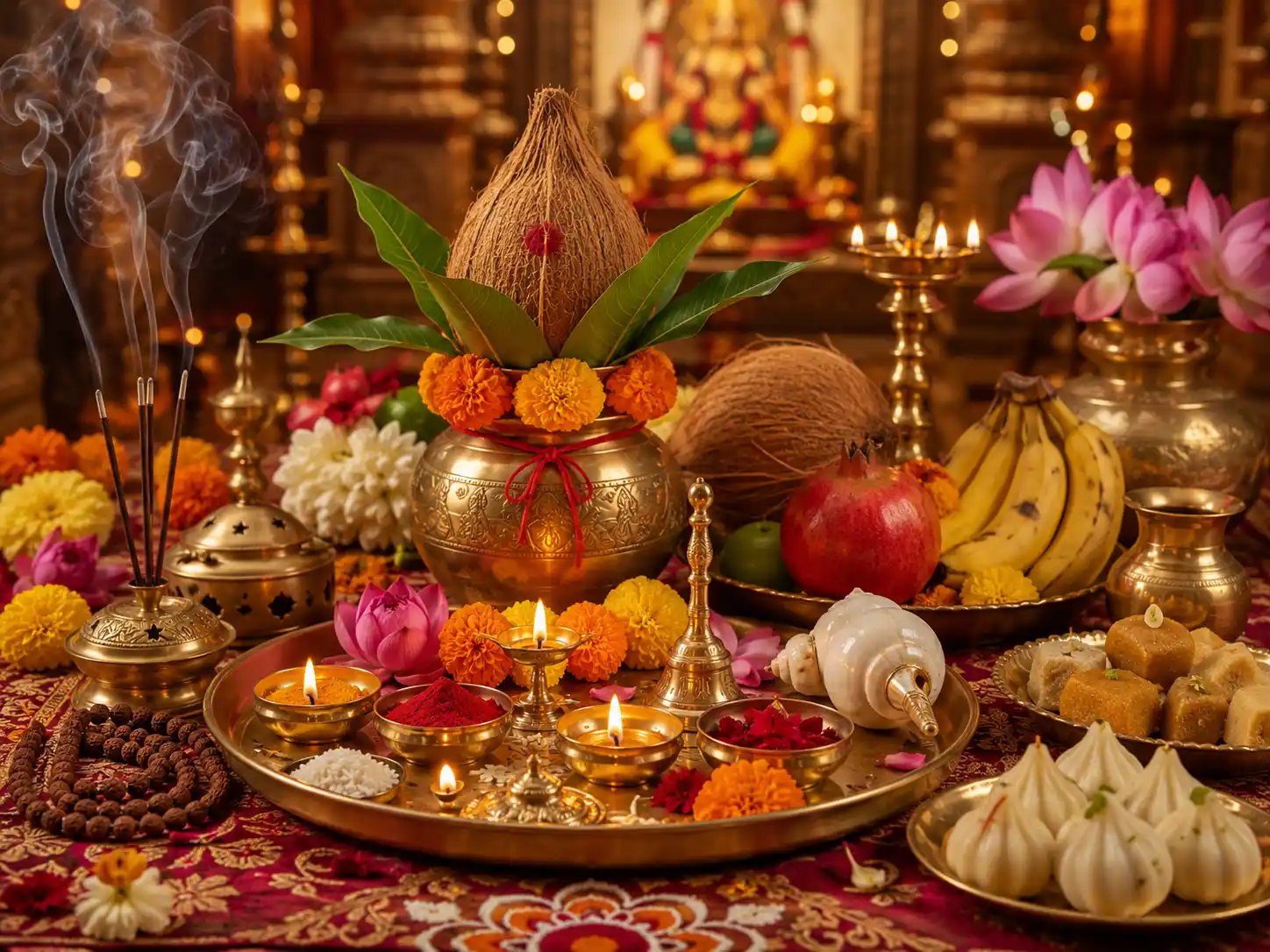
Begin the day with a bath and clean clothes. Many devotees prefer white, yellow, saffron, or light colored clothes because they create a calm devotional mood. Clean the puja space and place an idol or image of Lord Ganesha on a clean altar. Decorate with flowers, especially red flowers, marigold, hibiscus, and Durva grass.
Puja Items Checklist
Step by Step Ganesh Puja Vidhi
1. Take Sankalp
Sit before Lord Ganesha with folded hands. Mentally state your name, place, date, and intention. Pray for purity of mind, removal of obstacles, and growth in devotion.
You may say:
“O Lord Ganesha, I observe this Sankashti Chaturthi vrat with devotion. Please remove the obstacles in my life and guide me toward wisdom, humility, and divine love.”
2. Invoke Lord Ganesha
Light the ghee lamp and incense. Offer water, sandalwood paste, flowers, Durva grass, and akshata. If you know the traditional Shodashopachara Puja, you may perform it in detail. Otherwise, a simple heartfelt puja is sufficient.
3. Offer Durva and Flowers
Durva grass is one of the most important offerings to Lord Ganesha. Offer it gently while chanting:
ॐ गं गणपतये नमः
Om Gam Ganapataye Namah
“I bow to Lord Ganesha, the remover of obstacles.”
4. Offer Modak or Laddoo
Offer modak, laddoo, fruits, coconut, or any satvik sweet prepared with devotion. For Vibhuvana Sankashti, coconut laddoo is especially appropriate.
Optional: Traditional Shodashopachara Puja
Devotees who want to perform a more elaborate Ganesh Puja may follow Shodashopachara Puja, the traditional sixteen-step worship. This may include invocation, offering a seat, water, clothing, sandalwood paste, flowers, incense, lamp, naivedya, prayer, circumambulation, and Aarti.
Some families also include abhishek, Adhangapuja, Durva offering, twenty-one sacred leaves, and chanting Lord Ganesha’s 108 names. These steps are beautiful, but not compulsory. A simple puja with Durva, flowers, modak, lamp, mantra, and sincere devotion is also fully meaningful.
If you are new to Sankashti Chaturthi or have limited time, do not feel overwhelmed. A simple puja done with love is also accepted by Lord Ganesha. Offer Durva, flowers, modak, a lamp, mantra, and sincere prayer. The heart of the vrat is devotion, not complexity.
5. Chant Ganesha Mantras
Chant one or more of the following:
ॐ गं गणपतये नमः
Om Gam Ganapataye Namah
वक्रतुण्ड महाकाय सूर्यकोटि समप्रभ।
निर्विघ्नं कुरु मे देव सर्वकार्येषु सर्वदा॥
Vakratunda Mahakaya Suryakoti Samaprabha,
Nirvighnam Kuru Me Deva Sarva Karyeshu Sarvada.
“O Lord with the curved trunk and mighty form, whose radiance is like millions of suns, please remove all obstacles from all my undertakings.”
ॐ एकदन्ताय विद्महे वक्रतुण्डाय धीमहि।
तन्नो दन्तिः प्रचोदयात्॥
Om Ekadantaya Vidmahe, Vakratundaya Dhimahi,
Tanno Dantih Prachodayat.
“May we meditate on the one tusked Lord with the curved trunk. May that divine Ganesha inspire and guide our intellect.”
6. Read the Vrat Katha
Read or listen to the Sankashti Chaturthi Vrat Katha. The story may vary by family tradition and region, but the central message is the same: devotion to Lord Ganesha removes distress and brings grace.
7. Perform Aarti
Conclude the Ganesha Puja with Aarti. Sing “Jai Ganesh Jai Ganesh Jai Ganesh Deva” or any Ganesha Aarti known in your family tradition.
8. Wait for Moonrise
Do not break the fast until the local moonrise time. This is a central part of the vrat. Dallas devotees should note the 11:41 PM local moonrise listed for June 3, 2026. New Delhi devotees should follow their local Panchang, with the June 2026 Vibhuvana Sankashti moonrise listed around 10:04 PM for New Delhi in available Panchang data.
Chandra Darshan and Arghya Vidhi
Once the Moon rises, step outside or go to a place where the Moon is visible. If clouds block the view, many traditions allow devotees to wait until the calculated moonrise time and then mentally offer Arghya.
Prepare a small vessel with water, milk, flowers, sandalwood, and sesame seeds if available. Face the Moon and offer Arghya slowly while praying for peace of mind.
You may chant:
ॐ सोमाय नमः
Om Somaya Namah
“Salutations to Chandra Deva.”
Then pray:
“May my mind become calm, pure, steady, and devoted. May Lord Ganesha remove the obstacles that prevent me from living with wisdom.”
After offering Arghya, bow to Lord Ganesha again and break the fast with prasad, water, fruits, or a simple satvik meal.
Simple Vrat Food Ideas
Sabudana Khichdi
Soak sabudana for a few hours. Cook with ghee, cumin, boiled potatoes, roasted peanuts, green chili, and rock salt. Garnish with coriander and lemon.
Steamed Modak
Prepare a rice flour covering and fill it with coconut and jaggery. Steam until soft. Offer to Lord Ganesha with ghee.
Makhana Kheer
Roast makhana in ghee, simmer in milk, and sweeten with jaggery or dates. Add cardamom for fragrance.
Coconut Laddoo
Mix grated coconut with jaggery or condensed milk, roll into small laddus, and offer during Vibhuvana Sankashti.
The Inner Puja: Removing Obstacles Within
The outer obstacle may be a delay, debt, conflict, examination, illness, or uncertainty. But the inner obstacle is often deeper: fear, self doubt, laziness, pride, uncontrolled speech, or restless thinking. Sankashti Chaturthi gives us a sacred opportunity to surrender both.
Swami Mukundananda’s teachings on mind management remind us that spiritual life begins when we stop blaming the world and begin training the mind. His work emphasizes choosing empowering thoughts and rejecting thoughts that have no value. This is exactly what the vrat teaches. By fasting, we tell the senses that they are not the master. By chanting, we tell the mind where to rest. By waiting for moonrise, we tell the ego that divine timing is greater than personal impatience.
A Family Friendly Sankashti Routine
Morning: Bathe, clean the altar, take Sankalp, and chant “Om Gam Ganapataye Namah” 21 or 108 times.
Daytime: Observe your chosen fast. Avoid anger, gossip, harsh words, and unnecessary distractions.
Evening: Prepare the puja altar with flowers, Durva, lamp, incense, modak, fruit, and water.
Puja time: Worship Lord Ganesha, chant mantras, read the vrat katha, and perform Aarti.
Moonrise: Offer Arghya to Chandra Deva.
After Arghya: Break the fast with prasad and a light satvik meal.
Conclusion
Ultimately, Vibhuvana Sankashti Chaturthi is much more than a traditional fasting day. It is a sacred opportunity to pause, realign the mind, and reconnect with the divine rhythm of devotion, discipline, and inner peace. As the name Sankashti suggests, this vrat is associated with deliverance from difficulties and freedom from obstacles.
Whether you observe a strict fast, prepare modaks, perform the elaborate Ekavinsati Patra Pooja with twenty one sacred leaves, or simply offer a heartfelt prayer to Lord Ganesha and Chandra Deva, the essence remains the same: sincere devotion. The true purpose of this vrat is to turn inward, calm the mind, strengthen emotional clarity, and seek Lord Ganesha’s grace with humility.
By dedicating this day to Vighnaharta, the remover of obstacles, devotees pray not only for outer success but also for the courage to overcome inner challenges such as fear, anxiety, ego, and restlessness. May Lord Ganesha accept your devotion this June, clear your path, bless your home with wisdom and peace, and guide you toward a joyful, purposeful, and obstacle-free life.
Call to Action
This Sankashti Chaturthi, do not let the vrat end only with moonrise. Let it become a new beginning for your mind and heart.
Before you break your fast, take one quiet moment to reflect:
What inner obstacle do I want Lord Ganesha to help me remove?
Anger, fear, anxiety, laziness, ego, or negative thinking?
Offer it at His lotus feet with faith.
To continue your spiritual journey, explore more devotional wisdom, practical guidance, and inspiring reflections from JKYog and Swami Mukundananda. Read, reflect, chant, and share this guide with family and friends so they too can observe Sankashti Chaturthi with deeper understanding and devotion.
Ganapati Bappa Morya! May Lord Ganesha bless you with wisdom, peace, and the strength to overcome every obstacle.
FAQs
1. When is Sankashti Chaturthi in June 2026?
Sankashti Chaturthi in June 2026 is observed according to local Chaturthi Tithi and moonrise. For New Delhi and Dallas, the vrat falls on Wednesday, June 3, 2026. Some India based calendars, especially Mumbai based Panchangs, list it on Thursday, June 4, 2026, due to local moonrise timings.
2. What is the moonrise time for Sankashti Chaturthi June 2026?
For New Delhi, the moonrise is around 10:04 PM. For Dallas, Texas, the moonrise is around 11:41 PM. Devotees should check their local Panchang because moonrise time changes by city.
3. Why is the June 2026 Sankashti called Vibhuvana Sankashti Chaturthi?
The June 2026 Sankashti falls during Adhik Jyeshtha, the extra lunar month. Because of this, it is known as Vibhuvana Sankashti Chaturthi. Lord Ganesha is worshipped in the form of Vibhuvana Ganapati, associated with divine presence across all three worlds.
4. How should I observe the Sankashti Chaturthi fast?
Devotees usually fast from sunrise until moonrise. Some observe a strict Nirjala fast, while others take fruits, milk, sabudana, makhana, potatoes, or other vrat friendly foods. The fast is completed after sighting the Moon, offering Arghya, worshipping Lord Ganesha, and taking prasad.
5. What if I cannot do the full puja or strict fast?
Do not feel discouraged. A simple puja done with devotion is also meaningful. Offer Durva grass, flowers, modak or fruit, light a ghee lamp, chant Om Gam Ganapataye Namah, and pray sincerely. The heart of Sankashti Chaturthi is faith, self discipline, and devotion to Lord Ganesha.
Related Blog you might be interested
 RKT Blog Team