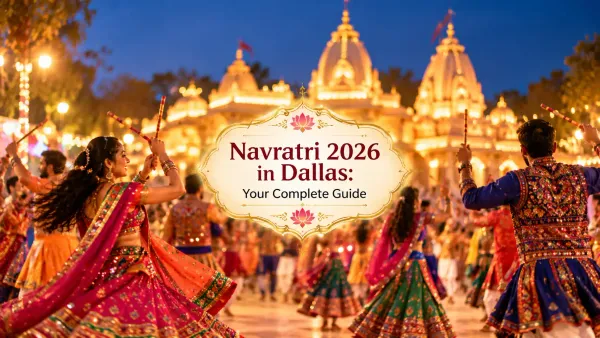
As autumn settles gently over Dallas and the evenings begin to carry a hint of coolness, the sacred festival of Navratri returns with its timeless invitation to worship, rejoice, and rediscover the divine strength within. At the Radha Krishna Temple of Dallas in Allen, Navratri is not experienced merely as a series of festive nights. It unfolds as a spiritual journey that begins with prayer and reverence, deepens through devotion and seva, and comes alive through Garba, Dandiya, satsang, sacred rituals, and the warmth of community.
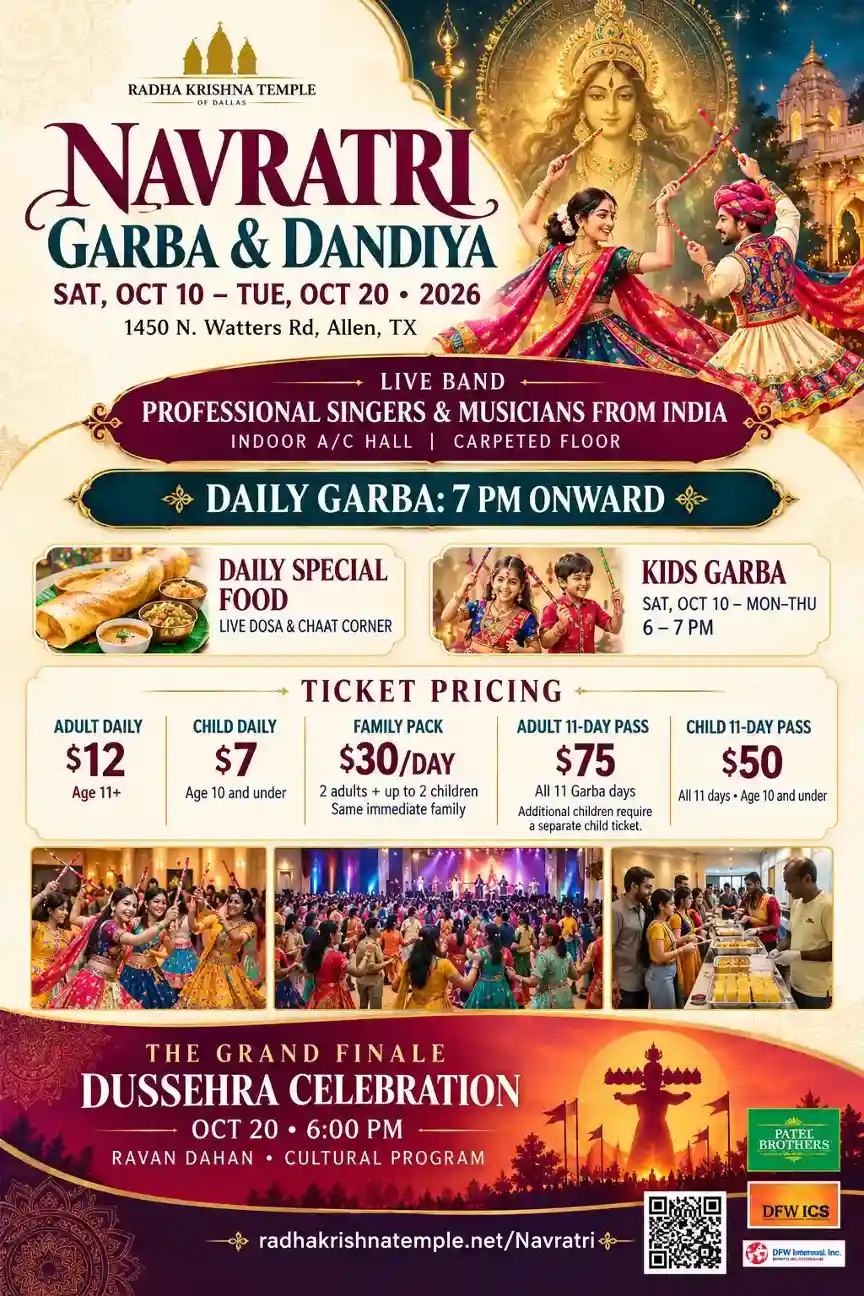
From October 10 through October 20, 2026, the temple will welcome devotees and families to Navratri Mahotsav 2026. The celebration will bring together sacred poojas, devotional programs, cultural festivities, children’s activities, Garba and Dandiya, and special observances leading into Dusshera.
At the heart of Navratri is the worship of Shakti, the divine feminine power that sustains, protects, nourishes, and transforms creation. For some devotees, these sacred days offer an opportunity to deepen their worship of Maa Durga. For others, they provide a beautiful way to introduce children to treasured traditions, gather with family and friends, participate in seva, or simply spend meaningful evenings surrounded by devotion.
Yet beneath every diya, every sacred offering, every Garba circle, and every joyful beat of Dandiya lies a deeper spiritual message. Navratri reminds us that the inner journey is ultimately a movement from darkness toward light, weakness toward strength, distraction toward remembrance, and ego toward surrender.
When Navratri Becomes a Journey Toward the Divine Mother
The word Navratri means "nine nights," but its spiritual significance reaches far beyond the calendar. These sacred nights are traditionally dedicated to the worship of the Divine Mother in Her nine forms, collectively known as the Navadurga.
Devotees honor Maa Shailaputri, Maa Brahmacharini, Maa Chandraghanta, Maa Kushmanda, Maa Skandamata, Maa Katyayani, Maa Kalaratri, Maa Mahagauri, and Maa Siddhidatri. Each form reflects a distinct divine quality and represents another step in the devotee’s spiritual journey. Together, they inspire strength, discipline, courage, compassion, purity, wisdom, and spiritual fulfillment.
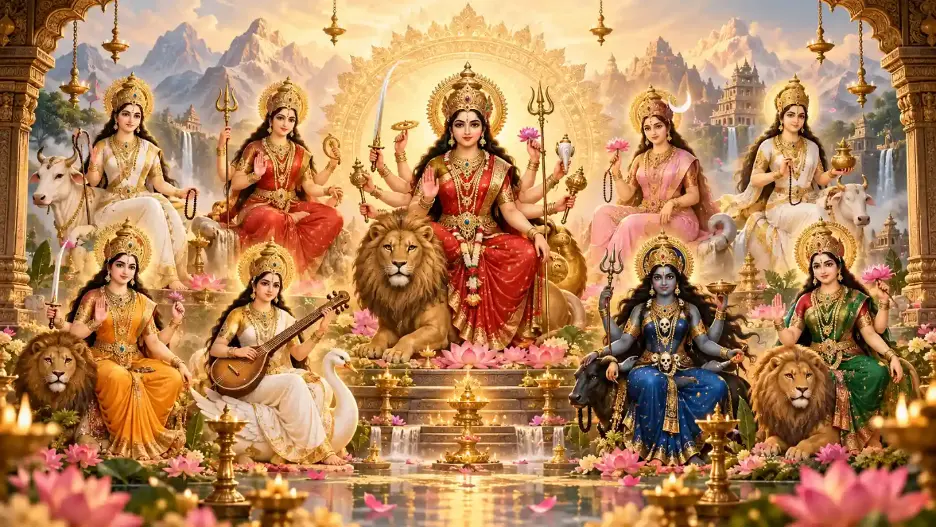
The Divine Mother is revered as the source of Shakti, the sacred energy that sustains creation and gives the spiritual aspirant the strength to overcome inner limitations.
Navratri is also traditionally associated with the worship of Maa Durga, Maa Lakshmi, and Maa Saraswati, who represent three essential dimensions of spiritual life. Maa Durga embodies strength, protection, and the power to overcome negativity. Maa Lakshmi reminds devotees of purity, abundance, generosity, and inner prosperity. Maa Saraswati represents wisdom, discernment, learning, and spiritual illumination.
Seen in this way, Navratri becomes both celebration and sadhana. The outer lamps encourage us to illuminate the mind. Devotional music draws the heart toward God. Sacred worship cultivates reverence, while the rhythm of collective dance reminds us that our individual lives are part of a much greater divine harmony.
At the Radha Krishna Temple of Dallas, this beautiful meeting of devotion and celebration gives Navratri its distinctive spirit. Ghatasthapana, special poojas, Mata Ki Chowki, satsang, Durgashtami observances, Siddhidatri Pooja, Garba and Dandiya, children’s programs, seva, and Dusshera traditions all become different expressions of the same aspiration: to come closer to the Divine.

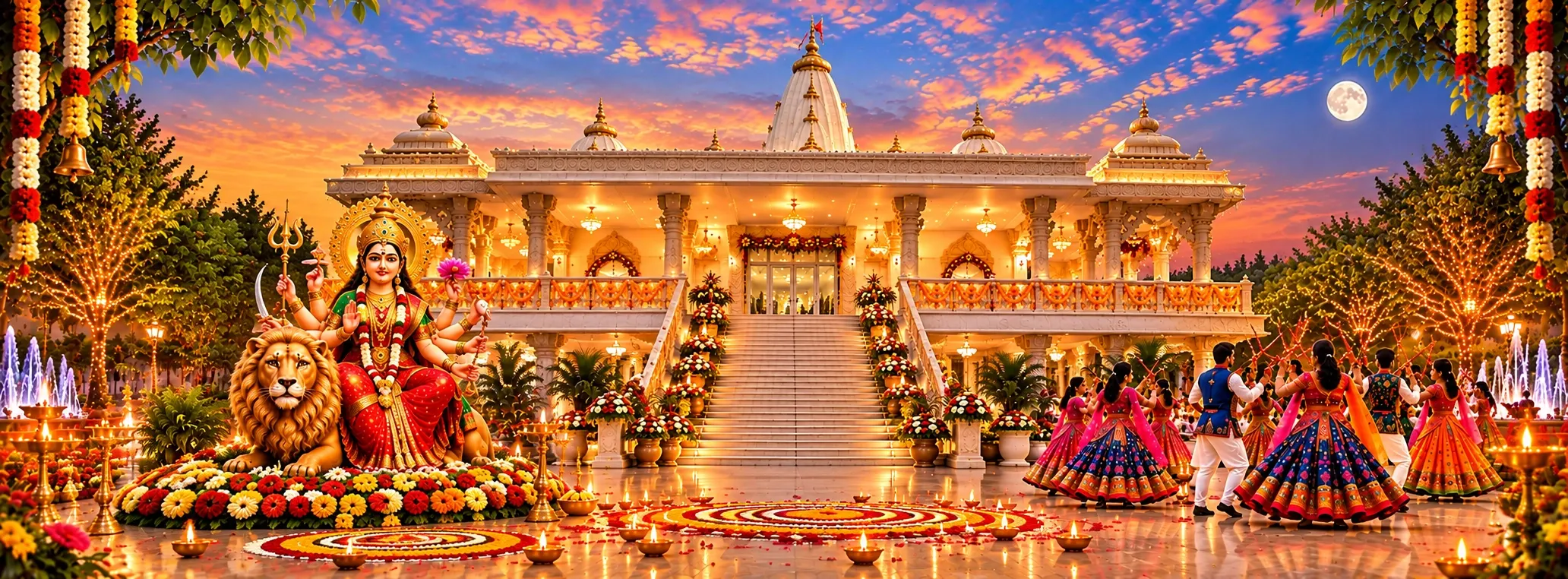
The Sacred Beginning: Inviting Maa Durga into the Heart
Every meaningful spiritual journey begins with intention, and Navratri begins by creating a sacred space for the Divine Mother.
The temple’s Navratri schedule includes Ghat Sthapana on October 11, followed by Bhog and Aarti. Ghatasthapana symbolizes the invocation of Maa Durga’s divine presence and marks the beginning of the sacred journey of worship.
Yet its meaning extends beyond the external ritual. As kalash is established with prayer and reverence, devotees are also invited to establish devotion within their hearts. The ceremony can become a quiet personal prayer: May the Divine Mother guide my thoughts, strengthen me where I am weak, bring clarity where I am confused, and soften the places where ego has taken hold.
Navratri therefore begins not simply by preparing an altar, but by preparing the inner altar of the mind.
When devotees gather for such worship, tradition comes alive in a particularly beautiful way. Children observe sacred practices, parents explain their significance, elders remember celebrations from generations past, and newcomers encounter customs they may never have experienced before. Tradition survives not simply because it is preserved, but because it continues to be practiced, shared, and loved.
Nine Nights That Awaken the Power of Shakti
The Divine Mother is worshipped as Shakti because spiritual growth requires strength.
It takes strength to remain peaceful when circumstances are difficult, to forgive when the ego wants to retaliate, to remain disciplined when the mind seeks comfort, and to hold onto faith when life feels uncertain.
Navratri teaches that this strength need not arise from pride or self-importance. The devotee seeks strength through grace.
The sacred narratives of Maa Durga overcoming powerful forces of negativity can therefore also be understood inwardly. Anger, greed, jealousy, fear, pride, attachment, laziness, and uncontrolled desire can become the inner obstacles that every seeker must gradually learn to overcome.
Each day of Navratri gently asks us to consider what needs transformation within ourselves. The world around us may change constantly, but the struggle between our higher aspirations and lower tendencies remains deeply relevant.
When a devotee bows before Maa Durga, the prayer can therefore become deeply personal: Mother, grant me not only the strength to overcome difficulties around me, but also the strength to overcome that which limits me within.
The Temple Comes Alive Through Sacred Poojas and Daily Worship
Throughout Navratri, the Radha Krishna Temple will host a rich series of sacred rituals that allow devotees to worship the Divine in many forms.
The 2026 celebrations include Panchamrit Abhishek, Kumkum Archana with Khadga Mala Stotra, Mahishasura Mardini Stuti, Shiv Abhishek, Hanuman Abhishek with 108 Naam Archana, Rajupchar Maha Pooja, Swarna Kamal Archana, Sriyantra Kumkum Archana, 108 Deep Daan or Deep Archana, Durgashtami worship, Siddhidatri Pooja, and Dusshera-related worship.
Although each ritual has its own significance, they share one spiritual purpose: turning the mind toward God.
Abhishek expresses reverence and purification. Archana helps the devotee remember divine names and qualities. Deep Daan transforms the simple flame of a lamp into a symbol of spiritual illumination. Bhog becomes an offering of gratitude, while Aarti becomes an expression of surrender.
When these rituals are performed with awareness, even the smallest action acquires profound meaning. A flower offered at the feet of the Divine becomes a symbol of the devotee’s heart, offered with humility and love. Lighting a diya reflects the prayer that ignorance may be replaced by wisdom and divine remembrance. Bowing before the deity becomes an act of inner surrender, reminding us that spiritual growth begins when the ego learns to bow before divine wisdom.
Durgashtami and Havan: Prayer, Purification, and Divine Strength
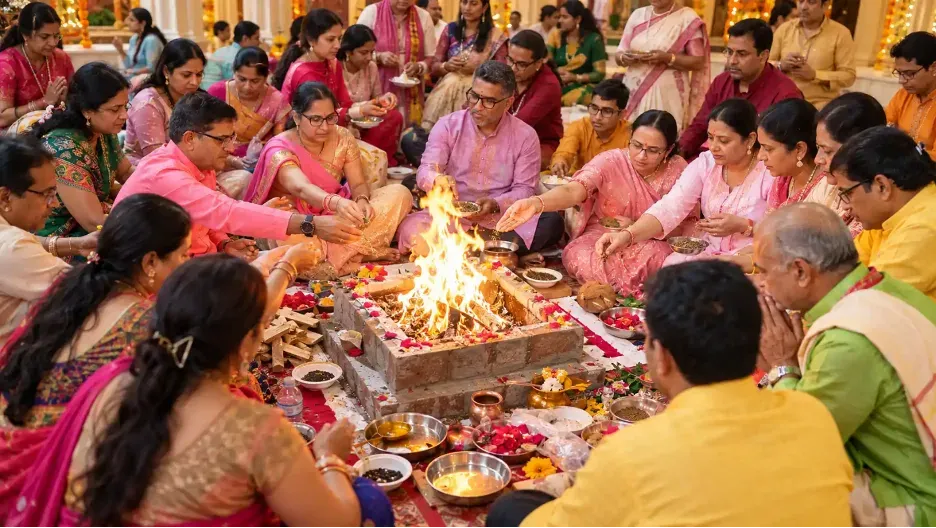
Among the most sacred moments of Navratri is Durgashtami, devoted to the worship of Maa Durga and the divine strength She represents. At the Radha Krishna Temple of Dallas, Durgashtami observances are scheduled for October 18, offering devotees a special opportunity to seek the blessings of the Divine Mother through worship and heartfelt prayer.
The observance gains an especially sacred dimension through Durgashtami Havan, where prayer, mantra, and offerings into the holy fire become expressions of surrender. The flames of the havan symbolize purification, inviting devotees to offer not only sacred materials but also the inner tendencies that obstruct spiritual progress.
In the presence of the sacred fire, anger can become something to surrender rather than defend. Fear can become something to place before the Divine Mother. Pride, attachment, resentment, and restlessness can become part of an inward prayer for transformation.
This symbolism beautifully reflects the nature of Maa Durga Herself. She is the compassionate Mother who protects and nourishes Her devotees, yet She is also the powerful force that destroys negativity and restores dharma. Her strength is not separated from Her love. Rather, divine strength and divine compassion exist together.
Durgashtami therefore becomes more than a sacred date within Navratri. It reminds the seeker that spirituality does not ask us to withdraw from challenges. It gives us the courage to face them with faith, clarity, and righteousness.
Mata Ki Chowki: When Devotion Finds Its Voice
Navratri would feel incomplete without the collective singing of the glories of the Divine Mother.
The temple will host Mata Ki Chowki on October 15, creating an evening filled with devotional bhajans, prayer, and heartfelt praise of Maa Durga.
Bhajans have a unique ability to carry the mind from distraction toward devotion. A spiritual truth that may seem intellectual when reading can become deeply moving when sung with love.
As devotees sing together, individual voices gradually blend into a shared expression of bhakti. Children watch their parents and elders participate. Hands clap in rhythm. Some devotees close their eyes in contemplation, while others simply allow themselves to absorb the atmosphere.
Such moments reveal one of the gifts of temple life. Spirituality is deeply personal, but it does not always have to be solitary. Through satsang, kirtan, prayer, and collective worship, devotees are reminded that the journey toward God can also be shared.
Siddhidatri Pooja and the Aspiration for Divine Fulfillment
As Navratri approaches its sacred conclusion, the worship of Maa Siddhidatri invites devotees to reflect upon the deeper purpose of spiritual life.
At the Radha Krishna Temple of Dallas, Siddhidatri Pooja will be observed on October 19, marking a beautiful moment of gratitude, completion, and inward reflection.
Maa Siddhidatri is revered as the bestower of siddhis and spiritual fulfillment. Yet for the sincere seeker, the highest attainment is not extraordinary power or worldly achievement. It is the gradual purification of the heart, greater mastery of the mind, increasing freedom from selfishness, and a life centered more deeply in devotion.
As the nine nights move toward completion, devotees can quietly consider what the journey has awakened within them. Perhaps there is a little more patience where there was restlessness, more gratitude in ordinary moments, greater discipline in spiritual practice, deeper compassion toward others, or a stronger awareness of God.
These changes may seem subtle, yet they are often the most precious fruits of devotion. Siddhidatri Pooja therefore reminds us that the true success of Navratri is not measured only by the memories we collect, but by the refinement it leaves within the heart.
Garba and Dandiya: When Celebration Becomes an Offering
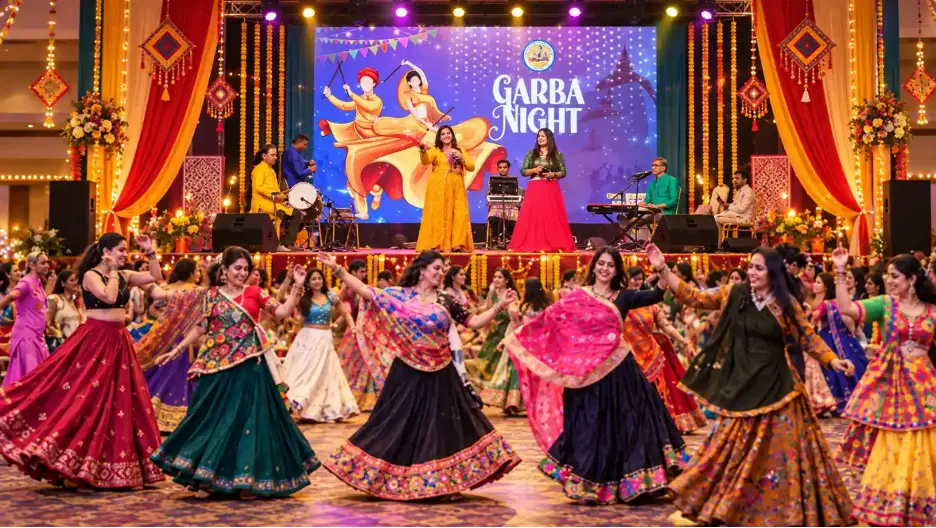
Few sights capture the joy of Navratri as beautifully as a Garba circle filled with colorful traditional attire, rhythmic clapping, music, graceful movement, and smiling faces.
At the Radha Krishna Temple of Dallas, Garba and Dandiya are central features of Navratri 2026, with live music featuring professional singers and a band from India in the temple’s air-conditioned indoor hall.
Yet Garba carries meaning beyond entertainment.
Traditionally, dancers move in a circle around a sacred center, often represented by a lamp. The symbolism is simple and profound. Life is constantly changing. Circumstances change, relationships evolve, success and difficulty alternate, and the world around us remains in motion. Yet at the spiritual center stands the Divine, eternal and unchanging.
Moving around that sacred center becomes a beautiful metaphor for life itself. We may be active in the world, but our consciousness can remain centered on God.
Dandiya brings another dimension of rhythm, awareness, and community. Participants move in harmony with one another, paying attention to timing and coordination. Hundreds of individual movements gradually become part of one shared pattern.
Within the temple atmosphere, dance acquires devotional depth. Joy itself can become an offering.
Eleven Evenings of Music, Movement, and Togetherness
The temple has planned Garba festivities across eleven evenings from October 10 through October 20, accompanied by live singers and musicians from India. Free parking will also be available at the temple.
For the Dallas community, these nights offer far more than a place to dance.
They become a meeting point for generations. Young adults arrive with friends. Parents bring children. Grandparents watch younger family members discover traditions that may remind them of celebrations from their own childhood. New families find community, while longtime devotees reconnect.
This intergenerational character gives temple festivals their warmth. Cultural traditions are preserved not only when they are explained, but when they are experienced.
A child who dances Garba, watches Aarti, hears devotional music, receives prasad, observes parents participating in seva, and sees devotees bow before Maa Durga is absorbing far more than information.
The child is experiencing a living tradition.
A Special Place for Children During Navratri
Navratri 2026 creates a joyful and welcoming space for children to experience the festival in a way that feels meaningful and memorable.
Kids Garba will be held on October 10 and October 12 through 15, with special activities including pizza, prizes for Best Outfit and Best Garba, and giveaways for participating children.
For young participants, these evenings can become much more than a fun outing. Dressing in colorful traditional attire, dancing with friends and family, seeing Maa Durga, hearing devotional music, and spending time at the temple can create impressions that remain for years.
Children may not yet understand every philosophical dimension of Navratri, but they understand joy, belonging, beauty, and love. When spiritual traditions are connected with these experiences, children naturally begin to develop affection for their culture and faith.
With a parent or guardian required to be present, Kids Garba also encourages Navratri to remain a shared family experience, allowing traditions to pass naturally from one generation to the next.
Choose Your Navratri Garba Experience
Families and individuals can choose from different Garba ticket options based on how they wish to participate, including daily passes, an all-access pass, family options, Kids Garba, and the Garba Dandiya Workshop.
Whether joining for a single evening or celebrating throughout the festival, every visit offers another opportunity to experience the music, devotion, culture, and shared joy of Navratri.
Satsang: Returning from Festivity to Wisdom
Amid the vibrant colors, music, and dance, Navratri also creates space for quiet spiritual reflection.
The temple will host a Navratri Special Satsang on October 11, along with another satsang on October 18, inviting devotees to immerse themselves in divine wisdom, soulful kirtan, and contemplation.
This balance between celebration and reflection is essential. Garba may fill the heart with joy, but satsang gives that joy spiritual direction.
Through sacred teachings and kirtan, devotees are reminded why Shakti is worshipped, why the mind must be disciplined, why devotion should be cultivated, and why the ultimate purpose of spiritual practice is to draw closer to God.
When devotion is supported by knowledge, bhakti becomes deeper and more enduring. The inspiration of Navratri can then continue well beyond the festival itself.
Swami Mukundananda's Teachings and the Inner Meaning of Navratri
Swami Mukundananda often emphasizes that genuine spiritual transformation begins with the mind. External circumstances may influence us, but the quality of our thoughts, attitudes, and attachments profoundly shapes how we experience life.
Seen from this perspective, Navratri becomes not only a celebration of the Divine Mother but also an opportunity for purification of the inner world.
As devotees participate in pooja, bhajans, satsang, Garba, and seva, each activity can become a means of repeatedly turning the mind toward God. Swami Mukundananda teaches that such elevation does not happen through one moment of inspiration. It develops gradually through remembrance, prayer, discipline, contemplation, satsang, and loving devotion.
During Navratri, lighting a diya can become remembrance. Singing a bhajan can become remembrance. Serving another person can become remembrance. Even dancing in celebration can become remembrance when the heart remains centered on the Divine.
In this way, Navratri becomes more than a festival we attend. It becomes a sacred transformation that gradually unfolds within us.
Seva: Turning Devotion into Loving Service
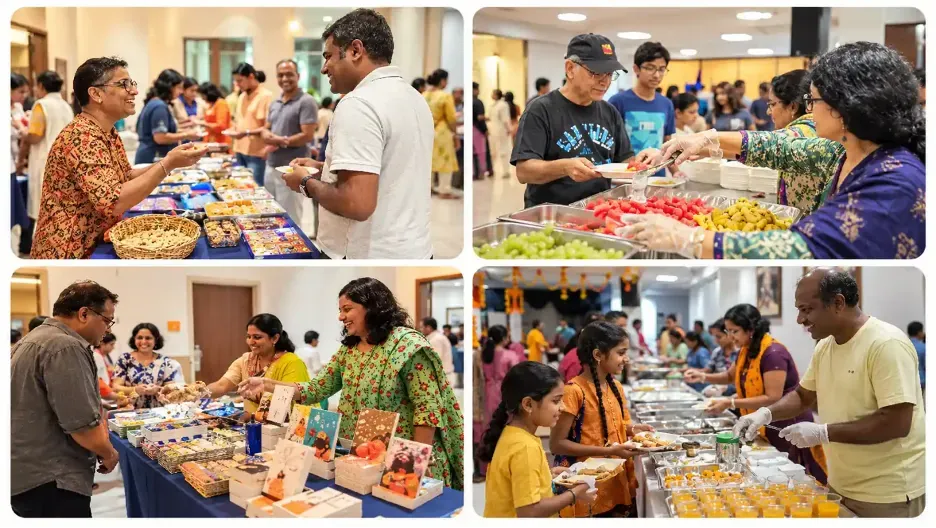
Navratri also offers devotees a beautiful opportunity to express bhakti through seva.
At the Radha Krishna Temple of Dallas, families may participate through sacred offerings and sponsorship opportunities including Mahaprasad, Durgashtami Havan, Akhand Deepak, Aarti, daily poojas, flowers, and other sevas. Devotees can also volunteer by welcoming visitors, assisting during Garba nights, helping with prasad, or supporting the many activities that bring the festival together.
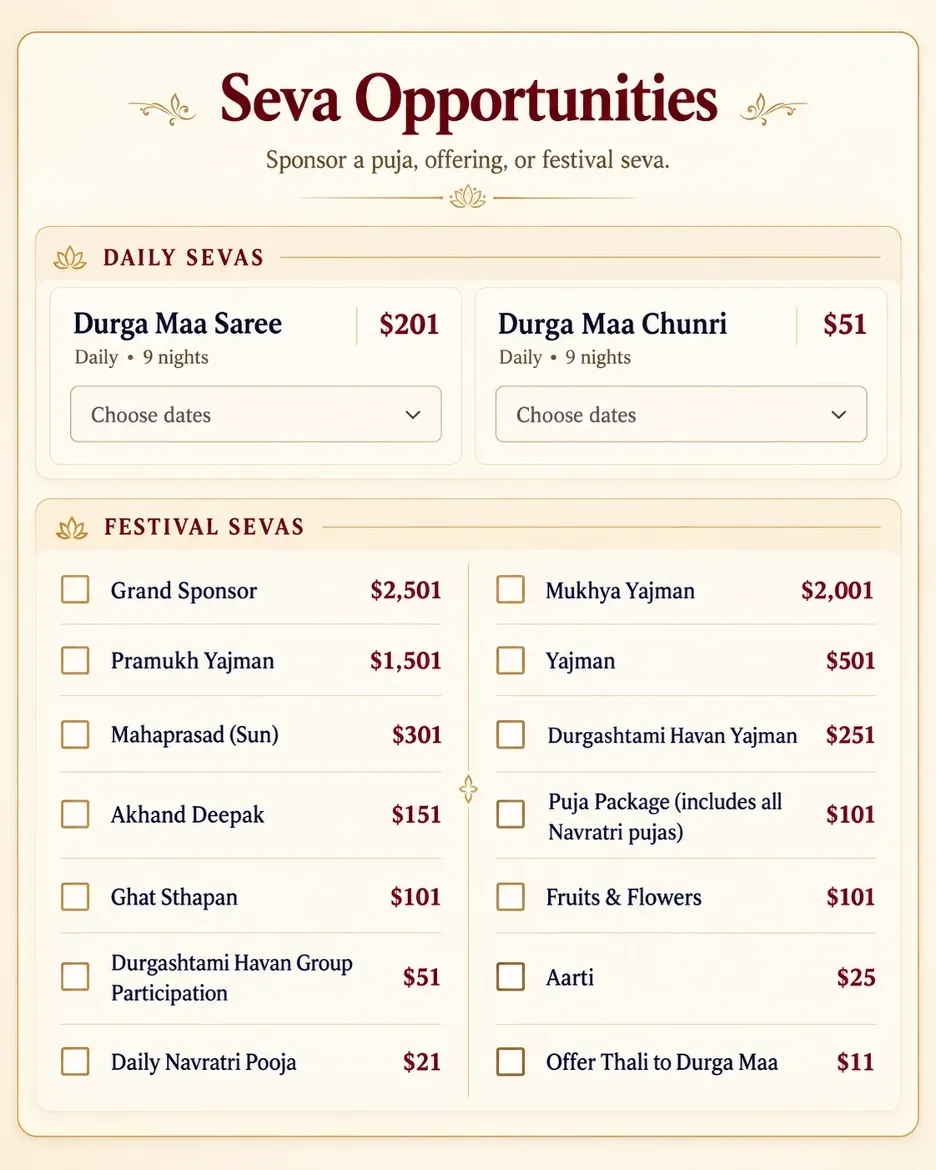
The beauty of seva lies in changing the focus from receiving to giving. Whether one sponsors a sacred offering, serves prasad, assists a child, welcomes a family, or quietly helps behind the scenes, every action can become an expression of devotion.
When performed with humility and love, even the simplest service becomes worship.
Dusshera and Ravan Dahan: The Victory That Must Also Take Place Within
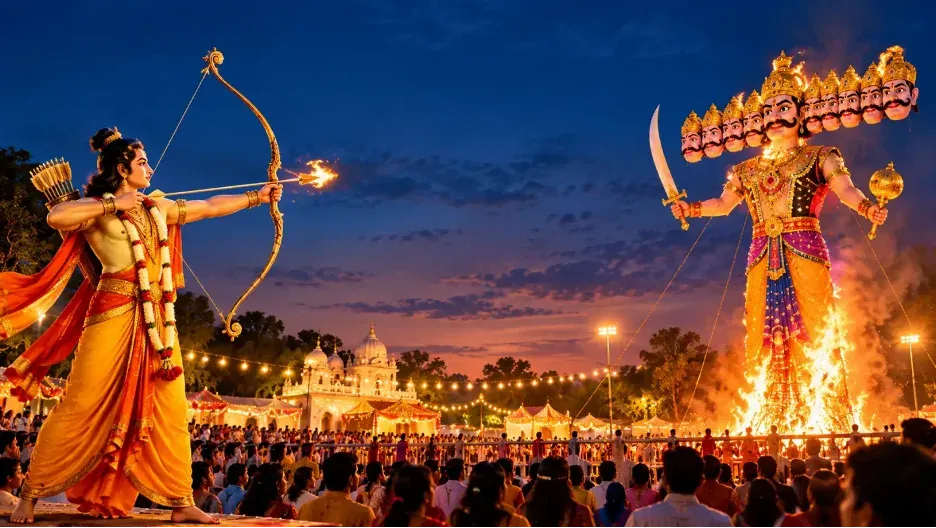
As Navratri approaches its conclusion, the celebration naturally moves toward Dusshera, a festival symbolizing the victory of dharma over adharma and righteousness over wrongdoing.
At the Radha Krishna Temple of Dallas, Dusshera and Ayudh Pooja will be observed on October 19, followed by cultural performances and Ravan Dahan on October 20.
Ravan Dahan provides a powerful and memorable culmination to the festival. As the effigy of Ravana is consumed by fire, devotees celebrate the timeless triumph of good over evil and divine truth over ego-driven power.
Yet symbolism becomes even more meaningful when brought inward.
Ravana can also represent the tendencies that disturb our own hearts, including ego, anger, greed, attachment, pride, impatience, and resentment. Watching the flames therefore becomes an invitation to consider what we ourselves are ready to release.
Perhaps it is an old resentment that has occupied the heart for too long. Perhaps it is pride that makes reconciliation difficult, impatience that disturbs relationships, attachment to praise, or a habit that repeatedly pulls the mind away from what is right.
In this way, Ravan Dahan becomes far more than an external spectacle. The burning effigy becomes a symbol of purification, reminding us that the greatest victory of Dusshera is not only the defeat of negativity outside us, but the gradual conquest of negativity within.
After nine nights of worshipping Shakti, this final image carries the spiritual journey to its natural conclusion: divine strength is sought not merely so that we may face the world, but so that we may become better human beings within it.
Carrying the Spirit of Navratri Beyond the Festival
As Navratri 2026 at the Radha Krishna Temple of Dallas draws to a close, the music may soften, the Garba circles may stop, and the festive decorations may eventually be taken down. Yet the deeper spirit of Navratri is meant to remain.
These sacred days invite devotees to experience spirituality not only through pooja, satsang, seva, and celebration, but also through the transformation of thoughts, choices, and actions.
The worship of Maa Durga encourages courage and inner strength. Sacred rituals cultivate reverence. Garba and Dandiya reveal the joy of community. Satsang brings wisdom to the heart. Seva transforms devotion into action. Durgashtami Havan reminds us of purification and surrender, while Ravan Dahan calls us to leave behind the tendencies that prevent spiritual growth.
Together, these experiences make Navratri much more than a festival on the calendar.
They make it a journey.
As families, children, devotees, and visitors gather at the temple, may these celebrations deepen their relationship with the Divine and inspire them to carry the light of Navratri into everyday life. If the festival leaves us with a calmer mind, a more grateful heart, deeper compassion, greater spiritual discipline, and a stronger desire to remember God, then its true purpose continues long after the final celebration has ended.
Join Us for Navratri Mahotsav 2026
Come experience the devotion, joy, and vibrant spirit of Navratri Mahotsav 2026 at the Radha Krishna Temple of Dallas from October 10 through October 20.
Join sacred poojas, satsang, Garba and Dandiya, Kids Garba, seva opportunities, Durgashtami celebrations, Siddhidatri Pooja, Dusshera festivities, and Ravan Dahan with your family and community.
Celebrate Shakti. Experience devotion. Dance in joy. Serve with love.
Reserve your Garba tickets, explore the festival schedule, and discover seva opportunities today.
Frequently Asked Questions
1. When is Navratri 2026 being celebrated at Radha Krishna Temple of Dallas?
Navratri Mahotsav 2026 will be celebrated from October 10 through October 20, 2026. The festival includes sacred poojas, satsang, Garba and Dandiya, Kids Garba, seva opportunities, Durgashtami observances, Siddhidatri Pooja, Dusshera celebrations, and Ravan Dahan.
2. Will there be Garba and Dandiya during Navratri 2026?
Yes. Garba and Dandiya will be an important part of the celebration, featuring live music, traditional dance, and a vibrant community atmosphere. Different ticket options are available for individuals and families.
3. Are there special Navratri activities for children?
Yes. Kids Garba will be held on selected days with pizza, prizes for Best Outfit and Best Garba, and giveaways for participating children. A parent or guardian must be present with children and have their own valid ticket for Garba Hall entry.
4. What spiritual programs will be offered during Navratri?
The celebration includes special and daily poojas, satsang, Mata Ki Chowki, Durgashtami worship and Havan, Siddhidatri Pooja, Aarti, Abhishek, Archana, and other sacred observances dedicated to the Divine Mother.
5. How can devotees participate through seva?
Devotees can participate through seva and sponsorship opportunities such as Mahaprasad, Aarti, flowers, daily pooja, Akhand Deepak, Durgashtami Havan, Ghat Sthapan, and other offerings. Volunteers can also support guest welcoming, prasad distribution, Garba nights, and festival activities.