There are moments when a child comes to her mother without knowing quite what to say. Something has frightened her, a small hurt feels too heavy, or she has made a mistake she cannot undo. She reaches for her mother’s hand. In that familiar touch, she finds the courage to speak.
Something of that tenderness lives in the way devotees approach Goddess Durga and refer to Her as Maa.
Before her radiant form, we stand with folded hands. We may have brought flowers, fruit, or a carefully prepared offering. We have also brought much that no one can see, worries we carry quietly, desires that leave us restless, anger we struggle to release. Calling her Maa, we begin to open our hearts.
“Mother, I have tried, but I still stumble. Please hold my hand and guide me.”
Durga Ashtami draws us into this relationship of faith and love. We remember the Divine Mother’s strength, her protection of dharma, and her compassion for those who seek her refuge. Her sacred stories awaken reverence; they also invite us to recognize the struggles within our own hearts.
As the mantras rise and offerings enter the Havan fire, we may find ourselves ready to offer something more personal: a resentment we have held for too long, the insistence on having our own way, or a desire that keeps asking for more. With each offering, a prayer takes shape: Maa, help me release what holds me back. May my heart grow more loving and forgiving, and may my deepest longing lead me closer to God.
This is the devotion we bring to Durga Ashtami: the trust of a child who reaches for the Mother’s hand, and the hope that, through her grace, we can learn to walk with greater love.

Why Is Durga Ashtami Significant?
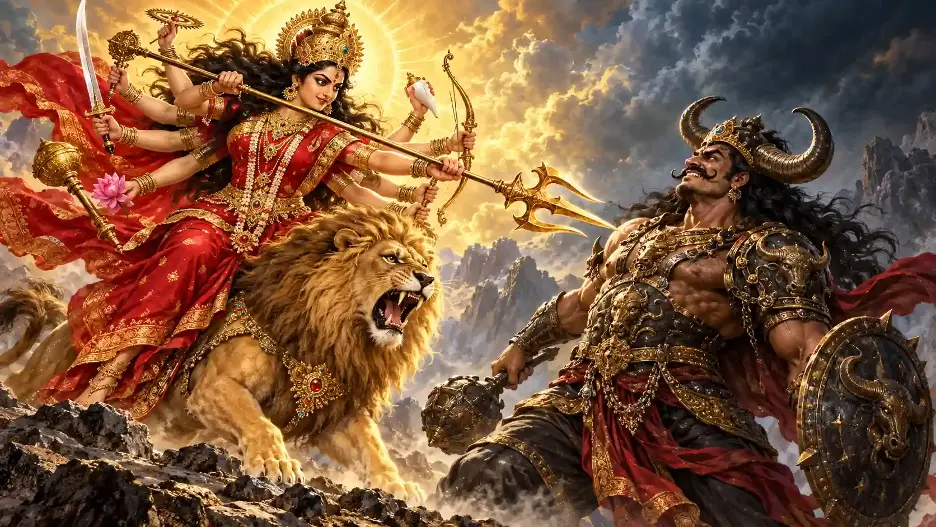
To understand the reverence surrounding Durga Ashtami, we turn to the sacred story of Maa Durga and Mahishasura. Remembered throughout Navratri, it tells of a world oppressed by arrogance and of the Divine Mother who answered its cry for help.
Mahishasura had performed intense austerities to please Brahma. When Brahma declined his request for immortality, he sought a boon that only a woman could kill him. In his arrogance, he believed no woman would be strong enough to defeat him. Confident in his power, he overpowered the devatas and seized their heavenly kingdom. Driven from their rightful place, they sought divine help.
From the gathered divine radiance, Maa Durga manifested as an effulgent, powerful form of Shakti. The devatas offered their weapons and ornaments, and Himavan offered her a lion. radiant and fully armed, the Mother stood ready to confront Mahishasura.
Mahishasura fought fiercely, changing forms as the battle unfolded. He appeared as a buffalo, a lion, a man, and an elephant, seeking again and again to escape her. Yet Maa Durga remained unwavering. At last, she overcame him, bringing his tyranny to an end.
For devotees, this victory inspires reverence and relief. The Mother heard the cries of those seeking her protection, restoring dharma and renewing hope.
Maha Ashtami is one of the most sacred days of Navratri and Durga Puja
In the Navadurga tradition, the eighth form, Maa Mahagauri, is worshipped. At the junction of Ashtami and Navami, Sandhi Puja honors Maa Chamunda’s victory over Chanda and Munda. These observances bring together reverence for the Mother’s protective strength and prayer for purification of the heart.
Maa Mahagauri’s serene form invites us to contemplate purity and peace. Before her, we pray for freedom from greed, anger, pride, and envy that disturb our minds. We seek the grace to nurture gentleness, clarity, and devotion within ourselves.
The story of Mahishasura also offers a quiet reflection for our own lives. Like his changing forms, pride can be difficult to recognize. Sometimes it speaks like anger; sometimes it hides behind our insistence that we alone are right. Even when we wish to change, we may discover how deeply these tendencies have taken root.
Standing before Maa Durga, we can acknowledge that struggle without losing hope. We remember the courage of the devatas in seeking help, and we bring our own prayer to her feet:
“Maa, help me recognize what draws me away from goodness. Give me the strength to overcome it, and keep my heart turned toward you.”
Calling Her Maa: The Divine Mother’s Strength and Compassion
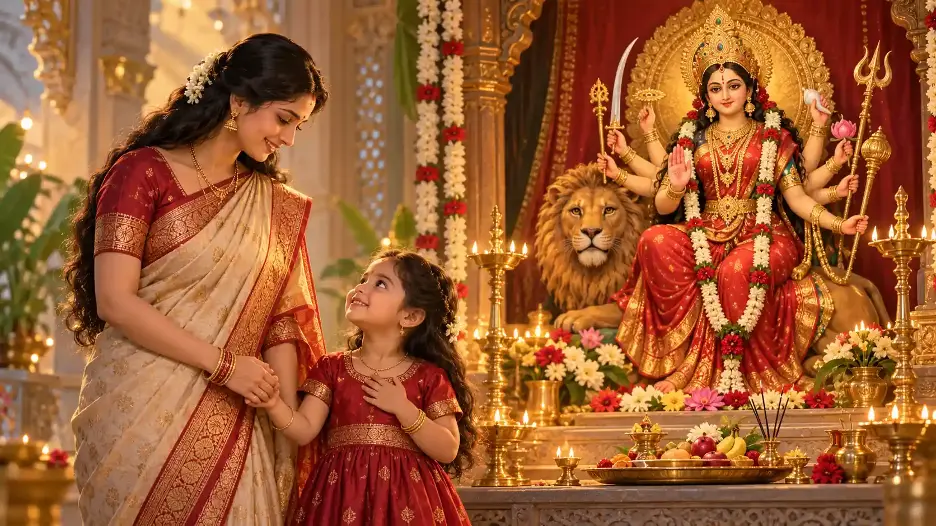
In images of Maa Durga, we see a lion beside her and divine weapons in her hands. Her presence is majestic, yet devotees do not approach her only in awe. They call her Maa. That one tender word changes the prayer. Her weapons proclaim her power to protect; her hand raised to bless draws us close. The Mother who confronts Mahishasura is the same Mother who listens to her children.
A mother may recognize her child’s distress before the child has found words for it. She listens, comforts, and gently helps the child face what must be faced. Her love gives the child courage to admit a mistake and try again. This familiar tenderness helps us approach the Divine Mother with trust.
Our hearts may struggle with greed, anger, resentment, ego, pride, or envy, alongside material desires that leave us restless. Some tendencies may have troubled us for years. Before Maa Durga, we can acknowledge them honestly. We need not hide our weakness behind a carefully worded prayer.
“Maa, you know my heart. Please help me.”
Such a prayer can be the beginning of surrender. We place ourselves in her care while continuing our effort to change. Her remembrance gives us courage to recognize our faults, accept guidance, and take the next step in our duty.
Gradually, our prayer becomes more intimate. Alongside the wish for protection grows a longing to please her through the way we live. We begin to ask for a kinder heart, a steadier mind, and the strength to care for others.
On Durga Ashtami, this love finds expression in flowers, lamps, chanting, and offerings. Through these cherished traditions, the devotee says what the heart has been learning to feel: “Maa, I am yours. Please guide me closer to God.”
The Nine Forms of Navadurga and Daily Focus
Devotees worship Maa Durga in nine forms during Navratri. Some traditions also contemplate the festival in three phases: purification through Durga worship, cultivation of virtues through Lakshmi worship, and spiritual wisdom through Saraswati worship. These are complementary approaches; the three phases do not divide the Navadurga forms into separate goddesses.
| Day | Form of Navadurga | Meaning or association | Devotional focus |
|---|---|---|---|
| Day 1 | Shailaputri | Daughter of the mountain king, Himavan | Steadfastness and grounding ourselves in faith |
| Day 2 | Brahmacharini | The form devoted to spiritual austerity | Discipline, perseverance, and devotion |
| Day 3 | Chandraghanta | Adorned with a crescent moon shaped like a bell | Courage and trust in the Mother’s protection |
| Day 4 | Kushmanda | Associated with bringing forth the universe through her radiant smile | Gratitude for the life and energy that sustain us |
| Day 5 | Skandamata | Mother of Skanda, also known as Kartikeya | Motherly love, compassion, and selfless care |
| Day 6 | Katyayani | The powerful warrior form associated with Sage Katyayana | Strength to uphold dharma |
| Day 7 | Kalaratri | The fierce form who dispels darkness | Courage to face fear and ignorance |
| Day 8: Ashtami | Mahagauri | The radiant form associated with purity and serenity | Purity of heart and peaceful devotion |
| Day 9: Navami | Siddhidatri | Bestower of siddhis, or spiritual attainments | Humility and prayer for spiritual fulfillment |
The devotional focuses offer reflections for daily practice. The dates of worship follow the local lunar calendar.
Durga Ashtami Traditions: Giving Our Devotion a Form
In many homes, preparations begin early. Flowers are gathered, the altar is cleaned, and prasad is prepared with care. An elder remembers how the puja was performed in her childhood; a child watches as the lamp is lit. Through these familiar acts, devotion passes from one generation to another.
Durga Ashtami observances vary across regions and families. Some traditions emphasize elaborate puja, while others give special attention to fasting, Kanya Puja, or the sacred fire ceremony. Each practice offers a way to welcome Maa Durga and turn the mind toward her.
| Ritual or tradition | Significance | How it is observed |
|---|---|---|
| Durga Puja and arati | Honoring Maa Durga and expressing gratitude for her grace | Devotees offer flowers, incense, lamps, food, and prayers. Arati is performed before her divine form. |
| Chanting and devotional singing | Remembering the Mother’s names, qualities, and sacred deeds | Devotees recite prayers, read or listen to the Durga Saptashati, and sing bhajans. |
| Fasting or a sattvic food observance | Cultivating restraint and dedicating greater attention to worship | Families follow their customary fasting practices or prepare simple foods appropriate to their observance. |
| Kanya Puja or Kumari Puja | Revering young girls as representations of the Divine Mother | Girls are welcomed with respect, offered worship and food, and given gifts according to local custom. |
| Sandhi Puja | Honoring the sacred junction between Ashtami and Navami | Special worship is performed during the last 24 minutes of Ashtami and the first 24 minutes of Navami. |
| Havan or homa | Offering worship through the sacred fire and praying for purification | Mantras accompany offerings such as ghee and grains, usually under the guidance of a priest or someone trained in the ceremony. |
Honoring the Mother with Flowers, Lamps, and Chanting
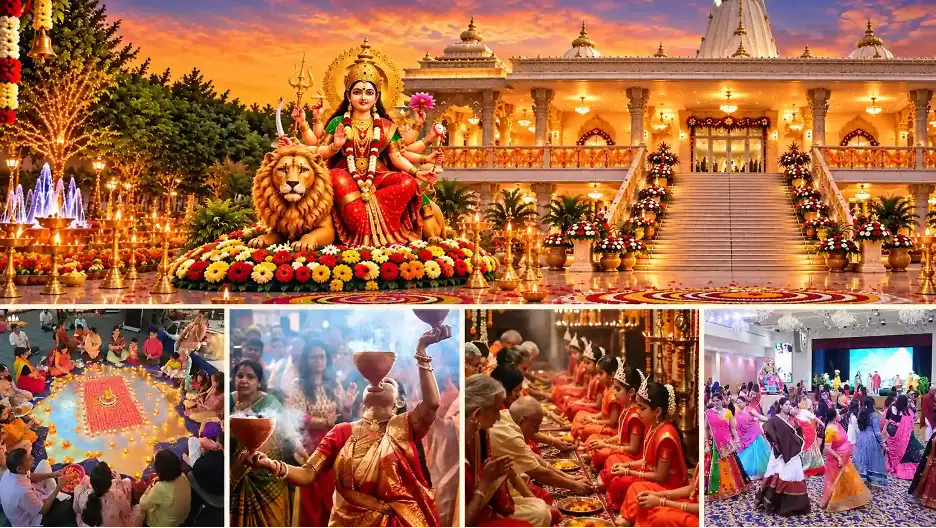
A flower placed at Maa Durga’s feet can express gratitude beyond words. During arati, devotees watch the light pass before her form and remember the blessings that have sustained their families. Offered with mindful devotion, these simple gestures become deeply personal.
Chanting the Mother’s name while reading the Durga Saptashati, also known as the Devi Mahatmya, recounts the Divine Mother’s glory and her victories over destructive forces. Thus, repetition of her names, her leelas, makes the heart return to Maa repeatedly.
Kanya Puja: Welcoming the Mother with Reverence
There is tenderness in seeing an elder bow to serve a child with reverence. The ceremony reminds us that the respect shown at the altar must extend to our relationships. Honoring the Divine Mother means respecting the dignity, abilities, and aspirations of girls and women and supporting their well-being throughout the year.
Sandhi Puja: A Sacred Moment of Transition
Sandhi Puja takes place for a short window of 48mins at the junction of Ashtami and Navami. It honors the victory of Maa Chamunda over the demons Chand Munda. A time of concentrated prayer. 108 Lamps are lit, offerings are made, and attention rests on the Divine Mother as we offer from within our own hearts.
The Ashtami Havan: An Offering from the Heart
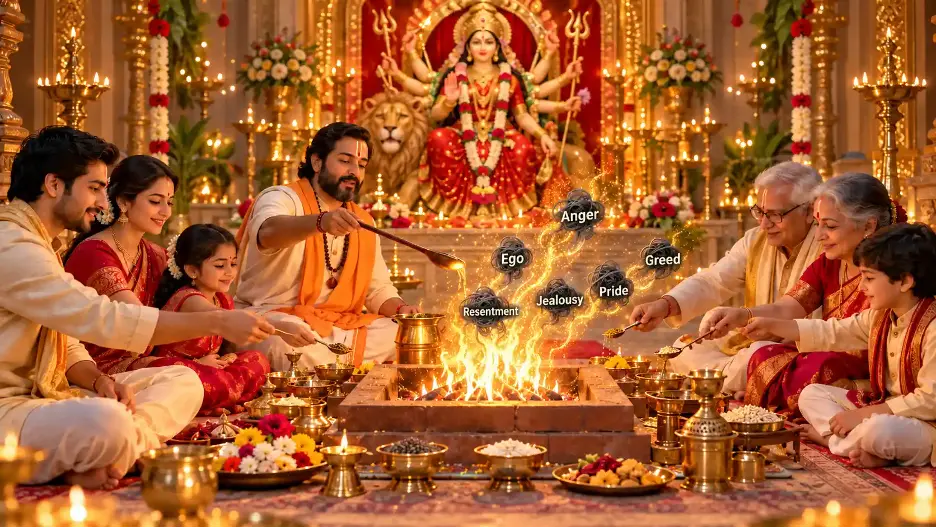
The sacred fire is kindled. As the priest chants the mantras, each offering enters the flames with Swaha. The warmth, fragrance, and sound of prayer draw our hearts toward Maa Durga.
Havan, also called homa, is a sacred fire ceremony performed with prescribed mantras and offerings. On Durga Ashtami, devotees join in seeking the Divine Mother’s blessings with gratitude and surrender.
As we offer ghee and grains, we can also pray inwardly. Perhaps resentment has kept us from forgiving someone, envy has dimmed our joy in another’s happiness, or pride has prevented an apology. Before Maa, we can acknowledge what we hold so tightly.
“Maa, help me release this resentment. Give me a generous heart and the humility to recognize my faults.”
With this prayer, the offering becomes a moment of willingness to change. When an old habit returns, we remember our prayer before the fire and renew our effort through a kinder word, an honest admission, or an act of forgiveness.
On Ashtami, we honor the Mother’s power to protect dharma and seek her grace to overcome what troubles our own hearts. With folded hands, we pray:
“Maa, may every offering deepen my love for you. Help me desire what brings me closer to God.”
Swami Mukundananda’s Teaching: Turn Desire Toward God
The prayer we offer before the havan fire raises a question: how do we change desires that stubbornly return again and again?
The sacred story of Raktabeej gives us a striking image. Every drop of his blood that touched the ground produced another demon. As Chandika struck him, Kali, also called Chamunda, caught his blood before it reached the earth, preventing further demons from arising. Through these manifestations of the Divine Mother, his destructive power was brought to an end.
Swami Mukundananda draws upon this narrative to explain the restless movement of desire. We may believe that fulfilling one wish will finally make us content, only to discover that another has taken its place. What we hoped would satisfy the mind can become the beginning of further craving.
We recognize this in ourselves. The appreciation we received yesterday may leave us wanting more today. Having our way once may strengthen our expectation that others should always agree with us. When a cherished wish is frustrated, disappointment can turn into anger. Gradually, the mind becomes occupied with what it wants and what it fears losing.
Swamiji’s teaching offers a hopeful direction: we can cultivate higher desires. We can nurture the wish to understand spiritual wisdom, remember God, serve others, and grow in devotion. With repeated remembrance of God’s names, form, qualities, and leelas, the heart begins to develop a deeper attachment to Him.
For the devotee sitting before Maa Durga, this teaching makes the inward offering more complete. We place our restless wishes at her feet and ask her to nourish a better longing.
“Maa, when I seek praise, help me find joy in serving. When I insist on my own way, help me listen with humility. When my mind asks for more and more, turn it toward the sweetness of remembering God.”
This transformation grows through daily practice. We make time for prayer, listen to divine knowledge, and return the wandering mind to God. When we falter, we begin again. The desire to draw closer to Him becomes something we deliberately cherish.
The havan flames eventually fade, but this longing can remain alive in the heart—an offering we continue to make long after Ashtami has passed.
Celebrate at the Radha Krishna Temple of Dallas
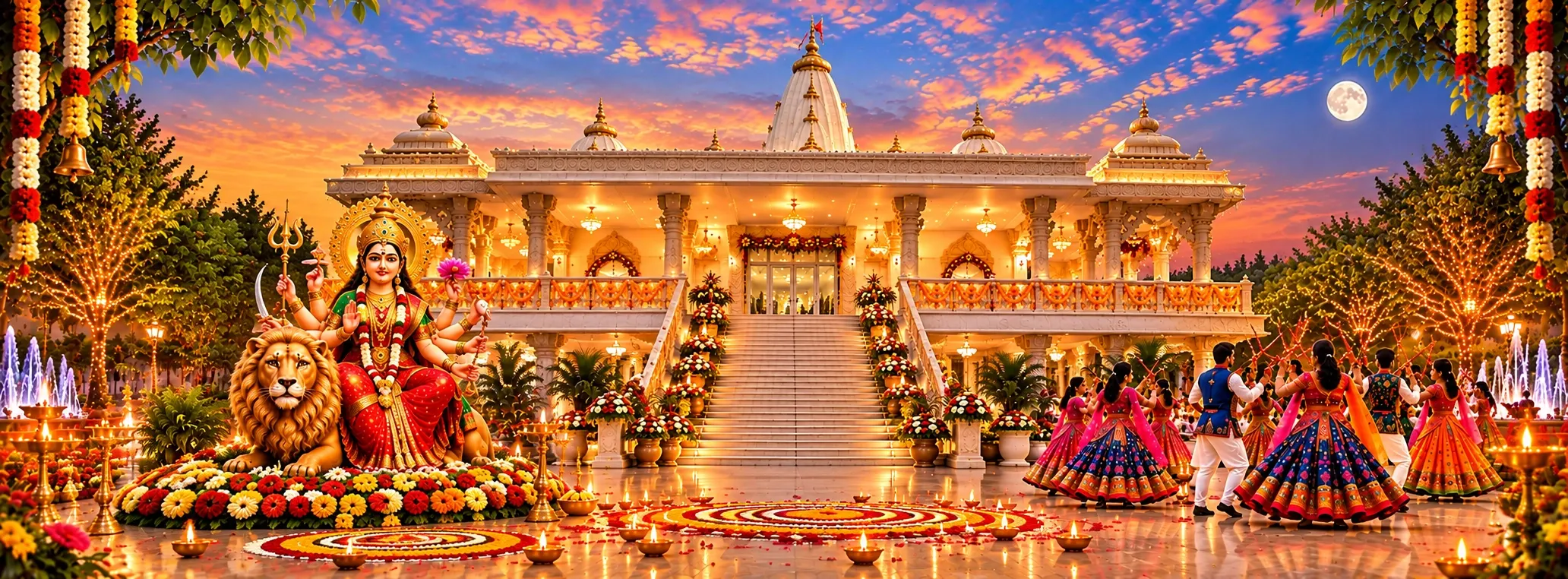
At the Radha Krishna Temple of Dallas, Navratri brings families together in worship and joyful celebration. Children, parents, and grandparents gather before Maa Durga, offering their prayers and sharing traditions that connect generations.
The celebrations include Ghatasthapana, invoking the Divine Mother’s presence at the beginning of Navratri; daily arati and bhog; and opportunities to offer Maa Durga a saree or chunri as seva. Garba and Dandiya, accompanied by professional singers and musicians from India, bring music and movement into the festive atmosphere.
The Durgashtami Havan and Kanya Puja offer devotees an opportunity to seek Maa’s blessings through sacred offerings and reverence. Ravan Dahan celebrates the victory of righteousness over evil. Families can also enjoy the daily Dosa and Chaat corner.
Come with your family, your gratitude, and the prayer you wish to place at Maa’s feet. May the celebration deepen our devotion and the love we carry into everyday life.
Living the Mother’s Grace Each Day
After the puja, the flowers remain at Maa Durga’s feet. The havan fire settles, and families return home with prasad. Soon, familiar duties call us back. It is here, among the ordinary moments of life, that we can remember what we offered.
Someone speaks sharply, and we feel the urge to answer in the same way. A plan changes, and disappointment rises. An old resentment returns. These moments give us an opportunity to recall our prayer before the Mother and make one small effort in its spirit.
Perhaps we pause before speaking. Perhaps we listen to someone we usually dismiss. Perhaps we apologize without waiting for the other person to do so first. No one may notice, but we know the effort it takes.
We can also keep a little time each day for remembrance: light a lamp, chant Maa’s name, or sit quietly in prayer. That familiar return helps us renew the longing we expressed on Ashtami.
“Maa, help me remember you amidst my day. May the love I offer at your feet find expression in the way I treat your children.”
Conclusion: Holding the Mother’s Hand
We began with the image of a child reaching for her mother’s hand. Durga Ashtami invites us to approach the Divine Mother with that same trust, bringing her our love, our struggles, and our willingness to grow.
At the Ashtami havan, each offering gives expression to our prayer. Alongside the sacred offerings, we inwardly place our restless desires at Maa’s feet, seeking her grace to nurture a deeper longing for God. That prayer continues beyond the ceremony, through the choices we make each day.
When we struggle, we can return to Maa honestly. When we recognize a fault, we can seek her help and make the effort to change. When we find the courage to act with kindness, we can remember her with gratitude.
“Maa, I place my restless heart at your feet. Help me release the anger and resentment I have held so tightly. Nurture within me the desire to love God and serve others. When I stumble, help me rise and try again. Please hold my hand and guide me.”
With this prayer, we bow before Maa Durga. We may still have much to learn, but we carry the quiet trust of a child who has placed her hand in the Mother’s.
Key Takeaways
- Durga Ashtami celebrates the Divine Mother’s protective strength. Her sacred stories inspire faith in the victory of dharma over destructive forces.
- Calling her Maa makes our prayer intimate. We can approach her honestly, seeking grace to overcome anger, greed, resentment, pride, and envy.
- Maa Mahagauri is worshipped on the eighth day in the Navadurga tradition. Her serene form inspires prayer for purity of heart and peaceful devotion.
- Traditional rituals give devotion a loving expression. Flowers, arati, chanting, Kanya Puja, and Sandhi Puja bring families together in remembrance.
- The Ashtami havan invites an inward offering. Alongside the ritual offerings, we pray for the willingness to release harmful tendencies and make sincere efforts to change.
- Desire can be directed toward spiritual growth. Swami Mukundananda’s teaching encourages us to cultivate the longing to remember God, serve others, and deepen devotion.
Frequently Asked Questions
1. When is Durga Ashtami 2026 in Dallas?
Maha Durga Ashtami falls on Sunday, October 18, 2026. In Dallas local time, Ashtami tithi begins on October 17 at 9:57 p.m. and ends on October 19 at 12:21 a.m. Temple ceremony times should be checked separately.
2. Why is Durga Ashtami significant?
Durga Ashtami is a sacred occasion for special worship of the Divine Mother during Sharad Navratri and Durga Puja. Devotees honor her protection of dharma and seek her blessings for courage, purification, and spiritual growth. In the Navadurga tradition, the eighth day is dedicated to Maa Mahagauri.
3. How do devotees observe Durga Ashtami?
Observances include puja, arati, chanting, fasting, Kanya Puja, and havan. Sandhi Puja marks the junction of Ashtami and Navami in the Durga Puja tradition. Customs vary across regions, families, and temples.
4. What is the significance of Kanya Puja?
Kanya Puja welcomes young girls as representations of the Divine Mother. Through respectful hospitality and offerings, devotees express reverence for Maa Durga. Its spirit also encourages us to uphold the dignity and well-being of girls and women throughout the year.
5. What can we offer inwardly during the Ashtami havan?
While participating in the prescribed ritual, we can pray for help in releasing resentment, anger, envy, and pride. This inward offer expresses our willingness to change. We carry that prayer into daily life through forgiveness, humility, and thoughtful action.
6. How does Raktabeej’s story help us reflect on desires?
Raktabeej’s multiplying forms offer an analogy for desires that keep growing as we fulfill them. Drawing upon this image, Swami Mukundananda encourages us to cultivate higher desires: to remember God, learn spiritual wisdom, serve lovingly, and grow in devotion.
Call to Action
Come Before Maa with a Prayer: Celebrate Navratri at the Radha Krishna Temple of Dallas
Join your family and fellow devotees for worship, sacred offerings, and joyful celebration.
Devotional highlights:
Ghatasthapana • Daily arati and bhog • Durgashtami Havan • Kanya Puja • Saree and chunri seva
Festive highlights:
Garba and Dandiya • Live music • Ravan Dahan • Dosa and Chaat corner
Venue:
1450 N. Watters Road, Allen, TX 75013
