
Introduction
There are certain seasons in the spiritual calendar that seem to carry a special grace, periods when seekers naturally feel drawn inward, when prayer becomes sweeter, discipline becomes easier, and the heart becomes more receptive to divine remembrance. Among such sacred periods, Adhik Maas holds a uniquely honored place in the Vedic tradition. Often called the “extra month” in the lunar calendar, Adhik Maas appears periodically to harmonize lunar and solar calculations. Yet spiritually, it is viewed not as a technical adjustment of time, but as a divine gift: an additional month offered for purification, devotion, introspection, and accelerated inner growth.
In ordinary life, people often postpone their spiritual aspirations. They plan to meditate later, read scriptures later, cultivate discipline later, or reconnect with God when life becomes less busy. Yet life rarely becomes less busy on its own. The mind continues to create reasons for delay. Adhik Maas interrupts this pattern beautifully. It invites the soul to stop postponing what matters most. It reminds us that spiritual progress is not meant to wait for a perfect future moment. It begins now, through sincere practice, one day at a time.
For seekers inspired by the teachings of Swami Mukundananda and JKYog, Adhik Maas is an especially meaningful time to deepen daily sadhana through practical and heart-centered disciplines. These include Roopdhyan Meditation, Practising the Presence of God, cultivating gratitude, Trida Bhakti—especially Kirtan, and reading sacred scriptures, especially the Holy Bhagavad Gita. Alongside these practices, a balanced spiritual routine should also include gentle physical activity, wholesome sattvic nutrition, and the uplifting company of satsang with devotees.
When practiced consistently, these disciplines nourish body, mind, heart, and soul together. Adhik Maas thus becomes not merely an extra month on the calendar, but an extra opportunity to become lighter, purer, calmer, wiser, and more deeply connected to God.
Purushottam Maas

Adhik Maas is also lovingly known as Purushottam Maas, a name that greatly elevates its spiritual significance. The word Purushottam refers to the Supreme Divine Personality, Shree Krishna, who is described in the scriptures as the highest and most complete manifestation of God. According to devotional tradition, this sacred month was especially blessed by the Lord and accepted as His own, transforming what was once considered an ordinary calendrical adjustment into one of the most spiritually potent periods of the year. Because it is dedicated to Purushottam Bhagavan, devotees regard this month as especially favorable for prayer, devotion, chanting, meditation, scriptural study, charity, and surrender. Observing Adhik Maas as Purushottam Maas inspires seekers to use this extra time not for distraction, but for drawing closer to God with sincerity, love, and renewed spiritual determination.
Why Adhik Maas Is Spiritually Powerful
Human life is shaped by attention. Whatever we repeatedly think about, value, and engage with gradually molds our consciousness. If attention is constantly consumed by distraction, worry, comparison, or worldly agitation, the mind becomes restless. If attention is repeatedly directed toward divine remembrance, wisdom, gratitude, and devotion, the mind becomes uplifted.
Adhik Maas provides a sacred container for redirecting attention. It encourages seekers to temporarily reduce lower tendencies and intensify higher habits. Even one month of sincere practice can create momentum that continues long afterward. Many people underestimate what thirty dedicated days can accomplish. Habits can shift. Priorities can realign. Emotions can heal. Faith can deepen. Inner peace can become more accessible.
The month is therefore not only symbolic, but inherently practical. It gives structure, urgency, and sacred significance to practices that should ideally remain lifelong.
Roopdhyan Meditation: Meditating on the Divine Form
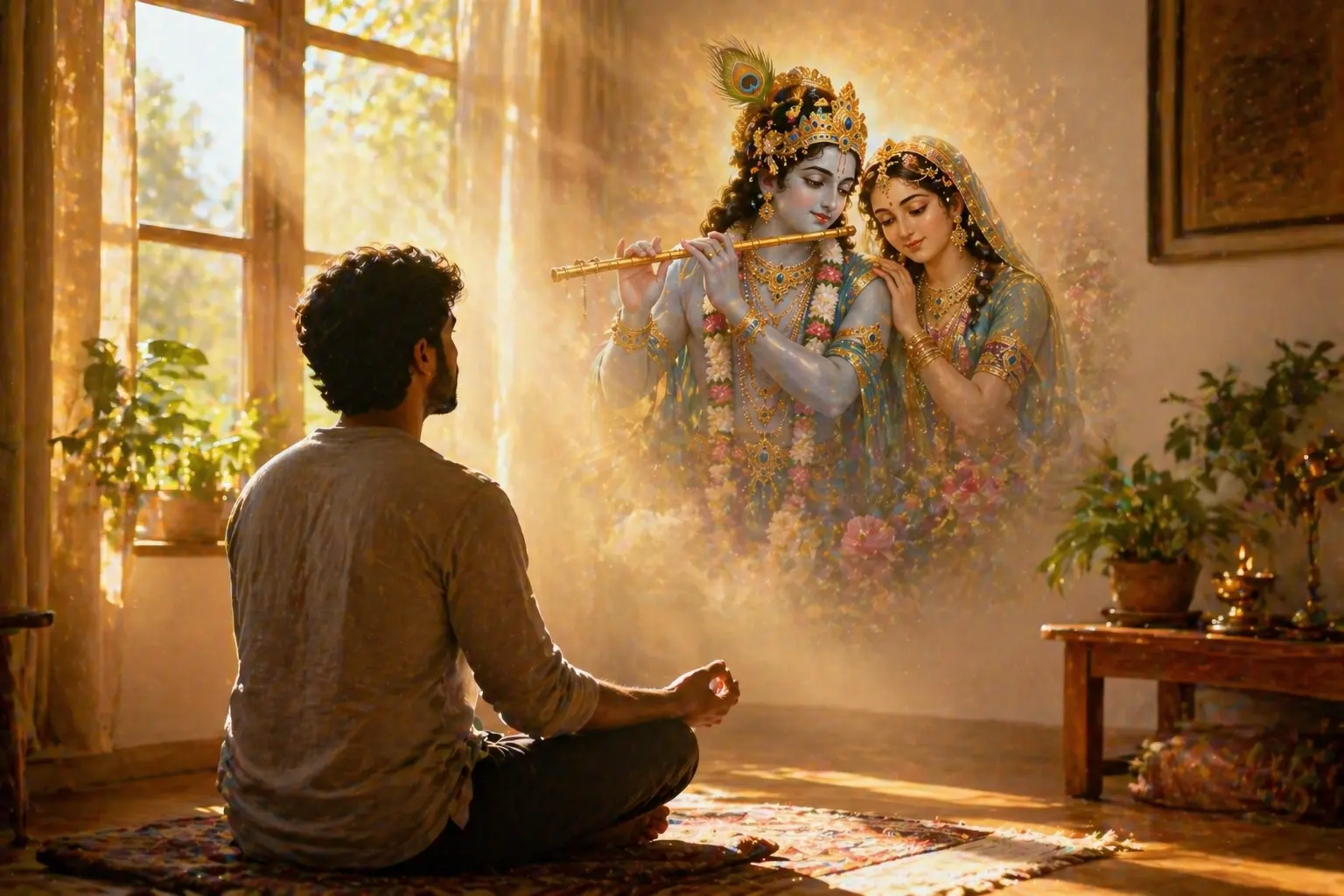
Among the beautiful practices emphasized in the bhakti tradition and explained by Swami Mukundananda is Roopdhyan Meditation: lovingly meditating on the divine form of God. The mind naturally thinks in images. It becomes attached to whatever it repeatedly visualizes. Roopdhyan uses this tendency positively by directing the mind toward the supremely pure, beautiful, compassionate, and blissful form of the Divine.
Rather than allowing imagination to wander toward worldly concerns, fears, or desires, the seeker gently trains attention to dwell upon the Lord’s face, smile, eyes, ornaments, posture, and loving presence.
In many devotional traditions, meditating on the divine form of Radha Krishna becomes especially sweet because it combines beauty with love, majesty with intimacy, and transcendence with accessibility.
During Adhik Maas, setting aside daily time for Roopdhyan can profoundly calm the mind. It softens emotional turbulence, purifies mental impressions, and creates affection for God. Over time, meditation ceases to feel like a discipline imposed upon the mind and becomes a joyful reunion of the mind with its highest object of love.
A practical way to begin is by sitting quietly each morning, gazing at a sacred image or mentally visualizing the divine form, and gently bringing the attention back whenever it wanders. Even ten sincere minutes practiced daily can become spiritually transformative.
Practising the Presence of God
Many people confine spirituality to isolated moments: morning prayer, temple visits, scripture reading, or meditation sessions. Yet one of the highest teachings in Bhakti is to remember God not only in special moments, but throughout the day. This is the practice of living in divine remembrance or practising the presence of God.
It means inwardly remembering that God is with us while working, speaking, walking, eating, driving, cleaning, and resting. It means performing duties not as dry obligations, but as offerings. It means silently invoking divine guidance before important conversations. It means pausing during stress and remembering that we are not alone.
Adhik Maas is an ideal time to cultivate this sacred awareness. One may place reminders in daily life: a short mantra on the phone screen, a sacred image on a desk, pauses for remembrance every few hours, or silent gratitude before meals. Over time, the wall between “spiritual life” and “daily life” begins to dissolve. Life itself becomes the temple. Action becomes worship. Responsibility becomes service.
When the presence of God is remembered regularly, loneliness decreases, anxiety softens, and ordinary tasks become spiritually meaningful.
Cultivating an Attitude of Gratitude
Swami Mukundananda often emphasizes the importance of uplifting the mind through right thinking. Gratitude is not merely good psychology; it is refined spirituality. An ungrateful mind focuses endlessly on what is missing, unfair, delayed, or imperfect. A grateful mind recognizes grace already present. It sees blessings that were previously ignored. It appreciates opportunities, relationships, lessons, health, nourishment, protection, and divine guidance.
Gratitude is one of the most effective spiritual practices because it redirects consciousness from scarcity to abundance, from complaint to appreciation, from heaviness to joy.
During Adhik Maas, one powerful practice is to maintain a daily gratitude journal. Each evening, write five things for which you are sincerely grateful. They need not be dramatic. Gratitude for clean water, breath, family, spiritual teachings, a kind interaction, food, or the chance to practice devotion can be deeply transformative.
Another beautiful form of gratitude is verbal gratitude expressed to others. Thanking family members, teachers, coworkers, and friends softens the heart and strengthens relationships. Ultimately, all gratitude culminates in gratitude to God, recognizing that every blessing has flowed through divine grace.
Trida Bhakti: The Threefold Devotional Path
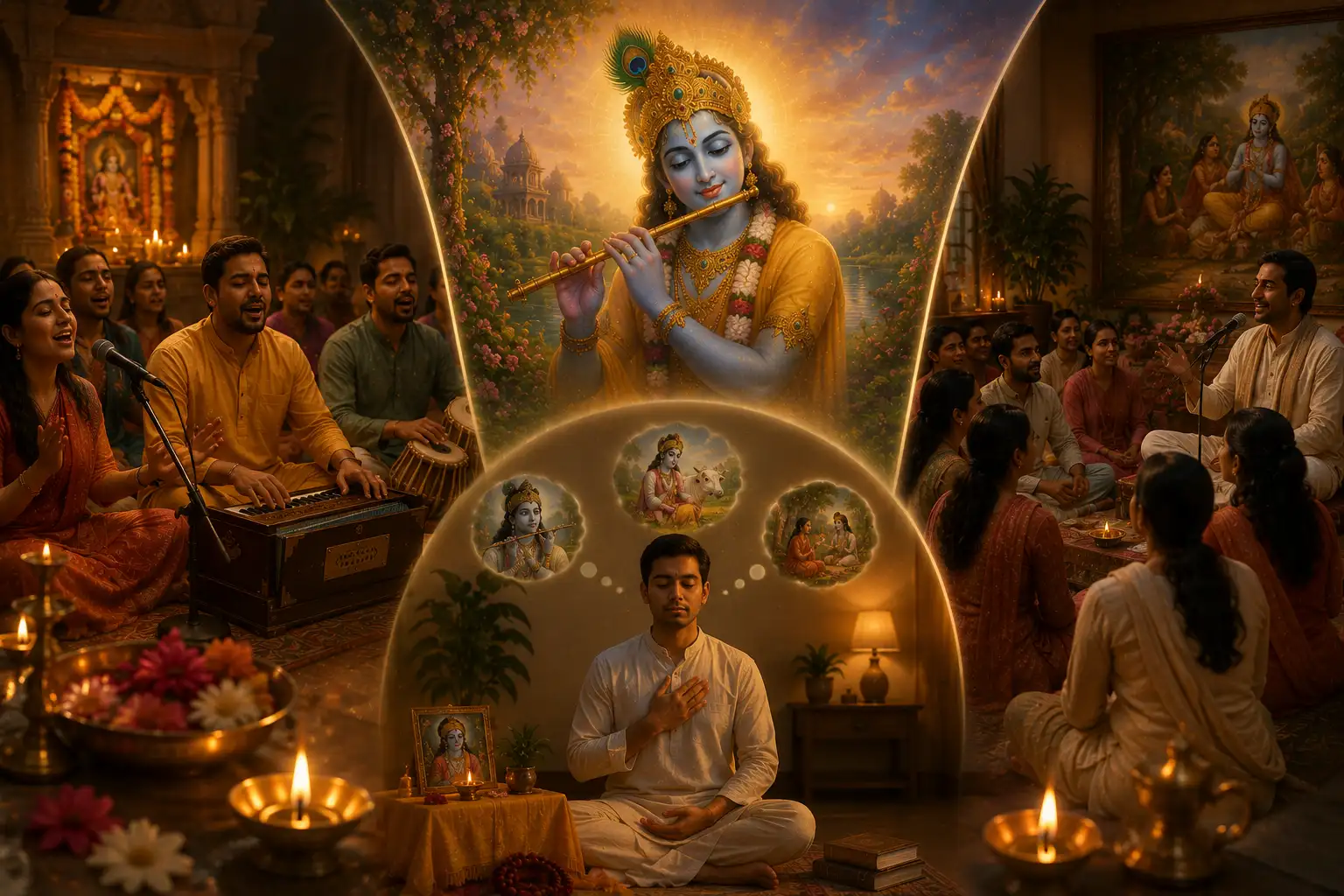
In bhakti, devotion can be expressed through body, mind, and speech. This integrated devotion is often described as Trida Bhakti: offering all three dimensions of oneself in loving service by chanting about, listening to and contemplating upon God's names, forms, pastimes and abodes.
This threefold devotion cleanses the heart and extinguishes the blazing fire of material existence.
Its potency is such that people engage in devotion day and night and experience the bliss of God. This devotion is extremely sweet as it helps us easily attach our minds to God. We can chant the names of God, sing His glories, and contemplate His beautiful form for hours and hours.
Jagadguru Shree Kripaluji Maharaj says:
श्री कृष्णम समरणम मनसा, वचसा सरस किर्तनम
श्रोत्रेन श्रवनम नित्यम, तृधा भक्ति गरियसी
Śrī Kṛṣṇam samaraṇam manasā, vacasā sarasa kīrtanam
śrotrēna śravaṇam nityam, tṛdhā bhakti gariyasī
"Engage in the three-fold devotion, which involves remembering the divine name of Shree Krishna, chanting his name and listening to his divine pastimes."
Tridha bhakti involves three activities:
- Kirtan/किर्तनम: Chanting the names and descriptions of the forms, virtues, pastimes, and prayers to the Lord in melodious tunes.
- Shravanam/श्रवनम: Listening to the chantings.
- Mananam/मननम; Thinking deeply about what you are chanting and feeling the presence of God in his Holy name.
Adhik Maas is an excellent time to consciously harmonize all three. Many people practice devotion only mentally or only ritually. But when body, mind, and speech align in remembrance, spiritual energy deepens significantly. One feels integrated rather than fragmented.
Among these three, devotional expression through speech often becomes especially accessible and joyful through Kirtan.
The Special Power of Kirtan
Of all devotional practices, Kirtan, the heartfelt singing of God’s names and glories, holds a unique power. Music naturally engages emotion, rhythm stabilizes attention, repetition deepens remembrance, and sacred sound purifies consciousness. Even restless minds often find peace through chanting more easily than through silent concentration.
Kirtan can be practiced alone, with family, or in community.
It may be simple or musically elaborate. What matters most is sincerity. One need not be a trained singer to participate. Divine names respond to devotion, not performance.
During Adhik Maas, daily kirtan can become the emotional heartbeat of one’s sadhana. Morning chanting uplifts the day. Evening kirtan washes away accumulated stress. Group kirtan creates collective joy and spiritual momentum. Many seekers discover that when words fail, singing becomes prayer.
If time is limited, even fifteen minutes of sincere chanting each day can deeply affect mood, faith, and inner purity.
Reading Sacred Scriptures: Especially the Holy Bhagavad Gita
The mind requires nourishment just as the body does. If fed only news, entertainment, gossip, or anxiety, it becomes agitated. If fed wisdom, it becomes elevated. This is why sacred study is essential during Adhik Maas.
Among all scriptures, the Holy Bhagavad Gita stands as one of humanity’s greatest guides for practical spirituality.
It addresses duty, devotion, mind control, self-knowledge, surrender, disciplined action, and the nature of true peace. It speaks not from a cave of withdrawal, but from the battlefield of life itself.
Reading the Gita daily during Adhik Maas can become profoundly transformative. Even one chapter, several verses, or a few pages with commentary can shift consciousness. Rather than rushing through quantity, focus on quality. Read slowly. Reflect deeply. Ask how the teachings apply personally.
Swami Mukundananda’s commentaries and teachings on the Gita are especially valued because they connect timeless truths with modern struggles in a relatable way.
Daily Sadhana Should Include Body Care Too
Spiritual growth does not require neglecting the body. The body is the vehicle through which sadhana is practiced.
Therefore, daily discipline during Adhik Maas should include gentle physical activity and wholesome sattvic nutrition.
Gentle exercise such as walking, stretching, yoga, light mobility work, or mindful movement helps improve circulation, reduce lethargy, calm stress hormones, and prepare the mind for meditation. A stagnant body often contributes to a restless or dull mind. Movement supports devotion by increasing vitality.
Likewise, food influences consciousness. A sattvic diet emphasizes fresh, wholesome, balanced nourishment that supports clarity and steadiness. Fruits, vegetables, grains, legumes, nuts, dairy where suitable, and simply prepared meals often help create a lighter internal state than excessively processed, overstimulating, or heavy foods.
Eating with gratitude, moderation, and purity of intention also matters. Food taken prayerfully nourishes more deeply than food consumed mindlessly.
The Power of Satsang with Devotees
One of the greatest accelerators of spiritual growth is satsang: the uplifting company of sincere seekers and devotees. Human beings absorb the mood, priorities, and habits of those around them. If surrounded by negativity, material obsession, cynicism, or gossip, the mind is influenced accordingly. If surrounded by devotion, sincerity, discipline, and joy, consciousness rises naturally.
During Adhik Maas, make special effort to seek satsang.
Attend temple gatherings, online classes with depth, kirtan evenings, study circles, seva opportunities, or discussions with spiritually minded friends. Even a short conversation with someone sincerely walking the path can rekindle faith and enthusiasm.
Satsang reminds seekers that they are not alone in their efforts. It provides accountability, encouragement, humility, and inspiration. Many spiritual obstacles dissolve not only through solitary effort, but through holy association.
Cultivating Humility and Relying on Divine Grace
One of the most profound teachings emphasized by Swami Mukundananda is that genuine spiritual growth cannot flourish where pride continues to dominate the heart. Knowledge may increase, disciplines may become stronger, and devotional practices may become more regular, yet if ego quietly expands alongside them, the seeker can become trapped by subtle self-importance. Humility therefore is not weakness, nor is it low self-esteem. True humility is the clear recognition that all abilities, opportunities, intelligence, strength, devotion, and progress are ultimately gifts flowing through divine grace. It is the understanding that while sincere effort is essential, the final fruit of spiritual advancement is never earned solely by personal power.
During Adhik Maas, cultivating humility becomes an especially sacred practice because it purifies devotion at its root. A humble seeker serves without demanding recognition, learns without defensiveness, and prays without entitlement. Such a person becomes inwardly receptive, and receptivity is one of the greatest conditions for grace. Swami Mukundananda often explains that the ego seeks ownership even in spiritual life. It may become proud of discipline, proud of knowledge, proud of service, proud of purity, or even proud of surrender itself. This is why advanced humility requires vigilance against subtle forms of spiritual vanity. One may renounce worldly pride yet still secretly think, “I am more devoted,” “I have surrendered,” or “I am progressing.”
The deeper path is to surrender even the pride of having surrendered.
It is to recognize that even the desire to seek God, the strength to practice sadhana, the wisdom to understand truth, and the capacity to love are themselves bestowed by divine compassion. In this mood, the seeker stops relying on egoic achievement and begins relying wholly on the grace of God. Effort continues, but it becomes softer, purer, and more loving. One strives sincerely while knowing that success rests in divine hands.
A practical way to cultivate humility during this sacred month is to begin each day with a prayer such as: “O Lord, whatever good I do is by Your grace. Whatever weakness remains, please purify. Let me serve without pride, love without expectation, and remember You without ego.” When practiced sincerely, humility does not diminish a person, it liberates them. It removes the heavy burden of self-importance and replaces it with gratitude, peace, and joyful dependence on the Divine. In that state, spiritual life becomes sweeter, because the soul rests not in its own limited strength, but in the infinite mercy of God.
A Simple Daily Routine for Adhik Maas
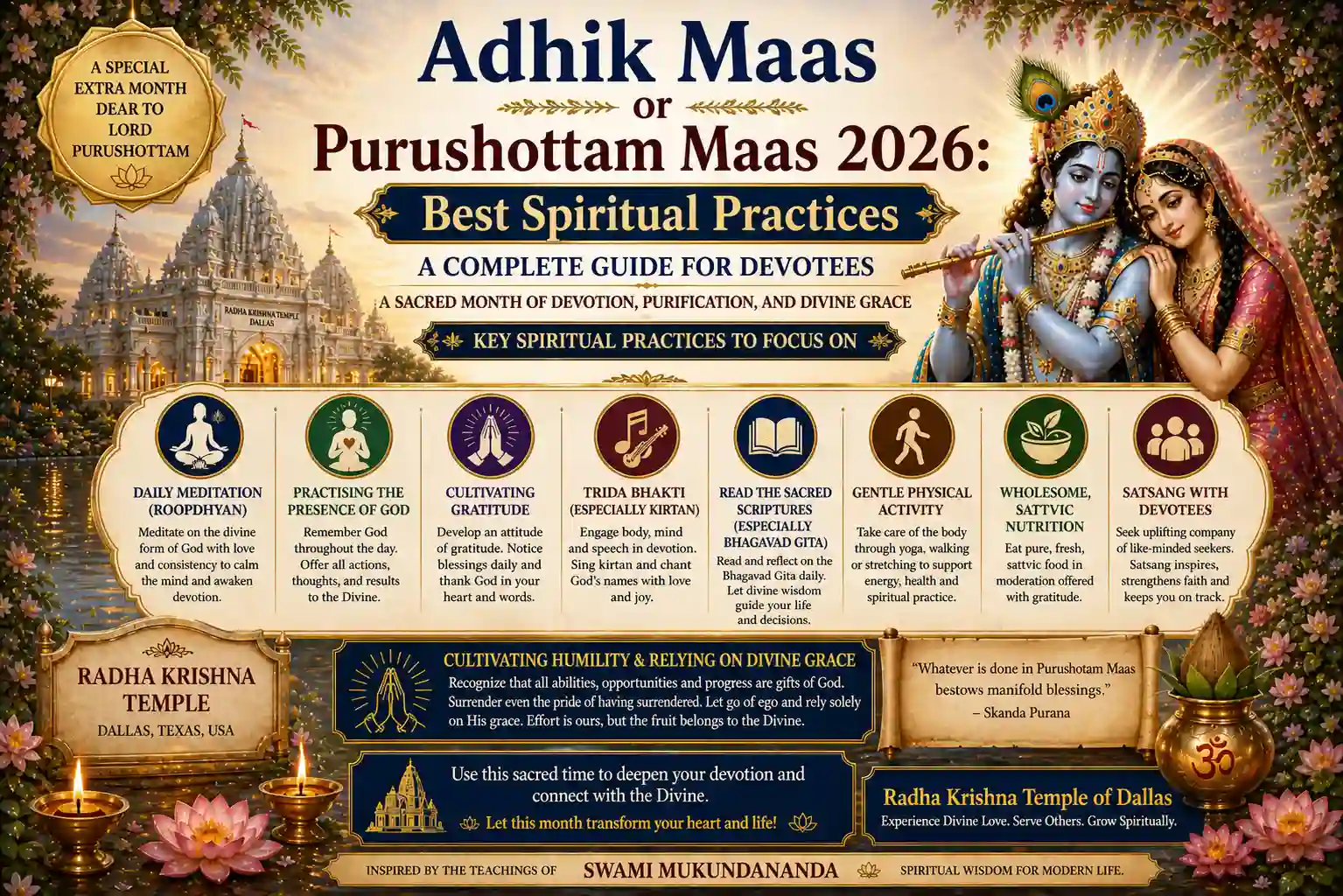
A balanced routine might begin early with prayer, Roopdhyan meditation, and Gita reading. During the day, practise remembrance of God while performing duties. Include gentle movement and wholesome meals. In the evening, engage in kirtan, gratitude reflection, and satsang where possible. End the day by mentally offering all actions to God.
Consistency matters more than intensity. Better a sincere routine practiced daily than grand resolutions abandoned quickly.
Common Obstacles and How to Respond
Some people begin enthusiastically but struggle with distraction, irregularity, laziness, or self-criticism. These are normal challenges. The answer is not guilt, but gentle persistence. If a day is missed, begin again the next day. If meditation feels restless, continue lovingly. If schedule pressures arise, shorten practice rather than abandon it.
God values sincerity more than perfection.
Why This Month Can Change the Rest of the Year
Thirty dedicated days can establish habits that continue afterward. Morning prayer may remain. Gita reading may continue. Gratitude may become natural. Kirtan may become beloved. Food choices may improve. New friendships through satsang may deepen.
Adhik Maas is temporary, but the transformation it initiates need not be.
Final Reflection
The extra sacred month of Adhik Maas 2026 is not merely extra time, it is extra grace. It is an invitation to turn inward, upward, and Godward. Through Roopdhyan Meditation, remembrance of God, gratitude, Trida Bhakti, heartfelt Kirtan, study of the Holy Bhagavad Gita, wholesome living, physical balance, and the uplifting power of satsang, seekers can make this month spiritually unforgettable.
Do not wait for a future season to begin. This sacred month itself is the invitation.
Call to Action
Make Adhik Maas 2026 your turning point. Choose one or more of these sacred practices and begin today. Join satsang, start daily Gita reading, sing kirtan with devotion, nourish your body with sattvic choices, and dedicate this month to genuine inner growth. Share this guide with family and friends so you can walk the journey together.
FAQs
1. What is Adhik Maas?
Adhik Maas is an extra month added periodically to the lunar calendar and is considered highly auspicious for spiritual practice.
2. Why is Adhik Maas important?
It is traditionally dedicated to devotion, purification, prayer, scriptural study, charity, and intensified sadhana.
3. What is the best practice during Adhik Maas?
There is no single best practice, but meditation, kirtan, Gita reading, gratitude, and remembrance of God are especially powerful.
4. What is Roopdhyan Meditation?
Roopdhyan means lovingly meditating on the divine form of God, helping focus the mind and awaken devotion.
5. Why read the Bhagavad Gita in Adhik Maas?
The Gita provides timeless wisdom on duty, peace, devotion, and mind mastery, making it ideal for sacred reflection.
6. What is sattvic nutrition?
Sattvic nutrition refers to wholesome, balanced foods that support clarity, calmness, and wellbeing.
7. Why is satsang important?
Satsang uplifts consciousness through association with sincere seekers and devotees.
8. Can beginners observe Adhik Maas?
Absolutely. Even simple daily practices done sincerely can make the month deeply meaningful.
Further Resources:
 JKYog Team
 JKYog Team