A sacred month of celestial grace, divine love, and the rare blessing of Adhik Maas, when every act of devotion is multiplied tenfold by the mercy of Purushottam.
Opening Reflection
The Heart Yearns and May Answers
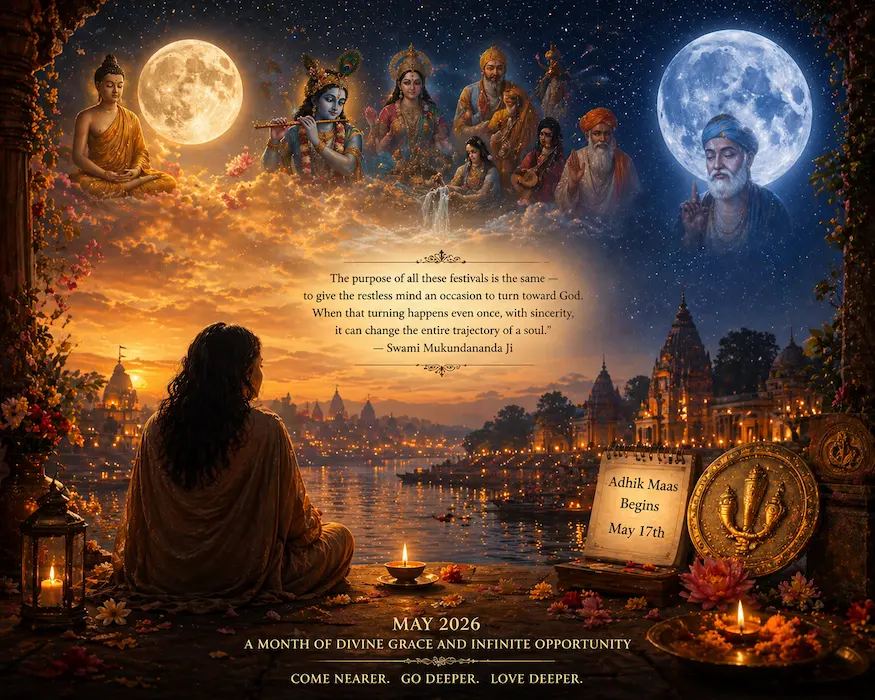
What is a festival if not the universe leaning in close and whispering, "Come nearer"? In the great tradition of Sanatan Dharma, every sacred day is not a date on a calendar but a doorway — a moment when the veil between the finite and the Infinite grows thin, when the bhakta's cry is heard more swiftly, when a single tear of longing carries the weight of a thousand births of devotion.
May 2026 is not an ordinary month. The month begins in the luminous fullness of Buddha Purnima and closes with a rare Blue Moon — the second full moon of May, coinciding with Kabir Das Jayanti. Between these two luminous bookends, a parade of avatars, divine mothers, sacred rivers, saint-poets, and celestial sages make their presence felt.
And crowning all of this, beginning on May 17th, is the arrival of Adhik Maas, the beloved Purushottam Maas. Swami Mukundananda Ji has spoken of this rare month many times: it is the Lord's personal gift to sincere seekers, when every japa, every act of charity, every morning of scripture reading yields far more than it would in ordinary times. When even the month itself belongs to Lord Vishnu personally, what does that say about the quality of grace available to those who use it well?
Let us walk through May 2026 together, not as spiritual tourists, but as rasik devotees: souls who taste the nectar hidden in each sacred occasion, who find in every jayanti and vrat not a religious obligation but a love letter from the Divine addressed personally to them.
Friday 1st May
Vishnu Tattva
Buddha Purnima & Kurma Jayanti
Annamacharya Jayanti
The full moon of Vaishakha shines with triple glory today. It marks the birth, enlightenment, and Mahaparinirvana of Gautam Buddha, venerated in the Vaishnav tradition as the ninth avatar of Lord Vishnu, who descended to redirect humanity away from violence and toward compassion. Simultaneously, it is Kurma Jayanti, the day of the tortoise avatar who placed his back beneath Mount Mandar so the churning of the cosmic ocean could proceed.
Swami Mukundananda Ji illuminates the Kurma leela with characteristic depth: the cosmic churning is a metaphor for every sincere sadhana. The churning is turbulent; the nectar takes time to appear. But the Kurma (the Lord Himself) is silently supporting the entire endeavor from below. When practice feels difficult and the fruit seems far away, the bhakta can rest in this: the foundation has never moved.
Also today: Annamacharya Jayanti: the 15th-century Telugu saint-poet who composed over 32,000 songs in devotion to Lord Venkateswara. His entire life was an unbroken act of bhajan.
The churning is not easy, but no worthy treasure ever comes without effort. Kurma is the assurance that your effort is not wasted. The Lord Himself is the foundation beneath your sadhana.

Saturday 2nd May
Narad Jayanti
Among all sages, Devrishi Narad holds the most extraordinary position as the divine messenger who moves freely between all the lokas, his veena perpetually singing "Narayan, Narayan." He is the first rasik devotee: a being whose entire existence has been absorbed into love of God.
Swami Mukundananda Ji has taught the Narad Bhakti Sutras in extensive detail. This is a text in which Narad defines bhakti as "Saa tvasmin parama prema rupa" — the supreme love for God in its most essential form. "The highest qualification for God-realization," Swamiji teaches, "is not scholarship or penance, it is love. Simple, consistent, one-pointed love."
Narad Muni shows us that the path to the Lord is not through complexity but through purity of love. His entire being is the teaching.
Tuesday 5th May
Sankashti Chaturthi
This day is dedicated to Lord Ganesh, also lovingly called Vighnaharta, Remover of Obstacles
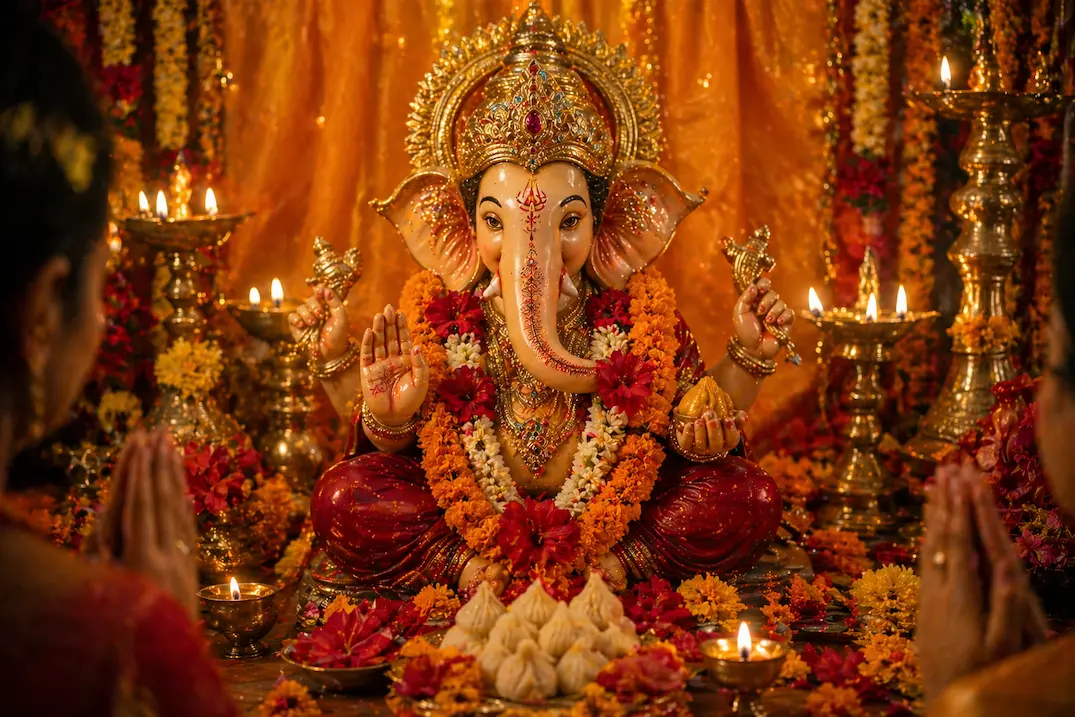
The monthly Sankashti Chaturthi — this month specifically Ekadanta Sankashti — calls devotees to fast through the day and turn toward Ganesh. Devotees break the fast only after moonrise. Swami Mukundananda Ji teaches that the greatest obstacle on the spiritual path is rarely external. It is the ego: the entrenched sense of separation from God, the habit of looking everywhere except inward. That is what Ganesh's blessing is truly being invoked to dissolve.
Worshipping Ganesh is asking for the removal of the greatest obstacle of all — the ego that stands between the soul and God. That is the real prayer behind every Sankashti fast.
Saturday 9th May
Shiv Tattva
Masik Kalashtami
Sri Srinivasa Kalyanotsavam
May 9 carries two very different energies on one extraordinary Saturday — and together they tell a complete story. Kalashtami, observed on the eighth tithi of Krishna Paksha each month, is the fast dedicated to Lord Kaal Bhairav — the fierce protective manifestation of Lord Shiv, guardian of time, destroyer of fear and negativity. Swami Mukundananda Ji teaches that even the most fierce forms of the Divine are expressions of the same infinite compassion. Bhairav's ferocity is not directed at the devotee — it is directed for the devotee, against every force of darkness and ego that blocks the path to God.
And on this same morning, at the Radha Krishna Temple of Dallas, the divine wedding of Lord Venkateswara and Goddess Padmavati fills the air with flowers and Vedic mantras. The fierce protector and the joyous Kalyanam on one day. Swamiji explains the Kalyanam as a window into the deepest mystery of the spiritual path: the union of the Supreme Soul and the devotee-as-bride. Witnessing it with that understanding changes the experience entirely.

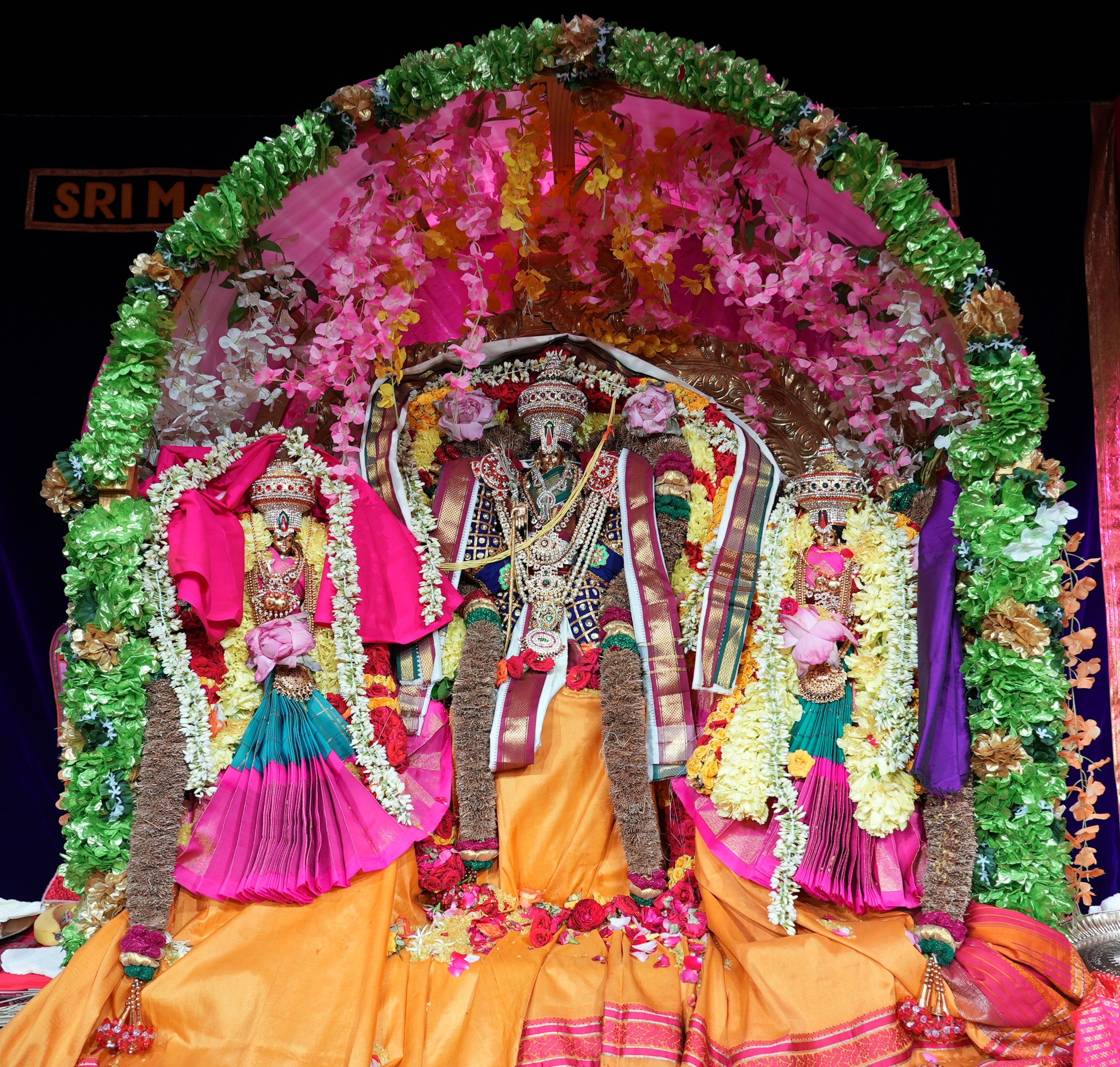
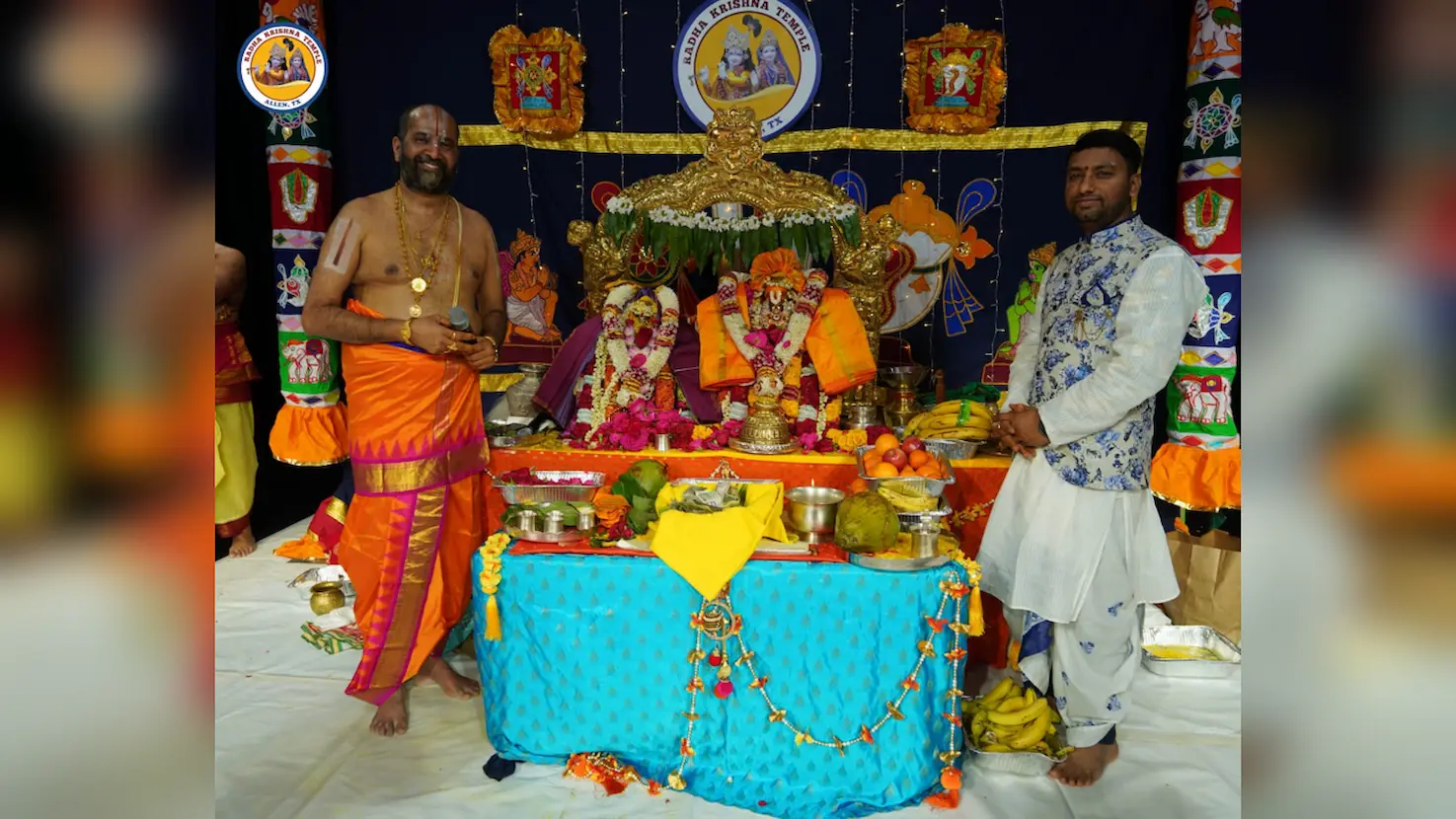
The Kalyanam is the Lord's way of saying: this is what union with the Divine looks like. Come and witness it. Let it enter the heart.
Tuesday 12th May
Hanuman Jayanti (Telugu Regional Celebration)
In Andhra Pradesh and Telangana, Hanuman's appearance is celebrated today on the Vaishakha full moon — distinct from the Chaitra observance in other regions. This regional diversity is itself a teaching: the Divine is inexhaustible, and different communities find their own sacred doorways to the same eternal Truth.
Swami Mukundananda Ji holds Hanuman as the supreme example of dasya bhav — the love of the servant. And yet this "servant" crossed oceans, burned Lanka, carried mountains, and shook the cosmos — all charged with the electricity of love, not duty. Hanuman did not serve Lord Ram out of obligation. He served because love left him no other option. That is the difference between duty-driven religion and bhakti.
Hanuman is the greatest of devotees because his love is completely selfless. He asks for nothing — no liberation, no heaven — only to remain in service at the lotus feet of Lord Ram.
Wednesday 13th May
Ekadashi Vrat
Apara Ekadashi
Apara Ekadashi, named for the apara (limitless) blessings it bestows, is among the most meritorious of the twenty-four Ekadashis, traditionally held to dissolve accumulated karma and open channels of prosperity both spiritual and material. Swami Mukundananda Ji reframes Ekadashi beautifully: it is not punishment but a gift, because the mind freed for one day from the constant demands of the tongue and body, discovering in that quiet its true hunger, which is usually for something much deeper than food.
Ekadashi is the Lord's invitation: give Me this one day fully. The mind freed from the body's demands discovers, in that quiet, what it truly hungers for.
Friday 15th May
Masik Shivaratri
Vrishabha Sankranti
Each month brings its own Shivaratri, the night of Shiv, thus inviting the devotee to stay awake through the darkness in worship of the Absolute. Masik Shivaratri falls on the 14th tithi of the dark fortnight (Chaturdashi Tithi begins 8:31 AM on May 15), when the moon's light is nearly extinguished and the contemplative heart naturally turns inward. Not the dramatic all-night vigil of Mahashivaratri, but quieter: a few extra minutes of prayer, a fast if possible, an honest turn toward what lies beyond the ordinary.
Vrishabha Sankranti marks the Sun's transit from Aries into Taurus. Swami Mukundananda Ji consistently emphasizes that Sankranti days are powerful windows for dana (charity) and ancestral prayers. It does not need to be elaborate. A lamp lit with care and a sincere act of giving are enough. The tradition has never asked for the impressive. It has always asked for the sincere.
Shiv represents complete detachment from maya and yet complete compassion toward every soul. Renunciation and love are not opposites. They are two faces of the same realization.
Saturday 16th May
Vat Savitri Vrat
Shani Jayanti
Mata Ki Chowki
Vat Savitri Vrat commemorates one of the tradition's most remarkable stories. Savitri, knowing her husband Satyavan is destined to die, follows Yama (the god of death) when he comes to collect him. She enters a dialogue with Yama that is so intelligent, so devoted, so persistent, that he grants her one boon after another until, having no other option, he returns her husband's life. Swami Mukundananda Ji speaks of Savitri as the model of what love becomes when combined with wisdom and will, as she negotiated with Dharma itself on behalf of love.
Shani Jayanti marks the birth of Lord Shani (Saturn), who is often feared and rarely understood. In Swamiji's teaching, Shani is simply the enforcer of karma: consequences of past actions arriving in their own time. There is nothing malicious in it. Propitiating Shani on his Jayanti with oil lamps, sesame, and sincere prayer is traditionally held to ease accumulated karmic weight.
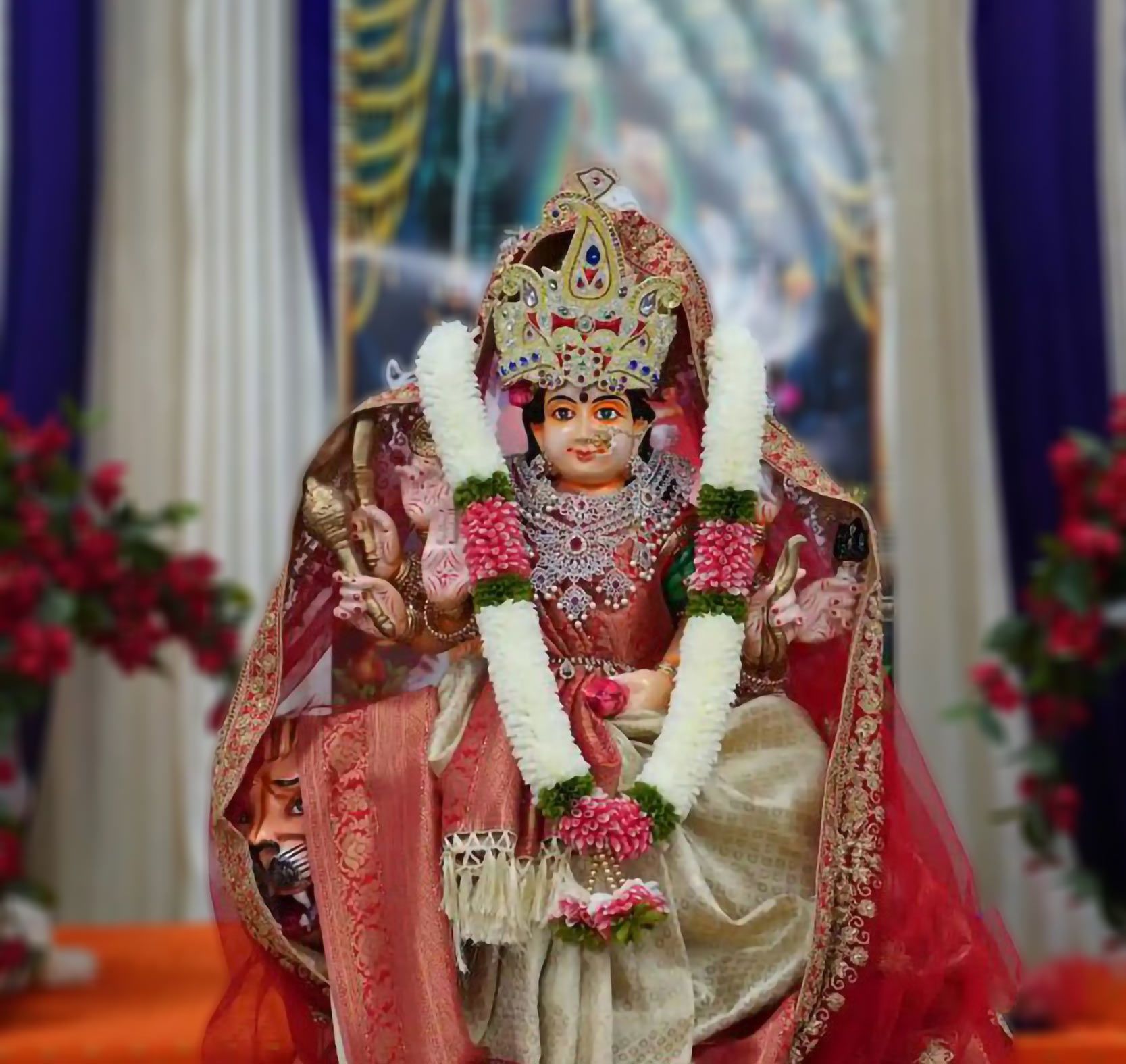
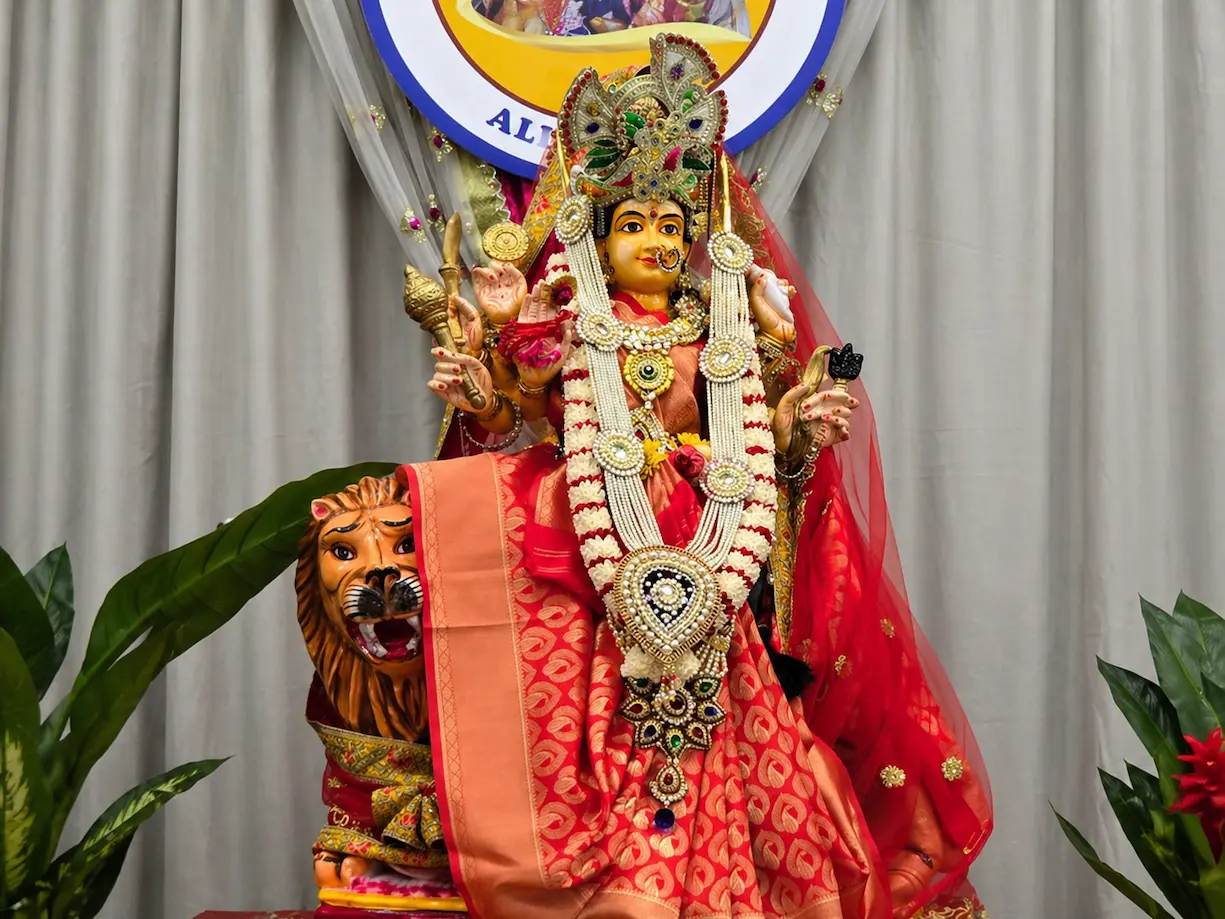
Savitri teaches that love is not passive. When combined with wisdom and the refusal to give up, it changes even what seems beyond changing.
Saturday 17th May
Adhik Maas/ Purushottam Maas begins
A rare Blessing, once Every 32.5 Months
From May 17 through June 15, the Hindu calendar enters Adhik Maas, the intercalary month belonging personally to Lord Vishnu in his aspect as Purushottam. Every act of devotion during this period, be it kirtan, japa, scripture reading, charity or satsang, is traditionally regarded as yielding tenfold merit compared to ordinary times.
The origin story is quietly beautiful. This extra month once had no deity, no name; an orphan among the months. In distress, it approached Lord Vishnu, who received it completely: "You shall carry my name: Purushottam Maas, and you shall be the most blessed month of all." From rejection to divine adoption: is this not the story of every soul that finally surrenders to the Lord?
What this means practically: begin a regular japa practice. Read the Bhagavatam or Gita from start to finish. Increase charitable giving. Attend satsang as often as possible. Traditionally, major worldly undertakings such as weddings, housewarmings, new ventures, are deferred until after June 15. This is the recognition that some months are meant for the inner life.
During Adhik Maas, the Lord Himself is paying special attention. What we plant in Purushottam Maas, whether in terms of sadhana, charity or surrender, bears fruit that extends far beyond the month itself.
Monday 25th May
Ganga Dussehra
On the tenth day of the bright fortnight of Jyeshtha, the cosmic event of all events is commemorated: the descent of Ganga Ma from the celestial realm to Earth, carried in the locks of Lord Shiva to break her fall, drawn down by the thousand years of penance of King Bhagiratha so that her waters might touch the ashes of his 60,000 ancestors and grant them liberation.
Ganga Dussehra falls within Adhik Maas this year, a convergence that multiplies its power considerably. Swami Mukundananda Ji teaches that the Ganga is not merely a river; she is grace made liquid, consciousness purifying consciousness. The word "Dussehra" means remover of ten: ten categories of sin dissolved by her blessing. Even chanting her name on this day carries that purifying power.
The rivers of divine grace always flow toward persistence. Those who keep turning toward God, the Lord keeps turning toward.
Tuesday and Wednesday 26–27 May
Padmini Ekadashi
Occurs Only During Adhik Maas
Padmini Ekadashi is exceptional among the Ekadashis. It falls only during Adhik Maas, arriving once every 32-plus months. It is Lord Vishnu's Ekadashi, in Lord Vishnu's own month. The tradition holds its merit as far exceeding even the most powerful regular Ekadashis. Note: Drik Panchang lists this as May 26 (Tuesday) while other sources list May 27 (Wednesday). The variance reflects the tithi timing relative to sunrise in different locations. Check radhakrishnatemple.net or a local pandit for the confirmed Dallas-area date.
Swami Mukundananda Ji's teaching on Ekadashi: it is not a punishment, it is a gift. The Lord says: give me this one day fully. The mind freed from the constant demands of the tongue and body discovers, in that quiet, what it actually wants underneath all the noise. Usually, what it finds is some form of longing for the Divine. Padmini Ekadashi in Purushottam Maas is an unusually luminous version of that invitation.
Ekadashi is the Lord saying: give Me this one day. Just this one. On Padmini Ekadashi in Adhik Maas, this invitation carries the full weight of the Lord's personal grace.
Saturday 30th May
Vaikasi Visakam (Tamil Tradition )
Under the full moon of the Tamil month of Vaikasi, when the Visakha nakshatra blazes brightest, Lord Murugan's appearance is celebrated in joyous abundance, particularly among Tamil Hindu communities worldwide. Lord Murugan is the son of Shiva and Parvati, the wielder of the vel (sacred lance) that destroys the ego and the six inner enemies of the soul.
The Tamil devotional tradition carries its own rasa: ancient, ecstatic, beautifully fierce, as seen in the Tiruppugazh hymns of Arunagirinathar, who sang to Murugan from complete surrender. Swami Mukundananda Ji has often said: every deity in the Hindu tradition is a different facet of the same infinite Diamond. To approach any of them with a pure heart is to draw close to the Whole.
Every avatar, every deity in Sanatan Dharma is a different face of the same infinite presence. The Diamond has infinite facets, but it is one Diamond.
Sunday 31st May
Adhik Purnima
Kabir Das Jayanti
May 2026 closes in a fullness that is rare by any measure. The Adhik Purnima, the full moon of Purushottam's own month, is also astronomically a Blue Moon (the second full moon of May) and a Micro Moon. And on this same luminous day, the tradition honors Sant Kabirdas: the most fearlessly honest poet-saint of the Bhakti movement, on his Jayanti.
A note on the date: Kabir Jayanti is traditionally observed on Jyeshtha Purnima. In 2026, Adhik Maas creates two Jyeshtha months: the Adhik Jyeshtha Purnima on May 31, and the Nija (regular) Jyeshtha Purnima on June 29. Different communities and panchangs observe on different dates. We include Kabir Das Jayanti here on May 31 to honor both possibilities. The date conflict is itself caused by Adhik Maas — a live example of how this rare month reshapes the entire calendar.
Kabir Das stood at the intersection of every tradition and belonged fully to none, and to all of them. A weaver by birth, a mystic by nature, he sang in the language of ordinary people about the most extraordinary truth: that God is found within the sincere and undeceived heart. His dohas are among the most quoted in all of Indian literature, not because they are ornate, but because they are surgically honest. On this full moon day, reading even a few of his couplets quietly is itself a form of satsang.
Full moon days are among the most powerful for charity in the Hindu tradition. On Adhik Purnima, the Purnima of Purushottam's own month, acts of giving carry multiplied merit. The Satyanarayan Katha is a particularly meaningful observance on this day.

On Purnima the moon holds nothing back. It offers everything it has. That is the image the tradition places before the devotee at the close of this extraordinary month.
The Crown Jewel of May
Adhik Maas: The Month That Belongs to God
Imagine a month so spiritually charged that the Lord of the Universe decided to claim it personally. This is Adhik Maas, or Purushottam Maas. Occurring approximately every 32.5 months, this intercalary lunar month is inserted to reconcile the lunar and solar calendars.
Swamiji's consistent teaching through the Bhagavad Gita converges beautifully in Adhik Maas. The Gita's call to surrender : "Mam ekam sharanam vraja" takes on luminous urgency during a month when the Lord is watching with particular grace. The community events at the Radha Krishna Temple of Dallas, such as the Srinivasa Kalyanotsavam, the Mata Ki Chowki, are not coincidences. Group sadhana during Adhik Maas carries a synergistic power that solitary practice cannot replicate alone.
Call To Action
Join Us This May
Frequently Asked Questions
1. Are these festival dates accurate for the United States?
Yes, but a one-day variance is possible for some tithis depending on your city's sunrise. The notable conflicts: Padmini Ekadashi (May 26 vs 27) and Kabir Das Jayanti (May 31 vs June 29 — explained below). Always confirm with a local pandit for exact muhurat timings.
2. Why is Kabir Das Jayanti listed on May 31 when some sources say June 29?
This is a genuine calendrical split caused directly by Adhik Maas. Kabir Jayanti is celebrated on Jyeshtha Purnima: the full moon of the Hindu month of Jyeshtha. In 2026, Adhik Maas creates two Jyeshtha Purnimas: the Adhik Jyeshtha Purnima on May 31, and the Nija (regular) Jyeshtha Purnima on June 29. Different communities observe on different dates. We list it on May 31 to honor both possibilities, and note the conflict transparently. A full dedicated blog on Kabir Das Jayanti is scheduled for May.
3. What exactly should I do during Adhik Maas (May 17 – June 15)?
Swami Mukundananda Ji's guidance is simple and transformative: increase your spiritual practice. More sadhana, more reading of the Bhagavad Gita and Bhagavatam, more charity, more satsang. Attend the RKT Dallas events. Begin each morning with God's name before anything else.
4. I am new to Hinduism. Can I still attend RKT Dallas events?
Absolutely! The Radha Krishna Temple of Dallas is welcoming to all regardless of background, nationality, or level of practice. The Srinivasa Kalyanotsavam on May 9 and the Mata Ki Chowki bhajan evening on May 16 are open community events. You need no prior knowledge, no initiation. Come with an open heart. Register at radhakrishnatemple.net or visit at 1450 N. Watters Road, Allen, TX 75013.
5. How are Swami Mukundananda Ji's teachings connected to these festivals?
Swami Mukundananda Ji does not teach festivals as ritual obligations. In the JKYog tradition, which is rooted in the Bhagavad Gita, Bhagavatam, and Narada Bhakti Sutras, every festival is an occasion for the mind to turn toward God. Swamiji transforms the festival calendar from a schedule of duties into a living curriculum of love. This blog is written in that spirit.
Further Resources