
E-Newsletter
September 2026



Quote
तस्मात्त्वमुत्तिष्ठ यशो लभस्व जित्वा शत्रून्भुङ् क्ष्व राज्यं समृद्धम् । मयैवैते निहता: पूर्वमेव निमित्तमात्रं भव सव्यसाचिन् ॥ 33॥ tasmāt tvam uttiṣhṭha yaśho labhasva jitvā śhatrūn bhuṅkṣhva rājyaṁ samṛiddham mayaivaite nihatāḥ pūrvam eva nimitta-mātraṁ bhava savya-sāchin
Therefore, arise and attain honor! Conquer your foes and enjoy prosperous rulership. These warriors stand already slain by Me, and you will only be an instrument of My work, O expert archer (Bhagavad Gita 11.33).
From the Editor’s Desk
When we sincerely strive to become instruments of God, life takes on a new dimension. Challenges become opportunities for spiritual growth. Relationships become avenues for expressing divine love. Daily responsibilities become acts of worship.
Perhaps the greatest blessing of this path is the realization that we are never alone. God is not a distant observer but an active presence guiding, supporting, and uplifting us at every step. As we offer our hearts in devotion and align our will with His, we become channels through which His wisdom, compassion, and grace flow into the world.
This issue explores this theme from multiple perspectives. Enjoy!
Bhakti Ras
Nimitta-Matram: An Instrument of the Divine
An extremely inspiring teaching of the bhakti philosophy is to become a worthy instrument of God. Rather than living solely according to our own desires, we learn to align our thoughts, actions, and intentions with the Divine will. This path does not diminish our individuality; it inspires us toward our highest purpose as participants in God's divine plan.
This principle is beautifully illustrated in the Bhagavad Gita. Confused and reluctant on the battlefield of Kurukshetra, Arjun sought guidance from Shree Krishna. The Lord reminded him that the divine plan was already unfolding and encouraged him to become a willing instrument in its execution (Verse 11.33). Through this teaching, Shree Krishna revealed that spiritual fulfillment comes not from trying to control everything, but from offering oneself in service to a higher purpose.
Three Pillars of Becoming God's Instrument
To become an instrument of God, the bhakti philosophy emphasizes three interconnected qualities or pillars for inner transformation: Humility, Surrender, and Selfless Seva/Service.
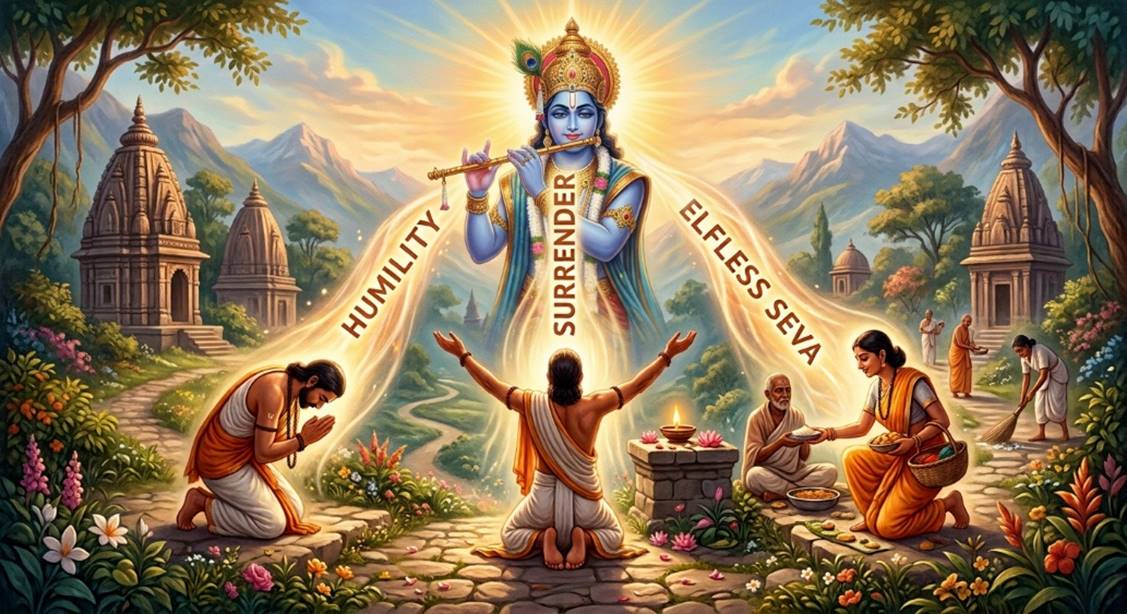
First, we must cultivate humility. The ego creates the illusion that we are the sole doers and owners of our accomplishments. Bhakti teaches us that our abilities, resources, and opportunities are God’s gifts, entrusted to us for a higher purpose (Bhagavad Gita 5.8-9). When we view our talents as gifts rather than possessions, gratitude and non-doership naturally replace pride. Humility helps us recognize our true position as souls dependent upon God's grace.
Building on this foundation, surrender of the intellect (i.e., sharanagati) means consciously aligning our lives with God's will. Various scriptures describe six conditions of surrender: (1) desiring what God desires (आनुकूलयस्य संकल्पः), (2) not desiring against God's desire (प्रातिकूलयस्य वर्जनम), (3) having firm faith in God's protection (रक्षिष्यति इति विश्वासो), (4) developing a deep sense of gratitude for God's immeasurable graces (गोप्तृत्वे वरणं तथा), (5) internalizing that everything belongs to God (आत्मनिक्षेप कार्पण्ये), and (6) letting go of the pride of surrendering (षड्विधा शरणागतिः). This attitude enables us to shift from self-centered to God-centered living.
When humility and surrender mature, they naturally blossom into selfless seva. The devotee asks, "How may I serve God to please Him?" This way, every action becomes an offering of love. Daily life itself becomes a medium through which God's grace can work in the world. The value of seva lies in the consciousness with which we perform actions.
Closing Thoughts
Practices such as prayer, meditation, chanting God's names, scriptural study, and association with spiritually minded individuals help to purify the heart and shift our focus from self-centered desires to loving service.
Becoming an instrument of God is not about accomplishing extraordinary things; it is about cultivating an extraordinary willingness to be guided by Him. When humility replaces pride, surrender replaces resistance, and service replaces self-interest, we become receptive to God's presence in our daily lives.
Bal-Mukund: Playground for Vedic Wisdom
The Boulder of Faith
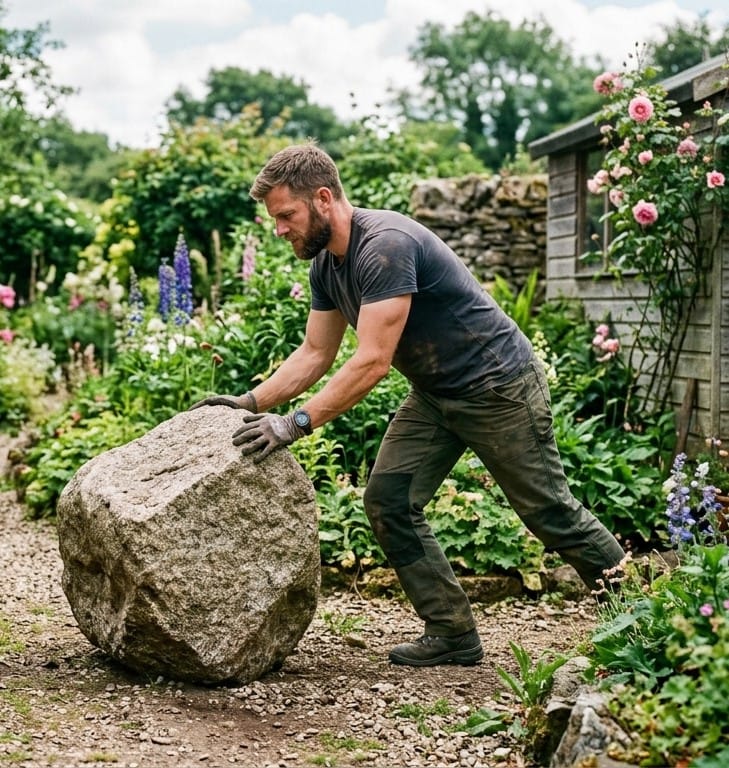
One morning, a man had a divine vision in which God appeared before him in a room filled with light. God instructed him to push a huge boulder in his garden for thirty minutes every day.
Grateful and obedient, the man followed God’s instruction faithfully. Day after day, he pushed the boulder with all his strength, but it never moved. Over time, doubt began to creep into his mind, and his faith was shaken.
The man pushed the boulder, but it never moved.
God appeared to him again. The man asked why he had been given such a difficult task when the boulder would not move, no matter how hard he tried.
God explained that He had never asked the man to move the boulder. He had only asked him to push it. Through his faithful effort, the man had grown stronger, more determined, and more trusting in God.
Practical Wisdom:
- The man was asked to push the boulder, not to move it. His responsibility was to give his best effort while trusting God with the outcome. In the same way, becoming an instrument of God means following His guidance sincerely rather than believing that everything depends upon us.
- At first, the man did not understand why God had given him this task. Only later did he recognize how the experience had changed him. We may not always understand why God places certain challenges before us, but we can continue to do our best with faith, trusting that He can use even difficult experiences to help us grow.
Holistic Health Tidbits
Honoring the Temple of the Body: Wellness in Service to God
Looking at health and fitness through a spiritual lens can transform physical care into an act of seva. When we view our bodies as a temple and a tool given by God, exercising, nourishing ourselves, and resting well become less about appearance and more about readiness. By caring for the body, we care for the vehicle that allows us to fulfill our responsibilities, serve others, and express love through our actions.
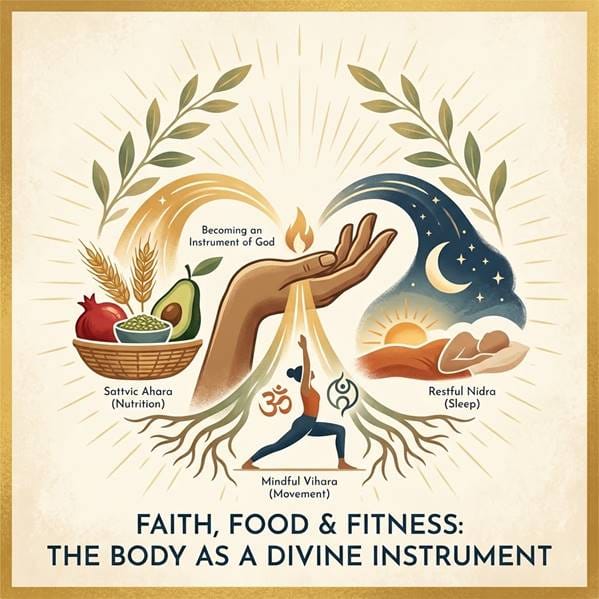
Here are four practical ways to care for the body as an instrument of God:
1. Reframe Our “Why”
We can shift our motivation from appearance to purpose. Before exercising, we might pause for a moment of prayer or gratitude and dedicate the strength we cultivate to serving God, our families, and our communities.
2. Practice Mindful Stewardship
Treat nutrition and rest as important responsibilities. Choose whole, nourishing foods that support the body, and prioritize restorative sleep so that we are better equipped for the responsibilities and opportunities before us. Food (Ahara) and rest (Nidra) are two of the Three Pillars of Life (Trayopastambha), alongside Brahmacharya, which encompasses the wise regulation of our energy and conduct.
3. Move with Gratitude
Approach exercise as an opportunity to appreciate what our bodies can do rather than as punishment for what we ate. Movement can also become a time for remembrance through silent prayer, chanting, devotional music, or reflection on scripture.
4. Honor Our Boundaries
Caring for the body also means respecting its limits. Rather than continually pushing ourselves toward exhaustion, we can recognize when rest and recovery are needed. Sustainable self-care can help us remain available for service over the long term.
Reflection Questions
Bhakti Ras / Inspiration
- How can I use my talents, relationships, and daily responsibilities as instruments of God’s love and grace?
Bal-Mukund: Playground for Vedic Wisdom
- When something does not turn out the way I hoped, how can I continue doing my best while trusting God with the result?
Holistic Health Tidbits
- How can I care for my body with gratitude so that it remains a strong and sustainable instrument for service?
Upcoming Events
We are very excited to share details regarding the upcoming spiritually uplifting events at the Radha Krishna Temple of Dallas, the official headquarters of JKYog.
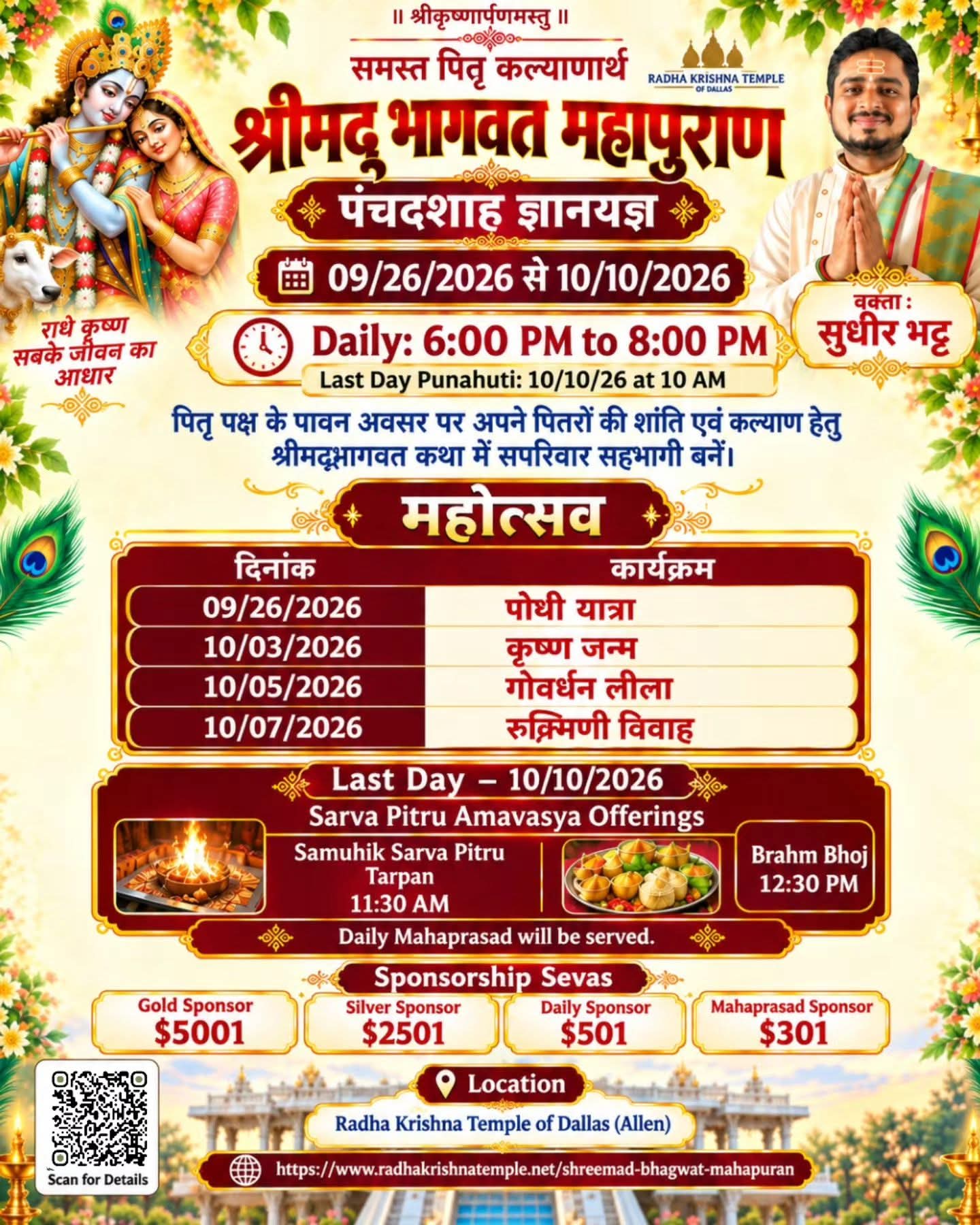
Shrimad Bhagavat Mahapurana
Immerse yourself in the divine wisdom and devotion of the Shrimad Bhagavatam during a sacred 15-day Jnana Yajna at the Radha Krishna Temple of Dallas.
🗓️ Dates: September 26 to October 10, 2026
📍 Venue: 1450 N. Watters Road, Allen, TX 75013
🔗 Details: https://www.radhakrishnatemple.net/shreemad-bhagwat-mahapuran
During the auspicious period of Pitru Paksha, Acharya Sudhir Bhatt Ji will lovingly narrate the glories and divine pastimes of Shree Krishna, offering seekers an opportunity to deepen their devotion and spiritual understanding. The katha will also evoke devotional sentiments through the Leelas of momentous events like Shree Krishna Janma, Govardhan Leela, and Rukmini Vivah, bringing the timeless stories of the Bhagavatam alive through Katha, kirtan, and devotion.
The observance is dedicated to the spiritual well-being of devotees and their ancestors, culminating on Sarva Pitru Amavasya with Purnahuti, Shraddha-Tarpan, and Brahm Bhojan. The Brahm Bhoj on October 10th is specifically to honor the ancestors by offering devotional prayers, opportunities to feed Brahmins, and receive their blessings for the peace of departed souls.
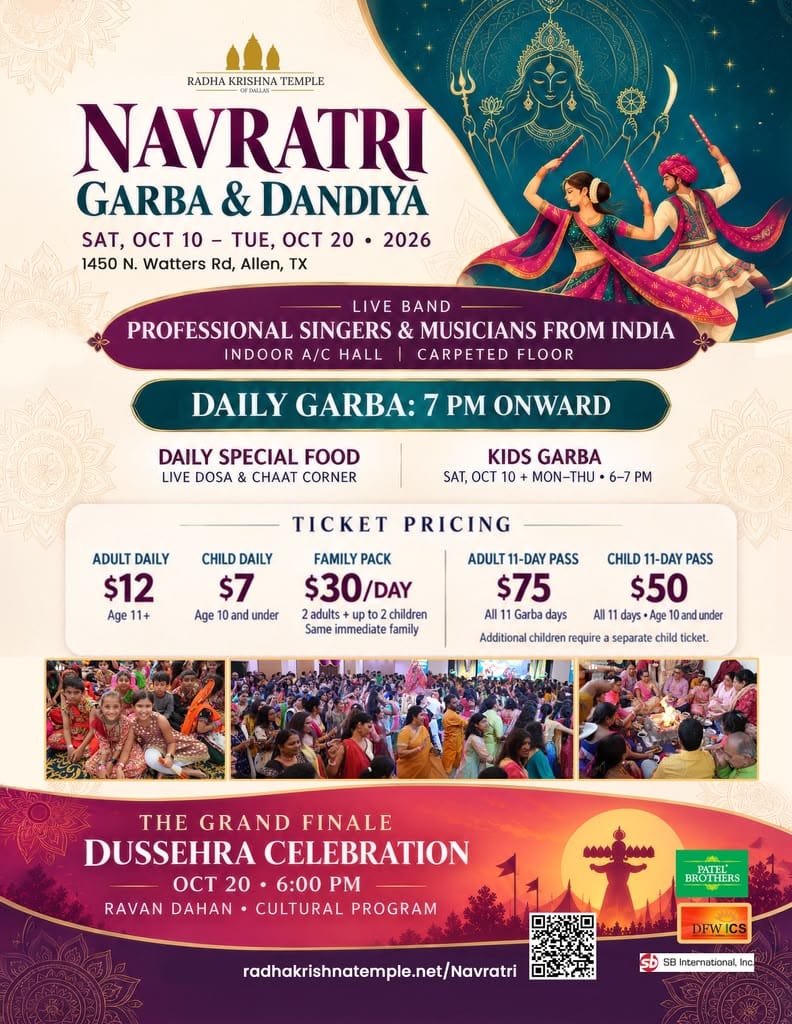
Navratri
The upcoming sacred Navratri celebrates Mother Durga's myriad forms for nine days. The Mother of the Universe is filled with infinite Shaktis, but her most endearing quality is her compassion for souls caught in the endless cycle of life and death. When we seek Shree Radha Rani’s refuge and surrender to her, she takes charge of our lives, protects us, and helps us to meet Shree Krishna.
Celebrate the auspicious festival of Navratri in an atmosphere of devotion, prayer, and spiritual joy. Celebrate the victory of good over evil as Navratri culminates in Dusshera.
🗓️ Dates: October 11 to 20, 2026
📍 Venue: 1450 N. Watters Road, Allen, TX 75013