
We may know what our ancestors left to us, but how often do we pause to recognize what they left within us?
We readily notice a home, jewelry, savings, education, or opportunities received through our family. These visible inheritances are often preserved with care and appreciation. Yet the gifts that have shaped us most deeply may be the ones we cannot hold in our hands: a parent’s honesty, a grandmother’s devotion, a grandfather’s resilience, the humility of an elder, or the courage with which an earlier generation faced hardship. Qualities such as kindness, intelligence, perseverance, faith, and generosity may have been nurtured across generations before quietly finding expression in us.
In the speed of modern life, we seldom stop to consider these unseen blessings. Sanatan Dharma therefore sets aside Pitru Paksha, a sacred fortnight that gently interrupts our busy routines and asks us to remember. We turn our hearts toward our parents, grandparents, and countless forefathers whose prayers, sacrifices, values, and struggles prepared the ground upon which our lives now stand. We may not know all their names or stories, yet we live because they lived, and something of their journey continues through us.

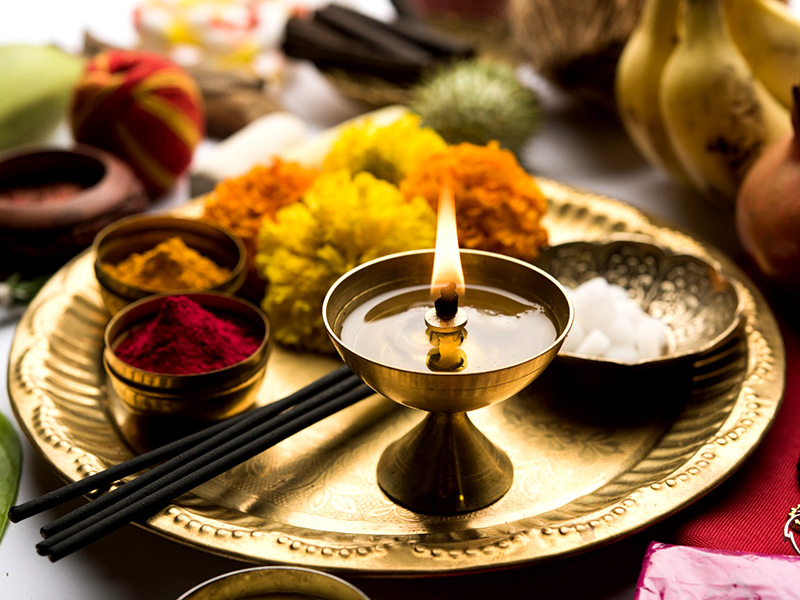
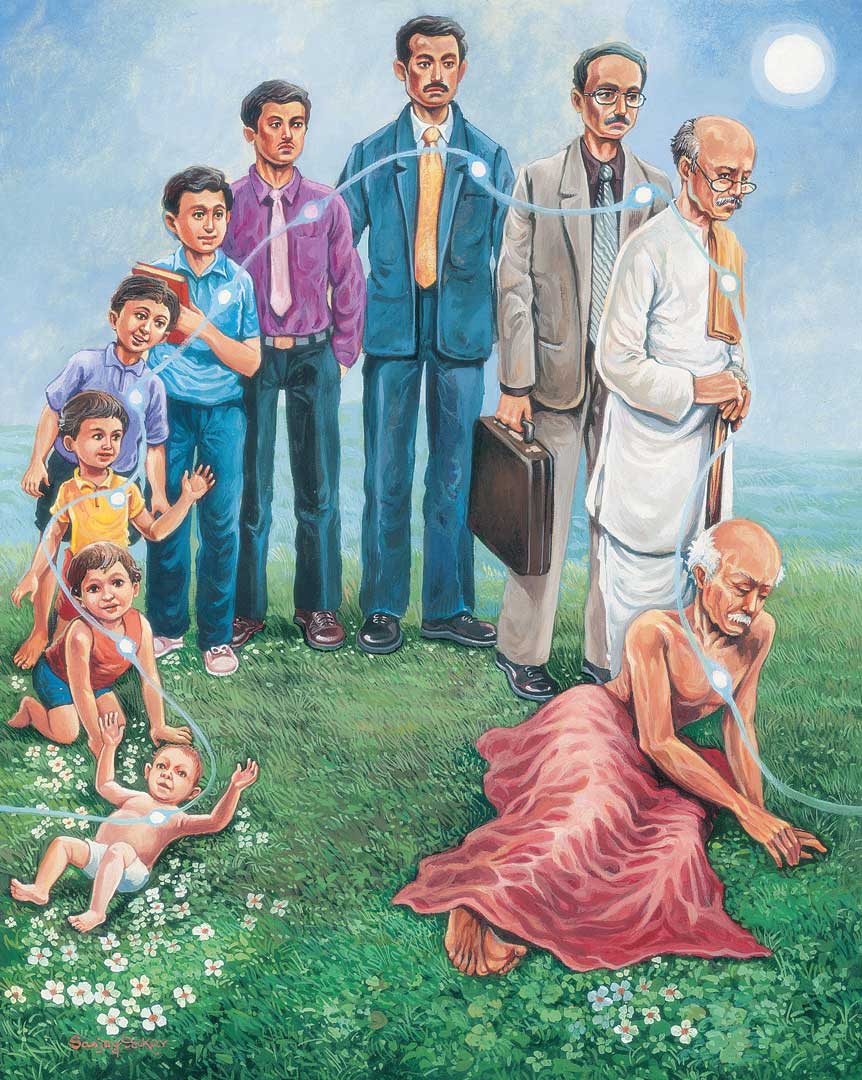
This remembrance is rooted in the eternal wisdom that we are not the physical body but the atma within. The body completes its time in this world, but the soul does not cease to exist. Death is a change of bodily residence, not the end of the soul’s journey. The physical absence of someone we love may still ache within us, but Sanatan Dharma gives that sorrow a deeper understanding: the person has departed from our sight, not from existence.
Traditional observances such as shraddha, tarpan, and pind daan give sacred form to this remembrance and may be performed according to one’s family customs and the guidance of a knowledgeable priest. Yet those who are unable to undertake elaborate rituals need not feel that they have nothing meaningful to offer. One may sit quietly before God, remember an ancestor with affection, light a lamp, offer a simple prayer, or serve someone in their memory. Ritual gives form to remembrance, but sincerity gives it life.
Pitru Paksha is therefore more than an observance for the departed. It is an invitation to recognize our visible and invisible inheritance, accept it with humility, and express a heartfelt “thank you.” As we honor those through whom so many blessings reached us, our gratitude ultimately rises to God, the eternal source of every soul, every relationship, and every grace.
What Is Pitru Paksha?
Pitru Paksha is a sacred period in the Hindu lunar calendar dedicated to honoring departed parents, grandparents, and earlier ancestors. The word pitru refers to one’s forefathers, while paksha means a lunar fortnight. It is observed during the waning phase of the moon in the month of Bhadrapada or Ashwin, according to the regional calendar followed.
During these days, families may perform shraddha, tarpan, pind daan, offer food, or undertake charity in remembrance of their ancestors. Customs may differ across families and regions, but beneath these outward differences’ rests one tender feeling: “I remember what I received through you, and I offer my gratitude with reverence.”
The word shraddha arises from shraddha, meaning sincere faith and heartfelt reverence. It reminds us that ancestral remembrance was never intended to become an empty obligation. Water, food, sesame seeds, mantras, and charity acquire their deeper meaning when they are accompanied by remembrance and devotion. The visible offering may be small, but the feeling within it can be profound.
The concluding day is known as Sarva Pitru Amavasya or Mahalaya Amavasya. On this day, prayers may be offered for all departed ancestors, especially when their names, stories, or exact tithis are no longer known. Even those whose photographs have faded and whose names have disappeared from family memory are embraced within the remembrance of the entire lineage.
Pitru Paksha is therefore not merely a period associated with death. It is a sacred pause between generations. For a few quiet days, we look back with appreciation toward those who prepared the way for us and look ahead with responsibility toward those who will inherit what we choose to pass forward.
The Atma Never Dies: Remembrance Rooted in Eternal Truth
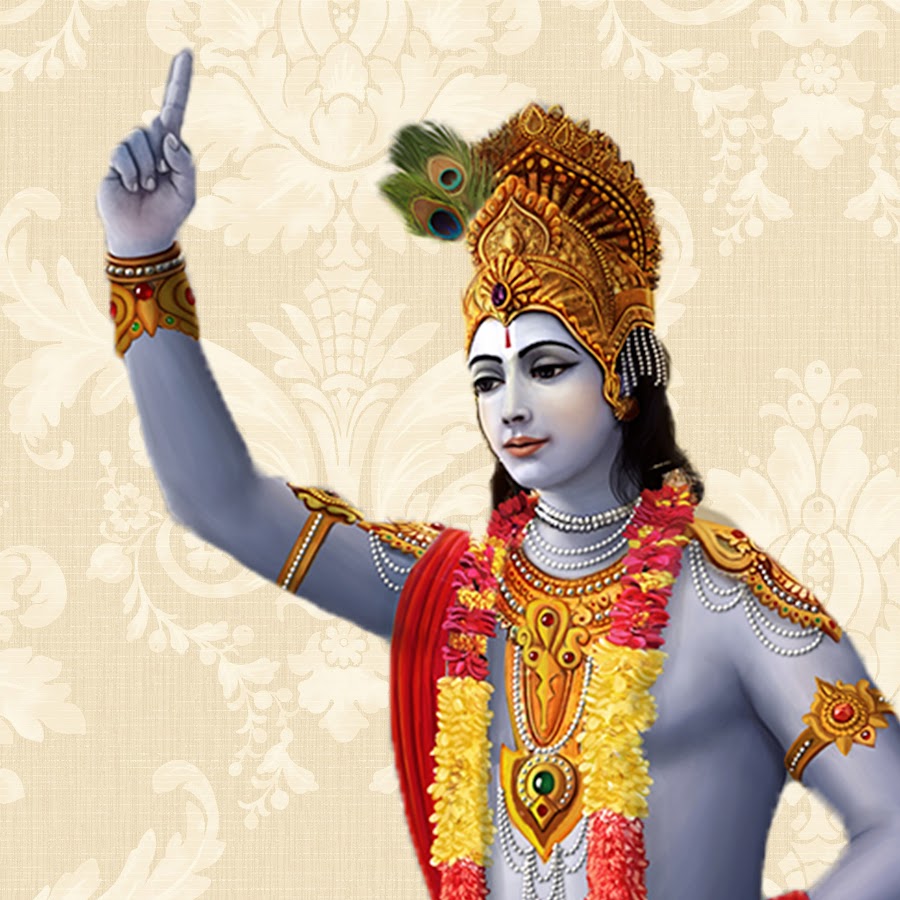
Pitru Paksha rests upon one of the most reassuring truths of Sanatan Dharma: the body is temporary, but the atma is eternal. Shree Krishna reveals this wisdom in the Bhagavad Gita:
न जायते म्रियते वा कदाचि
नायं भूत्वा भविता वा न भूय: ।
अजो नित्य: शाश्वतोऽयं पुराणो
न हन्यते हन्यमाने शरीरे ॥ 20॥
na jāyate mriyate vā kadāchin
nāyaṁ bhūtvā bhavitā vā na bhūyaḥ
ajo nityaḥ śhāśhvato ’yaṁ purāṇo
na hanyate hanyamāne śharīre
BG 2.20: The soul is neither born, nor does it ever die; nor having once existed, does it ever cease to be. The soul is without birth, eternal, immortal, and ageless. It is not destroyed when the body is destroyed.
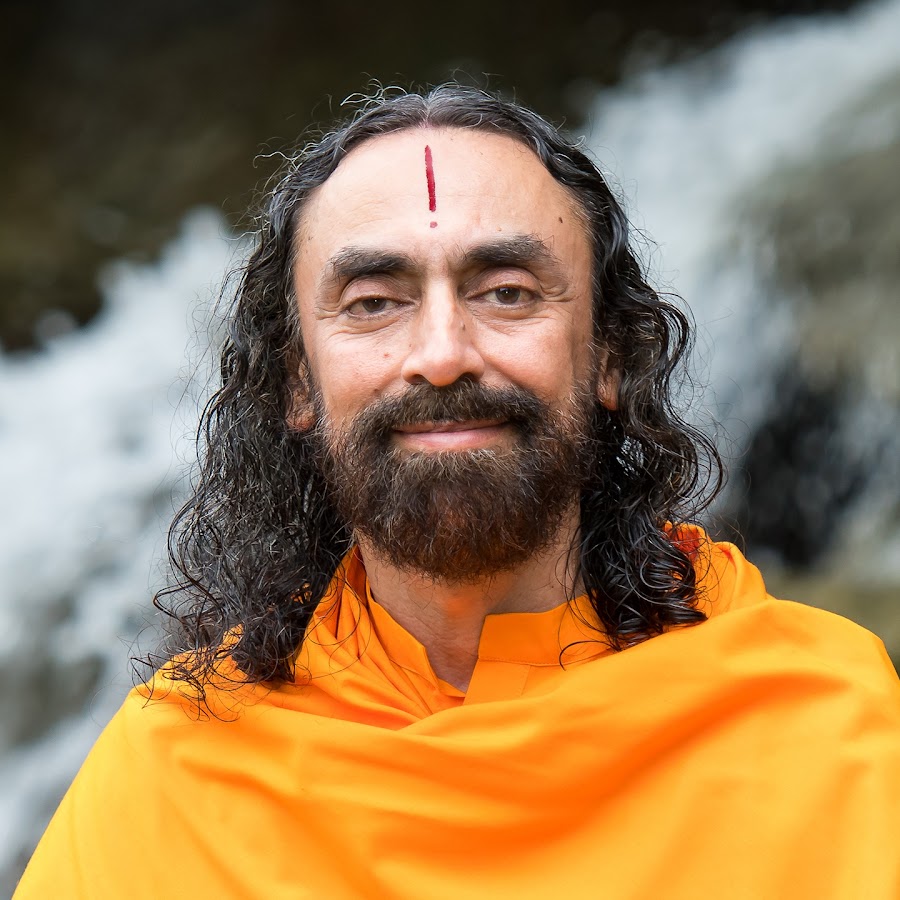
Swami Mukundananda explains that birth, growth, aging, and death are changes experienced by the physical body, not by the eternal self. The soul does not perish when its bodily journey ends. It continues onward according to its karmas and the divine laws of God.
This spiritual knowledge does not ask us to deny the pain of separation. We may still miss a familiar voice, a reassuring presence, or the simple comfort of knowing that someone we love is nearby. The empty chair remains empty, and the heart may continue to feel that absence. Yet the Bhagavad Gita gently lifts our understanding beyond what the eyes can see: the one we loved has not ceased to exist.
The worldly roles through which we knew one another belong to a particular lifetime, but the atma continues its eternal journey. Our gratitude need not disappear when that earthly relationship changes. We can place both our love and our sorrow before God, praying that He guides the departed soul and showers His grace upon it.
Seen in this light, Pitru Paksha is not centered only on death. It is rooted in faith, remembrance, and surrender. The body has completed its time, but the soul remains in God’s care. Our prayer becomes a quiet offering: “O Lord, thank You for allowing this soul to touch my life. Whatever I received through this relationship, I now place back at Your lotus feet.”
Why Do We Honor Our Ancestors? The Inheritance We Cannot Hold
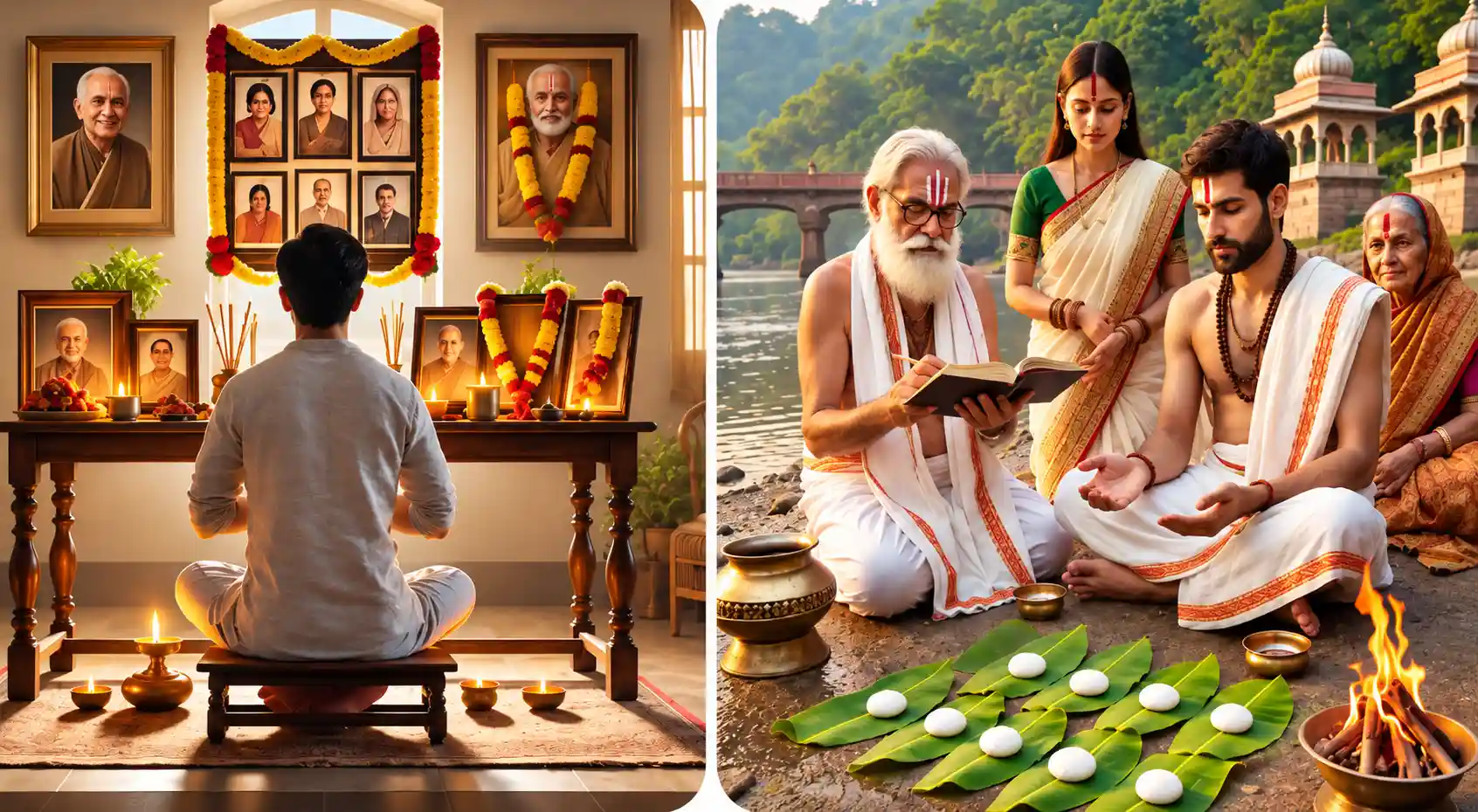
We honor our ancestors because our life did not begin with us. The body we received, the family into which we were born, the opportunities that shaped us, and many of the values by which we live have reached us through those who came before. Honoring them is a humble acknowledgment that we are not self-made, and a heartfelt acceptance of the visible and invisible inheritance carried into our lives.
When we speak of inheritance, our minds often turn toward what can be seen and measured: a family home, jewelry, savings, land, education, or opportunities. We preserve these gifts carefully because we know that someone worked, saved, or sacrificed to leave them for us.
Yet much of what we inherit cannot be placed in a cupboard or recorded in a document. A family may quietly pass down honesty, humility, kindness, intelligence, resilience, hospitality, or devotion. We may have learned to remain steady during adversity because someone before us endured hardship without losing faith. We may instinctively help others because generosity was practiced in our home long before we understood its meaning. We may turn toward God in difficult moments because an elder once planted that remembrance within the family.
These qualities become so naturally woven into our personalities that we begin to call them our own. Pitru Paksha invites us to look more deeply and ask: Who first planted these seeds? Whose discipline created the opportunities we enjoy? Whose silent prayers may still be protecting and guiding the family?
The Taittiriya Upanishad teaches:
मातृदेवो भव। पितृदेवो भव।
mātṛidevo bhava, pitṛidevo bhava
“Regard your mother as divine. Regard your father as divine.”
Sanatan Dharma also speaks of Pitri Rin, the debt of gratitude toward parents and ancestors. This is not a debt that can be calculated or repaid materially. It is the humble recognition that our individual life rests upon the contributions of many lives. Long before we began building our future, someone else had already laid part of its foundation with effort, sacrifice, hope, and prayer.
Not everything passed through a family lineage is easy or perfect. Along with strengths, families may also carry sorrow, misunderstandings, or habits that need healing. Gratitude does not require us to deny what was painful. We can receive what was noble, learn from what was difficult, forgive where possible, and pray for wisdom not to pass harmful patterns to another generation.
In this way, honoring our ancestors becomes both acceptance and responsibility. We accept that our story did not begin with us. We preserve the goodness entrusted to us, seek healing for what remained unfinished, and offer the entire inheritance at the feet of God.
We honor our ancestors most deeply when their honesty becomes our honesty, their courage strengthens our conduct, and their devotion finds new life in our hearts.
From Gratitude to Surrender: Swami Mukundananda’s Teaching
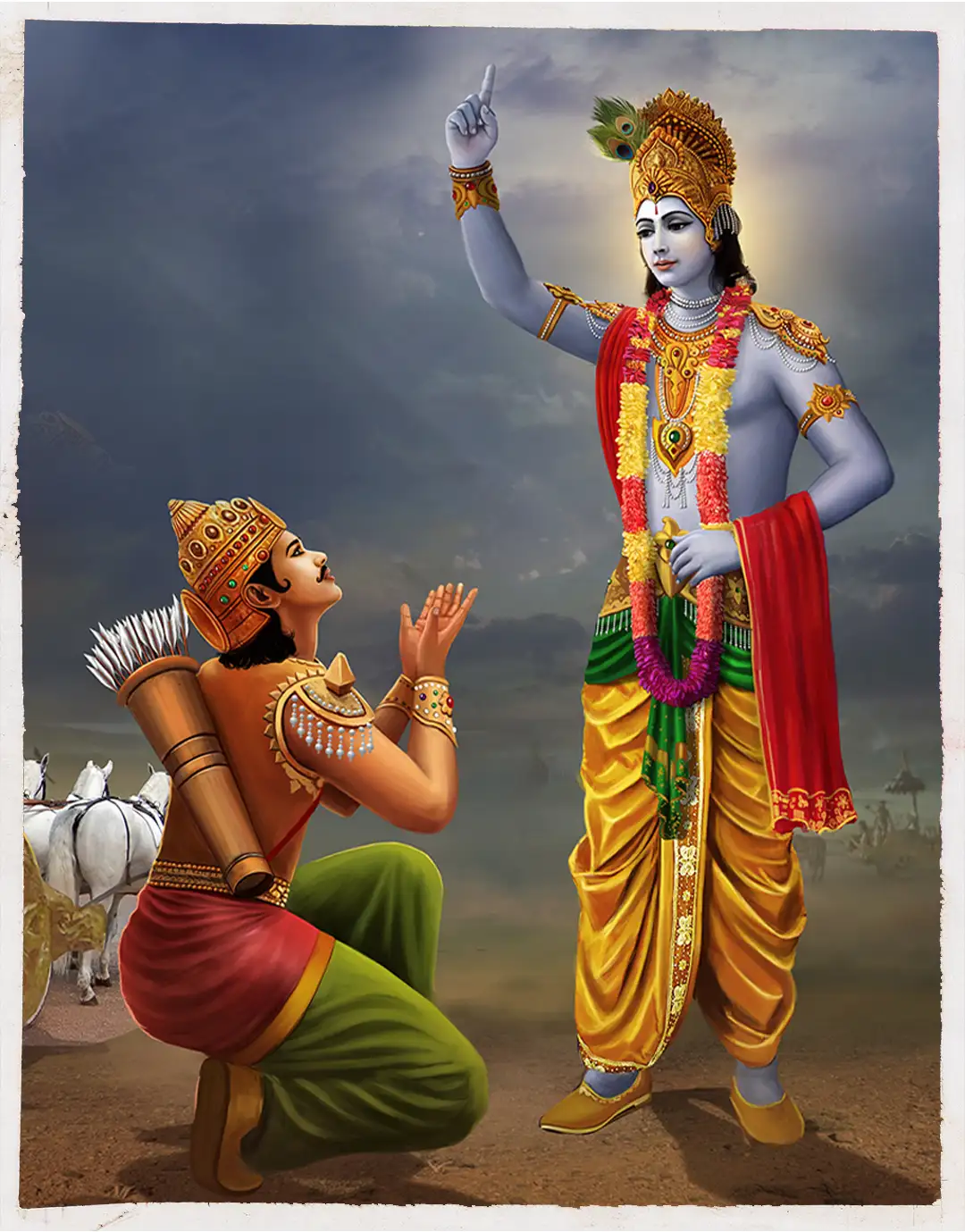
Swami Mukundananda explains that the Vedic scriptures speak of several debts carried by a human being, including the debt owed to ancestors. Yet he also reminds us that the ultimate purpose of every sacred duty is to lead the soul toward loving surrender to God.
In his commentary on Bhagavad Gita 18.66, Swamiji explains that when we fulfill our highest duty toward God, our other obligations are also fulfilled, just as watering the root of a tree nourishes its branches, leaves, flowers, and fruit.
सर्वधर्मान्परित्यज्य मामेकं शरणं व्रज ।
अहं त्वां सर्वपापेभ्यो मोक्षयिष्यामि मा शुच: ॥ 66॥
sarva-dharmān parityajya mām ekaṁ śharaṇaṁ vraja
ahaṁ tvāṁ sarva-pāpebhyo mokṣhayiṣhyāmi mā śhuchaḥ
BG 18.66: Abandon all varieties of dharmas and simply surrender unto Me alone. I shall liberate you from all sinful reactions; do not fear.
This teaching gives Pitru Paksha a beautiful devotional direction. We honor our ancestors with sincerity, recognizing the many gifts that reached us through them. Yet our gratitude does not stop with the human channels through which those gifts came. It rises toward God, the eternal Father of every soul and the original source of all grace.
When we offer our remembrance, charity, prayer, or seva to God and ask Him to shower His grace upon the departed souls, ancestral gratitude becomes part of bhakti. We are not merely looking backward toward the past. We are turning upward toward the Divine.
We thank our ancestors for the blessings that came through them, and we thank God from whom every blessing ultimately flows.
King Bhagiratha: Gratitude That Flowed into Grace

The story of King Bhagiratha reveals how gratitude toward one’s ancestors can become a selfless spiritual mission.
King Sagara’s sixty thousand sons had been reduced to ashes after disturbing the deep meditation of Sage Kapila. Their deliverance would become possible only when the sacred waters of Mother Ganga flowed over their remains. Anshuman prayed for this blessing, and his son Dilipa continued the effort, but the sacred task remained unfinished. Eventually, the responsibility passed to King Bhagiratha.
Bhagiratha had never seen the ancestors for whom he prayed. He had not known their voices or received their affection. Yet he understood that he belonged to their lineage. Their unfinished prayer became his prayer, and their deliverance became the purpose of his tapasya.
Leaving royal comforts behind, Bhagiratha undertook severe austerities. Pleased by his devotion, Lord Brahma granted his request for Ganga to descend. Because the force of her descent would have overwhelmed the earth, Bhagiratha prayed to Lord Shiva, who compassionately caught Ganga in His matted locks and released her gently onto the earth.
Bhagiratha then led Mother Ganga to the place where the ashes of King Sagara’s sons lay. Touched by her sacred waters, they attained deliverance. In recognition of his extraordinary devotion, Ganga came to be lovingly known as Bhagirathi.
Bhagiratha had prayed for his own lineage, but the grace born from his effort did not remain confined to his family. The Ganga he brought for his ancestors became a source of purification and spiritual nourishment for generations of humanity.
His story reminds us that we need not know every ancestor’s name to be grateful for those who came before us. Though their faces may fade from family memory, our existence quietly testifies to theirs.
We may not bring a celestial river to earth, but we can allow a stream of prayer, seva, forgiveness, and noble conduct to flow through our lives. When the goodness we inherited becomes a blessing for others, gratitude begins to resemble Bhagiratha’s offering.
He prayed for ancestors he had never seen, and his gratitude brought grace to a world he would never live to see.
Shri Ram and Sita at Gaya: When Love Became the Offering
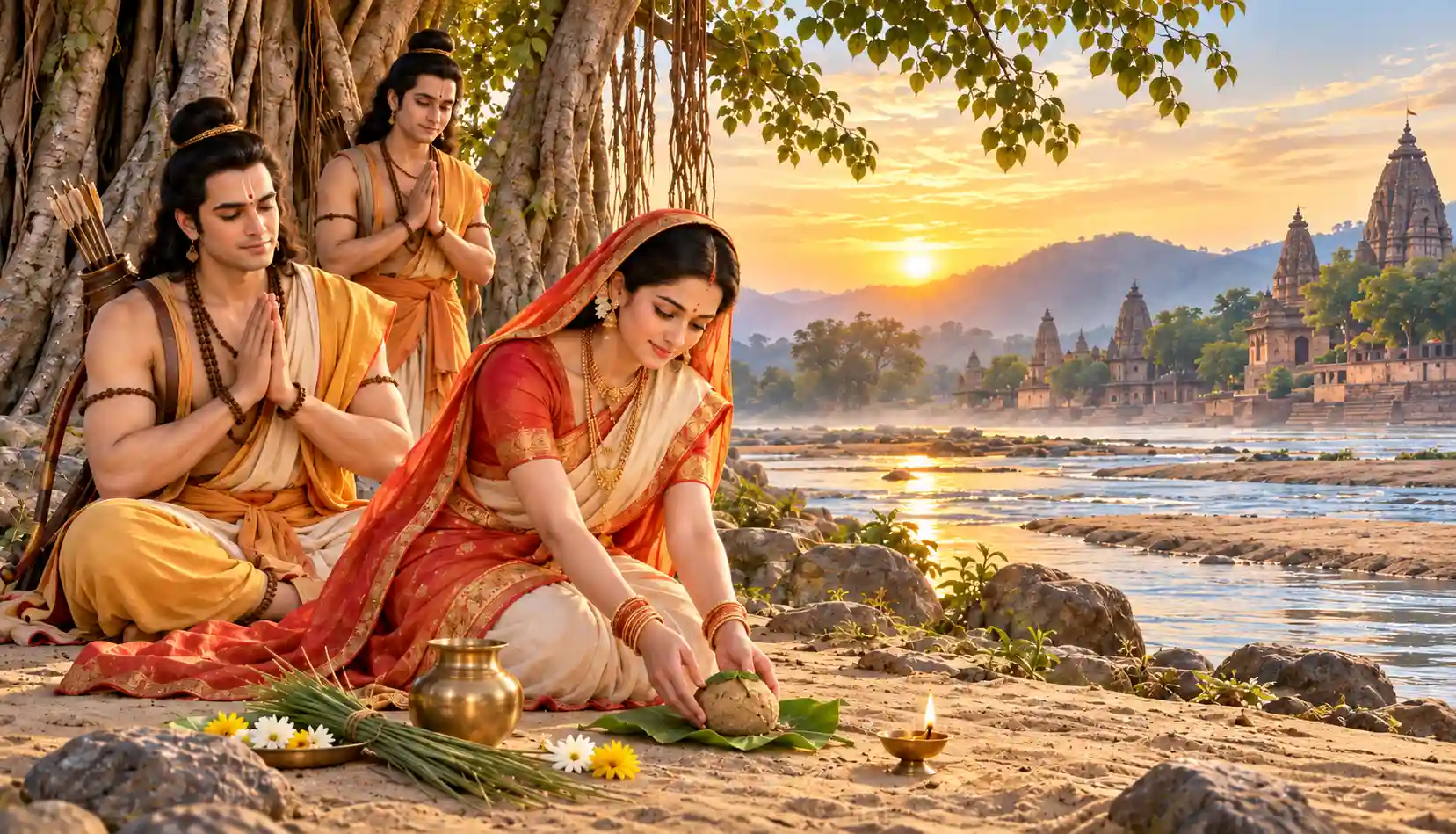
A sacred tradition associated with Gaya recounts that Shri Ram, Sita, and Lakshman visited the holy place to perform the ancestral rites of King Dasharatha.
Although Shri Ram was the Supreme Lord Himself, in His leela as Maryada Purushottam, He honored the responsibilities of a devoted son. Through His conduct, He showed that spiritual greatness does not place us above gratitude. It makes us humbler in fulfilling it.
According to the traditional account, Shri Ram and Lakshman went to gather the materials required for the ceremony while Sita waited beside the Falgu River. During their absence, King Dasharatha appeared before her and asked that the offering be made without delay.
Sita did not have the customary rice, sesame, prepared food, and ceremonial materials, Sita used the sand of the riverbank and the reverence in her heart. She shaped the sand into pindas and offered them with complete shraddha. Moved by her sincerity, Dasharatha accepted the offering and blessed her.
The tradition further remembers the Akshaya Vat, the sacred banyan tree of Gaya, as the witness that upheld the truth of Sita’s offering. It continues to be revered by pilgrims who visit Gaya to honor their ancestors.
The story beautifully reflects Shree Krishna’s teaching in the Bhagavad Gita:
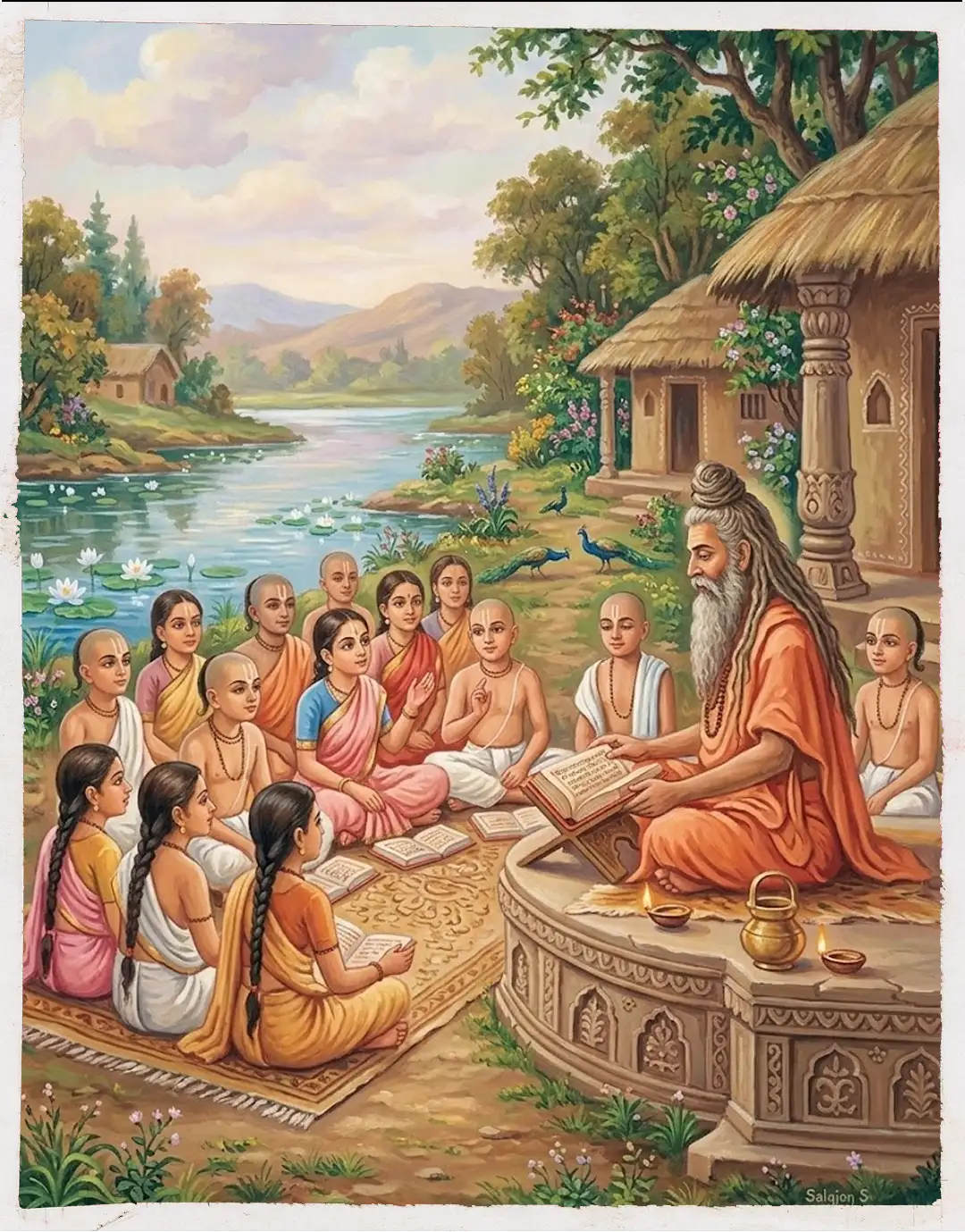
पत्रं पुष्पं फलं तोयं यो मे भक्त्या प्रयच्छति ।
तदहं भक्त्युपहृतमश्नामि प्रयतात्मन: ॥ 26॥
patraṁ puṣhpaṁ phalaṁ toyaṁ yo me bhaktyā prayachchhati
tadahaṁ bhaktyupahṛitam aśhnāmi prayatātmanaḥ
BG 9.26: If one offers to Me with devotion a leaf, a flower, a fruit, or even water, I delightfully partake of that item offered with love by My devotee in pure consciousness.
God does not measure an offering by its material value. He sees the love, devotion, and purity with which it is made. Sita held little in her hands, but her heart carried everything that an offering required.
Traditional rituals have their sacred place, and those who are able may perform them according to their family customs. But Sita’s offering brings comfort to anyone who feels unable to arrange something elaborate. A quiet prayer before God, a lamp lit with love, or food shared in an ancestor’s memory can still carry the fragrance of sincere remembrance.
The sand became sacred because Sita’s heart was filled with shraddha
Simple and Heartfelt Ways to Observe Pitru Paksha
Traditional observances such as shraddha, tarpan, and pind daan carry deep sanctity and may be performed according to one’s family customs and the guidance of a knowledgeable priest. Yet those who live far from their homeland, do not know the complete procedures, or are unable to arrange an elaborate ceremony need not feel excluded from the spirit of Pitru Paksha.
One may simply sit quietly before God and remember departed parents, grandparents, and earlier ancestors with affection. If their names are known, bring them individually into the prayer. If names and stories have disappeared with time, remember the entire lineage. A soul is not excluded from our prayer because a photograph or date has been lost.
One may pray:
“O Lord, I thank You for the souls through whom I received this life and its many blessings. Please shower Your grace upon them and guide them onward. May whatever goodness I offer today be accepted at Your lotus feet in their remembrance.”
Other simple expressions of gratitude may include:
- Offering prayer or kirtan: Chant the Divine Name, read from the Bhagavad Gita, or spend a few moments remembering God and praying for His grace upon the departed souls.
- Sharing food: Prepare a simple meal, offer it first to God, and share it with family or someone in need.
- Performing seva or charity: Support a temple, food program, school, hospital, or another worthy cause in an ancestor’s memory.
- Preserving their goodness: Share an inspiring family story or consciously practice a quality associated with an ancestor, such as honesty, kindness, resilience, or devotion.
- Serving living elders: Offer parents and elders time, patience, companionship, and care. Gratitude expressed while they are present is among the most precious offerings.
These gestures are not substitutes intended to diminish traditional rituals. They are ways of ensuring that an inability to perform something elaborate does not become an inability to remember.
Pitru Paksha is not a time for comparing the grandeur of our observances. Ritual gives sacred form to remembrance, but sincerity gives it life. The deepest offering is a heart that pauses, remembers what it has received, and quietly says, “Thank you.”
Pitru Paksha 2026 Dates for the Dallas Area
Pitru Paksha dates are determined according to the Hindu lunar calendar and may differ by geographical location. The following dates are based on the Dallas area. Devotees may consult the temple priest or follow their family tradition when determining the appropriate Shraddha tithi.
| Date | Day | Shraddha Observance |
|---|---|---|
| September 25, 2026 | Friday | Purnima Shraddha |
| September 26, 2026 | Saturday | Pratipada Shraddha |
| September 27, 2026 | Sunday | Dwitiya Shraddha |
| September 28, 2026 | Monday | Tritiya Shraddha |
| September 29, 2026 | Tuesday | Chaturthi Shraddha and Maha Bharani |
| September 30, 2026 | Wednesday | Panchami Shraddha |
| October 1, 2026 | Thursday | Shashthi Shraddha |
| October 2, 2026 | Friday | Saptami Shraddha |
| October 3, 2026 | Saturday | Ashtami Shraddha |
| October 4, 2026 | Sunday | Navami Shraddha |
| October 5, 2026 | Monday | Dashami and Ekadashi Shraddha |
| October 6, 2026 | Tuesday | Dwadashi Shraddha and Magha Shraddha |
| October 7, 2026 | Wednesday | Trayodashi Shraddha |
| October 8, 2026 | Thursday | Chaturdashi Shraddha |
| October 9, 2026 | Friday | Sarva Pitru Amavasya |
Shraddha is traditionally observed on the lunar tithi corresponding to an ancestor’s departure rather than on the same calendar date each year. Sarva Pitru Amavasya, the concluding day, offers an opportunity to remember all departed ancestors, especially when the exact tithi is unknown or an earlier observance could not be performed.
Conclusion: What Will We Pass Forward?
Pitru Paksha turns our hearts toward those who are no longer visible but whose gifts remain quietly present within us. We may recognize them in a prayer learned in childhood, a value we instinctively uphold, or the strength that arises within us during a difficult moment.
The Bhagavad Gita assures us that the atma never dies. The physical relationship changes, but the soul continues its journey under God’s care. We can therefore place both our love and our sorrow at His lotus feet, trusting that no soul ever exists beyond His presence.
King Bhagiratha shows us gratitude expressed through selfless effort. Shri Ram shows us the humility of honoring those through whom we received life. Sita shows us that the smallest offering becomes sacred when the heart is filled with shraddha.
Perhaps the greatest tribute to our ancestors is the life we now choose to live. When we preserve their goodness, heal what was painful, care for living elders, and pass devotion and noble values to the next generation, their finest inheritance continues through us.
One day, we too will become part of someone’s remembrance. What will remain will not be only our possessions or achievements, but the kindness we practiced, the courage we awakened, and the love of God we placed in another heart.
Pitru Paksha invites us to look back with gratitude and forward with responsibility. As we thank those through whom so many blessings reached us, our gratitude rises to God, the eternal source of every soul and every grace.
“O Lord, whatever goodness has reached me through those who came before, I offer it back at Your lotus feet. May I preserve it with humility, live it with sincerity, and pass it forward as a blessing.”
Key Takeaways
- Pitru Paksha is a sacred fortnight for remembering departed ancestors with faith, reverence, and gratitude.
- Sanatan Dharma teaches that the body is temporary, but the atma is eternal and continues its journey under the divine laws of God.
- We inherit more than possessions. Honesty, humility, courage, resilience, kindness, intelligence, devotion, and other subtle qualities may also pass through generations.
- Traditional rites such as shraddha, tarpan, and pind daan carry deep sanctity. When elaborate observances are not possible, sincere prayer and quiet remembrance still hold meaning.
- King Bhagiratha shows that gratitude can become selfless effort, while Sita’s offering at Gaya shows that the sincerity of the heart gives sacredness to an offering.
- We honor our ancestors by preserving their goodness, healing painful patterns, serving living elders, and passing noble values to the next generation.
- Our gratitude ultimately rises to God, the eternal source of every soul, relationship, and blessing.
Frequently Asked Questions
1. What is Pitru Paksha?
Pitru Paksha is a sacred period in the Hindu lunar calendar dedicated to remembering and honoring departed parents, grandparents, and earlier ancestors. Families may observe it through shraddha, tarpan, pind daan, prayer, food offerings, and charity.
2. Why do we honor our ancestors if the atma is eternal?
The eternity of the atma gives ancestral remembrance to its spiritual foundation. The departed soul has not ceased to exist. We remember with gratitude what we received through that relationship and pray to God for His grace upon the soul’s onward journey.
3. Are elaborate rituals necessary during Pitru Paksha?
Traditional rituals carry sacred value and may be performed according to family customs and priestly guidance. However, those unable to undertake elaborate observances can still sit quietly before God, remember their ancestors, offer a simple prayer, perform japa, give food, or undertake charity in their memory.
4. What if I do not know an ancestor’s name or Shraddha tithi?
A prayer may be offered collectively for all departed souls connected with the family lineage. Sarva Pitru Amavasya, the concluding day of Pitru Paksha, is traditionally observed for all ancestors, especially when a name or exact tithi is unknown.
5. What is the difference between shraddha, tarpan, and pind daan?
Shraddha refers broadly to ancestral rites performed with faith and reverence. Tarpan usually involves offering water with sacred ingredients and mantras. Pind daan involves offering symbolic food, traditionally formed into pindas. Practices vary, so families may follow their traditions or consult a knowledgeable priest.
6. Can Pitru Paksha be observed while living outside India?
Yes. Prayer and remembrance are not limited by geography. Families living abroad may perform traditional rites with priestly guidance when possible or observe the period through worship, japa, charity, food seva, and quiet remembrance at home or in a temple.
7. How can we honor our ancestors in everyday life?
We honor them by caring for living parents and elders, preserving noble family values, sharing uplifting family stories, serving others, and consciously practicing qualities such as honesty, kindness, courage, humility, and devotion.
Call to Action
Remember and pray at Radha Krishna Temple of Dallas
Pitru Paksha 2026: September 25 to October 9
Visit the temple during this sacred fortnight to remember your ancestors with prayer, gratitude, and devotion.
· Offer your remembrance at the lotus feet of God
· Attend darshan, aarti, kirtan, or satsang
· Sit quietly in prayer for departed family members
· Offer food seva, charity, or temple seva in their memory
· Contact the temple for guidance on poojas and priest services
References:
For more inspiring discourses on bhakti, the Bhagavad Gita, mind management, and spiritual growth, visit the YouTube channels associated with JKYog and Swami Mukundananda.


May this Pitru Paksha awaken within us a deeper awareness of what we have received, a sincere prayer for those who came before us, and a humble resolve to offer every inherited blessing back in the service of God.