
There arises a sublime moment during worship when the cacophony of the material world begins to soften into silence. The mind, which may have been preoccupied with the weight of responsibilities, deadlines, and the relentless flow of unfinished thoughts, is gently guided toward the Divine. Within the hallowed halls of the temple, sacred mantras create a sanctuary of peace where devotees gather before the gracious form of Lord Ganesha.
During the reverent ceremony of Abhishek, offerings of milk, honey, turmeric, and holy water are poured with love, transforming the atmosphere into a tapestry of prayer, beauty, and sacred remembrance.
Every Wednesday at 6:15 PM, the Radha Krishna Temple of Dallas invites you to personally participate in the Weekly Ganesh Abhishek. This spiritually uplifting service, enriched by the resonance of Vedic chants and devotional music, offers a sacred space to seek divine blessings for wisdom, success, and the removal of all obstacles.
Yet the significance of this weekly gathering extends beyond the ceremony itself.
Abhishek gives us an opportunity to slow down, turn inward, express gratitude, seek divine guidance, and renew the direction of our life. Through the spiritual insights emphasized by Swami Mukundananda, we can understand how an external act of worship becomes most meaningful when it awakens devotion within the heart and turns the mind toward God.
The Weekly Ganesh Abhishek can therefore become more than an event on the calendar: it can become a sacred pause in the middle of the week, a moment to remember what truly matters.

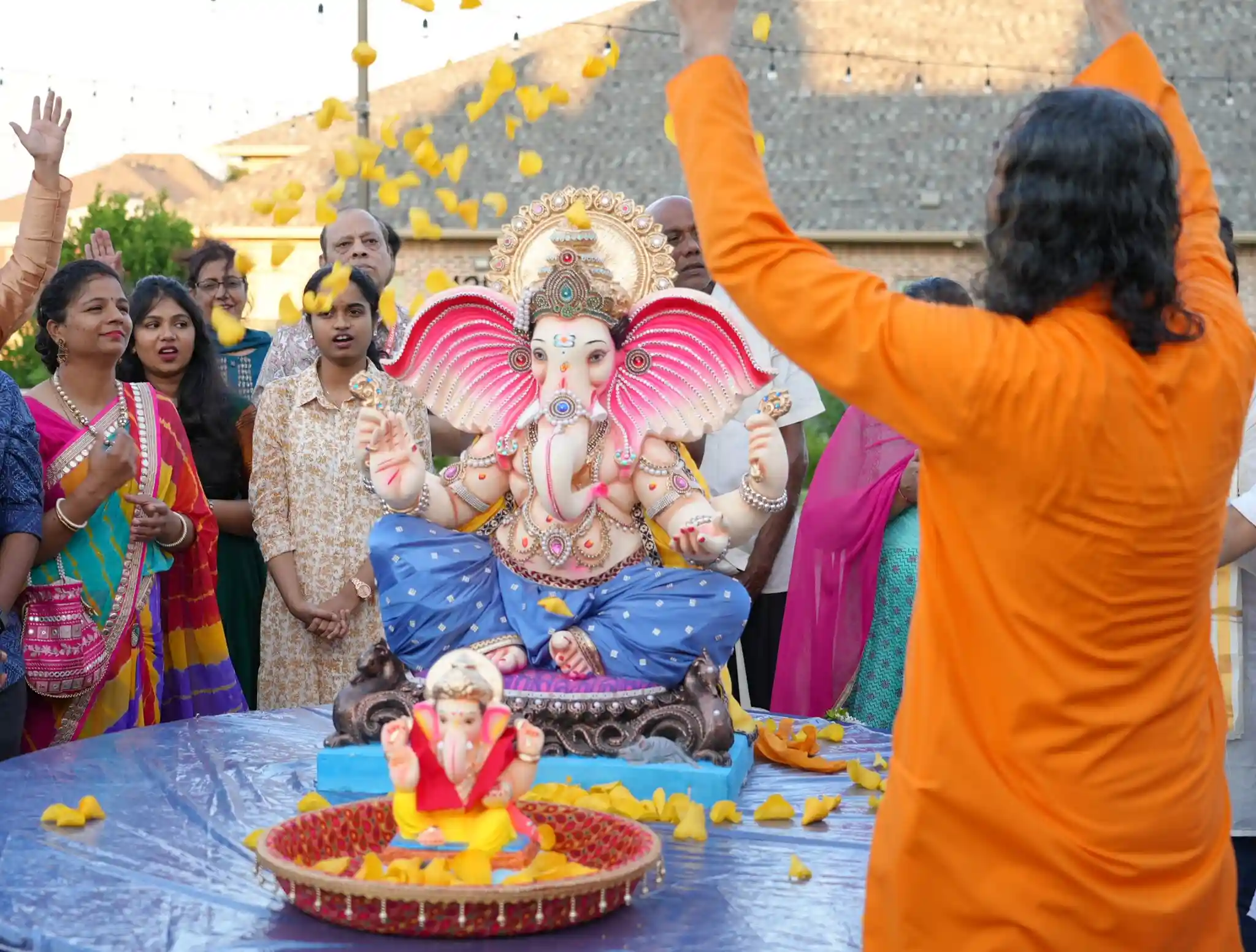
Lord Ganesha and the Grace of an Auspicious Beginning
Lord Ganesha is among the most beloved forms of the Divine in Hindu tradition. He is revered as Vighnaharta, the remover of obstacles, and as the embodiment of wisdom, discrimination, strength, and auspiciousness.
For this reason, Lord Ganesha is traditionally remembered before the commencement of sacred ceremonies and important endeavors. Revered as the bringer of wisdom and remover of obstacles, Lord Ganesh is worshipped at the onset of new ventures to invoke divine guidance and ensure success
There is something profound in this tradition, for a good beginning is not merely about receiving favorable circumstances but about beginning with the right consciousness.
Before undertaking something important, we may naturally think about resources, plans, timing, and outcomes. Worship of Lord Ganesha reminds us to also ask deeper questions.
Is my intention right?
Am I proceeding with wisdom?
Will this endeavor contribute positively to my life and to others?
Am I prepared to remain steady if difficulties arise?
When an undertaking begins with prayer, our first step is no longer merely toward achievement. It becomes a step taken with humility and awareness of divine grace.
What Is Ganesh Abhishek?
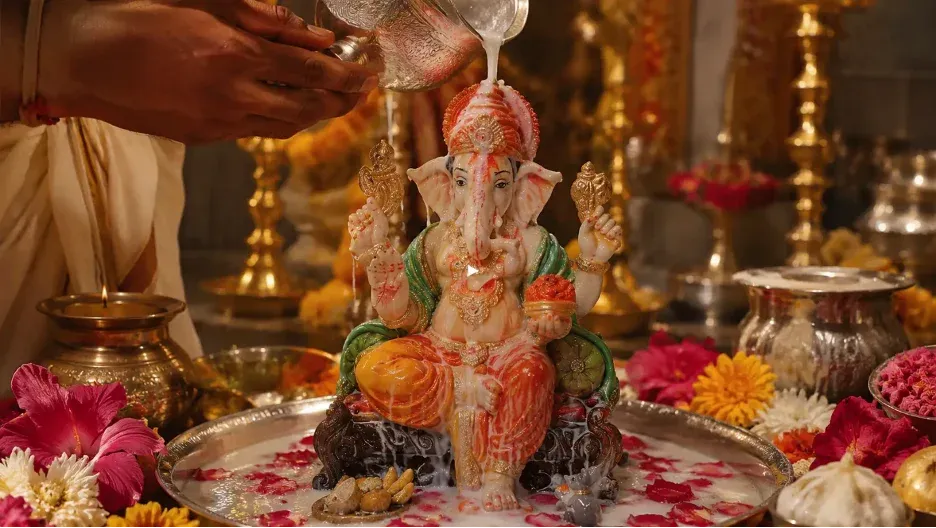
Abhishek is the sacred ceremonial bathing of the divine form with sanctified offerings accompanied by prayer and mantra.
Within traditional puja, ceremonial bathing, or snana, forms part of the sequence through which the deity is worshipped with reverence and hospitality. The deity worship ofGanesh Puja includes sacred bathing among the traditional offerings made during worship.
At Radha Krishna Temple of Dallas, devotees participate in Ganesh Abhishek with sacred offerings including milk, honey, turmeric, and holy water.
The beauty of the ceremony lies in the union of physical worship and devotional consciousness.
The hands perform an offering.
The ears hear sacred mantras.
The eyes receive darshan.
The mind is given a divine object on which to focus.
The heart is invited to respond with reverence.
This is why ritual worship can have such a powerful place in spiritual life. It engages the whole person. Rather than asking the mind to instantly become silent, sacred worship gently directs it toward divine sights, sounds, actions, and sentiments.
The Offerings as a Personal Meditation
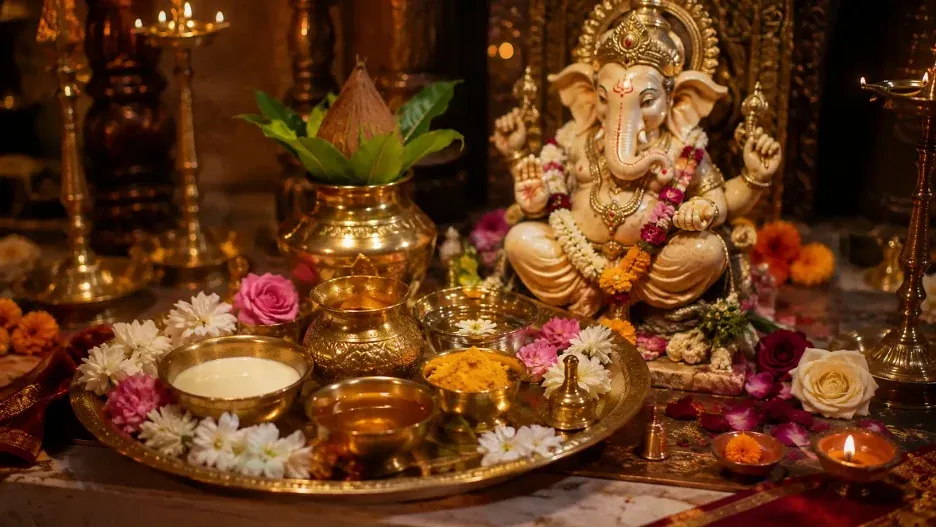
The sacred substances used during Abhishek have traditional ritual significance. A devotee can also use each offering as an opportunity for personal contemplation.
As water flows over the form of Lord Ganesha, one may contemplate purity and pray for greater clarity in thought and intention.
While milk is offered, one can reflect on spiritual nourishment and the importance of cultivating sattvic qualities in everyday life.
The sweetness of honey can inspire a simple prayer: may my speech become kinder, my relationships more harmonious, and my interactions with others more thoughtful.
The auspicious presence of turmeric can remind us to seek a life guided by dharma and wholesome intentions.
These contemplations need not replace the traditional meaning of the ritual. They help the devotee become mentally engaged with what is happening externally. Instead of allowing the ceremony to pass before the eyes while the mind remains elsewhere, every offering becomes an invitation to awareness. This leads naturally to one of Swami Mukundananda's central teachings on devotional practice: the mind must participate in worship.
Swami Mukundananda on Bringing the Mind Into Worship
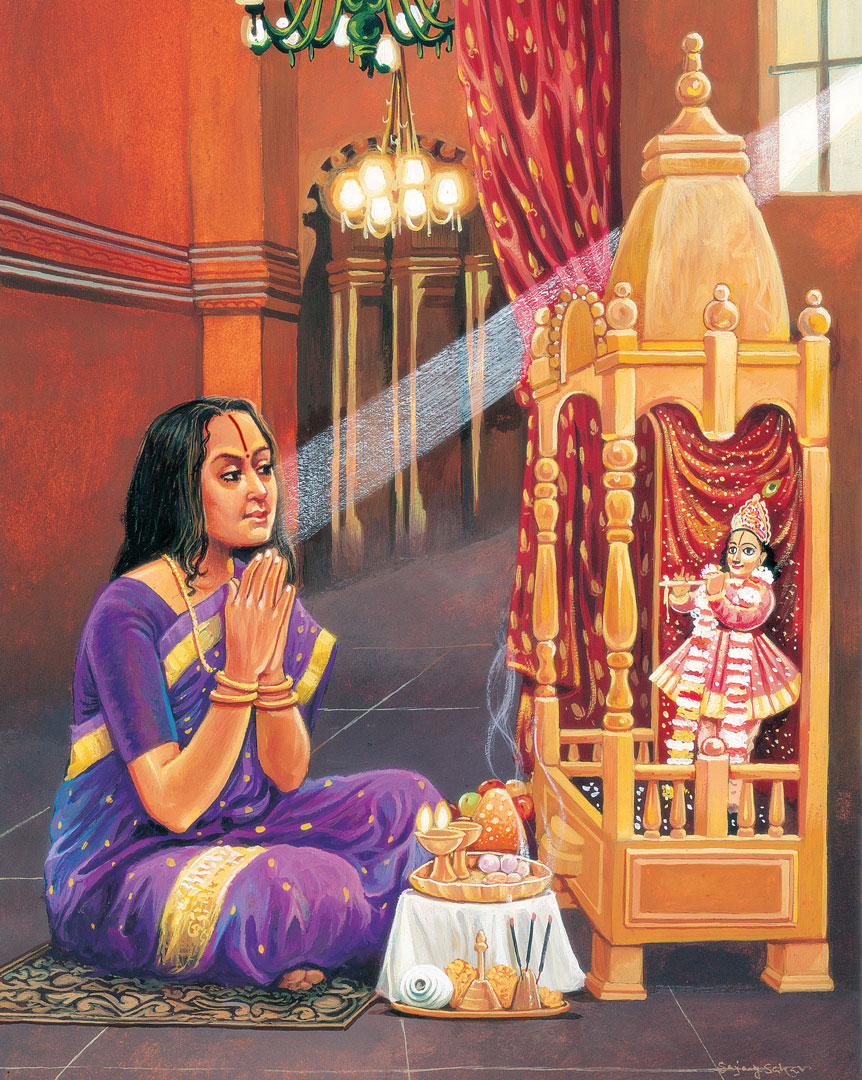
In his commentary on Bhagavad Gita 12.8, Swami Mukundananda explains Shree Krishna's instruction to fix the mind upon God and surrender the intellect to Him. Swamiji distinguishes the functions of the mind and intellect and emphasizes that both should become directed toward the Divine.
मय्येव मन आधत्स्व मयि बुद्धिं निवेशय ।
निवसिष्यसि मय्येव अत ऊर्ध्वं न संशय: ॥ 8॥
mayy eva mana ādhatsva mayi buddhiṁ niveśhaya
nivasiṣhyasi mayy eva ata ūrdhvaṁ na sanśhayaḥ
BG 12.8: Fix your mind on Me alone and surrender your intellect to Me. There upon, you will always live in Me. Of this, there is no doubt.
This principle is especially relevant during Abhishek.
Our body may be standing in the temple.
Our hands may be performing the offering.
Our voice may be repeating a mantra.
But where is the mind?
It may be thinking about tomorrow's schedule, replaying a conversation, checking an unfinished task mentally, or worrying about something that has not yet happened.
Spiritual practice begins when we notice this and gently bring the mind back.
We look at Lord Ganesha.
We listen to the mantra.
We become conscious of the offering.
We remember why we came.
Over time, this simple practice of repeatedly redirecting the mind becomes deeply valuable. The Abhishek then trains us in something needed throughout spiritual life: the art of bringing our attention back to God.
Begin With Sankalp: What Are You Bringing to Lord Ganesha?
Before worship begins, Hindu tradition places importance on sankalp, a conscious spiritual resolution or intention. JKYog's description of Ganesh Puja begins with Sankalpa, in which the worshipper resolves to perform the puja with devotion and for a meaningful spiritual purpose.
This principle can make the Weekly Ganesh Abhishek much more personal.
Before entering the ceremony, take a quiet moment and ask:
What am I bringing before Lord Ganesha today?
Perhaps you are beginning a new chapter in life.
Perhaps an important decision requires clarity.
Perhaps you wish to express gratitude for something that has gone well.
Perhaps you recognize a habit within yourself that needs improvement.
Perhaps someone in your family needs prayers.
Perhaps you have no specific request at all and simply wish to worship.
A clear Sankalp gathers the scattered mind around one sincere intention. You might also choose one divine quality to cultivate during the coming week, such as patience, discipline, humility, courage, gratitude, or compassion. The worship then has a living connection to your life.
The Story of Ganesha and Kartikeya: Wisdom Sees What Speed Cannot

One of the most beautiful stories associated with Lord Ganesha reveals why wisdom is one of His defining qualities.
According to the traditional account, a competition was arranged to determine who could circumambulate the universe and return first. Kartikeya immediately set out on his swift peacock.
Lord Ganesha's vehicle was a small mouse. Rather than attempt to compete through speed, Ganesha reflected upon the deeper meaning of the challenge.
He circumambulated His parents, Lord Shiva and Mother Parvati, recognizing them as embodying the universe for Him. His insight and devotion won the contest. JKYog recounts the episode as a lesson in how wisdom and devotion can accomplish what outward strength or speed alone cannot.
The story carries an extraordinary message for modern life. We often associate progress with moving faster.
Faster decisions.
Faster careers.
Faster technology.
Faster results.
But speed does not guarantee direction. Lord Ganesha reminds us that sometimes the person who pauses to understand the deeper purpose advances further than the one who simply rushes ahead.
Wisdom Before Success
It is natural to pray to Lord Ganesha for success, but success without wisdom can become its own difficulty.
A person may gain wealth yet lose peace. Another may receive authority but lack humility. Someone may achieve recognition but become consumed by comparison. A long-desired opportunity may arrive before we have developed the maturity to use it well.
This is why Lord Ganesha's association with both wisdom and prosperity is so meaningful.
The prayer can therefore become:
"Bless me not merely with success, but with the wisdom to use success well."
"Give me not merely opportunity, but the discrimination to recognize the right opportunity."
"Give me not merely achievement, but humility when achievement comes."
This deeper understanding keeps spiritual worship from becoming transactional. We are not approaching God simply to obtain favorable circumstances. We are seeking to become capable of responding to every circumstance with greater wisdom.
The Mouse at Lord Ganesha's Feet: Mastering Desire
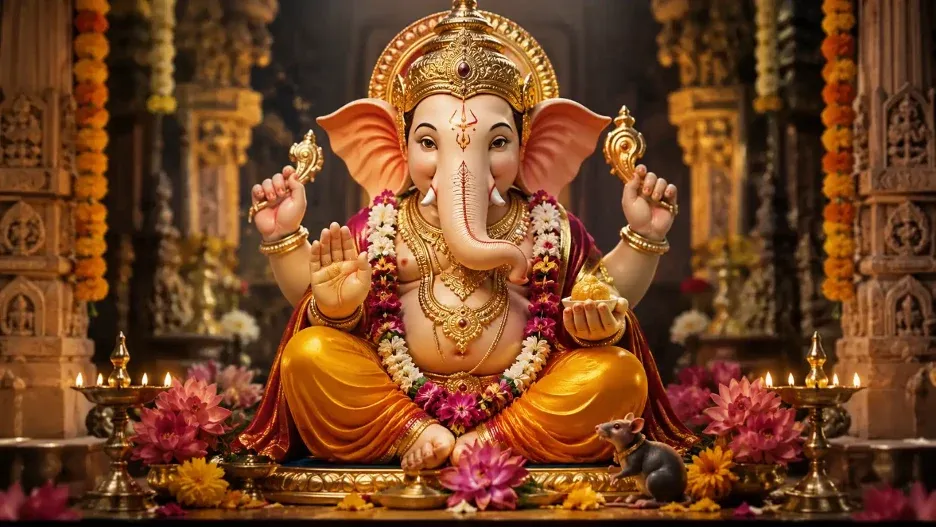
Even Lord Ganesha's vehicle offers a profound lesson.
JKYog explains that the humble mouse associated with Lord Ganesha symbolizes humility and the ability to overcome desires. Another JKYog teaching connects Ganesha's mouse with the need to control lower tendencies or vices in order to rise spiritually.
The symbolism is remarkably relevant.
A mouse can slip through tiny openings. In a similar way, an unchecked desire can quietly enter the mind and gradually occupy more attention than we intended to give it.
One desire becomes another, one distraction creates another and soon the mind is running wherever its impulses lead. But in the iconography of Lord Ganesha, the mouse is not the master, it is His vehicle.
That distinction contains a spiritual lesson: The senses, desires, ambitions, and impulses do not necessarily need to be destroyed. They need to be governed by wisdom. The mind should become our instrument, not our ruler.
Standing before Lord Ganesha, a devotee can therefore pray for mastery over the tendencies that repeatedly disturb inner peace.
Bhav: What Gives an Offering Its Spiritual Value?
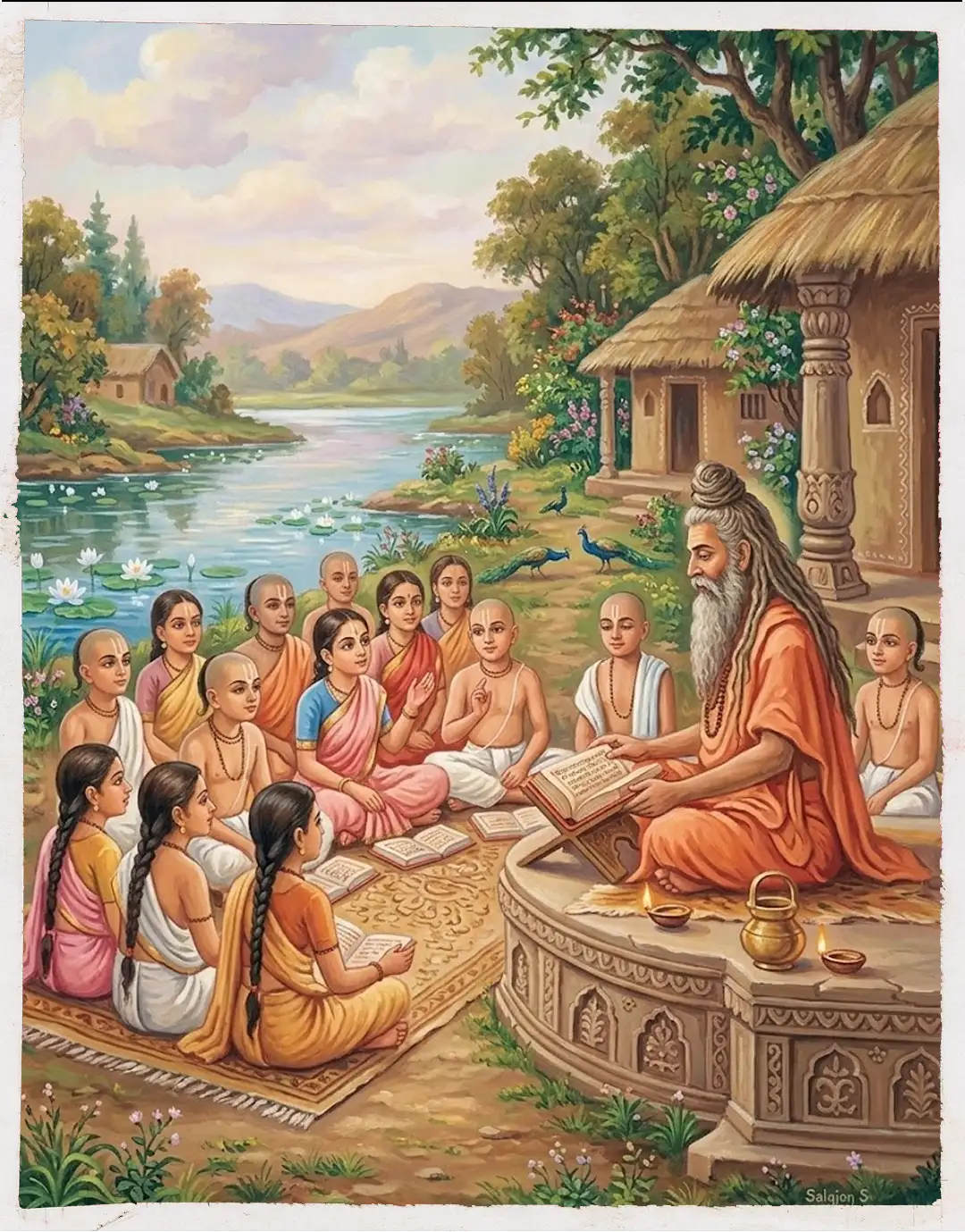
One of the most beautiful principles in bhakti is expressed by Shree Krishna in Bhagavad Gita 9.26.
The Lord declares that He accepts even a simple leaf, flower, fruit, or water when it is offered with devotion. In his commentary, Swami Mukundananda emphasizes that God is not attracted by the material value of what is presented. It is the devotion of the devotee that makes the offering pleasing to Him.
पत्रं पुष्पं फलं तोयं यो मे भक्त्या प्रयच्छति ।
तदहं भक्त्युपहृतमश्नामि प्रयतात्मन: ॥ 26॥
patraṁ puṣhpaṁ phalaṁ toyaṁ yo me bhaktyā prayachchhati
tadahaṁ bhaktyupahṛitam aśhnāmi prayatātmanaḥ
BG 9.26: If one offers to Me with devotion a leaf, a flower, a fruit, or even water, I delightfully partake of that item offered with love by My devotee in pure consciousness.
This teaching transforms the way we understand Abhishek, for while the material offering is visible, the bhav, or devotional sentiment, is invisible.
Yet the invisible offering is the more important one.
Two people may perform the same outward action while experiencing completely different worship internally.
One may be distracted, and another may inwardly offer gratitude with every movement.
One may be concerned primarily with completing the procedure while another may feel, "Lord, everything I possess has ultimately come through Your grace. I offer this back to You with love."
The difference lies in consciousness, and this is why even the simplest act of devotion can become spiritually profound when the heart is sincerely present.
What a First-Time Visitor Can Expect
If you have never attended Ganesh Abhishek before, there is no need to feel that you must already understand every mantra or ritual.
Come with reverence and openness
Allow yourself to observe.
Listen to the Vedic chants.
Receive darshan of Lord Ganesha.
Follow the guidance given at the temple when participating in the offerings.
You do not need fluency in Sanskrit to pray. A sincere thought offered to God is meaningful.
You may simply stand before Lord Ganesha and inwardly say:
"Please guide me toward what is right."
Or:
"Thank You for Your blessings."
Or simply:
"May my mind remember You."
The temple experience can unfold gradually. With repeated participation, unfamiliar elements become familiar, and the deeper beauty of the tradition often reveals itself over time. The essential preparation is not expertise, it is devotion.
Why Weekly Worship Has a Different Power
Ganesh Chaturthi brings magnificent annual celebration and collective devotion to Lord Ganesha. Weekly worship serves another purpose.
It creates spiritual rhythm, for our inner life is shaped largely by what we repeat. One inspiring experience can uplift us temporarily. A recurring spiritual practice begins to create habit.
Wednesday arrives, and the devotee remembers Lord Ganesha.
This regularity is particularly valuable because spiritual growth rarely occurs through dramatic experiences alone. It develops through repeated acts of remembrance.
Swami Mukundananda's commentary on Bhagavad Gita 12.12 contrasts merely mechanical practice with deeper stages involving understanding, contemplation, and renunciation of attachment to results.
श्रीभगवानुवाच ।
मय्यावेश्य मनो ये मां नित्ययुक्ता उपासते ।
श्रद्धया परयोपेतास्ते मे युक्ततमा मता: ॥ 2॥
śhrī-bhagavān uvācha
mayy āveśhya mano ye māṁ nitya-yuktā upāsate
śhraddhayā parayopetās te me yuktatamā matāḥ
BG 12.2: The Lord said: Those who fix their minds on Me and always engage in My devotion with steadfast faith, I consider them to be the best yogis.
Bringing Children to Ganesh Abhishek: Creating Spiritual Samskaras
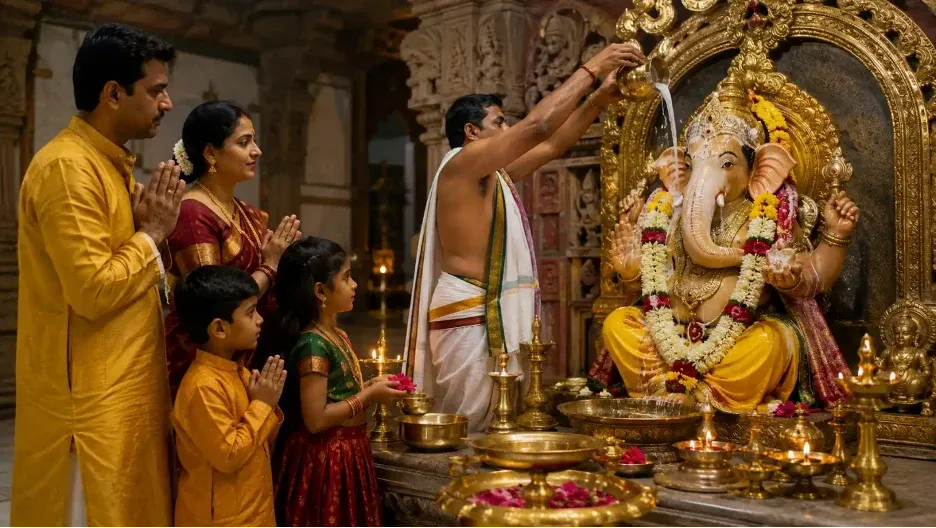
For families, Weekly Ganesh Abhishek offers something especially precious.
Children learn spirituality not only from explanations but from what they repeatedly experience.
A child may not understand the philosophy of Abhishek, but the child sees parents fold their hands. The child hears sacred chanting and watches Lord Ganesha being lovingly worshipped.
The child observes that the family makes time for God and begins associating the temple with devotion, family, sacredness, joy, and belonging.
These experiences create samskaras, impressions that can remain in the mind long after the details of a particular Wednesday have been forgotten.
Years later, a familiar mantra, the fragrance of a temple, the sight of an Abhishek, or the form of Lord Ganesha may awaken those childhood impressions. This is one reason recurring family worship can have such lasting value.
We do not always know which spiritual experience will become an anchor in a child's life, we simply create opportunities for divine impressions to take root.
From Participation to Seva
There is another way to deepen one's relationship with temple worship.
Move gradually from asking:
"What can I receive?"
to also asking:
"What can I offer?"
The temple's own guidance for visitors describes satsang and volunteering with like-minded devotees as forms of spiritual association and service.
Seva may take many forms:
Helping prepare for temple programs.
Assisting devotees.
Supporting events.
Contributing one's professional skills.
Helping maintain a welcoming environment.
Offering time behind the scenes where nobody may notice the work.
This shift is spiritually significant. At first, we may come to Lord Ganesha seeking blessings. As devotion matures, we begin to experience joy in becoming an instrument of service.
The question changes from:
"Lord, what will You do for me?"
to:
"Lord, how may I serve?"
That transformation from receiving to giving is itself a form of grace.
Let the Abhishek Continue After You Leave the Temple
Perhaps the most important part of Wednesday's Ganesh Abhishek begins after the ceremony is over.
Suppose your Sankalp was patience.
The next morning, someone tests your patience.
That moment is part of your worship.
Suppose you prayed for control over anger.
A difficult conversation arises on Friday.
That is where your prayer becomes practice.
Suppose you asked Lord Ganesha for wisdom.
An attractive but questionable opportunity appears.
Now wisdom must become a decision.
Suppose you prayed for sweeter speech while contemplating the offering of honey.
At home, you are tempted to speak harshly.
Now the symbolism of the Abhishek has followed you into everyday life.
Spiritual practice reaches maturity when temple worship and daily conduct no longer remain separate.
Swami Mukundananda's commentary on Bhagavad Gita 12.6 and 12.7 highlights the principle of dedicating one's actions to God while keeping Him as the supreme goal.
ये तु सर्वाणि कर्माणि मयि संन्न्यस्य मत्परा: ।
अनन्येनैव योगेन मां ध्यायन्त उपासते ॥ 6॥
तेषामहं समुद्धर्ता मृत्युसंसारसागरात् ।
भवामि नचिरात्पार्थ मय्यावेशितचेतसाम् ॥ 7॥
ye tu sarvāṇi karmāṇi mayi sannyasya mat-parāḥ
ananyenaiva yogena māṁ dhyāyanta upāsate
teṣhām ahaṁ samuddhartā mṛityu-saṁsāra-sāgarāt
bhavāmi na chirāt pārtha mayy āveśhita-chetasām
BG 12.6-7: But those who dedicate all their actions to Me, regarding Me as the Supreme goal, worshiping Me and meditating on Me with exclusive devotion, O Parth, I swiftly deliver them from the ocean of birth and death, for their consciousness is united with Me.
“Our work, family responsibilities, talents, achievements, and even our challenges can then become part of our offering to God.”
Success can be offered through gratitude rather than pride. Even difficulties can become offerings when we face them with faith, maturity, and remembrance of God.
There is therefore a beautiful progression in devotional life. At first, we bring something to God. Gradually, we learn to offer our life to God.
The vessel used during Abhishek eventually becomes empty as its contents are poured before Lord Ganesha. In the same way, worship can inspire us to gradually empty the heart of ego, excessive attachment, resentment, and the insistence that everything must happen according to our own preference.
Then Wednesday's Ganesh Abhishek does not end when the final sacred offering has been made.
Its spirit continues in the choices we make, the way we speak, the way we serve, the way we respond to challenges, and the consciousness with which we perform our daily duties.
The true continuation of Abhishek is a life increasingly guided by wisdom, devotion, humility, and remembrance of God.
Over time, that regular remembrance helps spirituality become not an occasional activity reserved for festivals or difficult moments, but a natural and cherished part of life.
Experience Weekly Ganesh Abhishek at Radha Krishna Temple of Dallas
Join us every Wednesday at 6:15 PM for the Weekly Ganesh Abhishek at Radha Krishna Temple of Dallas. Personally participate in the sacred bathing of Lord Ganesha with milk, honey, turmeric, and holy water, accompanied by Vedic chants and devotional music.
Come with your prayers, gratitude, and aspirations, and seek Lord Ganesha’s blessings for wisdom, auspiciousness, success, and the removal of obstacles.
“Let Wednesday become a weekly moment of prayer, renewal, and divine remembrance in the grace of Lord Ganesha.”
Please also explore the festivities for Ganesh Mahotsav at the Radha Krishna Temple of Dallas:

.webp)
Ganapati Bappa Morya!
Frequently Asked Questions
1. When is the Weekly Ganesh Abhishek held?
The Weekly Ganesh Abhishek is held every Wednesday at 6:15 PM at Radha Krishna Temple of Dallas.
2. Can devotees personally participate in the Abhishek?
Yes. Devotees are invited to personally participate in the sacred ceremonial bathing of Lord Ganesha.
3. What offerings are used during Ganesh Abhishek?
Sacred offerings include milk, honey, turmeric, and holy water, accompanied by Vedic chants and devotional music.
4. What blessings do devotees seek from Lord Ganesha?
Devotees pray for wisdom, auspiciousness, success, clarity, and the removal of obstacles.
5. What is the deeper meaning of Ganesh Abhishek?
Beyond the external ritual, Abhishek encourages devotees to turn the mind toward God and cultivate devotion, purity, and spiritual awareness.
6. Do I need to know Sanskrit or the rituals beforehand?
No. First-time visitors can simply come with reverence, observe the ceremony, follow temple guidance, and participate with sincere devotion.
7. Is Ganesh Abhishek suitable for families and children?
Yes. Participating as a family can help children experience Vedic traditions and develop lasting spiritual samskaras.
8. Why participate in Ganesh Abhishek every week?
Weekly worship creates a regular rhythm of divine remembrance and helps spiritual values gradually become part of everyday life.