
Daily Chanting, Devotional Learning & the Journey Toward Divine Love
In the midst of our busy lives, creating time to remember God can become a powerful spiritual practice. The Radha Krishna Temple of Dallas offers devotees and guests a beautiful opportunity to come together every day for the sacred chanting of Sri Vishnu Sahasranama: the thousand names of Lord Vishnu.
Held daily from 5:30 PM to 6:15 PM CT, this devotional gathering invites participants to pause, chant, listen, and turn the mind toward the Divine.
For those who wish to deepen their understanding and practice, the temple also offers free weekly classes on Tiruppavai and Sri Vishnu Sahasranamam for children, youth, and adults.
Together, these practices can become more than a weekly or daily activity. They can form part of a meaningful journey of Bhakti, helping us gradually cultivate remembrance of God, selfless service, and ultimately selfless divine love for God.


What Is Vishnu Sahasranama?

Vishnu Sahasranama means the “Thousand Names of Lord Vishnu.” It is one of the most revered devotional texts in the Hindu tradition, with each name expressing a divine quality, attribute, or aspect of the Supreme.
Chanting these names gives the mind a sacred object upon which to focus. Rather than allowing the mind to constantly wander among worldly concerns, devotees engage their voice, ears, and thoughts in remembering the Divine.
The practice can therefore become an opportunity to cultivate devotion, concentration, humility, and remembrance of God.
At the Radha Krishna Temple of Dallas, devotees can experience this practice collectively in the uplifting atmosphere of the temple.
 JKYog Team

Join Daily Vishnu Sahasranama Chanting
Everyone is welcome to participate in this sacred daily gathering.
Daily Schedule
| Details | Information |
|---|---|
| Event | Vishnu Sahasranama Chanting |
| Frequency | Daily |
| Chanting Time | 5:30 PM – 6:15 PM CT |
| Check-in Time | 5:15 PM |
| Location | Radha Krishna Temple of Dallas, Allen |
| Format | In person |
| Cost | Free |
| Who Can Attend? | All devotees and guests |
If you are new to Vishnu Sahasranama, you are welcome to simply listen and gradually become familiar with the chanting.
The Spiritual Power of Chanting
Why devote time every day to chanting divine names?
From the perspective of Bhakti, chanting is not merely repetition. It is an opportunity to remember God.
Our minds naturally move toward whatever we repeatedly hear, speak about, think about, and contemplate. When we consciously bring divine names and glories into our daily routine, we create opportunities for the mind to turn away from constant worldly preoccupation and toward the Divine.
This is closely connected with the JKYog understanding of Tridha Bhakti, or threefold devotion.
Tridha Bhakti: Hear, Chant, and Remember
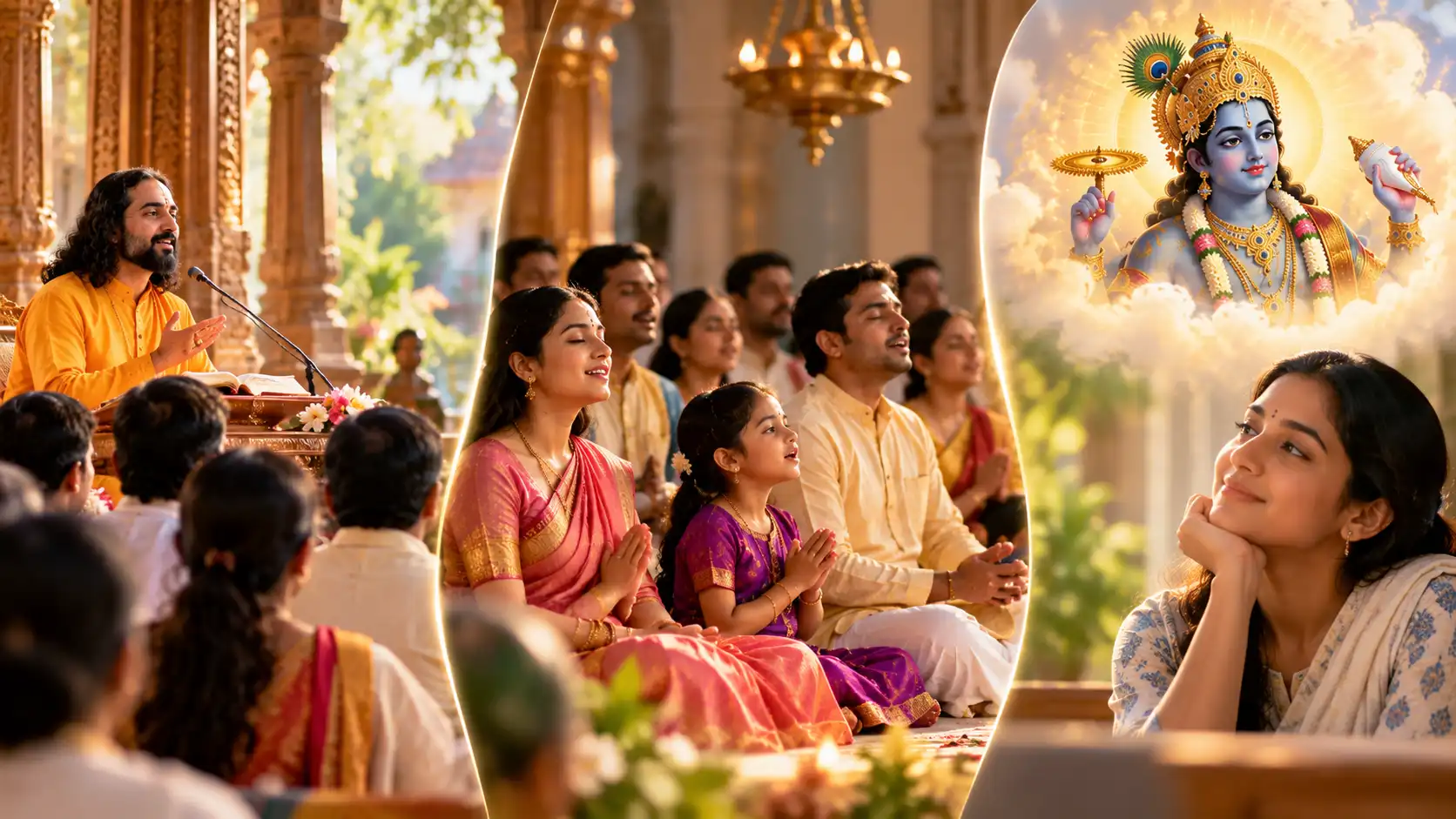
According to the teachings of Swami Mukundananda and JKYog, Tridha Bhakti is a threefold practice that engages us in devotion through hearing, chanting, and remembering God.
JKYog Team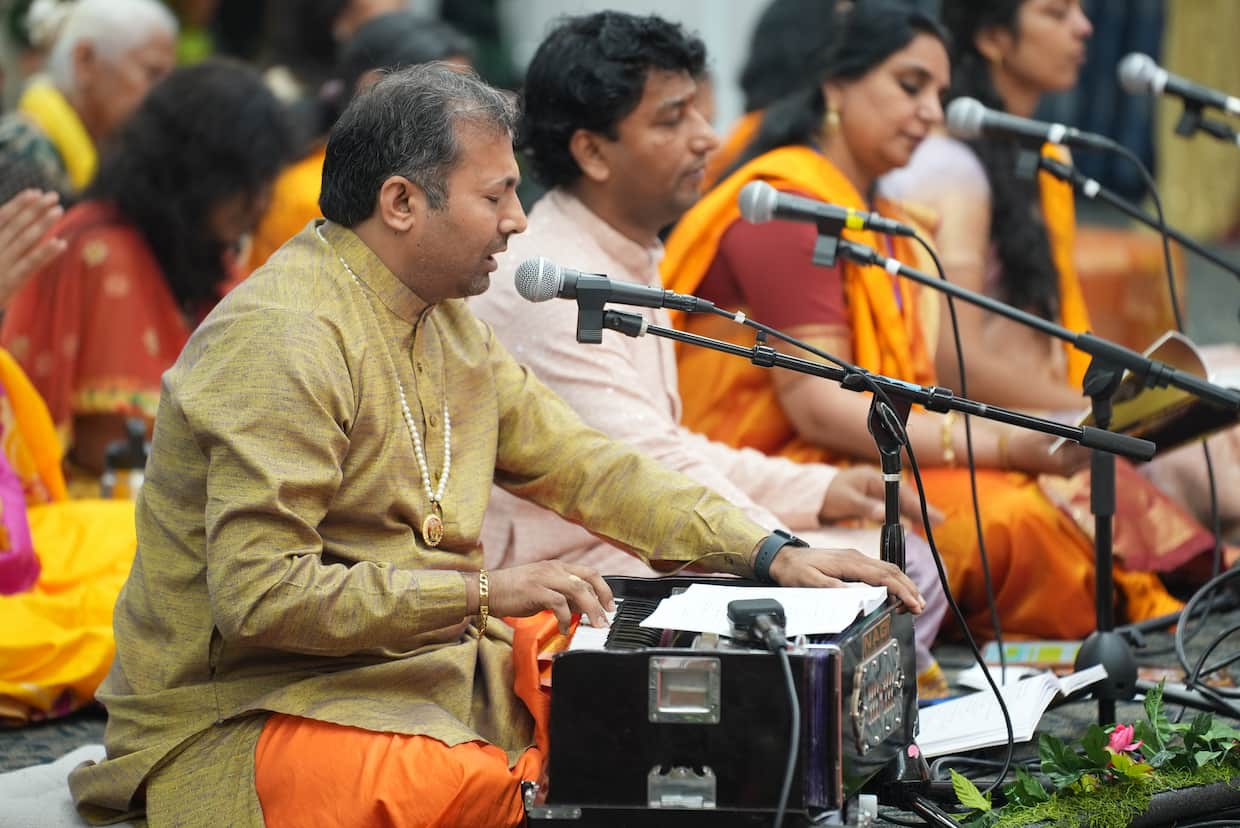
The three practices are:
1. Shravanam: Hearing
Shravanam means hearing divine knowledge, God's names, glories, pastimes, and teachings.
When we listen attentively to sacred chanting or spiritual wisdom, we give the mind an opportunity to absorb divine thoughts.
2. Kirtanam: Chanting
Kirtanam means chanting or singing the names and glories of God.
Vishnu Sahasranama chanting naturally provides an opportunity for Kirtanam. The voice becomes engaged in the remembrance of the Divine while the ears hear the sacred names.
3. Smaranam: Remembering
Smaranam means remembering God and contemplating His divine names, forms, qualities, and pastimes.
This is especially important because the ultimate purpose of spiritual practice is not simply to complete a recitation. It is to gradually train the mind to remain connected with God.
JKYog teachings describe this threefold approach as a powerful way of engaging the whole person in devotional practice.
From Chanting to Remembrance
This gives the daily Vishnu Sahasranama gathering a deeper significance.
We hear the sacred names.
We chant the sacred names.
And through repeated practice, we strive to remember God more naturally.
The goal is not simply to chant for a few minutes and then forget God for the rest of the day. Rather, chanting can become a stepping stone toward carrying remembrance of the Divine into our everyday activities.
From Devotion to Selfless Divine Love
In the teachings of JKYog, the ultimate goal of Bhakti is not merely to ask God for worldly benefits. It is to develop selfless divine love for God.
Ordinary worldly relationships can often involve expectations:
“What will I receive?”
“What will God do for me?”
“Will my prayers give me what I want?”
Bhakti gradually teaches us to shift the focus from what God can give us to how we can lovingly serve God.
This is the movement from transactional devotion toward Nishkam Bhakti; selfless devotion.
Swami Mukundananda emphasizes that pure devotion is not centered on personal gain. Selfless love seeks the happiness of the Divine rather than treating devotion as an exchange for worldly rewards.
JKYog Team
The journey is therefore one of inner transformation.
We begin by turning toward God.
We learn to remember God.
We learn to serve God.
And gradually, through spiritual practice and divine grace, we aspire to love God for God's sake alone.
Why Selfless Love Is the Goal of Bhakti

The deepest form of devotion is not:
“God, give me what I want.”
It becomes:
“God, let me learn to love You and serve You selflessly.”
This does not mean that devotees cannot pray for help or guidance. Rather, spiritual growth involves gradually reducing the dominance of personal desires and increasing our longing for God Himself.
JKYog teachings describe nishkamta, or selflessness, as an important hallmark of advanced devotional practice, where the devotee serves God without seeking personal gain.
This is why a practice such as Vishnu Sahasranama chanting can become so meaningful.
Every name can be approached not merely as something to recite, but as an opportunity to say inwardly:
“I remember You. I honor You. I want to know You. I want to love You.”
Learn Tiruppavai & Sri Vishnu Sahasranamam
For those who want to take their devotional learning further, the Radha Krishna Temple of Dallas also offers free weekly classes for children, youth, and adults.
These classes focus on two revered treasures of Hindu devotional tradition:
- Tiruppavai
- Sri Vishnu Sahasranamam
Participants have the opportunity to learn, chant, and understand these sacred works in a devotional and welcoming environment.
Free Bi-Weekly Classes
Every Tuesday & Thursday
6:30 PM – 8:00 PM
Radha Krishna Temple of Dallas, Allen
Free for children, youth & adults
Class Schedule
| Details | Information |
|---|---|
| Classes | Learn Tiruppavai & Sri Vishnu Sahasranamam |
| Days | Every Tuesday & Thursday |
| Time | 6:30 PM – 8:00 PM |
| Location | Radha Krishna Temple of Dallas, Allen |
| Cost | Free |
| For | Children, youth & adults |
Why Learn Tiruppavai and Vishnu Sahasranamam?
Learning sacred texts is an opportunity to move beyond simply hearing a prayer once in a while.
As participants learn the words and meanings, they can gradually develop familiarity with the chants and their devotional significance.
For children and youth, these classes can provide an engaging connection with Hindu spiritual traditions and heritage. For adults, they offer an opportunity to deepen an existing practice or begin learning these sacred works from the foundation.
Most importantly, learning and chanting can become part of a broader practice of Shravanam, Kirtanam, and Smaranam.
Turning Spiritual Practice Into Daily Sadhana
Spiritual growth requires consistency.
A single day of chanting may inspire us, but regular practice gives the mind repeated opportunities to turn toward God.
JKYog teachings emphasize the importance of consistent sadhana, or spiritual practice, and describe qualities such as ananyata (exclusive focus on the Divine), nishkamta (selflessness), and nirantarta (constant and consistent practice) as important aspects of devotional progress.
Daily Vishnu Sahasranama chanting can therefore become one part of a larger spiritual routine.
The purpose is not simply to add another activity to a busy schedule.
It is to gradually transform the way we live.
Instead of remembering God only when we enter the temple, we strive to remember Him while working, studying, caring for family, serving others, and facing life's challenges.
From Hearing God's Names to Living in God's Remembrance
Imagine beginning with a simple daily practice.
At 5:30 PM, you step away from the day's activities.
You enter the temple.
You hear the sacred names.
You join the chanting.
For a little while, the mind turns away from its usual concerns.
Over time, the practice becomes familiar.
The names become familiar.
The heart begins to associate chanting with devotion and remembrance.
And gradually, the practice can extend beyond the temple.
This is the deeper aspiration of Bhakti: to make remembrance of God a natural part of life.
A Welcoming Spiritual Practice for the Whole Family
The Vishnu Sahasranama program and weekly classes provide opportunities for people at different stages of their spiritual journey.
For children
The classes provide an opportunity to learn sacred traditions in a welcoming environment.
For youth
Learning the chants can help connect spiritual heritage with a meaningful personal practice.
For adults
Daily chanting and weekly classes can provide structure for deepening devotion and spiritual understanding.
For families
Participating together creates an opportunity to make devotional practice part of family life.
And because the daily chanting is free and open to all devotees and guests, you do not need to be an experienced practitioner to participate.
Make Time for Divine Remembrance
In a world filled with constant notifications, conversations, entertainment, and responsibilities, deliberately setting aside time for God can be deeply meaningful.
The daily Vishnu Sahasranama Chanting at Radha Krishna Temple of Dallas offers a simple way to create that sacred pause.
Come to chant.
Come to listen.
Come to learn.
Come to remember.
And, through the practice of Bhakti, aspire to go deeper—from hearing and chanting God's names to cultivating selfless divine love for God.
Frequently Asked Questions
1. What is Vishnu Sahasranama?
Vishnu Sahasranama means the “Thousand Names of Lord Vishnu.” It is a revered Hindu devotional text in which the thousand names describe the divine qualities, attributes, and glories of Lord Vishnu. Chanting these names provides an opportunity to deepen devotion, cultivate inner peace, and remember God.
2. When can I attend Vishnu Sahasranama chanting at Radha Krishna Temple of Dallas?
Daily Vishnu Sahasranama chanting takes place at Radha Krishna Temple of Dallas in Allen, Texas, from 5:30 PM to 6:15 PM CT. Check-in begins at 5:15 PM. The gathering is free and open to all devotees and guests.
3. What is Tiruppavai, and who is Sri Andal?
Tiruppavai is a collection of 30 sacred Tamil devotional hymns composed by Sri Andal, a revered Alvar saint known for her profound love and devotion to Lord Vishnu. The verses express surrender, spiritual longing, and the desire to attain divine grace. They continue to inspire devotees through recitation, study, and reflection.
4. Are there classes to learn Tiruppavai and Sri Vishnu Sahasranamam?
Yes. Radha Krishna Temple of Dallas offers free classes to learn, chant, and understand Tiruppavai and Sri Vishnu Sahasranamam. Classes are held every Tuesday and Thursday from 6:30 PM to 8:00 PM at the temple in Allen. They are open to children, youth, and adults.
5. How can chanting and studying sacred verses strengthen devotion to God?
Chanting divine names, hearing sacred teachings, and remembering God are practices associated with Tridha Bhakti. Regular participation can help devotees focus the mind on the Divine, reflect on spiritual wisdom, and nurture a deeper relationship with God. Through sincere practice and selfless devotion, these activities can become meaningful parts of daily spiritual life.
Join Us
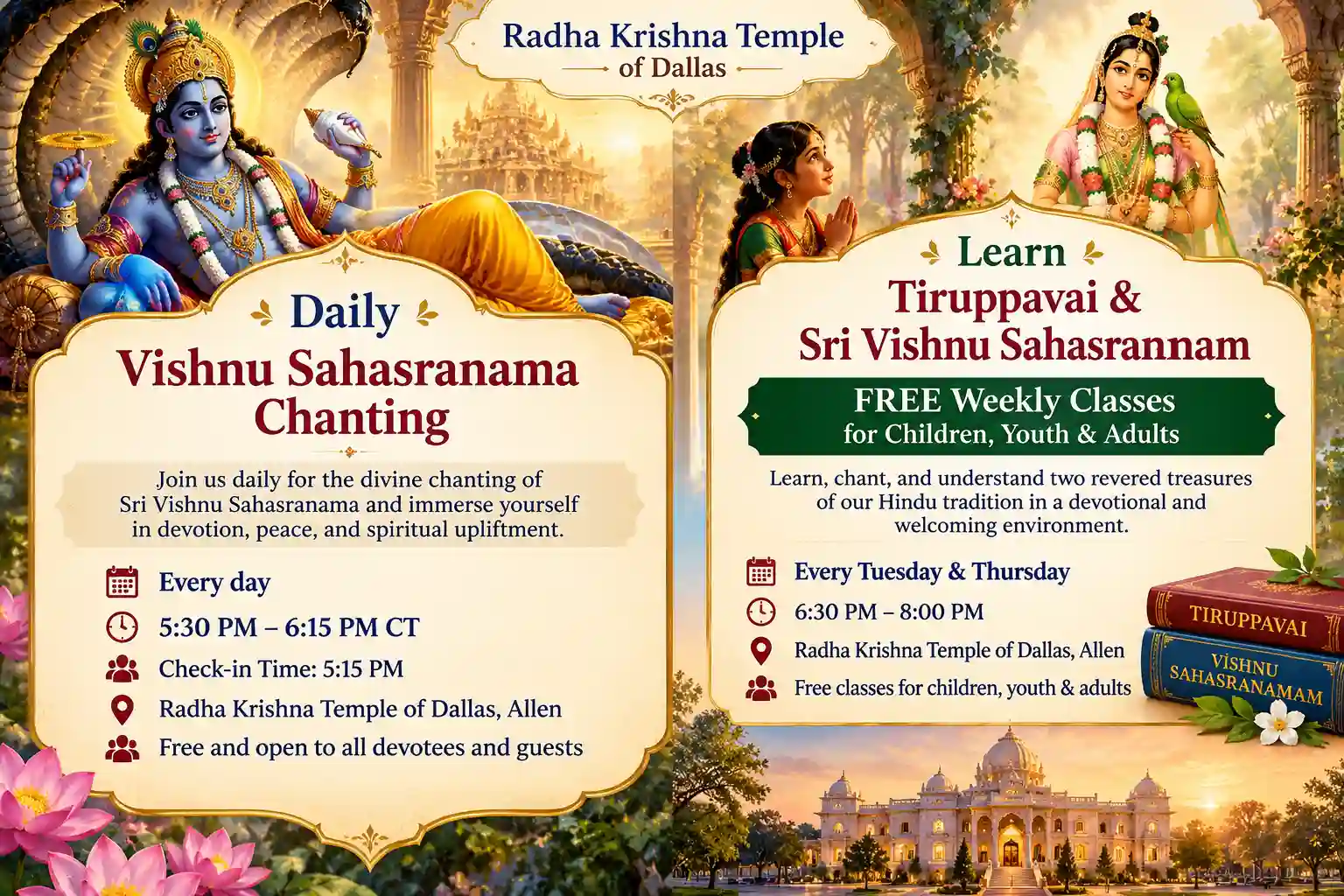
Learn. Chant. Remember. Serve. Love.
May the practice of sacred chanting help us turn our minds toward the Divine and gradually awaken the selfless love for God that is the ultimate treasure of Bhakti.