Inspiration - RKT Newsletter
January 2026

E-Newsletter
January 2026


Quote
हिरण्मयेन पात्रेण सत्यस्यापिहितं मुखम् । तत्त्वं पूषन्नपावृणु सत्यधर्माय दृष्टये ॥ १५॥
hiraṇmayena pātreṇa satyasyāpihitaṁ mukham tattvaṁ pūṣhannapāvṛiṇu satyadharmāya dṛiṣhṭaye
Absolute Truth, Who are the Nourisher of devotional rasas! Your Divine Face is covered by a golden effulgence. Desirous of following real dharma (which is devotion to You), I pray that You remove the veil of radiance that covers Your Personality, so that I may behold the vision of Your Divine Form ( Ishavasya Upanishad, Mantra 15) )
From the Editor’s Desk
This month’s Inspiration reflects on Murti Puja as a sacred bridge, beginning with form and ritual, yet leading toward an inner connection with God. When practiced with understanding, worship refines the heart and awakens the spirit of seva, aligning daily life with divine purpose. Our Bal Mukund feature gently reminds us that sincere devotion transcends form and is fulfilled through faith, obedience, and love. Extending this insight, the Health Tidbits feature highlights how symbolic focus shifts attention from outcome-driven striving to presence and process. In doing so, growth becomes a natural byproduct of disciplined, mindful engagement, both spiritually and physically.
Bhakti Ras
The Power of Murti Puja to Enhance Spiritual Focus
In the diverse context of spiritual practices, Murti Puja, the worship of a sacred image or form, has held a central place for centuries. Yet, it is often misunderstood. To some, it is merely symbolic or even dismissed as idol worship. To spiritual practitioners, however, Murti Puja is a profound spiritual discipline that trains the mind, deepens devotion, and enhances inner focus. It becomes a powerful gateway rather than a distraction from the higher truth.
At the heart of Murti Puja lies a deep philosophical insight: while the ultimate reality may be formless and infinite, the human mind functions best when it can relate to a form. Hindu philosophy recognizes both Nirgun (i.e., the formless absolute) and Sagun (i.e., the divine with attributes and form). Murti Puja belongs to the Sagun approach, offering the seeker a tangible foundation for an internal connection.
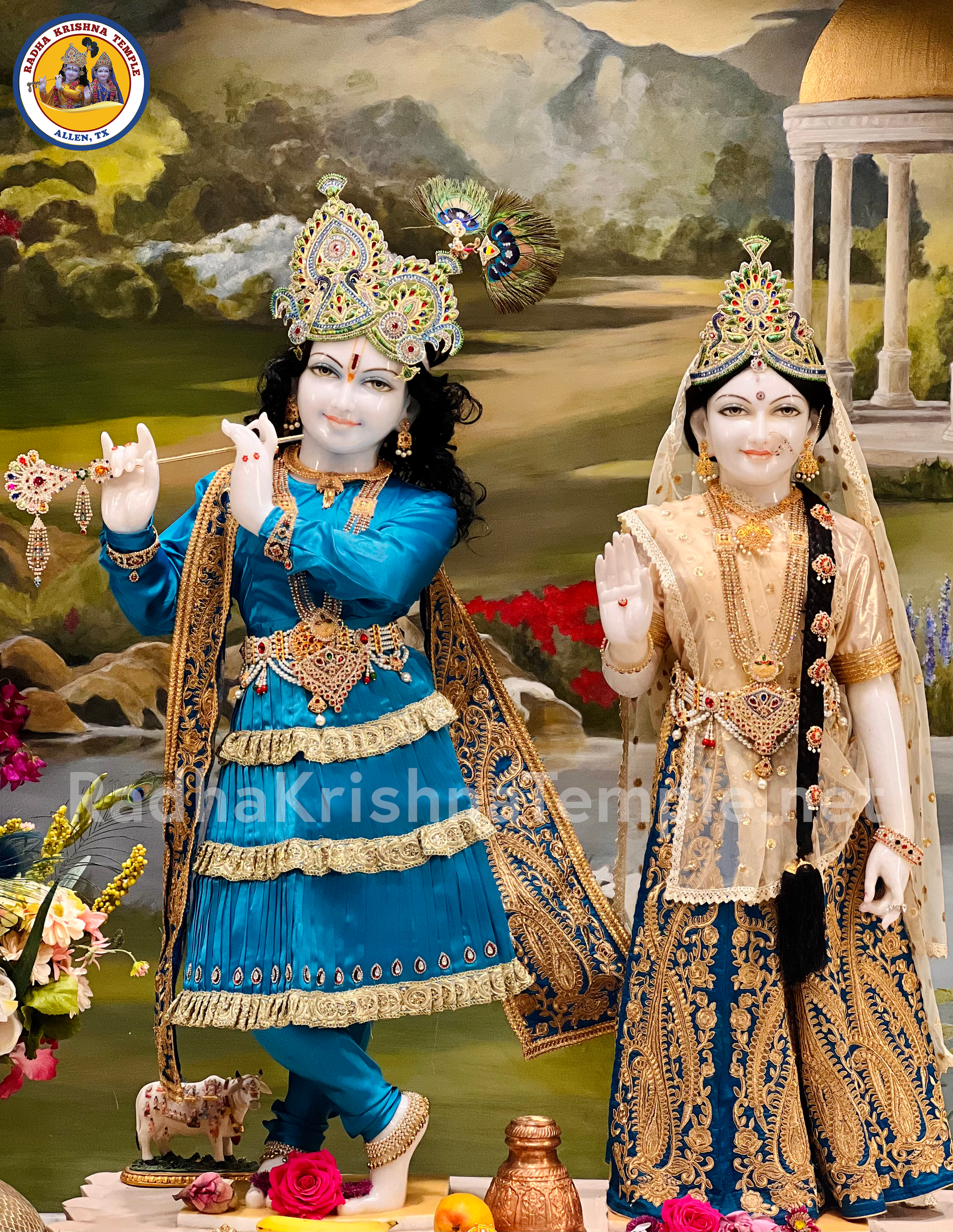
The murti must be revered as a Vigrah of the Divine, a visible reminder of an invisible truth. Just as a national flag evokes patriotism beyond the cloth itself, the murti invokes reverence beyond its physical form.
Training the Mind Through Focus
One of the greatest challenges on the spiritual path is sustaining attention. Abstract meditation, though ideal in theory, can be difficult for those who have difficulty connecting with a stationary form. The mind naturally seeks form, color, and emotion. Murti Puja works with this tendency. By directing attention toward the murti, the practitioner gently anchors the wandering mind. Over time, this repeated act of focusing on the Vigrah as Divine builds mental discipline. The eyes rest on the form, the mind follows, and distractions slowly lose their grip. In this way, Murti Puja becomes a practical method for cultivating ekagrata, or one-pointed concentration.
Murti Puja can also be deeply meditative. The act of gazing upon the murti, known as darshan, is not passive looking but attentive seeing. The practitioner becomes fully present, aware of breath, posture, and inner mood. Similarly, as offerings are made and mantras recited, the body, mind, and emotion begin to move in harmony. This integration transforms outward ritual into inward stillness. Over time, the murti ceases to feel external; it becomes a mirror reflecting the devotee’s own inner consciousness.
Spiritual focus is not achieved through willpower alone. Emotion plays a vital role. Murti Puja nurtures bhakti, the path of devotion, by fostering a personal relationship with the divine. Love, reverence, gratitude, and surrender naturally arise when the divine is approached as a living presence rather than an abstract concept. This emotional engagement has a powerful focusing effect. When the heart is involved, the mind follows. Devotion softens inner resistance, quiets mental noise, and draws awareness inward with ease rather than effort.
Another unique strength of Murti Puja lies in its holistic use of the senses. Sight is engaged through the Murti, sound through bells and mantras, smell through incense, touch through offerings, and taste through Prasad. Rather than allowing the senses to scatter attention outward, Murti Puja gathers them into a single sacred act. This complete sensory involvement leaves little room for distraction. The mind, fully occupied with sacred experience, naturally becomes calm and attentive.
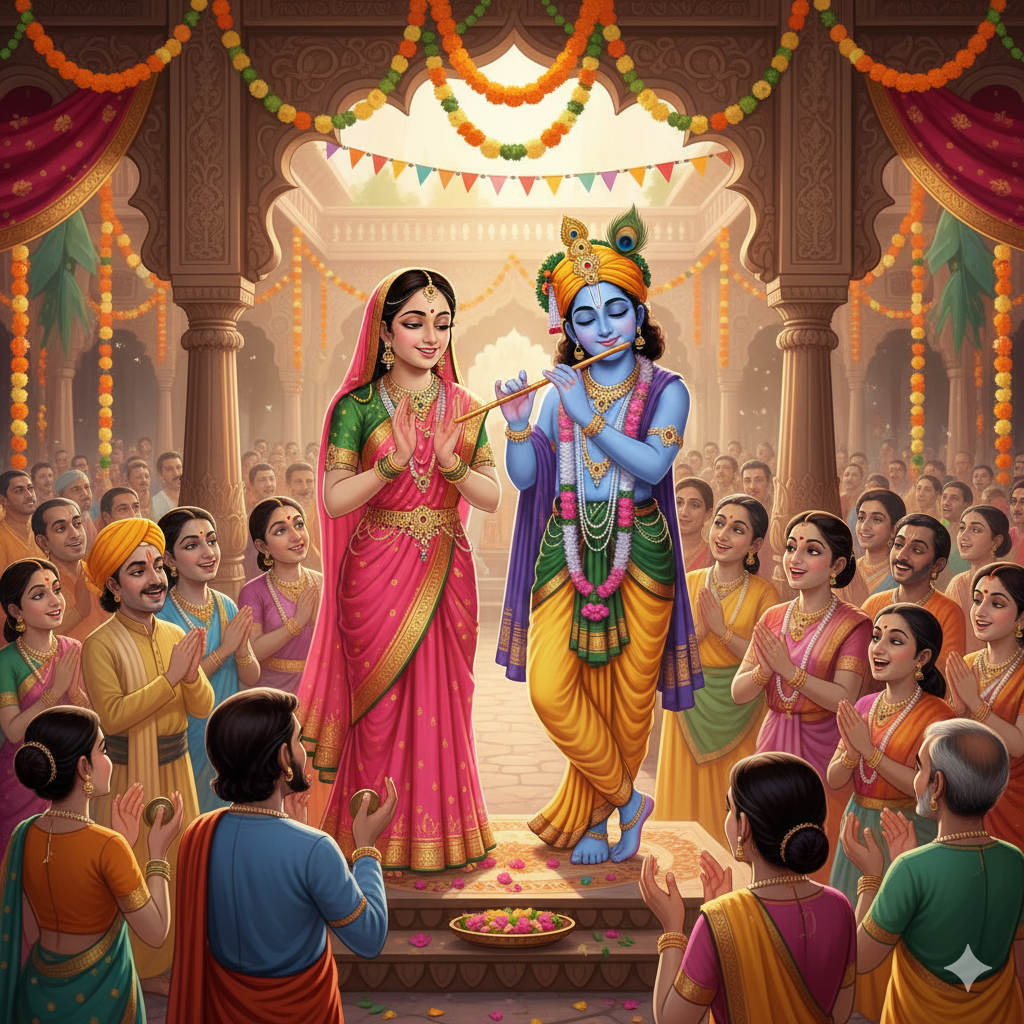
The material senses can be involved in our routine, because it provides structure and stability. Daily Murti Puja creates a sacred rhythm in life, offering moments of stillness amid constant activity. The predictability of rituals, for example, lighting a diya, offering tika, bhog, flowers, and reciting prayers, soothes the mind and reinforces intention.
Over time, these repeated actions will shape inner discipline. They train the practitioner to pause, reflect, and reconnect with higher values, even in the midst of worldly responsibilities. Additionally, as focus deepens, the practitioner begins to internalize the qualities represented by the murti, including compassion, strength, wisdom, serenity, and an internal desire to surrender to God. The Murti’s form gradually dissolves into feeling and feeling into awareness. Collectively, these enhance the quality of our devotion.
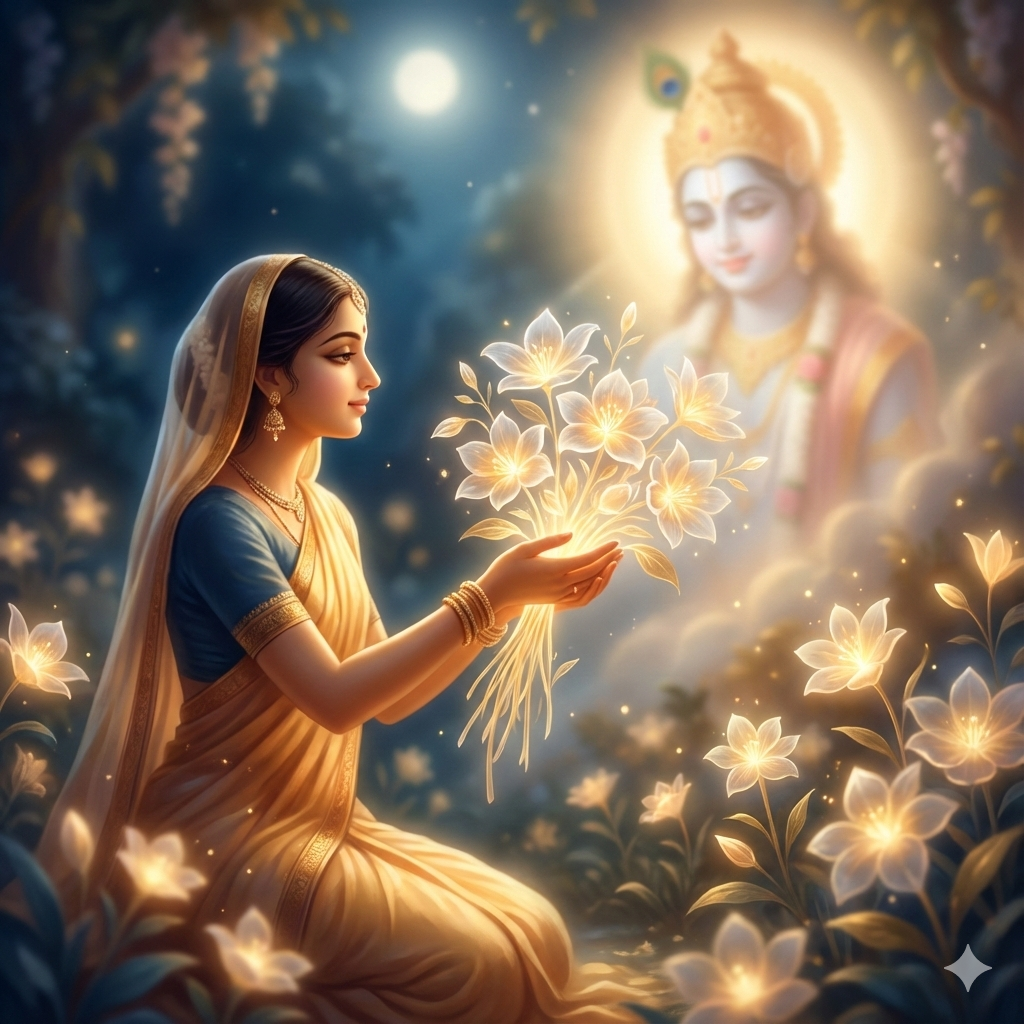
As Swami Mukundananda ji beautifully describes in His interpretation of Mantra 15 of the Ishavasya Upanishad, knowledge-based devotion enables souls to discriminate between the soul’s material duties (i.e., apara dharma) and spiritual duty (i.e., para dharma). Following one’s apara dharma, which is tied to bodily designations, does not substitute for para dharma, which is the ultimate, highest, and permanent dharma of the soul (p. 139). Thus, devotees cry out from the heart, beseeching God to shed His effulgence that makes Him imperceptible to material souls and give His Divine Darshan in His personal form.
The key message is that unless coupled with devotion, God cannot be attained by austerities, charity, altruistic acts, fasting, ritualistic worship, fire sacrifices, or adherence to scriptural dos and don’ts (p. 142). However, for those practicing bhakti or devotion to God using Murti Pooja as a medium to connect with God at the level of the mind and soul, nothing else is needed to attain Him.
Addressing A Common Misunderstanding
Critics often argue that Murti Puja limits spiritual growth by encouraging dependence on form. In reality, it is a means, not an end. Just as training wheels on a bike help a child learn balance, the Murti supports the seeker until inner focus becomes steady. Many advanced spiritual traditions acknowledge that different temperaments require different methods.
Murti Puja does not exclude other paths such as meditation, mantra, or inquiry. Instead, it complements them, offering an accessible and emotionally rich foundation for spiritual growth. In today’s fast-paced, distraction-filled environment, Murti Puja offers something increasingly rare: intentional stillness. It invites practitioners to step away from screens, schedules, and noise, even if only for a few minutes a day. For householders and beginners on the spiritual path, it provides a grounded, nurturing way to cultivate spiritual focus without withdrawing from daily life.
A Closing Reflection
The power of Murti Puja lies not in the object itself, but in what it awakens within us. By engaging the senses, emotions, and mind in a unified act of devotion, it gently trains attention and deepens awareness. In doing so, Murti Puja becomes more than ritual; it becomes a living practice that transforms focus into faith, and faith into inner clarity.
Thus, Murti Puja becomes a bridge: it starts with a form and a ritual, but culminates in an inner realization of a deeper connection with God through the desire for seva – the purpose of our life.
Reference
Mukundananda, S. (2025). Ishavasya Upanishad. Rupa Publications Pvt Ltd: New Delhi, India.
Bal-Mukund: Playground for Vedic Wisdom
The Divine Rice Pudding
In the 15th century, the deity of Shrinath ji was buried beneath Govardhan Hill. One night, the devotee Madhavendra Puri had a dream in which Shree Krishna appeared and instructed him to unearth the deity and begin worship. With the help of other Brajwasis, Madhavendra Puri dug out the idol, bathed it with water, and performed various pujas.

Two years later, Shree Krishna again appeared in Madhavendra Puri’s dream, explaining that His body felt hot after being buried for so long and requesting the application of sandalwood paste. Shree Krishna instructed Madhavendra Puri to obtain sandalwood from Jagannath Puri. Madhavendra Puri journeyed to Odisha and stayed in the village of Remuna, home to the deity Gopinath ji.
There, he witnessed the offering of a special rice pudding prepared in twelve pots. He wished to taste it so he could learn how it was made and offer it to Shrinath ji. However, he immediately felt remorseful for harboring this desire before the offering had been made to God.
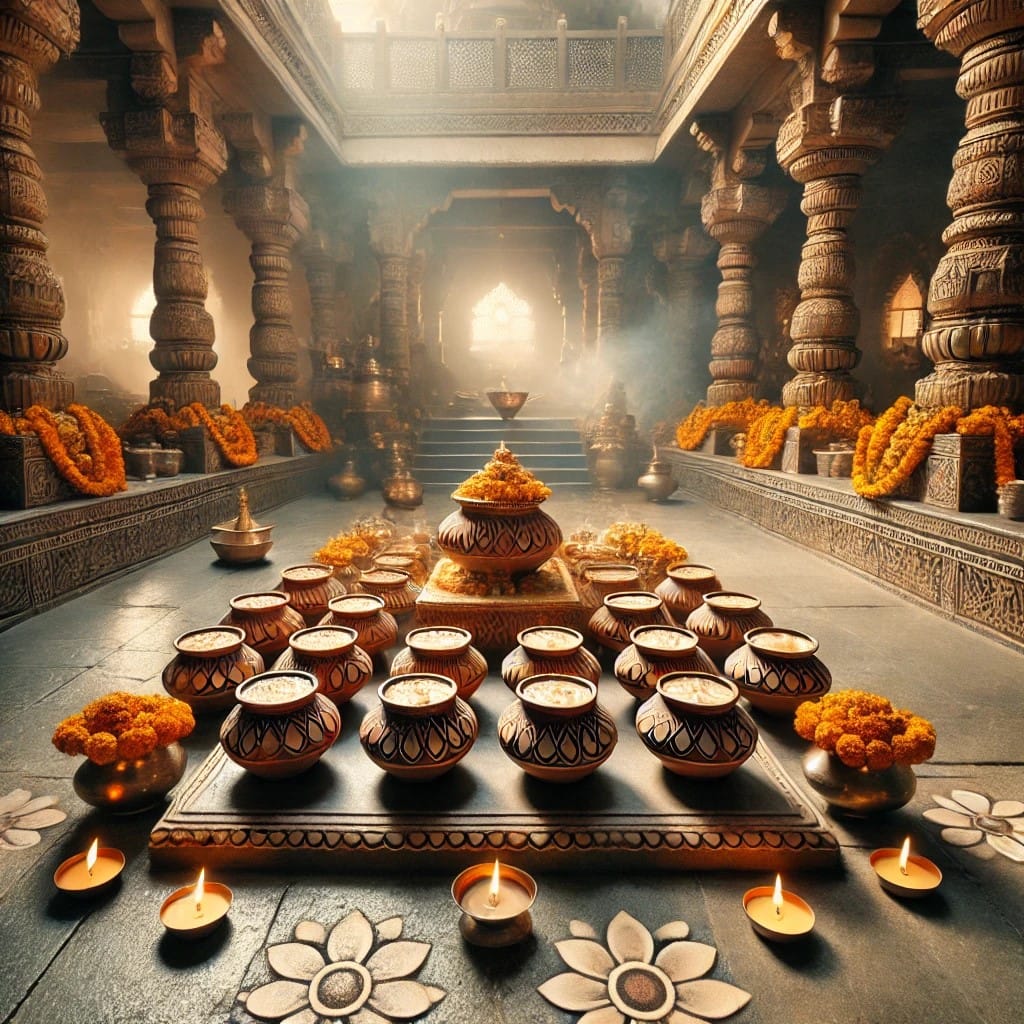
That night, Gopinath ji appeared in the high priest’s dream and revealed that He had hidden one pot of rice pudding behind His dhoti. The deity instructed the priest to take it to Madhavendra Puri, who was sitting in the marketplace. The priest was astonished when he found the pot exactly as described and delivered it to Madhavendra Puri, who was filled with joy. He relished the rice pudding and even kept the clay pot to savor its fragrance later.
Realizing that this incident might attract unwanted attention, Madhavendra Puri quietly departed and continued his journey to obtain the sandalwood.
Upon returning to Gopinath ji’s temple, Madhavendra Puri received another divine message in a dream. Shrinath ji revealed that He and Gopinathji were one and the same, and that applying the sandalwood paste to Gopinath ji would be received by Him. Madhavendra Puri faithfully obeyed this instruction and then returned empty-handed to Vrindavan.
Practical Wisdom:
- Madhavendra Puri approached the deity with pure love and devotion. God is not confined to stone or wood; He resides in the loving heart of the devotee. Shree Krishna accepted Madhavendra Puri’s service, and the deity became a medium through which Shree Krishna acknowledged and blessed his offerings.
- Deity worship is practiced in Hindu temples around the world, where deities made from various materials are installed with faith and devotion. While God is everywhere, the deity serves as a focal point for devotion—helping devotees concentrate their thoughts and lovingly express their devotion.
Youth Insights
The Power of Murti Pooja for the Youth
Between schoolwork, extracurricular activities, phones, and social media, it can be difficult for students to find moments of quiet and focus. Murti pooja can be a simple way to pause, reset, and bring a sense of calm into a busy day. Instead of viewing it as just another routine, it can become a short daily practice that helps train attention and create mental clarity.
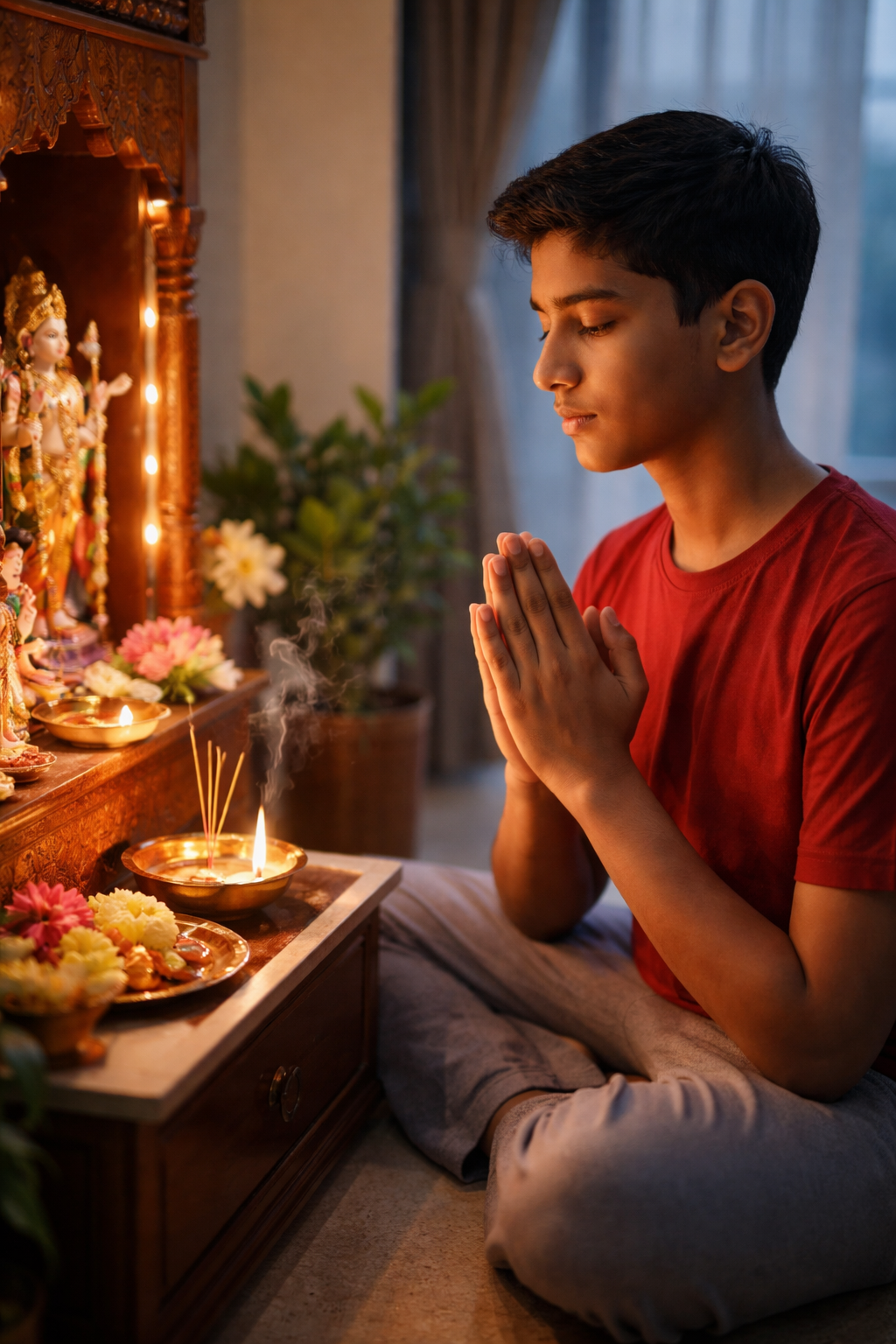
For many of us, focusing during prayer is not always easy. Our minds wander, we rush through aarti, or we think about homework while standing in front of the mandir. That’s normal. However, with small and mindful changes, murti pooja can gradually become a time to step away from distractions and reconnect with ourselves.
Here are a few realistic ways murti pooja can support focus and mindfulness:
- Start small: Even one quiet minute before or after prayer can help settle the mind.
- Limit distractions: Put your phone away and avoid multitasking during pooja time.
- Set a daily intention: Reflect on one quality you want to develop, such as patience or confidence.
- Slow down: Take your time lighting the diya or offering prayers instead of rushing.
- Carry the calm forward: Try to bring that focused feeling into class or study time.
Murti pooja does not need to be perfect or complicated to be meaningful. When practiced as a brief pause in the day, it can help students build focus, emotional balance, and inner discipline over time. For youth especially, this kind of practice offers a healthy counterbalance to constant stimulation, helping the mind slow down and reset. Murti pooja creates a space to develop patience, self-awareness, and the ability to stay present—skills that support learning, relationships, and emotional well-being. Small, consistent efforts and moments of stillness can strengthen resilience and clarity, often mattering more than long, occasional practices.
Holistic Health Tidbits
The Power of Murti Puja in Cultivating Focus and Well-Being
In both health and fitness, sustained progress depends less on motivation and more on focused, disciplined practice. Ancient spiritual traditions offer helpful insight into cultivating focus, and one such practice is Murti Puja—the use of a physical form or image to anchor attention and devotion. The underlying principle of Murti Puja is directly relevant to modern wellness: our concentration improves when the mind has a clear, tangible point of focus.
Murti Puja is about using form to engage the mind. Maintaining health, strength, or overall well-being can be challenging, especially amid the stresses and distractions of daily life. A murti—whether a traditional deity image, a symbolic object, or a meaningful visual cue—provides a focal point that gathers intention and channels awareness. This mechanism is foundational to effective health and fitness practices.
In physical training, focus determines the quality of movement. When we are distracted during workouts, it can lead to poor form, increased risk of injury, incomplete effort, and diminished results. By adopting a ritualized moment of focus—such as pausing before exercise, setting an intention, or visually centering on a symbol that represents discipline or vitality—we engage more fully with the body. Murti Puja functions by using an external form to steady the internal state. Examples include offering pranam during yoga practice or chanting divine names to bring sacred forms into the mind while breathing, moving, or completing repetitions.
Murti Puja also supports consistency through ritual, creating structure and reducing decision fatigue. When wellness behaviors become intentional acts rather than obligations, we are more likely to remain motivated and focused. A daily walk, meal preparation, or mobility routine can shift from being transactional to devotional—an expression of respect and care for the body. This mindset fosters patience, long-term thinking, and self-regulation.
In fitness culture, there is often a strong fixation on outcomes—such as weight, performance metrics, or appearance—which can undermine overall well-being. A symbolic focus inspired by Murti Puja redirects attention away from ego-driven goals and toward presence and process. Progress then becomes a natural byproduct of disciplined engagement rather than constant self-judgment.
Whether practiced traditionally or adapted symbolically, Murti Puja reminds us that the mind needs form to sustain attention. As Swami Mukundananda teaches, God’s form is often more endearing to the heart than the formless. In health and fitness—where success depends on consistency, awareness, and balance—this principle offers a practical and grounding tool. By honoring focus as a practice in itself, we cultivate a steadier, more integrated approach to physical well-being rooted in intention, respect, and sustained effort.
Reflection Questions
Bhakti Ras / Inspiration
- How does Murti Puja deepen and refine the quality of one’s devotion?
Bal-Mukund: Playground for Vedic Wisdom
- What does Madhavendra Puri’s experience teach us about devotion, service, and sincerity?
Youth Insights
- What is one small change you can make to your murti pooja routine to become more focused and present?
Holistic Health Tidbits
- What object, image, or symbolic practice could serve as a personal focal point before or during workouts, meals, or recovery routines?
Upcoming Events
We are delighted to share details about the upcoming Mahashivratri Mahotsav at the Radha Krishna Temple of Dallas, the official Headquarters of JKYog.
Mahashivratri Mahotsav
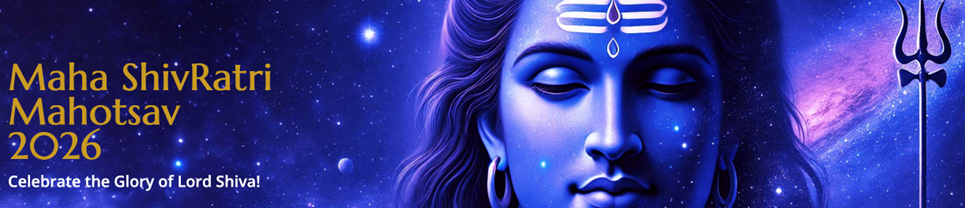
Lord Shiv is amongst the most elevated of all Vaishnavas, and Mahashivratri is a sacred festival dedicated to His honor and worship.
We warmly invite you to participate in a grand 4-day Mahashivratri Mahotsav – a golden opportunity to deepen devotion and connect the mind to the divine realm. Experience the bliss of many uplifting and devotional activities, including:
- Lord Shiv Samuhik Pooja
- Dwadash (12) Jyotirling Pooja
- Divine Rudrabhishek
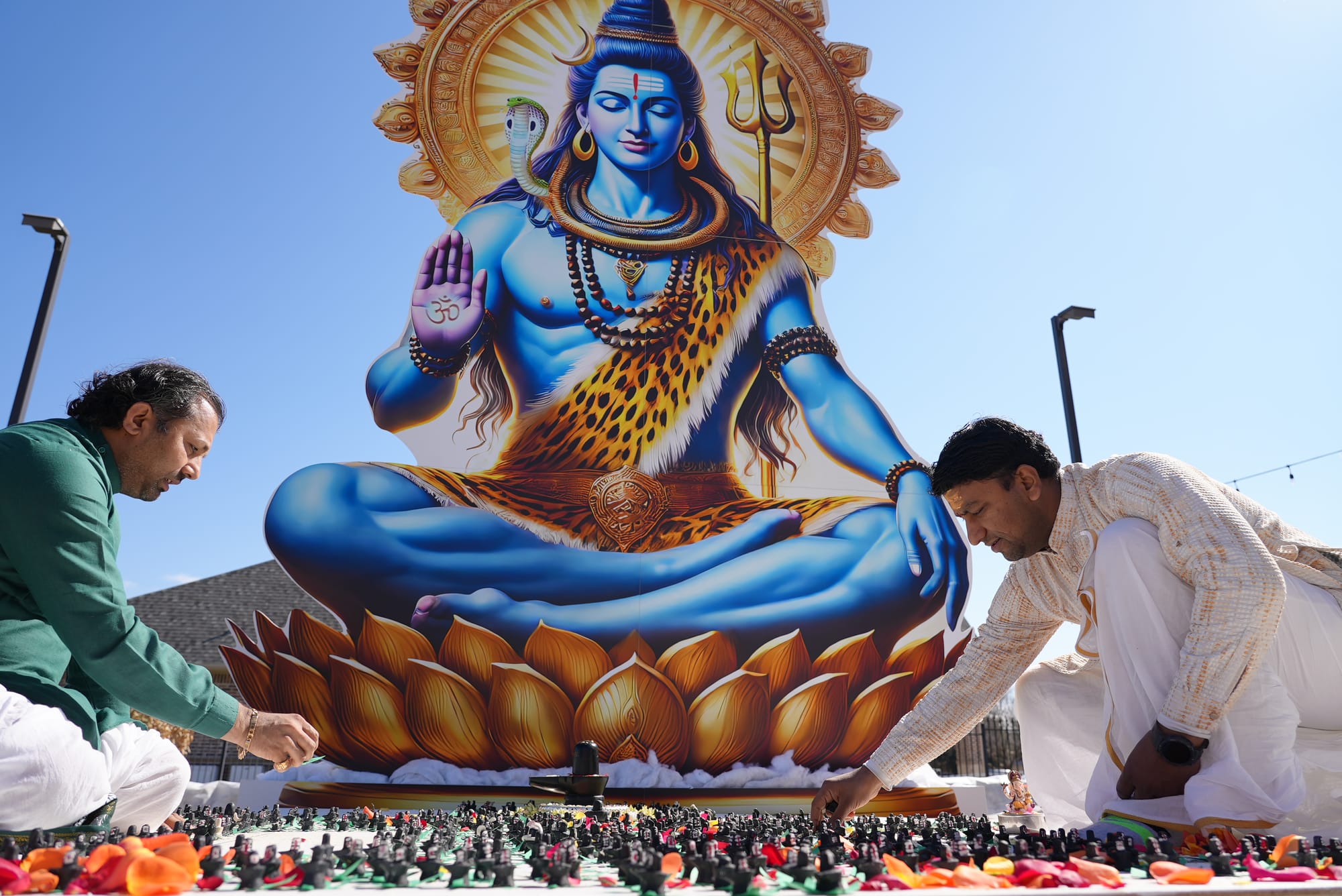
- 1008 Shivling-Making Family Workshop
- Lord Shiv Katha and Mahimna Stotra
- 1008 Shivling Pooja
- Shivji Leela
- Divine Kirtans and chants
- Open Stage Performance
- Cultural Program
- Special Vrat-Thali & Live Dosa Counter
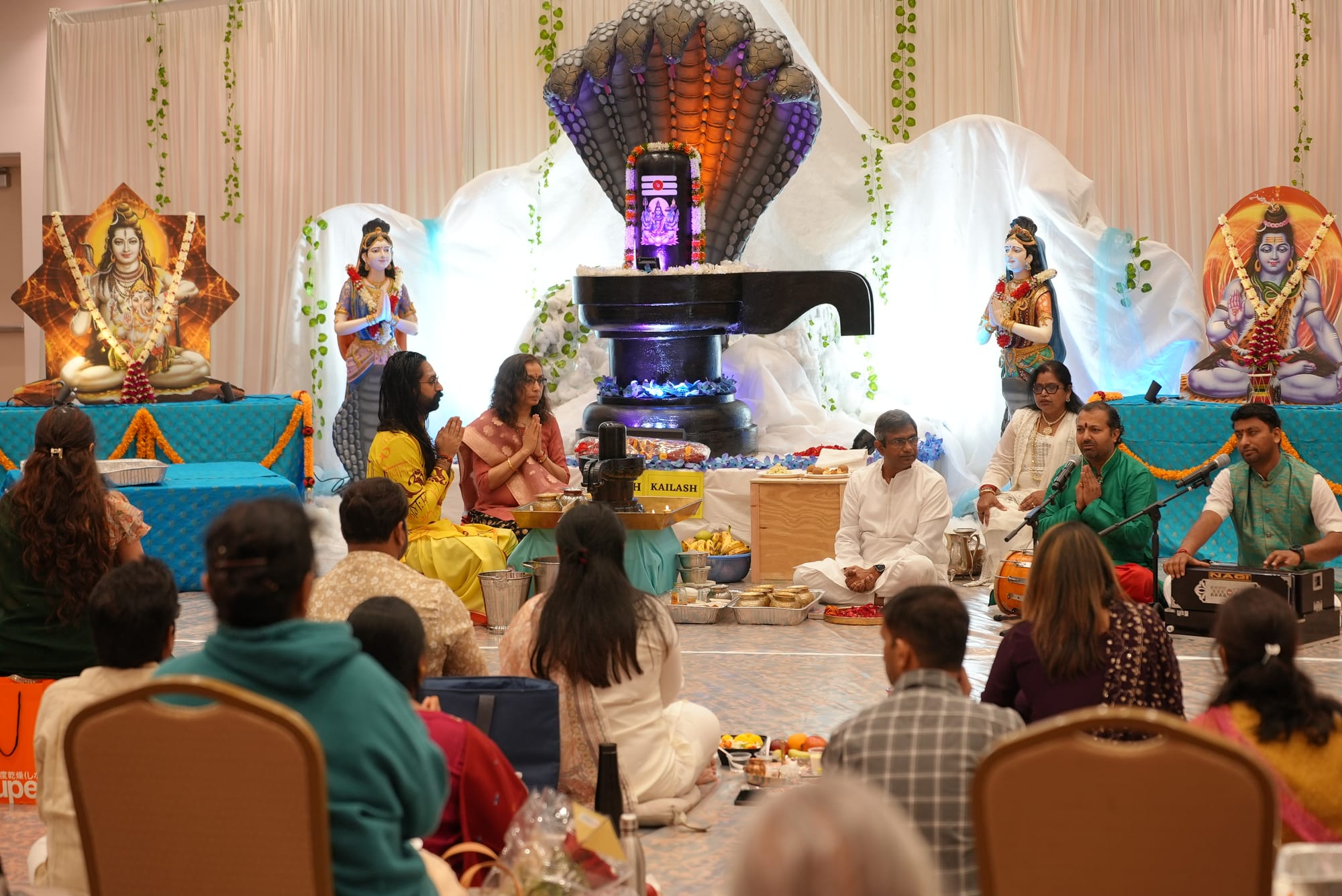
Do not miss this wonderful opportunity to immerse yourself in devotion and celebration.
Dates: February 13 to 16, 2026
Location: Radha Krishna Temple, 1450 N Watters Rd, Allen, TX 75013
Details: www.radhakrishnatemple.net/mahashivratri-in-dallas