
Inspiration - RKT Newsletter
September 2025

E-Newsletter
September 2025



Quote
अद्वेष्टा सर्वभूतानां मैत्र: करुण एव च | निर्ममो निरहङ्कार: समदु:खसुख: क्षमी || 13|| सन्तुष्ट: सततं योगी यतात्मा दृढनिश्चय: | मय्यर्पितमनोबुद्धिर्यो मद्भक्त: स मे प्रिय: || 14||
adveshta sarva-bhutanam maitrah karuna eva cha nirmamo nirahankarah sama-duhkha-sukhah kshami santushtah satatam yogi yatatma dridha-nishchayah mayy arpita-mano-buddhir yo mad-bhaktah sa me priyah
Those devotees are very dear to Me who are free from malice toward all living beings, who are friendly, and compassionate. They are free from attachment to possessions and egotism, equipoised in happiness and distress, and ever-forgiving. They are ever-content, steadily united with Me in devotion, self-controlled, of firm resolve, and dedicated to Me in mind and intellect ( Bhagavad Gita 12.13-14 )
From the Editor’s Desk
Forgiveness is not a weakness – it is a divine strength that frees the heart from resentments and fills it with peace. Shree Krishna in the Bhagavad Gita reminds us that forgiveness (i.e., kshama) is a virtue of the wise, essential for inner growth and harmony in relationships. When we forgive, we release ourselves from the burden of anger and make space for compassion and love to blossom.
Children, too, can learn to practice saying “I’m sorry” and “I forgive you,” nurturing kindness from a young age. Even in matters of health, forgiveness has been shown to reduce stress and promote overall well-being. Let us embrace forgiveness in our families, communities, and spiritual lives, allowing it to become a bridge that connects us more deeply with God and with one another.
Bhakti Ras
The Power of Forgiveness
Forgiveness is celebrated as one of the noblest virtues, yet it is also one of the hardest to practice. When hurt or betrayal strikes, the mind clings to the wound. The ego insists, “If I forgive, they will think I condone their actions.” Or it whispers, “Why should I let go? They don’t deserve it.” Such thoughts keep us chained to resentment.
And yet, the scriptures glorify forgiveness as a divine quality. In the Bhagavad Gita (16.3), Shree Krishna includes forgiveness or kshama among the godly virtues. In His commentary, Swami Mukundananda ji describes forgiveness or forbearance as the ability to tolerate the offences of others, without feeling the need to retaliate. Through forgiveness, one heals the emotional wounds caused by others that would otherwise fester and disturb the mind.
This verse helps us reframe forgiveness not as weakness, but as strength flowing from the divine nature within us. To forgive is to elevate our consciousness from the ego’s demands to the soul’s higher calling.
Forgiveness feels impossible when we think of it as a favor to the other person. But when we begin to see it as liberation for ourselves, we discover its transformative power.
Misconceptions About Forgiveness

Part of the difficulty lies in the many misconceptions people hold about forgiveness.
- Forgiveness means to approve the wrong: In truth, forgiving does not mean condoning or justifying harmful behavior. Justice can still be pursued when needed. Forgiveness simply means we stop carrying hatred in our hearts.
- Forgiveness benefits the offender: While the person we forgive may experience relief, the greater blessing comes to us. Resentment is like a poison that corrodes the vessel that contains it. When we let it go, we experience peace.
- Forgiveness requires forgetting: We may not erase memories, but we can choose to strip them of bitterness. The past remains a lesson, not a prison.
We see this distinction clearly in the Ramayan. After Queen Kaikeyi’s harsh demand that Shree Ram be exiled, He did not withhold love from her. Upon returning to Ayodhya, He honored her with the same respect as before. Shree Ram did not pretend her actions had not happened; He simply refused to let bitterness stain His heart.
Swamiji explains this subtlety beautifully: “When we harbor resentment, it harms us far more than the person who wronged us. Forgiveness is the art of cleansing our own mind, so that divine love may blossom within.” Forgiveness, then, is less about the other person and more about aligning our hearts with God’s nature.
The Weight of Holding On
Unforgiveness is like carrying a bag of stones everywhere we go. The event may be in the past, but the emotional load presses on us in the present.
Modern research confirms this effect on us. Studies show that chronic resentment raises blood pressure, increases stress hormones, disturbs sleep, and fuels anxiety. A single act of recalling a grudge can trigger physical tension in the body and measurable psychological stress.
On the spiritual plane, the burden is even heavier. A heart filled with hatred cannot simultaneously hold love for God or the Guru. Just as a lamp cannot burn when smothered with soot, the soul cannot shine when darkened by resentment.
To hold on to anger is, in a sense, to allow the offender to continue hurting us long after the actual act is over. Forgiveness is the conscious choice to put down the burden and walk free.
How Forgiveness Frees Both the Giver and Receiver
When we forgive, both we and the one who wronged us are uplifted.
For the forgiver, resentment that once clouded the mind dissolves. Inner peace returns, like a river unblocked. Spiritual practice deepens because the heart is no longer weighed down. For the receiver, forgiveness may open the door to reconciliation and transformation.

History and the lives of saints offer inspiring examples.
Sant Tukaram was slandered by envious neighbors, mocked, and falsely accused. Yet he responded only with songs of devotion to Lord Vitthala. His choice to forgive not only kept his heart pure but also elevated him as a beacon of love and humility.
An even more inspirational story is from the life of a person no different from us, Viktor Frankl. He was an Austrian psychiatrist and Holocaust survivor. He showed how even in the concentration camps, he retained the freedom to choose his inner attitude. He wrote about his experiences in his book “Man’s Search For Meaning.” His message – that one can forgive and find meaning even amid suffering – continues to inspire millions.
The story of Ramadasu is also very inspirational, not because he immediately forgave his oppressors, but because he redirected his anger toward devotion. This story was narrated by Swamiji in his divine discourse at the 2024 Dallas Retreat.
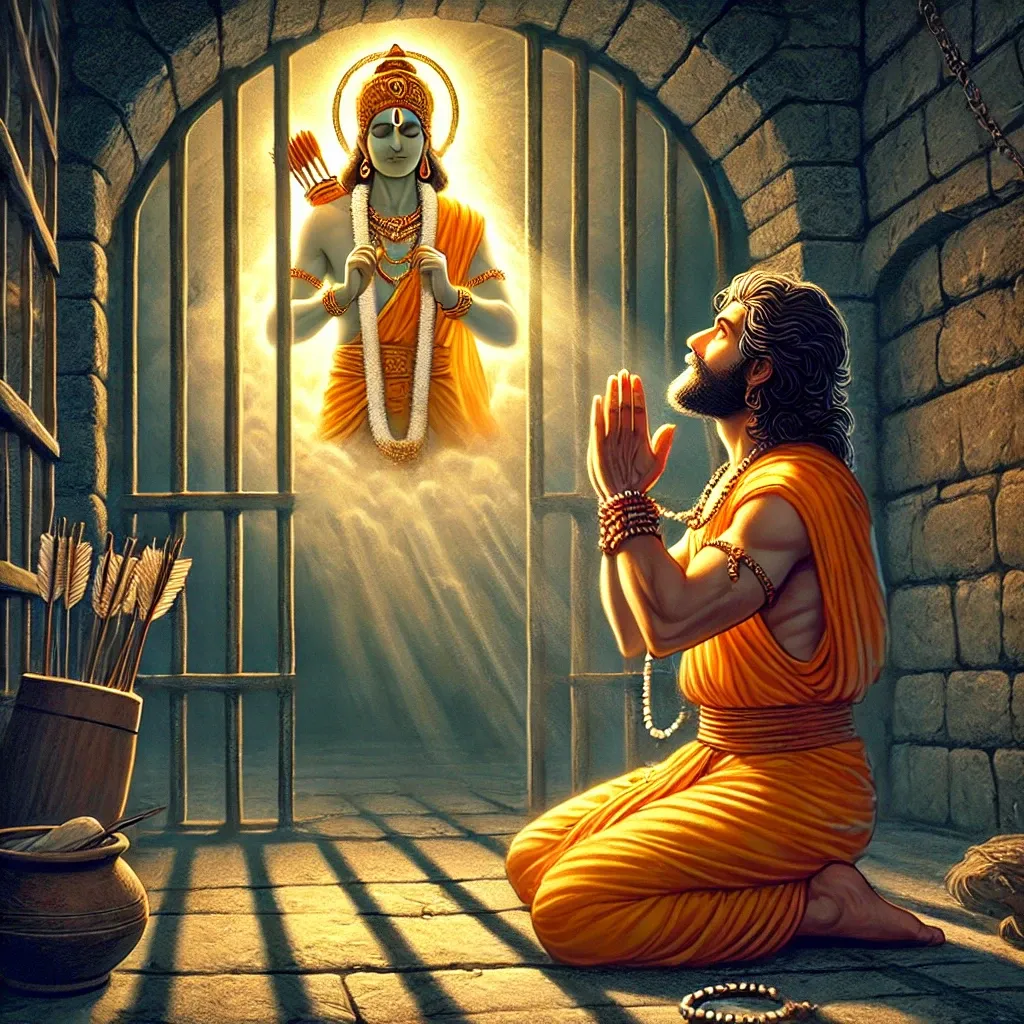
Ramadasu (known as Kancherla Gopanna) was a revenue officer under the Tana Shah in the 17th century. Out of deep devotion, he used state funds to construct a grand temple for Lord Ram in Bhadrachalam. When this was discovered, he was imprisoned for twelve years. Filled with deep resentment and anguish initially, Ramadasu wrote and composed many kirtans for twelve years in prison, begging for God’s mercy, and crying out as to why God was not responding to his pleas even though he had built His Temple. He even appealed to Mother Sita for grace because Lord Ram was unresponsive.
So, after twelve years, Shree Ram gave Ramadasu a vision of his past life where he had needlessly tortured a parrot in a cage out of sadistic delight for twelve years. Shree Ram revealed that his pitiable state was due to his past karma. He also blessed Ramadasu with another realization, that in these challenges lay the opportunity to purify himself. Shree Ram also said that He could get Ramadasu out of prison but asked if he would want that option if bearing the consequences of his karma was better for him.
These revelations completely transformed Ramadasu’s perspective on his miserable condition. Even though the king tortured him, his tolerance multiplied due to divine wisdom. He was no longer demoralized by miseries. He just kept on chanting Lord Ram’s name, glorifying Him and finding joy in it, until his prarabdh was burned at the end of twelve years. Shree Ram Himself, along with Shree Lakshman arrived at Tana Shah’s court with six lakhs in gold coins. When Tana Shah saw their aura, he was suitably impressed. They traded the coins with Ramadasu’s release.
A Step-by-Step Forgiveness Practice
Forgiveness is not always a one-time decision; it is often a practice that ripens with effort. Devotees can cultivate it step by step:
- Acknowledge the hurt. Denying pain keeps it buried; bringing it into awareness is the first step toward healing.
- Reflect on impermanence. Remind yourself that this world is temporary, and so are its offenses. What feels unbearable today will one day fade into the past.
- Pray for the offender. Even if the heart resists, sincerely pray that the person may grow in wisdom and goodness. This shifts the focus from their action to their soul.
- Practice Roop Dhyan. Visualize yourself offering the hurt as a garland at the lotus feet of God. Imagine Him accepting it and filling your heart with light.
- Seek divine strength. Humbly ask, “O Lord, just as You forgave me countless times, grant me the humility to forgive others.”
- Release again and again. If the resentment resurfaces, repeat the practice. Forgiveness is like peeling layers of an onion until the core of peace is revealed.
Swami Mukundananda assures us that “When we forgive, we align with God’s nature, for He forgives us endlessly despite our flaws. The closer we come to Him, the more natural forgiveness becomes.”
Let Go to Be Free
To forgive is not to excuse wrongdoing but to release ourselves from the chains of bitterness. The moment we forgive, we stop living in reaction to another’s actions and begin living in alignment with our higher self. Forgiveness opens the heart to love, humility, and grace. God forgives us endlessly despite our repeated lapses. If God and Guru, who are perfect, forgive imperfect beings like us, should we not extend the same mercy to others?
Bal-Mukund: Playground for Vedic Wisdom
When Silence Built an Empire: The Story of Tata Motors
Ratan Tata became chairman of Tata Motors in 1991 and had a vision to create India’s first fully indigenous car, free of imported technology. In 1998, Ratan Tata’s dream became a reality with the launch of the Tata Indica. While the Indica was historic as the first car designed and built entirely in India, it struggled in the market during its initial years. By 1999, Tata Motors considered selling the car business, and Ford Motors expressed interest.
Ratan Tata, along with his board, traveled to Detroit to discuss the sale with Ford’s leadership team. During the meeting, Bill Ford insulted Ratan Tata. Ford told him that he knew nothing about the car business and should not have entered it. Ratan Tata stayed silent. The following day, Tata decided against continuing the talks and returned to India. He then committed to strengthening Tata Motors.

Over the following years, Tata Motors transformed into a globally competitive company, developing strong vehicle lines and earning a reputation for quality. In 2008, the situation for Ford had reversed: Ford was facing severe financial troubles and was on the verge of bankruptcy, struggling with two of its luxury brands – Jaguar and Land Rover. He was now looking for a buyer. This presented an opportunity for the now financially and technologically stronger Tata Motors to negotiate and acquire both brands.
When Ford executives, including Bill Ford, visited Mumbai for the discussions, the tone was dramatically different from 1999. A humbled Bill Ford admitted to Ratan Tata that by purchasing Jaguar and Land Rover, Tata Motors was effectively saving Ford. Once again, Ratan Tata stayed quiet instead of gloating or insulting his competitor.

Practical Wisdom:
- Ratan Tata stayed quiet when he was insulted by Bill Ford. Ratan Tata set a powerful example in dealing with hurts and insults. He focused on working harder and taking a positive direction. By committing to growth and excellence, he transformed the hurt into strength, using it as motivation to achieve greater success.
- Instead of seeking revenge or responding to the earlier insults, Ratan Tata stayed quiet and composed when Bill Ford later admitted that Tata Motors was saving Ford. By staying quiet, he showed the power of forgiveness for insults, choosing peace and dignity over revenge. Tata understood that forgiveness did not mean forgetting the wrong; rather, letting go of the pain and moving forward with focus, resilience, and quiet strength.
Youth Insights
The Power of the “Pause” To Facilitate Forgiveness
We have all been hurt before, either by a friend who talked behind our back, someone who betrayed our trust, a family member who said something that stung, or some similar situation. Our first reaction is usually anger or holding a grudge. But carrying the weight of anger on us only hurts us more. In our Vedic tradition, forgiveness is seen as a powerful quality that purifies the heart and brings peace.
When we hold on to our anger, grudges, or resentment, it makes the heart feel very heavy. When we replay the hurt in our minds, it only steals our peace. But when we forgive, we let go of that burden.
Forgiveness does not mean what happened was “okay.” It means we choose to free ourselves from the pain and move forward with love and understanding.
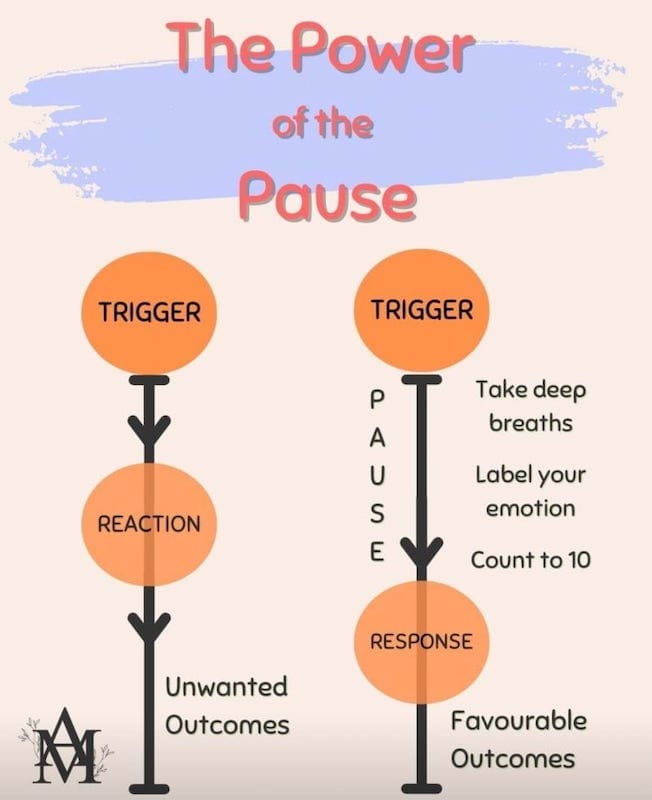
Here are small ways we can practice forgiveness in our daily lives:
● Pause before reacting – Take a breath before responding in anger.
● Empathize – Try to understand why the other person acted that way.
● Pray for peace – Ask God to help you let go of resentment.
● Start small – Forgive in little situations, like when someone cuts you off in conversation or forgets something important.
Forgiveness is not just for others; it’s a gift we give ourselves. It heals relationships, lightens our hearts, and brings us closer to God. When we choose forgiveness, we choose peace
Holistic Health Tidbits
Healing the Body Through Forgiveness
We often think of health and fitness as physical activity, balanced nutrition, or disciplined routines. However, one of the most overlooked aspects of wellness is forgiveness. Holding on to resentment, anger, or guilt weighs on the heart and takes a toll on the body and mind as well. When we learn to forgive others or ourselves, it is as transformative as lifting weights or eating a healthy diet.
The Stress of Holding On
Our body remains in a fight-or-flight mode when we replay painful events or harbor grudges. Stress hormones like cortisol stay elevated, which contribute to inflammation, fatigue, poor sleep, and weight gain. This emotional baggage becomes a physical barrier to progress on our health and performance journey.
Forgiveness begins with ourselves. We may go through cycles of guilt after missing a workout, overeating, or not meeting goals. This guilt often leads to discouragement and further setbacks. We eventually stop trying altogether. By forgiving ourselves for minor missteps, we can move forward with resilience. Progress is not a straight line, and giving ourselves grace helps us stay consistent long-term.
Making Forgiveness a Practice

We can develop forgiveness through practices like journaling, meditation, prayer, or simply pausing to reflect on what works and what doesn’t serve your purpose.
Whether it is forgiving ourselves, a friend, a family member, or a stranger, each act of release strengthens both emotional and physical well-being.
Swamiji teaches that harboring resentment is like drinking poison and hoping the other person dies. Similarly, we would not allow someone to pour garbage on us, so why would we do the same to ourselves? It is easy to use failure as an excuse to quit, but if we remember that the ultimate purpose is to maintain our bodies and minds in the service of God, then forgiving ourselves and others will become easier.
The Mental and Physical Benefits of Forgiveness
Just as we train our bodies with exercise, we can train our minds with forgiveness. Choosing to let go allows us to free ourselves from the burden of negative emotions. This shift can improve focus, increase motivation, and foster a more positive mindset—qualities that carry over into workouts, nutrition choices, and overall consistency.
Studies have shown that practicing forgiveness can lower blood pressure, improve heart health, and reduce symptoms of anxiety and depression. People who release resentment often report feeling lighter, more energetic, and more motivated to engage in physical activity. In this way, forgiveness becomes not just a mental release, but a tool for physical vitality.
Forgive Today
Forgiveness is a powerful form of health and wellness. By unburdening the heart, we free the body to heal, grow, and ultimately thrive. Like physical fitness, forgiveness is an ongoing practice—one that unlocks resilience, peace, and lasting wellness.
Discover More Inspiring Blogs on Forgiveness
🌸 Check Other Blogs on Forgiveness 🌸
Reflection Questions
Bhakti Ras / Inspiration
Have you forgiven someone who wronged you? How do you know you forgave the person?
Bal-Mukund: Playground for Vedic Wisdom
What lessons can be learned from Ratan Tata’s choice to remain silent when insulted by Bill Ford?
Youth Insights
Is there someone you are holding a grudge against right now? What would need to change inside of you so that you can forgive them?
Holistic Health Tidbits
What weight from the past are you still carrying, and how might forgiving yourself help you move more freely toward your health and fitness goals?
Upcoming Events October 2025
Dussehra Celebrations
Dussehra or Vijaya Dashami is celebrated on the day after Navratri, or the 10th day of this festival. On this day, devotees gather to celebrate the triumph of Shree Ram over Ravan in the Lanka war. Following a colossal war, Shree Ram slayed the 10-headed Ravan and was reunited with Mother Sita, one of the forms of the Mother of the Universe. It is also a commemoration of the triumph of good over evil, which is described in the Ramayan and many other Vedic texts.
- Date & Time: October 1, 2025 – 6:00 to 8:00 PM
- Venue: 1450 N Watters Rd, Allen, TX 75013
- Details: https://www.radhakrishnatemple.net/dussehra
Join us for the most amazing celebration filled with sweet leelas, a 25+ foot Ravan Dahan, cultural program, and much more!

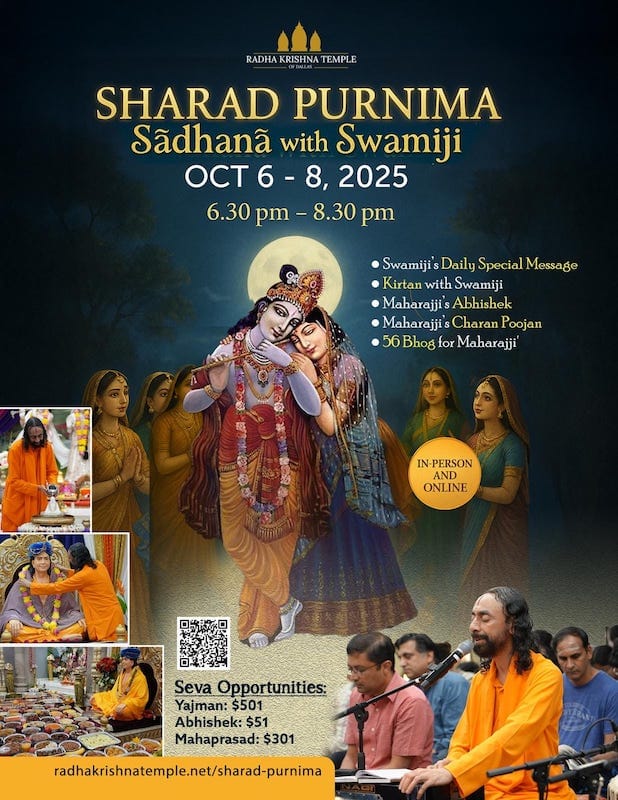
Sharad Purnima Sadhana with Swami Mukundanandaji
Jagadguru Shree Kripalu Ji Maharaj, the 5th original Jagadguru of Indian history, was born on Sharad Purnima in 1922 in the village of Mangarh, Uttar Pradesh. His followers see His descent as the arrival of a divine personality on Earth whose mission was to teach the philosophy of divine love. His senior disciple, Shree Swamiji Mukundananda ji, is on a mission to bring about a spiritual revolution, especially in the Western world, and guide countless souls on the philosophy and practice of divine love bliss.
For JKYog members, Sharad Purnima is a celebration of eternal love and infinite bliss, embodied by the Gopis of Braj, who participated in the Maha-Raas with Shree Radha Krishna – the pinnacle of selfless and divine love in Madhurya Bhav. The Maha-Raas on Sharad Purnima night represents the most intimate and selfless love between the soul and the Supreme Soul.
Join us for the most devotional 3-day sadhana with Swamiji.
- Date: October 6 – 8, 2025 – 6:30 to 8:30 PM
- Venue: Radha Krishna Temple, 1450 N. Watters Rd., Allen, TX 75013
- Details: https://www.radhakrishnatemple.net/sharad-purnima
We warmly welcome everyone to be a part of this Free event.
Bhakti Kirtan Retreat with Swamiji
We are extremely blessed to have the opportunity to partake in the devotional bliss of the second Bhakti Kirtan Retreat of the year with Swamiji. Held at the exquisitely beautiful Radha Krishna Temple of Dallas (Allen), we have the most wonderful opportunity to soak in the bliss of Swamiji’s Pad Vyakhyas filled with divine knowledge and sweet ras.
Swamiji invites you to take advantage of this incredible opportunity to purify your heart and accumulate spiritual treasures that will stay with you eternally.
- Dates: October 24 to 26, 2025 – 7:00 AM to 9:00 PM (Friday-Saturday); 7:00 AM to 1:30 PM (Sunday)
- Venue: 1450 N Watters Rd, Allen, TX 75013
- Details: https://www.radhakrishnatemple.net/bhakti-kirtan-retreat