
A Month to Slow Down, Turn Inward, and Seek Lord Shiva's Grace


Every year, as the monsoon rains breathe new life into the earth, nature reminds us of an eternal spiritual truth: renewal begins from within. Trees become lush and green, rivers fill with fresh water, and the air carries a sense of calm and rejuvenation. It is during this sacred season that millions of devotees welcome Shravan Maas, one of the holiest months in the Hindu calendar, dedicated to the worship of Lord Shiva.
Throughout Shravan Maas, temples resonate with the chanting of Om Namah Shivaya, devotees observe the auspicious Somwar Vrat on Mondays, Shivlings are lovingly bathed through sacred Abhishek, and countless acts of seva and charity become heartfelt offerings to Mahadev. Yet beyond these cherished traditions lies a deeper invitation. Shravan Maas is not merely about performing rituals, it is about allowing those practices to transform the heart.
Swami Mukundananda often explains that every spiritual discipline has two dimensions. There is the external practice that we perform with our hands, and there is the inner transformation that takes place within our consciousness.
The greatest benefit of any ritual comes not from completing it mechanically, but from the humility, sincerity, and devotion with which it is performed.
This beautiful understanding lies at the heart of Shravan Maas. Every offering of water, every Bilva leaf placed upon the Shivling, every fast observed with the right intention, and every repetition of God's holy names becomes an opportunity to move a little closer to Him.
Whether you are observing Shravan Maas for the first time or have celebrated it for many years, this sacred month offers a wonderful opportunity to renew your faith, cultivate inner peace, and experience the boundless compassion of Lord Shiva.
Why Is Shravan Maas So Sacred?

Lord Shiva is known by countless names such as Mahadev, Bholenath, Ashutosh, Shambhu, each revealing a different aspect of His infinite compassion and divine nature. Among all the months of the year, Shravan Maas is especially beloved because devotees believe it is particularly dear to Him. Throughout this sacred period, prayers offered with sincerity are believed to receive His special grace and blessings.
Yet what makes Shravan Maas truly remarkable is not simply its place on the calendar. It is the opportunity it offers every devotee to pause life's relentless pace and consciously turn inward. Modern life often keeps the mind occupied with endless responsibilities, ambitions, and distractions. Shravan Maas gently invites us to redirect that attention toward prayer, contemplation, and spiritual growth.
The monsoon itself beautifully reflects this inner journey. Just as the rains cleanse the earth and awaken dormant life, sincere devotion gradually washes away the dust of ego, anxiety, and worldly attachment that accumulates within the mind. The outward beauty of the season becomes a reminder of the inward renewal that every seeker longs to experience.
This spirit of inner purification is beautifully reflected in the guidance shared by Radha Krishna Temple of Dallas for Shravan Maas. The temple encourages devotees to approach the month through four simple yet profound pillars: devotion, purification, seva, and divine remembrance. Each day becomes an opportunity to cultivate these qualities through sincere prayer, self-discipline, acts of service, and loving remembrance of God.
Far from being a month of mere ritual observance, Shravan Maas becomes a season of spiritual transformation, one that gently reshapes the heart through daily devotion.
Lord Shiva: The Compassionate Lord Who Responds to Sincere Devotion
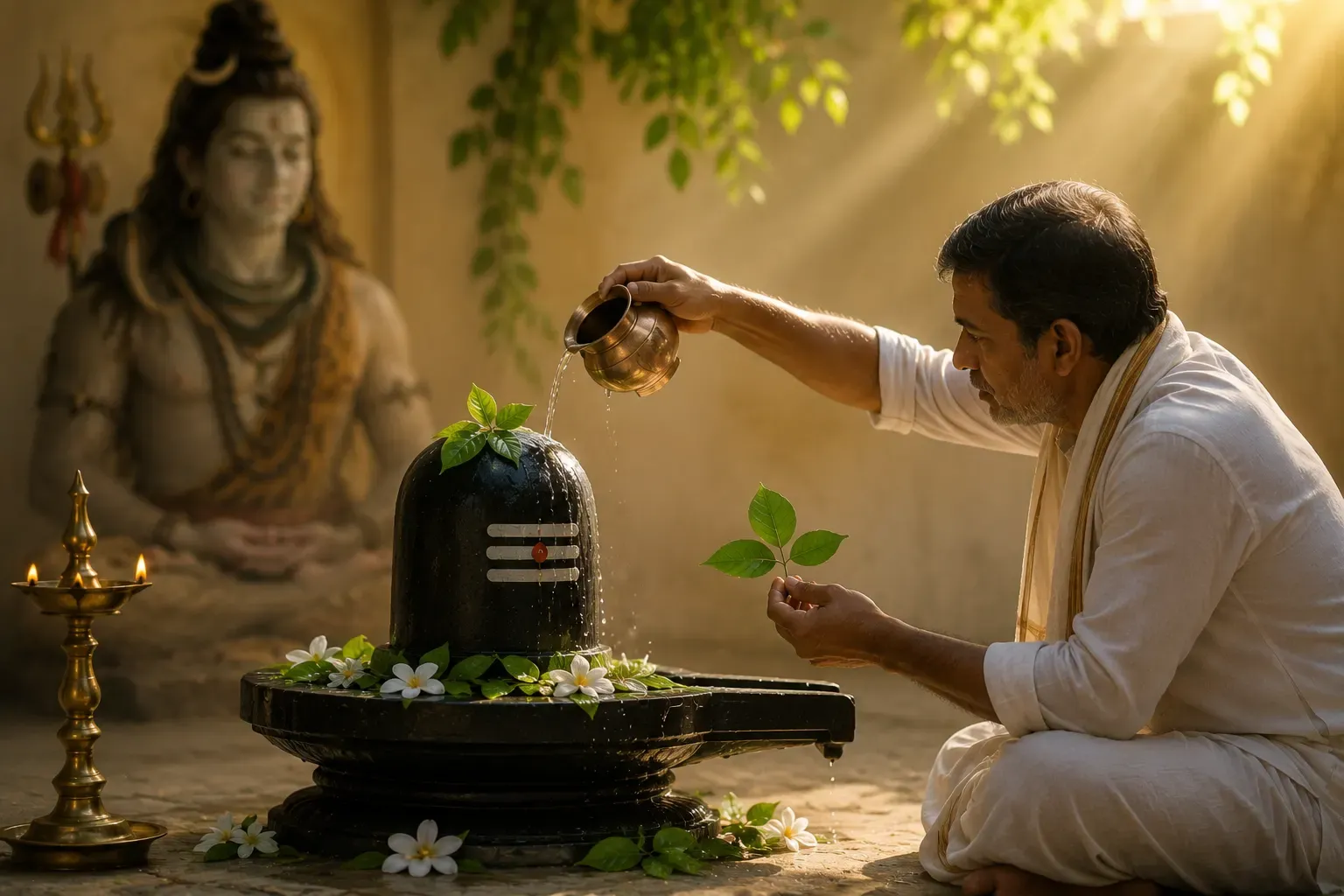
One of the reasons Lord Shiva is so deeply loved is His extraordinary accessibility. Scriptures repeatedly describe Him as Ashutosh: the One who is easily pleased. Unlike worldly relationships that often depend upon status, wealth, or achievement, Lord Shiva responds only to the sincerity of the devotee's heart.
Throughout Hindu tradition, countless stories illustrate this boundless compassion. Whether approached by great sages engaged in deep meditation or by ordinary devotees offering nothing more than a handful of water and Bilva leaves, Mahadev accepts every offering made with genuine love.
This is why Shravan Maas continues to inspire millions of devotees around the world. The month reminds us that spiritual progress is not reserved for a select few. Every person, regardless of background or circumstance, can draw closer to God through humility, faith, and loving devotion.
Swami Mukundananda frequently teaches that God is not impressed by the external size of our offerings but by the love that accompanies them. A simple prayer offered with complete sincerity carries greater spiritual value than elaborate rituals performed merely for display.
This understanding transforms the entire spirit of Shravan Maas. Rather than asking, "How much should I offer?" the devotee begins asking, "How can I offer my heart?"
When this shift takes place, every act of worship becomes meaningful. Lighting a lamp, chanting a mantra, visiting the temple, or performing Abhishek ceases to be a routine obligation and becomes a personal conversation with the Divine.
How to Celebrate Shravan Maas
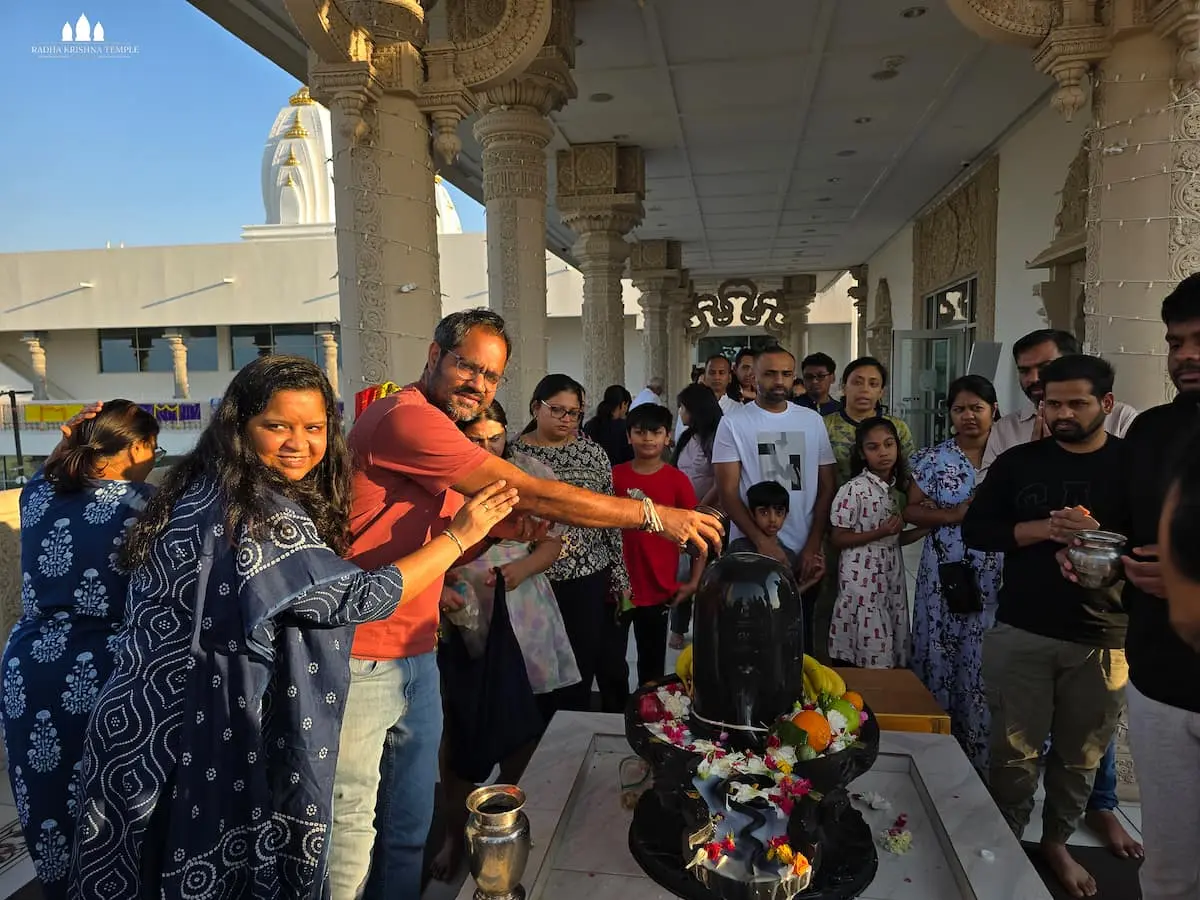
One of the beautiful aspects of Shravan Maas is that anyone can participate, regardless of age or previous spiritual experience. The purpose is not perfection but sincere effort. Even small daily practices performed consistently help cultivate a deeper awareness of God throughout the month.
While traditions vary across regions, several devotional practices have remained central to Shravan Maas for generations.
Begin Each Day with Prayer and Meditation
The peaceful hours before sunrise have long been considered especially conducive to spiritual practice. Beginning the day with a few moments of quiet prayer allows the mind to settle before becoming occupied with worldly responsibilities.
Offer your thoughts to Lord Shiva, chant His holy names, or simply sit in silent meditation. Even ten or fifteen minutes of sincere remembrance can influence the quality of the entire day.
As the Radha Krishna Temple of Dallas beautifully explains, prayer and meditation help quiet the restless mind, allowing the heart to rest in God's presence.
Chant "Om Namah Shivaya"
Among the most sacred mantras dedicated to Lord Shiva is the timeless Om Namah Shivaya.
The temple encourages devotees to chant this mantra with a calm and attentive mind, allowing each repetition to quiet inner restlessness and awaken loving remembrance of Mahadev.
Rather than rushing through repetitions mechanically, allow every mantra to become a heartfelt offering. As distractions gradually subside, the mind becomes steadier, more peaceful, and naturally drawn toward God.
Many devotees choose to chant using a Rudraksha mala, while others incorporate the mantra throughout the day during work, travel, or quiet moments at home.
Perform Shivling Abhishek
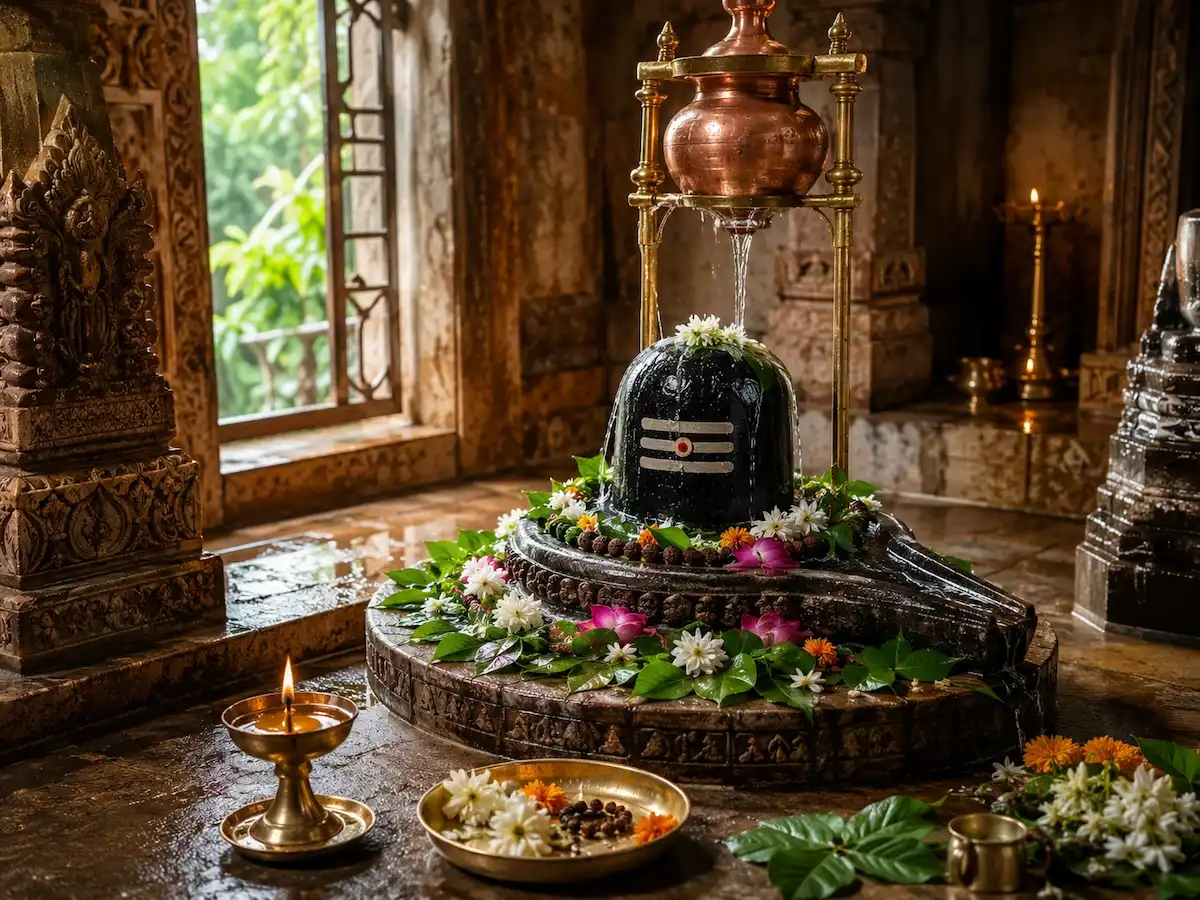
Traditionally, devotees lovingly bathe the Shivling with water, milk, curd, honey, ghee, and other sacred offerings before decorating it with Bilva leaves and flowers. Every offering carries symbolic meaning, expressing gratitude, reverence, and surrender before Lord Shiva.
The Radha Krishna Temple of Dallas beautifully reminds devotees that Abhishek should always be approached with reverence, purity, and loving remembrance of Lord Shiva. The water poured externally should inspire us to cleanse the heart internally, washing away pride, selfishness, and negative tendencies through sincere devotion.
Offer Bilva Leaves with Devotion
Among all offerings made to Lord Shiva, the sacred Bilva (Bel) leaf occupies a unique place.
For centuries, devotees have lovingly offered fresh Bilva leaves during worship as a symbol of reverence and surrender. According to the temple's guidance, even this simple offering becomes spiritually meaningful when presented with humility rather than ritual alone.
God does not measure the material value of an offering. He responds to the devotion behind it.
Practice Seva Throughout the Month
Shravan Maas is not limited to what happens inside the temple, for true devotion naturally expresses itself through compassion, kindness, and service toward others.
The temple encourages devotees to perform small acts of seva throughout the month, reminding us that selfless service reflects Mahadev's own boundless compassion. Whether helping someone in need, volunteering at the temple, supporting community programs, or simply offering encouragement to another person, these acts become powerful expressions of devotion.
As Swami Mukundananda often explains, love for God naturally overflows into love for His children. When devotion inspires compassion, spirituality begins to shape everyday life.
Attend Satsang and Temple Worship
While personal prayer is essential, spiritual growth accelerates when we associate with fellow devotees.
Satsang provides an environment where devotion naturally flourishes through prayer, scriptural wisdom, kirtan, meditation, and the company of like-minded seekers. The Radha Krishna Temple of Dallas encourages devotees to spend time in satsang throughout Shravan Maas, allowing sacred association to nourish both understanding and devotion.
Just as a single ember glows brighter when placed among other burning coals, the heart grows stronger in devotion when surrounded by sincere spiritual seekers.
The Significance of Shravan Somwar Vrat
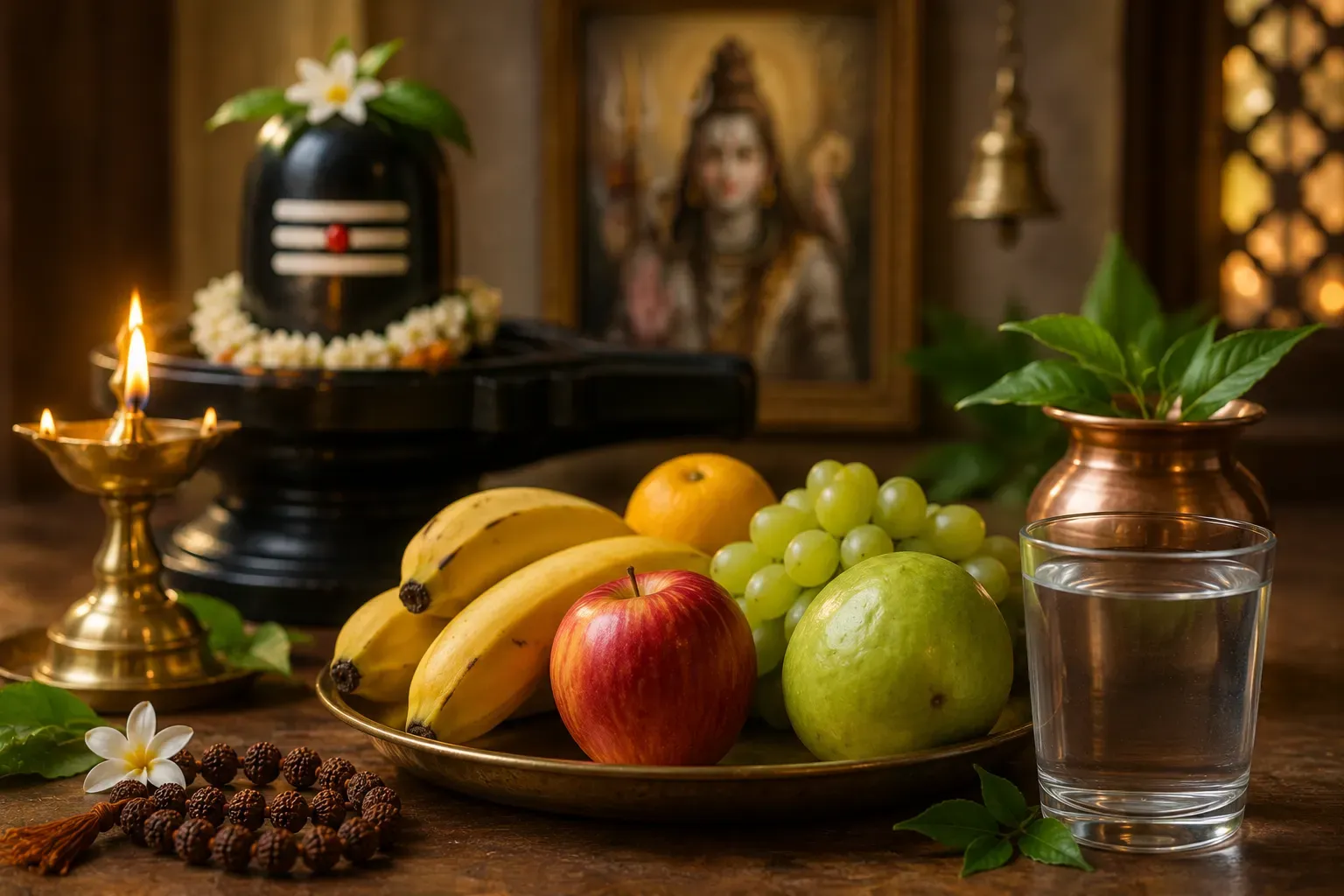
Among all the observances during Shravan Maas, none is more widely practised than the Shravan Somwar Vrat.
Every Monday of this sacred month is especially dedicated to Lord Shiva, making it an auspicious day for prayer, fasting, temple visits, Shiv Abhishek, mantra chanting, and self-reflection. Devotees from all walks of life observe the Somwar Vrat with different intentions: some pray for spiritual progress, some seek harmony within their families, others pray for health, wisdom, or the removal of obstacles from their lives.
Yet beyond these heartfelt prayers lies a deeper purpose, for fasting is not intended to punish the body or become an outward display of discipline. Its true purpose is to regulate the senses, reduce distractions, and create more space for prayer and remembrance of God. When observed with the right attitude, the Somwar Vrat helps redirect the mind away from constant worldly desires and gently toward spiritual awareness.
During Shravan Maas, devotees observe different forms of fasting according to their health and circumstances. Some undertake a Nirjala Vrat, abstaining from both food and water, while others follow a Falahar Vrat, consuming fruits, milk, and vrat-friendly foods. Many observe an Ekabhukta Vrat, eating a single sattvic meal after completing their prayers. The essential principle remains the same: the fast should deepen devotion rather than become a mere physical exercise.
As Swami Mukundananda teaches, the highest fast is not only from food but also from anger, ego, criticism, selfishness, and negative thinking. When external discipline is accompanied by inner purification, Shravan Somwar becomes a powerful opportunity for genuine spiritual growth.
Step-by-Step Guide to Performing Shiv Abhishek During Shravan Maas
Among the many devotional observances of Shravan Maas, Shiv Abhishek is one of the most cherished. Every drop of water, every offering of milk, and every Bilva leaf expresses the devotee's love, gratitude, and surrender before Lord Shiva. While the ritual itself is beautiful, its true purpose is to cultivate humility and remembrance of God.
If you are new to this sacred practice, the following simple steps provide a meaningful way to perform Shiv Abhishek at home or in the temple.
Prepare Yourself and Your Prayer Space
Before beginning worship, bathe and wear clean, modest clothing, preferably in light colours. Spend a few moments calming the mind through prayer before approaching the Shivling.
If worshipping at home, clean the altar and arrange your offerings beforehand. Traditionally, devotees prepare:
Clean water
Gangajal (if available)
Milk
Curd
Honey
Ghee
Sugar
Bilva (Bel) leaves
Fresh flowers
Sandalwood paste
Incense and a diya
Having everything prepared beforehand allows the mind to remain focused on devotion rather than distraction throughout the worship.
Offer the Sacred Abhishek
Begin by gently pouring water over the Shivling, followed by milk and the remaining sacred offerings one by one. Between each offering, rinse the Shivling with water before continuing. Finally, decorate the Shivling with Bilva leaves, flowers, and sandalwood paste.
As you perform each offering, avoid rushing. Let every action become a silent prayer.
The Radha Krishna Temple of Dallas beautifully reminds devotees that Abhishek should always be performed with reverence, purity, and loving remembrance of Lord Shiva. The water poured externally symbolises the cleansing of the heart within, washing away pride, anger, selfishness, and attachment.
Chant Lord Shiva's Holy Names
Throughout the Abhishek, devotees traditionally chant: Om Namah Shivaya
or recite the Maha Mrityunjaya Mantra, one of the most revered prayers seeking Lord Shiva's blessings for protection, healing, and spiritual upliftment. Many devotees complete 108 repetitions using a Rudraksha mala, allowing each mantra to deepen their concentration and devotion.
More important than the number of repetitions is the feeling with which the mantra is chanted. A single sincere prayer offered with complete attention is more spiritually beneficial than countless distracted repetitions.
Do's and Don'ts During Shravan Maas
Every sacred observance carries both external disciplines and inner attitudes. While customs may vary across families and traditions, the following guidelines help devotees observe Shravan Maas with sincerity and devotion.
What To Do
Begin each day with prayer, meditation, or chanting before becoming occupied with worldly responsibilities. Even a few quiet minutes spent remembering Lord Shiva can establish a peaceful foundation for the day.
Maintain a sattvic lifestyle by eating simple, pure vegetarian food, especially when observing the Somwar Vrat. Many devotees avoid onion, garlic, alcohol, and intoxicants during this sacred month, choosing foods that support clarity of mind and devotion.
Visit the temple whenever possible to participate in Abhishek, aarti, satsang, and collective worship. The uplifting atmosphere of the temple naturally strengthens devotion and inspires spiritual growth.
Spend time in scripture reading, mantra chanting, meditation, and acts of compassion. Shravan Maas is an ideal opportunity to establish small daily spiritual habits that continue long after the month concludes.
Offer seva wherever possible. Whether supporting temple activities, helping someone in need, or serving quietly without recognition, selfless service reflects the compassionate nature of Mahadev Himself.
What Not To Do
Avoid treating Shravan Maas merely as a checklist of rituals. Mechanical observances performed without devotion lose much of their spiritual value.
Try to avoid anger, harsh speech, criticism, gossip, and unnecessary arguments. Spiritual discipline extends far beyond food restrictions.
Do not compare your observances with those of others. Every devotee progresses according to their own circumstances, health, and spiritual maturity.
Above all, remember that the purpose of fasting is not self-punishment but self-purification. The body should always be respected, and devotees should observe practices appropriate to their health and capacity.
Celebrate Shravan Maas at Radha Krishna Temple of Dallas
There is something deeply moving about worshipping Lord Shiva alongside fellow devotees. The sound of sacred mantras filling the temple, the fragrance of flowers and incense, the sight of the Abhishek, and the shared atmosphere of devotion create an experience that is difficult to replicate elsewhere.
Throughout Shravan Maas 2026, Radha Krishna Temple of Dallas warmly invites devotees to participate in a month-long celebration dedicated to Lord Shiva.
Daily Rudra Abhishek is performed every evening at 6:00 PM, providing devotees with a regular opportunity to offer prayers and receive Mahadev's blessings.
Mondays: the most auspicious days of Shravan Maas: feature special Rudra Abhishek ceremonies at 11:00 AM and 7:15 PM, while Sunday Rudra Abhishek takes place at 9:45 AM, allowing families to participate together.
The temple also encourages devotees to undertake a beautiful 30-day devotional journey, choosing one meaningful spiritual practice each day. These simple acts may include chanting Om Namah Shivaya, offering Bilva leaves, attending satsang, performing seva, practising meditation, or spending quiet moments in prayer. Rather than overwhelming the devotee, these daily practices gently cultivate a life centred on God.
Opportunities are also available to offer Shravan Maas Seva, supporting temple worship, devotional programmes, and the continued growth of the spiritual community. Every offering, whether large or small, becomes an expression of gratitude and devotion when made with love.
Conclusion: The Deeper Purpose of Shravan Maas
After exploring the rituals, fasting, prayers, and sacred traditions of Shravan Maas, an important question naturally arises: Why did our scriptures prescribe these observances in the first place?
Swami Mukundananda explains that every spiritual practice has an external form and an internal purpose. Rituals themselves are not the destination, they are instruments that gradually transform the heart.
When we perform Shiv Abhishek, we are not simply bathing a sacred Shivling. We are praying for our own hearts to become cleansed of pride, attachment, jealousy, and selfishness.
When we observe the Somwar Vrat, we are not merely abstaining from food. We are learning to discipline the senses and redirect the mind toward God.
When we chant Om Namah Shivaya, we are not simply repeating syllables. We are training the restless mind to dwell upon the Divine rather than becoming absorbed in endless worldly distractions.
Similarly, seva is not simply volunteering or helping others. It is an opportunity to gradually replace the ego's desire for recognition with genuine compassion and humility.
This beautiful perspective lies at the heart of JKYog's teachings. External practices become transformative when they awaken inner devotion. True spiritual progress is measured not by the number of rituals completed but by the growth of qualities such as humility, kindness, patience, forgiveness, and loving remembrance of God.
The Radha Krishna Temple of Dallas expresses this beautifully by describing Shravan Maas as a month dedicated to devotion, purification, seva, and divine remembrance. When these qualities begin to flourish within us, the sacred month has fulfilled its true purpose.
Call to Action
Experience the Divine Grace of Shravan Maas at Radha Krishna Temple of Dallas
This Shravan Maas, deepen your devotion by participating in the sacred worship of Lord Shiva at Radha Krishna Temple of Dallas. Join fellow devotees for the uplifting atmosphere of Daily Rudra Abhishek at 6:00 PM, with special Monday Rudra Abhishek ceremonies at 11:00 AM and 7:15 PM, and Sunday Rudra Abhishek at 9:45 AM.
Offer Bilva leaves, chant Om Namah Shivaya, participate in satsang, support Shravan Maas Seva, and allow each visit to become an opportunity for inner purification and spiritual growth.
Whether you are beginning your spiritual journey or continuing a lifelong practice of devotion, the temple warmly welcomes you to celebrate this sacred month in the company of Lord Shiva and fellow devotees.
Frequently Asked Questions
- What is Shravan Maas?
Shravan Maas, also known as Shravan Maas in some regions and dialects, is one of the holiest months in the Hindu calendar. Dedicated to Lord Shiva, it is a time for prayer, fasting, Shiv Abhishek, chanting, seva, and spiritual reflection. - Why is Shravan Maas important?
Shravan Maas is believed to be especially dear to Lord Shiva. Devotees observe this sacred month to seek His blessings, purify the mind, strengthen devotion, and cultivate greater self-discipline and inner peace. - What is Shravan Somwar Vrat?
Shravan Somwar Vrat is the sacred Monday fast observed during Shravan Maas. Devotees dedicate these auspicious days to Lord Shiva through fasting, Shiv Abhishek, mantra chanting, temple visits, and prayer. - How do I perform Shiv Abhishek?
Traditionally, devotees bathe the Shivling with water, milk, curd, honey, ghee, and other sacred offerings before offering Bilva leaves, flowers, sandalwood paste, and chanting Om Namah Shivaya with devotion. - What should I avoid during Shravan Maas?
Many devotees avoid non-vegetarian food, onion, garlic, alcohol, and intoxicants. Spiritually, devotees also strive to avoid anger, harsh speech, pride, gossip, and negative thoughts while cultivating purity in both action and intention. - What is the significance of Bilva leaves in Shiva worship?
Bilva leaves are among the most sacred offerings to Lord Shiva. They symbolise devotion, humility, and surrender, and are traditionally offered during Shiv Abhishek with sincere prayer. - How can I celebrate Shravan Maas at Radha Krishna Temple of Dallas?
The temple offers Daily Rudra Abhishek at 6:00 PM, special Monday Abhisheks at 11:00 AM and 7:15 PM, Sunday Rudra Abhishek at 9:45 AM, Shravan Maas Seva opportunities, satsang, and a 30-day devotional journey throughout the sacred month. - According to JKYog, what is the real purpose of Shravan Maas?
Swami Mukundananda teaches that rituals become spiritually transformative when they purify the heart. The true purpose of Shravan Maas is to cultivate humility, devotion, self-discipline, compassion, and loving remembrance of God through sincere spiritual practice.