
There are certain festivals that do more than mark a date on the calendar. They awaken something deep within the heart. Narsimha Jayanti, celebrated in 2026 on 30th April, is one such sacred occasion. It is not merely a celebration of a divine event from ancient times; it is a living reminder that no darkness is stronger than divine light, no arrogance can stand forever, and no sincere devotee is ever abandoned.
Narsimha Jayanti commemorates the appearance of Lord Narsimha, the fierce and compassionate incarnation of Lord Vishnu, who manifested to protect His child devotee Prahlad and restore righteousness. Yet to stop there would be to miss the deeper meaning of the festival.
The story of Narsimha is not simply about the destruction of a tyrant. It is about the triumph of faith over fear, humility over ego, devotion over hatred, and selfless divine love over worldly bargaining. These themes are especially emphasized in the teachings of Swami Mukundananda and the wisdom tradition of JKYog, which teaches that the highest spiritual path is loving God not for gain, but for God’s own sake.
Let us enter this timeless story and discover the powerful life lessons Narsimha Jayanti offers every sincere seeker today.
The Story That Still Echoes Through Time
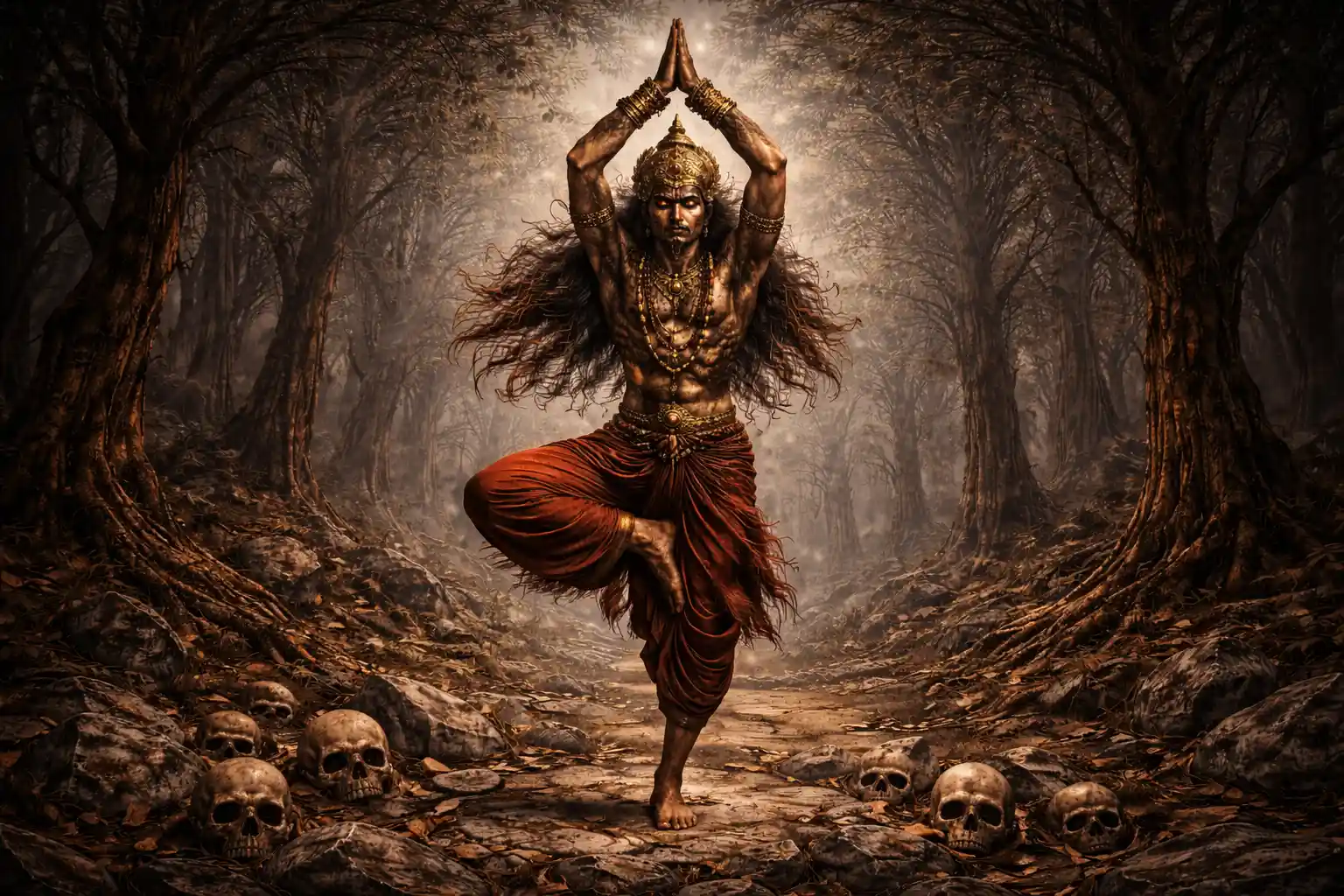
Long ago, there lived a powerful king named Hiranyakashipu. He was no ordinary ruler. Through severe austerities, discipline, and determination, he acquired immense powers and blessings. He approached the creator deity Lord Brahma and asked for immortality. When that request was denied, he cleverly designed conditions that seemed to make death impossible.
He asked that he should not die by man or beast, neither during day nor night, neither indoors nor outdoors, neither on earth nor in the sky, and not by any weapon.
To the ordinary mind, this seemed like genius. To the ego, it felt like victory.
Once empowered, Hiranyakashipu became intoxicated by his own might. He conquered territories, intimidated celestial beings, and demanded worship. His greatest hatred was reserved for Lord Vishnu, whom he considered his enemy.
Yet destiny had already begun unfolding within his own household.
His queen, Kayadhu, was carrying a child. During pregnancy, through the grace of Narad Muni, divine wisdom entered the atmosphere around her. Though the mother did not absorb those teachings deeply, the child within listened attentively. That child was Prahlad.
From the moment he was born, Prahlad’s heart belonged to God.
As he grew older, his father expected him to become a mighty heir, a ruler hardened by politics, strategy, and conquest. Teachers were appointed to train him in statecraft, manipulation, diplomacy, punishment, and worldly cleverness.
But whenever Prahlad was asked what he had learned, he spoke only of devotion.
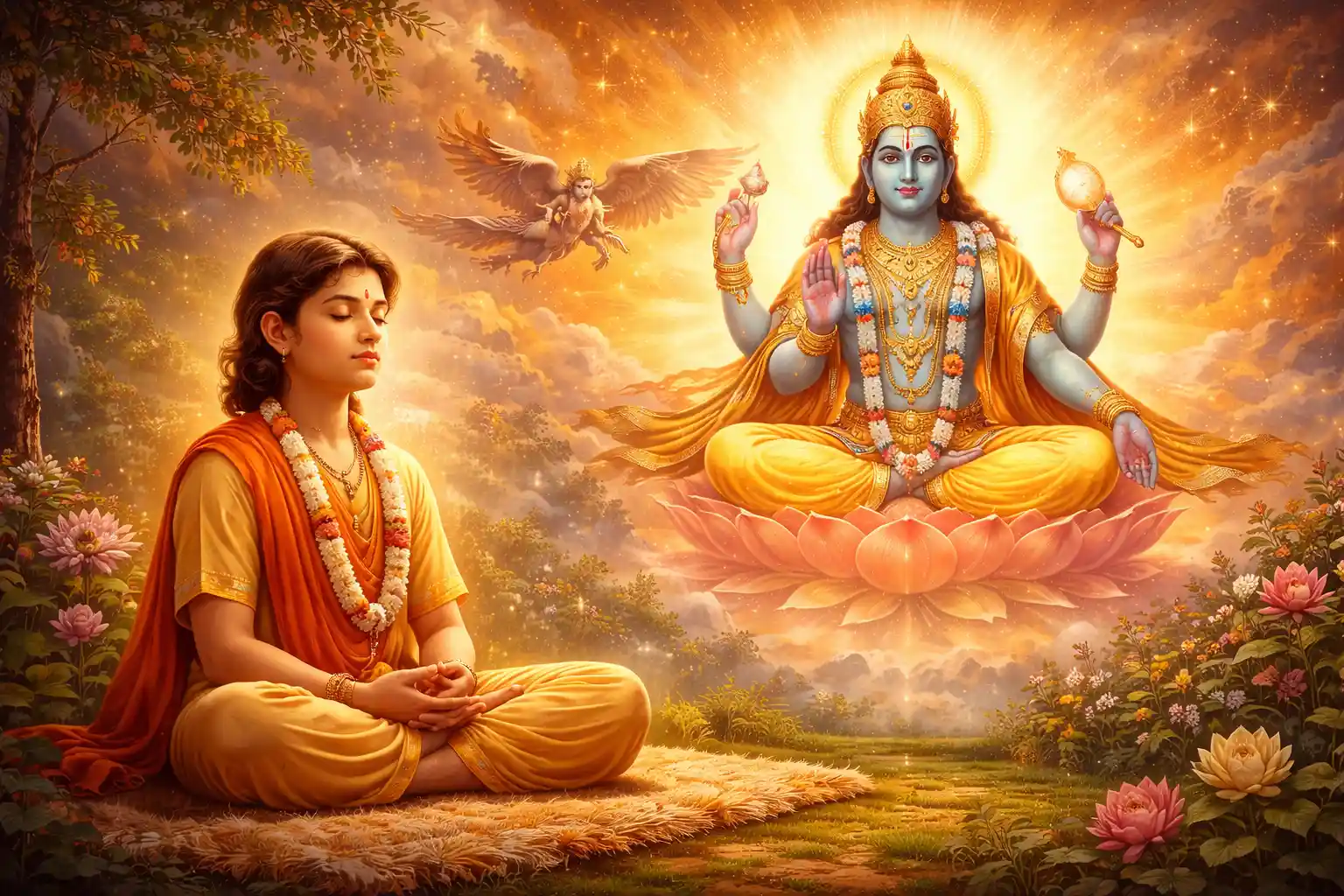
He described hearing God’s glories, chanting God’s names, remembering the Divine, serving with love, praying sincerely, befriending the Lord, and surrendering the self completely.
His father was horrified.
How could the son of the most feared ruler become a lover of God?
Again and again Prahlad was pressured to change. Again and again he remained calm, joyful, and unwavering.
Then came the cruelty.
He was attacked with weapons. Poisonous snakes were sent near him. Elephants were used to trample him. He was placed in deadly circumstances. Fire itself was invoked through Holika. Yet through every trial, Prahlad remained absorbed in remembrance of God.
He did not survive because of physical strength. He survived because his consciousness was anchored in something greater than circumstance.
Finally, in a rage, Hiranyakashipu confronted him.
“Where is your God?”
Prahlad replied with serene certainty:
“He is everywhere.”
The king pointed to a stone pillar.
“Is He in this pillar too?”
Prahlad said yes.
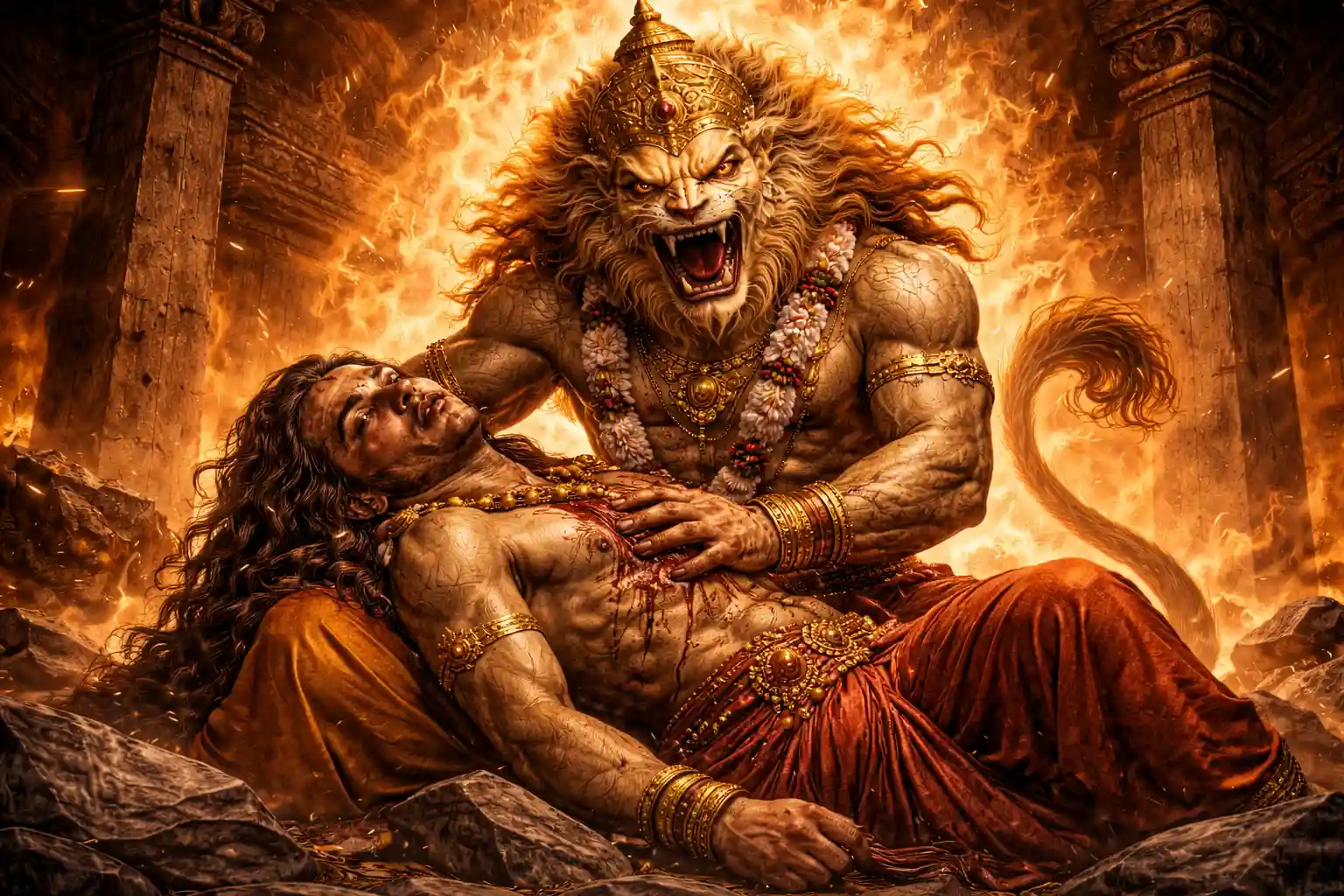
In fury, Hiranyakashipu struck the pillar. At once, the pillar split open and from it emerged the astonishing form of Lord Narsimha—neither man nor beast, but both. It was twilight, neither day nor night. He seized the tyrant at the threshold, neither indoors nor outdoors. He placed him on His lap, neither earth nor sky. And with His nails, not a weapon, He ended the reign of arrogance.
Justice had been served.
But the greatest lesson was still to come.
When the Lord turned toward Prahlad, His fierce anger dissolved into tenderness. He lifted the child devotee and offered him any boon.
Prahlad’s answer has echoed through centuries.
“My Lord, if I ask You for something, then I become a businessman, not Your servant. If You insist I ask, then grant me this: may I never ask You for anything again.”
In that one prayer lies the heart of true Bhakti: the selfless loving devotion for God.
The First Great Lesson: Faith Is Stronger Than Circumstances
Prahlad’s life teaches that spiritual strength does not depend on external comfort.
He had no supportive environment. He had no spiritual community around him. He had no political power. Even his own father opposed him. Yet none of these conditions were able to shake his inner connection with God.
Many people postpone devotion until life becomes easier.
They say they will meditate when stress reduces, pray when schedules calm down, seek wisdom after retirement, or turn inward once relationships improve.
Prahlad’s life teaches the opposite truth: spirituality is not for perfect circumstances. It is what helps us rise above imperfect circumstances.
Faith is not denial of hardship. It is the ability to remain connected to higher truth in the midst of hardship.
This teaching is deeply aligned with JKYog philosophy. Divine remembrance is not an escape from life: it is the source of strength to live wisely, courageously, and lovingly.
The Second Great Lesson: Ego Always Overreaches
Hiranyakashipu was brilliant, disciplined, strategic, and powerful. Yet all those gifts were corrupted by ego.
He believed intelligence could outsmart divine law. He believed control could guarantee security. He believed worship belonged to the powerful rather than the worthy.
This is not merely an ancient story. It is a mirror for modern life.
Whenever we believe titles define us, wealth secures us absolutely, or success places us above humility, the consciousness of Hiranyakashipu begins to awaken within.
Ego often appears sophisticated. It can wear expensive clothes, speak confidently, and collect applause. But inwardly it remains fragile, because it depends on constant validation.
Humility, by contrast, is stable. It does not need to dominate.
Narsimha Jayanti reminds us that the universe is ultimately governed not by arrogance, but by truth.
The Third Great Lesson: The Mind Becomes What It Absorbs
One of the most beautiful parts of the story is that Prahlad received divine teachings while still in the womb. This symbolizes the immense power of impressions.
Human consciousness is shaped continuously by what it hears, sees, repeats, and dwells upon.
Today, many people underestimate this law. They consume negativity for hours, scroll endlessly through agitation, compare themselves constantly, and then wonder why peace feels distant.
Prahlad’s example teaches that even before birth, consciousness responds to elevated vibrations. How much more, then, should we guard our present mental environment?
Sacred music, wise company, uplifting literature, prayer, service, and noble conversation all nourish the inner being.
JKYog repeatedly emphasizes satsang because association silently shapes destiny.
If we wish for divine thoughts, we must create divine inputs.
The Fourth Great Lesson: Love Without Bargaining Is the Highest Path
This is perhaps the deepest jewel hidden within Narsimha Jayanti.
Most relationships in the world are based on exchange. We give affection to receive affection. We give effort to receive reward. We give attention expecting appreciation.
Even prayer can become transactional.
“God, solve this problem.”
“God, give me success.”
“God, protect my plans.”
“God, remove discomfort.”
There is nothing inherently wrong in praying for help. But Prahlad reveals a higher possibility.
He wanted God, not merely God’s gifts.
He did not wish to use devotion as a tool for material gain. He wanted love free from bargaining.
This is the essence of selfless divine love taught in JKYog. When devotion matures, the heart says:
“I do not love You because You give. I love You because You are infinitely lovable.”
Such love purifies the soul.
The Fifth Great Lesson: God Is Everywhere, Not Only in Sacred Spaces
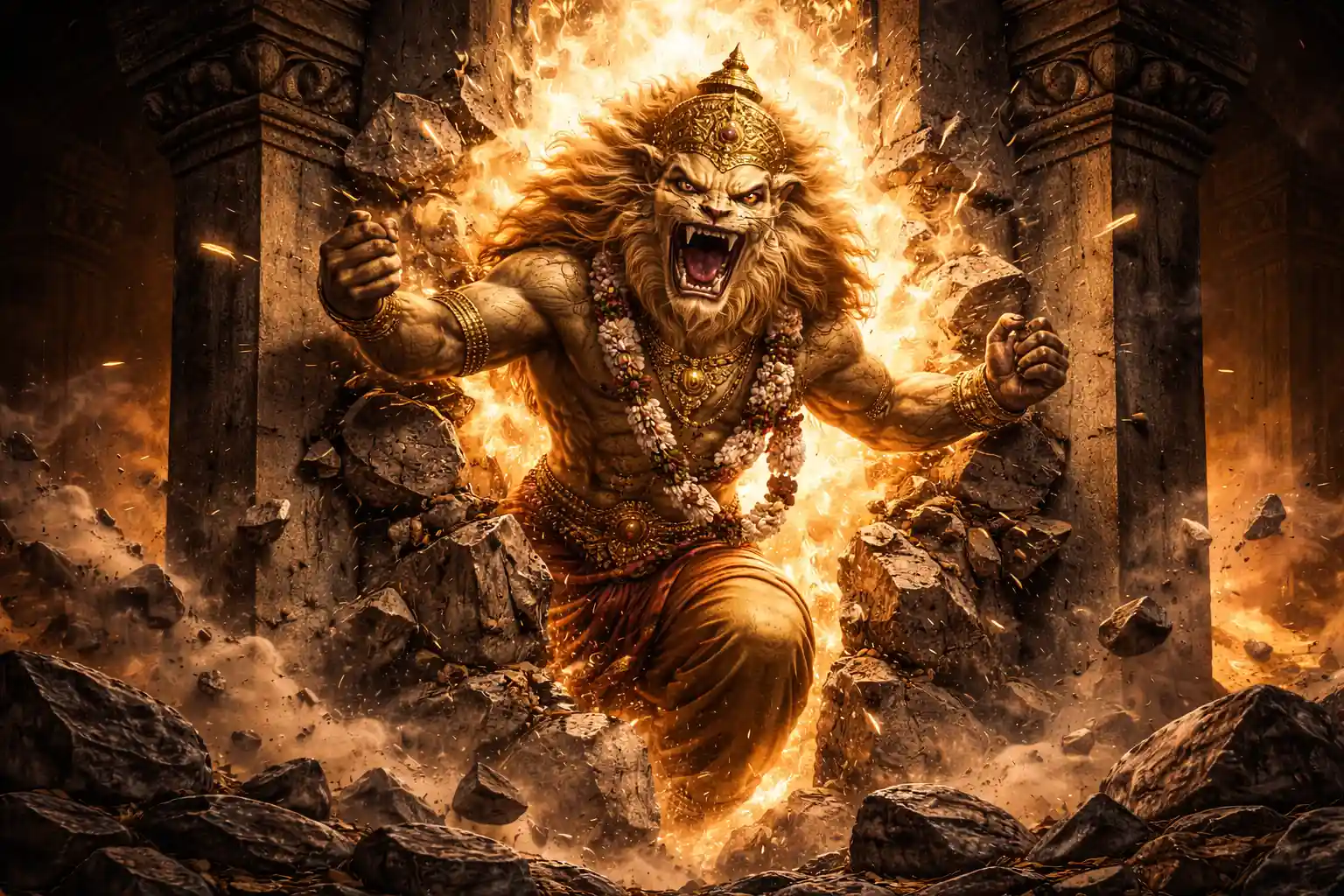
When Prahlad declared that God was present even in a stone pillar, he shattered the narrow idea that divinity belongs only in temples or rituals.
Temples are sacred and deeply valuable. They focus the mind, inspire devotion, and uplift consciousness. Yet the mature seeker learns that the Divine cannot be confined.
God is present in the sunrise, in conscience, in the rhythm of breath, in opportunities to serve, in the beauty of nature, and in every moment that calls us upward.
Once this understanding grows, daily life changes.
Work becomes an offering. Relationships become opportunities to love better. Challenges become classrooms. Silence becomes prayer.
The world itself becomes a temple.
The Sixth Great Lesson: Fear Ends Where Love Begins
After Hiranyakashipu’s fall, even celestial beings were afraid of Lord Narsimha’s fierce form. But Prahlad was not afraid.
Why?
Because he did not see terror. He saw his Beloved Lord.
This reveals a profound spiritual truth. Fear decreases as relationship with God deepens.
A distant God may inspire awe. A loved God inspires trust.
Many people intellectually believe in God yet remain inwardly anxious because their relationship has not become personal. Prahlad’s devotion was intimate. He saw the Lord as protector, friend, father, beloved master.
When the heart feels held by divine love, fear loosens its grip.
The Seventh Great Lesson: Forgiveness Is Greater Than Revenge
Prahlad could have asked for punishment upon those who harmed him. Instead, he prayed for the welfare of his father.
This level of compassion is difficult to comprehend.
He did not deny wrongdoing. He did not celebrate cruelty. But he refused to let hatred occupy his heart.
Modern culture often glorifies retaliation. But revenge chains the mind to the past.
Forgiveness does not always mean reconciliation. It means refusing to poison your own consciousness with bitterness.
Prahlad chose freedom.
The Eighth Great Lesson: You Are Not Defined by Your Background
Prahlad was born in a lineage of demons, raised in a hostile environment, and educated among those opposed to devotion.
Yet he became one of the most revered saints in spiritual history.
This gives hope to everyone who feels limited by family history, mistakes, upbringing, or surroundings.
Your beginning does not dictate your destiny.
Grace, effort, wisdom, and devotion can rewrite the story.
How to Celebrate Narsimha Jayanti in a Meaningful Way
The outer celebration of fasting, worship, prayer, and temple visits is beautiful. But the inner celebration matters just as much.
Spend time reading the story of Prahlad slowly, not as mythology but as psychology and spiritual truth.
Chant the names of God with sincerity.
Reflect on where ego still rules within your own mind.
Offer one selfish desire at the feet of the Divine and pray for purification.
Forgive someone silently.
Serve another person without recognition.
Ask not merely for success, but for devotion.
Then Narsimha Jayanti becomes not only a festival on the calendar, but a turning point in consciousness.
Frequently Asked Questions About Narsimha Jayanti
What is Narsimha Jayanti?
Narsimha Jayanti is the sacred Hindu festival celebrating the appearance of Lord Narasimha, the half-man, half-lion incarnation of Lord Vishnu. He manifested to protect Prahlad, His devotee, and to destroy the tyrannical Hiranyakashipu. Spiritually, it symbolizes the victory of faith over fear and truth over arrogance.
Why did Lord Vishnu appear as Narsimha?
Lord Vishnu appeared in this unique form to honor the boon granted to Hiranyakashipu while still restoring justice. Since the demon had asked not to be killed by man or beast, Narsimha appeared as both. Since he asked not to die by weapon, the Lord used His nails. Every detail reveals that divine intelligence transcends worldly cleverness.
Why is Prahlad so important?
Prahlad represents pure devotion under impossible circumstances. He teaches that love for God can remain steady even amid hostility, danger, and loneliness. He is honored because he did not merely believe in God; he trusted completely.
What is the deepest lesson of Prahlad’s prayer?
When offered any boon, Prahlad asked never to ask for selfish things again. This teaches that the highest devotion seeks God, not merely gifts from God. It is the ideal of selfless divine love.
How should I celebrate Narsimha Jayanti at home?
You may celebrate by fasting according to your tradition, reading the Narsimha and Prahlad story, chanting holy names, offering prayers, performing aarti, meditating, and engaging in acts of charity. Most importantly, cultivate humility and devotion.
Is Narsimha Jayanti only for Hindus?
While it is a Hindu festival, its teachings are universal. Anyone can appreciate its timeless messages: courage, surrender, justice, protection of the innocent, and the power of selfless love.
What does Hiranyakashipu symbolize in modern life?
He symbolizes the ego that believes power, intellect, and control are supreme. Whenever pride dominates conscience, the Hiranyakashipu tendency appears within human nature.
What does the pillar symbolize?
The pillar symbolizes the places where we think God is absent. Prahlad’s declaration that God was in the pillar teaches that divinity can manifest anywhere, even where the mind least expects it.
Can this story help with anxiety today?
Yes. Prahlad’s example teaches trust amid uncertainty. Remembering that one is not alone, that life has higher guidance, and that inner devotion creates resilience can greatly support emotional steadiness.
What prayer can I offer on Narsimha Jayanti?
A beautiful prayer inspired by Prahlad is:
“Lord, remove ego, fear, anger, and selfish desire from my heart. Fill me with devotion, wisdom, courage, and selfless love.”
Final Reflection
Narsimha Jayanti is not merely about a divine being emerging from a pillar. It is about the Divine emerging wherever faith is sincere.
It is about the fall of arrogance and the rise of humility. It is about courage in adversity. It is about devotion untouched by fear. Above all, it is about learning to love God without bargaining.
Prahlad’s prayer remains one of the highest prayers ever spoken:
“Grant that I may not ask You for anything.”
May Lord Narsimha destroy the inner demons of pride, anger, greed, and fear.
May Prahlad’s unwavering faith awaken within us.
May our hearts learn the path of selfless divine love.
Call to Action
Narsimha Jayanti is an invitation to transform the heart. This year, don’t just celebrate the festival. Try to live its message. Reflect on Prahlad’s unwavering faith, pray for freedom from selfish desires, and invite divine love into your daily life.
If this article inspired you, share it with family and friends, attend satsang, chant God’s names, and continue your spiritual journey with the wisdom teachings of JKYog.
May Lord Narsimha bless you with courage, protection, purity, and devotion.
Further Resources for Your Devotional Journey
 JKYog Team