
"The Divine is not absent from your suffering. He is hidden inside it — waiting for the right moment to roar."
— Inspired by the teachings of Swami Mukundananda Ji
The Hook: Your Pillar Is Not Your Prison
There is a moment in the Bhagavatam that stops the breath.
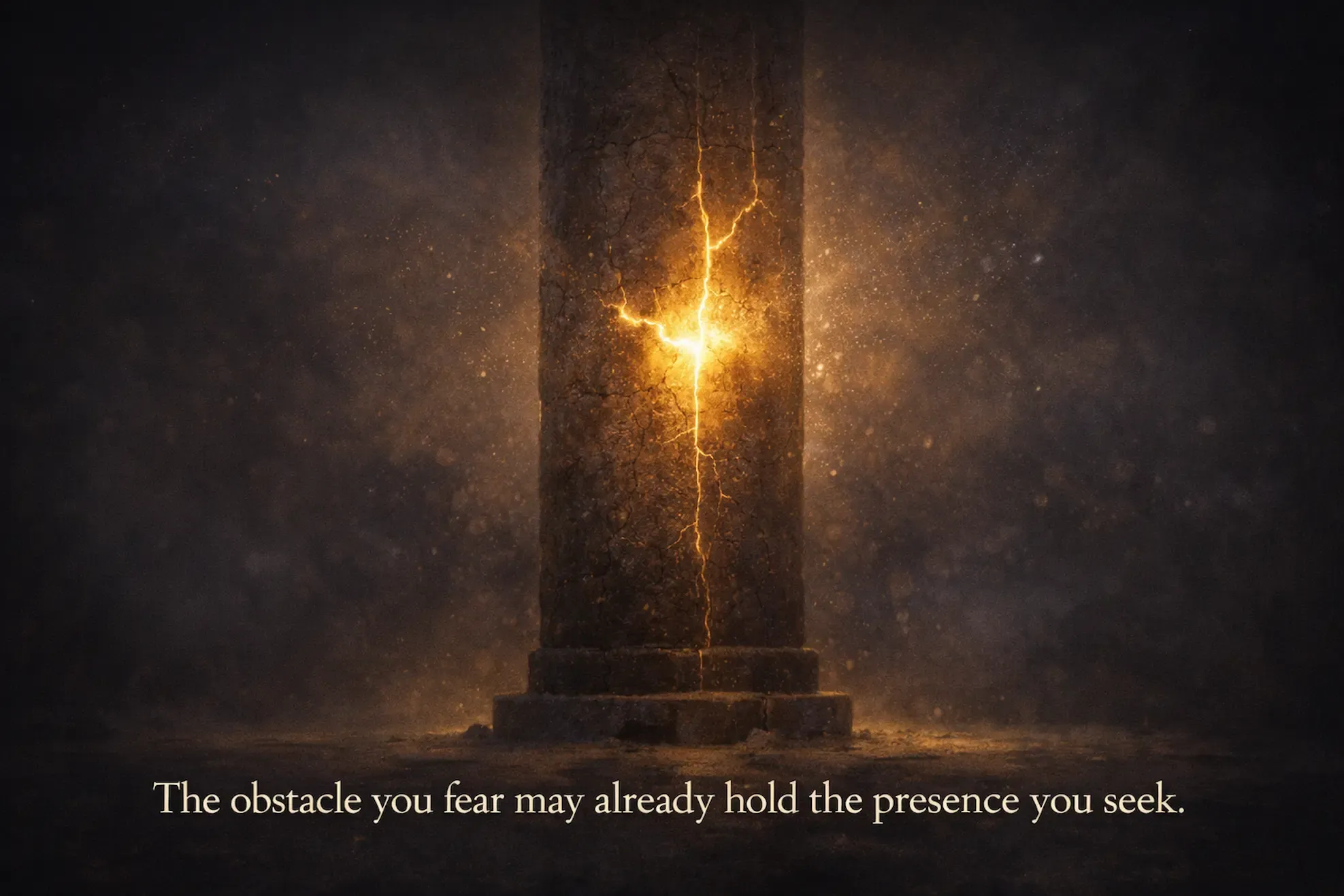
A child bruised, betrayed, thrown into fire, fed poison, cast before elephants and is dragged to a stone pillar by his own father. The tyrant king Hiranyakashipu, drunk on his invincible boon, sneers: "If your Vishnu is everywhere, is He in THIS stone?"
Prahlada, barely a boy, says quietly: "Yes. He is."
The king strikes the pillar.
And God roars.
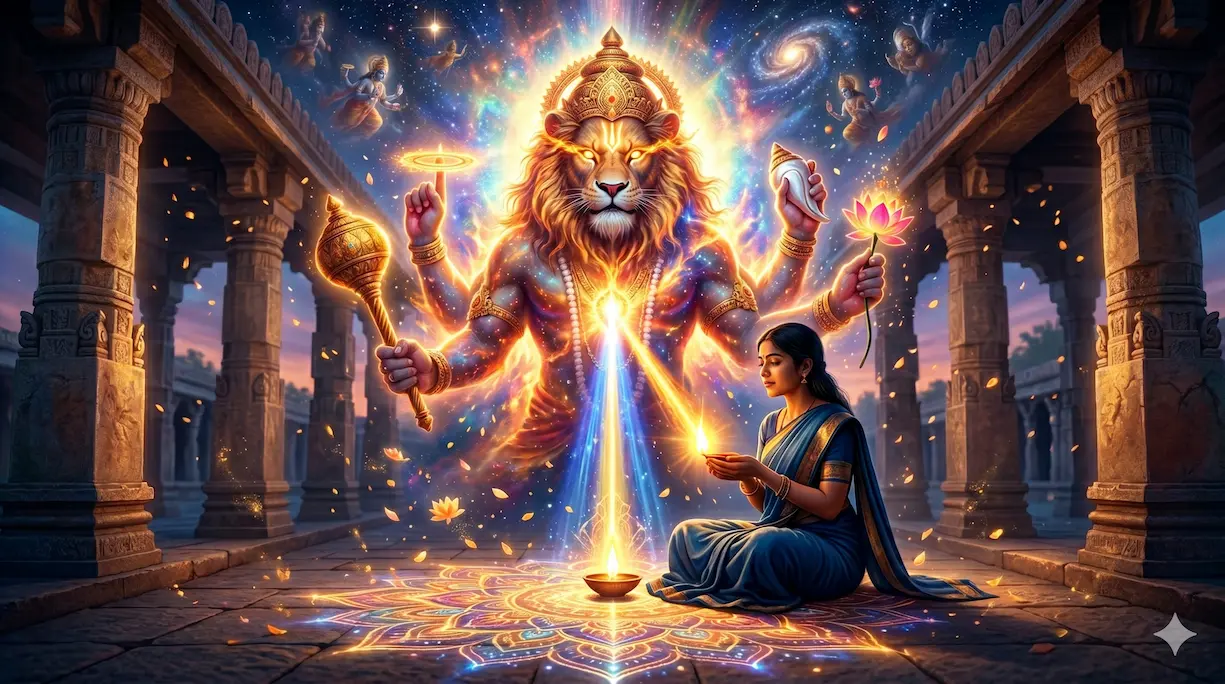
Lord Narasimha — half-man, half-lion, all love bursts forth not just to destroy a demon, but to prove something eternal: The Divine does not abandon you in your darkest hour. He is already living inside it.
The Srimad Bhagavatam, Canto 7, describes this as the moment all three worlds fell silent. Not because a demon was slain but because a child's unshakeable faith called God out of stone.
This is not mythology. This is the heart of what Swami Mukundananda ji emphasizes again and again in his discourses on Bhakti that the spiritual path is not about escaping our hardships. It is about developing the Prahlada within us: the part that looks at its deepest suffering and says, with quiet certainty, "God is in there too."
Narasimha Jayanti 2026 falls on Thursday, April 30. It is not merely a festival. It is an annual invitation to practice the deepest truth of Bhakti: surrender is not weakness. It is the only strength that cannot be broken.
This blog will walk you through every step of celebrating this sacred day at home with one living question woven through every ritual, every mantra, every offering:
Where is your deepest resistance today? Can you bring God into it?
Understanding the Day — More Than Ritual, a Revelation
Why Twilight? The Significance of Sandhya Kala
Hiranyakashipu's boon protected him at every extreme day or night, inside or outside, by man or beast, on earth or in the sky. He believed he had sealed every loophole in existence.
He forgot the in-between.
Lord Narasimha appeared at Sandhya Kala, the twilight, the sacred junction between day and night. As Swami Mukundananda ji often explains that this is deeply symbolic: the Lord is not bound by the categories and conditions we place on existence. When we divide our lives into "my problem" and "God's department," "what is possible" and "what is impossible," “solvable” and “hopeless,” we unknowingly build our version of Hiranyakashipu’s boon— an illusion of control that the Lord can dissolve in an instant.
Narasimha appeared at the threshold to remind us: God is not limited by our limitations.
This is why the evening puja, performed between 4:27 PM and 7:00 PM on April 30, carries special significance. To worship at this hour is a conscious act of aligning with the moment when divine grace dissolved every apparent impossibility.
The 2026 Festival Timings at a Glance
|
Event |
Date |
Time (IST) |
|
Chaturdashi
Tithi Begins |
April 29,
2026 |
7:51 PM |
|
Main Festival
Day |
April 30,
2026 |
All Day |
|
Madhyahna
Sankalp (Midday Vow) |
April 30,
2026 |
11:19 AM –
1:53 PM |
|
Sayana
Kala – Main Evening Puja |
April 30,
2026 |
4:27 PM –
7:00 PM |
|
Chaturdashi
Tithi Ends |
April 30,
2026 |
9:12 PM |
|
Parana —
Breaking the Fast |
May 1, 2026 |
After 6:11 AM |
Preparing the Devotee — Before You Prepare the Altar
Swami Mukundananda ji often reminds us: external rituals are only as powerful as the internal preparation behind them. The altar is a mirror of the heart. If the heart is cluttered with distraction and anxiety, the altar is merely decoration.
He is not waiting for perfection. He is waiting for your call.
Rise During Brahma Muhurta
Wake approximately 90 minutes before sunrise — this pre-dawn period is called Brahma Muhurta, and it holds a special quality. The atmosphere is Sattvic, the mind is naturally still, and remembrance of God comes more easily. Swami Mukundananda ji explains that this is the ideal time to set the inner tone of the entire day before the world's noise enters, before the mind becomes busy with a hundred things.
This is not discipline for its own sake. It is a deliberate choice to enter the day before the world’s noise does. In that stillness, you begin building the Prahlad-mindset: focused, unafraid, already in God’s presence.
Snan (Ritual Bath): Inner and Outer Purification
Take a bath with the awareness that purification is happening on two levels — the body and the inner being. Afterward, wear fresh clothes in yellow or red, colors traditionally associated with Lord Narasimha's auspiciousness and divine effulgence.
As you prepare, hold a single intention inwardly: Today, I will bring God into whatever feels most difficult.
This thought is your real preparation. Everything else follows from here.
Set Your Altar with Meaning, Not Just Form
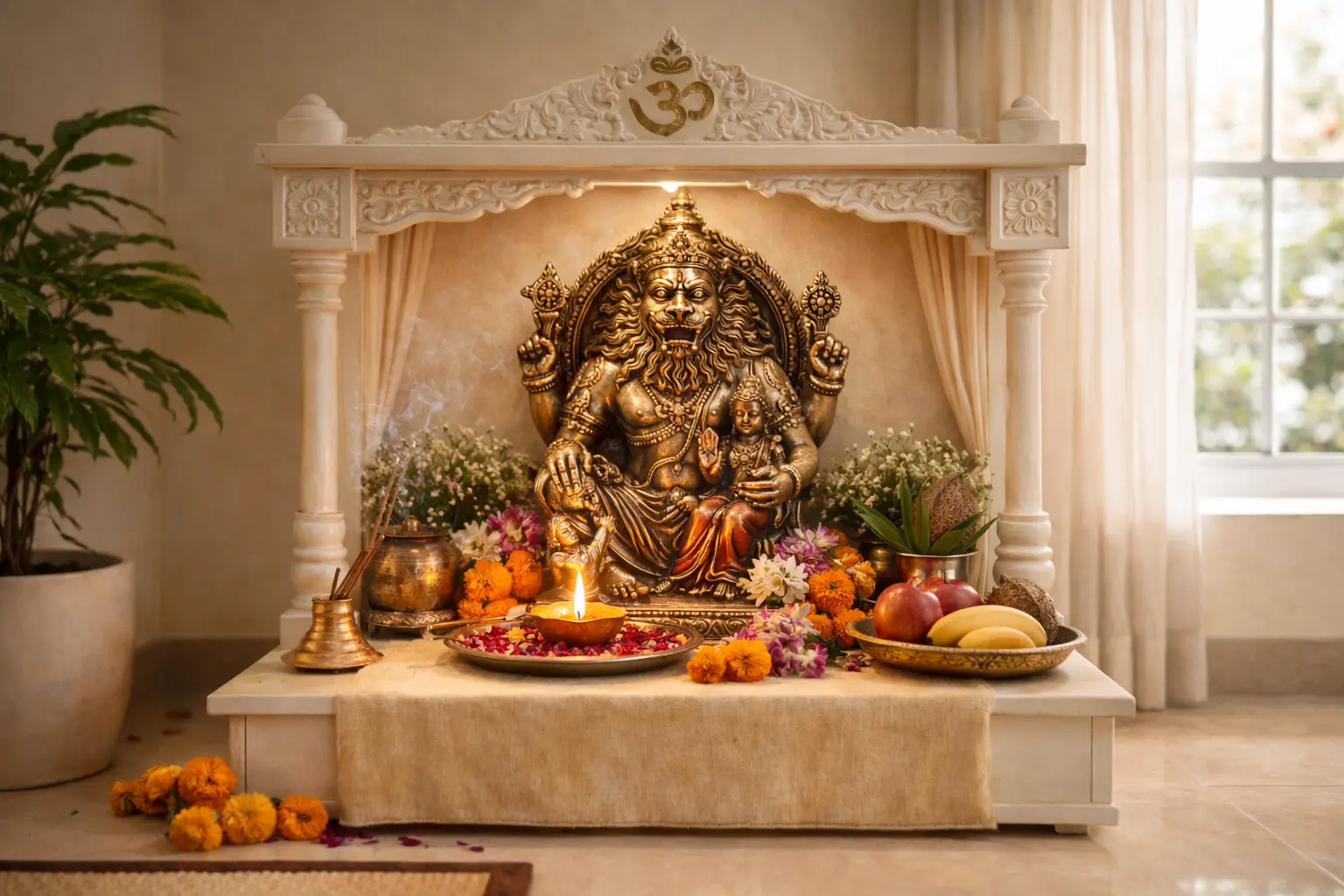
Clean your puja space completely. Place an image or idol of Lakshmi-Narasimha — in this form, the Lord's fierce energy is balanced by Goddess Lakshmi's compassionate presence, making it especially suited for household worship and the peace of family life. It is the image of fierce love, balanced by grace.
Place fresh flowers, preferably yellow. Light a ghee lamp. Keep a clean vessel of water nearby.
Before beginning any ritual — sit quietly for five minutes. Turn attention inward. Ask: What is the heaviest thing I am carrying today? Can I place it at His feet?
The Vrat — Sacred Hunger
The Vrat (fast) on Narasimha Jayanti is not merely a physical practice. As Swami Mukundananda ji often explains, fasting redirects the mind from the body's cravings toward a deeper hunger — the soul's longing for God. When the body is quieted, the heart speaks more clearly.
Fast Options Based on Your Capacity
• Nirjala Vrat: No food or water until after the evening puja. The strictest form, observed as a complete offering of one's will to God.
• Partial Vrat: Fruits, milk, water, and nuts. Entirely valid and meritorious with sincere devotion.
• Satvik Eating: If health prevents fasting, eat purely — no grains, no onion, no garlic, no meat, no processed food.
The Lord values the sincerity of the heart above the perfection of the form. A half-cup of water offered with genuine love surpasses a dry fast observed with a restless or unwilling mind.
What to Avoid
Beyond the dietary guidelines, this day calls for restraint of the inner disturbances as well — anger, harsh speech, gossip, jealousy, and the kind of mindless scrolling that fragments attention and dims the Sattva we are working to cultivate. Prahlada faced physical poison with an untroubled mind. Our practice is to meet the smaller provocations of daily life with the same quiet steadiness.
The Sayana Kala Puja — Step by Step
This is the heart of the day. The twilight has arrived. Sit facing East or North. Take a slow breath. Begin.
Step 1 — Achamana (Purification)
Sip a small amount of water three times while chanting:
"Om Keshavaya Namah, Om Narayanaya Namah, Om Madhavaya Namah"
This simple act settles the mind and marks the formal beginning of sacred time — a crossing from the ordinary into the presence of God.
Step 2 — Abhisheka (Sacred Bathing of the Deity)
Gently pour milk, honey, and water over a metal idol while chanting "Om Namo Narasimhaya". If using a framed picture, sprinkle a few drops of clean water with devotion.
As you do this, hold the awareness that this offering is not just to the Lord's form — it is a washing of your own heart. Every layer of pride, fear, and self-reliance is being gently surrendered.
Step 3 — Deepam and Dhoop (Lamp and Incense)
Light your ghee lamp. Swami Mukundananda ji often explains that the lamp symbolizes Viveka — the inner wisdom that helps us distinguish what is real from what is illusion, what is eternal from what passes. Wherever this wisdom is alive in a person, darkness cannot remain.
Light incense and let the fragrance settle the room. The senses are being turned — away from the ordinary and toward the sacred.
Step 4 — The Naivedya (Sacred Offerings)
Because Lord Narasimha manifested in His Ugra (intense) form on this day, the traditional offerings are specifically cooling in nature — balancing the energy of the festival with gentleness and care. Prepare these with your own hands. In the Bhakti tradition, cooking for God is itself an act of worship.
Panakam (Jaggery Drink)
Dissolve 1 cup jaggery in 4 cups of water. Add ½ tsp black pepper, ½ tsp dry ginger (sonth), and a pinch of cardamom. Garnish with fresh Tulsi leaves.
Vadapappu (Soaked Moong Dal)
Soak ½ cup yellow moong dal in clean water for 2 hours. Drain and serve plain, or with a sprinkle of fresh coconut. The simplicity of this offering is part of its beauty — a pure devotion, unburdened.
Chalividi (Rice Flour Sweet)
Knead 1 cup rice flour with thick jaggery syrup and 1 tsp ghee into a soft, fragrant dough.
Always place a Tulsi leaf in each dish before offering. The Tulsi reminds us that even the smallest gesture of love, placed before God with a full heart, is never overlooked.
Place the offerings before the Lord. Shield the plate gently. Allow 5–10 minutes of stillness. The Lord is present.
Step 5 — Chanting the Mantras
Swami Mukundananda ji emphasizes that mantra chanting is far more than repetition — it is a practice of gradually filling the mind with God's remembrance, so that worry and agitation are slowly replaced by peace and devotion. The more sincerely we chant, the more the mind is purified.
Narasimha Maha Mantra (chant 108 times on mala beads)
Ugram Viram Maha Vishnum Jvalantam Sarvato Mukham
Nrisimham Bhishanam Bhadram Mrutyor Mrityum Namamy Aham
"I bow to Lord Narasimha — fierce, radiant, all-protective, the one who destroys death itself."
Narasimha Pranama (offer at the opening of puja)
Namaste Narasimhaya Prahladahladadayine
Hiranyakashiporvakshah-Shilatankanakhalaye
"Salutations to You, Lord Narasimha, giver of joy to Prahlada, whose nails split the chest of Hiranyakashipu like a chisel through stone."
Step 6 — The Narasimha Kavacham (The Protective Prayer)
This is the crown jewel of the evening puja. Originally spoken by Prahlada Maharaja himself, the Kavacham invites the Lord to become a shield around every part of the devotee — from the crown of the head to the soles of the feet, in every direction, at every moment.
In the Bhakti tradition, this prayer is understood to work on two levels: it is both a request for divine protection and an act of complete surrender. To recite the Kavacham with sincerity is not merely to ask for God's armor — it is to step fully under it.
Recite it once, twice, or three times. Let each verse settle not just in the mind, but in the heart.
Step 7 — Aarti and Prasadam
Circle the lit lamp before the Lord three times clockwise while singing:
"Sri-nrisimha, jaya nrisimha, jaya jaya nrisimha
Prahladesha jaya padma-mukha-padma-bhringa"
Conclude with a few words from your own heart — not from a prayer book, but from genuine feeling. Tell the Lord what you are carrying. Ask for His grace. Even one honest sentence spoken from real need is heard.
Distribute the prasadam to your family. What was hunger becomes grace. What was offered in love returns as blessing.
Swami Mukundananda Ji’s Rhoop Dhyan Meditation — The Practice of Surrender
After the aarti, while the lamp is still burning, sit quietly for a few minutes.
1. Sit in stillness. Name your heaviest concern honestly. The fear that won't leave. The situation that feels stuck. The grief carried quietly. Do not turn away from it — look at it clearly.
2. Hold this understanding slowly: "Lord Narasimha was already present inside the stone pillar before Hiranyakashipu ever struck it. He was there before the crisis. That same Lord is present inside this difficulty too — not absent, not distant, already there, already waiting."
3. Release the grip on the outcome. Swami Mukundananda ji often describes this as the transition from hoping that God will intervene to knowing that God is already present and already working. This is Sharanagati — not the helplessness of one who has given up, but the deep peace of one who has understood that the Lord's love and care are total.
Rest in that understanding, even briefly. Notice what changes.
This is the real puja — the moment trust replaces fear.
Beyond the Puja — Carrying It into Life
Annadanam: Serve God in Every Face
Swami Mukundananda ji consistently teaches that selfless service — seva — is an essential expression of genuine Bhakti. On April 30, donate food, clothing, or sesame seeds to someone in need. When you look into the eyes of someone who is suffering and offer help sincerely, you are offering it to God directly. This is not charity in the ordinary sense — it is recognition.
Share the Vrat Katha
Gather your family and tell the story — not just Prahlada's, but also Gajendra the Elephant King, who cried out to Lord Vishnu when the crocodile pulled him under, and was saved the instant he released his ego and surrendered fully. These are not stories for entertainment. They are living teachings on how the soul finds its way back to God.
Breaking the Fast — Parana on May 1
Your Parana should take place on May 1, 2026, after 6:11 AM, once the Chaturdashi Tithi has formally concluded. Begin with water, then Tulsi leaves or fruit. Let your first meal be a quiet moment of gratitude — not just for food, but for the blessing of having spent an entire day in God's remembrance.
|
✦ Key Takeaways 1. God is present in the difficult places too. Narasimha
Jayanti teaches that divine presence is not reserved for times of ease — it
is most powerfully revealed in our deepest struggles, just as it was revealed
inside the stone pillar. 2. Prepare the heart before the altar. As Swami
Mukundananda ji emphasizes in his discourses, rituals are the vessel; Bhakti
is the nectar. Sincerity, humility, and genuine longing for God matter far
more than ritual perfection. 3. The timing of worship is meaningful. Performing the
puja during Sayana Kala (4:27–7:00 PM on April 30) is a conscious alignment
with the sacred moment when divine grace dissolved every apparent limitation. 4. Sharanagati is active trust, not passive resignation.
True surrender is the courageous, eyes-open choice to place the outcome in
God's hands — while continuing to act with full devotion and sincerity. 5. The observance continues after the lamp goes out. The
deepest celebration of Narasimha Jayanti is lived in daily life — seeing God
in difficulty, serving God in others, and returning again and again to His
remembrance. |
Conclusion: The Question Prahlada Answered
Narasimha Jayanti asks us something every year.
Most years, we answer it too quickly.
The question is not about rituals or timings or correct offerings. It is this:
Do you truly believe God is present inside your hardest situation right now?
Not the resolved ones. Not the ones where things eventually worked out. The one that is alive and unresolved right now — the uncertainty you fall asleep thinking about, the wound that hasn't healed, the door that hasn't opened despite years of sincere prayer. The diagnosis. The broken relationship. The dream that hasn’t moved in years. The grief that hasn’t lifted. The fear you’ve stopped telling people about because you’re tired of explaining it.
That one.
Prahlada did not wait for his circumstances to improve before trusting God. He trusted inside the fire, inside the snake pit, inside the stone. And the Bhagavatam tells us that each time, the Lord was already there — not arriving from somewhere distant, but emerging from within the very thing that was meant to destroy him.
Swami Mukundananda ji often says that the highest stage of devotion is not when life is going well and surrender feels easy. It is when everything is uncertain and we choose to trust anyway because we have understood, deep in the heart, that the Lord's love for His devotees is unconditional and cannot be broken.
That understanding is what Prahlada had.
It is what this festival invites us to practice.
On April 30, 2026, as the sun touches the horizon, light your lamp. Offer your Panakam. Speak the Kavacham. And wherever your greatest fear lives — turn your heart toward it and say, quietly or out loud:
"You are in there too. I know You are. Come."
The Lord has never once failed to answer a heart that called His name with Prahlada’s kind of certainty.
He was in the stone. He is with you now.
Join the Celebration — Radha Krishna Temple of Dallas
Join the divine celebration of Narasimha Jayanti at Radha Krishna Temple of Dallas for powerful Vedic rituals, kirtans, and spiritual wisdom that uplift the soul.
https://www.radhakrishnatemple.net/narasimha-jayanti
Don't miss this sacred opportunity for protection, grace, and inner strength!
 RKT Blog Team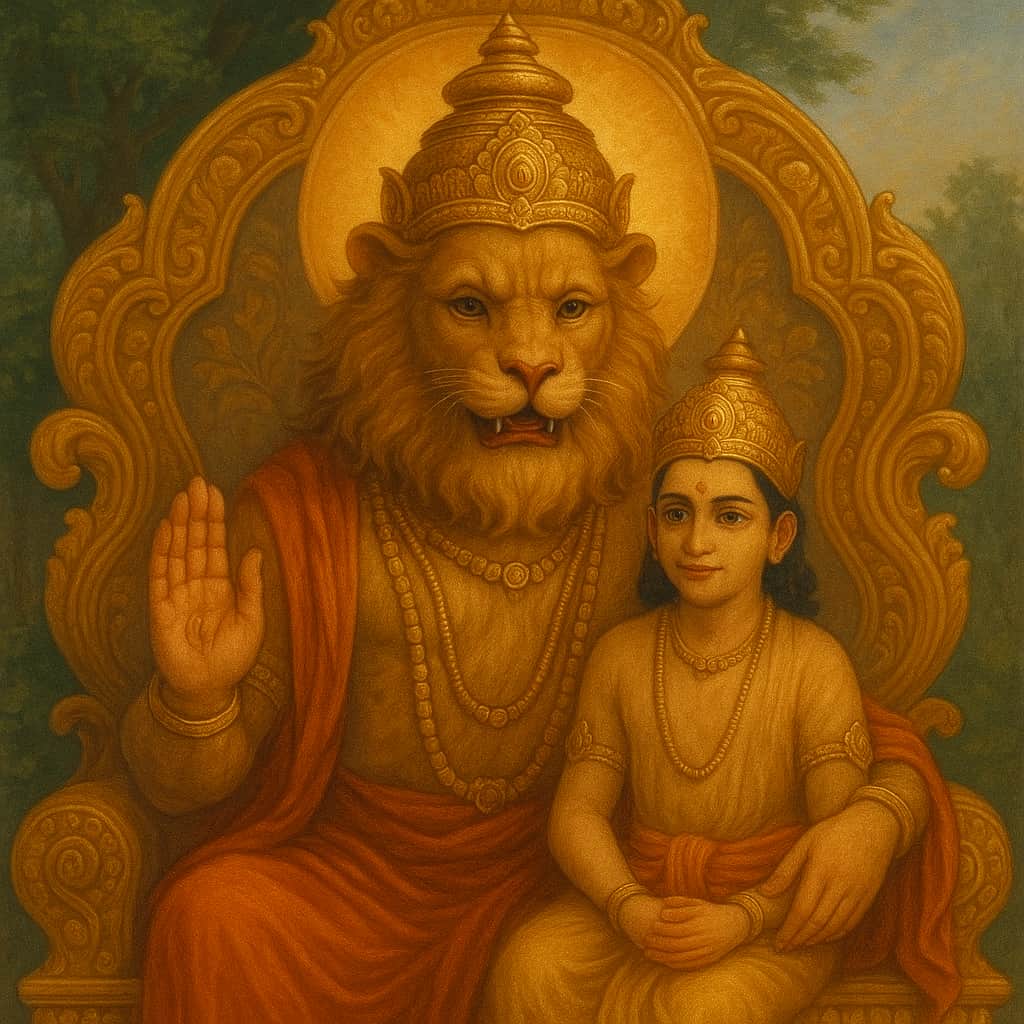
Frequently Asked Questions
Q1. I cannot perform the full puja or keep a complete fast. Does my observance still have value?
Absolutely. In the Bhakti tradition, and as is often emphasized in Swami Mukundananda ji's teachings, the Lord weighs the devotion of the heart, not the length of the ritual. A single sincere chant of "Om Namo Narasimhaya" offered with genuine love carries real power. Do what your situation allows, offer it completely, and trust that the Lord meets every sincere devotee where they are.
Q2. Why is the Lakshmi-Narasimha form especially recommended for home worship?
This is the Shanta (peaceful) aspect of the Lord — the fierce, protective energy of Narasimha held in balance by Goddess Lakshmi's grace and compassion. For household worship, this form invites both divine protection and a nurturing, harmonious energy that supports family peace and well-being.
Q3. What is the difference between Narasimha Jayanti and Narsingh Chaturdashi?
They are the same observance, referred to by two different names. "Jayanti" celebrates the Lord's divine appearance, while "Chaturdashi" refers to the specific lunar date — the 14th of Shukla Paksha in the month of Vaishakha — on which He appeared.
Q4. How can I help my children connect meaningfully with this festival?
Tell them Prahlada's story not as a lesson, but as a real adventure. Ask them honestly: "What would you do if everyone around you said God wasn't real — would you still believe?" Children understand devotion naturally when it is offered to them as love, not obligation. Prahlada's quiet, unshakeable courage is one of the most powerful gifts you can place in a young heart.
Q5. Can I observe Narasimha Jayanti if I am going through a very difficult time personally?
This is precisely when this festival speaks most directly. Prahlada was not observing this day from a place of peace and safety — he was in the middle of his greatest trial when God appeared. As the Bhakti tradition teaches, difficulties do not delay God's grace; they often become the very occasion for it. Your hardship is not a barrier. It may be the opening through which the Lord enters.