(Eleventh Part of the 19-Part Blog Series on the Ishavasya Upanishad)

Introduction
The Ishavasya Upanishad is among the shortest yet most profound Upanishads of the Vedic canon. Each mantra unfolds a complete philosophy of life, blending metaphysics with practical wisdom. Mantra 10 addresses one of the most enduring dilemmas of human civilization: the relationship between material knowledge and spiritual wisdom.
In an age of unprecedented technological advancement, humanity stands at a crossroads. Material science has given us comfort, speed, and power, but not necessarily peace, meaning, or fulfilment. At the same time, an exclusive rejection of material knowledge in the name of spirituality proves impractical and even dangerous. The Ishavasya Upanishad resolves this apparent contradiction by affirming the necessity of both vidya (spiritual knowledge) and avidya (material knowledge), while cautioning against the imbalance of either.
Mantra 10 is a philosophical compass that teaches us how to live wisely in the world without being enslaved by it, and how to pursue transcendence without neglecting the body and mind that serve as our instruments.

Mantra: Verse in Sanskrit, Transliteration, and Translation
Sanskrit Verse
अन्यदेव्णहुर्वद्य्णऽन्यद्णहुरववद्य्ण ।
इवत िुश्मु धजीर्णर््णं ये नतिद्द्वचचक्षिरे ॥ १०॥
Transliteration
anyadevāhurvidyayā ’nyadāhuravidyayā
iti śhuśhruma dhīrāṇām ye nastadvichachakṣhire
Word-by-Word Meaning
- anyat — other
- eva — certainly
- āhuḥ — said
- vidyayā — by spiritual science
- avidyayā — by material science
- śhuśhruma — we have heard
- dhīrāṇām — from the wise and enlightened
- vichachakṣhire — explained clearly
Translation
The practices of vidya (spiritual science) and avidya (material science) bestow very different fruits. The enlightened and equipoised saints have explained this in detail.
Explanation of the Verse
1. Vidya and Avidya: Distinct Paths, Distinct Fruits
The mantra begins by asserting a crucial distinction: vidya and avidya lead to different results. Vidya refers to spiritual science; the knowledge that purifies the mind, reveals the nature of the Self, and ultimately leads to God-realisation. Avidya, on the other hand, refers to material science, the knowledge that enables us to navigate, manipulate, and survive in the physical world.
The Upanishad does not condemn avidya. Instead, it warns against confusing its purpose. Material knowledge is instrumental; it supports life but does not define its meaning. When pursued without spiritual grounding, avidya leads to restlessness, greed, and moral confusion. When pursued alongside vidya, it becomes a tool rather than a trap.
| Aspect | Vidya (Spiritual Knowledge) | Avidya (Material Knowledge) |
|---|---|---|
| Primary Focus | Mind purification and Self-realization | Physical comfort and worldly efficiency |
| Outcome | Peace, clarity, liberation | Power, convenience, survival |
| Limitation | Cannot function without bodily support | Cannot grant fulfillment or peace |
2. The Necessity of Material Knowledge for Spiritual Life

Our lived experience confirms that spiritual practice depends on bodily well-being. The great poet Kalidasa stated in Kumarsambhava:
śharīram ādyam khalu dharma sādhanam
“The body is indeed the primary instrument for practicing dharma.”
A sick body obstructs spiritual absorption. Even a minor ailment can dominate the mind, making remembrance of God difficult. The Ramcharitmanas echoes this truth by stating that the Vedas do not endorse neglecting the body while pursuing devotion.
The Bhagavad Gita reinforces moderation in food, sleep, and activity as prerequisites for Yogic success. Shree Krishna states: 6.16: "O Arjun, those who eat too much or too little, sleep too much or too little, cannot attain success in Yog.
Hence, material knowledge related to nutrition, medicine, exercise, and rest is indispensable.
| Factor | Role in Spiritual Life |
|---|---|
| Nutrition | Sustains physical energy and mental clarity |
| Sleep | Restores cognitive and emotional balance |
| Exercise & Yoga | Maintains vitality and concentration |
3. Diet, Mind, and Consciousness

The Chhandogya Upanishad offers profound insight into the relationship between food and consciousness. Guru Uddalak taught Shwetaketu that purity of diet leads to purity of mind (āhāra śhuddhau sattva śhuddhiḥ).
Through a practical experiment of fasting, Shwetaketu experienced memory loss, which was restored upon nourishment. The Upanishads explain that food divides into three parts: the gross becomes waste, the middle nourishes the body, and the subtlest nourishes the mind.
This explains why certain foods influence temperament. While excessive spices can fuel anger, sattvic foods promote calmness. Understanding food science, agriculture, cooking, and commerce thus becomes an essential form of avidya.
| Food Component | Effect |
|---|---|
| Gross Portion | Eliminated as waste |
| Subtle Portion | Nourishes the body |
| Subtlest Portion | Forms the mind |
4. The Inadequacy of Materialism Alone
While avidya is necessary, it is profoundly insufficient. Material progress cannot bestow inner peace because happiness does not arise from possessions but from the state of the mind.
Albert Einstein captured this truth when he observed that transforming human character is harder than transforming matter. Material science lacks the tools to regulate desires, tame anger, or dissolve ego.
Spiritual science addresses precisely this domain. It provides disciplines to purify the heart, elevate thoughts, and cultivate compassion and wisdom. Max Planck emphasized that science and spirituality are complementary forces, not adversaries.
| Capability | Status |
|---|---|
| External Control | Highly advanced |
| Inner Transformation | Severely limited |
| Ethical Guidance | Absent without spirituality |
5. The Role of the Guru and the Meaning of Dhīrāṇām

The phrase iti śhuśhruma dhīrāṇām emphasizes that this wisdom is received from dhīra souls: those who possess dhṛiti, the capacity to retain divine knowledge and love within the heart.
Such saints are not mere scholars; they are realized beings. The Ramcharitmanas poetically compares them to clouds carrying divine rain and breezes carrying fragrance from the sandalwood tree of Bhagavan Ram.
Shree Krishna affirms this in the Bhagavad Gita BG 4.34: Learn the Truth by approaching a spiritual master. Inquire from him with reverence and render service unto him. Such an enlightened Saint can impart knowledge unto you because he has seen the Truth.
| Quality | Description |
|---|---|
| Jñāninaḥ | Knower of scriptures |
| Tattva-darśhinaḥ | Seer of Truth |
| Bhūridā | Supremely benevolent |
Applications of the Verse in Daily Life
The wisdom of Ishavasya Upanishad Mantra 10 is not confined to philosophical reflection; it is meant to be lived and embodied. Its teaching on the complementary roles of vidya and avidya provides a powerful framework for navigating modern life with balance, clarity, and purpose. Below are practical ways this mantra can be applied in everyday situations.
1. Harmonizing Career Ambition with Inner Growth
Modern life strongly emphasizes professional success, productivity, and measurable achievement. While such pursuits fall under avidya and are necessary for survival and social contribution, the mantra reminds us not to confuse career advancement with life fulfillment.
By integrating vidya, individuals can:
- Pursue excellence without ego-driven anxiety
- Accept success with humility and failure with equanimity
- Make ethical choices even when shortcuts are tempting
Regular introspection, meditation, or scriptural study ensures that professional ambition does not eclipse inner peace. Career becomes a field of service rather than a source of identity.
2. Caring for the Body as a Spiritual Responsibility
This mantra encourages a shift in perspective: health is not vanity; it is stewardship. The body is the medium through which we practice devotion, meditation, service, and self-discipline.
Applying this insight means:
- Eating with awareness rather than indulgence
- Maintaining moderation in sleep, exercise, and work
- Respecting bodily limits instead of glorifying burnout
Yoga, pranayama, and proper nutrition are not merely wellness trends; they are expressions of avidya serving vidya. A healthy body sustains a steady mind, making spiritual practices fruitful.
3. Making Conscious Dietary Choices
Food is a daily, intimate intersection of material and spiritual life. The Upanishadic teaching that the subtlest part of food nourishes the mind transforms eating into a sacred discipline.
Practical applications include:
- Choosing fresh, wholesome, and sattvic foods when possible
- Eating at regular times with gratitude
- Avoiding excess that disturbs mental balance
Such choices influence emotional stability, clarity of thought, and memory. Over time, mindful eating becomes a silent but powerful form of spiritual practice.
4. Using Technology Without Becoming Enslaved by It
Technology represents one of the most potent forms of avidya in modern life. The mantra does not ask us to reject it, but to govern it with wisdom.
Balanced application includes:
- Using technology to enhance learning and connection rather than distraction
- Setting boundaries to prevent mental fragmentation
- Evaluating ethical implications of digital behavior
When guided by vidya, technology becomes a servant that amplifies human potential instead of diminishing attention, empathy, and inner stillness.
5. Cultivating Mental Hygiene Alongside Physical Hygiene
Just as we bathe the body daily, this mantra reminds us of the need to cleanse the mind regularly. Material knowledge does not teach us how to handle resentment, jealousy, or fear, but spiritual wisdom does.
Daily practices may include:
- Reflection on one’s thoughts and motivations
- Chanting or mantra meditation
- Reading uplifting spiritual literature
Over time, such practices refine perception, allowing individuals to respond rather than react. Inner cleanliness becomes as habitual as physical cleanliness.
6. Ethical Decision-Making in a Complex World
The mantra is especially relevant in contexts where power exceeds wisdom—business, governance, science, and education. Material knowledge gives capability, but spiritual insight provides discernment.
Applying the mantra means:
- Asking not just “Can this be done?” but “Should this be done?”
- Prioritizing long-term well-being over short-term gain
- Recognizing the human impact behind technical decisions
This integration is essential in fields dealing with AI, biotechnology, finance, and media, where choices shape society at large.
7. Parenting and Education with a Holistic Vision
Parents and educators often emphasize skills, grades, and competitiveness. The Upanishad suggests a broader vision: education must nurture character as much as competence.
Practical applications include:
- Teaching children self-restraint, gratitude, and empathy
- Encouraging curiosity about life’s deeper questions
- Modelling balance rather than preaching it
Children raised with both vidya and avidya grow into resilient adults who can succeed outwardly without losing inner stability.
8. Navigating Success, Failure, and Uncertainty
Life inevitably brings unpredictability. Material knowledge helps us plan, but it cannot guarantee outcomes. Spiritual wisdom equips us to remain steady amid change.
Applying this teaching helps individuals:
- Accept success without arrogance
- Endure failure without despair
- Trust a higher order beyond personal control
Such inner resilience transforms challenges into opportunities for growth rather than sources of suffering.
9. Seeking and Honoring Spiritual Guidance
The mantra underscores the importance of learning from the dhīrāṇām: the wise and realized. In daily life, this translates into humility and openness to guidance.
Applications include:
- Seeking mentors with integrity and depth
- Approaching learning with reverence rather than arrogance
- Valuing lived wisdom over mere opinion
Guidance from a true teacher helps individuals avoid extremes and maintain balance between worldly engagement and spiritual aspiration.
10. Living an Integrated, Non-Fragmented Life
Ultimately, the mantra calls for integration rather than compartmentalization. Spiritual life is not restricted to temples or meditation cushions, nor is material life divorced from values.
Applying this vision means:
- Bringing mindfulness into work, relationships, and leisure
- Aligning daily actions with inner values
- Living as a whole human being rather than a divided one
Such integration leads to a life that is productive yet peaceful, active yet anchored, worldly yet wise.
Deepen Your Learning and Spiritual Practice
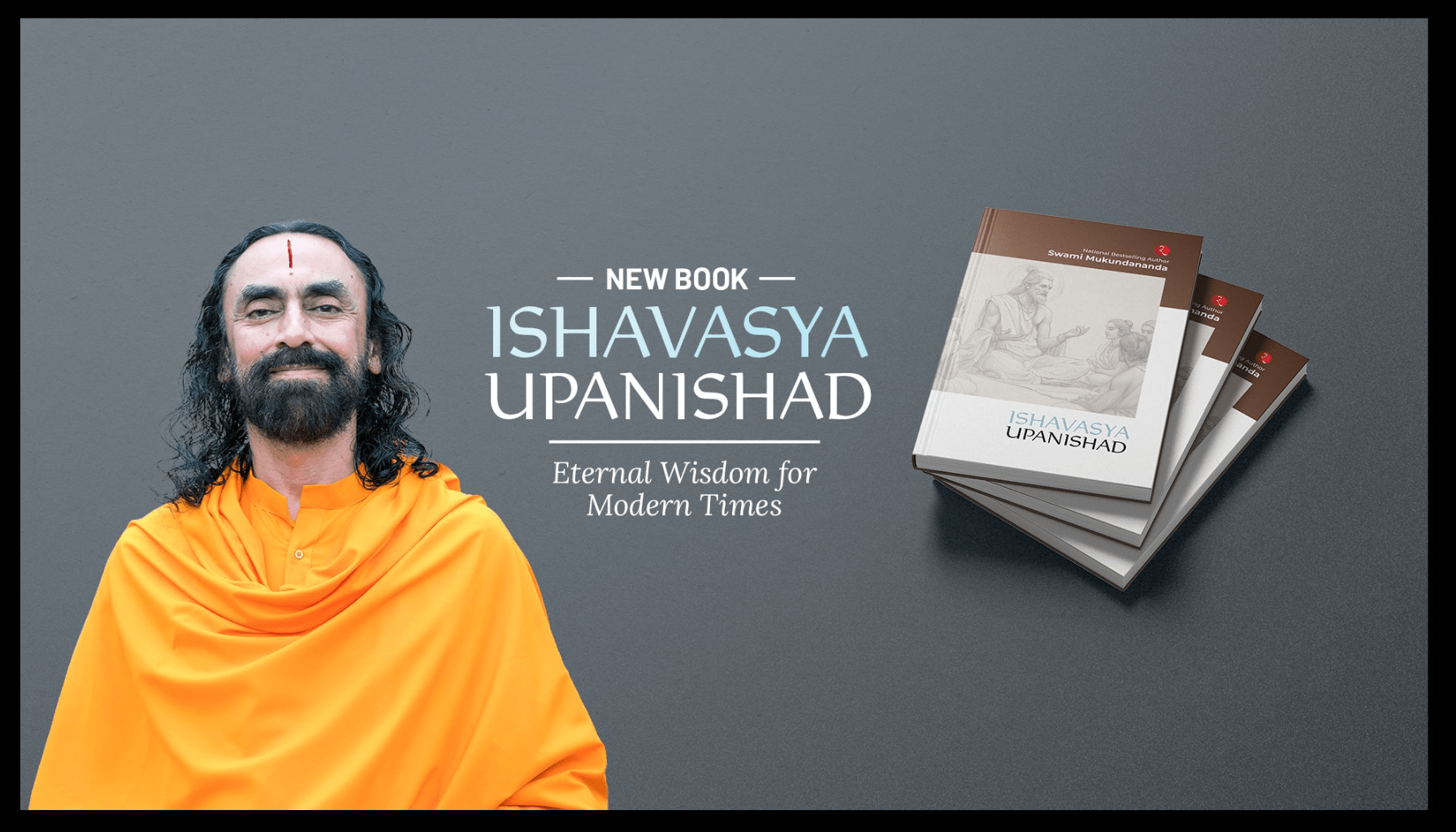
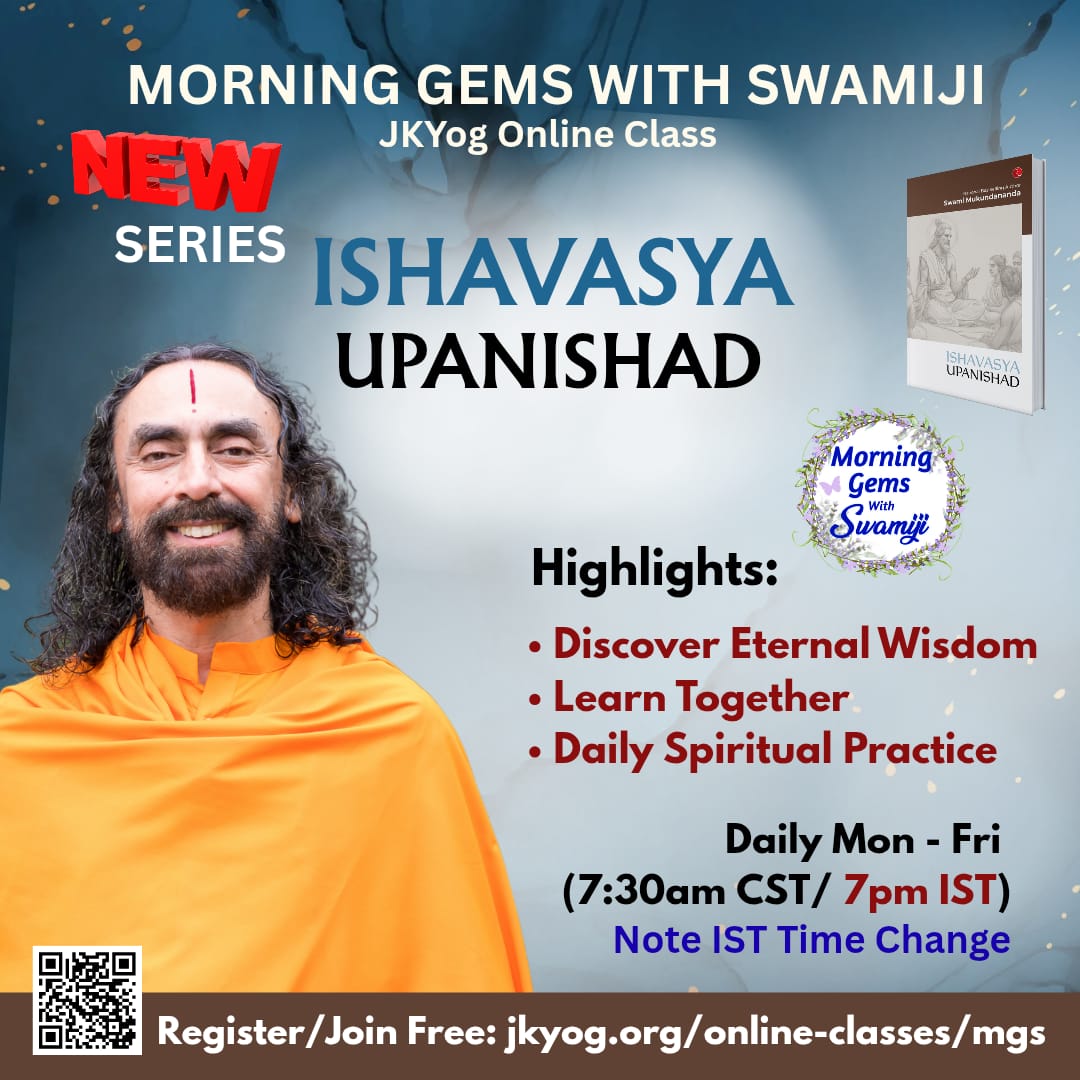
Now that we’ve explored the divine wisdom of the Shanti Path Mantra, it’s time to take the next step on your spiritual journey. To deepen your understanding of the Ishavasya Upanishad, we highly recommend Swami Mukundananda’s commentary, which beautifully unpacks each mantra, including the Shanti Path, providing a clear and practical guide for modern seekers.
Order the Book: Swami Mukundananda’s Commentary
Unlock the deeper wisdom of the Ishavasya Upanishad with this insightful commentary by Swami Mukundananda. Perfect for modern seekers who wish to explore the divine teachings in greater depth.
Final Reflections
Ishavasya Upanishad Mantra 10 is a call for integration, not renunciation. It rejects both spiritual escapism and material obsession. Life flourishes when science serves spirituality, and spirituality guides science.
Key Philosophical Insights
1. Knowledge Is Not Monolithic: Vidya and Avidya Operate in Different Domains
One of the most critical insights of Ishavasya Upanishad Mantra 10 is that knowledge is not a single, uniform category. The Upanishad distinguishes between vidya and avidya not as higher and lower forms of the same pursuit, but as distinct domains of knowing, each governed by different principles and yielding different outcomes.
The Upanishad’s clarity here is revolutionary: true wisdom lies not in choosing one domain over the other, but in recognizing their boundaries and rightful applications.
2. The Body Is Not an Obstacle to Spirituality but Its Instrument
Contrary to the misconception that spirituality demands bodily neglect or mortification, this mantra implicitly affirms the sacred functionality of the human body. The Vedic worldview does not regard the body as an illusion to be discarded, but as a finely tuned instrument for spiritual evolution.
Thus, caring for the body through nutrition, exercise, rest, and medicine is not a concession to materialism; it is a spiritual responsibility. Avidya, when properly applied, becomes a servant of vidya rather than its rival.
3. The Mind Is the True Bridge Between Matter and Spirit
A subtle yet powerful insight embedded in this mantra is the recognition of the mind as the intermediary between material and spiritual existence. The Upanishadic teaching on food and consciousness reveals that what we consume materially has profound consequences on our mental and emotional states.
This dissolves the false dichotomy between sacred and mundane. Cooking, eating, shopping, and farming become spiritual acts when performed with awareness. Spiritual life is not lived apart from daily life; it is lived through it.
4. Material Progress Without Inner Growth Leads to Ethical Crisis
Another major philosophical insight is the recognition that power without wisdom is dangerous. Material science multiplies human capability but remains ethically neutral. It provides the means but not the moral compass.
This is why modern society simultaneously experiences unprecedented comfort and unprecedented anxiety. Technologies like genetic engineering, artificial intelligence, and nuclear power pose moral questions that science alone cannot answer.
The Upanishad anticipates this dilemma thousands of years in advance. It implies that without vidya, avidya becomes self-destructive. Spiritual wisdom provides the ethical framework, emotional maturity, and inner restraint necessary to wield material power responsibly.
5. Happiness Is an Inner State, Not an External Acquisition
Mantra 10 dismantles one of the most persistent illusions of human life—the belief that happiness can be accumulated through external acquisition. Material prosperity can remove discomfort, but it cannot generate fulfillment.
The Upanishadic sages understood that happiness is a function of consciousness, not consumption. The mind, when agitated by desire, fear, and comparison, remains restless regardless of material abundance. When purified through spiritual practice, even simple living becomes joyful.
This insight explains why societies with high standards of living still struggle with depression, loneliness, and existential dissatisfaction. Vidya alone addresses the inner architecture of happiness by transforming perception rather than possessions.
6. True Education Is Incomplete Without Spiritual Wisdom
Implicit in this mantra is a radical redefinition of education. Modern systems emphasize information, skills, and productivity, but largely ignore character formation and self-understanding. The Upanishad suggests that education devoid of spiritual insight produces clever but conflicted individuals.
Vidya trains the intellect to discriminate between the eternal and the temporary, the essential and the trivial. It cultivates virtues such as humility, compassion, self-restraint, and clarity. When education integrates both vidya and avidya, it produces balanced human beings capable of contributing to society without losing inner harmony.
7. The Necessity of the Guru in Navigating Subtle Knowledge
The phrase iti śhuśhruma dhīrāṇām highlights another profound insight: spiritual wisdom cannot be self-authored. While material knowledge can often be acquired independently, spiritual knowledge requires transmission from those who have lived it.
8. Integration, Not Extremism, Is the Upanishadic Ideal
Perhaps the most overarching philosophical insight of this mantra is its rejection of extremes. The Upanishad does not advocate world-denial, nor does it glorify world-indulgence. It calls for discernment, balance, and integration.
Life is not a choice between matter and spirit, but an opportunity to align matter with spirit. When avidya serves vidya, life becomes purposeful. When vidya guides avidya, progress becomes humane. This synthesis is the hallmark of Vedic wisdom and remains profoundly relevant in the modern world.
Frequently Asked Questions (FAQs)
1. Does the Upanishad reject material science?
No, it affirms its necessity while warning against exclusive dependence on it.
2. What is vidya according to this mantra?
Vidya is spiritual knowledge that purifies the mind and leads to realization.
3. Why is food emphasized so strongly?
Because food directly influences the mind, memory, and emotions.
4. Can spirituality exist without a guru?
Scriptural tradition strongly emphasizes guidance from realized masters.
5. How is this mantra relevant today?
It offers a framework for ethically navigating modern technology and material progress.