
Introduction — Why Shraddha during Pitru Paksha matters
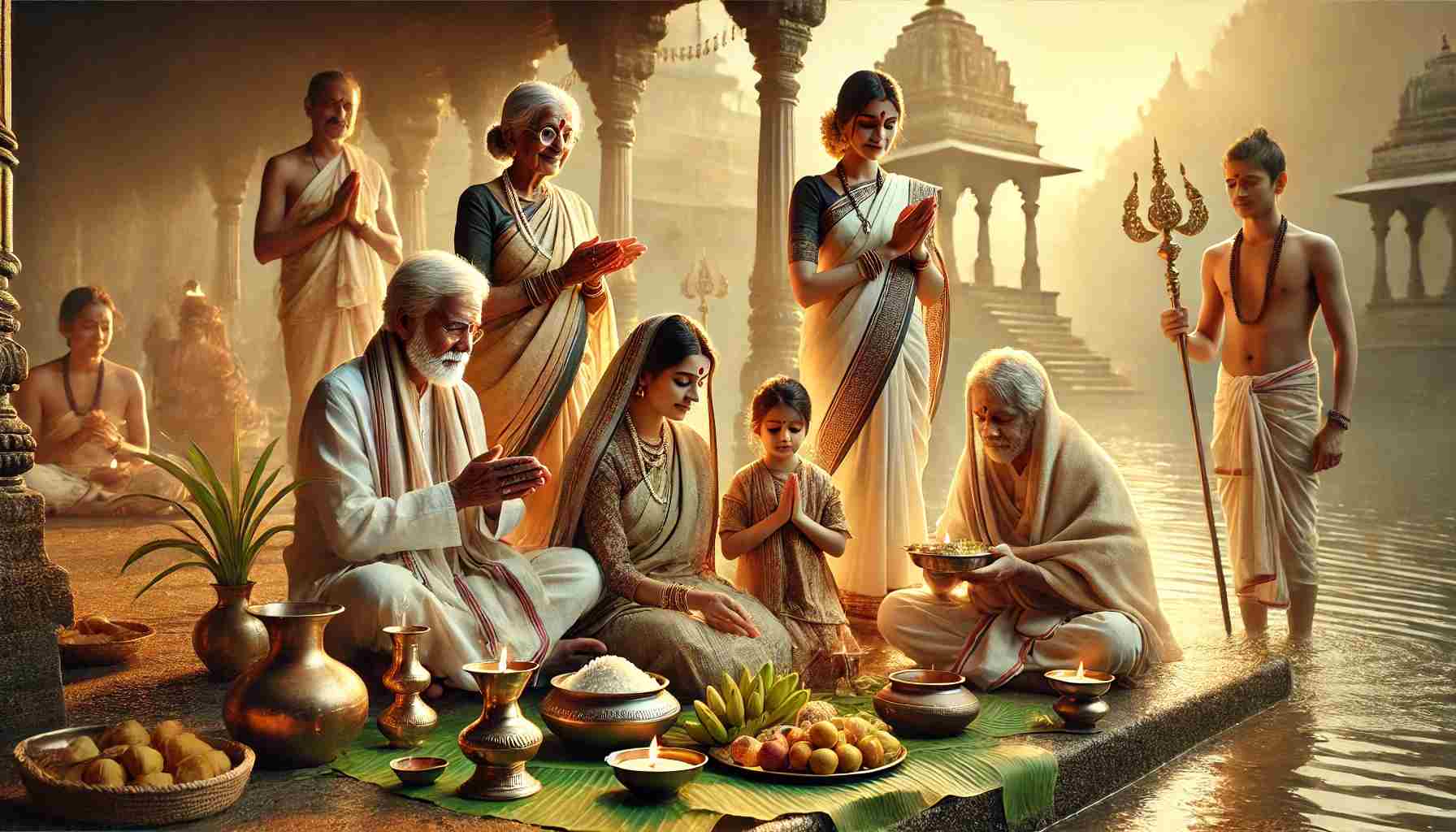
Pitru Paksha (also known as the Pitṛ Pakṣa or Mahālayā Paksha in some regions) is a sacred fortnight in the lunar calendar, set aside to remember, honor, and offer nourishment to our ancestors (pitrus). Shraddha — literally “faith” or “devotion” — is the specific set of rites performed to help the departed, maintain family bonds across generations, and express gratitude.
Rituals like pinda-dāna (offering rice balls), tarpaṇa (offering water), feeding brahmins/guests, and giving to the needy are not merely ceremonial: they are symbolic acts of care. They acknowledge that we stand on the effort and sacrifice of those before us, and they create continuous care and merit (puṇya) for ancestors through right action. Many families perform Shraddha yearly for their deceased parents, grandparents, and other close relations; Pitru Paksha is the principal time for collective remembrance.
When is Pitru Paksha & who observes Shraddha?
- Timing: Pitru Paksha falls for 15 lunar days (the dark fortnight) in the Hindu lunar calendar, typically in the month of Bhadrapada/Ashwin — usually around September–October in the Gregorian calendar (exact dates vary each year by the lunar cycle). The fortnight culminates in Mahalaya (the main day when many families perform the most solemn rites).
- Who observes: Traditionally, the male head of the family (the eldest son) conducts Shraddha rites for paternal ancestors; but in modern practice, women, daughters, and anyone sincerely wishing to do Shraddha may perform these rites. If there is no son, daughters perform or arrange the rites. Some families have a priest conduct the rituals on behalf of the family.
- Whom to remember: Immediate ancestors (parents), grandparents, other direct forebears; many families maintain a list (family tree) and perform Shraddha in sequence. Some people also perform Shraddha for relatives who have passed away recently (as per family practice).
The core elements of Shraddha (what the ritual comprises)
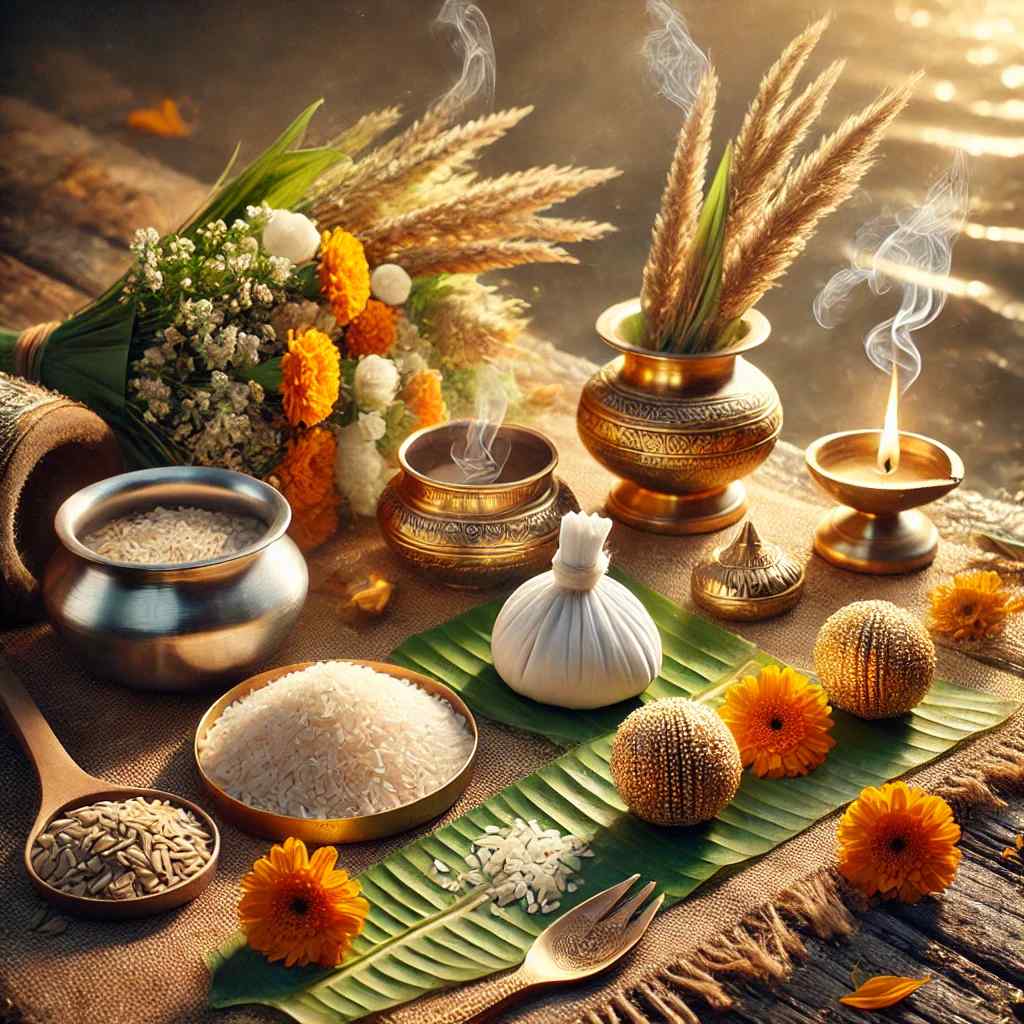
- Purification & preparation (snāna, clean clothes, sandhyā/puja setup)
- Invocation of the ancestors (namaḥ, sankalpa — a short statement of intention: who the ritual is for)
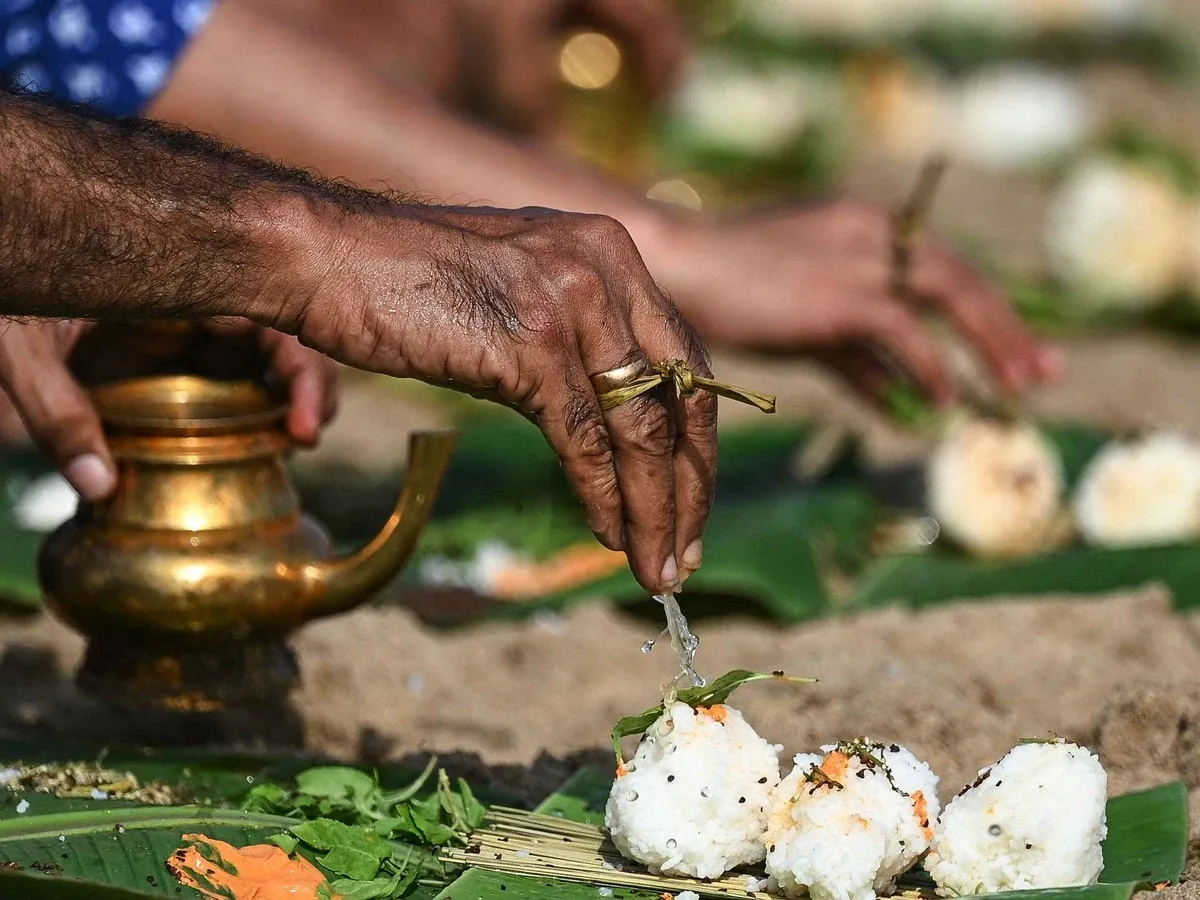
- Pinda-dāna — offering rice balls (pindas) as symbolic food for ancestors
- Tarpana — offering water and mantras to the ancestors & devas
- Feeding the living — guests, Brahmins, the needy (anna-dāna) as a continuation of the offering
- Dakṣiṇa — giving a sacrificial fee/donation to the priest or to charity
- Concluding prayers and meditation, santih (peace)
Materials checklist — What to prepare (simple & traditional)
Basic items
- Clean area or altar (platform, table, or an open space by a river/stream if available)
- Photos or name list of ancestors (optional but helpful)
- Kalasha (small pot) or glass of water
- Small copper or brass bowl for tarpaṇa water
- Bowl/plate for pinda/dāna, cloth to place them on
- Kusha grass (if available) or a clean white cloth/mat to sit on
- Ghee (clarified butter), uncooked rice (preferably white), black sesame seeds (til), barley (jau) or cooked rice — depending on family custom
- Water, milk (optional), honey (optional) — for offerings
- Flowers (white or simple), incense, lamp (diya), and camphor for āratī
- Offerings of cooked food (viṣṇu bhog, khichdi, curd, seasonal fruit) for feeding
- Food for guests (simple full meal) — or monetary donation if feeding isn’t possible
- Dakṣiṇa (money or gifts) for the priest and contributions for charity
- Matchbox or lighter, spoon, small bowl for mixing pinda ingredients
- Optional (if you perform havan or yagnopavīta rites)
- Havan samagri, havan kund, wooden spoon (arghya)
- Mantra book or printed hymns (family or priest’s version)
Preparatory steps — what to do the day before
- Clean the house and altar area. Cleanliness is both literal and symbolic.
- Prepare the offerings and pinda materials. Cook rice, prepare khichdi or other prasad, and melt ghee. If you will prepare pinda at home, keep rice, ghee, and sesame ready.
- Prepare a simple list of ancestors you intend to remember (names and relation). This helps with the sankalpa.
- Decide who will be present. Invite family members, and if needed, your priest. Arrange seating (men and women may sit together as per family custom).
- Fast or restrict your diet if your tradition calls for it. Some observe a partial fast (no onion/garlic, lighter meals); others may observe a full fast until the ceremony. Follow family tradition.
- Mental preparation. Spend time in reflection—think about gratitude and the life lessons from ancestors.
Step-by-step Shraddha ritual for an individual (a clear walk-through)
Below is a stepwise procedure that many families use. Modify for family-specific mantras or actions.
Step 0 — Timing
Do Shraddha in the morning after sunrise (but before noon), which is considered an auspicious time for tarpaṇa and offerings. Some families perform rituals at specific muhurta times set by the priest.
Step 1 — Personal purification
- Rise early, take a bath (snāna) in clean clothes (white or simple, as per family custom).
- Sit facing east (or north) on a clean cloth; place a small piece of kusa grass or a wooden plank if available. Calm your mind.
Step 2 — Sankalpa (intention)
- Make a simple, aloud statement of intention: who the ritual is for, your name, your lineage, and the purpose (e.g., “I perform Shraddha for late Shri X, father of Y, to provide food and merit on behalf of the family.”).
- Traditionally: “Om Namo… I undertake this Shraddha on behalf of my ancestors.” (Use your family’s prescribed sankalpa if available.)
Step 3 — Lighting the lamp and invoking deities
- Light a diya (ghee lamp) and incense. Offer flowers.
- Offer a prayer to Lord Ganesha to remove obstacles. Optionally invoke Pitṛs with a short prayer: a simple “Om pitṛbhyo namah” is often used (see note about mantras below).
Step 4 — Preparation of Pinda (rice balls)
- Simple pinda: Take cooked rice (some use raw but roasted), mix with ghee and black sesame seeds. Form into small round balls (pinda). The number of pinda per ancestor varies (a common practice is 3 pinda per ancestor or as directed by family tradition).
- More formal pinda recipes use barley (jau), rice, ghee, and sesame, and may include specific mantras when forming and offering each pinda.
(Detailed pinda recipe and proportions are provided later in the blog — see “Pinda recipes & method”.)
Step 5 — Pinda-dāna (offering the rice balls)
- Sit facing east or north with the tray of pinda. If a priest is present, he will guide the ritual.
- Hold a pinda between thumb and forefinger and offer it with a short invocation for the named ancestor. Example invocation (simple): “Om [Name of ancestor] tvam amrta bhava” — but use your family’s traditional invocation.
- Place the pinda on the plate/leaf (or in oshadi if done outdoors); after offering, touch the pinda to the ground or place it where the ancestors’ symbolic presence is invoked.
- Repeat for each ancestor in sequence.
Step 6 — Tarpana (water oblation)
- Fill a small bowl of water with a few drops of sesame oil or barley. Sit and pour a small quantity with your right hand (or use a spoon) while reciting the appropriate mantra or simply offering: “I offer this water to my ancestors” and visualize it reaching them.
- Traditionally, the mantras and the number of ladles differ by lineage. You will pour water three times for each ancestor or as prescribed. If uncertain, three ladles offered with devotion are widely accepted.
Step 7 — Feeding & Anna-dāna (feeding the living)
- After pinda and tarpaṇa, distribute cooked offerings (khichdi, fruit, sweets) as prasad to the present elders, Brahmins (if invited), guests, and the poor. Feeding living beings continues the act of generosity and care.
- If you cannot invite guests, package food to be given to needy people or donate an equivalent to charity (anna-dāna). Many families believe feeding crows or birds near the ceremony spot has symbolic significance—but do this ethically and with clean food.
Step 8 — Dakṣiṇa and charitable giving
- Give dakṣiṇa to the priest or distribute charitable gifts (grain, clothes, monetary donation) in the name of the ancestors. This is an essential component of Shraddha and is considered a practical way to transform ritual into social benefit.
Step 9 — Conclusion & Prayers
- Offer a short concluding prayer, express gratitude, and request blessings for the family and peace for the ancestors (śānti). Common concluding lines: “Om śānti śānti śāntiḥ.”
- Make an āratī (wave lamp) and close with pranams to elders and the priest.
🔥 Essential Havan Samagri List
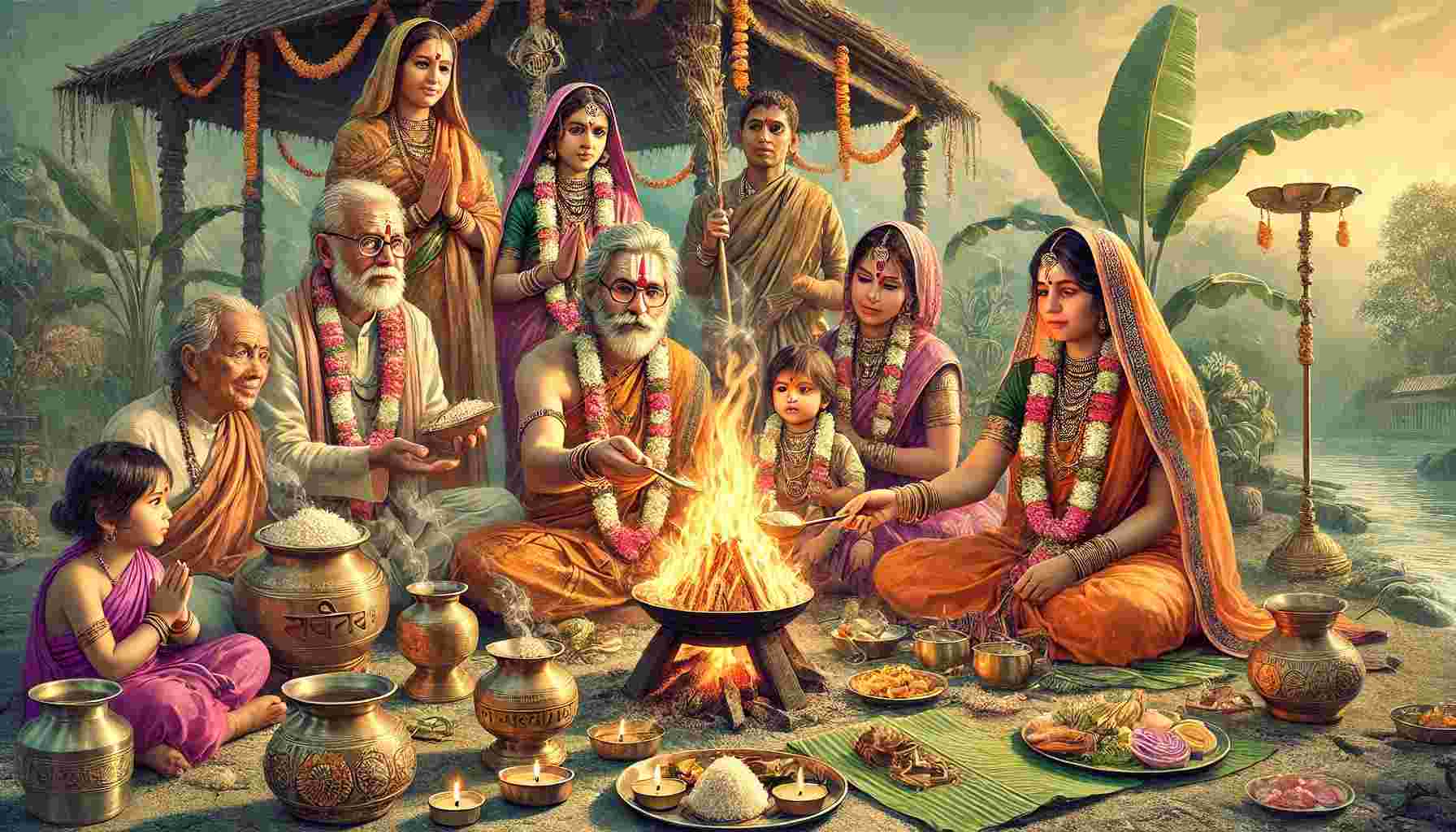
- Havan Kund (fire pit or copper vessel)
- Wood sticks (sacrificial sticks – mango wood is ideal)
- Havan Samagri mixture (ready-made mixture of herbs, grains, resins, available in puja stores)
- Ghee (clarified butter) – for offerings
- Cotton wicks or camphor – for lighting the fire
- Kusha grass (darbha) – if available
- Rice grains (akshata) – uncooked, sometimes mixed with turmeric
- Black sesame seeds (til) – important during Shraddha
- Incense sticks and a diya (lamp)
- Spoon or ladle (panch-patra/ajyapatra) – for pouring ghee
a) Preparation
- Place the havan kund (small fire pit or copper vessel) on a clean cloth.
- Keep wood sticks, havan samagri, ghee, black sesame seeds, rice grains, a spoon, and a diya ready.
- Sit facing east or north.
b) Purification & Lighting the Fire
- Light the diya and incense.
- Place small wood sticks in the havan kund, light them with camphor or cotton wick.
- Once flames are steady, sprinkle a few drops of ghee into the fire.
Mantra (optional, simple):
👉 “Om Agnaye Swaha” (Offer a drop of ghee).
👉 “Om Agnaye Idam Na Mama” (This offering is not mine, but for the Divine).
c) Sankalpa (Intention)
Place your right hand on your heart and say aloud:
👉 “I perform this Shraddha Havan for the peace of my ancestors [Name(s)], may these offerings reach them and grant them satisfaction and liberation.”
d) Main Offerings (Ahuti)
Now, for each offering:
- Take a pinch of havan samagri mixed with black sesame seeds.
- Add a drop of ghee with a spoon.
- Offer it into the fire with the mantra:
👉 “Om Pitṛbhyo Swaha” (Obeisance to the ancestors).
👉 “Om Pitṛbhyo Idam Na Mama” (This is not mine, but for the ancestors).
Repeat this offering 11 or 21 times, slowly and with devotion.
e) Tarpana by Fire (Optional)
Offer a little rice + ghee into the fire, saying:
👉 “May this offering reach all known and unknown ancestors. Om Swaha.”
f) Concluding Prayer
Fold hands and pray:
👉 “May all my ancestors be at peace. May they bless us with wisdom, harmony, and fearlessness. Om Shanti Shanti Shantih.”
Offer a final drop of ghee with the mantra:
👉 “Om Sarvapitṛbhyo Swaha”
g) Closing the Havan
- Perform a small āratī with the diya.
- Sit silently for a minute in gratitude.
- Distribute prasad (food you prepared, or fruit/khichdi).
- If possible, feed birds, cows, or the needy afterward
A practical, simple sample script (short verses & English equivalents)
Use these as simple spoken lines during the ritual if you do not have full mantras. Always use the words and mantras of your family tradition if different.
- Sankalpa (intention):
“I perform Shraddha for my [father/mother/grandfather], [Name]. May this offering reach them and bring peace.” - Invocation to the ancestors (simple):
“Om pitṛbhyo namaḥ” — “Salutations to the ancestors.” - Offering pinda (simplified):
“Om [Name], pātraṃ dāmi (I offer this ball/food).” - Tarpana (simple):
“May this water reach you and bring comfort. Om śānti.” - Concluding prayer (simple):
“May all ancestors be free from suffering. May we be blessed with harmony and wisdom. Om śānti śānti śāntiḥ.”
Pinda recipes — two straightforward methods
A. Quick household pinda (for home use, simple) — yields ~8–12 small pindas
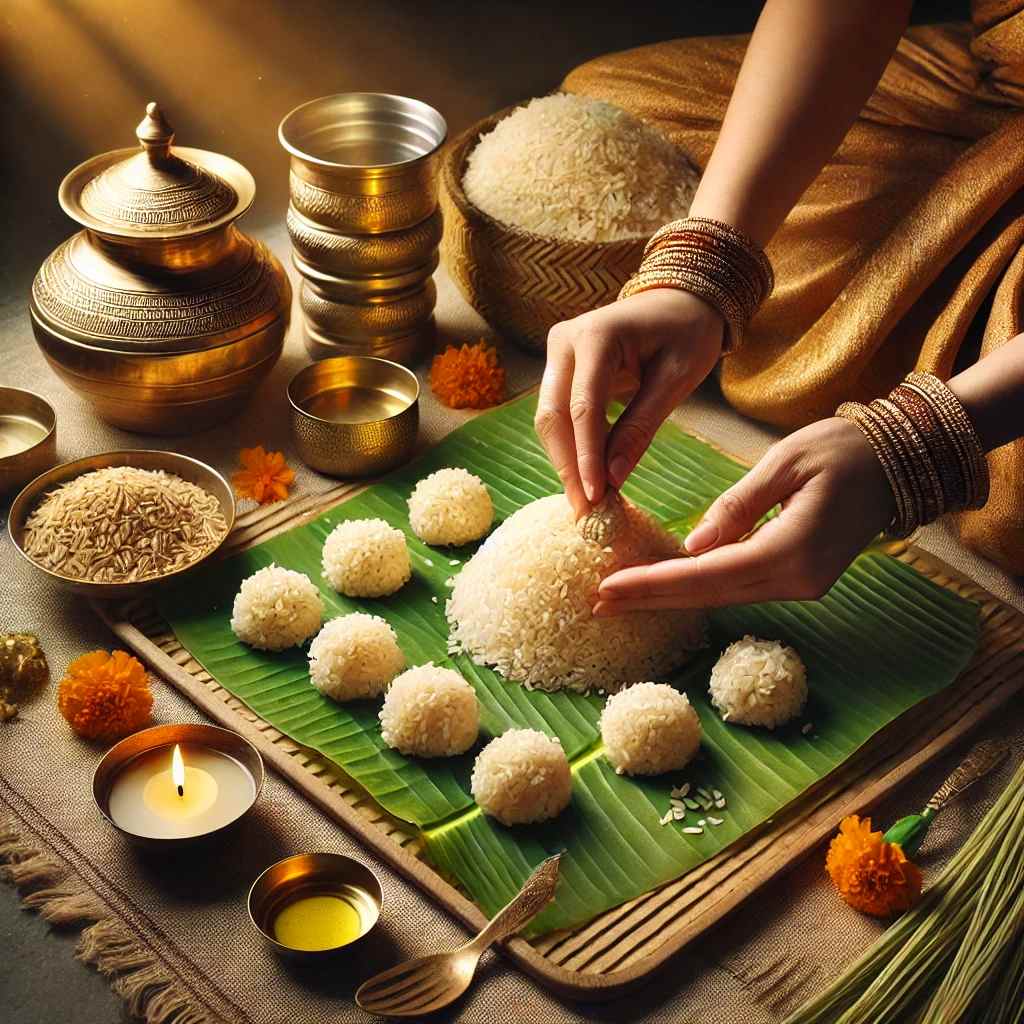
Ingredients:
- 2 cups cooked white rice (preferably freshly cooked, slightly sticky)
- 3–4 tablespoons ghee (melted)
- 2 tablespoons black sesame (til) seeds, lightly roasted (optional)
- Pinch of salt (optional)
Method:
- Take warm cooked rice in a bowl. Mash lightly so grains stick but retain texture.
- Add melted ghee and mix so the rice becomes shiny and holds together.
- Add roasted sesame seeds and a pinch of salt if using. Mix well.
- Shape into 8–12 small round balls (size roughly of ping-pong balls or smaller), using damp palms. Offer immediately.
B. Traditional pinda with barley (if following a more orthodox recipe)
Ingredients:
- 1 cup roasted barley flour (bajra/jau flour) or lightly cooked barley (as per family)
- 1 cup cooked rice
- 3–4 tablespoons ghee
- 2 tablespoons black sesame seeds
- Little sugar or jaggery (optional, in some regions)
Method:
- Mix roasted barley and cooked rice; add ghee to bind.
- Add sesame seeds and shape into pindas.
- Offer pindas with mantra and place on a banana leaf or plate.
Note: Exact grains and proportions vary with regional custom. When in doubt, follow the family tradition or ask an elder/priest.
Tarpana (water offering) — technique & visualization
- Use a small bowl (copper if available) filled with clean water. Often, a pinch of black sesame or barley is added; some add a few drops of sesame oil.
- Sit facing east or north and hold the bowl with both hands. Tilt forward and pour water slowly with the right thumb or spoon, offering it toward the place where you believe the ancestors are present (on the altar or symbolic space). You can say a simple line like “May this water reach you” or use traditional tarpaṇa mantras.
- Pour three times for each named ancestor or as your tradition prescribes. Visualize the water as spiritual nourishment traveling to the ancestors.
If you cannot perform Shraddha in person, meaningful alternatives
Life circumstances (distance, health, job, pandemic, absence of a priest) may prevent direct ritual performance. Sage advice: intention, charity, and continuity matter more than outward form.
Alternatives that are accepted and potent:
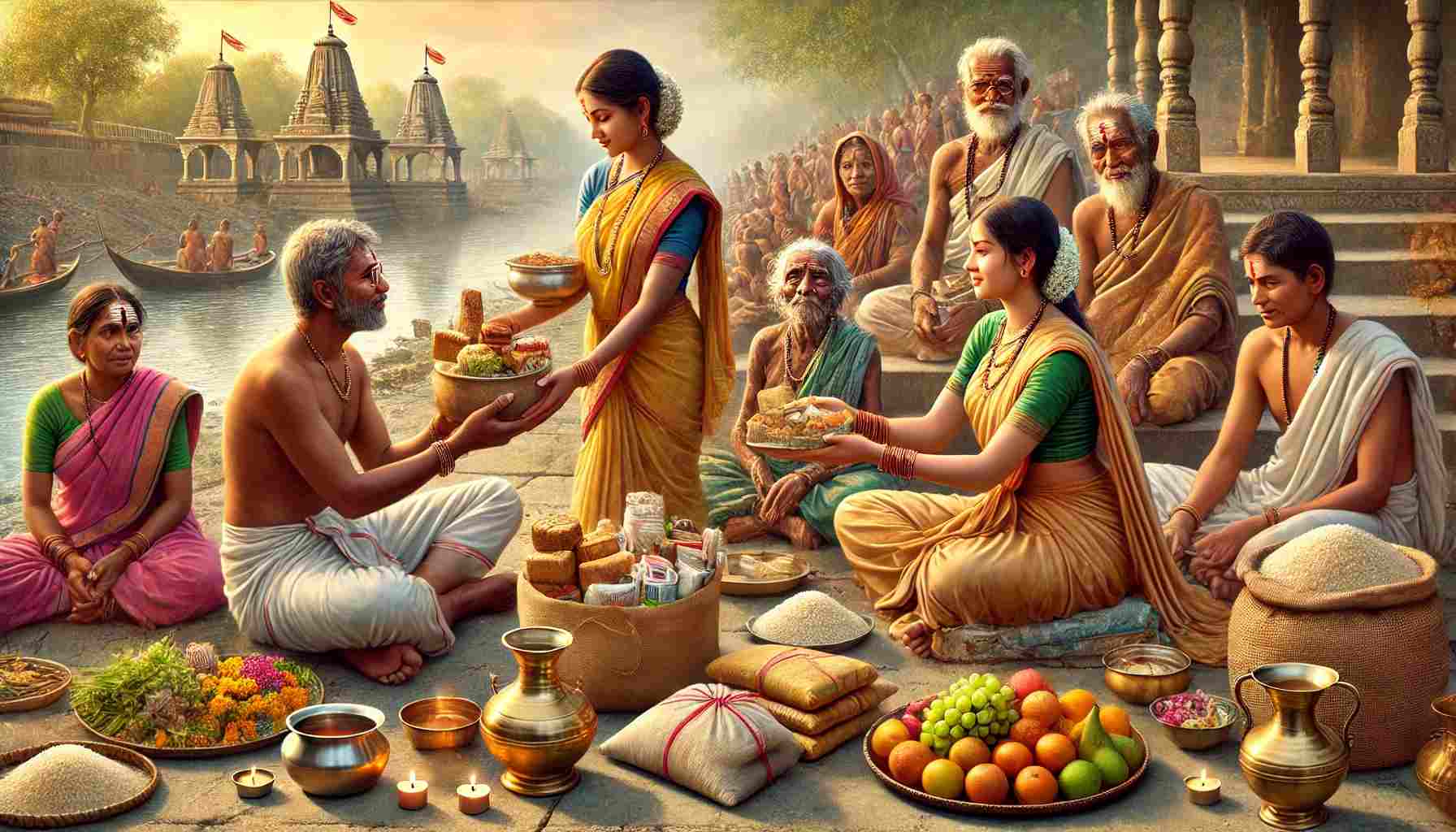
- Donate in the name of ancestors (food, clothes, schoolbooks, medical help). Make a record of the donation and perform a simple prayer at home.
- Feed the needy or sponsor community meals on the ancestor’s behalf.
- Arrange for a priest or temple to conduct Shraddha on your behalf. Many temples and priests will accept the request and perform rituals for a fee.
- Perform a simple home ritual: light a lamp, offer food mentally, recite a dedication aloud, and make charitable donations.
These alternatives uphold the spirit of Shraddha: care for those who are no longer here and transforming grief into service.
- Observe the tithi (anniversary day) with prayer and reflection even if formal rituals are deferred.
Common pitfalls & how to avoid them
- Pitfall: Blind replication without understanding. Always know the meaning behind actions — this deepens devotion.
- Pitfall: Using spoiled or unclean food. Never offer stale or rotten food as offering.
- Pitfall: Counting on superstition alone. Shraddha is an act of love and duty. Charity, generosity and right living for the living are equally important.
- Pitfall: Missing the dakṣiṇa/charity piece. A central component of Shraddha is giving — to the needy or to the priest. Don’t omit this.
- Avoid disputes during ritual. Shraddha is not a time for family arguments. Plan and assign roles beforehand.
Final reflections — spirit over form
At its heart, Shraddha is not about rigid ritual alone; it is a bridge of love between generations. The outer actions — pinda, tarpaṇa, feeding — are vehicles for inner attitudes: gratitude, duty, and compassion. When performed with sincere remembrance and charitable action, Shraddha nurtures both the memory of those who came before and the health of the family community today.
Approach the ritual with humility and clarity. If you are unsure about any specific phrasing or mantra, consult a trusted priest or elder. And remember: if circumstances limit your ability to perform the full rite, a thoughtful donation, feeding the hungry, or a heartfelt prayer can honor your ancestors just as deeply.
Frequently Asked Questions (FAQ)
Q1. Can a woman perform Shraddha?
Yes. While many traditional texts emphasize the son performing Shraddha, modern and many traditional communities accept daughters and daughters-in-law performing rites when the son is absent or when family custom allows it. The essential factor is devotion and correct procedure.
Q2. What if I live abroad and cannot go to a riverbank?
Perform Shraddha at home with the same sequence: sankalpa, pinda (using rice), tarpaṇa in a small bowl, feeding the needy (notify local charities) and giving dakṣiṇa. Intention and charity are what matter.
Q3. How many pindas per ancestor?
Traditions vary. A common simple practice is 3 pindas per ancestor, but families may use one, three, five, or more, depending on custom. Ask the family priest for family-specific guidance.
Q4. Is it okay to give money in lieu of feeding Brahmins?
Yes. If you cannot feed, give dakṣiṇa or donate to a reputable charity in the ancestor’s name. The merit flows from sincere giving.
Q5. Can Shraddha be done year-round or only in Pitru Paksha?
While Pitru Paksha is the primary time, many families observe Shraddha or memorial rites on the death anniversary (tithi) of the ancestor as well. Year-round acts of charity and remembrance are encouraged.
Q6. What if I don’t know the exact date of death?
Perform Shraddha during Pitru Paksha; general Shraddha for ancestors on Mahalaya or during the fortnight is acceptable when exact tithi is unknown.
Call to Action
Sarva Pitru Tarpan
Radha Krishna Temple of Dallas
Join us for a sacred Sarva Pitru Tarpan ceremony conducted by the Radha Krishna Temple priest to honor and offer prayers to our ancestors during the auspicious period of Pitru Paksha.
Online Shaard facility is available for those unable to attend in person.
🕉️ Program Schedule
Date: Sunday, September 21
Time: 5:00 PM (Arrive 30 minutes early for arrangements)
📿 Items to Bring:
- 🌼 Flowers
- 🍉 Fruits
- 🕯️ Pitru Photo
- 🥥 Coconut
Join us this Sarva Pitru and make an offering of food and other items.
Libation of water is performed to appease the ancestors and ensure their peaceful transition.
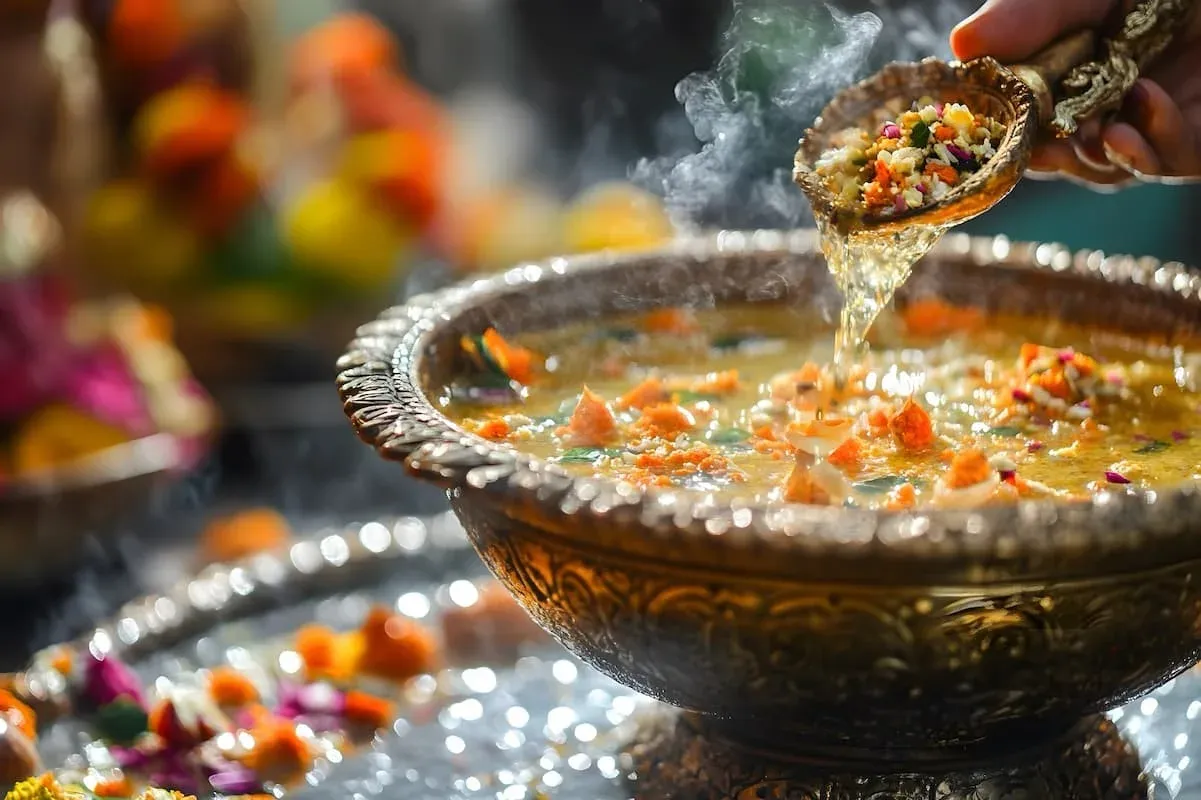
📸 Glimpses from Past Events
🎁 Sponsorship Opportunities
Support this sacred event and receive blessings by participating as a sponsor.
🔗 Learn more at: Sarva Pitru Tarpan Event Website
📚 Scriptural References
- Garuda Purana – Detailed descriptions of post-death rites, Shraddha, and Pitru-tarpana.
- Manu Smriti (Manusmriti, Chapter 3 & 5) – Mentions the importance of offering to ancestors (Pitru yajña).
- Matsya Purana – Rituals connected to Pitru Paksha and offerings.
- Mahabharata (Anushasana Parva, Book 13) – Bhishma explains Shraddha and duties towards ancestors.
- Vishnu Smriti – Contains guidelines on Shraddha and related observances.