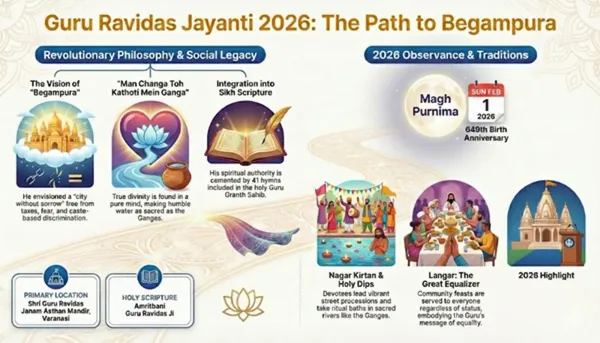
Guru Ravidas Jayanti, celebrated annually on Magh Purnima, honors the birth of one of India’s most revered saints, Guru Ravidas. His teachings not only shaped the Bhakti movement but also had a significant influence on spirituality, social equality, and human dignity. As a mystic poet, Guru Ravidas challenged the caste system, preached the oneness of God, and promoted spiritual purity. His message resonates even today, inspiring millions to live a life free of discrimination and filled with compassion.
In this blog, we will delve into the life of Guru Ravidas, explore his teachings, and discuss the relevance of his message in the modern world. We will also tie his teachings with the insights shared by Swami Mukundananda, especially regarding the purification of the mind and the essence of spirituality.
Who Was Guru Ravidas?
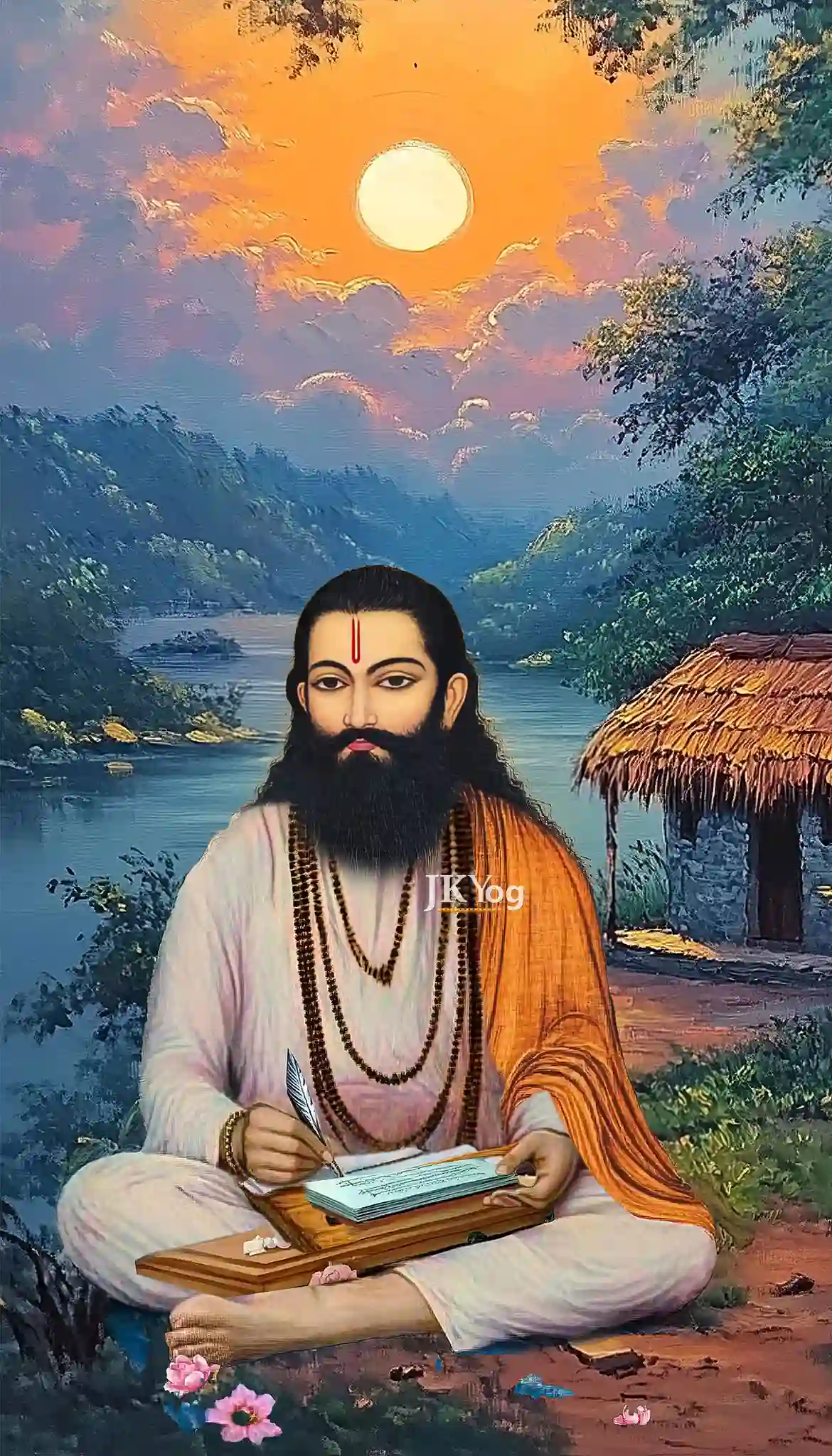
Guru Ravidas, born in the 15th century, is celebrated as a saint and spiritual leader who strongly advocated for the equality of all people. Born into a low-caste family in Varanasi, Ravidas’s life was a testament to his belief in breaking the barriers imposed by society based on birth, caste, and creed. His early life was spent working as a cobbler, an occupation considered lowly in the traditional caste hierarchy. Despite this, Ravidas’s devotion to God and his deep spiritual insights earned him recognition and respect, not only from the common people but also from kings and scholars.
Guru Ravidas is best known for his devotional hymns, many of which are included in the Guru Granth Sahib, the holy scripture of Sikhism. His hymns, filled with love and reverence for the divine, transcend religious boundaries, making him a spiritual figure for people of all faiths. His message of love, unity, and equality continues to inspire millions today.
A Life of Spiritual Devotion
Guru Ravidas’s journey is intertwined with themes of humility, devotion, and simplicity. Raised in a family of leather workers, Ravidas did not allow his humble beginnings to dictate his spiritual growth. Instead, he focused on his inner connection with the divine, seeing God not as a distant figure but as an omnipresent force in every being.
Ravidas’s early life was marked by his refusal to accept the social and religious barriers imposed by the caste system. He is known to have rejected caste-based distinctions, often pointing out that true spirituality lies in the purity of the heart and mind, not in external rituals. His famous saying, "Jo man changa toh kathoti mein Ganga" (If your heart is pure, then even a small pot of water becomes as sacred as the holy Ganges), encapsulates his belief that divine presence is not confined to sacred rivers or temples. Instead, it resides in the heart of anyone who seeks it with sincerity, emphasizing that inner purity, rather than external rituals, is the true path to spirituality and peace.
Guru Ravidas’s teachings were rooted in the concept of spiritual equality, which transcended all man-made divisions. He believed that everyone, irrespective of their social standing, had the potential to connect with the divine.
Teachings of Guru Ravidas
Guru Ravidas’s teachings can be summarized in a few key principles:
1. Equality of All Humans
Ravidas’s foremost message was the equality of all human beings. Despite being born into a family of low social standing, Ravidas never accepted the caste-based discrimination that was rampant in his time. Through his hymns, he emphasized that God resides within all beings and that there is no higher or lower in the eyes of the divine.
This message resonated deeply with the lower castes, who were often treated as outcasts. Guru Ravidas’s teachings were revolutionary, as they gave these marginalized groups hope and strength, showing them that their worth was not determined by their birth.
2. Spiritual Purity Over Rituals
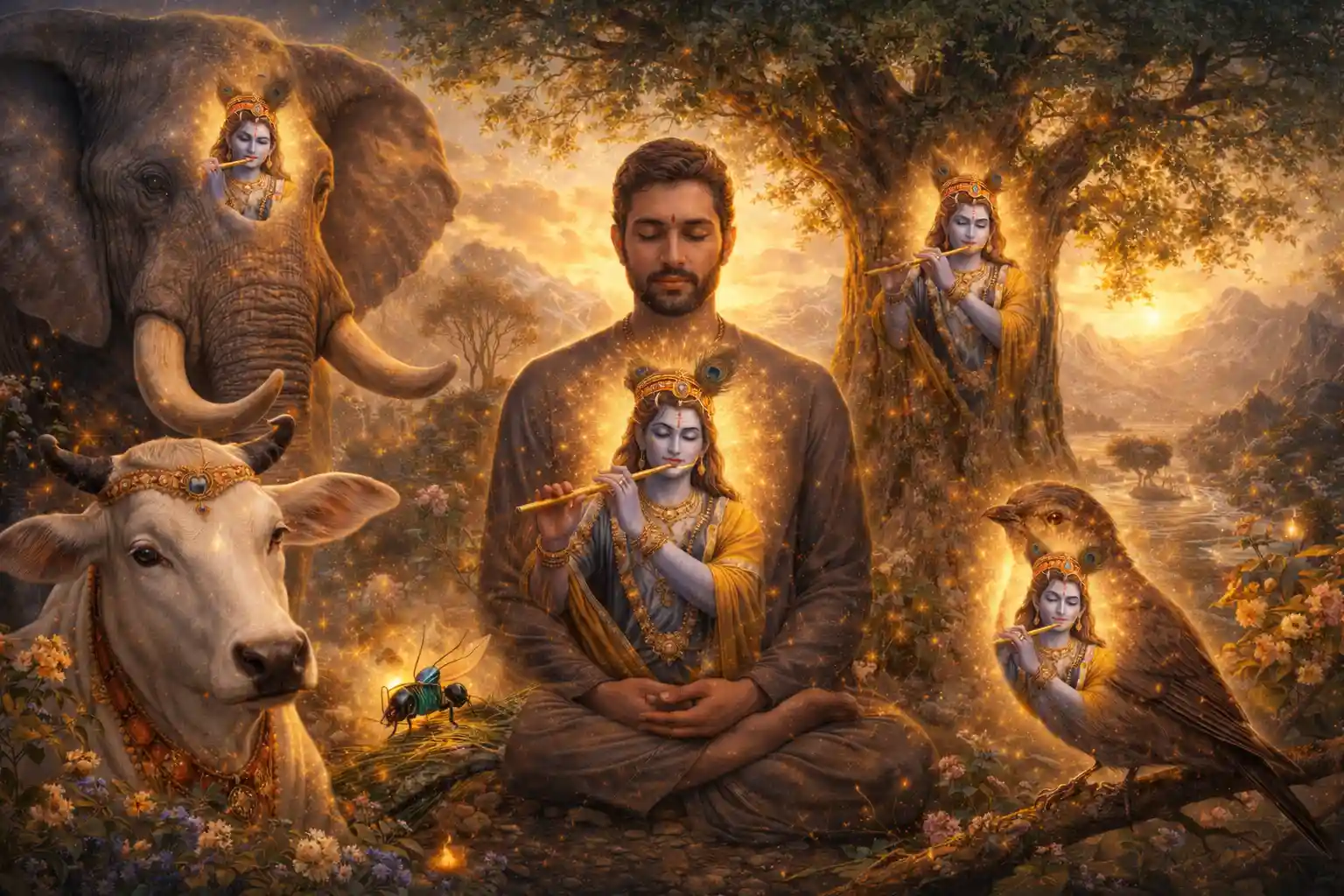
Guru Ravidas’s message was not about the performance of rituals, but about cultivating an inner purity. He believed that true spirituality is rooted in the purity of the mind and heart, not in external practices. His famous saying, "Jo man changa toh kathoti mein Ganga," suggests that when the heart is pure, the divine presence resides within. This was a radical departure from the traditional belief that one must visit temples or bathe in sacred rivers to attain spirituality.
3. The Oneness of God
Guru Ravidas, a revered saint and poet in the Bhakti movement, emphasized the oneness of God in his teachings. He believed in a formless, omnipresent God who transcends all distinctions. Guru Ravidas's message was centered around a personal connection with the divine, based on heartfelt devotion, rather than external rituals. His hymns and teachings often conveyed a deep love for God, underscoring that true devotion comes from within, not through idol worship or complex rituals. Guru Ravidas rejected the reliance on idols, advocating instead for a direct, unmediated relationship with the divine.
In contrast, Swami Mukundananda teaches that God is both formless and has a form. According to the Bhagavad Gita, God is beyond comprehension in His formless, transcendental state, yet He also takes on forms to allow devotees a more personal and accessible way of connecting with the divine. The use of idols or divine forms serves as a spiritual tool, helping devotees focus their minds, hearts, and devotion on the divine presence, whether in its formless or manifested state.This practice aids in cultivating a deep, loving connection with God. For Swami Mukundananda, idol worship does not contradict the oneness of God but serves as a medium through which individuals can engage in personal devotion to the divine, whose true essence remains both formless and all-pervading.
Guru Ravidas Jayanti: The Celebration of Equality
Guru Ravidas Jayanti is a day of spiritual reflection, joy, and community celebration. It is observed on Magh Purnima, the full moon day of the Hindu month of Magh. The festival is celebrated with great enthusiasm, particularly in regions like Punjab, Uttar Pradesh, and Maharashtra.
On this day, devotees gather in temples and Gurudwaras to sing hymns, engage in prayers, and listen to discourses on Guru Ravidas’s life and teachings. Nagar Kirtans (processions) are held, where devotees chant the hymns of Guru Ravidas and spread his message of unity and equality.
A significant part of the celebration is the Langar (community meal), where people from all walks of life come together and share food. The Langar embodies the core teaching of Guru Ravidas that all people are equal in the eyes of God. This act of community service, where food is provided free of cost to anyone who needs it, reflects the spirit of generosity and compassion that Guru Ravidas espoused.
The festival is also marked by holy baths in rivers, particularly in places like Varanasi, where Guru Ravidas spent much of his life. This ritual is performed to purify the soul and to honor the teachings of Guru Ravidas, whose life was a testament to spiritual purity.
Relevance of Guru Ravidas’s Teachings in the Modern World
The teachings of Guru Ravidas are as relevant today as they were in the 15th century. In a world still grappling with issues of caste discrimination, inequality, and social injustice, Guru Ravidas’s message of spiritual equality and the oneness of all beings offers a powerful antidote. His teachings encourage us to look beyond external differences and recognize the inherent dignity and worth of every individual.
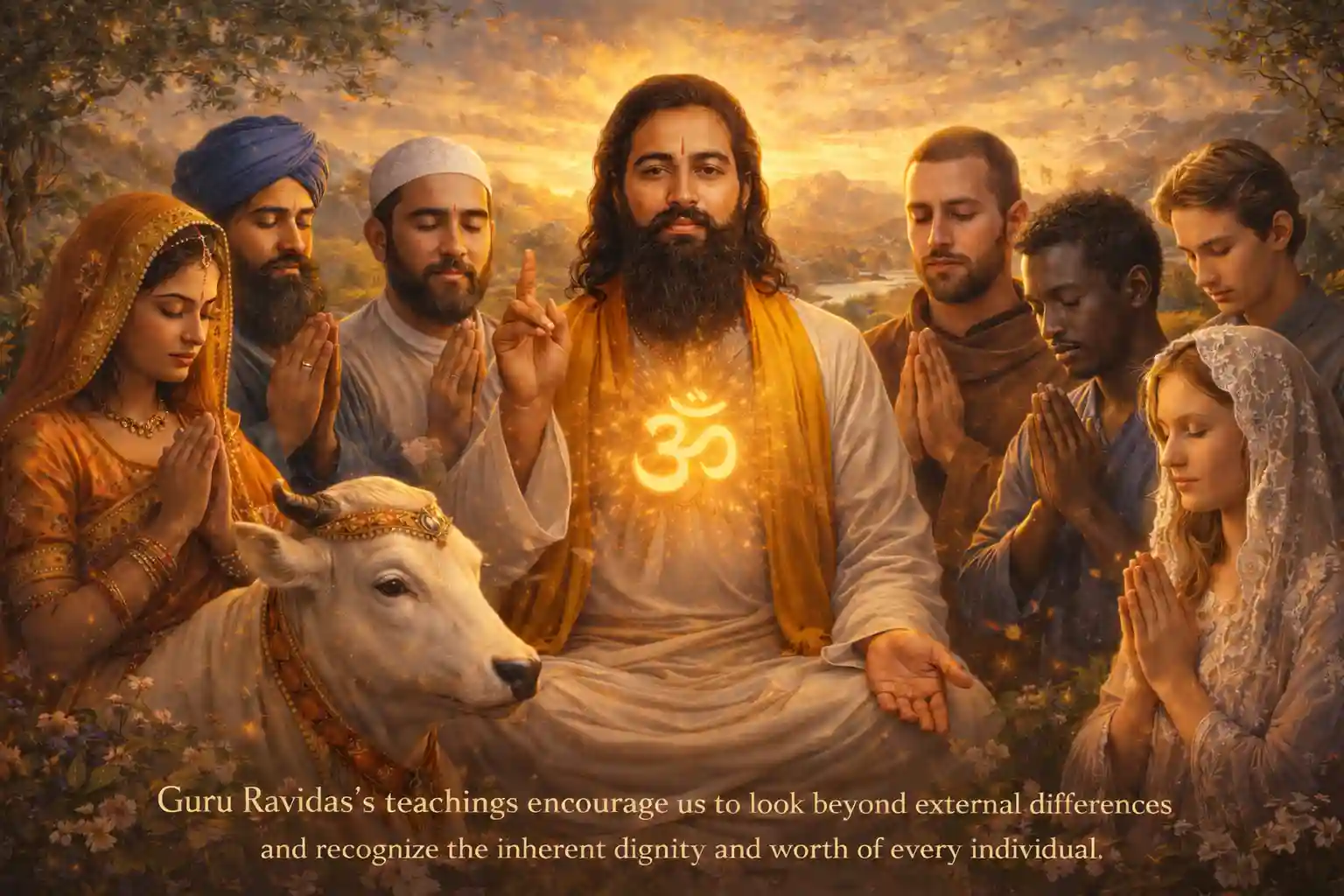
Furthermore, Guru avidas’s emphasis on inner purity resonates deeply in today’s fast-paced world, where superficiality and materialism often dominate our lives. His message reminds us that true happiness and spiritual fulfillment come not from external possessions or status but from a pure heart and a connection with the divine.
Tying Guru Ravidas’s Teachings to Swami Mukundananda’s Wisdom
Guru Ravidas’s emphasis on spiritual purity and inner transformation finds a beautiful parallel in the teachings of Swami Mukundananda. Just as Guru Ravidas taught that the divine resides within, Swami Mukundananda emphasizes the importance of purifying the mind to experience true spiritual bliss.
In his teachings, Swami Mukundananda frequently talks about the importance of mental purification, which is central to leading a life of inner peace and fulfillment. Guru Ravidas, too, believed that the mind, when pure, is a direct channel to the divine. Swami Mukundananda’s approach to spiritual sadhana or practice resonates deeply with the teachings of Guru Ravidas, as both emphasize the power of a purified mind in connecting with the divine.
Guru Ravidas’s call for selfless service, where one sees the divine in all beings and serves them without ego, aligns with Swami Mukundananda’s emphasis on living a life of compassion and humility. Both saints teach that true spirituality is not about rituals, but about living in harmony with the divine essence that resides in all of us.
Key Takeaways
- Guru Ravidas’s life and teachings focused on spiritual equality, human dignity, and the oneness of God.
- His rejection of caste and social hierarchies challenged deeply entrenched norms and promoted equality for all people.
- Spiritual purity and devotion to God were central to Guru Ravidas’s philosophy, highlighting that true spirituality transcends external rituals.
- Guru Ravidas’s teachings remain relevant today, providing a moral framework for tackling issues of inequality, discrimination, and social justice.
- The celebration of Guru Ravidas Jayanti promotes community unity, compassion, and the practice of selfless service.
Frequently Asked Questions (FAQ)
Q1: When is Guru Ravidas Jayanti celebrated?
Guru Ravidas Jayanti is celebrated on Magh Purnima, which typically falls in January or February each year. In 2026, it will be observed on February 1st.
Q2: What were the key teachings of Guru Ravidas?
Guru Ravidas taught equality, spiritual purity, and the oneness of God. His emphasis was on inner devotion and the purification of the heart and mind rather than external rituals.
Q3: How is Guru Ravidas Jayanti celebrated?
Guru Ravidas Jayanti is celebrated with processions, devotional singing, community meals (Langar), and holy bath rituals. It is a day of reflection, spiritual practices, and social unity.
Q4: Why are Guru Ravidas's teachings still relevant today?
In today’s world, where inequality and discrimination still persist, Guru Ravidas’s message of spiritual equality and human dignity provides a powerful moral compass for promoting social justice and fostering unity among all people.
Call to Action
If you are inspired by the timeless teachings of Guru Ravidas and want to learn more about inner purification, selfless service, and spiritual growth, consider subscribing to Swami Mukundananda’s YouTube Channel. Dive deeper into the spiritual wisdom that guides you to live a life filled with compassion, peace, and spiritual fulfillment.
✨ Subscribe today and embark on your journey toward inner transformation!
For more insights into Guru Ravidas's story as shared by Swami Mukundananda, watch the following video:
For more insights into Guru Ravidas's story as shared by Swami Mukundananda, watch the following video!