
Introduction
Lord Ganesh, the remover of obstacles and giver of wisdom, is not only revered in rituals but also deeply embedded in the philosophy of the Vedas. One of the most profound spiritual texts that glorify His divine stature is the Ganesha Atharva Sheersha—a Vedic hymn that reveals Ganesh as the Supreme Brahman, the eternal Self, and the origin of all.
Let us explore this sacred hymn in depth, accompanied by timeless reflections shared by Swami Mukundananda Ji, founder of JKYog and a global teacher of spiritual wisdom.
Lyrics
Verse 1
ॐ नमस्ते गणपतये।
त्वमेव प्रत्यक्षं तत्त्वमसि।
त्वमेव केवलं कर्ताऽसि।
त्वमेव केवलं धर्ताऽसि।
त्वमेव केवलं हर्ताऽसि।
त्वं सर्वं खल्विदं ब्रह्मासि।
त्वं साक्षादात्माऽसि नित्यम्॥
oṃ namaste gaṇapataye।
tvam eva pratyakṣaṃ tattvam asi।
tvam eva kevalaṃ kartā'si।
tvam eva kevalaṃ dhartā'si।
tvam eva kevalaṃ hartā'si।
tvaṃ sarvaṃ khalvidaṃ brahmāsi।
tvaṃ sākṣād ātmā'si nityam॥
Meaning:
Salutations to You, O Ganesha!
You alone are the visible Truth.
You alone are the Creator, the Sustainer, and the Destroyer.
Indeed, You are all this Brahman, the eternal Self.
Verse 2
ऋतं वच्मि।
सत्यं वच्मि॥
ṛtaṃ vacmi।
satyaṃ vacmi॥
Meaning:
I speak what is right.
I speak what is true.
Verse 3
अव त्वं माम्।
अव वक्तारम्।
अव श्रोतारम्।
अव दातारम्।
अव धातारम्।
अवानूचानमव शिष्यम्।
अव पश्चिमात्।
अव पुरस्तात्।
अवोत्तरात्।
अव दक्षिणात्।
अव चोर्ध्वात्तात्।
अवाधरात्तात्।
सर्वतो मां पाहि पाहि समन्तात्॥
ava tvaṃ mām।
ava vaktāram।
ava śrotāram।
ava dātāram।
ava dhātāram।
avānūcānam ava śiṣyam।
ava paścimāt।
ava purastāt।
ava uttarāt।
ava dakṣiṇāt।
ava cordhvāt।
avādharāt।
sarvato māṃ pāhi pāhi samantāt॥
Meaning:
Protect me.
Protect the speaker, listener, giver, and supporter.
Protect the learner and the student.
Protect me from all directions—west, east, north, south, above, and below.
Protect me from everywhere, always.
Verse 4
त्वं वाङ्मयस्त्वं चिन्मयः।
त्वमानन्दमयस्त्वं ब्रह्ममयः।
त्वं सच्चिदानन्दाद्वितीयोऽसि।
त्वं प्रत्यक्षं ब्रह्मासि।
त्वं ज्ञानमयो विज्ञानमयोऽसि॥
tvaṃ vāṅmayas tvaṃ cinmayaḥ।
tvam ānandamayas tvaṃ brahmamayaḥ।
tvaṃ saccidānandādvitīyo'si।
tvaṃ pratyakṣaṃ brahmāsi।
tvaṃ jñānamayo vijñānamayo'si॥
Meaning:
You are the embodiment of speech and consciousness.
You are blissful, the essence of Brahman.
You are the non-dual reality, Existence-Consciousness-Bliss.
You are the direct experience of Brahman, the embodiment of knowledge and wisdom.
Verse 5
सर्वं जगदिदं त्वत्तो जायते।
सर्वं जगदिदं त्वत्तस्तिष्ठति।
सर्वं जगदिदं त्वयि लयमेष्यति।
सर्वं जगदिदं त्वयि प्रत्येति।
त्वं भूमिरापोऽनलोऽनिलो नभः।
त्वं चत्वारि वाक्पदानि॥
sarvaṃ jagad idaṃ tvatto jāyate।
sarvaṃ jagad idaṃ tvattas tiṣṭhati।
sarvaṃ jagad idaṃ tvayi layam eṣyati।
sarvaṃ jagad idaṃ tvayi pratyeti।
tvaṃ bhūmir āpo'nalo'nilo nabhaḥ।
tvaṃ catvāri vāk padāni॥
Meaning:
From You, the whole universe is born.
In You, the whole universe exists.
Into You, it will dissolve.
You are the support of all.
You are the five elements—earth, water, fire, air, and space.
You are the four aspects of speech.
Verse 6
त्वं गुणत्रयातीतः।
त्वं अवस्थात्रयातीतः।
त्वं देहत्रयातीतः।
त्वं कालत्रयातीतः।
त्वं मूलाधारस्थितोऽसि नित्यम्।
त्वं शक्तित्रयात्मकः।
त्वां योगिनो ध्यायन्ति नित्यम्।
त्वं ब्रह्मा त्वं विष्णुस्त्वं रुद्रस्त्वमिन्द्रः।
त्वमग्निस्त्वं वायुः।
त्वं सूर्यस्त्वं चन्द्रमाः।
त्वं ब्रह्म भूर्भुवः सुवरॊम्॥
tvaṃ guṇatrayātītaḥ।
tvaṃ avasthātrayātītaḥ।
tvaṃ dehatrayātītaḥ।
tvaṃ kālatrayātītaḥ।
tvaṃ mūlādhārasthito'si nityam।
tvaṃ śaktitrayātmakaḥ।
tvāṃ yogino dhyāyanti nityam।
tvaṃ brahmā tvaṃ viṣṇus tvaṃ rudras tvam indraḥ।
tvam agnis tvaṃ vāyuḥ।
tvaṃ sūryas tvaṃ candramāḥ।
tvaṃ brahma bhūrbhuvaḥ suvarom॥
Meaning:
You are beyond the three gunas (sattva, rajas, tamas).
You are beyond the three states (waking, dreaming, deep sleep).
You are beyond the three bodies (gross, subtle, causal).
You are beyond time—past, present, and future.
You are eternally established in the mūlādhāra chakra.
You are the essence of the three shaktis (powers).
Yogis constantly meditate upon You.
You are Brahma, Vishnu, Rudra, Indra, Agni, Vayu, Surya, and Chandra.
You are Brahman—the Truth of all three worlds: Bhūr, Bhuvaḥ, and Svaḥ.
Verse 7
गणादिं पूर्वमुच्चार्य वर्णादीन् तदनन्तरम्।
अनुस्वारः परतरः।
अर्धेन्दुलसितम्।
तारेण ऋद्धम्।
एतत्तव मनुस्वरूपम्।
गकारः पूर्वरूपम्।
अकारो मध्यरूपम्।
अनुस्वारश्चान्त्यरूपम्।
बिन्दुरुत्तररूपम्।
नादः सन्धानम्।
संहिता सन्धिः।
सैषा गणेशविद्या।
गणक ऋषिः।
निचृद्गायत्री छन्दः।
गणपतिः देवता।
ॐ गं गणपतये नमः॥
gaṇādiṃ pūrvam uccārya varṇādīn tad anantaram।
anusvāraḥ parataraḥ।
ardhendulasitam।
tāreṇa ṛddham।
etat tava manusvarūpam।
gakāraḥ pūrvarūpam।
akāro madhyamarūpam।
anusvāraś cāntyarūpam।
bindur uttararūpam।
nādaḥ sandhānam।
saṃhitā sandhiḥ।
saiṣā gaṇeśavidyā।
gaṇaka ṛṣiḥ।
nicṛd gāyatrī chandaḥ।
gaṇapatiḥ devatā।
oṃ gaṃ gaṇapataye namaḥ॥
Meaning:
The sacred syllable "Gaṁ" is formed by uttering "ga" first, followed by "a", then the anusvāra (nasal sound), then the bindu.
This is your true form.
"Ga" is the initial form, "a" the middle, and anusvāra the final.
The bindu is the superior form, and nāda is the union.
This is Gaṇeśa Vidyā (spiritual knowledge).
Sage Gaṇaka is the seer, the meter is Nicṛd Gāyatrī, and the deity is Gaṇapati.
We chant: Om Gaṁ Gaṇapataye Namaḥ.
Verse 8
एकदन्ताय विद्महे।
वक्रतुण्डाय धीमहि।
तन्नो दन्तिः प्रचोदयात्॥
ekadantāya vidmahe।
vakratuṇḍāya dhīmahi।
tanno dantiḥ pracodayāt॥
Meaning:
Let us meditate upon the one-tusked Lord.
We contemplate the curved-trunked One.
May that tusked One inspire and guide us.
Verse 9
एकदन्तं चतुर्हस्तं पाशमङ्कुशधारिणम्।
रदं च वरदं हस्तैर्बिभ्राणं मूषकध्वजम्।
रक्तं लम्बोदरं शूर्पकर्णं रक्तवाससम्।
रक्तगन्धानुलिप्ताङ्गं रक्तपुष्पैः सुपूजितम्।
भक्तानुकम्पिनं देवं जगत्कारणमच्युतम्।
आविर्भूतं च सृष्ट्यादौ प्रकृतेः पुरुषात्परम्।
एवं ध्यानं सदा युक्तः स योगी योगिनां वरः॥
ekadantaṃ caturhastaṃ pāśamaṅkuśadhāriṇam।
radaṃ ca varadaṃ hastair bibhrāṇaṃ mūṣakadhvajam।
raktaṃ lambodaraṃ śūrpakarṇaṃ raktavāsasam।
raktagandhānuliptāṅgaṃ raktapuṣpaiḥ supūjitam।
bhaktānukampinaṃ devaṃ jagat kāraṇam acyutam।
āvirbhūtaṃ ca sṛṣṭyādau prakṛteḥ puruṣāt param।
evaṃ dhyānaṃ sadā yuktaḥ sa yogī yogināṃ varaḥ॥
Meaning:
He has one tusk, four arms, holding a noose and goad.
With His other two hands, He blesses and grants boons.
He rides the mouse and is red in color.
He has a large belly, broad ears, and wears red garments.
He is anointed with red sandalwood and adorned with red flowers.
He is compassionate to His devotees, the cause of the universe, and infallible.
He manifested at the beginning of creation, transcending nature and the individual soul.
One who always meditates on Him thus is the greatest among yogis.
Verse 10
नमो व्रातपतये।
नमो गणपतये।
नमः प्रमथपतये।
नमस्तेऽस्तु लम्बोदरायैकदन्ताय।
विघ्ननाशिने शिवसुताय वरदमूर्तये नमः॥
namo vrātapataye।
namo gaṇapataye।
namaḥ pramathapataye।
namas te'stu lambodarāya ekadantāya।
vighnanāśine śivasutāya varadamūrtaye namaḥ॥
Meaning:
Salutations to the Lord of groups, to Gaṇapati,
to the Lord of Pramathas (Shiv’s attendants).
Salutations to Lambodara, the One with a single tusk.
O remover of obstacles, son of Shiv, embodiment of blessings—salutations to You!
The Divine Wisdom of Ganesh: Stories Shared by Swami Mukundananda Ji
Though externally playful and charming, Lord Ganesh is also a profound teacher of Vedantic truths. Swami Mukundananda Ji brings out these deeper meanings through inspiring narratives from Ganesh’s divine pastimes.
1. Ganesh and the Fruit of Knowledge
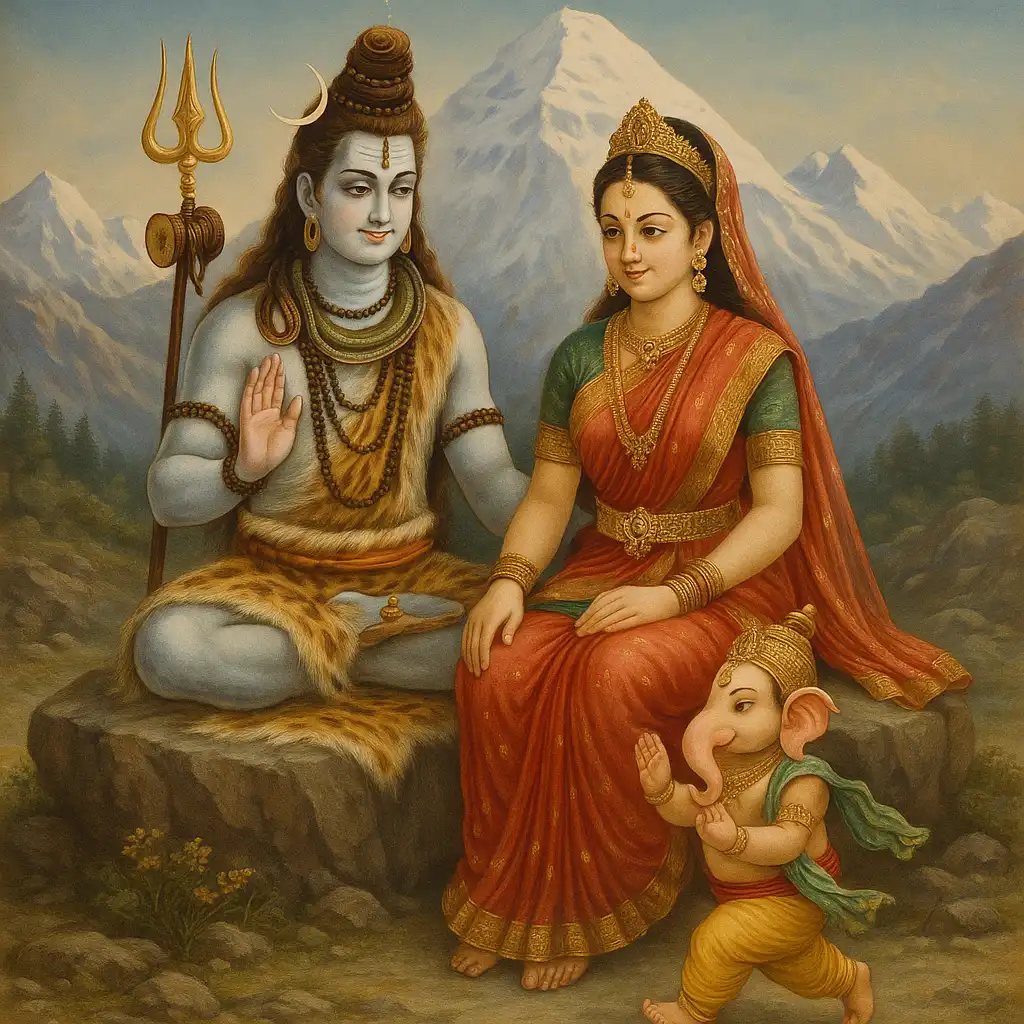
"Let us reflect on this deep, profound lesson in philosophy from Bhagwan Ganesh." – Swami Mukundananda Ji
Once, Lord Shiva tested His sons—Gajanan (Ganesh) and Skanda (Kartikeya)—by challenging them to circumambulate the universe. The first to complete the task would earn a special divine fruit.
Kartikeya, confident and swift, set off to fly around the cosmos. Ganesh, however, calmly walked in a circle around His parents, saying:
“Since you are the embodiment of the universe, going around you is as good as going around the world.”
When Kartikeya returned, he found that Ganesh had already claimed the fruit. The lesson here is profound: God, though in personal form, contains all of creation within Him. True intellect lies in recognizing this eternal truth.
2. Ganesh as the Scribe of the Mahabharat
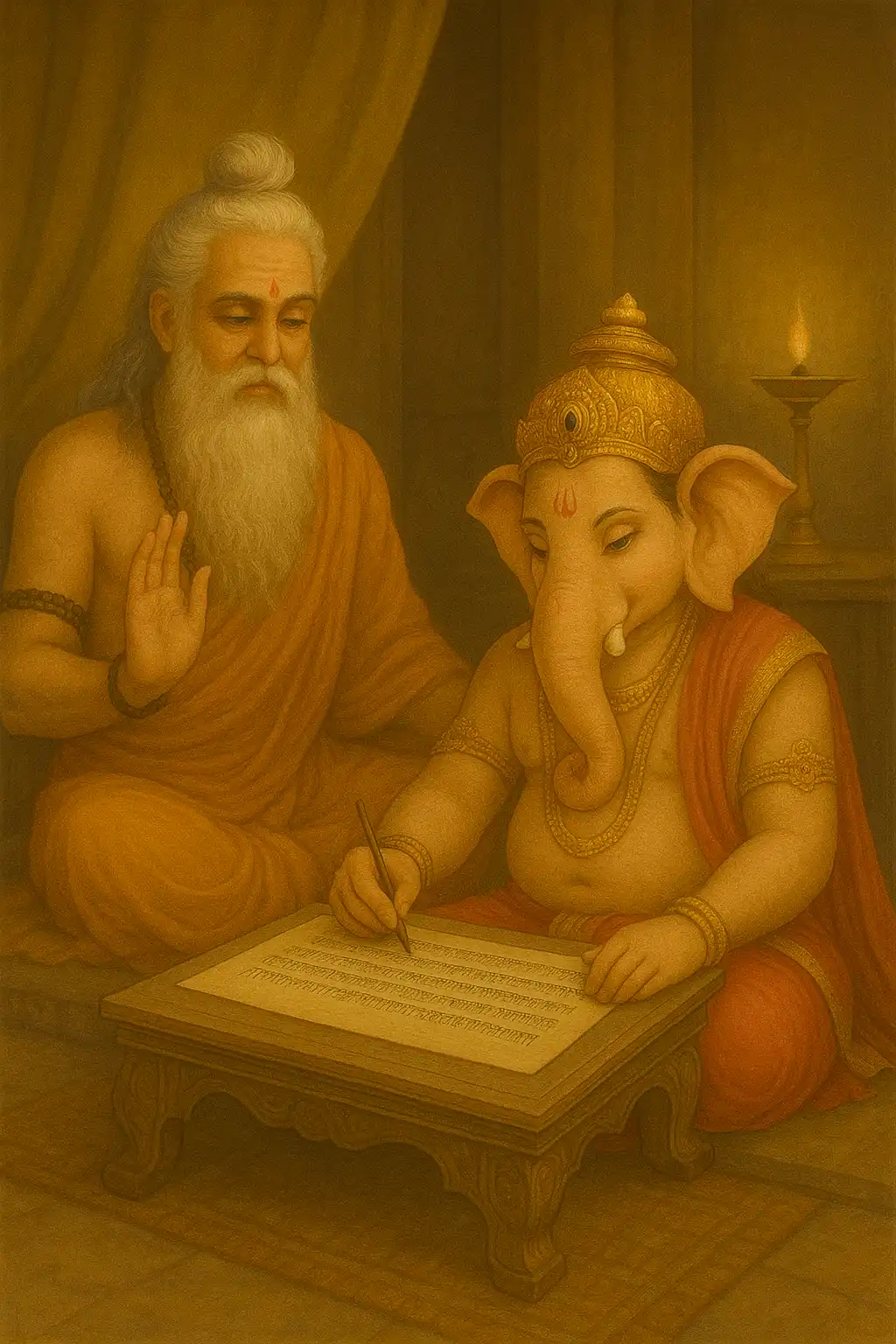
In another divine pastime, Ved Vyas Ji chose Ganesh to be the scribe of the Mahabharat, a work of immense depth and complexity.
Ganesh agreed—but on one condition: Vyas must not pause while dictating, or Ganesh would stop writing. Vyas countered with his own condition: Ganesh must understand each verse before writing it down.
To manage the flow, Vyas occasionally composed verses so deep and intricate that even Ganesh had to pause to grasp their meaning—giving Vyas a moment to reflect. This divine exchange of wisdom and intellect led to the successful completion of the 100,000-verse epic, with a few hundred complex verses woven throughout.
Swamiji highlights how this story teaches the balance of devotion and intellect, and the cooperation between divine will and divine wisdom.
Chant and Reflect: The Ganesha Atharva Sheersha
The Ganesha Atharva Sheersha, from the Atharva Ved, is more than a stotra—it is philosophy clothed in devotion. It proclaims Ganesh not merely as a deity with a form, but as the all-encompassing consciousness behind the universe.
When chanted with sincerity, this hymn can awaken clarity, remove mental and spiritual obstacles, and draw us into deeper communion with the Divine.
As Swami Mukundananda Ji teaches:
“Even if you chant without understanding, Shree Krishna is pleased. But if you chant with bhakti, you transform.”
The same applies to Lord Ganesh—He accepts your sincerity more than your perfection. But when bhakti (devotion) and buddhi (intellect) unite, the chant becomes transformative.
Why Recite the Ganesh Atharvashirsha?
- To invoke wisdom and spiritual clarity
- To begin any endeavor with divine grace
- To remember that the form of God contains the entire cosmos
- To deepen your connection with the Supreme Self within
- To surrender both heart and intellect to the Divine
Let this sacred hymn become a part of your regular spiritual practice—not just in times of celebration, but as a daily tool of inner cleansing and upliftment.
Call to Action: Learn and Grow with Swami Mukundananda Ji
To dive deeper into the spiritual wisdom of Lord Ganesh and other divine personalities, explore enlightening discourses and guided practices by Swami Mukundananda Ji.
🔗 YouTube Channel – Swami Mukundananda
Frequently Asked Questions
1. What is the Ganesha Atharva Sheersha and why should you chant it daily?
The Ganesha Atharva Sheersha is a powerful Vedic hymn from the Atharva Ved that glorifies Lord Ganesh as the Supreme Brahman and eternal Self. Chanting it daily invokes divine wisdom, removes obstacles, and brings inner peace. It is especially beneficial before starting new ventures or spiritual practices, making it a vital part of any daily prayer routine.
2. Can I chant the Ganesha Atharva Sheersha without knowing Sanskrit?
Yes, anyone can chant the Ganesha Atharva Sheersha, even without fluency in Sanskrit. Devotion and sincerity matter more than perfect pronunciation. Listening or reciting with bhakti (devotion) connects you with Lord Ganesh’s blessings and gradually deepens your spiritual understanding.
3. What is the best time to recite the Ganesha Atharva Sheersha for maximum benefits?
The ideal time to recite the Ganesha Atharva Sheersha is during Brahmamuhurta (4–6 AM), or before beginning any major task. Chanting during sunrise, on Ganesh Chaturthi, or every Tuesday can also amplify its benefits. A peaceful mind and a clean, quiet space help deepen the experience.
4. Is the Ganesha Atharva Sheersha only for Ganesh Chaturthi or can it be chanted every day?
While it is a central chant during Ganesh Chaturthi, the Ganesha Atharva Sheersha can be recited daily for ongoing spiritual growth. Regular chanting strengthens your connection with Lord Ganesh, increases focus, and clears mental and emotional blocks, making it a timeless spiritual practice.
5. How does the Ganesha Atharva Sheersha reflect Vedic and Vedantic philosophy?
The Ganesha Atharva Sheersha reveals Lord Ganesh not just as a deity, but as the all-pervading Brahman, aligning with Vedantic truths of satchidananda (Existence–Consciousness–Bliss). It teaches that the universe originates, exists, and dissolves in the Supreme, helping seekers connect devotion (bhakti) with divine knowledge (jnana).
May Lord Ganesh bless you with wisdom, devotion, and strength.
Let obstacles fall away, and let the light of divine knowledge lead your path.
Jai Shri Ganesh!