
Introduction: Where Do We Seek Happiness?
Every human action, consciously or subconsciously, is driven by a desire to be happy. We seek happiness in relationships, careers, wealth, entertainment, and even travel. Yet, despite achieving these goals, the happiness we experience often proves to be fleeting.
In The Art and Science of Happiness, Swami Mukundananda emphasizes a vital truth: most people spend their lives in pursuit of happiness, but rarely stop to examine what happiness truly is and where it actually comes from. The Bhagavad Gita, an eternal scripture spoken by Shree Krishna to Arjun, offers answers to these timeless questions. It explains the nature of happiness, its true source, and how one can live in lasting bliss, regardless of external conditions.
This blog explores six key teachings from the Bhagavad Gita, illuminated by Swamiji’s commentary and philosophy.
1. Happiness Is an Internal State

In our modern world, the dominant belief is that happiness is external—that it depends on acquiring things, people, or experiences. But as Swamiji points out, this is an illusion. If happiness truly resided in objects or achievements, everyone who owned them would feel fulfilled, and those without them would be miserable. But life shows the opposite—many wealthy people are unhappy, and many poor individuals are content.
In the Bhagavad Gita (5.24), Shree Krishna says:
“One whose happiness is within, whose delight is within, and whose light is within, that yogi attains eternal bliss.”
This verse conveys that inner alignment, not material attainment, is the source of real happiness.
Swamiji compares it to wearing spectacles: sometimes, we're looking for what we already possess, simply because we’re looking in the wrong place. He urges seekers to look within, to cultivate a life of internal richness—based on virtue, character, spiritual wisdom, and the connection to the soul.
2. Sense Enjoyment ≠ Real Joy

A critical lesson Swamiji offers in The Art and Science of Happiness is the distinction between pleasure and happiness:
- Pleasure is temporary, external, and sensory. It arises from contact with the senses—eating delicious food, watching a movie, or buying a new gadget.
- Happiness, by contrast, is lasting, internal, and emotional. It arises from peace, purpose, love, and contentment.
This aligns beautifully with Krishna’s words in Bhagavad Gita 18.37:
“That which seems like poison at first, but tastes like nectar in the end, is said to be happiness in the mode of goodness. It is generated by the pure intellect that is situated in self-knowledge.”
Swamiji explains that sattvic happiness may not be immediately pleasurable—it may involve discipline, sacrifice, or meditation—but it leads to deep, enduring joy. For instance, waking up early to meditate might feel uncomfortable at first, but the calm and focus it brings becomes truly rewarding.
Conversely, rajasic or tamasic pleasure (like overeating or indulging in laziness) feels good initially but leads to restlessness, guilt, or dullness of mind.
Lesson: If we want lasting happiness, we must be willing to delay gratification and invest in soul-nourishing actions.
3. Misidentifying the Self Leads to Misplaced Desires

One of the most profound teachings of the Bhagavad Gita, echoed in Swamiji’s writings, is the true nature of the self. Most of our desires, disappointments, and frustrations arise because we misidentify ourselves with the body or the mind. We believe:
- "I am the body, so my beauty or health defines me."
- "I am the mind, so my emotions control me."
- "I am the intellect, so my success or failure defines my worth."
But in Bhagavad Gita 2.20, Shree Krishna says:
“The soul is neither born nor does it die; it is eternal, indestructible, and primeval.”
Swamiji teaches that we are not our body, mind, or ego—we are eternal souls, divine fragments of God. The soul is by nature blissful (ānanda). When we forget this, we seek happiness externally, chasing mirages that can never satisfy the soul.
When we rediscover our identity as divine beings, we shift our desires from the material to the spiritual, and this alone brings authentic, stable joy.
4. Equanimity: The Secret to Lasting Peace

In life, we all face ups and downs—successes and failures, praise and criticism, gain and loss. Most people become emotionally reactive, letting circumstances dictate their mood and mental peace.
The Bhagavad Gita urges us to practice equanimity, the ability to stay centered regardless of external changes:
“Be steadfast in the performance of your duty, O Arjun, abandoning attachment to success and failure. Such equanimity is called Yog.”
— Bhagavad Gita 2.48
Swamiji emphasizes that equanimity is not indifference—it’s a higher awareness that allows us to act with full dedication without becoming attached to the results. It’s about doing our best, then leaving the outcome to God.
He illustrates this beautifully in his book using relatable examples—like students panicking over exam results, or professionals agonizing over promotions. When we attach our worth to results, we suffer. But when we serve with devotion and let go of outcome anxiety, we experience freedom and peace.
5. Devotion to God: The Highest Happiness
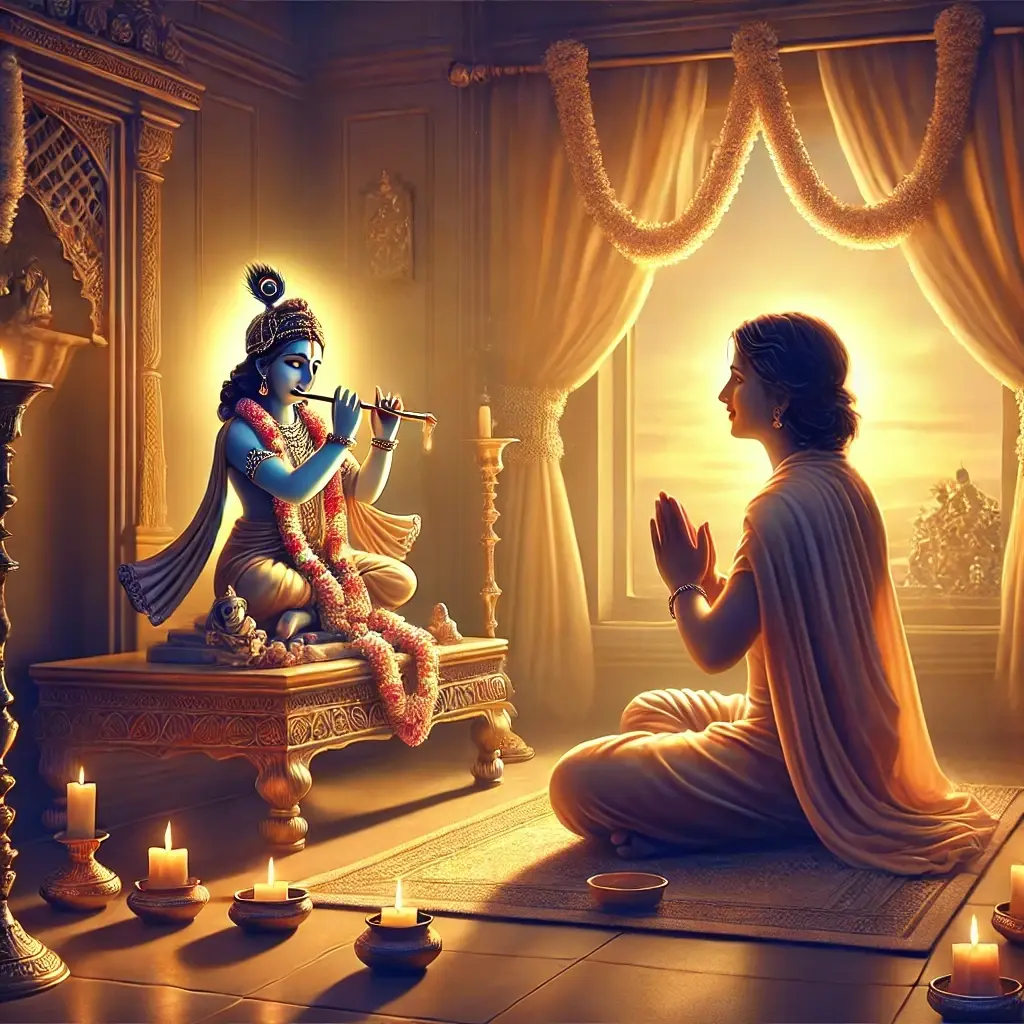
Ultimately, the Gita points us toward the most elevated form of happiness: Bhakti, or devotion to God.
“Always think of Me, be devoted to Me, worship Me, and offer obeisance to Me. Having dedicated your mind and body to Me, you will certainly come to Me.”
— Bhagavad Gita 9.34
In The Art and Science of Happiness, Swamiji explains that divine love is the highest bliss, far beyond anything material. The soul longs for union with the Supreme. And when we begin to love God—not for what He gives, but for who He is—our heart fills with joy that transcends the world.
This devotion doesn't mean renouncing life. Rather, it means living in the world but anchoring the heart in God. Whether we are at work, in relationships, or performing duties, if we infuse it with love and remembrance of God, it becomes a source of happiness.
6. Practical Tools to Cultivate Inner Happiness
Swami Mukundananda doesn’t leave us with just concepts—he offers practical tools to live these teachings:
🌞 Daily Sadhana
- Morning routine of prayer, meditation, and reading the Gita.
- Sets the mind in the right direction before the day begins.
✍️ Gratitude Practice
- Journal 3 things daily that you’re grateful for.
- Shifts focus from “what I lack” to “what I’m blessed with.”
🧘♂️ Detachment Practice
- Remind yourself daily: “I will give my best effort, but I am not the controller of outcomes.”
🤝 Selfless Service (Seva)
- Do acts of kindness without expecting reward.
- The joy of giving nourishes the soul.
🕉️ Satsang (Spiritual Association)
- Listen to Swamiji’s lectures, join a Gita study group, or read spiritual texts.
- Keep the company of ideas and people that elevate your thoughts.
Conclusion: Happiness Is Cultivated, Not Captured
The pursuit of happiness becomes a journey inward when we follow the timeless wisdom of the Bhagavad Gita. Swami Mukundananda’s The Art and Science of Happiness is a beacon for those ready to shift from temporary pleasure to eternal peace.
“Happiness is not what you chase. It is what you become when you live in alignment with your true self and connect with God.”
— Swami Mukundananda
So pause for a moment, take a deep breath, and remember—your happiness isn’t outside you. It’s already within. The Gita simply lights the way back home.
Call to Action
For more such uplifting and devotional content, subscribe now to Swami Mukundananda's YouTube Channel and stay connected with timeless wisdom and divine inspiration.
Also, download the Bhagavad Gita - Krishna Bhakti App to dive deeper into spiritual knowledge, daily sadhana, and bhakti-filled resources at your fingertips.
Let devotion and divine knowledge guide your life — start your journey today!