Inspiration - RKT Newsletter
December 2025

E-Newsletter
December 2025


Quote
राजविद्या राजगुह्यं पवित्रमिदमुत्तमम् | प्रत्यक्षावगमं धर्म्यं सुसुखं कर्तुमव्ययम् || 2||
raja-vidya raja-guhyam pavitram idam uttamam pratyakshavagamam dharmyam su-sukham kartum avyayam
This knowledge is the king of sciences and the most profound of all secrets. It purifies those who hear it. It is directly realizable, in accordance with dharma, easy to practice, and everlasting in effect. ( Bhagavad Gita 9.2 )
From the Editor’s Desk
In an age of increasing spiritual discourse, devotion often risks being reduced to alignment with beliefs, positions, or identities. While doctrine and discipline have their place, they were never meant to replace the living pulse of devotion. This issue of Inspiration explores how devotion matures beyond rigidity, without abandoning scripture or tradition, into a relationship rooted in humility, surrender, and grace. Devotion beyond dogma is not rebellion against faith; it is the fulfillment of faith.
Bhakti Ras
Devotion Beyond Dogma: When Love Transcends Labels and Limitations
Dogma, at its best, provides structure. It preserves teachings, protects lineage, and offers clarity to seekers at the beginning of their journey. Problems arise not because dogma exists, but because it begins to define devotion rather than support it.
When belief becomes rigid, it subtly shifts from a means to an end into an end in itself. Spiritual life then becomes about holding the correct view, defending the right interpretation, or belonging to the right group. Devotion, however, does not thrive on rigidity. It grows through flexibility, humility, and lived experience.
A quiet danger emerges when one starts defending God, scripture, or one’s path as if they are fragile instead of approaching Him with surrender. The heart may remain untouched even as the intellect feels satisfied. In contrast, devotion or bhakti is not an idea to be perfected but a relationship to be lived. Concepts can be debated; relationships are nurtured. One may know many truths about God and yet feel distant from Him.

Devotion deepens when the seeker moves from asking, “Is my understanding correct?” to asking, “Is my offering sincere?” In relationships, love is proven not by explanation but by trust, consistency, and willingness to yield. A devotee does not measure closeness by certainty of belief but by dependence of heart. Where there is genuine bhakti, there is less anxiety about being right and more eagerness to belong.
Where Scripture Softens and Devotion Deepens
The Bhagavad Gita repeatedly directs the seeker inward – not toward intellectual superiority, but toward inner refinement. Its emphasis on humility, surrender, and inner disposition reveals the true purpose of scripture. Our Scriptures were never meant to harden identity. They were meant to dissolve the ego. However, when Scriptures become a tool for comparison rather than contemplation, their purpose is quietly reversed.
To move beyond dogma is not to reject Scriptures but to implement their teachings. True reverence expresses itself as softened judgment, increased gratitude, and a growing willingness to be corrected from within. In other words, dogma draws lines, whereas devotion builds bridges. This does not mean devotion is vague or indiscriminate. It means that love does not require hostility to remain firm. Where dogma often sorts and labels, devotion listens and absorbs.

A simple inner test reveals the difference: Has my spiritual life made me more patient, more forgiving, and more grateful, or more critical and easily disturbed?
Devotion beyond dogma does not erase distinctions; it removes bitterness from them.
One of the least examined contributors to spiritual polarization is the ego’s need to feel secure through certainty. Knowledge, when not accompanied by surrender, can quietly inflate identity. Spiritual progress is not measured by how much one knows, but by how much one has eliminated pride, insistence, and the need for validation.
As devotion matures, the impulse to correct others diminishes. The heart becomes more occupied with self-rectification than with comparison. Where ego retreats, grace advances.
Guidance, Practice, and Belonging Without Polarization
The Guru represents living scripture – the truth embodied, not abstracted. Through the Guru, teachings descend from theory into life. A genuine relationship with the Guru naturally tempers rigidity. Obedience becomes an expression of love, not fear. Guidance becomes personal, not ideological.
Devotion to the Guru trains the heart in humility. It redirects attention from what others believe to how one lives life. In this way, Guru-bhakti becomes a powerful antidote to polarization, drawing the seeker away from extremes and back into sincerity.
Spiritual practices are meant to open the heart. Yet even sadhana can become mechanical if the inner offering is lost. When practices are reduced to checklists or markers of superiority, they cease to nourish devotion. The question is not how disciplined one appears, but whether the discipline is increasing tenderness toward God and others.
Practices should make prayer more intimate, not more anxious. When they no longer do so, a gentle recalibration is needed.
From Belief to Belonging: Devotion as a Healing Force
True devotion avoids two extremes: narrow exclusivity and diluted relativism. Bhakti allows one to remain deeply rooted in a chosen path while maintaining reverence for sincerity wherever it appears. One can belong wholeheartedly without dismissing others.
Devotion beyond dogma does not loosen commitment; it removes contempt. Loyalty remains strong, but arrogance quietly exits. As devotion matures, faith undergoes a subtle transformation. The focus shifts from belief systems to belonging, and from explanation to experience. God is no longer an idea to be defended but a presence to be trusted. Grace begins working quietly, reshaping priorities, relationships, and responses. In this stage, the devotee is less interested in being seen as spiritual and more concerned with remaining sincere.
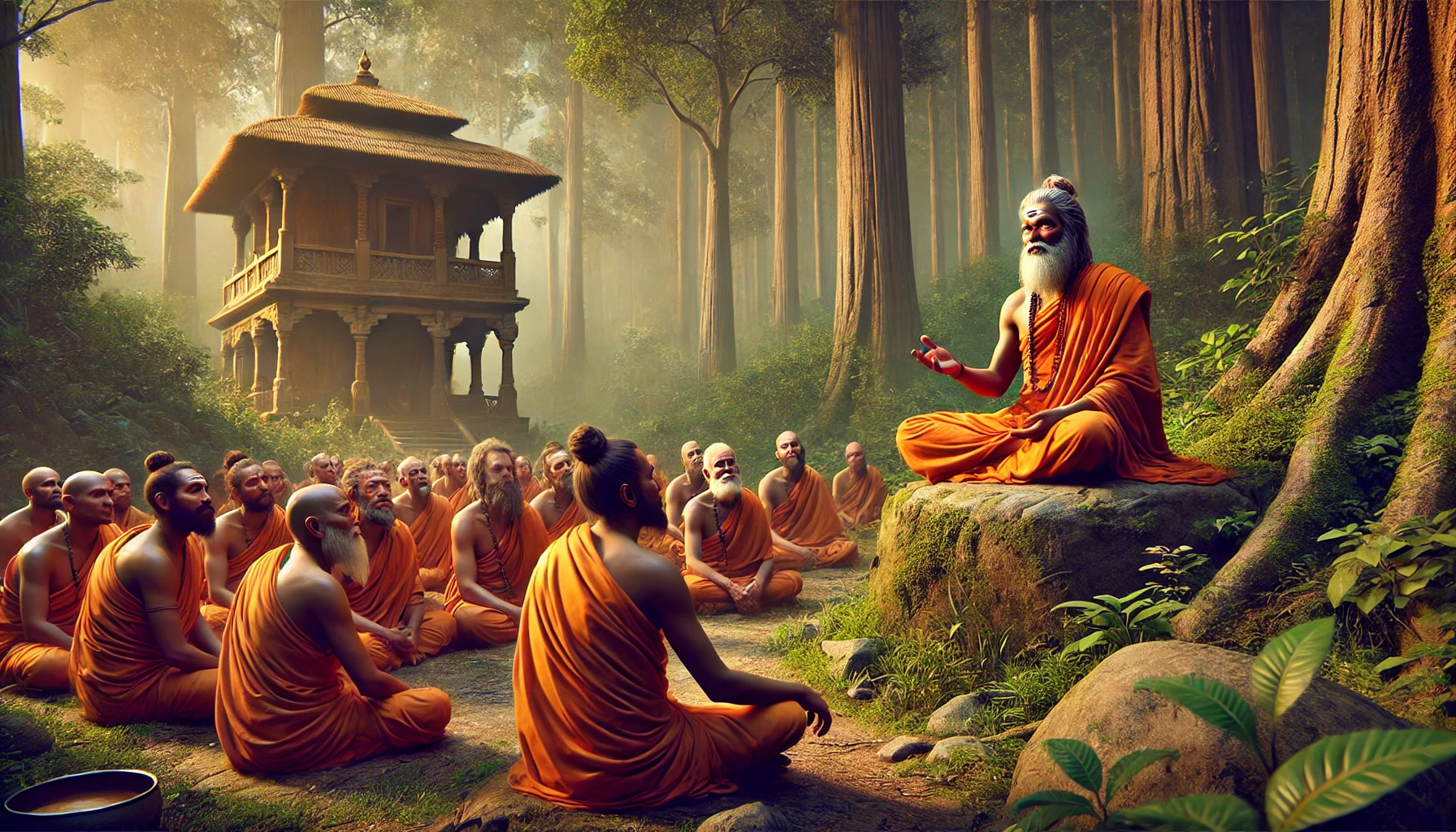
Closing: When Love Becomes the Only Credential
The world does not lack belief; it lacks tenderness. Devotion beyond dogma answers this need, not through argument, but through example.
Such devotion is quieter, deeper, and less concerned with visibility. It honors tradition, reveres scripture, and remains rooted in guidance, yet allows love to breathe. When love deepens, labels lose urgency. And when humility grows, truth no longer needs to announce itself; it simply shines.
Bal-Mukund: Playground for Vedic Wisdom
A King’s Choice
King Ambarish was a powerful and deeply devoted ruler who observed Ekadashi, the eleventh day of each lunar fortnight, with great discipline. For an entire year, he fasted on every Ekadashi, refraining from both food and water. On the final Ekadashi of the year, tradition required that he break his fast at the exact prescribed time on the following day, Dwadashi.
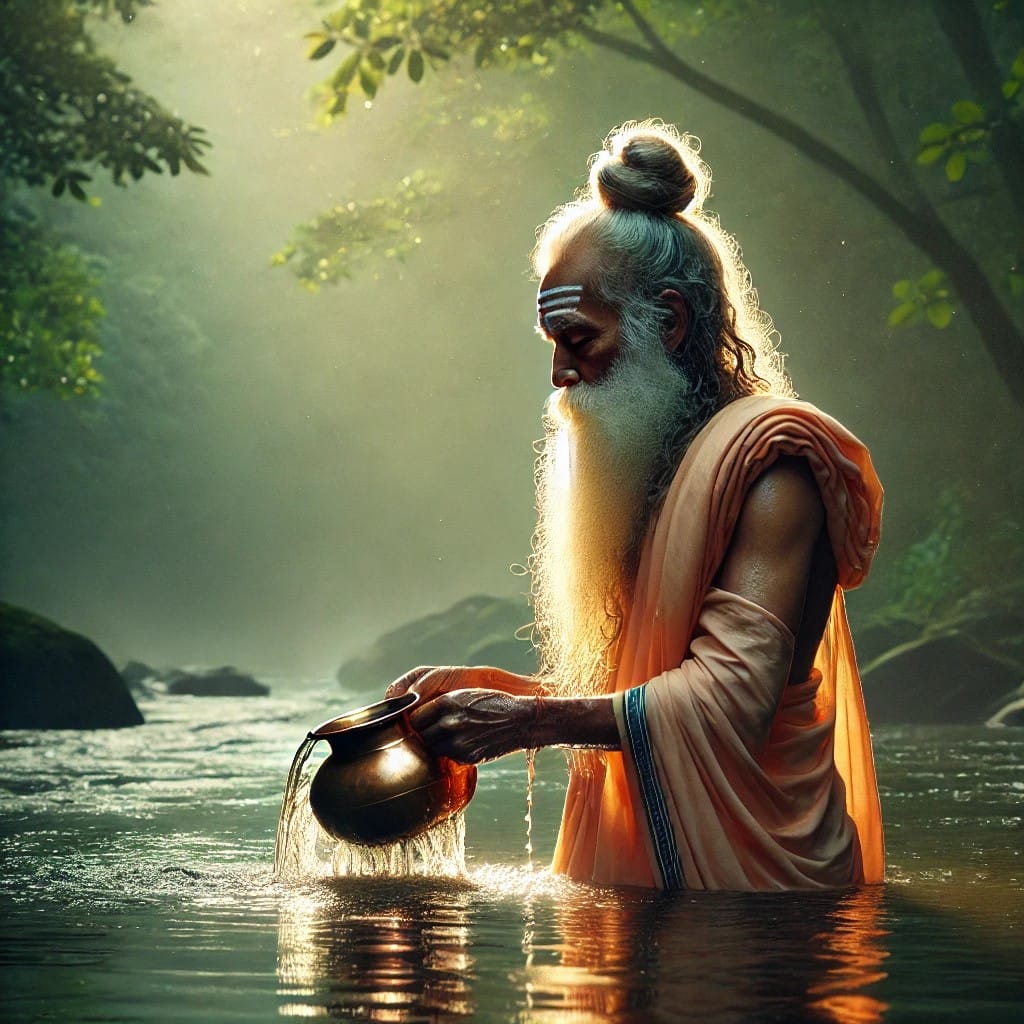
Just before it was time to break the fast, Sage Durvasa arrived unexpectedly at King Ambarish’s palace. The king welcomed him with great respect and offered him a meal. Sage Durvasa agreed, but first requested time to bathe. He went to the river—and did not return for a long while.
As the auspicious time to break the fast approached, King Ambarish became concerned. If he broke his fast without feeding the sage first, it would be disrespectful. But if he delayed breaking the fast, he would violate his sacred vow. Seeking guidance, the king consulted learned scholars. They advised him that drinking water would not count as breaking the fast without actually eating.
Trusting their wisdom, King Ambarish drank water and patiently waited for Sage Durvasa.
When Sage Durvasa finally returned and learned that the king had already broken his fast, he became furious. Feeling insulted, he created a fearsome demon, Kritya, to punish King Ambarish. But Shree Krishna, witnessing the situation, released His divine Sudarshan Disc, which destroyed the demon and began chasing Sage Durvasa.
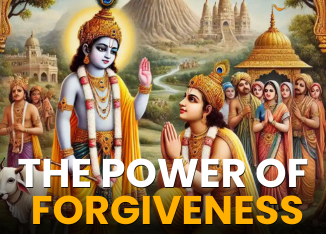
Terrified, Durvasa ran to Brahma ji and Lord Shiva for protection, but both refused to intervene. Finally, he approached Lord Narayan, who explained that the Sudarshan Disc could only be stopped if Sage Durvasa sought forgiveness from King Ambarish himself.
Sage Durvasa returned, fell at the king’s feet, and begged for forgiveness. King Ambarish, humble and compassionate, prayed to Shree Krishna to withdraw the Sudarshan Disc. The Disc finally stopped, and Sage Durvasa was saved.

Practical Wisdom:
- King Ambarish chose to drink water instead of eating, following the advice of scholars—even though it was not part of the strict ritual. He acted with discernment, balancing his sacred vow with respect for Sage Durvasa. This teaches us that true devotion is not blind rule-following, but the wise application of love, humility, and responsibility while staying connected to God.
- Lord Narayan directed Sage Durvasa back to King Ambarish, a pure devotee who had fully surrendered to God with humility and trust. This reminds us that disrespecting a sincere devotee is a serious offense, and that devotion rooted in humility and compassion carries immense spiritual power.
Youth Insights
Devotion Beyond Dogma – Youth Insights
Have you ever paused to think about what devotion truly means? For many of us as students, devotion often begins with rituals, traditions, and structured practices passed down through generations to our family. While these are deeply meaningful, true devotion goes beyond outward actions—it lives in the sincerity of the heart.

Devotion beyond dogma is not about rejecting tradition, but about understanding its deeper purpose and allowing faith to become a lived experience.
In Hindu philosophy, Bhakti is not limited to temples or ceremonies. It is a continuous state of love, surrender, and awareness of the Divine. The Bhagavad Gita reminds us that even the smallest act, when done with pure intention, is accepted by Bhagavan. This teaches us that devotion is not measured by how perfectly we follow rules, but by how genuinely we connect.
Here are a few simple ways we, as students, can practice devotion beyond structured rituals—by weaving it into our everyday lives:
Ways to Practice Devotion Beyond Dogma
- Cultivate sincerity: Focus on intention rather than perfection in prayer and spiritual practice.
- Live your values: Let devotion show up through honesty, kindness, and responsibility in daily life.
- Reflect regularly: Pause and ask how your actions align with dharma and your inner truth.
- Embrace compassion: Respect different spiritual paths, including your own evolving journey.
- Stay connected: Engage in Satsang, seva, or quiet moments of reflection to renew faith.
Devotion is not confined to rituals—it is expressed in how we think, speak, and act. When faith moves beyond dogma, it becomes a source of inner strength, clarity, and renewal, guiding us toward a life of purpose and harmony.
Holistic Health Tidbits
Devotion Beyond Dogma: A Holistic Path to Health and Wellness
The word dogma is often associated with religion, but it can apply to any area of life governed by rigid beliefs and absolute rules—including health and wellness. Today, countless voices claim to have all the answers: quick fixes, miracle routines, and promises of longevity. While some of us get caught up in these trends, many are seeking a more grounded and sustainable approach to well-being—one that honors individuality, intention, and balance.
This is where the idea of Devotion Beyond Dogma becomes especially meaningful. It invites us to approach health not as a rigid checklist, but as a lived practice rooted in awareness, connection, and inner alignment.

In the world of wellness, dogma often shows up as inflexible routines, strict dietary rules, or “all-or-nothing” thinking about what is right or wrong. While structure can be supportive, excessive rigidity can disconnect us from the wisdom of our own bodies and unique lifestyles. Over time, this can lead to frustration—or even harmful behaviors. Devotion, on the other hand, arises from within. It emphasizes commitment guided by purpose rather than pressure and reframes wellness as an evolving relationship with ourselves.
Shifting from dogma to devotion encourages self-inquiry. Instead of following a trend simply because it is popular, devotion asks: Does this nourish me? Does it support my energy, mental clarity, and emotional balance? This gentle questioning builds self-trust—something often lost amid the noise of modern wellness culture.
A devotional approach to health naturally supports holistic well-being:
- Nutrition becomes a mindful process of choosing what truly nourishes.
- Movement becomes a celebration of the body’s abilities.
- Rest becomes a conscious act of renewal.
- Spiritual and mindfulness practices evolve into meaningful personal rituals.
This way of living aligns with what we know about sustainable habit formation. We are far more likely to maintain practices that feel purposeful and intrinsically motivating, rather than driven by guilt or fear. Such devotion helps us avoid exhausting cycles of perfectionism and supports long-term balance and resilience.
Ultimately, devotion—rather than dogma—recognizes that health is not a fixed destination. It is a continuous dialogue between body, mind, and spirit. Ignoring trends may sometimes trigger a sense of F.O.M.O. (fear of missing out), but true wellness is never one-size-fits-all.
Our bodies shift from hour to hour and season to season. When we listen with awareness and compassion, we learn to meet ourselves where we are—focusing less on perfection and more on meaningful connection with ourselves.
Reflection Questions
Bhakti Ras / Inspiration
- Do my spiritual practices cultivate humility—or do they sometimes reinforce identity and attachment?
- What might change if I trusted grace more deeply than structure?
Bal-Mukund: Playground for Vedic Wisdom
- What does the story of King Ambarish and Lord Narayan teach me about wisdom, humility, and true devotion?
Youth Insights
- How can I express devotion more authentically in my daily life, beyond rituals or routine practices?
Holistic Health Tidbits
- Are there any health beliefs I hold out of fear, habit, or social pressure rather than personal awareness and alignment?
Upcoming Events
As we move through the close of the year and step into a new beginning, the Radha Krishna Temple of Dallas (Allen) offers many opportunities to experience devotion not just as a ritual, but as a living, shared experience. From soulful kirtans and sacred observances to joyful cultural celebrations for children and families, these upcoming events invite each of us to connect – through presence, participation, and community. We invite you to explore what speaks to your heart and discover devotion expressed beyond formality, in joy, learning, and togetherness.
From 2025 to 2026: Experience Devotional Bliss at the Radha Krishna Temple
Join us at the Radha Krishna Temple to experience a deeply devotional New Year’s Eve. Step into the New Year with the uplifting energy of Bhakti Diwas, a day dedicated to devotion, cultural celebration, and spiritual connection.
Experience the joy of soulful kirtans, sacred rituals, and joyous festivities, marking the transition into 2026 with blessings and gratitude for the numerous gifts we have received from the Divine.
The event will begin on December 31st at 7:00 PM CDT through until midnight. Here are some of the highlights of the 2-day celebration:
New Year’s Eve:
- Swami Mukundananda’s special message
- Special performance by RKT’s children’s Kirtan Mandali
- Hanuman Chalisa chanting
- A vibrant group dance by the Bhakti Beats team
- New Year's Eve Treat with Krishna
- New Year's Eve special soulful kirtans
- Midnight Aarti and Darshan
New Year’s Day (Bhakti Diwas):
- New Year's special Mahaarti, Sankalp, and Archana
- South Indian Unjal Seva with Kirtans
- Rudrabhishek
- Satyanarayan Katha
- Sunderkand Recitation
- Devotional Kirtans by the Temple’s priests
We invite you to join us on both days – New Year’s Eve and New Year’s Day (Bhakti Diwas) to nourish your soul and fill your heart with joy.
- Date: December 31, 2025, and January 1, 2026
- Venue: Radha Krishna Temple, 1450 N. Watters Rd., Allen, TX 75013
- Details: https://www.radhakrishnatemple.net/new-year-2026
JKYog’s Jagadguruttam Diwas
There is a lot of significance associated with Jagadguruttam Diwas for JKYog devotees.
Jagadguru Shree Kripaluji Maharaj, the 5th original Jagadguru in Indian history, descended on the beautiful Sharad Poornima night in October 1922, in the village of Mangarh in North India. Even as a child, Maharajji displayed signs of divinity as recounted by His family members and close associates. In 1957, at the very young age of 34 years, Shree Maharajji was venerated with the title of Jagadguruttam by the Kashi Vidvat Parishat. Since then, January 14th has been celebrated as Jagadguruttam Diwas. Shree Maharajji, the personification of the nectar of divine love, has inspired millions toward bhakti marg.
JKYog and the Radha Krishna Temple of Dallas (Allen) are thrilled to announce the celebration for the 69th Jagadguruttam Diwas on January 14, 2026. There are numerous devotional, uplifting, inspirational, and fun events planned that you do not want to miss, including a special Satyanarayan Katha and Pooja.
Mark your calendar and stay tuned for more details!
Sanskriti RKT 2025 – A Cultural Extravaganza For Kids!
Are your kids talented in the fine arts, literary or performing arts, crafts, or any other area? This is their opportunity to shine and show their devotion! It's time for Sanskriti 2025 – a cultural bonanza! This program allows participants of all ages to compete in a variety of events, from singing and dancing to speech, chess, sudoku, and more!
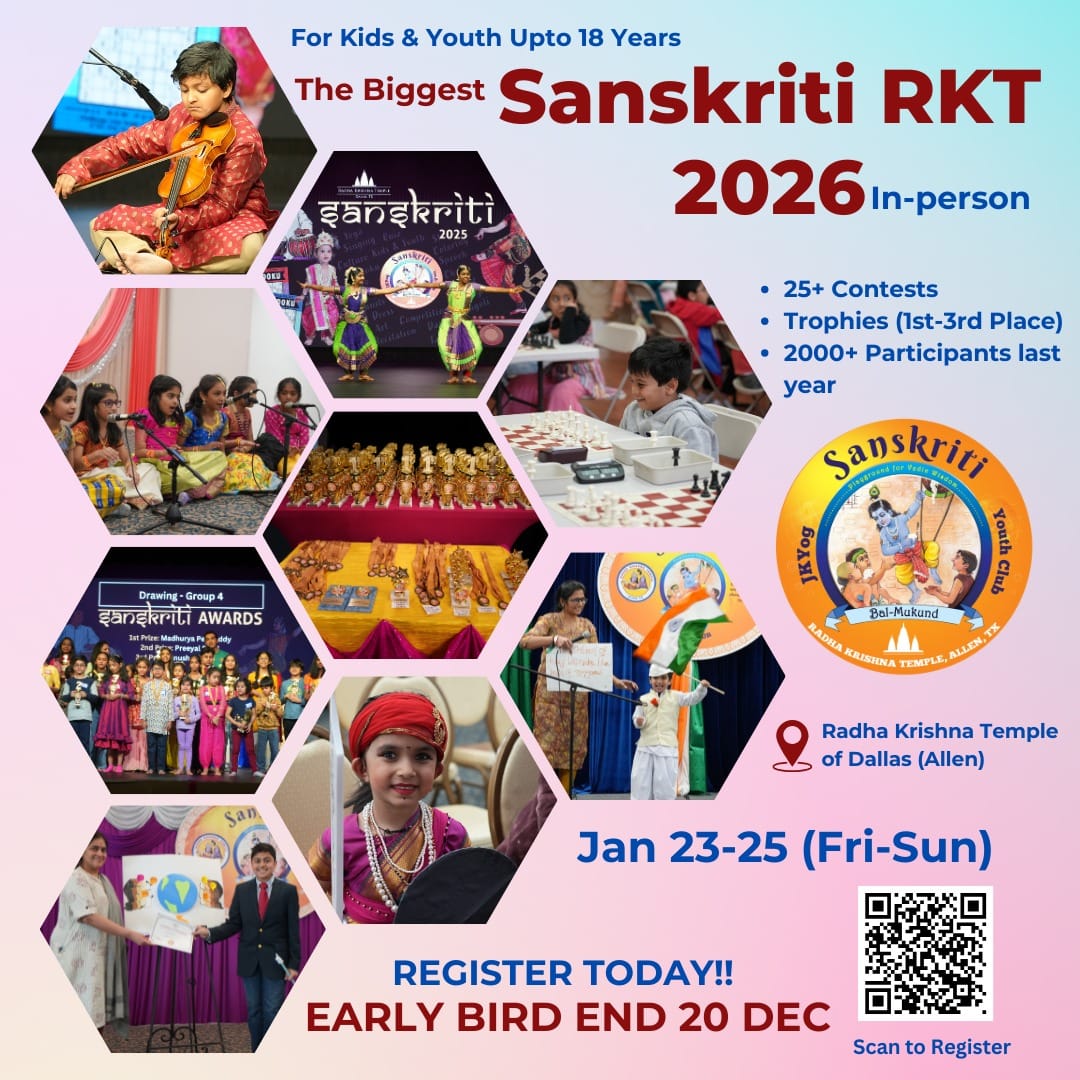
Sanskriti is the forum where children and youth integrate creative expression and devotion through knowledge and skills in the performing, literary, and other arts. This program will be held in person for three days. This is a wonderful opportunity to compete, share strengths, and display confidence!
Come, unleash your child’s talents at Sanskriti RKT 2026! With seven years of successful events thus far, this year’s Sanskriti promises to be even more exciting.
There will be many different on-stage and off-stage contests in multiple areas, including:
- Bhagavad Gita Kids Chanting
- Solo and group singing
- Prepared and impromptu speeches
- Creative PowerPoint presentations
- Coloring, drawing, and artistic expressions
- Essay writing
- Quizzes
- Games like sudoku and chess
You are invited to register for the events of your choice.
Showcase your talent at the most exciting of all events for kids and youth!
- Date: January 23 – 25, 2026
- Venue: Radha Krishna Temple, 1450 N. Watters Rd., Allen, TX 75013
- Details: https://www.radhakrishnatemple.net/sanskriti
Other Auspicious Events
- Lohri – January 13, 2026, from 6:30 to 8:30 PM
Lohri is a joyful winter celebration that marks the end of the cold season and the beginning of longer, warmer days. In 2026, this beautiful harvest festival of India will be celebrated with devotion and cultural vibrancy at the Radha Krishna Temple of Dallas. - Goda Devi Kalyanam – January 18, 2026, from 9:00 AM – 12:30 PM
Experience the divine blessings of Dhanurmasa, the sacred month dedicated to the worship of Goda Devi (incarnation of Goddess Lakshmi) and Lord Krishna. Devotees are invited to perform the Dhanurmasa Seva Kala Puja in the temple, which includes chanting verses from Tiruppavai and offering heartfelt prayers.
Each of these gatherings offers a unique doorway into devotion – whether through prayer, music, learning, or service. We encourage you to join us for at least one event this season, and perhaps more, as a way to nourish your spirit and strengthen our shared temple community. May these moments of togetherness inspire a devotion that flows naturally into everyday life.