
As Lord Vishnu awakens from His divine repose, the sacred festival of Dev Uthani Ekadashi invites every heart to rediscover the light of devotion, wisdom, and spiritual renewal.
Introduction: Welcoming the Divine Awakening
As the auspicious month of Kartik unfolds, Hindu homes and temples come alive with an atmosphere of devotion and anticipation. Courtyards are adorned with colorful rangoli, the gentle fragrance of incense fills the air, and rows of glowing diyas illuminate beautifully decorated altars. Devotees gather to chant the sacred names of Lord Vishnu, offering heartfelt prayers as they prepare to celebrate His divine awakening.
This joyous occasion is known as Dev Uthani Ekadashi, one of the most spiritually significant observances in the Hindu calendar. Celebrated on the eleventh lunar day of the waxing moon in Kartik, it marks the symbolic awakening of Lord Vishnu from His four-month-long Yoga Nidra, or divine repose, and the traditional conclusion of Chaturmas.
In 2026, Dev Uthani Ekadashi will be observed on Friday, November 20, according to the principal New Delhi Panchang. The festival is also known as Prabodhini Ekadashi, Devutthana Ekadashi, Haribodhini Ekadashi, and Dev Uthani Gyaras, names that beautifully express the idea of divine awakening.
The occasion marks a meaningful transition in Hindu religious life. After four months traditionally dedicated to spiritual discipline, austerity, and contemplation, devotees welcome a season of auspicious celebrations, including weddings, Tulsi Vivah, and other sacred ceremonies.
Yet the beauty of Dev Uthani Ekadashi extends far beyond its festive customs. The awakening of Lord Vishnu carries a timeless spiritual message, reminding devotees to look beyond the temporary attractions of the world and rediscover their eternal relationship with God.
"The most beautiful awakening is the moment when the heart turns toward God and discovers the joy of His loving presence."
To appreciate the depth of this celebration, let us explore the sacred narrative of Lord Vishnu's Yoga Nidra, the spiritual significance of Chaturmas, and the cherished traditions that make Dev Uthani Ekadashi an occasion of divine grace and renewal.
Dev Uthani Ekadashi 2026: Date and Timings
Dev Uthani Ekadashi falls during the Shukla Paksha, the waxing phase of the moon, in the sacred month of Kartik. The word Ekadashi refers to the eleventh lunar day, while Dev Uthani signifies the awakening of the Divine Lord.
In 2026, Dev Uthani Ekadashi falls on Friday, November 20, in both New Delhi, India, and Dallas, Texas. However, because lunar tithi timings are expressed according to local clocks, the beginning and ending times differ between the two cities.
|
Details |
New Delhi, India |
Dallas, Texas |
|
Ekadashi Date |
Friday, November 20 |
Friday, November 20 |
|
Ekadashi Tithi Begins |
Nov 20, 7:15 AM |
Nov 19, 7:45 PM |
|
Ekadashi Tithi Ends |
Nov 21, 6:31 AM |
Nov 20, 7:01 PM |
All timings are in the respective city's local time. Devotees should consult their local Panchang for observance details according to their spiritual tradition.
Prabodhini Ekadashi is particularly meaningful because it marks the completion of the period traditionally associated with Lord Vishnu's divine rest. The word Prabodhini is derived from the Sanskrit concept of awakening or enlightenment, while Haribodhini signifies the awakening of Lord Hari.
Although the names vary across regions and traditions, the underlying sentiment remains beautifully consistent. Devotees joyfully welcome the Lord's awakening and seek His blessings for a life guided by devotion, righteousness, and spiritual wisdom.
The Sacred Story of Lord Vishnu's Yoga Nidra
The origins of Dev Uthani Ekadashi are deeply connected with one of the most magnificent images in Hindu spiritual tradition: Lord Vishnu reclining upon Ananta Shesha in the celestial ocean of milk, known as Ksheersagar.
Imagine an infinite expanse of luminous waters, tranquil and untouched by the disturbances of the material world. At its center rests Lord Vishnu, His radiant blue form adorned with exquisite golden ornaments and fragrant garlands. Beneath Him lie the majestic coils of Ananta Shesha, the celestial serpent whose countless hoods spread above the Lord like a magnificent canopy. Goddess Lakshmi sits gracefully near His lotus feet, lovingly engaged in His service.
The Lord's eyes are gently closed, and His divine form radiates perfect serenity.
According to sacred tradition, Lord Vishnu enters Yoga Nidra on Devshayani Ekadashi, observed during the month of Ashadha. His divine repose continues through the four months of Chaturmas, culminating in the joyous celebration of His symbolic awakening on Dev Uthani Ekadashi in Kartik.
However, Yoga Nidra is not the ordinary sleep experienced by human beings. The physical body requires rest because it becomes exhausted through activity, while the mind needs sleep to recover from its daily exertions. Lord Vishnu, being transcendental and eternally complete, is beyond such limitations.
His divine repose is understood as a sacred pastime, revealing the mysterious harmony and order underlying creation.
As the sustainer of the universe, Lord Vishnu continues to uphold cosmic existence even during His symbolic rest. His peaceful appearance does not suggest an absence of divine activity but reflects the effortless sovereignty of the Supreme Lord.
The celestial imagery of Ksheersagar is filled with spiritual meaning.
The vast ocean of milk evokes purity, serenity, and the limitless depth of divine existence. Ananta Shesha, whose name signifies endlessness, represents eternity and the infinite nature of cosmic reality. Goddess Lakshmi embodies prosperity, grace, and the beauty of loving service.
Lord Vishnu's tranquil presence amid this magnificent setting reminds devotees that true greatness is accompanied by perfect inner peace.
In everyday life, human beings often associate power with constant activity, ambition, and control. Yet the image of Lord Vishnu resting upon the cosmic ocean offers another perspective. It invites us to recognize that lasting strength arises from inner stability rather than ceaseless agitation.
Symbolism becomes especially meaningful when we consider the unpredictable nature of worldly existence. Circumstances change, responsibilities increase, and unexpected difficulties arise. A spiritually grounded mind, however, gradually learns to remain steady amid these fluctuations.
Thus, the divine image of Ksheersagar inspires not only reverence for the Supreme Lord but also contemplation of the serenity that comes from placing one's faith in His eternal presence.
Chaturmas: From Divine Rest to Spiritual Renewal

The four months between Devshayani Ekadashi and Dev Uthani Ekadashi are collectively known as Chaturmas, a spiritually significant period associated with the monsoon season.
For centuries, Chaturmas has held an important place in the lives of saints, renunciants, and household devotees. During the rainy season, traveling was traditionally difficult, and many spiritual teachers remained in one place, dedicating their time to meditation, scriptural study, and the instruction of seekers.
Over time, this period became closely associated with austerity, self-discipline, and the cultivation of spiritual awareness.
Devotees often undertake personal vows during Chaturmas, choosing to regulate certain habits, observing dietary restrictions, increase their participation in satsang, or devote additional time to prayer and meditation.
These practices encourage a simpler and more contemplative way of living.
The purpose of Chaturmas is not merely to impose restrictions. It is to create an environment in which the mind can gradually become less dependent upon external pleasures and more receptive to spiritual wisdom.
Just as a farmer prepares the soil before planting seeds, spiritual discipline prepares the heart for the growth of devotion.
The Bhagavad Gita emphasizes the importance of elevating the mind through conscious effort. In Chapter 6, Verse 5, Shree Krishna teaches that one should uplift oneself through the mind rather than allow it to become a cause of degradation.
This teaching beautifully reflects the inner purpose of Chaturmas. By consciously regulating desires and cultivating noble thoughts, devotees strengthen their ability to direct the mind toward a higher goal.
When Dev Uthani Ekadashi arrives, the conclusion of Chaturmas marks a transition from concentrated spiritual restraint to renewed participation in life's responsibilities.
The observances undertaken during these months are meant to leave a lasting impression upon the devotee's character. Patience cultivated through discipline should enrich relationships. Wisdom gained through spiritual study should guide decisions. The peace experienced during prayer should inspire greater understanding and compassion.
In this way, the conclusion of Chaturmas is not an ending but the beginning of a more purposeful expression of spiritual values.
"The stillness of spiritual contemplation prepares the heart to act with greater wisdom, compassion, and devotion."
The awakening of Lord Vishnu thus celebrates the beautiful harmony between inner purification and meaningful action.
The Spiritual Significance of Dev Uthani Ekadashi
Beneath the radiant lamps, devotional melodies, and cherished traditions of Dev Uthani Ekadashi lies a profound spiritual truth.
Lord Vishnu, who is eternally conscious and complete, does not awaken from ignorance or limitation. The symbolic awakening of the Lord instead invites devotees to reflect upon the condition of their own consciousness.
Human life is often consumed by the pursuit of worldly accomplishments. Education, professional success, material possessions, relationships, and social recognition occupy much of our attention.
Although these pursuits have their place in life, they cannot independently satisfy the soul's longing for lasting happiness.
One achievement leads to another ambition, and the fulfillment of one desire often gives rise to new expectations. Even amid comfort and success, the mind may remain restless.
Dev Uthani Ekadashi offers a gentle reminder that the deepest purpose of human existence lies beyond temporary satisfaction.
According to the philosophy of Bhakti, the soul finds its highest fulfillment in a loving relationship with the Supreme Lord. This relationship is nurtured through divine remembrance, sincere prayer, and the gradual purification of one's intentions.
The Bhagavad Gita beautifully reveals the importance of devotion in Chapter 9, Verse 26, where Shree Krishna explains that He lovingly accepts even a leaf, flower, fruit, or water when offered with genuine devotion.
The teaching is remarkable in its simplicity.
The Supreme Lord, who possesses everything, does not require material offerings. What makes an offering precious is the love with which it is presented.
A single flower offered with sincerity may hold greater spiritual significance than an elaborate ceremony performed merely for recognition. Similarly, a few moments of heartfelt prayer can become deeply meaningful when the mind is lovingly absorbed in God.
This understanding transforms the way devotees approach religious observances.
The value of worship lies not only in completing the prescribed rituals but in cultivating the consciousness behind them. Sacred ceremonies become spiritually uplifting when they inspire humility, gratitude, and a deeper connection with the Divine.
Dev Uthani Ekadashi therefore encourages devotees to examine what truly occupies their hearts and whether their daily choices bring them closer to the spiritual ideals they cherish.
The awakening of devotion is reflected in a growing desire to live with wisdom, compassion, and remembrance of God.
Swami Mukundananda's Insights on Spiritual Awakening
Swami Mukundananda emphasizes that genuine spiritual progress requires the purification of the mind and its loving attachment to God. Through practices such as Roop Dhyan, divine-name chanting, scriptural contemplation, and selfless service, devotees can gradually redirect the mind from worldly distractions toward the Supreme Lord. His teachings highlight that spiritual transformation is achieved not merely through outward observances but through the sincere cultivation of God-consciousness. From this perspective, Dev Uthani Ekadashi becomes a beautiful opportunity to deepen devotion and make the remembrance of God a natural part of everyday life.
Awakening Lord Vishnu: Sacred Rituals and Devotional Traditions
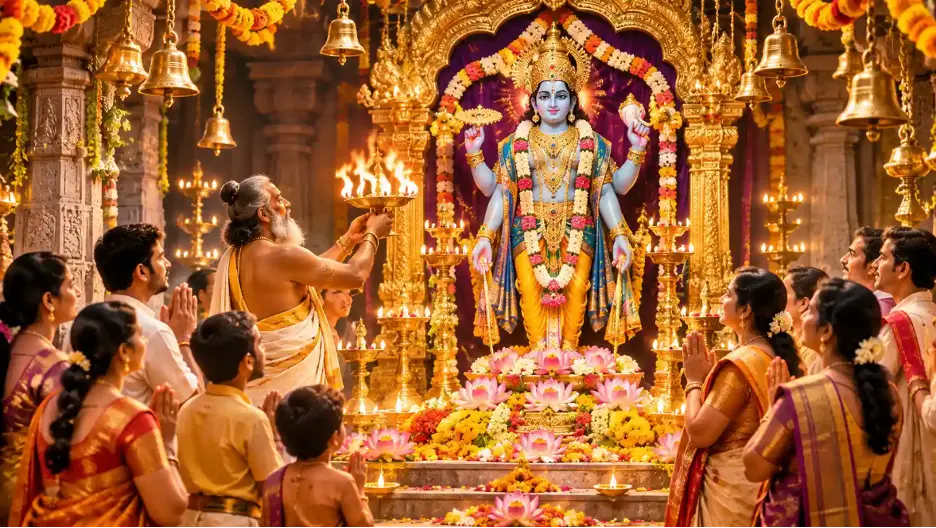
The celebration of Dev Uthani Ekadashi is distinguished by its affectionate and joyful awakening rituals.
As the sacred day unfolds, families prepare their worship spaces with flowers, lamps, and traditional decorations. Images or deity forms of Lord Vishnu are adorned with fresh garments and ornaments, while offerings of fruits, sweets, and sacred water are arranged before the altar.
In many households, the ceremonial awakening takes place amid the melodious chanting of mantras and traditional songs.
One of the most beloved refrains is:
"Utho Deva, Baitho Deva, Anguriya Chatkao Deva."
The words lovingly invite the Lord to awaken, sit up, and stir from His divine repose.
What makes this tradition especially beautiful is the intimacy it expresses. The Supreme Lord, revered as the sustainer of countless universes, is affectionately welcomed as a beloved member of the family.
Such expressions reflect the tenderness of Bhakti, in which devotion is enriched by a personal relationship with God.
The sounding of the conch, known as the shankh, is another cherished element of the celebration. Its resonant sound is traditionally associated with auspiciousness and the invocation of divine presence.
As bells ring and lamps illuminate the altar, devotees chant the sacred names of Lord Vishnu.
Among the mantras commonly recited are:
Om Namo Narayanaya
This sacred invocation offers reverential salutations to Lord Narayana.
Om Namo Bhagavate Vasudevaya
This mantra expresses loving surrender and reverence toward Lord Vasudeva, the Supreme Divine.
Many devotees also recite the Vishnu Sahasranama, the celebrated hymn containing a thousand names of Lord Vishnu. Each name glorifies a divine attribute and offers an opportunity for contemplation.
The collective recitation of these sacred names creates an atmosphere of reverence and unity, bringing families and communities together in devotion.
The beauty of these ceremonies lies in their ability to engage the senses in worship. The eyes behold the illuminated altar, the ears receive sacred chants, the hands offer flowers, and the mind turns toward the Lord.
In this way, the awakening ceremony becomes a joyful expression of love for the Divine.
Geru Footprints and Sugarcane Canopies: The Artistic Beauty of Devotion
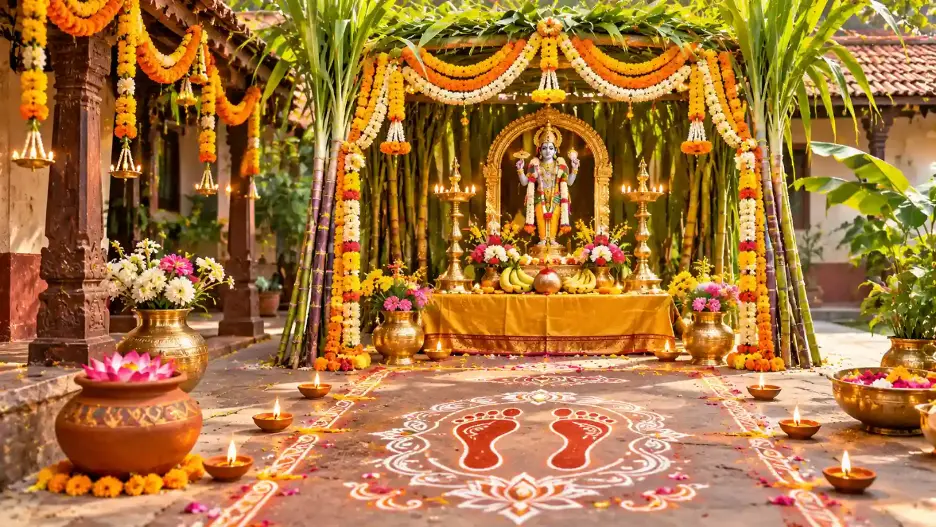
The traditions of Dev Uthani Ekadashi extend beyond temple worship into the courtyards and entrances of Hindu homes, where devotional artistry creates a welcoming atmosphere.
In several regions, families decorate their homes using geru, a natural reddish earth pigment traditionally used for auspicious floor designs.
Beautiful rangoli patterns, rice flour decorations, and symbolic footprints of Lord Vishnu may be drawn near the entrance or in the worship area.
The footprints represent the heartfelt desire to welcome the Lord's blessings into the home.
They also convey a simple but meaningful idea: a dwelling becomes truly auspicious when its atmosphere is enriched by peace, kindness, and divine remembrance.
Another distinctive custom involves preparing a small canopy or mandap using sugarcane stalks.
The sugarcane is arranged around the worship space, often accompanied by seasonal fruits, flowers, and traditional offerings.
Closely associated with agricultural abundance, sugarcane symbolizes sweetness, nourishment, and gratitude for nature's generosity.
Its presence during the festival reflects an appreciation for the blessings that sustain life, including fertile soil, rainfall, sunlight, and the fruits of human effort.
The custom also connects spiritual celebration with the seasonal rhythms of Indian agricultural life.
For children, these preparations become an especially delightful part of the festival. Helping arrange flowers, decorate the mandap, or create colorful floor patterns allows them to experience religious traditions through creativity and participation.
Such shared moments preserve cultural heritage while nurturing an atmosphere of devotion within the family.
Dev Uthani Ekadashi Fasting: The Spiritual Purpose of Vrat
Fasting, or vrat, is an important observance of Dev Uthani Ekadashi and holds a special place in Vaishnava spiritual traditions.
While fasting involves regulating food intake, its deeper purpose is to encourage self-control, simplicity, and greater engagement in divine remembrance.
The senses naturally seek comfort and satisfaction. By voluntarily practicing restraint, devotees develop the ability to rise above habitual impulses and direct their attention toward spiritual pursuits.
The inner attitude accompanying the vrat is equally important.
Fasting becomes spiritually meaningful when devotees also practice restraint in speech, avoid unnecessary conflict, and devote time to prayer, meditation, and scriptural study.
A person who abstains from food but continues to indulge in anger, pride, or harsh criticism may miss the higher purpose of the observance.
The vrat is meant to create a more receptive and disciplined state of mind.
The Dev Uthani Ekadashi Vrat Katha: A Story of Unwavering Faith
Sacred festivals in Hindu tradition are often accompanied by devotional stories that communicate spiritual ideals through memorable characters and extraordinary events.
One widely narrated Dev Uthani Ekadashi vrat katha tells of a righteous king whose devotion to Lord Vishnu remained steadfast even during a difficult test of faith.
The king was deeply committed to observing Ekadashi and encouraged religious discipline throughout his kingdom.
One day, an exceptionally beautiful woman entered his life. The king wished to marry her, but she agreed only after he promised to honor the conditions she placed before him.
For some time, their life continued peacefully.
When Ekadashi arrived, however, the woman challenged the king's commitment to his sacred observance and demanded that he abandon the fast.
The king found himself facing a painful conflict between his earlier promise and the religious principles he had faithfully followed.
In some traditional versions of the story, the test becomes even more severe through an unacceptable demand involving the king's son.
Despite the extraordinary circumstances, the king remains committed to his faith.
At the decisive moment, divine intervention reveals the nature of the trial, and the blessings of Lord Vishnu protect the devoted family.
The narrative concludes by honoring faith, sincerity, and steadfast commitment to righteousness.
Its deeper message concerns moral courage, discernment, and the importance of remaining guided by spiritual values, not the justification of harm.
The king's experience reflects the difficult choices that can arise in human life when convenience, attachment, or external pressure conflicts with one's principles.
The story reminds devotees that faith acquires strength through sincerity and that the path of righteousness requires both wisdom and courage.
"Faith shines most beautifully when the heart remains anchored in righteousness amid life's uncertainties."
Tulsi Vivah: The Sacred Union of Divine Love and Devotion
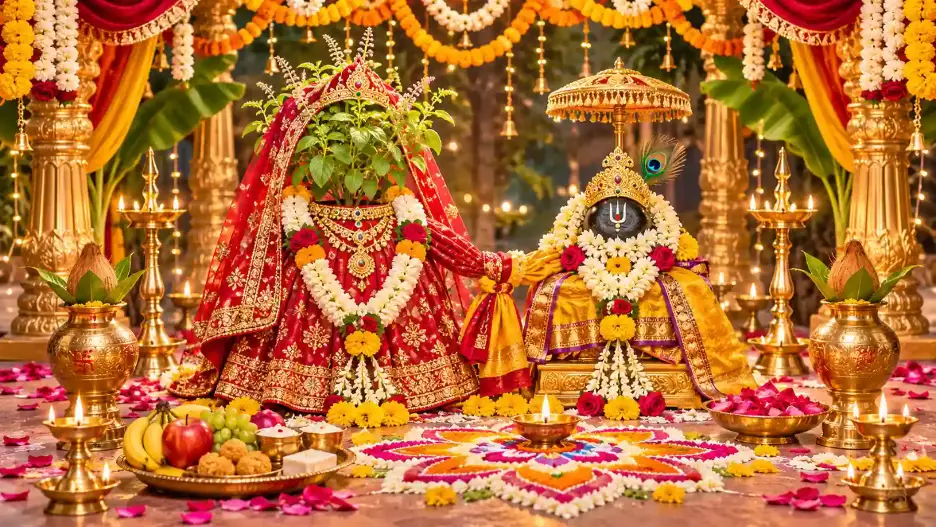
One of the most cherished celebrations associated with Dev Uthani Ekadashi is Tulsi Vivah, the ceremonial marriage of Tulsi Devi with Lord Vishnu, commonly represented by the sacred Shaligram Shila or, in some traditions, the deity form of Shree Krishna.
In 2026, Tulsi Vivah is listed for Saturday, November 21, according to the New Delhi calendar. However, traditions vary, and some communities celebrate the ceremony on different auspicious days between Prabodhini Ekadashi and Kartik Purnima.
Tulsi Devi occupies an exceptionally revered position in Vaishnava devotional culture.
Her leaves are lovingly offered in the worship of Lord Vishnu and Shree Krishna, and her sacred presence symbolizes purity, fidelity, surrender, and selfless devotion.
The celebration of Tulsi Vivah transforms this reverence into a beautiful ceremonial expression.
The Tulsi plant is adorned with colorful fabric, fragrant flowers, and traditional ornaments. A decorated mandap is prepared, lamps are illuminated, and the Shaligram or image of the Lord is placed nearby.
Families gather to perform prayers and sing devotional songs, while traditional wedding customs create an atmosphere of joyful celebration.
The sacred narratives associated with Tulsi Devi are preserved in various Puranic traditions.
One well-known account connects her with Vrinda, whose devotion and fidelity form an important part of the story involving Jalandhara. Through a sequence of extraordinary events, Vrinda becomes associated with the sacred Tulsi plant, while Lord Vishnu is revered in connection with the Shaligram form.
Other Vaishnava traditions emphasize Tulsi Devi's eternal loving relationship with the Supreme Lord.
Although the narrative details differ, the devotional message remains deeply moving.
Tulsi Devi represents the heart wholly dedicated to God.
Her devotion is remembered as an expression of love that seeks neither worldly recognition nor personal reward.
Tulsi Vivah therefore becomes much more than a symbolic marriage ceremony. It celebrates the sacred relationship between the devotee and the Divine.
The occasion also inspires reflection upon the qualities that make human relationships harmonious.
Love finds its highest beauty when accompanied by patience, compassion, mutual respect, and the willingness to serve without selfish expectation.
Through the celebration of Tulsi Vivah, these timeless values are honored in a setting filled with warmth, devotion, and family togetherness.
The Return of Auspicious Beginnings: Weddings, Griha Pravesh, and New Ventures
Dev Uthani Ekadashi is traditionally associated with the resumption of auspicious ceremonies in many Hindu communities.
During Chaturmas, certain families and regional traditions postpone major celebrations, particularly weddings. With the symbolic awakening of Lord Vishnu, the period of restraint gives way to a season of joyful and auspicious beginnings.
The connection between Dev Uthani Ekadashi and marriage has special significance.
In Hindu tradition, marriage is regarded as a sacred commitment that brings two individuals together in a shared journey of responsibility, mutual support, and dharmic living.
The period following Dev Uthani Ekadashi is considered favorable for renewed wedding celebrations in many communities, although specific wedding muhurats must still be selected according to the relevant Panchang and family customs.
Similarly, Griha Pravesh ceremonies are performed to seek divine blessings when entering a new home.
Such occasions express the hope that the household will be filled with harmony, prosperity, good health, and spiritual well-being.
A home becomes truly blessed not merely through material comforts but through the love, understanding, and virtue cultivated by those who live within it.
Devotees may also regard the season following Dev Uthani Ekadashi as an encouraging time to undertake constructive new endeavors.
Beginning an educational journey, launching a professional initiative, or taking on a meaningful responsibility can become spiritually uplifting when accompanied by sincere prayer and ethical intention.
The Bhagavad Gita, Chapter 9, Verse 27, teaches the importance of offering one's actions to the Supreme Lord.
This principle reminds us that the highest form of auspiciousness is not determined solely by an external date. It also arises from the purity of purpose with which an action is undertaken.
When efforts are guided by honesty, compassion, and divine remembrance, worldly responsibilities become opportunities for spiritual growth.
Thus, the season of auspicious beginnings reflects the joyful renewal celebrated on Dev Uthani Ekadashi and inspires devotees to welcome new chapters of life with faith and gratitude.
Bringing the Blessings of Dev Uthani Ekadashi into Everyday Life
The beauty of a sacred festival is most deeply experienced when its inspiration continues beyond the day of celebration.
The prayers offered during Dev Uthani Ekadashi, the wisdom contemplated during Chaturmas, and the devotion expressed through traditional rituals can become guiding influences in everyday life.
Beginning the morning with a few moments of prayer creates an opportunity to remember God before the demands of the day take hold.
Reading the Bhagavad Gita, listening to satsang, or practicing Roop Dhyan can help cultivate clarity and spiritual awareness amid ordinary responsibilities.
Similarly, acts of selfless service allow devotion to find practical expression.
A kind gesture toward someone in difficulty, a patient response during disagreement, or an honest decision made despite personal inconvenience can reflect the values strengthened through spiritual practice.
The Bhagavad Gita teaches that worldly actions can become spiritually elevating when performed in a spirit of dedication to God.
This understanding makes devotion accessible amid family life, professional duties, and community service.
Rather than viewing spirituality as something separate from daily existence, devotees can gradually learn to approach their responsibilities with greater mindfulness and a spirit of offering.
The festival also inspires gratitude for the blessings that are easily overlooked.
The support of loved ones, opportunities for meaningful work, the beauty of nature, and the privilege of pursuing spiritual knowledge are all occasions for appreciating divine grace.
Such awareness enriches life with contentment and helps reduce the tendency to measure happiness entirely through external success.
In this way, Dev Uthani Ekadashi encourages a lasting spiritual renewal, one that finds expression through thoughts, relationships, and actions guided by devotion.
Conclusion: Welcoming Divine Grace, Prosperity, and Spiritual Renewal
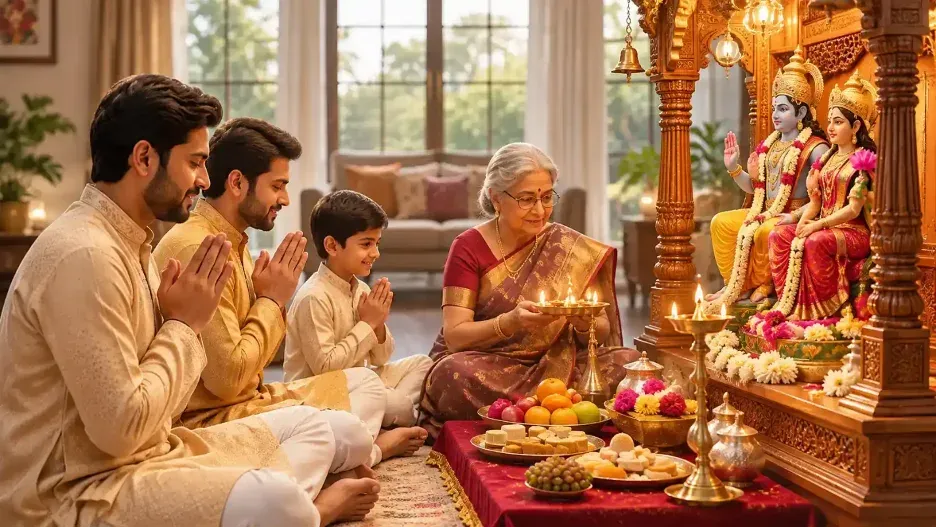
Dev Uthani Ekadashi 2026 brings together the beauty of sacred tradition and the timeless wisdom of Bhakti.
The magnificent vision of Lord Vishnu resting upon Ananta Shesha reminds devotees of eternal peace and divine sovereignty of the Supreme Lord. The conclusion of Chaturmas celebrates the fruits of spiritual discipline, while the awakening rituals express the affectionate relationship between God and His devotees.
The sacred observance of Ekadashi encourages self-control and prayer, and Tulsi Vivah honors the purity of unwavering love and surrender.
Together, these traditions create a celebration filled with spiritual meaning, cultural richness, and devotional joy.
As homes and temples glow with the radiance of sacred lamps, may the festival inspire renewed faith and a deeper appreciation of the Divine.
May the blessings of Lord Vishnu bring harmony into our relationships, wisdom into our decisions, and compassion into our hearts.
Above all, may this sacred occasion strengthen our desire to live in loving remembrance of God.
"May every lamp lit in devotion remind us that the brightest light is the love of God shining within the heart."
May Dev Uthani Ekadashi 2026 bless every home with peace, prosperity, spiritual wisdom, and the eternal grace of Lord Vishnu.
Jai Shree Hari! Jai Shree Krishna!
Frequently Asked Questions About Dev Uthani Ekadashi 2026
When is Dev Uthani Ekadashi in 2026?
Dev Uthani Ekadashi falls on Friday, November 20, 2026, according to the principal Panchang observance for New Delhi and Dallas, Texas. Specific fasting conventions may differ among Vaishnava traditions.
Why does Lord Vishnu sleep for four months?
According to Hindu sacred tradition, Lord Vishnu enters Yoga Nidra on Devshayani Ekadashi and symbolically awakens on Dev Uthani Ekadashi. His divine repose represents a sacred celestial pastime and is associated with the four-month period known as Chaturmas.
What is the significance of Prabodhini Ekadashi?
Prabodhini Ekadashi celebrates the awakening of Lord Vishnu and the traditional conclusion of Chaturmas. It is spiritually significant because it encourages devotees to cultivate wisdom, self-discipline, and loving remembrance of God.
How is Dev Uthani Ekadashi celebrated?
Devotees celebrate the festival through prayers, fasting, chanting of Lord Vishnu's names, lighting diyas, traditional awakening songs, and the ceremonial worship of Lord Vishnu. In some regions, homes are decorated with geru footprints and sugarcane canopies.
What is the connection between Dev Uthani Ekadashi and Tulsi Vivah?
Tulsi Vivah is celebrated in close association with Dev Uthani Ekadashi. It commemorates the ceremonial marriage of Tulsi Devi and Lord Vishnu, often represented by Shaligram or Shree Krishna, and symbolizes purity, devotion, and selfless divine love.