
Gopashtami 2026, observed on Tuesday, November 17, is a sacred occasion that celebrates Shri Krishna's extraordinary love for cows and the timeless tradition of Gau Seva (service to cows). Rooted in the divine pastimes of Braj, this festival offers devotees an opportunity to remember Krishna as Gopal, the beloved cowherd of Vrindavan, while reflecting on the spiritual values of compassion, humility, gratitude, and selfless service.
For followers of the bhakti tradition, Gopashtami is much more than a day dedicated to cow worship. It reminds us of the intimate relationship between Shri Krishna and the cows of Braj and encourages us to cultivate the same spirit of loving care in our own lives. Through the teachings of Swami Mukundananda and the devotional philosophy of JKYog, we can also understand how acts of service become meaningful spiritual practices when performed with the desire to please God. By combining Gau Seva with kirtan, Roopdhyan meditation, and loving remembrance of Shri Krishna, Gopashtami becomes an opportunity to deepen our devotion and bring the principles of bhakti into everyday life.
When Is Gopashtami 2026?
Gopashtami will be celebrated on Tuesday, November 17, 2026, corresponding to Kartik Shukla Ashtami in the Hindu lunar calendar. The festival is especially significant in Mathura, Vrindavan, and the wider Braj region, where Shri Krishna spent His childhood performing divine pastimes with His cowherd friends and beloved cows.
Traditionally, devotees celebrate the occasion by worshipping cows and calves, offering them appropriate food and nourishment, decorating them with flowers, performing puja, and singing devotional bhajans in praise of Shri Krishna. Many also visit gaushalas to participate in Gau Seva and support the welfare of cows. At the heart of these observances is the desire to remember Krishna as Gopal and develop the qualities of compassion, gratitude, and loving service that He exemplified.
The Divine Significance of Gopashtami: When Krishna Became Gopal
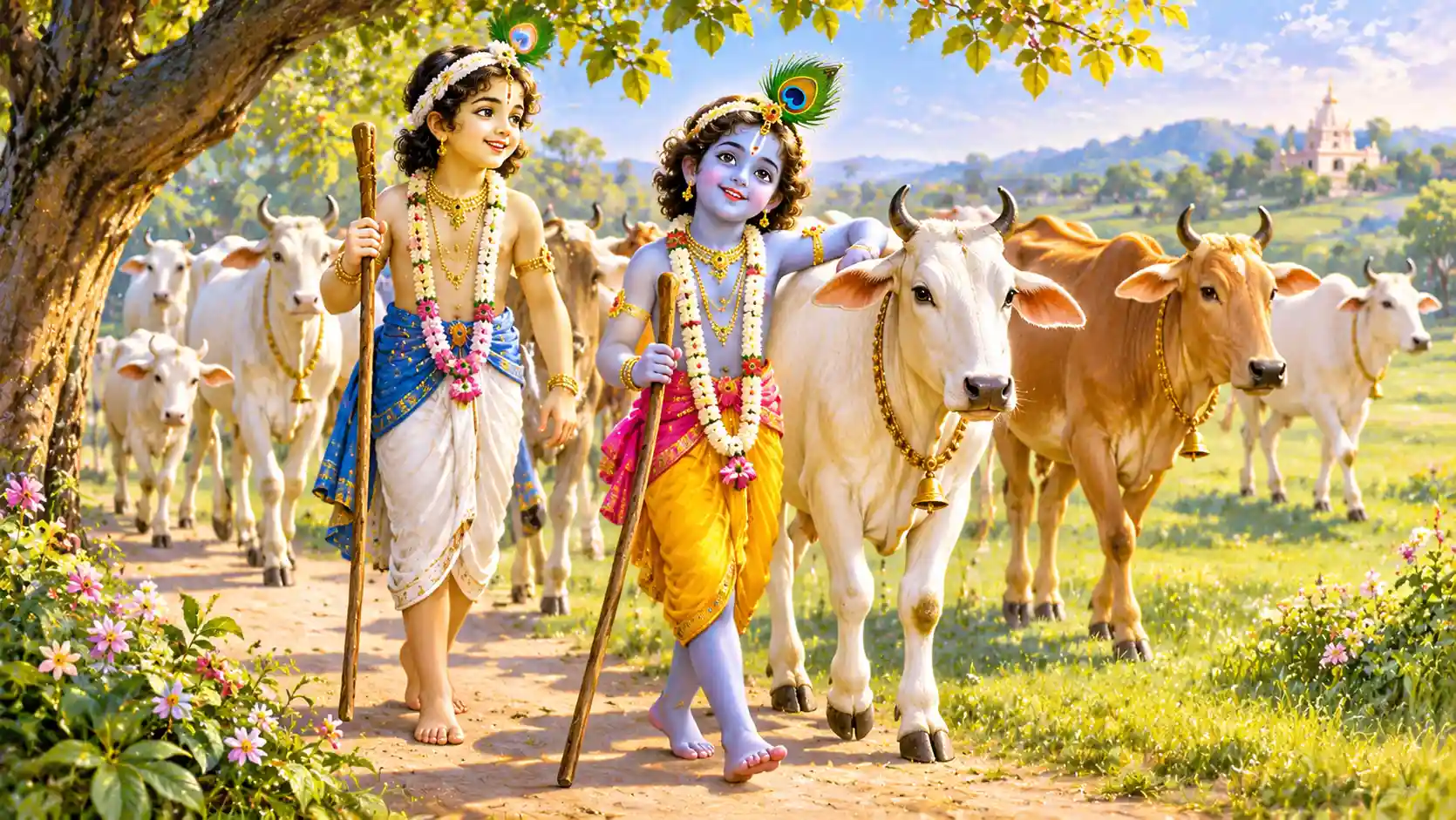
One of the most endearing aspects of Shri Krishna's childhood in Vrindavan was His affection for cows. The Shrimad Bhagavatam describes how Krishna and His elder brother, Balram, initially spent their days tending calves. When They entered the age of paugaṇḍa, traditionally understood as approximately six to ten years, the elders of Braj permitted Them to take care of the full-grown cows. This transition is commemorated through the festival of Gopashtami.
The thought of Krishna walking through the enchanting forests of Vrindavan with His beloved cows is one of the most beautiful images in the devotional tradition. Adorned with a peacock feather, dressed in yellow silk garments, and carrying His flute and herding stick, He would wander through the forests accompanied by His cowherd friends. The melodious notes of His flute would enchant the birds, animals, and every living creature, while the cows lovingly gathered around Him, responding to His affectionate calls.
For Shri Krishna, caring for cows was not simply a childhood responsibility; it was an expression of His boundless love. Although He is the Supreme Lord and the source of all creation, He delighted in tending to these gentle creatures, ensuring their comfort and protection. His divine pastimes reveal that true greatness is not expressed through power or status alone but through unlimited love and the willingness to serve.
Krishna is therefore lovingly known by names such as Gopal, the protector of cows, and Govinda, the one who gives joy to the cows and the senses. These names remind devotees of His tender relationship with the residents of Braj and invite us to contemplate the sweetness of His divine personality.
Why Are Cows So Dear to Shri Krishna?
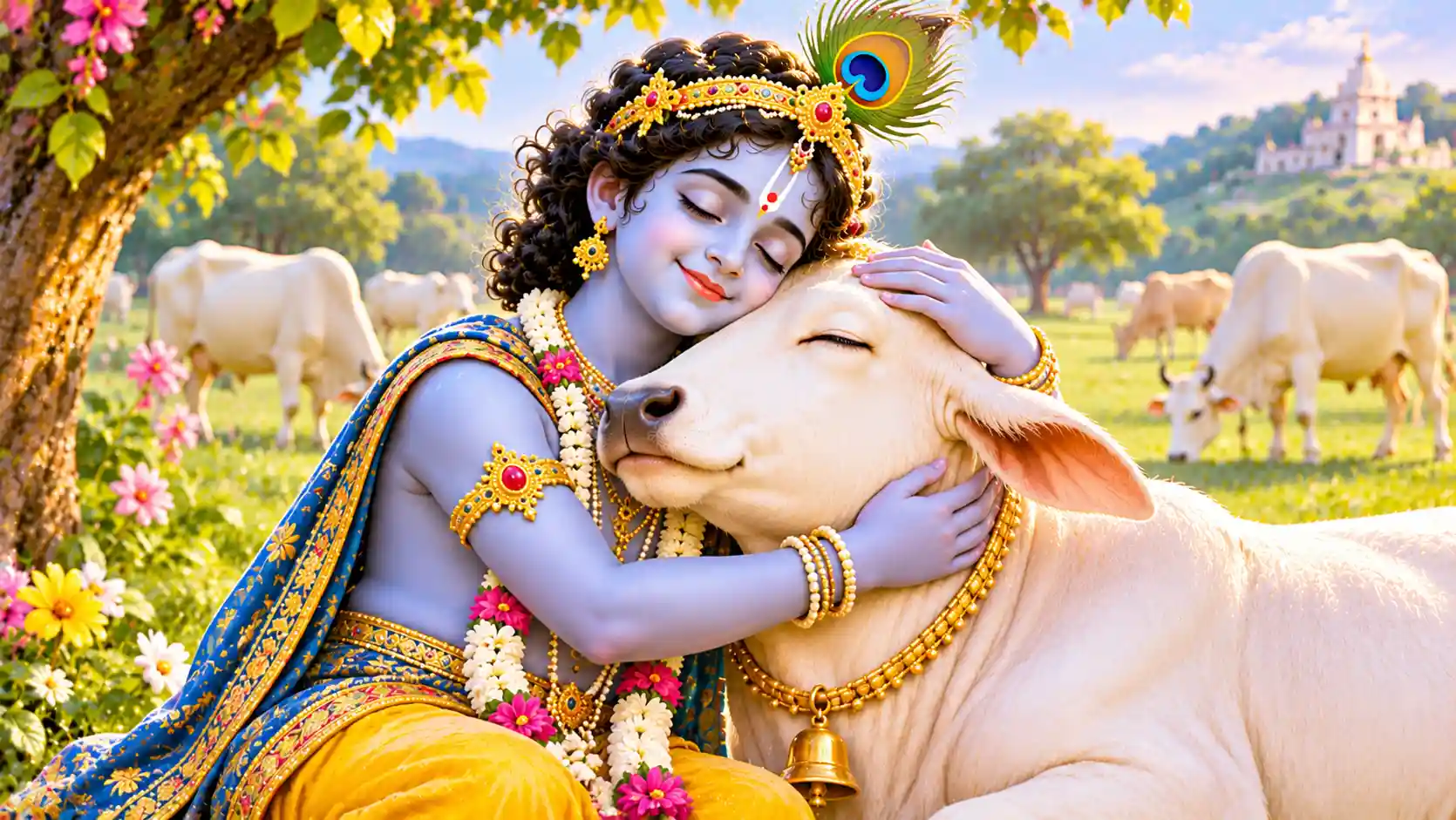
In the Vedic tradition, cows are revered as symbols of nourishment, generosity, gentleness, and compassion. They have supported human communities for generations through their contributions to agriculture and rural life, and their nurturing nature has inspired deep respect across Indian culture. However, their spiritual significance extends beyond their practical contributions because of their special association with Shri Krishna.
Krishna's affection for cows reveals an important dimension of His divine personality. He chose to spend His childhood among the cowherds of Braj, sharing their simple way of life and delighting in the company of His beloved animals. His example encourages us to approach the natural world with gratitude and reverence rather than treating living beings merely as resources for our benefit.
For spiritual seekers, this relationship offers an opportunity to cultivate a compassionate heart. Respecting and caring for cows becomes an expression of gratitude toward God and a practical way to develop kindness toward all living beings. Gopashtami therefore reminds us that devotion should not remain confined to temples and rituals but should also influence how we treat the world around us.
Gau Seva: Serving Cows as an Offering to God
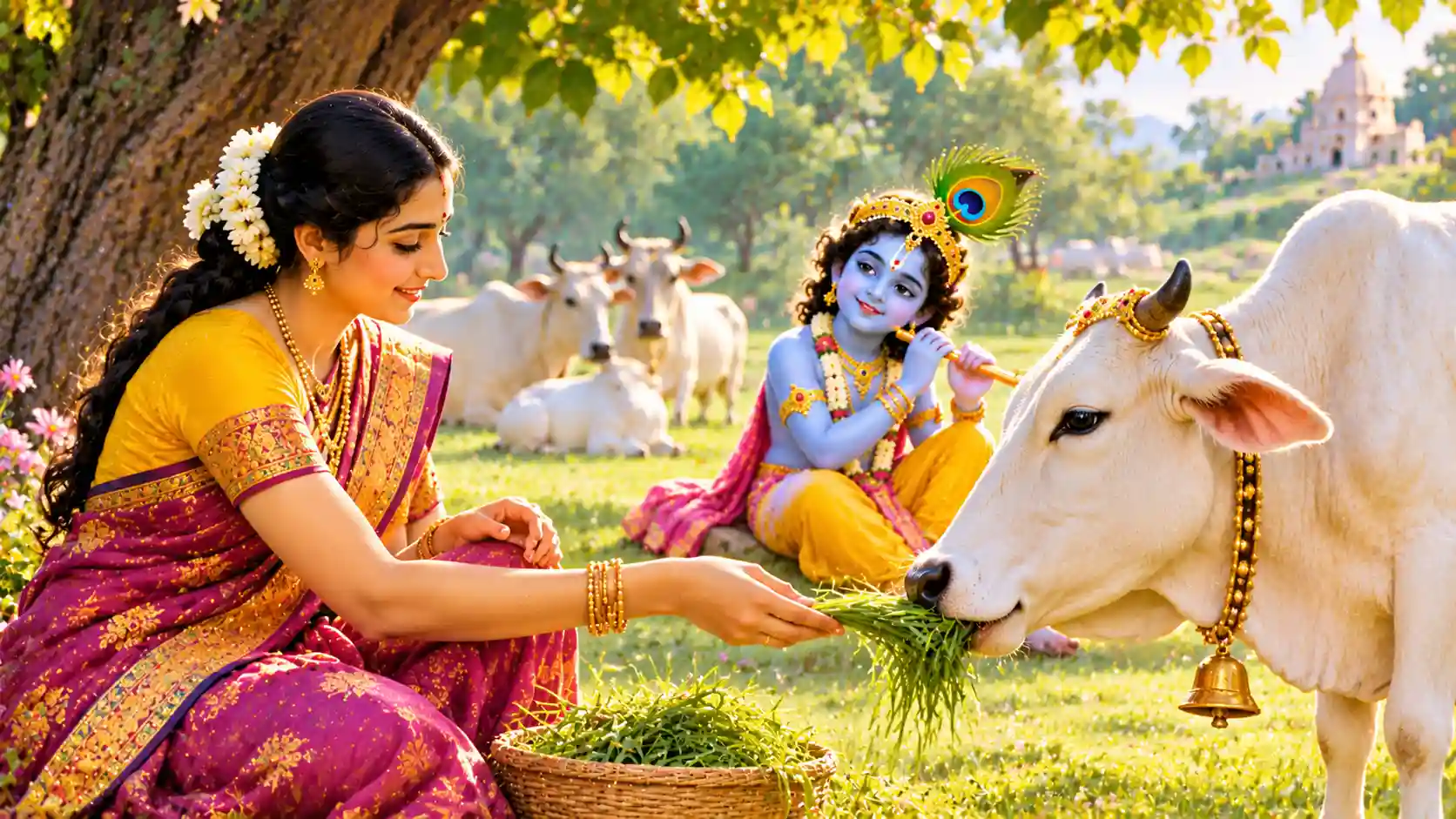
Gau Seva, or service to cows, is one of the most cherished traditions associated with Gopashtami. Devotees may participate by providing suitable food and water, maintaining clean shelters, supporting veterinary care, or contributing to the welfare of abandoned and rescued cows. Yet, from the perspective of bhakti, the deeper significance of Gau Seva lies not merely in the external act of helping but in the loving intention behind it.
Swami Mukundananda emphasizes that the ultimate purpose of devotion is to develop selfless love for God. Rather than approaching religious practices as a means of obtaining material rewards, devotees should cultivate the desire to please the Lord through their thoughts, words, and actions. This principle of nishkam bhakti, or selfless devotion, transforms ordinary service into a spiritual offering.
When we care for a cow with the loving thought that we are serving one of Shri Krishna's beloved companions, the action becomes an expression of our devotion to Him. We can offer our time, resources, abilities, and efforts without expecting recognition or personal benefit. This attitude gradually reduces selfishness, strengthens humility, and helps us recognize that everything we possess is ultimately a gift from God.
JKYog's teachings encourage devotees to engage in seva through tan, man, and dhan—body, mind, and resources. This means Gau Seva is not limited to those who can physically visit a goshala or make financial contributions. We can support responsible cow-care initiatives, volunteer professional skills, encourage others to practice compassion, and offer sincere prayers for the welfare of living beings. What matters most is the devotional intention with which the service is performed.
There is an important distinction between performing an act of charity and offering devotional seva. Both may benefit others, but in bhakti, the devotee consciously performs the action to please God. Instead of thinking, "I am doing something wonderful by helping," we cultivate the understanding, "God has graciously given me the opportunity to serve." This shift from personal achievement to loving offering is an essential step toward selfless devotion.
Shri Krishna's Divine Pastimes with the Cows: Lessons in Loving Service
The Shrimad Bhagavatam, particularly Canto 10, Chapter 15, beautifully describes Krishna's excursions into the forests of Vrindavan with His cowherd friends and beloved cows. These pastimes reveal the extraordinary sweetness of His personality and the loving relationships He shares with His devotees.
Imagine the morning sun illuminating the forests of Braj as Krishna walks along the forest paths, His peacock feather adorning His crown and His flute filling the atmosphere with enchanting melodies. His cows follow Him affectionately while His friends accompany Him, enjoying playful conversations and the beauty of nature. Sometimes Krishna calls the cows by their individual names, and at other times He plays His flute, captivating every living creature fortunate enough to hear it.
These pastimes remind us that Shri Krishna is not merely a distant object of worship but a loving friend, caring protector, and the beloved of the residents of Braj. His relationship with the cows, cowherd boys, and Gopis reveals the sweetness of intimate devotion, in which the devotee experiences God through a personal relationship filled with affection and surrender.
Swami Mukundananda encourages devotees to cultivate this loving connection by remembering God's divine names, forms, qualities, pastimes, and abodes. The more we contemplate Krishna's loving nature, the more naturally our minds become attracted to Him. Gopashtami provides a particularly beautiful opportunity to meditate on this aspect of His personality and reflect on how we can bring similar qualities of affection and selflessness into our own lives.
Roopdhyan Meditation: Experiencing Krishna's Loving Pastimes Within the Heart
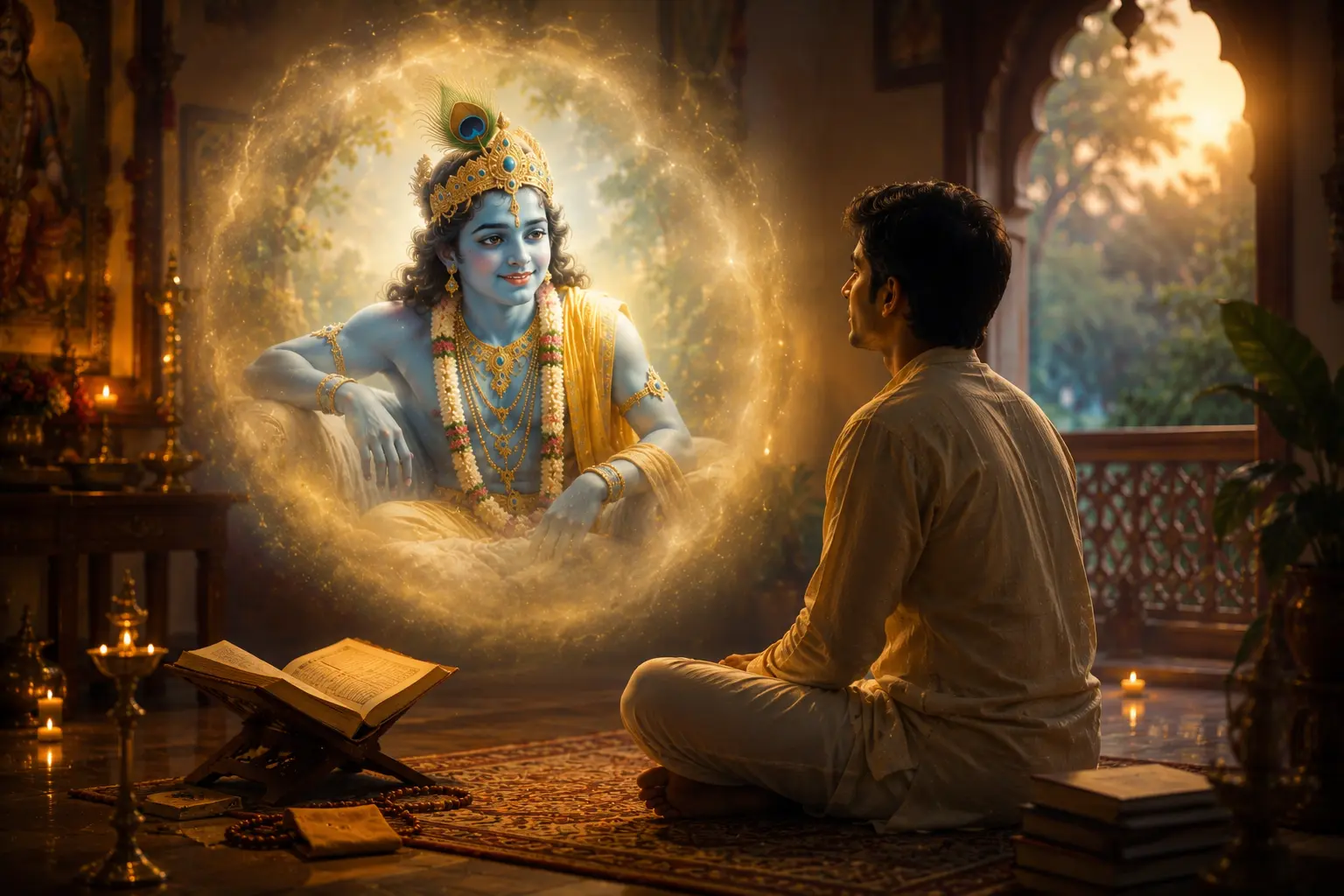
An important aspect of Swami Mukundananda's teachings is Roopdhyan meditation, a practice that helps devotees lovingly focus their minds on the divine form of God. The word Roop means form, while Dhyan means meditation or contemplation. Roopdhyan involves visualizing and meditating upon the beautiful divine form of Shri Radha Krishna, allowing the mind to become absorbed in Their names, qualities, and pastimes.
Swamiji explains that the mind becomes attached to whatever it repeatedly contemplates. When our thoughts remain occupied with worldly anxieties, desires, and disappointments, our minds naturally become absorbed in temporary concerns. However, by consciously directing our thoughts toward God, we gradually purify the mind and strengthen our loving relationship with Him. Roopdhyan provides a practical way to develop this divine attachment.
Gopashtami offers a beautiful subject for such meditation. During your practice, gently close your eyes and imagine Shri Krishna walking through the enchanting forests of Vrindavan. Visualize His beautiful dark-blue complexion, yellow silk garments, peacock feather, and charming smile as He plays His flute. Picture His beloved cows surrounding Him, His cowherd friends accompanying Him, and the entire forest filled with the sweetness of His divine presence.
Rather than observing this scene as a distant spectator, try to develop a personal connection with the Lord. You may imagine yourself offering Him flowers, helping care for His cows, or sitting nearby and listening to His flute. Allow your mind to dwell on His kindness and tenderness, gently bringing it back whenever it becomes distracted. The purpose is not to create a perfect mental picture but to cultivate loving remembrance.
Roopdhyan can also deepen the spirit of Gau Seva. Before caring for cows or contributing to their welfare, spend a few moments remembering Shri Krishna as Gopal. Perform the service with the thought that you are lovingly serving something dear to Him, and conclude by offering gratitude for the opportunity. In this way, meditation and action become interconnected: remembrance inspires service, and service strengthens remembrance.
Devotees can explore JKYog's guided Roopdhyan meditation resources to develop a regular practice based on Swami Mukundananda's teachings.
Kirtan: Singing the Glories of Shri Krishna and Gopal
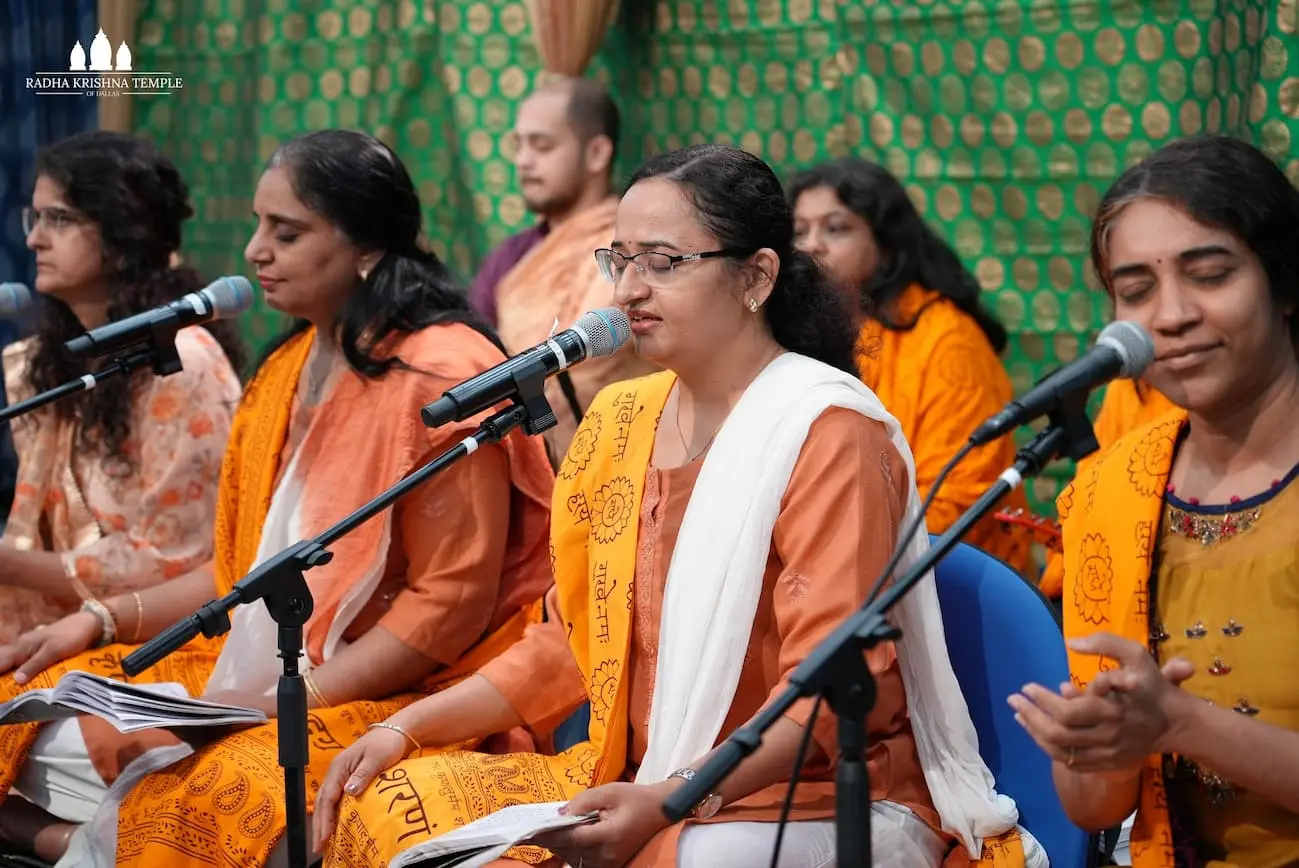
Another beautiful way to celebrate Gopashtami is through kirtan, the devotional singing of God's names and glories. For centuries, bhajan and kirtan have been central to India's bhakti traditions, offering devotees a joyful way to engage their minds in divine remembrance. Rather than treating music merely as entertainment, the devotional tradition uses it as a means of awakening loving sentiments toward God.
Swami Mukundananda emphasizes the importance of combining devotional chanting with Roopdhyan. As we sing Krishna's names, we can simultaneously contemplate His divine form and pastimes, giving the mind both an auditory and visual focus for loving remembrance. This combination helps us move beyond mechanical chanting and develop a deeper emotional connection with the Lord.
During Gopashtami, devotees can sing bhajans celebrating Krishna's childhood pastimes, His affection for the cows, and His enchanting presence in Vrindavan. Devotional names and chants such as Gopal Krishna, Govinda Damodara Madhaveti, and the Hare Krishna Mahamantra are beautiful ways to immerse the mind in His remembrance.
Kirtan also brings families and spiritual communities together. Children can learn Krishna's names, elders can share traditional bhajans, and devotees of different generations can experience the joy of collective worship. Most importantly, the purpose is not to demonstrate musical ability or impress an audience but to offer our voices and hearts to God. When singing becomes an expression of sincere devotion, even a simple melody can become a beautiful act of bhakti.
How to Celebrate Gopashtami 2026: Bringing Devotion into Daily Life
Gopashtami can be observed through traditional worship as well as meaningful acts of service. Begin the day by offering prayers to Shri Krishna as Gopal, expressing gratitude for His divine grace and remembering His loving pastimes with the cows of Braj. If possible, visit a reputable goshala to participate in Gau Puja, offer flowers, and contribute toward the animals' care, always keeping their comfort and safety in mind.
You can also make the occasion meaningful through kirtan, devotional reading, and Roopdhyan meditation. Reading or listening to the descriptions of Krishna's childhood pastimes in the Shrimad Bhagavatam, especially Canto 10, Chapter 15, provides an opportunity to reflect on the beautiful relationship between Krishna, His friends, and the cows. Families can sing bhajans together and encourage children to learn about the values of compassion, gratitude, and selfless service.
Perhaps the most meaningful observance is to extend Gau Seva beyond the festival itself. Supporting responsible goshala initiatives, contributing toward veterinary care, and encouraging compassionate treatment of animals can become regular expressions of devotion. Those who cannot visit a goshala may still participate through donations, volunteering, or other practical contributions. The important thing is to ensure that our service genuinely benefits the animals and is performed with humility and love.
For families, Gopashtami is also an opportunity to introduce children to the devotional traditions of Sanatan Dharma. Stories about Krishna's affection for cows, devotional songs, and simple meditation practices can help younger generations develop an emotional connection with His divine pastimes. These experiences teach children that spirituality is not limited to temples or religious ceremonies; it is reflected in our everyday actions and the compassion we extend to others.
From Ritual to Transformation: Making Gau Seva a Way of Life
One of the most important lessons of Gopashtami is that spiritual practices should lead to inner transformation. It is possible to perform elaborate rituals while the mind remains absorbed in selfish desires, just as it is possible to perform acts of service without developing genuine humility or devotion. Swami Mukundananda's teachings encourage us to look beyond external activities and focus on purifying the mind through selfless love for God.
This transformation begins when we replace the sense of ownership with gratitude, recognizing that our wealth, abilities, and opportunities are gifts from the Divine. It continues when we perform service not for recognition or reward but with the sincere desire to please Shri Krishna. Most importantly, it deepens when remembrance of God becomes a natural part of everyday life rather than something reserved for festivals or formal prayer.
Gopashtami reminds us that devotion should influence how we work, care for our families, treat animals, and interact with the world around us. When we combine selfless service with Roopdhyan, kirtan, and constant remembrance of Krishna, we gradually transform ordinary activities into opportunities for spiritual growth. This is the essence of bringing bhakti into daily life.
Let Us Celebrate the Love of Gopal This Gopashtami
As Gopashtami 2026 approaches, let us remember the enchanting image of Shri Krishna walking through the forests of Vrindavan with His beloved cows. His divine pastimes teach us that true love expresses itself through care, humility, protection, and service. By celebrating this sacred relationship, we are encouraged to cultivate the same qualities in our own lives.
Through Gau Seva, we learn selflessness; through kirtan, we engage our minds in divine remembrance; and through Roopdhyan, we deepen our loving connection with Shri Krishna. Swami Mukundananda's teachings remind us that these practices become spiritually meaningful when performed with the sincere intention of pleasing God.
Let us make a resolution this Gopashtami to serve without expecting rewards, love without selfish motives, remember God with affection, and treat all living beings with kindness. May Shri Krishna bless us with the humility of His cowherd friends, the loving devotion of the residents of Braj, and the desire to dedicate our lives to His service.
Jai Shri Krishna! Jai Gopal!
Celebrate Gopashtami with JKYog
This Gopashtami, take a step toward deepening your relationship with Shri Krishna through devotion, meditation, kirtan, and selfless service. Explore the spiritual teachings and resources offered by JKYog under the guidance of Swami Mukundananda. Discover guided Roopdhyan meditation, deepen your understanding of bhakti, make devotional chanting part of your daily routine, and find meaningful ways to practice seva.
Visit JKYog's official website to explore its spiritual resources and teachings. You can also discover Roopdhyan Meditation and learn how to lovingly contemplate the divine form of Radha Krishna.
Let this Gopashtami become an opportunity to move beyond ritual observance and cultivate a deeper, more loving relationship with Gopal.
Frequently Asked Questions About Gopashtami 2026
1. When is Gopashtami in 2026?
Gopashtami will be celebrated on Tuesday, November 17, 2026, corresponding to Kartik Shukla Ashtami. Local observance and puja timings may vary according to location and the regional Hindu calendar.
2. Why is Gopashtami celebrated?
Gopashtami commemorates the divine pastime of Shri Krishna and Balram beginning to tend the full-grown cows of Braj after previously caring for calves. The festival celebrates Krishna's extraordinary love for cows and encourages devotees to practice compassion, gratitude, and selfless service.
3. What is the spiritual significance of Gau Seva?
Gau Seva means caring for and serving cows through appropriate nourishment, shelter, veterinary care, and protection. In bhakti, it becomes a devotional offering when performed with the sincere intention of pleasing Shri Krishna. It also helps cultivate humility, gratitude, and compassion.
4. What is the connection between Shri Krishna and cows?
Shri Krishna spent His childhood in Vrindavan caring for cows and calves alongside His cowherd friends. He is lovingly known as Gopal and Govinda, names that celebrate His affectionate relationship with cows and His role as their protector.
5. How can we celebrate Gopashtami at home?
Families can celebrate by offering prayers to Shri Krishna, performing Gau Puja where appropriate, singing devotional bhajans, reading the Shrimad Bhagavatam, practicing Roopdhyan meditation, and supporting responsible cow-welfare initiatives.
6. What is Roopdhyan meditation, and how is it connected to Gopashtami?
Roopdhyan is a devotional meditation practice taught by Swami Mukundananda in which devotees lovingly contemplate the divine form of God. On Gopashtami, devotees can visualize Shri Krishna in the forests of Vrindavan, surrounded by His beloved cows. This practice helps deepen loving remembrance and strengthen devotion.
7. Why is kirtan important during Gopashtami?
Kirtan involves singing God's names and glories. Singing devotional bhajans about Gopal and Govinda helps engage the mind in divine remembrance, creates an atmosphere of collective devotion, and encourages loving attachment to Shri Krishna.
8. What does Swami Mukundananda teach about selfless service?
Swami Mukundananda emphasizes that genuine seva is performed to please God rather than to obtain personal recognition or rewards. When we dedicate our actions, abilities, and resources to His service with humility and love, ordinary activities can become expressions of devotion.
9. How can we make Gau Seva a regular spiritual practice?
We can support trustworthy goshala initiatives, contribute toward veterinary care, provide appropriate nourishment, volunteer our time, and encourage compassionate treatment of animals. Performing these actions with gratitude and the desire to please Shri Krishna helps transform Gau Seva into a regular expression of bhakti.
10. What is the main message of Gopashtami?
The central message of Gopashtami is to cultivate the qualities exemplified by Shri Krishna through His divine pastimes: compassion, humility, gratitude, and selfless love. The festival reminds us that true devotion is expressed not only through worship but also through loving service to God and His creation.
References and Further Reading
- JKYog – Spiritual philosophy and teachings on divine love and devotion.
- JKYog Roopdhyan Meditation – Guided meditation based on Swami Mukundananda's teachings.
Editorial note: Gopashtami's date follows the North Indian Hindu calendar. Local puja timings should be confirmed using the appropriate regional panchang.