Gopi Prem: The Highest Expression of Divine Love
Every Janmashtami, millions of devotees celebrate the divine appearance of Shree Krishna, the Supreme Divine Personality, whose descent upon this earth was an act of infinite compassion for all souls. Temples resound with joyous kirtans, scriptures recount His enchanting pastimes, and devotees immerse themselves in the sweetness of His childhood leelas in Vrindavan. Yet among the countless stories of His divine life, none has captivated saints and spiritual seekers more profoundly than the extraordinary love of the gopis.
To view their relationship with Shree Krishna as a romantic tale is to miss its true significance. The love of the gopis is not a worldly emotion elevated to a spiritual plane; it is the soul's purest response to the Supreme Divine Personality.
It is love completely free from selfish desire, untouched by ego, and unconcerned with personal happiness. It seeks nothing except the joy of the Beloved.

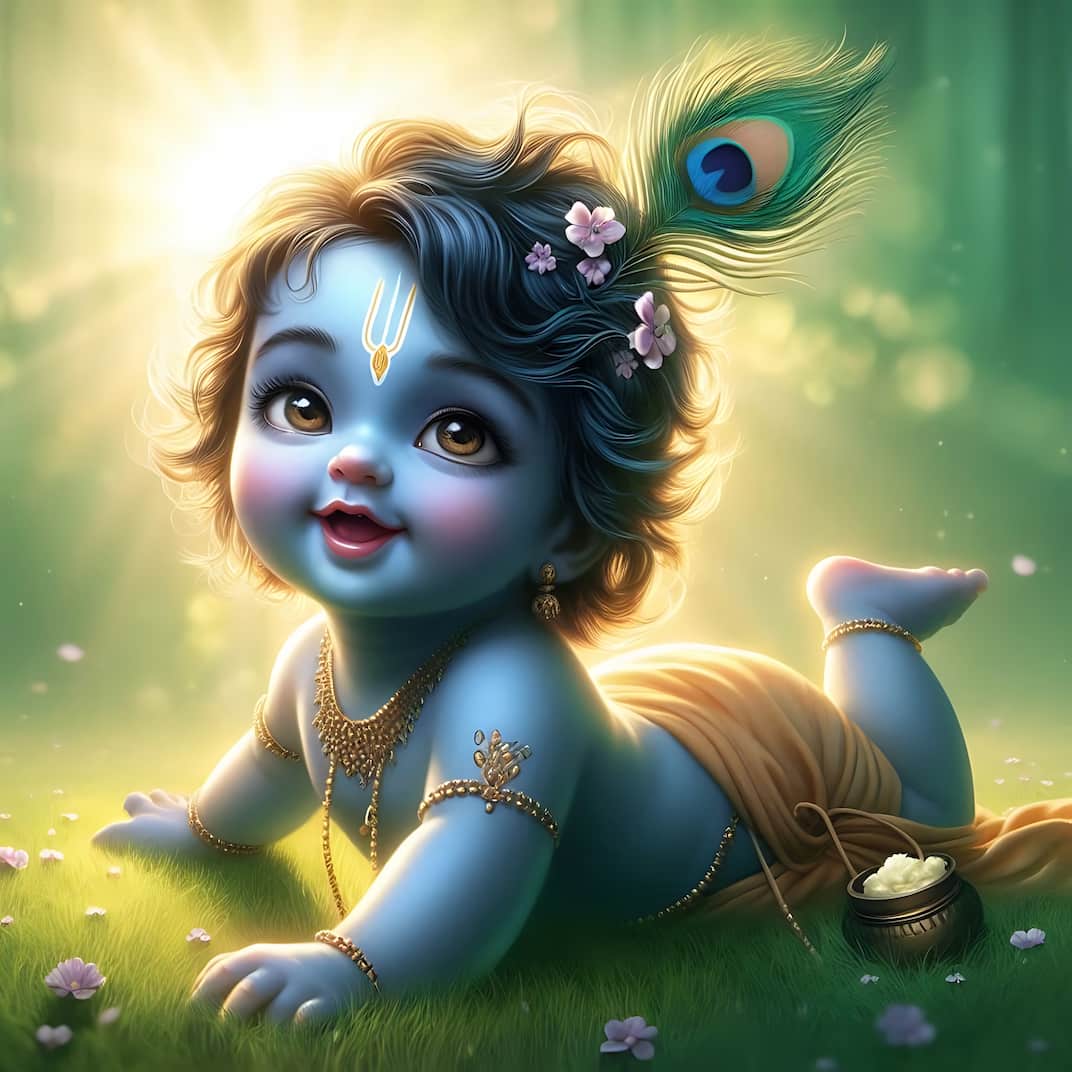
Among all the devotees of Shree Krishna, Srimati Radharani shines as the highest embodiment of this divine love. She is revered as the personification of Mahabhav, the supreme state of devotion: in which every thought, feeling, and breath exists solely for Shree Krishna's pleasure. Her love is so pure and so complete that it captivates even the all-attractive Lord Himself.

Swami Mukundananda explains that the ultimate goal of spiritual life is not merely freedom from suffering or liberation from the cycle of birth and death. These are by-products of the spiritual path. The highest destination is Prem Bhakti: pure, selfless love for God. This is the priceless treasure that the gopis of Vrindavan exemplify, making them the greatest teachers of devotion the world has ever known.
This Janmashtami, as we remember the beautiful pastimes of Shree Krishna, let us also discover why the love of the gopis remains the highest ideal of bhakti and what it can teach us about our own relationship with God.
Love That Seeks Only God's Happiness
Most relationships in the world are shaped, at least in part, by expectation. We naturally hope to receive affection, appreciation, support, or companionship in return for the love we give. Even when our intentions are noble, the desire for personal happiness quietly accompanies our actions.
The love of the gopis was entirely different.
They never approached Shree Krishna asking what He could do for them. They were interested only in one thing: His happiness. Their joy was inseparable from His joy, and their lives revolved around serving Him without the slightest thought of personal reward.
This is the essence of Nishkam Bhakti, devotion without selfish motive.
Shree Krishna reveals this principle in the Bhagavad Gita when He says:
यत्करोषि यदश्नासि यज्जुहोषि ददासि यत् ।
यत्तपस्यसि कौन्तेय तत्कुरुष्व मदर्पणम् ॥ 27॥
yat karoṣhi yad aśhnāsi yaj juhoṣhi dadāsi yat
yat tapasyasi kaunteya tat kuruṣhva mad-arpaṇam
BG 9.27: Whatever you do, whatever you eat, whatever you offer as oblation to the sacred fire, whatever you bestow as a gift, and whatever austerities you perform, O son of Kunti, do them as an offering to Me.
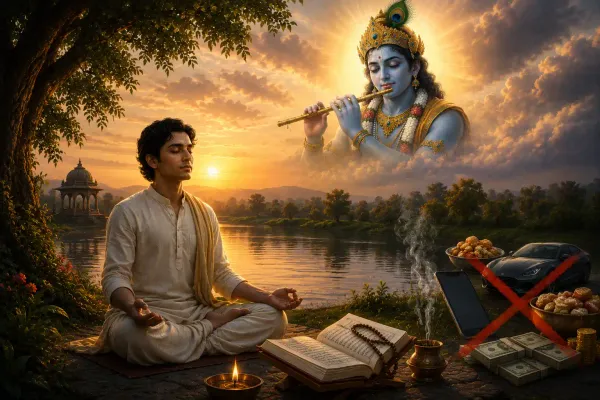
This verse reminds us that God is less concerned with the action itself than with the consciousness behind it. A simple act, when offered with love, becomes infinitely more valuable than the grandest achievement performed for personal gain.
The gopis never sought liberation, heavenly pleasures, or even recognition as great devotees. Their only aspiration was to please Shree Krishna. In their eyes, His smile was the greatest reward, and His happiness was the fulfilment of every desire.
Jagadguru Shri Kripaluji Maharaj taught that this is the true definition of divine love. Love is not measured by how intensely we feel; it is measured by how completely we forget ourselves for the happiness of the Beloved.
This is why the gopis are remembered not for miraculous powers or philosophical brilliance, but for the extraordinary purity of their hearts.
Love That Never Forgets

A mother naturally thinks of her child throughout the day, regardless of where she is or what she is doing. In the same way, when devotion matures, remembrance of God becomes effortless because the heart naturally returns to the One it loves most.
The gopis lived in this state continuously. Whether they were tending cows, collecting flowers, preparing meals, or carrying out their daily responsibilities, their minds remained lovingly absorbed in Shree Krishna. Their work never distracted them from Him because their work itself became an expression of their love.
Shree Krishna describes this ideal in the Bhagavad Gita:
मय्येव मन आधत्स्व मयि बुद्धिं निवेशय ।
निवसिष्यसि मय्येव अत ऊर्ध्वं न संशय: ॥ 8॥
mayy eva mana ādhatsva mayi buddhiṁ niveśhaya
nivasiṣhyasi mayy eva ata ūrdhvaṁ na sanśhayaḥ
BG 12.8: Fix your mind on Me alone and surrender your intellect to Me. There upon, you will always live in Me. Of this, there is no doubt.
This verse is often misunderstood as an instruction to withdraw from the world. Yet the lives of the gopis demonstrate something far more beautiful. They did not abandon their responsibilities or escape to the forest in search of solitude. Instead, they transformed ordinary life through constant remembrance of the Supreme Divine Personality.
Swami Mukundananda explains that this is the purpose of all authentic spiritual practice. Meditation, scriptural study, satsang, and seva are not ends in themselves. They gradually train the mind to remain connected with God even while fulfilling the duties of everyday life.
The gopis had already reached this destination. Their remembrance was not an effort; it was the spontaneous expression of a heart completely immersed in divine love.
Love That Belongs to God Alone
The gopis did not divide their hearts between God and the world. They fulfilled their worldly responsibilities with sincerity, yet the deepest affection of their hearts belonged entirely to Shree Krishna. He was not one priority among many; He was the centre around which every other aspect of life revolved.
This is the ideal of Ananya Bhakti, exclusive devotion.
Shree Krishna praises such devotees in the Bhagavad Gita:
तेषां ज्ञानी नित्ययुक्त एकभक्तिर्विशिष्यते ।
प्रियो हि ज्ञानिनोऽत्यर्थमहं स च मम प्रिय: ॥ 17॥
teṣhāṁ jñānī nitya-yukta eka-bhaktir viśhiṣhyate
priyo hi jñānino ’tyartham ahaṁ sa cha mama priyaḥ
BG 7.17: Amongst these, I consider them to be the highest, who worship Me with knowledge, and are steadfastly and exclusively devoted to Me. I am very dear to them and they are very dear to Me.
Exclusive devotion does not mean neglecting family, work, or society. Rather, it means recognising that every relationship finds its perfection when centred upon God. Swami Mukundananda often explains that attachment seeks happiness independent of God, whereas devotion sees every aspect of life as an opportunity to love and serve Him.
The gopis exemplified this perfectly. Their homes, families, and daily duties remained part of their lives, yet every thought ultimately flowed towards Shree Krishna, just as every river naturally flows towards the ocean.
The Highest Ideal of Bhakti

The greatness of the gopis lies not in outward accomplishments but in the unparalleled purity of their devotion. They did not compose philosophical treatises, perform extraordinary austerities, or seek recognition from the world. Their greatness was hidden within the simplicity of hearts that had become completely absorbed in the Supreme Divine Personality.
For this reason, Jagadguru Shri Kripaluji Maharaj repeatedly taught that the gopis are the supreme role models for every spiritual aspirant. They reveal the destination towards which every genuine path of bhakti ultimately leads: a heart that seeks only God's happiness, remembers Him constantly, and loves Him exclusively.
The message of Janmashtami is therefore much deeper than remembering the divine birth of Shree Krishna. It is an invitation to awaken this same spirit of devotion within our own hearts. While we may be far from the exalted love of Shree Radha and the gopis, every sincere effort to remember Shree Krishna, perform selfless seva, study His divine teachings, and cultivate loving devotion takes us one step closer to that eternal ideal.
When Separation Becomes the Highest Expression of Love

One of the most moving episodes in the life of Shree Krishna took place not in the forests of Vrindavan, but on the sacred plains of Kurukshetra.
More than five thousand years ago, a rare solar eclipse drew kings, sages, and pilgrims from every corner of Bharat to the holy lakes of Kurukshetra. Among them came Shree Krishna, now the majestic ruler of Dwarka, accompanied by the Yadavas and His queens. Yet, unknown to most, another group of pilgrims was quietly making the same journey. From the forests of Braj came Shree Radha and the gopis, who had not seen Shree Krishna for almost a hundred years.
Time had changed everything, except their love.
Their hair had turned grey, their bodies had aged, and their lives had followed different paths, but their hearts had never left Vrindavan. Every day of those hundred years had been spent remembering Shree Krishna. Separation had not diminished their love; it had refined it until nothing remained except pure devotion.
This is one of the profound truths of Bhakti. In worldly relationships, separation often weakens affection. In divine love, it has the opposite effect. The pain of separation, known as viraha, removes every trace of selfishness until only the longing to please God remains.
Swami Mukundananda explains that God sometimes appears to withdraw His visible presence not because He has abandoned the devotee, but because separation intensifies remembrance. The more the heart longs for Him, the deeper and purer its love becomes.
Why Didn't the Gopis Go to Mathura?
One question has puzzled devotees for centuries. After leaving Vrindavan, Shree Krishna first went to Mathura, only a short distance away. If the gopis loved Him so deeply, why did they never go to meet Him?
The answer reveals the extraordinary purity of their devotion, for they never placed their own happiness above His will.
If Shree Krishna had wished them to come, they reasoned, He would surely have called them. They would gladly endure the pain of separation rather than disturb His divine mission for the sake of their own comfort. Their love sought no personal fulfilment; it sought only His pleasure.
This is difficult for the worldly mind to comprehend because our love is often mixed with expectation. We want to be noticed, appreciated, and reassured. The gopis wanted none of these things. Simply knowing that Shree Krishna was fulfilling His divine purpose was enough for them.
Their attitude beautifully reflects the spirit of complete surrender taught throughout the Bhagavad Gita.
Shree Krishna says:
मन्मना भव मद्भक्तो मद्याजी मां नमस्कुरु ।
मामेवैष्यसि युक्त्वैवमात्मानं मत्परायण: ॥ 34॥
man-manā bhava mad-bhakto mad-yājī māṁ namaskuru
mām evaiṣhyasi yuktvaivam ātmānaṁ mat-parāyaṇaḥ
BG 9.34: Always think of Me, be devoted to Me, worship Me, and offer obeisance to Me. Having dedicated your mind and body to Me, you will certainly come to Me.
The gopis had already fulfilled this instruction perfectly. Their minds never left Shree Krishna, even though He was no longer physically present before them. Their love was not dependent upon seeing Him. It was sustained by uninterrupted remembrance.
What These Leelas Teach Us Today
It is tempting to admire these stories simply as extraordinary events from a distant age. Yet their real purpose is to transform our own hearts.
The gopis are not asking us to imitate their external actions. They are inviting us to cultivate their inner attitude.
Do we remember Shree Krishna only when we need something from Him, or do we also ask how we may bring Him joy?
Do we perform seva for recognition, or as a loving offering?
Do we become discouraged when life is difficult, or do we continue serving with faith, knowing that love does not depend upon favourable circumstances?
These questions gently reveal how much of our devotion is centred upon ourselves and how much is centred upon God.
The path taught by JKYog is not to imitate the perfection of the gopis overnight, but to gradually move in the same direction. Through sincere bhakti, loving remembrance, Roop Dhyan meditation, seva, satsang, and the grace of Guru, the heart slowly becomes purified. Little by little, selfishness gives way to surrender, and expectation gives way to love.
Conclusion
Janmashtami is a celebration of the divine appearance of Shree Krishna, but it is also an invitation to reflect upon the kind of love that draws even the Supreme Divine Personality towards His devotees.
The gopis did not become the highest devotees because of scholarship, austerity, or miraculous powers. They attained that position because their love was completely selfless, constant, and exclusive. They sought nothing except Shree Krishna's happiness, remembered Him at every moment, and offered Him their entire hearts without reservation.
This is the message that Jagadguru Shri Kripaluji Maharaj so beautifully illuminated and that Swami Mukundananda continues to share with the world today. The goal of life is not merely to become free from suffering, but to awaken the soul's eternal capacity to love God.
As we celebrate Janmashtami 2026, may we look beyond the external festivities and carry one simple prayer within our hearts:
"May my love for You become a little less selfish, a little more constant, and a little more exclusive with each passing day."
If we sincerely strive in that direction, then, by the grace of Guru and Shree Krishna, the journey of Gopi Prem has already begun.
Call to Action
This Janmashtami 2026, go beyond simply celebrating the birth of Shree Krishna; begin living His teachings.
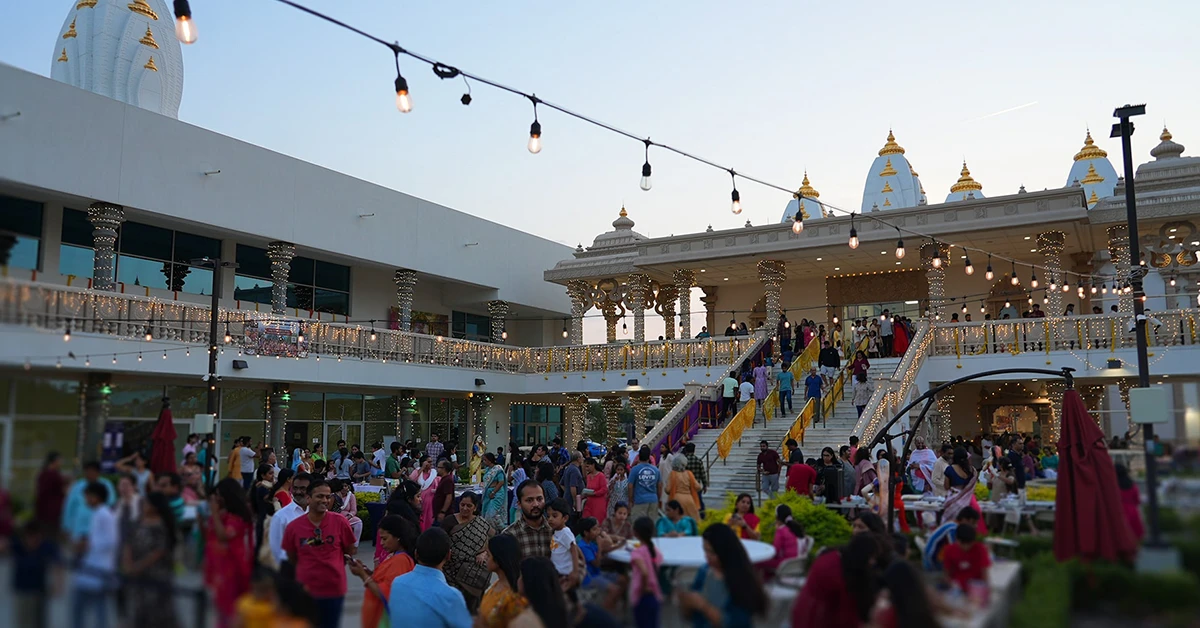
- Visit the Radha Krishna Temple of Dallas for one of their many offerings, or to offer some seva

- Study the Bhagavad Gita with Swami Mukundananda's authentic commentary.

- Download the JKYog Bhagavad Gita & Krishna Bhakti App for daily inspiration, guided meditations, bhajans, lectures, and spiritual resources.
 JKYog
JKYog

Frequently Asked Questions
1. What is Gopi Prem?
Gopi Prem is the highest form of divine love described in the Vedic tradition. It is completely selfless, constant, and exclusive, seeking only the happiness of Shree Krishna without any desire for personal gain.
2. Why are the gopis considered the greatest devotees?
The gopis loved Shree Krishna without expectation, remembered Him constantly, and surrendered every aspect of their lives to Him. Their devotion represents the highest ideal of Prem Bhakti.
3. What does JKYog teach about Gopi Prem?
Following the teachings of Jagadguru Shri Kripaluji Maharaj, Swami Mukundananda explains that the ultimate goal of spiritual life is to cultivate pure love for the Supreme Divine Personality through bhakti, satsang, Roop Dhyan meditation, selfless seva, and God's grace.
4. Why didn't the gopis visit Shree Krishna in Mathura?
Their love was completely selfless. Rather than seeking their own happiness, they respected Shree Krishna's divine mission and never wished to inconvenience Him for their personal joy.
5. What is the spiritual meaning of separation from God?
In bhakti, separation (viraha) purifies and intensifies love. Instead of weakening devotion, it increases remembrance of God and removes selfish expectations from the heart.
6. How can we cultivate Gopi Prem today?
We can begin by remembering Shree Krishna throughout the day, offering our work as seva, studying His teachings, practising Roop Dhyan meditation, associating with devotees, and gradually learning to place His happiness above our own desires.