
Life often appears peaceful and predictable, until it suddenly isn’t. For Mrs. Varma, faith had always been simple, prayers, temple visits, kindness towards others, and a quiet belief that sincerity nurtures inner security. Then one day, life changed. Loss entered without warning, and with it came a question her rituals had never needed to address: If God is compassionate and present everywhere, why does pain still find a place in life?
The Vedic scriptures never promise a life without change; instead, they teach us how to understand change. The Ishopanishad reminds us that the Divine pervades everything, while the Bhagavad Gita teaches Karma Yoga; not control over events, but mastery over our response to them. What begins as philosophy slowly becomes personal when life demands application.
Through the practical guidance of Swami Mukundananda, emphasizing seva, humility, and gratitude, spiritual wisdom moves from belief into lived experience. This is not merely about believing differently, but about seeing differently, and as vision changes, so does life.
The Human Question

Mrs. Varma’s faith had not disappeared; it had become unsettled. The prayers continued, but the mind searched for meaning. What once felt comforting now felt incomplete. She was not questioning God; she was questioning her understanding of how life unfolded under His care.
When life moves according to expectation, belief remains effortless. But when circumstances change, devotion seeks clarity. Was this destiny? Was it karma? Or was there something in the way she saw the event itself? The heart carried emotion, yet the intellect demanded explanation.
This is where many seekers quietly stand, between belief and understanding. The Vedic wisdom begins here, not by dismissing pain, but by guiding interpretation. Peace does not arise from controlling events, but from correctly understanding them. When perception changes, experience changes.
For Mrs. Varma, the need was no longer consolation, but comprehension.
Searching for an Answer

The idea that events might carry meaning did not immediately comfort Mrs. Varma; it unsettled her. If life was not random, then neither was sorrow, and that thought raised more questions than it resolved. She found herself returning repeatedly to the same doubt: was her suffering merely to be endured, or was it trying to refine something within her that she did not yet understand?
Gradually, the need shifted from emotional relief to clarity. She no longer wanted reassurance; she wanted explanation. The mind that once accepted began to inquire. It was during this phase of quiet seeking that she listened to a discourse by Swami Mukundananda. What she heard did not dismiss pain, nor did it attribute it to blind fate. Instead, it spoke of order, a law governing experiences just as surely as physical laws govern nature.
For the first time, her questions seemed to be addressed rather than comforted. The possibility arose that life was neither unfair nor accidental, but meaningful. The unrest did not end, but it changed direction. Confusion was slowly turning into inquiry.
The Law Behind Experience
In the discourse, Swami Mukundananda explained that experiences in life are not isolated events; they arise from a continuity governed by the law of karma. Just as every action produces a consequence in the physical world, every intention and action leaves an imprint that shapes future experience and inner growth. Suffering, therefore, is neither random nor punishment, but part of a process that educates the soul.
He described three aspects of karma. The accumulated impressions of past actions form a vast storehouse. From this store, a portion matures into present circumstances, the situations one cannot immediately change. Alongside this, every present response creates new impressions, influencing what unfolds ahead. Life is thus neither rigid fate nor total freedom, but a meeting point between what has come to us and how we respond to it.
For Mrs. Varma, this did not erase sorrow, but it removed a sense of injustice. The question slowly shifted from “Why did this happen to me?” to “How should I meet what has come?” The focus moved from the event to the response. In that shift, helplessness began to give way to participation, not control over life, but responsibility within it.
Understanding had not yet brought peace, but it had brought direction.
Meeting the Teacher
Listening created understanding, but not yet strength. The ideas explained the mind; they did not immediately steady it. Mrs. Varma found herself reflecting on the discourse repeatedly, the law seemed logical, yet living it remained difficult. Knowing how to think and being able to live that understanding was not the same.
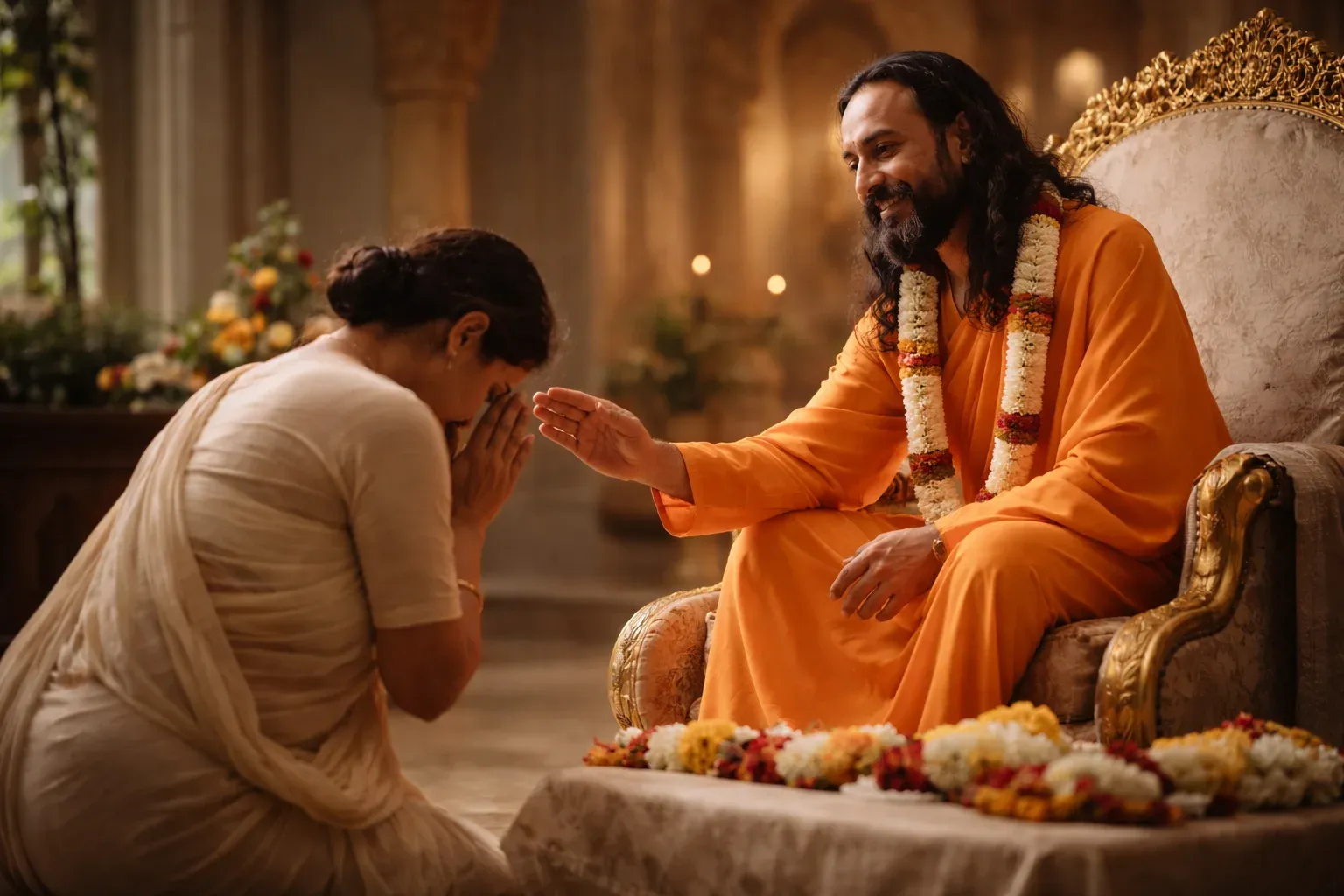
Sometime later, she visited the temple her children had suggested. The environment felt calm, but her mind still carried its questions. It was there that she saw Swami Mukundananda in person. There was no conversation, no elaborate guidance, only a moment of reverence.
तद्विद्धि प्रणिपातेन परिप्रश्नेन सेवया ।
उपदेक्ष्यन्ति ते ज्ञानं ज्ञानिनस्तत्त्वदर्शिनः ॥ BG 4.34
Learn the truth by approaching a spiritual master. Inquire from him with reverence and render service unto him. Such an enlightened Saint can impart knowledge unto you because he has seen the truth.
Mrs Varma was mentally ready to receive the knowledge. She approached with humility, sincere inquiry and thus a new channel of Divine knowledge opened. Following a series of Swamiji’s lectures in Family Camp, Bhakti Retreat, and Life Transformation programs. The teachings she had heard now gradually felt anchored to a living source, not in personality but in clarity.
In one of the teachings she heard, Swamiji explained a verse from the Ishavasya Upanishad:
ईशावास्यमिदं सर्वं यत्किञ्च जगत्यां जगत् ।
तेन त्यक्तेन भुञ्जीथा मा गृधः कस्यस्विद्धनम् ॥ Ishavasya Upanishad Mantra1॥
"The essence of this mantra is that God pervades the entire world. When one sees all beings in the Divine and the Divine in all beings, what delusion and what sorrow can remain for such a person?”
The words stayed with her. If the Divine truly pervaded everything, then even the moment she resisted could not exist outside that presence. The teaching did not remove her sorrow, but it changed the direction of her thinking. The question slowly shifted from why this happened to how she saw what had happened.
The meeting did not suddenly remove grief. Instead, it created trust in the path she had begun to understand. The teachings were no longer only words; they pointed toward a way of living. From that trust arose a willingness to practice, and that movement led naturally toward action.
She was now ready for the new teachings.
Learning Detachment
As Mrs. Varma continued her efforts in Karma Yoga, she discovered that action alone did not quiet the mind. Some days felt lighter, while others brought back waves of memory and comparison. The past would suddenly seem closer than the present. She realized that even while acting, the mind was still measuring, what was, what is, and what should have been.
सुखदुःखे समे कृत्वा लाभालाभौ जयाजयौ ।
ततो युद्धाय युज्यस्व नैवं पापमवाप्स्यसि ॥ BG: 2.38॥
Fight for the sake of duty, treating alike happiness and distress, loss and gain, victory and defeat. fulfilling your responsibility in this way, you will never incur sin.
The words did not ask her to stop feeling; they asked her to stop clinging to one feeling while resisting another. Slowly she began noticing how the mind held onto what comforted and rejected what hurt. Detachment was not emotional withdrawal but emotional purification, allowing experience without allowing it to dominate her identity.
There was no sudden transformation. Yet moments appeared when memories arose but did not control the day. Acting became steadier because reacting became gentler.
Detachment had begun, not by leaving life, but by no longer standing against it.
Discovering Seva
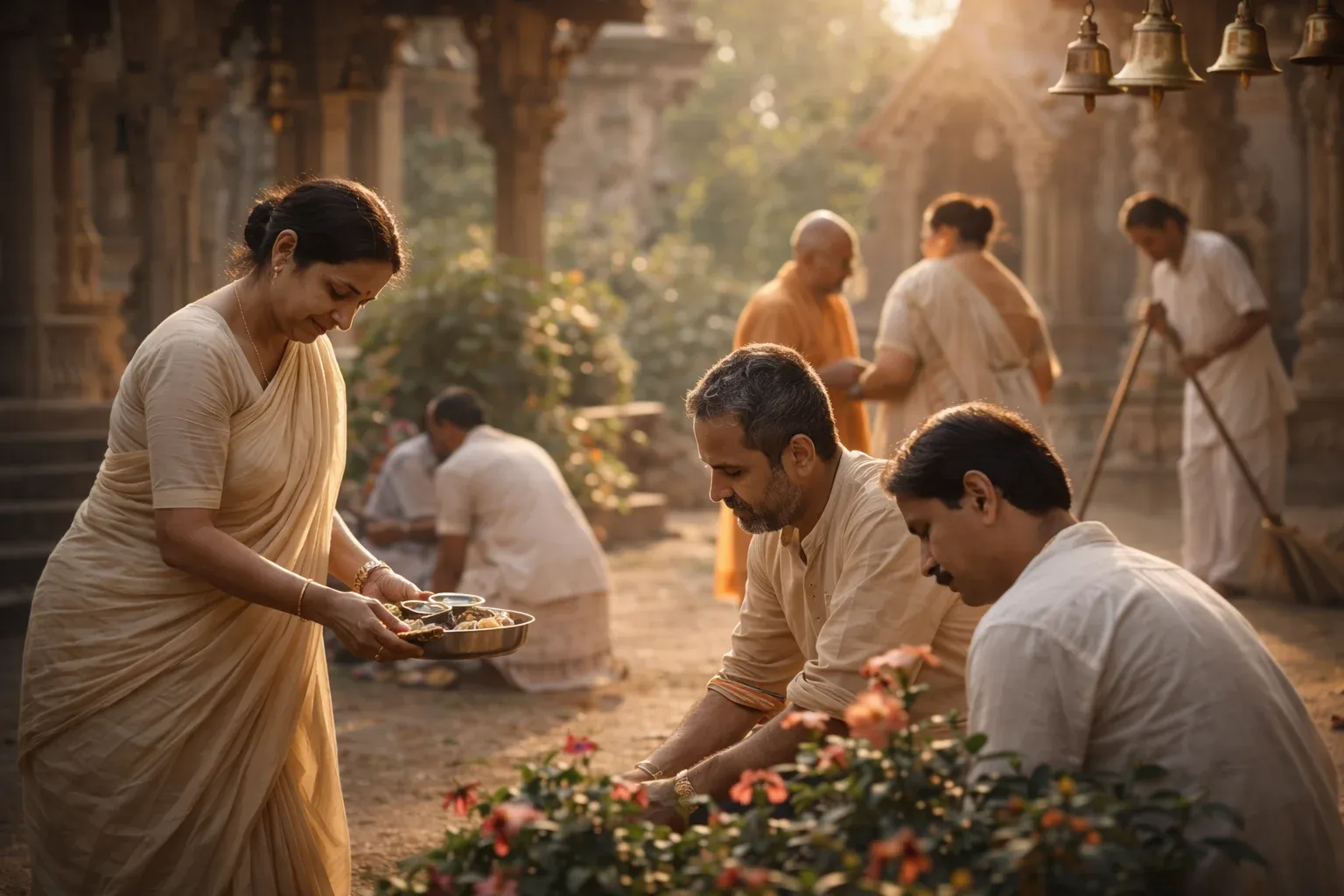
Detachment created space in the mind, but the heart still needed direction. Acting steadily prevented agitation, yet moments of emptiness continued to appear. It was during this time that Mrs. Varma became more involved in service at the temple.
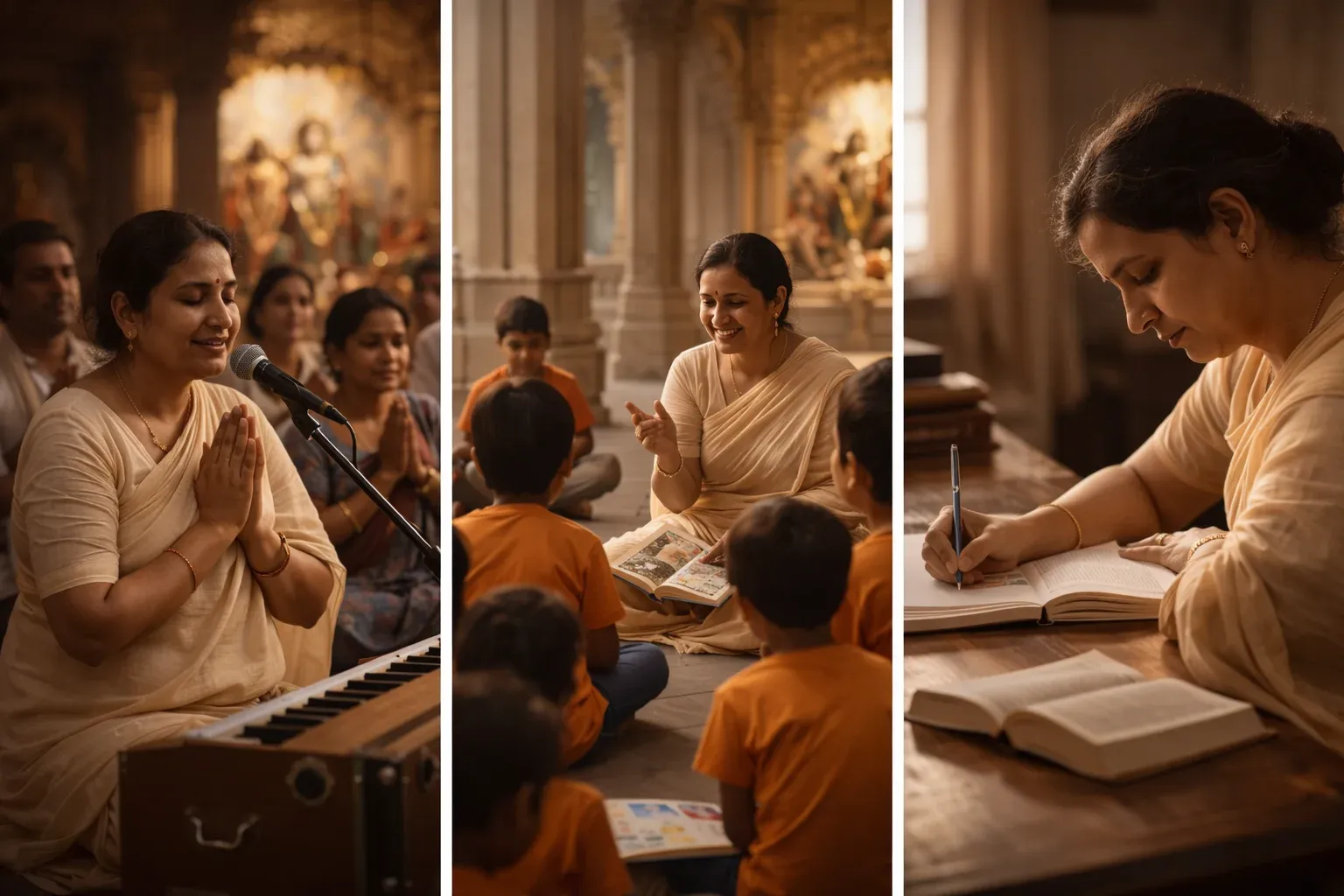
At first, the work served mainly as engagement. Keeping occupied distracted the mind from circling the same memories. Simple tasks, arranging, helping with instructing children in the Bal Mukund class, assisting visitors, writing blogs gave the day structure. Writing helped, the learnings drew a pattern, and gradually, the experience changed. Meeting people from different walks of life, she noticed suffering was universal. Some carried heavier burdens yet spoke with surprising calmness.
मयि सर्वाणि कर्माणि संन्यस्याध्यात्मचेतसा
निराशीर्निर्ममो भूत्वा युध्यस्व विगतज्वरः ॥ BG:3.30
Performing all works as an offering unto Me, constantly meditate on Me as the supreme. Become free from desires and selflessness, and with your mental grief departed, fight.
To offer actions without possessiveness and without inner agitation. Slowly the purpose of work shifted. What began as distraction became contribution. Engaging in service shifted focus away from oneself and helped diminish ego, turning attention outward to others; as a result, personal sorrow became less intense.
Seva was no longer a mechanical activity; it became participation in a shared spiritual journey.
Entering the Path of Bhakti
Service steadied Mrs. Varma’s days, yet a deeper change was taking place within. The temple was no longer merely a place of activity; it became a place of relationship.
अनन्याश्चिन्तयन्तो मां ये जनाः पर्युपासते ।
तेषां नित्याभियुक्तानां योगक्षेमं वहाम्यहम् ॥ BG: 9.22 ॥
There are those who always think of Me and engage in exclusive devotion to Me. To them, whose minds are always absorbed in Me, I provide what they lack and preserve what they already possess.
The idea that the Divine preserves and cares for the devotee did not remove memory, but it removed isolation. She no longer felt she was carrying life alone. Devotion gradually changed from seeking help to feeling companionship.
Bhakti did not answer every question; it softened the need for answers.
Gratitude Quietly Emerges
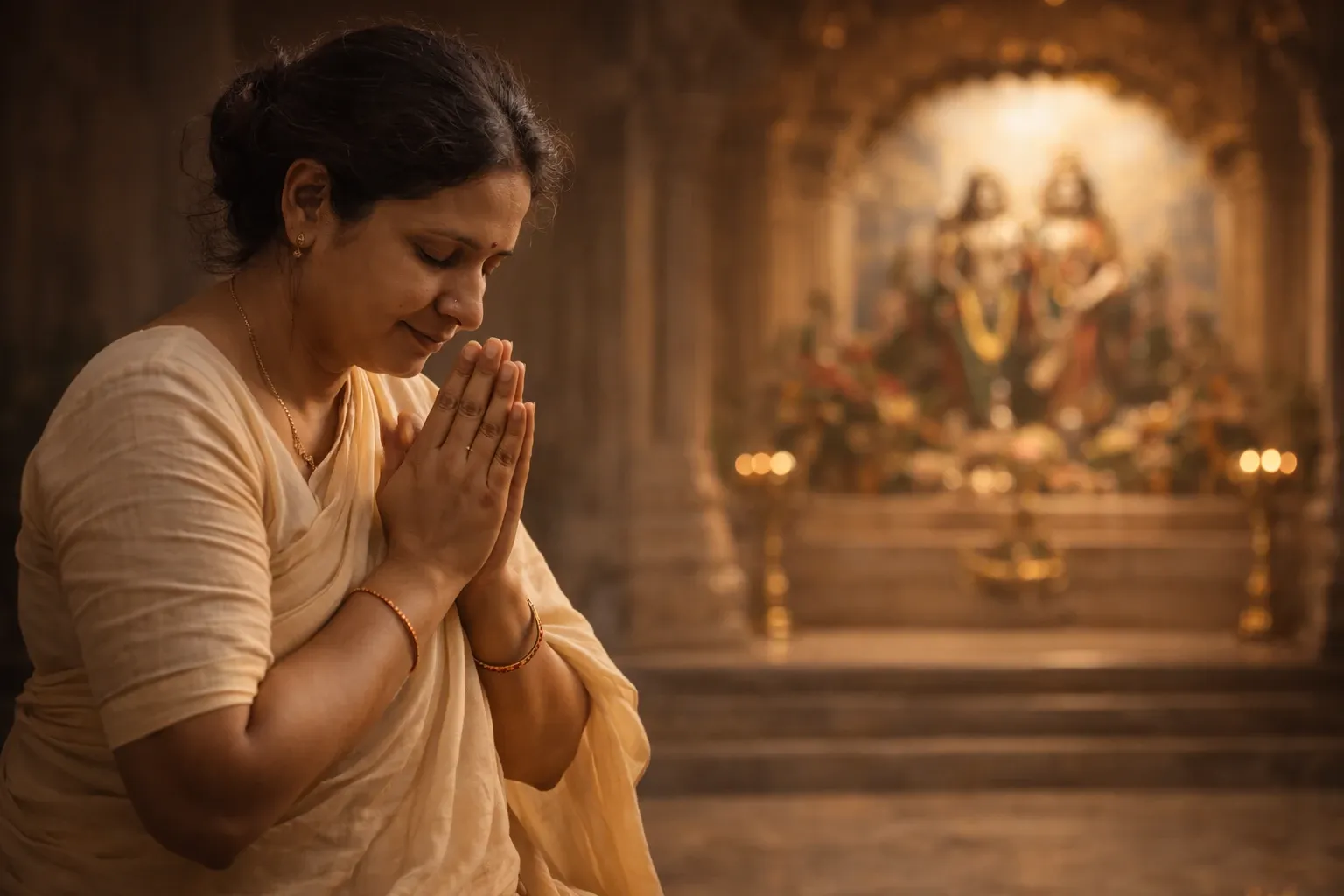
With time, Mrs. Varma’s involvement deepened. She saw connection in her service with the temple and her inner change. Conversations with other devotees, shared prayers, and participation in satsangs and festivals slowly gave rhythm to her days. Listening to others speak of their journeys, she realized how varied life’s experiences were, and how differently each person learned to carry them. Meditation seemed which had been a struggle seemed to settle down. Her Roopdhyan became meaningful and brought peace and joy to her.
Without deliberate effort, her emotions began to settle. The mind that once resisted now began to reason. She found herself gently questioning her own thoughts, almost as if guiding them. The pain had not vanished, but it no longer dominated every moment; it had receded quietly into the background.
Nearly a year passed in this manner. The memory remained, yet its meaning had begun to change. Instead of asking, why me it changed to how to deal. She started feeling a sense of gratitude at what she had been given; a strength she had not known she possessed, understanding she had never sought before.
A verse from the Bhagavad Gita seemed to describe this shift:
तेषां सततयुक्तानां भजतां प्रीतिपूर्वकम् ।
ददामि बुद्धियोगं तं येन मामुपयान्ति ते ॥ BG: 10.10
To those whose minds are always united with Me in loving devotion, I give the divine knowledge by which they can attain Me.
What appeared earlier as a disruption now began to look like direction. Gratitude did not arrive as emotion first — it arrived as understanding. And understanding slowly softened the past.
Surrender
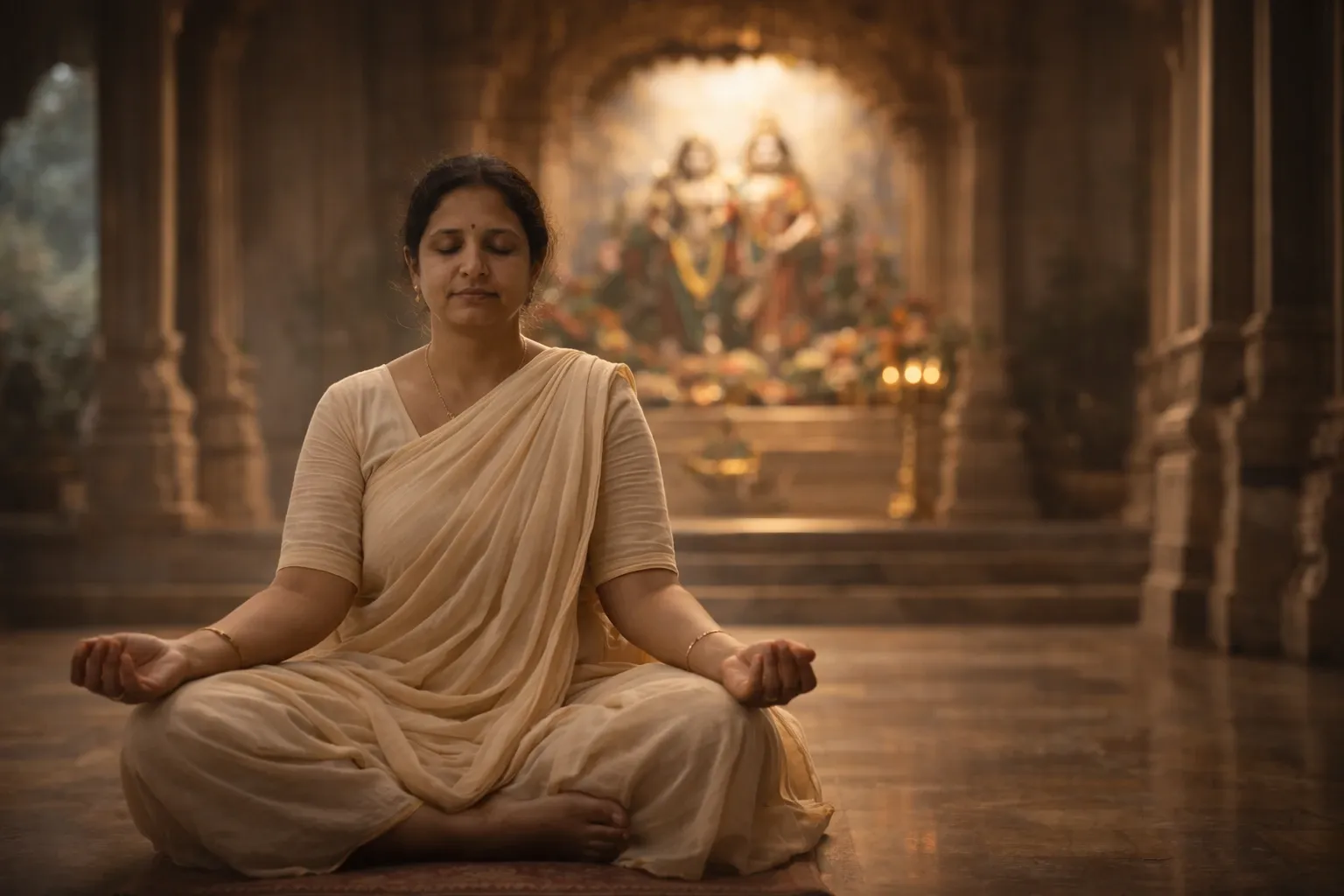
Gratitude gradually changed the way Mrs. Varma viewed her life. The mind no longer argued with every circumstance, nor tried to interpret each event immediately. Some questions remained unanswered, yet they no longer felt urgent. Acceptance was quietly replacing explanation.
She noticed that the need to control outcomes had softened. Plans were made, efforts continued, but the anxiety surrounding results diminished. What had once felt like managing life now felt like participating in it. Trust was no longer an effort of belief; it had become a habit of thought.
A verse from the Bhagavad Gita reflected this inner state:
तमेव शरणं गच्छ सर्वभावेन भारत ।
तत्प्रसादात्परां शान्तिं स्थानं प्राप्स्यसि शाश्वतम् ॥ BG 18.62 ॥
Surrender exclusively unto Him with your whole being, O Bharat. By His grace, you will attain perfect peace and the eternal abode.
Surrender did not mean events became predictable. It meant resistance to them diminished. The future was no longer something to negotiate constantly, but something to walk through with trust. And in that trust, the mind found a steadiness it had been seeking from the beginning.
Conclusion
What had begun as a question in Mrs. Varma’s mind did not end in explanation, but in quiet acceptance. Life had not become free from memory, nor had loneliness completely disappeared. Yet it no longer stood as something she resisted. The struggle to understand every event had softened into trust that not everything needed immediate answers.
A final assurance from the Bhagavad Gita seemed to express this resting of the heart:
सर्वधर्मान्परित्यज्य मामेकं शरणं व्रज ।
अहं त्वां सर्वपापेभ्यो मोक्षयिष्यामि मा शुचः ॥ BG 18.66
Abandon all varieties of dharmas and simply surrender unto Me alone. I shall liberate you from all sinful reactions; do not fear.
Peace came not by removing life’s events, but by no longer carrying them alone. In that understanding, the teaching of the Ishavasya Upanishad, that the Divine pervades all and nothing exists outside that completeness, was no longer an idea she contemplated, but a reality she quietly lived.
She did not defeat sorrow; she walked with it differently. With faith in the presence guides without speaking and support without appearing, her days became gentle again. The questions that once searched for certainty now rested in companionship.
Her life had not changed outwardly, but her seeing had. And in that change of thought, her life had changed.
Peace became inevitable once understanding changed, she did not defeat sorrow; she walked with it differently.
Key Takeaways
- Pain does not contradict Divine presence; it invites deeper understanding.
- Vedic wisdom shifts focus from controlling events to interpreting them correctly.
- Karma is not punishment — it is a process that educates and refines the soul.
- Right action (Karma Yoga) steadies the mind before peace is felt.
- Detachment reduces suffering without reducing sensitivity.
- Seva dissolves self-centeredness and softens grief.
- Bhakti transforms isolation into companionship with the Divine.
- Gratitude arises when life is seen as guidance rather than disruption.
- Surrender is cooperation with Divine order, not passivity.
- Peace is not removal of pain but freedom from resisting it.
2. Call to Action (CTA)
If this journey resonated with you, pause and reflect:
What in your life are you resisting that may instead be asking for understanding?
Begin small, a moment of quiet prayer, a thoughtful action without expectation, or an act of kindness done simply as an offering.
Spiritual growth rarely starts with certainty; it begins with willingness.
Let your thoughts become gentler… life often follows.
3. Frequently Asked Questions (FAQs)
1. Does spirituality remove suffering?
No. It changes how suffering is experienced. Pain may remain, but inner resistance reduces, bringing peace.
2. What is Karma Yoga in simple terms?
Doing your duties sincerely while letting go of anxiety about the results.
3. Is detachment the same as indifference?
No. Detachment means caring without emotional dependence, not withdrawing from life.
4. Why is seva important in healing grief?
Service reduces self-absorption and connects us with a larger purpose, easing emotional burden.
5. What role does Bhakti play in daily life?
Bhakti transforms God from an idea into a relationship, bringing emotional stability and trust.
6. What does surrender really mean?
It means doing your best while accepting outcomes as part of a larger Divine order.
4. References & Citations
Scriptural References
- Ishavasya Upanishad — Mantra 7 and teachings on Divine Pervasiveness
- Bhagavad Gita 2.38 — Equanimity in action
- Bhagavad Gita 3.30 — Offering actions to the Divine
- Bhagavad Gita 9.22 — Divine care for the devotee
- Bhagavad Gita 10.10 — Divine guidance through understanding
- Bhagavad Gita 18.62 — Surrender and peace
- Bhagavad Gita 18.66 — Complete refuge in the Divine
Discourses by Swami Mukundananda
Understanding Pain & Loss
https://www.youtube.com/watch?v=-6ozrHQlRQU
Law of Karma (Three Types of Karma)
https://www.youtube.com/watch?v=ssOzQuHT37k
Practicing Karma Yoga in Daily Life
https://www.youtube.com/watch?v=xG7oha2RdeA
Gratitude & Inner Peace
https://www.youtube.com/watch?v=UoVfo4UqIqo