
✨ A Story That Breathes Beyond Centuries
There are stories that are told to entertain, and there are stories that are told to awaken.
Among the epics that have shaped civilization, none has touched the human soul as deeply as the Ramayana. It is not merely an ancient tale of kings and battles — it is a sacred mirror that reflects the eternal conflict between ego and duty, love and attachment, self-interest and selflessness.
Picture this moment:
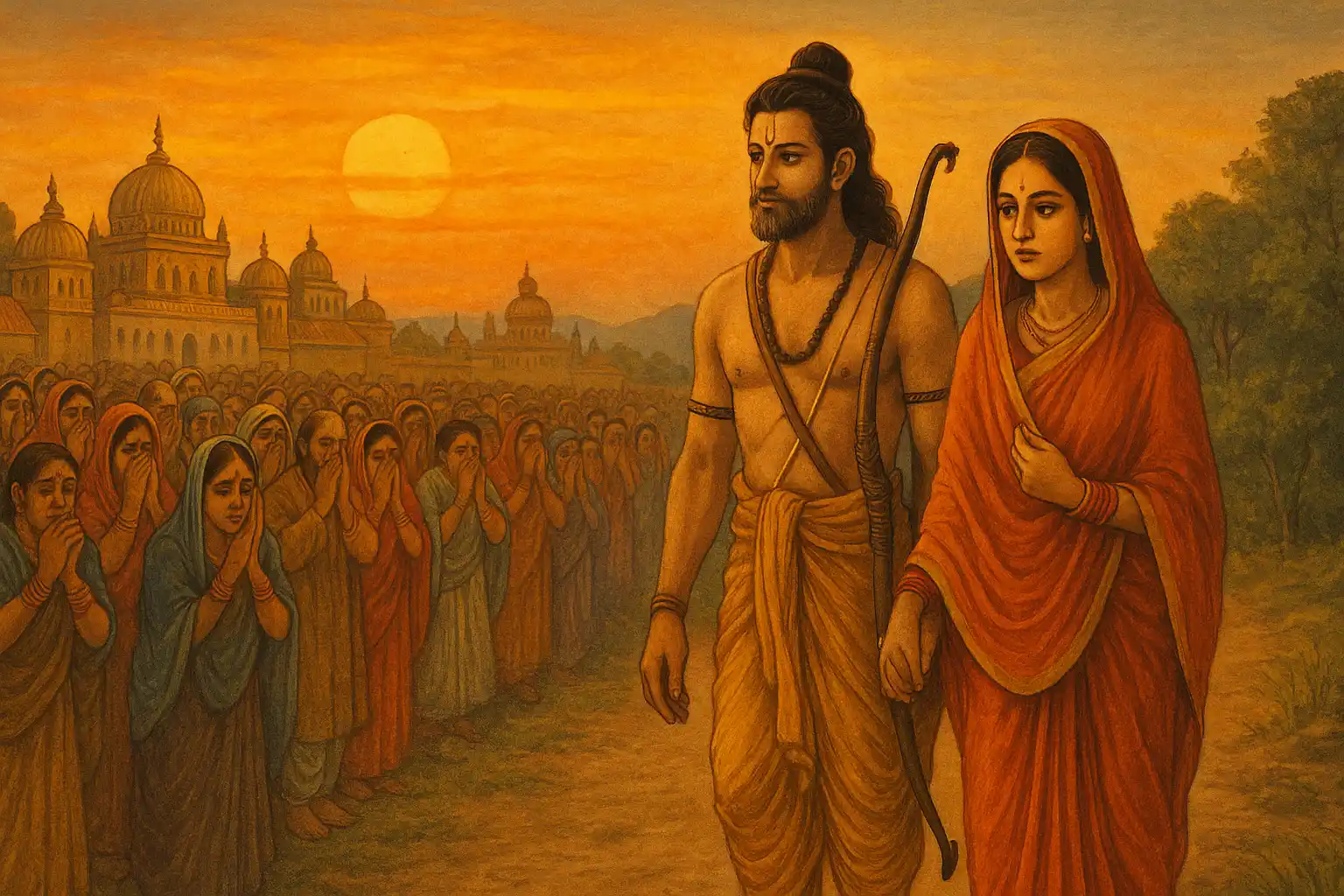
The sun is setting over Ayodhya’s golden rooftops, and the citizens are weeping as their beloved prince walks barefoot toward the forest. His only companion — the queen who could have lived in luxury but chose exile instead. This is not a tale of tragedy — it is a revelation of divine strength through surrender.
Ram and Sita are not just figures of worship. They are archetypes of human excellence, showing that true greatness is born not of power, but of purity; not of conquest, but of compassion.
In their lives, we find the timeless message that sacrifice and selflessness are not losses — they are spiritual victories.
Quick table — Vivah Panchami 2025 Muhurat timings (Delhi & Dallas)
| Item | Details (Delhi, India) | Details (Dallas, Texas, USA) |
|---|---|---|
| Panchami Tithi Begins | 09:22 PM on November 24, 2025 | 09:52 AM on November 24, 2025 |
| Panchami Tithi Ends | 10:56 PM on November 25, 2025 | 11:26 AM on November 25, 2025 |
| Gregorian Date | November 25, 2025 (Tuesday) | November 25, 2025 (Tuesday) |
| Typical Rituals / Puja Vidhi |
• Abhyanga (holy bath), clean altar with Rama-Sita murti or photo. • Idol decoration, offering panchamrit, flowers, incense. |
• Abhyanga (holy bath), clean altar with Rama-Sita murti or photo. • Idol decoration, offering panchamrit, flowers, incense. |
🌿 1. Lord Ram — The King Who Chose Exile Over Ego
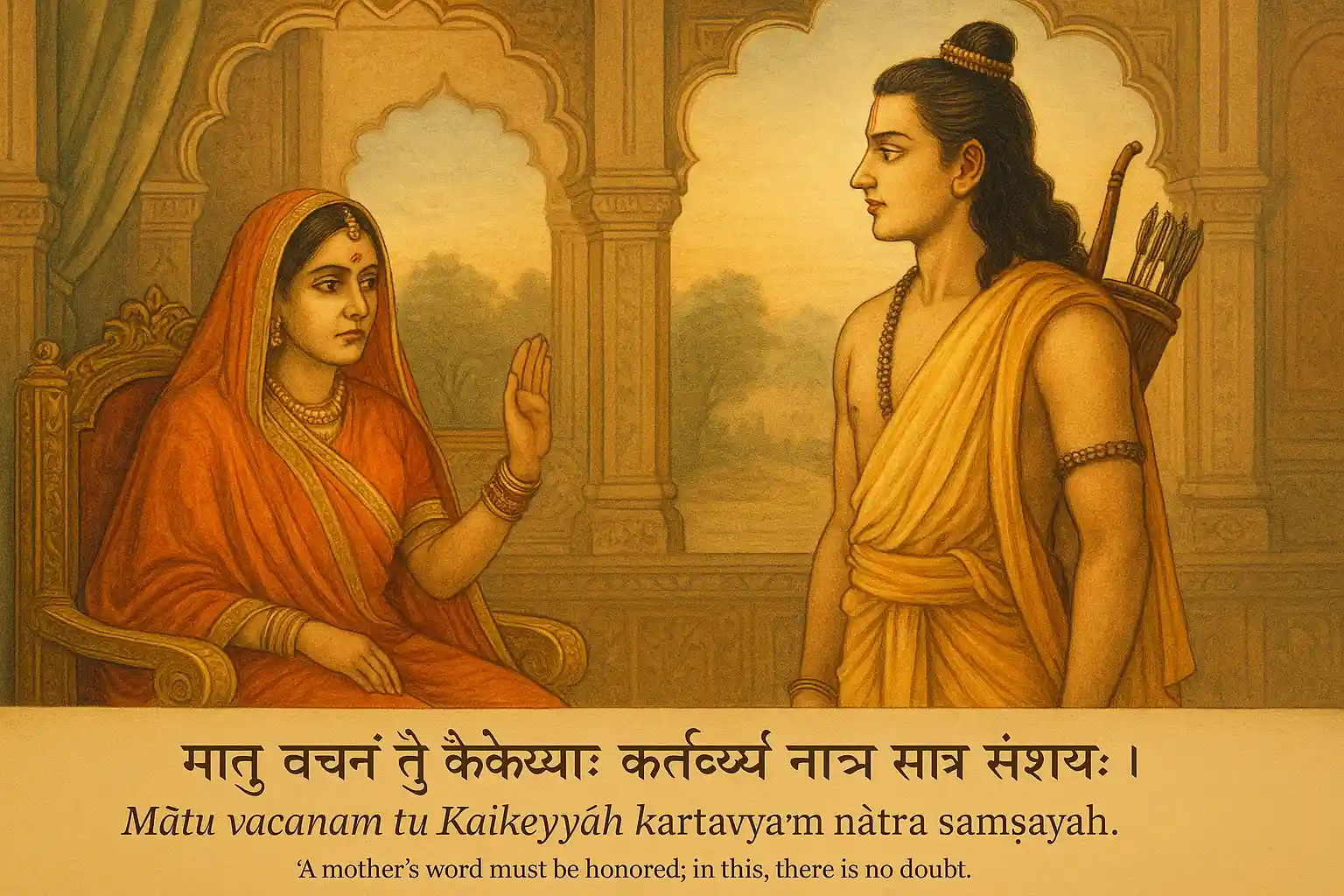
When Kaikeyi demanded that Ram be exiled for fourteen years so her son Bharat could be crowned, chaos engulfed Ayodhya. But Ram stood still — serene, unshaken.
“मातु वचनं तु कैकेय्याः कर्तव्यं नात्र संशयः।”
Mātu vacanam tu Kaikeyyāḥ kartavyaṁ nātra saṁśayaḥ
— “A mother’s word must be honored; in this, there is no doubt.”
(Vālmīki Rāmāyaṇa, Ayodhya Kāṇḍa 19.31)
In that moment, Ram embodied the highest dharma. He renounced not just the throne, but also the recognition.
His calmness was not weakness — it was mastery of the mind. By obeying his father’s promise, he became a living example of truth in action.
🌺 What Ram’s Exile Teaches Us
| Aspect | Ram’s Choice | Spiritual Lesson |
|---|---|---|
| Power | Gave up kingship | True authority lies in humility |
| Comfort | Embraced hardship | Greatness grows through endurance |
| Obedience | Honored his parents’ word | Duty is devotion in motion |
| Detachment | Accepted fate joyfully | Freedom arises from surrender |
Ram’s life shows that when one’s inner compass is aligned with dharma, even loss becomes liberation.
🌸 2. Sita — The Divine Embodiment of Selfless Love
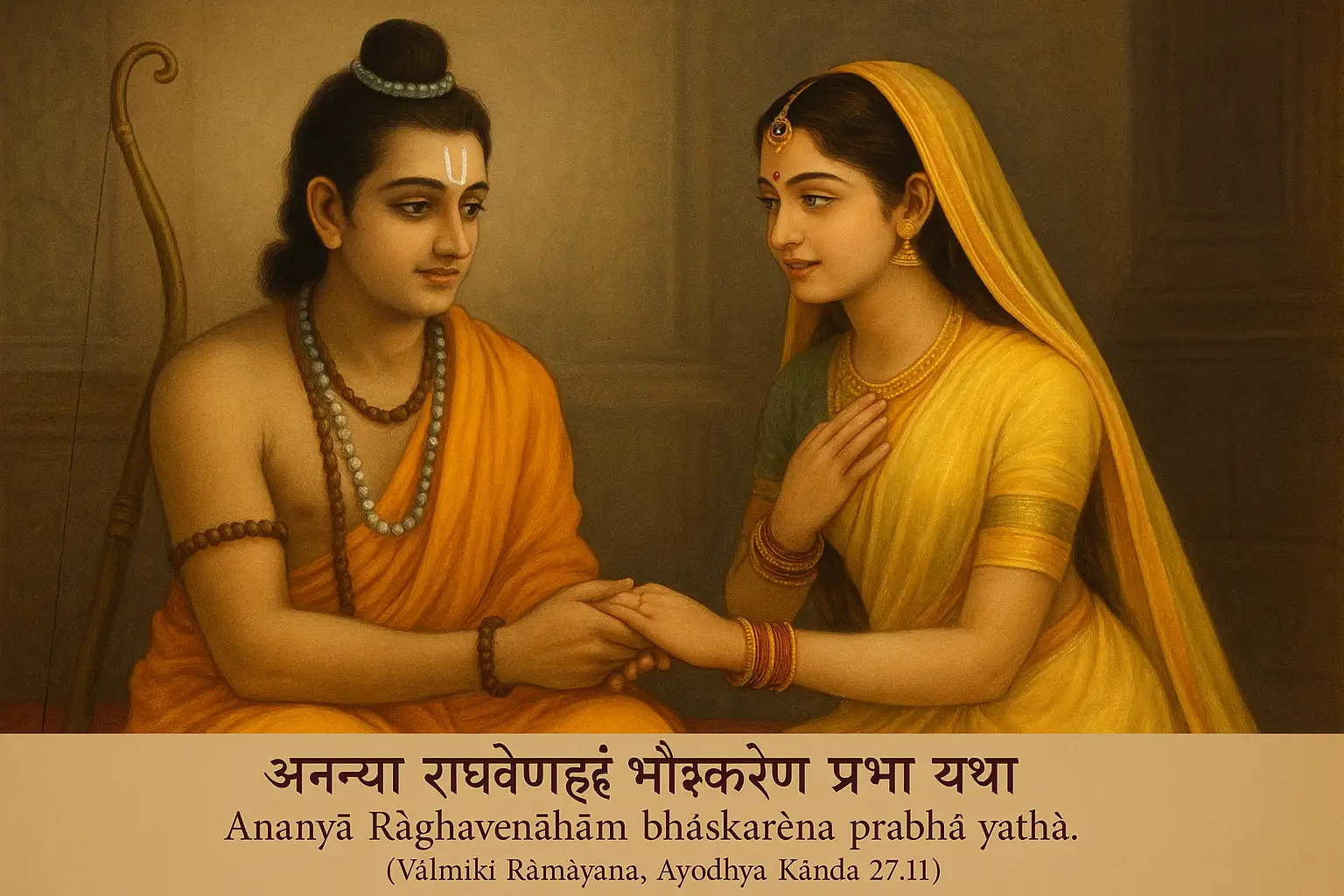
If Ram represents dharma in action, Sita represents the heart of devotion.
When Ram prepared for exile, he urged her to stay behind, fearing the forest’s dangers. But Sita’s reply glowed with divine conviction:
“अनन्या राघवेणाहं भास्करेण प्रभा यथा।”
Ananyā Rāghaveṇāhaṁ bhāskareṇa prabhā yathā
— “As the light cannot exist without the sun, so can I not live without Ram.”
(Vālmīki Rāmāyaṇa, Ayodhya Kāṇḍa 27.11)
Her decision was not merely an attachment; it was a oneness of soul.
Sita’s strength was silent, her courage unspoken — yet every step she took in the forest radiated the fragrance of faith.
She bore the hardships of exile without complaint, the pain of separation without bitterness, and even the trial by fire (Agni Pariksha) with calm dignity.
Each ordeal became a sacred offering of her devotion.
💫 The Layers of Sita’s Sacrifice
| Life Stage | Her Sacrifice | Spiritual Meaning |
|---|---|---|
| Leaving Ayodhya | Gave up royal comfort | Love is loyalty through hardship |
| In Lanka | Endured captivity with faith | Purity cannot be imprisoned |
| Fire Ordeal | Submitted to divine test | Truth shines brighter after trial |
| Raising Luv & Kush | Chose solitude over resentment | Motherhood sanctifies sacrifice |
Sita teaches us that the purest love is not about possession, but about presence — a presence that uplifts rather than binds.
🔥 3. Sacrifice as a Path to Spiritual Freedom
In today’s world, sacrifice often sounds negative — like losing something dear. But in the Ramayan, it is the very opposite.
Sacrifice (tyāga) is not about deprivation; it’s about elevation.
“त्यागेनैके अमृतत्वमानशुः।”
Tyāgenaike amṛtatvam ānaśuḥ
— “Only through sacrifice do some attain immortality.”
(Kaṭha Upaniṣad 2.3.14)
By renouncing power and comfort, Ram and Sita achieved immortality of the soul.
Their journey through exile mirrors our own inner journey — from attachment to awareness, from self-centeredness to self-realization.
🕊 Dimensions of Spiritual Sacrifice
| Dimension | Ram’s Example | Sita’s Example | Inner Meaning |
|---|---|---|---|
| Physical | Renounced royal life | Endured forest life | Freedom from material dependence |
| Emotional | Separation from family | Endured captivity | Strength through detachment |
| Moral | Upheld righteousness | Preserved chastity | Conscience over convenience |
| Spiritual | Trusted divine will | Surrendered to destiny | Union with the eternal Self |
Their sacrifices were acts of worship, not resignation.
Each renunciation purified their consciousness — a reminder that spiritual progress often begins where comfort ends.
🌼 4. The Hidden Strength of Selflessness
Selflessness (nishkāma karma) is not the absence of self — it’s the presence of divinity.
Ram acted not for pleasure or fame, but to uphold dharma. Even when he fought Ravan, it was not out of revenge, but out of responsibility.
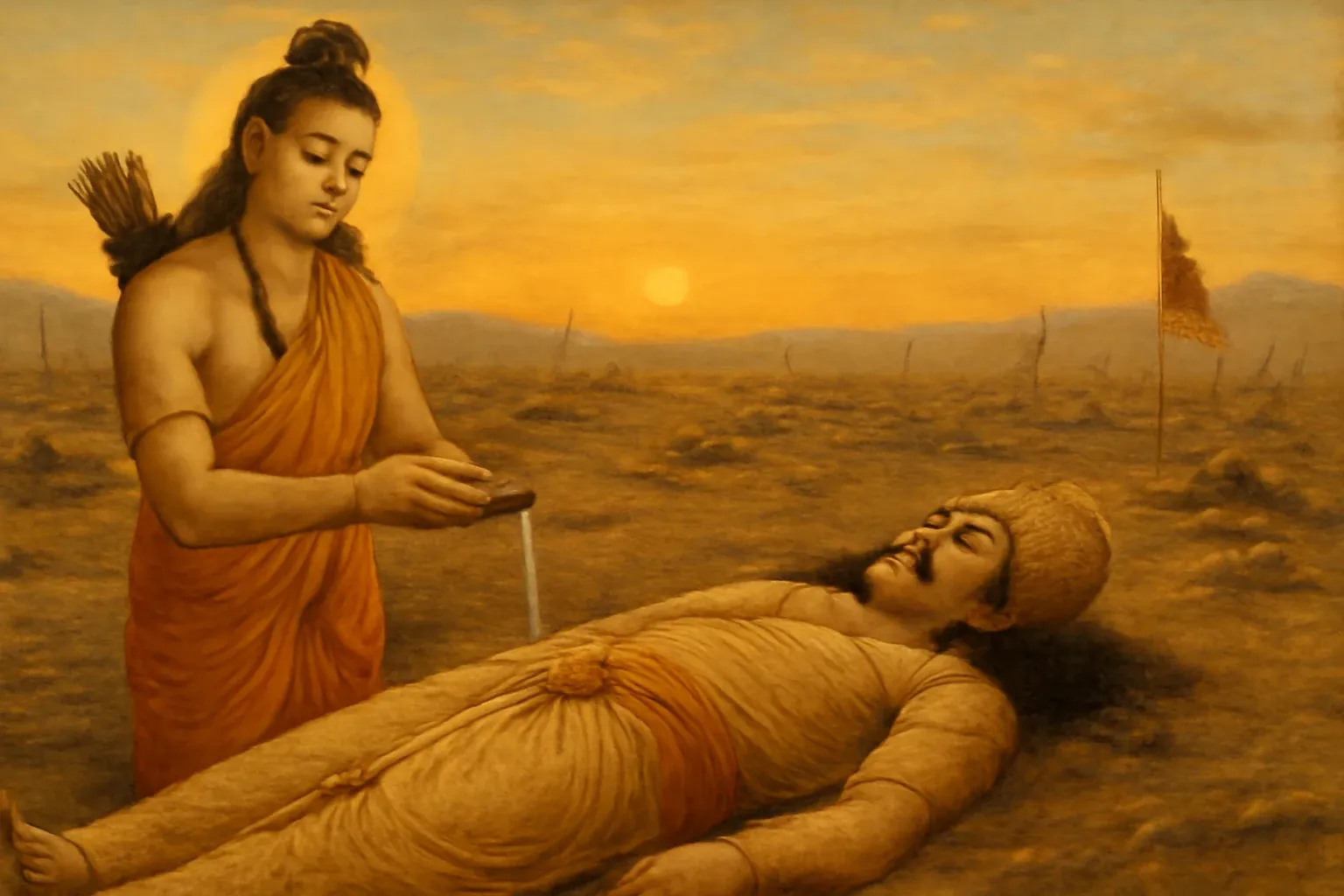
After the war, Ram performed the funeral rites for Ravan, the very enemy who abducted his wife. That act alone reveals the soul’s vastness.
Sita too exemplified selflessness.
Even in the Ashok Vatika of Lanka, she prayed not for her rescue, but for Ram’s victory and welfare.
“न मे दुःखं न मे शोको न मे पार्थिवमङ्गलम्।
रामेण विहिता सन्तिः सा मे सन्तिः परा गतिः॥”
Na me duḥkhaṁ na me śoko na me pārthivamaṅgalam;
Rāmeṇa vihitā santiḥ sā me santiḥ parā gatiḥ.
— “I have no sorrow or fear; my peace lies in Ram — and that peace is my highest goal.”
Their actions teach that selflessness purifies action and transforms every deed into an offering.
🌾 5. The Balance of Duty and Devotion

The harmony between Ram’s duty (dharma) and Sita’s devotion (bhakti) is what makes their union divine.
Dharma without love becomes rigid; love without dharma becomes blind. Together, they form the perfect rhythm of righteous living.
When we act with both dharma and bhakti, our lives align with divine order. Ram’s calm decision-making and Sita’s compassionate strength reveal that spirituality is not withdrawal from life — it is engagement with awareness.
Their story shows that spiritual maturity lies not in escaping responsibility, but in performing it selflessly.
🌻 6. The Modern Mirror — Living Their Ideals Today
Though thousands of years have passed, Ram and Sita’s values remain profoundly relevant.
In our age of self-promotion and distraction, their lives whisper a sacred reminder — that peace is born not of accumulation, but of alignment.
🌿 Applying Their Lessons in Daily Life
| Modern Situation | Lesson from Ram and Sita | Practical Reflection |
|---|---|---|
| Family Conflicts | Choose patience and forgiveness | Don’t react; respond with grace |
| Work Stress | Uphold ethics over profit | Let integrity guide ambition |
| Relationships | Love selflessly | Give without expecting return |
| Social Responsibility | Serve others without pride | Volunteer with humility |
| Personal Growth | Accept challenges with faith | Every hardship refines the soul |
Every time we choose honesty over convenience, compassion over ego, and duty over desire — we walk the same spiritual path that Ram and Sita illuminated.
🪷 7. Swami Mukundananda’s Insights — Sacrifice as Joy
Swami Mukundananda beautifully distills the philosophy behind Ram and Sita’s lives:
“When we act selflessly, we expand our consciousness beyond the narrow confines of the ego. That is the secret of joy.”
In his lectures and writings, he explains that sacrifice is not renunciation of happiness — it is discovery of higher happiness.
“Lord Ram shows that fulfilling one’s duty is worship.
Sita teaches that love anchored in purity becomes divine.”
— Swami Mukundananda, Essence of the Ramayana
🌺 Three Dimensions of Spiritual Sacrifice (as per Swamiji)
| Dimension | Explanation | Effect on the Soul |
|---|---|---|
| Mental | Detachment from self-interest | Brings inner freedom |
| Emotional | Compassion without condition | Expands empathy |
| Spiritual | Surrender to divine will | Leads to union with God |
Swamiji often quotes the Bhagavad Gita (3.9):
“यज्ञार्थात्कर्मणोऽन्यत्र लोकोऽयं कर्मबन्धनः।”
Yajñārthāt karmaṇo’nyatra loko’yaṁ karma-bandhanaḥ
— “Actions done as sacrifice free one from bondage.”
Ram and Sita exemplify this teaching — every step of their journey was a yajña (sacred offering).
Their sacrifices were not burdens, but gateways to divine joy.
🌷 8. The Living Legacy — Why Their Story Still Matters
The Ramayana is not a story frozen in time.
It lives in every act of kindness, every moment of patience, every sacrifice made for love or duty.
When a teacher guides with compassion, when a soldier protects with honor, when a mother stays awake for her child — the spirit of Ram and Sita breathes again.
“धर्मो रक्षति रक्षितः।”
Dharmo rakṣati rakṣitaḥ
— “Those who protect righteousness are themselves protected by it.”
Their story endures because it speaks to the eternal human condition: the struggle between selfish desire and selfless service.
And every time we choose the latter, we step closer to divinity.
🎥 Further Learning — Swami Mukundananda on Sacrifice and Selflessness
Deepen your reflection with these enlightening talks by Swami Mukundananda:
- The True Meaning of Selfless Love and Sacrifice – Love without expectation transforms the heart.
- What Is the Highest Selfless Seva? – Service done with humility purifies the soul.
- Only the Humble Can See God – The Lesson from Sita Ram Vivah – Humility opens the door to divine love.
- Significance of Selfless Service | Sadhana vs Seva – Balance meditation and action for inner harmony.
- Sita Ram Vivah – The Divine Wedding That’ll Awaken Your Heart – Dharma and bhakti united in divine union.
“Selflessness is not self-denial; it is self-realization.” — Swami Mukundananda
🌺 Conclusion — The Path of Light
Ram and Sita’s lives are not legends of loss — they are scripts of spiritual awakening.
Their story tells us that the path to peace is paved with selflessness, and that every sacrifice made in the spirit of love brings us closer to God.
When we live like Ram — choosing duty over desire,
and love like Sita — with purity and courage,
we awaken the same light that has guided humanity for millennia.
“In surrender lies strength. In sacrifice lies salvation.”
May their example inspire us to live with hearts unburdened by selfishness and souls illuminated by compassion.
🌺 Final Reflection
Ram and Sita were not extraordinary because they suffered; they were extraordinary because they sublimated suffering into sanctity.
Their story invites us to discover that selflessness is not a loss of self — it is the discovery of our true Self, the divine essence within.
In a world that teaches us to acquire, Ram and Sita teach us to offer.
In a world that glorifies ego, they glorify empathy.
And in a world that fears sacrifice, they show that it is the path to everlasting joy.
Benefits & Donation / Spiritual Merits
Here are commonly believed benefits and aspects of donations or charitable acts on Vivah Panchami according to tradition / religious sources:
| Area | Spiritual Merits | Donation Merits | Social Benefit |
|---|---|---|---|
| Marital / family life | Devotion to Rama & Sita is believed to yield positive karma, purity, blessings, and spiritual growth. | Donating (daan) on the day is considered highly meritorious. It’s believed donations made on this auspicious day enhance one’s spiritual benefits and blessings. | Donations help temples or communities organize the festival celebrations, help underprivileged people to take part in the events, support temple upkeep etc. |
| Rituals / Puja Steps | The puja is said to purify one's soul and bring blessings from Lord Rama and Sita for a prosperous life. | Making donations during this time increases spiritual merit, especially if done with the intent of helping others. | Contributions to charity or temple projects help the broader community, especially the underprivileged, and support religious institutions. |
| Items for Rituals | Rituals performed with proper devotion are believed to bring blessings and purification to the devotee. | Items like clothes, food, or prasad offered during the puja are considered to have spiritual merit. | Offerings made during the festival benefit the community and help organize larger temple activities. |
| Festivals and Celebrations | By participating in the rituals, devotees can purify their hearts and grow spiritually. | Charitable acts are encouraged during the festival to enhance spiritual and worldly benefits. | By making donations, communities are able to support the festival and enhance the lives of the less fortunate. |
May the divine union of Shri Sita–Ram shower the world with peace, love, and auspiciousness — जयति सीता–रामोऽयं, मंगलं लोकमङ्ग
Vivah Panchami is a Hindu festival that commemorates the wedding of Lord Rama and Goddess Sita, celebrated on the fifth day of the waxing moon in the month of Margashirsha. The festival is a celebration of their divine union, symbolizing love, devotion, and the triumph of dharma. Celebrations are particularly vibrant in places associated with their story, such as Ayodhya in India and Janakpur in Nepal, where re-enactments of the wedding, processions, and devotional songs are held.
As we learned the pivotal role of Donation during Vivah Panchami 2025. We are fortune to receive an opportunity to help Swami Mukundananda Ji and his JKYog mission in supporting the underprivileged through Jagadguru Kripalu University (JKU) and Jagadguru Kripalu Hospital & Research Center — a transformative initiative bringing education, healthcare, and hope to rural India.
“True wealth is found not in what we have, but in what we give.”
🎓 Support the JKU Project – Here's How You Can Help:
💛 Make a Direct Donation
Light up a life with your generous contribution.
👉 Donate Now
👣 Start Your Own Fundraiser
Create your own fundraising page and rally your family, friends, or community.
👉 Start Fundraising Here
🤝 Join the Walk for Education & Healthcare
Be part of a global movement to raise awareness and funds.
🌼 Your Contribution Supports:
- Free & subsidized education for underprivileged children, youth, and adults
- Modern and alternative healthcare, including child health, dental, physiotherapy, and natural healing
- Vocational training and micro-enterprise development
- Promotion of spiritual, physical, and mental well-being based on Vedic and Yogic sciences
🌿 Frequently Asked Questions (FAQs)
1. What is the main lesson Ram and Sita teach about sacrifice?
Ram and Sita teach that true sacrifice is not a loss but a transformation.
Ram’s exile shows that fulfilling one’s duty (dharma) with integrity brings inner peace, even in adversity. Sita’s life shows that love grounded in purity and faith turns suffering into spiritual strength. Together, they reveal that sacrifice purifies the soul and leads to divine joy.
2. How did Lord Ram demonstrate selflessness in the Ramayana?
Lord Ram displayed selflessness by choosing duty over personal comfort.
When asked to go into exile, he obeyed without resentment — prioritizing truth and his father’s honor above his own desires. Even after defeating Ravan, he performed Ravan’s last rites, showing compassion even to his enemy. Ram’s life reminds us that selflessness is the highest form of strength.
3. What does Sita’s character teach us about love and devotion?
Sita embodies selfless love, unwavering faith, and moral courage.
She left her royal comforts to accompany Ram into exile, showing that love means standing beside your loved one through both joy and hardship. Her purity and patience during her captivity in Lanka reflect that true devotion is not submission but inner strength guided by righteousness.
4. How can Ram and Sita’s values be applied in modern life?
Their teachings are timeless and relevant today.
Ram’s sense of responsibility encourages us to uphold ethics in our careers and relationships, while Sita’s resilience teaches us patience, empathy, and faith. In an age of ego and instant gratification, their example reminds us that service, compassion, and integrity are the true paths to fulfillment.
5. What does Swami Mukundananda say about sacrifice and selflessness?
According to Swami Mukundananda, sacrifice expands our consciousness and brings divine happiness.
He explains that when we act without selfish motives — as Ram and Sita did — we align with God’s will and experience inner bliss. In his words, “Selflessness is not self-denial; it is self-realization.” Their lives teach that duty performed with love becomes devotion, and devotion offered selflessly becomes liberation.
References
Swami Mukundananda. Essence of the Ramayana (Lecture Series, 2022).
- Discusses Lord Ram as Maryada Purushottam and Sita as the epitome of purity.
- Quote used: “Selflessness is not self-denial; it is self-realization
- Valmiki Ramayana Sanskrit Text (Digital Edition
1. The True Meaning of Selfless Love and Sacrifice
“When we love without expecting, we touch the divine.”
🎬 Watch on YouTube
Swamiji explains that true sacrifice arises not from loss but from inner expansion — a perfect reflection of how Ram and Sita lived for others.