
The Divine Threshold: An Invitation to Victory
There are moments in life when effort alone does not feel enough.
Moments when we stand at the edge of something vast and intimidating - unsure how to cross.
The scriptures describe one such moment from the Treta Yuga.
Imagine, for a moment, standing upon the crystalline sands of the southern shore. Lord Rama, appearing in the role of an ideal king, gazes across the salt-water ocean. Beside Him, Lakshman, Hanuman, and the Vanara army stand in a state of profound contemplation.
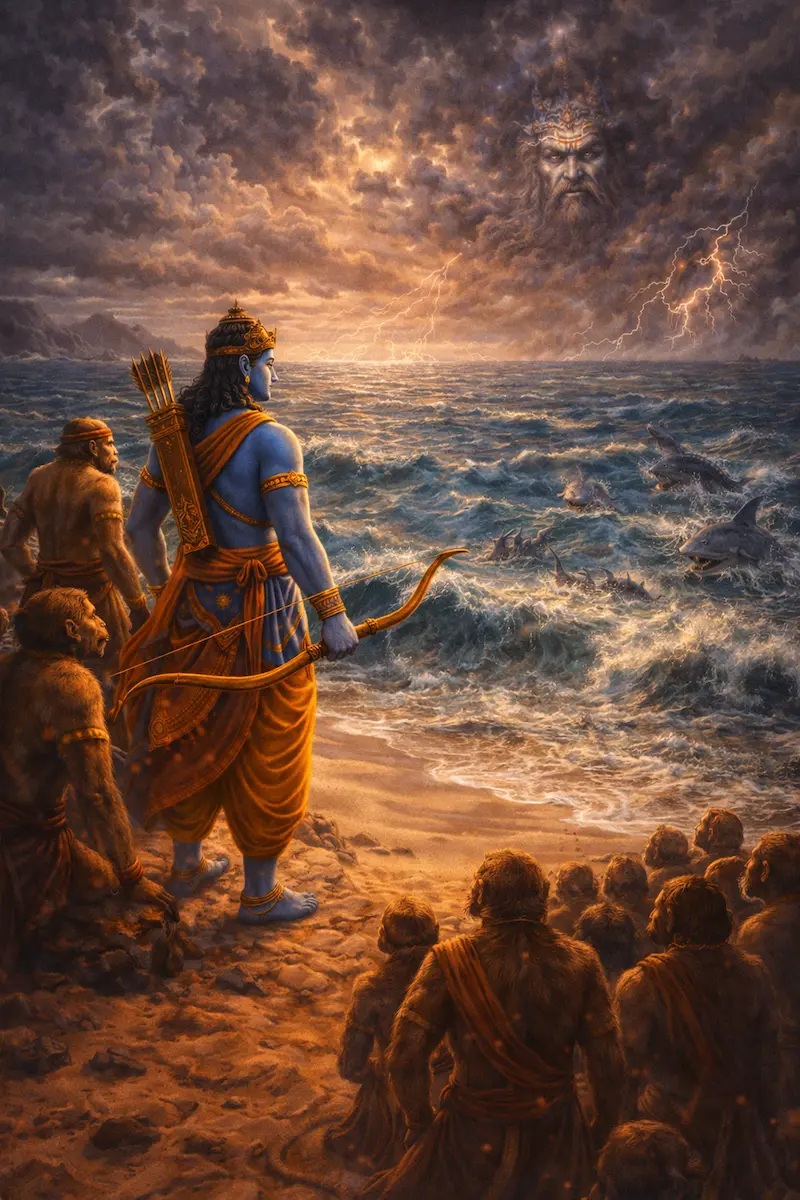
The ocean before them is not merely a body of water; it is an unfathomable expanse, teeming with ferocious aquatic creatures, sharks, and the turbulent energies of Varun Deva. This was the “divine dilemma”: how could a terrestrial army cross such an impossible barrier to reach Lanka and rescue Mother Sita from the demon king Ravan?
They were brave, loyal, and ready. Yet even their collective strength seemed insufficient before the infinite ocean.
It is within this narrative of seemingly insurmountable obstacles that we find the origin of Vijaya Ekadashi. The Ekadashi that grants victory when human effort reaches its limit.
Occurring during the Krishna Paksha [dark fortnight] of the month of Phalguna [February/March], this sacred day, which in 2026 falls on February 13, is revered as the “ultimate giver of victory.”
Why This Ekadashi is Called “Vijaya”
The word “Vijaya” means victory. It does not simply signify a mundane win in a competitive sense, nor just victory over external situations.
In Bhakti tradition, it represents:
• Victory of dharma over chaos [adharma].
• Victory of the soul over the habits of the mind [conditioning of Maya].
• Victory of surrender over fear.
• Victory of divine love over spiritual forgetfulness or distance from God.
• Conquest of the internal “Ravan” that resides within our own hearts.
According to the Skanda Purana, the merits of this Ekadashi are so vast that it acts as a catalyst for both material success and spiritual liberation [Moksha]. It is described as a sacred window in time that nullifies the weight of both past and present karmic reactions.
This sacred observance rises beyond ritual obligation and becomes a spiritual gateway of transformation. To cross the “ocean” of life’s seemingly insurmountable challenges, one must first align consciousness with the cosmic rhythms governing this window of grace.
By aligning our consciousness with Lord Vishnu on this day, we invite the same divine intervention that once empowered Lord Rama to conquer the ocean and defeat the demon king Ravan.
Swami Mukundanandaji repeatedly emphasizes that Ekadashi is not primarily about dieting or detoxification. It is about detaching the senses and attaching the heart to God. In the Bhakti tradition, that means awakening loving remembrance of Radha Krishna. The heart of Ekadashi is bhakti and inner discipline.
Vijaya Ekadashi is not merely a ritual. It is a sacred invitation to align effort with grace.
Vijaya Ekadashi 2026 Date, Tithi & Parana Timings
In Vedic tradition, time is understood as the energy of the Lord.
The Bhagavad Gita states:
Kālo ’smi loka-kṣaya-kṛt pravṛddho
(Bhagavad Gita 11:32)
“I am mighty Time, the source of destruction that comes forth to annihilate the worlds.”
Therefore, precision in observing Tithi is essential. Observing the fast at the correct moment synchronizes human effort with the divine rhythm of the universe. When we honor sacred muhurats, we harmonize personal discipline with cosmic order.
Vijaya Ekadashi 2026 Timings
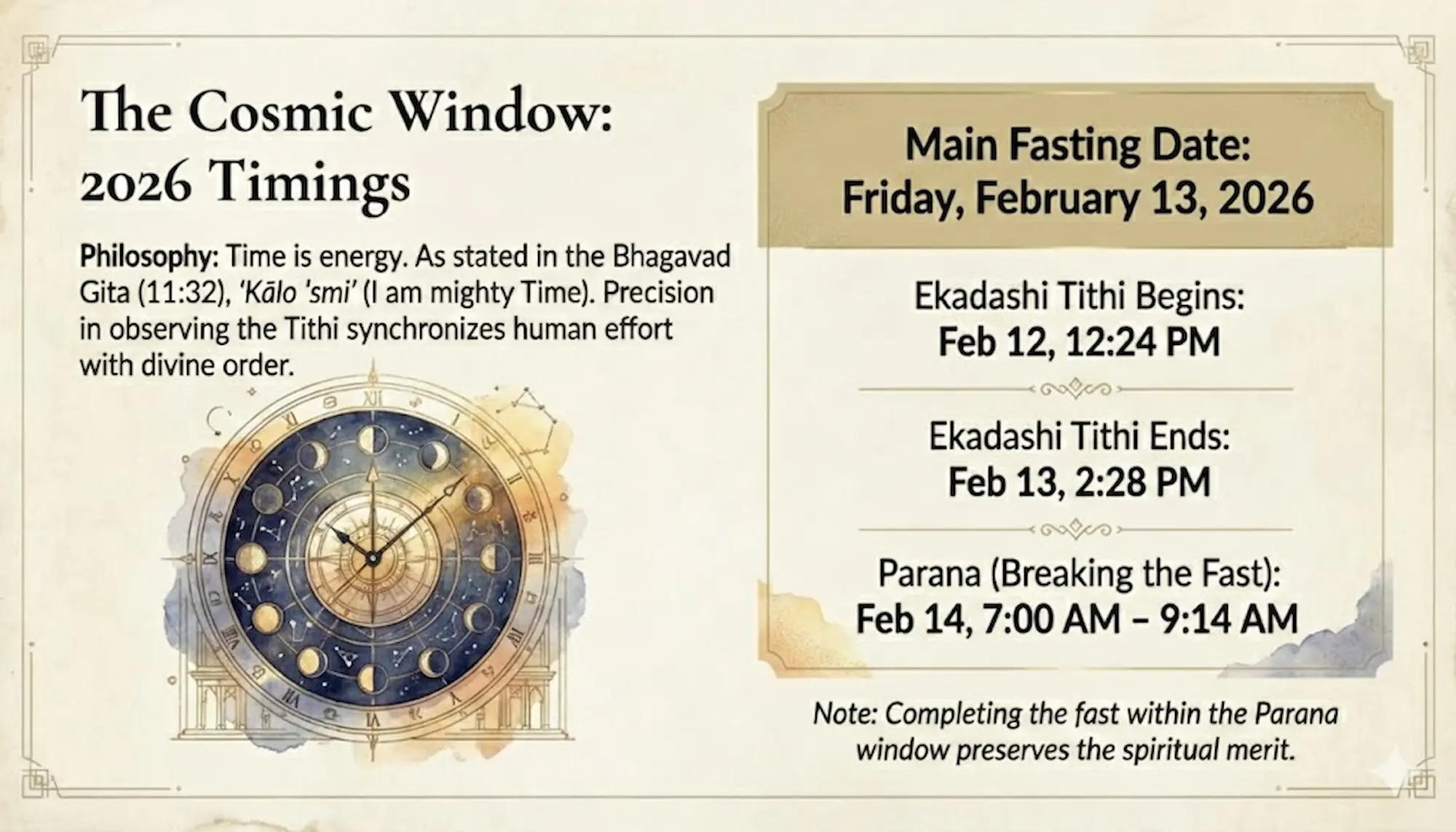
Completing the fast correctly preserves the spiritual merit gained throughout the observance.
The Sacred Vrat Katha: When Lord Rama Observed Vijaya Ekadashi
The history of Vijaya Ekadashi is a blueprint for the modern seeker. It teaches us that when our own strength reaches its limit, the guidance of a realized soul and the power of a sacred vow can bridge the gap between effort and grace.
When Lord Rama reached the ocean, He turned to Lakshman and expressed the weight of His responsibility:
“O son of Sumitra, how can We earn enough merit to cross this vast ocean, the unfathomable abode of Varuna Deva? I see no easy way to cross it, teeming as it is with ferocious aquatics creatures.”
Lakshman, ever the devoted brother, remembered a great sage named Bakadalbhya who lived on a nearby island.
Sage Bakadalbhya was extraordinarily ancient. He was so spiritually advanced that he had seen “many Brahmas come and go,” witnessing the cyclical creation and destruction of universes. When Lord Rama approached him, the sage immediately recognized the Lord’s divinity, seeing Him as God acting in human form. Despite this, the sage played his role as a spiritual guide, instructing the Lord on how to achieve victory through the Vijaya Ekadashi fast.
Sage Bakadalbhya explained that by observing this fast with a specific Kalash [water pot] ritual, the Lord would surely conquer Ravan.
Lord Rama, the Maryada Purushottam, followed the vrat instructions meticulously:
• He fasted
• He worshipped Lord Vishnu
• He spent the night in devotional remembrance
The result was a manifestation of divine intervention. Two Vanaras in Rama’s army, Nala and Nila, possessed a unique blessing from a sage that caused anything they threw into water to float. Empowered by the spiritual merit of the Ekadashi fast, they led the army in building a bridge of floating boulders. The Ram Setu bridge was built, allowing the army to cross the “uncrossable” ocean and defeat the demoniac forces of Ravan.
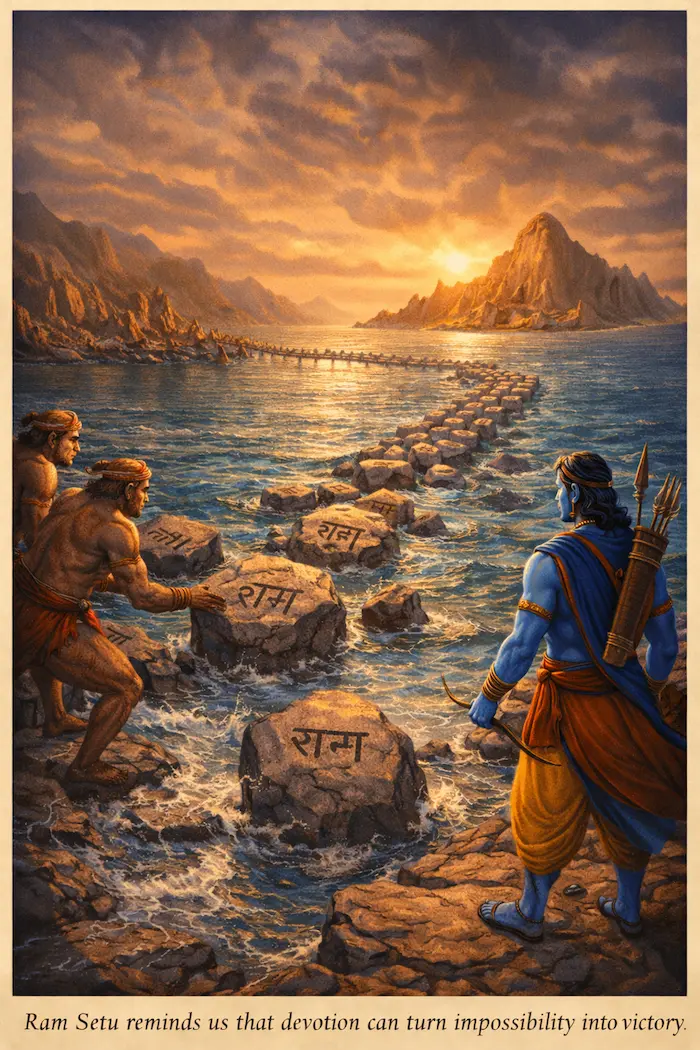
This story stands as an eternal reminder that what appears impossible through human effort alone becomes attainable through divine grace awakened by sincere Ekadashi observance.
The Modern Parallel: We all have our “oceans” — project that won’t finish, the financial hurdle that feels permanent, or the internal “Ravana” of anxiety and ego. Vijaya Ekadashi teaches us that when external efforts stall, internal purification becomes the way forward.
What “Maximum Benefit” Truly Means in Bhakti?
Many devotees ask: “What does maximizing benefit from Ekadashi actually mean?”
In Bhakti tradition, “maximum benefit” is not merely:
• Success in exams
• Promotion
• Victory over opponents
• Removal of problems
Swami Mukundanandaji clarifies that spiritual practices must transform the heart, not merely follow tradition.
Maximum benefit means:
• Reduction of inner impurities [anarthas]
• Softening of the heart
• Increase in loving remembrance of Radha Krishna
• Strengthening of discipline and surrender
• Awakening deeper devotion
True victory is not external success alone. It is transformation of consciousness.
Fasting Guidelines: Levels of Ekadashi Observance
Fasting on Ekadashi is a profound method of Chitta [consciousness] purification.
Beyond the spiritual dimension, there are biological and psychological benefits.
From a physiological perspective, fasting gives the digestive system rest, redirecting energy toward cellular repair, detoxification, metabolic balance, and mental clarity.
Psychologically, it breaks habitual dependence on sensory gratification, strengthens willpower, and allows the mind to detach from bodily demands and focus on the Atma [soul].
However, the deepest benefit remains spiritual purification.
Traditional Fasting Levels
|
Level |
Description |
Spiritual Intensity |
|
Nirjala |
No food or water |
Highest |
|
Jalahar |
Consuming only pure water |
Very High |
|
Ksheerbhoji |
Consuming only milk and dairy products |
High |
|
Phalahar |
Fruits, nuts, and root vegetables |
Moderate |
|
Naktabhoji |
A single grain-free meal consumed before sunset |
Beginner |
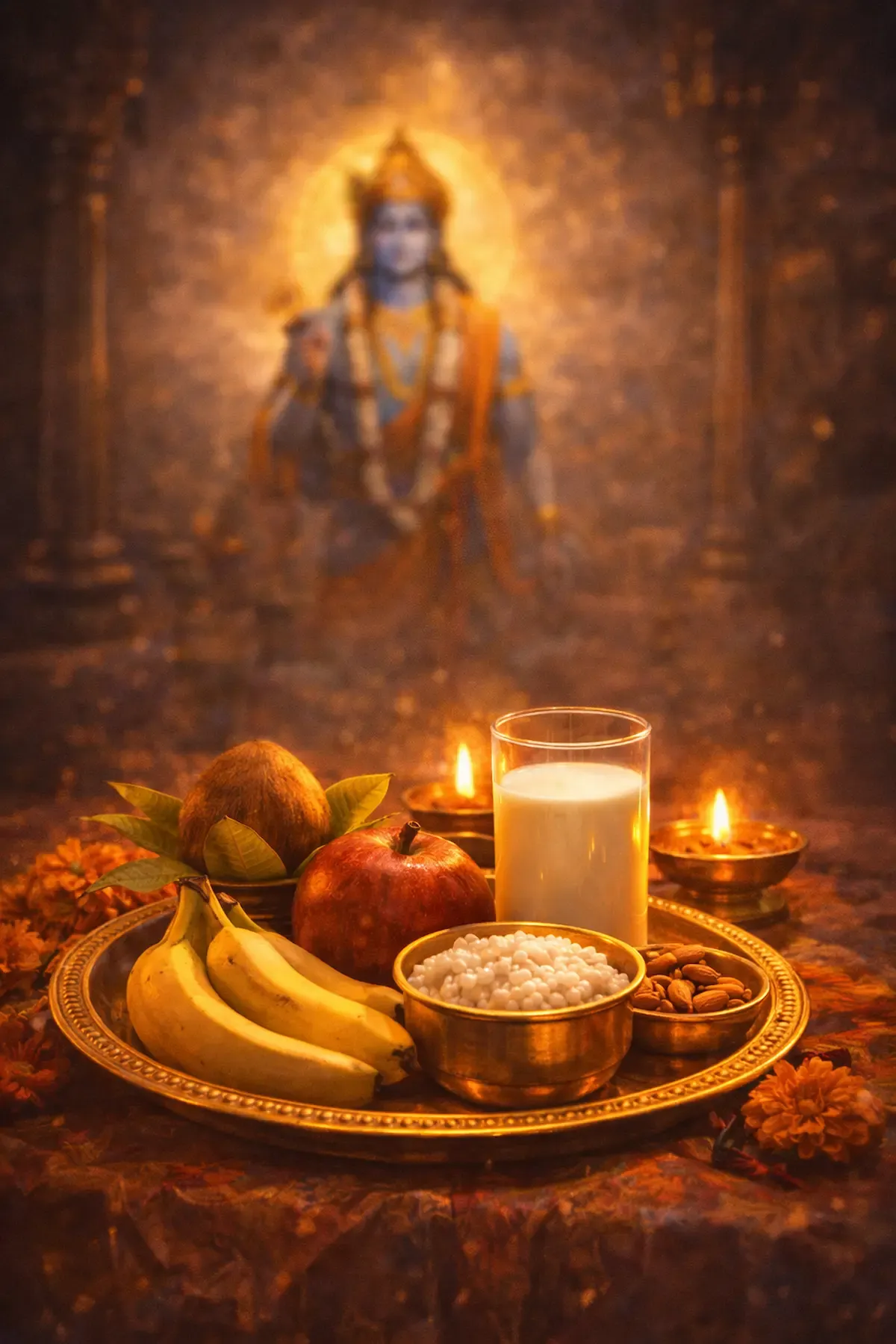
Scriptures recognize different fasting levels based on physical capacity and spiritual readiness. Choose a level that you can observe joyfully and safely.
Foods to Avoid:
• Grains and Pulses: Wheat, corn, rice, beans, and all lentils.
• Onion and Garlic.
• Processed or heavy fried foods.
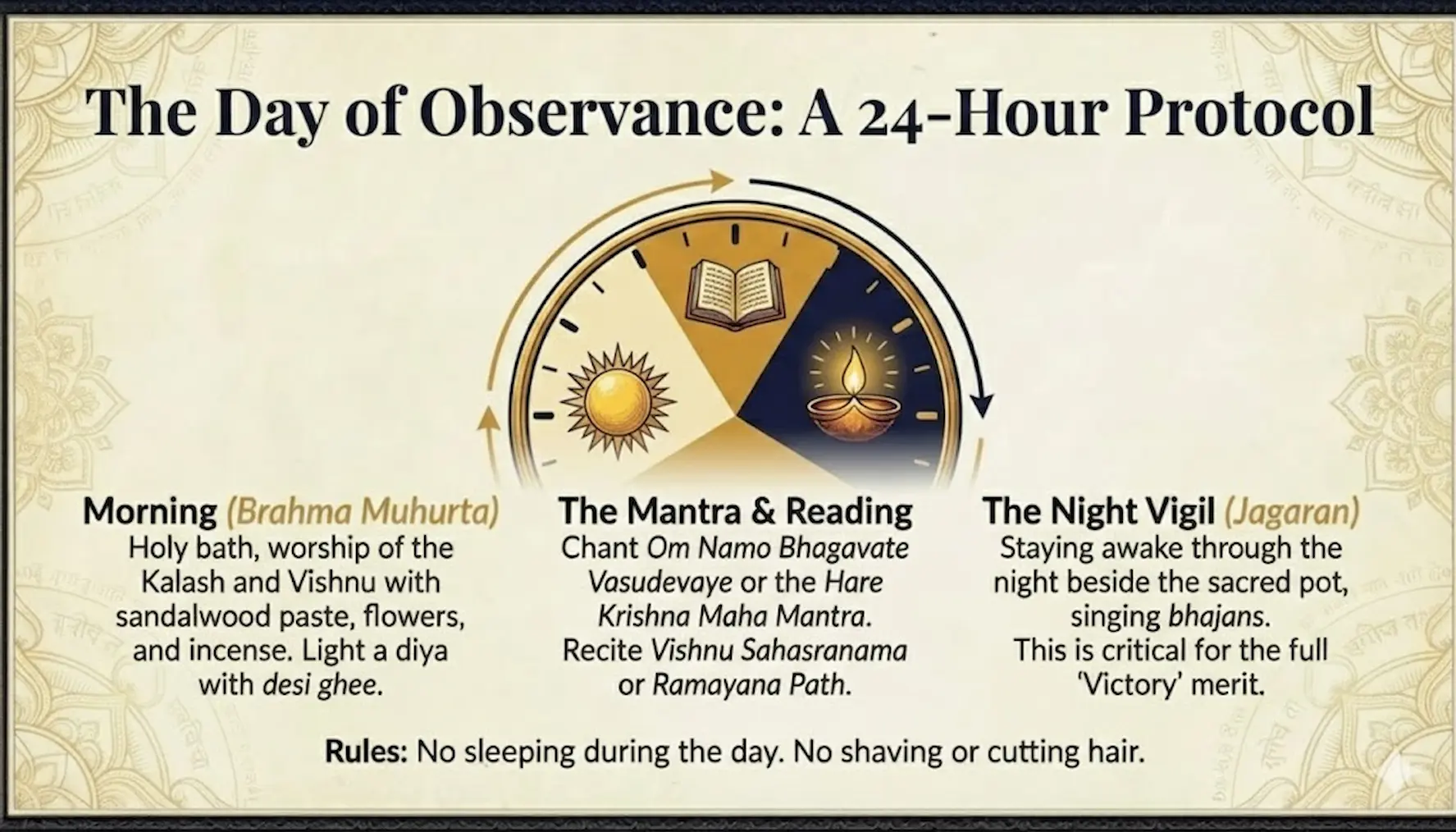
Behavioral Restrictions: Avoid sleeping excessively during the day on both Ekadashi and Dwadashi, as this is said to dissipate the spiritual energy gained during the fast.
Swami Mukundanandaji cautions that Ekadashi should not become a food festival with elaborate fasting recipes. Simplicity allows remembrance to deepen and the mind to remain uplifted.
Thus, “maximum benefit” means:
• Less food thinking and more Hari thinking
• Reduced indulgence and increased remembrance
• Replacing restlessness with surrender
The Signature Ritual: Vijaya Ekadashi Kalash Puja
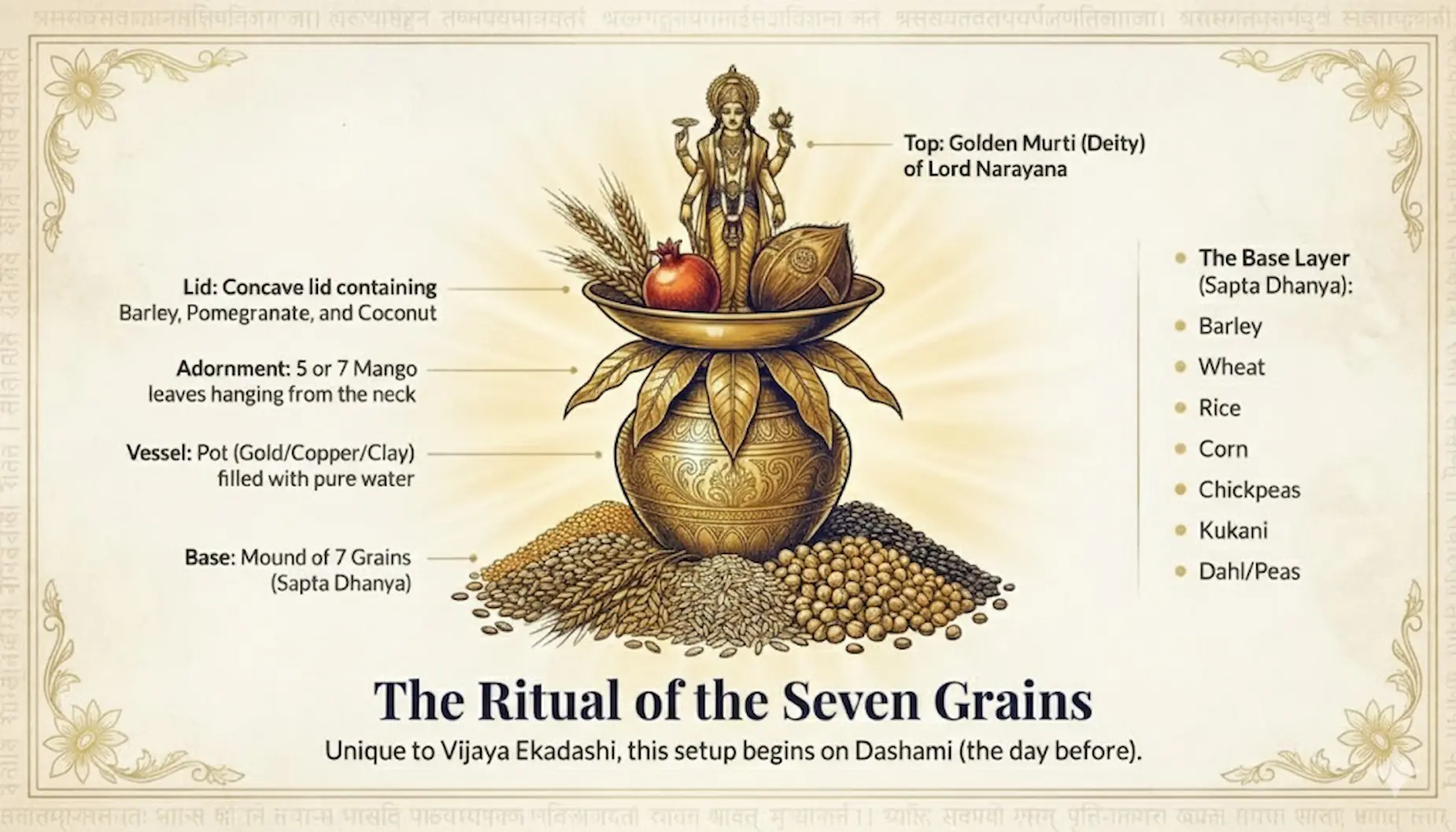
One unique feature of Vijaya Ekadashi is the sacred Kalash worship.
The Kalash, or water pot, symbolizes the Vishwa-Rupa [the universal form] in miniature. Offering the Kalash represents offering the entire universe back to its Creator.
Simple Home Kalash Puja Procedure
Preparation on Dashami:
On February 12th, the day before the fast, prepare a mound of Sapta Dhanya [seven grains]. These grains represent the abundance of the earth: barley, wheat, rice, corn, chickpeas, kukani, and dahl or peas.
- Clean the altar space.
- Prepare your intention (sankalp) for purification and devotion.
On Ekadashi – February 13th:
- Bathe early and wear clean clothes.
- Place the Kalash or pot atop the mound and fill it with pure water.
- Decorate it with 5 or 7 mango leaves and place barley, a pomegranate, and a coconut.
- Place an image or deity of Lord Vishnu or Krishna nearby.
- Perform Shodashopachara Puja [sixteen-step worship] using sandalwood paste, flower garlands, incense, ghee lamp, flowers, and grain-free bhoga.
- Chant: Om Namo Bhagavate Vasudevaya or Hare Krishna Maha Mantra.
The Power of Jagaran: Night Vigil for Inner Victory
Jagaran, or night vigil, is traditionally recommended for those seeking deeper spiritual benefit. It symbolizes choosing divine remembrance over physical comfort. However, spiritual sincerity is more important than physical perfection.
Practical Jagaran Plan for Modern Devotees:
• 9:00 PM – Light kirtan and Sankalp reflection
• 9:30 PM – Japa or devotional music listening
• 10:30 PM – Reading Vijaya Ekadashi Katha
• Midnight – Short remembrance meditation
• Early Morning – Aarti and final prayers
Even partial night vigil, when performed with devotion and sincerity, strengthens spiritual momentum and deepens remembrance of God.
The Conclusion of the Vrat
On the morning of Dwadashi [February 14th], after your morning bath and final prayers, the Kalash, the deity, and all ritual ingredients should be respectfully taken to the bank of a river, pond, or sacred body of water. After offering final worship, devotees traditionally donate these items.
This act completes the spiritual cycle of the fast and symbolizes surrendering the material world back to the Divine.
The Role of Charity: Expanding Victory Through Compassion
True spiritual victory is never selfish; it expands through compassion and mercy. On Vijaya Ekadashi, the spiritual merit of charity is multiplied manifold.
According to the Bhagavad Gita (17.20) states:
“Dātavyam iti yad dānam dīyate ’nupakāriṇe |
deśe kāle ca pātre ca tad dānam sāttvikam smṛtam”
Sattvic charity given at the proper time, place, and to a deserving recipient without expectation is considered the highest form of giving.
Recommended Charity on Vijaya Ekadashi
• Food donation
• Temple seva support
• Offering ghee for lamps
• Helping those in need
• Feeding a cow
Charity soften the ego — the greatest obstacle to divine realization.
The Power of Vedic Homams
For devotees wishing to deepen their Vijaya Ekadashi observance beyond fasting and worship, sacred fire rituals provide an additional spiritual pathway for invoking divine protection, purification, and strength.
These Homams use Vedic mantras and consecrated offerings to harmonize individual karma with higher cosmic energies.
Key Homas for Vijaya Ekadashi
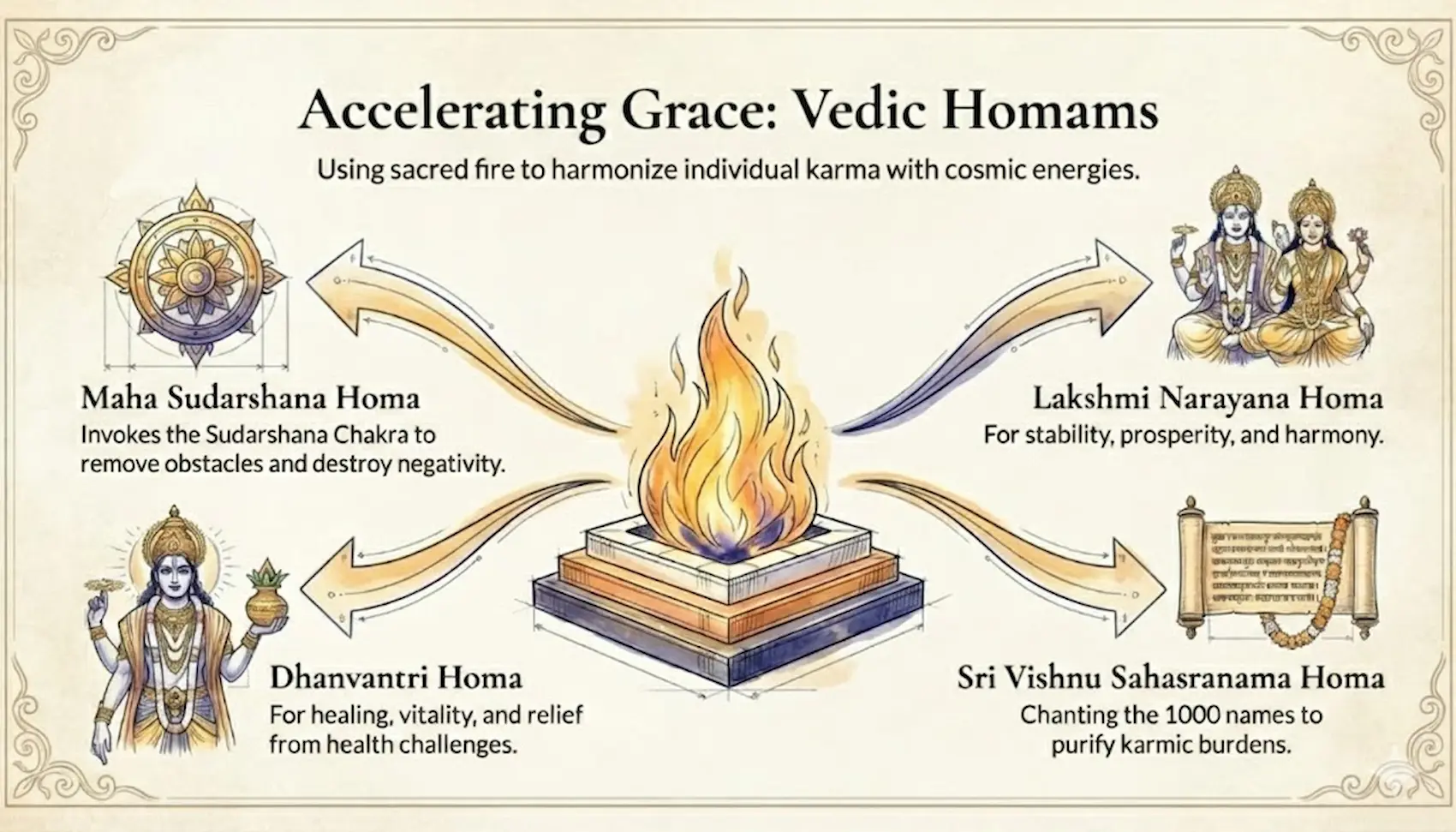
Participating in or sponsoring these Homams aligns personal prayers with ancient Vedic traditions and supports both inner and outer victory.
Vijaya Ekadashi in Modern Life: Crossing Today’s Oceans
Why should a modern student, professional, parent, or spiritual seeker observe this ancient fast in 2026?
The answer lies in the deeper science of karma and consciousness.
Vedic philosophy describes two types of karmic impressions:
• Prarabdha Karma — currently manifesting life circumstances.
• Aprarabdha Karma — dormant karmic seeds influencing future experiences.
Scriptures describe Vijaya Ekadashi as granting spiritual merit equivalent to performing highly complex Vedic sacrificial rituals that are difficult to perform in Kali Yuga.
The symbolic ocean faced by Lord Rama exists in every era. Today, this “ocean” appears as material distractions, emotional turbulence, and spiritual confusion. Similarly, the Ravan we battle exists as our lower tendencies.
Today, this ocean may appear as:
• Overwhelming stress
• Chronic anxiety
• Competitive pressure
• Emotional struggles and relationship challenges
• Spiritual confusion and lack of clarity
• Digital distraction and mental overload
Vijaya Ekadashi becomes a spiritual discipline that trains the mind to detach from impulsive patterns and reattach to divine higher purpose. It teaches that victory is often achieved through inner purification rather than external force.
Modern Applications of the “Victory” of Vijaya Ekadashi
For Students — Victory of Intellect
Students often face intense pressure in the form of examinations, competition, and distractions from digital environments. Vijaya Ekadashi strengthens mental clarity by purifying the Chitta, the inner consciousness that governs memory and focus.
Observing the fast can:
• Improve focus and discipline
• Reduce distraction and restlessness
• Increase memory retention
• Strengthen emotional resilience during academic challenges
By voluntarily practicing self-restraint through fasting, students develop the psychological strength to resist distractions, building long-term intellectual stability.
For Professionals — Victory Over Competition and Stress
Modern careers often resemble intense battlefields of performance expectations, deadlines, competition, and financial pressure.
Vijaya Ekadashi provides professionals with inner stability and ethical grounding. It helps align success with Dharma rather than stress-driven ambition.
The observance supports professionals by:
• Enhancing emotional balance
• Reducing internal stress and burnout
• Strengthening integrity and ethical decision-making
• Building resilience during career uncertainty
• Cultivating clarity during leadership challenges
The fast becomes not merely a religious ritual, but a powerful tool for conscious leadership and mindful productivity.
For Advanced Practitioners — Victory Over the Self
For experienced spiritual seekers, Vijaya Ekadashi offers deeper purification beyond visible habits.
Just as Lord Rama defeated Ravan externally, advanced practitioners use this day to defeat internal Ravans such as:
• Subtle ego
• Pride in spiritual progress
• Hidden desires
• Judgment toward others
• Attachment to recognition
• Resistance to surrender
Observing Vijaya Ekadashi with deep devotion allows seekers to cultivate humility and deeper absorption in Radha Krishna remembrance.
This marks true spiritual victory.
For Non-Hindu or New Spiritual Seekers — Universal Psychological Victory
Even individuals new to Hindu traditions or Bhakti philosophy can benefit from the universal psychological and spiritual principles of Ekadashi.
Vijaya Ekadashi teaches four universally transformative practices:
• Reducing sensory overload
• Increasing inner stillness
• Strengthening intentional living
• Aligning daily life with higher purpose
For those drawn toward devotional love, it becomes a day of consciously turning the heart toward Divine consciousness.
A Simple “Victory Sadhana” Plan for Vijaya Ekadashi
For devotees living busy modern lives, even simplified observance can generate powerful results. If you follow these steps sincerely, your Ekadashi becomes deeply transformative:
1. Sankalp — Sacred Intention
Begin your day with a heartfelt intention:
“May this vrat purify my heart and bring me closer to Radha Krishna.”
Setting Sankalp directs spiritual energy and clarifies devotional purpose.
2. Less Food, More Name
Simplify your diet based on your capacity, but increase chanting, japa, or kirtan throughout the day.
The true goal of fasting is not food restriction — it is remembrance expansion.
3. One Sacred Reading
Spend time reading or listening to:
• Vijaya Ekadashi Vrat Katha
• Bhagavad Gita Chapter
• Ramayana narration
• Teachings of saints
Sacred reading nourishes the intellect and strengthens spiritual focus.
4. One Act of Humility
Perform one conscious act of seva or charity. This may include:
• Supporting temple seva
• Helping someone in need
• Offering food or donations
• Volunteering service
Seva softens the ego and expands devotional compassion.
5. One Honest Prayer
Offer sincere prayer:
“Lord, defeat my inner Ravan. Remove my weaknesses and guide me toward devotion.”
Honest prayer strengthens surrender and deepens spiritual connection.
6. The Digital Fast
In modern times, mental fasting is as important as dietary fasting.
Reducing screen exposure and social media stimulation allows the mind to settle into devotional awareness.
Digital fasting creates space for introspection and spiritual receptivity.
Swami Mukundanandaji’s Teachings on Ekadashi
Swami Mukundanandaji emphasizes that spiritual discipline must remain heart-centered rather than ritual-centered.
He teaches:
• Fasting purifies the mind and reduces sensory domination
• Devotion must accompany austerity
• Constant remembrance of Radha Krishna is the true goal
• Ekadashi helps conquer lust, anger, greed, and restlessness
Swamiji often reminds seekers: The mind is the real battlefield. Victory comes when devotion replaces distraction.
Ekadashi is therefore a conscious redirection of life’s energy toward divine love.
Conclusion: The Victory Waiting Within You
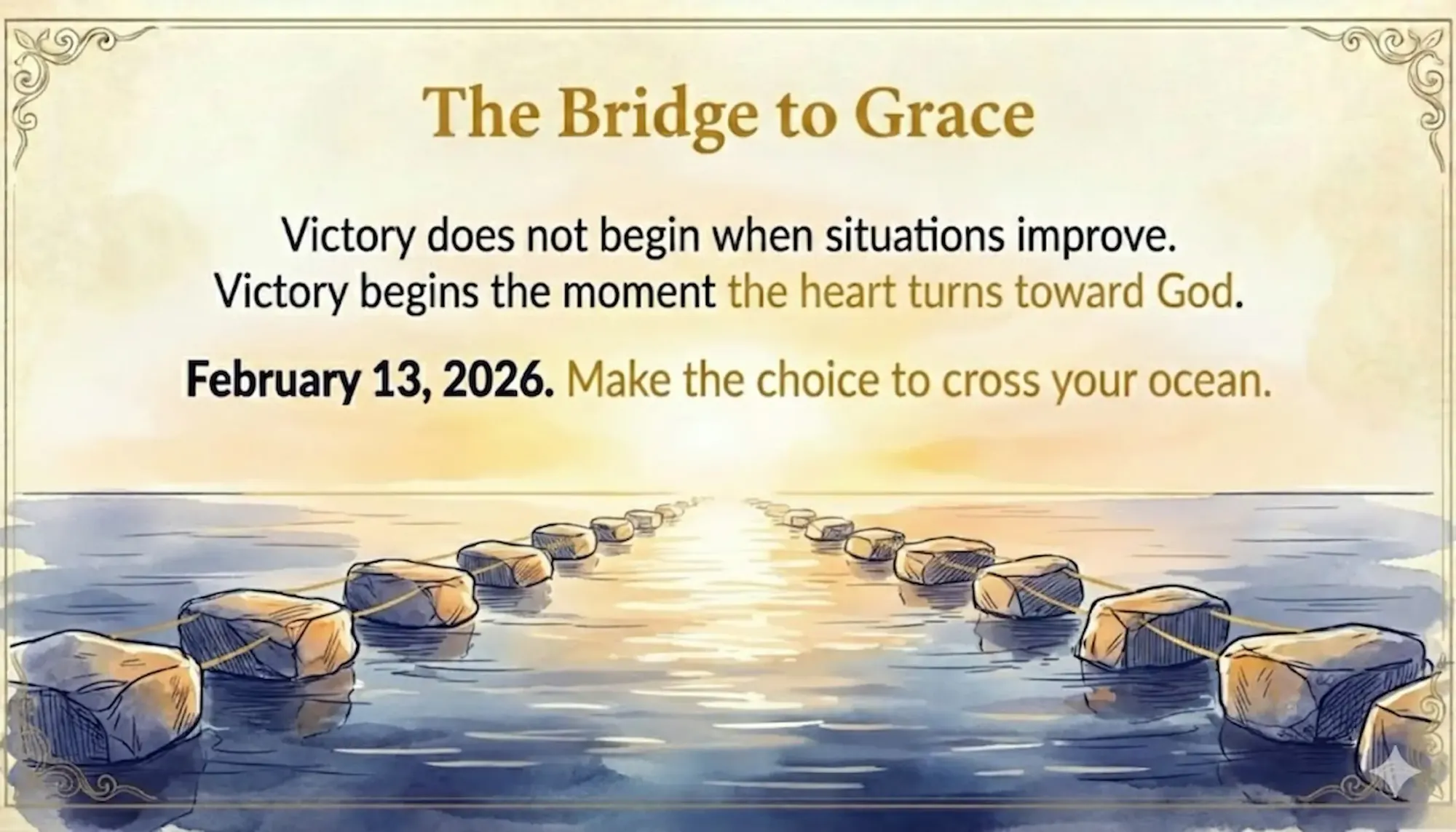
February 13, 2026 is not merely a fasting day. It is a sacred spiritual portal.
It is a divine invitation to pause, reflect, and realign life’s direction toward spiritual truth. Vijaya Ekadashi invites devotees to place their struggles, fears, ambitions, and hopes at the lotus feet of Radha Krishna.
By observing this sacred vow, devotees acknowledge that every ocean in life — fear, attachment, uncertainty, emotional pain, or spiritual confusion — can be crossed through divine grace.
The transformative potential of Vijaya Ekadashi lies in surrender. When devotees follow the example of Lord Rama, they learn that victory does not arise from strength alone or changing external circumstances, but by transforming internal consciousness via humility, devotion, and faith.
Victory does not begin when situations improve.
Victory begins the moment the heart turns toward God.
Call To Action:
Spiritual observance becomes profoundly powerful when practiced in sacred association.
Experience Vijaya Ekadashi in the uplifting devotional atmosphere of Radha Krishna Temple of Dallas and allow your family to receive collective spiritual blessings.
Whether you are a regular devotee or visiting for the first time, the temple warmly welcomes you to participate and experience the joy of collective devotion.
Frequently Asked Questions About Vijaya Ekadashi
- Can I drink water during Ekadashi?
Yes. Unless you observe Nirjala fast, water consumption is allowed based on health needs. The purpose of fasting is devotion, not physical strain.
- Is night vigil mandatory?
Night vigil is highly recommended for maximum spiritual benefit but not mandatory. Even partial Jagaran performed with sincerity generates devotional momentum.
- Can working professionals observe Ekadashi?
Yes. Ekadashi is designed for spiritual growth within worldly responsibilities. Devotees may choose fasting levels compatible with their professional schedules while maintaining remembrance through chanting and mindfulness.
- What gives the highest benefit — fasting or devotion?
Devotion. Fasting supports devotional remembrance but is not the ultimate goal. The heart’s absorption in divine remembrance determines spiritual benefit.
- Can beginners or non-Hindus observe Ekadashi?
Yes. Ekadashi’s principles of discipline, mindfulness, and spiritual reflection are universal. Beginners may observe simplified fasting while focusing on meditation, chanting, and positive intention.