
Introduction
In the Hindu understanding of time, the moon is more than a marker of days. It is a quiet guide for inner life. As it waxes and wanes, it invites us to move in rhythm with nature, alternating between outward engagement and inward reflection. These subtle shifts remind us that life is not meant to be lived in constant expansion alone, but in balance, with space to pause, absorb, and realign.
Krishna Paksha refers to the phase when the moon begins to wane after the full moon, gradually withdrawing its visible light until Amavasya. While often described as the darker half of the lunar month, this period has traditionally been understood not as a time of decline, but as a sacred invitation to turn inward. It naturally supports introspection, emotional cleansing, and the quiet work of inner refinement.
Many view Krishna Paksha as a phase inclined toward bhakti, not through outward display or elaborate observance, but through a quieter relationship with the Divine. Silent prayer, inner remembrance, and a heartfelt plea for guidance find natural resonance during this time. Seen in this light, Krishna Paksha is not merely a division of the calendar, but an opportunity to release what weighs us down and reconnect with what truly sustains us.
A Brief Note on the Hindu Lunar Month
The Hindu calendar follows a thoughtful rhythm in which the year aligns with the solar cycle, while the months are guided by the moon. This solar–lunar harmony allows time to remain connected both to the outer movement of seasons and to the inner, experiential rhythms reflected by the moon.
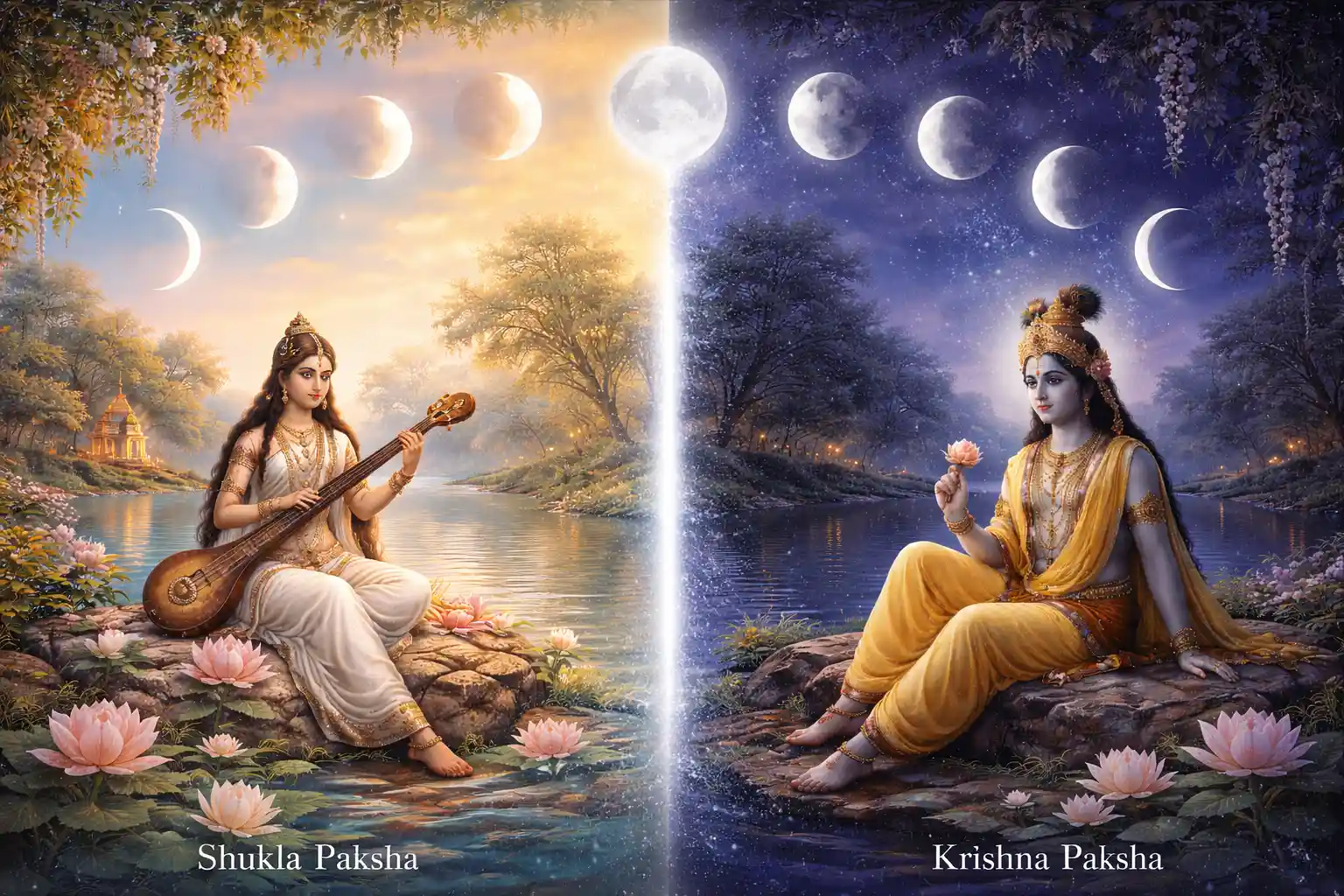
Because each month follows the moon’s waxing and waning, it naturally divides into two halves. The first half, marked by increasing lunar light, supports growth, visibility, and outward movement. The second half begins after the full moon, as the light gradually recedes, inviting reflection and inward awareness. Krishna Paksha refers to this latter phase, when attention naturally turns within.
For many, this phase is gently inclined toward bhakti, not as structured practice, but as a mood of inward prayer, silent remembrance, and personal calling out to the Divine. Less is sought outwardly, allowing space for stillness and inner alignment.
What Is Krishna Paksha?
Krishna Paksha is the second half of the lunar month, beginning after Purnima and continuing until Amavasya. During this phase, the moon’s visible light steadily diminishes, marking a gradual shift from fullness to quietude. In the language of the lunar rhythm, this is not an abrupt withdrawal, but a gentle and progressive turning inward.
Rather than representing loss, Krishna Paksha symbolizes refinement. As outer brightness recedes, attention is no longer scattered outward. The phase encourages easing away from excess, of activity, distraction, and unnecessary striving, supporting completion rather than initiation, awareness rather than assertion.
Seen this way, Krishna Paksha is less about what diminishes in the sky and more about what deepens within. It offers a reflective space in the monthly cycle, preparing the mind and heart for renewal that follows.
As the moon’s outer light diminishes, the deeper meaning of Krishna Paksha begins to reveal itself, not as an absence, but as an invitation to look within.
Spiritual Significance of Krishna Paksha
The spiritual significance of Krishna Paksha lies in its quiet support for inner growth. As external distractions naturally soften, this phase creates a conducive atmosphere for awareness, restraint, and self-observation. It does not demand withdrawal from life but gently encourages a shift in emphasis, from doing to understanding, from expression to contemplation.
This inward tilt supports strengthening the relationship between the mind and the higher self. When sensory pull reduces, even slightly, space opens for discernment and clarity. Krishna Paksha thus favors inner discipline, emotional regulation, and the deepening of faith, not through intensity, but through steadiness.
At a deeper level, this phase aligns with surrender. The gradual fading of the moon’s light reminds us that reliance on external illumination is temporary, while inner anchoring is enduring. For many seekers, this opens the heart to bhakti expressed in its simplest form; trust, remembrance, and a quiet turning toward the Divine.
Key Days Within Krishna Paksha
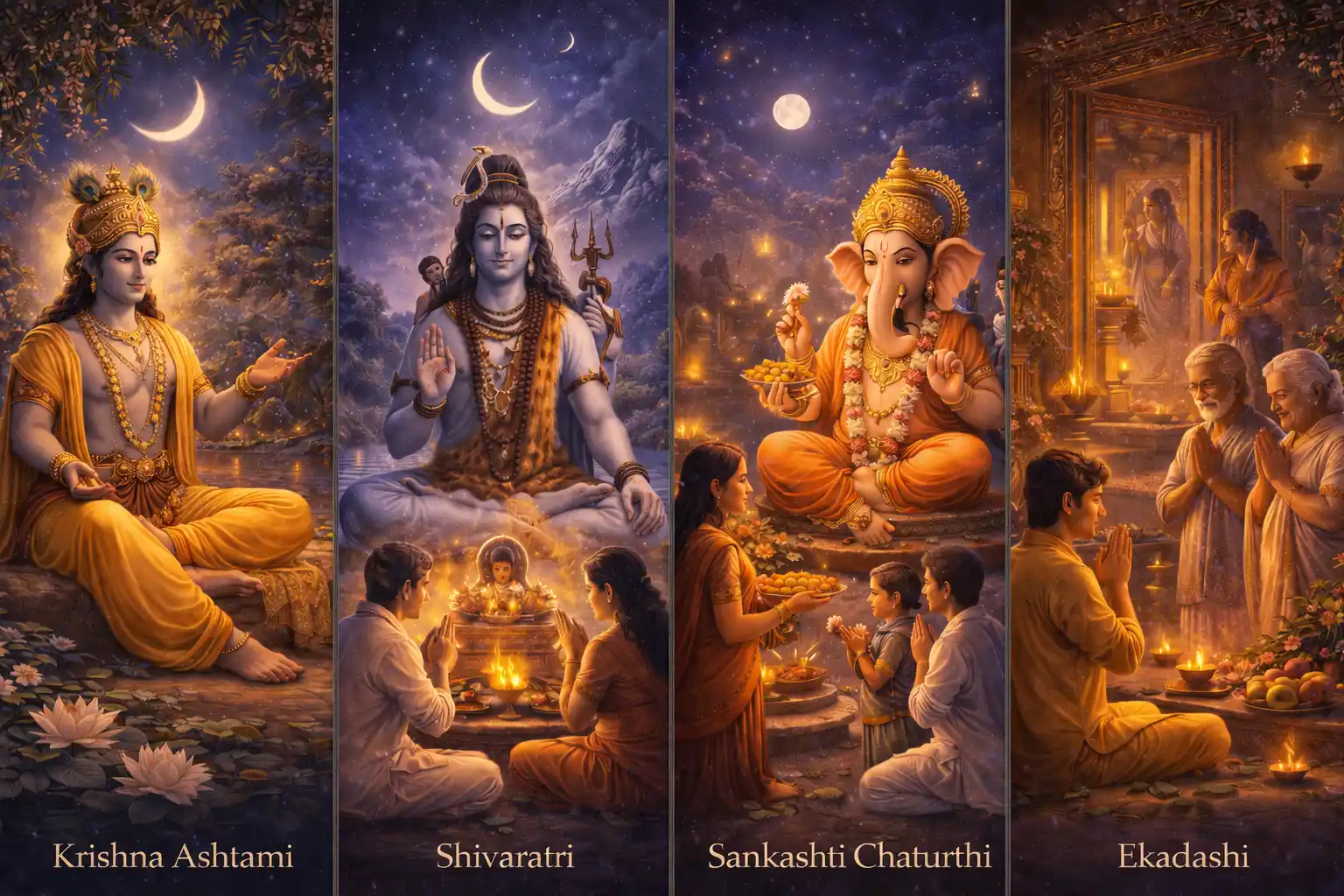
Within Krishna Paksha, certain lunar days naturally draw heightened devotional attention because they resonate deeply with the inward spirit of this phase. These days are recognized not for ritual complexity, but for the way they support reflection, restraint, and spiritual focus.
Krishna Ashtami is often approached as a time of deep remembrance of the Lord, drawing the heart toward devotion and humility. Ekadashi reflects a subtler spiritual emphasis that echoes Lord Krishna’s teachings on purification of the mind and upliftment of the soul. Observances such as Indra Ekadashi and Moksha Ekadashi are remembered for their symbolic association with release, refinement, and spiritual clarity. Shivaratri on the fourteenth day of the lunar month appealing to the devotees to honor fasting, meditating, and nocturnal vigil to celebrate the celestial Divine union of Shiva, the super consciousness with Mother Parvati, symbol of devotion and bhakti. Sankashti Chaturthi every fourth day of the lunar again symbolizing the removal of obstacles in the path of the devotee to gain spiritual growth. Together, these days align seamlessly with the inward journey Krishna Paksha supports, encouraging purification of intention and a quieter turning toward the Divine.
Practice and Inner Observances During Krishna Paksha
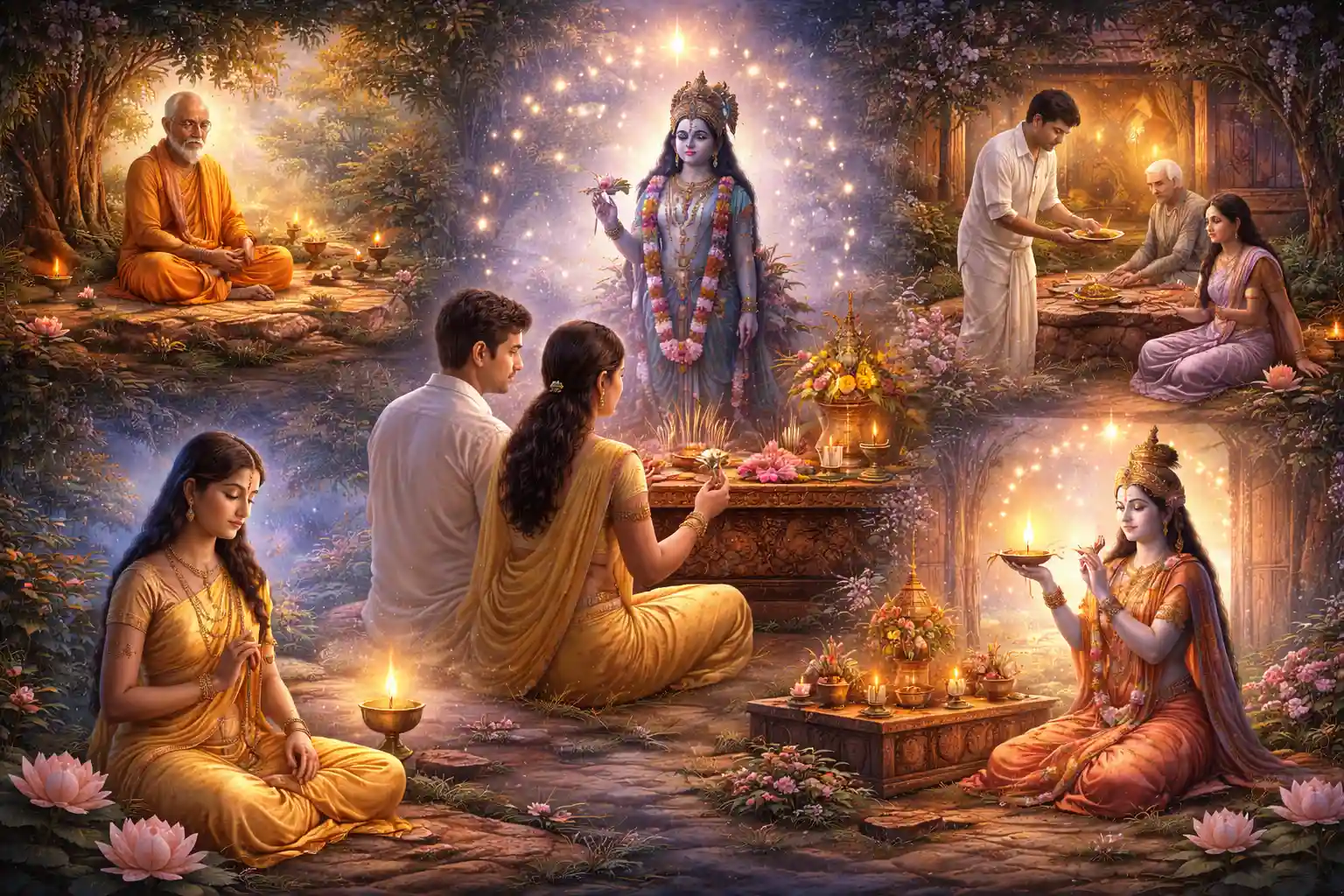
Practices associated with Krishna Paksha are best understood as shifts in attitude rather than fixed actions. The waning phase naturally supports simplification, of habits, thoughts, and outward engagement. Instead of adding discipline, it gently encourages doing a little less and observing a little more.
Many devotees gravitate toward quieter expressions of spirituality during this time. Practices such as kirtan, gentle chanting, or periods of fasting are often embraced not as obligations, but as aids to deepen awareness and devotion. These expressions help soften mental restlessness and create space for remembrance, allowing the heart to turn inward with greater simplicity. Their value lies not in form, but in the clarity, humility, and inner stillness they encourage.
Viewed in this way, Krishna Paksha becomes a supportive backdrop for introspection and emotional clarity, time to notice what no longer serves, soften attachments, and reconnect with inner intention.
Krishna Paksha and Mind Management
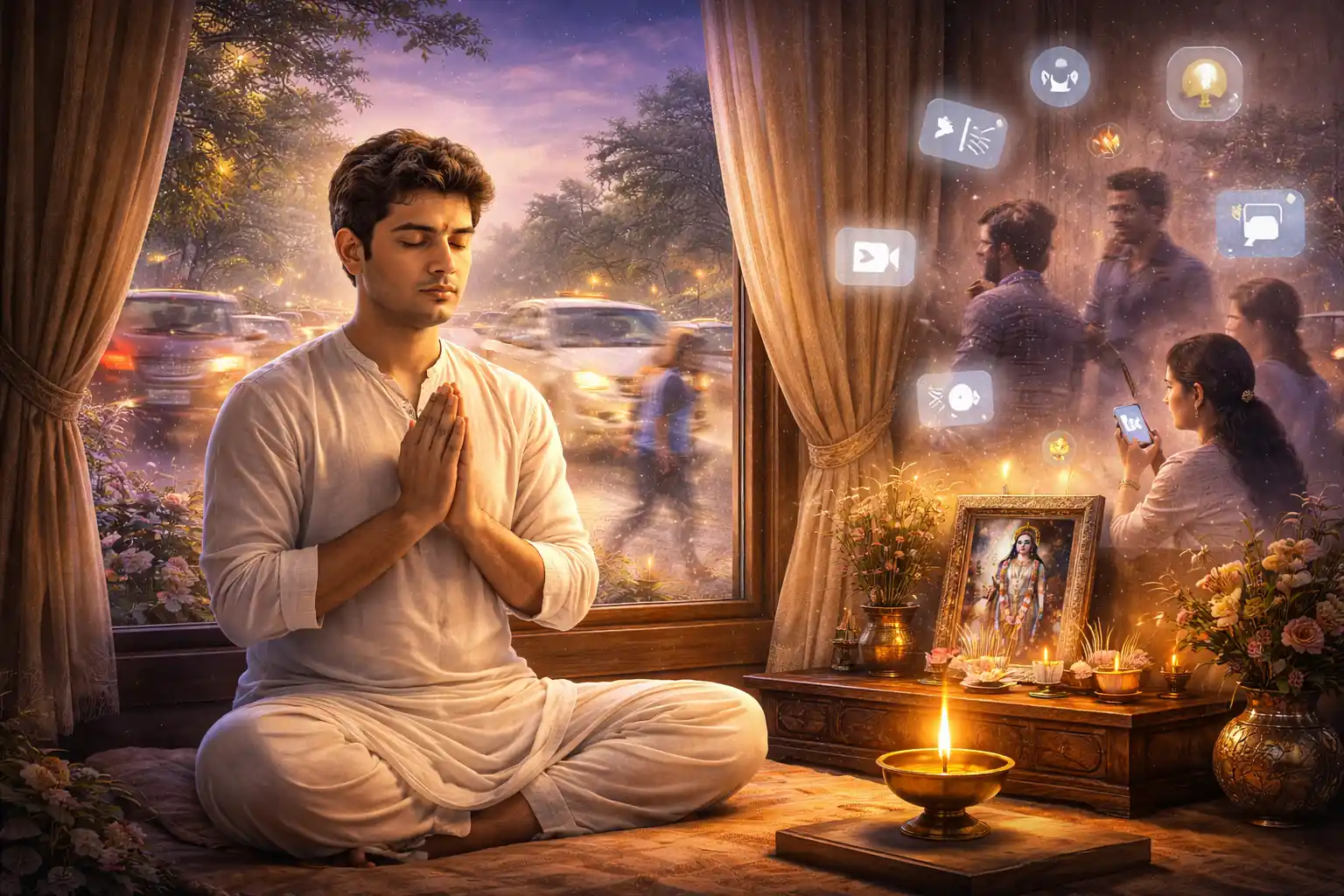
Krishna Paksha can be seen as a naturally supportive phase for mind management. As lunar energy shifts inward, it becomes easier to observe mental patterns that often go unnoticed during more outwardly active phases. Reduced external stimulation allows thoughts, habits, and emotional tendencies to surface with greater clarity.
Rather than pushing the mind toward effort or achievement, this phase invites gentle supervision. It supports reviewing responses, noticing recurring distractions, and identifying areas where the mind resists discipline or seeks excess. In this sense, Krishna Paksha serves as a monthly pause, a space for mental audit rather than mental strain.
When approached consciously, this inward phase helps realign the mind with discernment. Inner noise softens, awareness strengthens, and balance between impulse and intention is restored, quietly preparing the seeker for renewed outward engagement.
Krishna Paksha for Household Devotees
Krishna Paksha holds special relevance for household devotees because it does not ask for withdrawal from daily responsibilities. Instead, it offers a gentle rebalancing within the rhythm of home, work, and relationships. Its inward quality can be expressed through small, thoughtful shifts rather than major changes.
Pitṛ Paksha, which occurs during Krishna Paksha, carries this inward spirit in a deeply human way. Traditionally associated with remembrance of ancestors and lineage, it draws attention toward gratitude, humility, and continuity across generations. Rather than focusing on outward observance, it encourages quiet acknowledgment of one’s roots and responsibilities. In this light, Pitṛ Paksha becomes less about form and more about feeling. An inward honoring that aligns naturally with the reflective tone of the waning moon.
For families, Krishna Paksha can become a time of calmer evenings, simpler routines, and more mindful conversations. Children absorb these rhythms through example, learning that stillness and restraint are as valuable as activity and celebration. Devotion, here, is lived quietly and sincerely woven into ordinary life.
Clearing Common Misconceptions About Krishna Paksha
A common misconception is that Krishna Paksha is inauspicious. This view arises from equating the waning moon with decline. Reduction does not signify weakness; it signals a shift in purpose. Just as rest is essential for renewal, this phase supports inner strengthening rather than outward display.
Another misunderstanding is that Krishna Paksha demands strict observance or withdrawal from normal life. Its essence lies not in obligation, but in orientation. The inward quality of this phase invites awareness and reflection, not fear or rigidity.
Krishna Paksha is sometimes seen as less spiritually potent than the waxing phase. Yet spiritual depth often emerges in stillness, surrender, and quietude. When understood correctly, Krishna Paksha reveals itself as a phase of subtle power, one that nurtures clarity, humility, and inner readiness for renewal.
Understanding the Two Halves of the Lunar Month
The division of the lunar month into two halves reflects rhythm rather than hierarchy. Shukla Paksha, the waxing phase, aligns with increasing light, outward momentum, and beginnings. Krishna Paksha, the waning phase, supports assimilation, refinement, and completion.
This understanding of two complementary movements is also echoed in the Bhagavad Gita (Chapter 8, verses 23–26), where Lord Krishna speaks of distinct cosmic paths associated with light and withdrawal. These paths are not presented as opposing or unequal, but as part of a larger spiritual rhythm, both ultimately oriented toward God-realization, nurtured through inner purification, constant remembrance of the Divine, humility, selfless service, and surrender to Lord Krishna.
Seen together, the two Pakshas are complementary. One encourages action and expression; the other encourages understanding and inward integration. Cultural preferences around timing arise from this intuitive rhythm, not from judgment or inequality. Both halves are essential for balance.
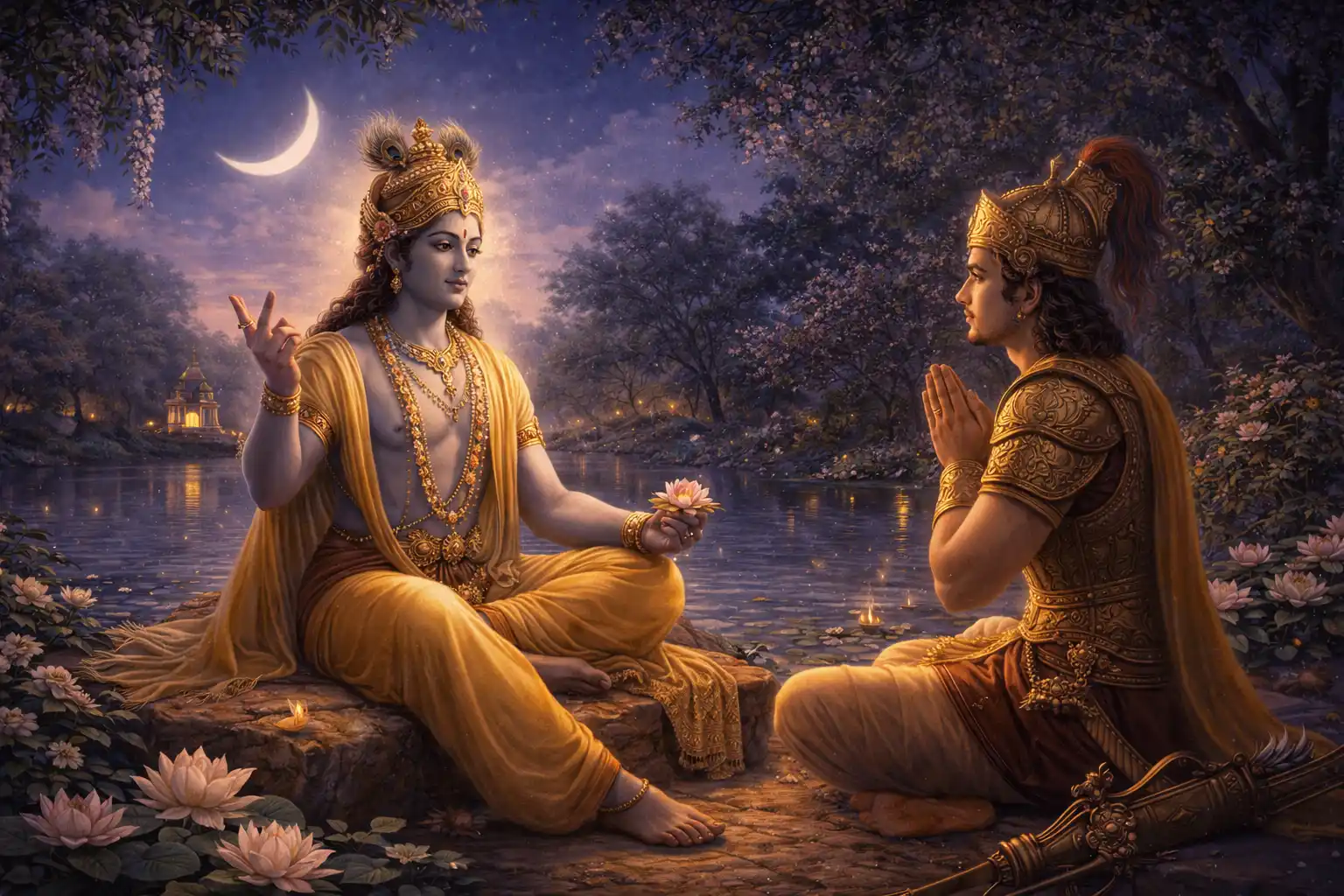
Krishna Paksha Within the Monthly Spiritual Rhythm
When viewed as part of the complete lunar cycle, Krishna Paksha reveals its deeper purpose. Growth requires both movement and pause, expression and reflection. Krishna Paksha provides the space for experiences to settle, emotions to be understood, and intentions to be refined.
By honoring both light and withdrawal within each month, the lunar rhythm offers a gentle framework for living with awareness. Krishna Paksha does not stand in contrast to progress, it completes it.
A Quiet Invitation to Reflect
Understanding Krishna Paksha invites a shift in perspective. Rather than viewing time as something to fill or conquer, it encourages listening, to nature’s rhythm, to the movements of the mind, and to the quiet promptings of the heart.
In the soft diminishing of the moon’s light lies an opportunity to release what is unnecessary and reconnect with what is enduring. Approached with awareness, Krishna Paksha becomes a reminder that inward turning has its own sacred place in life, preparing the ground for renewal when light returns once again.
Key Takeaways
- Krishna Paksha is not a phase of decline, but refinement.
The waning moon symbolizes inward turning, helping us release excess and deepen awareness. - The lunar rhythm supports balance, not hierarchy.
Shukla Paksha and Krishna Paksha together create a complete spiritual cycle—action followed by assimilation. - Krishna Paksha naturally inclines the heart toward bhakti.
Silent prayer, remembrance, humility, and surrender arise organically during this inward phase. - Inner purification is the central theme of this period.
Observances such as Ekadashi and Krishna Ashtami echo Lord Krishna’s teachings on uplifting the soul through restraint and clarity. - Household life and spirituality are not in conflict.
Krishna Paksha integrates seamlessly into family life through calmer routines, gratitude, and mindful living. - The aim remains God-realization.
As reflected in the Bhagavad Gita (Chapter 8), both outward and inward paths lead toward realization of the Divine through remembrance, service, humility, and surrender to Lord Krishna.
A Gentle Call to Action
As the moon wanes this Krishna Paksha pause for a moment of inward attention.
Reduce what distracts you. Deepen what connects you.
Whether through quiet remembrance, mindful living, or a simple prayer from the heart, allow this phase to guide you toward inner clarity and devotion.
🌙 Let the fading light outside awaken a steadier light within.
Frequently Asked Questions
1. Is Krishna Paksha considered inauspicious in Hindu tradition?
No. Krishna Paksha is often misunderstood. It is not inauspicious but introspective—supporting reflection, purification, and inner growth.
2. What is the spiritual purpose of Krishna Paksha?
Its purpose is inward refinement—helping the seeker reduce distractions, purify intention, and deepen devotion.
3. How is Krishna Paksha different from Shukla Paksha?
Shukla Paksha supports outward action and beginnings, while Krishna Paksha supports assimilation, completion, and inward awareness. Both are essential.
4. Why are Ekadashi and Krishna Ashtami significant during Krishna Paksha?
These days resonate strongly with themes of purification, remembrance, and upliftment of the soul, aligning with the inward nature of the waning moon.
5. Can householders observe Krishna Paksha meaningfully?
Yes. Krishna Paksha does not require withdrawal from daily life. Small shifts—calmer routines, gratitude, mindful prayer—are sufficient.
6. Does the Bhagavad Gita mention these lunar phases?
Yes. In Chapter 8 (verses 23–26), Lord Krishna explains two cosmic movements associated with light and withdrawal, affirming rhythm rather than hierarchy—both ultimately oriented toward God-realization.
References & Citations
Bhagavad Gita – Chapter 8 (Referenced Verses)
- Bhagavad Gita 8.23
https://www.holy-bhagavad-gita.org/chapter/8/verse/23 - Bhagavad Gita 8.24
https://www.holy-bhagavad-gita.org/chapter/8/verse/24 - Bhagavad Gita 8.25
https://www.holy-bhagavad-gita.org/chapter/8/verse/25 - Bhagavad Gita 8.26
https://www.holy-bhagavad-gita.org/chapter/8/verse/26