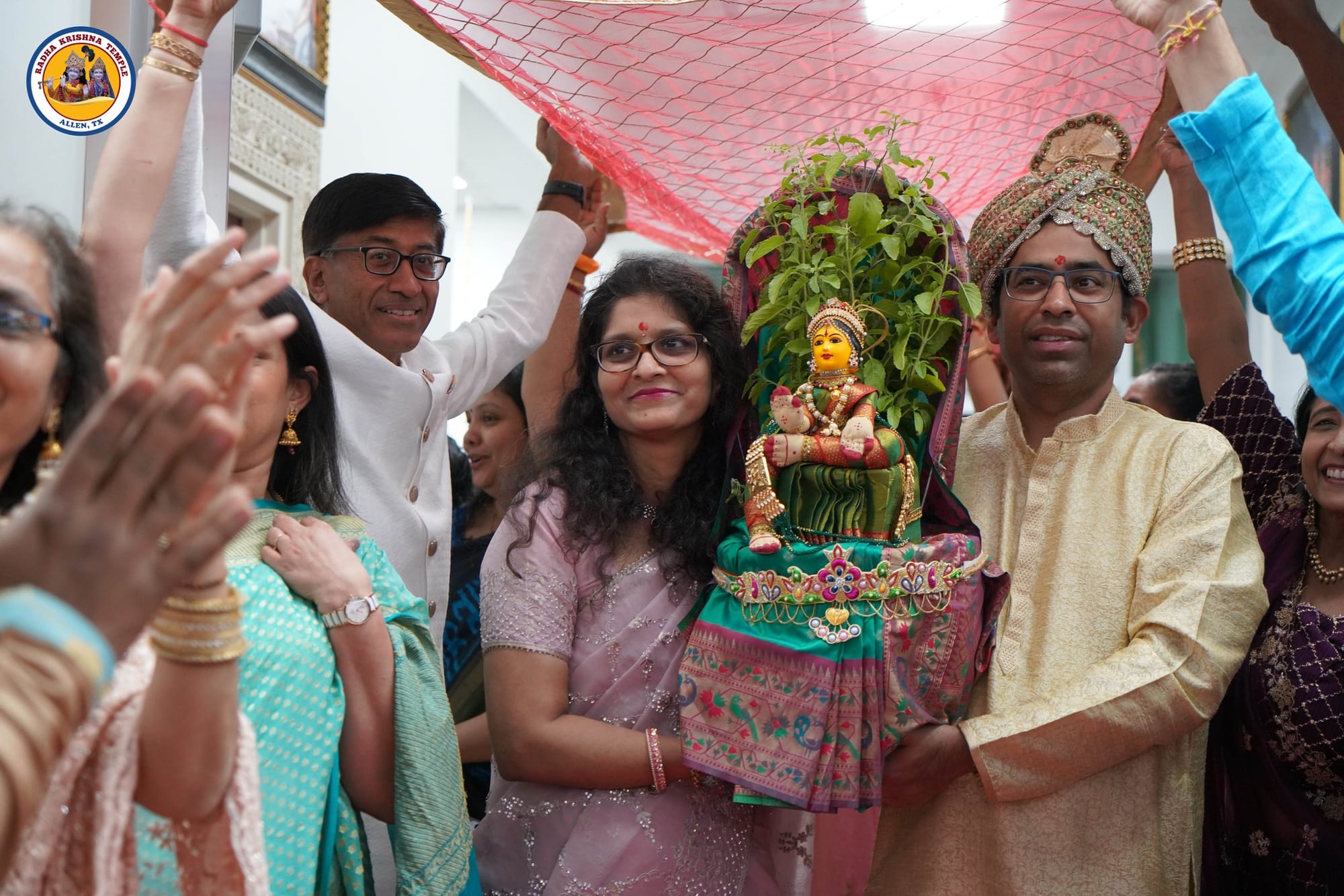
🌸 The Night Tulsi Became a Bride
The evening sky shimmered in soft gold as lamps flickered to life one by one. The scent of sandalwood and marigolds wrapped the courtyard in a warm embrace. Children’s laughter echoed while women in silk sarees hummed sweet bhajans, their bangles jingling like tiny bells of joy.
In the center of it all stood the Tulsi plant, adorned in a tiny red saree, her pot decorated with vermilion and flowers — a divine bride awaiting her groom. On a silver plate nearby rested a sacred Shaligram, representing Lord Vishnu, calm and eternal.
Riya’s grandmother softly said, “Tonight, my child, the heavens descend to bless this sacred union — the marriage of Tulsi Devi and Lord Vishnu. It is not just a ritual… it is the story of devotion itself.”
As the conch blew and the aarti flame circled, Riya felt her heart swell with peace. The moment was not just holy; it was timeless — the celebration of love that transcends worlds, where faith weds divinity, and the home transforms into a temple of grace.
What is Tulsi Vivah?
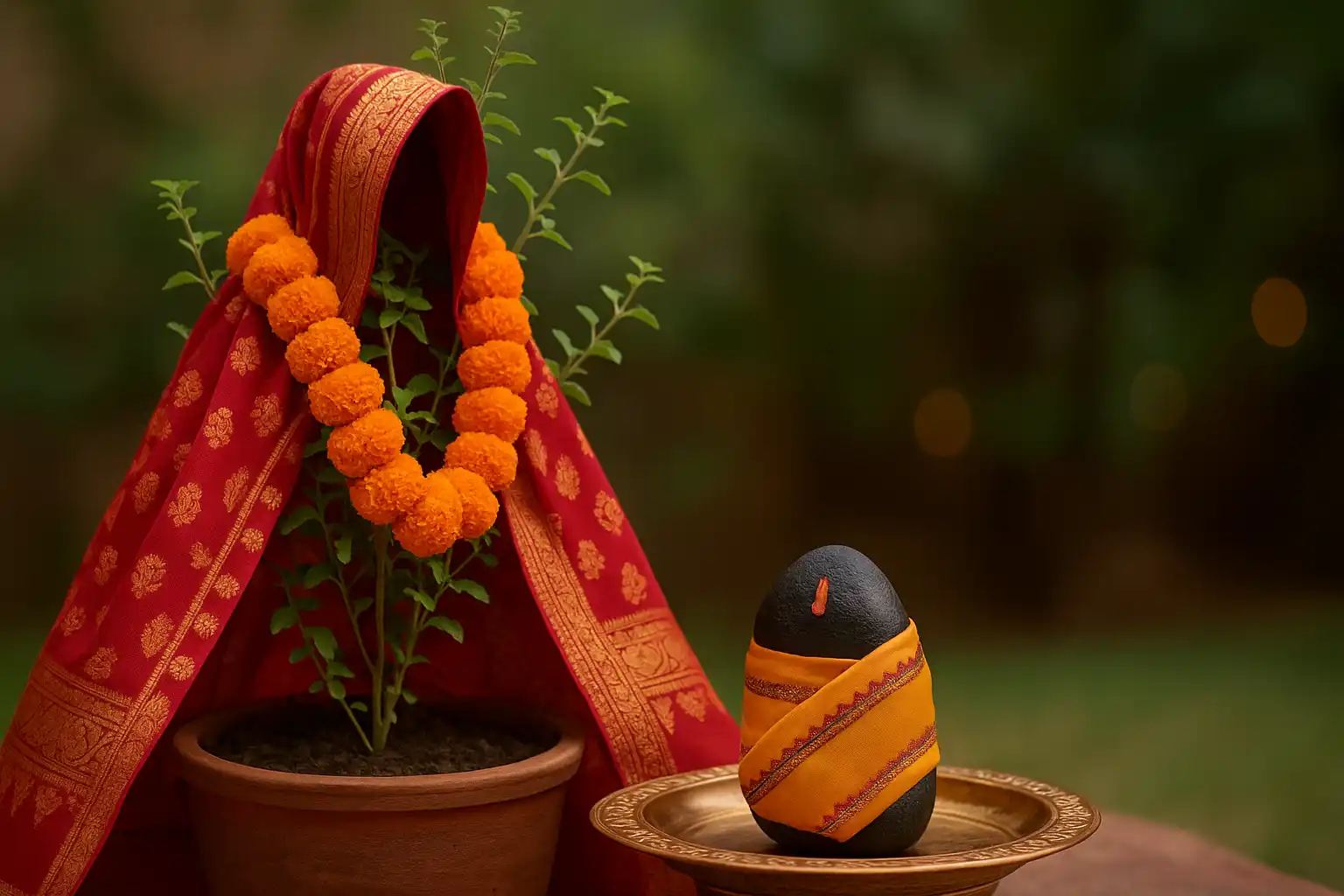
Tulsi Vivah is the ceremonial marriage of Tulsi Devi (Holy Basil) to Lord Vishnu, commonly as Shree Krishna or Shaligram (a sacred stone form of Vishnu). It symbolizes the beginning of the wedding season in the Hindu tradition.
This divine festival is celebrated on Dev Uthani Ekadashi (Kartik Shukla Ekadashi), which marks the end of Chaturmas, the four holy months during which auspicious ceremonies like weddings are typically paused.
Tulsi is not just a plant in Hinduism; she is revered as an incarnation of Goddess Lakshmi, the goddess of abundance and divine grace. Marrying Tulsi to Vishnu unites the feminine and masculine energies—Shakti and Shree Vishnu—forming the perfect cosmic balance.
Why Do We Perform Tulsi Vivah?
1. To Invite Divine Blessings
Tulsi Vivah is believed to bring harmony, prosperity, and peace into the home.
2. For Marital Bliss and Happiness
Those seeking a loving and understanding partner, or couples wishing to strengthen their bond, receive special blessings.
3. To Purify the Home
The ceremony sanctifies the house with purity and devotional vibrations.
4. Symbol of Devotion
It teaches us that love offered to God is the highest love.
When is Tulsi Vivah Celebrated?
- Date: Kartik Shukla Ekadashi to Kartik Purnima
(Many people perform it on Ekadashi, Dwadashi, or Kartik Purnima) - Month: October–November (varies by year)
- Tithi: Dev Uthani Ekadashi also marks the day when Lord Vishnu wakes from cosmic rest.
Astrological & Energetic Importance
This time period carries high sattva (purity) in the atmosphere, beneficial for spiritual practices.
Here are the key dates for Tulsi Vivah in 2025:
| Event | Date | City | Start of Dwadashi Tithi | End of Dwadashi Tithi |
|---|---|---|---|---|
| Tulsi Vivah 2025 | Sunday, November 2, 2025 | New Delhi | Nov 2, 2025 – 07:31 AM IST | Nov 3, 2025 – 05:07 AM IST |
| Dallas, USA | Nov 1, 2025 – 09:01 PM CST | Nov 2, 2025 – 05:37 PM CST |
🕉️ Note: Timings may slightly vary by location and Panchang preference. Always consult your local priest or trusted Panchang before performing the rituals.
पूजन मंत्र ( Pujan Mantra)
तुलसी श्रीर्महालक्ष्मीर्विद्याविद्या यशस्विनी।
धर्म्या धर्मानना देवी देवीदेवमन: प्रिया।।
लभते सुतरां भक्तिमन्ते विष्णुपदं लभेत्।
तुलसी भूर्महालक्ष्मी: पद्मिनी श्रीर्हरप्रिया।।
Translation & Meaning:
- "तुलसी श्रीः महालक्ष्मीः विद्याविद्या यशस्विनी।"
Tulsi is Shri (wealth), Mahalakshmi (goddess of fortune), both knowledge and ignorance (symbolically encompassing all), and the bringer of fame. - "धर्म्या धर्मानना देवी देवीदेवमनः प्रिया।।"
She is righteous, has a face full of righteousness (Dharmānana), is a goddess among goddesses, and is dear to the hearts of both gods and goddesses. - "लभते सुतरां भक्तिम् अन्ते विष्णुपदं लभेत्।"
One who deeply worships Tulsi gains intense devotion and ultimately attains the feet (abode) of Lord Vishnu. - "तुलसी भूः महालक्ष्मीः पद्मिनी श्रीः हरप्रिया।।"
Tulsi is Bhumi (Earth), Mahalakshmi, Padmini (lotus-like or associated with Lakshmi), Shri (prosperity), and the beloved of Hari (another name for Vishnu).
The Divine Story Behind Tulsi Vivah
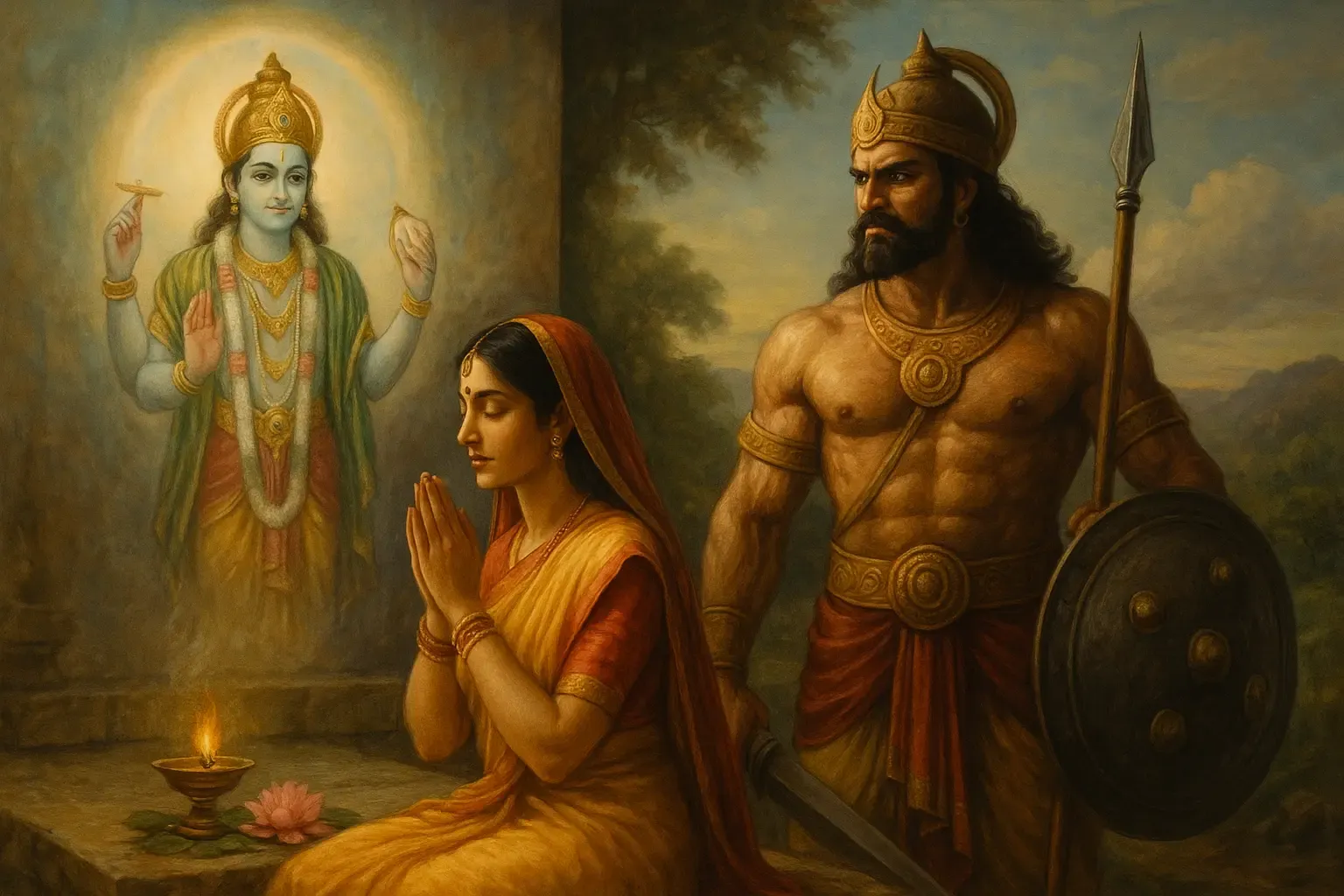
The origin of Tulsi Vivah comes from the ancient Puranas and is deeply connected to the story of Vrinda, the devoted wife of the demon-king Jalandhar.
Vrinda’s Devotion
Vrinda was an ardent devotee of Lord Vishnu. Her husband Jalandhar, though born from the fire of Lord Shiva’s wrath, grew into a mighty warrior. Due to Vrinda’s unwavering devotion and purity, Jalandhar became invincible—no god, no demon, no celestial being could defeat him. As long as Vrinda’s faith and chastity remained unbroken, Jalandhar would remain undefeated.
This caused a great concern among the Devas because Jalandhar used his power to disturb peace in the worlds. A cosmic imbalance began to form.
The Divine Test
To restore harmony, Lord Vishnu took the form of Jalandhar and appeared before Vrinda. She welcomed Him lovingly, believing Him to be her husband. The moment she touched Him thinking it was Jalandhar, her chastity was considered broken.
At that very moment, Jalandhar lost his divine protection and was defeated in battle.
Vrinda’s Curse
When Vrinda realized that Lord Vishnu had disguised Himself, her heart was shattered. In her grief, she cried:
“O Vishnu! You have deceived me. You have shattered my purity and my faith. Just as my heart has turned to ashes, may you too turn into stone one day!”
Her sorrow was powerful, and so was her curse. That curse manifested in the form of the Shaligram Stone, which is revered today as a sacred symbol of Lord Vishnu.
But Lord Vishnu, who is all-compassionate, spoke gently:
“Your devotion is pure and eternal, Vrinda. You shall be remembered always. You will be born again as the sacred plant Tulsi, worshiped in every home. And one day, I myself shall marry you.”
Transformation into Tulsi
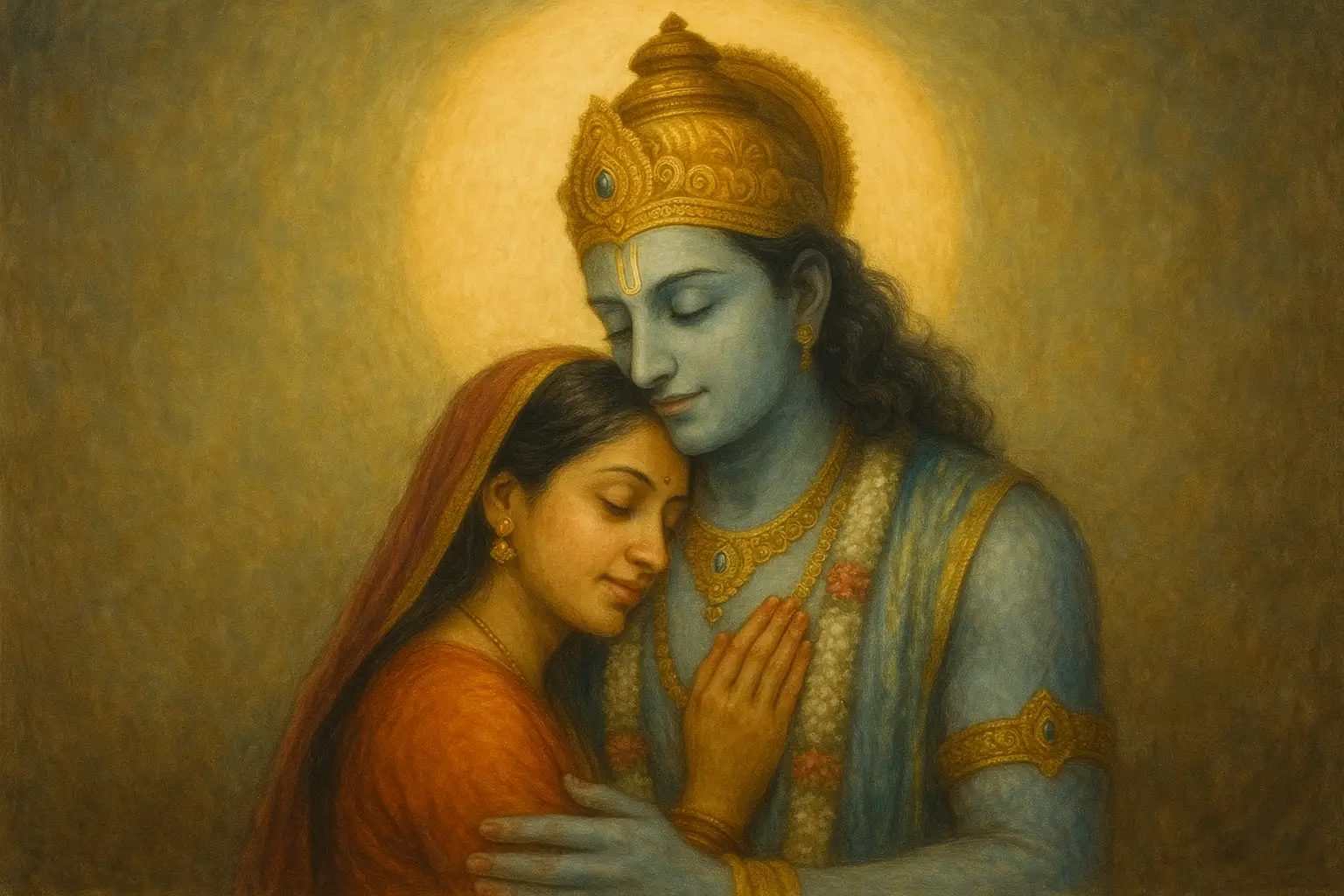
Vrinda was then transformed into the holy Tulsi plant, the greatest symbol of devotion and purity. Since Tulsi is the earthly form of Goddess Lakshmi, Tulsi Vivah is celebrated to honor her divine reunion with Lord Vishnu (in the form of Shaligram or Shree Krishna).
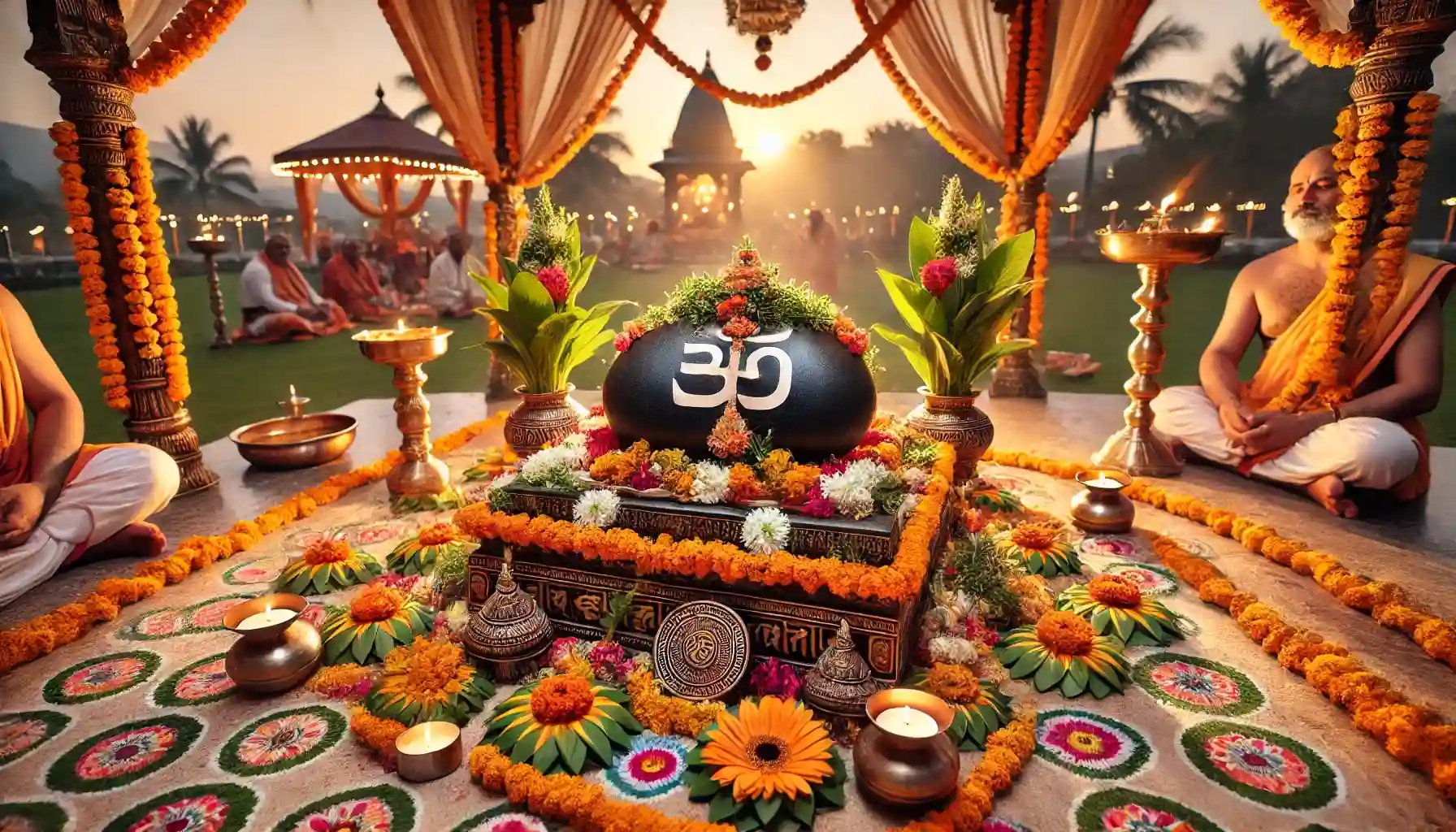
Thus, Tulsi Vivah represents:
- The triumph of devotion and purity
- The union of the soul (Tulsi/Vrinda) with the Divine (Shree Hari)
- The celebration of divine love beyond time
What This Story Teaches (As Swami Mukundananda Says)
Swami Mukundananda beautifully explains that Vrinda’s story is a reminder that:
True love for God is selfless, constant, and unconditional.
Vrinda’s devotion was so pure that even Lord Vishnu had to honor it by promising to be eternally united with her. Tulsi Vivah is not just a ritual—it is a symbol of:
- Unwavering devotion (Bhakti)
- The purity of heart over the power of ego
- The ultimate union of the devotee and the Divine
Benefits of Observing Tulsi Vivah
Spiritual Benefits
- Enhances devotion and faith
- Purifies heart and mind
- Helps one deepen connection to God
Emotional Benefits
- Promotes calmness, compassion, and joy
- Reduces stress and negative thoughts
Environmental & Health Benefits
- Tulsi is a natural air purifier.
- Tulsi leaves boost immunity, digestion, and respiratory health.
Swami Mukundananda emphasizes that when we worship Tulsi, we are nurturing inner spiritual purity.
“If you keep Tulsi near your home’s entrance, it radiates positive energy and invites divine vibrations that elevate your consciousness.”
How to Perform Tulsi Vivah at Home – Step-by-Step Guide
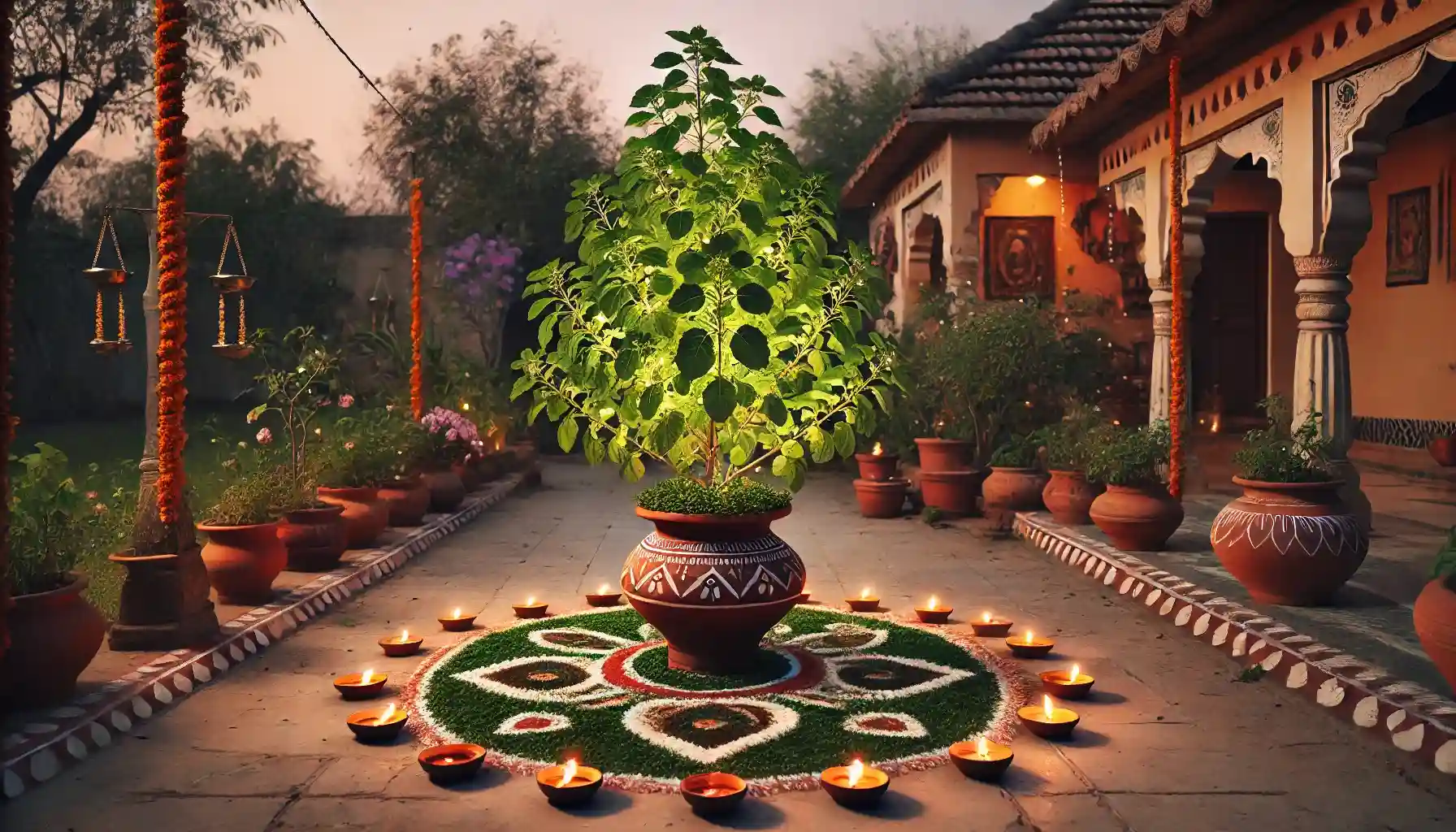
This simple, user-friendly method is ideal for families of all experience levels.
Requirements (Puja Samagri):
| Item | Purpose |
|---|---|
| Healthy Tulsi plant | The divine bride |
| Shaligram / Krishna idol / Vishnu photo | The divine groom |
| Small saree or red cloth | To dress Tulsi |
| Red thread or mangalsutra | For the wedding ceremony |
| Haldi & Kumkum | For decoration |
| Rice (Akshata) | Sacred grains |
| Flowers & leaves | For offering |
| Panchaamrit | Milk, curd, ghee, honey, sugar |
| Fruits & sweets | Naivedya |
| A Diya (lamp) & incense | For aarti |
| Garland or mala | For the wedding exchange |
Tulsi Vivah Vidhi – Ritual Summary Table
| Step | Details |
|---|---|
| 1. Tulsi Plant Setup | Clean the Tulsi pot or plant area; decorate with flowers, rangoli, and lights. |
| 2. Mandap Preparation | Create a small wedding mandap with kalash, diya, flowers, and shringar items. |
| 3. Groom Setup | Shaligram stone or idol of Lord Vishnu/Krishna is dressed as a groom. |
| 4. Bride Setup | Tulsi plant is adorned like a bride with sari, jewelry, and bindi. |
| 5. Kanyadaan | Symbolically given by the family performing the pooja. |
| 6. Wedding Rituals | Mantras, garland exchange, Mangal Aarti, and tying the sacred thread. |
| 7. Prasad & Bhog | Offer sweets, fruits, Panchamrit; distribute prasad after pooja. |
Step-by-Step Ritual
1. Cleaning & Preparation
Clean your home, temple, or courtyard. Light a lamp to create a divine atmosphere.
2. Decorate Tulsi Mata
- Apply haldi and kumkum to Tulsi pot.
- Dress the Tulsi plant with a miniature saree or dupatta.
- Place a bindi on the pot to symbolize the bride.
3. Prepare the Groom
- Place Shaligram, or a statue/photo of Lord Vishnu/Krishna, nearby.
- Decorate Him with flowers and sandal paste.
4. Sankalp (Intention)
Fold hands and mentally say:
“I perform Tulsi Vivah with devotion for harmony, prosperity, and divine grace.”
5. Exchange of Garlands
Swap flower garlands between Tulsi and Shaligram/Krishna.
6. Tie the Sacred Knot
Take a red thread and tie a gentle knot between Tulsi and Krishna/Shaligram.
7. Perform Kanyadaan Mantra (Simple)
You may say:
“Tulsi Mata, I offer you to Shree Krishna, the Supreme Lord, with devotion.”
8. Apply Mangalsutra or Red Thread
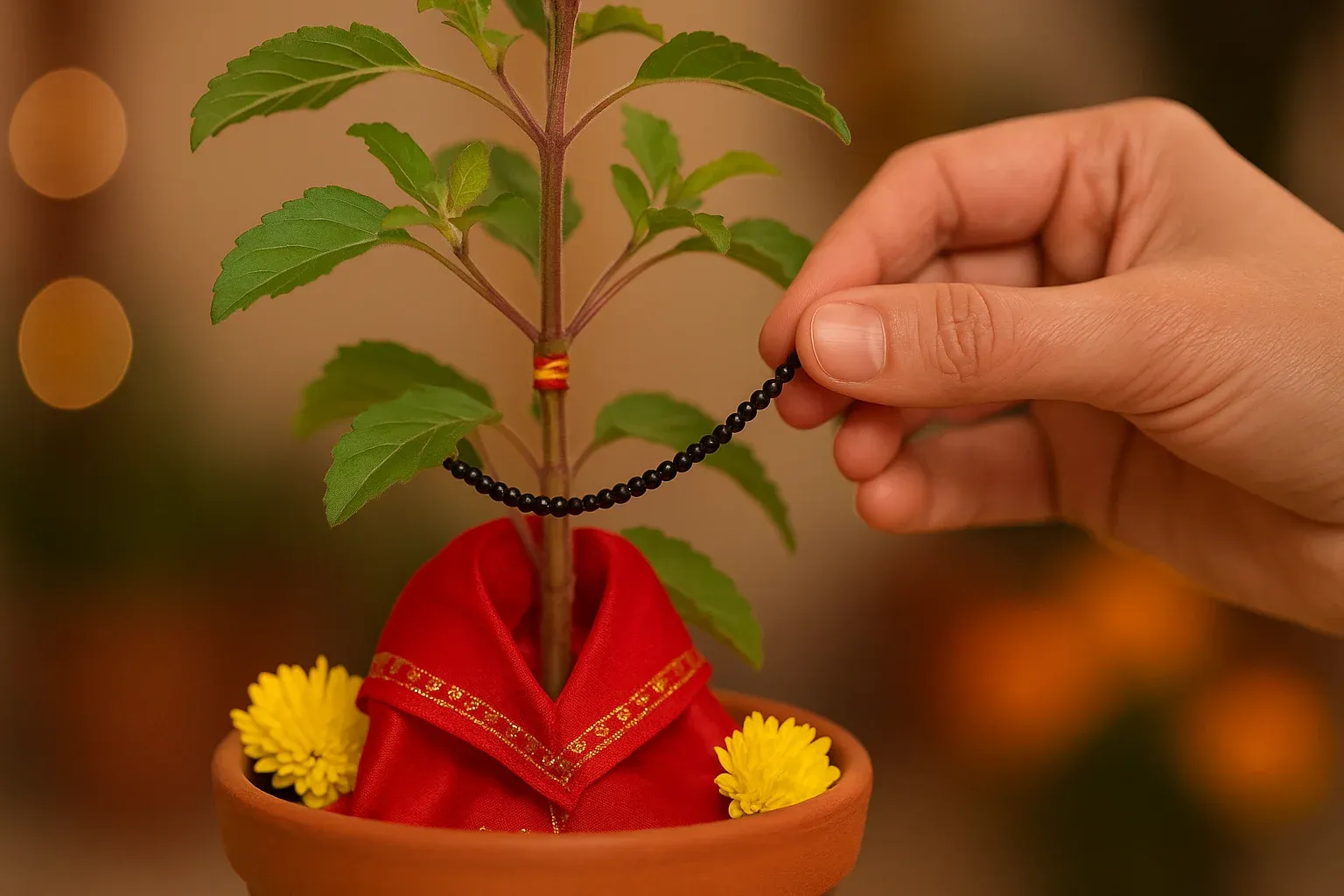
Place a small black beaded thread around the Tulsi plant.
9. Perform Aarti
Sing Tulsi aarti and Krishna bhajans with devotion.
10. Offer Prasad
Offer fruits, sweets, and Tulsi leaves themselves as blessings.
How Tulsi Vivah is Celebrated in Temples
In temples, the celebration is grand and festive. Key features include:
- Procession (Baraat) of Shaligram or Krishna idol.
- Devotees sing kirtans and dance joyfully.
- Tulsi is richly decorated with silk cloth, nose ring, bangles, and flowers.
- Priests perform full Vedic marriage rituals, sometimes with shehnai & dhol.
- Everyone is offered mahaprasad afterward.
Visiting a temple on Tulsi Vivah day is considered highly auspicious.
Beautiful Traditional Bhajans for Tulsi Vivah
- “Vrindavan Ki Rani Tulsi Maharani”
- “Radhe Govinda Gopala”
- “Om Jai Tulsi Mata”
Singing bhajans cultivates Bhakti Ras (nectar of devotion).
Benefits of Observing Tulsi Vivah
Spiritual Benefits
- Enhances devotion and faith
- Purifies heart and mind
- Helps one deepen connection to God
Emotional Benefits
- Promotes calmness, compassion, and joy
- Reduces stress and negative thoughts
Environmental & Health Benefits
- Tulsi is a natural air purifier.
- Tulsi leaves boost immunity, digestion, and respiratory health.
Swami Mukundananda emphasizes that when we worship Tulsi, we are nurturing inner spiritual purity.
“If you keep Tulsi near your home’s entrance, it radiates positive energy and invites divine vibrations that elevate your consciousness.”
Do’s and Don’ts for Tulsi Care
| Do | Don’t |
|---|---|
| Water Tulsi daily with love | Never pluck Tulsi leaves after sunset |
| Keep Tulsi in sunlight | Don’t keep her near thorny plants |
| Offer fresh flowers | Do not offer Tulsi if unwell or in anger |
| Chant while plucking Tulsi | Never break the main stem |
Chant while plucking leaves:
“Shri Tulsi Vrindayai Namah”
Conclusion
| Points | Insights |
|---|---|
| Date & Muhurat |
Tulsi Vivah 2025 is on Sunday, November 2nd, 2025. 📍 New Delhi (IST): Dwadashi Begins: 07:31 AM, Nov 2 | Ends: 05:07 AM, Nov 3 📍 Dallas (USA CST): Dwadashi Begins: 09:01 PM, Nov 1 | Ends: 05:37 PM, Nov 2 |
| Spiritual Meaning | Celebrates the divine union of Tulsi (Lakshmi) and Shaligram (Vishnu). |
| Ritual Importance | Involves symbolic marriage, devotion, and family togetherness. |
| Personal Growth | Encourages surrender, faith, and removal of ego through bhakti. |
| Swami Mukundananda’s Teachings | Emphasizes internal purity, surrender to God, and Bhakti Yoga. |
| Global Observance | Celebrated in temples and homes worldwide. |
Tulsi Vivah is more than a ritual—it’s a celebration of divine love. It reminds us that:
- Love is sacred.
- Devotion is powerful.
- God resides in every breath of nature.
Just as Tulsi surrendered herself completely to Shree Krishna, we too can offer our hearts to the Divine—with humility, gratitude, and faith.
This year, celebrate Tulsi Vivah with your family. Light lamps, sing songs, laugh, share prasad, and feel the presence of the Divine in your home.
May Tulsi Devi bless your household with peace, love, purity, and spiritual awakening.
Jai Tulsi Mata! Jai Shree Krishna
Call to Action
🌸 Join Tulsi Vivah 2025 Celebration
Date & Time: Sunday, Nov 2, 2025 · 10 AM – 12 : 30 PM (CST)
Venue: Radha Krishna Temple of Dallas, 1450 N Watters Rd, Allen, TX
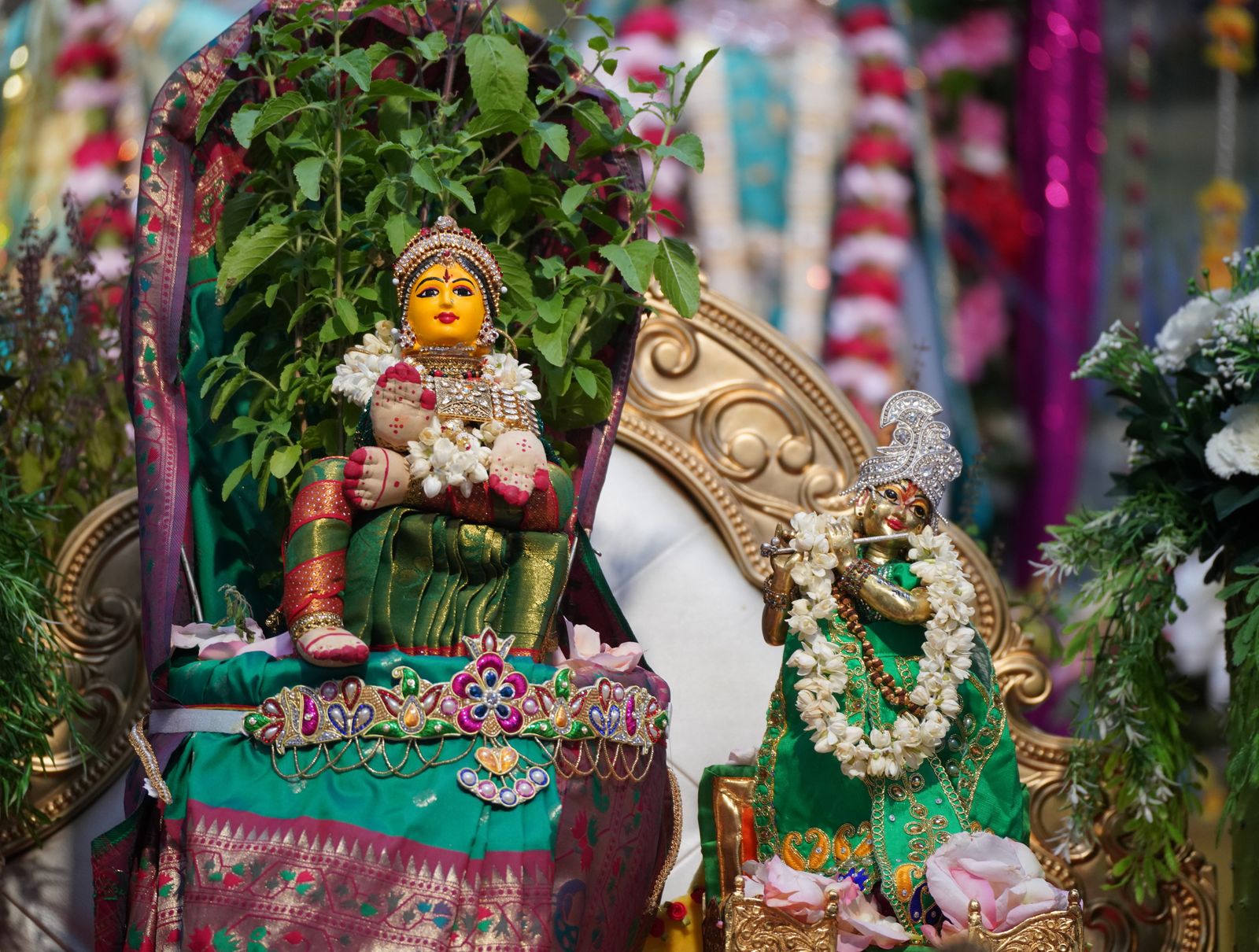
Experience the sacred wedding of Tulsi Devi and Lord Vishnu with bhajans, katha & pujā. Receive divine blessings for peace and prosperity.
- “Let the sacred union of Tulsi and Vishnu remind you of your own inner union — dive into Swamiji’s teachings and begin your journey of spiritual awakening today.”
- “This Tulsi Vivah, commit to one step of selfless devotion. Sign up now to receive Swami Mukundananda’s practical guidance to transform your heart and life.”
- “Begin your sacred marriage to the Self — explore Swamiji’s wisdom
Discover the beauty of Tulsi Vivah from last year!
Read the BlogRelated Blogs on Tulsi Vivah
Join Classes:
- Book a Prem Yoga session and experience holistic wellness. Enjoy free yoga every Sunday from 9:15 AM to 10:15 AM at the Radha Krishna Temple.
- Enroll your children (ages 5-15) in Bal-Mukund, a unique character-building program designed to instill values, confidence, and creativity.
- Discover opportunities for growth with the RKT Youth Club and Toastmasters Club, fostering leadership and communication skills.
✨ Explore Diwali & Chhath Puja Blogs
Top 50 Diwali Wishes 2025
Spiritual greetings & status ideas
Explore over 50 heartfelt greetings, spiritual messages, and inspiring WhatsApp status ideas that reflect divine love and light for Diwali 2025.
Read More →Diwali Greetings 2025
Quotes for family & friends
Celebrate Diwali 2025 with heartfelt wishes, meaningful messages, and inspiring quotes for loved ones. Share the joy of Deepavali with spiritual warmth.
Read More →Diwali Dates & Muhurat
5-day guide & puja timings
Plan your Diwali 2025 celebrations with this full guide—covering 5 days of rituals, muhurat timings, and deeper spiritual meaning behind each festival day.
Read More →Rangoli Designs 2025
Traditional & creative styles
Celebrate Diwali with stunning Rangoli—from classic floral to 3D and LED designs. Explore eco-friendly and artistic ways to welcome prosperity this Deepavali.
Read More →Lakshmi Puja 2025
Puja date, rituals & seva
Worship Goddess Lakshmi with correct Diwali 2025 muhurat, rituals, and support JKYog’s rural upliftment. Light lives and invite divine blessings.
Read More →Navratri 2025 Guide
Puja date, rituals & seva
Discover Navratri 2025 in depth! Get the complete calendar, daily goddess significance, fasting rituals, regional traditions, and muhurat timings.
Read More →FAQs
1. Who can perform Tulsi Vivah at home?
Anyone with devotion can perform Tulsi Vivah — there are no restrictions by age, gender, or caste. Families, couples, or even individuals can celebrate it. The key is to perform it with faith, cleanliness, and a pure heart.
2. Can unmarried people perform Tulsi Vivah?
Yes! Unmarried devotees often perform Tulsi Vivah to seek a compatible and loving life partner. It’s believed that Tulsi Mata blesses those who honor her with sincerity, helping them attract purity and devotion in relationships.
3. What should I avoid on Tulsi Vivah day?
Avoid plucking Tulsi leaves after sunset, consuming non-vegetarian food, or performing the ritual in a cluttered space. Keep the atmosphere peaceful, clean, and filled with devotion. The focus should remain on spiritual joy and gratitude.
4. Is it necessary to invite a priest for Tulsi Vivah?
Not at all. The ceremony can be performed simply at home by following easy steps — decorating Tulsi Mata, reciting prayers, exchanging garlands, and offering prasad. Inviting a priest is optional, though many families do so for traditional completeness.
5. What is the deeper meaning of Tulsi Vivah?
Tulsi Vivah symbolizes the union of the individual soul (Tulsi/Vrinda) with the Supreme Soul (Shree Vishnu/Krishna). As Swami Mukundananda teaches, this festival reminds us that true love means surrendering the ego and serving God with devotion and purity
🌿 References & Sources
- Swami Mukundananda – Teachings on Bhakti Yoga and Spiritual Surrender.
- Official Website: https://www.jkyog.org
- Discourses on Devotion, Surrender, and Festivals of India.
- Śrī Padma Purāṇa and Skanda Purāṇa – Ancient Hindu scriptures narrating the story of Vrinda and the divine marriage of Tulsi Devi with Lord Vishnu.
- Drik Panchang – Hindu Calendar & Festival Timings.
- Tulsi Vivah 2025 Date & Muhurat:
- Radha Krishna Temple of Dallas (Allen, TX) – Event Schedule for Tulsi Vivah 2025.
- Swami Mukundananda’s Book:
- The Science of Mind Management – Teachings on cultivating purity, positivity, and inner devotion.
- Bhagavad Gita – The Song of God – Commentary on surrender and divine love.