Vasant Panchami is a vibrant and sacred festival that marks the arrival of spring. This day, which is dedicated to the worship of Goddess Saraswati, also celebrates the joy of nature's renewal. The festivities are deeply ingrained in cultural traditions, and food plays an essential role in this celebration. Among the many special dishes prepared during Vasant Panchami, Meethe Chawal (Sweet Rice) and Khichdi are the stars. Both dishes are rooted in Indian tradition, especially in North India, where they are prepared with great reverence and joy.
In this blog, we will explore these two iconic dishes, provide exact recipes for each, and reflect on the spiritual insights of Swami Mukundananda, who beautifully ties together food, culture, and spirituality.
A Story to Begin
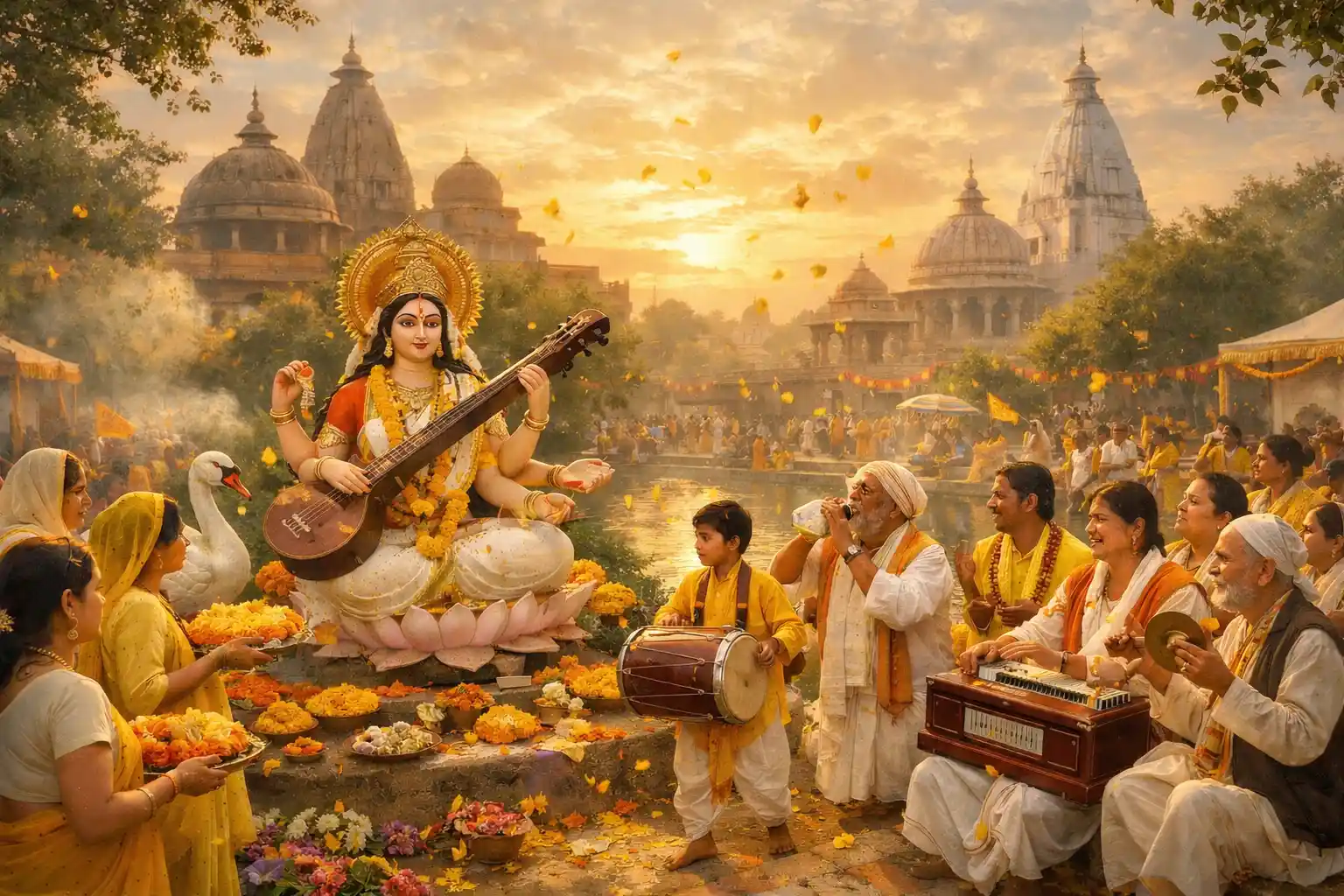
It was an early morning in the small town of Vrindavan, where the golden sun-rays began to break through the clouds, casting a soft light across the temples and gardens. On this day, the streets were alive with the sound of drums, chanting, and laughter. It was Vasant Panchami, a day when people gather in worship, offering their prayers to Goddess Saraswati, the goddess of knowledge, wisdom, and arts.
As the festival began, people were seen preparing and offering special foods. Among the delicious offerings, Meethe Chawal and Khichdi were prepared with meticulous care. In the middle of this bustling scene, a group of young students was seen at the feet of their guru, Swami Mukundananda, soaking in his teachings. Swami Mukundananda, known for his profound spiritual wisdom, often spoke about how food is not just nourishment for the body but also for the soul. He explained that food prepared with love and devotion has the power to elevate one's spiritual consciousness.
Swami Mukundananda’s words were a reminder of how every grain of rice, every spice, and every ingredient used in these traditional dishes had significance beyond their taste. They were offerings to the divine, prepared with mindfulness and gratitude. With this thought in mind, let’s take a deeper dive into these two traditional yellow dishes: Meethe Chawal and Khichdi.
Why Yellow Matters on Vasant Panchami
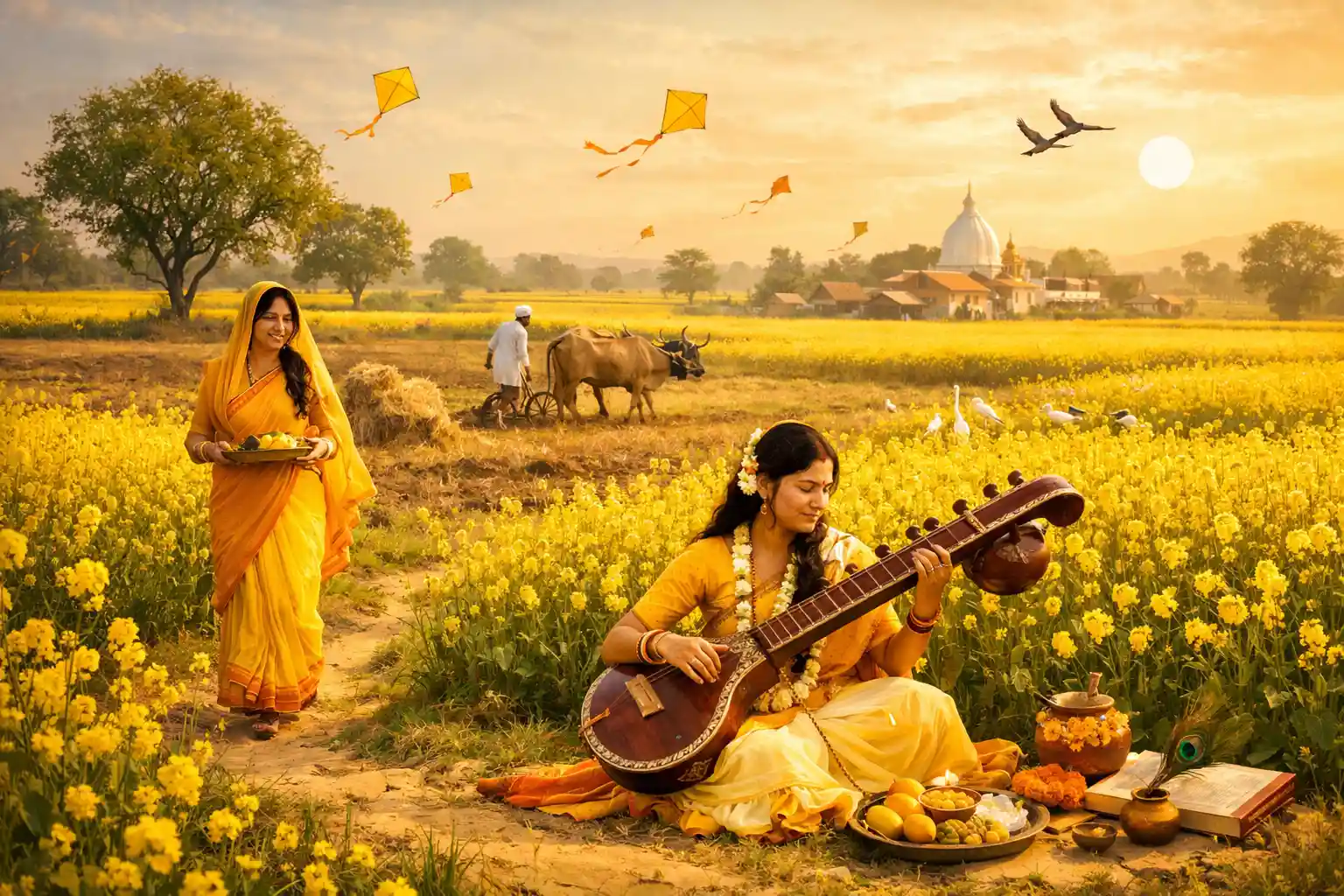
Vasant Panchami marks the beginning of spring. The fields start preparing for harvest, mustard flowers bloom across the countryside, and the color yellow becomes more than a color. It becomes a feeling.
Yellow represents knowledge, prosperity, warmth, and renewal. It is the color of mustard fields, sunlight, and turmeric. On this day, homes are decorated with yellow flowers, people wear yellow clothes, and food follows the same language.
Cooking yellow food is not about aesthetics alone. It is symbolic alignment. The kitchen mirrors nature. What grows outside finds its way into the pot.
Meethe Chawal and yellow Khichdi are perfect examples of this philosophy. One is celebratory and sweet. The other is grounding and nourishing. Together, they reflect balance.
Meethe Chawal: The Sweet That Smells Like Spring
Meethe Chawal is often misunderstood as just sweet rice. But anyone who has eaten it on Vasant Panchami knows it tastes different that day. Perhaps it is the intention. Perhaps it is the season. Or perhaps it is the way tradition teaches patience.
This dish is popular across North India, especially in Punjab, Haryana, Uttar Pradesh, and parts of Rajasthan. It is usually offered as prasad before being served to family and guests.
The Golden Delight: A Sweet Offering of Vasant Panchami – Meethe Chawal Ingredients
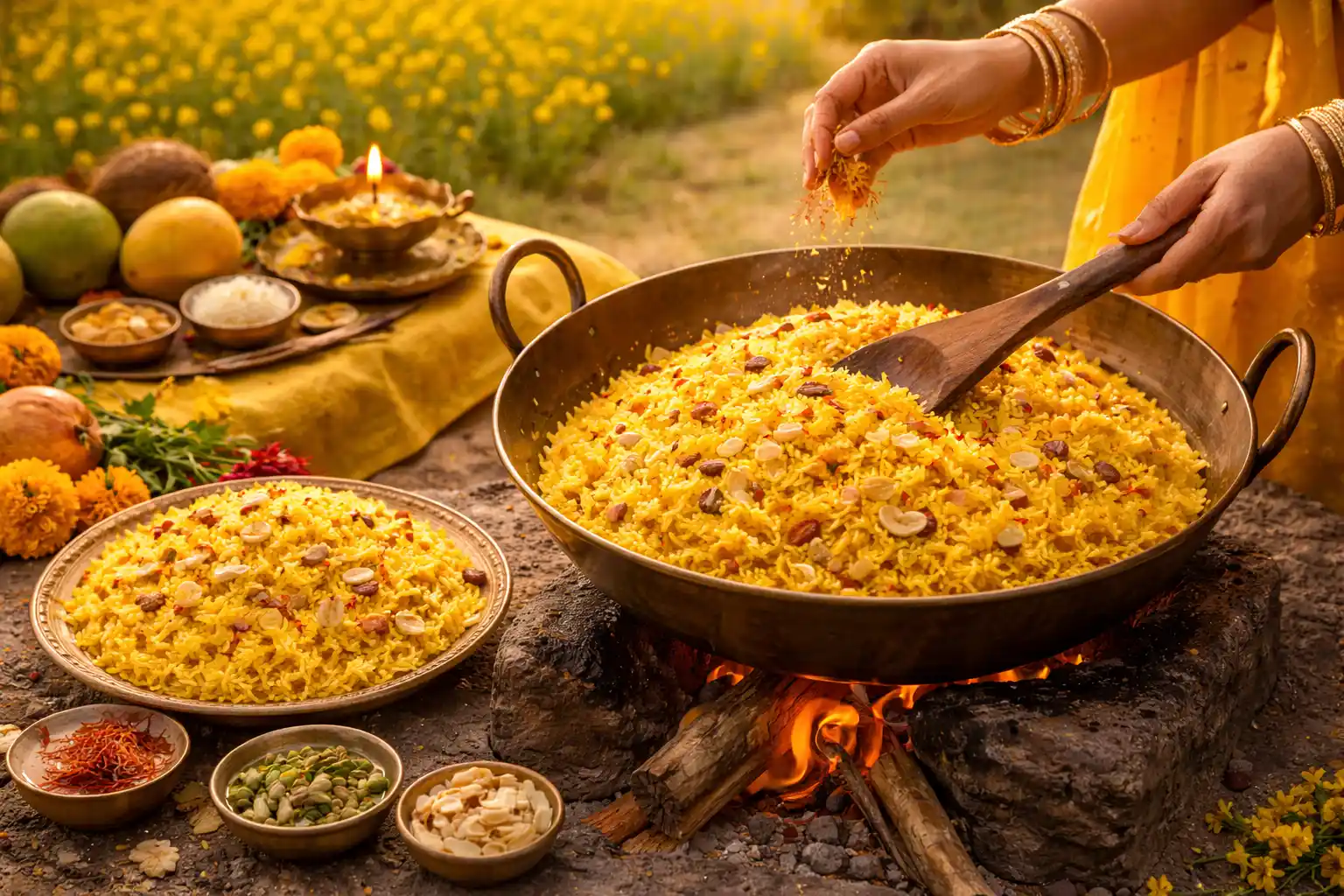
As the sun ushers in the colors of spring on Vasant Panchami, the kitchen comes alive with the aroma of sweet, fragrant rice. Meethe Chawal, with its rich golden hue and delightful sweetness, is not just a treat for the taste buds but also a symbol of joy, abundance, and reverence for the Goddess Saraswati. Prepared with love and devotion, this dish encapsulates the spirit of the festival, bringing together nature’s bounties and spiritual offerings in a delicious harmony. Here’s how you can create this golden delight at home.
Ingredients:
- 1 cup Basmati rice
- 2 ½ cups water
- ¼ cup ghee (clarified butter)
- 1 cup sugar
- 1 teaspoon cardamom powder
- 10-12 cashews
- 10-12 almonds
- 10-12 raisins
- A pinch of saffron strands
- ½ teaspoon yellow food color (or turmeric for natural color)
- A few drops of rose water (optional)
Instructions:
- Preparation:Wash the basmati rice thoroughly under cold water. Drain and set it aside.Soak the saffron strands in warm water or milk for 10-15 minutes to release their color and aroma.
- Cooking the Rice:In a large saucepan, heat the ghee over medium heat. Once hot, add the soaked rice and lightly sauté it in the ghee for about 2 minutes. This helps the rice absorb the ghee and the fragrance of the spices.Add the water and bring it to a boil. Once the water boils, reduce the heat to a simmer, cover, and let the rice cook for about 10-12 minutes until the rice is soft and fully cooked. Ensure that the rice is not overcooked and still holds its shape.
- Making the Sweet Mixture:In a separate pan, heat the remaining ghee and add the cashews, almonds, and raisins. Sauté these nuts and dry fruits until they are golden brown and fragrant.Add the sugar and cardamom powder to the pan with the nuts and dry fruits. Stir until the sugar dissolves completely, and the mixture forms a syrup-like consistency.
Combining:
- Add the sweet mixture to the cooked rice along with the saffron water and yellow food color (or turmeric, if using). Stir gently to mix everything well, ensuring that each grain of rice is coated with the sweet syrup.
- Add a few drops of rose water (optional) to enhance the fragrance of the dish.
- Serving:
Meethe Chawal is a rich, sweet, and aromatic dish that is perfect for celebrating the joy of spring and the blessings of Goddess Saraswati. The bright yellow color and fragrant spices create a festive atmosphere, making this dish a symbol of abundance, joy, and reverence.
- Serve the Meethe Chawal warm or at room temperature as part of your Vasant Panchami celebrations. Garnish with a few more raisins and cashews for an added touch of elegance.
The result is rice that glows softly, each grain holding sweetness without becoming heavy. It is festive but not indulgent. It comforts without overwhelming.
Khichdi: A Simple Yet Divine Dish
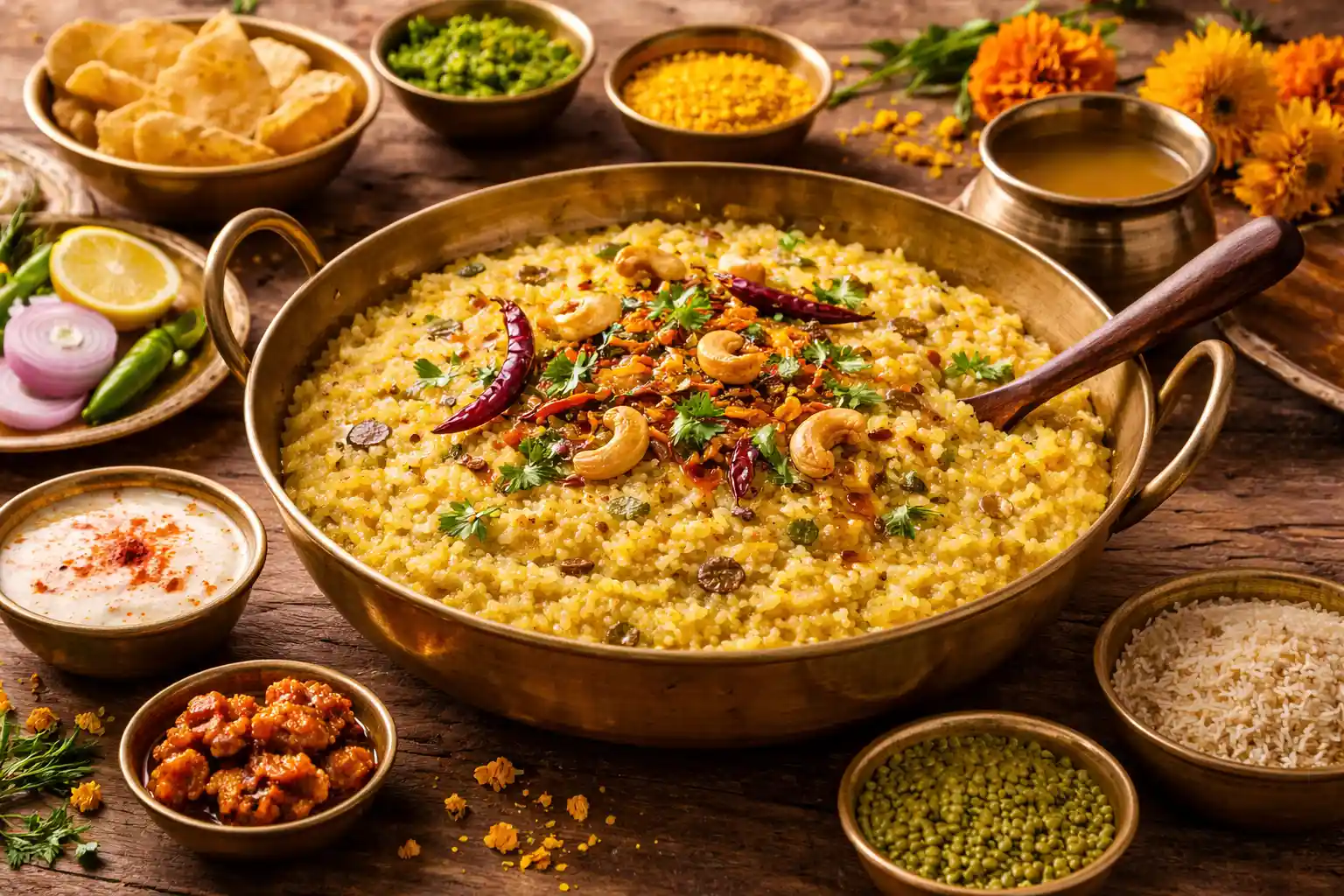
Khichdi is a comforting dish that is often prepared on auspicious occasions. It is made using rice and lentils, typically moong dal, and is considered to be a symbol of simplicity, health, and humility. On Vasant Panchami, it is believed that preparing Khichdi represents the blending of knowledge (the rice) and purity (the lentils), two qualities that are nurtured by Goddess Saraswati.
Here’s how to make this nourishing dish that is both spiritually fulfilling and absolutely delicious.
Ingredients:
- 1 cup Basmati rice
- ½ cup moong dal (yellow split lentils)
- 4 cups water
- 2 tablespoons ghee (clarified butter)
- 1 teaspoon cumin seeds
- 1 teaspoon ginger, grated
- 2-3 green chilies, slit
- 1 bay leaf
- 1-inch cinnamon stick
- 2-3 cloves
- 1-2 cardamom pods
- 1 teaspoon turmeric powder
- Salt to taste
- Fresh cilantro for garnish
Instructions:
- Preparation:
- Rinse the rice and moong dal under cold water until the water runs clear. Set them aside to drain.
- In a small bowl, soak the rice and lentils together in water for 10 minutes (optional but helps in faster cooking).
- Tempering:
- In a large pot, heat the ghee on medium heat. Add cumin seeds, ginger, green chilies, and the whole spices (bay leaf, cinnamon, cloves, and cardamom pods). Sauté for 2-3 minutes until the spices release their aroma.
- Cooking the Khichdi:
- Add the drained rice and moong dal mixture to the pot and stir for another 2 minutes, letting the rice and dal absorb the spices.
- Add the turmeric powder and salt, and stir to coat the rice and dal mixture evenly with the spices.
- Pour in the water and bring the mixture to a boil. Once it boils, reduce the heat to low, cover the pot, and let it simmer for 20-25 minutes or until the rice and lentils are fully cooked and the water is absorbed. Stir occasionally to prevent sticking.
- Final Touches:
- Once the Khichdi is cooked, give it a final gentle stir. You can adjust the consistency by adding a bit more water if you prefer a softer khichdi.
- Garnish with fresh cilantro before serving.
Khichdi, with its humble yet rich flavors, is often considered a "comfort food" for the soul. During Vasant Panchami, its simplicity is a reminder of the purity and humility that Goddess Saraswati embodies.
Significance of Meethe chawal and Kichdi during Vasant Panchami
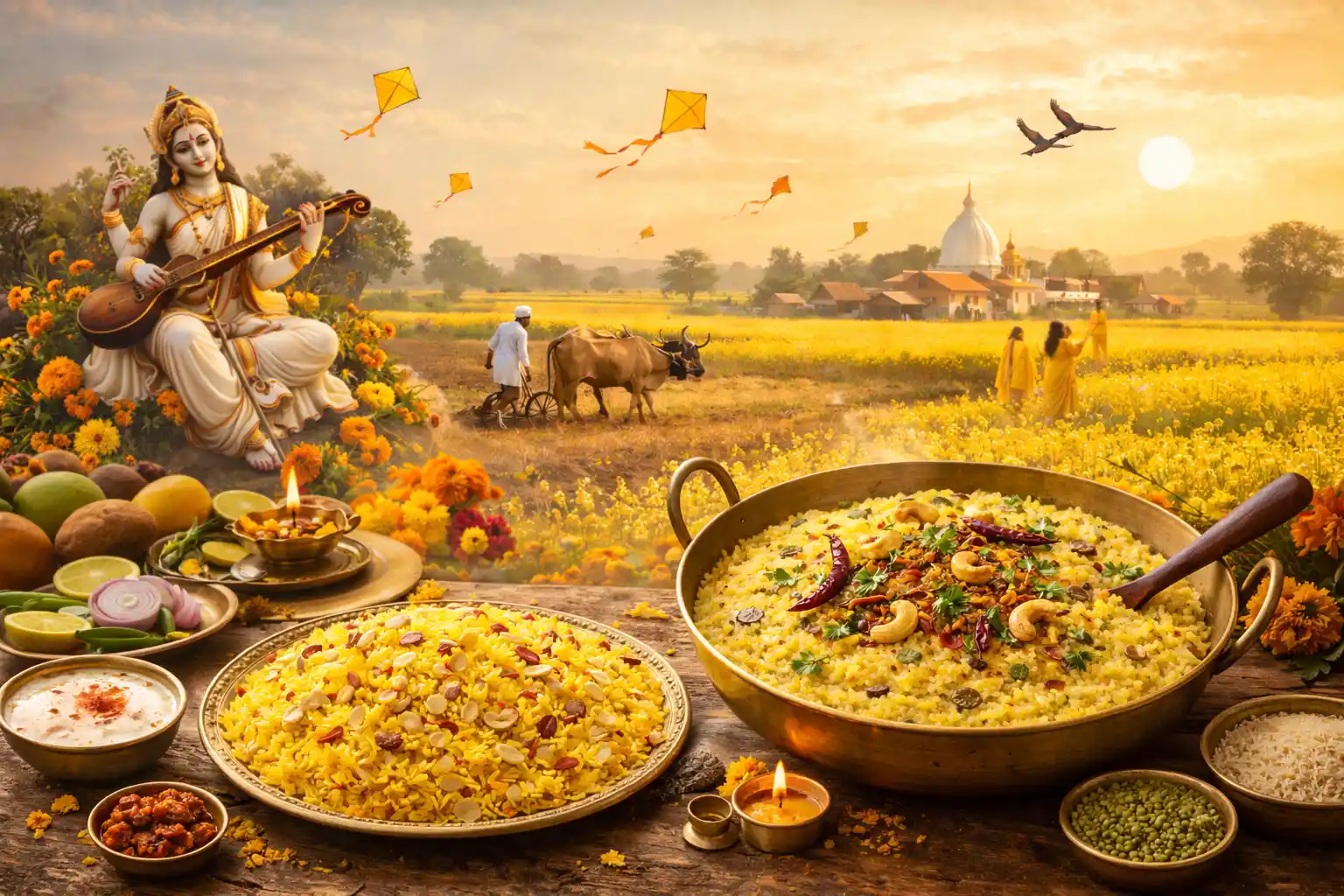
Vasant Panchami is a festival that marks the arrival of spring, a time of renewal, harvest, and vibrant colors. It is also a celebration of knowledge, arts, and culture. The traditional foods served during this festival, like Meethe Chawal and Khichdi, hold deep cultural significance. Meethe Chawal, or sweet saffron rice, is made with the blessings of nature and symbolizes prosperity, sweetness, and the joy of the harvest season. On the other hand, Khichdi, a simple yet nourishing dish of rice and moong dal, is often considered a comfort food and is offered as a symbol of purity and humility. These dishes connect us to the earth, our traditions, and the importance of food as a medium of celebration and unity, reminding us to appreciate the bounty of nature and the spiritual renewal that Vasant Panchami brings."
Spiritual Insights from Swami Mukundananda
Swami Mukundananda, a renowned spiritual teacher, has shared profound insights on the significance of food and its connection to spirituality. According to Swamiji, food is not just a material necessity; it has the power to influence one's mind and spirit. He emphasizes the importance of consuming sattvic (pure) food, which promotes mental clarity, peace, and spiritual growth.
On the occasion of Vasant Panchami, Swami Mukundananda reminds us that food prepared with love, devotion, and gratitude becomes an offering to the divine. Each ingredient in traditional recipes like Meethe Chawal and Khichdi carries its own energy and vibration. By consciously preparing and consuming such food, we can elevate our consciousness and invite positive energy into our lives.
Swami Mukundananda encourages us to view food as a medium for spiritual practice. He teaches that when we cook with the intention of offering the food to God, the process of cooking becomes an act of devotion. This mindset not only makes the food more nourishing but also transforms it into a spiritual offering that brings peace and joy.
Key Takeaways:
- Meethe Chawal and Khichdi are traditional dishes prepared during Vasant Panchami that symbolize devotion, simplicity, and the arrival of spring.
- Meethe Chawal is a sweet rice dish with a rich, aromatic flavor, while Khichdi is a savory, comforting dish made with rice and lentils.
- Swami Mukundananda’s teachings emphasize the spiritual significance of food, encouraging us to prepare meals with love, devotion, and gratitude.
- By cooking with a mindful heart, we can elevate both the food and our spiritual consciousness, transforming mealtime into a spiritual practice.
Vasant Panchami is a celebration of nature, knowledge, and spiritual renewal. As we enjoy these traditional dishes, let us remember their deeper significance and approach cooking and eating with mindfulness and reverence.
Celebrate Vasant Panchami at Radha Krishna Temple

Join us for the vibrant celebration of Vasant Panchami and Saraswati Puja at Radha Krishna Temple, Allen, Texas. Experience the joy of spring, devotion, and the blessings of Goddess Saraswati.
Learn More & Join the Celebration2026 Vasant Panchami / Saraswati Puja Date & Timing
Vasant Panchami 2026 (Saraswati Puja) will be observed on Friday, January 23, 2026, according to traditional Hindu calendar timing (Magha Shukla Panchami Tithi).
Event Link
You can check the temple’s official celebration page for updates, timing, and scheduling details here:
Vasant Panchami & Saraswati Puja at Radha Krishna Temple🌟 FAQs: All You Need to Know About Vasant Panchami Traditions 🌟
❓ 1. Why is Vasant Panchami Celebrated?
Vasant Panchami marks the arrival of spring and is dedicated to Goddess Saraswati, the deity of knowledge, wisdom, and arts. It is celebrated with great joy to seek blessings for learning and enlightenment. The festival also symbolizes the renewal of nature and the vibrancy of the season.
❓ 2. What Is the Significance of Meethe Chawal in Vasant Panchami?
Meethe Chawal (Sweet Rice) is a traditional dish served during Vasant Panchami as an offering to Goddess Saraswati. Its golden yellow color represents auspiciousness, and its sweet flavor symbolizes the blessings of prosperity and knowledge. The dish is prepared with great devotion, making it a key element of the celebration.
❓ 3. Can I Make Khichdi Without Moong Dal?
While moong dal is traditionally used in Khichdi for its light and easily digestible properties, you can substitute it with other lentils, such as masoor dal (red lentils) or toor dal (pigeon peas). However, the flavor and texture may vary slightly.
❓ 4. Is Meethe Chawal Only Made During Vasant Panchami?
Though Meethe Chawal is most commonly associated with Vasant Panchami, it can be enjoyed during other festive occasions as well, like Diwali, Holi, or weddings. It is often made during special gatherings to celebrate prosperity and the harvest season.
❓ 5. Can Khichdi Be Made Vegan?
Yes! To make a vegan version of Khichdi, simply replace ghee with a plant-based oil or vegan butter. The rest of the ingredients, including rice, lentils, and spices, are naturally plant-based, making Khichdi a wholesome and vegan-friendly meal.