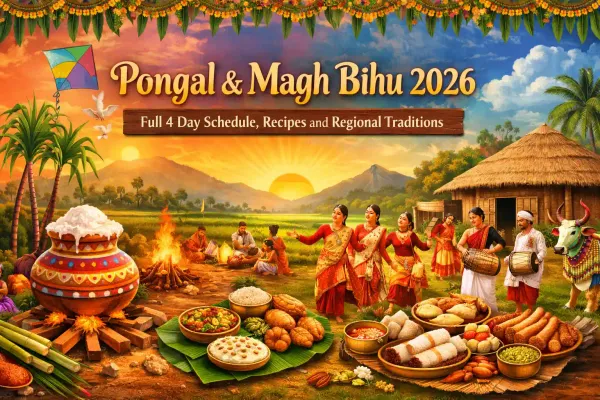
The Bhakti Chef: Cooking with Gratitude and Devotion This Harvest Season
As the sun begins its northward journey this January 14, 2026, golden rays awaken the fields across India, and kitchens hum with quiet devotion. The aroma of freshly harvested grains, roasted sesame seeds, jaggery, and ghee drifts through homes, promising abundance and warmth.
From the bonfires of Punjab’s Lohri to the overflowing Pongal pots in Tamil Nadu, from sesame-laden sweets in Maharashtra to delicate rice crepes in Bengal, each region celebrates the harvest uniquely.
Yet beneath these diverse names and flavors flows a single, unifying current: gratitude to the Sun, to the Earth, and to the farmers who nurture life.
As Swami Mukundananda ji teaches, devotion does not depend on temples or elaborate rituals. It blossoms in ordinary moments – when even a simple act like cooking is done with remembrance of Radha Krishna.
A perfect karm yogi lives this truth:
“Mana Hari mein, Tana Jagat mein.”
The hands remain engaged in the world - rolling laddus, stirring Pongal, kneading dough or chopping vegetables, while the mind stays anchored in Radha Krishna. In such remembrance, though many cook different dishes, the spirit becomes one: everything is prepared solely to please Them.
In the Bhakti tradition, cooking itself becomes Seva. Food prepared with purity, patience, and loving attention transforms from Naivedya into Prasad – divine mercey infused with grace that nourishes the soul, softens the heart, dissolves karma, steadies the mind, and cultivates gratitude, joy and humility.
Midway Inspiration: Learn from Swamiji
Halfway through these offerings, let us pause and reflect – not just on what we cook, but how we eat.
🎥 Watch: “Mindful Eating: Break Free from Karmic Ties”
Let Swamiji’s teaching remind us to eat with gratitude, and turn every meal into a sacred, karmic free offering.
Mindful Eating: Break Free from Karmic Ties
🌾 Sacred Harvest Recipes from Across India
1. Til–Gud Laddu (Sesame Jaggery Balls) 🌟
Region: Maharashtra / West India
Spiritual Focus: Sweet speech & unity.
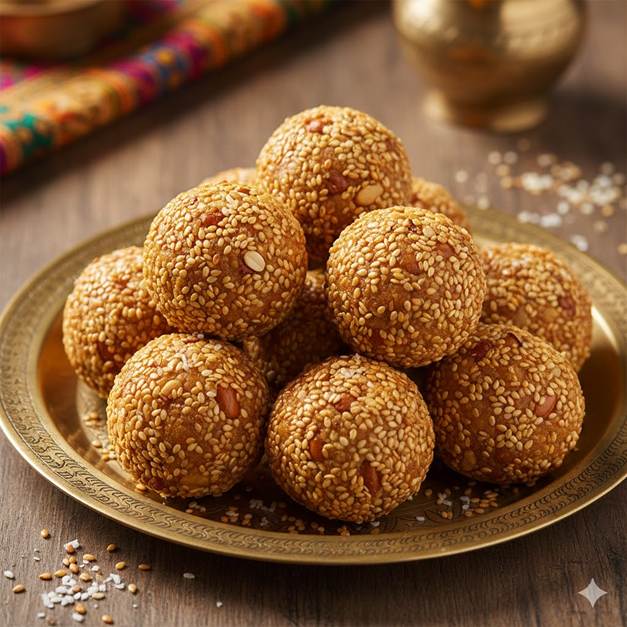
Countless sesame seeds, bound by molten jaggery, teaches that devotion asks not for greatness, but for togetherness under grace.
⏱ Time: 20 minutes 🍽 Yield: 15–20 small laddus
Ingredients
• Sesame seeds (Til) – 1 cup
• Jaggery – ¾ cup, grated
• Ghee – 2 tbsp (1 tbsp for cooking, 1 tbsp for rolling)
• Water – 1 tsp
Cooking Time
15–20 minutes
Cooking Steps
- Dry roast the sesame seeds on a low flame until lightly golden and aromatic (about 3–4 minutes). Set aside.
- In a pan, heat 1 tbsp ghee. Add grated jaggery and 1 tsp water, allowing it to melt and bubble gently into syrup.
- Add the roasted sesame seeds to the jaggery syrup and mix swiftly until evenly coated.
- Turn off the heat. When the mixture is warm but comfortable to touch, grease your palms with ghee and roll into small, smooth laddus.
Significance:
A Makar Sankranti favorite, til-gud carries the blessing, “Til-gul ghya, goad goad bola” — eat til-gud and speak sweetly. Sesame seeds symbolize immortality and purity; jaggery reflects sweetness in speech, harmony, and balance. Shaping the laddus mirrors softening the heart; patience and devotion turn firmness into sweetness.
Bhakti Reflection:
“Like this jaggery binds the seeds, let my love for God bind all my thoughts together.”
2. Sakkarai Pongal (Sweet Pongal) 🍚
Region: Tamil Nadu / South India
Spiritual Focus: Overflow & gratitude
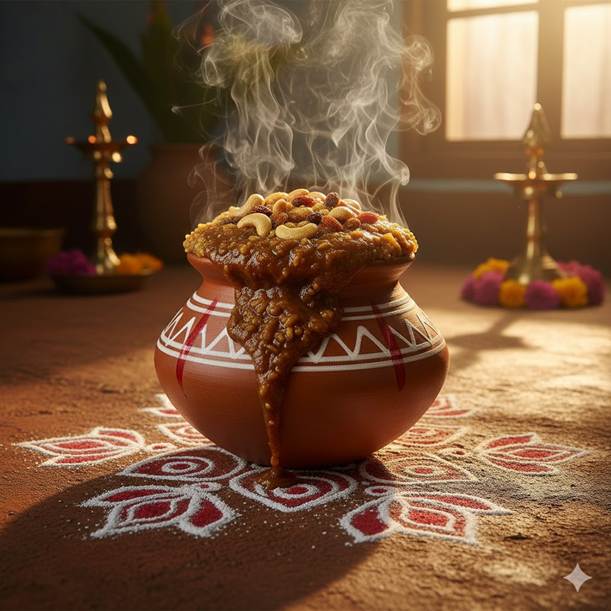
Newly harvested rice boils gently with jaggery until the pot overflows — “Pongalo Pongal!” This gentle overflow is a wish for abundance, joy and gratitude.
Newly harvested rice and jaggery boil until the pot overflows – a symbol of abundance, joy, and heartfelt gratitude. Cooked traditionally under the open sky, the rice and lentils merge, reminding us that sincere devotion cannot be contained.
⏱ Time: 25 minutes 🍽 Yield: Serves 4–5
Ingredients
• Raw rice – ½ cup
• Split yellow moong dal – ¼ cup
• Jaggery – ¾ cup, powdered
• Ghee – 3 tbsp
• Cashews – 10, halved
• Raisins – 1 tbsp
• Cardamom powder – ½ tsp
• Water – 3 cups
Cooking Time
20–25 minutes
Cooking Steps
- Dry roast the moong dal lightly until aromatic. Wash the rice and dal together.
- Pressure cook rice and dal with 3 cups water until soft and mushy.
- In a separate pan, melt jaggery with 2 tbsp water and strain if needed.
- Add the jaggery syrup to the cooked rice-dal mixture and simmer gently, stirring until smooth and glossy.
- Heat ghee in a small pan. Fry cashews and raisins until golden, then add to the Pongal.
- Finish with cardamom powder and give a final, gentle stir.
Significance:
Offered during Pongal and Makar Sankranti, Sweet Pongal celebrates harvest, gratitude, and divine grace. The boiling over of the pot symbolizes unity, surrender, and the effortless, abundant blessings.
Bhakti Reflection:
“As the pot boils over with joy, may my heart overflow with gratitude for the Divine.”
3. Sarson ka Saag (Mustard Greens Curry) & Makki ki Roti (Corn Flatbread)
Region: Punjab / North India – Lohri
Spiritual Focus: Patience & steadiness
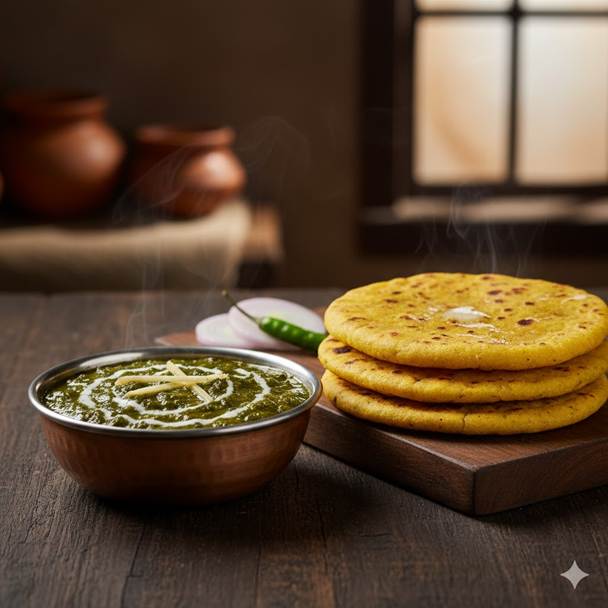
A quintessential winter meal - mustard greens and spinach simmered into creamy Saag, paired with warm corn rotis. Devotion, like the Saag, deepens slowly; love, like the Roti, is offered with care.
Sarson ka Saag (Mustard Greens Curry) 🌾
⏱ Time: 45 minutes 🍽 Yield: 4–5 servings
Ingredients
• Mustard greens (Sarson) – 2 cups
• Spinach (Palak) – 1 cup
• Ginger – 1-inch piece
• Green chilies – 2
• Ghee – 2 tbsp
• Hing (Asafoetida) – a pinch
• Maize flour (Makki Atta) – 1–2 tbsp, to thicken
• Salt – to taste
Cooking Time
45 minutes
Cooking Steps
- Chop & Wash: Roughly chop the greens. Wash thoroughly.
- Boil: Pressure cook greens with ginger, chilies, and a splash of water for 3–4 whistles until soft.
- Mash: Once cooled slightly, mash using a wooden whisk (mathani) or blender. Sprinkle maize flour gradually while stirring to reach a creamy consistency.
- Tempering: Heat ghee in a small pan, add hing and extra ginger. Pour over the greens and simmer for 10 minutes on low heat to let flavors blend.
Makki ki Roti (Corn Flatbread) 🌾
⏱ Time: 20 minutes 🍽 Yield: 6 rotis
Ingredients
• Maize flour (Makki Atta) – 2 cups
• Warm water – as needed
• Salt – a pinch
• Ghee – for cooking
Cooking Time
20 minutes
Cooking Steps
- Mix & Knead: Combine maize flour and salt. Gradually add warm water to make a soft dough.
- Pat: Divide dough into balls. Using your hands, gently pat each ball into a thick flat disc on parchment or a plastic sheet.
- Cook: Place on a hot griddle, cook on both sides, adding ghee until golden spots appear.
Significance: Sarson Ka Saag and Makki ki Roti dish: each bite reminds us that simplicity, steadfastness, and mindful preparation are acts of devotion.
Bhakti Reflection:
"Patience in cooking leads to taste; patience in Bhakti leads to Grace."
4. Makara Chaula 🍌
Region: Odisha / East India
Spiritual Focus: Raw sincerity
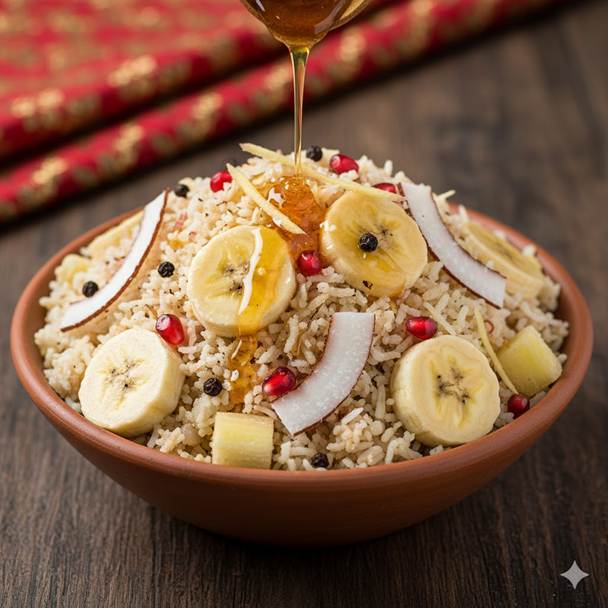
A simple, uncooked offering of rice, milk, honey, banana, and optional pomegranate or cottage cheese. Devotion is measured by love, not effort.
⏱ Time: 10 minutes 🍽 Yield: Serves 4
Ingredients
• Freshly harvested rice – ½ cup
• Milk – ½ cup
• Honey – 2 tbsp
• Banana – 1, sliced
• Optional: Pomegranate seeds – 2 tbsp
• Optional: Fresh cottage cheese (chhena) – 2 tbsp
Cooking Time
10 minutes
Cooking Steps
- In a clean bowl, combine the rice with milk and honey.
- Mix in sliced banana and, if using, pomegranate seeds and cottage cheese.
Significance:
This humble preparation celebrates purity and simplicity. Devotion can be raw, honest, and unadorned and that such simplicity, when offered with love, is what the Lord cherished most.
Bhakti Reflection:
"Even the simplest offering, given with love, becomes sacred."
5. Gujarati Khichdo (Saat Dhan Khichdo) 🥣
Region: Gujarat / Uttarayan
Spiritual Focus: Surrender of ego
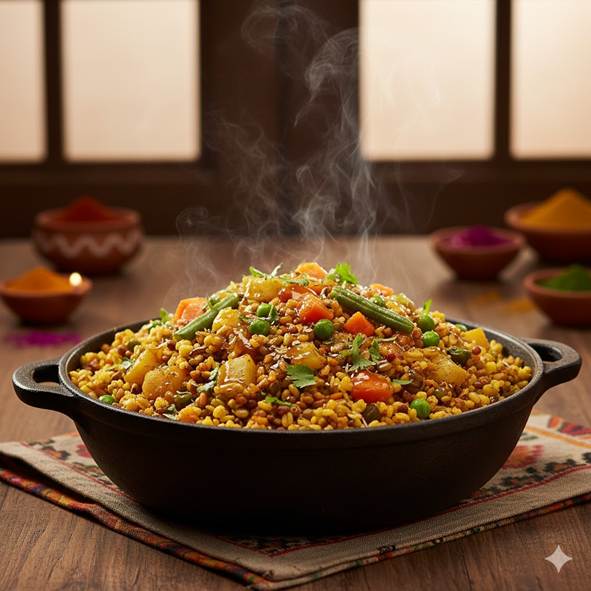
Seven grains (Saat Dhan] cooked into one nourishing dish, teaching unity in diversity and surrender to the Divine will.
⏱ Time: 40 minutes (plus soaking if desired) 🍽 Yield: 5–6 servings
Ingredients
• Rice – ½ cup
• Moong dal – ¼ cup
• Toor dal – ¼ cup
• Green gram – ¼ cup
• Wheat / cracked wheat – ¼ cup
• Barley – ¼ cup
• Millet – ¼ cup
• Seasonal vegetables (yam, peas, carrots) – ½ cup
• Ghee – 1–2 tbsp
• Jaggery – ½ tsp (optional)
• Nuts & raisins – 1–2 tbsp (optional)
• Water – 3 cups
• Salt – to taste
• Spices: ginger, green chili, turmeric
Cooking Time
40 minutes (plus soaking if desired)
Cooking Steps
- Soak: Wash and soak all grains together for at least 10–30 minutes (or overnight for quicker cooking).
- Cook Grains: Pressure cook the soaked grains with water and turmeric until soft and porridge-like (20–25 minutes).
- Prepare Vegetables: Chop seasonal vegetables and sauté in ghee with ginger, green chili, and other spices.
- Combine: Mix cooked grains with sautéed vegetables, jaggery, and nuts/raisins. Simmer gently until flavors meld.
Significance:
This dish is a living spiritual metaphor for surrender. Different textures and flavors merge, teaching us to release individual ego and accept the Divine Will.
Bhakti Reflection:
"Different grains, one pot. Different people, one God. We are all united in Him."
6. Patishapta 🌰
Region: Bengal / East India – Poush Sankranti / Pithe Parbon
Spiritual Focus: Hidden sweetness

Rice-flour crepes filled with coconut and jaggery remind us that true sweetness is revealed when the heart is refined by devotion.
⏱ Time: 25–30 minutes 🍽 Yield: 8–10 crepes
Ingredients
• Rice flour – 1 cup
• Semolina (Sooji) – ¼ cup
• Milk – 2 cups
• Jaggery – ½ cup (for batter)
• Coconut – 1 cup, grated (for filling)
• Jaggery – ½ cup (for filling)
• Optional: Nolen Gur for extra winter aroma
Cooking Time
25–30 minutes
Cooking Steps
- Whisk: Combine rice flour, semolina, milk, and jaggery into a smooth, pourable batter.
- Spread: Pour a small ladle of batter onto a lightly greased pan and swirl into a thin circle.
- Fill: Place a line of the sweet coconut-jaggery mixture along one edge.
- Roll: Gently roll into a cylinder, like tucking in a precious secret.
- Serve: Warm or lightly steamed if needed.
Significance:
This thin crepe represents the outer form, while the coconut-jaggery filling symbolizes the soul’s hidden devotion. Patishapta reminds us that true sweetness is not displayed outwardly – it unfolds quietly when the heart is refined by sincere bhakti.
Bhakti Reflection:
"The sweetness of God is hidden inside us, just like the filling inside this Pitha."
7. Assamese Jolpan 🍌
Region: Assam / East India – Bhogali Bihu / Magh Bihu
Spiritual Focus: Joy is sharing
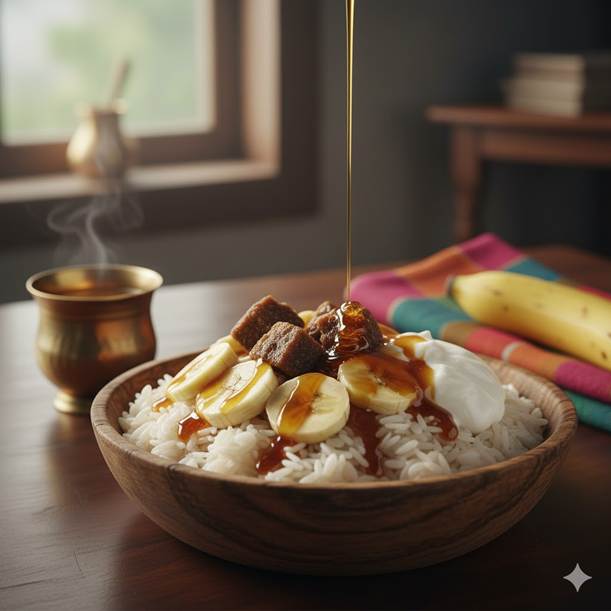
A simple mix of soaked flattened rice, banana, yogurt, and jaggery. Made without cooking, love and care transform humble ingredients into an offering.
⏱ Time: 15 minutes (no-cook) 🍽 Yield: 2 servings
Ingredients
• Flattened rice (Poha) – 1 cup
• Ripe banana – 1, mashed
• Yogurt – 1 cup
• Jaggery – 1 tbsp
• Optional: Grated coconut – 2 tbsp
Cooking Time
15 minutes
Cooking Steps
- Soak: Lightly soak the poha for 5 minutes until soft.
- Mix: Mash the banana and combine yogurt and jaggery.
- Fold: Gently fold in the poha (and optional coconut).
- Serve: Scoop into bowls and enjoy immediately as a nourishing treat.
Significance:
Jolpan symbolizes gratitude and prosperity rooted in the harvest. Shared around the community Meji, it reminds us that devotion grows through simplicity and joy multiply when food is offered with love.
Bhakti Reflection:
"I don't need a stove to cook love. My devotion is the heat that makes this a Prasad."
8. UP Khichdi 🍚
Region: Uttar Pradesh / North India – Makar Sankranti
Spiritual Focus: Minimalism
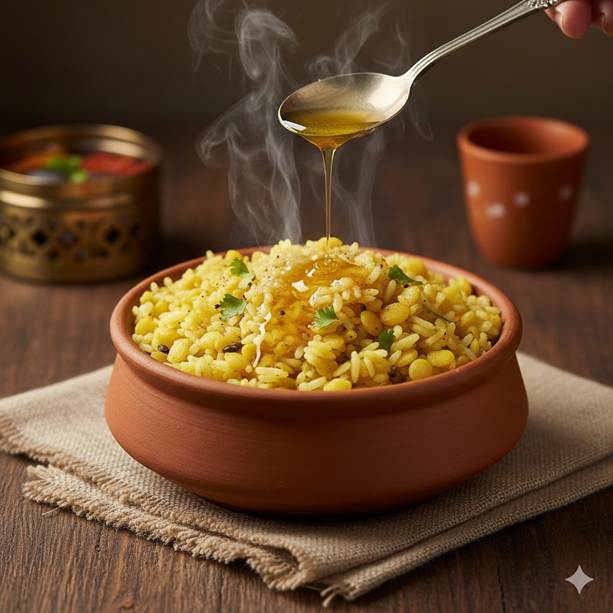
Rice and moong dal merge to form a light, grounding, sattvic dish, pleasing to Surya Dev (the Sun God) for planetary balance, harmony and health.
⏱ Time: 20–25 minutes 🍽 Yield: 4 servings
Ingredients
• Rice – 1 cup
• Moong dal – 1 cup (split yellow)
• Water – 6 cups
• Ghee – 1–2 tbsp
• Turmeric – 1 tsp
• Cumin seeds – 1 tsp
• Salt – to taste
• Optional: A pinch of hing, grated ginger
Cooking Time
20–25 minutes
Cooking Steps
- Pour: Add rice, moong dal, water, turmeric, and salt to a pot.
- Cook: Simmer until the mixture becomes thick, soft, and porridge-like.
- Temper: Heat ghee in a small pan, add cumin seeds (and optional hing/ginger), and let them sizzle.
- Top: Drizzle the tempered ghee over the khichdi before serving.
- Serve: Warm.
Significance: Rice and lentils merge into one nourishing whole, symbolizing unity and simplicity in devotion. This humble dish reminds us that what is pure and unadorned, when offered with sincerity, is most pleasing to the Divine.
Bhakti Reflection:
"Simplicity is the shortcut to God. A simple heart is His favorite home."
9. Ven Pongal 🌾
Region: Tamil Nadu / South India – Makar Sankranti
Spiritual Focus: Discipline under heat
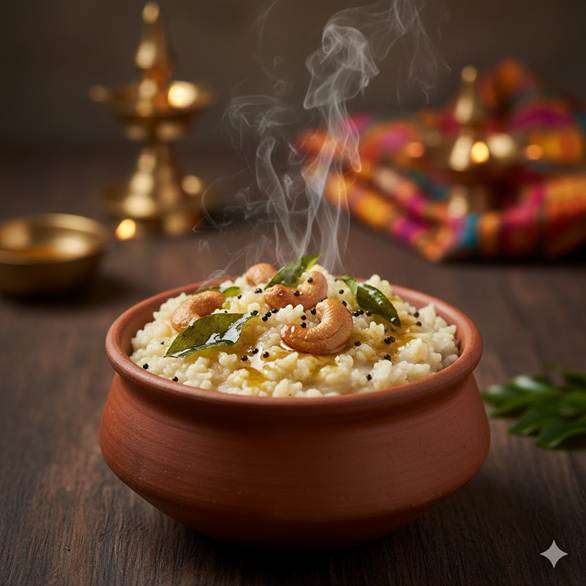
Savory rice and moong dal tempered with spices. Just as the spices release their aroma only when heated, devotion shines brightest when tested with challenges.
⏱ Time: 25 minutes 🍽 Yield: 4 servings
Ingredients
• Rice – 1 cup
• Moong dal – ½ cup
• Water – 4–5 cups
• Ghee – 2 tbsp
• Cumin seeds – 1 tsp
• Black peppercorns – 1 tsp, crushed
• Ginger – 1-inch piece, grated or paste
• Curry leaves – 6–8 leaves
• Cashews – 8–10 (optional)
• Salt – to taste
• Hing – a pinch (optional)
Cooking Time
25 minutes
Cooking Steps
- Boil: Cook rice and moong dal together with water and salt until soft and mushy.
- Roast & Temper: In ghee, lightly roast cumin seeds, crushed black pepper, grated ginger, curry leaves, cashews, and a pinch of hing until fragrant and golden.
- Combine: Mix the tempering gently into the cooked rice and dal.
- Serve: Warm.
Significance: Ven Pongal symbolizes discipline and warmth needed in spiritual practice. Traditionally offered to Surya Dev (Sun God) and is considered nourishing, grounding, and purifying.
Bhakti Reflection:
"Even a simple meal is a feast when offered with a pure and steady mind."
10. Ellu Bella 🥜
Region: Karnataka / South India – Makar Sankranti
Spiritual Focus: Social harmony
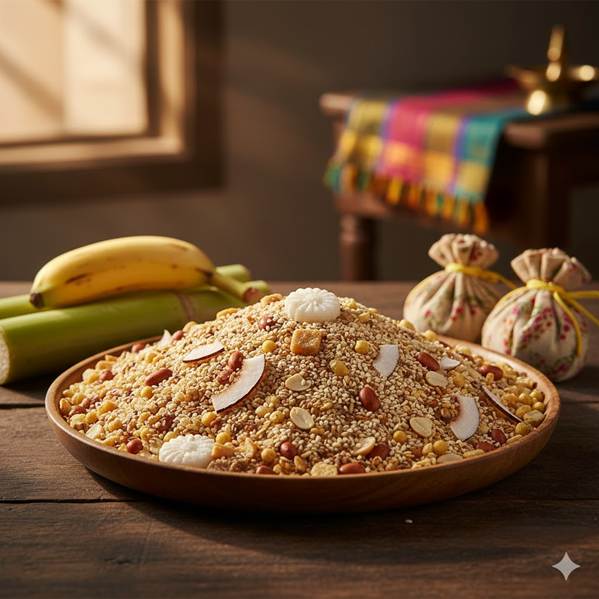
A mixture of sesame seeds, peanuts, fried gram, jaggery, and coconut, shared hand to hand, reflects gratitude, generosity, and the joy of community.
⏱ Time: 10–12 minutes 🍽 Yield: 3 cups
Ingredients
• White sesame seeds – ½ cup
• Roasted peanuts (halved) – ½ cup
• Roasted gram (hurigadale) – ½ cup
• Grated dry coconut (koppari) – ¼ cup
• Jaggery cubes or small pieces – ½ cup
• Optional: Dried fruits – 2 tbsp
Cooking Time
10–12 minutes
Cooking Steps
- Roast: Lightly roast sesame seeds, peanuts, and roasted gram until fragrant.
- Mix: Combine the roasted ingredients with jaggery, coconut, and optional dried fruits in a large bowl.
- Toss: Use clean hands or a spoon to toss evenly, blending the flavors.
- Serve or Share: Pack in small portions to share with family and neighbors.
Significance:
Each ingredient retains its nature yet contributes to a harmonious whole dish, symbolizing unity in diversity. Sharing it reminds us that devotion is expressed through kind words, mindful actions, and care for one another.
Bhakti Reflection:
"May I speak only 'sweet words' (jaggery) and stay 'firm' in my faith (peanuts) today."
🌿 Bonus Offering: Sugarcane Juice [Ganna ka Ras] 🍹
Region: Across India – Harvest Festivals
Spiritual Focus: Quiet strength & surrendered patience

Sugarcane appears silently across harvest festivals beside Pongal pots, near Lohri bonfires, and in Sankranti offerings. Upright and unadorned, it holds sweetness within, revealed only through pressing.
⏱ Time: 5 minutes 🍽 Yield: 2 glasses of juice
Ingredients
• Fresh sugarcane juice – 2 cups
• Lemon wedge – 1 small
• Ginger juice – a few drops
Cooking/Preparation Steps
- Pour fresh sugarcane juice into glasses.
- Add a squeeze of lemon and a few drops of ginger juice.
Significance:
Sugarcane symbolizes steadiness, restraint, and grace born of pressure. Its sweetness emerges not from embellishment, but endurance – reminding us that devotion often ripens through life’s challenges. Quite strength and surrendered patience, when offered to Radha Krishna, becomes the purest sweetness.
Bhakti Reflection:
“The world is the hard bark, but God’s love is the sweet juice inside. Press gently—with surrender.”
From Grain to Grace: Cooking as Seva and Celebration
“It is not the perfection of the recipe, but the Bhav with which it is offered that satisfies Radha Krishna.” – Swami Mukundanandaji.
Every meal can be an offering.
Every kitchen a temple.
Every cook can be a Bhakti Chef.
Call to Action:
🌾 Join Us for a Joyful Lohri Celebration at the Radha Krishna Temple of Dallas! 🔥
Experience the warmth of community, devotion, and vibrant cultural traditions at our Lohri celebration on January 13, 2026. Gather around the sacred bonfire, enjoy live dhol and bhangra performances, and relish traditional Punjabi dishes in the spirit of gratitude for the harvest season. 🌟
Don’t miss out on this heartwarming event that marks the beginning of the new season with love and light! Register now and be part of the festivities.
📅 Date: January 13, 2026
🕕 Time: 6:00 PM to 7:00 PM CST
📍 Location: Radha Krishna Temple of Dallas, 1450 N Watters Rd, Allen, TX
Celebrate with us and bring in the harvest season with devotion, joy, and community spirit! 🙏
👉 RSVP Today! https://www.radhakrishnatemple.net/lohri-in-dallas
FAQs – Harvest & Devotional Recipes
1. Can I make these recipes without jaggery?
Yes, sugar or honey works, but jaggery gives traditional taste and spiritual resonance.
2. Are these dishes healthy?
Most are light, nourishing, and made with natural ingredients.
3. Can I cook these recipes in advance?
Yes, some like Khichdi, Ellu Bella, or Patishapta can be prepped, but Saag, Pongal, and Roti are best fresh.
4. Can I use other grains or vegetables?
Yes, adjust based on availability, but traditional ingredients give authenticity.
5. How do I make cooking devotional?
Focus on every step, offer the first portion to God, and prepare with love and mindfulness.