
There are temples that people visit, and then there are temples that people experience. Tirumala, the sacred abode of Lord Venkateswara, belongs to the latter. To millions across the world, it is known as the most visited pilgrimage destination on earth, where devotees wait for hours, sometimes even days, for a few fleeting seconds of darshan. Yet those few seconds often leave a lasting imprint on the heart.
Why is this? Because Tirumala is not merely a temple. It is a living home, and the One who resides there is not worshipped as a distant deity, but served as a living, breathing Divine Presence.
What truly unfolds inside Tirumala in a span of twenty-four hours reveals something extraordinary. It is not a series of rituals performed out of habit, but a continuous flow of loving service. Every action, from the first lamp lit before dawn to the final lullaby at night, is an offering of devotion, carried out with care, precision, and deep emotional connection. It is a rhythm that has continued uninterrupted for centuries, reminding us that devotion is not an occasional act, but a way of living.

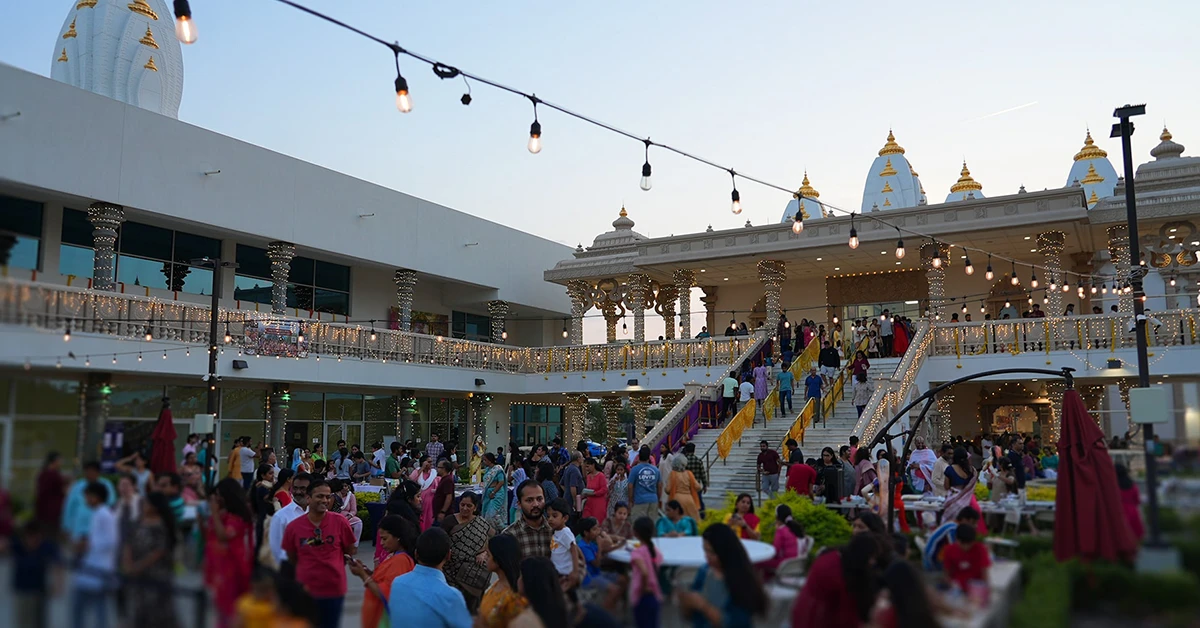
The Untold Daily Routine of Lord Venkateswara
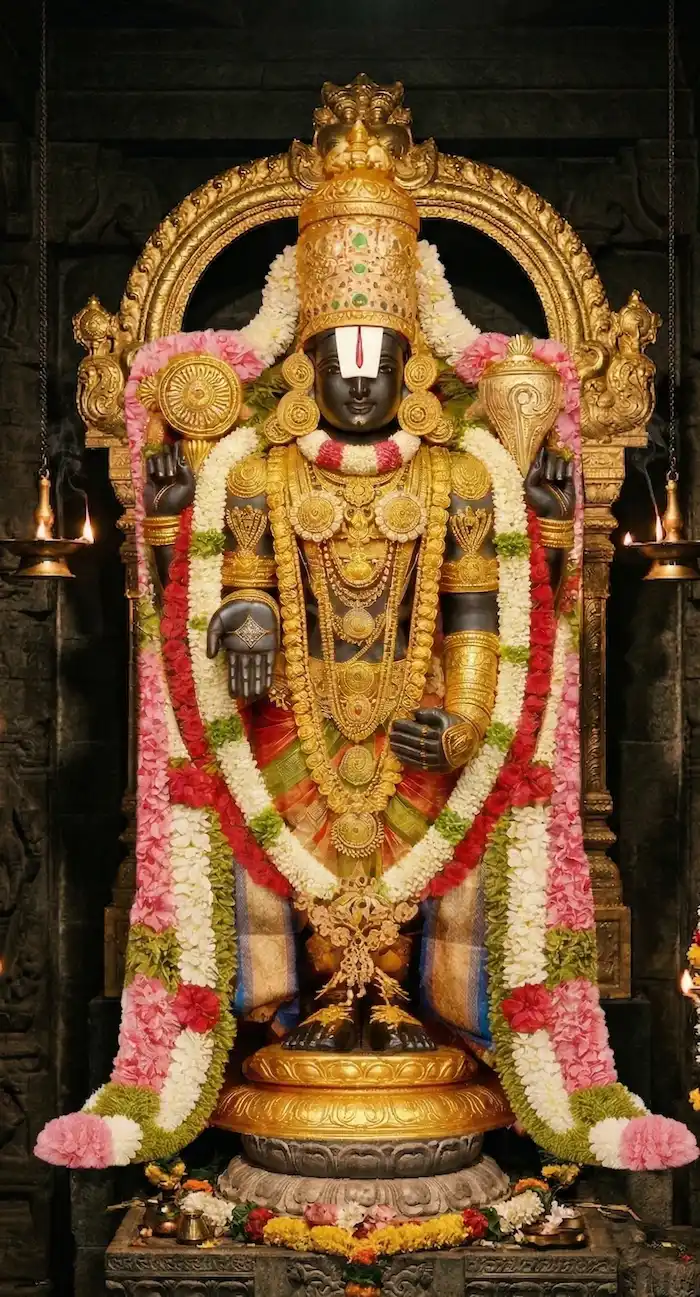
The day at Tirumala begins long before sunrise, in a silence that feels almost sacred in itself. Before the temple doors open, before the priests arrive, one humble figure enters first: a cowherd known as the Sanidhi Golla. This is not a ceremonial role, but a divine inheritance passed down through generations. Carrying a single flame, he steps into the dark sanctum and becomes the first to behold the Lord each day. In that quiet moment, there are no crowds, no chants, no grandeur; only a deeply personal connection between devotee and Divine.
At precisely 3:00 AM, the temple awakens with the chanting of the Suprabhatam. These sacred verses, composed centuries ago, are sung both inside and outside the sanctum, gently inviting the Lord to rise. It is not just a ritual, it is a loving call, like waking a cherished family member. The atmosphere begins to shift as the day’s divine routine unfolds.
Soon after, the Tomala Seva begins, where the Lord is adorned with fresh garlands prepared overnight. Each flower is placed with care, each garland designed for a specific part of the deity. This is not decoration, but is dressing the Lord with love. The attention to detail reflects a deeper Bhav (feeling): that the Lord is present, and every act of service matters.
Following this, the Panchangam is read aloud, detailing the day’s cosmic alignments and temple activities. Even the temple’s financial accounts are offered to the Lord, symbolizing that everything belongs to Him. The first meal of the day is then served; prepared with purity, using traditional methods and sacred ingredients. It is not a symbolic offering; it is a real meal, presented with devotion.
As the doors open to the public, a river of humanity begins to flow through the temple. Devotees from all walks of life, young and old, wealthy and humble, stand in line, united by a single desire: to see the Lord. And yet, what they receive is more than just a glimpse. In that brief moment of darshan, many feel seen, heard, and blessed.
Throughout the day, the Lord is offered multiple meals, adorned with new garments, and honored through various sevas. One of the most beautiful aspects of this daily routine is the Kalyanotsavam: the divine wedding ceremony performed every single day. This is not a reenactment of a past event, but a living tradition that celebrates the eternal union of Lord Venkateswara and Goddess Padmavati.
As evening descends, the Unjal Seva brings a sense of serenity. The Lord is placed on a swing, surrounded by the soft glow of a thousand lamps, while devotional songs fill the air. It is a moment of stillness, where the heart naturally turns inward.
Finally, the day concludes with the Ekanta Seva, where the Lord is gently put to rest. Lullabies are sung, lights are dimmed, and the sanctum returns to silence. Yet this silence is not emptiness, it is a pause before the next cycle of devotion begins.
This entire routine reveals a profound truth: Tirumala is not a place where rituals are performed. It is a place where a relationship is lived.
Bringing Tirumala to Life: Sri Srinivasa Kalyanotsavam in Dallas
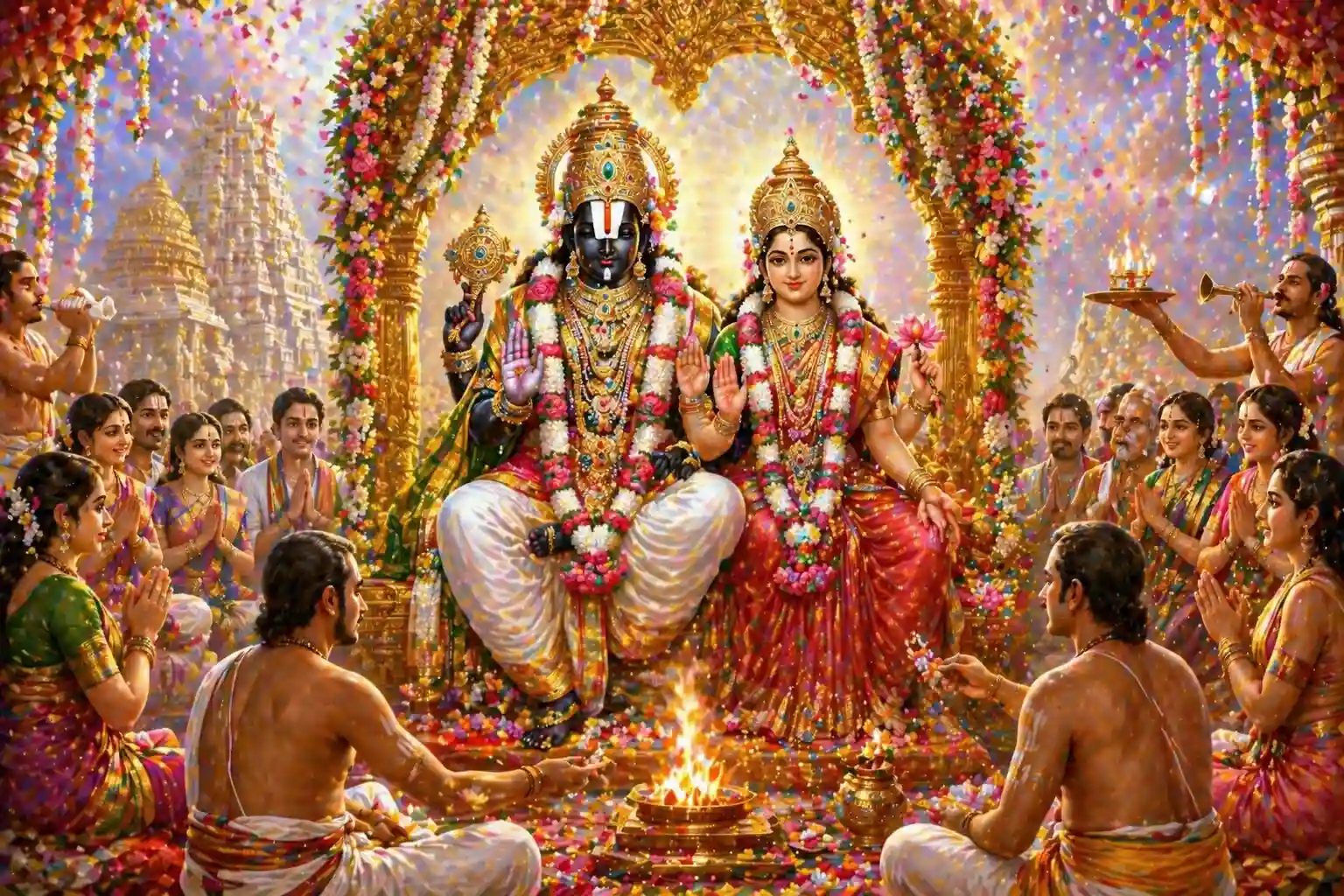
For those who have not had the opportunity to visit Tirumala, or for those who long to relive its divine atmosphere, the Sri Srinivasa Kalyanotsavam at the Radha Krishna Temple of Dallas offers a deeply immersive experience.
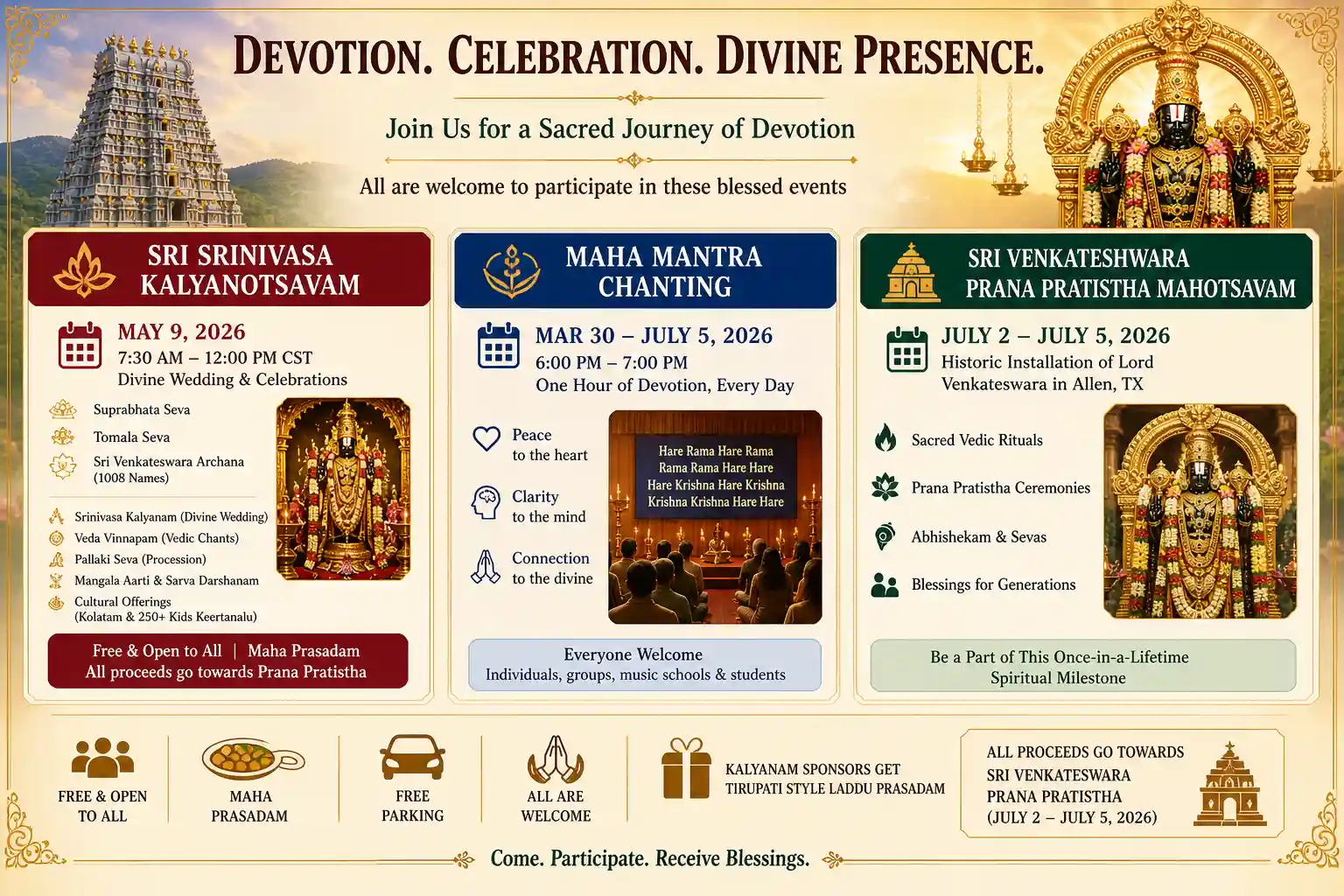
On May 9, the day begins at 7:30 AM CST with sacred morning rituals that mirror the very sequence followed in Tirumala. The Suprabhatam Seva gently awakens the Lord, followed by the Tomala Seva, where the deity is adorned with beautiful garlands. The morning concludes with Sri Venkateswara Archana, where the 1008 names of the Lord are chanted with devotion.
From 9:00 AM to 12:00 PM, the main celebrations unfold, centered around the Srinivasa Kalyanam, the divine wedding of Lord Venkateswara and Goddess Padmavati. This sacred ceremony includes Vedic chants, the tying of the mangalsutra, and the exchange of garlands, hence symbolizing eternal divine love.
The celebration continues with Veda Vinnapam, Pallaki Seva, and Mangala Aarti, culminating in Sarva Darshanam, where all devotees can receive blessings. The event also features vibrant cultural offerings, including Kolatam dance performances and a remarkable presentation of Annamacharya Keertanalu by over 250 children, creating an atmosphere of joy and devotion.
The event is free and open to all, with Maha Prasadam served, and free parking available. Devotees are encouraged to follow traditional dress codes—dhoti or pajama with kanduva for men, and saree or chudidar with dupatta for women. Sponsors of the Kalyanam will receive Tirupati-style laddu prasadam, adding to the authenticity of the experience.
Importantly, all proceeds from this event will go towards the upcoming Sri Venkateswara Prana Pratistha Mahotsavam, making participation both spiritually enriching and meaningful.
The Power of Sacred Sound: Maha Mantra Chanting
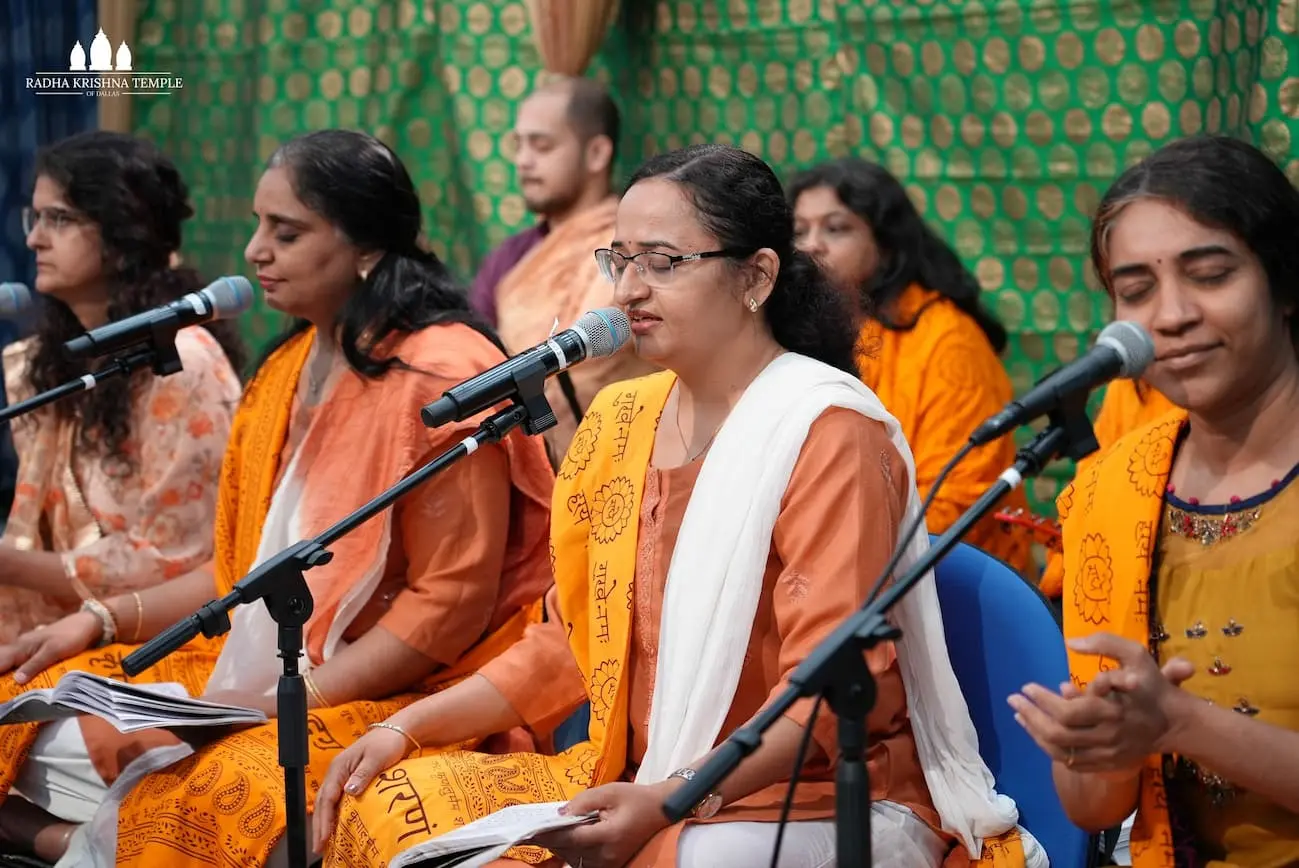
In the weeks leading up to the Prana Pratistha, devotees are invited to participate in a powerful spiritual practice: daily Maha Mantra chanting at the Radha Krishna Temple of Dallas.
From March 30 to July 5, 2026, every evening from 6:00 PM to 7:00 PM, the temple will resonate with the sacred vibrations of the Hare Rama Mahamantra:
Hare Rama, Hare Rama,
Rama Rama, Hare Hare,
Hare Krishna, Hare Krishna,
Krishna Krishna, Hare Hare.
This daily offering of devotion is more than just chanting; it is a collective spiritual experience. Each repetition of the mantra brings peace to the heart, clarity to the mind, and a deeper connection to the Divine. As voices come together in unison, the atmosphere becomes charged with devotion, creating a space where inner transformation becomes possible.
Open to everyone: individuals, families, students, and groups, this initiative invites all to make their voice an offering of bhakti. Just as the Suprabhatam awakens the Lord in Tirumala, this chanting awakens devotion within us.
A Historic Moment: Sri Venkateshwara Prana Pratistha Mahotsavam
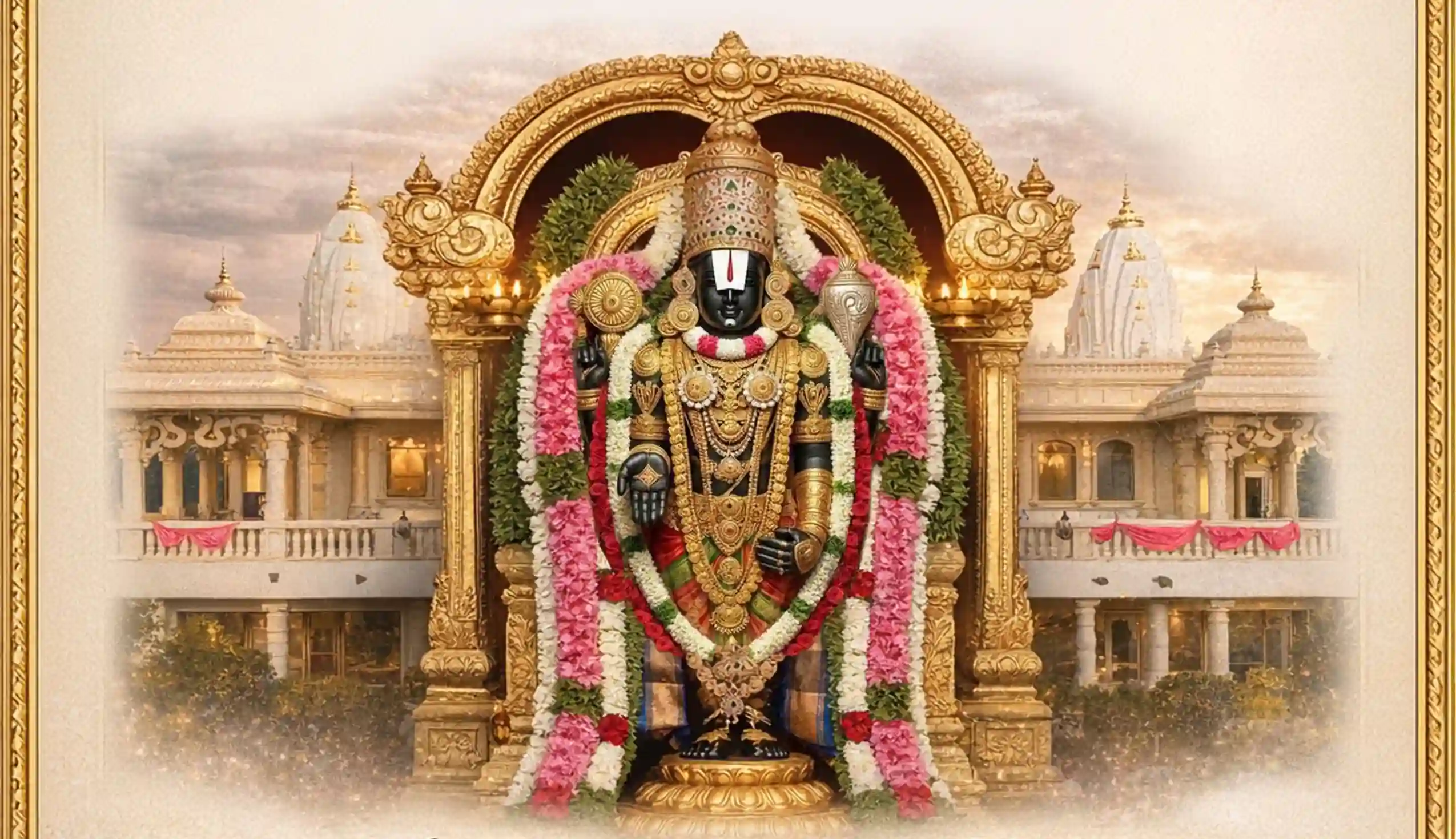
The spiritual journey culminates in a once-in-a-lifetime event: the Sri Venkateshwara Swamy Prana Pratistha Mahotsavam, taking place from July 2 to July 5, 2026, at the Radha Krishna Temple in Allen, Texas.
This sacred ceremony marks the invocation of divine life energy (prāṇa) into the deity, transforming it from a physical form into a living spiritual presence. Through elaborate Vedic rituals, homams, and mantra chanting performed by learned priests, the temple becomes a powerful center of divine grace.
Lord Venkateswara, also known as Balaji or Srinivasa, is revered as the Kaliyuga Varada: the compassionate Lord who grants refuge and blessings in this age. His installation in Dallas will establish a spiritual sanctuary for the entire Dallas Fort Worth community, allowing devotees to experience Tirupati-like darshan without traveling to India.
This Mahotsavam will not only bring divine presence closer to home but will also strengthen cultural and devotional traditions for future generations. Devotees can participate through various seva opportunities, including homam sponsorships, annadanam, and even symbolic contributions like sponsoring temple bricks.
Scriptures affirm that participating in such a consecration brings immense spiritual merit, removing past karmas and invoking blessings for generations. It is not just an event, it is a historic spiritual milestone.
The Deeper Teaching: Bringing Tirumala into Daily Life
The beauty of Tirumala is not only in what happens there, but in what it teaches us about how to live. Every moment in Tirumala, from waking the Lord with Suprabhatam to offering Him rest at night, reflects one powerful truth: devotion is not an occasional act, it is a continuous relationship.
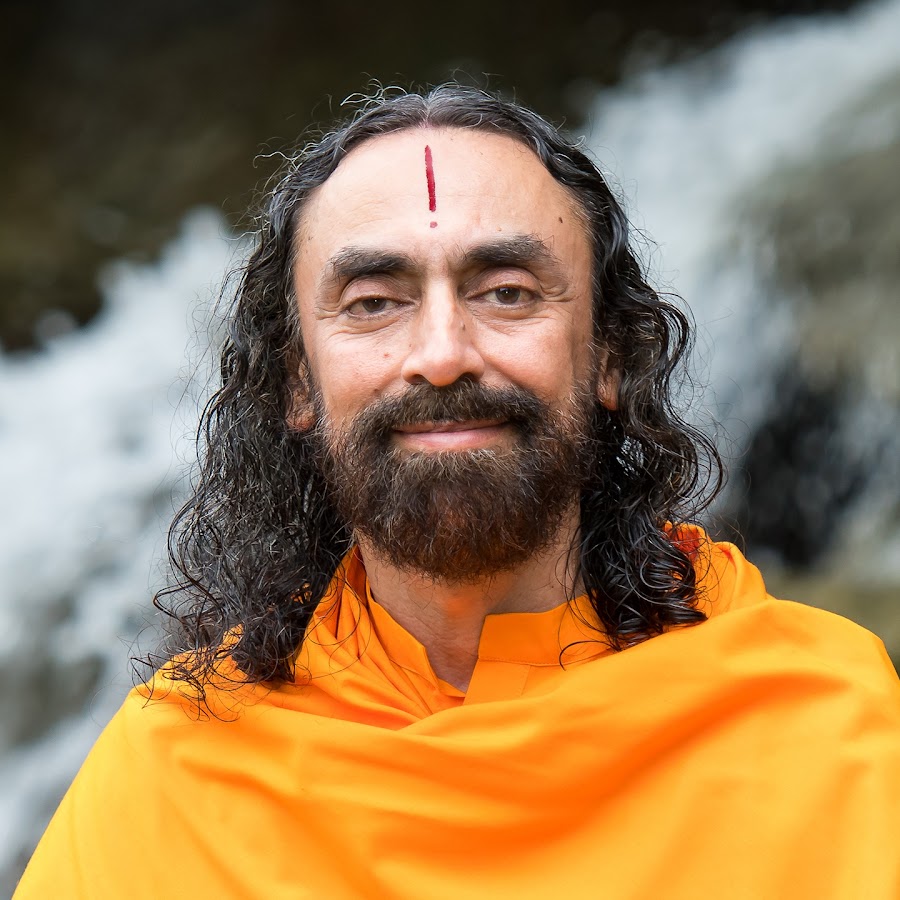
This is the essence of Bhakti as taught by Swami Mukundananda.
He explains that the goal is not merely to visit a temple, but to transform our own lives into a temple where God is remembered, served, and loved throughout the day.
Roopdhyan Meditation: Meditating on the Divine Form
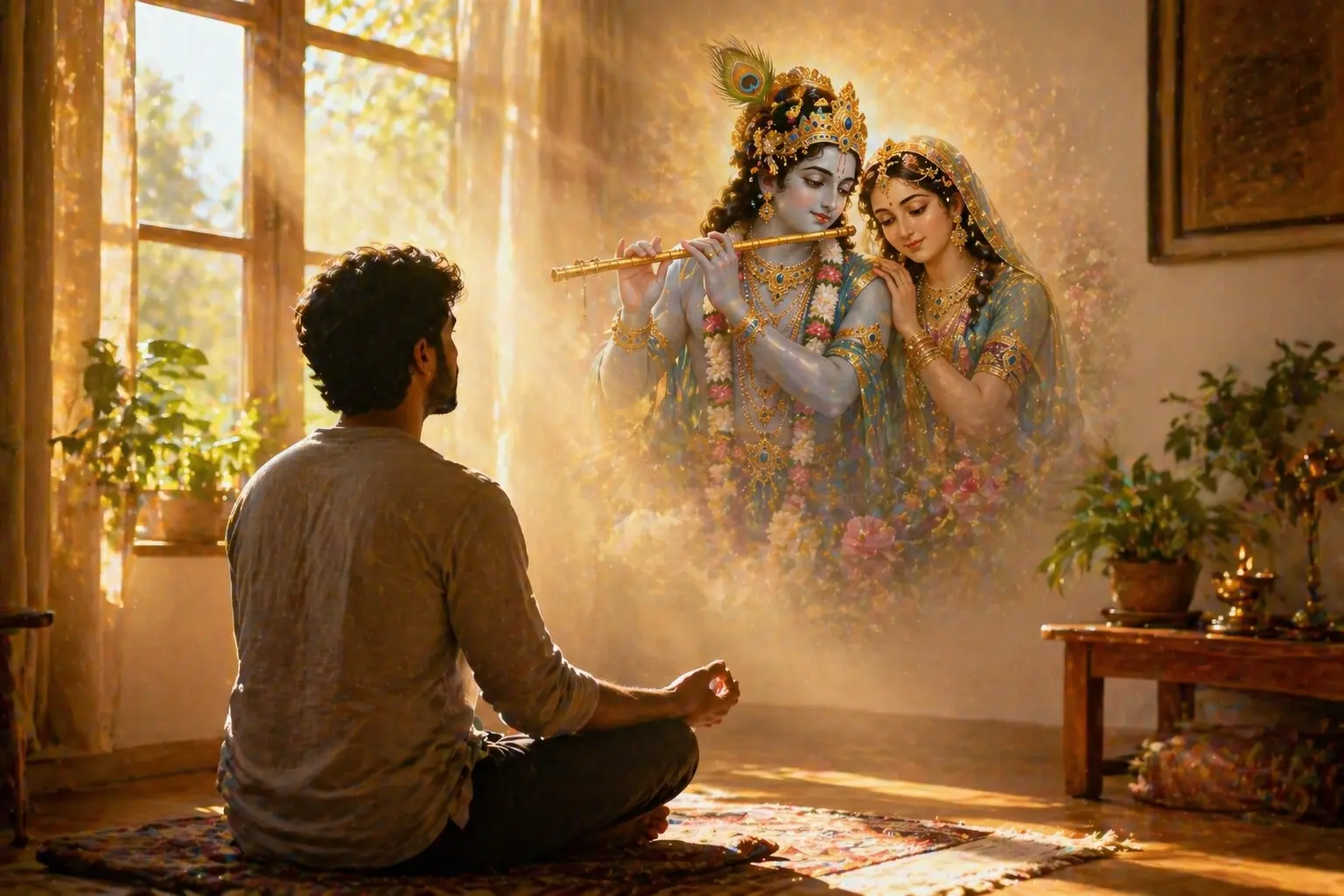
One of the most beautiful and accessible practices emphasized in the bhakti tradition is Roopdhyan Meditation, which involves lovingly meditating on the divine form of God. The mind naturally thinks in images and becomes attached to whatever it repeatedly visualizes. Rather than allowing it to wander toward worldly worries, fears, or desires, Roopdhyan gently redirects it toward something supremely pure and uplifting.
In this practice, the seeker focuses on the Lord’s form: His eyes, smile, posture, ornaments, and compassionate presence. In many traditions, meditating on the divine form of Radha Krishna becomes especially sweet, as it combines beauty with love, majesty with intimacy, and transcendence with accessibility. Over time, the mind begins to rest more naturally in this divine visualization.
Even a few minutes of daily Roopdhyan can bring profound calmness. Emotional turbulence softens, mental impressions become purified, and a deep affection for God begins to grow. What may begin as effort gradually transforms into joy. Meditation stops feeling like a discipline imposed on the mind and becomes a reunion with its highest object of love. A simple way to begin is to sit quietly each morning, focus on a sacred image, and gently bring the mind back whenever it wanders. Even ten sincere minutes practiced daily can be deeply transformative.
Practising the Presence of God
While structured practices are important, Swami Mukundananda teaches that one of the highest forms of devotion is to remember God throughout the day. Many people limit spirituality to isolated moments such as morning prayers, temple visits, or meditation sessions. But true Bhakti extends into every action.
Practising the presence of God means remembering that the Divine is with us while we work, speak, eat, travel, or rest. It means performing duties not as burdens, but as offerings. It means silently seeking guidance before important decisions and pausing during stress to reconnect inwardly.
Small reminders such as a password that reminds you of the Divine, a sacred image on your desk, or brief pauses for remembrance, can help integrate spirituality into daily life. Gradually, the separation between “spiritual time” and “regular time” begins to dissolve. Life itself becomes worship. Responsibilities become service. And ordinary moments begin to carry extraordinary meaning. When this awareness deepens, loneliness fades, anxiety softens, and the heart feels supported.
Cultivating an Attitude of Gratitude
Another powerful teaching emphasized by Swamiji is the practice of gratitude. Gratitude is not just a positive mindset: it is a refined spiritual discipline. An untrained mind tends to focus on what is missing, unfair, or imperfect. A grateful mind, however, recognizes the abundance of grace already present.
Gratitude shifts consciousness from complaint to appreciation, from heaviness to lightness, from restlessness to peace. A simple yet powerful practice is to maintain a daily gratitude journal. Each evening, write down five things you are genuinely thankful for. These can be small: clean water, a kind interaction, food, family, or the opportunity to engage in spiritual practice.
Expressing gratitude to others is equally powerful. When we thank people sincerely, relationships deepen and the heart softens. Ultimately, gratitude culminates in acknowledging divine grace, and accepting that every blessing, seen and unseen, flows from God.
Trida Bhakti: The Threefold Devotional Path
In Bhakti, a devotional practice becomes most powerful when it engages the entire being: body, mind, and speech. This integrated approach is known as Trida Bhakti, a teaching rooted in the wisdom of Jagadguru Shree Kripaluji Maharaj.
He beautifully describes it:
Śrī Kṛṣṇam smaraṇam manasā, vacasā sarasa kīrtanam
śrotrena śravaṇam nityam, tṛdhā bhakti gariyasī
“Remember God with the mind, chant His glories with speech, and listen to His pastimes with the ears—this threefold devotion is supreme.”
Trida Bhakti involves:
- Mananam (thinking deeply and remembering God)
- Kirtanam (chanting and singing His names and glories)
- Shravanam (listening to divine wisdom and pastimes)
When all three align, the heart becomes purified and spiritual energy deepens significantly. One no longer feels fragmented, but integrated. Devotion becomes natural and continuous.
The Special Power of Kirtan
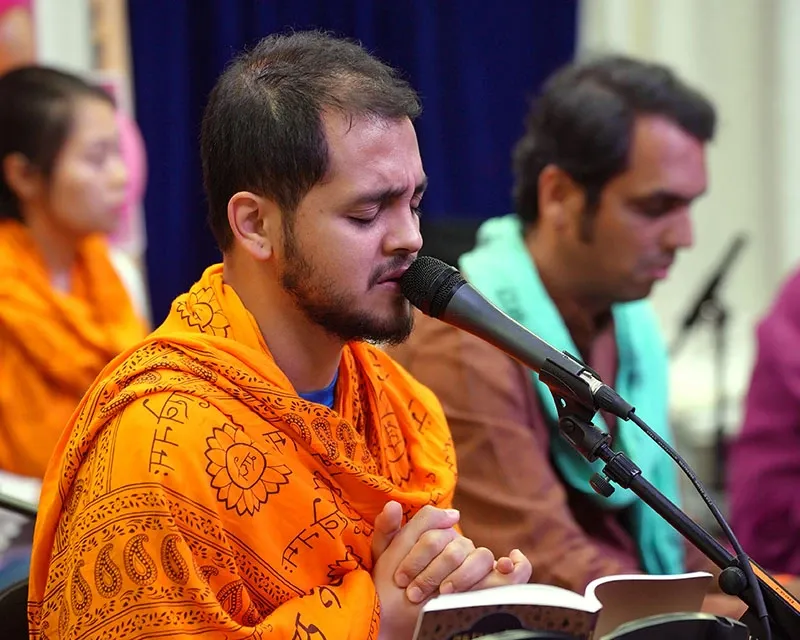
Among all devotional practices, kirtan holds a unique and transformative power. Music engages emotion, rhythm stabilizes attention, and repetition deepens remembrance. Even a restless mind often finds peace more easily through singing than through silent meditation.
Kirtan can be simple or elaborate, practiced alone or in community. What matters is sincerity. The Divine responds not to musical perfection, but to heartfelt devotion. Incorporating daily kirtan can become the emotional center of one’s spiritual routine. Morning singing energizes the day, while evening kirtan releases accumulated stress.
Group kirtan, especially, creates a powerful collective vibration. Many devotees find that when words fall short, singing becomes their most natural form of prayer. Even fifteen minutes of sincere singing each day can uplift mood, strengthen faith, and purify the heart.
Reading Sacred Scriptures: Especially the Bhagavad Gita
Just as the body needs nourishment, so does the mind. If it is constantly fed distraction, negativity, or superficial content, it becomes agitated. But when nourished with wisdom, it becomes steady and elevated.
Among all scriptures, the Bhagavad Gita stands as a timeless guide for practical spirituality. It addresses life’s deepest questions, such as duty, purpose, mind control, devotion, and inner peace; right in the midst of life’s challenges.
Reading the Gita daily during Adhik Maas can be deeply transformative. Even a few verses read with reflection can shift perspective. Rather than rushing, it is better to read slowly, contemplate deeply, and apply the teachings personally. Swami Mukundananda’s explanations make these teachings especially relatable, bridging ancient wisdom with modern life.
Caring for the Body: A Support for Sadhana
Spiritual growth does not require neglecting the body. The body is the instrument through which sadhana is performed. Therefore, daily discipline should include gentle physical activity and wholesome, sattvic nutrition.
Simple practices like walking, stretching, or yoga help maintain energy, reduce stress, and prepare the mind for meditation. Similarly, a sattvic diet which is fresh, balanced, and moderate, supports clarity and calmness. Food consumed with gratitude and awareness nourishes not just the body, but also the mind.
The Power of Satsang
One of the greatest catalysts for spiritual growth is satsang, the company of sincere seekers. We naturally absorb the mindset of those around us. Good association uplifts, while negative association can pull us down.
Making time for satsang through temple visits, kirtan gatherings, study groups, or meaningful conversations, can significantly deepen one’s practice. It provides encouragement, accountability, and inspiration. Often, spiritual obstacles that seem difficult alone become easier in the presence of others walking the same path.
Cultivating Humility and Relying on Divine Grace
Perhaps one of the most profound teachings of Swami Mukundananda is the importance of humility. Spiritual progress can easily be overshadowed by subtle pride; pride in knowledge, discipline, devotion, or even surrender itself.
True humility is recognizing that everything we have: our abilities, opportunities, and even our desire to seek God, is a gift of divine grace. It is understanding that while effort is necessary, the final result always depends on God’s mercy.
The deeper stage of humility is to surrender even the pride of having surrendered. When this understanding dawns, devotion becomes softer, purer, and more genuine. A simple daily prayer can help cultivate this attitude:
“O Lord, whatever I do is by Your grace. Please remove my ego and guide me always.”
In this state, the burden of self-importance disappears, replaced by peace, gratitude, and joyful dependence on the Divine.
Bringing It All Together
Tirumala shows us how God is served throughout the day. These teachings show us how we can serve God within our own lives. Through meditation, remembrance, gratitude, chanting, study, healthy living, satsang, and humility, we begin to recreate that same spirit of devotion within ourselves.
Ultimately, the goal is not to imitate the grandeur of Tirumala, but to embody its essence, which is a life where every moment becomes an offering, and every action becomes an expression of love.
Final Reflection
Tirumala teaches us that the Divine is not distant. The events in Dallas remind us that the Divine is accessible. And the teachings of Swami Mukundananda show us that the Divine can be experienced within.
You do not need to wait in a long queue or travel across continents to feel that connection. You simply need to pause, remember, and offer your heart.
Because just like in Tirumala, the Lord is always there, ready to receive you.
Call to Action
Step into a deeper experience of devotion; don’t just read about Tirumala, live it. Join the sacred journey through Sri Srinivasa Kalyanotsavam, immerse yourself in daily Maha Mantra chanting, and be part of history at the Sri Venkateshwara Prana Pratistha Mahotsavam.
Bring your family, invite your community, and participate in these rare spiritual opportunities. Come. Experience. Serve. Receive His Grace.
FAQs
1. What makes Tirumala’s daily routine unique?
Tirumala treats Lord Venkateswara as a living divine presence, with daily routines including waking, dressing, feeding, and resting the Lord with continuous devotion.
2. What is Sri Srinivasa Kalyanotsavam?
It is the divine wedding ceremony of Lord Venkateswara and Goddess Padmavati, performed with Vedic rituals and devotional celebrations.
3. What is the significance of Maha Mantra chanting?
Chanting the Hare Rama Mahamantra purifies the mind, brings peace to the heart, and deepens connection with the Divine through collective devotion.
4. What is Prana Pratistha?
Prana Pratistha is a sacred Vedic ritual that invokes divine life energy into a deity, transforming it into a living spiritual presence.
5. Why should I attend these Dallas events?
These events recreate the Tirupati experience locally, offering rare opportunities for darshan, seva, and spiritual growth without traveling to India.
6. Who can participate in these events?
Everyone is welcome: individuals, families, students, and communities can all participate and benefit spiritually.
7. Do I need prior knowledge or experience?
No prior experience is needed. All events are designed to be accessible and meaningful for beginners and experienced devotees alike.
8. What should I focus on spiritually during this time?
Practices like kirtan, Roopdhyan meditation, gratitude, satsang, and remembrance of God, as taught by Swami Mukundananda, help deepen devotion and inner peace.
Further Resources

 JKYog
JKYog