Swami Vivekananda Jayanti is one of the most inspiring national observances in India, especially for students and young people. Celebrated every year on 12 January, this day marks the birth anniversary of Swami Vivekananda, one of India’s greatest spiritual leaders, thinkers, and youth icons. The Government of India also observes this day as National Youth Day, making it deeply relevant for schools, colleges, and universities across the country.
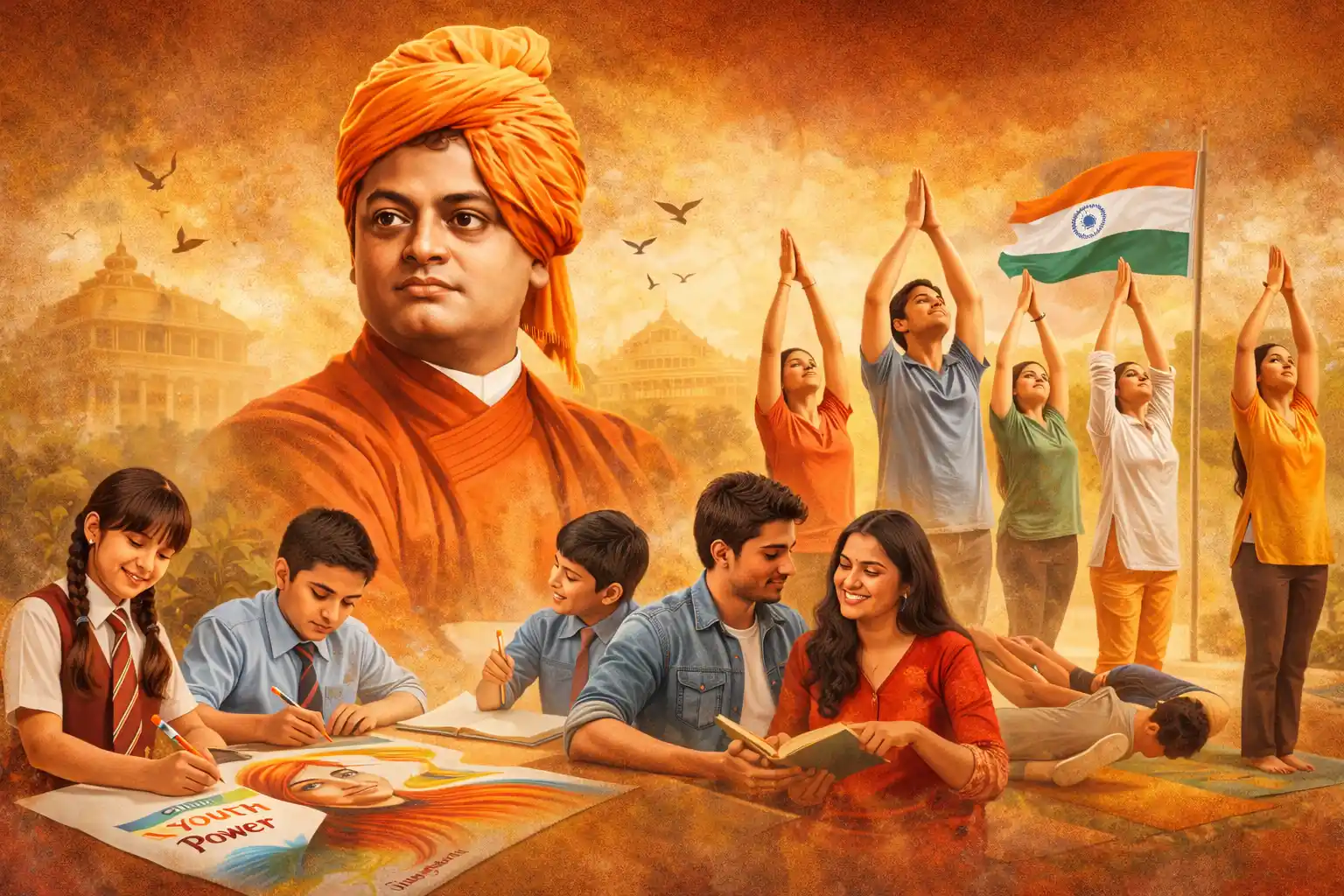
For educational institutions, Swami Vivekananda Jayanti is more than a commemorative event. It is an opportunity to instill values such as self confidence, discipline, patriotism, service to society, and belief in one’s inner strength. Through thoughtfully planned activities, schools and colleges can help students connect Vivekananda’s teachings to modern life, leadership, career goals, and social responsibility.
This comprehensive guide on Swami Vivekananda Jayanti celebration in schools and colleges offers practical ideas, activity plans, cultural programs, speeches, competitions, and community initiatives. Whether you are a teacher, principal, student council member, or event coordinator, this article will help you design meaningful and engaging celebrations that leave a lasting impact on students.
Who Swami Vivekananda Was and Why His Jayanti Matters
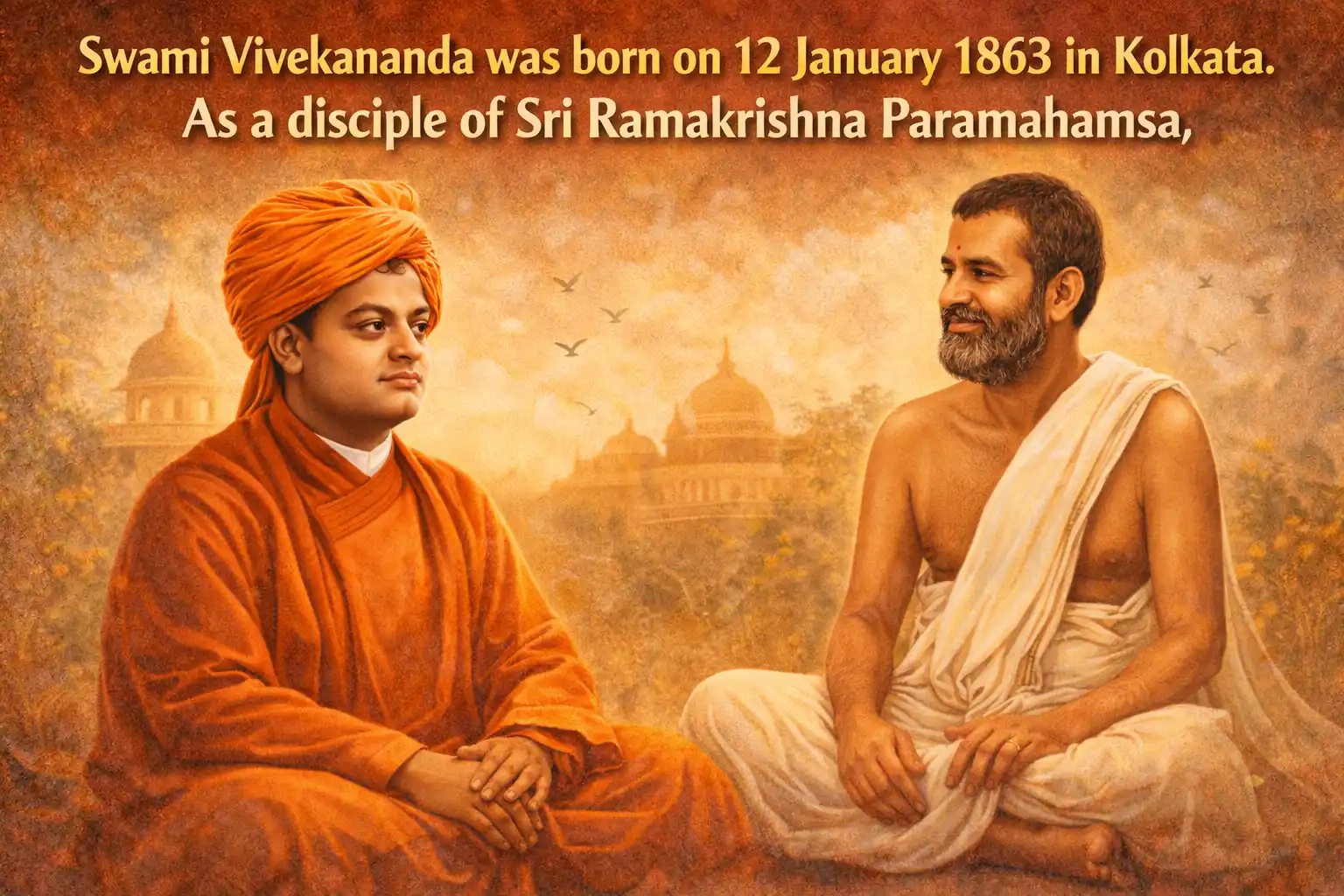
Swami Vivekananda was born on 12 January 1863 in Kolkata. As a disciple of Sri Ramakrishna Paramahamsa, he carried forward the message of Vedanta, universal brotherhood, and service to humanity. His historic speech at the Parliament of the World’s Religions in Chicago in 1893 brought India’s spiritual heritage to global attention and earned him worldwide recognition.
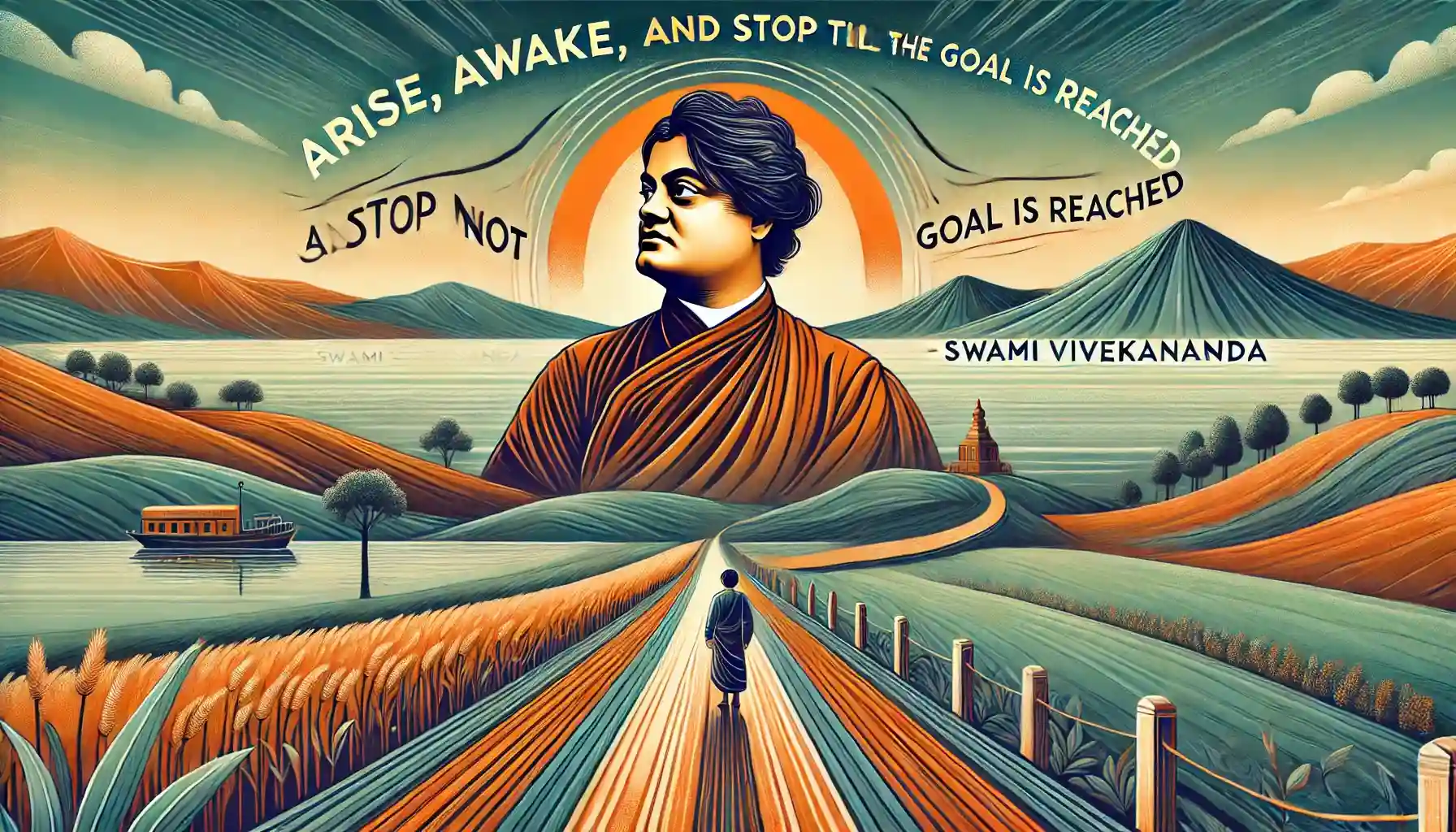
For students, Swami Vivekananda represents fearlessness, clarity of thought, and relentless pursuit of excellence. His famous words, “Arise, awake, and stop not till the goal is reached,” continue to motivate generations of learners. Celebrating his Jayanti in schools and colleges helps students understand that education is not only about academics but also about character building and nation building.
Objectives of Celebrating Swami Vivekananda Jayanti in Educational Institutions
Every successful celebration begins with a clear purpose. When schools and colleges understand why they are celebrating Swami Vivekananda Jayanti, the activities naturally become more meaningful and impactful.
The main objectives of celebrating this day in educational institutions include inspiring students through Vivekananda’s life, encouraging leadership and self belief, promoting moral and ethical values, and nurturing a sense of social responsibility. It also helps students appreciate India’s cultural and spiritual heritage while developing communication and creative skills.
By aligning activities with these objectives, institutions can ensure that the celebration leaves a lasting impression on students rather than remaining a one day even
Before planning activities, it is important to understand the purpose behind the celebration. Clear objectives help schools and colleges design programs that are impactful rather than symbolic.
Key objectives include:
- Inspiring students with Vivekananda’s life and teachings
- Encouraging youth leadership and self confidence
- Promoting moral values, discipline, and social responsibility
- Creating awareness about Indian culture and philosophy
- Developing communication, creativity, and teamwork skills
- Connecting education with service to society
When these goals guide the celebration, every activity gains deeper meaning.
Planning Swami Vivekananda Jayanti Celebrations in Schools
School level celebrations should focus on simple, engaging, and age appropriate activities. The aim is to introduce students to Swami Vivekananda’s ideas in a way that is easy to understand and inspiring.
Proper planning involves selecting activities that encourage participation from all classes, balancing academic and creative elements, and ensuring that the message of the day is clearly communicated to students.
Morning Assembly Activities
The morning assembly is often the heart of school life and serves as the perfect platform to begin Swami Vivekananda Jayanti celebrations. It allows the entire school community to come together and reflect on the importance of the day.
Activities may include a short prayer or meditation inspired by Vivekananda’s teachings, recitation of his quotes, a brief speech on his life, and group singing of inspirational or patriotic songs. A thought of the day based on self belief or service can also help set a positive tone for the day.
The morning assembly is an ideal platform to begin Swami Vivekananda Jayanti celebrations in schools.
Suggested activities include:
- Prayer or meditation inspired by Vivekananda’s teachings
- Recitation of his quotations by students
- Short speech on the life of Swami Vivekananda
- Group singing of patriotic or inspirational songs
- Thought of the day based on self belief and service
These activities set a positive tone for the entire day and ensure participation from all students.
Speech and Elocution Competitions
Public speaking activities help students develop confidence and clarity of expression. Organizing speech and elocution competitions on Swami Vivekananda Jayanti encourages students to study his ideas and present them thoughtfully.
Topics can include Swami Vivekananda and the power of youth, education according to Swami Vivekananda, or the role of students in nation building. These competitions help students connect historical teachings with present day realities.
Speech competitions are among the most popular Swami Vivekananda Jayanti activities for school students. Topics can be adapted according to age groups.
Sample topics:
- Swami Vivekananda and the power of youth
- Education according to Swami Vivekananda
- Role of students in nation building
- Importance of character in modern education
- Swami Vivekananda as a global ambassador of India
Judging criteria may include clarity of thought, confidence, content relevance, and presentation skills.
Essay Writing and Creative Writing Activities
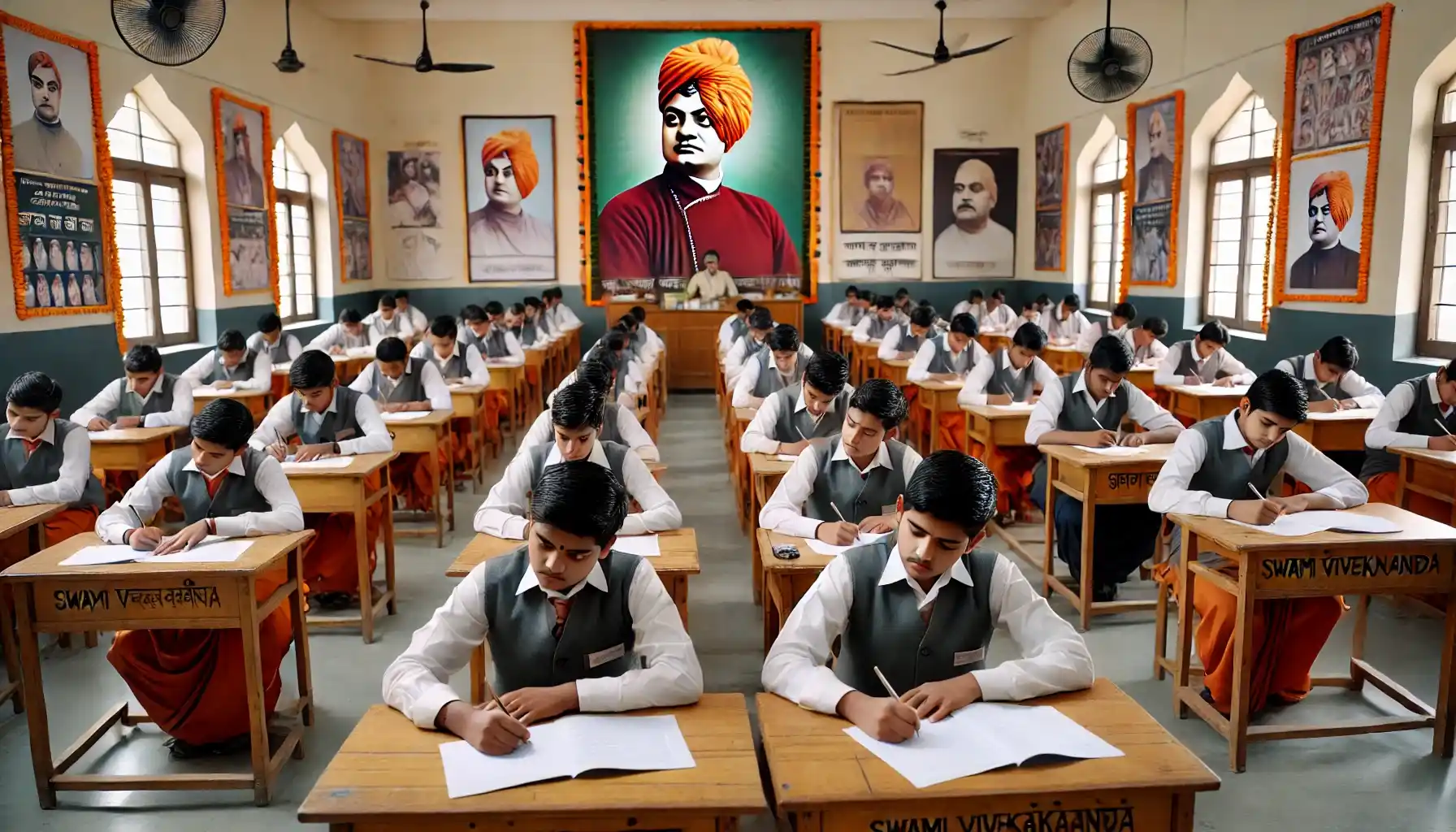
Writing activities encourage reflection and deeper understanding. Essay writing competitions allow students to explore Swami Vivekananda’s philosophy through research and personal interpretation.
Suggested topics include the relevance of Swami Vivekananda in today’s world, the importance of National Youth Day, or Vivekananda’s vision of education. Younger students can participate through paragraph writing, slogans, or short inspirational messages.
Essay writing competitions encourage students to research, reflect, and express ideas clearly.
Suggested essay topics:
- What Swami Vivekananda means to today’s students
- National Youth Day and its importance
- Swami Vivekananda’s vision of education
- Youth as the strength of the nation
For younger students, creative writing activities such as short paragraphs, slogans, or inspirational messages can be organized.
Drawing, Painting, and Poster Making Competitions
Art based activities allow students to express their understanding visually.
Popular themes include:
- Portrait of Swami Vivekananda
- Youth power and national development
- Service to humanity
- Unity and universal brotherhood
The best artworks can be displayed on school notice boards or corridors to create an inspiring environment.
Quiz Competitions on Swami Vivekananda
Quizzes make learning interactive and enjoyable. A well designed quiz on Swami Vivekananda’s life and teachings can generate enthusiasm among students.
Quiz rounds may cover his biography, famous quotes, books, teachings, and facts about National Youth Day. Team based quizzes also promote collaboration and healthy competition.
Quiz programs make learning interactive and enjoyable.
Quiz rounds may include:
- Life and biography
- Famous quotes and books
- Teachings and philosophy
- National Youth Day facts
This activity works well for middle and senior school students and encourages teamwork.
Skits, Role Plays, and Short Dramas
Drama and role play help students emotionally connect with historical events and personalities. These activities make learning memorable and engaging.
Schools can stage short skits based on key incidents from Vivekananda’s life, his interaction with Sri Ramakrishna, or the famous Chicago speech. Linking these stories to modern student life can make the message more relatable.
Drama based activities help students emotionally connect with historical personalities.
Ideas for skits include:
- Key incidents from Vivekananda’s life
- His interaction with Sri Ramakrishna
- The Chicago speech and its impact
- A modern youth inspired by Vivekananda
Such performances can be part of a special assembly or cultural program.
Swami Vivekananda Jayanti Celebration Ideas for Colleges and Universities
College and university celebrations can be more analytical and discussion oriented. At this stage, students are capable of engaging deeply with philosophical and social ideas.
Programs can focus on leadership, ethics, career development, mental strength, and social responsibility, all of which were central to Vivekananda’s teachings.
College level celebrations can be more in depth and discussion oriented, focusing on leadership, career, and social issues.
Inaugural Ceremony and Guest Lectures
A formal inaugural ceremony adds structure and significance to college level celebrations. It also sets the tone for the entire program.
The ceremony may include lamp lighting, a welcome address, and a keynote lecture by an academician, spiritual leader, or social worker. Guest lectures help students understand how Vivekananda’s ideas apply to modern challenges.
Colleges can begin the celebration with a formal inaugural ceremony.
Key elements include:
- Lighting of the lamp
- Invocation or prayer
- Welcome address
- Guest lecture by an academician, spiritual leader, or social worker
- Address on relevance of Vivekananda in modern times
Guest lectures help students relate philosophical ideas to real world challenges.
Youth Leadership Seminars and Panel Discussions
Seminars and panel discussions encourage critical thinking and dialogue. Swami Vivekananda Jayanti is an ideal occasion to host such academic interactions.
Themes may include youth leadership and nation building, ethics in professional life, education and employment, or mental resilience. Interactive sessions allow students to voice opinions and learn from diverse perspectives.
Swami Vivekananda Jayanti is an ideal occasion to organize seminars on youth leadership.
Suggested themes:
- Youth leadership and nation building
- Ethics, values, and professional life
- Education and employment in the spirit of Vivekananda
- Mental strength and self discipline
Panel discussions encourage interaction and critical thinking among students
Debate Competitions
Debates stimulate analytical thinking and articulate expression.
Possible debate motions:
- Modern education system reflects Vivekananda’s vision
- Youth activism is essential for national progress
- Spiritual values are relevant in professional life
Such events are particularly effective in arts, science, and management colleges.
Essay, Research Paper, and Article Writing
Colleges can organize advanced writing competitions.
Ideas include:
- Research papers on Vivekananda’s philosophy
- Articles on youth challenges and solutions
- Comparative studies between Eastern and Western education systems
Selected papers may be published in college magazines or journals.
Cultural Programs and Youth Festivals
Cultural programs add vibrancy to the celebration.
Activities may include:
- Classical or folk dance based on spiritual themes
- Music performances featuring devotional or patriotic songs
- Poetry recitation inspired by Vivekananda’s writings
- Multimedia presentations and short films
These programs attract wide participation and audience engagement.
Community Service Activities Inspired by Swami Vivekananda
One of Swami Vivekananda’s core teachings was service to humanity. Educational institutions can honor this ideal through social initiatives.
Cleanliness Drives and Environmental Campaigns
Service to humanity was a central principle of Swami Vivekananda’s life. Educational institutions can honor this ideal through community oriented activities.
By involving students in social service, celebrations move beyond campus boundaries and create real world impact.
Students can organize:
- Campus cleanliness drives
- Tree plantation programs
Such activities connect Vivekananda’s message of responsibility with contemporary environmental concerns.
Educational Outreach and Literacy Programs
Colleges and senior school students can participate in:
- Teaching underprivileged children
- Book donation drives
- Digital literacy awareness
These initiatives promote empathy and social awareness
Health and Wellness Camps
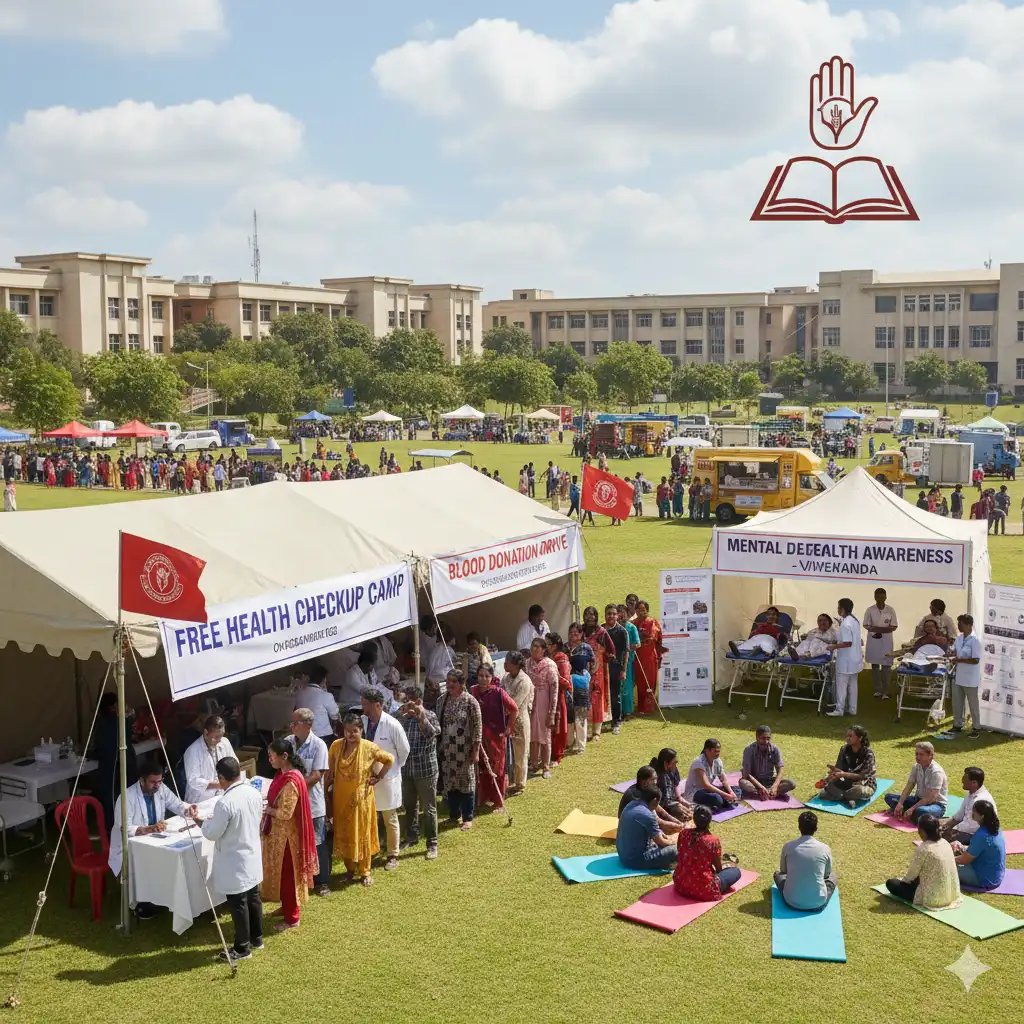
Institutions can collaborate with local organizations to conduct:
- Free health checkup camps
- Blood donation drives
- Mental health awareness sessions
These activities reflect Vivekananda’s belief in holistic development.
Incorporating Swami Vivekananda’s Quotes and Teachings
Using quotes effectively can enhance the impact of celebrations.
Ways to incorporate quotes include:
- Quote of the day announcements
- Classroom discussions on selected quotes
- Display boards with motivational messages
- Social media posts by school or college handles
Some popular quotes include:
“Arise, awake, and stop not till the goal is reached.”
“You cannot believe in God until you believe in yourself.”
“Education is the manifestation of the perfection already in man.”
Discussing the meaning behind these quotes helps students apply them in daily life.
Decoration and Campus Ambience Ideas
Visual presentation plays an important role in setting the mood.
Decoration ideas include:
- Banners with Vivekananda’s messages
- Notice boards dedicated to National Youth Day
- Rangoli or artwork at the entrance
- Photo exhibitions depicting his life
Simple yet thoughtful decorations can create an inspiring atmosphere.
Role of Teachers and Faculty in the Celebration
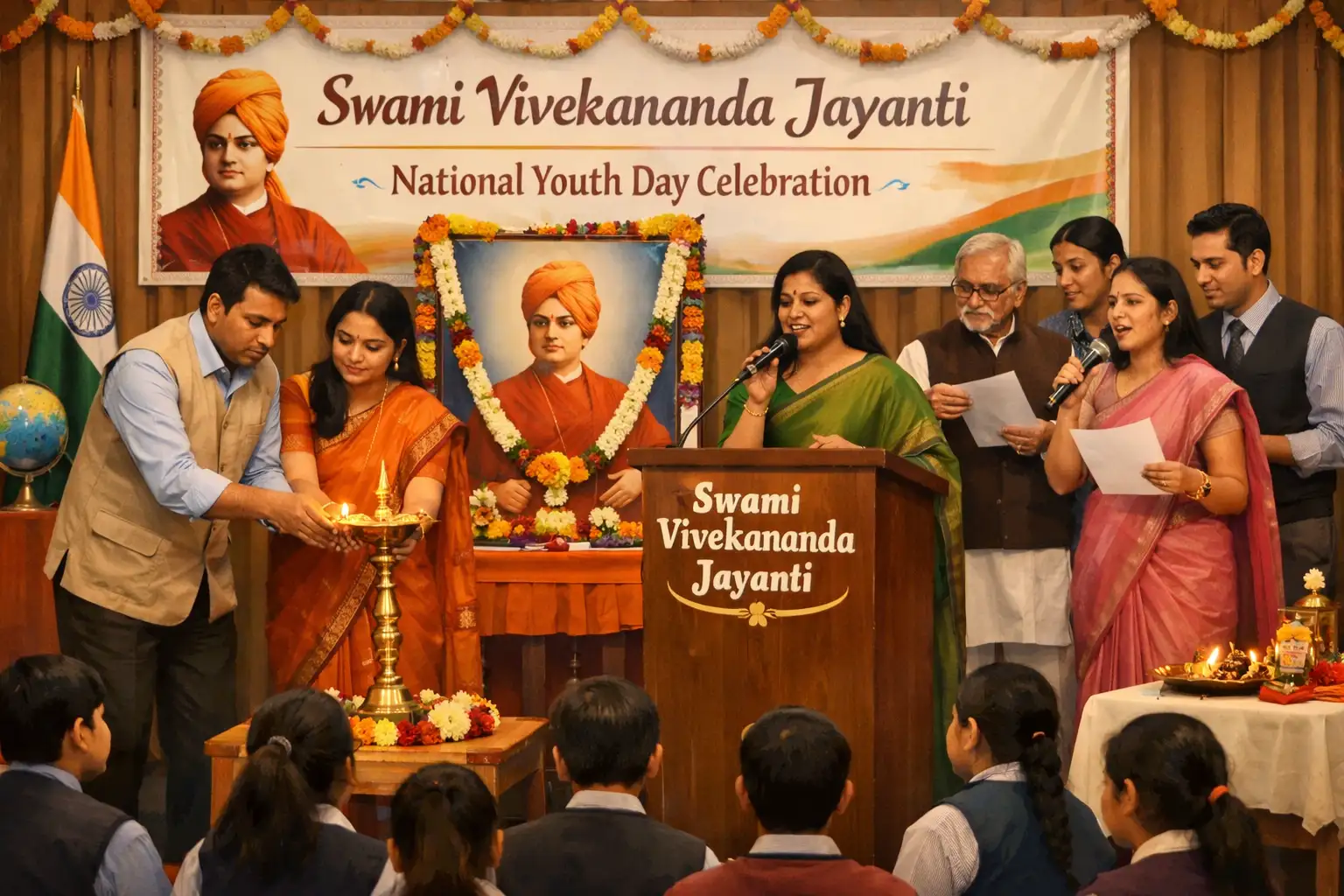
Teachers and faculty members are the guiding force behind successful celebrations. Their involvement ensures that activities remain educational and value oriented.
By mentoring students, explaining the relevance of events, and connecting teachings with academic subjects, teachers help deepen the learning experience.
Teachers play a central role in guiding students during Swami Vivekananda Jayanti.
Their contributions include:
- Explaining the relevance of activities
- Encouraging inclusive participation
- Linking teachings with academic subjects
- Mentoring students for speeches and performances
Faculty involvement ensures that celebrations remain educational and value driven.
Student Participation and Leadership Opportunities
Swami Vivekananda Jayanti is an excellent platform for developing student leadership.
Students can take responsibility for:
- Event planning and coordination
- Hosting programs
- Managing logistics and publicity
- Leading community service initiatives
Such involvement builds confidence, teamwork, and organizational skills.
Using Digital Platforms for Swami Vivekananda Jayanti
In the digital age, celebrations can extend beyond campus.
Ideas include:
- Online speech and essay competitions
- Webinars and virtual guest talks
- Social media campaigns using inspirational quotes
- Short video contests on Vivekananda’s teachings
Digital initiatives increase reach and engagement, especially for hybrid learning environments.
Evaluation and Reflection After the Celebration
Post event reflection helps institutions assess the impact of activities.
Methods include:
- Feedback from students and teachers
- Reflection essays or discussions
- Documentation through photos and reports
Reflection ensures continuous improvement in future celebrations.
Conclusion
Swami Vivekananda Jayanti celebrations in schools and colleges are powerful tools for shaping young minds and hearts. Through thoughtfully planned activities, educational institutions can move beyond routine observance and create meaningful experiences that inspire students to believe in themselves, serve society, and strive for excellence.
By integrating speeches, competitions, cultural programs, and community service, schools and colleges can bring Swami Vivekananda’s vision of youth empowerment to life. In doing so, they not only honor a great visionary but also nurture responsible, confident, and value driven citizens for the future.
Celebrating Swami Vivekananda Jayanti is ultimately a celebration of youth potential, national pride, and the timeless power of education guided by character and purpose.
Call To Action
Celebrate Swami Vivekananda Jayanti - January 12th, 2026
Join us in honoring the life and teachings of Swami Vivekananda on his 164th birth anniversary! A day of inspiration, unity, and self-discovery awaits. Participate in enlightening discussions, engaging activities, and cultural performances that reflect his vision for a brighter, stronger India. Let’s come together to embrace the values of selflessness, determination, and spirituality that Swami Vivekananda championed.
Be inspired. Be empowered. Celebrate Swami Vivekananda Jayanti with us!
FAQs on Swami Vivekananda Jayanti Celebration
1. When is Swami Vivekananda Jayanti celebrated?
Swami Vivekananda Jayanti is celebrated every year on 12 January.
2. Why is Swami Vivekananda Jayanti important for students?
It inspires students to build self confidence, character, leadership, and a sense of social responsibility.
3. Why is National Youth Day observed on this day?
12 January is observed as National Youth Day to honor Swami Vivekananda and his vision for empowering youth.
4. What activities are suitable for schools and colleges?
Speeches, essay writing, quizzes, cultural programs, seminars, and community service activities are commonly organized.
5. What is the main message of Swami Vivekananda for youth?
Believe in yourself, work with discipline, and serve society with dedication.
Further Resources
 Swami Mukundananda