
Introduction
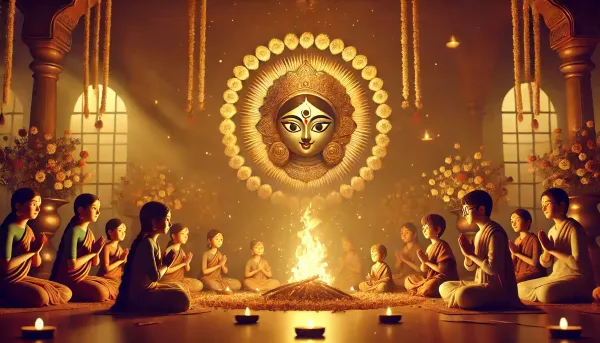
In the boundless tradition of Sanatana Dharma, Maa Durga is not merely a deity — she is the embodiment of cosmic Shakti, the power that animates all life and creation. The Durga Saptashati, revered for its 700 potent verses, is not just a text of glorification but a scriptural journey through divine realization. This first part introduces us to the origin and presence of Devi, establishing her supremacy over darkness, evil, and ignorance.
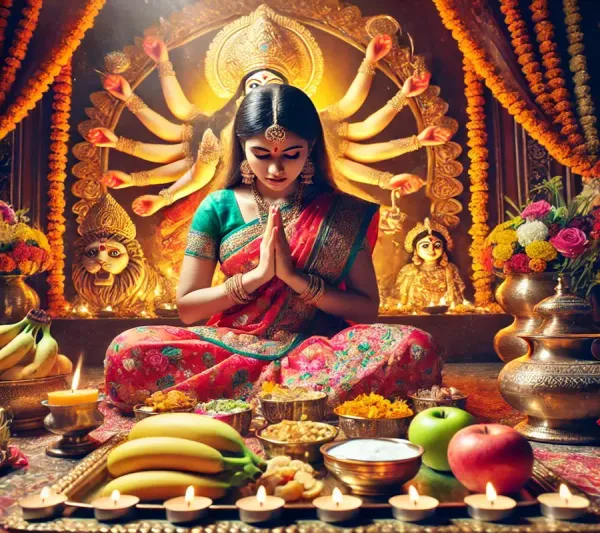
As the sacred festival of Navratri 2025 unfolds, devotees immerse themselves in the worship of the Devi, invoking her nine divine forms over nine nights of spiritual upliftment. It is a time when the message of the Saptashati resonates deeply — a reminder that Shakti is not separate from the Supreme but His very dynamic form. As Swami Mukundananda Ji explains through the story of Adi Shankaracharya’s realization, without Shakti, even Brahman is powerless.
📖 Chapters Covered in This Part
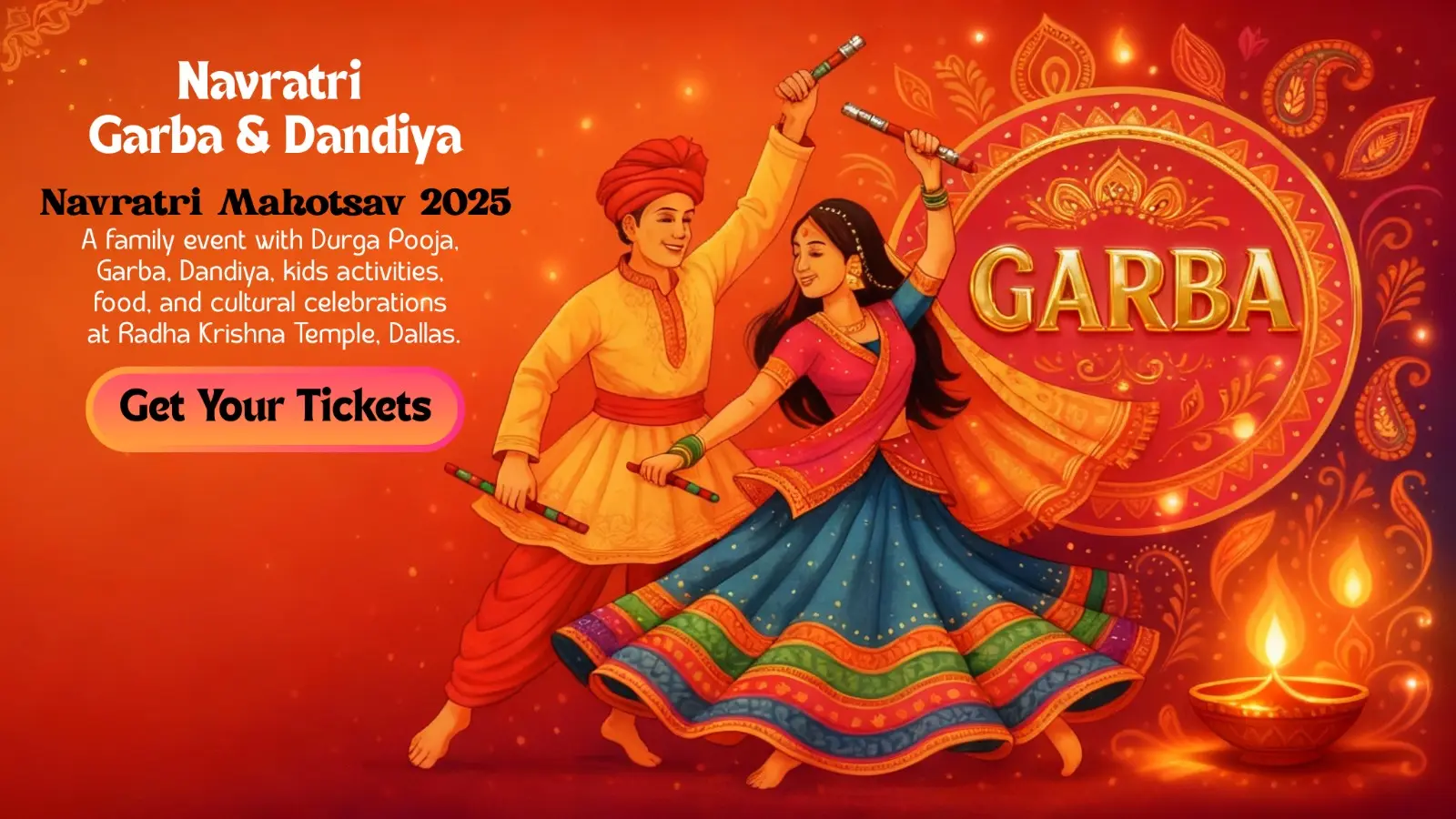
Navratri is incomplete without Garba and Dandiya, where the joyous dance celebrates Maa Durga’s victory and fills the nights with divine energy. Clad in colorful attire, devotees gather to dance, rejoice, and honor the Divine Mother in an atmosphere of joy and reverence.
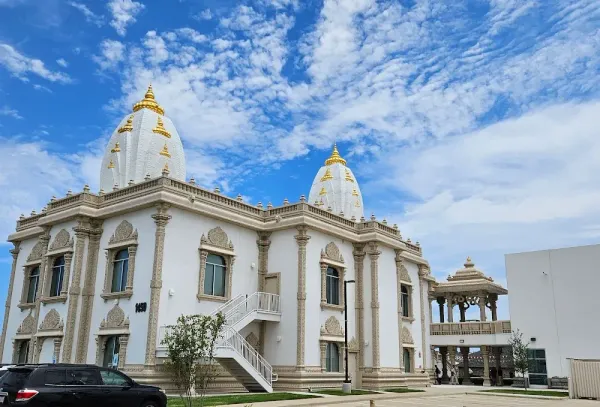
At Radha Krishna Temple of Dallas, the Navratri Mahotsav 2025 offers unforgettable evenings filled with Garba, Dandiya, Durga Pooja, children’s activities, delicious food, and vibrant cultural programs. As lamps glow and music fills the air, the community comes together in a beautiful celebration of tradition, devotion, and festivity—an experience of Navratri magic like never before.
Join us at the celebration; get your tickets today!
Lyrics
विनियोग (Viniyog)
देवता। गायत्री छन्दः। नन्दा शक्तिः। रक्तदन्तिका बीजम्। अग्निस्तत्त्वम्। ऋग्वेदः स्वरूपम्।
devatā | gāyatrī chandaḥ | nandā śaktiḥ | raktadantikā bījam | agnistattvam | ṛgvedaḥ svarūpam |
श्रीमहाकालीप्रीत्यर्थे प्रथमचरित्रजपे विनियोगः।
śrīmahākālīprītyarthe prathamacaritrajape viniyogaḥ |
Meaning:
The deity of this recitation is Mahakali. The meter used is Gayatri. The power (Shakti) is Nandā. The seed syllable (bīja) is associated with Raktadantikā. The elemental essence is Agni (fire). This text reflects the Rigveda in its form.
This is the statement of purpose (viniyoga) for the recitation of the first chapter of the Durga Saptashati, for the pleasure of Shri Mahakali.
ध्यानम् (Dhyānam)
ॐ खड्गं चक्रगदेषुचापपरिघाञ्छूलं भुशुण्डीं शिरः
om khaḍgaṃ cakragadeṣucāpaparighāñchūlaṃ bhuśuṇḍīṃ śiraḥ
शङ्खं सन्दधतीं करैस्त्रिनयनां सर्वाङ्गभूषावृताम्।
śaṅkhaṃ sandadhatīṃ karaistrinayanāṃ sarvāṅgabhūṣāvṛtām |
नीलाश्मद्युतिमास्यपाददशकां सेवे महाकालिकां
nīlāśmadyutimāsyapādadaśakāṃ seve mahākālikāṃ
यामस्तौत्स्वपिते हरौ कमलजो हन्तुं मधुं कौटभम्॥
yāmastautsvapite harau kamalajo hantuṃ madhuṃ kauṭabham ||
Meaning:
I worship Mahakali, whose ten faces and ten feet shine like blue sapphires, adorned with various weapons, including sword, discus, mace, bow, trident, and conch. She is three-eyed, ornamented all over, and praised by Brahma when Lord Vishnu is asleep, to destroy Madhu and Kaitabha.
Chapter 1 – The Slaying of Madhu and Kaiṭabha
Verse 1
ॐ नमश्चण्डिकायै
ॐ ऐं मार्कण्डेय उवाच
om namaścaṇḍikāyai
om aiṃ mārkaṇḍeya uvāca
Meaning:
Salutations to Goddess Chandika. Thus spoke Sage Markandeya, invoking the divine energy before narrating the glory of the Devi.
Verse 2
सावर्णिः सूर्यतनयो यो मनुः कथ्यतेऽष्टमः।
निशामय तदुत्पत्तिं विस्तराद्गदतो मम।
sāvarṇiḥ sūryatanayo yo manuḥ kathyate'ṣṭamaḥ |
niśāmaya tadutpattiṃ vistarādgadato mama |
Meaning:
The Manu named Savarni, son of the Sun, is known as the eighth Manu. Listen attentively as I describe his origin in detail.
Verse 3
महामायानुभावेन यथा मन्वन्तराधिपः।
स बभूव महाभागः सावर्णिस्तनयो रवेः।
mahāmāyānubhāvena yathā manvantarādhipaḥ |
sa babhūva mahābhāgaḥ sāvarṇistanayo raveḥ |
Meaning:
By the divine influence of Mahamaya, the illustrious Savarni, son of the Sun, becomes the ruler during one Manvantar.
Verse 4
स्वारोचिषेऽन्तरे पूर्वं चैत्रवंशसमुद्भवः।
सुरथो नाम राजाभूत्समस्ते क्षितिमण्डले।
svārociṣe'ntare pūrvaṃ caitravaṃśasamudbhavaḥ |
suratho nāma rājābhūtsamaste kṣitimaṇḍale |
Meaning:
In the earlier Svarochish Manvantar, there was a king named Surath, born in the Chaitra dynasty, who ruled the entire earth.
Verse 5
तस्य पालयतः सम्यक् प्रजाः पुत्रानिवौरसान्।
बभूवुः शत्रवो भूपाः कोलाविध्वंसिनस्तदा।
tasya pālayataḥ samyak prajāḥ putrānivaurasān |
babhūvuḥ śatravo bhūpāḥ kolāvidhvaṃsinastadā |
Meaning:
Although he governs his subjects with affection like his own sons, hostile kings—who are destroyers of order—arise against him.
Verse 6
तस्य तैरभवद् युद्धमतिप्रबलदण्डिनः।
न्यूनैरपि स तैर्युद्धे कोलाविध्वंसिभिर्जितः॥
tasya tairabhavad yuddham atiprabaladaṇḍinaḥ
nyūnair api sa tairyuddhe kolāvidhvaṁsibhir jitah
Meaning:
A fierce battle ensued between him and the mighty enemies, and despite their smaller number, he was defeated by the destructive Kolas.
Verse 7
ततः स्वपुरमायातो निजदेशाधिपोऽभवत्।
आक्रान्तः स महाभागस्तैस्तदा प्रबलारिभिः॥
tataḥ svapuram āyāto nijadeśādhipo'bhavat
ākrāntaḥ sa mahābhāgaḥ taistadā prabalāribhiḥ
Meaning:
Then he returned to his own city and resumed ruling his kingdom, but soon, he was attacked again by those powerful enemies.
Verse 8
श्रमात्यैर्बलिभिर्दुष्टैर्दुर्बलस्य दुरात्मभिः।
कोशो बलं चापहृतं तत्रापि स्वपुरे ततः॥
amatyair balibhiḥ duṣṭair durbalasya durātmabhiḥ
kośo balaṁ cāpahṛtaṁ tatrāpi svapure tataḥ
Meaning:
His own ministers, who were powerful but wicked, looted the treasury and forcefully took over the army, even in his own city.
Verse 9
ततो मृगयाव्याजेन हृतस्वाम्यः स भूपतिः।
एकाकी हयमारुह्य जगाम गहनं वनम्॥
tato mṛgayāvyājena hṛtasvāmyaḥ sa bhūpatiḥ
ekākī hayam āruhya jagāma gahanaṁ vanam
Meaning:
Thus, having lost his kingdom, the king left alone under the pretext of hunting and entered a dense forest on horseback.
Verse 10
स तत्राश्रममद्राक्षीद्द्विजवर्यस्य मेधसः।
प्रशान्तश्वापदाकीर्णं मुनिशिष्योपशोभितम्॥
sa tatrāśramam adrākṣīt dvijavaryasya medhasaḥ
praśānta-śvāpadākīrṇaṁ muni-śiṣya-upaśobhitam
Meaning:
There, he came across the hermitage of the noble sage Medhas, which was peaceful, free of wild beasts, and adorned by the presence of the sage’s disciples.
Verse 11
तस्थौ कञ्चित्स कालं च मुनिना तेन सत्कृतः।
इतश्चेतश्च विचरंस्तस्मिन् मुनिवराश्रमे॥
tasthau kañcit sa kālaṁ ca muninā tena satkṛtaḥ
itaś cetaś ca vicaran tasmin munivarāśrame
Meaning:
The king stayed there for some time, honored by the sage, and roamed around the great hermitage freely.
Verse 12
सोऽचिन्तयत्तदा तत्र ममत्वाकृष्टमानसः।
मत्पूर्वैः पालितं पूर्वं मया हीनं पुरं हि तत्॥
so'cintayad tadā tatra mamatvākṛṣṭamānasaḥ
matpūrvaiḥ pālitaṁ pūrvaṁ mayā hīnaṁ puraṁ hi tat
Meaning:
Then he began to reflect with a mind full of attachment: “This kingdom, once ruled by my ancestors, is now lost to me.”
Verse 13
मद्भृत्यैस्तैरसद्वृत्तैर्धर्मतः पाल्यते न वा।
न जाने स प्रधानो मे शूरो हस्ती सदामदः॥
madbhṛtyaiḥ tair asad-vṛttaiḥ dharmataḥ pālyate na vā
na jāne sa pradhāno me śūro hastī sadā madaḥ
Meaning:
“I do not know if the kingdom is being ruled righteously by those immoral servants of mine, or if my brave elephant-like commander still remains loyal.”
Verse 14
मम वैरिवशं यातः कान् भोगानुपलप्स्यते।
ये ममानुगता नित्यं प्रसादधनभोजनैः॥
mama vairi-vaśaṁ yātaḥ kān bhogān upalapsyate
ye mamānugatā nityaṁ prasāda-dhana-bhojanaiḥ
Meaning:
“How can the kingdom now under enemy control provide pleasures and comforts to those who were constantly sustained by my wealth and kindness?”
Verse 15
अनुवृत्तिं ध्रुवं तेऽद्य कुर्वन्त्यन्यमहीभृताम्।
असम्यग्व्ययशीलैस्तैः कुर्वद्भिः सततं व्ययम्॥
anuvṛttiṁ dhruvaṁ te'dya kurvanti anya-mahībhṛtām
asamyag-vyayaśīlaiḥ taiḥ kurvadbhiḥ satataṁ vyayam
Meaning:
“They must now be serving other kings and indulging in unchecked expenditures under irresponsible leaders.”
Verse 16
संचितः सोऽतिदुःखेन क्षयं कोशो गमिष्यति।
एतच्चान्यच्च सततं चिन्तयामास पार्थिवः॥
sañcitaḥ so'tiduḥkhena kṣayam kośo gamiṣyati
etaccānyacca satataṁ cintayāmāsa pārthivaḥ
Meaning:
“The treasury gathered with so much hardship will soon be depleted.” Such and many other worries constantly filled the mind of the king.
Verse 17
तत्र विप्राश्रमाभ्याशे वैश्यमेकं ददर्श सः।
स पृष्टस्तेन कस्त्वं भो हेतुश्चागमनेऽत्र कः॥
tatra viprāśramābhyāśe vaiśyam ekaṁ dadarśa saḥ
sa pṛṣṭas tena kastvaṁ bho hetuś cāgamane'tra kaḥ
Meaning:
Near the sage’s hermitage, the king saw a merchant and asked, “Who are you, sir? What brings you here?”
Verse 18
सशोक इव कस्मात्त्वं दुर्मना इव लक्ष्यसे।
इत्याकर्ण्य वचस्तस्य भूपतेः प्रणयोदितम्॥
saśoka iva kasmāt tvaṁ durmanā iva lakṣyase
ityākarnya vacas tasya bhūpateḥ praṇayoditam
Meaning:
“You look afflicted and sorrowful. Why is that so?”—asked the king with concern and affection.
Verse 19
प्रत्युवाच स तं वैश्यः प्रश्रयावनतो नृपम्॥
pratyuvāca sa taṁ vaiśyaḥ praśrayāvanato nṛpam
Meaning:
The humble merchant bowed respectfully and replied to the king.
Verse 20
वैश्य उवाच॥
vaiśya uvāca
Meaning:
The merchant said:
Verse 21
समाधिर्नाम वैश्योऽहमुत्पन्नो धनिनां कुले॥
samādhir nāma vaiśyo'ham utpanno dhanināṁ kule
Meaning:
“My name is Samadhi. I was born in a wealthy merchant family.”
Verse 22
पुत्रदारैर्निरस्तश्च धनलोभादसाधुभिः।
विहीनश्च धनैदारैः पुत्रैरादाय मे धनम्॥
putradārair nirastaś ca dhanalobhād asādhubhiḥ
vihīnaś ca dhanair dāraiḥ putrair ādāya me dhanam
Meaning:
“Due to greed, my own sons and wife turned unrighteous. They drove me out and took all my wealth.”
Verse 23
वनमभ्यागतो दुःखी निरस्तश्चाप्तबन्धुभिः।
सोऽहं न वेद्मि पुत्राणां कुशलाकुशलात्मिकाम्॥
vanam abhyāgato duḥkhī nirastaś cāptabandhubhiḥ
so'haṁ na vedmi putrāṇāṁ kuśalākuśalātmikām
Meaning:
“Driven out even by close relatives, I came to the forest, distressed. I have no idea if my sons are well or not.”
Verse 24
प्रवृत्तिं स्वजनानां च दाराणां चात्र संस्थितः।
किं नु तेषां गृहे क्षेममक्षेमं किं नु साम्प्रतम्॥
pravṛttiṁ svajanānāṁ ca dārāṇāṁ cātra saṁsthitaḥ
kiṁ nu teṣāṁ gṛhe kṣemam akṣemam kiṁ nu sāmpratam
Meaning:
“Living here, I wonder—are things going well or badly for my family at home? What might be their current condition?”
Verse 25
कथं ते किं नु सद्वृत्ता दुर्वृत्ताः किं नु मे सुताः॥
kathaṁ te kiṁ nu sadvṛttā durvṛttāḥ kiṁ nu me sutāḥ
Meaning:
“Are my sons following the path of virtue, or have they strayed into wickedness?”
Verse 26
राजोवाच॥
rājo uvāca
Meaning:
The king said:
Verse 27
यैर्निरस्तो भवाँल्लुब्धैः पुत्रदारादिभिर्धनैः॥
yair nirasto bhavān lubdhaiḥ putradārādibhir dhanaiḥ
Meaning:
“Those greedy ones—your very own sons and wife—drove you out for the sake of wealth…”
Verse 28
तेषु किं भवतः स्नेहमनुबध्नाति मानसम्॥
tesu kiṁ bhavataḥ sneham anubadhnāti mānasam
Meaning:
“Why does your mind still cling to affection for those people?”
Verse 29
वैश्य उवाच॥
vaiśya uvāca
Meaning:
The merchant said:
Verse 30
एवमेतद्यथा प्राह भवानस्मद्गतं वचः॥
evam etad yathā prāha bhavān asmadgataṁ vacaḥ
Meaning:
“It is just as you have said. Your words reflect the truth of my condition.”
Verse 31
किं करोमि न बध्नाति मम निष्ठुरतां मनः।
यैः संत्यज्य पितृस्नेहं धनलुब्धैर्निराकृतः॥
kiṁ karomi na badhnāti mama niṣṭhuratāṁ manaḥ
yaiḥ santyajya pitṛsnehaṁ dhanalubdhair nirākṛtaḥ
Meaning:
“What can I do? My mind refuses to be harsh, even toward those greedy ones who cast me out, abandoning all affection.”
Verse 32
पतिस्वजनहार्दं च हार्दितेष्वेव मे मनः।
किमेतन्नाभिजानामि जानन्नपि महामते॥
patisvajana-hārdaṁ ca hārditēṣv eva me manaḥ
kim etan nābhijānāmi jānann api mahāmate
Meaning:
“My heart still longs for the love of my family, even though they hurt me. O wise one, I don’t understand this contradiction within me.”
Verse 33
यत्प्रेमप्रवणं चित्तं विगुणेष्वपि बन्धुषु।
तेषां कृते मे निःश्वासो दौर्मनस्यं च जायते॥
yat prema-pravaṇaṁ cittaṁ viguṇeṣv api bandhuṣu
teṣāṁ kṛte me niḥśvāso daurmanasyaṁ ca jāyate
Meaning:
“My heart leans toward love, even for undeserving relatives. Because of them, I sigh in sorrow and feel depressed.”
Verse 34
करोमि किं यन्न मनस्तेष्वप्रीतिषु निष्ठुरम्॥
karomi kiṁ yan na manas teṣv aprītiṣu niṣṭhuram
Meaning:
“What can I do when my mind won’t grow indifferent or harsh, even toward those who do not care for me?”
Verse 35
मार्कण्डेय उवाच॥
mārkaṇḍeya uvāca
Meaning:
Mārkaṇḍeya said:
Verse 36
ततस्तौ सहितौ विप्र तं मुनिं समुपस्थितौ॥
tatastau sahitau vipra taṁ muniṁ samupasthitau
Meaning:
Then both—the merchant and the king—together approached the sage.
Verse 37
समाधिर्नाम वैश्योऽसौ स च पार्थिवसत्तमः।
कृत्वा तु तौ यथान्यायं यथार्हं तेन संविदम्॥
samādhir nāma vaiśyo'sau sa ca pārthiva-sattamaḥ
kṛtvā tu tau yathānyāyaṁ yathārhaṁ tena saṁvidam
Meaning:
The sage received them according to custom and worth—Samadhi the merchant and the noble king.
Verse 38
उपविष्टौ कथाः काश्चिच्चक्रतुर्वैश्यपार्थिवौ॥
upaviṣṭau kathāḥ kāścit cakratur vaiśya-pārthivau
Meaning:
Seated in the hermitage, the merchant and the king engaged in conversation.
Verse 39
राजोवाच॥
rājovāca
Meaning:
The king said:
Verse 40
भगवंस्त्वामहं प्रष्टुमिच्छाम्येकं वदस्व तत्॥
bhagavaṁs tvām ahaṁ praṣṭum icchāmi ekaṁ vadasva tat
Meaning:
“O revered one, I wish to ask you something. Kindly answer me this one question.”
Verse 41
दुःखाय यन्मे मनसः स्वचित्तायत्ततां विना।
ममत्वं गतराज्यस्य राज्याङ्गेष्वखिलेष्वपि॥
duḥkhāya yanme manasaḥ svacittāyattatāṁ vinā
mamatvaṁ gatarājyasya rājyāṅgeṣvakhileṣvapi
Meaning:
"My sorrow arises from my mind’s attachment to things it no longer controls—the kingdom and its elements, though they are gone."
Verse 42
जानतोऽपि यथाज्ञस्य किमेतन्मुनिसत्तम।
अयं च निकृतः पुत्रैर्दारैर्भृत्यैस्तथोज्झितः॥
jānato'pi yathājñasya kimetan munisattama
ayaṁ ca nikṛtaḥ putrair dārair bhṛtyais tathojjhitaḥ
Meaning:
"Though I know the truth, O noble sage, I remain affected. This man too has been betrayed by his sons, wife, and servants."
Verse 43
स्वजनेन च संत्यक्तस्तेषु हार्दी तथाप्यहम्।
एवमेष तथाहं च द्वावप्यत्यन्तदुःखितौ॥
svajanena ca santyaktaḥ teṣu hārdī tathāpyaham
evameṣa tathāhaṁ ca dvāvapy atyanta duḥkhitau
Meaning:
"Both he and I, though abandoned by our own, remain emotionally tied to them and suffer intensely."
Verse 44
दृष्टदोषेऽपि विषये ममत्वाकृष्टमानसौ।
तत्किमेतन्महाभाग यन्मोहो ज्ञानिनोरपि॥
dṛṣṭadoṣe'pi viṣaye mamatvākṛṣṭamānasau
tatkimetan mahābhāga yanmoho jñāninorapi
Meaning:
"Though we clearly see their faults, our minds remain attached. O blessed one, what is this delusion that affects even the wise?"
Verse 45
ममास्य च भवत्येषा विवेकान्धस्य मूढता॥
mamāsya ca bhavatyeṣā vivekāndhasya mūḍhatā
Meaning:
"This, I feel, is the bewilderment born of ignorance that clouds even the discerning mind."
Verse 46
ऋषिरुवाच॥
ṛṣiḥ uvāca
Meaning:
"The sage said—"
Verse 47
ज्ञानमस्ति समस्तस्य जन्तोर्विषयगोचरे॥
jñānam asti samastasya jantor viṣaya-gocare
Meaning:
"All beings possess some knowledge pertaining to sensory objects."
Verse 48
विषयाश्च महाभाग यान्ति चैवं पृथक्पृथक्।
दिवान्धाः प्राणिनः केचिद्रात्रावन्धास्तथापरे॥
viṣayāś ca mahābhāga yānti caivaṁ pṛthak-pṛthak
divāndhāḥ prāṇinaḥ kecid rātrāvandhās tathāpare
Meaning:
"O blessed one, different beings perceive differently—some are blind by day, others by night."
Verse 49
केचिद्दिवा तथा रात्रौ प्राणिनस्तुल्यदृष्टयः।
ज्ञानिनो मनुजाः सत्यं किं तु ते न हि केवलम्॥
kecid divā tathā rātrau prāṇinaḥ tulyadṛṣṭayaḥ
jñānino manujāḥ satyaṁ kiṁ tu te na hi kevalam
Meaning:
"Some beings see equally well in both day and night. Humans possess knowledge, but not completely."
Verse 50
यतो हि ज्ञानिनः सर्वे पशुपक्षिमृगादयः।
ज्ञानं च तन्मनुष्याणां यत्तेषां मृगपक्षिणाम्॥
yato hi jñāninaḥ sarve paśu-pakṣi-mṛgādayaḥ
jñānaṁ ca tan manuṣyāṇāṁ yat teṣāṁ mṛga-pakṣiṇām
Meaning:
"Even animals—birds and beasts—possess knowledge. The knowledge of some humans is equal to that of animals."
Verse 51
मनुष्याणां च यत्तेषां तुल्यमन्यत्तथोभयोः।
ज्ञानेऽपि सति पश्यैतान् पतङ्गाञ्छावचञ्चुषु॥
manuṣyāṇāṁ ca yatteṣāṁ tulyam anyat tathobhayoh
jñāne'pi sati paśyaitān pataṅgāñ chāvacañcuṣu
Meaning:
"Even with knowledge, see how moths rush into the fire—just as some humans, too, follow desires blindly."
Verse 52
कणमोक्षादृतान् मोहात्पीड्यमानानपि क्षुधा।
मानुषा मनुजव्याघ्र साभिलाषाः सुतान् प्रति॥
kaṇamokṣādṛtān mohāt pīḍyamānān api kṣudhā
mānuṣā manujavyāghra sābhilāṣāḥ sutān prati
Meaning:
"Even when dying of hunger and clinging to mere crumbs, O tiger among men, humans still long for their children, blinded by attachment."
Verse 53
लोभात्प्रत्युपकाराय नन्वेतान्किं न पश्यसि।
तथापि ममतावर्त्ते मोहगर्ते निपातिताः॥
lobhāt pratyupakārāya nanv etān kiṁ na paśyasi
tathāpi mamatā-vartte moha-garte nipātitāḥ
Meaning:
"Do you not see how greed and expectation of return keep people attached? Yet they fall into the whirlpool of affection and the pit of delusion."
Verse 54
महामायाप्रभावेण संसारस्थितिकारिणा।
तन्नात्र विस्मयः कार्यो योगनिद्रा जगत्पतेः॥
mahāmāyā-prabhāveṇa saṁsāra-sthitikāriṇā
tannātra vismayaḥ kāryaḥ yoganidrā jagatpateḥ
Meaning:
"This is due to the influence of Mahamaya, who sustains the world. It is the Yog Nidra (cosmic sleep) of the Lord of the universe—there's no need to wonder."
Verse 55
महामाया हरेश्चैषा तया सम्मोह्यते जगत्।
ज्ञानिनामपि चेतांसि देवी भगवती हि सा॥
mahāmāyā hareḥ caiṣā tayā sammohyate jagat
jñāninām api cetāṁsi devī bhagavatī hi sā
Meaning:
"This Mahamaya is the power of Shree Hari. She deludes the entire world and even bewilders the minds of the wise. She is indeed the Supreme Goddess."
Verse 56
बलादाकृष्य मोहाय महामाया प्रयच्छति।
तया विसृज्यते विश्वं जगदेतच्चराचरम्॥
balād ākṛṣya mohāya mahāmāyā prayacchati
tayā visṛjyate viśvam jagat etac carācaram
Meaning:
"By force, she draws beings into delusion and brings forth the entire moving and unmoving world."
Verse 57
सैषा प्रसन्ना वरदा नृणां भवति मुक्तये।
सा विद्या परमा मुक्तेर्हेतुभूता सनातनी॥
saiṣā prasannā varadā nṛṇāṁ bhavati muktaye
sā vidyā paramā mukteḥ hetubhūtā sanātanī
Meaning:
"When pleased, she becomes the bestower of boons and grants liberation. She is the supreme, eternal knowledge that leads to freedom."
Verse 58
संसारबन्धहेतुश्च सैव सर्वेश्वरेश्वरी॥
saṁsāra-bandha-hetuś ca saiva sarveśvareśvarī
Meaning:
"She alone is the cause of bondage in this world, and she is also the Supreme Lady of all lords."
Verse 59
राजोवाच
rajovāca
Meaning:
"The king said—"
Verse 60
"भगवन् का हि सा देवी महामायेति यां भवान्।
ब्रवीति कथमुत्पन्ना सा कर्मास्याश्च किं द्विज॥"
"bhagavan kā hi sā devī mahāmāyeti yāṁ bhavān
bravīti katham utpannā sā karmāsyāś ca kiṁ dvija"
Meaning:
"O revered one, who indeed is this Devi whom you call Mahamaya? How was she born, and what are her actions, O twice-born sage?"
Verse 61
"यत्प्रभावा च सा देवी यत्स्वरूपा यदुद्भवा।
तत्सर्वं श्रोतुमिच्छामि त्वत्तो ब्रह्मविदां वर॥"
"yat-prabhāvā ca sā devī yat-svarūpā yad-udbhavā
tat sarvaṁ śrotum icchāmi tvatto brahmavidāṁ vara"
Meaning:
"I wish to hear everything about her—her power, her nature, her origin—from you, O best among the knowers of Brahman."
Verse 62
"तत्सर्वं श्रोतुमिच्छामि त्वत्तो ब्रह्मविदां वर॥"
"tat sarvaṁ śrotum icchāmi tvatto brahmavidāṁ vara"
(Repeated for poetic emphasis)
Verse 63
ऋषिरुवाच
ṛṣir uvāca
Meaning:
The sage said—
Verse 64
नित्यैव सा जगन्मूर्तिस्तया सर्वमिदं ततम्।
nityaiva sā jaganmūrtis tayā sarvam idaṁ tatam
Meaning:
"She is the eternal form of the universe, by whom all this is pervaded."
Verse 65
तथापि तत्समुत्पत्तिर्बहुधा श्रूयतां मम।
देवानां कार्यसिद्ध्यर्थमाविर्भवति सा यदा।
tathāpi tat samutpattir bahudhā śrūyatāṁ mama
devānāṁ kāryasiddhyartham āvirbhavati sā yadā
Meaning:
"Yet, listen to the various ways in which she manifests when needed, for the accomplishment of the gods' purposes."
Verse 66
उत्पन्नेति तदा लोके सा नित्याप्यभिधीयते।
योगनिद्रां यदा विष्णुर्जगत्येकार्णवीकृते।
utpanneti tadā loke sā nityāpy abhidhīyate
yoganidrāṁ yadā viṣṇur jagaty ekārṇavīkṛte
Meaning:
"Though she is eternal, she is said to be born when she manifests. When Vishnu reclined in Yog Nidra on the cosmic ocean—"
Verse 67
आस्तीर्य शेषमभजत् कल्पान्ते भगवान् प्रभुः।
तदा द्वावसुरौ घोरौ विख्यातौ मधुकैटभौ।
āstīrya śeṣam abhajat kalpānte bhagavān prabhuḥ
tadā dvāvasurau ghorau vikhyātau Madhu-Kaiṭabhau
Meaning:
"At the end of a cycle, the Lord rested on Shesh. Then emerged the terrible demons Madhu and Kaiṭabha, renowned in the three worlds."
Verse 68
विष्णुकर्णमलोद्भूतौ हन्तुं ब्रह्माणमुद्यतौ।
स नाभिकमले विष्णोः स्थितो ब्रह्मा प्रजापतिः।
viṣṇukarna-malodbhūtau hantuṁ brahmāṇam udyatau
sa nābhikamale viṣṇoḥ sthito brahmā prajāpatiḥ
Meaning:
"Born from the dirt in Vishnu’s ears, they set out to slay Brahma, who was seated on the lotus arising from Vishnu’s navel."
Verse 69
दृष्ट्वा तावसुरौ चोग्रौ प्रसुप्तं च जनार्दनम्।
तुष्टाव योगनिद्रां तामेकाग्रहृदयः स्थितः।
dṛṣṭvā tāv asurau cograu prasuptaṁ ca janārdanam
tuṣṭāva yoganidrāṁ tām ekāgra-hṛdayaḥ sthitaḥ
Meaning:
"Seeing the two fierce demons and the sleeping Vishnu, Brahma with a focused heart praised Yoga Nidra."
Verse 70
विबोधनार्थाय हरेर्हरिनेत्रकृतालयाम्।
विश्वेश्वरीं जगद्धात्रीं स्थितिसंहारकारिणीम्।
vibodhanārthāya hareḥ hari-netra-kṛtālayām
viśveśvarīṁ jagaddhātrīṁ sthiti-saṁhāra-kāriṇīm
Meaning:
"In order to awaken Hari, he praised the Devi who resides in his eyes—she is the ruler of the universe, the sustainer and destroyer."
Verse 71
निद्रां भगवतीं विष्णोरतुलां तेजसः प्रभुः।
nidrāṁ bhagavatīṁ viṣṇor atulāṁ te jasaḥ prabhuḥ
Meaning:
"That Yogic Sleep, Bhagavati herself, is of unmatched radiance and dwells within Vishnu."
Verse 72
ब्रह्मोवाच
brahmovāca
Meaning:
Brahma said—
Verse 73
त्वं स्वाहा त्वं स्वधा त्वं हि वषट्कारः स्वरात्मिका।
सुधा त्वमक्षरे नित्ये त्रिधा मात्रात्मिका स्थिता।
"tvam svāhā tvam svadhā tvam hi vaṣaṭkāraḥ svarātmikā
sudhā tvam akṣare nitye tridhā mātrātmikā sthitā"
Meaning:
"You are Svaha, you are Svadha, you are indeed the sacred syllable ‘Vaṣaṭ’, the essence of sound. You are nectar, the imperishable, and eternally present as the three matras (syllabic measures)."
Verse 74
अर्धमात्रा स्थिता नित्या यानुच्चार्याविशेषतः।
"ardhamātrā sthitā nityā yān uccāryāviśeṣataḥ"
Meaning:
"You are the eternal half-syllable, which is beyond expression and cannot be distinctly pronounced."
Verse 75
त्वमेव संध्या सावित्री त्वं देवि जननी परा।
त्वयैतद्धार्यते विश्वं त्वयैतत् सृज्यते जगत्
tvam eva sandhyā sāvitrī tvaṁ devi jananī parā
tvayaitad dhāryate viśvaṁ tvayaitat sṛjyate jagat
Meaning:
"You alone are Sandhya, you are Savitri, the supreme mother. It is you who sustains this universe, and you who creates this world."
Verse 76
त्वयैतत् पाल्यते देवि त्वमत्स्यन्ते च सर्वदा।
विसृष्टौ सृष्टिरूपा त्वं स्थितिरूपा च पालने
tvayaitat pālyate devi tvam atyante ca sarvadā
visṛṣṭau sṛṣṭirūpā tvaṁ sthitirūpā ca pālane
Meaning:
"You protect this universe, O Devi, and ultimately you are its dissolution. In creation, you appear as the form of genesis; in sustenance, as preservation itself."
Verse 77
तथा संहृतिरूपान्ते जगतोऽस्य जगन्मये।
महाविद्या महामाया महामेधा महास्मृतिः
tathā saṁhṛtirūpānte jagato’sya jaganmaye
mahāvidyā mahāmāyā mahāmedhā mahāsmṛtiḥ
Meaning:
"At the end, you are the form of dissolution. You are the great knowledge, the great illusion, the supreme intelligence, and the great memory."
Verse 78
महामोहा च भवती महादेवी महेश्वरी।
प्रकृतिस्त्वं च सर्वस्य गुणत्रयविभाविनी
mahāmohā ca bhavatī mahādevī maheśvarī
prakṛtis tvaṁ ca sarvasya guṇatraya-vibhāvinī
Meaning:
"You are the great delusion, the Supreme Goddess, the Great Ruler. You are Nature itself, manifesting through the three gunas (qualities)."
Verse 79
कालरात्रिर्महारात्रिर्मोहरात्रिश्च दारुणा।
त्वं श्रीस्त्वमीश्वरी त्वं ह्रीस्त्वं बुद्धिर्बोधलक्षणा
kālarātrir mahārātrir moharātriś ca dāruṇā
tvaṁ śrīs tvam īśvarī tvaṁ hrīs tvaṁ buddhir bodhalakṣaṇā
Meaning:
"You are the dreadful Kalaratri, Maharatri, and Moharatri. You are wealth, the supreme ruler, modesty, and knowledge itself."
Verse 80
लज्जा पुष्टिस्तथा तुष्टिस्त्वं शान्तिः क्षान्तिरेव च।
खड्गिनी शूलिनी घोरा गदिनी चक्रिणी तथा
lajjā puṣṭis tathā tuṣṭis tvaṁ śāntiḥ kṣāntir eva ca
khaḍginī śūlinī ghorā gadinī cakriṇī tathā
Meaning:
"You are modesty, nourishment, contentment, peace, and forbearance. You are the fierce wielder of the sword, trident, mace, and discus."
Verse 81
शङ्खिनी चापिनी बाणभुशुण्डीपरिघायुधा।
सौम्या सौम्यतराशेषसौम्येभ्यस्त्वतिसुन्दरी
śaṅkhinī cāpinī bāṇa-bhuśuṇḍī-parighāyudhā
saumyā saumyatarāśeṣa-saumyebhyas tvati-sundarī
Meaning:
"You hold conch, bow, arrows, club, and iron mace as your weapons. You are gentle, more gentle than the gentlest, and exceedingly beautiful."
Verse 82
परापराणां परमा त्वमेव परमेश्वरी।
यच्च किंचित्क्वचिद्वस्तु सदसद्वाखिलात्मिके
parāparāṇāṁ paramā tvam eva parameśvarī
yacca kiñcit kvacid vastu sad-asad vākhilātmike
Meaning:
"You are the supreme among all entities, both transcendent and immanent. Whatever exists, whether real or unreal, you pervade it all."
Verse 83
तस्य सर्वस्य या शक्तिः सा त्वं किं स्तूयसे मया।
यया त्वया जगत्स्रष्टा जगत्पात्यत्ति यो जगत्
tasya sarvasya yā śaktiḥ sā tvaṁ kiṁ stūyase mayā
yayā tvayā jagat sraṣṭā jagat pāty atti yo jagat
Meaning:
"You are the power of everything—what praise can suffice for you? Through you, the creator creates, and the preserver preserves the world."
Verse 84
सोऽपि निद्रावशं नीतः कस्त्वां स्तोतुमिहेश्वरः।
विष्णुः शरीरग्रहणमहमीशान एव च
so’pi nidrāvaśaṁ nītaḥ kas tvāṁ stotum iheśvaraḥ
viṣṇuḥ śarīra-grahaṇam aham īśāna eva ca
Meaning:
"Even Vishnu is subjected to sleep under your power. Who, then, can truly praise you, O Supreme? Even I, Vishnu, and Shiv act only through your grace."
Verse 85
कारितास्ते यतोऽतस्त्वां कः स्तोतुं शक्तिमान् भवेत्।
सा त्वमित्थं प्रभावैः स्वैरुदारैर्देवि संस्तुता
kāritās te yato ’tastvāṁ kaḥ stotuṁ śaktimān bhavet
sā tvam itthaṁ prabhāvaiḥ svair udārair devi saṁstutā
Meaning:
Because even Vishnu acts under your power, who then is truly capable of praising you? O Devi, thus you have been extolled for your boundless powers and noble deeds.
Verse 86
मोहयैतौ दुराधर्षावसुरौ मधुकैटभौ।
प्रबोधं च जगत्स्वामी नीयतामच्युतो लघु
mohayaitau durādharṣāv asurau madhukaiṭabhau
prabodhaṁ ca jagatsvāmī nīyatām acyuto laghu
Meaning:
Delude these two fierce demons, Madhu and Kaitabha, O Devi, and quickly awaken Lord Vishnu, the protector of the universe.
Verse 87
बोधश्च क्रियतामस्य हन्तुमेतौ महासुरौ
bodhaś ca kriyatām asya hantum etau mahāsurau
Meaning:
Awaken Him so that He may slay these two great asuras.
Verse 88
ऋषिरुवाच
ṛṣir uvāca
Meaning:
The sage said:
Verse 89
एवं स्तुता तदा देवी तामसी तत्र वेधसा।
विष्णोः प्रबोधनार्थाय निहन्तुं मधुकैटभौ
evaṁ stutā tadā devī tāmasī tatra vedhasā
viṣṇoḥ prabodhanārthāya nihantuṁ madhukaiṭabhau
Meaning:
Thus praised by Brahmā, the tamasic form of the Devi appeared there to awaken Vishnu and to destroy the demons Madhu and Kaitabha.
Verse 90
नेत्रास्यनासिकाबाहुहृदयेभ्यस्तथोरसः।
निर्गम्य दर्शने तस्थौ ब्रह्मणोऽव्यक्तजन्मनः
netrāsya-nāsikā-bāhu-hṛdayebhyaś tathorasaḥ
nirgamya darśane tasthau brahmaṇo ’vyaktajanmanaḥ
Meaning:
Emanating from Vishnu’s eyes, face, nose, arms, heart, and chest, she stood before Brahmā, who was born from the unmanifest.
Verse 91
उत्तस्थौ च जगन्नाथस्तया मुक्तो जनार्दनः
uttasthau ca jagannāthas tayā mukto janārdanaḥ
Meaning:
Freed from the yogic sleep by the Devi, Lord Janardana, the Lord of the Universe, awoke.
Verse 92
एकार्णवेऽहिशयनात्ततः स ददृशे च तौ।
मधुकैटभौ दुरात्मानावतिवीर्यपराक्रमौ
ekārṇave ’hiśayanāt tataḥ sa dadṛśe ca tau
madhukaiṭabhau durātmānāv ativīrya-parākramau
Meaning:
Rising from his serpent bed on the cosmic ocean, He beheld the wicked demons Madhu and Kaitabha, of great strength and might.
Verse 93
क्रोधरक्तेक्षणावत्तुं ब्रह्माणं जनितोद्यमौ।
समुत्थाय ततस्ताभ्यां युयुधे भगवान् हरिः
krodharaktekṣaṇāv attuṁ brahmāṇaṁ janitodyamau
samutthāya tatas tābhyāṁ yuyudhe bhagavān hariḥ
Meaning:
With blood-red eyes blazing with rage and about to kill Brahmā, the two demons advanced. Then Lord Hari rose and engaged in battle with them.
Verse 94
पञ्चवर्षसहस्राणि बाहुप्रहरणो विभुः।
तावप्यतिबलोन्मत्तौ महामायाविमोहितौ
pañcavarṣasahasrāṇi bāhupraharaṇo vibhuḥ
tāv apy atibalonmattau mahāmāyāvimohitau
Meaning:
The mighty Lord fought them with His arms for five thousand years. Though overwhelmed with power, the demons were deluded by Mahāmāyā.
Verse 95
उक्तवन्तौ वरोऽस्मत्तो व्रियतामिति केशवम्
uktavantau varo ’smatto vriyatām iti keśavam
Meaning:
Deluded by the Devi, the demons arrogantly offered a boon to Lord Keśava, asking Him to choose whatever He wished from them.
Verse 96
श्रीभगवानुवाच
śrībhagavānuvāca
Meaning:
The Supreme Lord said:
Verse 97
भवेतामद्य मे तुष्टौ मम वध्यावुभावपि।
bhavetāṁ adya me tuṣṭau mama vadhyāv ubhāv api
Meaning:
Let both of you today become satisfied and also destined for death by me.
Verse 98
किमन्येन वरेणात्र एतावद्धि वृतं मया।
kim anyena vareṇātra etāvad dhi vṛtaṁ mayā
Meaning:
What more can I ask for? This alone I have already chosen as my boon.
Verse 99
ऋषिरुवाच
ṛṣir uvāca
Meaning:
The Sage said:
Verse 100
वञ्चिताभ्यामिति तदा सर्वमापोमयं जगत्।
vañcitābhyām iti tadā sarvam āpomayaṁ jagat
Meaning:
Thus deceived by Him, the entire world, filled with water, was seen by the two demons.
Verse 101
विलोक्य ताभ्यां गदितो भगवान् कमलेक्षणः।
आवां जहि न यत्रोर्वी सलिलेन परिप्लुता।
vilokya tābhyāṁ gadito bhagavān kamalekṣaṇaḥ
āvāṁ jahi na yatra urvī salilena pariplutā
Meaning:
Seeing this, the lotus-eyed Lord was told by the demons: “Kill us only where the earth is not submerged in water.”
Verse 102
ऋषिरुवाच
ṛṣir uvāca
Meaning:
The Sage said:
Verse 103
तथेत्युक्त्वा भगवता शङ्खचक्रगदाभृता।
कृत्वा चक्रेण वै छिन्ने जघने शिरसी तयोः।
tathety uktvā bhagavatā śaṅkhacakragadābhṛtā
kṛtvā cakreṇa vai chinne jaghane śirasī tayoḥ
Meaning:
Saying “So be it,” the Lord, bearing the conch, discus, and mace, cut off their heads with His discus upon their thighs.
Verse 104
एवमेषा समुत्पन्ना ब्रह्मणा संस्तुता स्वयम्।
प्रभावमस्या देव्यास्तु भूयः शृणु वदामि ते।
evam eṣā samutpannā brahmaṇā saṁstutā svayam
prabhāvam asyā devyās tu bhūyaḥ śṛṇu vadāmi te
Meaning:
Thus was this Devi born and personally praised by Brahmā. Now hear again of the greatness of this Goddess.
Chapter Ending
॥ ऐं ॐ ॥
॥ स्वस्ति श्रीमार्कण्डेयपुराणे सावर्णिके मन्वन्तरे देवीमाहात्म्ये मधुकैटभवधो नाम प्रथमोऽध्यायः ॥
Iṁ oṁ
svasti śrīmārkaṇḍeyapurāṇe sāvarṇike manvantare devīmāhātmye madhukaiṭabhavadho nāma prathamo ’dhyāyaḥ
Meaning:
Thus ends the first chapter, titled The Slaying of Madhu and Kaitabha, from the Devi Māhātmya in the Sāvārṇika Manvantar of the Markandeya Purāṇ.
Chapter 2 – The Slaughter of Mahiṣāsura’s Armies
विनियोगः
viniyogaḥ
अस्य श्री मध्यमचरित्रस्य विष्णुर्ऋषिः ।
asya śrī madhyamacaritrasya viṣṇur ṛṣiḥ
श्रीमहालक्ष्मीर्देवता। उष्णिक् छन्दः । शाकम्भरी शक्तिः ।
śrīmahālakṣmīr devatā | uṣṇik chandaḥ | śākambharī śaktiḥ
दुर्गा बीजम् । वायुस्तत्त्वम्। यजुर्वेदः स्वरूपम्।
durgā bījam | vāyus tattvam | yajurvedaḥ svarūpam
श्रीमहालक्ष्मीप्रीत्यर्थे मध्यमचरित्रजपे विनियोगः।
śrīmahālakṣmīprītyarthe madhyamacaritrajape viniyogaḥ
ध्यानम्
dhyānam
अक्षस्रक्परशू गदेषुकुलिशं पद्मं धनुः कुण्डिकां
दण्डं शक्तिमसिं च चर्म जलजं घण्टां सुराभाजनम् ।
शूलं पाशसुदर्शने च दधतीं हस्तैः प्रवालप्रभां
सेवे सैरिभमर्दिनीमिह महालक्ष्मीं सरोजस्थिताम् ॥
akṣasrak-paraśū-gadeṣu-kuliśaṁ padmaṁ dhanuḥ kuṇḍikām
daṇḍaṁ śaktiṁ asiṁ ca carma jalajaṁ ghaṇṭāṁ surābhājanam
śūlaṁ pāśa-sudarśane ca dadhatīṁ hastaiḥ pravāla-prabhām
seve sairibhamardinīm iha mahālakṣmīṁ sarojasthitām
Verse 1
ॐ ह्रीं ऋषिरुवाच
om hrīṁ ṛṣir uvāca
Meaning:
The sage said:
Verse 2
देवासुरमभूद्युद्धं पूर्णमब्दशतं पुरा।
महिषेऽसुराणामधिपे देवानां च पुरन्दरे ॥
devāsuram abhūd yuddhaṁ pūrṇam abdaśataṁ purā
mahiṣe'surāṇām adhipe devānāṁ ca purandare
Meaning:
Long ago, there was a great war between the gods and demons that lasted for a hundred years. The king of the demons was Mahisha, while Indra led the gods.
Verse 3
तत्रासुरैर्महावीर्यैर्देवसैन्यं पराजितम् ।
जित्वा च सकलान् देवानिन्द्रोऽभून्महिषासुरः॥
tatrāsurair mahāvīryair deva-sainyaṁ parājitam
jitvā ca sakalān devān indro'bhūn mahiṣāsuraḥ
Meaning:
The army of the gods was defeated by the immensely powerful demons. After conquering all the gods, Mahishasura proclaimed himself as Indra.
Verse 4
ततः पराजिता देवाः पद्मयोनिं प्रजापतिम् ।
पुरस्कृत्य गतास्तत्र यत्रेशगरुडध्वजौ॥
tataḥ parājitā devāḥ padma-yoniṁ prajāpatiṁ
puraskṛtya gatās tatra yatreśa-garuḍa-dhvajau
Meaning:
Defeated, the gods went to Brahma, the lotus-born creator, and with him they approached the abodes of Vishnu and Shiva, who bear the eagle and bull banners, respectively.
Verse 5
यथावृत्तं तयोस्तद्वन्महिषासुरचेष्टितम्।
त्रिदशाः कथयामासुर्देवाभिभवविस्तरम्॥
yathāvṛttaṁ tayostadvan mahiṣāsura-ceṣṭitam
tridaśāḥ kathayāmāsuḥ devābhibhava-vistaram
Meaning:
The gods narrated to Vishnu and Shiva all the deeds of Mahishasura, just as they had occurred, describing in detail how he had oppressed them.
Verse 6
सूर्येन्द्राग्न्यनिलेन्दूनां यमस्य वरुणस्य च।
अन्येषां चाधिकारान्स स्वयमेवाधितिष्ठति ॥
sūryendragnyanilendūnāṁ yamasya varuṇasya ca
anyeṣāṁ cādhikārān sa svayam evādhitiṣṭhati
Meaning:
He had usurped the authority of the sun, moon, fire, wind, Yama, Varuna, and other deities, assuming their powers for himself.
Verse 7
स्वर्गान्निराकृताः सर्वे तेन देवगणा भुवि।
विचरन्ति यथा मर्त्या महिषेण दुरात्मना ॥
svargān nirākṛtāḥ sarve tena devagaṇā bhuvi
vicaranti yathā martyā mahiṣeṇa durātmanā
Meaning:
All the gods had been expelled from heaven by that wicked Mahishasura and were now wandering the earth like mortals.
Verse 8
एतद्वः कथितं सर्वममरारिविचेष्टितम्।
शरणं वः प्रपन्नाः स्मो वधस्तस्य विचिन्त्यताम्॥
etad vaḥ kathitaṁ sarvam amarāri-viceṣṭitam
śaraṇaṁ vaḥ prapannāḥ smo vadhas tasya vicintyatām
Meaning:
We have told you everything about the misdeeds of the enemy of the gods. We seek your refuge — please consider a way to destroy him.
Verse 9
इत्थं निशम्य देवानां वचांसि मधुसूदनः।
चकार कोपं शम्भुश्च भ्रुकुटीकुटिलाननौ॥
itthaṁ niśamya devānāṁ vacāṁsi madhusūdanaḥ
cakāra kopaṁ śambhuś ca bhrukuṭī-kuṭilānanau
Meaning:
Hearing the gods' plea, Vishnu and Shiva became enraged, their faces frowning with furrowed brows in fury.
Verse 10
ततोऽतिकोपपूर्णस्य चक्रिणो वदनात्ततः।
निश्चक्राम महत्तेजो ब्रह्मणः शङ्करस्य च ॥
tato'tikopa-pūrṇasya cakriṇo vadanāt tataḥ
niścakrāma mahat tejo brahmaṇaḥ śaṅkarasya ca
Meaning:
From the faces of Vishnu and Shiva — filled with intense rage — and from Brahma as well, emerged immense radiant energy.
Verse 11
अन्येषां चैव देवानां शक्रादीनां शरीरतः।
निर्गतं सुमहत्तेजस्तच्चैक्यं समगच्छत ॥
anyeṣāṁ caiva devānāṁ śakrādīnāṁ śarīrataḥ
nirgataṁ sumahat tejas tac caikyaṁ samagacchata
Meaning:
Similarly, from the bodies of the other gods such as Indra, tremendous energy emerged and united into one concentrated force.
Verse 12
अतीव तेजसः कूटं ज्वलन्तमिव पर्वतम्।
ददृशुस्ते सुरास्तत्र ज्वालाव्याप्तदिगन्तरम्॥
atīva tejasaḥ kūṭaṁ jvalantam iva parvatam
dadṛśus te surās tatra jvālāvyāpta-digantaram
Meaning:
The gods beheld this vast, blazing mass of energy that looked like a flaming mountain, its brilliance spreading across all directions.
Verse 13
अतुलं तत्र तत्तेजः सर्वदेवशरीरजम्।
एकस्थं तदभून्नारी व्याप्तलोकत्रयं त्विषा ॥
atulaṁ tatra tat tejaḥ sarva-deva-śarīrajam
ekasthaṁ tad abhūn nārī vyāpta-loka-trayaṁ tviṣā
Meaning:
That immeasurable light, born from the bodies of all the gods, merged into one and took the form of a radiant woman who shone across the three worlds.
Verse 14
यदभूच्छाम्भवं तेजस्तेनाजायत तन्मुखम्।
याम्येन चाभवन् केशा बाहवो विष्णुतेजसा ॥
yad abhūcchāmbhavaṁ tejas tenājāyata tanmukham
yāmyena cābhavan keśā bāhavo viṣṇu-tejasā
Meaning:
Her face was formed from the light of Shiv, her hair from Yama's radiance, and her arms from the brilliance of Vishnu.
Verse 15
सौम्येन स्तनयोर्युग्मं मध्यं चैन्द्रेण चाभवत्।
वारुणेन च जङ्घोरू नितम्बस्तेजसा भुवः॥
saumyena stanayor yugmaṁ madhyaṁ caindreṇa cābhavat
vāruṇena ca jaṅghorū nitambas tejasā bhuvaḥ
Meaning:
Her pair of breasts was formed by the moon's radiance, her waist by Indra's brilliance, her thighs and hips were shaped by the glow of Varuna and the Earth.
Verse 16
ब्रह्मणस्तेजसा पादौ तदङ्गुल्योऽर्कतेजसा।
वसूनां च कराङ्गुल्यः कौबेरेण च नासिका॥
brahmaṇas tejasā pādau tad aṅgulyo'rka tejasā
vasūnāṁ ca karāṅgulyāḥ kaubereṇa ca nāsikā
Meaning:
Her feet were created from Brahma's energy, her toes from the sun’s brilliance. Her fingers were formed by the Vasus, and her nose by the power of Kuber.
Verse 17
तस्यास्तु दन्ताः सम्भूताः प्राजापत्येन तेजसा।
नयनत्रितयं जज्ञे तथा पावकतेजसा॥
tasyāstu dantāḥ sambhūtāḥ prājāpatyena tejasā
nayana-tritayaṁ jajñe tathā pāvaka-tejasā
Meaning:
Her teeth emerged from the radiance of Prajapati, and her three eyes were formed from the brilliance of Agni, the fire god.
Verse 18
भ्रुवौ च संध्ययोस्तेजः श्रवणावनिलस्य च।
अन्येषां चैव देवानां सम्भवस्तेजसां शिवा॥
bhruvau ca sandhyayos tejaḥ śravaṇau anilasya ca
anyeṣāṁ caiva devānāṁ sambhavaḥ tejasāṁ śivā
Meaning:
Her eyebrows were made from the brilliance of twilight (sandhya), her ears from the wind god’s energy, and other features came from the power of many other gods — thus she was an embodiment of divine radiance.
Verse 19
ततः समस्तदेवानां तेजोराशिसमुद्भवाम्।
तां विलोक्य मुदं प्रापुरमरा महिषार्दिताः॥
tataḥ samasta-devānāṁ tejorāśi-samudbhavām
tāṁ vilokya mudaṁ prāpur amarā mahiṣārditāḥ
Meaning:
When the gods, oppressed by Mahishasura, saw her formed from the collective brilliance of all deities, they were filled with joy and hope.
Verse 20
ततो देवा ददुस्तस्यै स्वानि स्वान्यायुधानि च।
शूलं शूलाद्विनिष्कृष्य ददौ तस्यै पिनाकधृक्।
चक्रं च दत्तवान् कृष्णः समुत्पाट्य स्वचक्रतः॥
tato devā daduḥ tasyai svāni svāny āyudhāni ca
śūlaṁ śūlād viniṣkṛṣya dadau tasyai pinākadhṛk
cakraṁ ca dattavān kṛṣṇaḥ samutpāṭya sva-cakrataḥ
Meaning:
Then the gods gave her their divine weapons: Shiva gave her his trident, and Krishna (Vishnu) offered his discus, removing it from his own hand.
Verse 21
शङ्खं च वरुणः शक्तिं ददौ तस्यै हुताशनः।
मारुतो दत्तवांश्चापं बाणपूर्णे तथेषुधी॥
śaṅkhaṁ ca varuṇaḥ śaktiṁ dadau tasyai hutāśanaḥ
māruto dattavāṁś cāpaṁ bāṇa-pūrṇe tathā iṣudhī
Meaning:
Varuna gave her his conch, Agni gave her a spear, and the wind god (Vayu) offered a bow along with a quiver full of arrows.
Verse 22
वज्रमिन्द्रः समुत्पाट्य कुलिशादमराधिपः।
ददौ तस्यै सहस्राक्षो घण्टामैरावताद्गजात्॥
vajram indraḥ samutpāṭya kuliśād amarādhipaḥ
dadau tasyai sahasrākṣaḥ ghaṇṭām airāvatād gajāt
Meaning:
Indra, the king of gods, gave her his thunderbolt and a bell taken from his elephant Airavata.
Verse 23
कालदण्डाद्यमो दण्डं पाशं चाम्बुपतिर्ददौ।
प्रजापतिश्चाक्षमालां ददौ ब्रह्मा कमण्डलुम्॥
kāla-daṇḍād yamo daṇḍaṁ pāśaṁ cāmbupatiḥ dadau
prajāpatiś ca akṣamālāṁ dadau brahmā kamaṇḍalum
Meaning:
Yama, the god of death, gave her his staff, Varun gave her a noose. Prajapati gave her a rosary, and Brahma offered her a water pot.
Verse 24
समस्तरोमकूपेषु निजरश्मीन् दिवाकरः।
कालश्च दत्तवान् खड्गं तस्यै चर्म च निर्मलम्॥
samasta-romakūpeṣu nijaraśmīn divākaraḥ
kālaś ca dattavān khaḍgaṁ tasyai carma ca nirmalam
Meaning:
The sun infused his rays into each pore of her skin. Kala (Time) offered her a gleaming sword and a pure, unblemished shield.
Verse 25
क्षीरोदश्चामलं हारमजरे च तथाम्बरे।
चूडामणिं तथा दिव्यं कुण्डले कटकानि च॥
kṣīrodaś cāmalam hāram ajare ca tathāmbare
cūḍāmaṇiṁ tathā divyaṁ kuṇḍale kaṭakāni ca
Meaning:
The ocean of milk gave her a radiant garland, a divine unaging cloth, a shining crown jewel, earrings, and bracelets.
Verse 26
अर्धचन्द्रं तथा शुभ्रं केयूरान् सर्वबाहुषु।
नूपुरौ विमलौ तद्वद् ग्रैवेयकमनुत्तमम्॥
ardhacandraṁ tathā śubhraṁ keyūrān sarva-bāhuṣu
nūpurau vimalau tadvad graiveyakaṁ anuttamam
Meaning:
She was adorned with a shining crescent on her forehead, armlets on each arm, pure anklets on her feet, and an exquisite necklace on her neck.
Verse 27
श्रृङ्गुलीयकरत्नानि समस्तास्वङ्गुलीषु च।
विश्वकर्मा ददौ तस्यै परशुं चातिनिर्मलम्॥
śṛṅgulīyaka-ratnāni samastāsu aṅgulīṣu ca
viśvakarmā dadau tasyai paraśuṁ cāti-nirmalam
Meaning:
Each of her fingers was adorned with jeweled rings. Vishwakarma gifted her a brilliant axe of unmatched craftsmanship.
Verse 28
अस्त्राण्यनेक रूपाणि तथाभेद्यं च दंशनम्।
अम्लानपङ्कजां मालां शिरस्युरसि चापराम्॥
astrāṇi aneka-rūpāṇi tathā abhedyaṁ ca daṁśanam
amlāna-paṅkajāṁ mālāṁ śirasi urasi ca āparām
Meaning:
She was bestowed with various divine weapons and an impenetrable armor. She received an unfading lotus garland for her head and chest.
Verse 29
अददज्जलधिस्तस्यै पङ्कजं चातिशोभनम्।
हिमवान् वाहनं सिंहं रत्नानि विविधानि च॥
adadāj jaladhiḥ tasyai paṅkajaṁ cātiśobhanam
himavān vāhanaṁ siṁhaṁ ratnāni vividhāni ca
Meaning:
The ocean gave her a stunning lotus flower. Himavan (Himalaya) offered a mighty lion as her mount and a variety of precious jewels.
Verse 30
ददावशून्यं सुरया पानपात्रं धनाधिपः।
शेषश्च सर्वनागेशो महामणिविभूषितम्॥
नागहारं ददौ तस्यै धत्ते यः पृथिवीमिमाम्॥
dadāva śūnyaṁ surayā pāna-pātraṁ dhanādhipaḥ
śeṣaś ca sarva-nāgeśo mahāmaṇi-vibhūṣitam
nāga-hāraṁ dadau tasyai dhatte yaḥ pṛthivīm imām
Meaning:
Kubera, lord of wealth, gave her a wine-filled drinking cup. Shesha, the king of all serpents who supports the Earth, gifted her a serpent necklace studded with great jewels.
Verse 31
अन्यैरपि सुरैर्देवी भूषणैरायुधैस्तथा।
सम्मानिता ननादोच्चैः साट्टहासं मुहुर्मुहुः॥
anyair api surair devī bhūṣaṇair āyudhaiḥ tathā
sammānitā nanāda uccaiḥ sāṭṭahāsaṁ muhur muhuḥ
Meaning:
The Goddess, further adorned with weapons and ornaments by other gods, roared loudly and laughed thunderously again and again.
Verse 32
तस्या नादेन घोरेण कृत्स्नमापूरितं नभः।
अमायतातिमहता प्रतिशब्दो महानभूत्॥
tasyā nādena ghoreṇa kṛtsnam āpūritaṁ nabhaḥ
amāyata ati-mahatā pratiśabdo mahān abhūt
Meaning:
Her terrifying roar filled the skies completely, and the echo that followed was immense and far-reaching.
Verse 33
चुक्षुभुः सकला लोकाः समुद्राश्च चकम्पिरे॥
cukṣubhuḥ sakalā lokāḥ samudrāś ca cakampire
Meaning:
All realms were shaken, and even the great oceans trembled at her thunderous sound.
Verse 34
चचाल वसुधा चेलुः सकलाश्च महीधराः।
जयेति देवाश्च मुदा तामूचुः सिंहवाहिनीम्॥
cacāla vasudhā celuḥ sakalāś ca mahīdharāḥ
jayeti devāś ca mudā tām ūcuḥ siṁhavāhinīm
Meaning:
The earth trembled, and all the mountains shook. Filled with joy, the gods shouted, "Victory!" to the lion-riding goddess.
Verse 35
तुष्टुवुर्मुनयश्चैनां भक्तिनम्रात्ममूर्तयः।
दृष्ट्वा समस्तं संक्षुब्धं त्रैलोक्यममरारयः॥
tuṣṭuvur munayaś caināṁ bhakti-namrātma-mūrtayaḥ
dṛṣṭvā samastaṁ saṅkṣubdhaṁ trailokyam amarārayaḥ
Meaning:
The sages, bowing with devotion, praised her. Meanwhile, the enemies of the gods saw the entire universe shaken.
Verse 36
सन्नद्धाखिलसैन्यास्ते समुत्तस्थुरुदायुधाः।
आः किमेतदिति क्रोधादाभाष्य महिषासुरः॥
sannaddhākhila-sainyās te samuttasthur udāyudhāḥ
"āḥ kim etad" iti krodhād ābhāṣya mahiṣāsuraḥ
Meaning:
All the demon armies armed themselves and rose to fight. Mahishasura, in anger, said, "Ah! What is this?"
Verse 37
अभ्यधावत तं शब्दमशेषैरसुरैर्वृतः।
स ददर्श ततो देवीं व्याप्तलोकत्रयां त्विषा॥
abhyadhāvata taṁ śabdam aśeṣair asurair vṛtaḥ
sa dadarśa tato devīṁ vyāpta-loka-trayāṁ tviṣā
Meaning:
He charged toward the sound, surrounded by all his demon forces. There he saw the goddess, whose radiance pervaded the three worlds.
Verse 38
पादाक्रान्त्या नतभुवं किरीटोल्लिखिताम्बराम्।
क्षोभिताशेषपातालां धनुर्ज्यानिःस्वनेन ताम्॥
pādākrāntyā natabhuvaṁ kirīṭollikhitāmbarām
kṣobhitāśeṣa-pātālāṁ dhanurjyā-niḥsvanena tām
Meaning:
With her foot pressing down the earth and her crown brushing the heavens, she shook the netherworld with the twang of her bowstring.
Verse 39
दिशो भुजसहस्रेण समन्ताद्व्याप्य संस्थिताम्।
ततः प्रववृते युद्धं तया देव्या सुरद्विषाम्॥
diśo bhuja-sahasreṇa samantād vyāpya saṁsthitām
tataḥ pravavṛte yuddhaṁ tayā devyā suradviṣām
Meaning:
Her thousand arms extended in all directions. Then, a mighty battle began between the goddess and the enemies of the gods.
Verse 40
शस्त्रास्त्रैर्बहुधा मुक्तैरादीपितदिगन्तरम्।
महिषासुरसेनानीश्चिक्षुराख्यो महासुरः॥
śastrāstrair bahudhā muktair ādīpita-digantaram
mahiṣāsura-senānīś cikṣurākhyo mahāsuraḥ
Meaning:
Weapons and missiles lit up the skies in all directions. Cikshura, a powerful demon and commander of Mahishasura’s army, approached.
Verse 41
युयुधे चामरश्चान्यैश्चतुरङ्गबलान्वितः।
रथानामयुतैः षड्भिरुदग्राख्यो महासुरः॥
yuyudhe cāmaraś cānyaiś caturaṅga-balānvitaḥ
rathānām ayutaiḥ ṣaḍbhir udagrākhyo mahāsuraḥ
Meaning:
Camara, another demon, fought with his full army. Udagra, a mighty demon, came forth with sixty thousand chariots.
Verse 42
अयुध्यतायुतानां च सहस्रेण महाहनुः।
पञ्चाशद्भिश्च नियुतैरसिलोमा महासुरः॥
ayudhyata ayutānāṁ ca sahasreṇa mahāhanuḥ
pañcāśadbhiś ca niyutaiḥ asilomā mahāsuraḥ
Meaning:
Mahāhanu fought with ten thousand warriors, and Asilomā joined with fifty million soldiers in battle.
Verse 43
प्रयुतानां शतैः षड्भिर्बाष्कलो युयुधे रणे।
गजवाजिसहस्रौघैरनेकैः परिवारितः॥
prayutānāṁ śataiḥ ṣaḍbhiḥ bāṣkalo yuyudhe raṇe
gaja-vāji-sahasraughair anekaiḥ parivāritaḥ
Meaning:
Bāṣkala fought with six hundred million warriors, surrounded by thousands of elephants and horses on the battlefield.
Verse 44
वृतो रथानां कोट्या च युद्धे तस्मिन्नयुध्यत।
बिडालाख्योऽयुतानां च पञ्चाशद्भिरथायुतैः॥
vṛto rathānāṁ koṭyā ca yuddhe tasminn ayudhyata
biḍālākhyo'yutānāṁ ca pañcāśadbhir athāyutaiḥ
Meaning:
Surrounded by ten million chariots, a demon named Biḍāla entered the battle, accompanied by fifty thousand warriors.
Verse 45
युयुधे संयुगे तत्र रथानां परिवारितः।
अन्ये च तत्रायुतशो रथनागहयैर्वृताः॥
yuyudhe saṁyuge tatra rathānāṁ parivāritaḥ
anye ca tatrāyutaśo ratha-nāga-hayair vṛtāḥ
Meaning:
He fought fiercely in the battle, surrounded by many chariots. Other demons also joined, supported by tens of thousands of chariots, elephants, and horses.
Verse 46
युयुधुः संयुगे देव्या सह तत्र महासुराः।
कोटिकोटिसहस्रैस्तु रथानां दन्तिनां तथा॥
yuyudhuḥ saṁyuge devyā saha tatra mahāsurāḥ
koṭi-koṭi-sahasraistu rathānāṁ dantināṁ tathā
Meaning:
Many great demons battled with the goddess, commanding hundreds of millions of chariots and elephants.
Verse 47
हयानां च वृतो युद्धे तत्राभून्महिषासुरः।
तोमरैर्भिन्दिपालैश्च शक्तिभिर्मुसलैस्तथा॥
hayānāṁ ca vṛto yuddhe tatrābhūn mahiṣāsuraḥ
tomarair bhindipālaiś ca śaktibhir musalais tathā
Meaning:
Mahishasura entered the battlefield surrounded by horses and armed with spears, clubs, javelins, and other weapons.
Verse 48
युयुधुः संयुगे देव्या खड्गैः परशुपट्टिशैः।
केचिच्च चिक्षिपुः शक्तीः केचित् पाशांस्तथापरे॥
yuyudhuḥ saṁyuge devyā khaḍgaiḥ paraśu-paṭṭiśaiḥ
kecic ca cikṣipuḥ śaktīḥ kecit pāśāṁs tathāpare
Meaning:
The demons fought the goddess using swords, axes, and pikes. Some hurled spears, while others threw nooses.
Verse 49
देवीं खड्गप्रहारैस्तु ते तां हन्तुं प्रचक्रमुः।
सापि देवी ततस्तानि शस्त्राण्यस्त्राणि चण्डिका॥
devīṁ khaḍga-prahāraistu te tāṁ hantuṁ pracakramuḥ
sāpi devī tatas tāni śastrāṇy astrāṇi Caṇḍikā
Meaning:
They tried to slay the goddess with sword attacks, but Chandi easily destroyed their weapons and missiles.
Verse 50
लीलयैव प्रचिच्छेद निजशस्त्रास्त्रवर्षिणी।
अनायस्तानना देवी स्तूयमाना सुरर्षिभिः॥
līlayāiva praciccheda nija-śastrāstra-varṣiṇī
anāyastānanā devī stūyamānā surarṣibhiḥ
Meaning:
With effortless grace, the goddess—raining down her divine weapons—cut through theirs, all while being praised by sages and gods.
Verse 51
मुमोचासुरदेहेषु शस्त्राण्यस्त्राणि चेश्वरी।
सोऽपि क्रुद्धो धुतसटो देव्या वाहनकेसरी॥
mumoca āsura-deheṣu śastrāṇy astrāṇi ceśvarī
so'pi kruddho dhuta-saṭo devyā vāhana-keśarī
Meaning:
The goddess launched her divine weapons upon the demon bodies. Enraged, her lion mount shook its mane and leapt into action.
Verse 52
चचारासुरसैन्येषु वनेष्विव हुताशनः।
निःश्वासान् मुमुचे यांश्च युध्यमाना रणेऽम्बिका॥
cacāra asura-sainyeṣu vaneṣv iva hutāśanaḥ
niḥśvāsān mumuce yāṁś ca yudhyamānā raṇe 'mbikā
Meaning:
The lion roamed among the demon armies like a raging fire in a forest. As Ambika (the goddess) fought, her breath manifested as great energies.
Verse 53
त एव सद्यः सम्भूता गणाः शतसहस्रशः।
युयुधुस्ते परशुभिर्भिन्दिपालासिपट्टिशैः॥
ta eva sadyaḥ saṁbhūtā gaṇāḥ śata-sahasraśaḥ
yuyudhus te paraśubhir bhindipāla-asi-paṭṭiśaiḥ
Meaning:
From her very breath emerged thousands of divine beings (gaṇas), who took up axes, clubs, swords, and pikes and fought the demons fiercely.
Verse 54
नाशयन्तोऽसुरगणान् देवीशक्त्युपबृंहिताः।
अवादयन्त पटहान् गणाः शङ्खांस्तथापरे॥
nāśayanto'suragaṇān devīśaktyupabṛṁhitāḥ
avādayanta paṭahān gaṇāḥ śaṅkhāṁs tathāpare
Meaning:
The goddess's attendants, empowered by her energy, destroyed the demons while some beat war drums and others blew conch shells.
Verse 55
मृदङ्गांश्च तथैवान्ये तस्मिन् युद्धमहोत्सवे।
ततो देवी त्रिशूलेन गदया शक्तिवृष्टिभिः॥
mṛdaṅgāṁś ca tathaivānye tasmin yuddha-mahotsave
tato devī triśūlena gadayā śakti-vṛṣṭibhiḥ
Meaning:
In that grand battle, others played the mridanga drums. Then the goddess struck with her trident, mace, and a shower of spears.
Verse 56
खड्गादिभिश्च शतशो निजघान महासुरान्।
पातयामास चैवान्यान् घण्टास्वनविमोहितान्॥
khaḍgādibhiś ca śataśo nijaghāna mahāsurān
pātayāmāsa caivānyān ghaṇṭāsvana-vimohitān
Meaning:
She killed hundreds of great demons with swords and other weapons, and felled others who were stunned by the sound of her bell.
Verse 57
असुरान् भुवि पाशेन बद्ध्वा चान्यानकर्षयत्।
केचिद् द्विधाकृतास्तीक्ष्णैः खड्गपातैस्तथापरे॥
asurān bhuvi pāśena baddhvā cānyān akarṣayat
kecid dvidhākṛtās tīkṣṇaiḥ khaḍga-pātaiḥ tathāpare
Meaning:
She bound some demons with her noose and dragged them to the ground. Others she cleaved into two with sharp sword strikes.
Verse 58
विपोथिता निपातेन गदया भुवि शेरते।
वेमुश्च केचिद्रुधिरं मुसलेन भृशं हताः॥
vipothitā nipātena gadayā bhuvi śerate
vemuś ca kecid rudhiraṁ musalena bhṛśaṁ hatāḥ
Meaning:
Some demons were struck down and lay crushed by her mace. Others, mortally wounded by her pestle, vomited blood.
Verse 59
केचिन्निपतिता भूमौ भिन्नाः शूलेन वक्षसि।
निरन्तराः शरौघेण कृताः केचिद्रणाजिरे॥
kecin nipatitā bhūmau bhinnāḥ śūlena vakṣasi
nirantarāḥ śaraughena kṛtāḥ kecid raṇājire
Meaning:
Some demons fell to the ground pierced in the chest by her spear. Others were torn apart by a storm of arrows on the battlefield.
Verse 60
श्येनानुकारिणः प्राणान् मुमुचुस्त्रिदशार्दनाः।
केषांचिद् बाहवश्छिन्नाः छिन्नग्रीवास्तथापरे॥
śyenānukāriṇaḥ prāṇān mumucuḥ tridaśārdanāḥ
keṣāñcid bāhavaś chinnāḥ chinna-grīvās tathāpare
Meaning:
Many demon enemies perished, falling like hawks swooping down. Some had their arms severed, others were decapitated.
Verse 61
शिरांसि पेतुरन्येषामन्ये मध्ये विदारिताः।
विच्छिन्नजङ्घास्त्वपरे पेतुरुर्व्यां महासुराः॥
śirāṁsi petur anyeṣām anye madhye vidāritāḥ
vicchinna-jaṅghās tv apare petur urvyāṁ mahāsurāḥ
Meaning:
Heads of some demons fell, others were torn open at the torso. Many had their thighs cut off and collapsed to the ground.
Verse 62
एकबाह्वक्षिचरणाः केचिद्देव्या द्विधाकृताः।
छिन्नेऽपि चान्ये शिरसि पतिताः पुनरुत्थिताः॥
eka-bāhv-akṣi-caraṇāḥ kecid devyā dvidhākṛtāḥ
chinne'pi cānye śirasi patitāḥ punar utthitāḥ
Meaning:
Some demons were left with only one arm, eye, or leg by the goddess. Others, even after beheading, rose again to fight.
Verse 63
कबन्धा युयुधुर्देव्या गृहीतपरमायुधाः।
ननृतुश्चापरे तत्र युद्धे तूर्यलयाश्रिताः॥
kabandhā yuyudhūḥ devyā gṛhīta-paramāyudhāḥ
nanṛtuś cāpare tatra yuddhe tūrya-layāśritāḥ
Meaning:
Headless demons (kabandhas) continued to fight the goddess, wielding weapons. Others danced madly to the beat of the war music.
Verse 64
कबन्धाश्छिन्नशिरसः खड्गशक्त्यृष्टिपाणयः।
तिष्ठ तिष्ठेति भाषन्तो देवीमन्ये महासुराः॥
kabandhāḥ chinnaśirasaḥ khaḍga-śakti-ṛṣṭi-pāṇayaḥ
"tiṣṭha tiṣṭha" iti bhāṣanto devīm anye mahāsurāḥ
Meaning:
Headless demons, wielding swords, spears, and lances, shouted "Stop! Stop!" while continuing to challenge the goddess.
Verse 65
पातितै रथनागाश्वैरसुरैश्च वसुन्धरा।
अगम्या साभवत्तत्र यत्राभूत् स महारणः॥
pātitai ratha-nāga-aśvaiḥ asuraiś ca vasundharā
agamyā sābhavat tatra yatra abhūt sa mahāraṇaḥ
Meaning:
The earth was strewn with fallen chariots, elephants, horses, and demons, making that battlefield completely impassable.
Verse 66
शोणितौघा महानद्यः सद्यस्तत्र प्रसुस्रुवुः।
मध्ये चासुरसैन्यस्य वारणासुरवाजिनाम्॥
śoṇita-oghaḥ mahānadyaḥ sadyas tatra prasusruvuḥ
madhye ca āsura-sainyasya vāraṇa-asura-vājinām
Meaning:
From the blood that flowed, massive rivers formed instantly in the midst of the demon army, chariots, elephants, and horses.
Verse 67
क्षणेन तन्महासैन्यमसुराणां तथाम्बिका।
निन्ये क्षयं यथा वह्निस्तृणदारुमहाचयम्॥
kṣaṇena tan mahā-sainyam asurāṇāṁ tathā ambikā
ninye kṣayaṁ yathā vahniḥ tṛṇa-dāru-mahācayam
Meaning:
In a moment, the goddess Ambika destroyed that great demon army like fire consumes heaps of dry grass and wood.
Verse 68
स च सिंहो महानादमुत्सृजन् धुतकेसरः।
शरीरेभ्योऽमरारीणामसूनिव विचिन्वति॥
sa ca siṁho mahā-nādam utsṛjan dhuta-keśaraḥ
śarīrebhyaḥ amarāriṇām asūn iva vicinvati
Meaning:
The lion roared mightily, shaking his mane, and appeared to be searching for the life-force in the bodies of the enemy.
Verse 69
देव्या गणैश्च तैस्तत्र कृतं युद्धं तथासुरैः।
यथैषां तुतुषुर्देवाः पुष्पवृष्टिमुचो दिवि॥
devyā gaṇaiś ca taiḥ tatra kṛtaṁ yuddhaṁ tathā asuraiḥ
yathaiṣāṁ tutuṣuḥ devāḥ puṣpa-vṛṣṭim uco divi
Meaning:
The goddess and her hosts fought the demons so valiantly that the gods rejoiced and showered divine flowers from the sky.
Chapter Ending
॥ स्वस्ति श्रीमार्कण्डेयपुराणे सावर्णिके मन्वन्तरे
देवीमाहात्म्ये महिषासुरसैन्यवधो नाम द्वितीयोऽध्यायः॥
svasti śrī-mārkaṇḍeya-purāṇe sāvarṇike manvantare
devī-māhātmye mahiṣāsura-sainya-vadho nāma dvitīyo'dhyāyaḥ
Meaning:
Thus ends the second chapter called "The Slaughter of Mahishasura's Army" from the sacred Durga Saptashati in the Markandeya Puran, during the Savarni Manvantar.
Chapter 3 – The Slaying of Mahiṣāsura
Verse 1
ॐ ऋषिरुवाच॥ १॥
om ṛṣiruvāca || 1 ||
Meaning:
The sage said:
Verse 2
निहन्यमानं तत्सैन्यमवलोक्य महासुरः ।
सेनानीश्चिक्षुरः कोपाद्ययौ योद्धुमथाम्बिकाम्॥
nihanyamānaṁ tat sainyaṁ avalokya mahāsuraḥ
senānīḥ cikṣuraḥ kopād yayau yoddhum athāmbikām || 2 ||
Meaning:
Seeing his army being destroyed, the great demon general Cikṣura, filled with anger, advanced to fight the Goddess Ambikā.
Verse 3
स देवीं शरवर्षेण ववर्ष समरेऽसुरः ।
यथा मेरुगिरेः शृङ्गं तोयवर्षेण तोयदः॥
sa devīṁ śaravarṣeṇa vavarṣa samare'suraḥ
yathā merugireḥ śṛṅgaṁ toyavarṣeṇa toyadaḥ || 3 ||
Meaning:
That demon rained down arrows upon the Goddess in battle, like rain clouds showering water upon Mount Meru.
Verse 4
तस्य छित्वा ततो देवी लीलयैव शरोत्करान्।
जघान तुरगान्बाणैर्यन्तारं चैव वाजिनाम्॥
tasya chittvā tato devī līlayāiva śarotkarān
jaghāna turagān bāṇair yantāraṁ caiva vājinām || 4 ||
Meaning:
The Goddess, effortlessly cutting down his showers of arrows, killed his horses and charioteer with her own arrows.
Verse 5
चिच्छेद च धनुः सद्यो ध्वजं चातिसमुच्छ्रुतम्।
विव्याध चैव गात्रेषु छिन्नधन्वानमाशुगैः॥
ciccheda ca dhanuḥ sadyo dhvajaṁ cātisamucchrutam
vivyādha caiva gātreṣu chinna-dhanvānam āśugaiḥ || 5 ||
Meaning:
She instantly cut his bow and towering flag to pieces, and pierced his body with swift arrows.
Verse 6
सच्छिन्नधन्वा विरथो हताश्वो हतसारथिः।
अभ्यधावत तां देवीं खड्गचर्मधरोऽसुरः॥
sacchinna-dhanvā viratho hatāśvo hata-sārathiḥ
abhyadhāvata tāṁ devīṁ khaḍga-carma-dharo'suraḥ || 6 ||
Meaning:
With his bow shattered, chariot broken, horses and charioteer slain, the demon rushed at the Goddess on foot, wielding a sword and shield.
Verse 7
सिंहमाहत्य खड्गेन तीक्ष्णधारेण मूर्धनि ।
आजघान भुजे सव्ये देवीमप्यतिवेगवान्॥
siṁham āhatya khaḍgena tīkṣṇa-dhāreṇa mūrdhani
ājaghāna bhuje savye devīm apy ativēgavān || 7 ||
Meaning:
With great speed, he struck the lion on its head with his sharp sword and then attacked the Goddess on her left arm.
Verse 8
तस्याः खड्गो भुजं प्राप्य पफाल नृपनन्दन।
ततो जग्राह शूलं स कोपादरुणलोचनः॥
tasyāḥ khaḍgo bhujaṁ prāpya paphāla nṛpa-nandana
tato jagrāha śūlaṁ sa kopād aruṇa-locanaḥ || 8 ||
Meaning:
O Prince, his sword shattered upon striking her arm. Burning with rage, his eyes red, he then seized a spear.
Verse 9
चिक्षेप च ततस्तत्तु भद्रकाल्यां महासुरः।
जाज्वल्यमानं तेजोभी रविबिम्बमिवाम्बरात्॥
cikṣepa ca tatas tat tu bhadrakālyāṁ mahāsuraḥ
jājvalyamānaṁ tejobhiḥ ravi-bimbam ivāmbarāt || 9 ||
Meaning:
The great demon hurled the blazing spear at Bhadrakālī, glowing like the sun’s disk in the sky.
Verse 10
दृष्ट्वा तदापतच्छूलं देवी शूलममुञ्चत ।
तेन तच्छतधा नीतं शूलं स च महासुरः ॥
dṛṣṭvā tadāpatacchūlaṁ devī śūlam amuñcata |
tena tacchatadhā nītaṁ śūlaṁ sa ca mahāsuraḥ ||
Meaning:
Seeing the spear hurled at her, the Goddess released her own trident. It broke the demon’s spear into a hundred fragments and struck down the great asura as well.
Verse 11
हते तस्मिन्महावीर्ये महिषस्य चमूपतौ।
आजगाम गजारूढश्चामरस्त्रिदशार्दनः॥
hate tasmin mahāvīrye mahiṣasya camūpatau |
ājagāma gajārūḍhaś cāmaraḥ tridaśārdanaḥ ||
Meaning:
When that mighty commander of Mahishasur’s army was slain, the demon Cāmara, a terror to the gods, came riding on an elephant.
Verse 12
सोऽपि शक्तिं मुमोचाथ देव्यास्तामम्बिका द्रुतम्।
हुंकाराभिहतां भूमौ पातयामास निष्प्रभाम्॥
so'pi śaktiṁ mumoca ātha devyās tām ambikā drutam |
huṅkārābhihatāṁ bhūmau pātayāmāsa niṣprabhām ||
Meaning:
He too hurled his spear at the Goddess. But Ambikā, roaring fiercely, neutralized it mid-air and made it fall to the ground, drained of its brilliance.
Verse 13
भग्नां शक्तिं निपतितां दृष्ट्वा क्रोधसमन्वितः।
चिक्षेप चामरः शूलं बाणैस्तदपि साच्छिनत् ॥
bhagnāṁ śaktiṁ nipatitāṁ dṛṣṭvā krodhasamanvitaḥ |
cikṣepa cāmaraḥ śūlaṁ bāṇais tad api sācchinat ||
Meaning:
Seeing his broken and fallen spear, Cāmara was filled with fury and threw a trident. But even that was shattered by the Goddess with her arrows.
Verse 14
ततः सिंहः समुत्पत्य गजकुम्भान्तरे स्थितः।
बाहुयुद्धेन युयुधे तेनोच्चैस्त्रिदशारिणा ॥
tataḥ siṁhaḥ samutpatya gajakumbhāntare sthitaḥ |
bāhuyuddhena yuyudhe tenoccaiḥ tridaśāriṇā ||
Meaning:
Then the lion leaped high and positioned itself between the elephant’s temples. It engaged in fierce hand-to-hand combat with that mighty demon.
Verse 15
युध्यमानौ ततस्तौ तु तस्मान्नागान्महीं गतौ।
युयुधातेऽतिसंरब्धौ प्रहारैरतिदारुणैः॥
yudhyamānau tataḥ tau tu tasmān nāgān mahīṁ gatau |
yuyudhāte'ti saṁrabdhau prahārair atidāruṇaiḥ ||
Meaning:
While fighting, the two descended from the elephant to the ground and continued their violent battle, exchanging extremely fierce blows.
Verse 16
ततो वेगात् खमुत्पत्य निपत्य च मृगारिणा।
करप्रहारेण शिरश्चामरस्य पृथक् कृतम् ॥
tato vegāt kham utpatya nipatya ca mṛgāriṇā |
karaprahāreṇa śiraś cāmarasya pṛthak kṛtam ||
Meaning:
Then, with great speed, the lion leaped into the air and landed with a blow, striking off Cāmara's head with a powerful paw strike.
Verse 17
उदग्रश्च रणे देव्या शिलावृक्षादिभिर्हतः।
दन्तमुष्टितलैश्चैव करालश्च निपातितः॥
udagraś ca raṇe devyā śilāvṛkṣādibhir hataḥ |
danta-muṣṭi-talaiś caiva karālaś ca nipātitaḥ ||
Meaning:
The demon Udagra was killed by the Goddess using rocks and trees, and Karāla was destroyed with her teeth, fists, and palm strikes.
Verse 18
देवी क्रुद्धा गदापातैश्चूर्णयामास चोद्धतम् ।
बाष्कलं भिन्दिपालेन बाणैस्ताम्रं तथान्धकम् ॥
devī kruddhā gadāpātaiś cūrṇayāmāsa coddhatam |
bāṣkalaṁ bhindipālena bāṇais tāmraṁ tathāndhakam ||
Meaning:
Enraged, the Goddess pulverized the arrogant demon Uddhata with her mace, crushed Bāṣkala with a club, and destroyed Tāmra and Andhaka with arrows.
Verse 19
उग्रास्यमुग्रवीर्यं च तथैव च महाहनुम् ।
त्रिनेत्रा च त्रिशूलेन जघान परमेश्वरी ॥
ugrāsyam ugravīryaṁ ca tathaiva ca mahāhanum |
trinetrā ca triśūlena jaghāna parameśvarī ||
Meaning:
The Goddess, having three eyes, killed Ugrāsya, Ugravīrya, and the mighty Mahāhanu with her trident.
Verse 20
बिडालस्यासिना कायात् पातयामास वै शिरः।
दुर्धरं दुर्मुखं चोभौ शरैर्निन्ये यमक्षयम्॥
biḍālasyāsinā kāyāt pātayāmāsa vai śiraḥ |
durdharaṁ durmukhaṁ cobhau śarairninye yamakṣayam || 20 ||
Meaning:
The lion sliced off a demon’s head with its sword-like claws.
Durdhara and Durmukha were both sent to Yama’s abode by the goddess's arrows.
Verse 21
एवं संक्षीयमाणे तु स्वसैन्ये महिषासुरः।
माहिषेण स्वरूपेण त्रासयामास तान् गणान्॥
evaṁ saṅkṣīyamāṇe tu svasainye mahiṣāsuraḥ |
māhiṣeṇa svarūpeṇa trāsayāmāsa tān gaṇān || 21 ||
Meaning:
As his army dwindled, Mahishasura took on his buffalo form
and began terrifying the goddess’s troops.
Verse 22
कांश्चित्तुण्डप्रहारेण खुरक्षेपैस्तथापरान।
लाङ्गूलताडितांश्चान्यान् शृङ्गाभ्यां च विदारितान्॥
kāṁścittuṇḍaprahāreṇa khurakṣepaistathāparān |
lāṅgūlatāḍitāṁścānyān śṛṅgābhyāṁ ca vidāritān || 22 ||
Meaning:
Some he struck with his beak, some with his hooves,
others were battered by his tail or torn apart with his horns.
Verse 23
वेगेन कांश्चिदपरान्नादेन भ्रमणेन च।
निःश्वासपवनेनान्यान्पातयामास भूतले॥
vegena kāṁścidaparānnādena bhramaṇena ca |
niḥśvāsapavanenānyānpātayāmāsa bhūtale || 23 ||
Meaning:
Some he knocked down with sheer speed, others by his roar and spinning motion.
Many were thrown to the ground by the storm of his breath.
Verse 24
निपात्य प्रमथानीकमभ्यधावत सोऽसुरः।
सिंहं हन्तुं महादेव्याः कोपं चक्रे ततोऽम्बिका॥
nipātya pramathānīkamabhyadhāvata so'suraḥ |
siṁhaṁ hantuṁ mahādevyāḥ kopaṁ cakre tato’mbikā || 24 ||
Meaning:
After crushing the Pramatha forces, the demon rushed to kill the lion of Mahādevī.
Seeing this, Ambikā (the goddess) grew wrathful.
Verse 25
सोऽपि कोपान्महावीर्यः खुरक्षुण्णमहीतलः।
शृङ्गाभ्यां पर्वतानुच्चांश्चिक्षेप च ननाद च॥
so’pi kopānmahāvīryaḥ khurakṣuṇṇamahītalaḥ |
śṛṅgābhyāṁ parvatānuccāṁścikṣepa ca nanāda ca || 25 ||
Meaning:
Enraged, the mighty demon trampled the earth with his hooves,
hurled mountains with his horns, and let out a thunderous roar.
Verse 26
वेगभ्रमणविक्षुण्णा मही तस्य व्यशीर्यत।
लाङ्गूलेनाहतश्चाब्धिः प्लावयामास सर्वतः॥
vegabhramaṇavikṣuṇṇā mahī tasya vyaśīryata |
lāṅgūlenāhataścābdhiḥ plāvayāmāsa sarvataḥ || 26 ||
Meaning:
The earth cracked under his furious spinning charge.
With his tail, he struck the ocean, which flooded all around.
Verse 27
धुतशृङ्गविभिन्नाश्च खण्डं खण्डं ययुर्घनाः।
श्वासानिलास्ताः शतशो निपेतुर्नभसोऽचलाः॥
dhutaśṛṅgavibhinnāśca khaṇḍaṁ khaṇḍaṁ yayurghanāḥ |
śvāsānilāstāḥ śataśo nipeturnabhaso’calāḥ || 27 ||
Meaning:
Clouds torn by his shaking horns scattered into fragments.
His stormy breath flung mountains down from the skies.
Verse 28
इति क्रोधसमाध्मातमापतन्तं महासुरम्।
दृष्ट्वा सा चण्डिका कोपं तद्बधाय तदाकरोत्॥
iti krodhasamādhmātamāpatantaṁ mahāsuram |
dṛṣṭvā sā caṇḍikā kopaṁ tadvadhāya tadākarot || 28 ||
Meaning:
Seeing the enraged demon charging toward her,
the fierce goddess Chaṇḍikā too prepared to destroy him in anger.
Verse 29
साक्षिप्त्वा तस्य वै पाशं तं बबन्ध महासुरम्।
तत्याज माहिषं रूपं सोऽपि बद्धो महामृधे॥
sākṣiptvā tasya vai pāśaṁ taṁ babandha mahāsuram |
tatyāja māhiṣaṁ rūpaṁ so’pi baddho mahāmṛdhe || 29 ||
Meaning:
She cast her noose and bound the mighty demon.
Bound in battle, he abandoned his buffalo form.
Verse 30
ततः सिंहोऽभवत्सद्यो यावत्तस्याम्बिका शिरः।
छिनत्ति तावत् पुरुषः खड्गपाणिरदृश्यत॥
tataḥ siṁho'bhavatsadyo yāvattasyāmbikā śiraḥ |
chinatti tāvat puruṣaḥ khaḍgapāṇiradṛśyata || 30 ||
Meaning:
Just as Ambikā was about to sever the lion’s head,
a sword-wielding man suddenly appeared.
Verse 31
तत एवाशु पुरुषं देवी चिच्छेद सायकैः।
तं खड्गचर्मणा सार्धं ततः सोऽभून्महागजः॥
tata evāśu puruṣaṁ devī ciccheda sāyakaiḥ |
taṁ khaḍgacarmaṇā sārdhaṁ tataḥ so'bhūnmahāgajaḥ || 31 ||
Meaning:
Immediately, the goddess struck that man with her arrows,
and he, along with his sword and shield, transformed into a great elephant.
Verse 32
करेण च महासिंहं तं चकर्ष जगर्ज च।
कर्षतस्तु करं देवी खड्गेन निरकृन्तत॥
kareṇa ca mahāsiṁhaṁ taṁ cakarṣa jagarja ca |
karṣatastu karaṁ devī khaḍgena nirakṛntata || 32 ||
Meaning:
He grabbed the great lion with his trunk and roared,
but the goddess cut off his trunk with her sword while he dragged the lion.
Verse 33
ततो महासुरो भूयो माहिषं वपुरास्थितः।
तथैव क्षोभयामास त्रैलोक्यं सचराचरम्॥
tato mahāsuro bhūyo māhiṣaṁ vapurasthitaḥ |
tathaiva kṣobhayāmāsa trailokyaṁ sacarācaram || 33 ||
Meaning:
The great demon again took the form of a buffalo
and once more shook the three worlds with all beings.
Verse 34
ततः क्रुद्धा जगन्माता चण्डिका पानमुत्तमम्।
पपौ पुनः पुनश्चैव जहासारुणलोचना॥
tataḥ kruddhā jaganmātā caṇḍikā pānamuttamam |
papau punaḥ punaścaiva jahāsāruṇalocanā || 34 ||
Meaning:
Then, furious, the Mother of the Universe—Chaṇḍikā—drank divine liquor repeatedly,
laughing with eyes flushed red.
Verse 35
ननर्द चासुरः सोऽपि बलवीर्यमदोद्धतः।
विषाणाभ्यां च चिक्षेप चण्डिकां प्रति भूधरान्॥
nanarda cāsuraḥ so'pi balavīryamadoddhataḥ |
viṣāṇābhyāṁ ca cikṣepa caṇḍikāṁ prati bhūdharān || 35 ||
Meaning:
The demon too roared in arrogance, intoxicated with power and strength,
and hurled mountains toward Chaṇḍikā using his horns.
Verse 36
सा च तान्प्रहितांस्तेन चूर्णयन्ती शरोत्करैः।
उवाच तं मदोद्धतमुखरागाकुलाक्षरम्॥
sā ca tān prahitāṁs tena cūrṇayantī śarotkaraiḥ |
uvāca taṁ madoddhatamukharāgākulākṣaram || 36 ||
Meaning:
She shattered those hurled mountains with volleys of arrows
and spoke to the demon, whose speech was slurred from drunken arrogance.
Verse 37
देव्युवाच॥
devyuvāca || 37 ||
Meaning:
The goddess said:
Verse 38
गर्ज गर्ज क्षणं मूढ मधु यावत्पिबाम्यहम्।
मया त्वयि हतेऽत्रैव गर्जिष्यन्त्याशु देवताः॥
garja garja kṣaṇaṁ mūḍha madhu yāvat pibāmyaham |
mayā tvayi hate'traiva garjiṣyantyāśu devatāḥ || 38 ||
Meaning:
Roar! Roar for a moment, O fool, while I finish my drink.
Soon, when I slay you, the gods shall roar in celebration.
Verse 39
ऋषिरुवाच॥
ṛṣiruvāca || 39 ||
Meaning:
The sage said:
Verse 40
एवमुक्त्वा समुत्पत्य सारूढा तं महासुरम्।
पादेनाक्रम्य कण्ठे च शूलेनैनमताडयत्॥
evamuktvā samutpatya sārūḍhā taṁ mahāsuram |
pādenākramya kaṇṭhe ca śūlenainamatāḍayat || 40 ||
Meaning:
Saying this, the goddess sprang up and mounted the great demon,
pressing him down with her foot and striking him in the neck with her trident.
Verse 41
ततः सोऽपि पदाक्रान्तस्तया निजमुखात्तदा।
अर्धनिष्क्रान्त एवासीद्देव्या वीर्येण संवृतः॥
tataḥ so'pi padākrāntastayā nijamukhāttadā
ardhaniṣkrānta evāsīd devyā vīryeṇa saṁvṛtaḥ || 41 ||
Meaning:
Then, as he (Mahīṣāsura) was trampled under her foot and began to emerge from his own mouth, he was only half out when he was subdued by the valor of the goddess.
Verse 42
अर्धनिष्क्रान्त एवासौ युध्यमानो महासुरः।
तया महासिना देव्या शिरश्छित्त्वा निपातितः॥
ardhaniṣkrānta evāsau yudhyamāno mahāsuraḥ
tayā mahāsinā devyā śiraś chittvā nipātitaḥ || 42 ||
Meaning:
That great demon, while still half-emerged and fighting, was struck down by the goddess who severed his head with her great sword.
Verse 43
ततो हाहाकृतं सर्वं दैत्यसैन्यं ननाश तत्।
प्रहर्षं च परं जग्मुः सकला देवतागणाः॥
tato hāhākṛtaṁ sarvaṁ daitya-sainyaṁ nanāśa tat
praharṣaṁ ca paraṁ jagmuḥ sakalā devatā-gaṇāḥ || 43 ||
Meaning:
Then the entire army of demons, crying in terror, was destroyed; and all the hosts of the gods were filled with immense joy.
Verse 44
तुष्टुवुस्तां सुरा देवीं सह दिव्यैर्महर्षिभिः।
जगुर्गन्धर्वपतयो ननृतुश्चाप्सरोगणाः॥
tuṣṭuvus tāṁ surā devīṁ saha divyaiḥ maharṣibhiḥ
jagur gandharva-patayo nanṛtuś cāpsaro-gaṇāḥ || 44 ||
Meaning:
The gods praised that goddess along with the divine sages. The lords of the Gandharvas sang, and the groups of Apsarās danced in delight.
Chapter Ending
॥ स्वस्ति श्रीमार्कण्डेयपुराणे सावर्णिके मन्वन्तरे
देवीमाहात्म्ये महिषासुरवधो नाम तृतीयोऽध्यायः॥
svasti śrī-mārkaṇḍeya-purāṇe sāvarṇike manvantare
devī-māhātmye mahiṣāsura-vadho nāma tṛtīyo'dhyāyaḥ ||
Meaning:
Thus ends the third chapter called “The Slaying of Mahīṣāsura” in the Devīmāhātmya, which is part of the Sāvarṇika Manvantara of the Śrī Mārkaṇḍeya Purāṇa.
Chapter 4 – Devi Stuti – Praise by Indra and the Other Gods
Verse 1
ॐ ऋषिरुवाच॥
om ṛṣiruvāca || 1 ||
शक्रादयः सुरगणा निहतेऽतिवीर्ये
तस्मिन्दुरात्मनि सुरारिबले च देव्या।
śakrādayaḥ suragaṇā nihate'tivīrye
tasmindurātmani surāribale ca devyā |
Meaning:
The seer said:
When that extremely powerful and evil foe of the gods was slain by the goddess,
the host of gods led by Śakra rejoiced.
Verse 2
तां तुष्टुवुः प्रणतिनम्रशिरोधरांसा
वाग्भिः प्रहर्षपुलकोद्गमचारुदेहाः॥
tāṁ tuṣṭuvuḥ praṇatinamraśirodharāṁsā
vāgbhiḥ praharṣapulakodgamacārudehāḥ || 2 ||
Meaning:
With heads bowed in reverence, they praised her,
their bodies adorned with horripilation from joy, their words full of delight.
Verse 3
देव्या यया ततमिदं जगदात्मशक्त्या
निःशेषदेवगणशक्तिसमूहमूर्त्या।
तामम्बिकामखिलदेवमहर्षिपूज्यां
भक्त्या नताः स्म विदधातु शुभानि सा नः॥
devyā yayā tatamidaṁ jagadātmaśaktyā
niḥśeṣadevagaṇaśaktisamūhamūrtyā |
tāmambikāmakhiladevamaharṣipūjyāṁ
bhaktyā natāḥ sma vidadhātu śubhāni sā naḥ || 3 ||
Meaning:
By whom this universe is pervaded as the embodiment of the collective energies of all the gods—
that Ambikā, worshipped by all gods and sages,
may she, to whom we bow in devotion, grant us auspiciousness.
Verse 4
यस्याः प्रभावमतुलं भगवाननन्तो
ब्रह्मा हरश्च न हि वक्तुमलं बलं च।
सा चण्डिकाखिलजगत्परिपालनाय
नाशाय चाशुभभयस्य मतिं करोतु॥
yasyaḥ prabhāvamatulaṁ bhagavānananto
brahmā haraśca na hi vaktumalaṁ balaṁ ca |
sā caṇḍikākhilajagatparipālanāya
nāśāya cāśubhabhayasya matiṁ karotu || 4 ||
Meaning:
Whose immeasurable power even the infinite Lord Viṣṇu,
as well as Brahmā and Śiva, cannot fully describe or comprehend—
may that Chaṇḍikā, who protects the universe
and removes all inauspicious fear, direct her will for our welfare.
Verse 5
या श्रीः स्वयं सुकृतिनां भवनेष्वलक्ष्मीः
पापात्मनां कृतधियां हृदयेषु बुद्धिः।
श्रद्धा सतां कुलजनप्रभवस्य लज्जा
तां त्वां नताः स्म परिपालय देवि विश्वम्॥
yā śrīḥ svayaṁ sukṛtināṁ bhavaneṣvalakṣmīḥ
pāpātmanāṁ kṛtadhiyāṁ hṛdayeṣu buddhiḥ |
śraddhā satāṁ kulajanaprabhavasya lajjā
tāṁ tvāṁ natāḥ sma paripālaya devi viśvam || 5 ||
Meaning:
You who are prosperity in the homes of the virtuous,
misfortune in those of the wicked, wisdom in the hearts of the wise,
faith among the good, and modesty in the noble—
to you we bow; protect the world, O Goddess.
Verse 6
किं वर्णयाम तव रूपमचिन्त्यमेतत्
किंचातिवीर्यमसुरक्षयकारि भूरि ।
किं चाहवेषु चरितानि तवाति यानि
सर्वेषु देव्यसुरदेवगणादिकेषु ॥ ६ ॥
kim varṇayāma tava rūpam acintyam etat
kiñcātivīryam asura-kṣaya-kāri bhūri |
kiṁ cāhaveṣu caritāni tavāti-yāni
sarveṣu devy-asura-deva-gaṇādikeṣu || 6 ||
Meaning:
How can we describe your inconceivable form? How can we recount your immense valor, which brings about the destruction of demons?
How can we narrate your heroic deeds in battle, which surpass all others among gods and demons alike?
Verse 7
हेतुः समस्तजगतां त्रिगुणापि दोषै-
र्न ज्ञायसे हरिहरादिभिरप्यपारा ।
सर्वाश्रयाखिलमिदं जगदंशभूत-
मव्याकृता हि परमा प्रकृतिस्त्वमाद्या॥ ७॥
hetuḥ samasta-jagatāṁ triguṇāpi doṣair
na jñāyase hari-harādibhir apy apārā |
sarvāśrayākhilam idaṁ jagad-aṁśa-bhūtaṁ
avyākṛtā hi paramā prakṛtis tvam ādyā || 7 ||
Meaning:
You are the cause of the entire universe, though composed of the three guṇas and their faults, yet you are beyond even the comprehension of Hari (Viṣṇu), Hara (Śiva), and others.
You are the supreme, unmanifest Prakṛti, the primal source, the foundation of all existence, of which this whole world is but a part.
Verse 8
यस्याः समस्तसुरता समुदीरणेन
तृप्तिं प्रयाति सकलेषु मखेषु देवि ।
स्वाहासि वै पितृगणस्य च तृप्तिहेतु-
रुच्चार्यसे त्वमत एव जनैः स्वधा च॥ ८॥
yasyāḥ samasta-surata samudīraṇena
tṛptiṁ prayāti sakaleṣu makheṣu devi |
svāhāsi vai pitṛ-gaṇasya ca tṛpti-hetur
uccāryase tvam ata eva janaiḥ svadhā ca || 8 ||
Meaning:
O Goddess, by the mere invocation of your name, all offerings in sacrifices bring satisfaction to the gods.
You are Svāhā, the cause of satisfaction for the Pitṛs (ancestral spirits), and thus you are also invoked as Svadhā by men.
Verse 9
या मुक्तिहेतुरविचिन्त्यमहाव्रता त्वं
अभ्यस्यसे सुनियतेन्द्रियतत्त्वसारैः।
मोक्षार्थिभिर्मुनिभिरस्तसमस्तदोषै-
र्विद्यासि सा भगवती परमा हि देवि ॥ ९॥
yā mukti-hetur avicintya-mahāvratā tvaṁ
abhyasyase su-niyatendriya-tattva-sāraiḥ |
mokṣārthibhir munibhir asta-samasta-doṣaiḥ
vidyāsi sā bhagavatī paramā hi devi || 9 ||
Meaning:
You are the cause of liberation, O Goddess of unfathomable vows, meditated upon by sages who have mastered their senses and the essence of truth.
You are Vidyā, the supreme divine knowledge, sought by seekers of mokṣa, and free from all defects.
Verse 10
शब्दात्मिका सुविमलर्ग्यजुषां निधान-
मुद्गीथरम्यपदपाठवतां च साम्नाम्।
देवि त्रयी भगवती भवभावनाय
वार्तासि सर्वजगतां परमार्तिहन्त्री ॥ १० ॥
śabdātmikā suvimala-rg-yajuṣāṁ nidhānaṁ
udgītha-ramya-pada-pāṭhavatāṁ ca sāmnām |
devi trayī bhagavatī bhava-bhāvanāya
vārtāsi sarva-jagatāṁ paramārti-hantrī || 10 ||
Meaning:
You are the embodiment of sound, the pure source of the Ṛg and Yajur Vedas, and the beautiful essence of the Sāma Veda chants.
O Goddess! You are the sacred Vedic triad (Trayī) and the supreme divine mother who nourishes existence and removes the deepest suffering of the universe.
Verse 11
मेधासि देवि विदिताखिलशास्त्रसारा
दुर्गासि दुर्गभवसागरनौरसङ्गा।
श्रीः कैटभारिहृदयैककृताधिवासा
गौरी त्वमेव शशिमौलिकृतप्रतिष्ठा॥
medhāsi devi viditākhilaśāstrasārā
durgāsi durgabhavasāgaranaurasaṅgā |
śrīḥ kaiṭabhārihṛdayaikakṛtādhivāsā
gaurī tvameva śaśimaulikṛtapratiṣṭhā || 11 ||
Meaning:
O Goddess, you are wisdom itself, the essence of all known scriptures.
You are Durgā, the guiding boat across the difficult ocean of worldly life.
You are Śrī, the sole occupant of Viṣṇu’s heart,
and Gaurī, who is enthroned upon the crescent moon.
Verse 12
ईषत्सहासममलं परिपूर्णचन्द्र-
बिम्बानुकारि कनकोत्तमकान्तिकान्तम्।
अत्यद्भुतं प्रहृतमात्तरुषा तथापि
वक्रं विलोक्य सहसा महिषासुरेण॥
īṣatsahāsamamalaṁ paripūrṇacandra-
bimbānukāri kanakottamakāntikāntam |
atyadbhutaṁ prahṛtamāttaruṣā tathāpi
vakraṁ vilokya sahasā mahiṣāsureṇa || 12 ||
Meaning:
Your face, slightly smiling, pure like the full moon,
radiates the brilliance of the finest gold.
Even though it was turned slightly in anger,
Mahishāsura was struck with wonder upon seeing it.
Verse 13
दृष्ट्वा तु देवि कुपितं भ्रुकुटीकराल-
मुद्यच्छशाङ्कसदृशच्छवि यन्न सद्यः।
प्राणान् मुमोच महिषस्तदतीव चित्रं
कैर्जीव्यते हि कुपितान्तकदर्शनेन॥
dṛṣṭvā tu devi kupitaṁ bhrukuṭīkarāla-
mudyacchaśāṅkasadṛśacchavi yanna sadyaḥ |
prāṇān mumoca mahiṣastadatīva citram
kairjīvyate hi kupitāntakadarśanena || 13 ||
Meaning:
O Goddess, seeing your frowning brows raised in anger,
glowing like the rising moon—
Mahishāsura at once gave up his life.
How can one survive the gaze of a wrathful Death-like goddess?
Verse 14
देवि प्रसीद परमा भवती भवाय
सद्यो विनाशयसि कोपवती कुलानि।
विज्ञातमेतदधुनैव यदस्तमेत-
न्नीतं बलं सुविपुलं महिषासुरस्य॥
devi prasīda paramā bhavatī bhavāya
sadyo vināśayasi kopavatī kulāni |
vijñātametadadhunaiva yadastameta-
nnītaṁ balaṁ suvipulaṁ mahiṣāsurasya || 14 ||
Meaning:
Be gracious, O supreme goddess, for you are the source of life.
When angry, you instantly destroy entire lineages.
It is now clearly known how Mahishāsura’s vast power
was brought to ruin by your will.
Verse 15
ते सम्मता जनपदेषु धनानि तेषां
तेषां यशांसि न च सीदति बन्धुवर्गः।
धन्यास्त एव निभृतात्मजभृत्यदारा
येषां सदाभ्युदयदा भवती प्रसन्ना॥
te sammatā janapadeṣu dhanāni teṣāṁ
teṣāṁ yaśāṁsi na ca sīdati bandhuvargaḥ |
dhanyāsta eva nibhṛtātmajabhṛtyadārā
yeṣāṁ sadābhyudayadā bhavatī prasannā || 15 ||
Meaning:
They are honored in their lands, their wealth grows,
their fame does not fade, and their families flourish.
Truly blessed are those whose children, servants, and spouses are content—
for they enjoy your constant grace, O Goddess.
Verse 16
धर्म्याणि देवि सकलानि सदैव कर्मा-
ण्यत्यादृतः प्रतिदिनं सुकृती करोति ।
स्वर्गं प्रयाति च ततो भवती प्रसादा-
ल्लोकत्रयेऽपि फलदा ननु देवि तेन ॥ १६ ॥
dharmyāṇi devi sakalāni sadaiva karmā-
ṇyatyādṛtaḥ pratidinaṁ sukṛtī karoti |
svargaṁ prayāti ca tato bhavatī prasādāl-
lokatraye’pi phaladā nanu devi tena || 16 ||
Meaning:
O Devi, one who with great devotion performs all righteous actions daily attains heaven by your grace.
Indeed, you bestow rewards in all three worlds — who else but you, O Goddess, grants such fruits?
Verse 17
दुर्गे स्मृता हरसि भीतिमशेषजन्तोः
स्वस्थैः स्मृता मतिमतीव शुभां ददासि ।
दारिद्र्यदुःखभयहारिणि का त्वदन्या
सर्वोपकारकरणाय सदार्द्रचित्ता ॥ १७ ॥
durge smṛtā harasi bhītim aśeṣa-jantoḥ
svasthaiḥ smṛtā matimatīva śubhāṁ dadāsi |
dāridrya-duḥkha-bhaya-hāriṇi kā tvad anyā
sarvopakāra-karaṇāya sadārdra-cittā || 17 ||
Meaning:
O Durga, when remembered by any terrified being, you instantly remove all fear.
When remembered by the healthy, you bestow auspicious intellect. Who else but you destroys poverty, suffering, and fear with a heart ever compassionate for all?
Verse 18
एभिहतैर्जगदुपैति सुखं तथैते
कुर्वन्तु नाम नरकाय चिराय पापम् ।
संग्राममृत्युमधिगम्य दिवं प्रयान्तु
मत्वेति नूनमहितान्विनिहंसि देवि ॥ १८॥
ebhir hatair jagad upaiti sukhaṁ tathaite
kurvantu nāma narakāya cirāya pāpam |
saṅgrāma-mṛtyum adhigamya divaṁ prayāntu
matveti nūnam ahitān vinihaṁsi devi || 18 ||
Meaning:
When these demons are slain, the world attains peace. Let them, even though sinful, reach heaven by dying in battle.
Thinking thus, O Devi, you slay even the wicked out of your boundless compassion.
Verse 19
दृष्ट्वैव किं न भवती प्रकरोति भस्म
सर्वासुरानरिषु यत्प्रहिणोषि शस्त्रम् ।
लोकान् प्रयान्तु रिपवोऽपि हि शस्त्रपूता
इत्थं मतिर्भवति तेष्वहितेषु साध्वी ॥ १९ ॥
dṛṣṭvaiva kiṁ na bhavatī prakaroti bhasma
sarvāsurān ariṣu yat prahiṇoṣi śastram |
lokān prayāntu ripavo’pi hi śastra-pūtāḥ
itthaṁ matir bhavati teṣv ahiteṣu sādhvī || 19 ||
Meaning:
With but a glance, you could reduce all demons to ashes — yet you choose to strike them with weapons.
Why? So that, even your enemies may be sanctified and ascend to higher worlds, thus showing your noble and righteous mind even toward the wicked.
Verse 20
खड्गप्रभानिकरविस्फुरणैस्तथोग्रैः
शूलाग्रकान्तिनिवहेन दृशोऽसुराणाम्।
यन्नागता विलयमंशुमदिन्दुखण्ड-
योग्याननं तव विलोकयतां तदेतत् ॥ २० ॥
khaḍga-prabhā-nikara-visphuraṇais tathograiḥ
śūlāgra-kānti-nivaheṇa dṛśo’surāṇām |
yan nāgatā vilayaṁ aṁśumad-indu-khaṇḍa-
yogya-ānanaṁ tava vilokayatāṁ tad etat || 20 ||
Meaning:
The fierce blaze from your sword’s edge, and the shining brilliance of your spear’s tip, dazzle the eyes of the demons.
Yet they are not destroyed instantly, for you wish them to behold your face — beautiful like the radiant moon — even in their final moments.
Verse 21
दुर्वृत्तवृत्तशमनं तव देवि शीलं
रूपं तथैतदविचिन्त्यमतुल्यमन्यैः।
वीर्यं च हन्तृ हृतदेवपराक्रमाणां
वैरिष्वपि प्रकटितैव दया त्वयैत्थम्॥
durvṛttavṛttasamanaṁ tava devi śīlam
rūpaṁ tathaitadavicintyamatulyamanyaiḥ |
vīryaṁ ca hantṛ hṛtadevaparākramāṇāṁ
vairiṣvapi prakaṭitaiva dayā tvayettham || 21 ||
Meaning:
Your nature, O Goddess, is to subdue the wicked.
Your form is unimaginable and beyond compare.
Your strength destroys those who stole the gods' power,
and yet even to enemies, your compassion is clearly shown.
Verse 22
केनोपमा भवतु तेऽस्य पराक्रमस्य
रूपं च शत्रुभयकार्यतिहारि कुत्र।
चित्ते कृपा समरनिष्ठुरता च दृष्टा
त्वय्येव देवि वरदे भुवनत्रयेऽपि॥
kenopamā bhavatu te'sya parākramasya
rūpaṁ ca śatrubhayakāryatihāri kutra |
citte kṛpā samaraniṣṭhuratā ca dṛṣṭā
tvayyeva devi varade bhuvanatraye'pi || 22 ||
Meaning:
Who can match your valor, O Goddess?
Where else is found such beauty that dispels the fear of foes?
Only in you do we see both tender compassion
and fierce cruelty in battle, across all three worlds.
Verse 23
त्रैलोक्यमेतदखिलं रिपुनाशनेन
त्रातं त्वया समरमूर्धनि तेऽपि हत्वा।
नीता दिवं रिपुगणा भयमप्यपास्तं
अस्माकमुन्मदसुरारिभवं नमस्ते॥
trailokyametadakhilaṁ ripunāśanena
trātaṁ tvayā samaramūrdhani te'pi hatvā |
nītā divaṁ ripugaṇā bhayamapyapāstam
asmākamunmadasurāribhavaṁ namaste || 23 ||
Meaning:
The three worlds have been saved by your slaying of the enemies in battle.
You destroyed the foes and removed our fear.
We bow to you, destroyer of arrogant demon-lords!
Verse 24
शूलेन पाहि नो देवि पाहि खड्गेन चाम्बिके।
घण्टास्वनेन नः पाहि चापज्यानिःस्वनेन च॥
śūlena pāhi no devi pāhi khaḍgena cāmbike |
ghaṇṭāsvanena naḥ pāhi cāpajyāniḥsvanena ca || 24 ||
Meaning:
Protect us, O Goddess, with your trident; with your sword, O Ambikā.
Defend us with the ringing of your bell, and the twang of your bowstring.
Verse 25
प्राच्यां रक्ष प्रतीच्यां च चण्डिके रक्ष दक्षिणे।
भ्रामणेनात्मशूलस्य उत्तरस्यां तथेश्वरि॥
prācyāṁ rakṣa pratīcyāṁ ca caṇḍike rakṣa dakṣiṇe |
bhrāmaṇenātmaśūlasya uttarasyāṁ tatheśvari || 25 ||
Meaning:
Guard the east, O Chaṇḍikā, and the west too; protect the south, O Goddess.
With the circling of your own trident, shield the north, O Sovereign One.
Verse 26
सौम्यानि यानि रूपाणि त्रैलोक्ये विचरन्ति ते।
यानि चात्यन्तघोराणि तै रक्षास्मांस्तथा भुवम्॥
saumyāni yāni rūpāṇi trailokye vicaranti te |
yāni cātyantaghorāṇi tair rakṣāsmāṁs tathā bhuvam || 26 ||
Meaning:
Protect us and the world with your gentle forms that roam the three worlds—
and also with those most terrifying forms.
Verse 27
खड्गशूलगदादीनि यानि चास्त्राणि तेऽम्बिके।
करपल्लवसङ्गीनि तैरस्मान् रक्ष सर्वतः॥
khaḍgaśūlagadādīni yāni cāstrāṇi te'mbike |
karapallavasaṅgīni tair asmān rakṣa sarvataḥ || 27 ||
Meaning:
Your weapons—sword, trident, mace, and others—
held in your tender hands, O Ambikā, may they protect us from all directions.
Verse 28
ऋषिरुवाच ॥
ṛṣiruvāca || 28 ||
एवं स्तुता सुरैर्दिव्यैः कुसुमैर्नन्दनोद्भवैः।
evam stutā surair divyaiḥ kusumair nandanodbhavaiḥ |
Meaning:
The sage said:
Thus praised by the gods with divine flowers from Nandana garden...
Verse 29
अर्चिता जगतां धात्री तथा गन्धानुलेपनैः॥
arcitā jagatāṁ dhātrī tathā gandhānulepanaiḥ || 29 ||
Meaning:
...the supporter of the worlds was worshipped with perfumes and unguents.
Verse 30
भक्त्या समस्तैस्त्रिदशैर्दिव्यैधूपैः सुधूपिता।
प्राह प्रसादसुमुखी समस्तान् प्रणतान् सुरान्॥
bhaktyā samastais tridaśair divyair dhūpaiḥ sudhūpitā |
prāha prasādasumukhī samastān praṇatān surān || 30 ||
Meaning:
Fumed with divine incense by all the gods in devotion,
the goddess, her face beaming with grace, addressed them all as they bowed.
Verse 31
देव्युवाच॥
devyuvāca || 31 ||
Meaning:
The goddess said:
Verse 32
व्रियतां त्रिदशाः सर्वे यदस्मत्तोऽभिवाञ्छितम्॥
vriyatāṁ tridaśāḥ sarve yad asmatto'bhivāñchitam || 32 ||
Meaning:
Let all the gods choose whatever boon they desire from me.
Verse 33
देवा ऊचुः॥
devā ūcuḥ || 33 ||
Meaning:
The gods replied:
Verse 34
भगवत्या कृतं सर्वं न किंचिदवशिष्यते॥
bhagavatyā kṛtaṁ sarvaṁ na kiñcid avaśiṣyate || 34 ||
Meaning:
All has been accomplished by the Goddess; nothing remains undone.
Verse 35
यदयं निहतः शत्रुरस्माकं महिषासुरः।
यदि चापि वरो देयस्त्वयास्माकं महेश्वरि॥
yad ayaṁ nihataḥ śatrur asmākaṁ mahiṣāsuraḥ |
yadi cāpi varo deyas tvayāsmākaṁ maheśvari || 35 ||
Meaning:
Our enemy, Mahishāsura, has been slain by you.
But if a boon is to be granted to us, O Supreme Goddess—
Verse 36
संस्मृता संस्मृता त्वं नो हिंसेथाः परमापदः।
यश्च मर्त्यः स्तवैरेभिस्त्वां स्तोष्यत्यमलानने॥
saṁsmṛtā saṁsmṛtā tvaṁ no hiṁsethāḥ paramāpadaḥ |
yaś ca martyaḥ stavair ebhis tvāṁ stoṣyaty amalānane || 36 ||
Meaning:
—may you always remember us and guard us from great dangers.
And may any mortal who praises you with these hymns, O pure-faced one...
Verse 37
तस्य वित्तर्द्धिविभवैर्धनदारादिसम्पदाम्।
वृद्धयेऽस्मत्प्रसन्ना त्वं भवेथाः सर्वदाम्बिके॥
tasya vittarddhi-vibhavair dhanadārādi-sampadām |
vṛddhaye'smatprasannā tvaṁ bhavethāḥ sarvadāmbike || 37 ||
Meaning:
...may you, O Ambikā, be ever pleased and grant him prosperity—
wealth, power, and abundant riches of family and fortune.
Verse 38
ऋषिरुवाच॥
ṛṣiruvāca || 38 ||
इति प्रसादिता देवैर्जगतोऽर्थे तथात्मनः।
iti prasāditā devair jagato'rthe tathātmanaḥ |
Meaning:
The sage said:
Thus pleased by the gods for the sake of the world and themselves...
Verse 39
तथेत्युक्त्वा भद्रकाली बभूवान्तर्हिता नृप॥
tathety uktvā bhadrakālī babhūv āntarhitā nṛpa || 39 ||
Meaning:
...Bhadrakālī said, "So be it!" and vanished from sight, O King.
Verse 40
इत्येतत्कथितं भूप सम्भूता सा यथा पुरा ।
देवी देवशरीरेभ्यो जगत्त्रयहितैषिणी ॥ ४०॥
ity etat kathitaṁ bhūpa saṁbhūtā sā yathā purā |
devī deva-śarīrebhyo jagat-traya-hitaiṣiṇī || 40 ||
Meaning:
O King, thus it has been told how the Goddess once arose from the bodies of the gods for the welfare of the three worlds.
Verse 41
पुनश्च गौरीदेहात्सा समुद्भूता यथाभवत्।
वधाय दुष्टदैत्यानां तथा शुम्भनिशुम्भयोः॥ ४१॥
punaś ca gaurī-dehāt sā samudbhūtā yathābhavat |
vadhāya duṣṭa-daityānāṁ tathā śumbha-niśumbhayoḥ || 41 ||
Meaning:
And again, how she emerged from the body of Gaurī for the destruction of the evil demons Śumbha and Niśumbha.
Verse 42
रक्षणाय च लोकानां देवानामुपकारिणी ।
तच्छृणुष्व मयाख्यातं यथावत्कथयामि ते ॥ ४२ ॥
rakṣaṇāya ca lokānāṁ devānām upakāriṇī |
tac chṛṇuṣva mayākhyātaṁ yathāvat kathayāmi te || 42 ||
Meaning:
And for the protection of the worlds, she aided the gods. Listen now as I tell you that story in full detail, O King.
Chapter Ending
॥ स्वस्ति श्रीमार्कण्डेयपुराणे सावर्णिके मन्वन्तरे
देवीमाहात्म्ये शक्रादिस्तुतिर्नाम चतुर्थोऽध्यायः॥
|| svasti śrī-mārkaṇḍeya-purāṇe sāvarṇike manvantare
devīmāhātmye śakrādi-stutir nāma caturtho'dhyāyaḥ ||
Meaning:
Thus ends the Fourth Chapter, called Śakrādi-Stutiḥ (Praise by Indra and the Gods), of the Devīmāhātmya, in the Sāvarṇika Manvantara of the Mārkaṇḍeya Purāṇa.
Significance: The Manifestation of Shakti in Creation
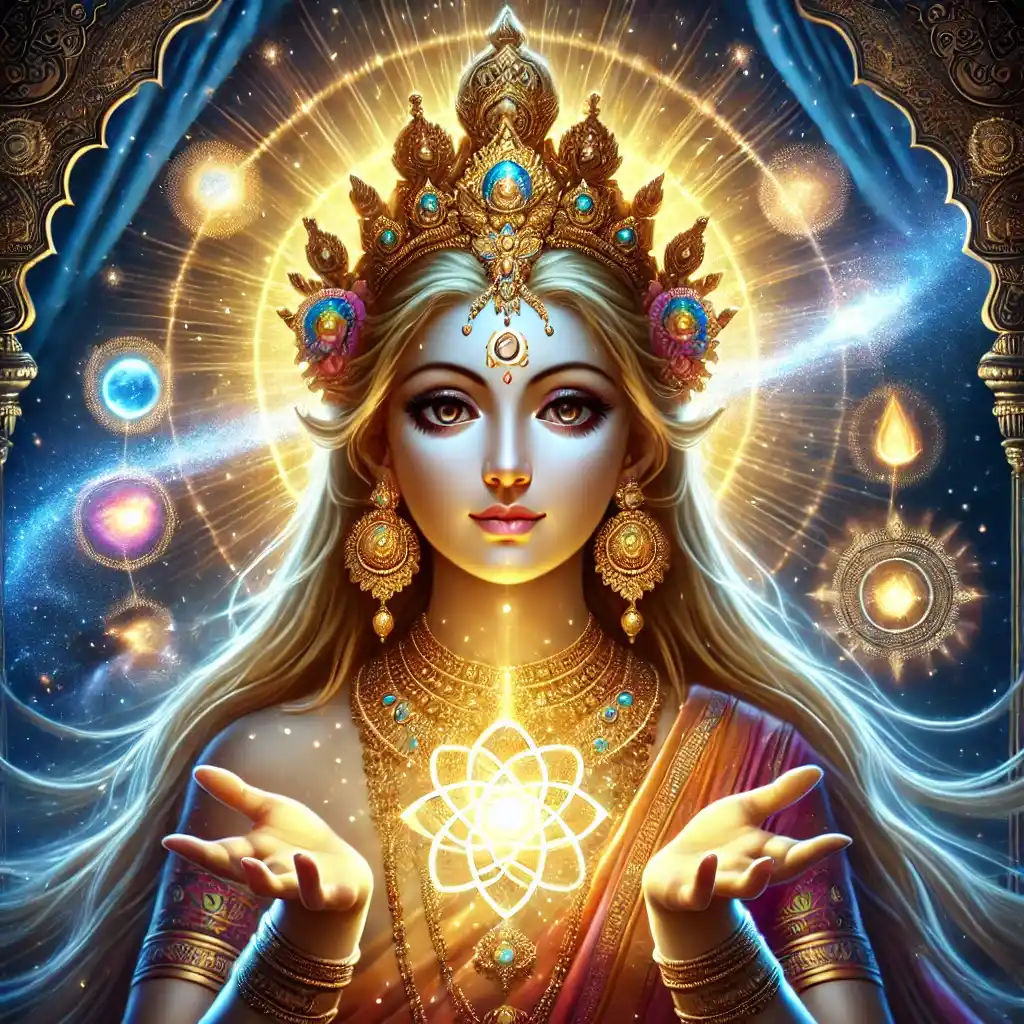
The beginning of the Saptashati reveals a profound spiritual truth: Maa Durga is the cosmic force behind creation, preservation, and dissolution. This is not a myth, but a metaphysical reality.
- Shakti and Shaktimaan (God and Power) are one, like fire and its heat — inseparable and essential.
- The world is not an illusion (mithya), but a temporary manifestation under the governance of Yogmaya Shakti.
- Every form of energy, willpower, or intellect within us is an expression of Maa Durga’s grace.
Swamiji emphasizes that Maa Durga is not a 'woman' as we understand the term, but the divine Yogmaya — the creative force behind the cosmos. As seen in Adi Shankaracharya’s transformation, even the greatest philosophers bow before this truth when they experience the Divine Mother’s real form.
Conclusion: Awakening the Inner Devi
This section of the Saptashati calls us to recognize that the Shakti worshipped as Maa Durga also resides within us. Her battles are not just celestial stories, but metaphors for our daily struggles — with ignorance, fear, ego, and doubt.
Practical applications:
✅ Practice daily remembrance of the Divine Mother through stuti or japa
✅ Begin to see your body and mind as sacred instruments, not burdens
✅ Recognize Shakti as the energy that powers your thoughts, actions, and devotion
Swamiji often reminds us that spiritual life is not about escape, but transformation. The Devi doesn’t remove you from the world — she empowers you within it, giving you the strength to live with dharma, discipline, and devotion.
“She is the source of srishti (creation), sthiti (preservation), and pralaya (dissolution). Without her, Brahman cannot act. Let that truth awaken the Devi within you.”
Call to Action
If this blog stirred your soul and deepened your connection with Maa Durga, we invite you to take your devotion a step further.
✨ Visit the Navratri page of Radha Krishna Temple of Dallas — while it showcases last year’s celebrations, you'll find beautiful glimpses of the divine energy that filled the temple. Let it inspire you to join us this year in person or virtually, as we once again gather to chant the Durga Saptashati and celebrate the triumph of Shakti.
🕉️ Experience the bliss of Navratri like never before — with soulful Durga Path, Garba, Devi stuti, and community devotion.
If you enjoyed exploring the divine rhythm of the Durga Saptashati, you may also appreciate other sacred hymns that deepen your spiritual connection and devotion. Discover the divine power and meaning behind these timeless chants:
- Shree Ram Raksha Stotra – Click Here
- Vishnu Sahasranamam – Click Here
- Mahamrityunjay Mantra – Click Here
- Sundarkand Path – Click Here
- Shiv Tandav Stotram – Click Here
📚 Learn about all 9 forms of Goddess Durga and explore Navratri rituals in our Complete Navratri 2025 Guide »
📺 And for more such spiritually uplifting wisdom, subscribe to Swami Mukundananda’s official YouTube channel. His profound discourses, kirtans, and explanations of scriptures like the Durga Saptashati will help you stay anchored in bhakti all year round.
Let this Navratri not be a once-a-year celebration — let it be a year-round awakening of the Shakti within you.
FAQs
Q1.What is the main message of Part 1 of the Durga Saptashati
Part 1 reveals the divine origin of Maa Durga as the embodiment of Shakti — the cosmic power behind all creation. It shows that even Brahman needs Shakti to manifest and function.
Q2. Who is Yogmaya according to Swami Mukundananda
Yogmaya is the divine energy of God — not separate, but one with Him. She is the power through which Bhagavan creates, sustains, and dissolves the universe.
Q3. Is Durga a different entity from God
No. As Swamiji explains, just as fire and its heat are inseparable, God and His Shakti (Durga) are one. She is not just a companion — she is the power itself.
Q4. Can we recite the Durga Saptashati at home
Yes. You can chant it with devotion and understanding. Reading with meaning, as explained in this blog, deepens the spiritual benefit.