
Introduction: The Moment That Changes Everything
In 1949, a team of elite firefighters, otherwise known as smokejumpers, parachuted into the Montana wilderness to battle what seemed like a manageable fire.
Within minutes, the situation changed.
The fire exploded.
Winds shifted.
Flames moved faster than anyone expected.
The men ran uphill, trying to outrun the blaze.
But one firefighter, Wag Dodge, did something unthinkable.
He stopped running.
And instead… he lit a fire.
Not to fight the wildfire—but to survive it.
The others didn’t understand. They kept running.
Only Dodge survived.
Why?
The answer lies in the science of mental agility, and in a deeper spiritual truth about the mind.
What Is Mental Agility? (The Science Explained)
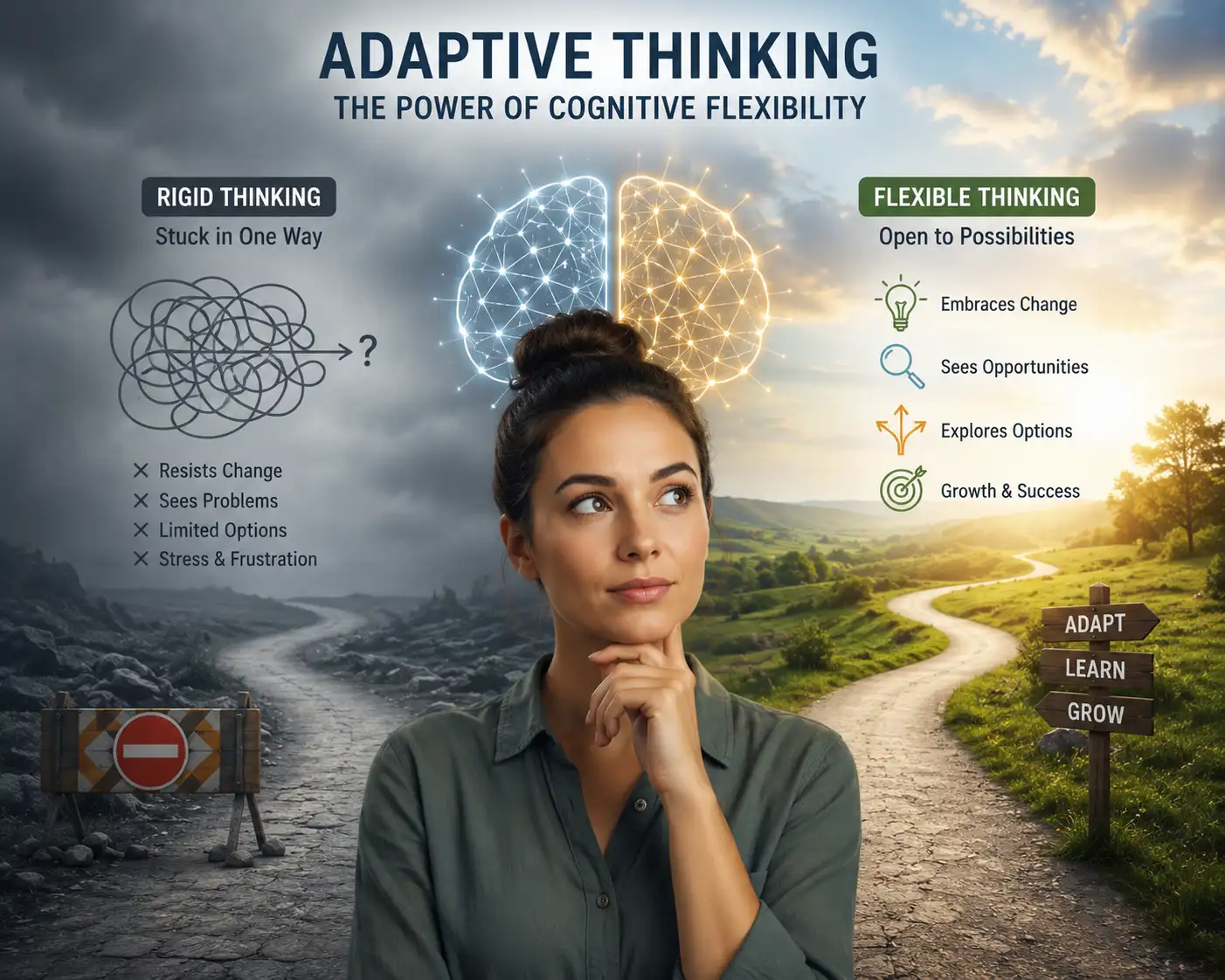
From a scientific perspective, mental agility is:
The ability to adapt quickly, shift thinking, and respond effectively in unexpected, high-pressure situations.
It is not about intelligence alone.
It is about flexibility under pressure.
The Science of Mental Agility: What It Requires

Research in neuroscience and performance psychology shows that the science of mental agility includes several core components:
1. Cognitive Flexibility
The ability to:
- Let go of outdated strategies
- Shift thinking quickly
- Consider new possibilities
In the Wag Dodge moment, cognitive flexibility meant abandoning the instinct to run.
2. Processing Speed
Mental agility requires:
- Rapid interpretation of changing conditions
- Quick decision-making
- Immediate action
Delay can be dangerous in high-stakes situations.
3. Adaptability
Adaptability means adjusting in real time.
Not later.
Not after reflection.
In the moment.
4. Emotional Regulation
Under pressure, fear can hijack thinking.
Mental agility requires:
- Staying calm
- Avoiding panic
- Maintaining clarity
Core Scientific Insight
In the unexpected, survival and success depend not on what we know—
but on how quickly we can let go, adapt, and think differently.
Why Some People Freeze, and Others Adapt
In crisis situations, humans typically respond in one of three ways:
- Fight
- Flight
- Freeze
Most of the smokejumpers defaulted to instinct: run.
Wag Dodge did something different.
He paused.
And in that pause, he accessed a new option.
This is the essence of the science of mental agility.
The Power of the Pause

Psychiatrist Viktor Frankl famously said:
“Between stimulus and response there is a space. In that space is our power to choose our response.”
Mental agility lives in that space.
What Happens in That Space?
In that brief moment, we can:
- Observe instead of react
- Think instead of panic
- Choose instead of default
But only if the mind is trained.
Is Mental Agility Trainable?
Yes! This is one of the most empowering findings in the science of mental agility.
Research shows:
- Mental agility strengthens neuroplasticity
- The brain becomes more adaptable with practice
- Decision-making improves under stress
- Resilience increases over time
Key Insight
Mental agility is not fixed. It is built.
Spiritual Insight: Training the Mind, Not Trusting It Blindly
While science explains how mental agility works, spiritual wisdom explains why we struggle with it.
As Swami Mukundananda teaches:
The mind becomes powerful when it is trained and not simply trusted blindly.
The untrained mind:
- Clings to habit
- Reacts emotionally
- Resists change
The trained mind:
- Adapts
- Discerns
- Responds wisely
The Spiritual Parallel: Letting Go Saves Us
The Wag Dodge story reveals a profound truth:
Clinging to old patterns can create suffering.
Letting go with awareness creates freedom.
This is not just survival wisdom.
It is spiritual wisdom.
Bhagavad Gita: Mastering the Mind

The Bhagavad Gita offers deep insight into mental control.
Bhagavad Gita 2.14
मात्रास्पर्शास्तु कौन्तेय शीतोष्णसुखदुःखदाःआगमापायिनोऽनित्यास्तांस्तितिक्षस्व भारत
“O son of Kunti, the contact between the senses and the sense objects gives rise to fleeting perceptions of happiness and distress. These are non-permanent, and come and go like the winter and summer seasons. O descendent of Bharat, one must learn to tolerate them without being disturbed.
This verse teaches emotional steadiness, which is the foundation of mental agility.
Spiritual Principles for Mental Agility
Swami Mukundananda outlines key spiritual tools that align perfectly with the science of mental agility.
1. Positive Reframing
See challenges as opportunities.
Instead of: “Why is this happening?”
Shift to: “What is this teaching me?”
2. Detachment (Vairagya)
Do not cling to what no longer serves you.
Attachment blocks adaptation.
Detachment enables clarity.
3. Buddhi Over Manas
- Manas = emotional mind
- Buddhi = intellect
Mental agility requires letting intellect guide emotion, not the reverse.
4. Internal Stability
Remain steady regardless of external chaos. Calm is power.
5. Consistent Practice (Abhyas)
Training the mind daily builds strength for critical moments.
Just like with Wag Dodge, training shows up when it matters most.
Mental Agility as Mind Mastery
Spiritual wisdom reframes mental agility as something even deeper:
Not just flexible thinking, but mastery of the mind itself.
Mental agility is not only about reacting better.
It is about becoming someone who is:
- Less reactive
- More aware
- More intentional
- More free
Science & Spirituality: One Unified Truth
Two Perspectives
- Science: Mental agility = adaptive thinking
- Spirituality: Mind mastery = inner freedom
Quotes That Capture the Truth
- Viktor Frankl: “Between stimulus and response there is a space…In the space is your freedom.”
- Swami Mukundananda: “Train the mind so that it does not control you.”
Unified Insight
In critical moments, everything depends on one thing:
The space between reaction and response.
Science calls it mental agility.
Spirituality calls it mastery of the mind.
Practical Ways to Build Mental Agility
Daily Practices include:
- Meditation
Trains awareness and reduces impulsive reactions - Self-awareness
Observe thoughts before acting on them - Cognitive flexibility exercises
Practice thinking from multiple perspectives - Emotional regulation training
Stay steady under stress - Consistent practice
Build mental strength through repetition
Key Takeaways: The Science of Mental Agility
Let’s summarize the most important insights.
Scientific Lessons
- Mental agility is trainable
- Adaptability improves decision-making
- Neuroplasticity strengthens flexibility
- Emotional regulation supports clarity
Spiritual Lessons
- The mind must be trained
- Attachment blocks adaptation
- Awareness creates freedom
- Consistency builds mastery
Final Insight
When we train the mind, even the unexpected becomes navigable— with clarity, courage, and grace.
FAQs
What is mental agility?
Mental agility is the ability to adapt thinking quickly and respond effectively under pressure.
Can mental agility be developed?
Yes. Research shows it improves through practice, awareness, and training.
Why is mental agility important?
It enhances decision-making, resilience, and performance in high-pressure situations.
What role does emotion play in mental agility?
Unregulated emotions can block clear thinking; emotional regulation supports adaptability.
How does spirituality support mental agility?
Spiritual practices train the mind to become more stable, aware, and less reactive.
Call to Action: Train Your Mind for Life’s Critical Moments
If this exploration of the science of mental agility resonated with you, deepen your understanding through powerful teachings that integrate science, spirituality, and practical wisdom.
Deepen Your Spiritual Journey
Download the JKYog Bhagavad Gita Krishna Bhakti App for Bhagavad Gita wisdom, guided meditations, bhajans, spiritual articles, and lectures by Swami Mukundananda.



Available on Android and iPhone
Subscribe to Swami Mukundananda’s YouTube channel for guidance on mastering the mind, transforming thoughts, and building inner strength:


Because when the moment comes, your training will speak for you.