

A New Year Sankalp
On the firs morning of the New Year, the house was unusually quiet. The kind of quiet that feels like the universe is holding its breath. Meera woke up before sunrise, not because an alarm rang, but because her mind wouldn’t stop counting—missed opportunities, broken routines, unspoken apologies, unfinished dreams. The calendar had changed, yet something inside her still felt stuck.
In the kitchen, her grandmother was already awake, tying her hair back, arranging a small brass plate with a diya, a little rice, a few flowers, and a tulsi leaf. Meera asked softly, “Dadi, does a new year really change anything?”
Her grandmother smiled without looking up. “No,” she said, “but you can.” Then she placed a clean cloth near the home mandir and said, “Today we will do Satyanarayan Puja—because the New Year is not only about fireworks. It is about sankalp… a truthful beginning.”
As the diya flame steadied, Meera noticed how even the tiniest light could push back a whole room of darkness. And for the first time that morning, she didn’t feel like she was starting over. She felt like she was starting right.
Why Satyanarayan Puja on New Year 2026?
Satyanarayan Puja is a beloved Hindu ritual dedicated to Lord Vishnu in the form of “Satya” (truth) and “Narayan” (the divine sustainer). Families perform it for peace, prosperity, gratitude, and spiritual clarity. Doing it on New Year (or the first auspicious day you choose in 2026) is especially popular because it aligns with a universal intention:
- to begin with purity,
- to invite blessings into the home,
- and to set a truthful, disciplined direction for the year.
New Year is symbolic: it marks a fresh cycle. Satyanarayan Puja supports this symbolism with a spiritual practice that is simple, heartfelt, and family-friendly. It’s also a puja where everyone can participate—children can offer flowers, elders can recite the katha, and the whole home can feel unified.
Spiritual meaning and importance
1) “Satya” as the foundation of your year
Satyanarayan Puja centers around the idea that truth is not only about speaking honestly—it also means:
- living with integrity,
- honoring promises,
- doing your duty without laziness,
- and keeping the heart clean (less jealousy, less resentment, more forgiveness).
When families do this puja at home, it’s like placing “truth” at the doorway of the year.
2) Gratitude and completion
Many people do Satyanarayan Puja when a wish is fulfilled (new job, marriage, home purchase, recovery from illness). On New Year, it becomes a ritual of gratitude for what you survived and learned—whether or not everything went perfectly. It teaches that blessings are not only “gains,” but also protection, lessons, and inner strength.
3) Peace and prosperity in the household
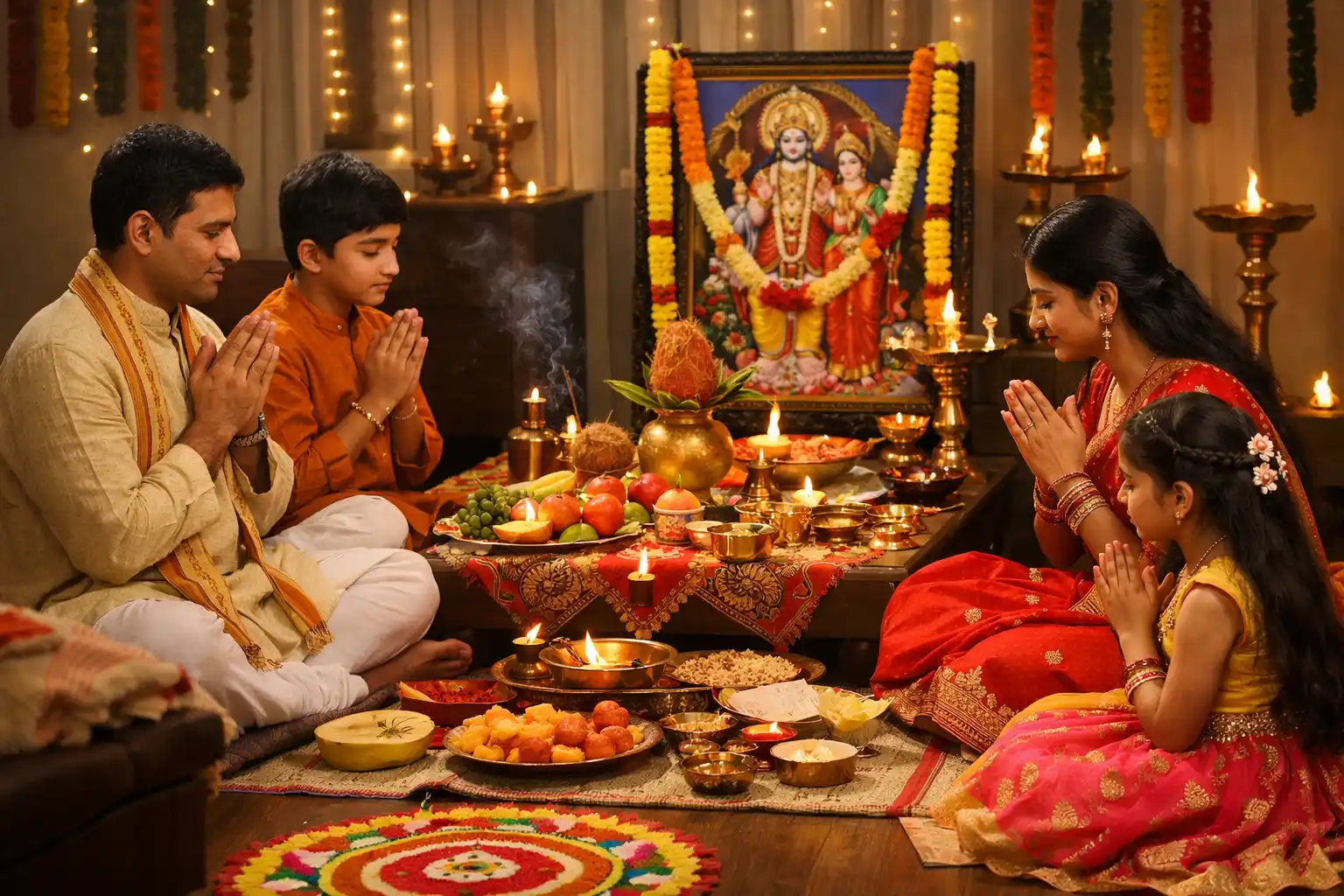
Traditionally, Satyanarayan Puja is seen as a harmony-bringing puja. Families often report:
- fewer conflicts,
- calmer mood in the home,
- renewed spiritual routines,
- and a sense of positivity around work and finances.
Spiritually, it’s believed that devotion and discipline invite the grace of Narayan—the one who sustains the world and also sustains your personal life.
Satyanarayan Puja Vidhi (Step-by-Step) — Easy Home Method
Below is a simple, widely followed home procedure. Customs vary by region, so feel free to adapt respectfully.
1) Preparation the day before (optional but helpful)
- Clean the puja space and main living area.
- Decide who will read the katha (one person, or turns).
- If fasting, plan light food for before/after.
- If inviting guests, keep it simple and peaceful.
2) What you need (Puja Samagri checklist)
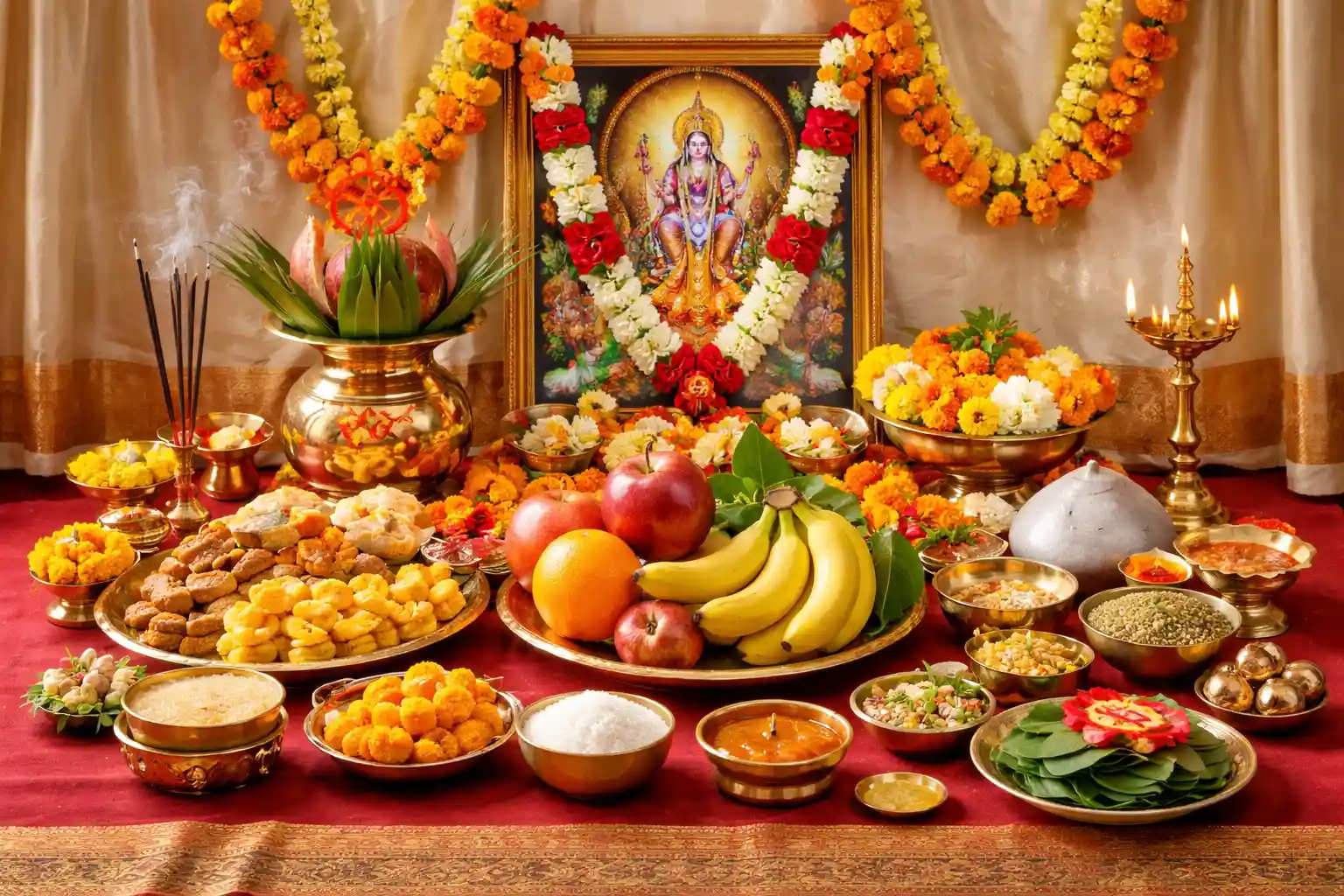
|
Category |
Items Required |
| Main Puja Setup | Lord Satyanarayan / Lord Vishnu idol or photo, wooden chowki or puja table, clean red/yellow cloth |
| Kalash Items | Kalash (copper/steel), clean water, ganga jal (optional), mango leaves (5), coconut (with husk), moli (sacred thread) |
| Puja Essentials | Diya (oil or ghee), ghee or oil, incense sticks (agarbatti), dhoop (optional), camphor (kapoor), bell (ghanti), matchbox or lighter |
| Offerings (Upchar) | Akshat (raw rice), kumkum, haldi, chandan, fresh flowers, tulsi leaves, betel leaves & nuts (optional), coins (dakshina) |
| Panchamrit (Optional) | Milk, curd, ghee, honey, sugar (milk alone is acceptable if others unavailable) |
| Naivedya / Prasad | Sooji (semolina), ghee, sugar or jaggery, banana, dry fruits (optional) OR fruits and homemade sweets |
| Katha Reading Items | Satyanarayan Katha book, small bowl or plate for flowers or rice |
| Aarti Items | Aarti diya, aarti book or printed lyrics (Om Jai Jagdish Hare) |
| Optional Items | Sitting mat or asana, hand towel, extra plates and bowls for prasad |
You don’t need everything perfectly—sincerity matters most.
Best time to do Satyanarayan Puja in 2026
You can perform it on:
- New Year’s Day 2026 (January 1, 2026), or
Auspicious choices many families follow:
- Thursday (Guruvar)
- Purnima (full moon day)
- Ekadashi (optional; some avoid heavy prasad that day)
- After a new home entry (Griha Pravesh)
- After marriage, childbirth, or major milestones
Practical note: The most important “muhurat” is when the family is calm, clean, and available to sit together without hurry.
- the first Thursday of the year, or
- any day you decide as your “new beginning.
- Basic items
- A small table/wooden chowki and clean cloth
Naivedya / Prasad
- Traditional: Satyanarayan Prasad (a sweet made from sooji/semolina, ghee, sugar/jaggery, banana, and dry fruits).
- Alternative: any clean homemade sweet/fruit if time is short.
3) Setting up the Kalash
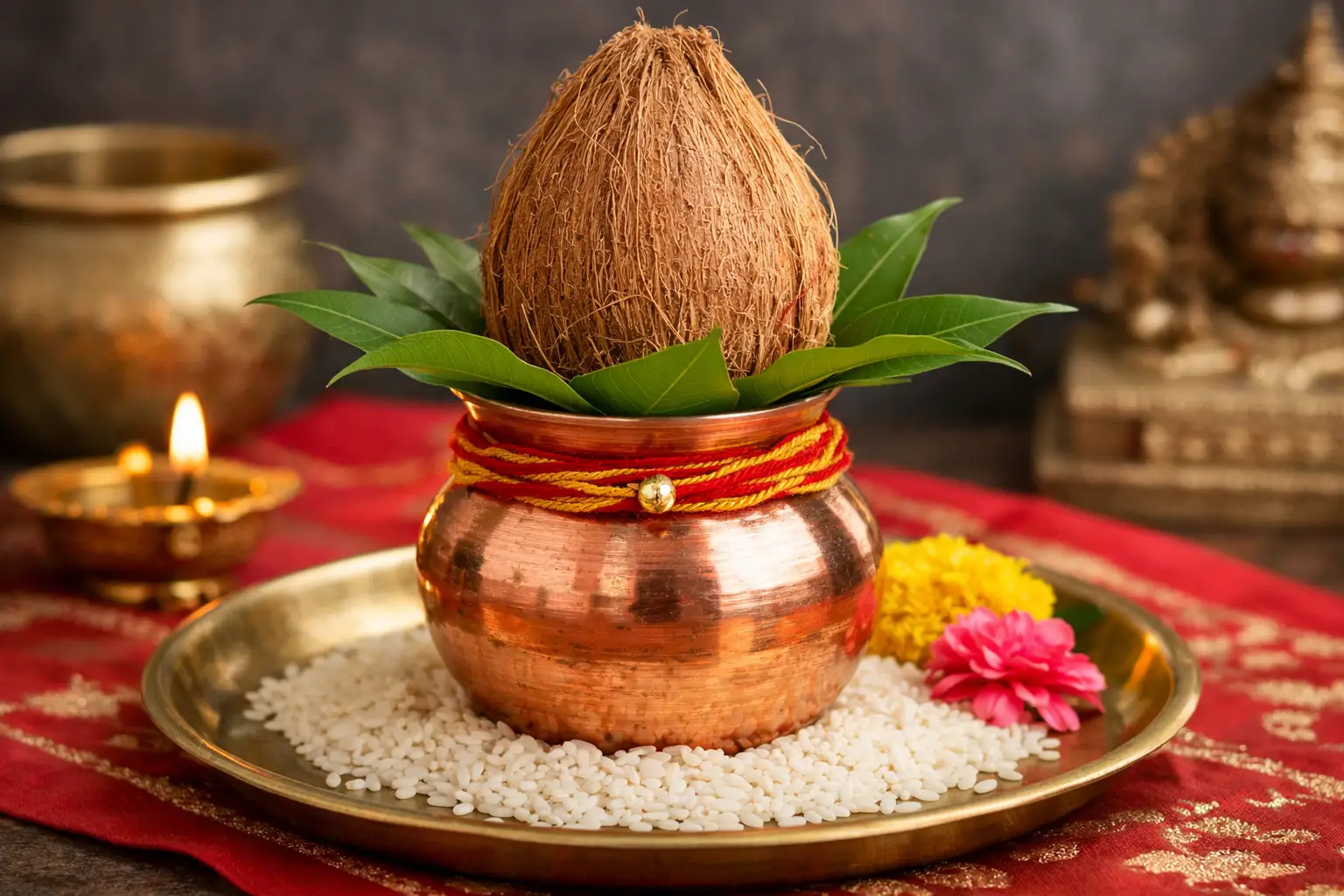
- Place the kalash on a small plate with a few grains of rice.
- Fill it with clean water (add a little ganga jal if you have).
- Put mango leaves around the mouth of the pot.
- Place a coconut on top.
- Tie moli around the kalash if you wish.
This represents abundance and the presence of divine energy in the home.
4) Sankalp (intention)
Sit facing the mandir. Close your eyes for a moment and take a simple sankalp like:
“In the year 2026, we perform Satyanarayan Puja with devotion for peace, health, prosperity, and right guidance. May truth and harmony stay in our home.”
You can say it in your language. The heart is the key.
5) Ganesh pujan (to remove obstacles)
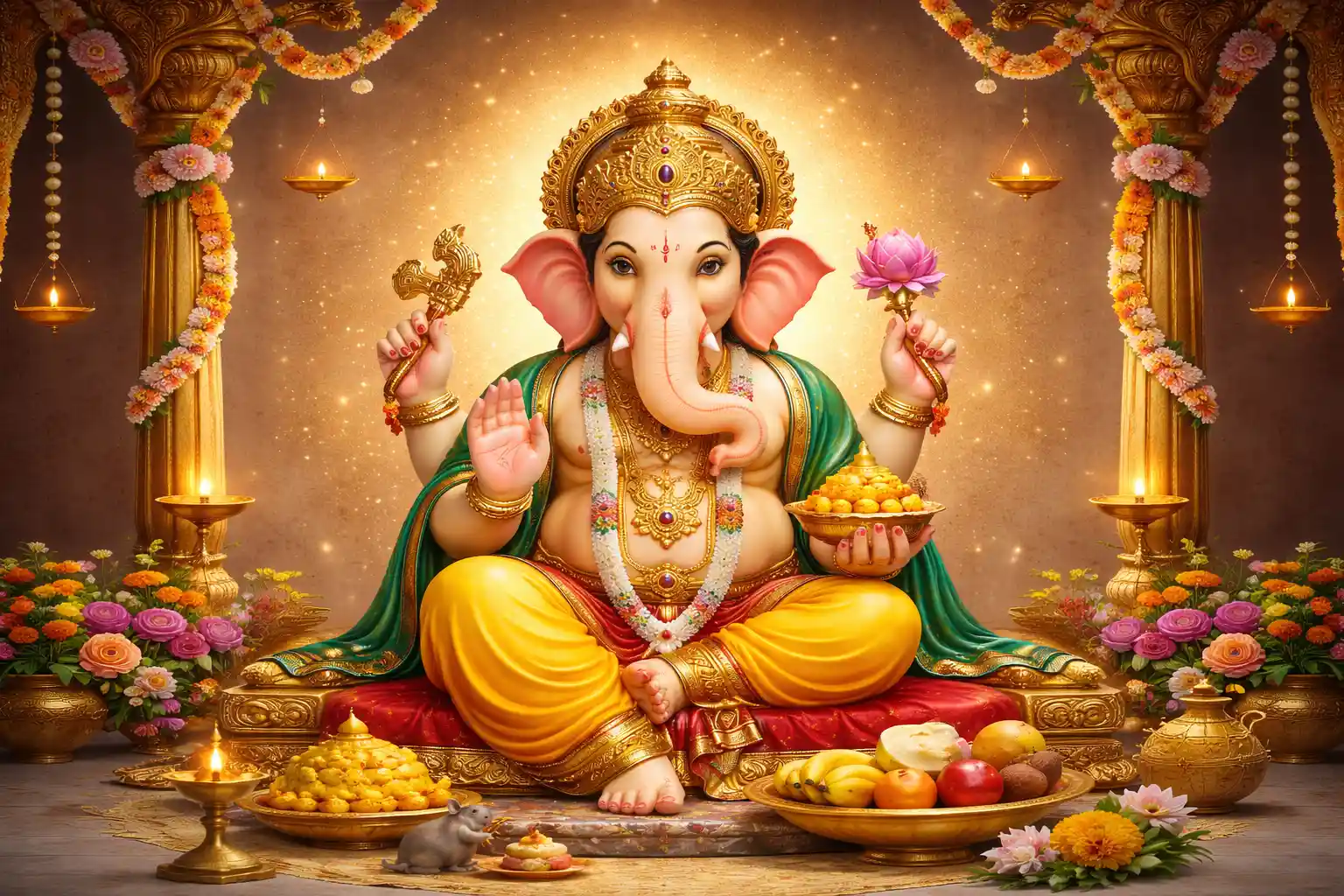
Offer a flower, a little rice, and diya/incense to Lord Ganesh first. Say “Om Gan Ganapataye Namah” 11 times (or once with focus).
6) Invocation and Vishnu/Satyanarayan pujan
Offer:
- water (achaman/sprinkling),
- kumkum/haldi/chandan,
- flowers and tulsi,
- incense and diya,
- naivedya (prasad/fruit),
- and finally aarti.
Simple mantra options (choose any):
- “Om Namo Narayanaya” (11/21/108 times)
- “Om Shri Satyanarayanaya Namah” (11/21 times)
7) Reading the Satyanarayan Katha (the heart of the puja)
Now comes the katha. Traditionally it includes stories of devotees who experienced transformation through faith, truthfulness, and keeping promises. The message repeated across versions is powerful:
- when people become arrogant, careless, or dishonest, life becomes heavy,
- and when they return to truth and devotion, the path becomes clear again.
If you have a katha book, read from it. If not, you can also read a reliable printed version from a trusted source in your language. The reading is usually done seated, calmly, without rushing.
How to involve family
- One person reads, others listen silently.
- After each section, offer flowers/rice.
- Children can ring the bell gently during aarti.
8) Aarti
Do Vishnu aarti (or any Narayan aarti you know). Even “Om Jai Jagdish Hare” works beautifully here. Sing slowly—make it devotional rather than performative.
9) Prasad distribution
Prasad is not “dessert.” It’s a symbol of grace. Serve it with respect—first to the deity, then to everyone.
How to make traditional Satyanarayan Prasad
(quick home recipe)
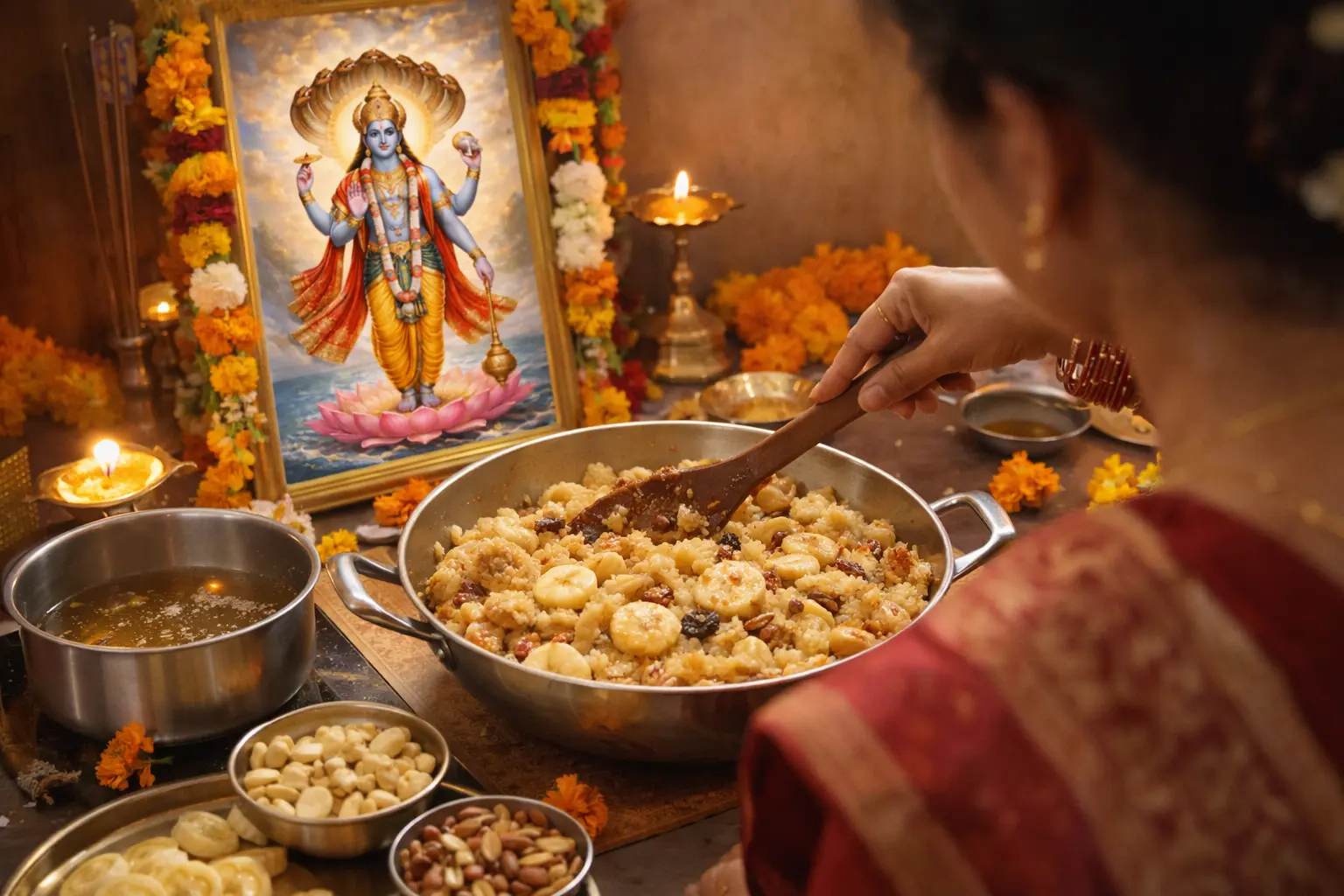
Ingredients (simple version)
- Sooji (semolina): 1 cup
- Ghee: 1/2 cup (or as needed)
- Sugar or jaggery: 3/4 cup (adjust taste)
- Water: ~2 cups (for syrup consistency)
- Banana: 1–2 (sliced)
- Dry fruits (optional): cashew/almonds/raisins
Method
- Roast sooji in ghee until aromatic and light golden.
- In another pot, dissolve sugar/jaggery in water and boil briefly.
- Slowly add syrup to sooji (careful of steam). Stir continuously.
- Add bananas and dry fruits.
- Cook 2–3 minutes until thick. Offer it warm.
Tip: If you’re short on time, offer fruit + any homemade sweet. The devotion is more important than culinary perfection.
Rules, do’s & don’ts (practical and spiritual)
Do’s
- Keep the space clean and calm.
- Wear clean clothes (traditional preferred but not compulsory).
- Speak gently that day; avoid arguments.
- Keep your phone away during katha.
- Feed someone in need if possible (even a small act).
Don’ts (common guidance)
- Avoid alcohol/non-veg on the puja day.
- Avoid negativity, gossip, or harsh speech.
- Don’t rush the katha like a checklist—listen and absorb.
Fasting options (optional)
Many people keep a simple fast:
- fruits, milk, light satvik food
- or one meal after puja
If fasting is difficult (health, pregnancy, medication), skip it. Satyanarayan Puja is about sincerity, not strain.
What Satyanarayan Katha teaches for 2026
1) Keep your promises
A frequent thread in the stories is: “Don’t forget your vow when life becomes comfortable.” In modern life, this can mean:
- not abandoning your values under pressure,
- not leaving spiritual practice only for crisis days,
- and not breaking commitments to family and self.
2) Earn with dharma
Prosperity is not only about money; it’s about peace in your earnings. The katha repeatedly honors honest effort.
3) Gratitude multiplies blessings
In 2026, gratitude can be your daily puja:
- gratitude for health,
- for a supportive person,
- for food on the plate,
- for a lesson that made you wiser.
4) A clean home and a clean heart go together
The ritual cleaning before puja is symbolic: sweeping away laziness, resentment, and cluttered thinking.
A simple New Year 2026 Satyanarayan Puja routine (if you want it extra easy)
If you want a shorter version (30–45 minutes), do this:
- Clean corner + diya + incense
- Ganesh namah (3–11 times)
- “Om Namo Narayanaya” (11 times)
- Read katha (short version or one chapter)
- Aarti (Om Jai Jagdish Hare)
- Offer fruit/sweet as prasad
- Distribute prasad
- Sit silently for 2 minutes—end with gratitude
This keeps the essence intact.
Closing blessing for your home in 2026
The New Year does not demand perfection. It asks for direction. Satyanarayan Puja is a gentle way to say:
“May my home be protected.
May my thoughts become cleaner.
May my work become steadier.
May my speech become kinder.
May truth guide my year.”
Like Meera in the opening story, you may still have problems after the puja—life doesn’t vanish them overnight. But many people feel something subtle change: the mind becomes steadier, the home feels lighter, and the heart remembers that it is never alone.
Call To Action

Frequently Asked Questions (FAQs)
1. Can Satyanarayan Puja be performed at home without a priest?
Yes. Satyanarayan Puja is one of the most home-friendly pujas in Hindu tradition. Any family member can perform it with devotion. A priest is optional, not mandatory. What matters most is sincerity, cleanliness, and correct intention (sankalp), not complex rituals.
2. Is fasting compulsory for Satyanarayan Puja on New Year?
No, fasting is not compulsory. Many people observe a light fast out of devotion, but it is perfectly acceptable to eat satvik food, fruits, or one simple meal—especially for children, elders, pregnant women, or those with health conditions
3. What is the best day to perform Satyanarayan Puja in 2026?
You may perform the puja on New Year’s Day (January 1, 2026) or any day you consider auspicious. Traditionally preferred days include Thursday, Purnima (Full Moon), or Ekadashi. The most important factor is choosing a day when the family can sit together peacefully.
4. Is it necessary to prepare the traditional Satyanarayan Prasad?
Preparing traditional prasad made from sooji, ghee, sugar/jaggery, and banana is customary, but not mandatory. If time or resources are limited, offering fruits, homemade sweets, or milk-based naivedya is completely acceptable. Devotion is more important than the recipe.
5. What benefits are believed to come from performing Satyanarayan Katha?
Satyanarayan Katha is believed to bring:
- peace and harmony in the household
- clarity of mind and spiritual strength
- progress with honesty in work and finances
- gratitude and positive beginnings
Beyond belief, many families find it helps them pause, reflect, and start the year with discipline and unity.
References
. Puja Vidhi & How to Perform
- Satyanarayana Puja Vidhi — DrikPanchang — Step-by-step ritual procedure including meditation, offerings, and the 16-step puja process.
- Satyanarayan Pooja At Home: Complete Guide — MPanchang — Practical guidance on performing the puja and katha at home with planning and samagri checklist.
- Satyanarayan Puja Ritual, Story & Significance — HinduCultureHub — Explains key elements of the katha narration and moral lessons in each chapter.
.