
Sankashti Chaturthi is one of the most deeply revered monthly fasts in Hindu spiritual tradition. Dedicated to Lord Ganesha, the remover of obstacles and the embodiment of wisdom, this sacred observance blends devotion, discipline, and inner transformation. While many festivals arrive once a year, Sankashti Chaturthi returns every lunar month, offering devotees repeated opportunities for renewal and divine connection.
In modern times, where stress, uncertainty, and emotional challenges shape daily life, this vrat has gained renewed relevance. It is not merely about fasting or ritual worship. It represents a conscious pause, a spiritual reset, and an invitation to align human effort with divine grace.
This blog explores the date, significance, rituals, mythology, psychological relevance, and deeper spiritual meaning of Sankashti Chaturthi, enriched with teachings and insights shared by Swami Mukundananda.
Understanding Sankashti Chaturthi
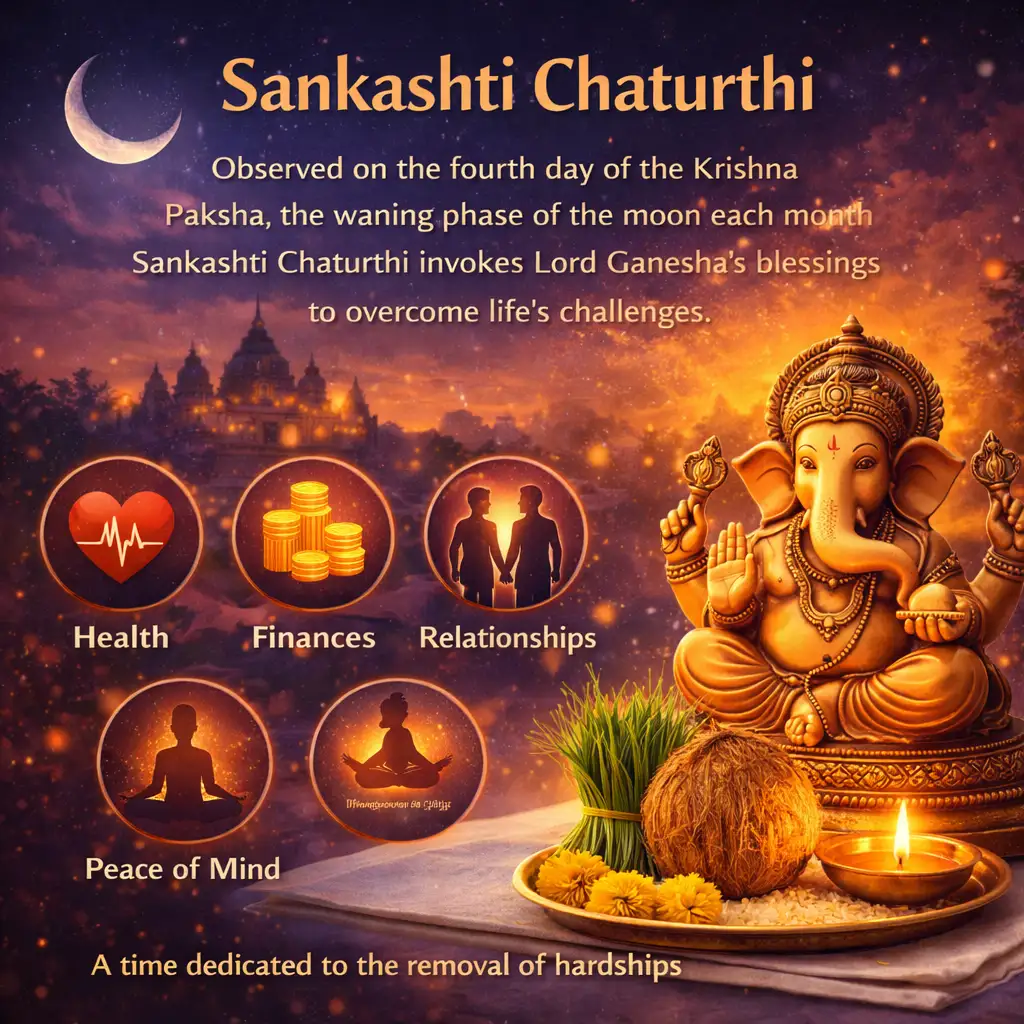
Sankashti Chaturthi is observed on the fourth day of the Krishna Paksha, the waning phase of the moon, every month according to the Hindu lunar calendar. The word Sankashti comes from Sanskrit, where Sankata means difficulty or crisis and Chaturthi refers to the fourth lunar day. Together, the term signifies a sacred time dedicated to the removal of hardships.
Unlike Ganesh Chaturthi which celebrates the birth of Lord Ganesha annually, Sankashti Chaturthi focuses on invoking his blessings regularly for overcoming life’s challenges. Devotees believe sincere observance helps dissolve obstacles related to health, finances, relationships, career, and mental peace.
Each month associates Lord Ganesha with a different divine form and spiritual energy, creating a rhythmic cycle of devotion aligned with cosmic movements.
Sankashti Chaturthi Date and Timing
Sankashti Chaturthi occurs every month, but the exact date varies according to lunar calculations rather than the solar calendar.
Upcoming Sankashti Chaturthi Dates and Moonrise Timings (2026)
Sankashti Chaturthi fasting concludes only after moonrise, making moonrise timing an essential part of vrat observance. Since timings vary across locations, devotees should always follow local lunar calculations.
Below is a structured reference table for Bhalachandra Sankashti Chaturthi and upcoming Sankashti Chaturthi dates in 2026.
| Sankashti Chaturthi Name | Date | Day | Chaturthi Tithi Begins | Chaturthi Tithi Ends | Moonrise Time (India) | Moonrise Time (USA Example) |
|---|---|---|---|---|---|---|
| Bhalachandra Sankashti Chaturthi | March 6, 2026 | Friday | 5:53 PM (Mar 6) | 7:17 PM (Mar 7) | New Delhi: 9:19 PM to 9:21 PM IST | Dallas: 10:13 PM CST |
| Vikata Sankashti Chaturthi | April 5, 2026 | Sunday | As per local Panchang | As per local Panchang | Approx. 9:29 PM IST | Varies by location |
| Angarika Sankashti Chaturthi | May 5, 2026 | Tuesday | As per local Panchang | As per local Panchang | Approx. 10:22 PM IST | Varies by location |
| Angarika Sankashti Chaturthi | September 29, 2026 | Tuesday | As per local Panchang | As per local Panchang | Approx. 8:15 PM IST | Varies by location |
Important Note for Devotees
- The fast is traditionally broken after sighting the moon and offering Arghya followed by Lord Ganesha worship.
- Moonrise timing differs significantly depending on geographic location.
- Devotees outside India should always check local Panchang or astronomical data for accurate timing.
Significance of Bhalachandra Sankashti Chaturthi
The upcoming March observance is known as Bhalachandra Sankashti Chaturthi, where Lord Ganesha is worshipped in his Bhalachandra form, meaning the one who adorns the moon on his forehead.
This form symbolizes mastery over the restless mind, since the moon represents emotional fluctuations in Vedic philosophy. Observing the vrat on this day is believed to bring mental clarity, stability, and relief from persistent obstacles.
Spiritual Significance of Sankashti Chaturthi
1. Removal of Obstacles
Lord Ganesha is known as Vighnaharta, the remover of obstacles. Observing this vrat is believed to reduce karmic burdens and ease life difficulties through divine grace.
People pray for:
- Success in new ventures
- Resolution of conflicts
- Academic excellence
- Financial stability
- Emotional clarity
The deeper meaning lies not only in removing external problems but also inner barriers such as fear, procrastination, ego, and doubt.
2. Alignment with Cosmic Rhythm

The waning moon phase encourages introspection and withdrawal from external distractions. Ancient sages designed Sankashti observance during this period to support mental discipline and spiritual reflection.
Modern psychology echoes this wisdom. Periodic fasting and contemplative practices enhance emotional regulation and mindfulness.
3. Discipline as Devotion
Sankashti Chaturthi teaches restraint. Devotees consciously regulate food, speech, thoughts, and behavior throughout the day.
Fasting becomes symbolic of mastering desires rather than suppressing them.
Swami Mukundananda’s Insights on Sankashti Chaturthi
Swami Mukundananda beautifully reframes rituals through devotion-centered spirituality. According to his teachings, spirituality becomes meaningful only when rituals awaken love for God rather than mechanical performance.
He explains that devotion should feel like a joyful relationship with the Divine, not a burden of obligation. Sankashti Chaturthi therefore becomes an opportunity to strengthen one's emotional bond with Lord Ganesha rather than simply follow tradition.
The Real Meaning of Fasting
Swamiji emphasizes an important idea:
The true fast is not merely from food but from negativity.
On this day devotees should attempt to fast from:
- Anger
- Complaining
- Jealousy
- Negative thinking
- Harsh speech
Physical discipline serves as a reminder to purify the mind.
Bhava Over Perfection
Another profound teaching highlights devotional sentiment or bhava. Exact timing and ritual precision are helpful structures, but sincerity of heart carries greater spiritual power.
According to Swami Mukundananda, God responds more to intention than technical accuracy.
This insight makes Sankashti accessible to modern practitioners balancing work, family, and responsibilities
Sankashti Chaturthi Vrat Rituals
Morning Preparation
Devotees begin the day early with purification rituals.
Typical practices include:
- Taking a sacred bath
- Cleaning the home temple
- Wearing clean or traditional clothes
- Taking a vow to observe the fast
Mental intention setting plays an essential role.
The Fast
There are several ways devotees observe the vrat:
- Nirjala fast without food or water
- Phalahar fast consuming fruits and milk
- Simple sattvic diet once a day
The choice depends on health and personal capacity.
The fast continues until moonrise.
Ganesha Puja
Evening worship forms the heart of the observance.
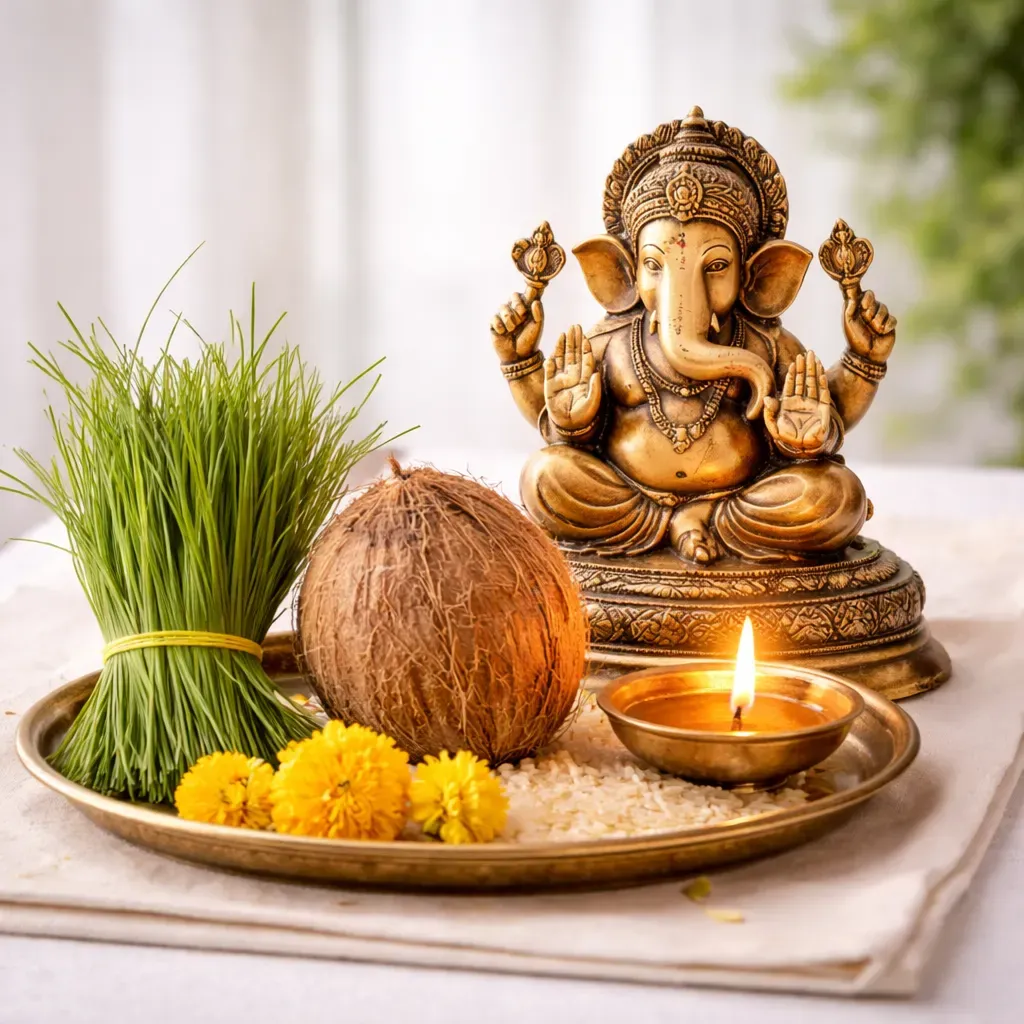
Common offerings include:
- Durva grass
- Modak or laddoo
- Flowers
- Incense and lamps
- Fruits and coconut
Devotees chant mantras such as:
Om Gam Ganapataye Namah
Recitation of Ganapati Atharvashirsha and Sankashti Vrat Katha is also considered highly auspicious.
Moon Worship
After moonrise:
- Devotees offer water to the moon
- Pray for emotional balance
- Perform Ganesha Aarti
- Break the fast with prasad
This ritual represents gratitude, patience, and completion of spiritual discipline.
The Unique Importance of Sakat Chauth
The Sankashti Chaturthi falling in the Magha month is popularly known as Sakat Chauth.
In many regions, mothers observe this fast for the protection and well-being of children. Sesame seeds and jaggery are commonly offered, symbolizing purity and nourishment.
This variation highlights how the vrat connects personal devotion with family welfare.
Psychological and Emotional Benefits
Beyond religious belief, Sankashti Chaturthi offers measurable lifestyle benefits.
Mental Detox
Periodic fasting improves focus and reduces impulsive behavior.
Emotional Stability
Prayer and chanting activate calming neurological responses similar to meditation practices.
Stress Reduction
Devotional surrender helps individuals release anxiety over uncontrollable outcomes.
Swami Mukundananda often teaches that surrender reduces mental burden because one learns to perform actions while trusting divine wisdom.
Sankashti Chaturthi in Modern Life
In today’s fast paced digital environment, spiritual practices often appear difficult to maintain. Sankashti Chaturthi provides a manageable monthly checkpoint.
Modern adaptations include:
- Listening to devotional discourses during commute
- Performing short evening puja
- Practicing gratitude journaling
- Charity or food donation
The essence remains devotion, not complexity.
Symbolism of Lord Ganesha in the Vrat
Every aspect of Ganesha’s form conveys spiritual guidance:
- Large head represents wisdom
- Big ears symbolize deep listening
- Small eyes encourage focus
- Broken tusk signifies sacrifice for knowledge
- Mouse vehicle reflects mastery over desires
Observing Sankashti Chaturthi becomes an exercise in embodying these virtues.
Beyond Rituals: Inner Transformation
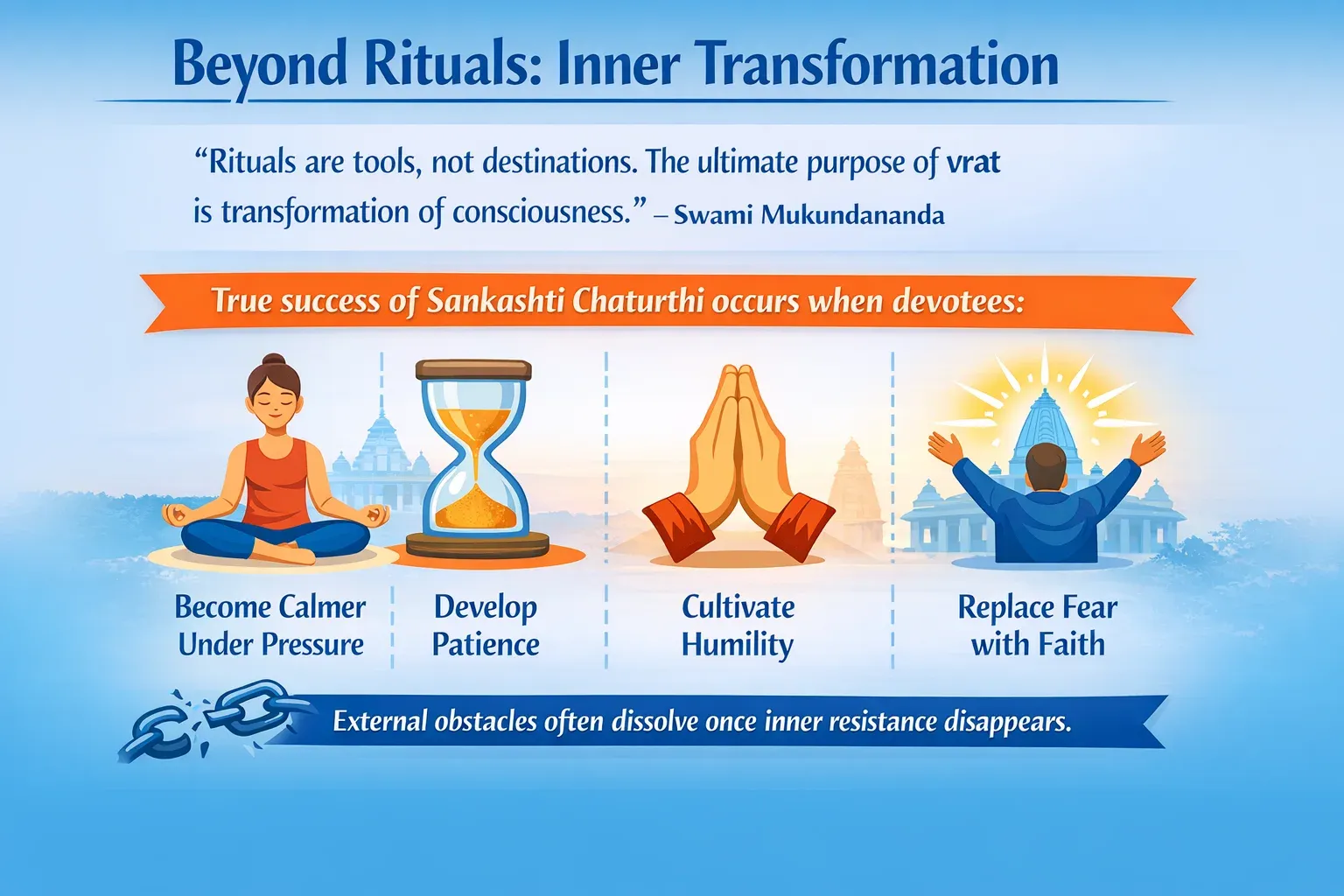
Swami Mukundananda explains that rituals are tools, not destinations. The ultimate purpose of vrat is transformation of consciousness.
True success of Sankashti Chaturthi occurs when devotees:
- Become calmer under pressure
- Develop patience
- Cultivate humility
- Replace fear with faith
External obstacles often dissolve once inner resistance disappears.
Sankashti Chaturthi and Karma
Hindu philosophy connects suffering with accumulated karma. Spiritual disciplines like vrat help purify impressions through devotion and self control.
Regular observance builds resilience and strengthens positive habits.
Rather than asking only for problem removal, advanced practitioners pray for wisdom to handle challenges gracefully.
Community and Cultural Dimension
Temples across India and worldwide witness special gatherings during Sankashti evenings.
Families pray together, share prasad, and pass traditions across generations. This collective participation strengthens cultural continuity and shared identity.
Even diaspora communities increasingly observe the vrat as a way to remain connected with heritage.
Practical Tips for First Time Observers
If you are beginning Sankashti Chaturthi practice:
- Start with a simple fruit fast
- Focus on prayer rather than perfection
- Learn one Ganesha mantra
- Maintain positive thoughts
- Break fast peacefully after moonrise
Consistency matters more than intensity.
Sankashti Chaturthi as a Monthly Spiritual Reset
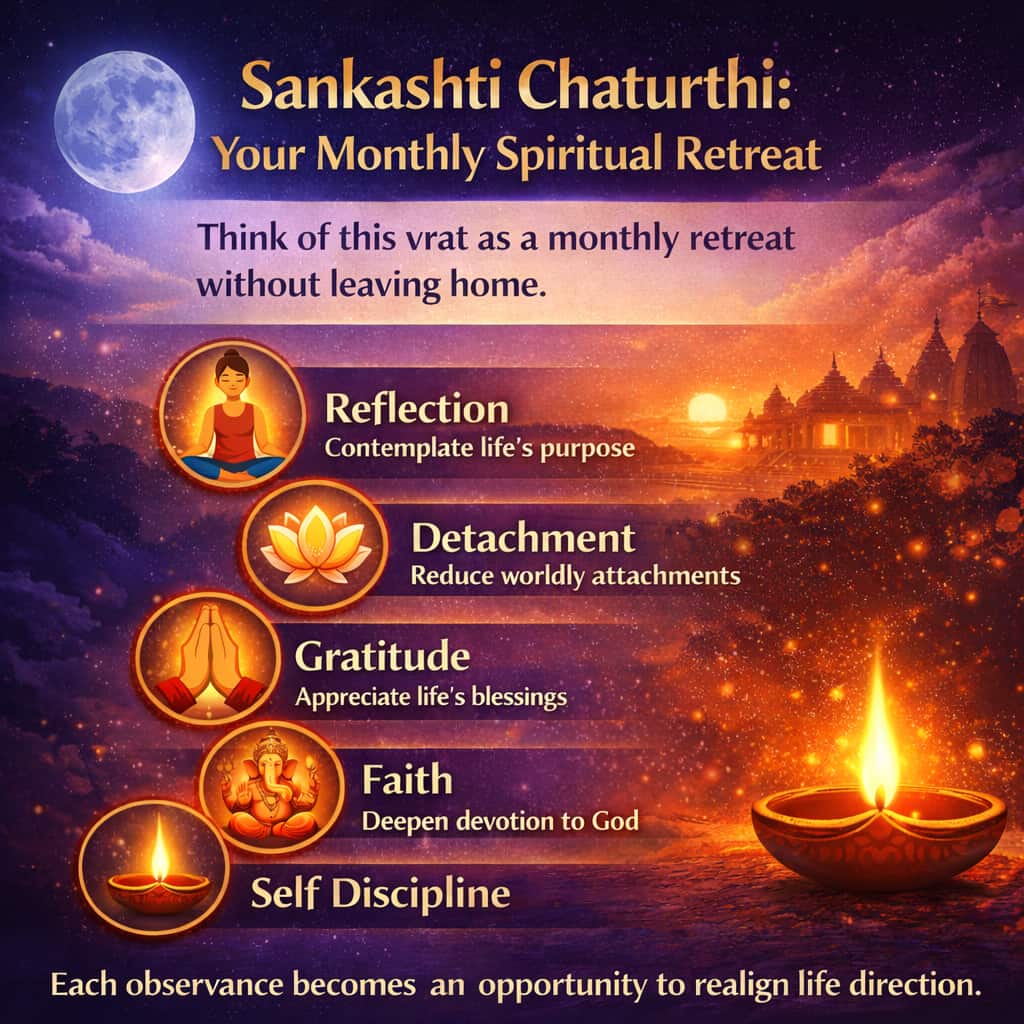
Think of this vrat as a monthly retreat without leaving home.
It encourages:
Reflection
Detachment
Gratitude
Faith
Self discipline
Each observance becomes an opportunity to realign life direction.
Swami Mukundananda’s Core Message
Perhaps the most powerful takeaway from Swamiji’s teachings is this:
Devotion transforms rituals into relationships.
When worship shifts from fear to love, spirituality becomes joyful rather than restrictive.
Sankashti Chaturthi then evolves from a fasting day into a living dialogue with the Divine.
Mythological Stories Associated with Sankashti Chaturthi
Sankashti Chaturthi is deeply rooted in sacred legends that highlight Lord Ganesha’s compassionate nature as the remover of obstacles. These stories illustrate how devotion, faith, and humility attract divine grace.
1. The Story of Lord Krishna and Sankashti Vrat
One of the most well known legends appears in the Puranas, where Lord Krishna advised Yudhishthira during difficult times.
After facing continuous hardships and challenges during exile, Yudhishthira asked Lord Krishna how one could overcome persistent suffering and misfortune. Lord Krishna recommended observing the Sankashti Chaturthi Vrat dedicated to Lord Ganesha.
He explained that sincere worship of Ganesha removes karmic obstacles and grants success in righteous endeavors. By following this vrat with devotion, devotees gain clarity, strength, and divine protection.
This story establishes Sankashti Chaturthi as a spiritual remedy during periods of struggle.
2. The Moon God and Lord Ganesha
Another famous legend explains the connection between Sankashti Chaturthi and moon worship.
Once, after enjoying a grand feast, Lord Ganesha was returning home on his mouse vehicle. Seeing his round form, the Moon God Chandra laughed mockingly. Offended by this arrogance, Lord Ganesha cursed the moon, declaring that anyone who looked at it would face false accusations and dishonor.
Realizing his mistake, Chandra Deva prayed sincerely for forgiveness. Lord Ganesha softened the curse and allowed the moon to regain its brilliance but declared that devotees should worship him and then view the moon on Chaturthi.
This is why devotees break the Sankashti fast only after moonrise, symbolizing humility overcoming pride.
3. King Harishchandra’s Redemption
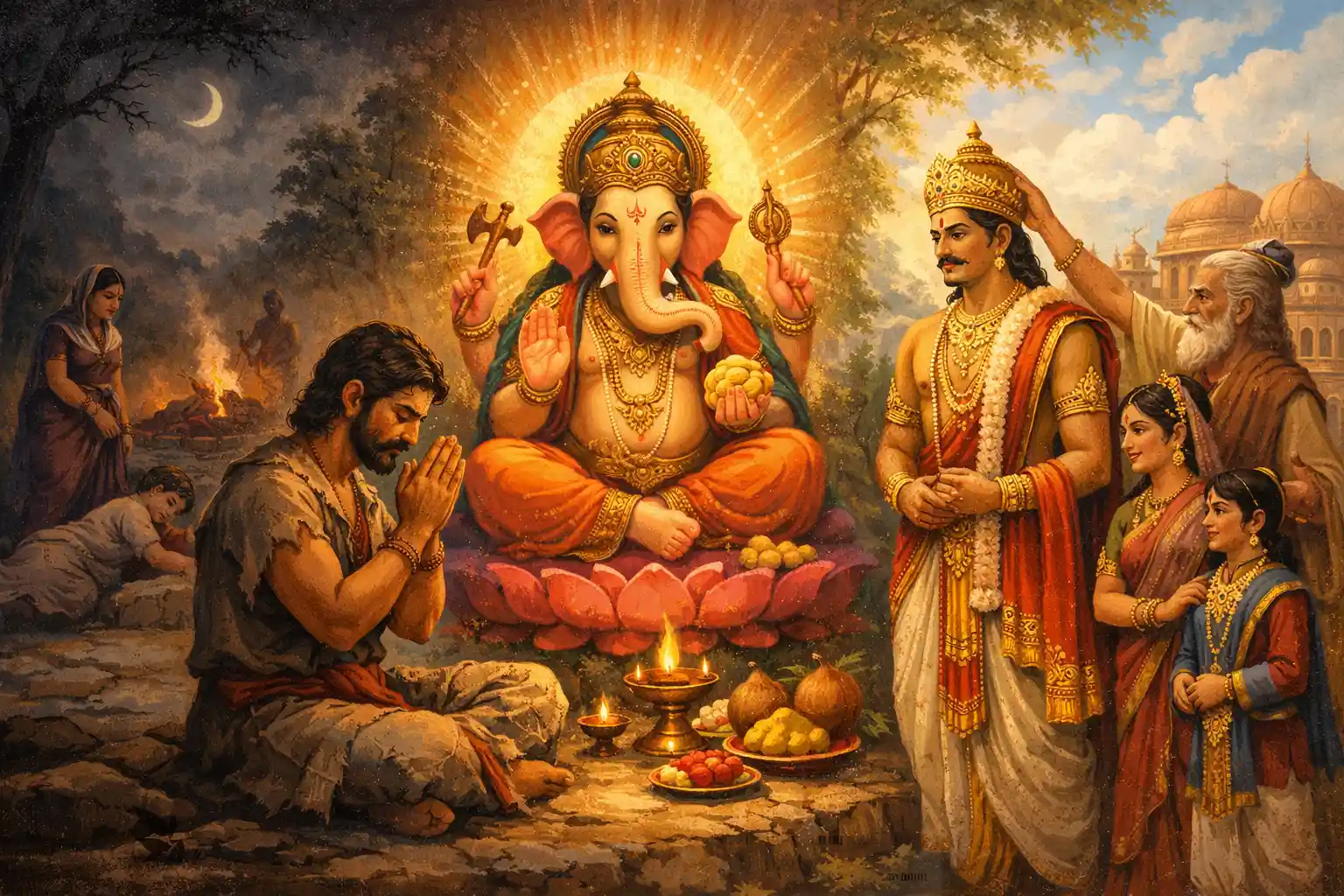
According to another traditional narration, the truthful King Harishchandra once lost his kingdom, wealth, and family due to severe karmic trials.
On the advice of sages, he observed Sankashti Chaturthi with unwavering devotion to Lord Ganesha. Gradually, his hardships ended, and he regained his honor and prosperity.
The story emphasizes that perseverance combined with devotion ultimately restores balance and justice.
4. Mother Parvati and the Birth of Ganesha’s Blessings
It is believed that Goddess Parvati herself observed sacred austerities invoking divine protection for her family. Lord Ganesha, born from her divine resolve, became the guardian who removes all impediments before auspicious beginnings.
Thus, Sankashti Chaturthi symbolizes maternal protection, divine care, and spiritual safeguarding.
Spiritual Message Behind These Stories
Though the stories differ, they convey a unified message:
- Ego creates obstacles
- Devotion dissolves suffering
- Discipline purifies the mind
- Faith invites divine grace
Sankashti Chaturthi teaches that obstacles are often spiritual lessons guiding devotees toward humility and inner awakening.
Conclusion
Sankashti Chaturthi Vrat stands as a timeless bridge between ancient wisdom and modern living. Rooted in devotion to Lord Ganesha, it combines fasting, prayer, discipline, and introspection to help individuals overcome both visible and invisible obstacles.
Through Swami Mukundananda’s insights, we understand that the true purpose of this observance lies beyond ritual accuracy. It lies in cultivating sincerity, positivity, and divine friendship.
Every month, as the moon rises and devotees break their fast, the message quietly repeats itself:
Obstacles are temporary. Faith is enduring.
By observing Sankashti Chaturthi with awareness and devotion, one does not merely seek blessings but gradually becomes capable of living with clarity, courage, and inner peace.
Call To Action
🌺✨ Begin Your Monthly Journey Toward Peace and Divine Grace ✨🌺
Observe Sankashti Chaturthi Vrat with devotion and invite Lord Ganesha’s blessings into your life. Let every month become an opportunity to remove obstacles, cultivate inner strength, and reconnect with spiritual purpose.
🪔 Start your Sankashti Chaturthi practice today and experience transformation from within.
🙏 Chant, Reflect, Surrender and Grow with Divine Guidance.
FAQs
1. What is Sankashti Chaturthi?
Sankashti Chaturthi is a monthly Hindu fast dedicated to Lord Ganesha for removing obstacles and seeking divine blessings.
2. When is Sankashti Chaturthi observed?
It is observed on the fourth day of Krishna Paksha, the waning phase of the moon each lunar month.
3. When is the Sankashti fast broken?
The fast is broken after sighting the moon and offering prayers to Lord Ganesha.
4. What are the benefits of observing Sankashti Chaturthi Vrat?
Devotees believe it brings peace, success, mental clarity, and relief from difficulties.
5. Can anyone observe Sankashti Chaturthi fast?
Yes, anyone can observe the vrat with devotion according to their health and capacity.